
I started seeing burgundy hair in March, which is usually when everyone goes blonde for spring. But this year, people are sitting down and asking for a deep wine shade instead. I think burgundy is finally getting its year-round moment, and honestly, it makes sense. It reads rich without being high-maintenance if you pick the right technique.
This roundup has 34 ways to wear Burgundy Hair Color, from a subtle root shadow to a full-on saturated hue. Some need a salon appointment and a purple shampoo schedule. Others are more forgiving. I have fine, straight hair that goes flat by 4 pm, so I know which ones hold and which ones fade fast. These are the ones I’d actually book, not just pin.
Vibrant Burgundy Shoulder-Length Curls
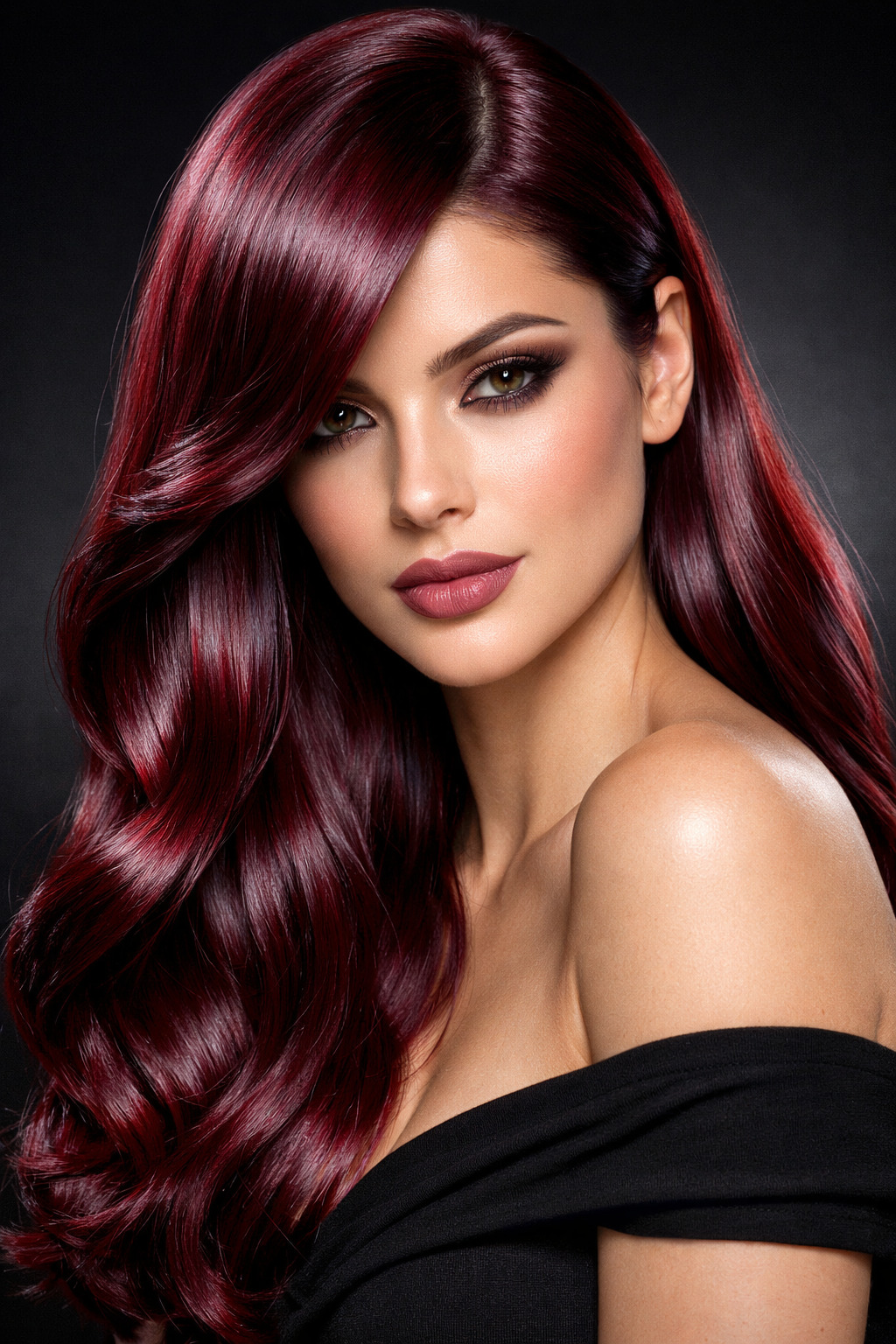
The vibrant burgundy shoulder length gets a lot right before you even touch it: the red undertones keep it from reading as brown, and the loose curls give the colour enough surface to catch the light. With a middle part and curtain bangs, the whole shape lands somewhere between lived-in and deliberate. It belongs on wavy, medium density hair that holds a bend on its own; the curl pattern does half the styling. Fine, straight textures, pass, because this cut needs movement to show the red. This one is a salon all-over colour with a gloss finish. The technique matters: a flat application would turn the same shade into something darker and duller.
Deep Burgundy Wavy Blowout
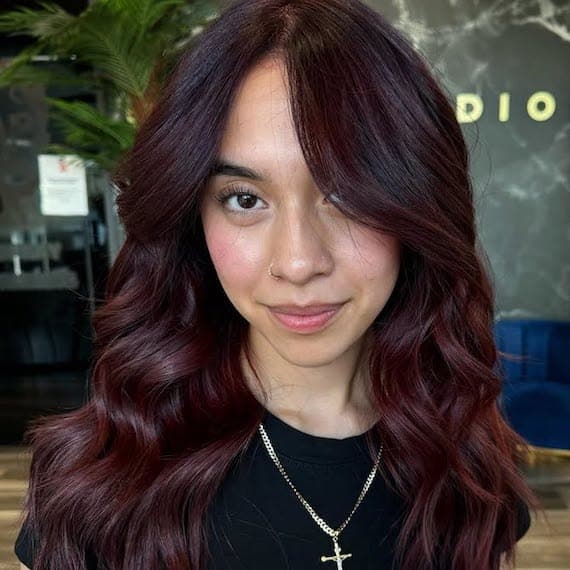
Ever wonder why some burgundy looks rich and some looks like grape soda? Most of it comes down to tone, and the deep burgundy blowout is the good kind of trick. The formula uses a darker base with warm red undertones sitting on top, so the shade reads expensive instead of candy. At shoulder length with a side part and side bangs, the wavy blowout shows the colour in sections, exactly what medium density hair needs.
The technique is a root-to-end saturation with a gloss, then a round brush to shape the waves. Wear it loose and you will watch the red warm up as it fades around week six. That is not a failure, that is the colour living its life. Treat the warm shift as part of the plan.
Voluminous Burgundy Waves for Thick Hair
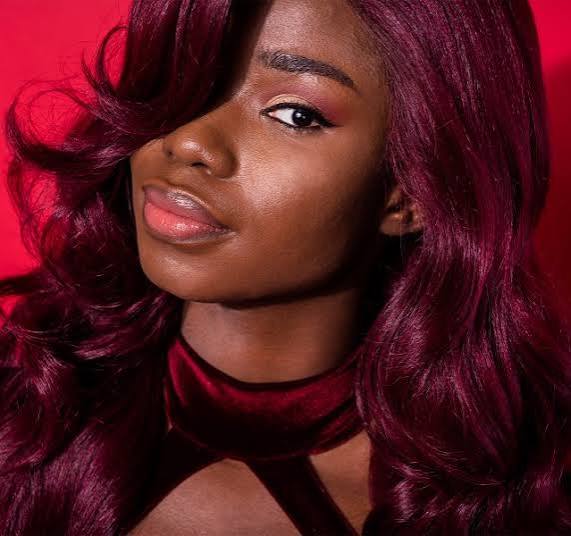
Confession: I have a soft spot for a color that does the heavy lifting. The thick wavy burgundy here makes voluminous waves look structural. The volume comes from long layers that stack instead of chunk out, and the vibrant burgundy tone keeps the mass from reading as one dark blob. Shoulder length, wavy, genuinely thick, this is the combination the cut was built for. Fine or low density hair, skip it. Ask your stylist for long layers, a root shadow, and a rounded silhouette. That is the whole formula.
Long Layered Burgundy with Curtain Bangs
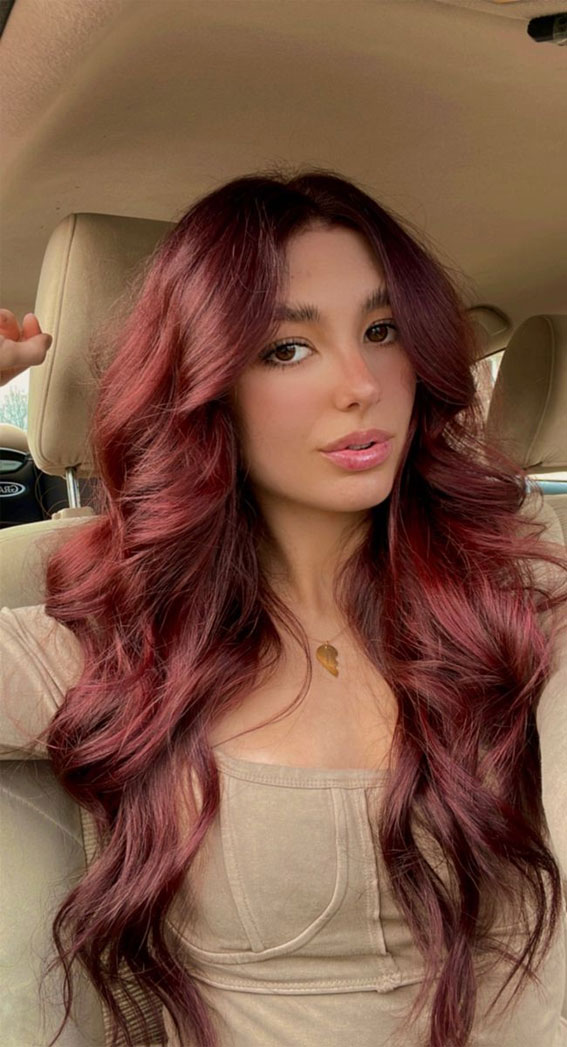
There is a specific moment mid-motion when a long layered burgundy looks like the most expensive thing you own. It happens when the feathered curtain bangs catch the light and the bright burgundy lifts the whole back section. That moment happens a lot, because the long layers are cut to move together instead of fighting each other.
By day three, reality sets in: the waves relax at the nape, the bangs separate into two stubborn pieces, and the mid-back length starts to feel heavy around the part. A one-minute re-blow on the bangs fixes it, and a deep side part carries you through the next day. This is a September-to-December color, for a wedding, a dinner, or anywhere you want the hair to speak before you do. Bright burgundy, uniform from root to tip, with a single full color pass so the tone stays even. Wavy, thick, mid-back, and worth the twenty minutes in the bathroom mirror.
Deep Burgundy with a Full Fringe
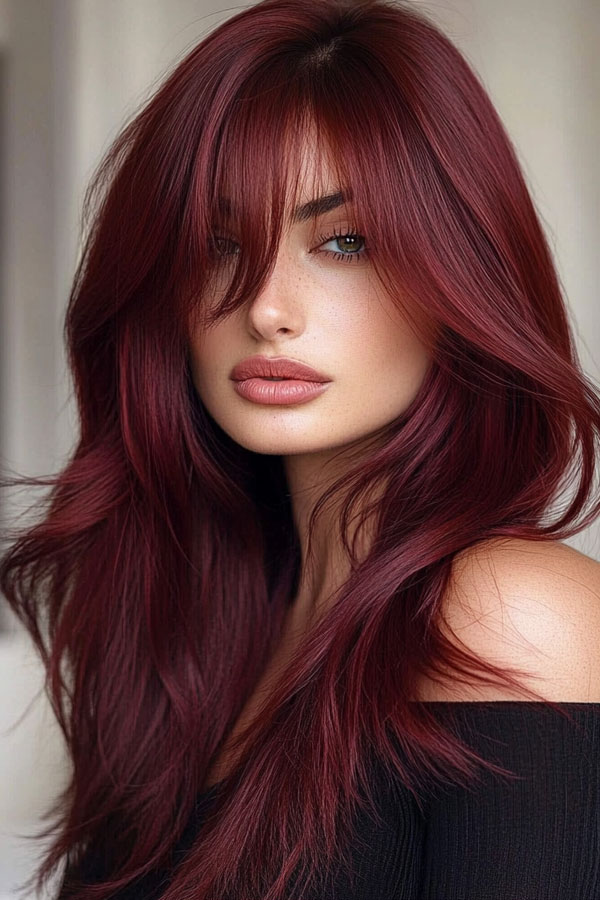
My first thought when I saw the deep burgundy full fringe was that the fringe is a personality, not a styling choice. It changes the whole face before the color gets a word in. The full fringe works on people with a wider forehead and a strong brow line. If you have a cowlick at the hairline or fine, straight hair, the bangs will separate, and you will spend the morning arguing with them.
On the salon question: book the appointment. A full fringe cut at home goes wrong in one snip, and the deep burgundy needs to be applied in sections so the tone stays even from root to end. This is long, wavy, thick hair with a layered cut and soft waves, so the shape has enough weight to carry the fringe. The honest downside is the interval between trims, because the fringe does not wait for the rest of your hair. If you can live with scissors in your bathroom drawer for maintenance, you can live with this commitment.
Long Deep Burgundy Waves
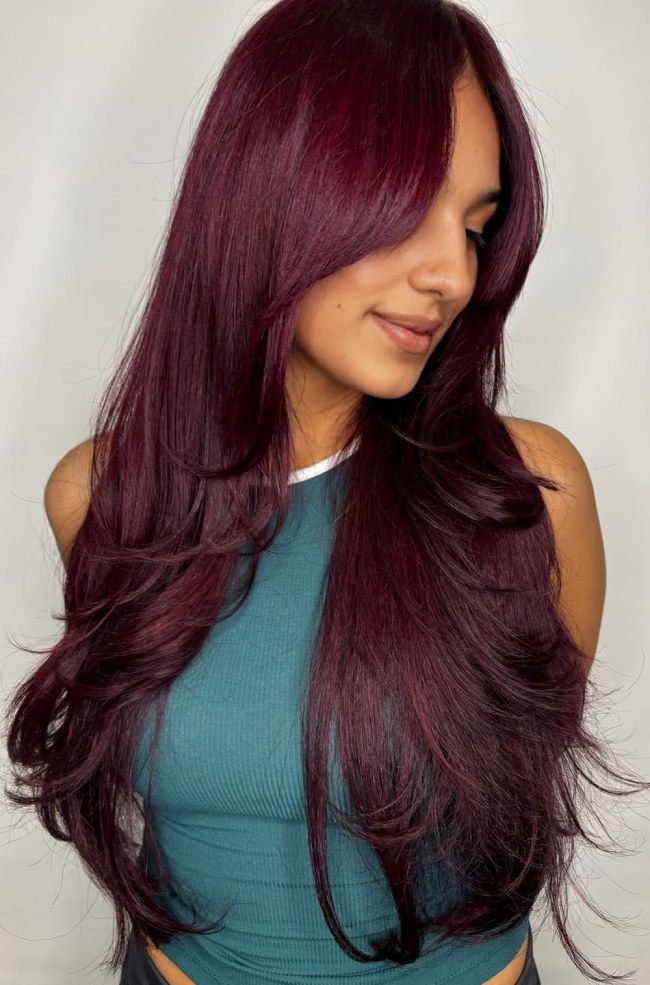
What does it cost to keep a long deep burgundy this saturated? I’ll tell you. The technique is a solid single-process colour, no highlights, just pure depth. The tone leans cool, with no orange gloss. You’re looking at a refresh every six to eight weeks, because the roots on long hair show fast. Styling the loose waves? That’s fifteen minutes with a large barrel. The texture is thick and wavy, which helps the colour catch light. The length matters: more length means more colour product, more processing time, more everything.
Mid-Back Deep Burgundy Uniform Color
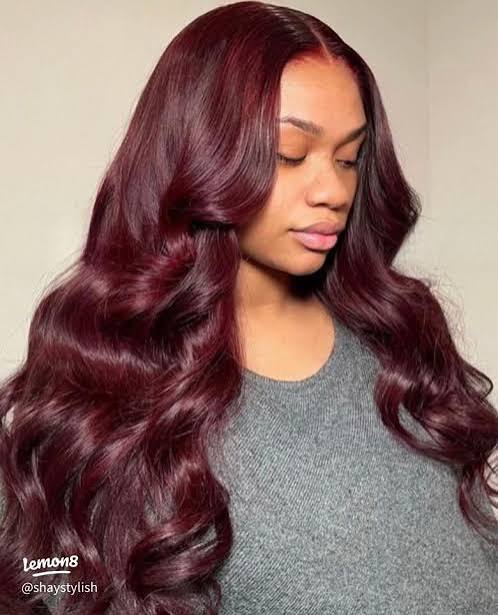
Uniform deep burgundy beats a multi-tonal version every time for pure depth. The technique is one solid formula applied root to tip, no ribbons or slices. Its tone sits firmly between red and violet, with no brown muddiness. The mid-back deep burgundy colour looks almost black in dim light and catches a rich ruby glow in sun. The cut has subtle layers to move the weight. Texture is wavy, thick, which holds the saturation well. The side-swept bangs add softness without breaking the solid colour. This is the shade for maximum drama with minimum salon chat.
Burgundy with Red and Purple Tones
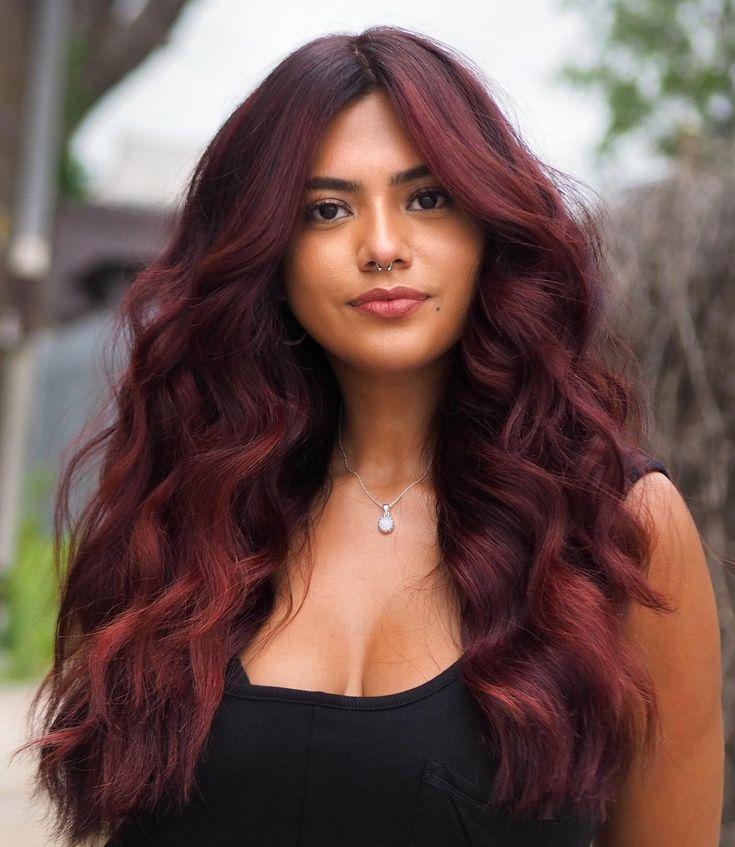
Notice how the red and purple separate in this burgundy red purple tones formula. That’s deliberate. The technique builds two or three formulas: a burgundy base, a redder tone woven through the mid lengths, and a violet accent closer to the ends. The application is a mix of balayage slices and babylights, blended without harsh lines. The overall tone is cool and jewel-like, with no brass. On this mid-back length and wavy thick texture, the face-framing layers help the colour shifts catch the eye.
What keeps this multi-tonal burgundy looking dimensional? A few specific items help. A sulfate-free shampoo for coloured hair. A cool-toned gloss every few weeks. Avoid products with coconut oil, which can pull warmth. The upkeep is regular toning to keep the red and purple separate, not muddied.
Mid-Back Deep Plum Burgundy Waves
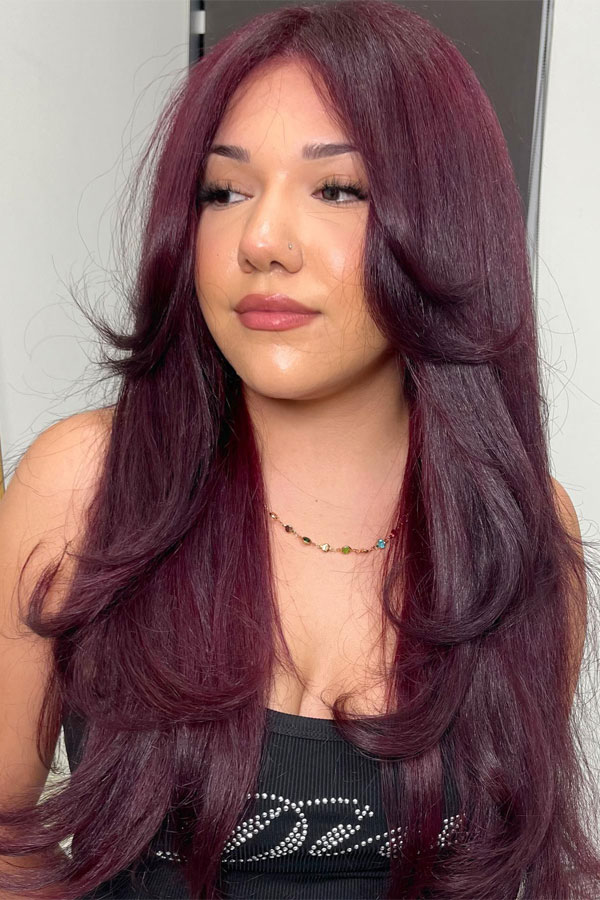
Can you wear a deep plum burgundy? It depends. The tone has more violet than a standard burgundy, which means it reads cool. It flatters skin with pink, red or neutral undertones. If your skin is very warm or golden, this can look separate. The technique is a soft root shadow blended into the plum, so the grow-out is graceful. The length is mid-back, the texture is wavy and thick, and the face-framing layers open up the colour around the face. The result is rich without being heavy. Pass if you prefer your hair to read warm.
Smooth Voluminous Burgundy Waves
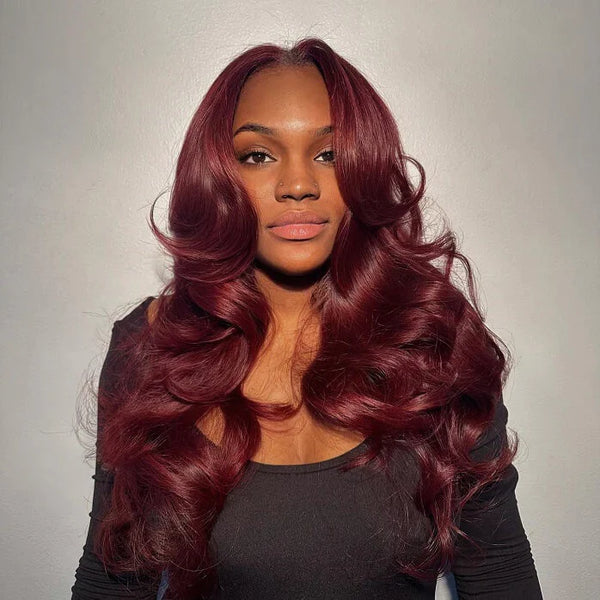
Smooth and voluminous in the same sentence? I had to check the photo twice. This is mid-back length, thick, wavy hair colored a deep burgundy with a glossy finish. The waves are uniform and polished, the kind you get from careful sectioning and a large-barrel iron. The tone is that classic lustrous deep burgundy, no copper peeking through.
Here’s what no one tells you: achieving that smooth voluminous burgundy look takes about 20 minutes and a heat protectant you actually use. And even then, the volume drops by hour four if your hair is fine. The waves stay, but the root lift? Gone. It’s a look that asks for a refresh, not a set-and-forget style.
Mid-Back Deep Burgundy Uniform Color — The Hair Has A Middle Parting
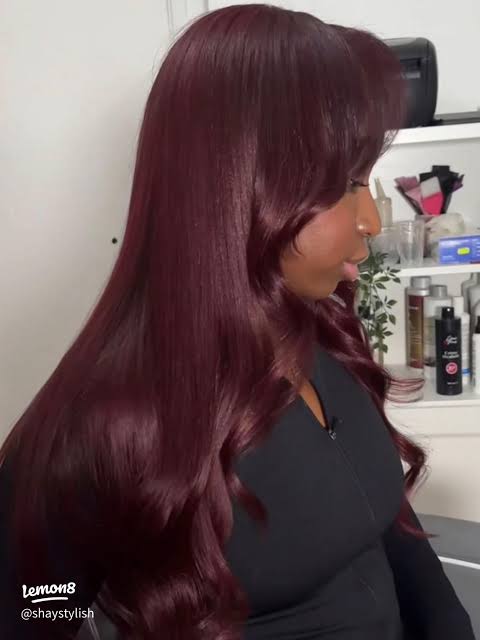
I’ll confess: I used to think uniform color was boring. Then I saw this mid-back deep burgundy with a middle parting and changed my mind. The color is a single-process deep burgundy, applied root to tip, no variation. The tone is solid and rich, no warm undertones fighting through. The texture is wavy and thick, styled in loose waves that soften the bluntness. The length hits mid-back, and the middle parting makes the hair fall symmetrically. This is not a DIY job. Uniform color this deep requires a salon for even saturation and no banding. You need a stylist who can saturate every strand, especially in the back.
Burgundy with Subtle Pink Highlights
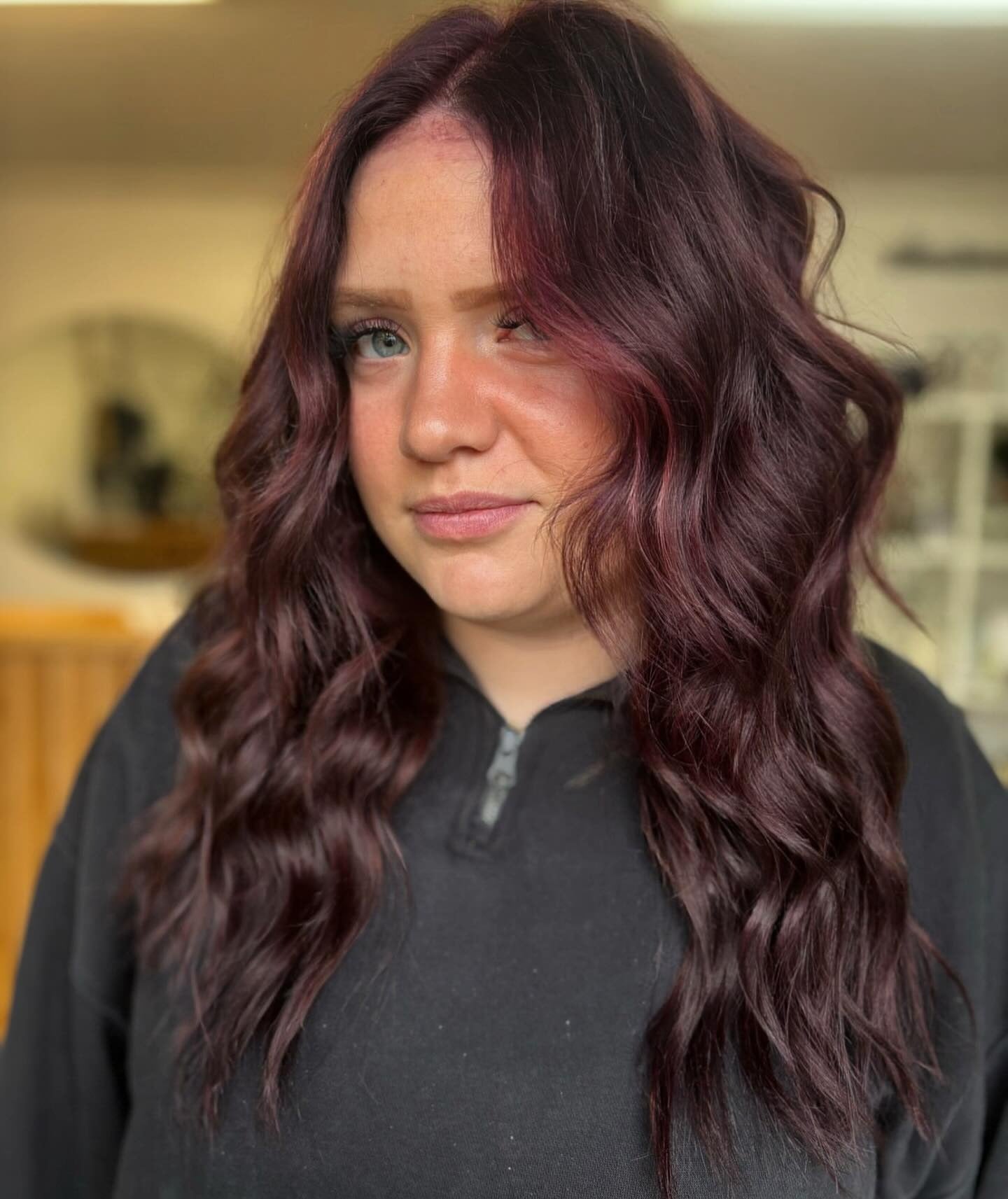
Can a burgundy base feel playful without screaming for attention? This is how. The base is a deep burgundy, and subtle pink highlights are woven through mid-back length wavy hair. The technique is sectional foiling, each highlight placed low for depth, not streaks. The tone is a cool pink that stays close to the burgundy, never turning hot pink or coral.
The wear reality is where this gets honest. Those subtle pink highlights fade fast. Within four washes, the pink softens to a blush, then to a faint shimmer. It needs a toning gloss at the salon every six weeks to keep the pink from pulling orange. Without that, you end up with a warm burgundy with ghost highlights. The texture stays wavy and thick, but the color maintenance is real.
Collarbone Wavy Burgundy
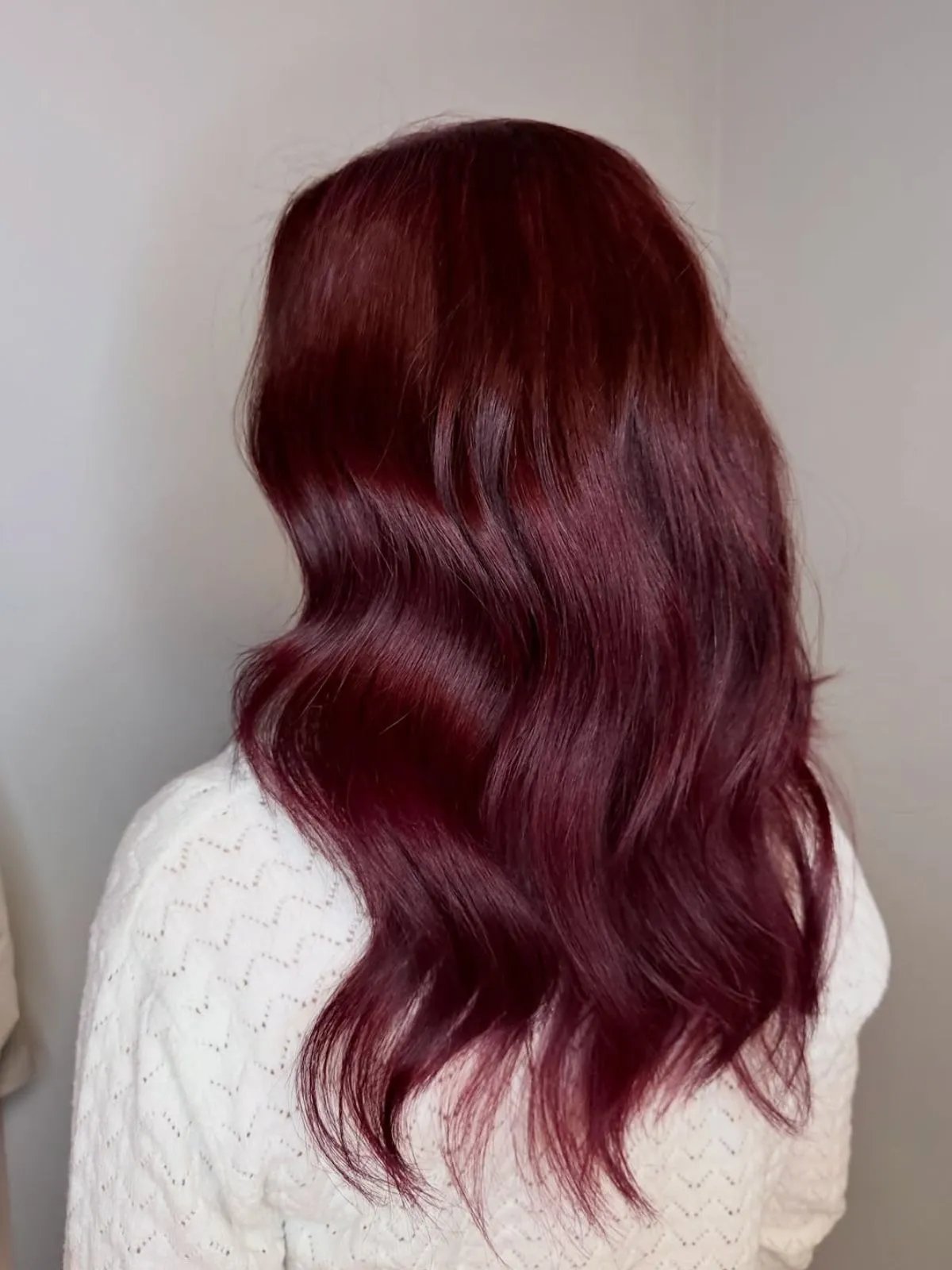
Collarbone length hits the sweet spot between short and long, and this wavy burgundy version proves it. The color is a deep burgundy applied as a single process, the tone consistent from root to tip. The texture is wavy and medium density, not heavy enough to pull the wave straight. The length sits right at the collarbone, and the side part adds a soft asymmetry. This suits oval and heart face shapes best—the wave creates width at cheek level. Skip this if your hair is very dense or very coarse; the wave can get lost in the bulk. For medium or fine hair, the subtle variations in the wave add movement without effort.
Deep Burgundy with Natural Texture
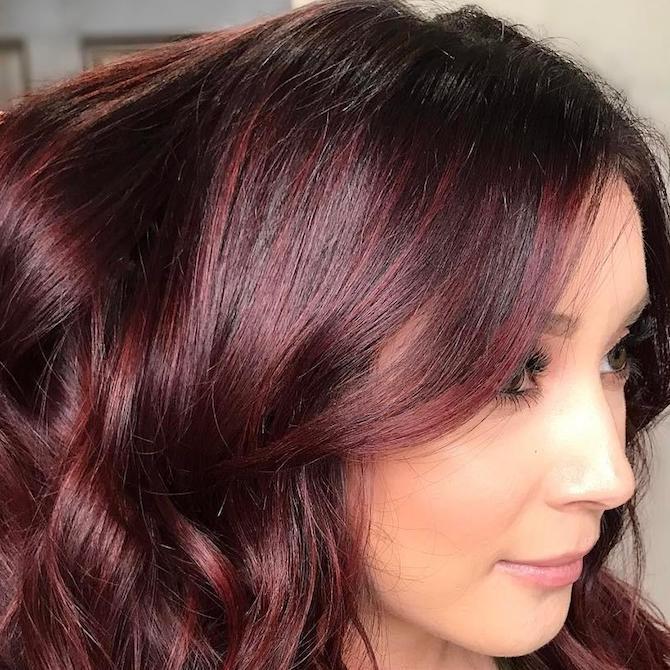
Here’s the verdict: this is the easiest deep burgundy you can wear. The color is a deep burgundy with subtle red undertones, applied as a single process on mid-back length hair. The tone is warm but not hot, with enough red to catch light without screaming. The texture is wavy and thick, styled with a air-dry or low-heat diffuse to keep the natural wave pattern.
The reality of wearing it for a week? The waves hold. Day two, the roots have a little lift from sleeping on it. Day three, the texture is still there, just relaxed. No refresh needed beyond a water spritz and a scrunch. The deep burgundy natural texture stays rich because the color is deposited evenly, no fading patches. The red undertones fade slightly by week three, but it shifts to a more muted burgundy, not an odd orange. This is the low-maintenance version of bold color.
Burgundy Highlights on Dark Brown
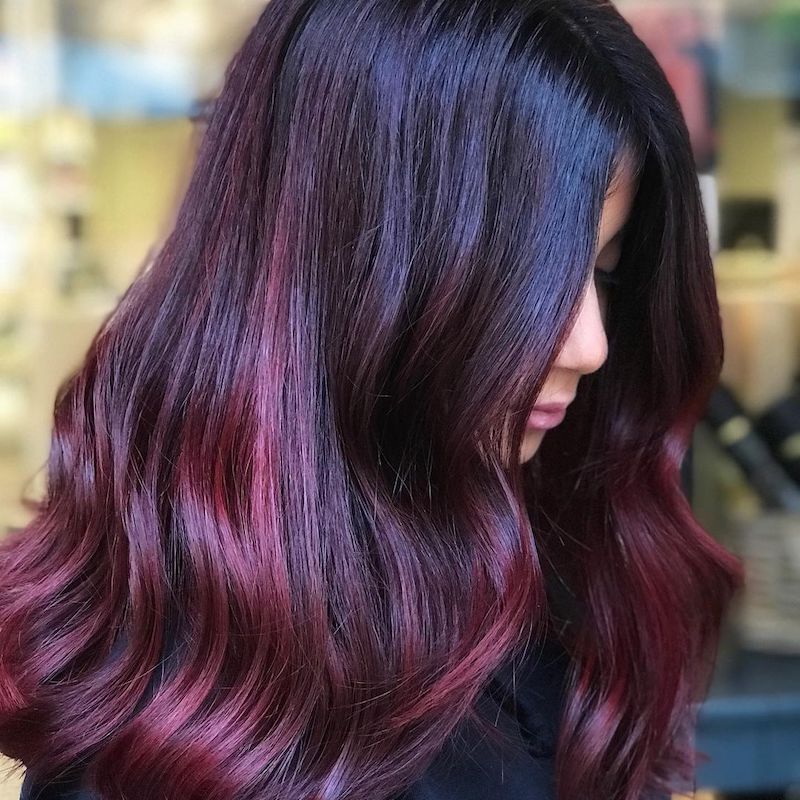
I’ll be honest, I wasn’t sure about burgundy highlights dark brown on my collarbone-length waves. But the technique is simple: fine slices of burgundy woven through a dark brown base, creating a tone that reads warm but not candy-bright. The length keeps it wearable, and the wavy texture helps the highlights catch light without looking stripey. Who does this flatter? Medium to thick hair with natural movement, especially if you want dimension without full commitment. The downside? Highlights fade faster than the base, so those striking burgundy highlights need a toning visit around week six. Skip if you hate salon appointments.
Burgundy Balayage Transition
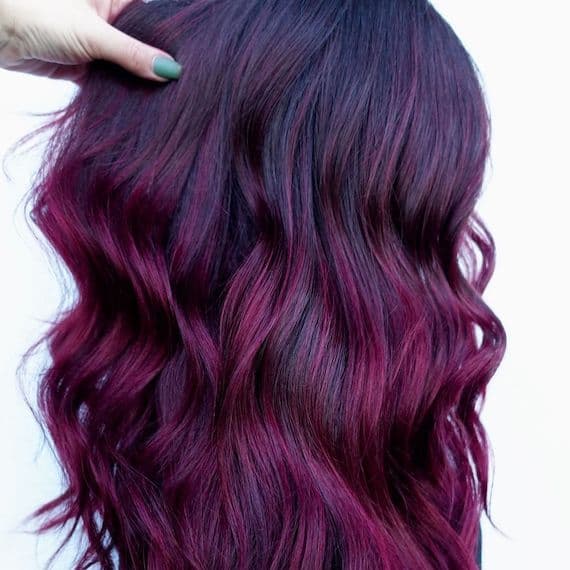
Ever wondered how to get that soft fade from dark roots to lighter burgundy ends? The burgundy balayage transition starts at the root: your natural dark base stays untouched, then the colorist hand-paints lighter burgundy sections starting a few inches down. The technique creates a tone that deepens at the root and brightens toward the mid-back length, especially on wavy, thick hair. No harsh line, no obvious grow-out.
The wear is the real win. This grows out gracefully for eight to twelve weeks before you need a touch-up. DIY? I wouldn’t. Balayage relies on placement and saturation – one uneven swipe and you’ve got a patch of lighter burgundy ends that reads as a mistake. Book the salon, ask for a soft, blended transition. The waves take about fifteen minutes with a large-barrel iron.
Dark Base with Burgundy Accents
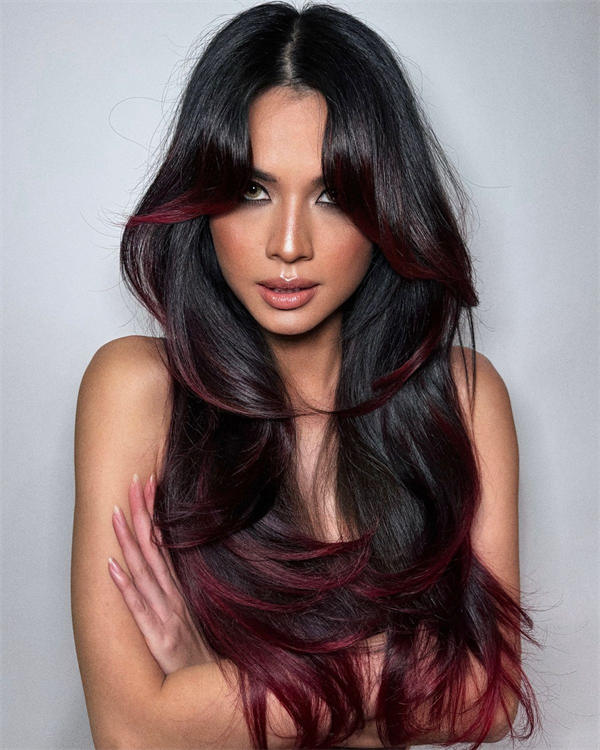
There’s a clear difference between a blended balayage and a deliberate contrast. This dark base burgundy accents look goes for the latter: a near-black base with burgundy highlights and tips that sit like punctuation marks against the darkness. The technique is precise foil highlights on the mid-back length, plus a dip-dye effect on the ends. The tone stays cool and deep, not warm, so the striking contrast reads as intentional, not faded.
The straight, thick texture helps the contrast pop – no wave pattern muddies the line between dark and burgundy. Compared to a soft balayage, this is louder. It demands attention. The curtain bangs frame the face without softening the edge. If you want dimension that announces itself, this is it. If you prefer a seamless melt, look at the balayage section instead.
Glossy Dark Burgundy Waves
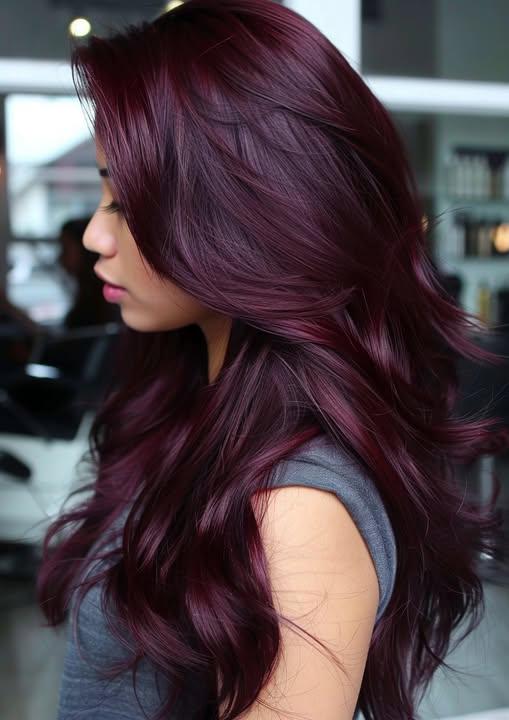
She turned her head and the light caught the gloss before the colour registered. That’s the trick with glossy dark burgundy on thick, wavy hair – the shine comes first, then the depth. The colour is a single-process dark burgundy with subtle lighter tones woven through the mid-back length, not enough to call highlights, just enough to catch light differently. The side-swept bangs add movement, and the loose waves take about fifteen minutes with a curling wand. Who should try this? Anyone with thick, wavy hair who wants a rich, dimensional colour without high-contrast streaks. The glossiness comes from the tone itself, not a product – the darker base reflects light better than a flat matte finish.
Burgundy Color Transition
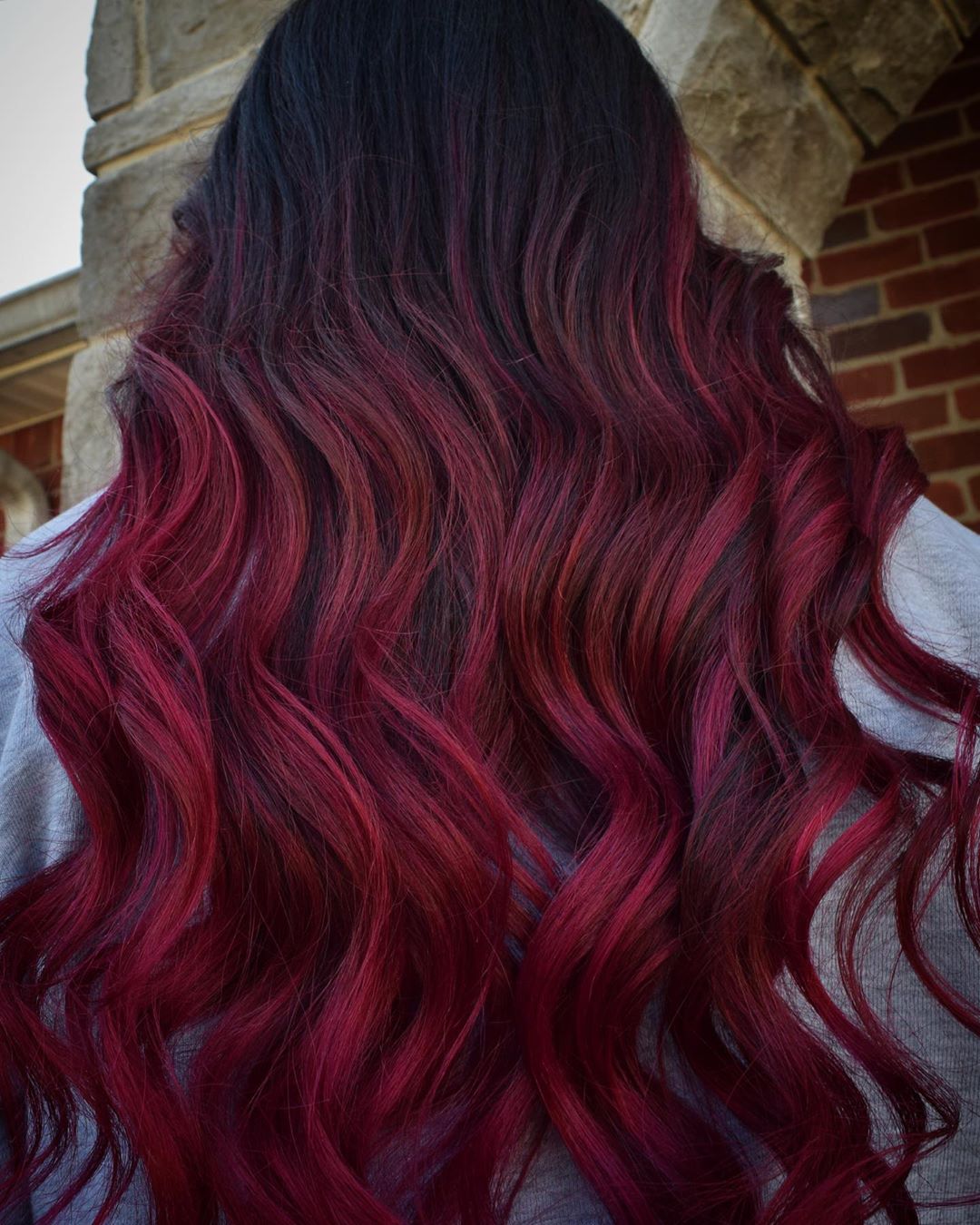
This is the grow-out friendly burgundy you’ve been hoping for. The burgundy color transition starts with dark roots that blend into a vibrant burgundy mid-length, then softens to lighter burgundy ends at the mid-back. The technique is a root shadow plus balayage – the roots stay dark intentionally, so new growth reads as part of the design, not a miss. The tone shifts from deep plum at the scalp to a brighter wine at the tips, and the wavy, thick texture helps that gradient look natural.
How does it hold up across a real week? The roots stay invisible for at least eight weeks. The ends may fade slightly after six, but because the transition is gradual, it doesn’t look bad – just softer. Maintenance is a toning gloss every two to three months. No harsh lines, no panic at week four. This is the set-it-and-forget-it of burgundy.
Bright Saturated Burgundy Hue
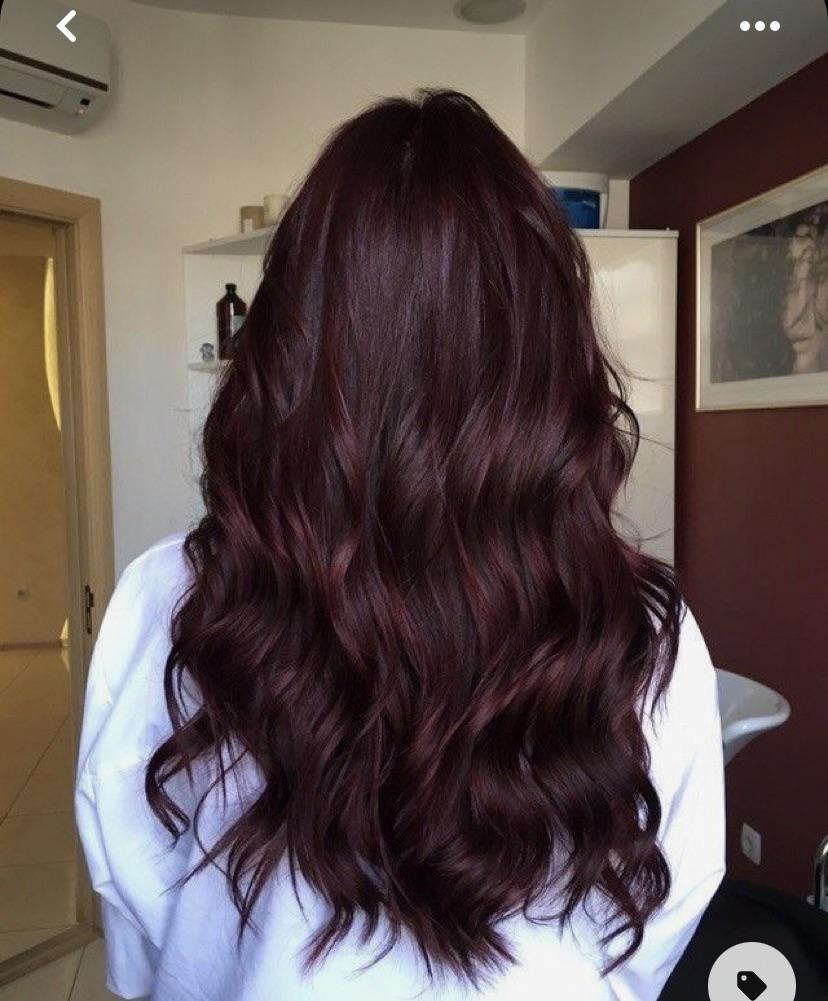
How many hours does it take to get a bright saturated burgundy this even? More than you want to think about, but the result is a mid-back length of thick wavy hair with red undertones that catch every light. The technique here is a full saturation application, not highlights or balayage, because you want that consistent tone from root to end. That means a double process if your base is dark, and a toner to lock in the red undertones. The texture is wavy and thick, which helps the color look richer. This is a salon-only job, and you’re looking at a full afternoon in the chair. The payoff is a color that doesn’t need babying for the first few weeks.
Burgundy With Lighter Red Tones Collarbone Burgundy with Red Tones
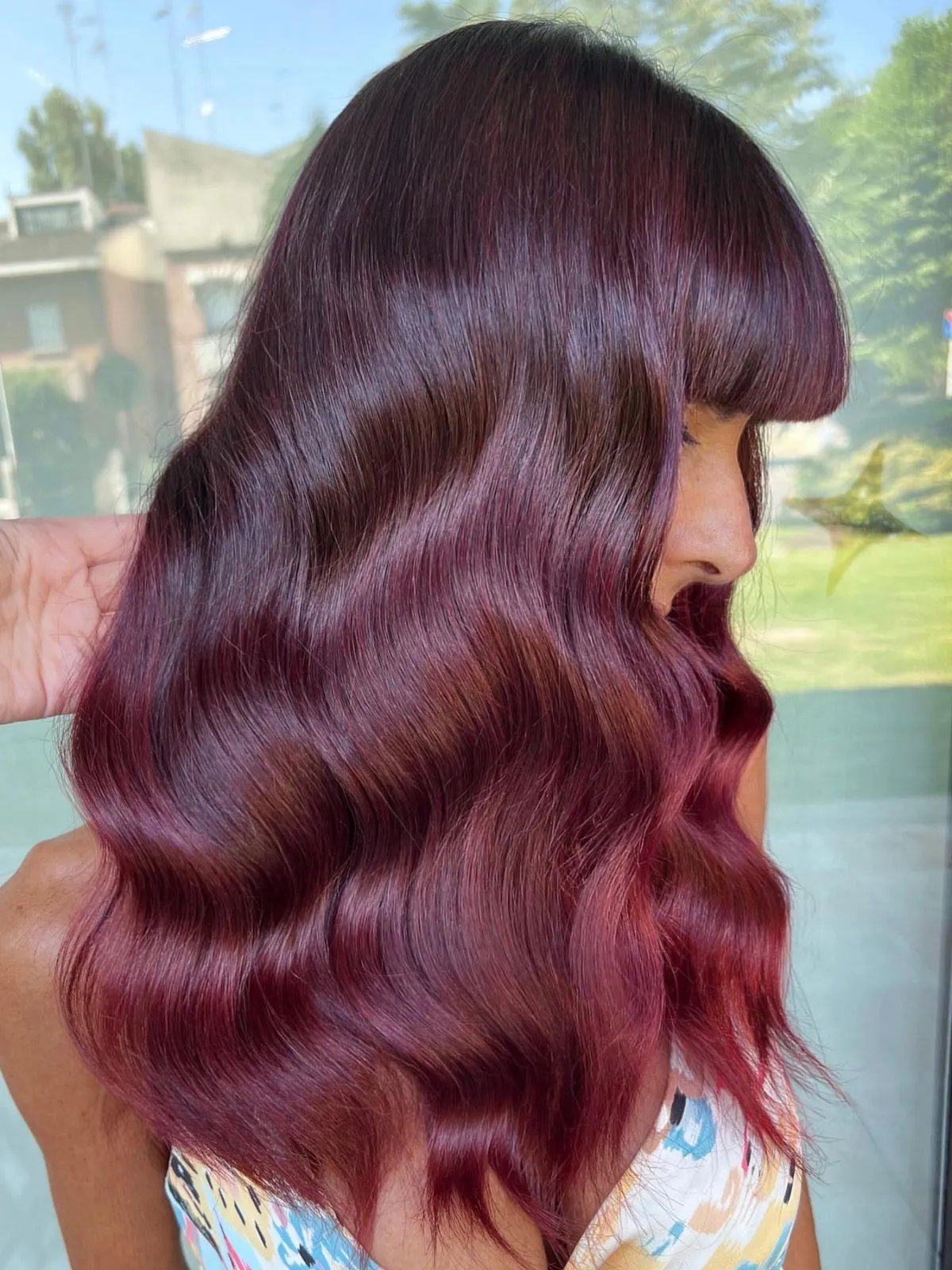
I didn’t expect to like this as much as I do. The lighter red tones are woven in as fine highlights, not chunky streaks, so the collarbone burgundy red tones read as dimension, not contrast. The base is a deep burgundy, and the stylist uses a babylight technique to lift sections just enough to deposit a warmer red. The blunt bangs get a few face-framing pieces. The texture is wavy, medium density, which helps the color blend. The result is a subtle shift, not a statement.
Mid-Back Straight Deep Burgundy
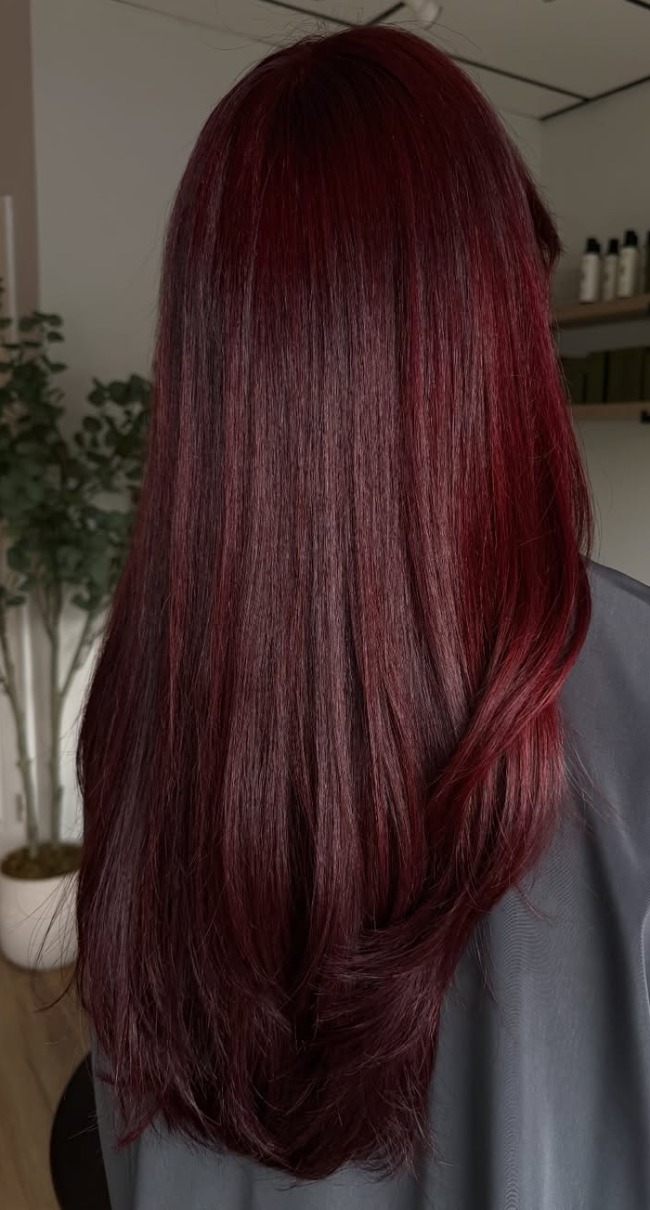
Straight thick hair shows every uneven patch of color. I learned this the hard way when I tried a deep burgundy at home and ended up with a stripe. This mid-back straight deep burgundy is consistent throughout, which means the stylist applied the color in sections, saturating each strand evenly. The tone is a true deep burgundy, no red or purple leaning, just a rich wine. The texture is straight and thick, so the color reflects light uniformly. That’s why it looks so sleek. I’ve had this done once, and the key was the stylist using a tint brush to paint each layer. No shortcuts.
Burgundy with Subtle Gradient
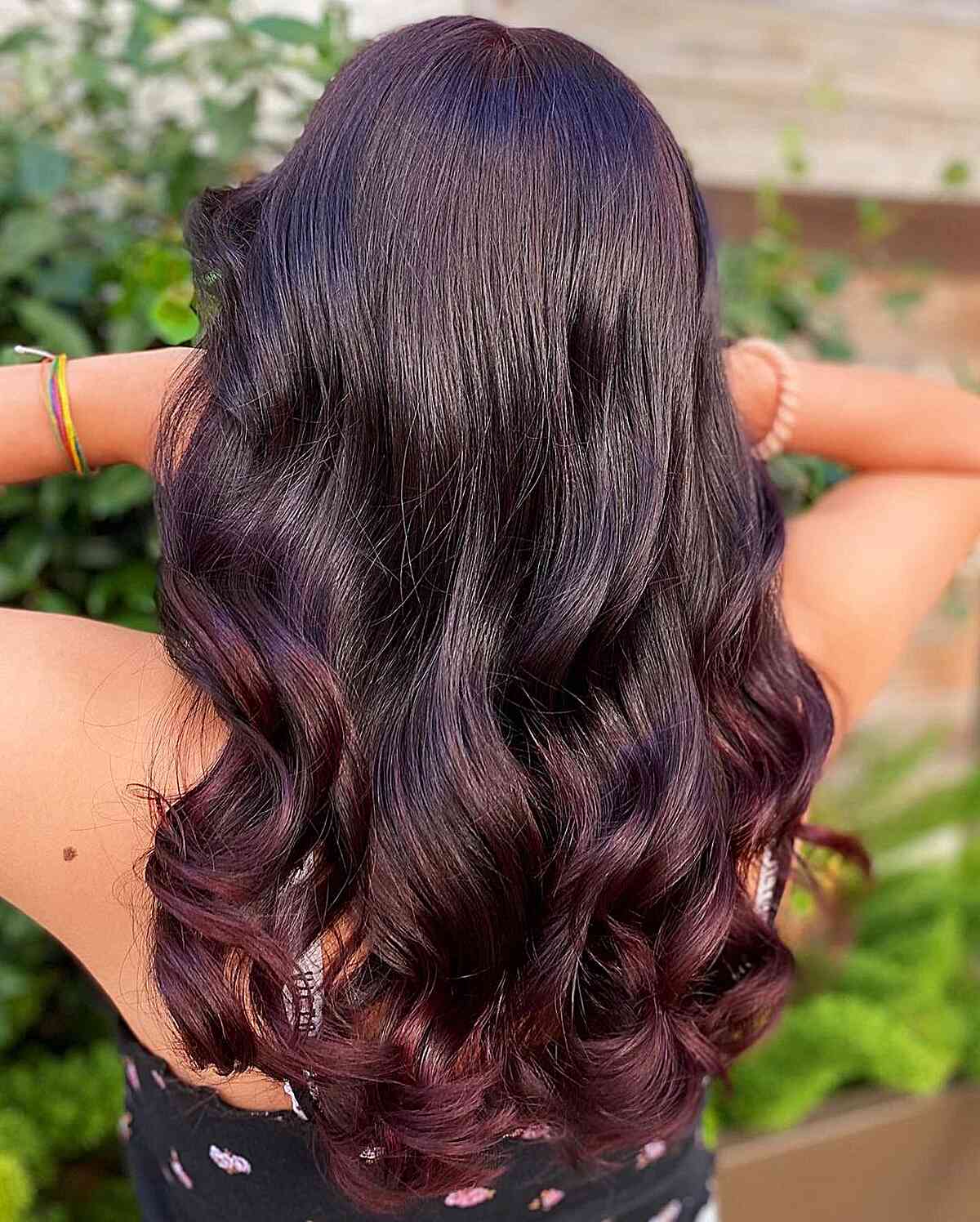
This burgundy subtle gradient is the most low-maintenance burgundy I’ve seen. The color starts deep at the roots and fades to subtle lighter ends, so as it grows, the line blurs instead of announcing itself. After a week, the waves still hold the dimension because the lighter ends catch the light. The mid-back length and wavy texture, medium density, help the gradient look intentional even as the color fades slightly.
Upkeep is simple: a color-safe shampoo and a gloss every six weeks to refresh the tone. The subtle lighter ends mean you can stretch salon visits to ten weeks before the roots become obvious. I’ve worn this for a month and the grow-out looked like a planned ombre, not a neglect situation.
Burgundy Ponytail with Pinkish-Purple Tones

I’ll admit I underestimated how fast the pinkish-purple tones would fade. The mistake is assuming a ponytail protects the color. It doesn’t. The lighter pinkish-purple tones in this burgundy ponytail pink purple look are the first to go, especially if you’re pulling hair back daily. The friction from the elastic and the exposure to sun on the nape accelerate fading. The honest downside is that these tones need more maintenance than a solid burgundy.
To dodge this, use a silk scrunchie instead of a regular elastic, and apply a leave-in with UV protection before pulling it back. Also, ask your stylist to keep the pinkish-purple tones slightly deeper than you want, so they fade into the right shade. The texture is wavy and thick, which helps hide uneven fading better than straight hair would.
Sleek Straight Dark Burgundy
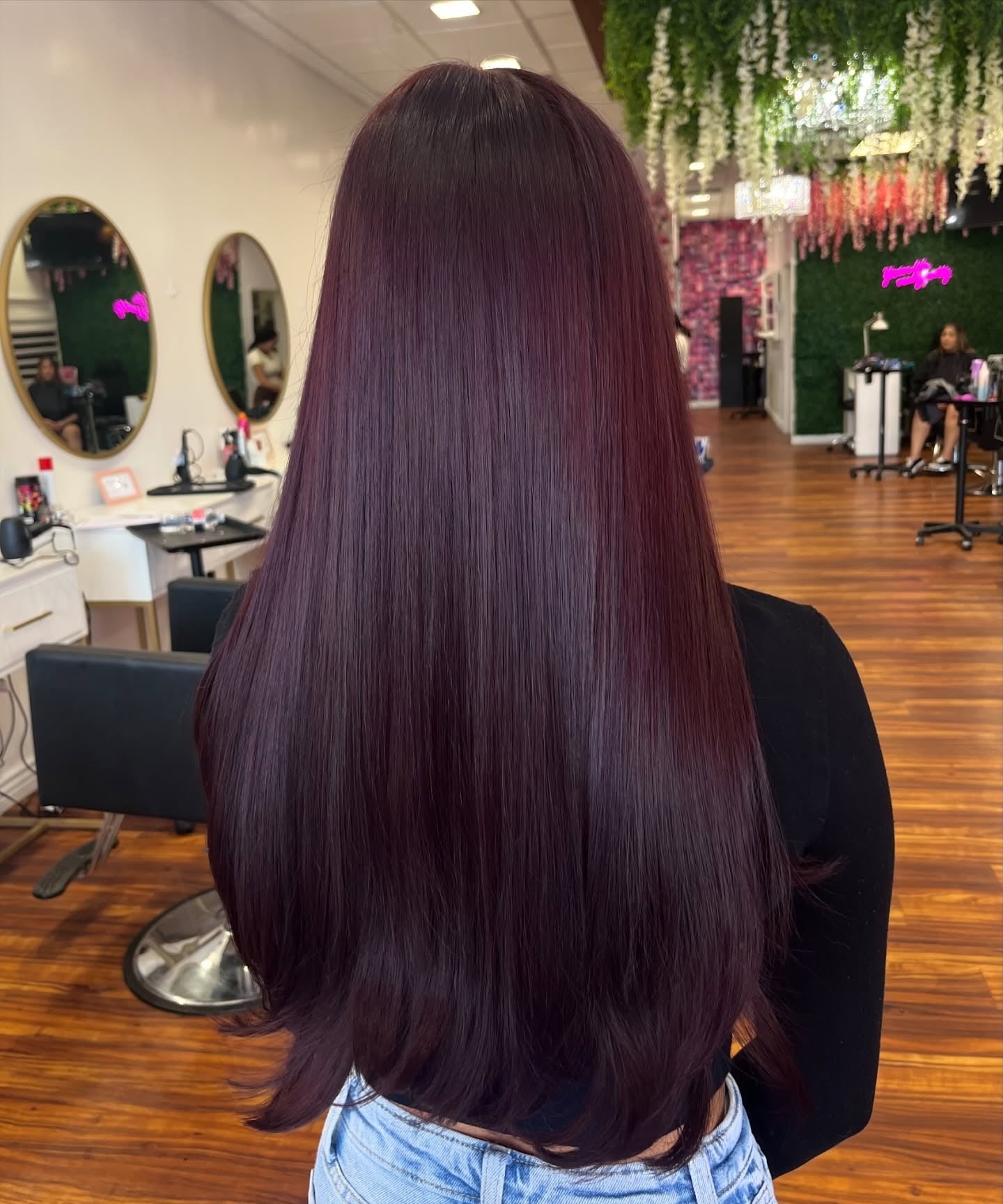
Can you get a uniform dark burgundy at home? I have tried. The result was patchy at the crown and flat at the ends. A salon does it differently: they pre-lighten only where needed, then apply a single dark burgundy shade in sections, pulling it through to the mid-back length. The tone stays cool, not muddy, because they mix for your natural level. My straight, thick hair took the colour evenly, but I watched the stylist paint each piece separately. That is the difference between a deep, even finish and a DIY disaster. The sleek straight dark burgundy look demands professional application; no bathroom mirror can match the saturation.
Deep Plum Burgundy Long Bob
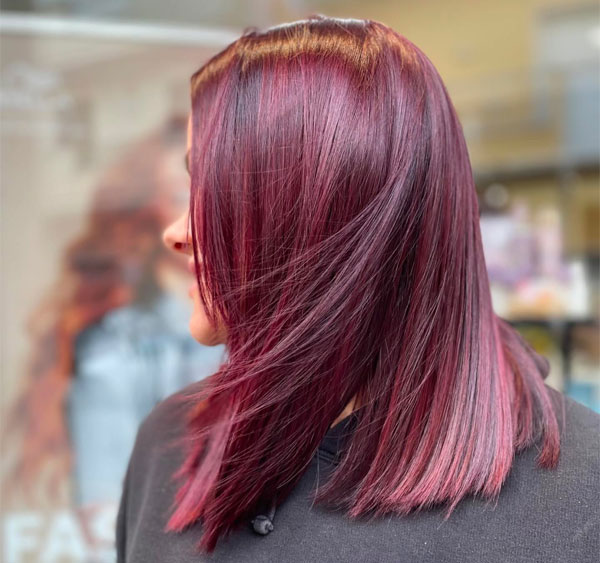
The deep plum burgundy bob starts with a collarbone-length cut, blunt with subtle layers for movement. The colourist applies a deep plum burgundy base, then works a violet-toned gloss over the top to shift the red toward purple. On straight, thick hair the tone reads rich rather than flat. The technique is two-step: deposit the burgundy, then add the plum glaze. That second layer keeps the colour from fading rusty. A single-process application would not give the same depth. This is a salon-only build, no shortcuts.
Chin-Length Wavy Burgundy Bob
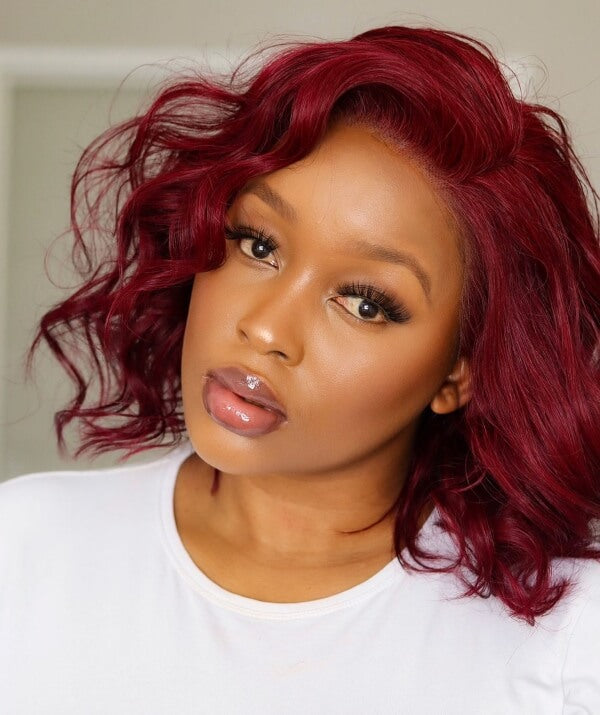
A chin length wavy burgundy bob is the shortest investment in this roundup. The vibrant solid color covers the entire cut: chin-length, side-parted, wavy blowout. Medium-density hair holds the wave without falling flat by lunch. The cut hits the jawline, which suits round and heart shapes by adding angular lines. The colour demands a touch-up every four to six weeks because the tone shows root growth fast. That is the trade-off for a crisp chin-length wavy burgundy look: frequent salon visits, but a sharp, striking silhouette every time.
Long Layers Long Deep Burgundy Loose Waves
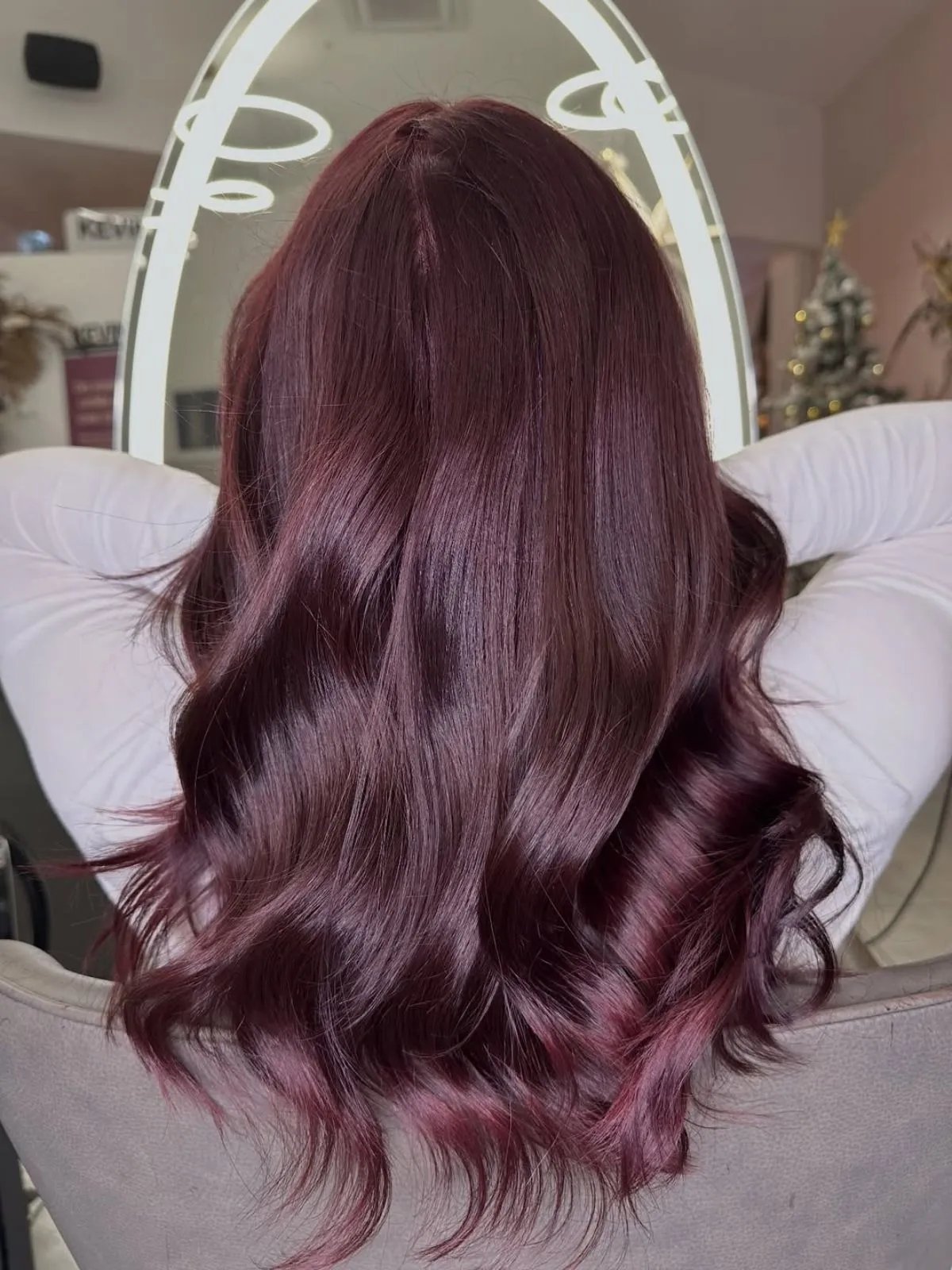
Monday morning, I curled a section of my long deep burgundy hair, and it held until dinner. The loose waves softened the long layers, and the colour caught the light differently with each turn of my head. Straight, thick texture needs a 1.5-inch barrel to get that relaxed bend; a smaller iron creates tight spirals that fight the deep burgundy tone.
For fall weddings or holiday dinners, this is the look. The season calls for rich, warm shades, and loose waves on long length feel polished without being stiff. The colour stays lustrous for about six weeks before the violet undertone starts to fade. A weekly cool rinse keeps the tone from going brassy. The long deep burgundy waves work for fine hair too, just use a low heat setting and a texture spray for grip.
Dark Burgundy Side View
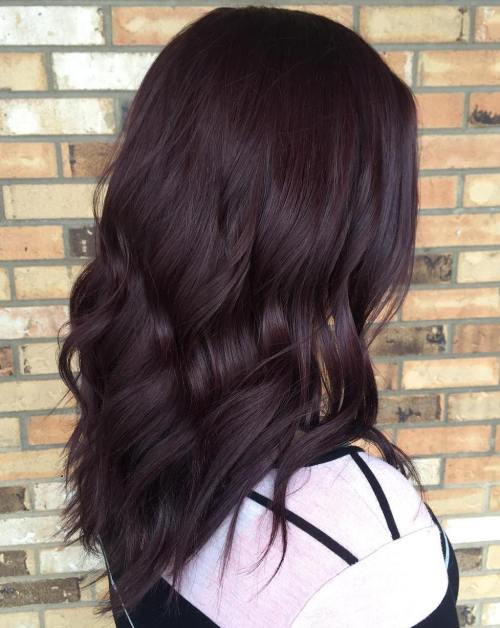
I saw the dark burgundy side view and thought: that could look flat. And it can, if the tone is too muddy or the hair lacks shine. The deep saturated burgundy colour on wavy, thick mid-back hair reads like black cherry in low light, then opens to a rich red under direct sun. The technique is a single-process application with a violet additive to prevent the brown from taking over. The downside: without a gloss every fifth week, the colour settles into a dull maroon. A color-safe conditioner is non-negotiable. This is not a low-maintenance shade, but when it is fresh, the dark burgundy side view is worth the effort.
Sleek Bob with Violet Undertones
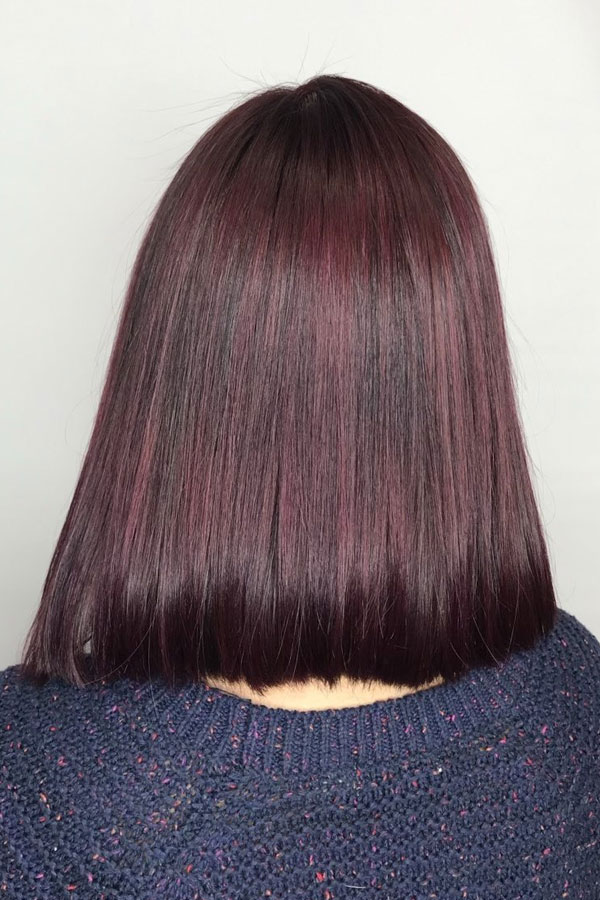
I once thought I could get this look from a box. The subtle violet undertones in a sleek bob require a specific formulation to not overwhelm fine, straight hair. A salon mixes a violet base into the burgundy, keeping it dark enough that it reads as a shift in light, not a stripe. The chin-length bob needs a precise cut to hold that straight, glossy shape. Fine texture shows every uneven patch, so the colour application has to be flawless. This is not a bathroom-mirror job. Book the appointment.
Short Afro in Vibrant Burgundy
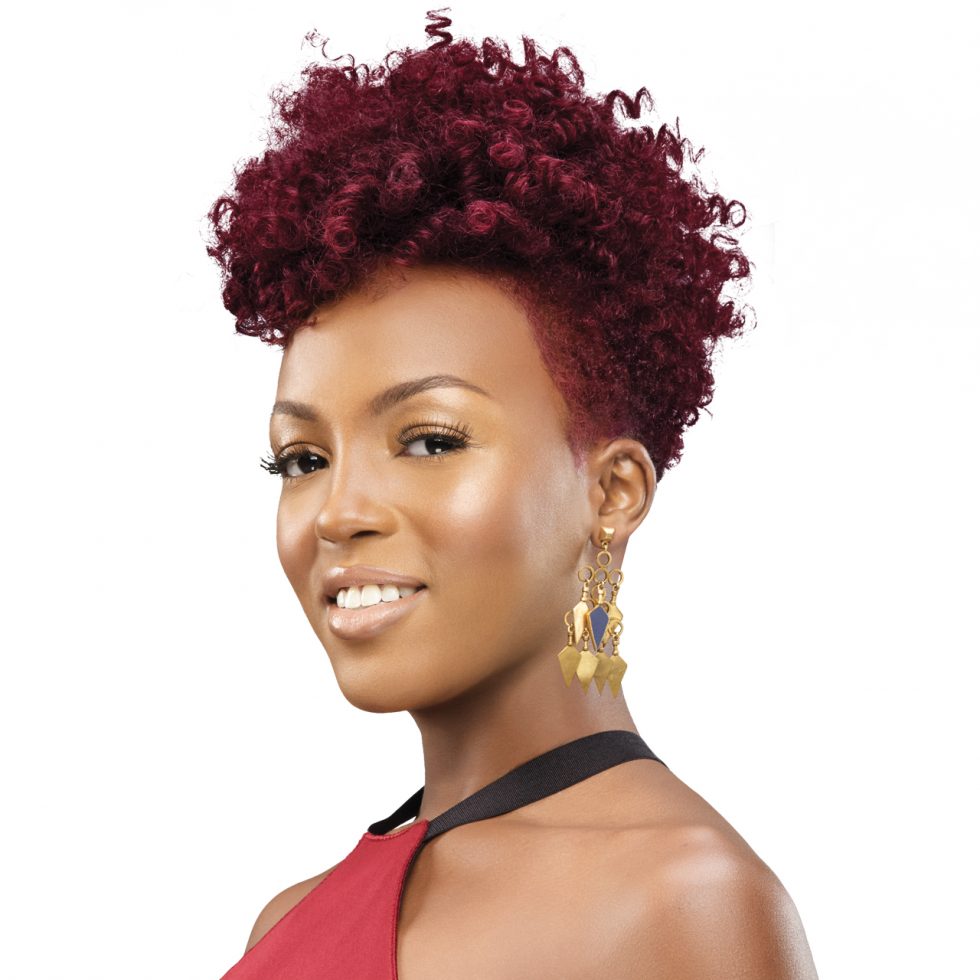
Can a solid burgundy hold its own on dense, coily hair without turning into a single flat block of colour? The short afro vibrant burgundy relies on the texture to create dimension. The light hits every coil differently, so the colour reads as rich and deep, not flat. A solid application is actually the best move here because the coils provide the dimension. The side part breaks up the shape. It is a bold, confident colour choice that lets the hair’s natural movement do the work.
Chin-Length Dark Burgundy with Violet
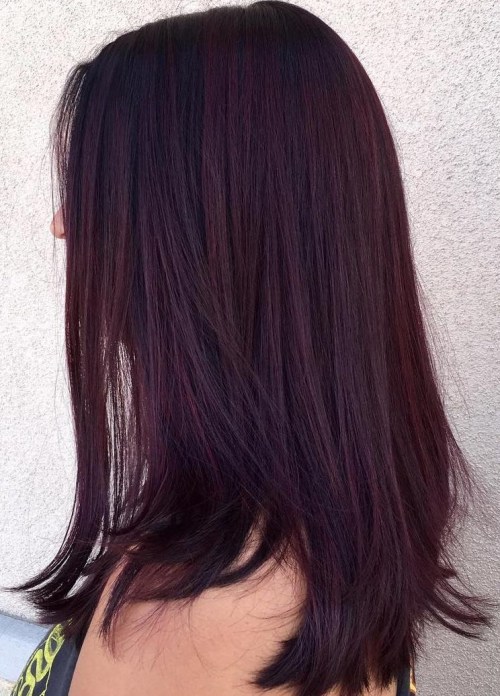
The violet in this chin length dark burgundy is the part that makes it read expensive, not aggressive. The base is dark enough that the violet undertones only catch the light. On fine to medium straight hair, that layering prevents the colour from looking heavy. The middle part and straight lob cut keep it clean. The catch is that violet fades fast. A cool shampoo is non-negotiable to stop it from pulling brassy after three washes. The cut needs a trim every eight weeks to keep the line sharp.
Long Layers Mid-Back Straight Dark Burgundy
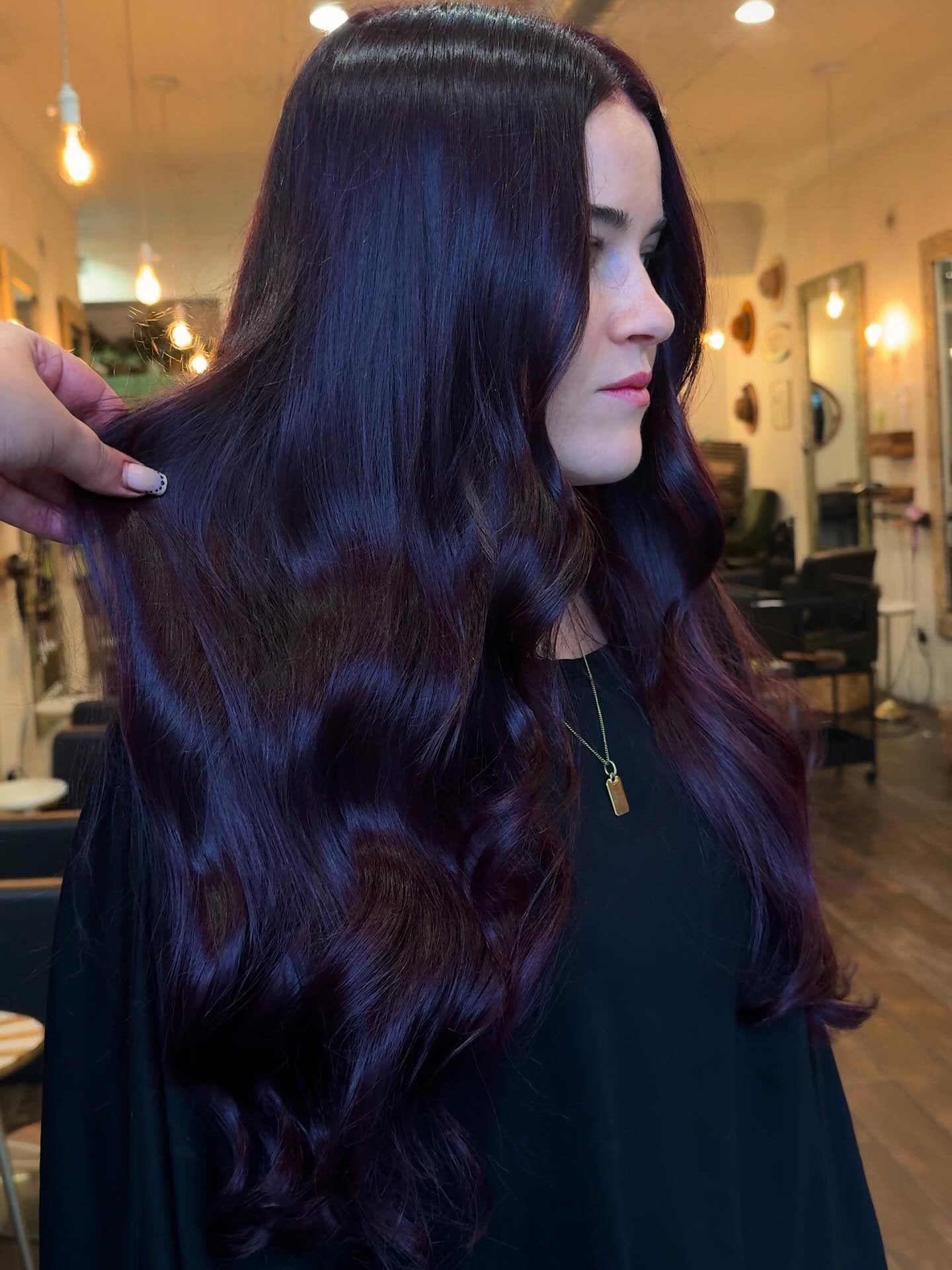
This is the shade that looks the same on day one and day six. The mid-back straight dark burgundy works because it is a uniform colour. On thick, wavy hair, a single-process dark shade hides the regrowth better than anything lighter. The long layers keep the shape from turning into a triangle. Styling it straight with slight waves takes about ten minutes, and the dark base means you are not chasing brass. The colour fades evenly because there is no highlight to turn orange. It is the low-maintenance answer to wanting red without the constant touch-up. A trim every ten weeks keeps the ends from splitting. By Wednesday, the slight wave has dropped, but the dark burgundy still reads rich. A dry shampoo at the roots is all it takes to reset the volume.
Rich Burgundy Mid-Back Waves
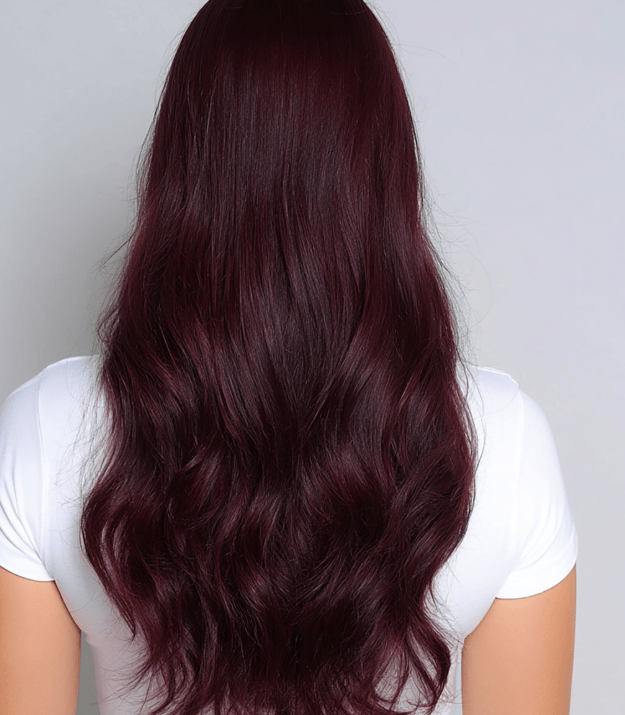
How much time are you willing to sit for this colour? The rich burgundy mid-back length requires a full saturation, and that takes time. The stylist has to lift the base enough for the burgundy to register as rich, not muddy, especially on thick, wavy hair. A single process can take two hours. The payoff is a uniform colour that moves with the waves. The middle part and long layers let the shade show its depth. If you are booking this, clear your afternoon. It is not a quick errand.
Final Thoughts
After seeing all 34 of these, I noticed something. The ones with dimension hold my attention longer than a single flat shade. A little root shadow or a soft balayage line makes the color feel intentional, not accidental. I’m booking the balayage transition next. My roots show at week five, and I need something that grows out gracefully.
- Tone at week six, not week ten.
- Use a color-safe shampoo every wash.
- Avoid hot water on wash day.
- A gloss service every eight weeks keeps the red from turning orange.
I’m going with the transition. It buys me two extra weeks between appointments.