

I kept seeing chestnut brown in the salon chair next to mine, a rich brown that reads warm without tipping into copper. It is not a trend, it is a correction: everyone who went too dark last winter is asking for depth with light.
This roundup has 33 ways to wear Chestnut Brown Hair, from uniform lobs that need no toner to layered colour that buys you six weeks between appointments. I wrote it for anyone with fine hair that goes flat by 4 pm, a root line that shows at week five, or a stylist who keeps saying dimension. No marketing, just what holds and what does not.
Uniform Chestnut Brown Collarbone Lob
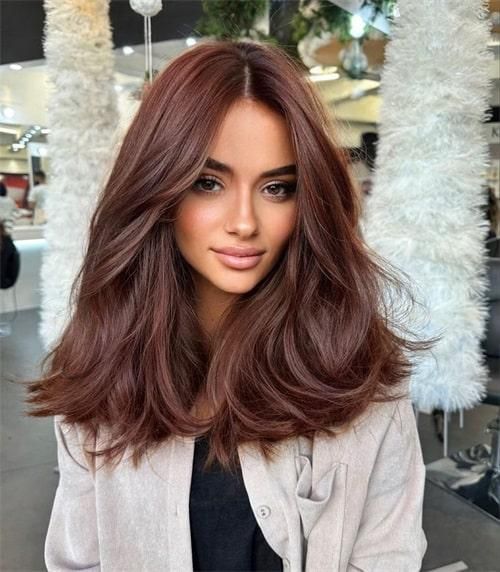
A middle part and a blunt collarbone line do something specific to medium-density hair: they make it look like you have more of it than you do. This is a uniform chestnut brown lob, one solid shade from root to end, no highlights, no dimension. The rich chestnut brown sits evenly across wavy texture, and because there is nothing to break up the colour, the eye reads the shape first. That collarbone length hits exactly where a lob should, not grazing the shoulder, not hovering above it. A blowout with a round brush takes about 15 minutes. Soft waves with a large barrel curling iron add another 10.
Chestnut Brown With Caramel Highlights
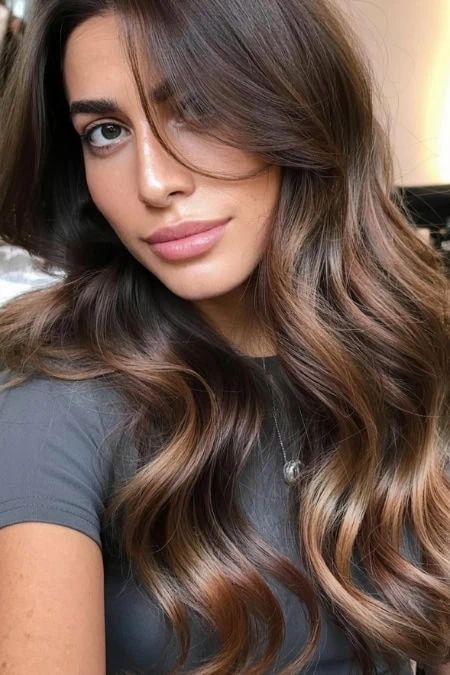
I did not expect to like curtain bangs this much. But paired with chestnut brown with caramel highlights, they make sense. The technique here is subtle: thin, spaced-out caramel highlights woven through a rich chestnut base, not chunky, not stripey. They catch light at different angles, which is how you get dimension without looking streaky. The curtain bangs frame the face without committing to a full fringe, and at mid-back length, the soft waves keep everything moving. This is a salon colour, no question. A stylist places each highlight by hand, and that takes time. A gloss refresh every six to eight weeks keeps the caramel tones from turning brassy.
Layered Chestnut With Caramel Dimension
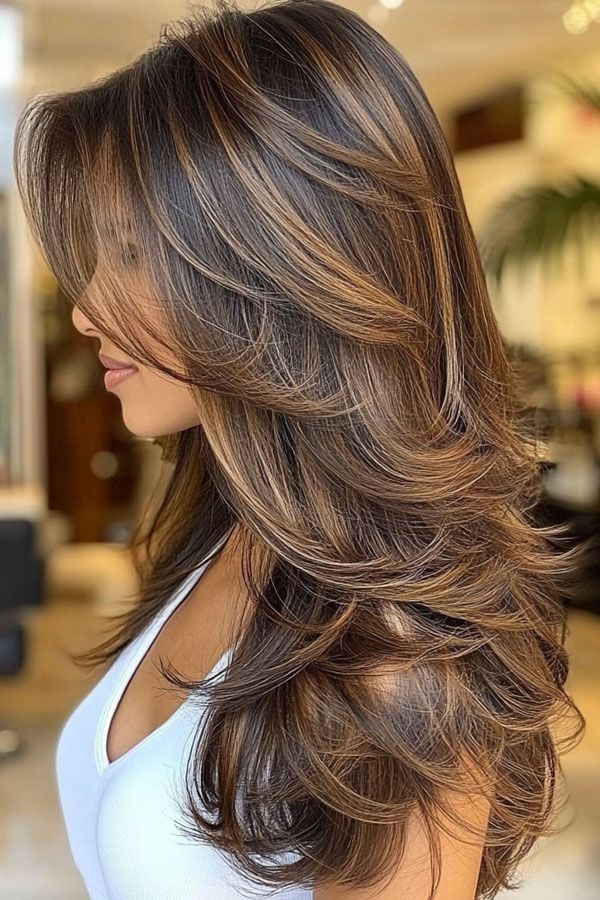
I will take a layered cut with caramel highlights over a solid block of colour every time, especially on thick hair. The uniform chestnut brown lob from earlier is clean and polished. This is something else. The layered chestnut with caramel opens up the shape. Those caramel highlights sit on the top layers, catching light, while the deeper chestnut stays underneath. The result is movement without losing density. On thick, wavy texture, that matters. The side-swept fringe softens the front without shortening the face. Tell your stylist: long layers that start below the chin, caramel babylights through the crown, and a side fringe that blends, not cuts.
Warm Chestnut With Bold Caramel
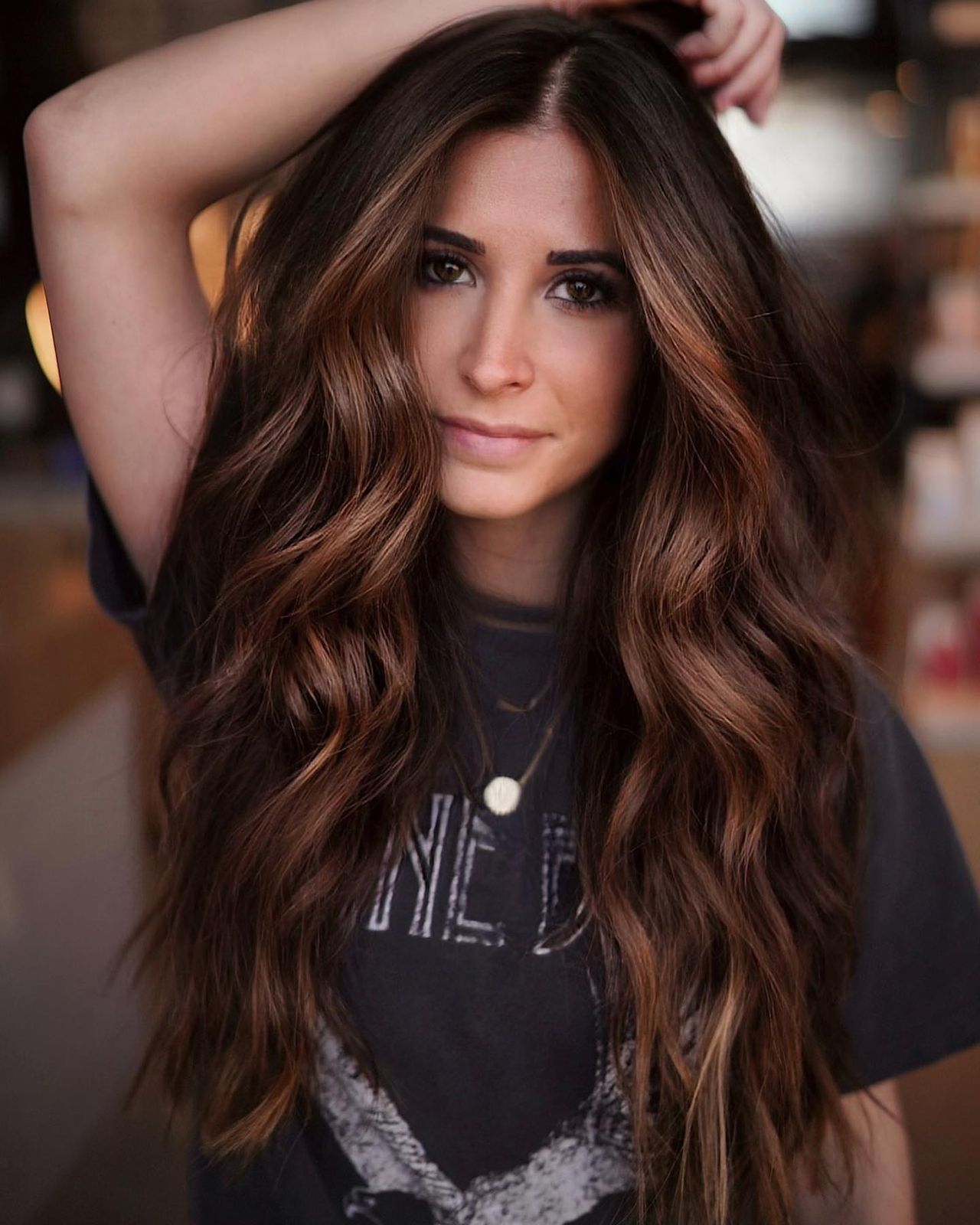
How does a warm chestnut base with striking caramel highlights hold up across a real week? Better than you think, worse than the salon photo. The warm chestnut with caramel is high-contrast by design, the caramel pieces are thicker and more visible than the subtle version. On mid-back length, wavy, thick hair, those highlights sit like ribbons through the body of the hair. Monday looks great. By Thursday, the warmth in the chestnut base starts pulling slightly brassy, and the caramel needs a tone refresh. Loose waves with a curling wand take about 20 minutes. A trim every ten weeks keeps the ends from looking thin against the bright highlights.
Dark Brown With Subtle Caramel
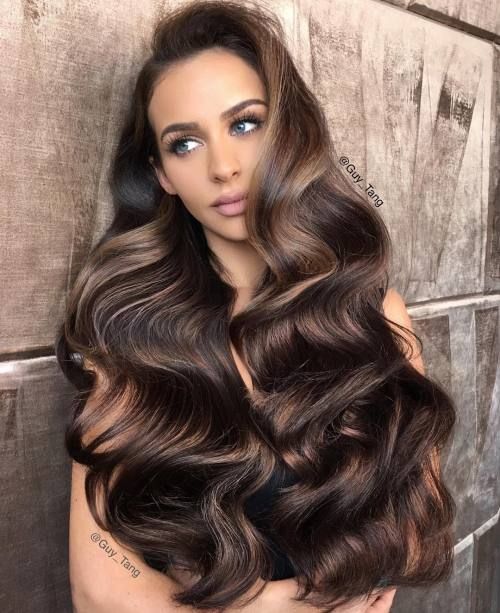
I admit I was skeptical about subtle highlights on a dark brown base. It can look like nothing happened. But on thick, wavy, mid-back length hair, the dark brown with subtle caramel works because the contrast is low and the effect is texture, not colour change. The dark brown base stays dominant. The caramel highlights are thin, placed deep in the layers, barely visible in low light. In sunlight, they read as dimension, not highlights. This suits thicker hair types because the density hides the lighter pieces until the hair moves. A soft blowout takes about 20 minutes. Loose waves add another 15. A refresh every eight to ten weeks keeps the caramel from disappearing entirely.
Mid-Back Chestnut Brown With Blonde Highlights
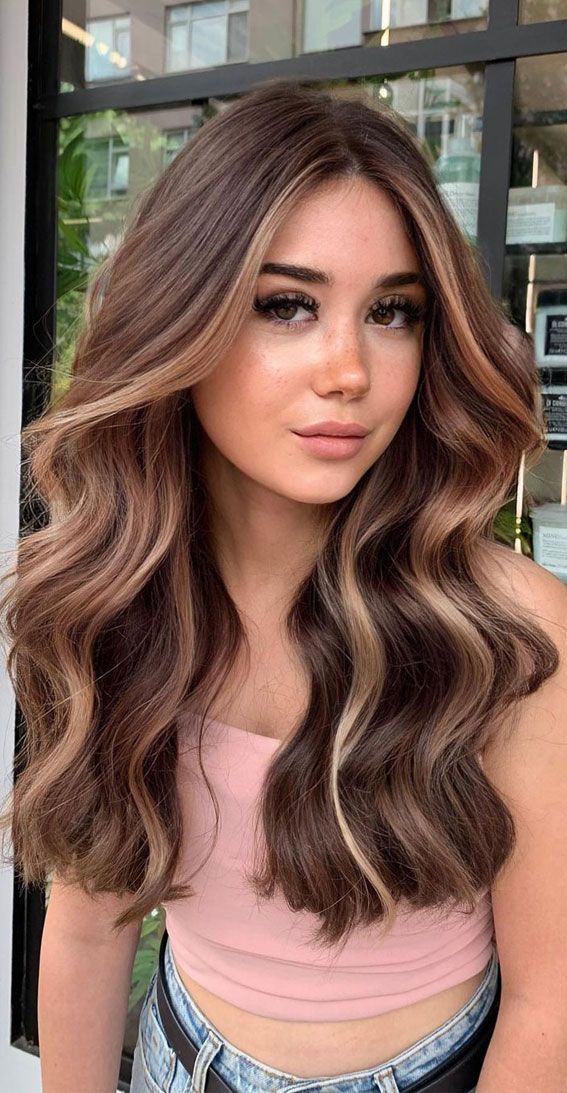
Those blonde highlights hit the light and the whole thing shifts. The chestnut brown base keeps it grounded, the blonde pieces run through the mid-back length in wide, deliberate ribbons. Loose waves on thick, wavy hair let each highlight catch separately, which is the point. This is a salon job, three to four hours, and the blonde needs a gloss every six to eight weeks or it starts reading brassy.
It lands best in late spring, when you want something lighter without committing to full blonde. The middle part and long layers keep the contrast visible from root to end. Root touch-ups every four to six weeks, that is the honest rhythm. Worth it for the way chestnut brown blonde highlights look against a warm collar.
Warm Chestnut Brown With Volume
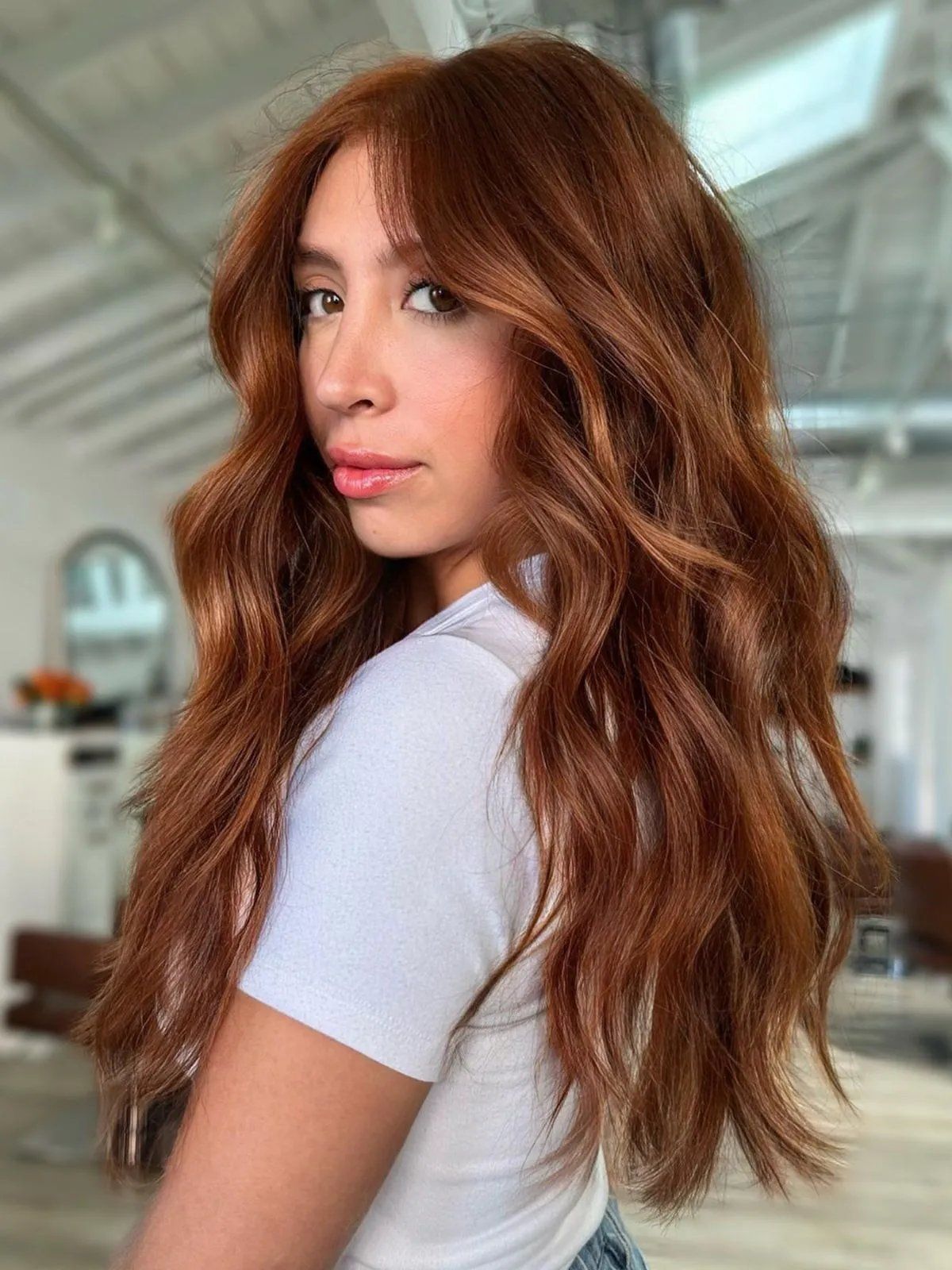
I watched a stylist build this in twenty-five minutes and still wanted more. The warm chestnut brown voluminous color sits on mid-back layers, side-swept bangs cut to skim the brow. Thick, wavy hair takes the volume well, a voluminous blowout lifts the roots and the loose waves hold for hours.
The honest downside: that volume is work. Side-swept bangs need a quick blow-dry every morning, about five minutes, and the color refresh comes every six to eight weeks. The warm undertones fade faster than neutral browns, especially if you wash hot. Still worth the chair time for the way it catches evening light.
Chestnut Brown With Lighter Brown
Why does subtle dimension look so much harder than it is? This chestnut brown lighter brown highlights color uses a rich chestnut base with fine lighter brown pieces woven through collarbone-length layers. Medium-density wavy hair gets a wavy blowout in about fifteen minutes, and the highlights read as natural movement rather than deliberate contrast. The trick: a salon does this one. The lighter brown highlights need precise placement to avoid looking streaky, and the grow-out blends best when the stylist paints them close to the root. Not a bathroom-mirror job.
Mid-Back Dark Chestnut With Lighter Brown
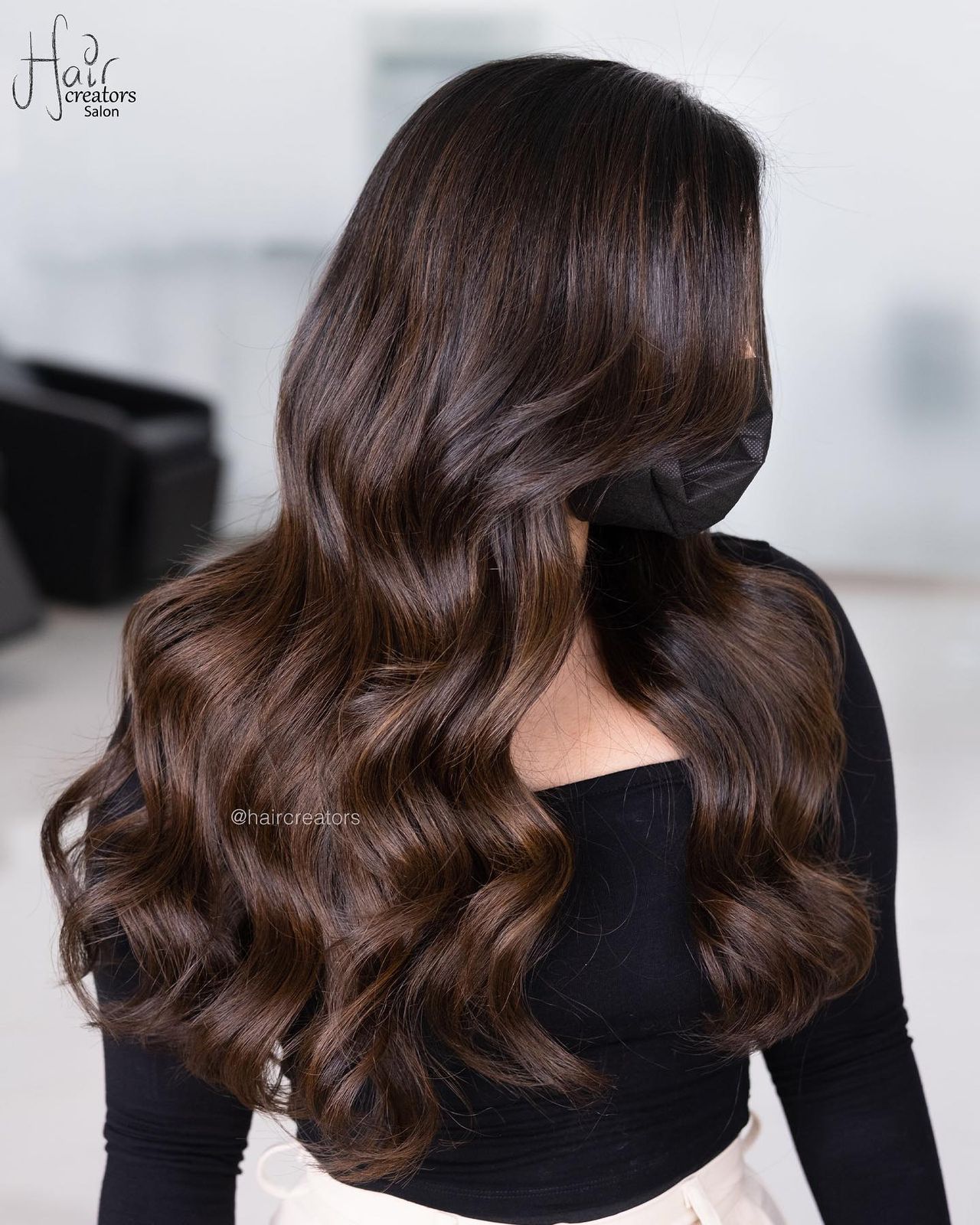
Best grow-out in this roundup. The dark chestnut lighter brown formula keeps a deep base and adds subtle warmer brown highlights that start a few inches from the root. Mid-back length on thick, wavy hair, loose waves and a middle part. The highlights sit low enough that the regrowth is barely visible for the first ten weeks.
The wear reality: that blend buys you time. A refresh every eight to ten weeks keeps the depth from flattening, and a trim every ten weeks holds the shape. The darker base means less brassiness than lighter browns, which matters if you skip glosses. I have stretched this to twelve weeks and nobody noticed. That is the whole point of a multi-tonal chestnut.
Chestnut Undertones With Blunt Fringe
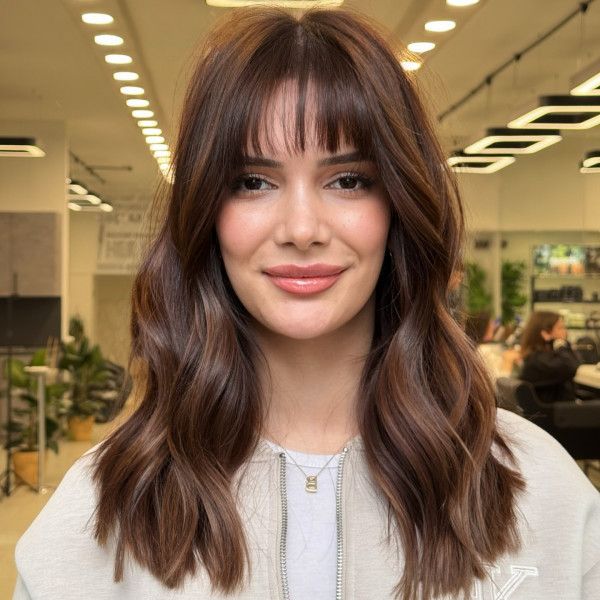
A blunt fringe reads sharp on most browns. The medium brown chestnut undertones soften it. Shoulder-length long bob with layers, the fringe cut straight across just above the brow, middle part underneath. Wavy, medium-density hair gets a soft blowout in fifteen minutes, the fringe takes another five. The chestnut undertones catch the light at the ends, which keeps the whole cut from feeling flat. Oval and heart face shapes get the most out of this one, the fringe widens a narrow forehead and the shoulder length balances a wider jaw. Low maintenance for a fringe, touch-ups every eight to ten weeks, trim every six.
Long Layers Chestnut Brown With Copper Highlights
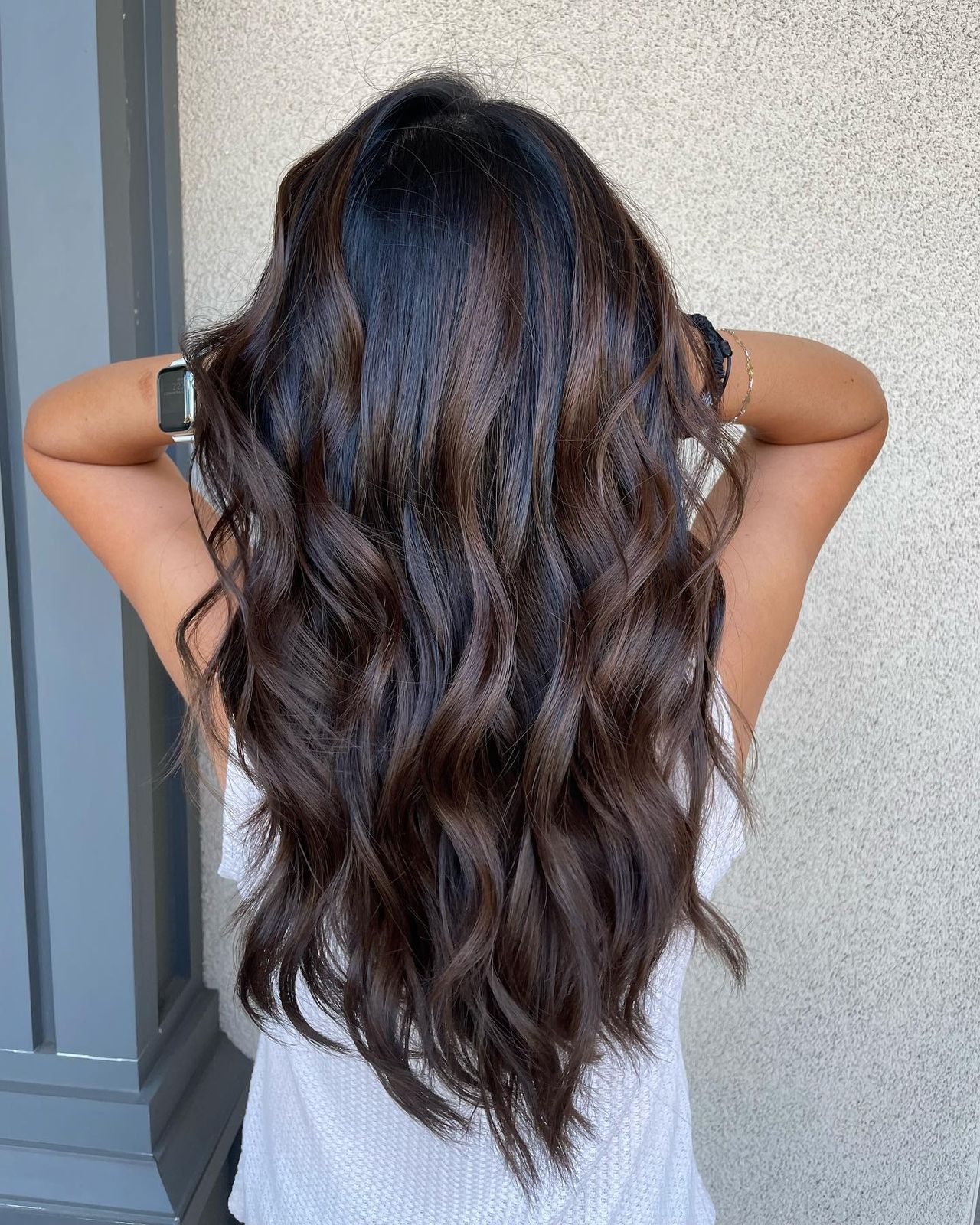
I was not expecting to like copper highlights this much. On a rich chestnut brown base, the subtle copper highlights read warm without going orange, and the mid-back length gives them room to breathe. The technique is a fine weaved highlight, not chunky, placed through the mid-lengths and ends so the root stays deep. The tone is a true copper, not a brassy gold, and it catches light differently depending on how the loose waves fall. Thick, wavy texture holds the wave pattern well, and the long layers keep the weight from getting heavy. The whole thing works because the copper is a whisper, not a shout.
This is a salon job. The copper needs a gloss refresh every six to eight weeks to keep that glow, and a trim every ten weeks keeps the layers from tangling. The payoff is a chestnut brown copper highlights look that shifts in every light.
Layered Chestnut With Subtle Variation
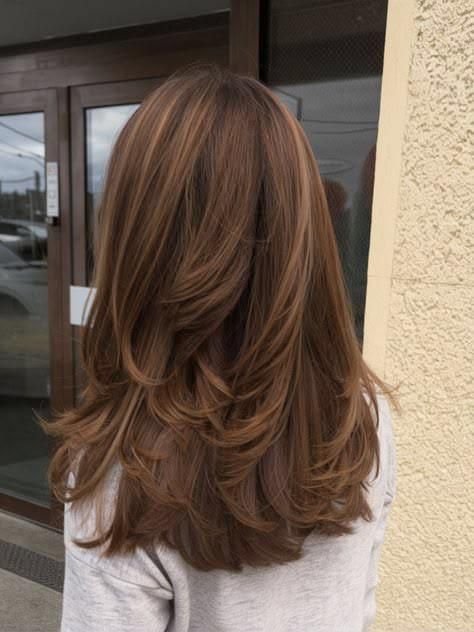
I will admit I was skeptical of subtle variation on a layered chestnut subtle variation look. It sounded like nothing would happen. But the subtle lighter brown highlights here are placed so close to the base chestnut brown that they read as natural dimension, not streaks. The mid-back length is straight, medium density, and the layers are cut to stack gently, so the blowout has lift at the crown without losing length. The honest downside: the lighter pieces are more porous, so split ends show faster on those strands. A trim every eight to ten weeks is non-negotiable. The color refresh lands at the same interval. It is a quiet look, and that is the point.
Wavy Bob With Chestnut Highlights
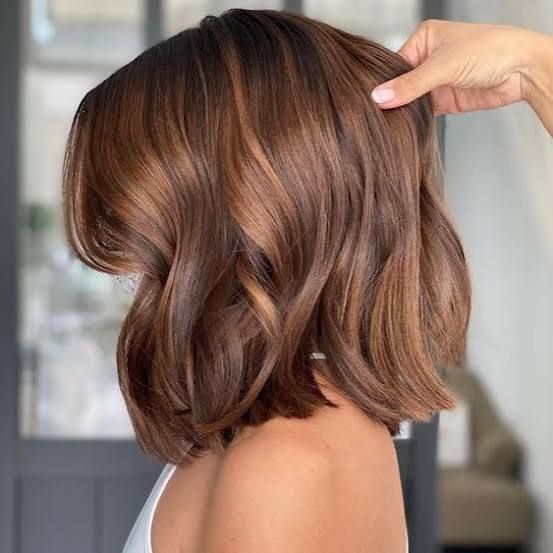
This is the autumn bob. The wavy bob chestnut highlights sit at collarbone length, wavy, medium density, and the subtle lighter brown highlights are fine enough that they do not need a toner every visit. The bob shape itself is what makes it work: the blunt baseline keeps the ends looking full while the waves add movement. A trim every six weeks keeps the bob from turning into a sad lob, and the color refresh every eight to ten weeks is standard. It lands in autumn because the chestnut brown base matches the season without trying too hard. A wavy blowout takes fifteen minutes. That is the whole sell.
Rich Chestnut With Subtle Dimension
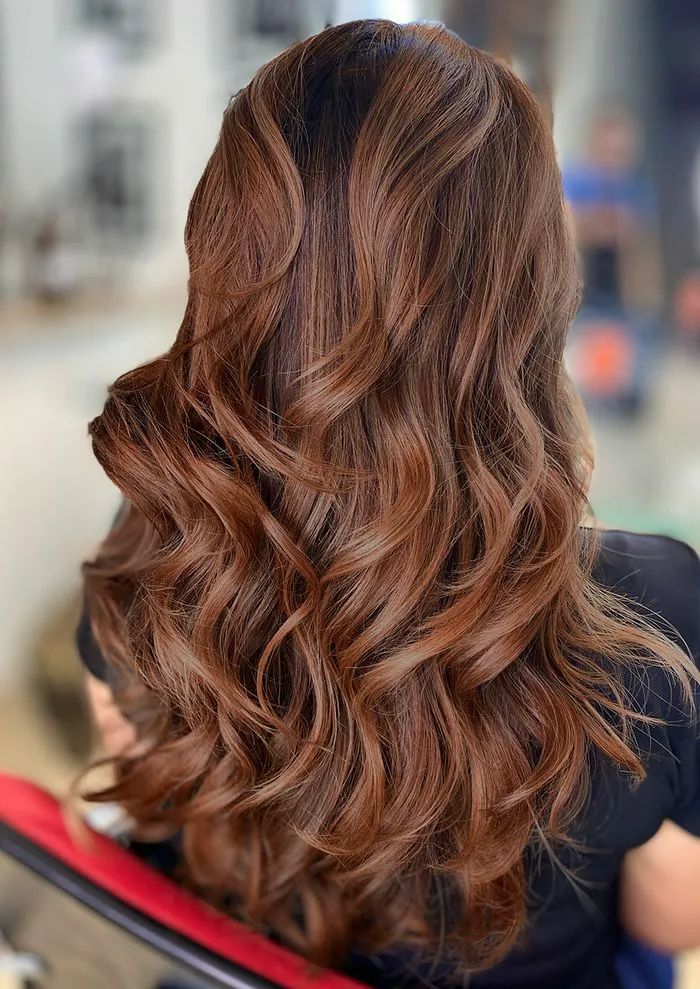
Have you ever seen a color that looks expensive but does not try to prove it? That is this rich chestnut subtle dimension. The base is a rich chestnut brown hue, deep and warm, and the subtle lighter brown highlights are woven in so sparingly that they read as light hitting the hair rather than a separate color. The mid-back length is wavy, thick, and the loose waves fall in a way that makes the dimension shift as you move. Compare it to a bolder, more uniform chestnut, and this one wins for natural appeal. The highlights are there to add depth, not to announce themselves. A refresh every eight to ten weeks keeps the dimension from muddying. A trim every ten weeks is fine for this length.
Deep Uniform Chestnut Brown
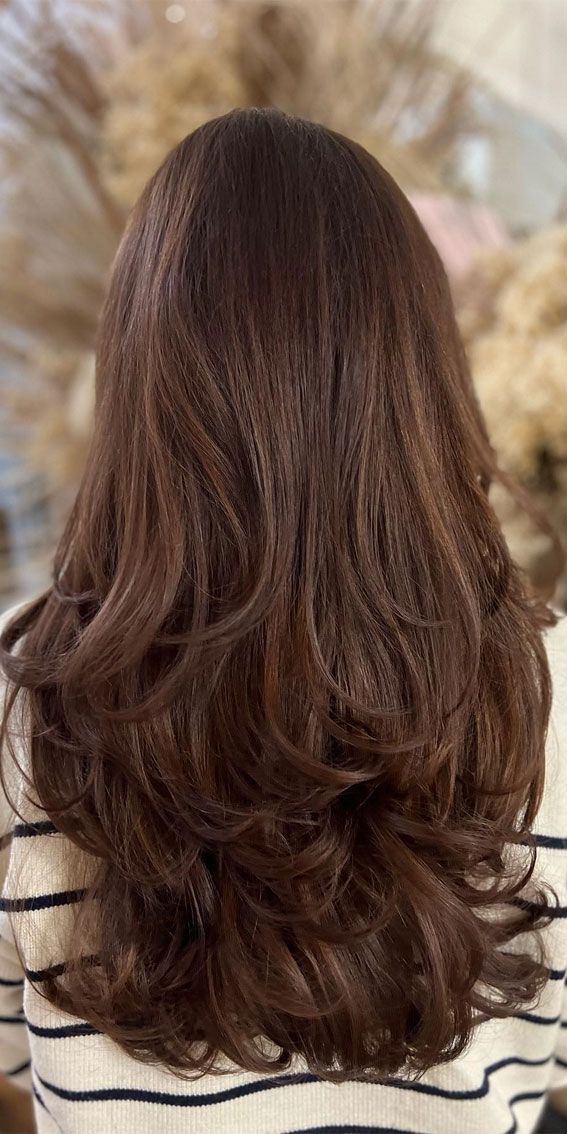
This deep uniform chestnut brown is for people with naturally thick hair who want a color that does the work on its own. The uniform chestnut brown is solid, no highlights, no dimension tricks, just a deep brown that reads rich in any light. The mid-back length is wavy and thick, and the long layers are cut to move without losing density. Soft waves take about twenty minutes to style, and the color only needs a touch-up when the roots show, which on a natural level is every six to eight weeks. A trim every ten weeks maintains the length. If your hair is fine or thin, this uniform color can look flat, skip it. For thick hair, it is a statement without saying a word.
Mid-Back Warm Chestnut With Golden Brown
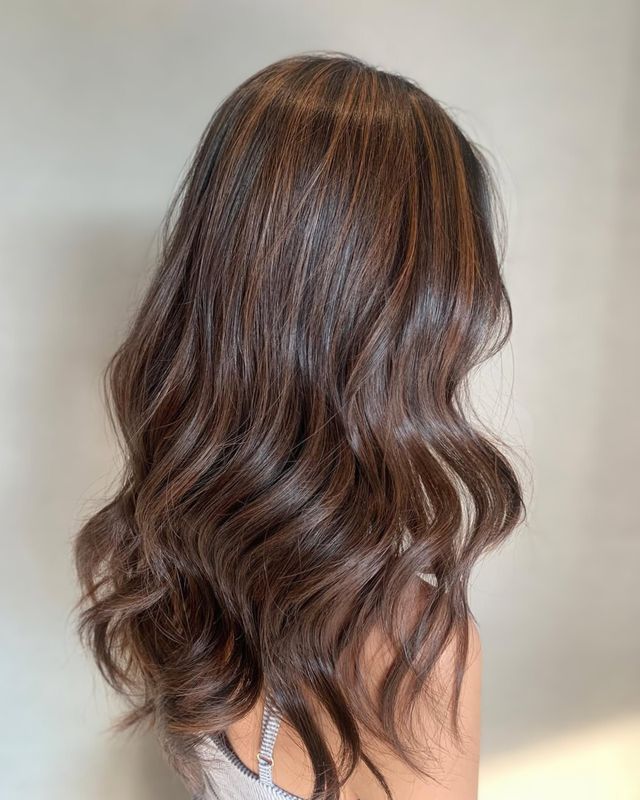
I was not expecting to like this one. The golden-brown highlights here are so fine and so blended that the warm chestnut golden brown reads as one colour from across the room, not a stripe in sight. Mid-back length on thick wavy hair gives the waves room to drop and turn without collapsing by noon. The technique is a soft babylight placement, barely a shade lighter than the base, which is why it never tips into brassy territory. Loose waves take about 20 minutes and the whole thing needs a refresh every 8 to 10 weeks. Trim every 10 weeks keeps the ends from thinning out.
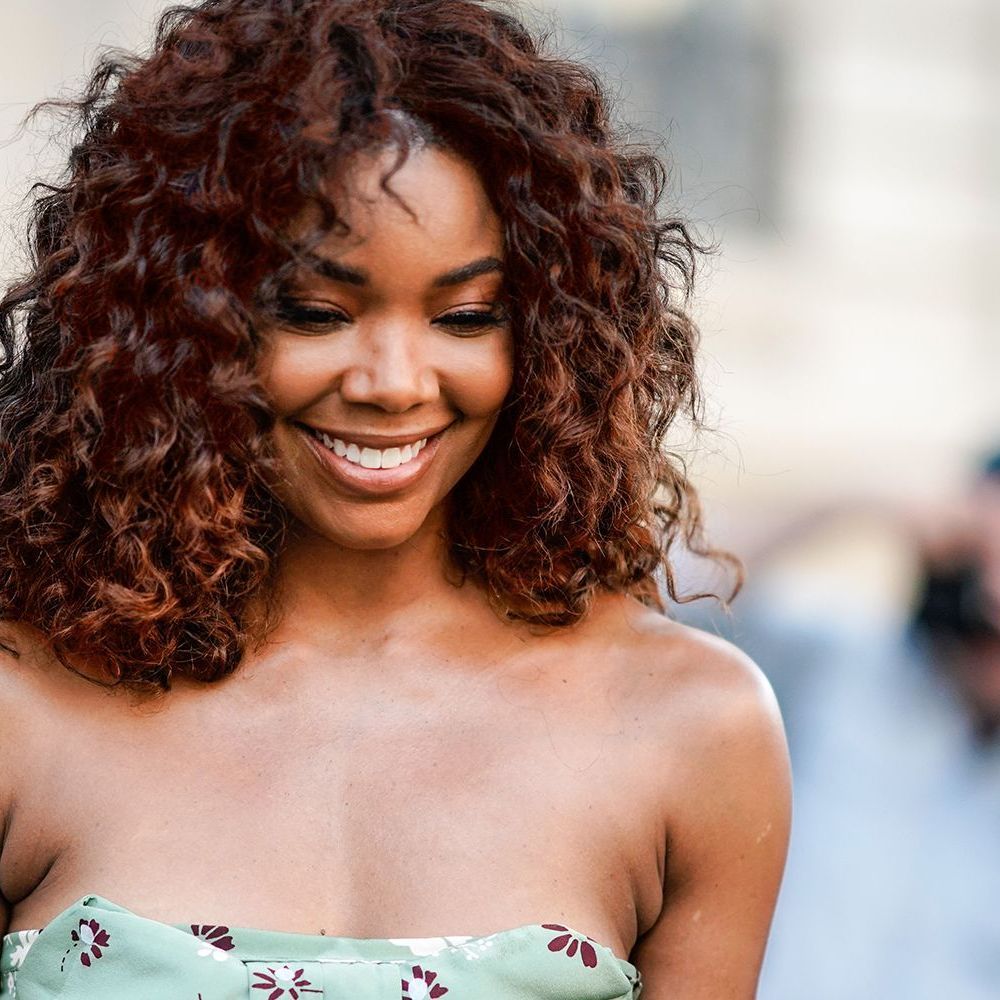
Reddish-Brown With Copper Curls
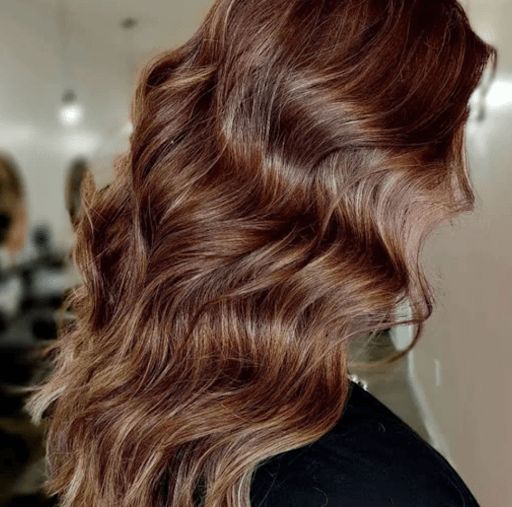
I will admit I was skeptical about the reddish brown copper highlights. Copper fades. I have watched it turn into a dull orange on friends who swore they would maintain it. But this shoulder-length cut with loose curls and a rich reddish-brown base holds the copper highlights in a way that does not look like a regrettable experiment.
The trick is the base. A deep reddish-brown underneath means the lighter copper highlights sit on top, so when the copper starts to fade around week six, the base still carries the warmth. Medium-density wavy hair curls nicely with about 25 minutes of setting time. A gloss refresh every 6 to 8 weeks keeps the copper tones from going flat. Trim every 8 weeks.
Visual Idea
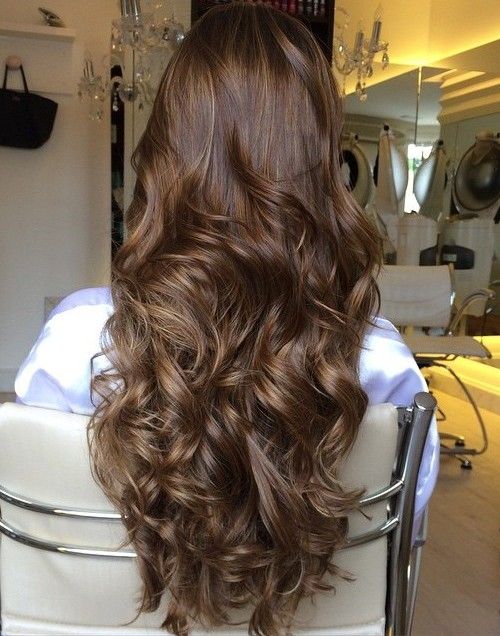
This is the one you book, not the one you attempt at home. The chestnut brown with subtle lighter brown highlights creates dimension that looks natural only because a professional placed every highlight by hand. Mid-back length on thick wavy hair with loose waves shows the colour shift from every angle. A DIY version would end up with chunks or a muddy line where the lighter brown bleeds into the chestnut. The salon technique uses fine weaves and a low-volume developer so the highlights stay soft and the base stays rich. That is three hours in the chair I would not skip.
Chin Visual Idea
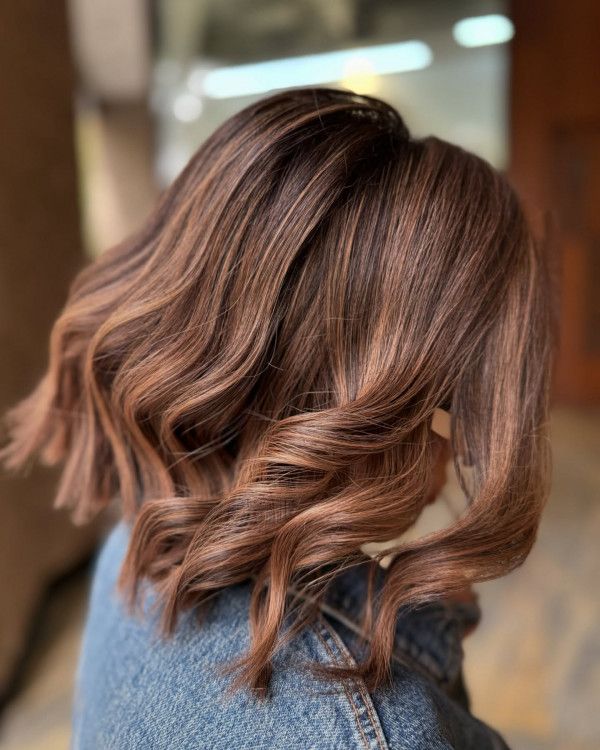
Have you ever wondered if a chin-length cut would actually flatter your face? The warm chestnut brown with subtle golden highlights here is the kind of colour that reads warm without pulling orange, and the chin-length lob with side-swept bangs works best on faces that want a little width at the cheekbone. The side part and the wavy blowout add volume where a middle part would lengthen. Medium-density wavy hair holds the shape without fighting it. The golden undertones catch light at the ends, which keeps the cut from looking too blunt.
Mid-Back Visual Idea
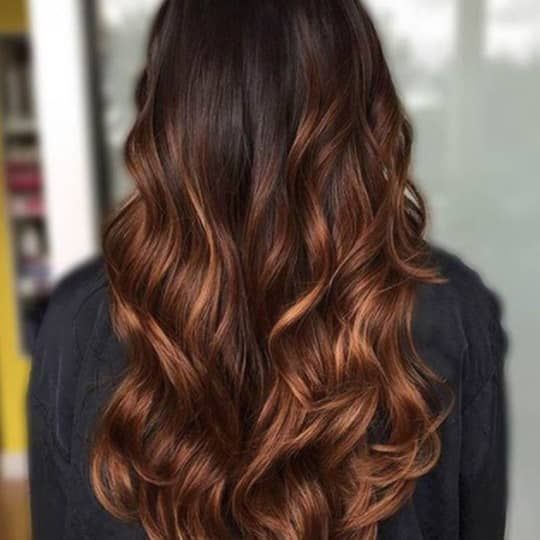
The transition from dark brown to chestnut brown is the quiet star here. Balayage paints in sweeps, not sections, so the colour lands without a hard line. On thick, wavy hair the blend reads as depth, not stripes. At mid-back length the waves pull the lighter pigment downward. The technique matters more than the shade: a light hand keeps the root dark and the ends soft. Middle part, no bangs, loose waves. This is not an all-over dye job. It is a graduated shift that grows out forgiving. Your stylist paints freehand, feathering the chestnut into the dark base. The result is dimensional without trying to be.
The back view tells the full story. From the front you see dark brown. One turn and the warm chestnut catches the light. That is the balayage advantage: it follows the hair’s natural fall, not a foil grid.
Long Layers Visual Idea
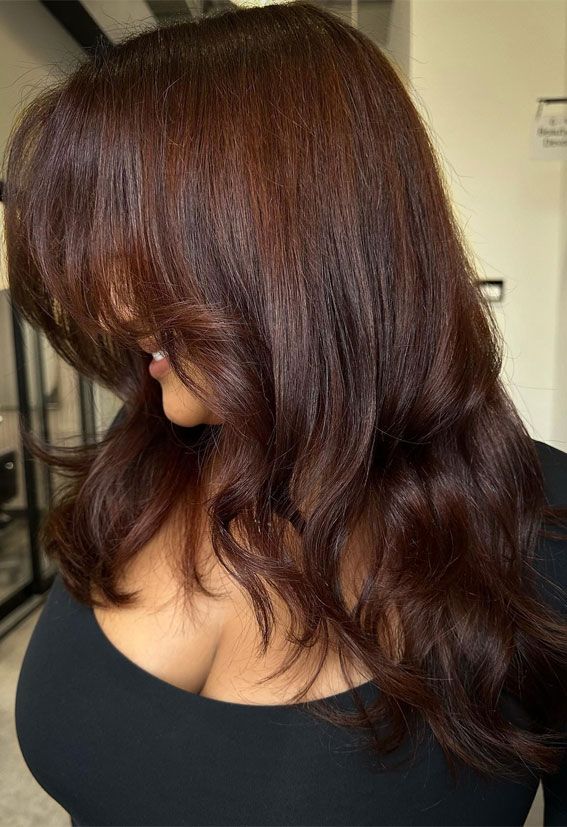
Tuesday morning, second-day hair, and it still looks intentional. That is the wear reality of long layers with dark chestnut brown balayage. The face-framing pieces start at the chin and blend into the mid-back length. Wavy, medium-density hair holds the shape without a product assist. The balayage highlights sit higher around the face, catching light when the rest falls darker.
Out the door on day three, the waves have softened and the layers have relaxed. The colour still reads as dimensional, not flat. That is the point of balayage on a layered cut: each layer lifts a different tone. The grow-out is quiet. No stripe, no band, no urgent root touch-up. A trim every ten weeks keeps the face-framing pieces sharp, and the colour slides through summer without a sudden fade line.
No Bangs Visual Idea
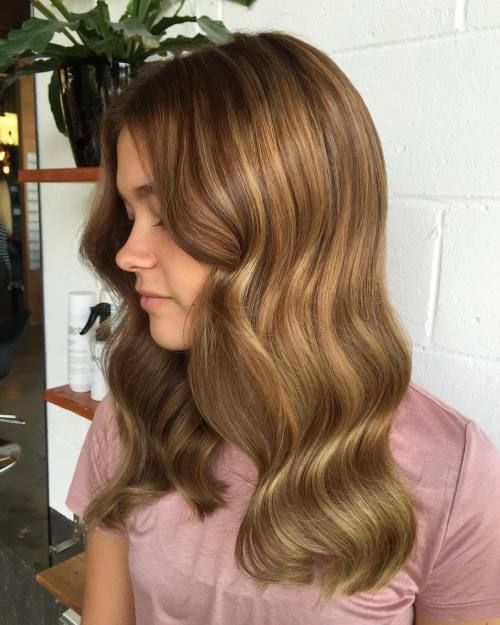
Side-parted, mid-back, no bangs, and the honey blonde highlights save it from being heavy. That is the verdict. Chestnut brown as a base can read dark from December through February. Come spring, the warmth needs a lift. Honey blonde balayage does not scream highlight. It lands as a lighter reflection across the mid-lengths. On wavy, medium-density hair the contrast stays soft, not split. A side part lets the honey catch the cheekbone and the jawline, which is where the light hits anyway. No root line, no harsh lift, just a shade that belongs to the season. Spring coats are gone. The hair should follow.
Back View Visual Idea
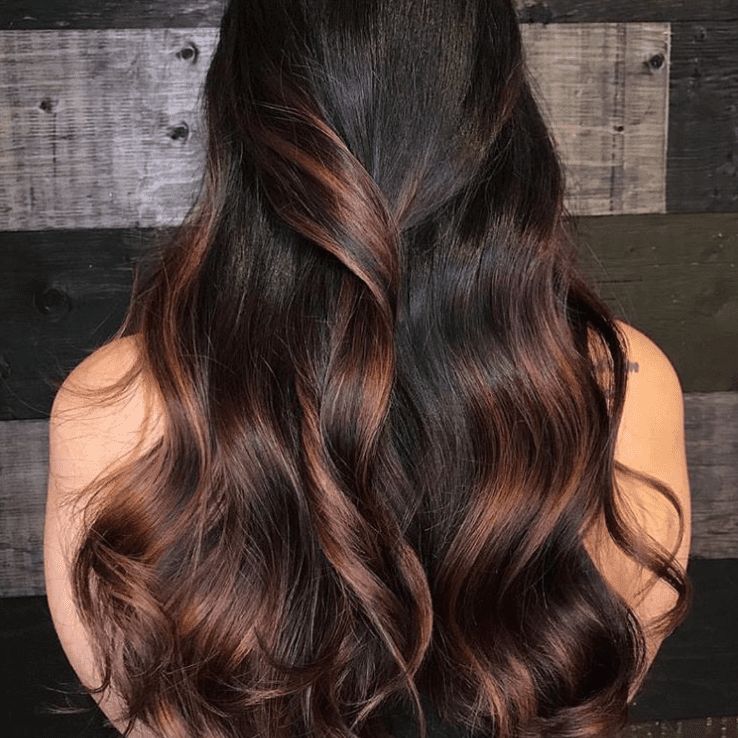
Have you ever seen a balayage that looks painted on, not foiled in? That is this one. Dark brown base with warm chestnut balayage, mid-back, thick wavy hair. The back view shows the transition cleanly: the dark root sits for about three inches, then the chestnut tones bleed in. No band, no chop, no sudden light line. A blocky application would stop at the shoulder. This one drifts all the way to the ends.
The seamlessness is the point. Each wave grabs a different amount of paint, so the colour varies strand by strand. Thick hair needs that variation, or it reads as a single flat mass. From the back, the warm chestnut reads as the hair’s natural end point, not a salon add-on. That is the difference between a colour and a technique that knows where to stop.
Middle Visual Idea
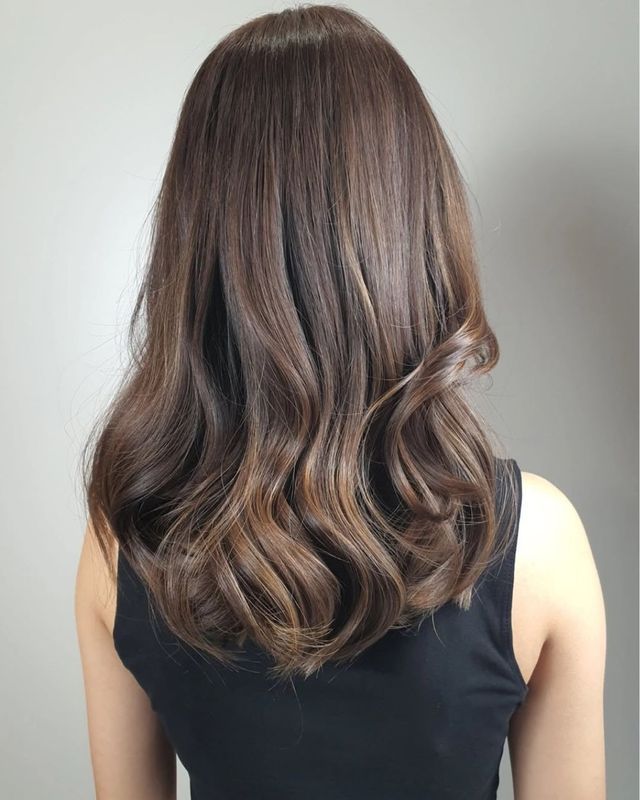
The dimensional quality comes from the dark brown at the root holding firm while the chestnut brown shifts to a lighter brown at the ends. Middle part, mid-back, no bangs. Wavy, medium-density hair shows each shift. That is the balayage placement working for the texture. The lighter pieces land where the waves turn, not randomly. Medium density often struggles with flat colour because there is not enough hair to create shadows. The balayage fixes that by breaking the surface into two, sometimes three tones.
Fine or thin hair would lose the variation the waves need to read. Skipped if your strands are sparse. But for medium density, the dimensional chestnut brown is a reliable canvas. The grow-out is soft, the tone is warm without leaning orange, and the middle part exposes exactly enough root to look intentional.
Loose Waves Visual Idea
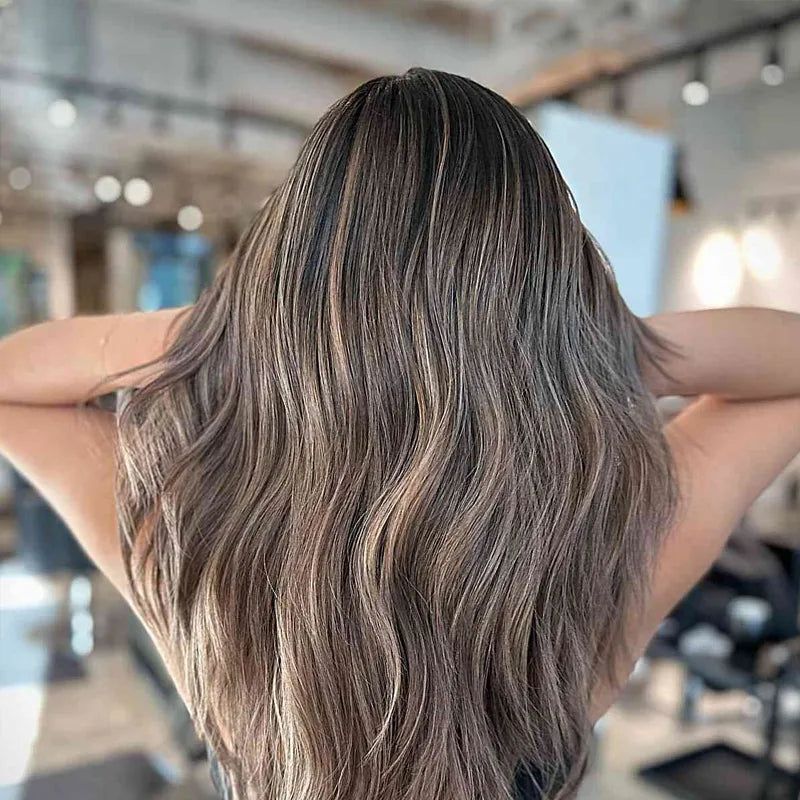
That back view stopped me mid-scroll. This is rich chestnut brown with subtle golden undertones, and the trick is how the colourist wove them in: fine, hand-painted ribbons through the mid-lengths, not a solid block of warmth. The undertones catch the light when the hair moves, which is exactly what loose waves on thick, wavy hair do best. A middle part lets the colour fall evenly on both sides, no weird shadow on one side. The base stays a deep, grounded chestnut so the gold reads as a highlight, not a separate colour. This is a three-hour salon appointment, not a box dye situation.
Layers Visual Idea
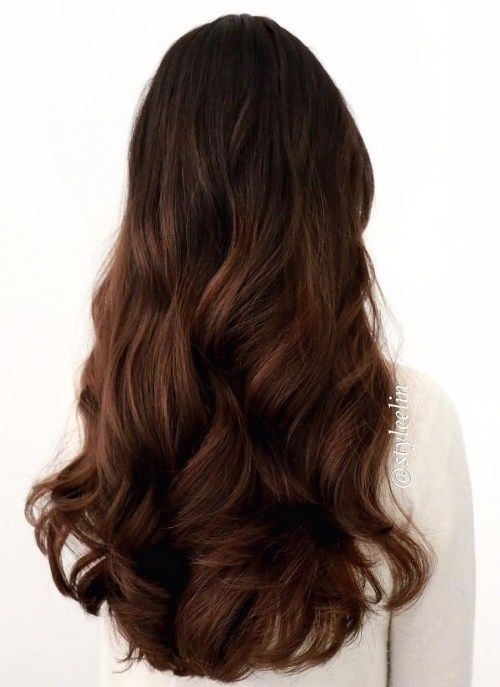
I will admit I was skeptical about auburn highlights on a dark brown base. Too often they read as an afterthought, a few brassy streaks that clash with the rest of the head. But this back view changed my mind. The auburn is subtle, woven into the layers so it peeks through only when the light hits. On thick, wavy hair at mid-back length, those warm undertones blend into the dark base without a hard line. The honest downside: auburn fades fast. Without a color-depositing conditioner, expect brassy tones by week four. This is salon-only work, and you will need to maintain it.
Auburn Chestnut Brown Visual Idea
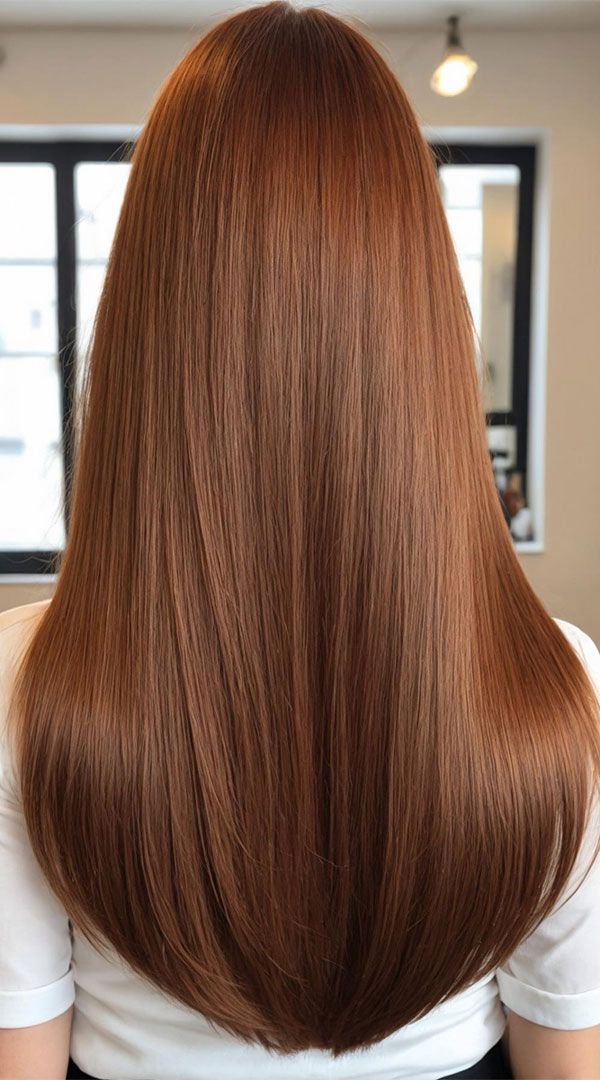
This is the shade that makes winter bearable. Auburn chestnut brown, straight and thick, air-dried to a smooth finish with no wave pattern to distract from the colour. The rich auburn undertones sit deep in the hair, not on the surface, so they glow under indoor light without screaming red. Mid-back length lets the colour travel, and on straight hair the pigment reads even from root to tip. No layers needed here, the colour does the work. This is a single-process salon colour, one appointment, and the grow-out is forgiving because the base is already dark. It is not a trendy shade. It is a reliable one.
Back View Close Crop Visual Idea
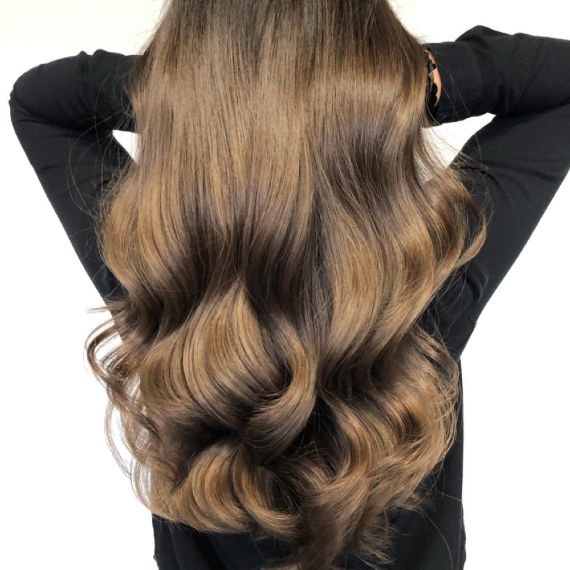
My colourist once told me that lighter brown highlights are the easiest way to make chestnut brown look expensive. She was right. This back view, a close crop of thick wavy hair at mid-back, shows exactly why. The chestnut brown base is rich and solid, and the subtle lighter brown highlights sit just a shade lighter, placed around the crown and through the mid-lengths. They catch the light without competing with the base. A wavy blowout helps the highlights read as dimensional, not streaky. This is a partial highlight appointment, maybe two hours, and the grow-out is soft because the lighter pieces blend into the dark base naturally.
Wavy Thick Visual Idea
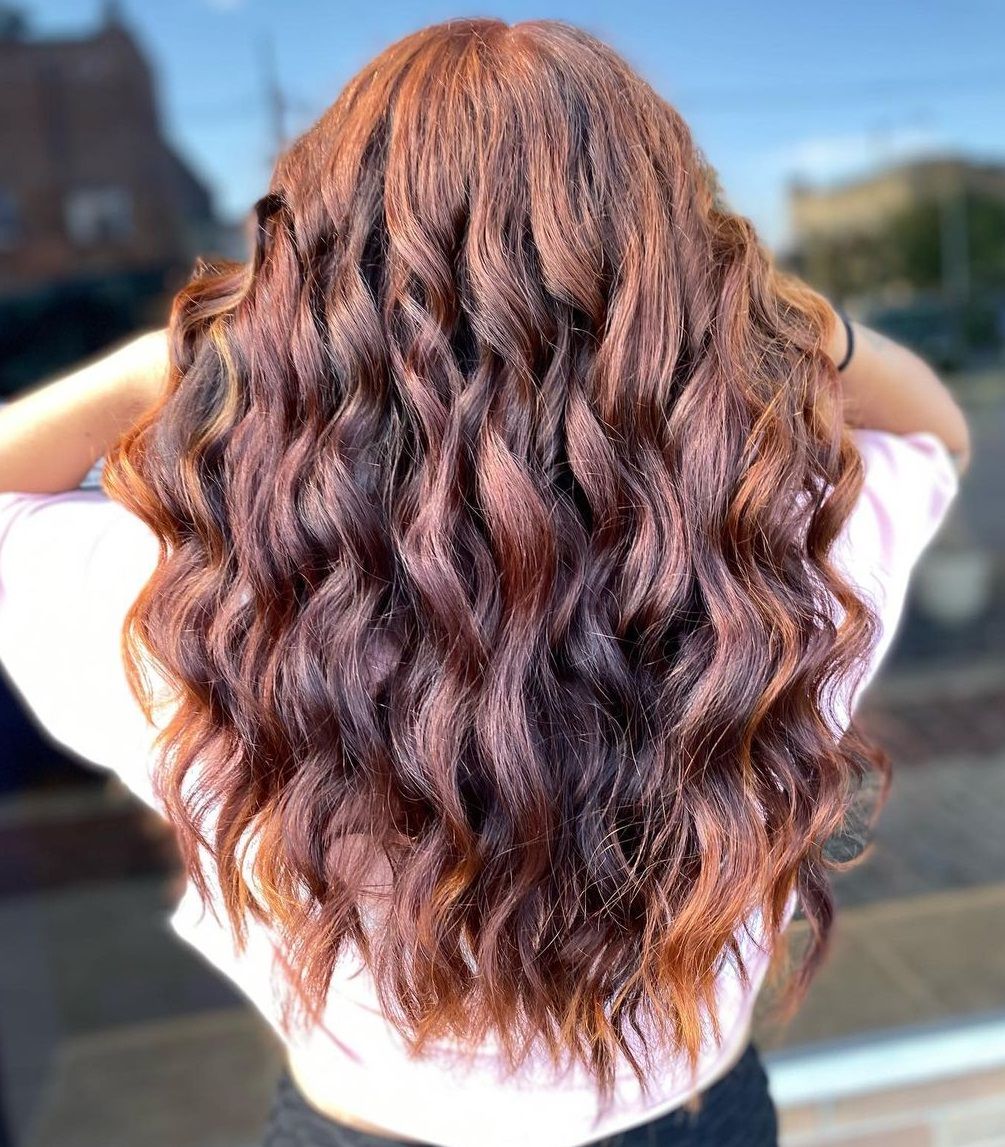
Can a colour look this good without being complicated? Yes, but only if the colourist knows what they are doing. This is chestnut brown with subtle auburn highlights on thick, wavy hair, mid-back length, styled in loose waves. The multi-tonal effect comes from a technique called babylights: ultra-fine highlights that mimic natural sun exposure. The auburn pieces are placed sparingly through the top layers so they peek through the waves without overwhelming the chestnut base. This is not a DIY project. Babylights require precision, a steady hand, and a colourist who understands how thick hair absorbs pigment. Book the consultation first.
Deep Rich Colour Visual Idea
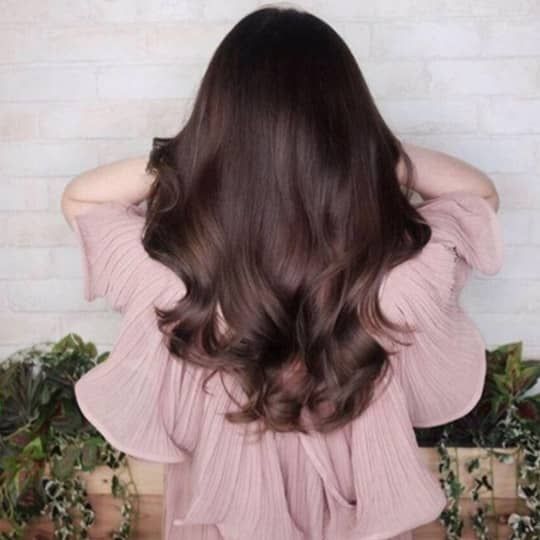
This is the one that keeps its promise. Dark chestnut brown, mid-back length, thick wavy hair with loose waves and a middle part — the colour is so deep it looks wet. No highlights, no dimension, just a single dense pigment from root to tip. And that is exactly why it fades so gracefully. A lighter brown would show every wash, every mineral deposit, every hour of sun. This one just gets softer. By week six the richness drops maybe twenty percent, but it still reads as intentional, not faded. The long layers help: they let the weight of the colour sit heavy instead of thinning out at the ends. If you want a shade that does not announce its age, this is it.
Bob Visual Idea
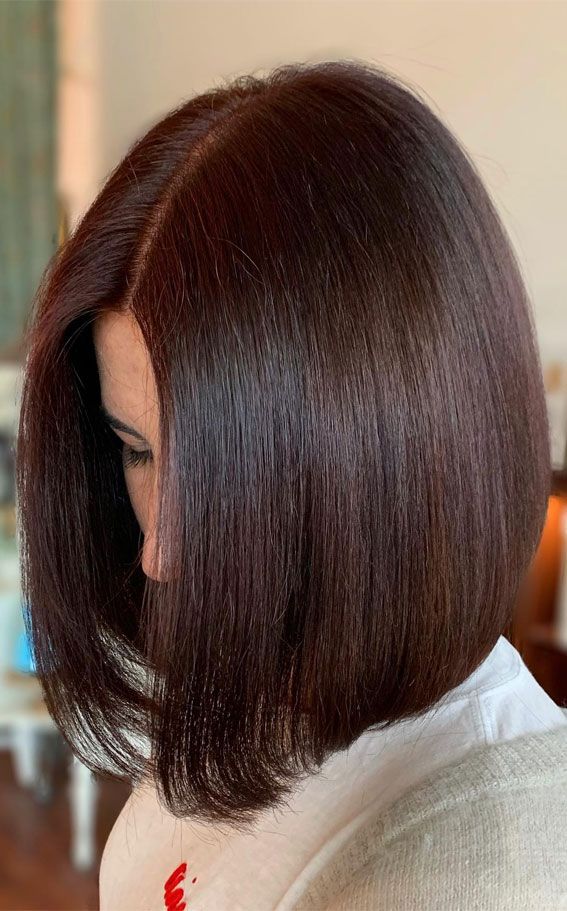
Collarbone Visual Idea
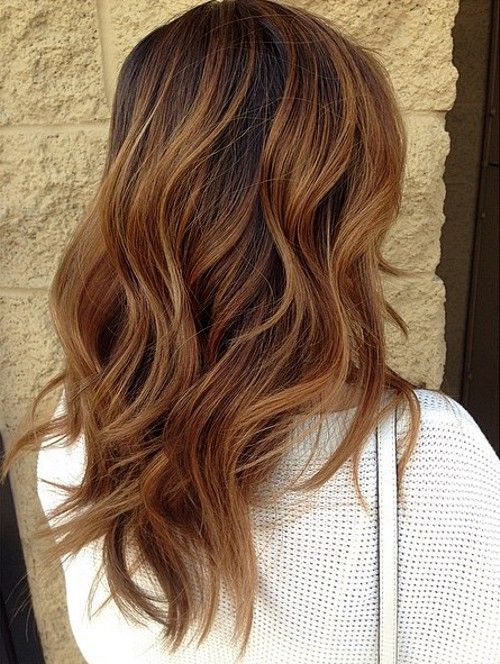
Gut reaction: this is the dimensional chestnut brown I wish I had asked for the first time. Collarbone length, thick wavy hair, a middle part, and a wavy blowout that makes the colour look alive. The base is chestnut brown, and the highlights are blonde — not golden, not caramel, just a cool, soft blonde placed in fine ribbons through the mid-lengths and ends. The technique is what makes it. The stylist kept the highlights away from the root by about two inches, so the colour sits like a natural lightening pattern, not a salon stripe. On wavy texture the ribbons catch the light from every angle, which is the whole point of dimensional colour. It is not about contrast. It is about movement.
Blunt Bob Visual Idea
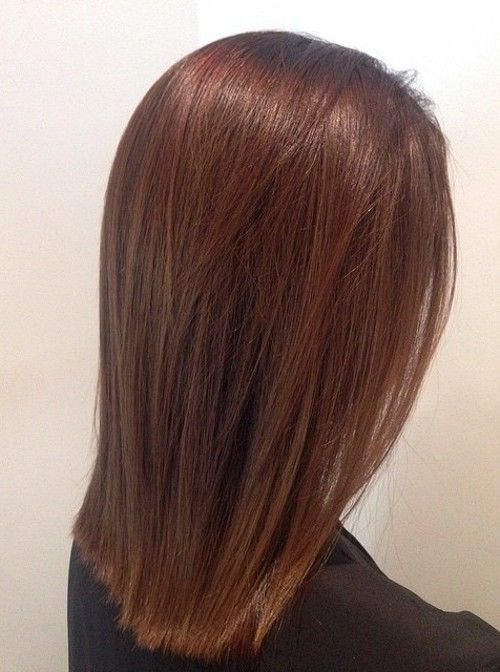
I will confess: I almost skipped this one. A chin-length blunt bob, side part, straight, medium chestnut brown, no bangs, fine density. It looks clean and sharp in the photo. But fine hair and a blunt bob have a complicated relationship. The bluntness relies on every single strand being exactly the same length, and fine hair splits faster. That crisp line starts to fray around week four. By week eight you are either booking a trim or living with soft, see-through ends. The colour is solid and pretty, but the cut asks for maintenance I do not always want to give.
Final Thoughts
After writing all of these, the one I keep returning to is the uniform collarbone lob. It is the quietest idea in the batch and the one that actually survives a humid Tuesday. I am booking it next.