
Light hair color isn’t one shade, it’s a spectrum. This season, the shift is toward lived-in tones with soft, face-framing layers and curtain bangs that move, not just lie there. Glossy, natural texture is the goal, which means less time with hot tools and more time letting your hair do its own thing.
Here are 23 Classy Light Hair Color ideas for 2027, spanning from low-maintenance root shadows to high-impact platinum. Whether your hair is fine and falls flat, you’re battling a visible grow-out line, or you have a fringe that won’t sit, there’s a shade and technique here that works with your texture, length, and schedule.
Mid-Back Ash Blonde With Root Shadow
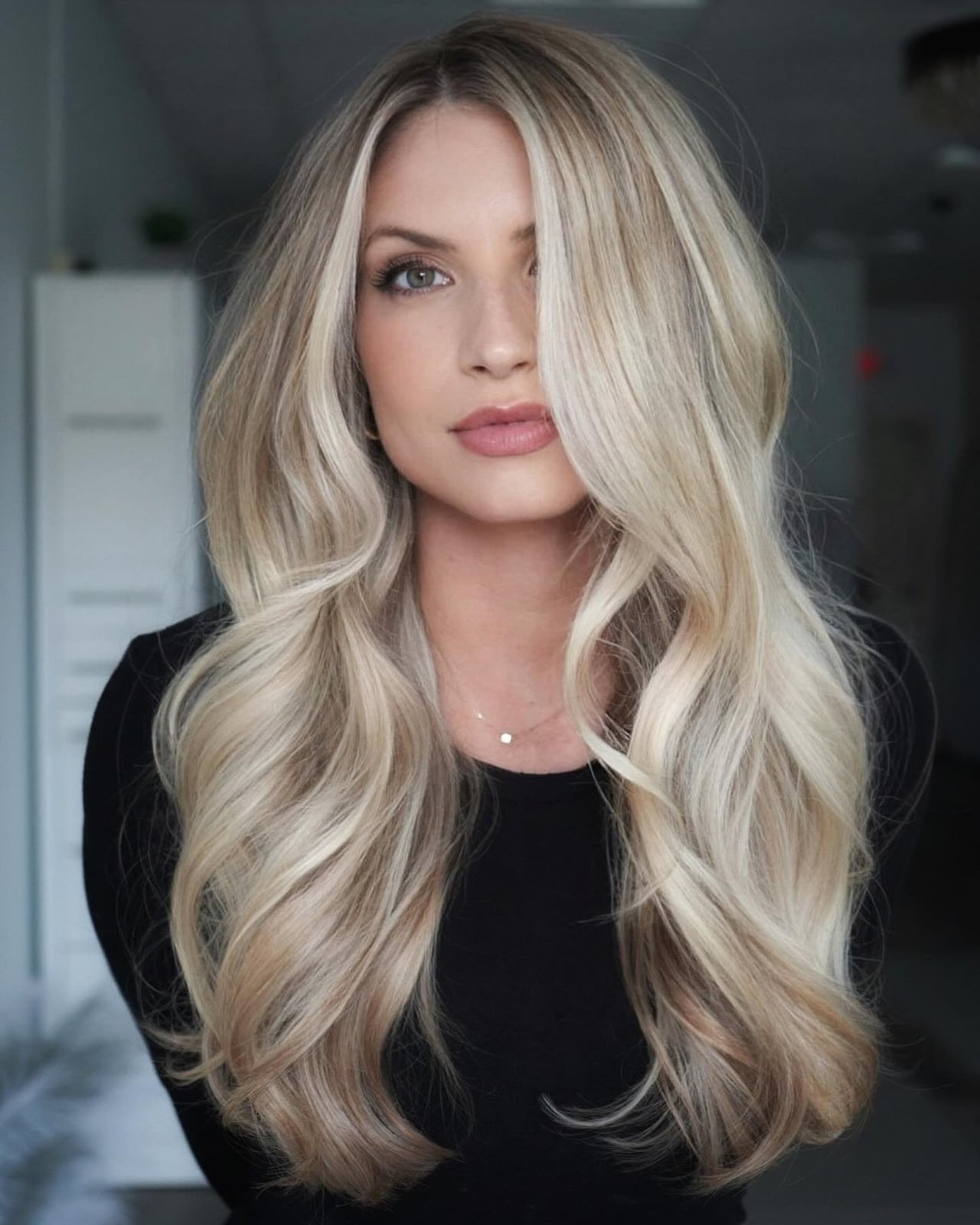
The clever part here is how the root shadow and the ash blonde balayage meet without a hard line. A darker base at the roots fades into cool-toned lighter highlights that run through the mid-back length, so the grow-out looks natural. The thick, wavy texture and blowout style give the curtain bangs enough weight to frame the face without falling flat.
Thick, wavy hair starting at mid-back length works best for this technique. Ask your colorist for: mid-back ash blonde with root shadow and subtle highlights. A trim every six to eight weeks keeps the baseline clean, and a toning appointment around the same interval prevents the ash tone from pulling brassy.
Collarbone Ecru Blonde With Root Shadow
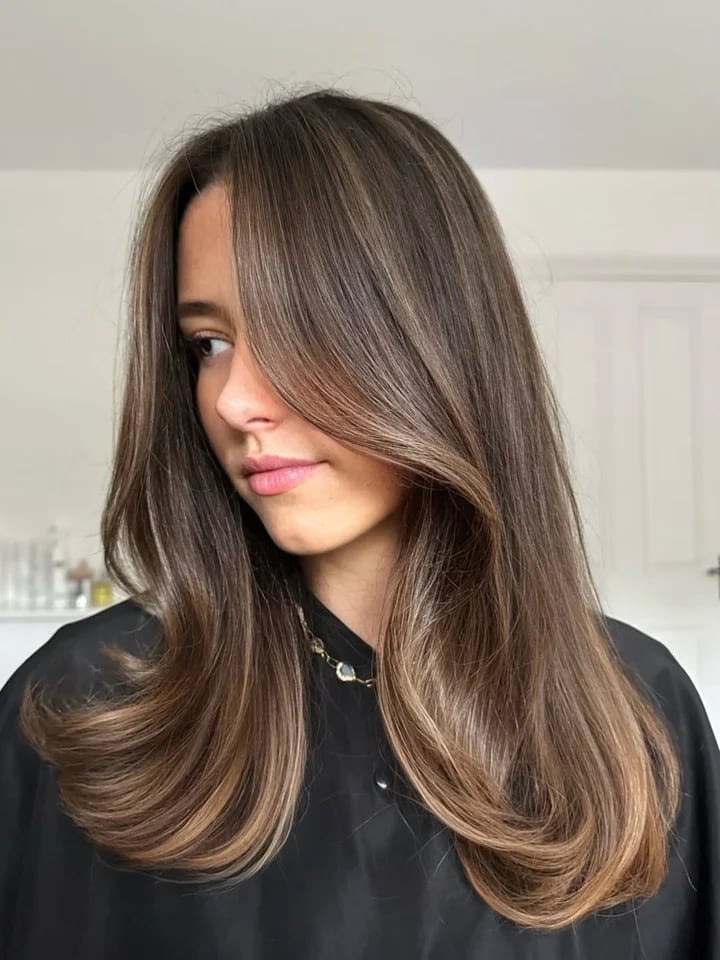
Ever wondered if ecru blonde is just beige with a fancier name? The difference is in the undertone: ecru carries a warm, almost creamy cast that keeps the collarbone lob from looking flat. The long layers and curtain bangs add movement, and the subtle root shadow means you are not committed to a bleach-and-tone every five weeks. Thick, wavy hair of collarbone length takes this shape naturally. The middle part and curtain bangs suit most face shapes, though a very round face may want a deeper side part for extra elongation. Ask your colorist for: collarbone ecru blonde with root shadow and curtain bangs.
Platinum Blonde With Root Shadow And Waves
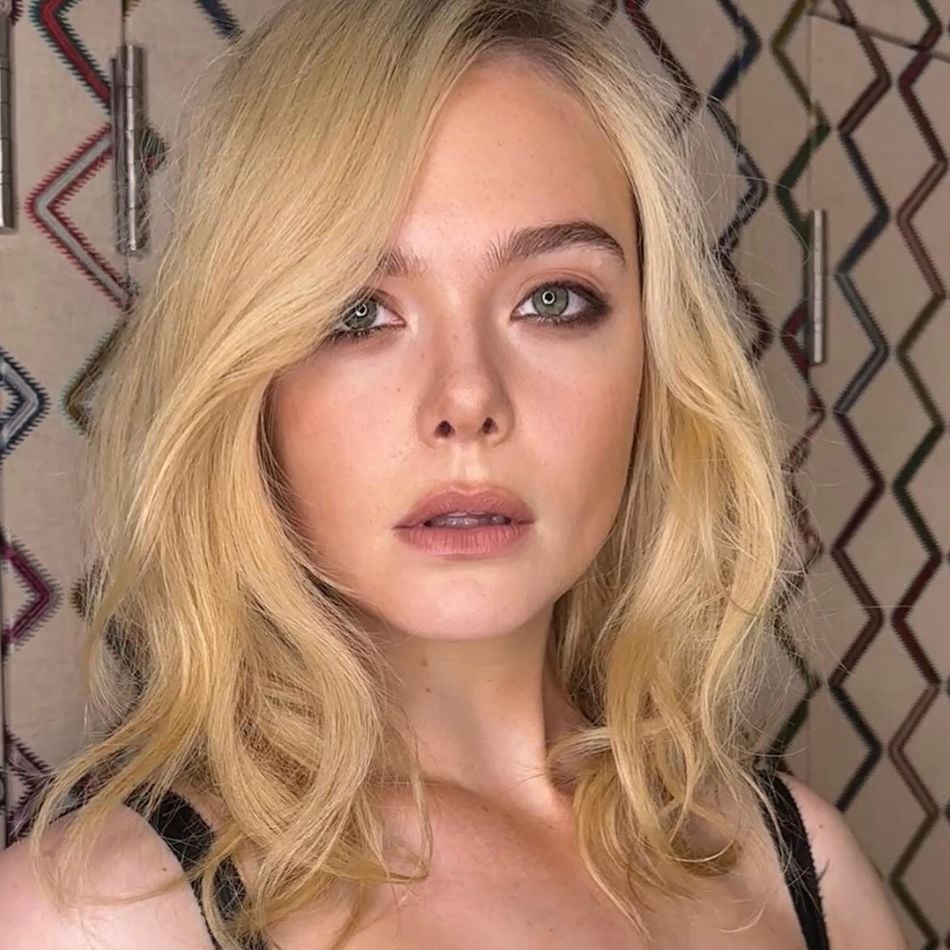
Platinum blonde without a root shadow is a high-wire act. Add one, and you gain weeks between touch-ups at the cost of a slightly warmer regrowth phase. The mid-back length and fine, wavy texture here lean into the contrast: the bright platinum ends stand out against the darker base, while the soft waves diffuse the line of demarcation. Curtain bangs and long layers keep the overall shape from feeling severe.
The real drawback is the fine texture. Platinum lifting can leave finer strands more porous, so the gloss factor depends on regular toning. Skip this if your hair is already fragile or over-processed. For everyone else, ask your colorist for: mid-back platinum blonde with root shadow and curtain bangs.
Mid-Back Beige Blonde With Highlights
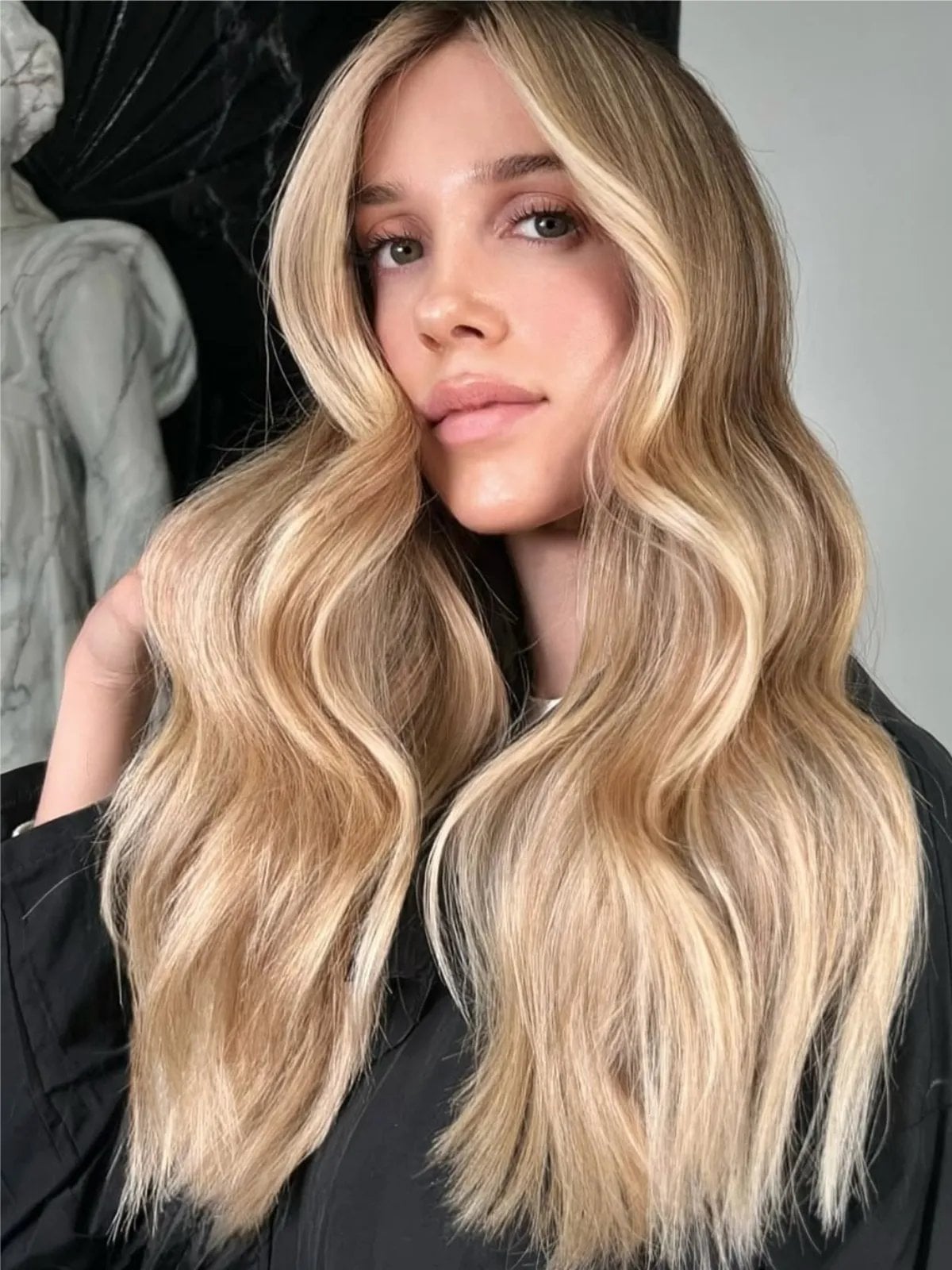
Beige blonde sits in the narrow lane between warm and cool, which makes it a useful neutral for mid-back length hair. The subtle highlights here are finely woven, so the dimension reads as soft depth. Face-framing layers keep the weight distributed evenly.
Thick, wavy hair of mid-back length benefits from this placement because the highlights show up within the wave bends. To get the same effect, you need to be clear about density. Ask your colorist for: mid-back beige blonde with subtle highlights. The key words are subtle and finely woven. A toner at the bowl every six to eight weeks maintains the beige tone; skip it and the base shifts warmer.
Thick Mid-Back Beige Blonde With Highlights and Creating A Natural
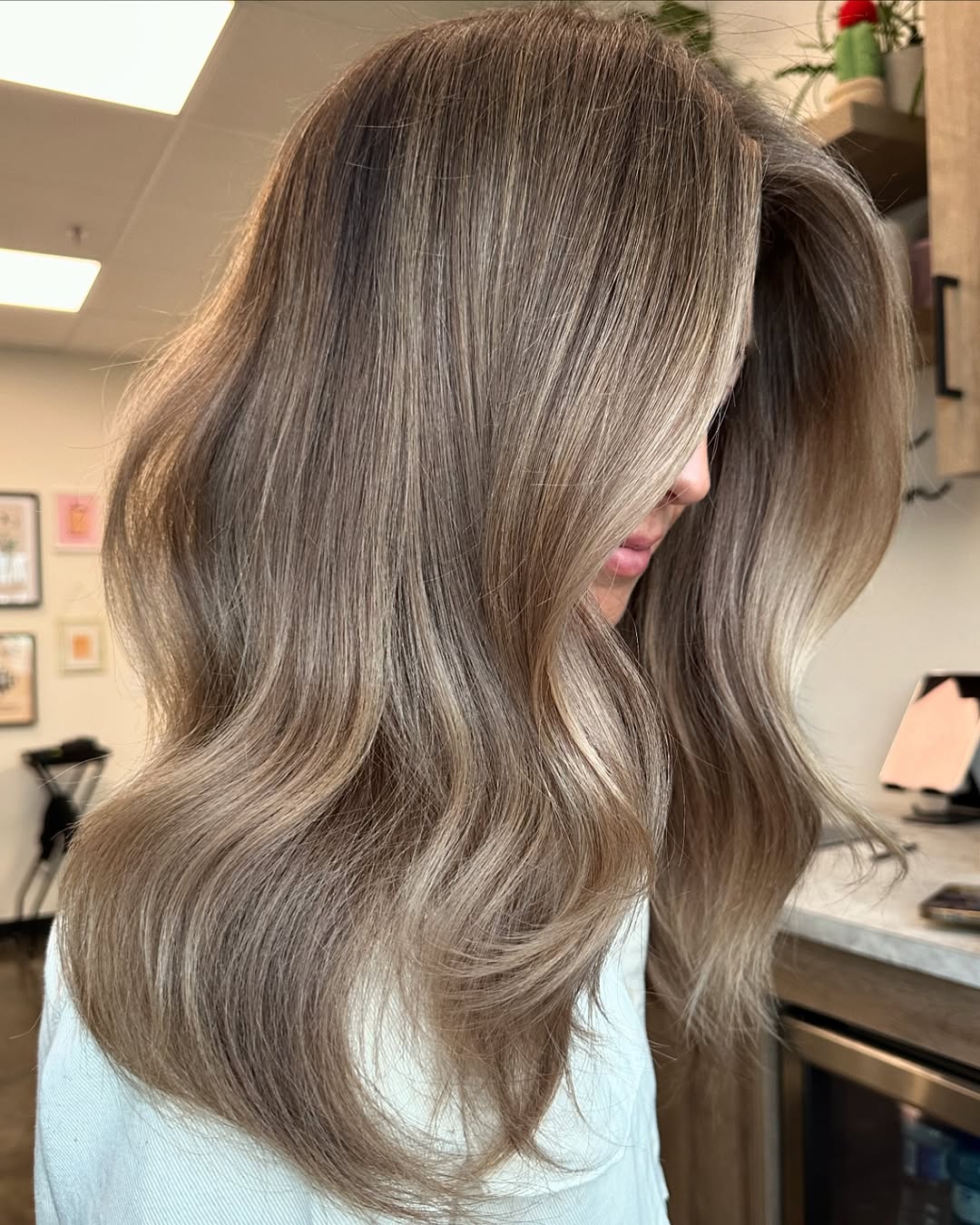
Thick hair holds a beige blonde differently than fine hair does. The density here means the lighter highlights sit on top of a rich beige base, creating a natural, lived-in look without the need for a heavy root shadow. The loose waves and side-swept framing break up the mass, so the mid-back length does not feel heavy.
This shade wears well because the thick texture supports the pigment. A toning session every eight weeks is usually enough, and a trim at the same interval prevents the ends from fraying. Ask your colorist for: mid-back beige blonde with subtle highlights. One caveat: the side-swept framing needs a trim every six weeks to keep the shape, or it will grow into a curtain that sits too long.
Ash Blonde Balayage Lob With Curtain Bangs
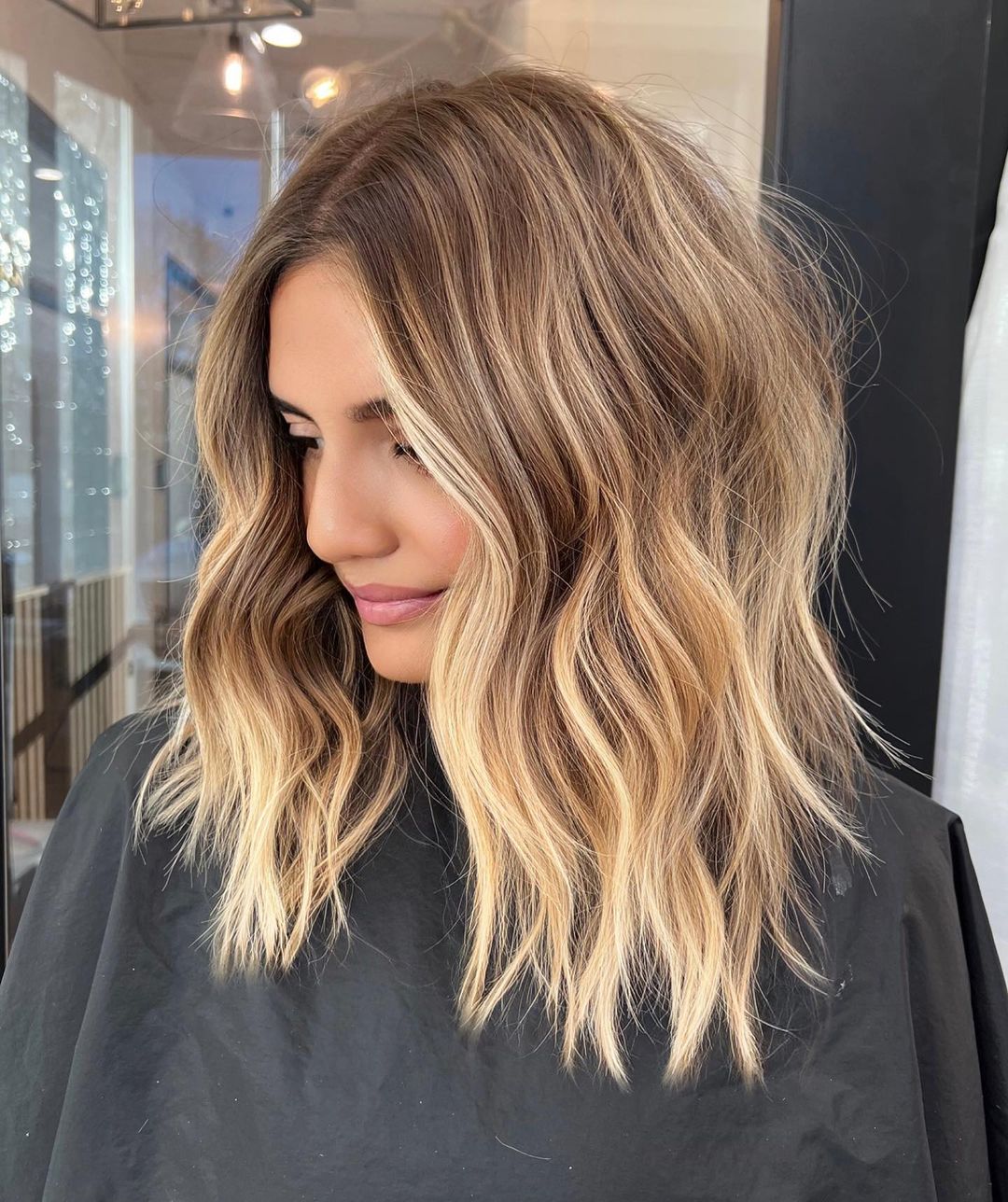
An ash blonde balayage lob with curtain bangs is the more relaxed cousin of the full highlight, and the difference shows in the grow-out. The balayage is painted on, so the lighter blonde pieces sit where the light hits, and the collarbone length keeps the whole thing from feeling heavy. Thick, wavy hair takes the soft layers especially well, and the middle part plus curtain bangs work on most face shapes. Ask your colorist for: collarbone ash blonde balayage lob with curtain bangs. A texturizing spray brings the wave pattern back to life on day two, and the baseline needs a trim every six to eight weeks.
Dirty Blonde Balayage Mid-Back Layers
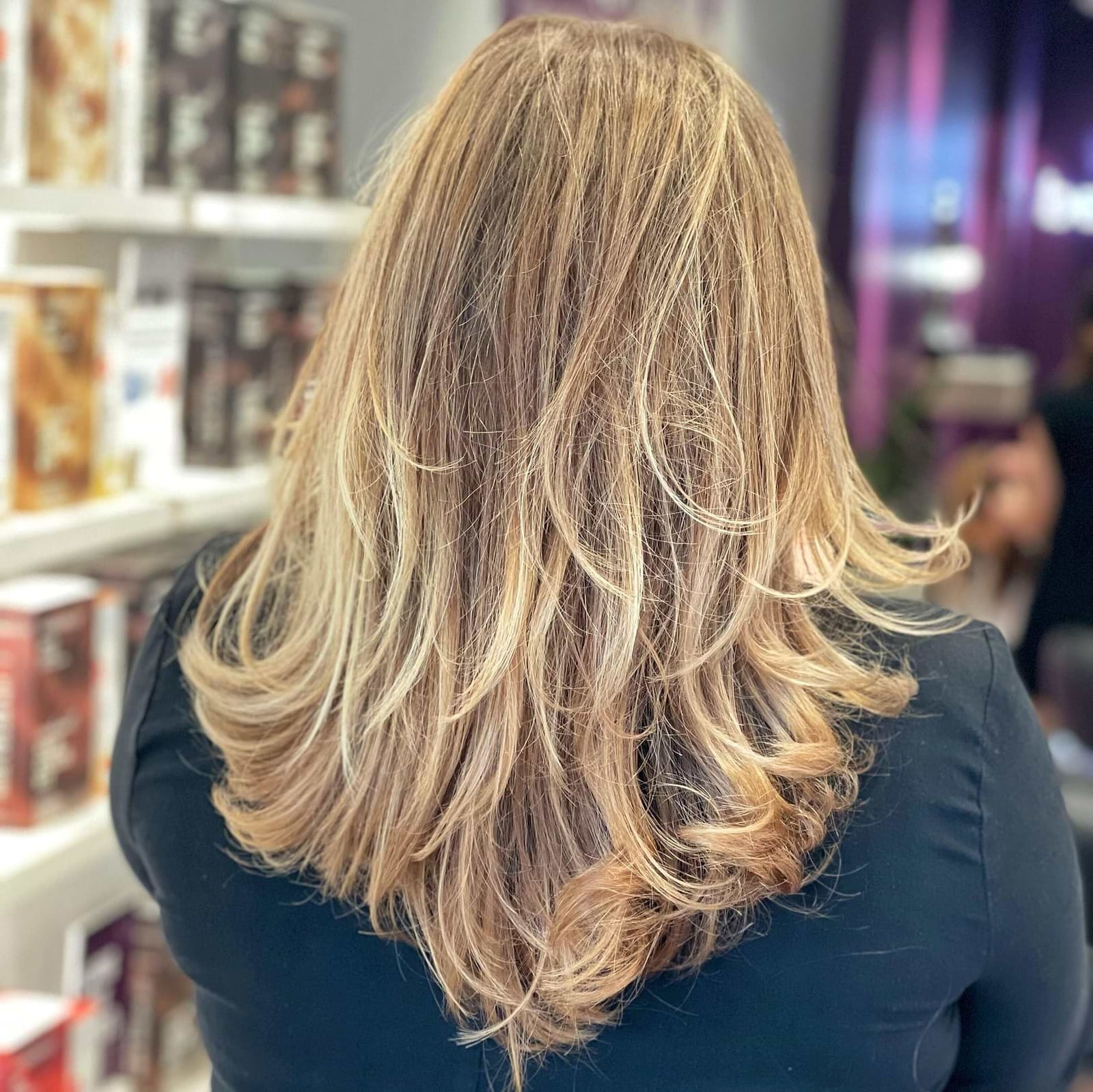
The dirty blonde base provides depth, and the balayage keeps the color from looking flat. Lighter blonde tones are swept through the mid-back length in a way that mimics a natural sun fade, starting lower down so the roots keep their depth. Long, soft layers give the thick, wavy texture somewhere to move, and the middle part lets the color fall symmetrically. Ask your colorist for: mid-back dirty blonde with balayage. You can skip the heat entirely: air-dry with a curl cream and the loose waves will settle on their own. The cut holds its shape for eight to ten weeks before the layers start to feel straggly.
Brown Base With Blonde Balayage
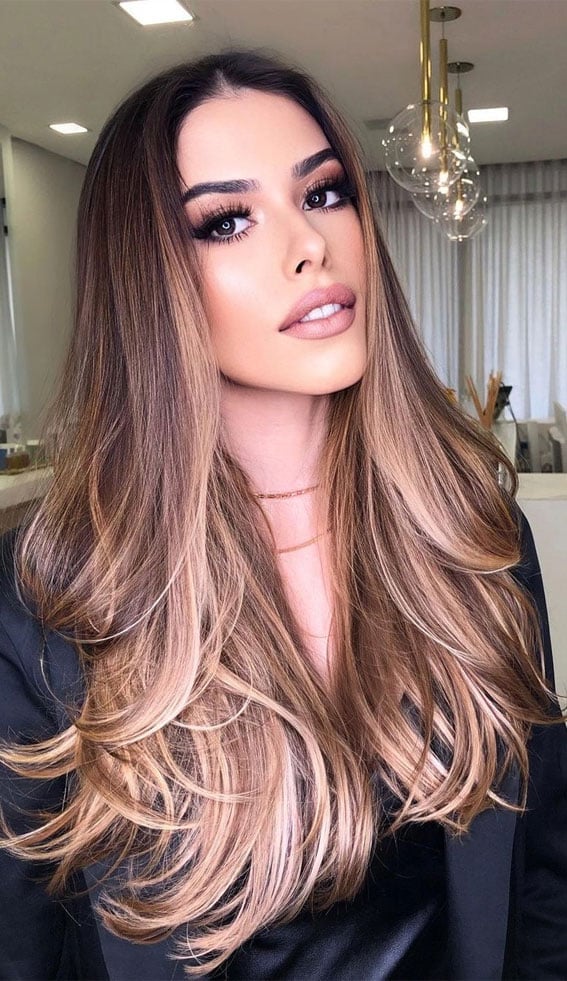
Wondering if you have to go fully blonde to get dimension? This brown base with blonde balayage is the answer for anyone who wants lightness without committing to a full lift. The blonde is subtle, painted through the mid-back length in loose waves, and the brown base keeps the overall tone grounded. It is a strong choice for thick, wavy hair, where the face-framing layers catch the lighter pieces and show off the transition. Ask your colorist for: mid-back brown base with blonde balayage. A texturizing spray helps the waves hold their bend, and the ends need a trim every six to eight weeks to keep the color looking fresh.
Fine Mid-Back Blonde Balayage
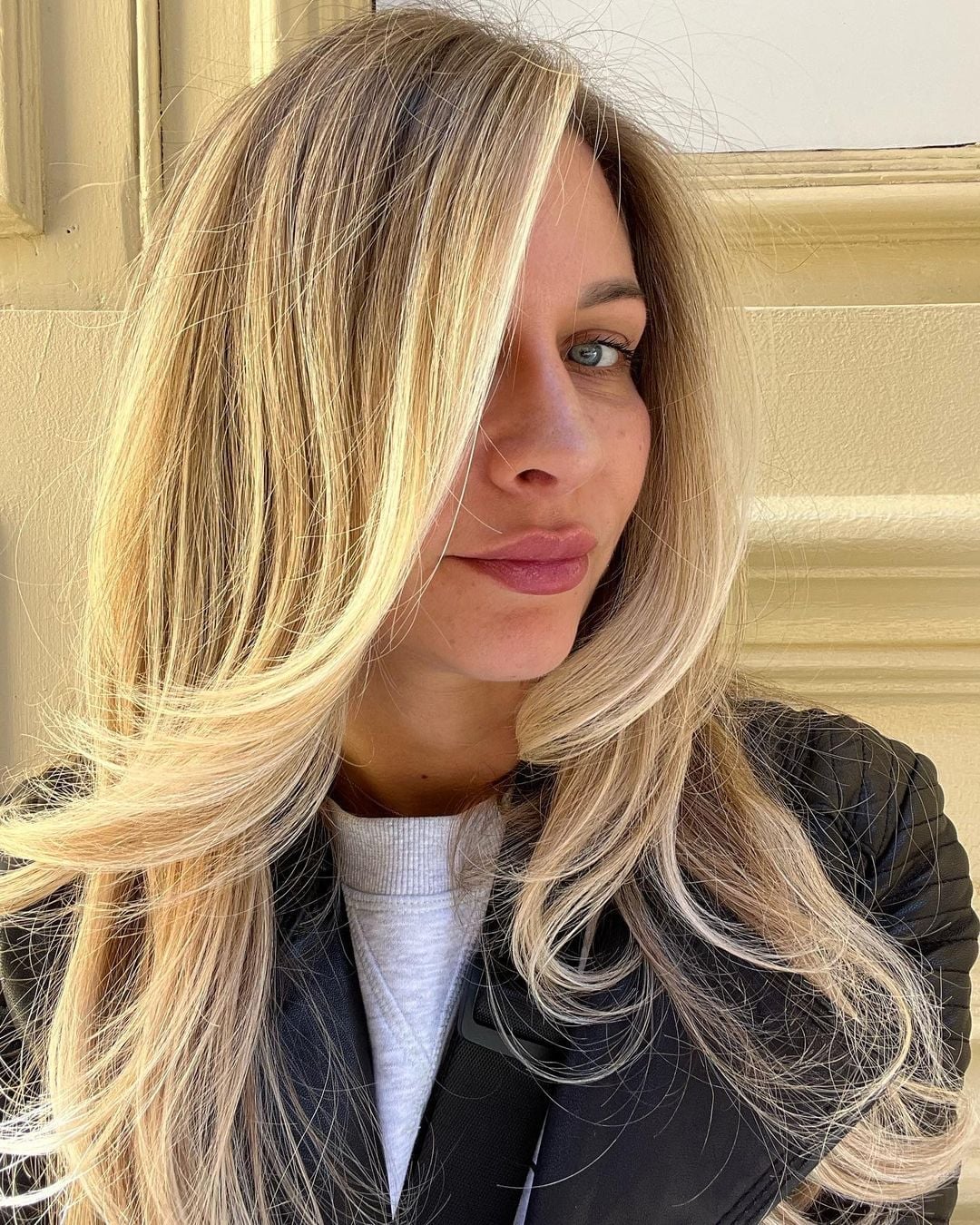
Fine hair gets a bad rap with light color, but a mid-back blonde balayage is one of the more forgiving techniques because it skips the harsh root line. The lighter blonde tones blend into a warmer base, and the side-swept bangs add a little visual weight up front. A blowout gives fine, wavy strands the body they lack on their own, and the glossy finish helps the color read as healthy. Ask your colorist for: mid-back blonde balayage with side-swept bangs. A lightweight mousse at the roots keeps volume from deflating by midday, and a trim every eight to ten weeks preserves the shape without sacrificing length.
Collarbone Ash Blonde With Highlights
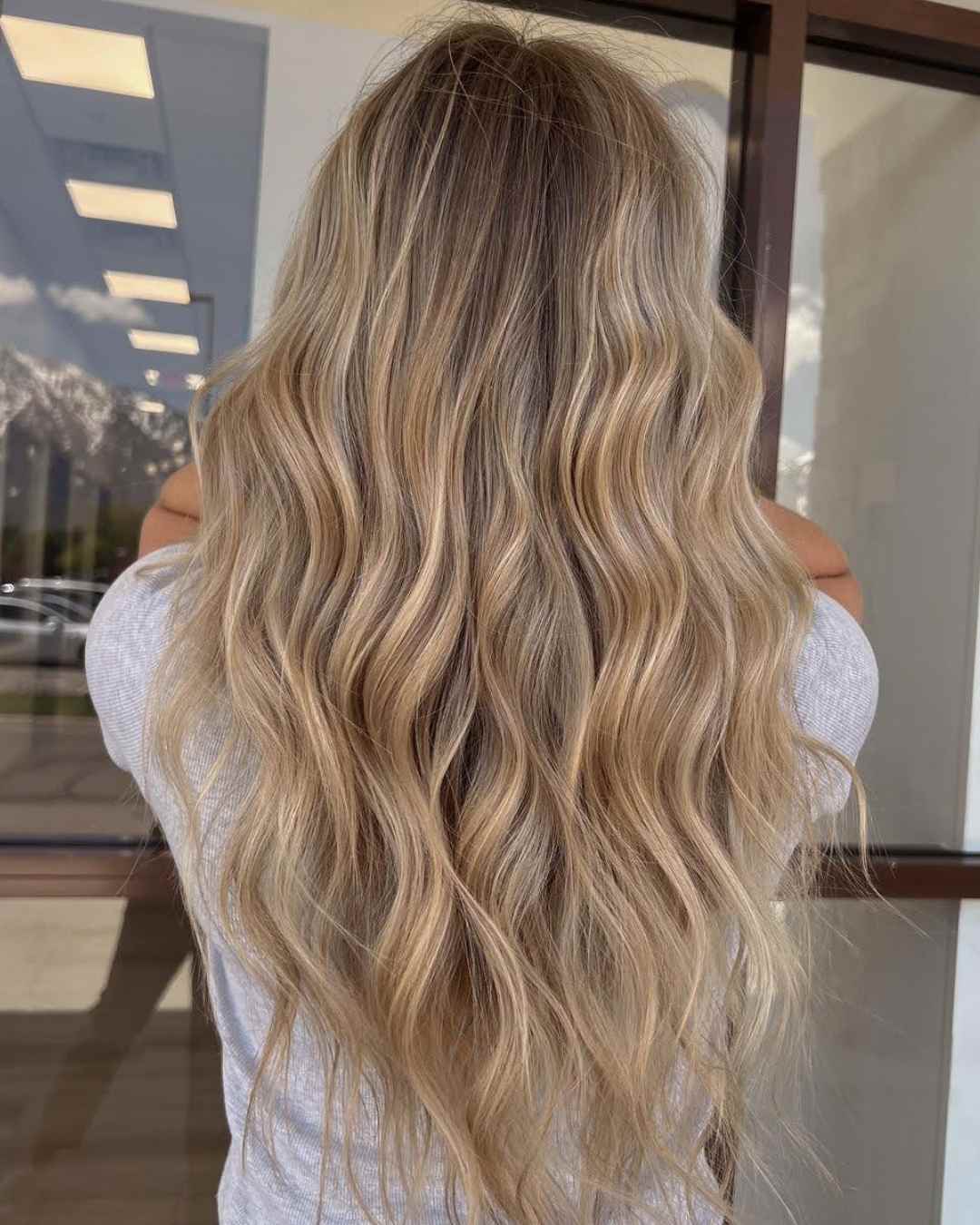
Face-framing layers are the reason this collarbone ash blonde looks intentional. The highlights are woven through the front pieces, so the lighter color draws the eye, while the curtain bangs soften the transition. Medium density, wavy hair carries the soft waves without looking weighed down, and the middle parting keeps the framing even on both sides. Ask your colorist for: collarbone ash blonde with highlights and curtain bangs. A round brush during blow-drying gives the waves a consistent bend, and the ends need a trim every six to eight weeks to keep the collarbone length from creeping past its line.
Mid-Back Ash Blonde With Root Shadow, Close-Up Take
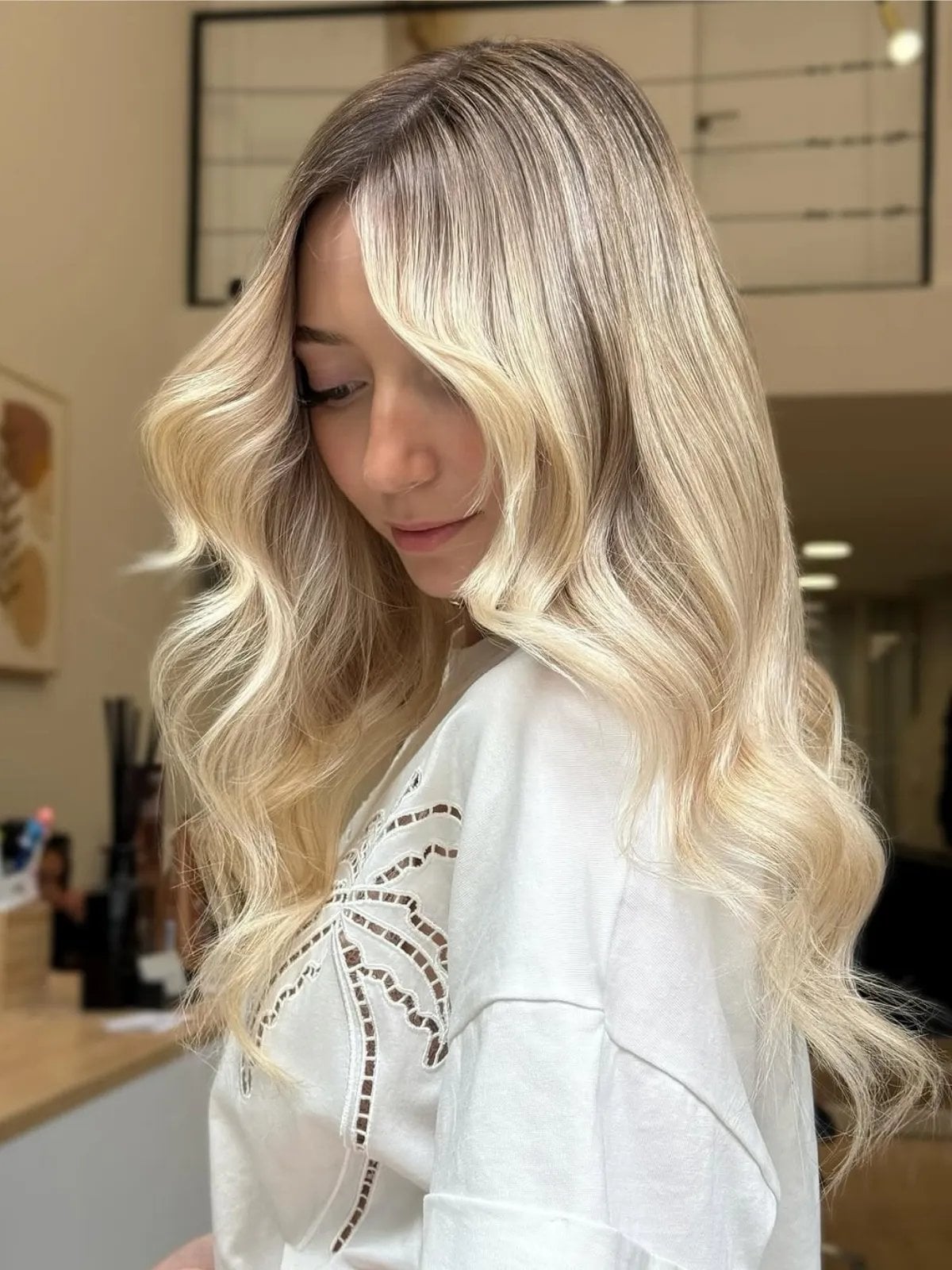
A root shadow that softens into ash blonde creates a subtle transition instead of a harsh line. This close-up shows how the darker base at the roots gradually lightens through the mid-lengths, a technique that buys about six weeks before the grow-out becomes obvious. The thick, wavy texture and long layers with curtain bangs keep the overall effect soft and dimensional.
Ask your colorist for: mid-back ash blonde with root shadow and curtain bangs. The middle part and curtain bangs are a reliable choice for most face shapes. A volumizing mousse applied before blow-drying helps the waves hold their shape, and a trim every six to eight weeks keeps the layers from losing their structure.
Mid-Back Ash Blonde With Subtle Layers
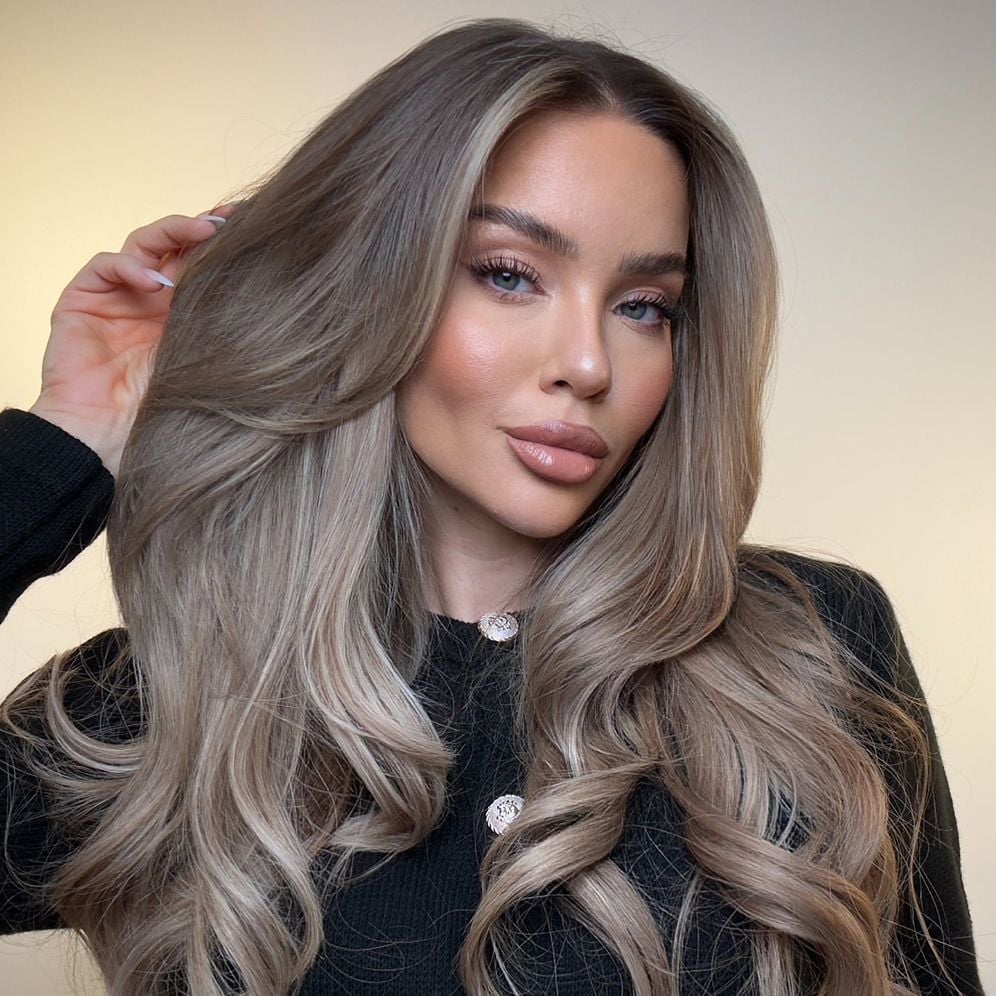
This is the uniform cousin of the root-shadow trend: an even ash blonde from root to tip with no darker base and no lighter highlights. The result is a cleaner, more polished finish. It works best for those who prefer a consistent tone and are willing to book a toning appointment every four to six weeks to keep brassiness at bay.
Ask your colorist for: mid-back ash blonde with subtle face-framing layers. The thick, wavy texture and middle part suit a wide range of face shapes. A smoothing serum applied to damp hair before blow-drying adds the glossy finish visible here, and a trim every six to eight weeks maintains the shape.
Long Thick Wavy Ash Blonde
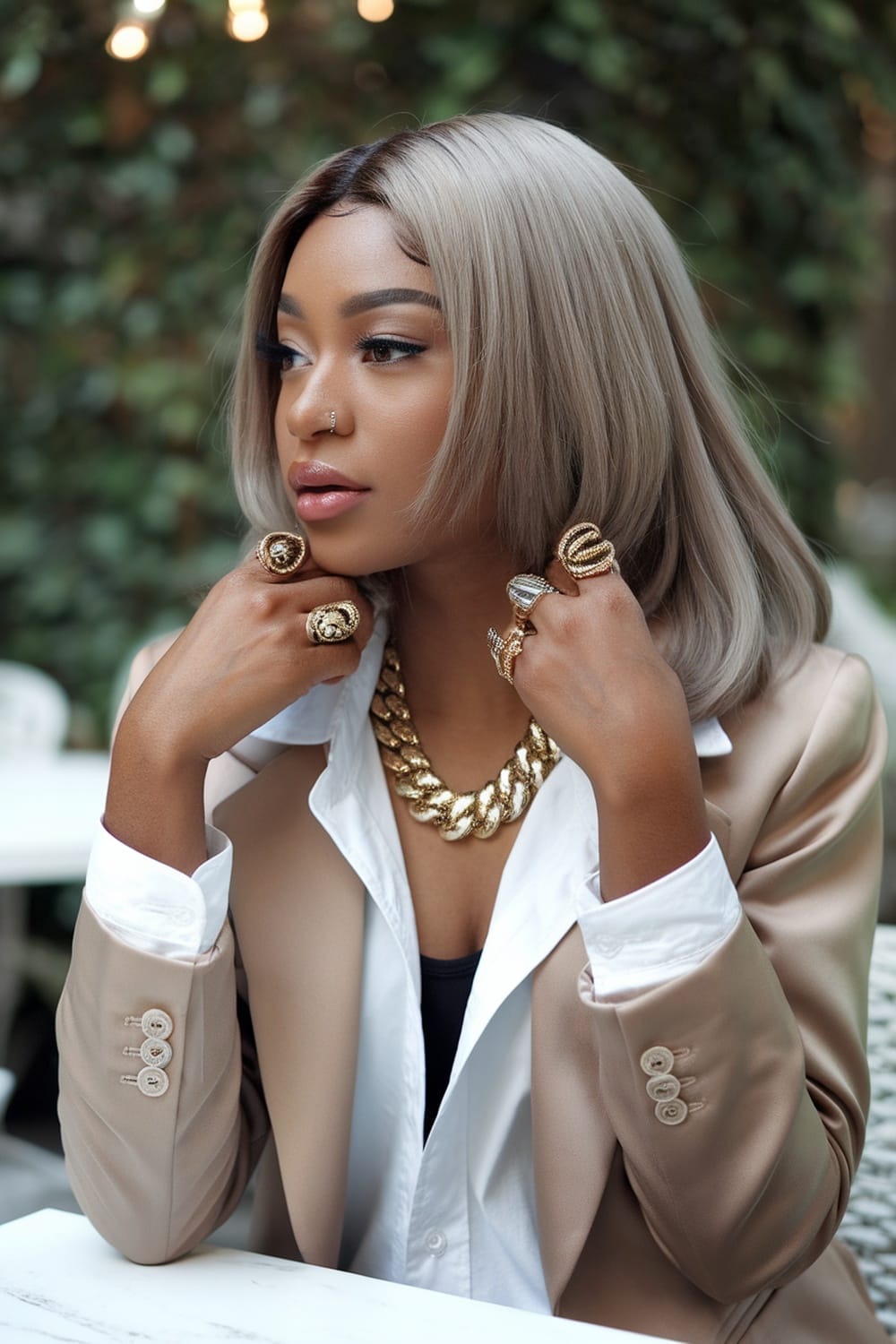
Can fine, straight hair carry a blunt chin-length bob in ash blonde? Yes, and this is the proof. The uniform color and clean line rely on the hair’s natural density and a precise cut. Ask your colorist for: chin length ash blonde bob. The side part and blunt line soften square and round faces. A flat iron finishes the look, and a trim every four to six weeks keeps the bob crisp.
Dimensional Ash Blonde With Darker Roots
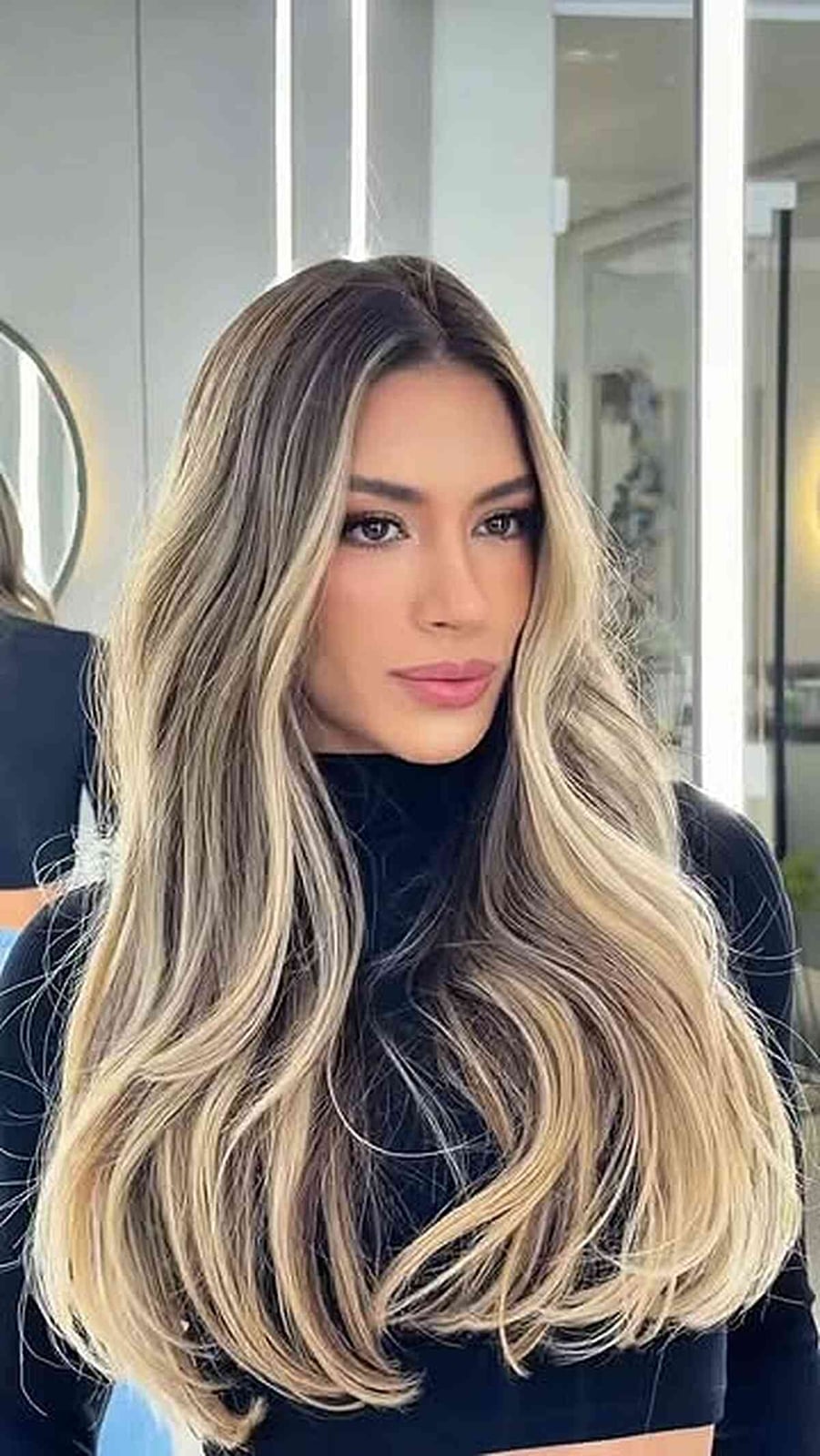
The darker roots here are not a sign of neglect. They are a deliberate part of the dimensional ash blonde formula, creating depth at the crown that makes the lighter ash blonde strands appear brighter by contrast. The technique uses a root shadow that blends into hand-painted highlights through the ends, a process that takes about two and a half hours in the chair.
Ask your colorist for: mid-back dimensional ash blonde with darker roots. The thick, wavy texture and face-framing layers with a middle part work for most face shapes. A texturizing spray refreshes the waves between washes, and a toning appointment every six weeks keeps the ash tone from shifting warm.
Chin Length Ash Blonde Bob With Silver Highlights
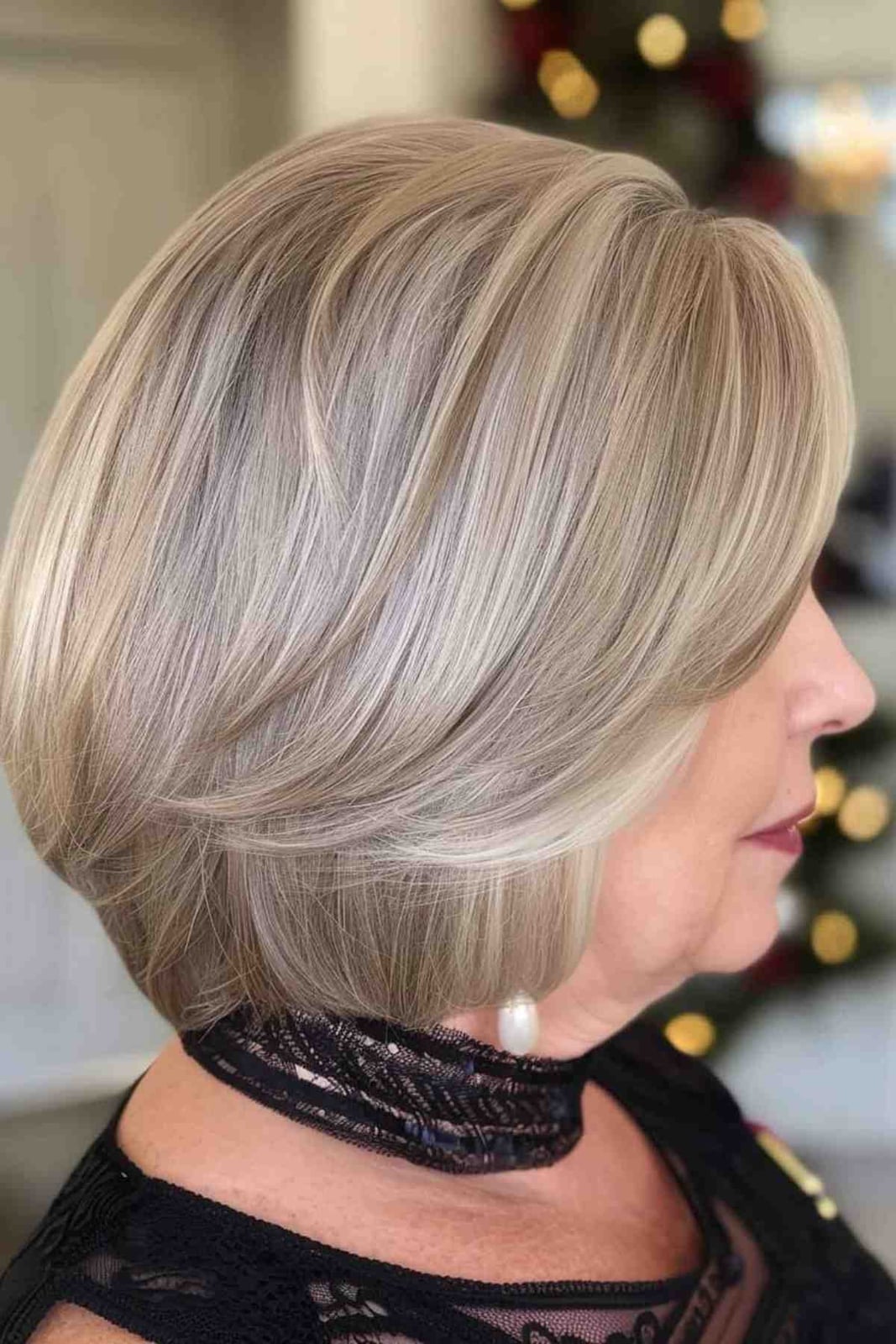
A chin-length bob in ash blonde gets an upgrade from subtle silver highlights woven through the surface. The fine, straight texture and side-swept bangs keep the overall look polished rather than severe. Ask your colorist for: chin length ash blonde bob with silver highlights and side-swept bangs. The side part and soft bangs help balance square and round face shapes. A flat iron creates the smooth finish, and the bob needs a trim every four to six weeks.
Chin Length Uniform Ash Blonde Bob, Mid-Back
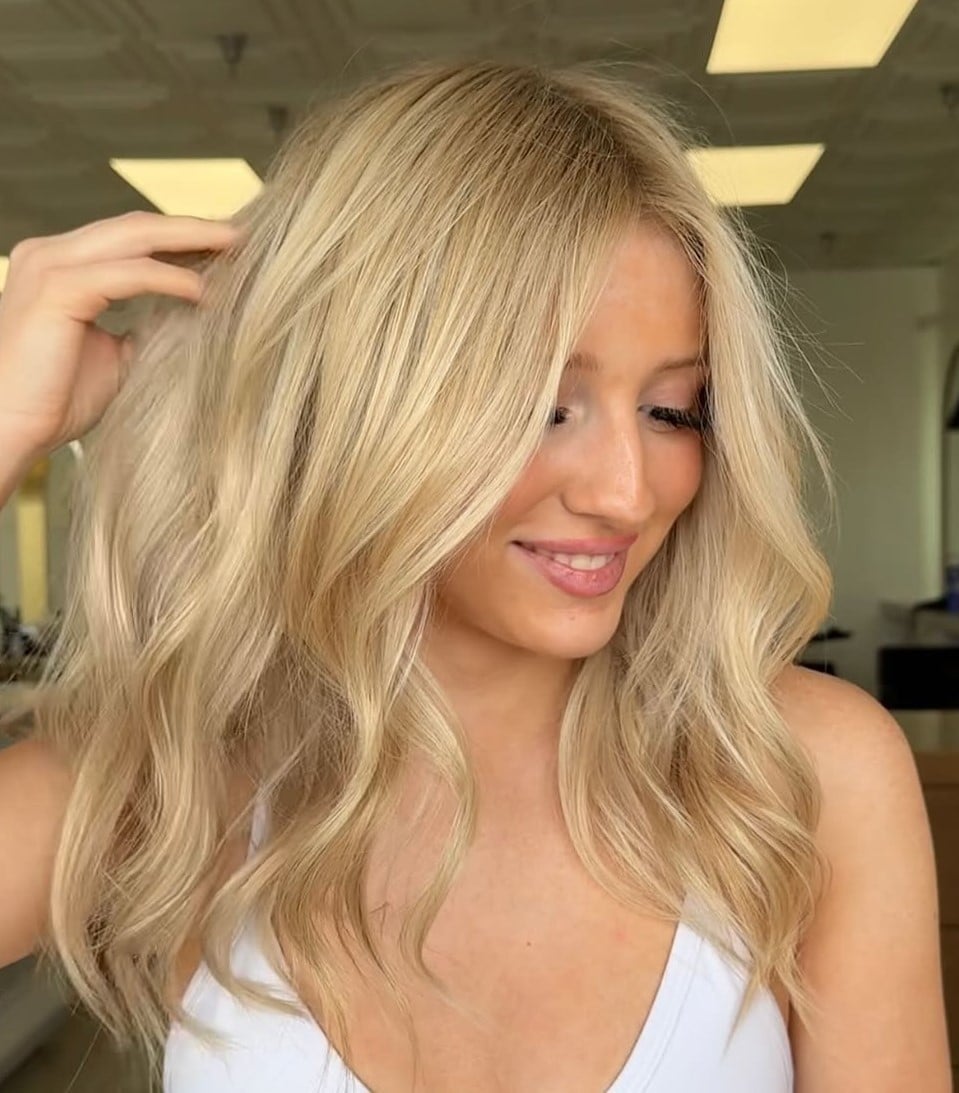
A practical rule: when you want the mid-back length to feel polished, a uniform color is the way to go. This look features a platinum blonde shade with a subtle root shadow, styled in soft waves with a middle parting. The long layers keep the weight manageable, while the color adds depth without the commitment of a full bleach.
Ask your colorist for: mid-back platinum blonde with subtle root shadow. The root shadow makes grow-out a non-event for about six weeks, and a single-process toner appointment every four weeks keeps the brassiness at bay. A smoothing cream and a round brush get you there in under twenty minutes.
Collarbone Platinum Blonde With Highlights, Wavy
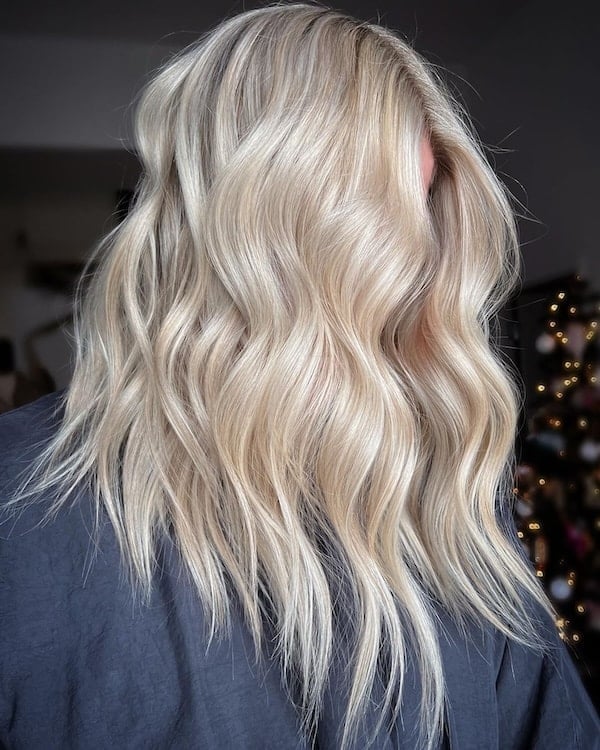
Compared to a single-process platinum, this version adds subtle lighter highlights for a more dimensional finish. The collarbone-length cut with fine, wavy texture and a side parting keeps the look soft. It is a salon-only color process that takes about three hours the first time.
One real drawback: the bright platinum base requires a toning appointment every three to four weeks or it shifts yellow. Ask your colorist for: collarbone bright platinum blonde with subtle highlights. That highlighting step adds texture to fine hair, making it look fuller. Skip this if you want a low-maintenance blonde.
Shoulder Ash Blonde With Subtle Highlights
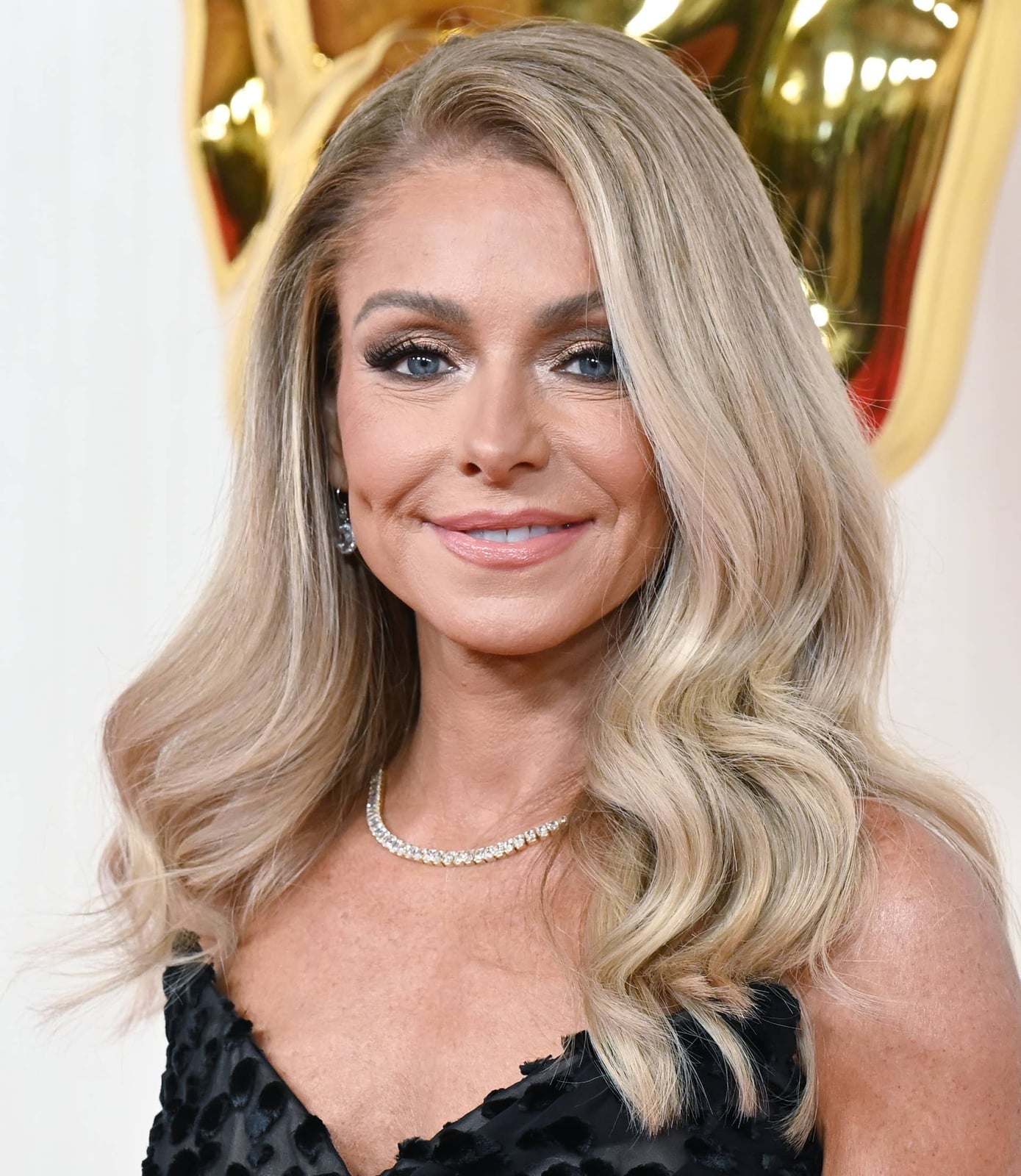
The design here is about restraint: the ash blonde base keeps the tone cool, while the subtle highlights add just enough dimension to stop the color from looking flat. Shoulder-length long layers with a side part and soft waves work best on fine, wavy hair. Ask your colorist for: shoulder length ash blonde with subtle highlights. The highlights lift the overall brightness without a strong contrast, so the grow-out is softer than a traditional foil. A trim every six to eight weeks keeps the ends from feeling wispy.
Shoulder Dishwater Blonde With Layers
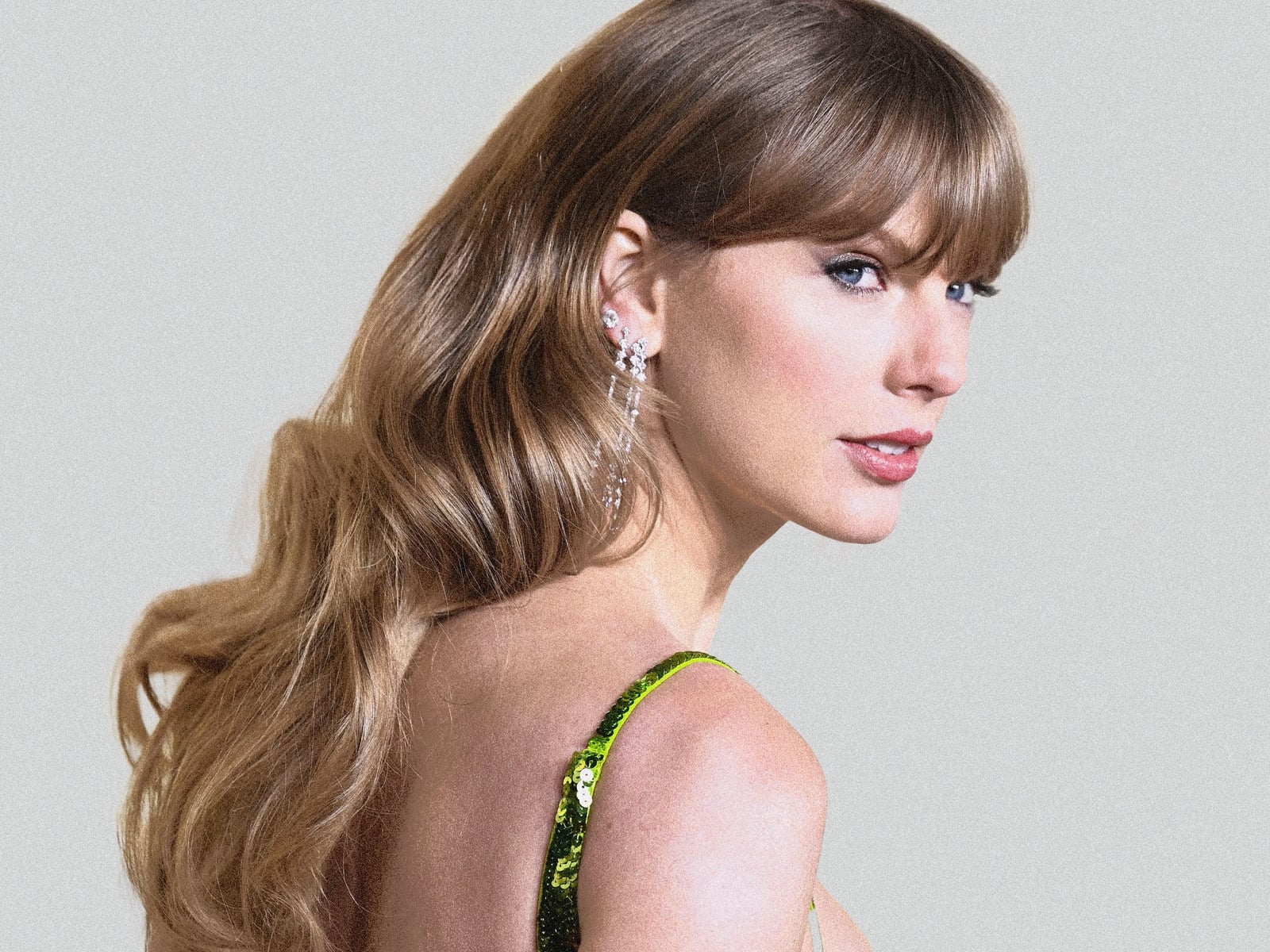
Does dishwater blonde sound like a compromise? It is not. This neutral, lived-in shade sits between beige and ash, making it one of the most wearable light colors for medium-density, wavy hair. The shoulder-length cut features curtain bangs and face-framing layers, styled in loose waves with a middle parting. Ask your colorist for: shoulder length dishwater blonde with curtain bangs. The color requires minimal toning, every eight to ten weeks, because the base is already muted. A trim every six to eight weeks keeps the layers from looking overgrown.
Mid-Back Golden Blonde With Layers
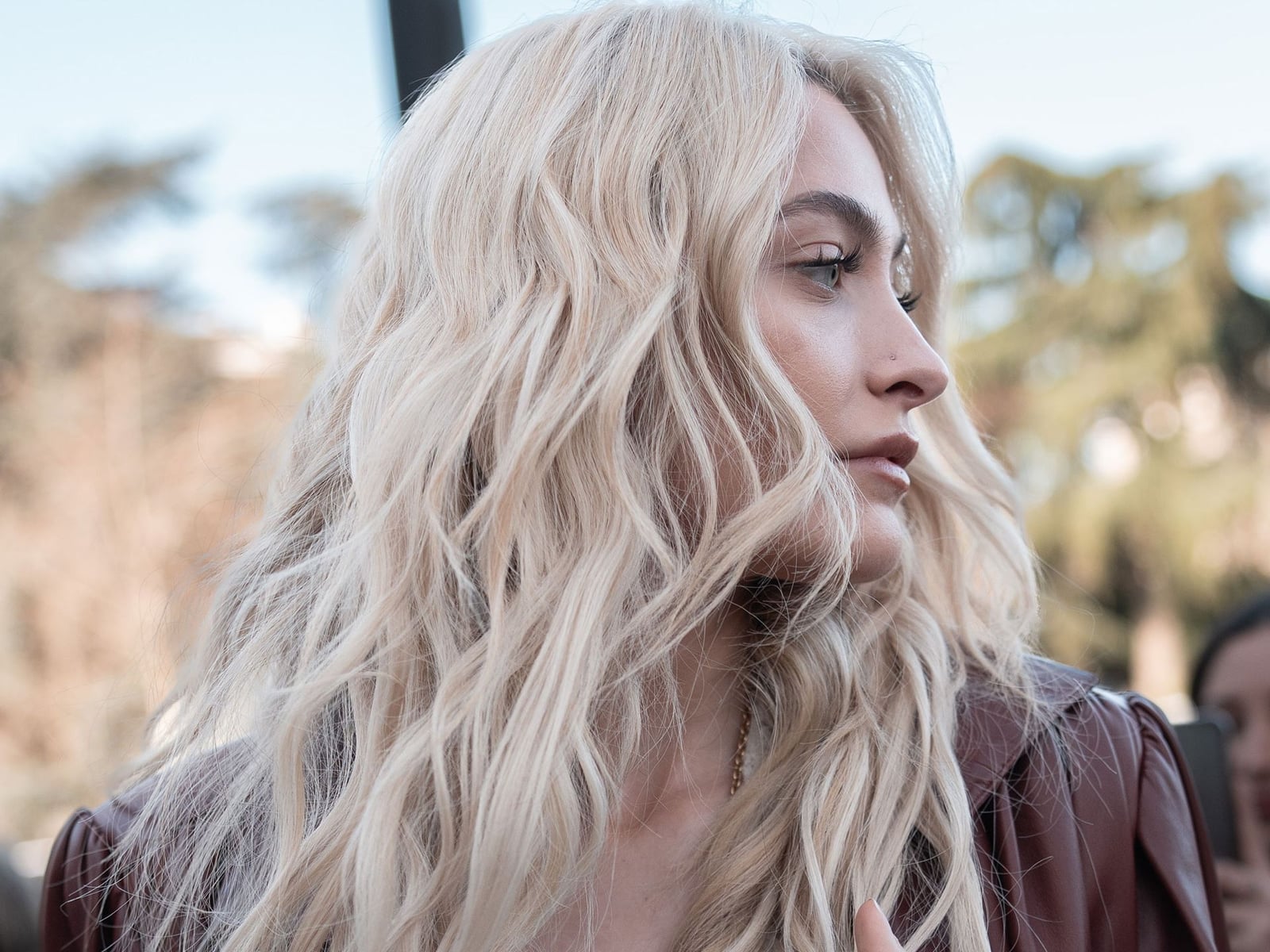
A warm golden blonde on thick, wavy hair is sunny without being brassy. This mid-back length uses subtle face-framing layers and a middle parting, styled in loose waves with a blowout. The texture adds natural volume, so the color shines in every wave. Ask your colorist for: mid-back golden blonde with subtle face-framing layers.
A shine serum is your daily tool here. It keeps the gloss intact and prevents the ends from looking dry. The upkeep is a toner every five to six weeks to maintain the warmth, plus a trim every six to eight weeks to preserve the shape. Thick hair holds the wave well, so a ten-minute blow-dry with a large round brush is usually enough.
Platinum Blonde With Darker Roots and Highlights
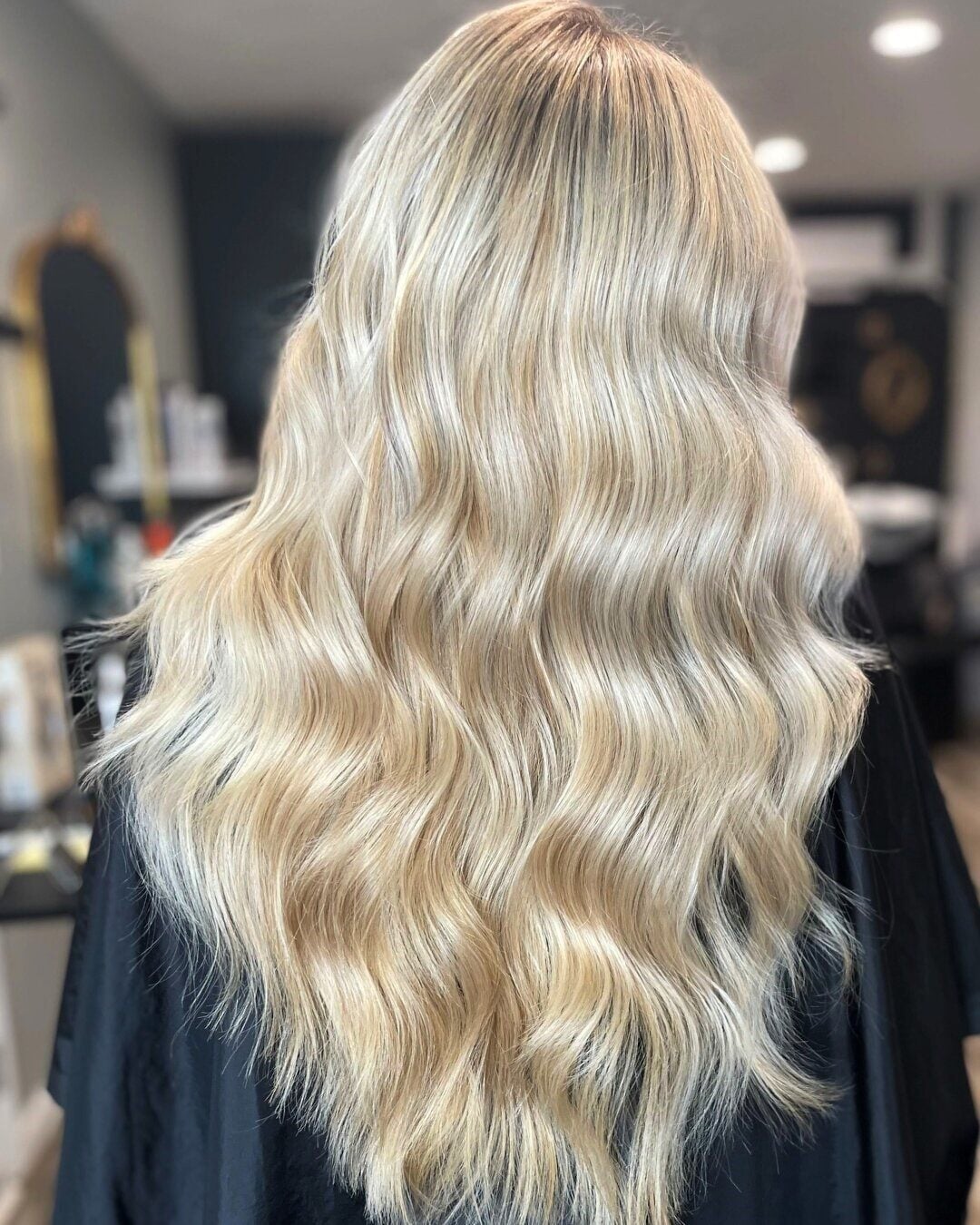
The design here pairs a bright platinum blonde base with a darker root shadow and warmer highlights woven through thick, wavy mid-back hair. Ask your colorist for: mid-back platinum blonde with root shadow and warmer highlights. A balayage technique paints the highlights freehand, so the grow-out line stays soft and the darker roots help with maintenance.
Thick, wavy textures take the contrast especially well because the root shadow anchors the lightness. The middle part suits most face shapes. Plan on a toning appointment every four to six weeks if you want the platinum to stay cool.
Mid-Back Platinum Blonde With Root Shadow, Everyday Version
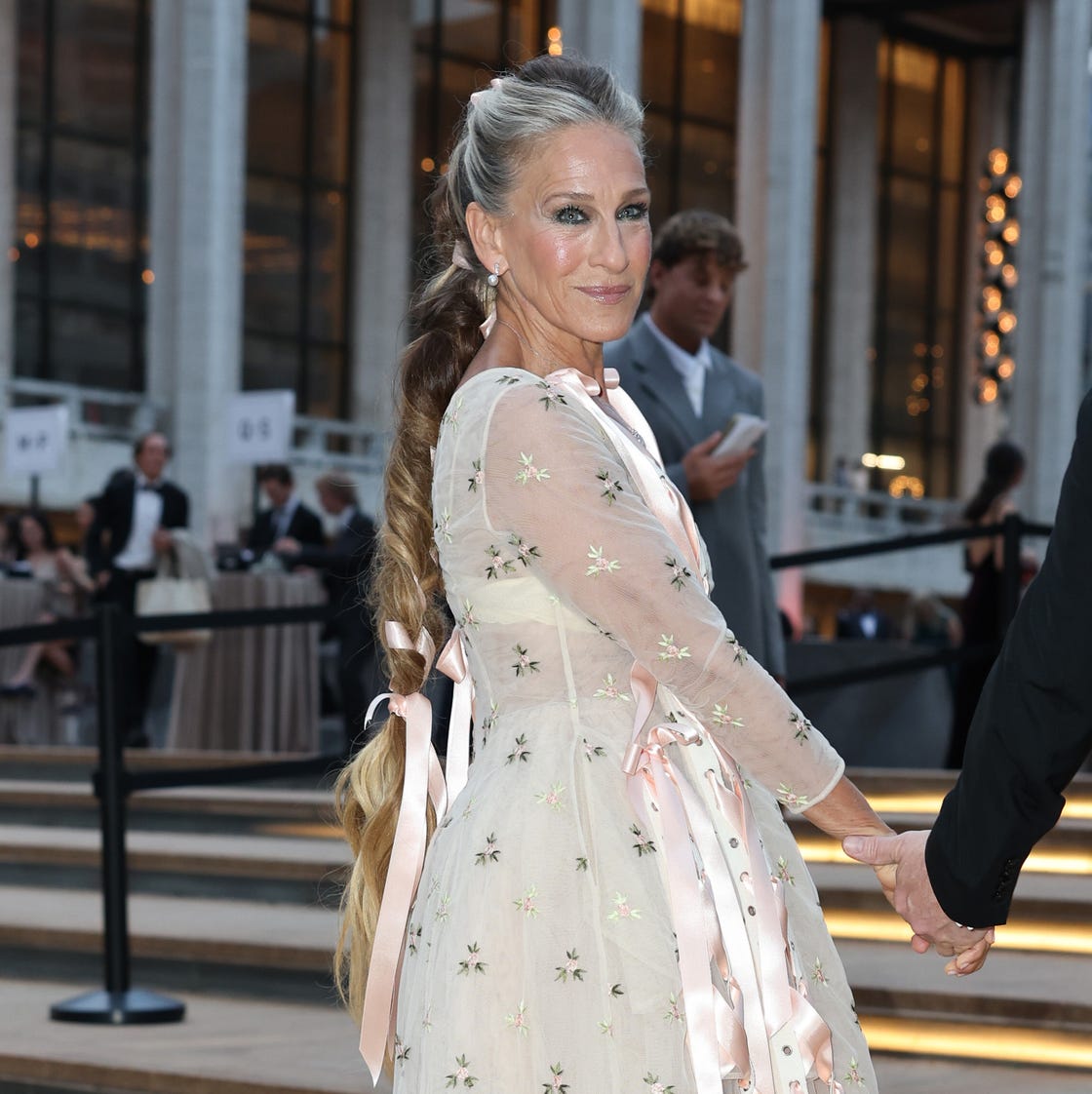
When you want platinum that looks deliberate, the recipe is gray blending with blonde babylights. Ask your colorist for: mid-back bright platinum blonde with subtle root shadow. The babylights mimic natural highlights around the face, while the gray blending technique softens the overall tone so it lands somewhere between silver and white. Medium-density wavy texture keeps the look grounded. A weekly purple shampoo is enough to preserve the tone between salon visits.
Voluminous Mid-Back Platinum Blonde
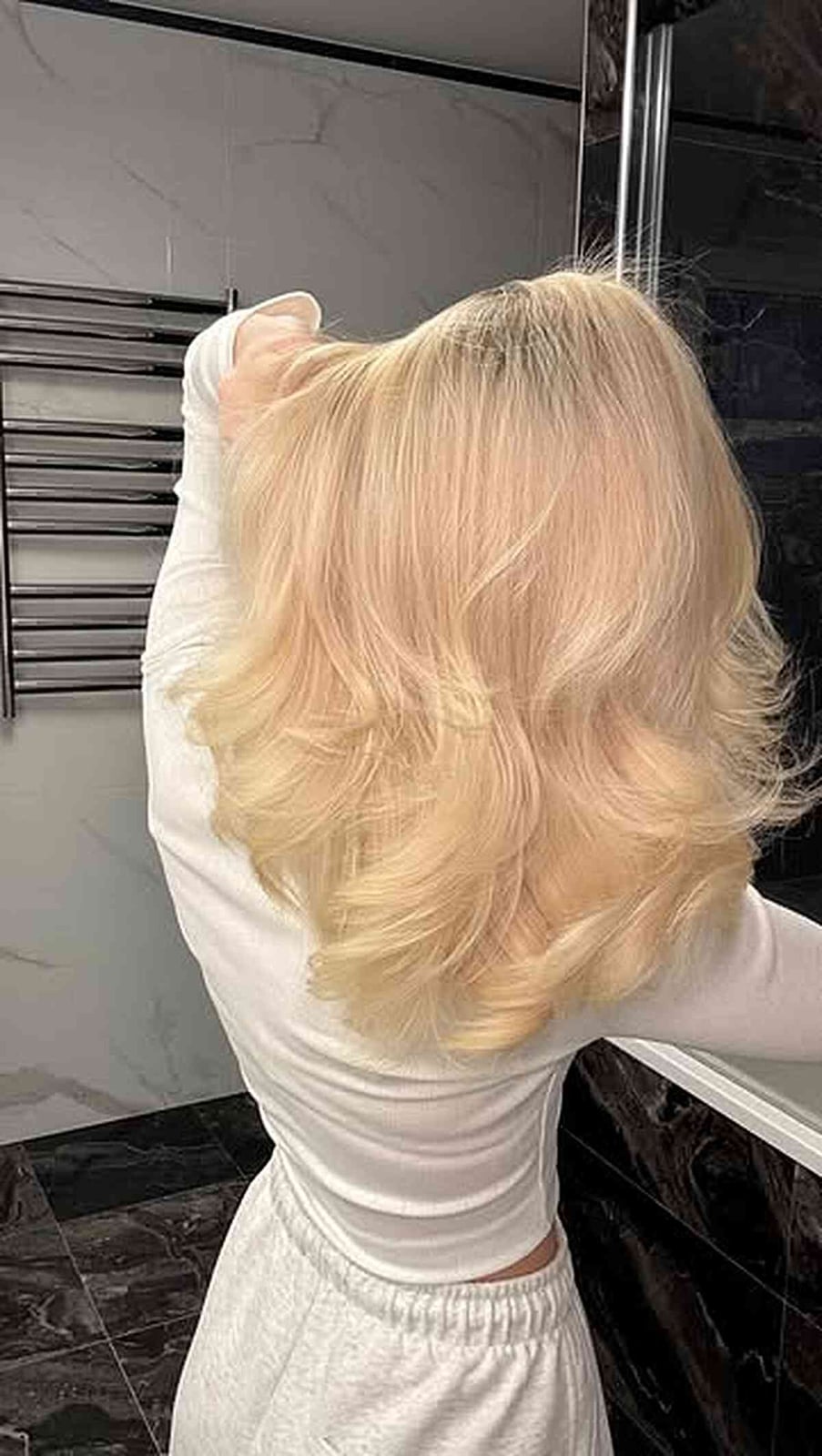
Uniform platinum blonde is the closest thing to a blank canvas you can get, but it is also the most demanding. Ask your colorist for: mid-back uniform platinum blonde. The blowout adds volume, but the real work happens in the bowl: this shade requires lifting the hair to a near-white base before toning, and any warmth in the starting color shows up fast.
The one drawback is brassiness. A violet shampoo is not optional here, it is the difference between platinum and butter. Thick, wavy mid-back hair carries the uniform shade well because the texture catches light evenly, but plan on a toning appointment every three to four weeks if you want it to stay true.
Final Thoughts
For fine hair, stick to a blunt baseline with minimal layers to keep density. For thick hair, long layers and strategic balayage can reduce weight and add dimension. Match your maintenance to your routine, not the other way around.
- Tone every 4-6 weeks to combat brassiness.
- Use color-safe shampoo and conditioner.
- Apply a heat protectant before styling.
- Deep condition weekly for dry, lightened hair.
- Trim split ends every 8-10 weeks.
Find the light blonde that complements your style and maintenance routine.