
Ombre hair color uses a gradient from darker roots to lighter ends, and it is a staple because it adds dimension without a full commitment to blonde. The current shift is toward softer transitions and lived-in color that grows out naturally rather than demanding a salon visit every four weeks.
This collection of 26 Classy Ombre Hair Color ideas covers the spectrum from low-upkeep brown-to-caramel blends to high-contrast fashion shades like teal and rose gold. The options work for fine hair that needs the illusion of volume, for anyone tired of a harsh grow-out line, and for straight or wavy textures that benefit from a glossy finish.
Classic Brown to Blonde Ombre
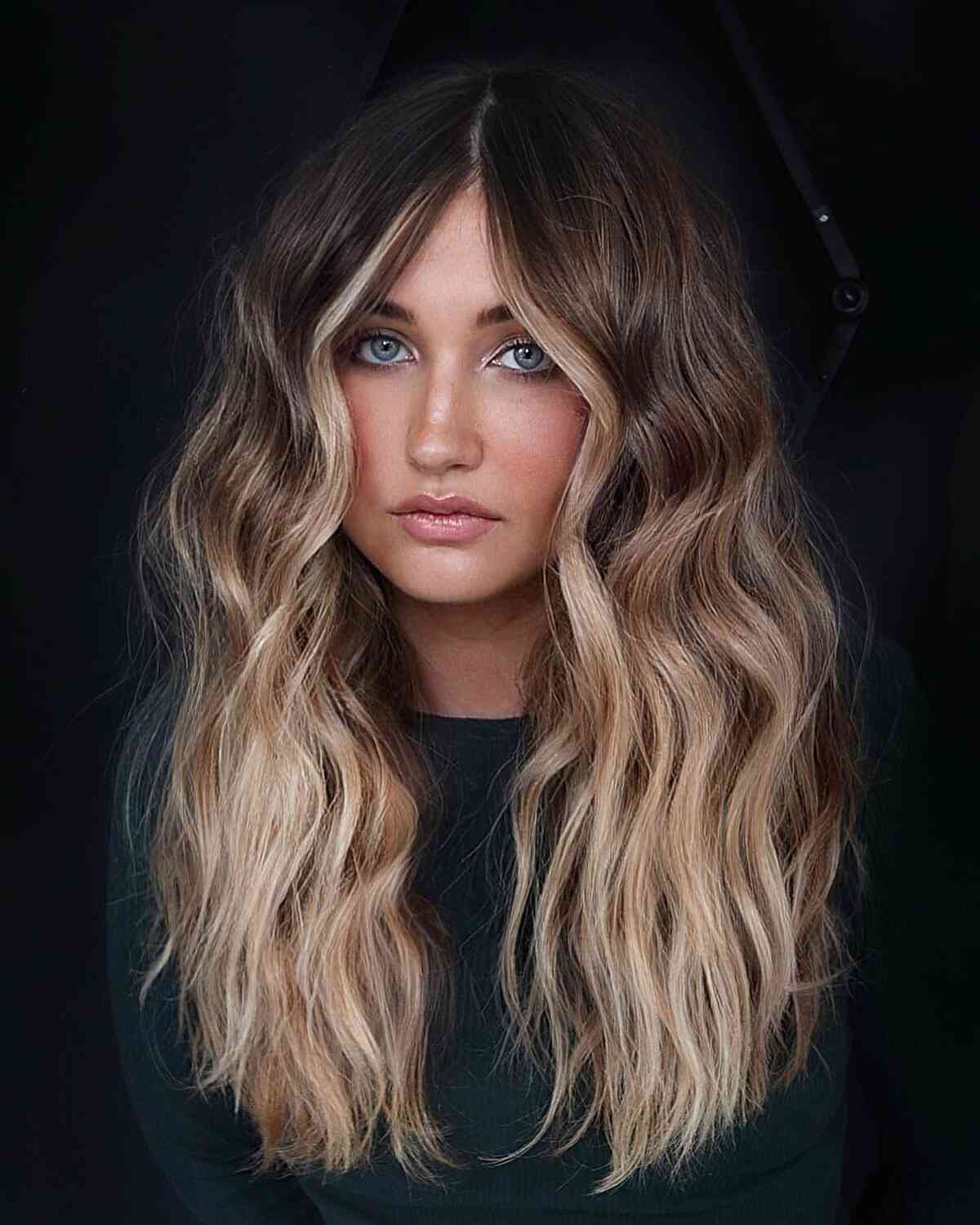
The color lightens from a dark brown base at the roots to a soft blonde at the ends, with the transition starting around the mid-lengths. This is achieved with a hand-painted balayage technique that keeps the gradient smooth, so the line of demarcation is nearly invisible. Ask your colorist for a classic brown to blonde ombre with a smooth transition. The mid-back length and thick, wavy texture give the color plenty of surface area to read as dimensional. A middle part helps the waves fall evenly on both sides, making the most of the gradient.
Natural Medium Brown to Light Brown Ombre
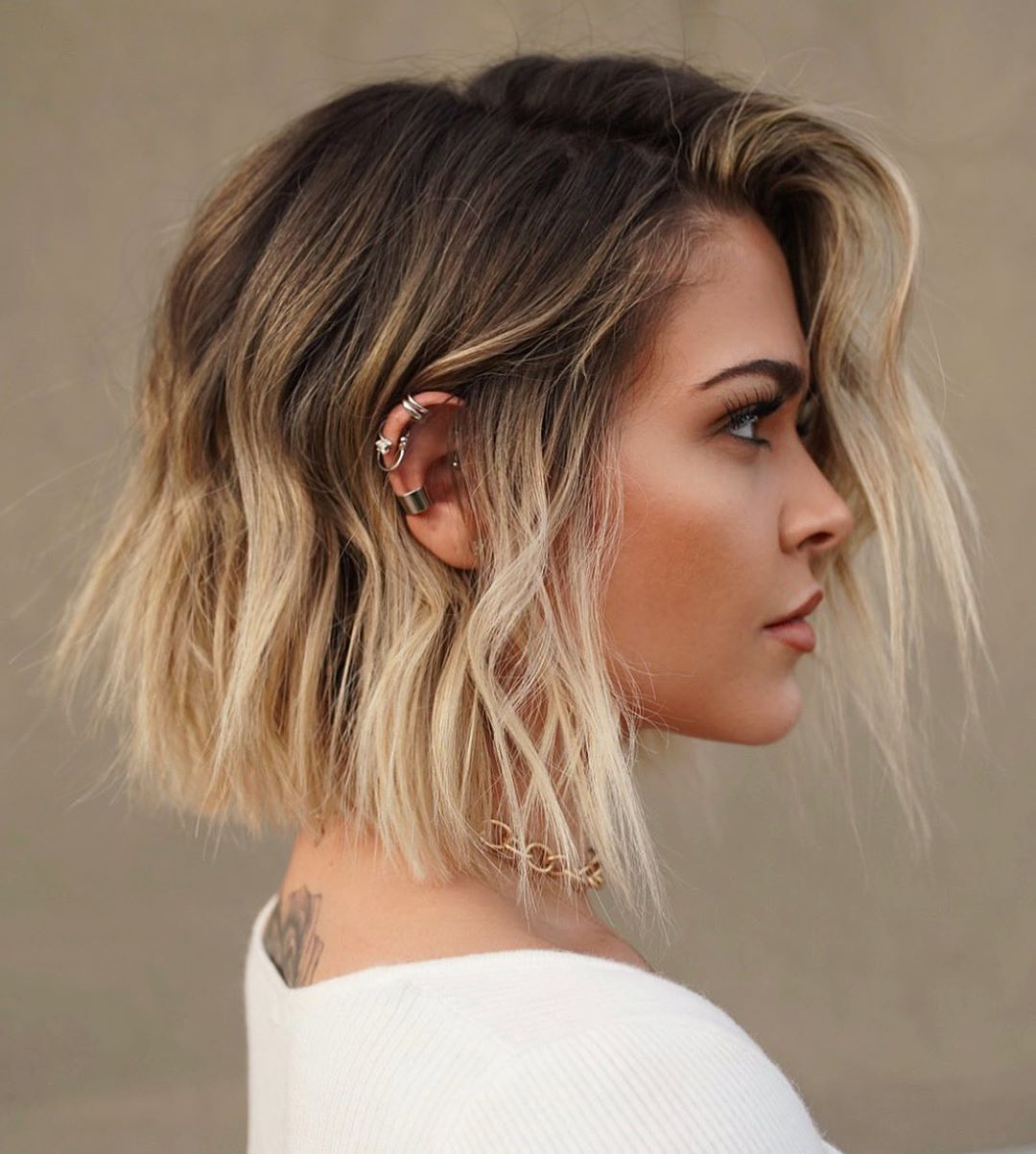
Wondering if ombre can actually look subtle? This version keeps the shift within the brown family, moving from a medium brown root to a light brown end, so the overall effect is more of a sun-lit lift than a dramatic change. The long, wavy, thick texture holds the soft color blend without it looking patchy. Ask your colorist for a natural medium brown to light brown ombre. Ends benefit from a smoothing serum to maintain healthy shine, and a trim every eight weeks keeps the long layers from feeling straggly. This is a low-key take on the trend that still earns its place.
Seamless Dark Brown to Blonde Ombre
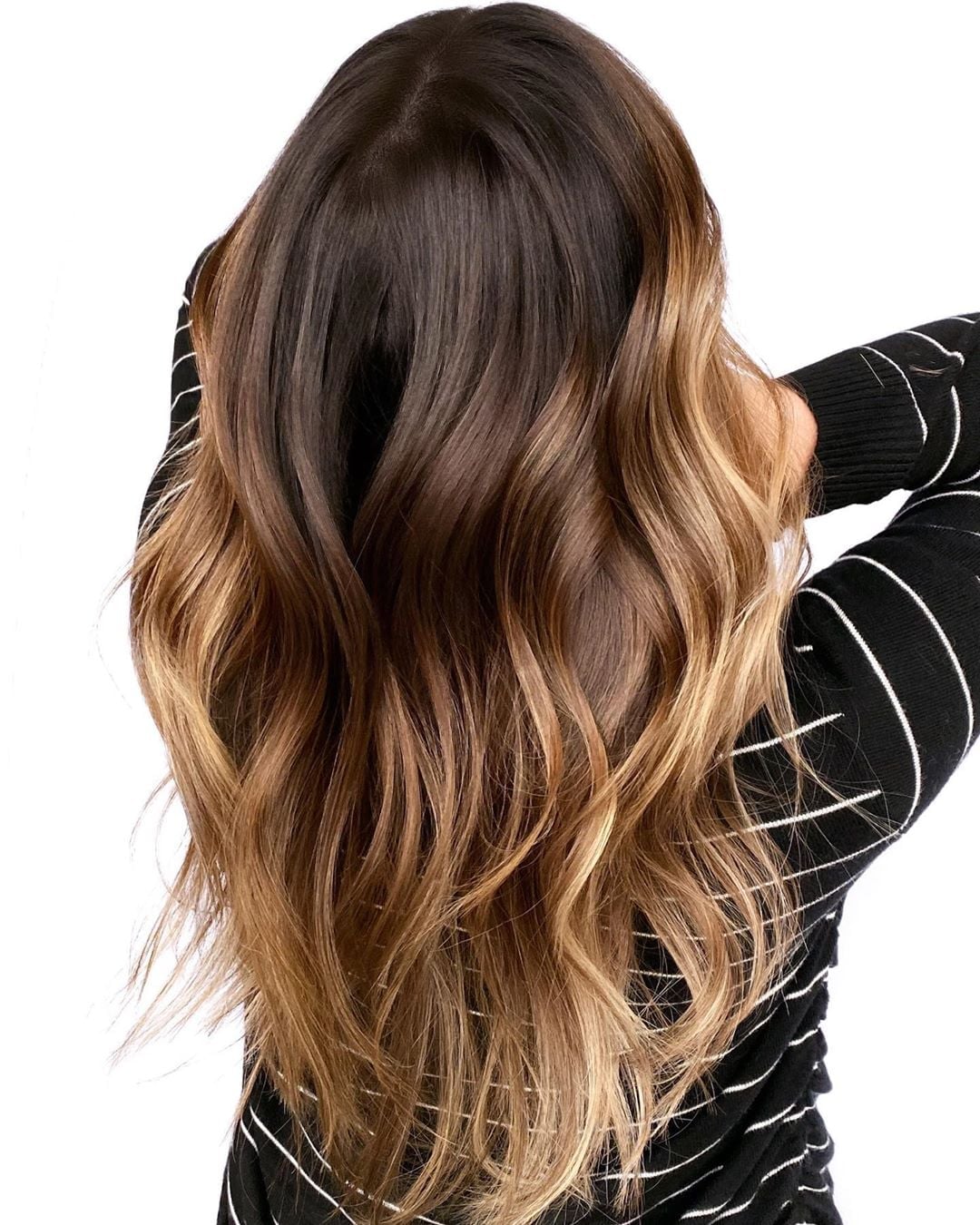
A seamless transition from dark brown roots to lighter blonde ends requires the stylist to feather the lightener through the mid-lengths, not apply it in one solid block. The result is a glossy, wavy blowout with a smooth color gradation. Ask your colorist for a seamless dark brown to blonde ombre. This technique works best on thick, wavy hair of at least mid-back length, where the layers can carry the lighter shade without a harsh line. A middle part keeps the balance even from the back view.
Soft Dark Brown to Blonde Ombre with Mid-Back
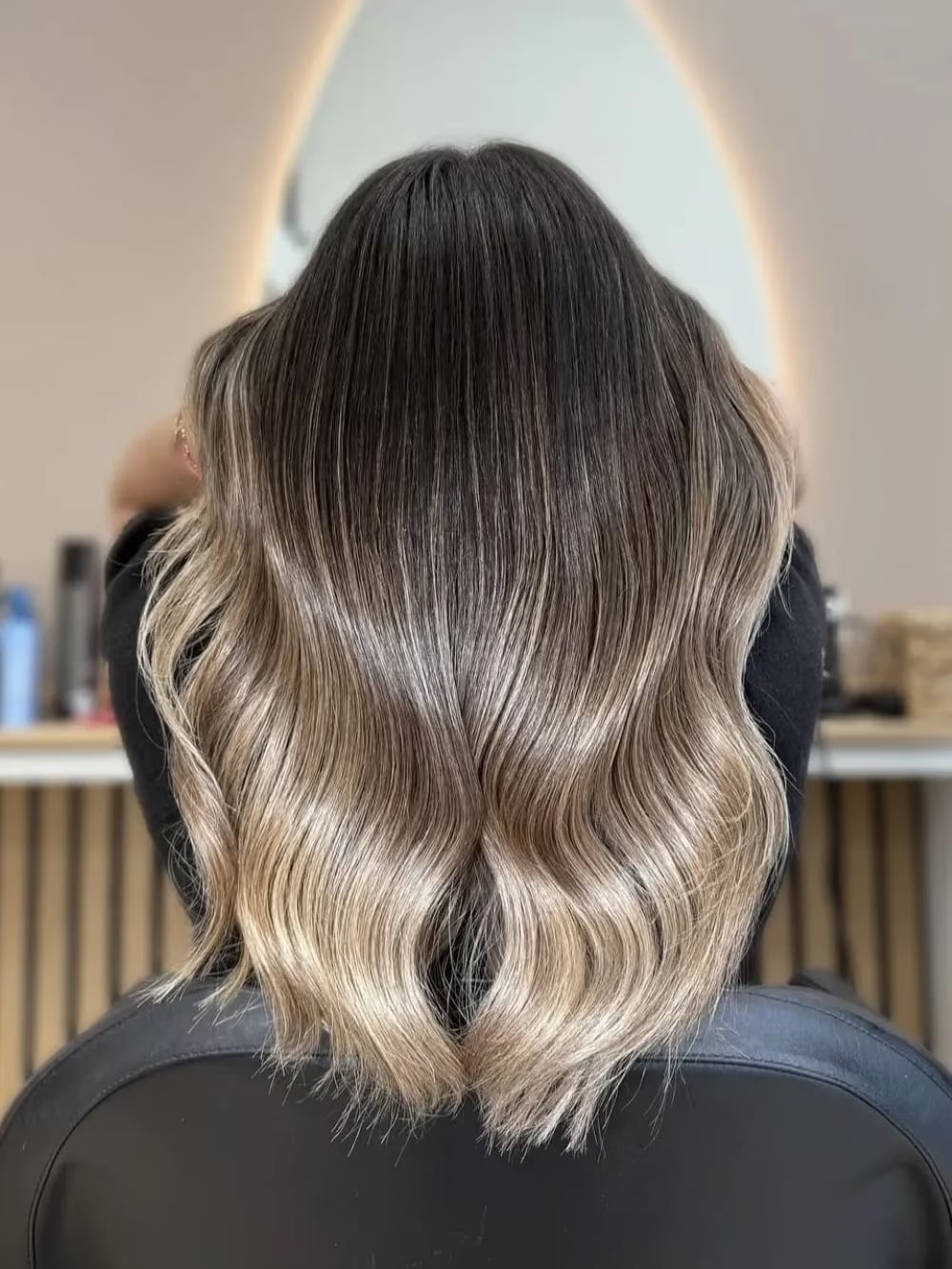
The soft transition here starts higher than you might expect, with the blonde beginning around the mid-lengths rather than at the very ends. This placement means the color grows out gently rather than leaving a hard line, which buys you extra weeks between salon visits. Ask your colorist for a soft dark brown to blonde ombre.
The long layers and thick, wavy texture help the lighter shade blend naturally into the darker base. A heat protectant is worth using before you style the loose waves, and a trim every eight weeks keeps the mid-back length from splitting. It’s the kind of low-maintenance ombre that doesn’t require a monthly appointment to stay presentable.
Warm Dark Brown to Warm Brown Gradient
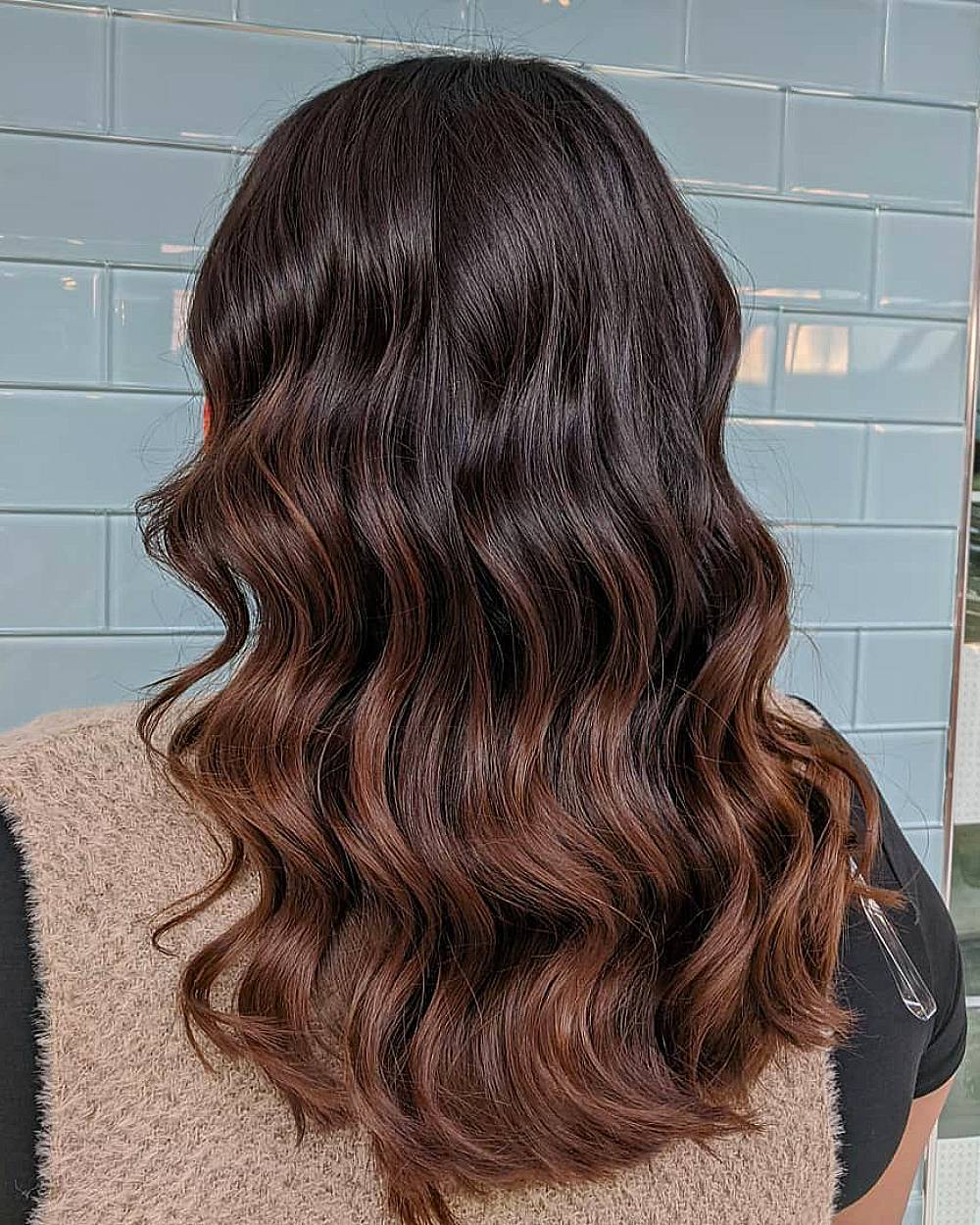
Unlike cooler brown ombres that can look ashy, this version leans into warmth: the dark brown roots give way to a warm brown at the ends, creating a gradient that looks rich and dimensional. The seamless transition from dark to warm brown is the standout feature here, and it relies on the stylist keeping the color within the same tonal family. Ask your colorist for a dark brown to warm brown ombre with a seamless gradient. The thick, wavy texture and mid-back length give the warmth enough room to travel down the hair, and the soft waves add movement that straight hair would not. This is a salon-only color technique, so expect a multi-step process to achieve the gradient.
Rich Dark Brown to Copper Brown Ombre
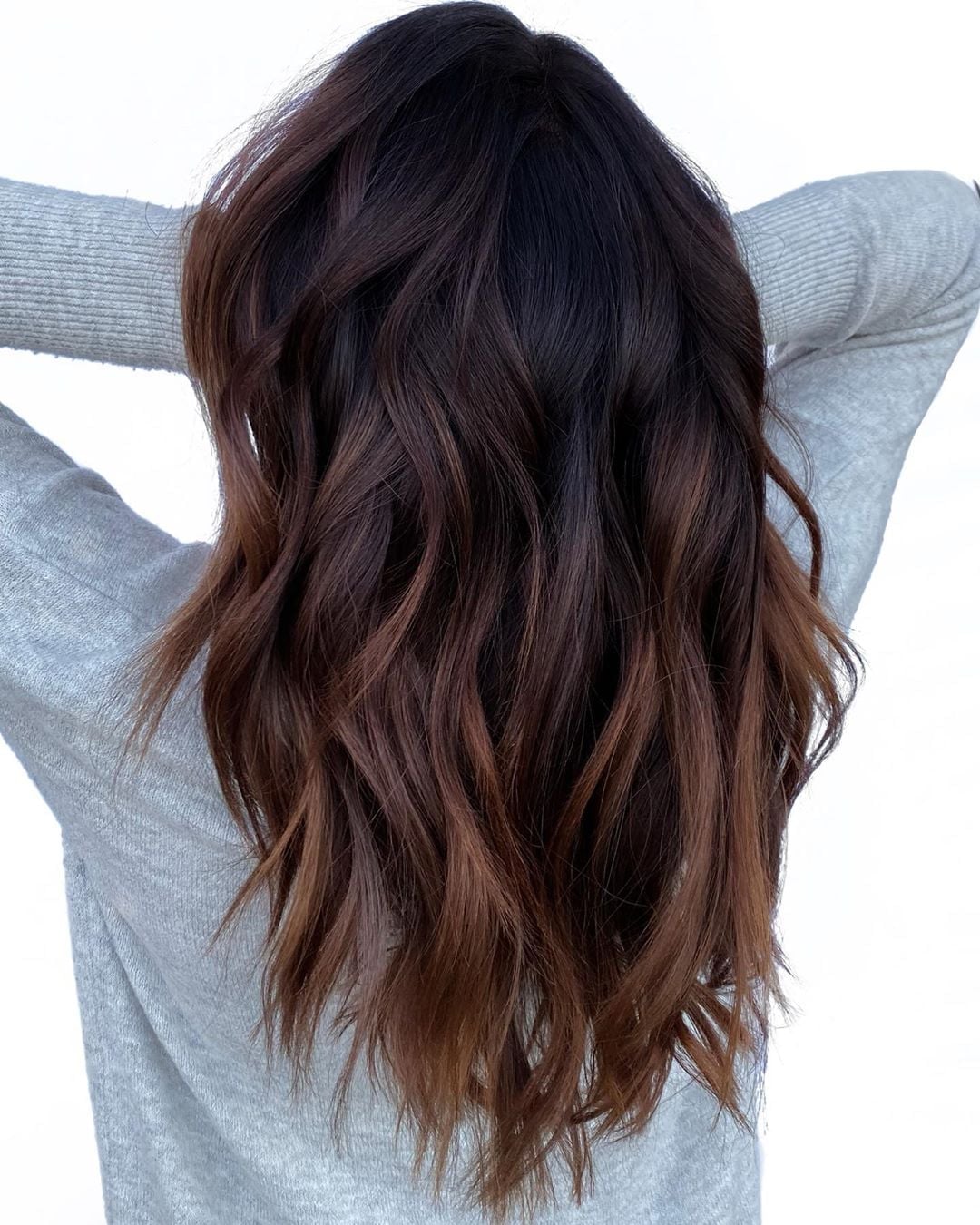
This ombre reads like autumn in a single glance, the dark brown melting into copper brown with a richness that suits the season’s golden light. On thick, wavy hair cut in layers and parted down the middle, the gradient lands at mid-back, where the copper catches the eye without shouting. Ask your colorist for: dark brown to copper brown ombre. The copper will hold its warmth for about six weeks before a color-depositing mask becomes your friend, and a trim every eight weeks keeps the layers moving.
Dark Brown to Caramel Ombre
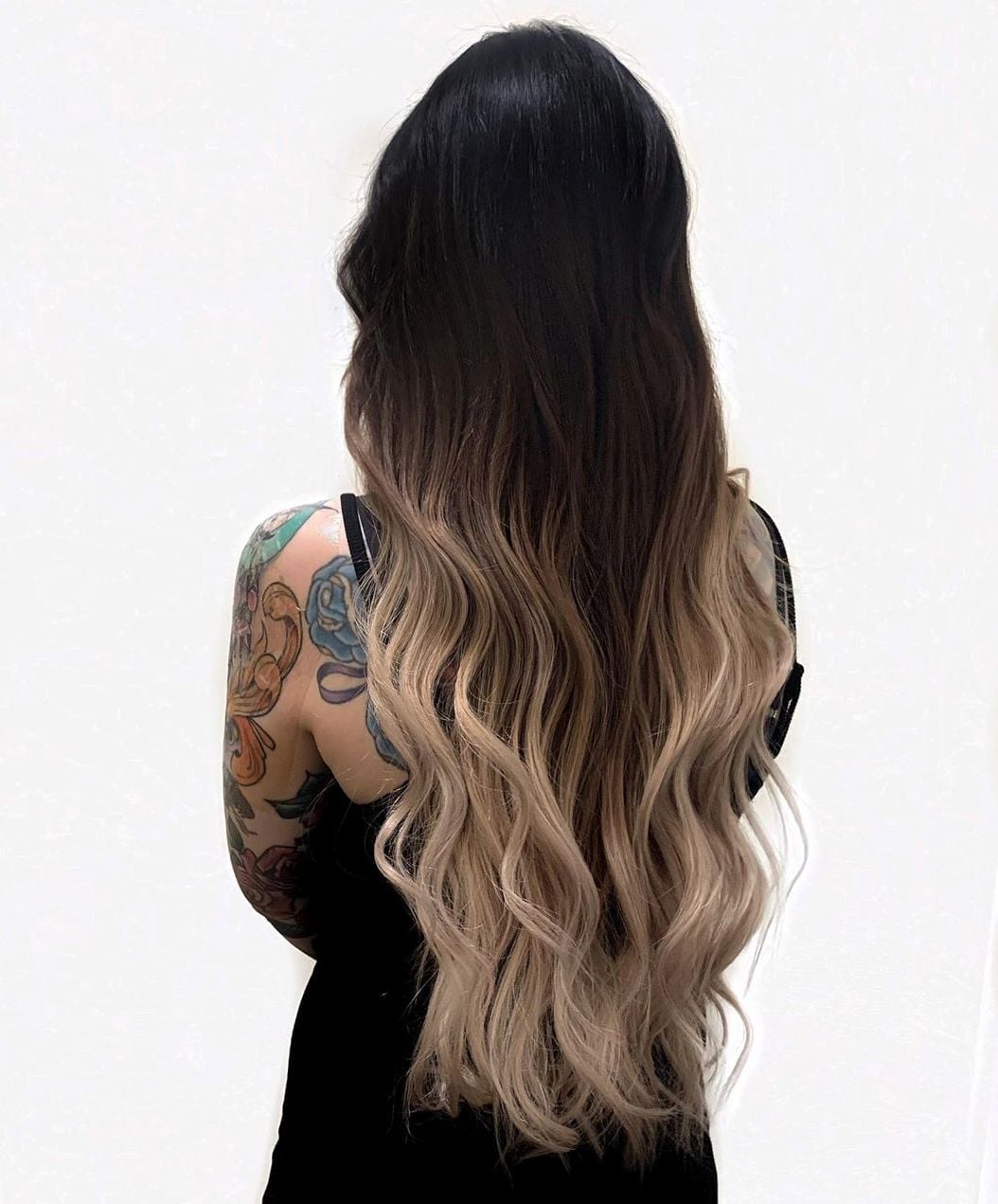
The transition here is built with foilyage, a technique that paints the caramel tones onto the ends so the dark brown root melts into warmth without a hard line. Long layers give the thick, wavy hair movement, and the middle parting lets the gradient show evenly from the back. Ask your colorist for: dark brown to caramel ombre. The caramel sits close to the base shade, so the grow-out stays soft, and a shine serum on the ends keeps the glossy finish from looking flat between trims every six to eight weeks.
Dark Brown to Caramel Blonde Ombre with Wavy
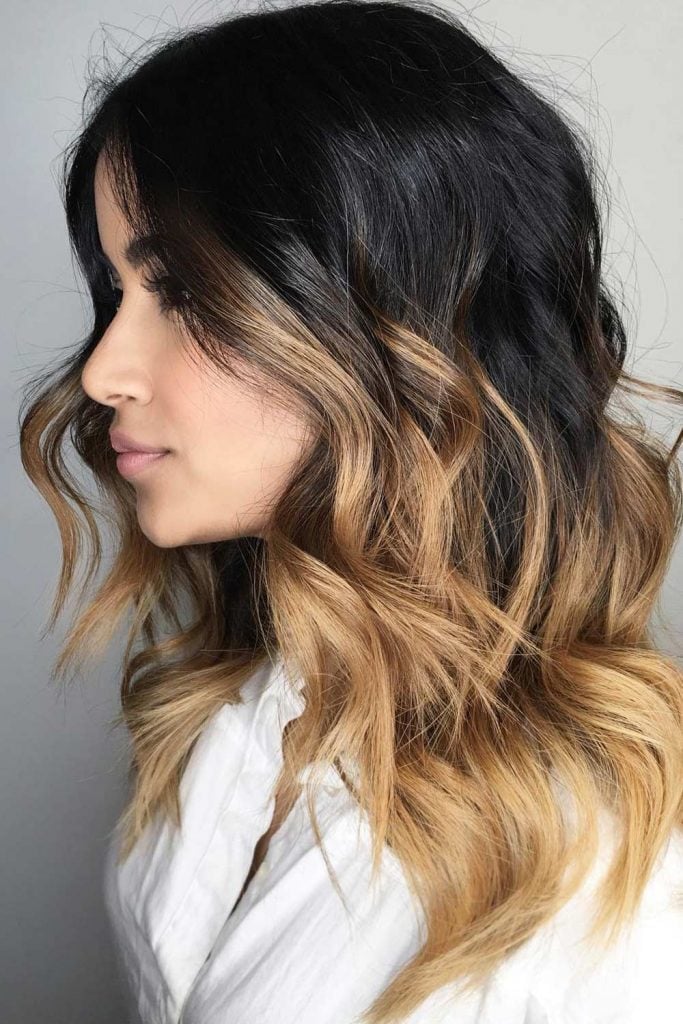
Wondering if caramel blonde works on thick hair? It does, provided the waves can carry the color without swallowing it. The dark brown roots anchor the look while the caramel blonde ends lighten the weight, and the loose waves catch the lighter pieces so the gradient shows even from the back. Ask your colorist for: dark brown to caramel blonde ombre. This shade tends to suit warmer complexions, and the mid-back length keeps it practical for everyday wear. A leave-in conditioner on the ends keeps the waves defined, and a trim every eight weeks prevents the lighter sections from looking straggly.
Dark Brown to Warm Blonde Ombre with Long Layers
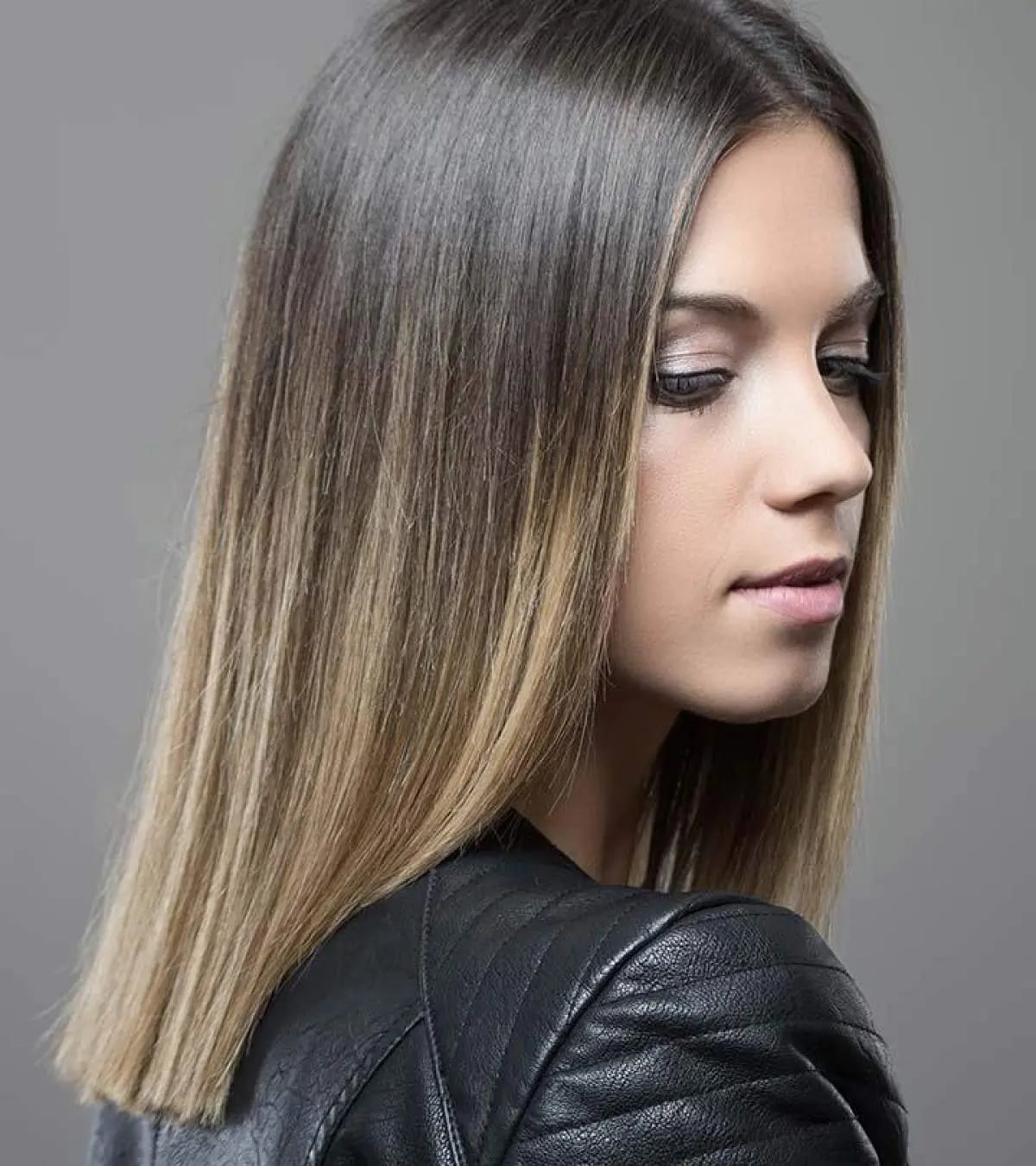
The dark brown base gives this ombre its grounding, while the warm blonde ends add a sunlit finish that looks natural. Long layers on thick, wavy hair keep the mid-back length from feeling heavy, and the middle parting lets the gradient fall evenly. Ask your colorist for: dark brown to warm blonde ombre. Warm blonde ends do require attention: they can pull brassy after a few weeks, so a toning appointment every six to eight weeks keeps them honeyed, and a color-safe shampoo slows the shift. A trim on the same schedule keeps the layers sharp.
Dark Brown to Honey Blonde Ombre with Middle

What makes this ombre look expensive is the root melt, a technique that blends the dark brown into honey blonde so gradually that the grow-out line never announces itself. The thick, wavy hair is styled with a blowout, which gives the mid-back length a glossy shine that bounces light off the honey tones. Ask your colorist for: dark brown to honey blonde ombre, glossy finish. To keep the depth and shine, ask for the root melt to start a few inches below the roots, so the color stays rich at the top. A volumizing spray at the roots adds lift, and a trim every eight weeks keeps the ends looking full.
Dimensional Blonde Ombre with Side Part
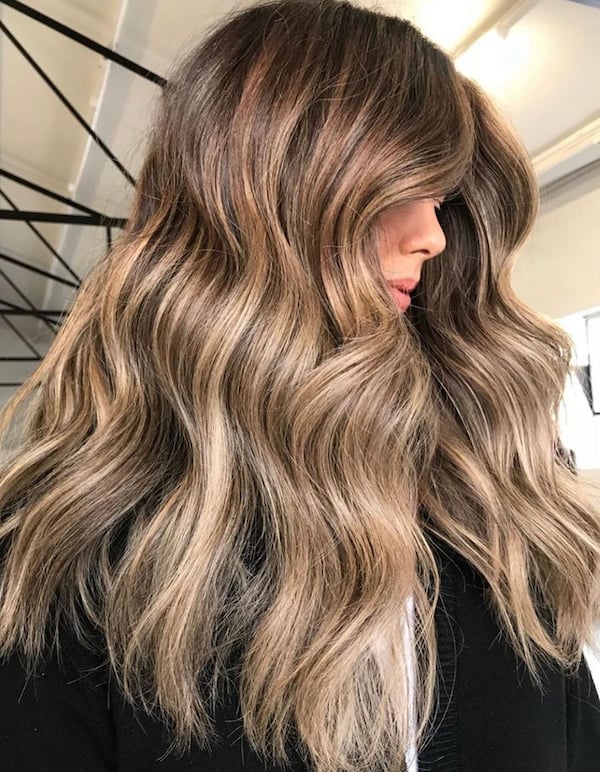
A side-parted, mid-back length blowout on thick, wavy hair, the dark brown base is softened by fine babylights woven through the ombre to create a dimensional blonde finish. A side part and face-framing layers add width to square or oval faces, making it a flattering option. Ask your colorist for: dimensional blonde ombre, dark brown base. A root-lifting spray at the crown boosts the volume a side part demands, and a trim every six to eight weeks keeps the layers clean and the ends healthy.
Elegant Brown to Lighter Brown Ombre
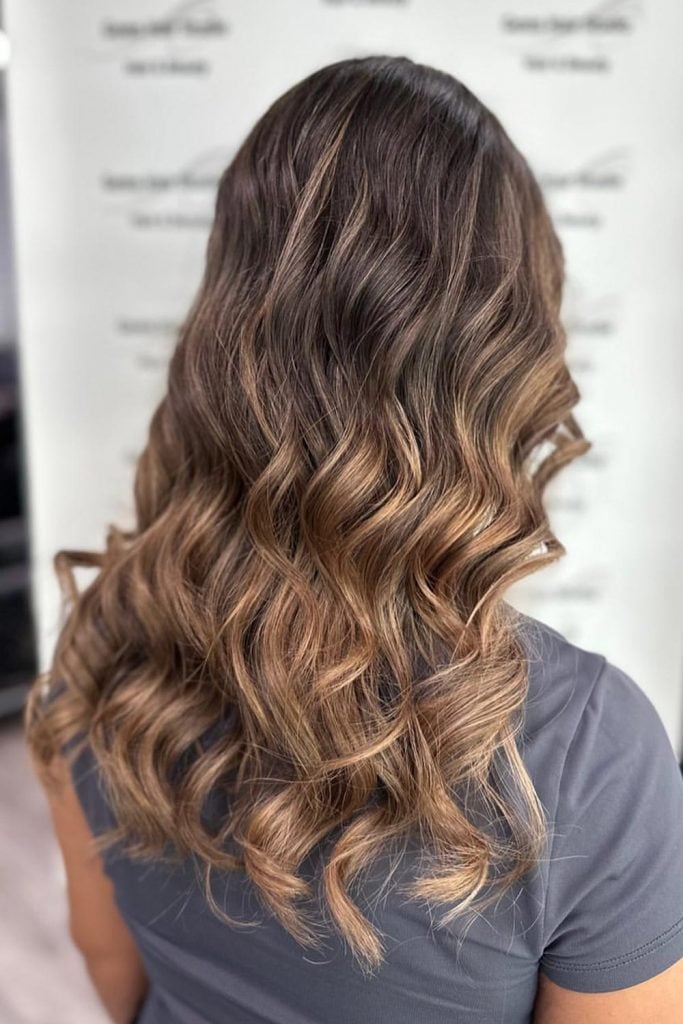
This is not a high-contrast statement piece. It is a back-view study in restraint: mid-back length, thick, wavy hair moving from dark brown roots to a lighter, warmer brown through a seamless ombre transition. The subtlety suits most face shapes and works best on hair that already has natural movement. Ask your colorist for: elegant dark brown to lighter brown ombre. A silk pillowcase helps preserve the smooth finish, and a trim every eight weeks keeps the long layers from turning into a ragged hemline.
Sun-Kissed Dark Blonde to Light Blonde Ombre
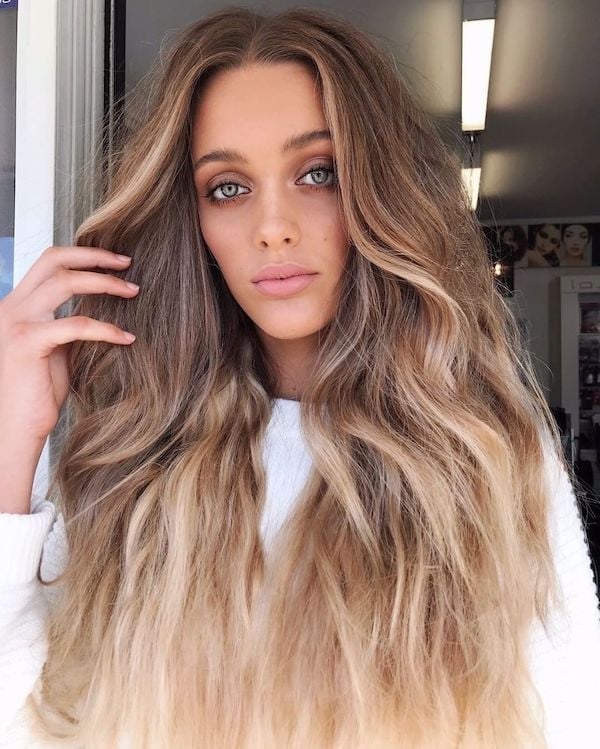
What if your ombre looked like you just returned from a week where the sun hit only the ends? This long, thick, wavy style uses soft curtain bangs, transitioning from dark blonde at the roots to a lighter, sun-kissed blonde through the ombre technique. The curtain bangs soften a square or heart-shaped face, and the length balances a longer oval. Ask your colorist for: dark blonde to light blonde ombre, soft curtain bangs.
A round brush is the tool for shaping those bangs after washing, and a trim every six to eight weeks keeps them grazing the cheekbones. The overall effect is glossy and natural, with no visible root line to manage.
Dramatic Dark Blonde to Platinum Blonde Ombre
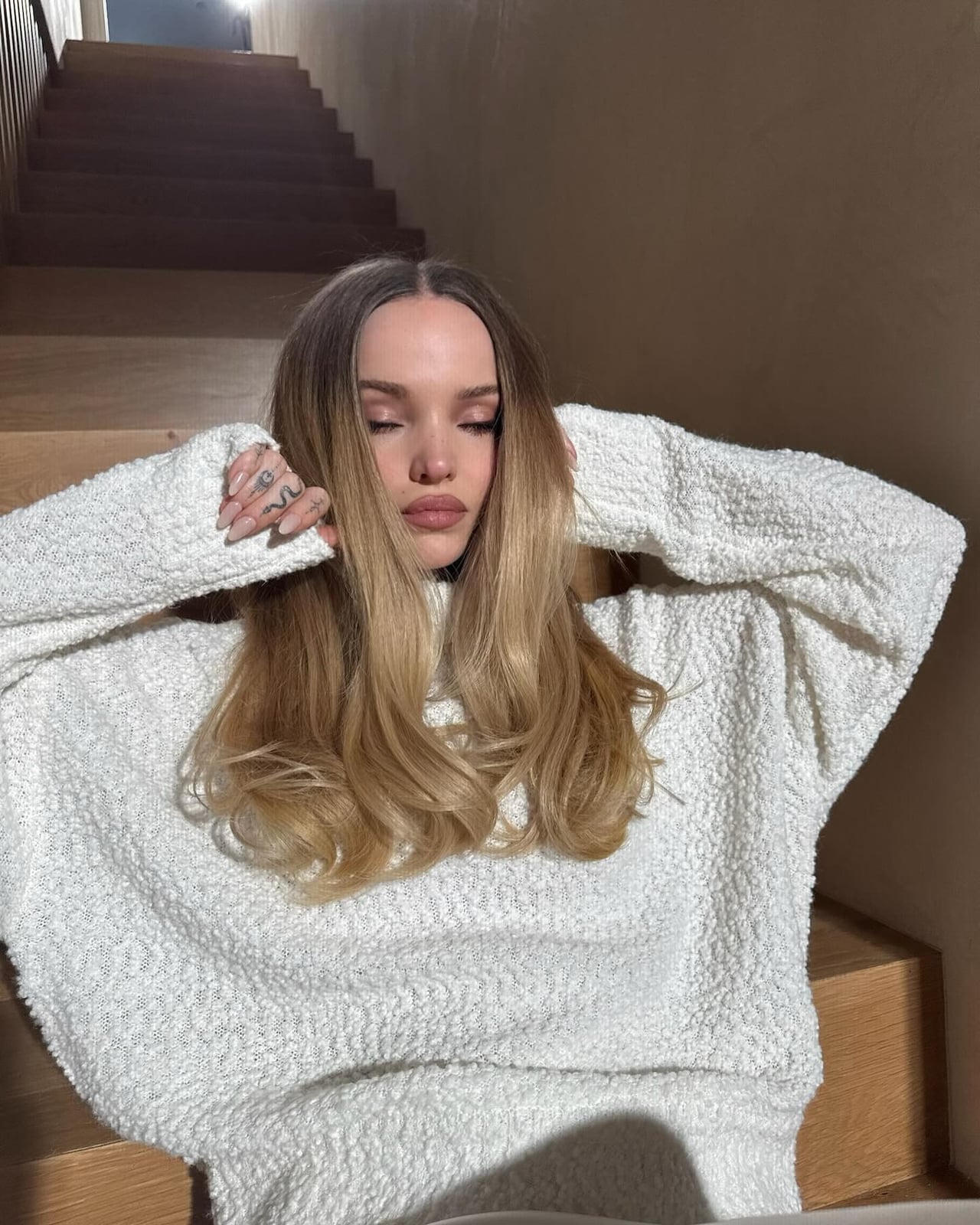
A dark blonde base that lightens to a bright platinum blonde at the ends: this is a high-contrast ombre designed for impact. The long, layered cut and loose waves show off the gradient, but the significant lift required means this is a salon-only process. Fine to medium hair textures handle the lightening better than coarse hair, and the result suits oval and long face shapes best.
Ask your colorist for: dramatic dark blonde to platinum blonde ombre. The honest drawback is maintenance: a purple shampoo used weekly is necessary to keep the platinum from turning brassy, and the lightened ends can feel dry between trims every eight weeks. The contrast is striking, but it asks for consistent care.
Ash Blonde Ombre with Root Shadow
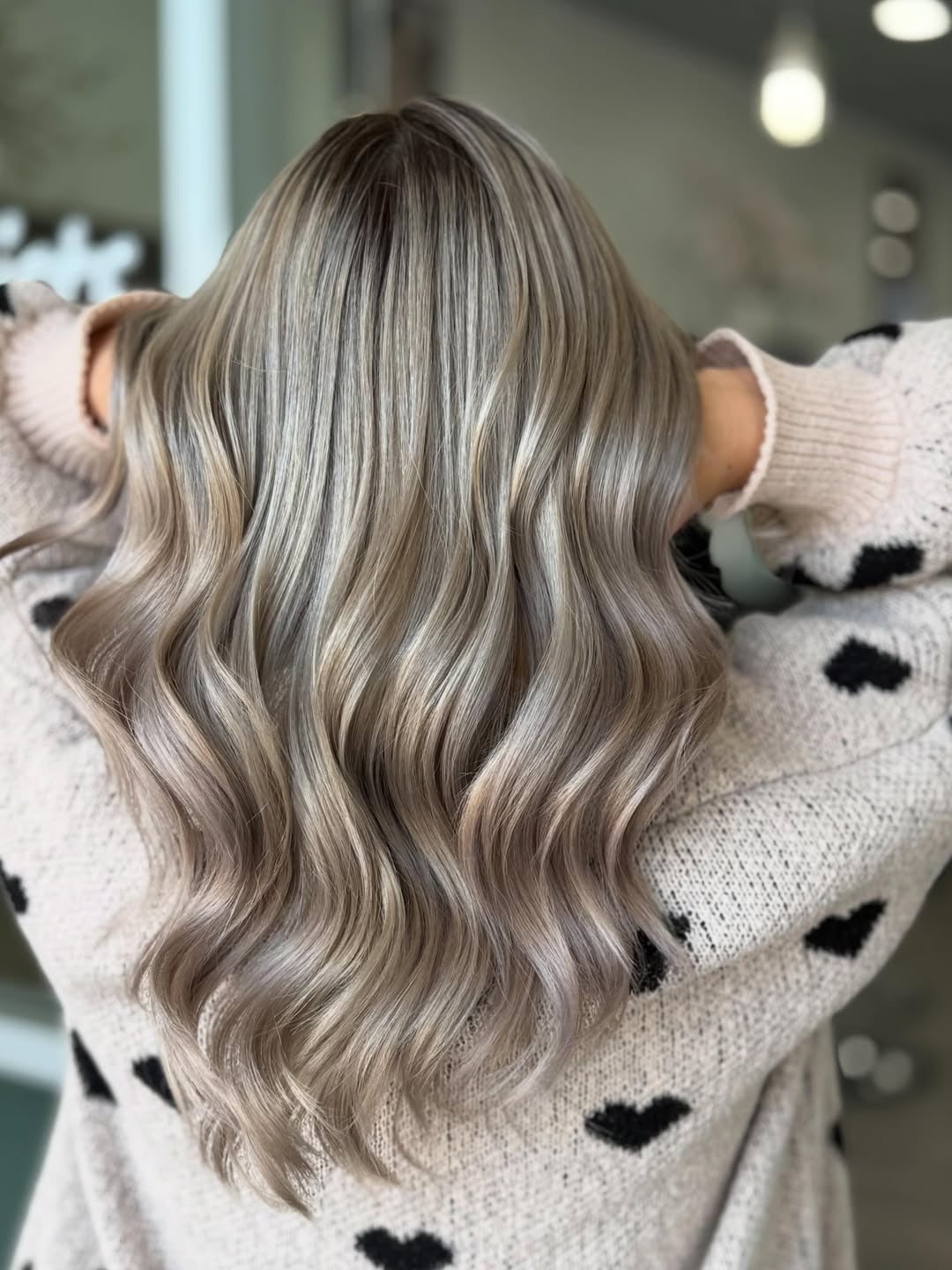
The root shadow is the structural trick here: a darker, cooler tone at the roots that softens the transition into ash blonde ends, visible in this back view of thick, wavy, mid-back length hair. The loose waves and middle parting let the cool tones read clearly, and the root shadow buys you about six weeks before a touch-up is needed. Ask your colorist for: ash blonde ombre with root shadow. A toner appointment every four to six weeks refreshes the ash tone and prevents it from pulling green or muddy, while a trim every eight weeks keeps the long layers in shape.
Silver Ash Blonde Ombre on Straight Hair
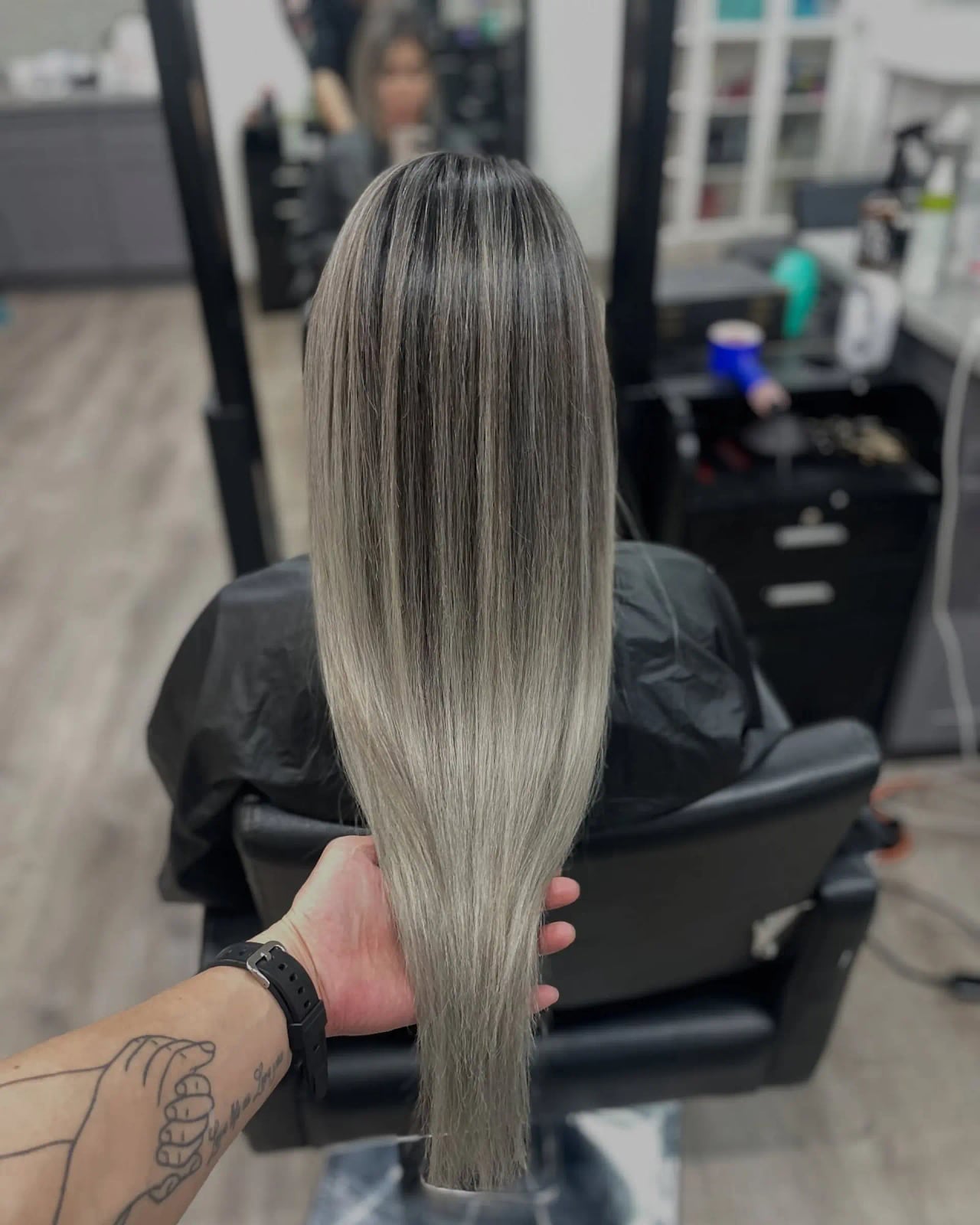
A dark brown root anchors the length, then fades into a cool silver ash blonde that lands just past the shoulders. This is a winter-friendly take on the ombre, a cool-toned statement rather than a sun-bleached afterthought. Straight, thick hair at mid-back length shows the gradient best, since every shift in tone is visible. Ask your colorist for: dark brown to silver ash blonde ombre, straight finish. A flat iron seals the poker-straight look, and a trim every eight weeks keeps the ends crisp. The middle parting splits the fade evenly, so the silver appears symmetrical rather than scattered.
Dark Brown to Dusty Rose Blonde Ombre
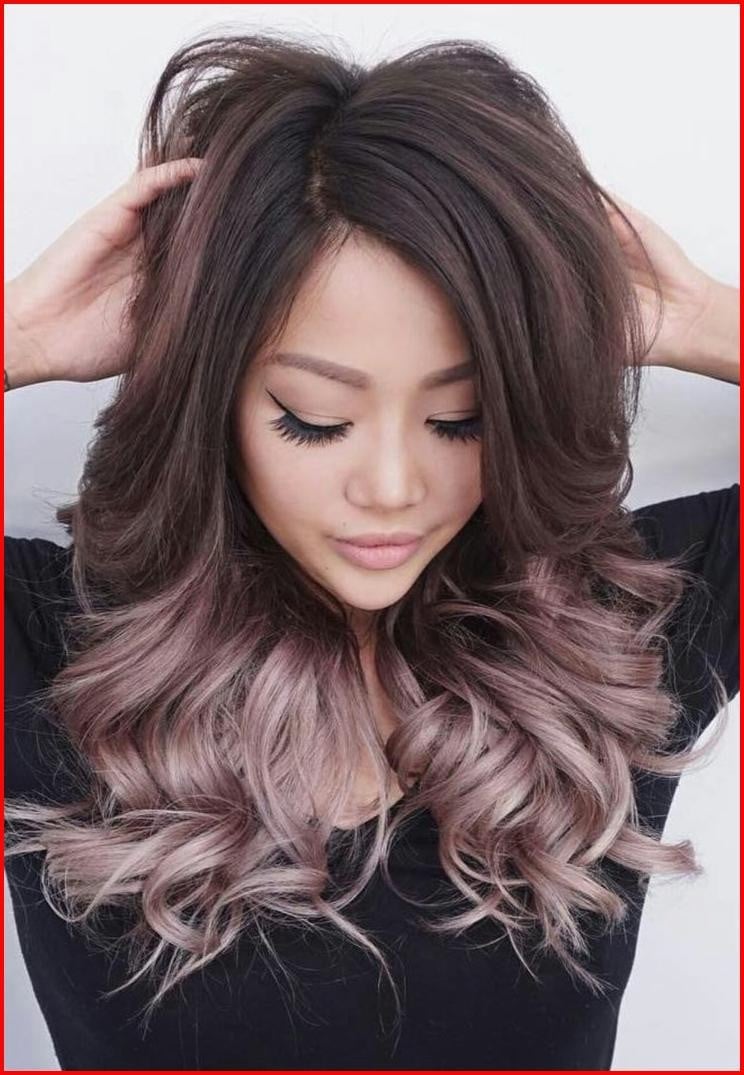
The dusty rose blonde ends sit on a dark brown base, creating a contrast that is soft rather than stark. This is not a candy pink; the muted finish keeps it wearable for more than a single weekend. Thick, wavy hair at mid-back length carries the ombre well, because the loose waves catch each tone differently.
Ask your colorist for: dark brown to dusty rose blonde ombre. Be specific about the muted finish, since a bright version reads completely different. The middle parting lets the color transition evenly on both sides. A color-depositing conditioner in a rose tone can stretch the time between salon visits, and a trim every eight weeks prevents the lighter ends from looking sparse.
Rose Gold Pink Ombre on Wavy Hair
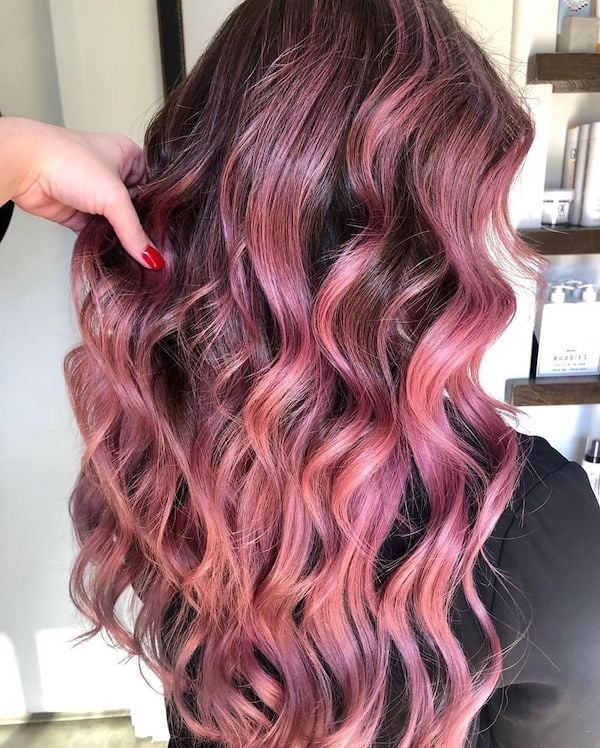
Can you get this at home? Technically yes, but the risk of uneven saturation is high. A salon handles the bleach-to-pink transition better, especially on thick, wavy hair at mid-back length. The dark brown base graduates into a vibrant rose gold pink that hits the ends, and the loose waves spread the color so no single section looks flat. Ask your colorist for: dark brown to rose gold pink ombre. The process takes about three hours in the chair, since the base needs lifting before the pink is applied. A middle parting keeps the fade balanced. A gloss treatment at the end locks in the shine, and a trim every eight weeks maintains the wavy shape.
Dark Brown Lob to Bright Blue Ends
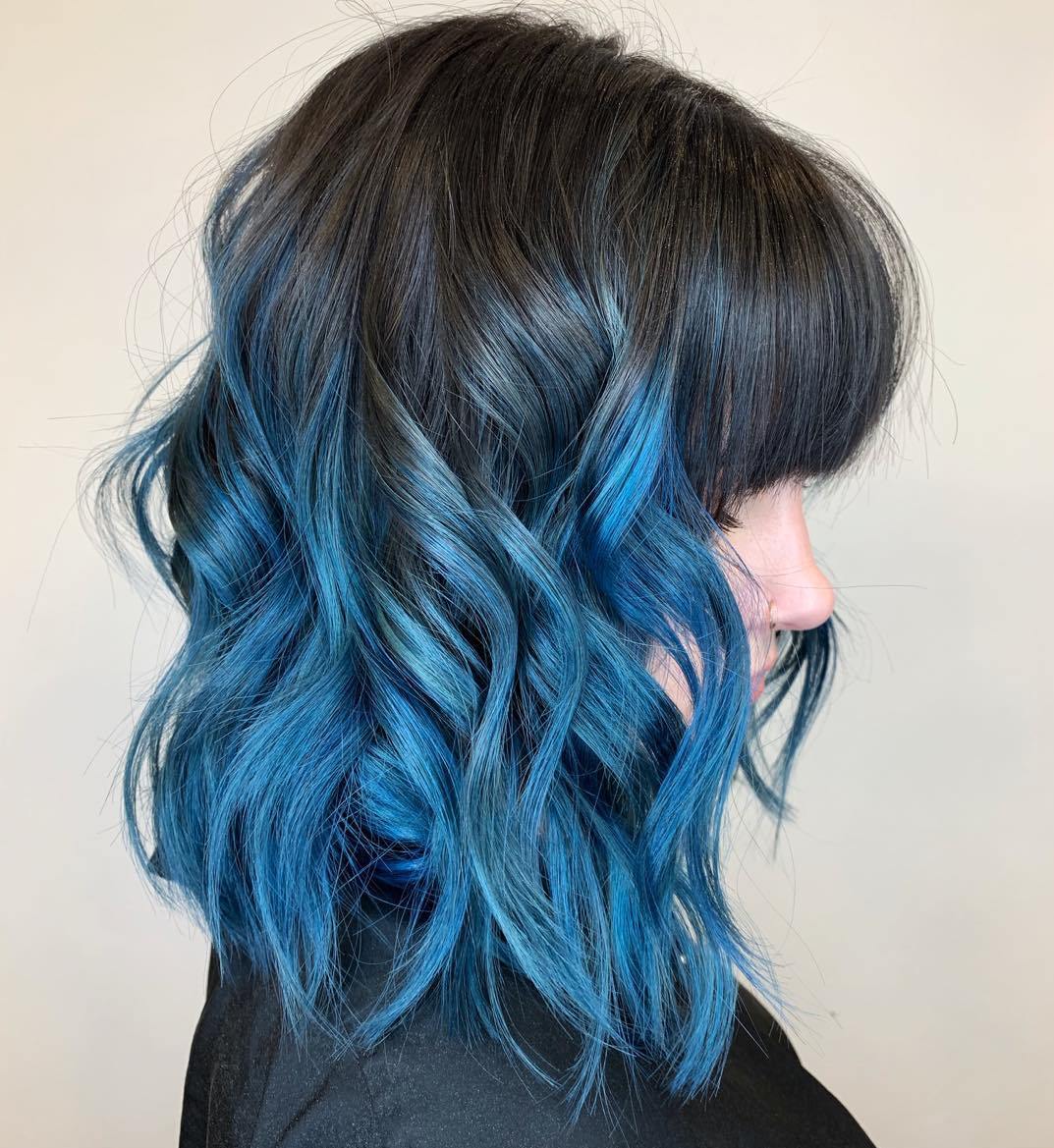
A lob at collarbone length paired with bright blue ends keeps the drama contained rather than overwhelming. The dark brown base grounds the color, and the curtain bangs frame the face without competing with the blue. Thick, wavy texture holds the curl pattern and the color deposit well. Ask your colorist for: dark brown lob with bright blue ends, curtain bangs. Blue fades faster than neutral tones, so a color-depositing conditioner in a matching shade can extend the vibrancy between toning appointments. A trim every six weeks keeps the lob shape sharp and the ends healthy enough to hold the blue evenly.
Dark Brown to Gray Ombre
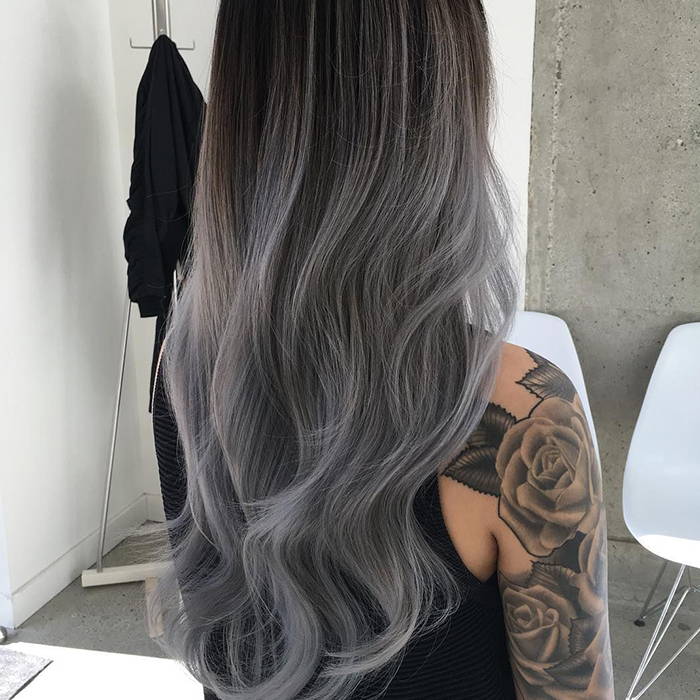
Wondering if gray works on you? It comes down to the undertone. A cool gray ombre starting from dark brown suits cool complexions best, while a warmer gray-tinged brown can work for neutral tones. The long, thick hair here is styled in waves, which soften the transition and keep the gray from reading flat. The middle parting creates symmetry in the fade.
Ask your colorist for: dark brown to gray ombre. The gray should sit at the ends only, not climb too high, so the root stays dark and the overall effect feels intentional. A silver-enhancing shampoo helps maintain the cool tone and prevents brassiness. A trim every eight weeks keeps the ends from splitting, which matters more with lighter colors that show damage faster.
Teal to Blue to Purple Ombre Lob
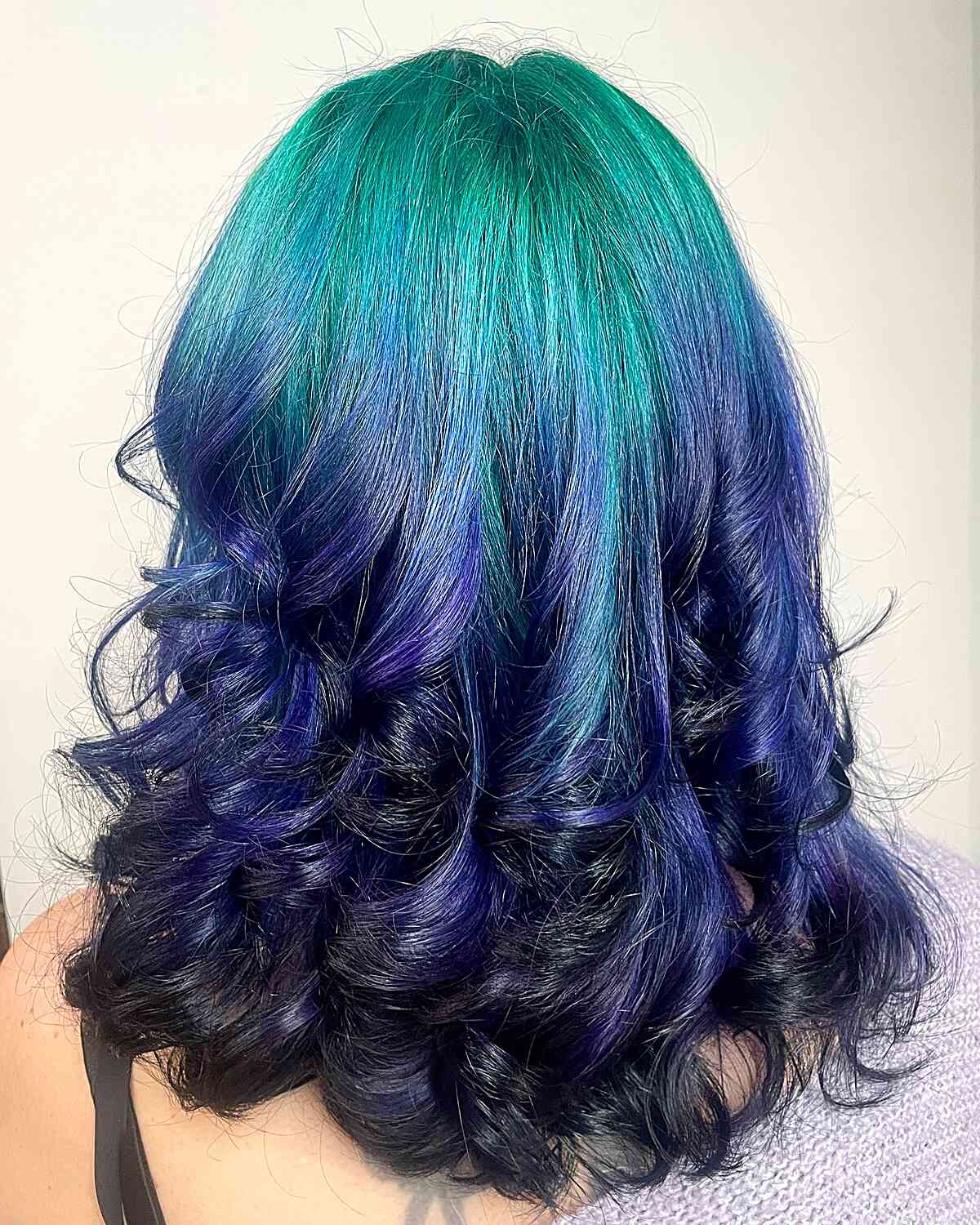
A lob-length cut at collarbone length carries a multi-tonal gradient from teal through blue to dark purple, each shade placed so the transition reads as a single fluid design. Thick, wavy texture holds the color layers without them muddying into one another. Ask your colorist for: teal to blue to dark purple ombre lob.
Red to Blonde Ombre with Half-Up Style and Mid-Back
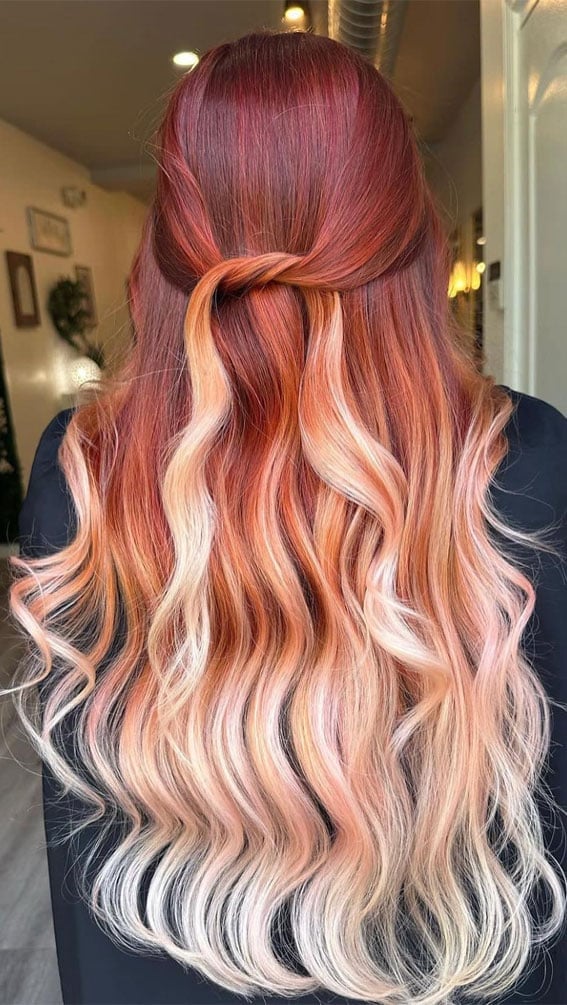
The twisted half-up detail is the clever part here, because it breaks up the mid-back length and gives the vibrant red to blonde ombre a place to show off. The red anchors the roots while the blonde takes over the ends, a contrast that works well for a festive look. This is a bold choice for spring or summer festivals, where the bright transition holds its own against a crowd. It suits thick, wavy hair, and the middle parting keeps the loose waves balanced on both sides. Ask your colorist for: red to blonde ombre, twisted half updo. A texturizing spray helps the half-up style grip, and a trim every eight weeks keeps the layers sharp.
Black to Deep Red Ombre
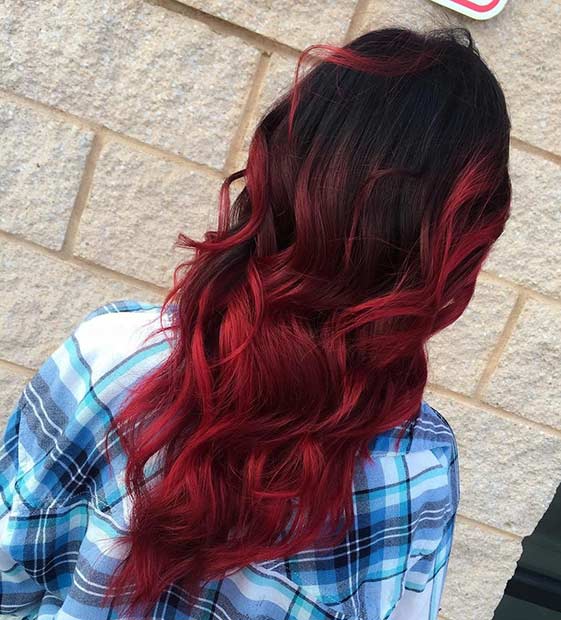
This is not a subtle shift. Long, thick, wavy hair starts black at the root and graduates into a deep, vibrant red at the ends, the contrast deliberate and bold. Red pigment tends to fade faster than the black base, so expect a toning appointment every four to six weeks to keep the ends from turning rusty or brown. Ask your colorist for: black to deep red ombre.
Skip this one if you prefer low-maintenance color or if you wash your hair daily, since the red will bleed onto light towels and pillowcases. A color-safe shampoo and cool water between salon visits help extend the vibrancy. A trim every eight weeks keeps the ends looking polished.
Black to Ash Blonde High Contrast Ombre
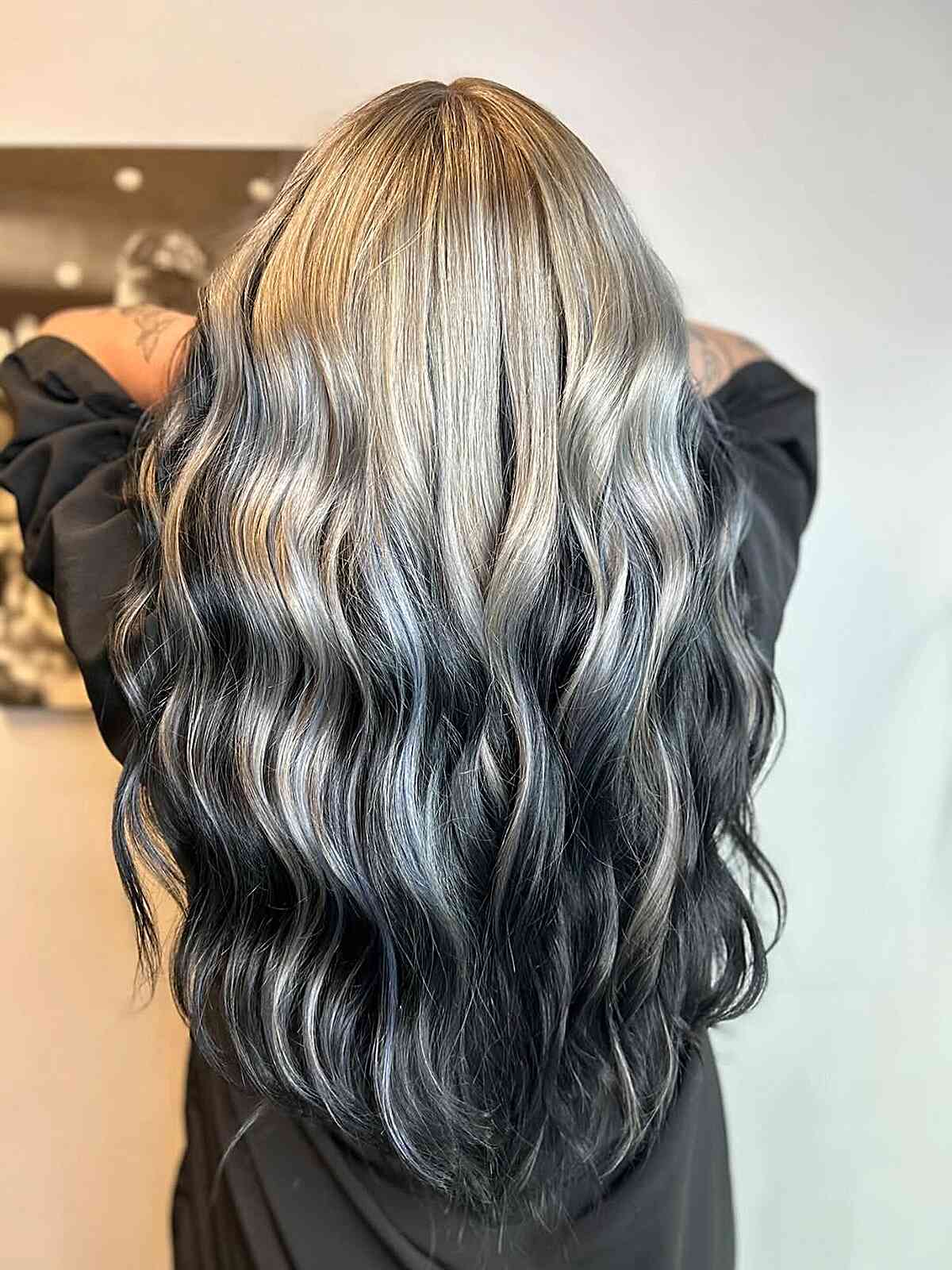
Where softer ombres melt one shade into the next, this version keeps a visible line between black roots and ash blonde ends, the separation part of the appeal. Mid-back length, layered, thick, wavy hair gives the two tones enough surface area to make the contrast obvious. Ask your colorist for: black to ash blonde high contrast ombre.
Extreme Platinum Blonde to Black Ombre
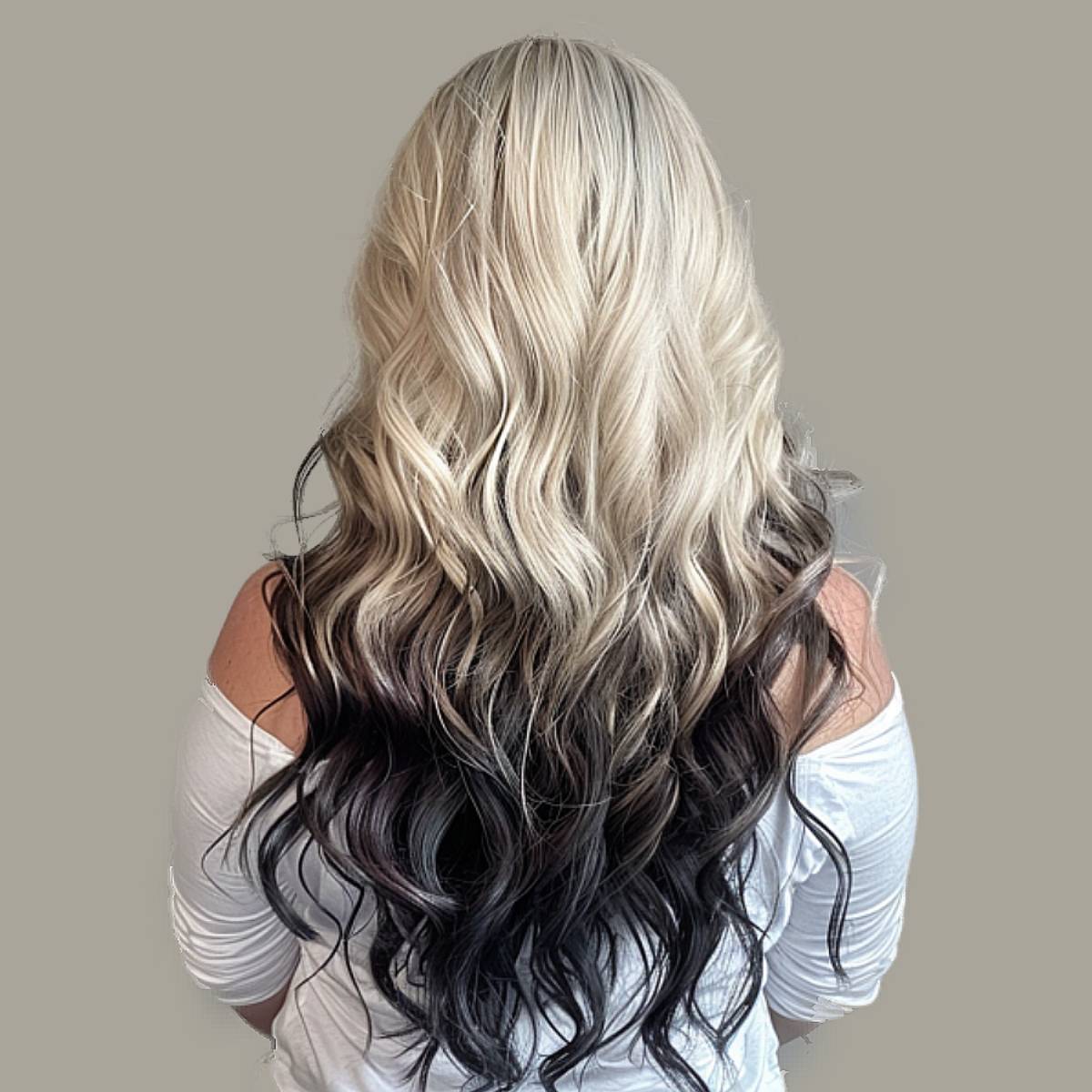
The common mistake with an extreme dark-to-light shift is assuming one salon session will do it. Lifting mid-back length, thick, wavy hair from a dark base to platinum blonde at the roots takes multiple sessions spaced weeks apart to preserve the hair’s integrity, then the black ends are applied separately. Ask your colorist for: extreme platinum blonde to black ombre. This is strictly a salon project, not a weekend DIY.
Dark Brown to Caramel Ombre Lob with Collarbone
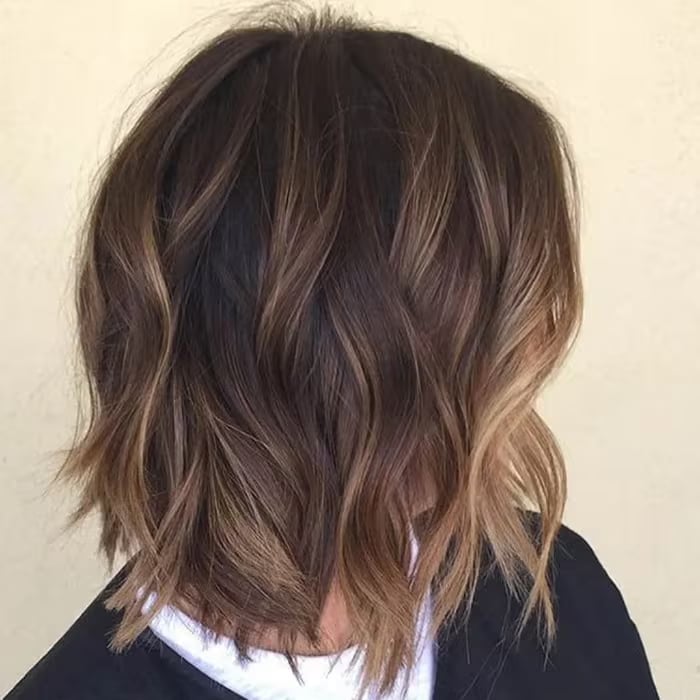
The beauty of this caramel ombre lob is in the transition: dark brown melts into caramel so gradually that you can’t pinpoint where one ends and the other begins. The collarbone length with layers gives the soft waves movement, and the side part adds a touch of polish. It suits medium-density wavy hair and most face shapes. Ask your colorist for: dark brown to caramel ombre lob, soft waves. A volumizing mousse helps the waves hold their shape, and a trim every six weeks keeps the layers from getting heavy. The grow-out phase is forgiving, since the darker root blends into the lighter ends without a harsh line.
Final Thoughts
Choose an ombre that matches your upkeep comfort. A dark brown to caramel or medium brown to light brown gradient needs less maintenance than a high-contrast black-to-platinum or a fashion shade like blue or rose gold. The closer the lightest tone is to your natural base, the longer you can stretch between salon visits.
- Use a color-depositing conditioner or gloss every 4 to 6 weeks to keep the tone fresh.
- Wash with a sulfate-free shampoo to slow fading.
- Deep condition weekly because lightened ends need extra moisture.
- Trim every 8 to 10 weeks to keep the gradient looking intentional.
Pick the gradient that fits your schedule and your style.