Dyed locs take color in a way straight hair can’t: each twist and coil catches light at a different angle, so every shade reads as dimensional, never flat. The best formulas this year lean into lived-in saturation, with vivid bases that fade softly rather than turning brassy.
These 23 Cute Dyed Locs ideas span every commitment level, from a single burgundy streak to a full rainbow fade. Whether your texture is fine or thick, your locs long or cropped, there’s a shade here that won’t leave you fighting a harsh grow-out line or a color that washes you out by week three.
Mid-Back Wavy Locs With Pink And Purple Streaks
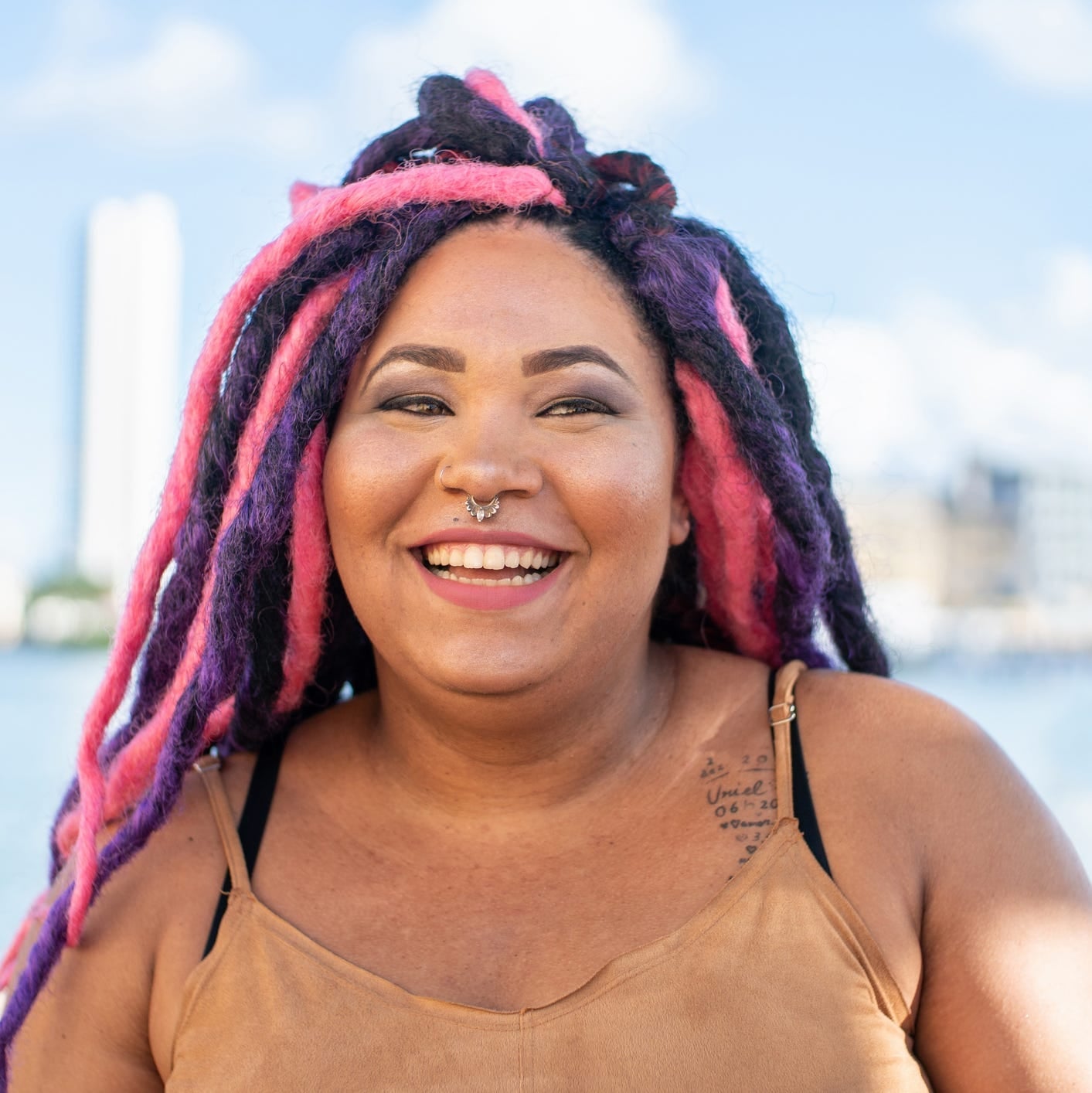
The design here hinges on contrast: vivid pink and purple streaks cut through a black base, each loc carrying its own stripe of color. The middle parting lets the eye travel straight down the length, so the streaks read as deliberate panels rather than scattered highlights. Ask your colorist for: mid-back wavy locs with vibrant pink and purple streaks on a black base. Thick, wavy texture starting at shoulder length or longer gives the color enough surface area to register. Expect about three hours in the chair for the initial application. A color-depositing conditioner used every two weeks keeps the pink and purple from drifting toward muddy once the base starts showing through.
Shoulder Length Deep Teal Coily Locs
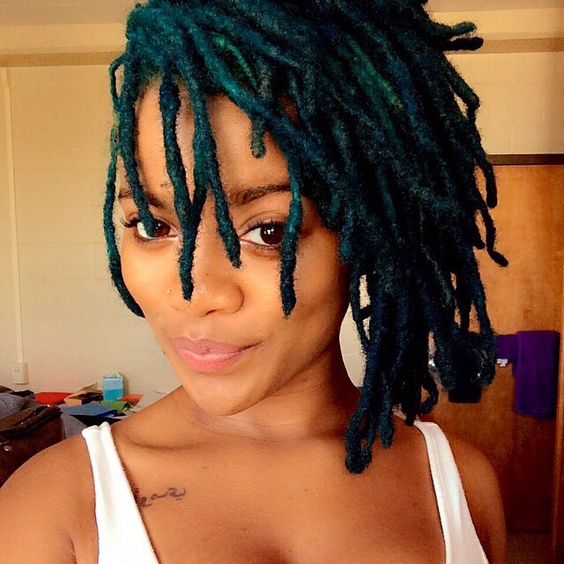
Can a single color do heavy lifting? This deep teal shade proves yes, provided the texture gives it something to catch. On thick, coily locs at shoulder length or longer, the color reads saturated rather than flat, with the side parting offering a clean break for the solid hue. Ask your colorist for: shoulder length coily locs in a deep teal shade. The density of coily texture naturally diffuses light, so you get a subtle shimmer without highlights. Anyone with medium to high density locs will find the color holds its shape well. A color-safe shampoo and cool water during rinses are the main rules for keeping the teal from dulling.
Collarbone Copper Coily Locs With Curled Ends
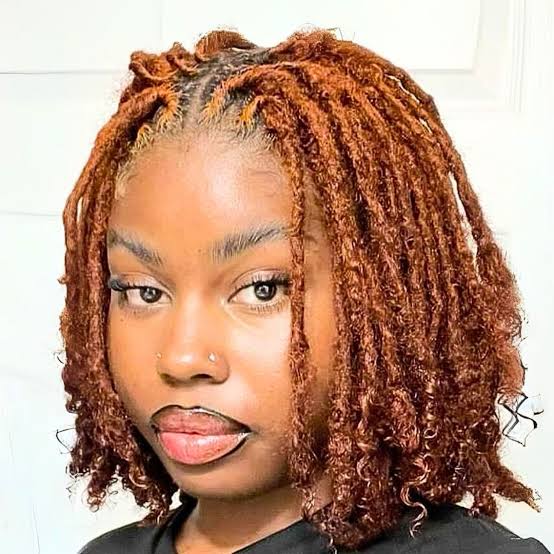
Copper has a reputation for fading fast, but the curled ends on these locs buy you some grace. The warm tone settles into the curves of the curl, so even as the color softens, the dimension stays. Ask your colorist for: collarbone length coily locs with curled ends in copper. Thick, coily texture at collarbone length or longer gives the lighter highlights room to read. A heat protectant is non-negotiable before curling the ends. A trim every 10 to 12 weeks keeps the ends tidy, and a copper depositing shampoo every third wash extends the vibrancy without a full salon visit.
Chin Length Curly Locs With Red And Orange Ends
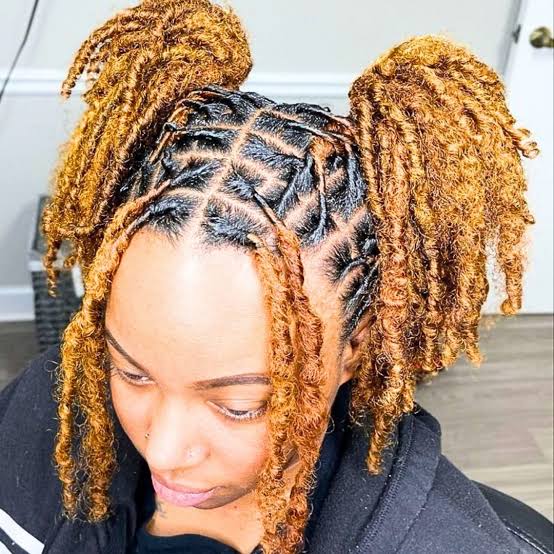
How do you ask for color that stops halfway down the loc? You specify the transition zone. This look keeps the base black and the ends a bright red-and-orange blend, with the curls helping the two-tone effect read as intentional rather than grown out. Ask your colorist for: chin length curly locs with black base fading to red and orange ends. The shorter length keeps the saturation high at the tips because there is less hair to pull the color thin. The middle parting and tight curl pattern are the visual anchors here; a curl-defining cream applied after washing helps the color transition sit clearly.
Shoulder Length Burgundy Locs With Undercut
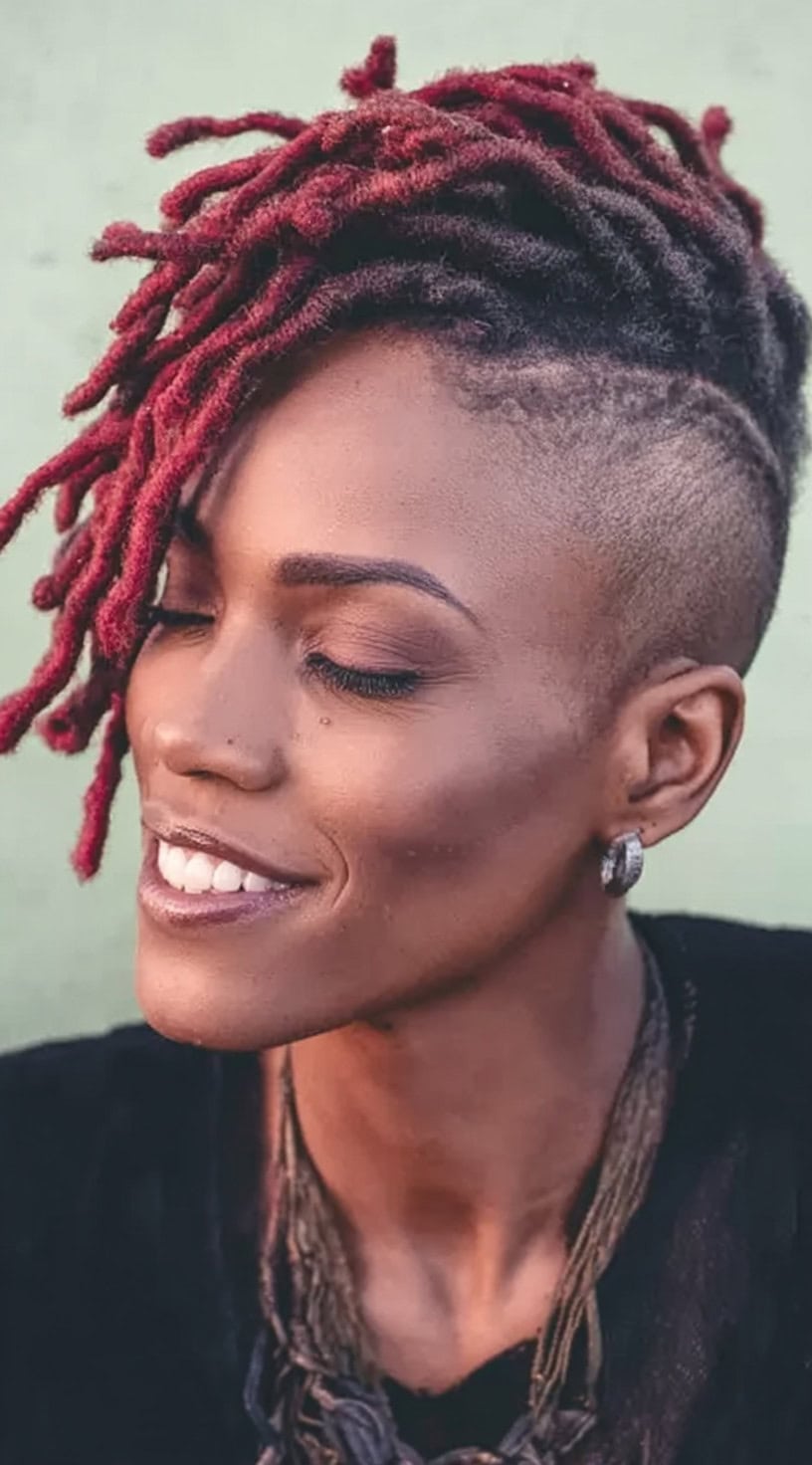
An undercut changes the weight of a bold color. On shoulder length locs with fine density, the shaved side reduces bulk while the burgundy tone stays concentrated on the longer section swept upward. The contrast is the point, but fine density means the swept side can read as thinner than expected. Ask your colorist for: shoulder length burgundy locs with an undercut, swept to one side. The side parting and upward styling give the color movement. The honest trade-off: the undercut needs a trim every three to four weeks to keep the line sharp, and the burgundy will require a gloss treatment around week six to maintain its warmth.
Mid-Back Faux Locs With Brown And Blonde Highlights
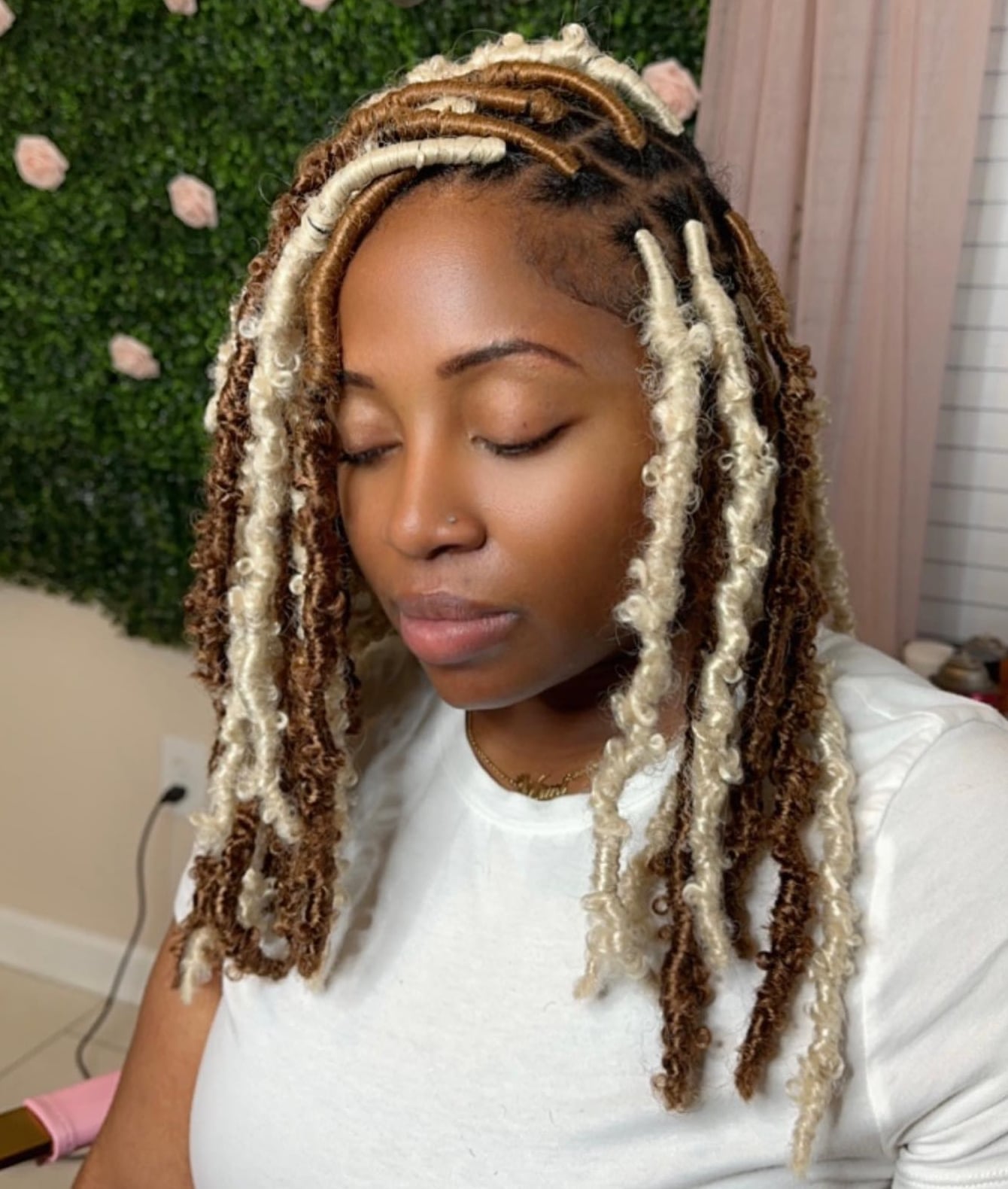
Brown and blonde highlights on wavy faux locs create a warm, rich two-tone effect by blending a medium brown base with honey-blonde streaks. The loose curls show off the contrast as they move. Ask your colorist for: mid-back wavy faux locs with brown and blonde highlights, styled in loose curls. The middle part keeps the color distribution even and gives the whole look a polished finish.
Thick locs at mid-back length handle this kind of contrast well because there is enough weight to keep the waves from collapsing. A wide-tooth comb is your best friend for detangling between washes. Plan on a trim every 10 to 12 weeks to keep the ends looking fresh, and expect the blonde to need a gloss treatment every six to eight weeks to stay bright. This style works for both vacation and everyday fall wear.
Mid-Back Soft Locs In Burnt Orange
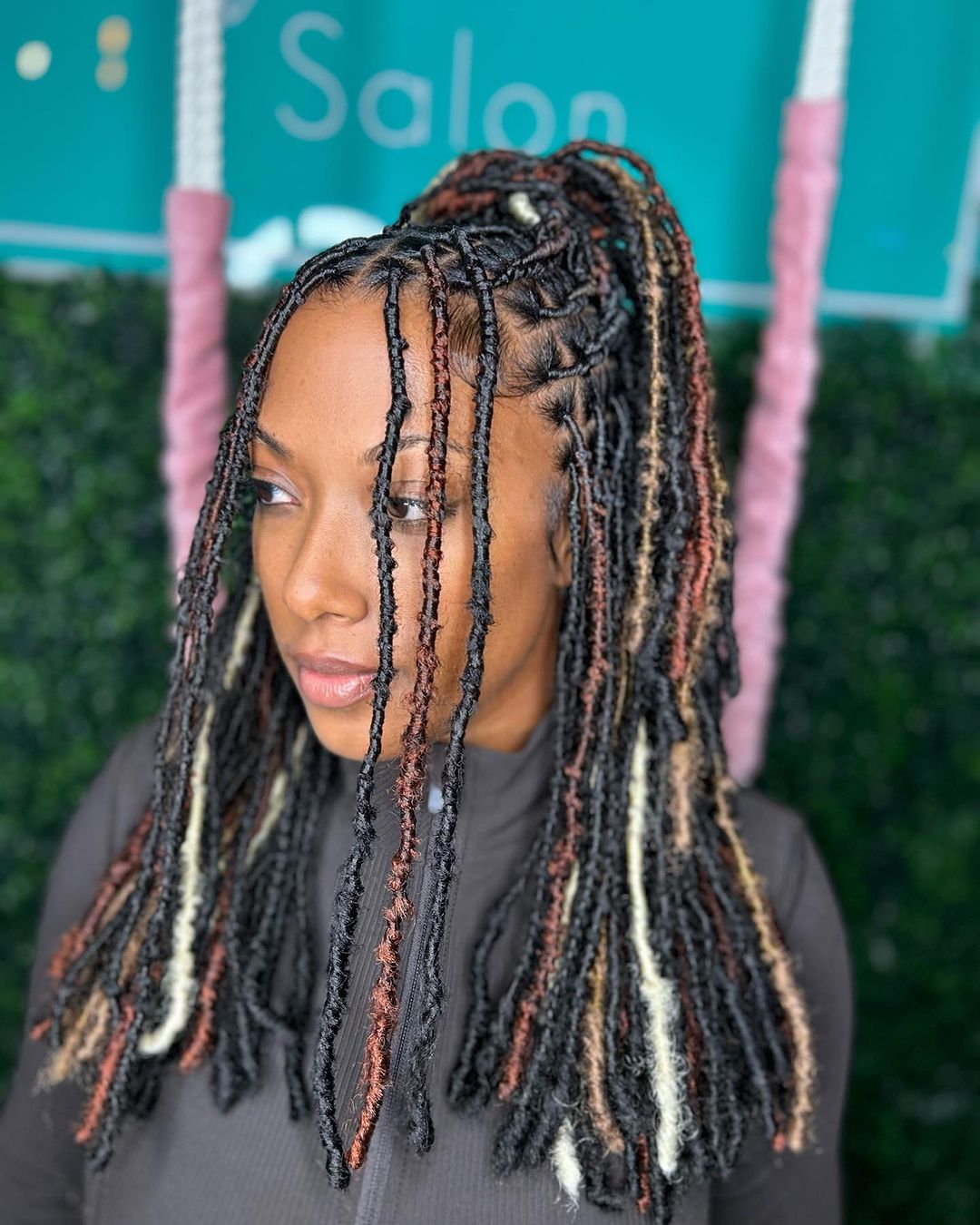
The biggest mistake with burnt orange locs is assuming any orange will do. A flat, pumpkin-toned dye looks like Halloween, not a deliberate choice. The trick is a warm, slightly muted orange that lands somewhere between terracotta and amber, exactly the shade shown here on mid-back soft locs with a wavy texture and side part. Ask your colorist for: mid-back soft locs in burnt orange, air-dried. The side part adds a little asymmetry to an otherwise uniform color, which keeps the look from feeling one-note.
Thick locs at this length need a careful lightening session before the orange goes on, or the color turns muddy. Let the locs air-dry to preserve the natural wave and prevent frizz. To keep the orange from fading into a brassy yellow, refresh with a tinted conditioner every three to four weeks. A salon gloss treatment every eight weeks helps maintain the depth.
Shoulder Length Vibrant Red Wavy Locs
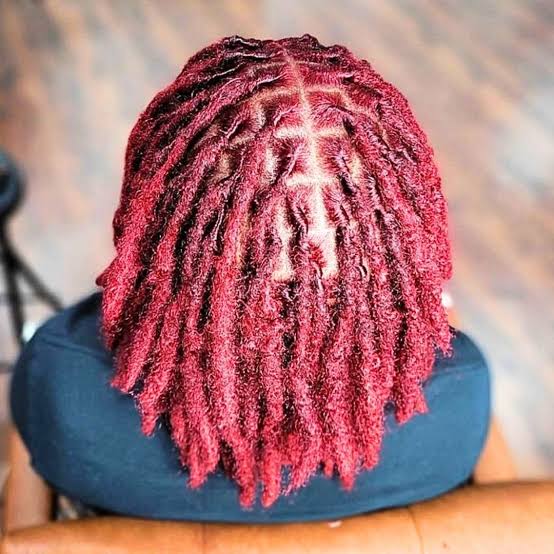
Shoulder-length wavy locs in a vibrant, uniform red are not a Saturday-afternoon box-dye situation. Getting that saturated, even tone on medium-density locs requires a professional lightening step first, because the red needs a clean canvas to appear vivid instead of dull. Ask your colorist for: shoulder length wavy locs in a vibrant red. The middle part and loose styling let the color speak for itself, no extra tricks needed. A back view here confirms the color is consistent from root to end, which is the goal of a salon visit. Expect to spend about three hours in the chair for the full process.
Short Coily Locs In Vibrant Red
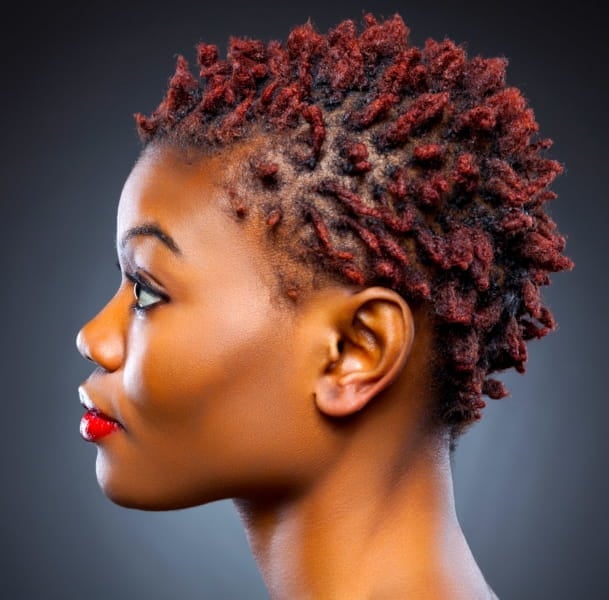
Short coily locs in a vibrant red are low-maintenance only if you accept that the color will fade. Red molecules are the first to wash out, so a color-depositing mask every two to three weeks is not optional. Ask your colorist for: short coily locs in a vibrant red. The close-to-the-head styling here means the roots show fast, so expect a touch-up every four to five weeks if you want the color to stay uniform. Regular trims keep the shape clean, and the short length makes the whole process manageable.
Medium Length Orange Locs In A High Bun
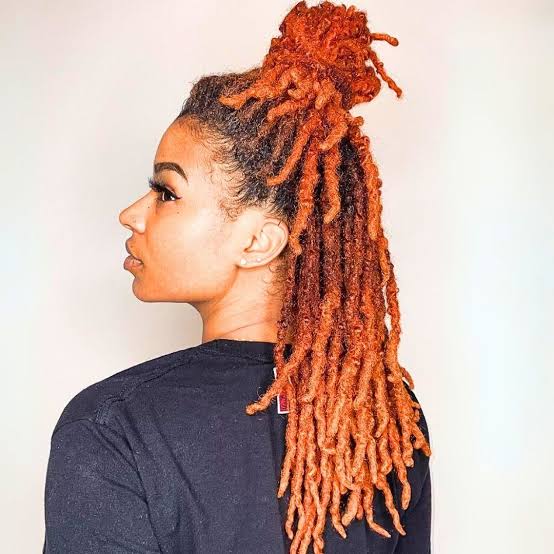
Can a bright orange loc updo actually look polished for a wedding or a dinner event? Yes, if the bun is high and the side-swept bangs break up the color block. Medium-length coily locs in a uniform orange get a structural advantage from the updo: the bun concentrates the volume at the crown, which suits longer face shapes by adding width where it matters. Ask your colorist for: medium length orange locs styled into a high bun. The side part in the bangs softens the overall silhouette and keeps the look from feeling severe. This is a statement color that works for a special occasion without competing with the rest of your outfit.
Voluminous Copper Microlocs Updo
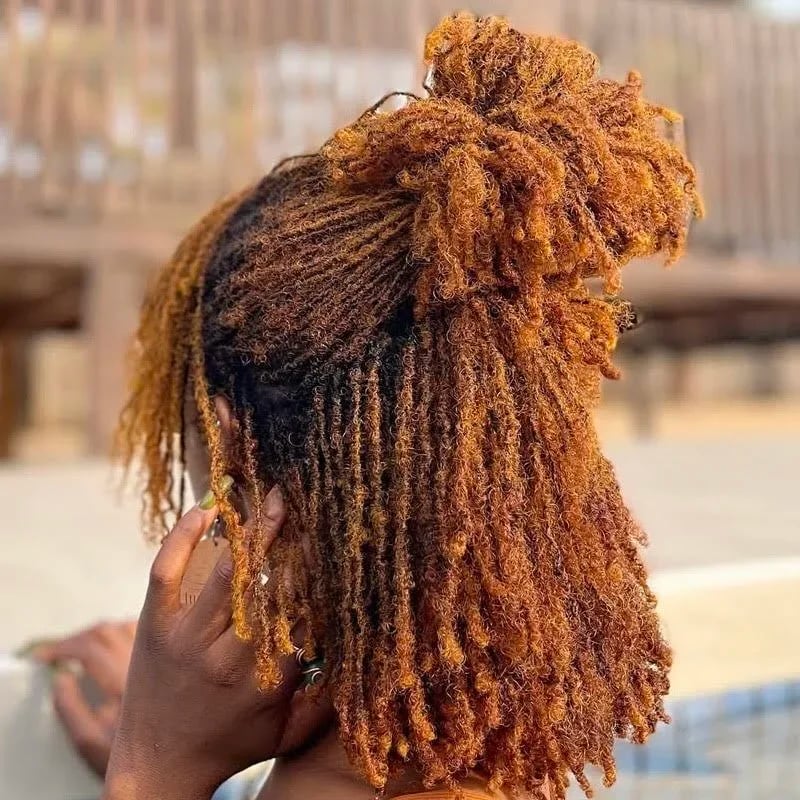
Fine, coily microlocs packed into a voluminous updo in a single, unapologetic copper tone make a bold statement. Fine microlocs, especially when gathered up, can appear less dense than they are in a loose style. That is not a flaw, just a reality of the texture. This look works best on shoulder-length or longer locs, where there is enough weight to hold the shape without constant pinning.
Ask your stylist for a voluminous copper microlocs updo. The back view shows the real architecture: the color is uniform, so the volume must carry the style. If your locs are on the thinner side, expect a tighter silhouette. A satin scarf overnight keeps the shape from flattening, and a tinted conditioner every few washes keeps the copper from turning brassy.
Short Black Locs With Red Accent Bun
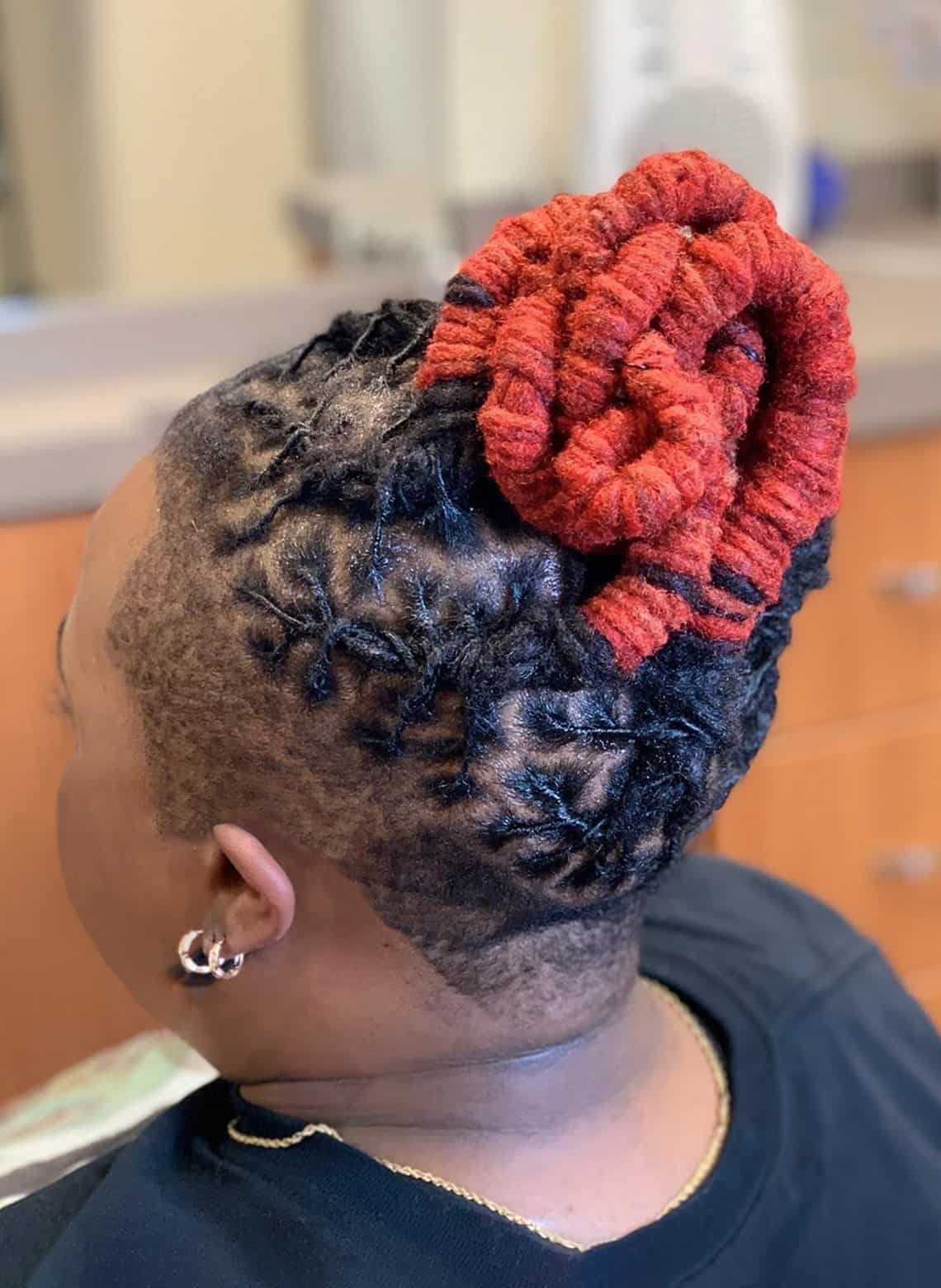
This is the holiday party option that does not involve a full color commitment. Short, thick, coily locs are gathered into a crown bun, with red accents woven through the black base rather than painted over it. The shaved sides add structure, which matters when the bun sits high. Ask your stylist for a short black locs with red accent bun. The red shows up best against a dark backdrop, so the bun is where it reads most clearly. This is a two-hour salon add-on, not a full day, and the color holds for about six weeks with cool-water rinses.
Mid-Back Ombre Locs From Dark Brown To Blonde
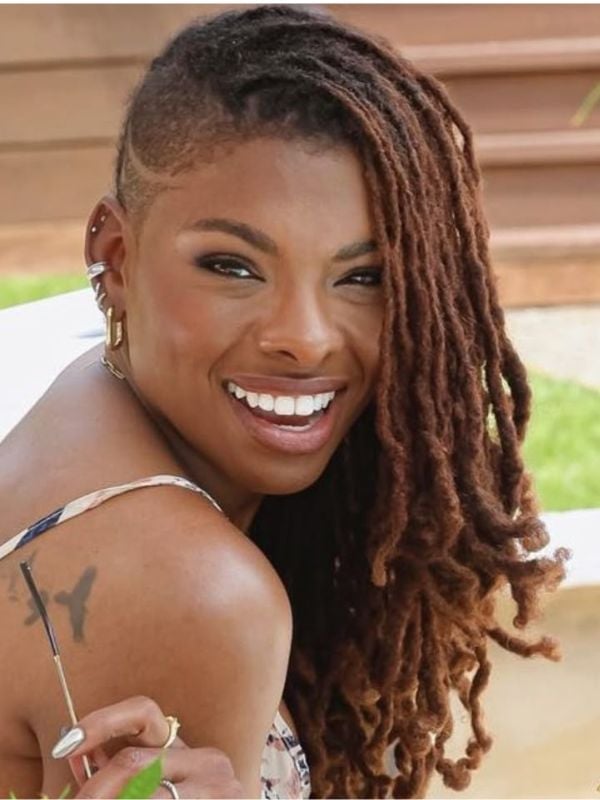
Ombre on locs is different from ombre on loose hair, because the color has to travel down each individual loc instead of blending through a section. Here the transition runs from a dark brown root to a warm blonde end, with a middle parting that lets the gradient show symmetrically. The wavy texture of these mid-back locs helps the blonde catch light at different angles, so the ombre appears dimensional and not flat.
Ask your colorist for a mid-back locs with dark brown to blonde ombre. Because the lighter ends are more porous, they need a purple shampoo every third wash to keep the tone from pulling yellow. A trim every ten to twelve weeks keeps the ends from looking straggly, which is the one thing that undermines a clean gradient. The grow-out is unusually forgiving here, since the dark root is part of the design and not a correction.
Mid-Back Faux Locs With Black To Brown Balayage
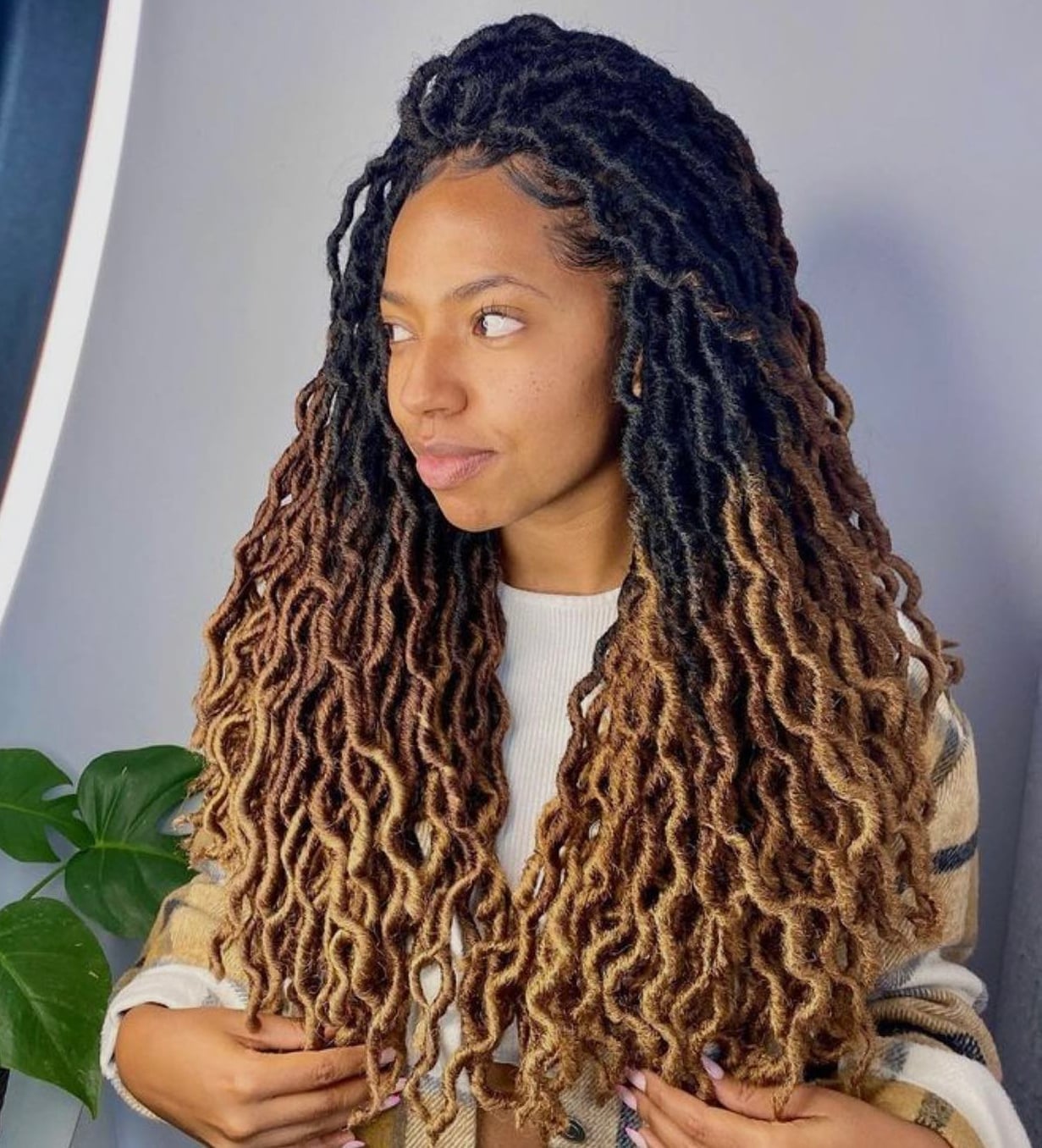
If ombre is the hard line between two colors, balayage is the soft melt that pretends the root never ended. On these mid-back faux locs, the color starts black at the scalp and dissolves into a warm brown about halfway down, with no visible demarcation. The loose waves and middle parting help the transition look organic. Where ombre asks you to commit to a clear change, balayage asks you to trust a subtle shift. This is the one for anyone who wants a lighter look without the obvious root line.
Ask your colorist for a mid-back faux locs with black to brown balayage. The balayage technique means the brown only hits the lower half, so there is no band of regrowth to manage. A moisturizing spray keeps the faux locs from drying out at the ends, where the color processing happens.
Mid-Back Wavy Locs In Two High Pigtails
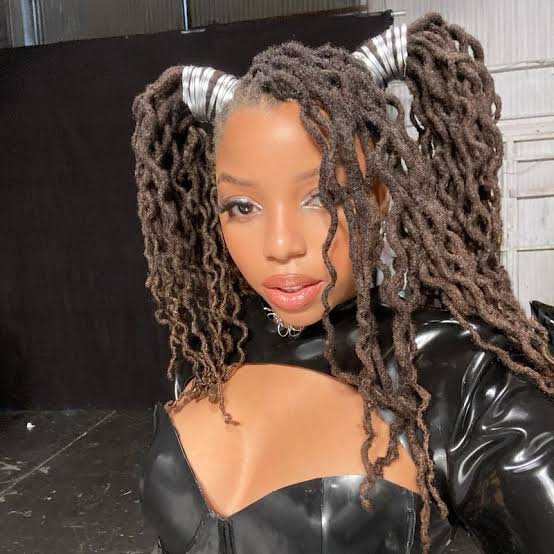
Two high pigtails on locs solve a specific problem: how to show off a color placement that would otherwise get lost in the length. These mid-back wavy locs are parted down the middle and pulled into symmetrical pigtails, with subtle lighter brown highlights that add natural dimension. The highlights are spaced far enough apart that they do not blend into a single tone. Ask your stylist for a mid-back wavy locs in two high pigtails, with dark brown base and lighter highlights. The pigtails keep the locs off the shoulders, so the highlights stay visible even from a distance.
Mid-Back Braided Locs With Multicolor Highlights

A precise weave of red, blue, and purple threads runs through thick braided locs, with a central parting keeping the multicolor effect balanced on both sides. Each braid carries its own color story, so the overall look is balanced when working with this many tones. The mid-back length gives the colors room to travel, and the wavy texture catches each shade differently as the locs move.
This style suits thick locs that can hold the weight of braiding plus color, and it makes a strong statement for anyone ready to commit to a multi-tonal palette. Ask your colorist for: mid-back braided locs with red, blue, and purple highlights. A silk serum keeps the braids shiny and tames frizz between washes, and a trim every 10 to 12 weeks keeps the ends clean. The multicolor effect fades gradually, so you get weeks of vibrancy before the next touch-up.
Mid-Back Fiery Locs With Black, Red, Orange, Yellow
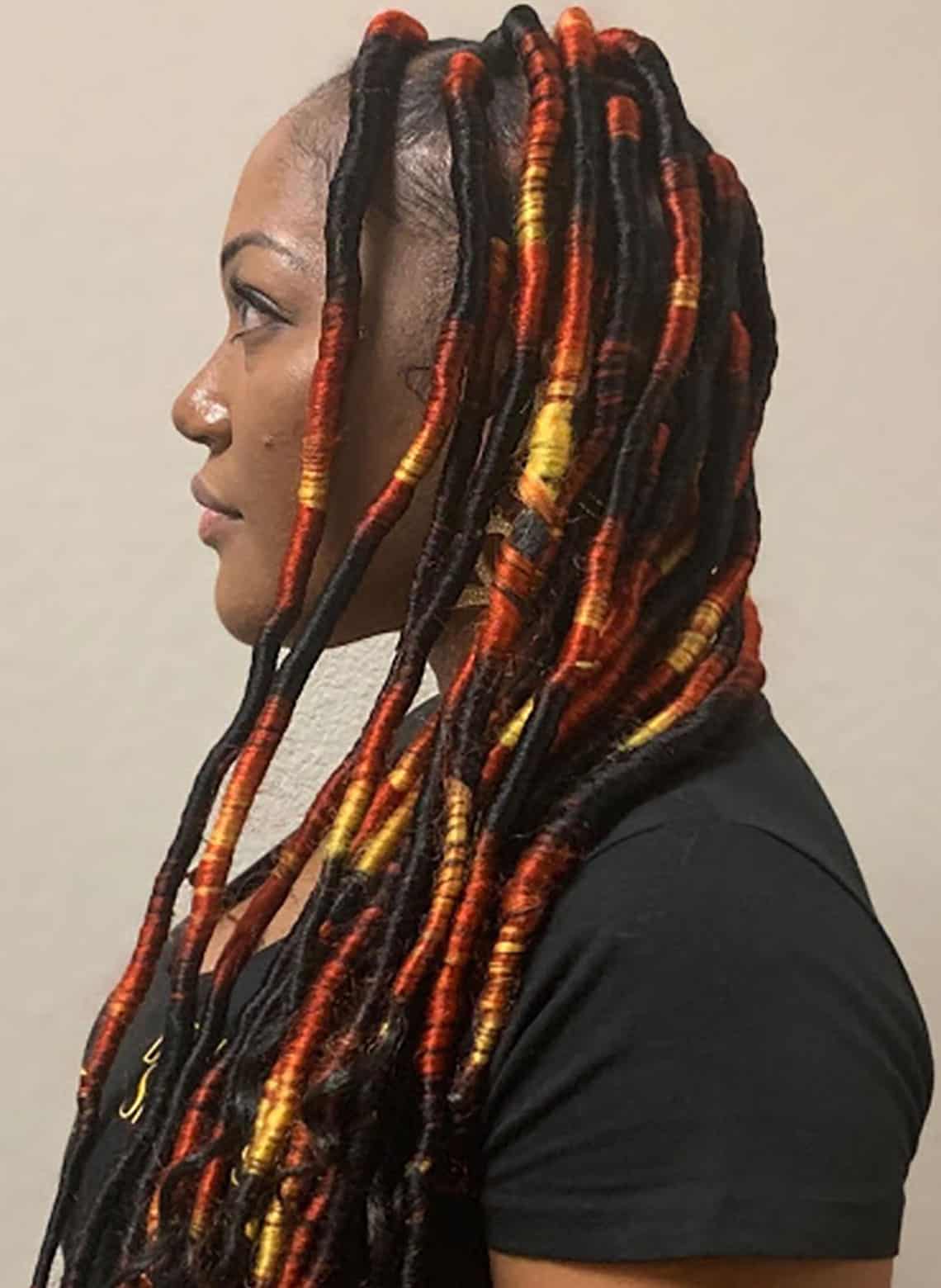
The upkeep is real: warm colors fade faster than cool ones, so color-safe shampoo and cooler water help maintain the fire. A trim every 10 to 12 weeks keeps the ends healthy, but expect the red and orange to need a refresh sooner than the black base.
Shoulder Length Rainbow Dyed Coily Locs
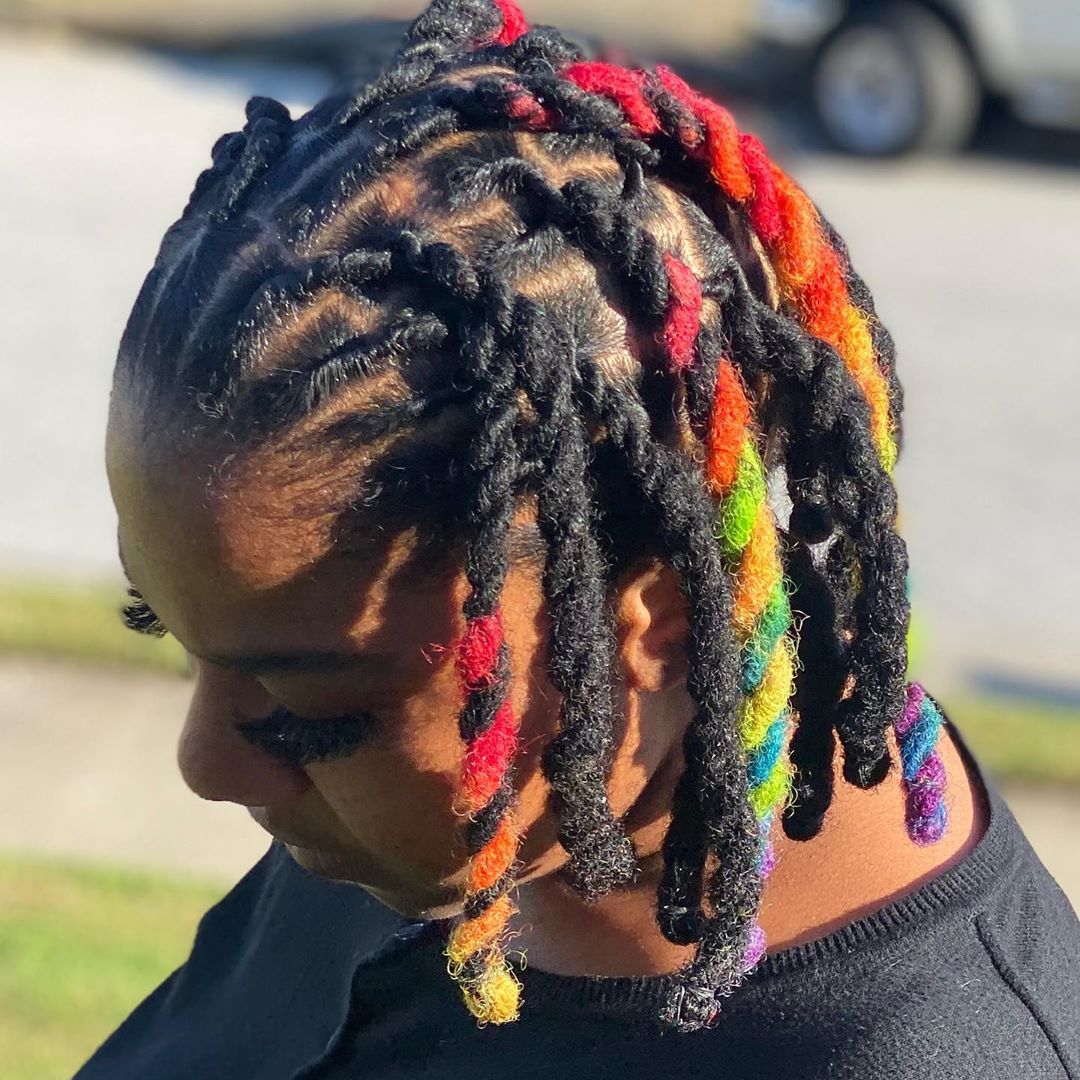
Who is this rainbow dyed style actually for? Thick coily locs that hit the shoulders, where the full spectrum of red, orange, yellow, green, blue, and purple has enough surface area to show each shade clearly. The middle parting and loose styling let the colors breathe, and the shoulder length keeps the look balanced. If your locs are thinner or shorter, the rainbow effect can get lost, so this one favors density and a bit of length. Ask your colorist for: shoulder length coily locs with rainbow colors. This full spectrum statement turns heads, but the maintenance is real. Wash with cool water and a color safe shampoo to keep the hues from bleeding into each other, and plan for a trim every 10 to 12 weeks to maintain the shape.
Mid-Back Blue And Purple Locs With Braids
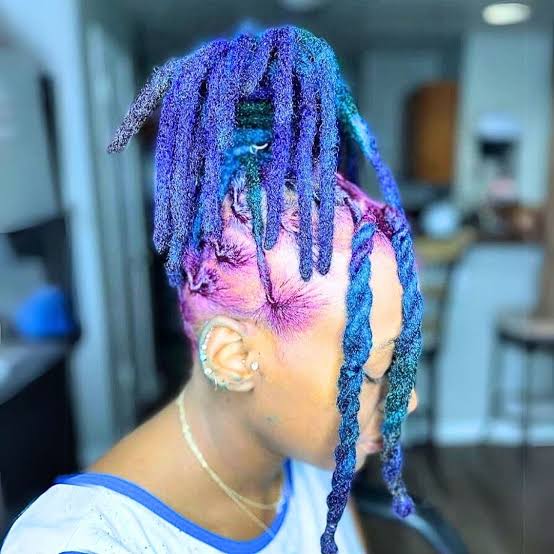
Blue and purple are the kind of colors that own a room, and here they are woven through mid-back locs in a mix of braided sections and loose strands. The braided parts hold the color tight, while the loose locs let the two shades shift and blend as they move, creating a texture that is part sculpture, part fluid. This bold combination is built for summer events, where the bright palette stands out against sunny backdrops and outdoor light. It suits anyone with mid-back locs who wants a multi-tonal color with mixed styling, rather than a single flat shade.
Ask your colorist for: mid-back locs with blue and purple colors, braided and loose. A leave-in conditioner keeps the locs moisturized and the color looking saturated, and a trim every 10 to 12 weeks keeps the ends tidy. The braids add structure, so the style holds its shape through a full day of festivities.
Mid-Back Wavy Dark Brown Locs Updo
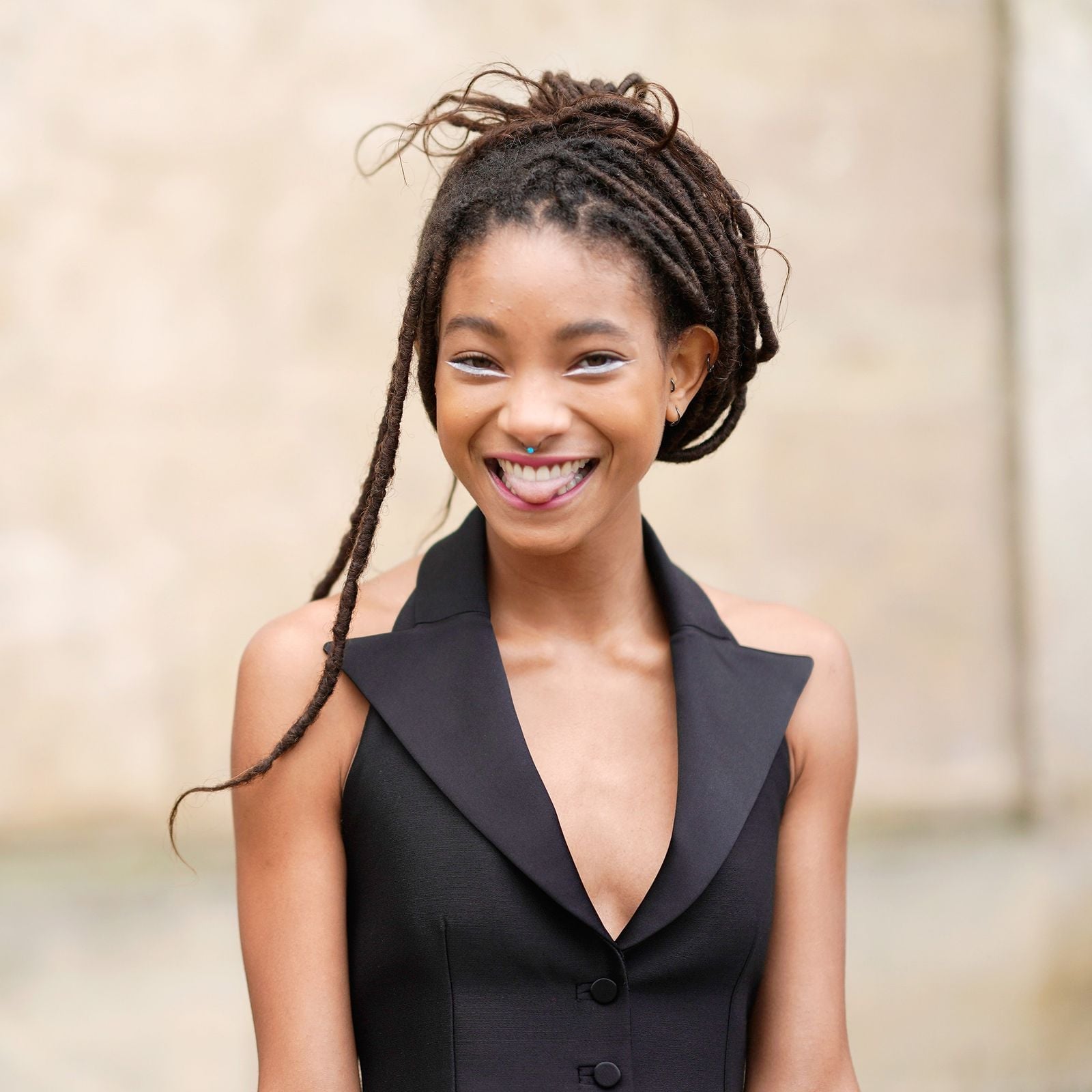
An updo built from mid-back wavy locs in a rich dark brown, with some strands left loose to frame the face, is a study in controlled elegance. The middle parting anchors the style, and the loose pieces soften what could otherwise be a severe pull-back. This is a salon-level design because the balance between gathered and loose sections takes a practiced hand; pinning locs too tight flattens the wave, and leaving too many loose strands loses the updo entirely.
Ask your stylist for: mid-back wavy dark brown locs styled into an elegant updo. A professional will know how to distribute the weight so the style holds without pulling at the roots. A flexible hold hairspray keeps everything in place for hours, and a trim every 10 to 12 weeks maintains the shape. The result is a polished look that works for formal occasions without sacrificing the natural texture of your locs.
Mid-Back Locs Updo With Honey Blonde Highlights
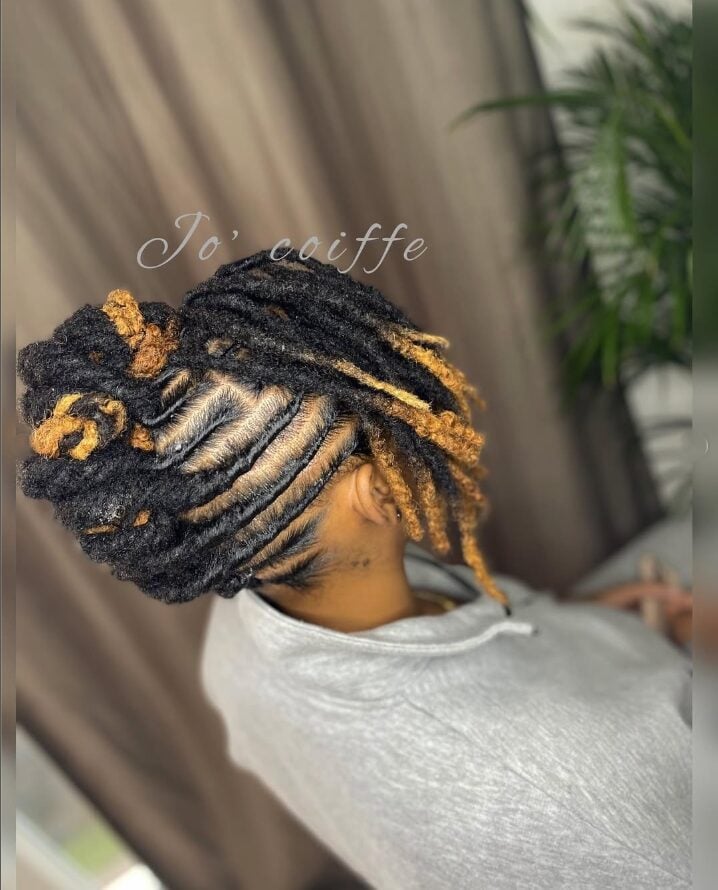
The braided pattern in this updo is the kind of detail that rewards a second look, with honey blonde highlights set against the black base. Thick, wavy locs at mid-back length have the density to hold this structure without slipping. Ask your stylist for: mid-back locs updo with braids and honey blonde highlights. The braided sections will loosen over a week or two, and the highlights need a tinted conditioner every few washes to keep the warmth from turning brassy.
Mid-Back Light Brown Locs With Braids And Beads
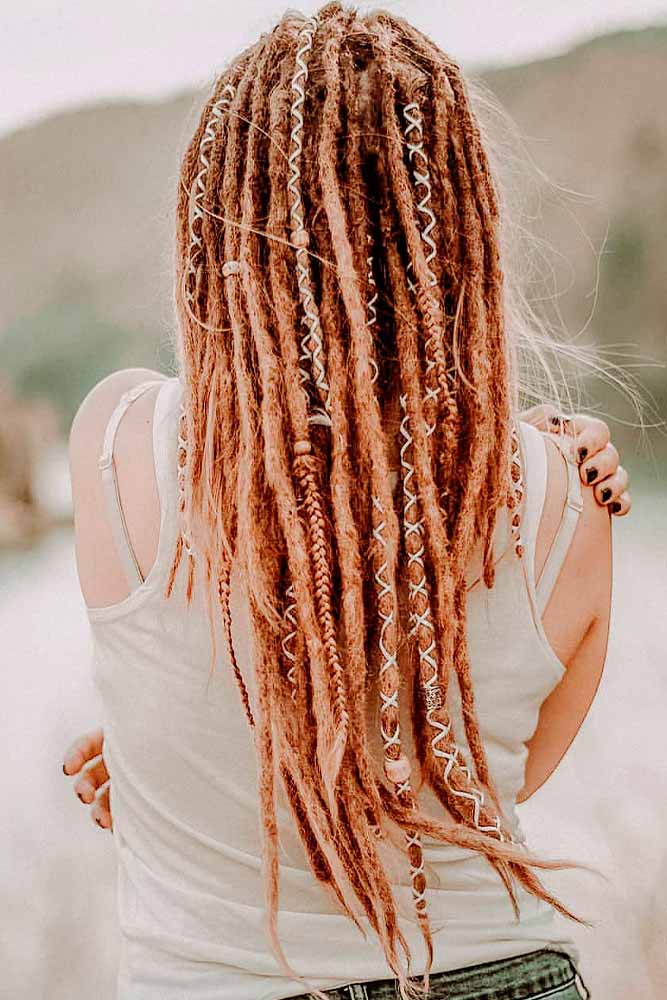
The beads and braids here are not just decoration: they add weight that can pull at the roots over time. Mid-back light brown locs with a wavy texture carry these elements well because the length distributes the tension. This is not a set-it-and-forget-it style. A few upkeep items to plan for:
- Beads can snag on loose strands or clothing, so check the closures weekly.
- The braided sections will need retightening every four to six weeks to prevent matting.
- Ask your stylist for: mid-back light brown locs with braids and beads.
Skip the beads if your locs are fine or if you sleep without a silk scarf most nights.
Shoulder Length Natural Coily Locs With Subtle Highlights
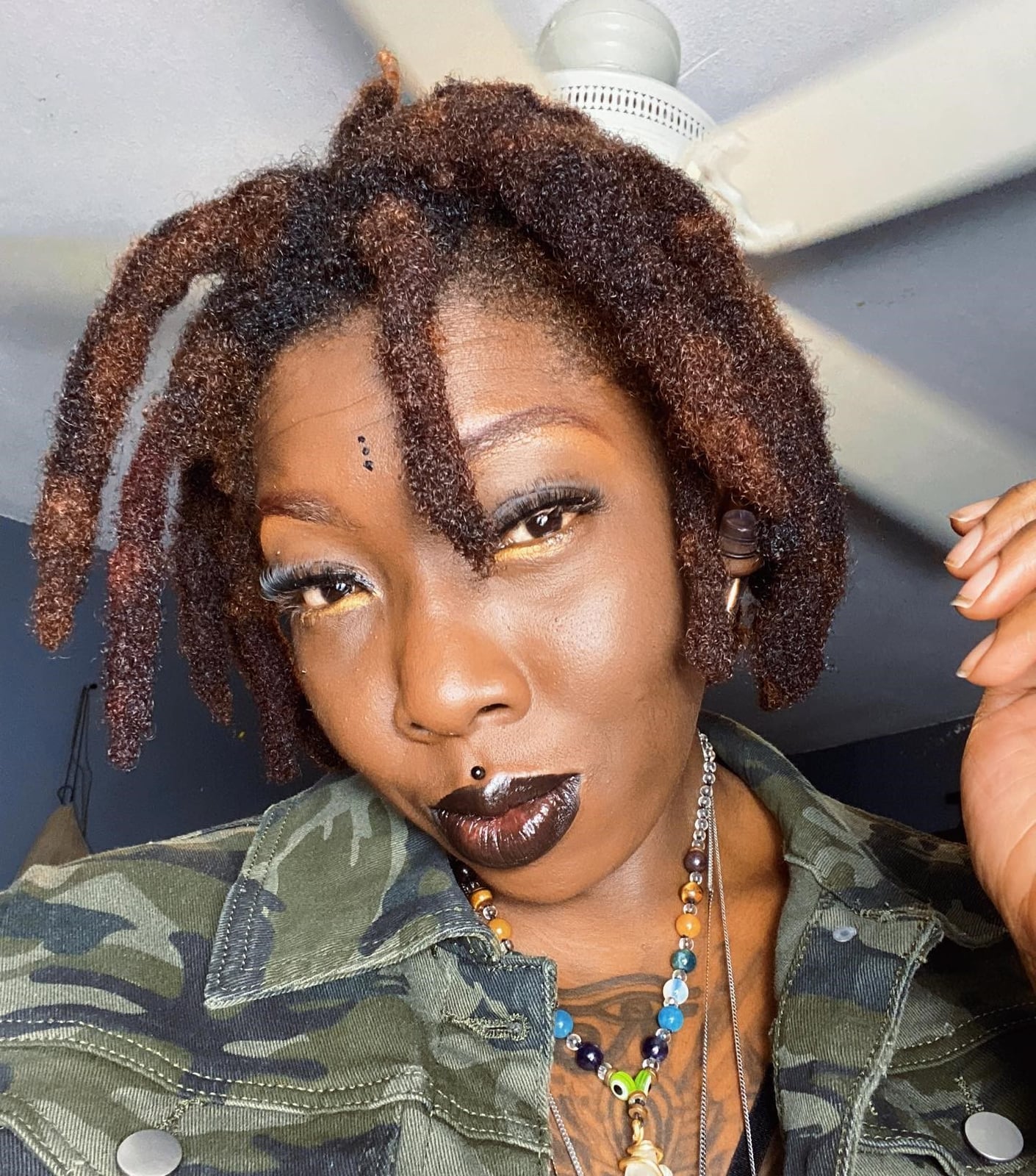
The mistake people make with subtle highlights on coily locs is lifting the color too much, which dries out the natural texture. Shoulder length coily locs with a dark brown base need only one or two levels of lift to create dimension without damage. Ask your colorist for: shoulder length coily locs with subtle highlights, natural texture. A middle part and loose styling let the coily pattern do the work, so no heat or heavy product is required. This look grows out softly without leaving a harsh root line.
Final Thoughts
For vibrant colors, consider your maintenance commitment. A saturated red or blue needs a toning touch-up every four weeks, while an ombre or balayage on natural brown can stretch to eight. Plan your root line strategy before you book the appointment: a root shadow buys you time between sessions.
- Touch up roots or retone every 4 to 8 weeks, depending on how bold the color is.
- Wash with a sulfate-free, color-safe shampoo to keep the dye from fading unevenly.
- Deep condition locs weekly; color processing dries out the strands faster than usual.
- Limit heat styling to protect both the locs and the color deposit.
Embrace the color, own the style.