I kept seeing the same thing in the salon chair next to mine: brown hair that looked like it was trying to be blonde. By February, the grow-out line was always visible. This year, the browns I am seeing actually stay brown, just with enough light to keep winter from reading flat.
These 31 Winter Brown Hair Colors range from low-upkeep root shadows to caramel balayages that need a toner at week six. They work for fine hair that goes flat by 4 pm, for thick hair that needs layers, and for anyone tired of seeing a root line at week five. I picked the ones that hold through a real week, not just a salon photo.
Medium Brown Collarbone Layers With Caramel Highlights
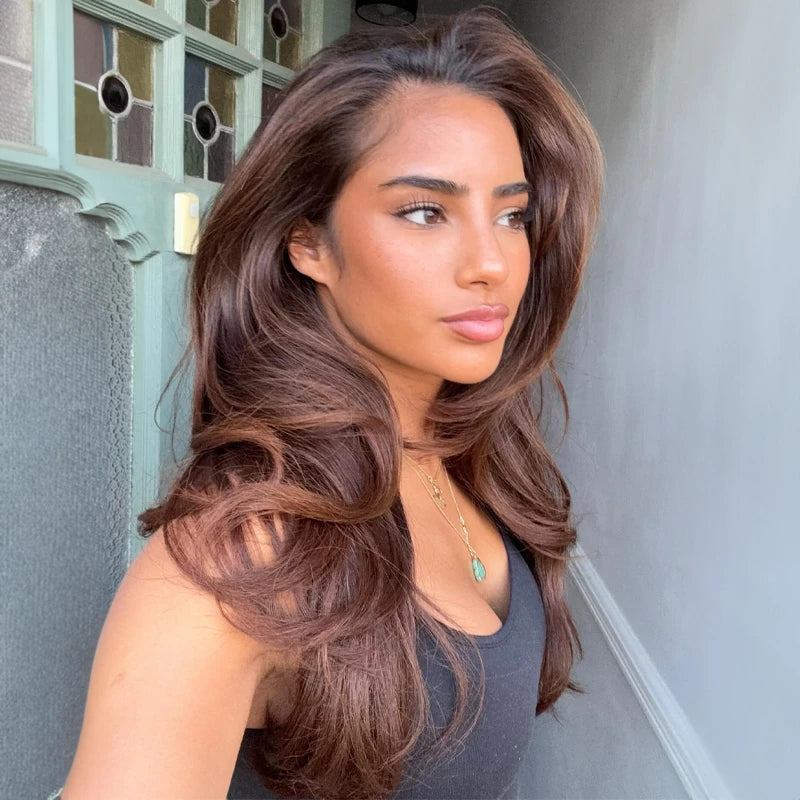
That collarbone length hits the sweet spot where volume actually holds. The medium brown with caramel highlights reads warm without going brassy, which means it flatters most skin tones without fighting your undertone. Curtain bangs soften the front without demanding a daily round brush. The layers are cut to stack at the shoulders, so fine hair keeps its shape past 4 pm. Thick hair gets movement without losing density. A middle part widens a round face, but a deep side part would shift that balance.
Medium Brown With Ash Blonde Highlights
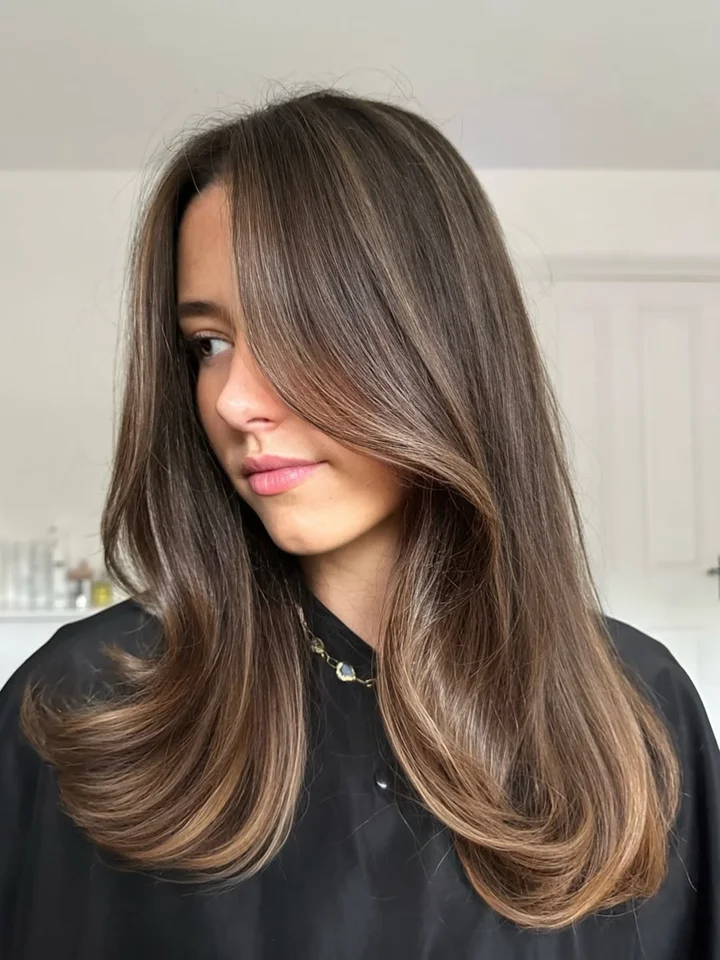
When did brown start looking this expensive? The medium brown with ash blonde highlights works because the cool blonde cuts through the brown base like a clean line. Ask your stylist for fine, spaced-out highlights, not a stripe. The ash blonde highlights need a purple shampoo once a week or they drift yellow by week four. Long layers keep the mid-back length from falling flat. Soft waves hold better on medium thickness. Curtain bangs frame a long face without shortening it.
Upkeep is real: a gloss or toner every eight weeks keeps the ash tone honest. Skip this if your water is hard and you hate salon visits.
Medium Ash Brown With Soft Layers
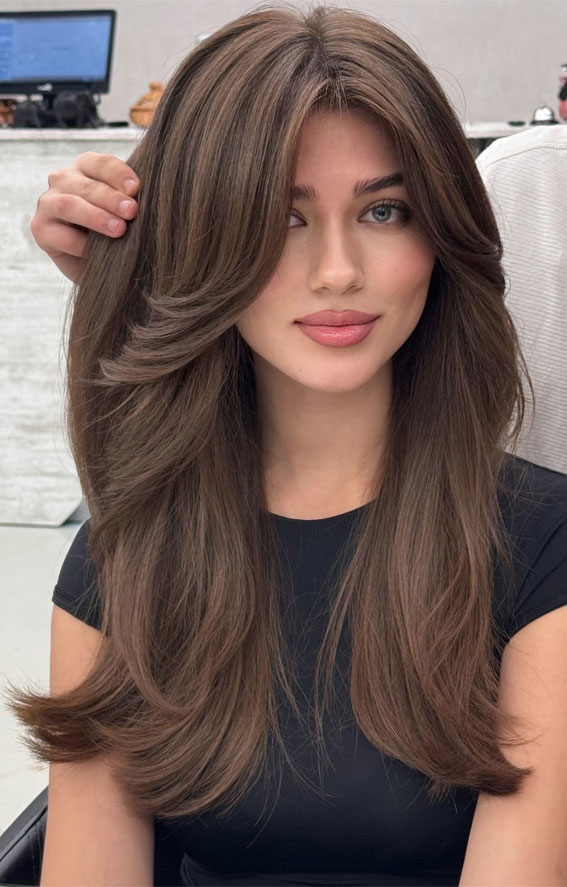
Medium ash brown hair is what happens when you want brown but you also want it to read cool. It sits quieter than a warm chestnut. The soft layers here are cut to move without flipping out, which is rare on a mid-back length. Curtain bangs blend into the face-framing pieces, so the grow-out is gentle. Compared to a golden brown, this one mutes the warmth in your complexion. Good if your undertone is cool or neutral. Less good if you rely on warm tones to brighten your face.
Medium-Dark Brown With Subtle Highlights
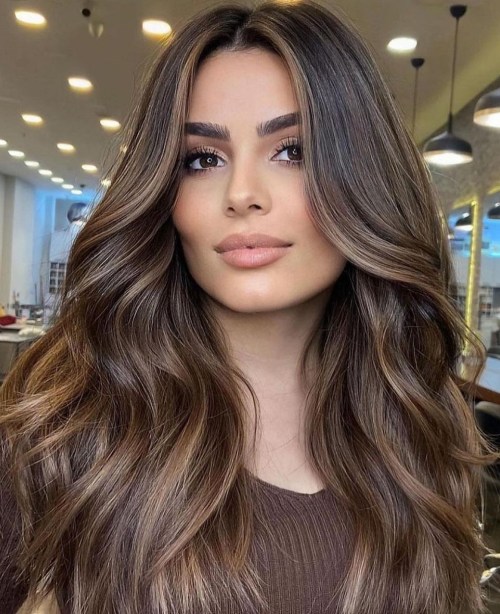
I will admit I underestimated this one. The medium dark brown hair base is so close to natural that the subtle lighter brown highlights barely register at first. Then the light hits and you see the dimension. That is the trick: the highlights are fine enough that grow-out is invisible for ten weeks. Loose waves on thick, wavy texture hold the shape without product. Face-framing layers keep the mid-back length from feeling heavy. This is the shade you book when you want color but do not want to think about it.
Dark Brown With Lighter Brown Highlights
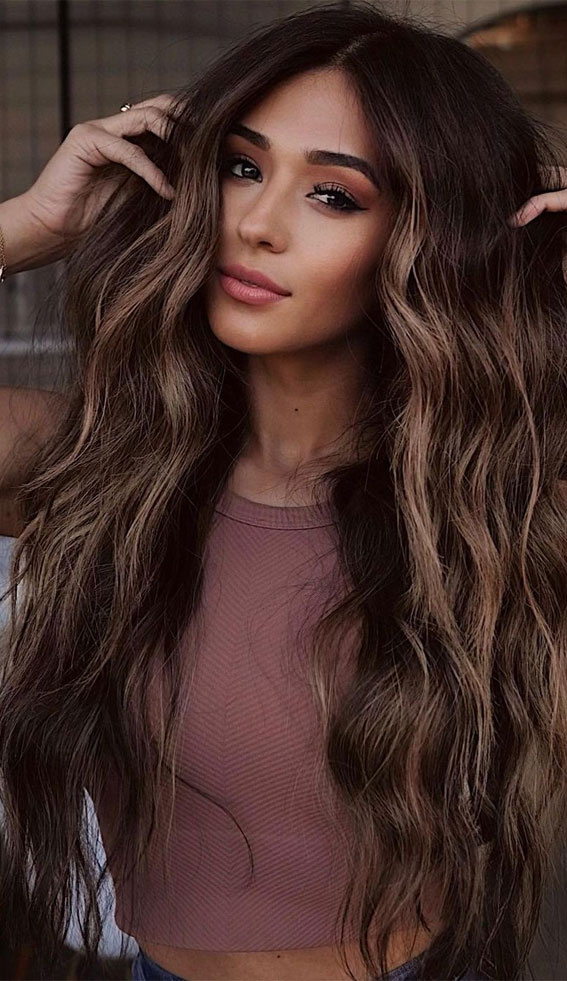
The dark brown lighter brown highlights combo is the rare contrast that does not scream. The base is deep enough to anchor the face, and the lighter pieces lift around the cheekbones without going blonde. Curtain bangs frame a square jaw without fighting it. A middle part works because the highlights are placed to catch light on both sides. Thick, wavy texture carries the layers. Fine hair would need a shorter version, the mid-back length would drag it down.
Deep Cool Brown With Ash Undertones
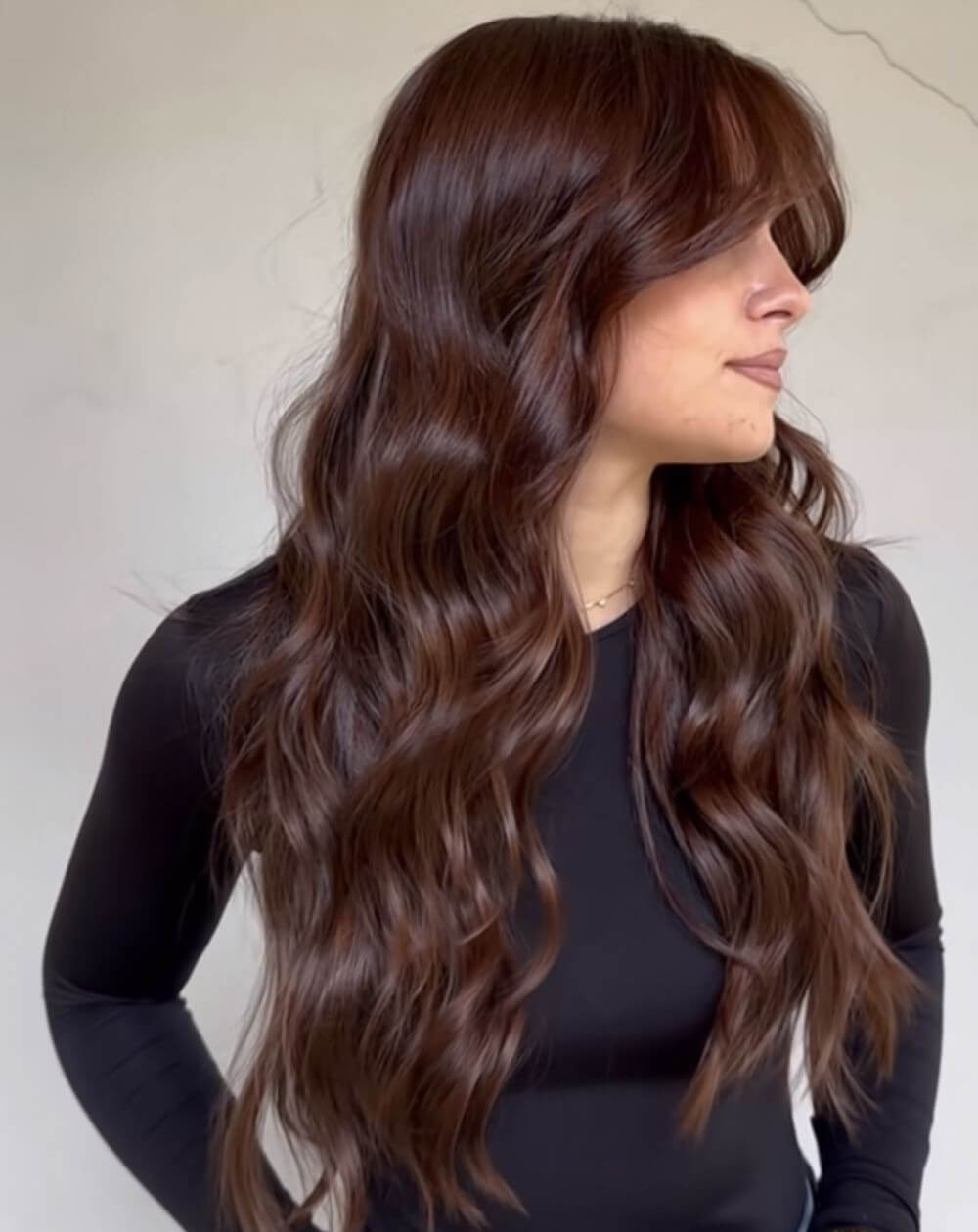
I saw this shade and thought, finally, a brown that doesn’t lean orange. The deep cool brown hair sits at mid-back, cut into long layers with curtain bangs that sweep past the cheekbone. The colour technique is a single-process gloss with ash undertones, no highlights, no balayage, just a solid, cool-toned base. The texture is wavy, medium density, and the loose styling takes about fifteen minutes with a round brush. This is the shade that looks expensive in winter light, the one that reads sophisticated without trying. The ash undertones keep it from warming up against a gray sweater, which is exactly the point.
The layers give the waves somewhere to land, and the curtain bangs soften a square jaw without shortening the face. I have fine hair, and this density would hold the wave until dinner. It’s not a fast colour — the gloss lifts nothing, so it sits on top of your natural shade, which means the grow-out is a soft line, not a demarcation. Trims every eight weeks keep the bangs from turning into a curtain that closes. This is a salon job, no question, but the payoff is six weeks of looking like you walked out of a shoot.
Dark Brown With Ash Blonde Highlights Collarbone
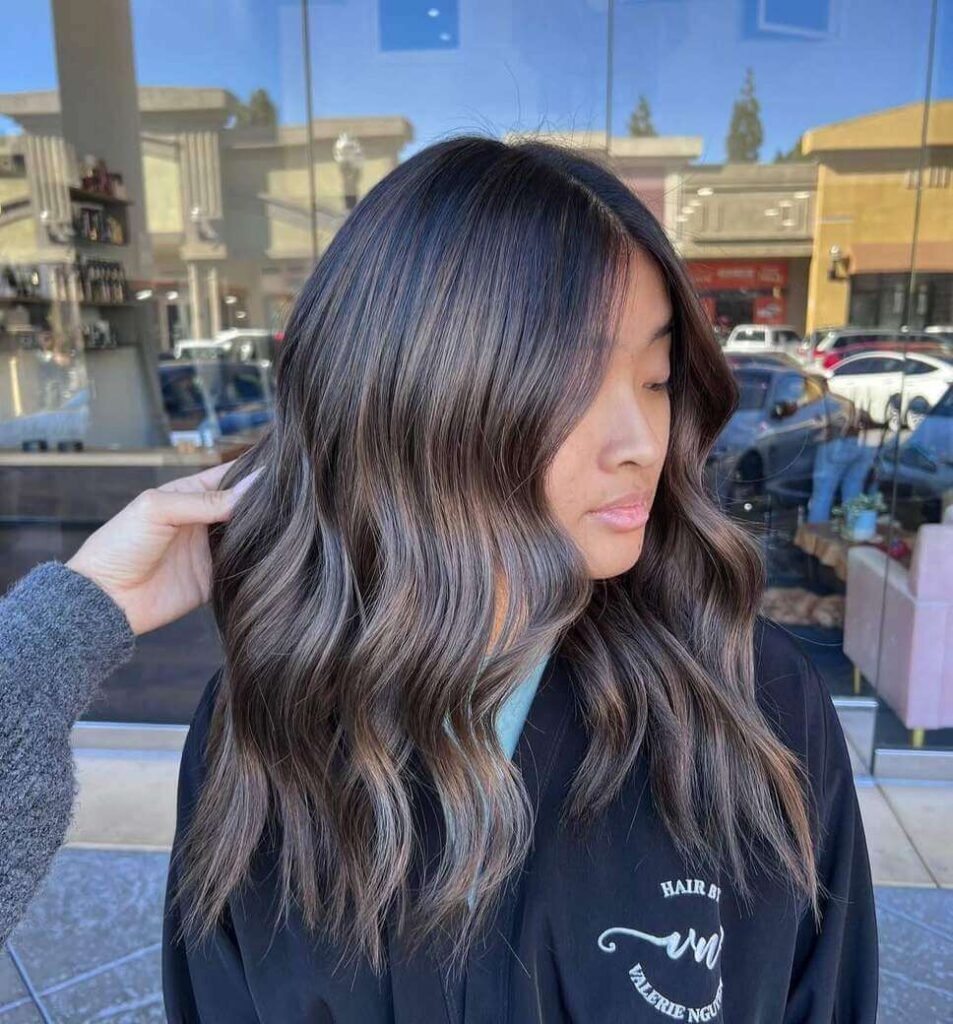
Book the salon, do not attempt this at home. The dark brown ash blonde collarbone cut lands at the collarbone with layers that add movement without losing weight, and the ash blonde highlights are painted in, not foiled, to keep the transition soft. The texture is wavy, medium density, and the wavy blowout takes about fifteen minutes with a heat protectant. The colour technique is a balayage from a dark brown base into cool-toned ash blonde highlights, which means the lift has to be precise — one wrong bleach session and you get brass, not ash. The highlights will need a purple shampoo every third wash and a toning appointment every six to eight weeks to stay true. This is not a low-maintenance colour, but the dimension is worth the chair time.
Shoulder Length Dark Brown With Ash Highlights
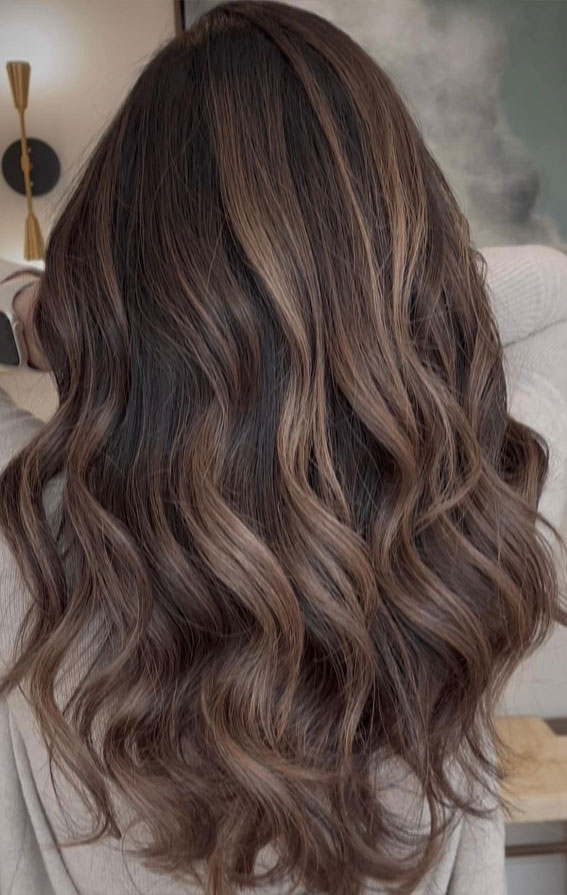
I will admit I was skeptical about ash brown highlights on a dark base. The dark brown ash highlights shoulder cut hits at the shoulder with soft layers that keep the shape from feeling blunt, and the ash brown highlights are woven through the mid-lengths and ends, not the roots, to create depth without a harsh line. The texture is wavy, medium density, and the styling is loose waves that take about fifteen minutes. The honest downside is the brassiness — ash tones on dark brown can pull green or muddy if the lift isn’t clean, and the highlights need a toning session every six to eight weeks to stay cool. Trims every six weeks keep the shoulder length from looking shaggy, because a blunt edge shows every split end. It’s a sophisticated shade, but it asks for upkeep.
Medium Brown With Ash Blonde Side Part
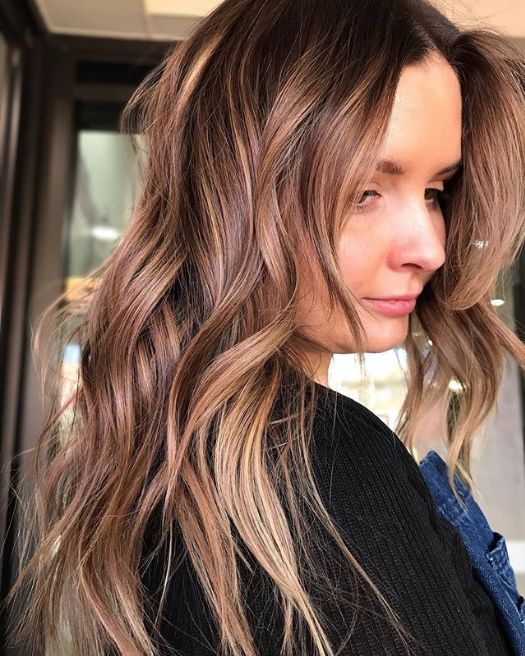
Have you ever had a side part that just works? The medium brown ash blonde side part cut lands at the collarbone with layers that follow the diagonal of the part, and the ash blonde highlights are painted on the heavier side to catch the light when you turn your head. The texture is wavy, medium density, and the wavy blowout takes about fifteen minutes with a round brush. The colour technique is a partial balayage on a medium brown base, with ash blonde highlights placed to frame the face without overwhelming the base. The side part widens a round face and narrows a square one, and the highlights add dimension to medium-density hair that can read flat in winter. This is a salon colour, and the ash blonde highlights need toning every six to eight weeks to stay cool. It’s dimensional without being high-maintenance.
Ash Brown Collarbone Lob With Side Bangs
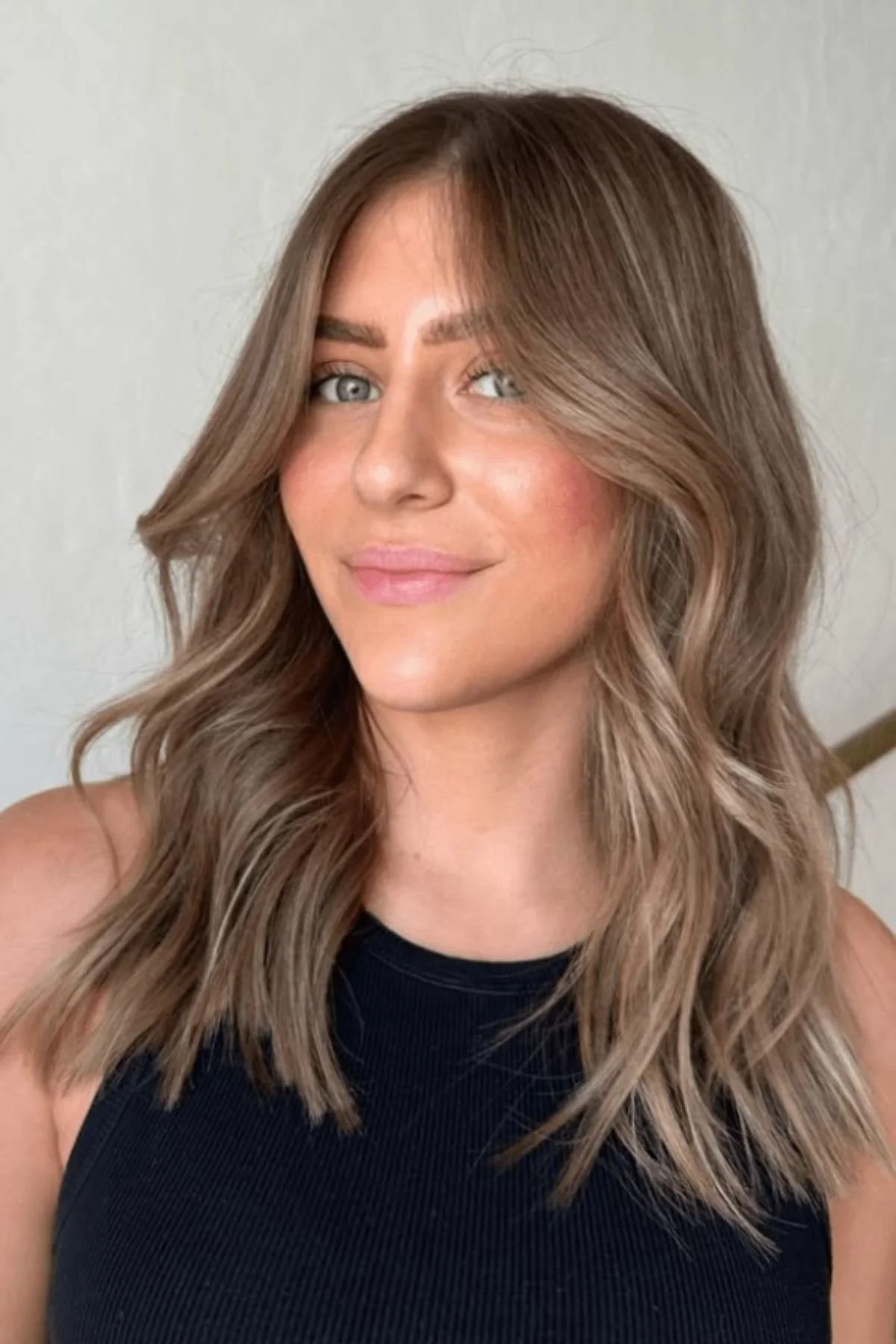
The ash brown collarbone lob sits just above the collarbone with long layers that keep the shape from feeling heavy, and the side-swept bangs sweep past the eyebrow, softening the forehead without committing to full fringe. The colour is ash brown with subtle blonde highlights woven through the layers, and the technique is a balayage that keeps the root dark and the ends lighter. The texture is wavy, medium density, and the loose waves take about fifteen minutes with a texture spray. The grow-out is where this colour earns its keep — the ash brown base fades evenly, and the subtle blonde highlights blur into the regrowth for about eight weeks before you notice a line. Trims every six to eight weeks keep the lob sharp and the side bangs from falling into your eyes. It’s a cool, chic shade that wears well through a work week.
Deep Brown With Auburn Highlights Collarbone
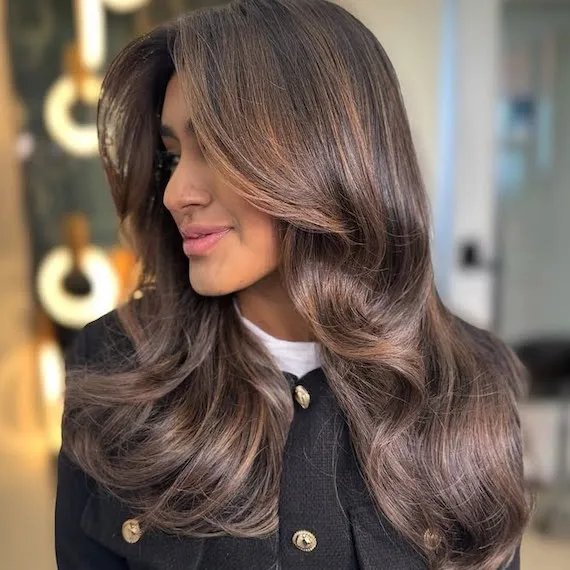
This is the color that made me book a second appointment before I left the first. The technique is deliberate: the stylist paints thin slices of auburn highlights onto a deep brown base, keeping them fine and spaced so the warmth reads as depth, not streakiness. The auburn hits catch the light at collarbone length, middle part, soft waves that take about 15 to 20 minutes with a round brush. The side-swept bangs stop just below the brow, and the whole thing lands somewhere between polished and lived-in. That is the trick. It is not high contrast, it is high dimension.
Dark Brown With Auburn Undertones
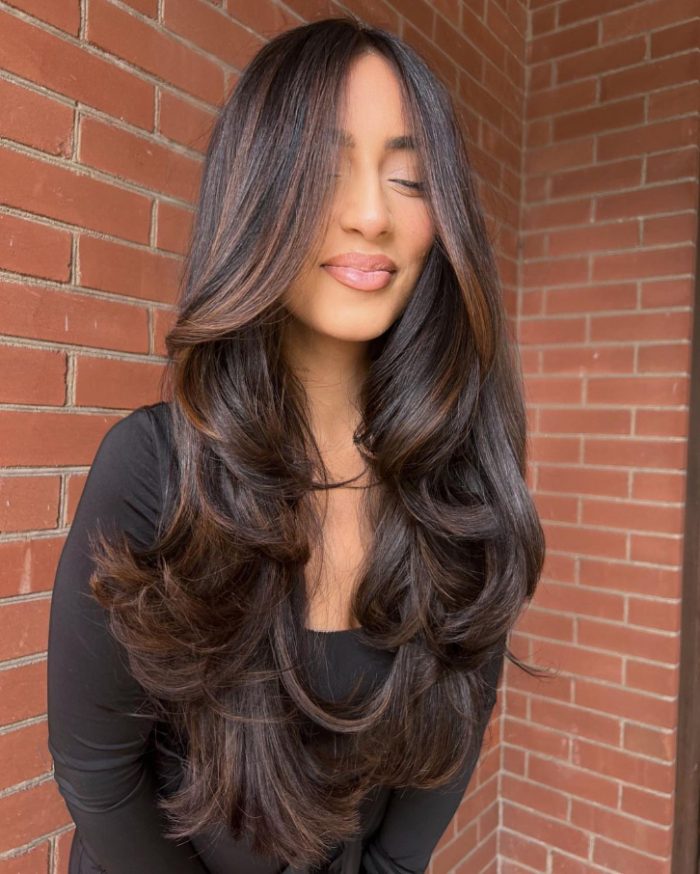
I wanted to like the vibrant reds. I tried. But every time I saw dark brown auburn undertones in natural light, the subtle version won by a mile. Where a bright copper screams for attention, this one sits quietly and lets the depth do the work. The dark brown base stays dominant, the auburn undertones surface only when the light hits the waves at the right angle. That is the whole point. It is rich without being loud, and it grows out soft because there is no aggressive line where the color stops. Long layers, mid-back length, thick wavy texture, no bangs. The auburn is a whisper, not a shout. I will take the whisper.
Mahogany Brown With Caramel Undertones
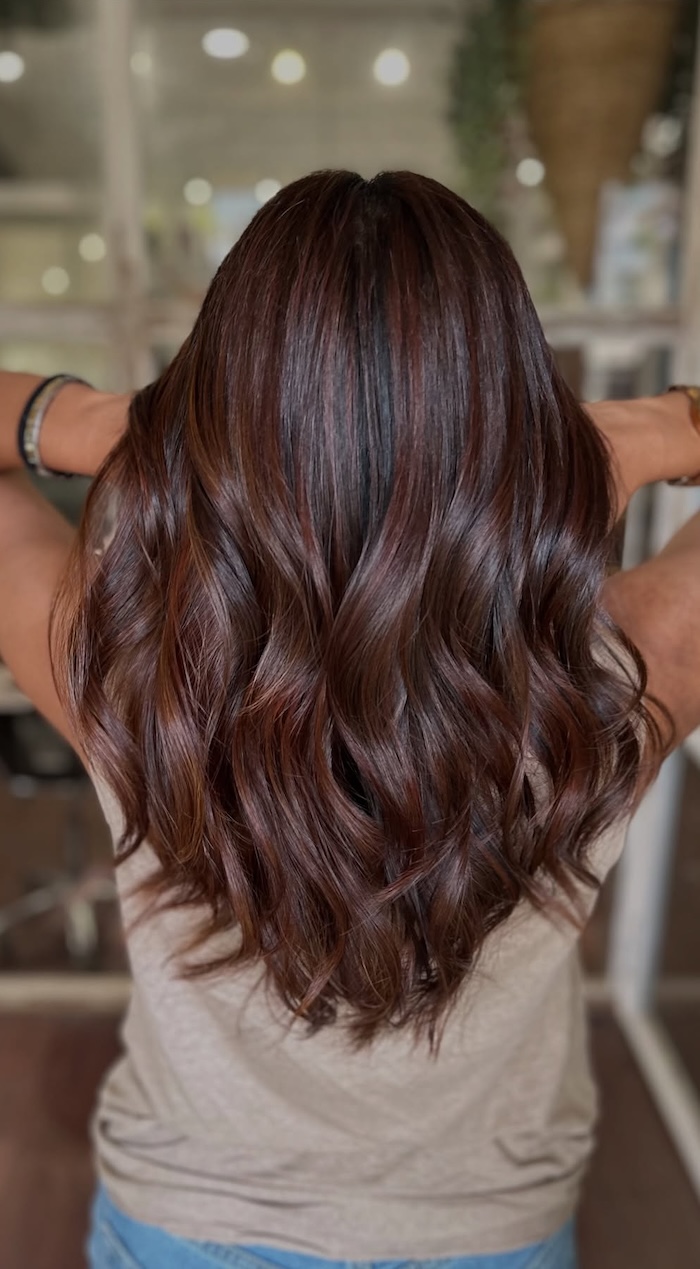
Have you ever seen a brown that looks expensive and cozy at the same time? That is mahogany brown caramel undertones. The mahogany base leans red-violet, and the caramel undertones add a soft warmth that keeps it from reading too dark or too flat. It works best on medium to deep warm skin tones, where the caramel lifts the face without fighting the natural undertone. On very fair or cool skin, the contrast can feel heavy, so ask your colorist to keep the caramel subtle and blended. The back view here shows how the loose waves catch the caramel through the lengths. Thick, wavy, mid-back, no bangs. It is a warm wool coat of a color. You wear it and feel put together.
Medium Brown With Golden Brown Highlights
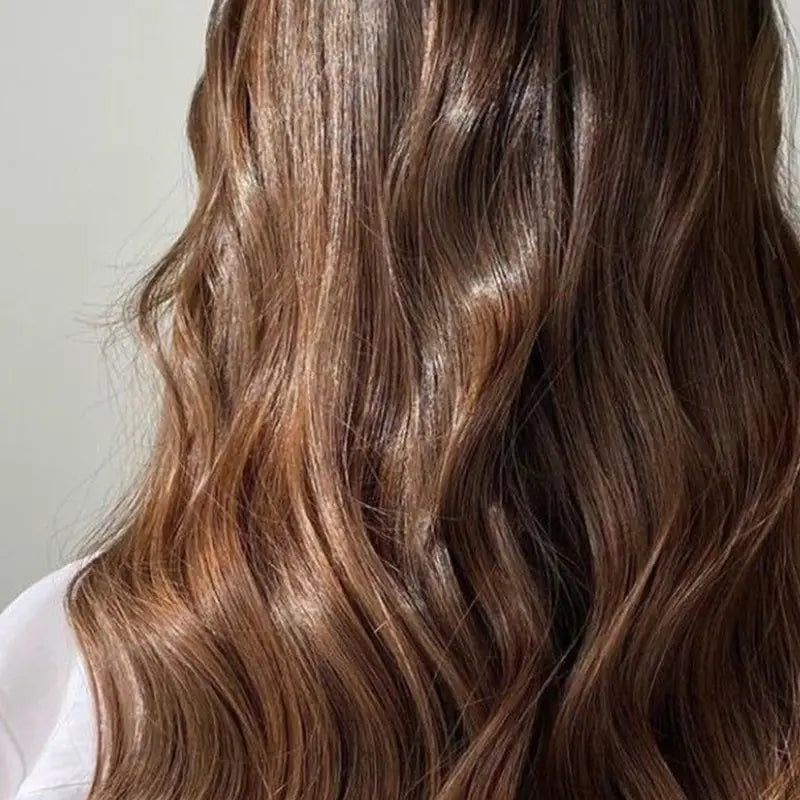
I will admit: I thought golden-brown highlights on a medium brown base would look dated by week three. They don’t. The mid-back length stays warm because the highlights sit only a shade or two lighter than the base, so there is no harsh grow-out line, just a gradual softening. The technique is a freehand balayage, painted onto thick, wavy texture and styled into loose waves that take about twenty minutes with a large-barrel iron. The tone stays golden, never brassy, if you book a clear glaze every eight to ten weeks. No bangs, a middle part, and the whole thing reads like you actually planned it.
Rich Brown With Copper And Auburn Highlights
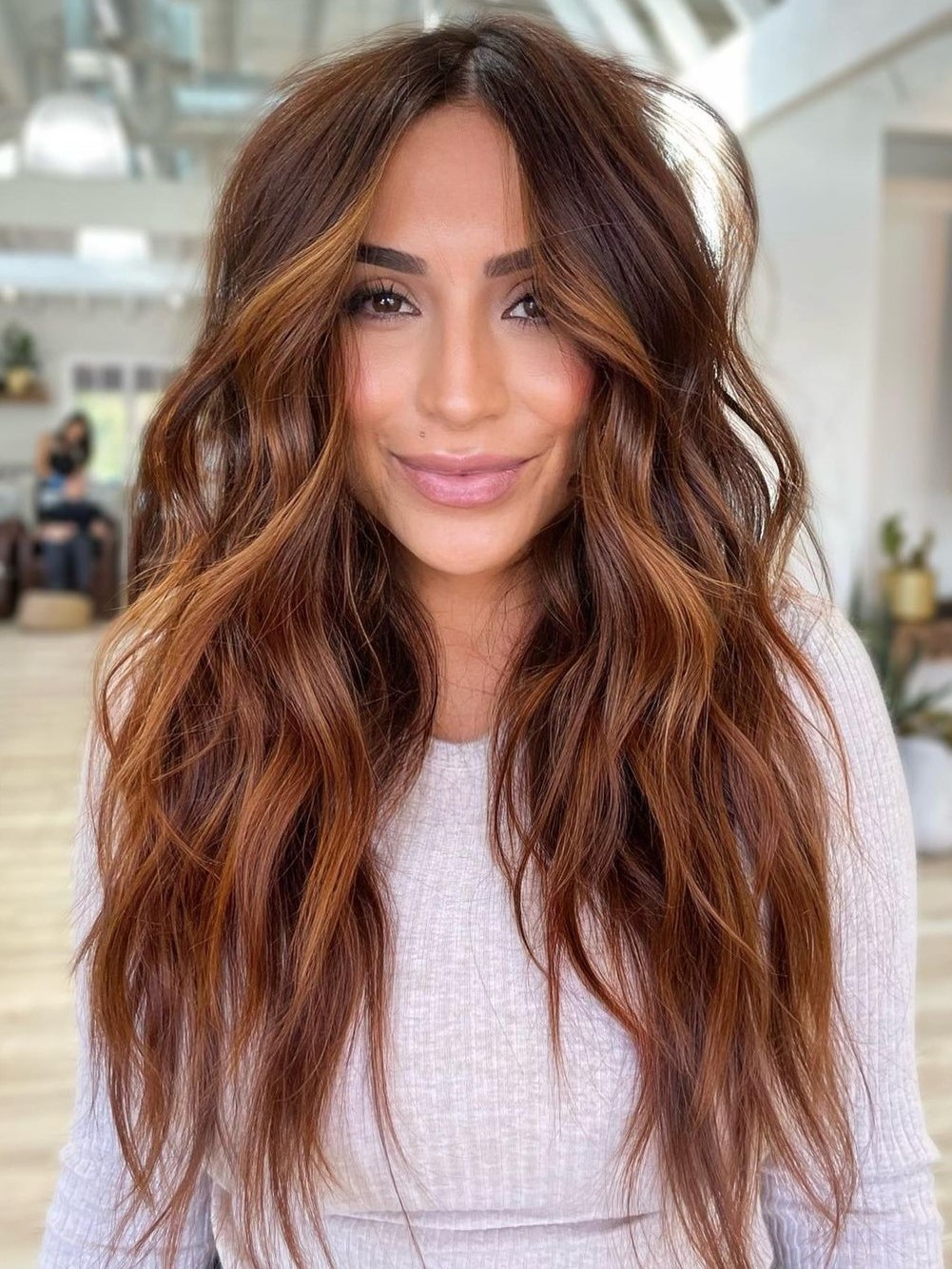
The technique here is deliberate: copper and auburn highlights are woven into a rich brown base, not painted on top. The stylist takes fine sections from the crown and mid-lengths, places the warm tones underneath the top layer, so the colour shifts when you move. Mid-back length, no bangs, a side part, thick wavy texture styled into loose waves. The result reads festive without screaming holiday. It is a winter colour that works through January because the base anchors the fire.
Vibrant Copper Brown With Warm Highlights
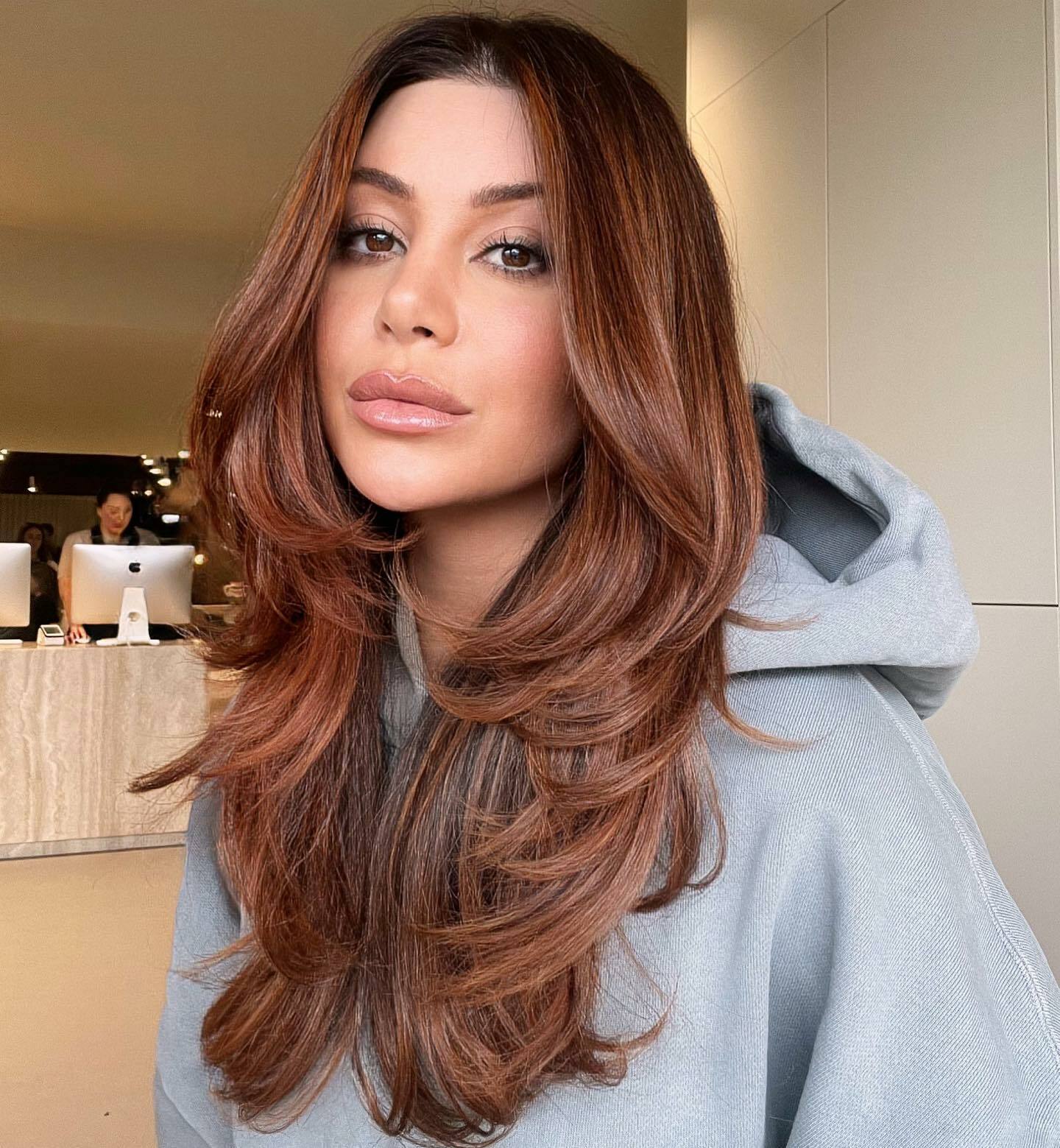
This color is a commitment, and not everyone should make it. The vibrant copper brown hair with warm highlights works best on those with warm skin undertones and a willingness to maintain it. The mid-back length with long layers gives the wavy, thick texture room to move, and the loose waves show off the copper. But here’s the thing: achieving this at home is a recipe for orange disaster. You need a stylist who understands how to lift and tone without over-processing. The technique involves highlights placed to catch light, and the tone is unapologetically warm. If you have cool undertones or fine hair that can’t take bleach, skip this one. It’s a salon-only color, and it will fade faster than you expect.
Deep Espresso Brown With Caramel Balayage
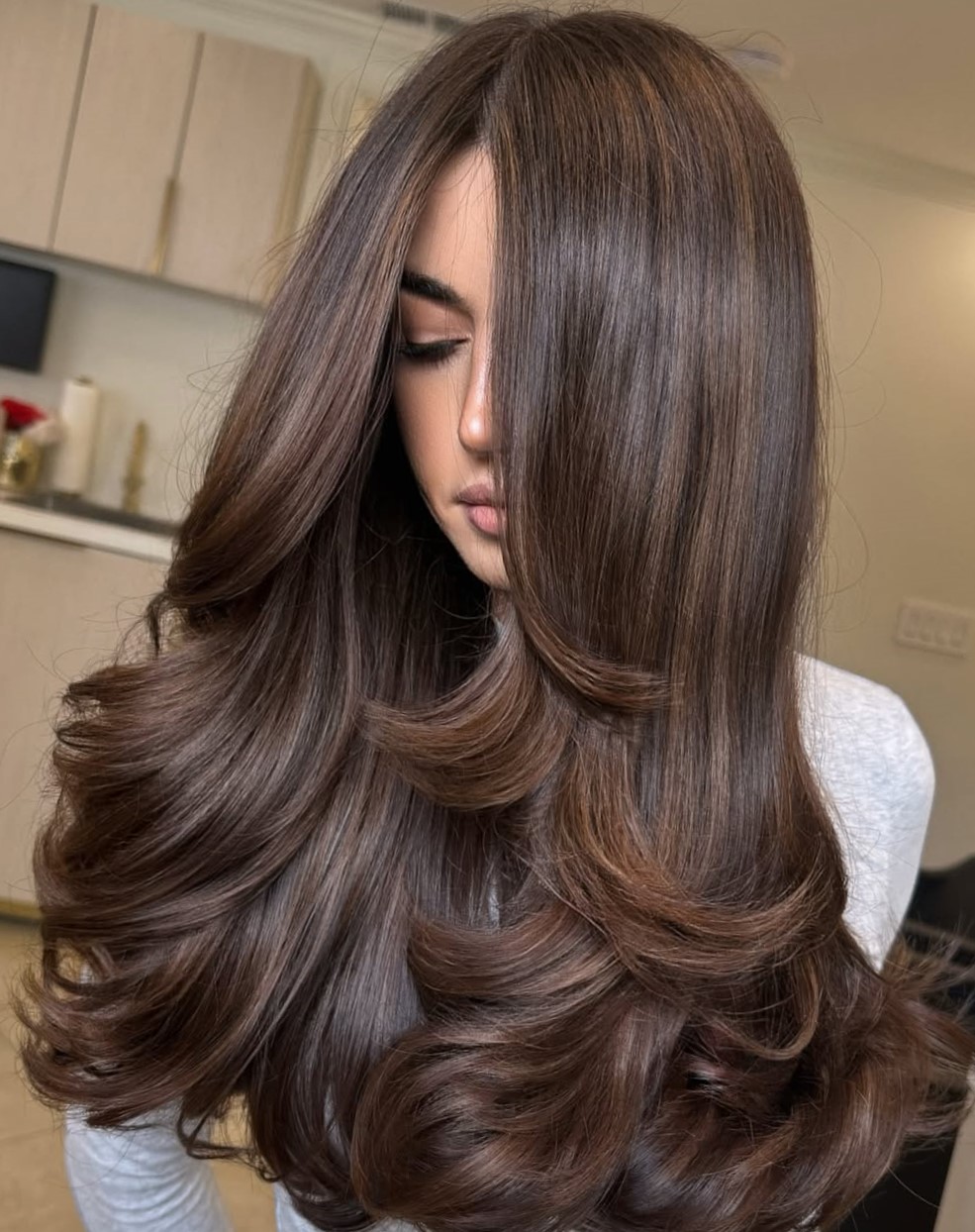
Ever had a balayage that looked perfect for two weeks then went orange? That’s the risk with this deep espresso caramel balayage. The base is a rich deep espresso brown, and the caramel balayage is painted on mid-back length wavy hair with long layers. The technique is freehand, so it grows out softly, but the warm tone of the caramel can fade unevenly or turn brassy if you don’t use the right products.
The honest downside: this color demands maintenance. You’ll need a toning session every six to eight weeks to keep the caramel from going off. The voluminous blowout with soft waves shows off the dimension, but without upkeep, it’s a muddy mess. In bright sunlight, the caramel pops; in dim light, it recedes. That’s the wear reality: it’s a chameleon that needs constant attention.
Deep Espresso Brown Smooth Waves
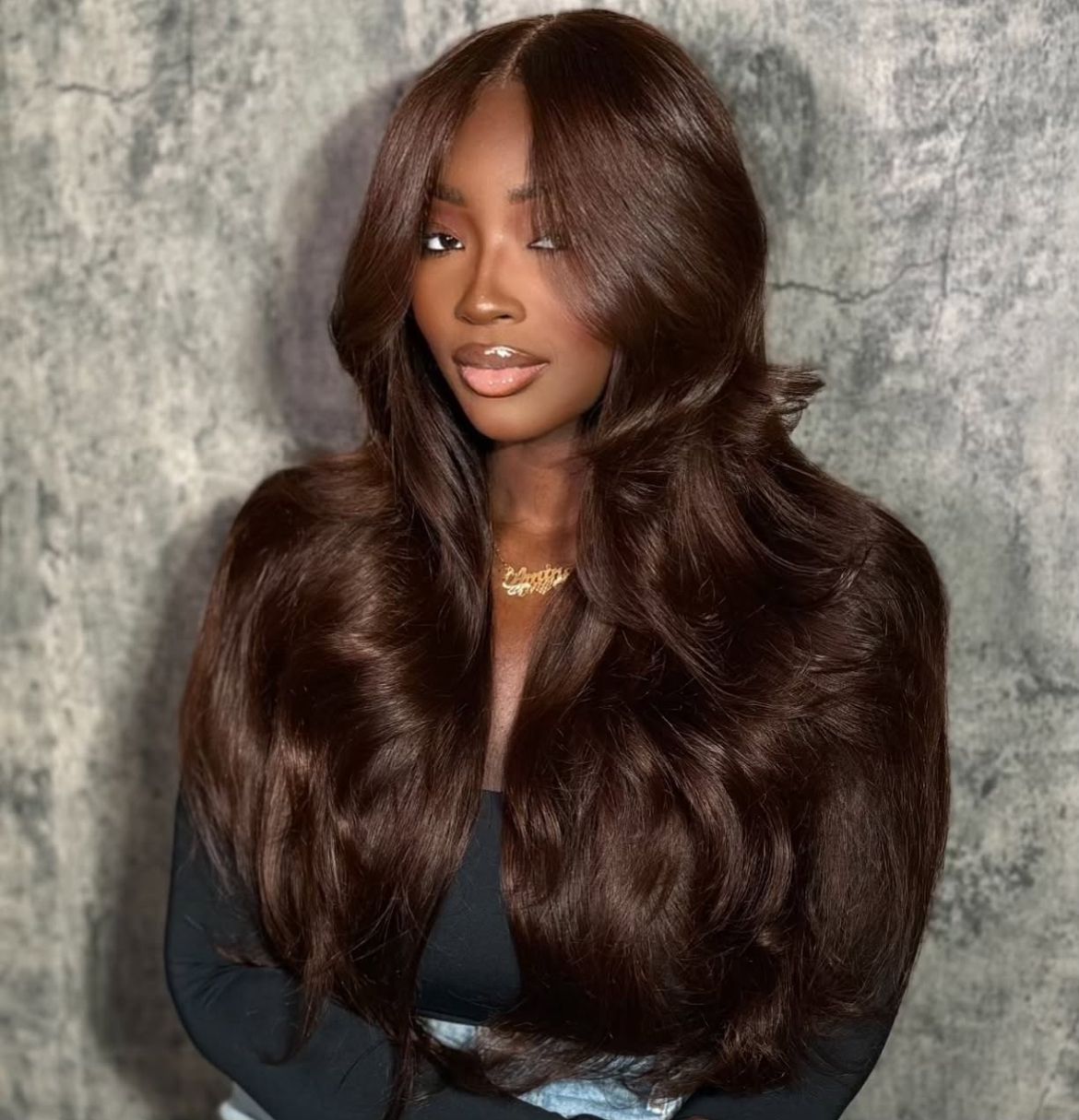
My first thought: this is the color that makes everyone look like they have more hair. The deep espresso brown hair is a solid, single-process color with a cool tone that flatters a wide range of skin tones, especially those with cooler undertones. The mid-back length with long layers keeps the thick texture from feeling heavy, and the smooth slight waves add movement without requiring heat styling.
The technique is straightforward: a gloss or permanent color applied all over. It’s not a complicated color, but the depth of the deep espresso brown makes it look expensive. Who should pass? Those with very warm undertones might find it washes them out. But for anyone with neutral to cool skin, this is a low-risk, high-reward winter brown. The smooth waves take about 15 minutes with a round brush, and the color holds its tone well between trims. It’s a solid choice for someone who wants a rich, dark color without the upkeep of highlights.
Visual Idea
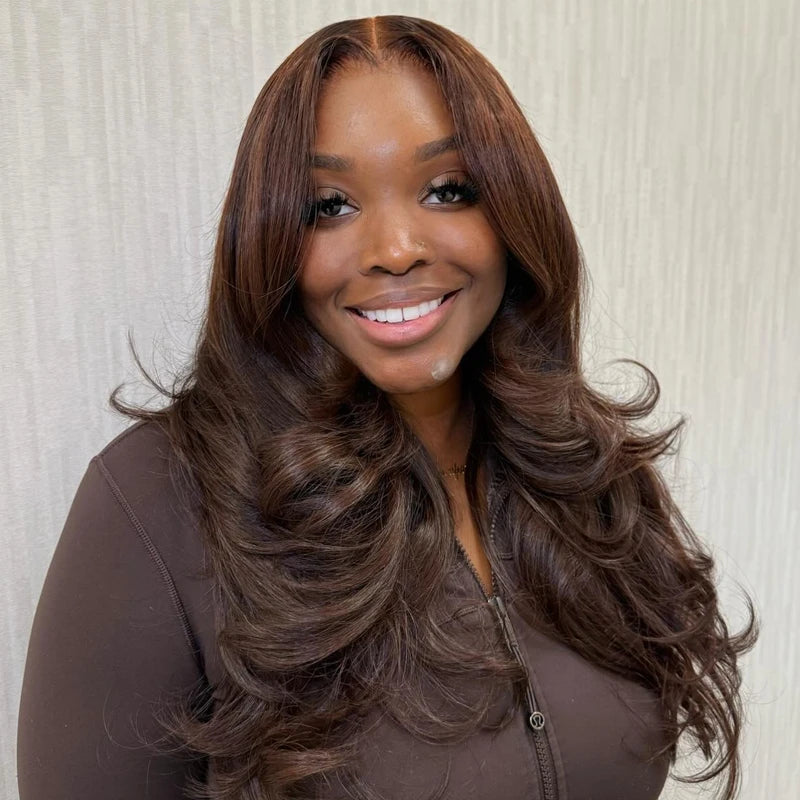
I’ll confess: I used to think deep chocolate brown was boring. Then I saw it on thick wavy hair with voluminous curls, and I changed my mind. The color is a solid, all-over shade that reads rich when the hair has movement. The mid-back length with long layers gives the curls room to bounce.
The wear reality: this color fades faster than you’d think. The warm undertones can pull reddish after a few washes. Upkeep means using a color-safe shampoo and a weekly mask. Trims every eight weeks keep the ends healthy. It’s not zero-maintenance, but it’s not a salon every month either.
Mid-Back Visual Idea
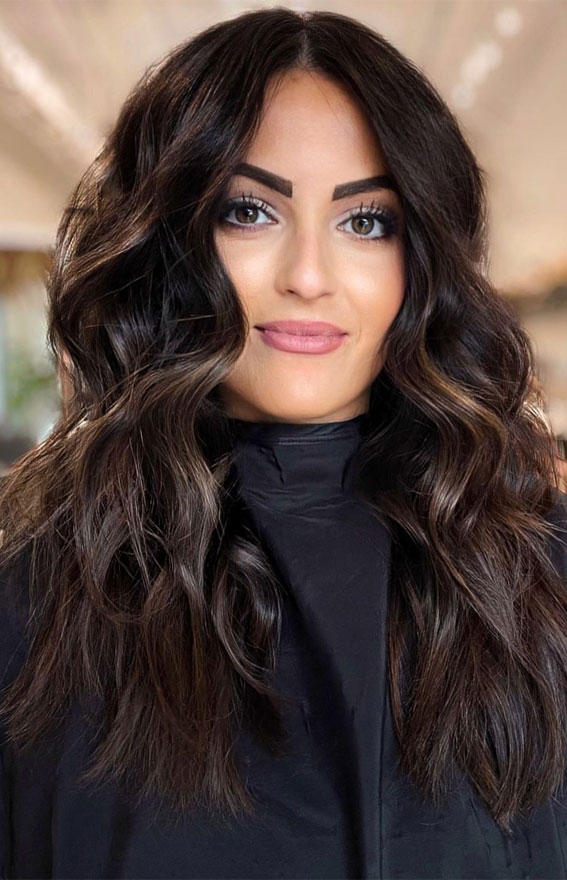
Here’s a technique worth understanding: balayage on a dark chocolate base. The dark chocolate brown with subtle caramel highlights is achieved by hand-painting the caramel onto the mid-back length wavy hair, focusing on the mid-lengths and ends. The long layers help the color blend naturally, and the loose waves show off the dimension. The tone is warm caramel against the cool dark chocolate, creating contrast without being stark.
The technique avoids a harsh line at the roots, so grow-out is soft. This is a salon-only color because the placement requires skill. The stylist will paint the caramel in a sweeping motion, keeping the color away from the scalp. They’ll use a teasing brush to blend, then process with heat to open the cuticle. The result is a subtle, sun-kissed look that works for winter. It’s not a dramatic change, but it adds depth to the mid-back length.
Dark Brown Base With Caramel Highlights Visual Idea
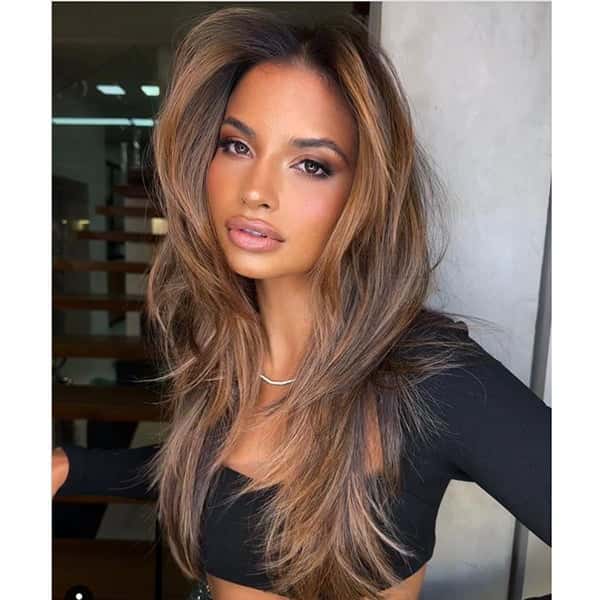
What if the caramel highlights were quieter than you think? This mid-back length keeps a dark brown base as the anchor, with caramel highlights painted in thin ribbons rather than thick sweeps. The technique is balayage, but the stylist pulled the color closer to the root than a typical balayage, so the contrast reads soft instead of dramatic. The tone is warm caramel, not golden or honey, which means it catches light without going brassy. The texture is wavy and thick, which helps the highlights sit inside the hair rather than sitting on top. Curtain bangs frame the face without stealing focus from the color. The middle part keeps everything symmetrical, so the caramel reads as intentional dimension, not random streaks.
Compare this to a bolder caramel balayage that starts three inches from the root and sweeps wide. That version is louder, more summery. This one stays subtle, more winter. The dark brown base does the heavy lifting, the caramel just whispers.
Layers Visual Idea
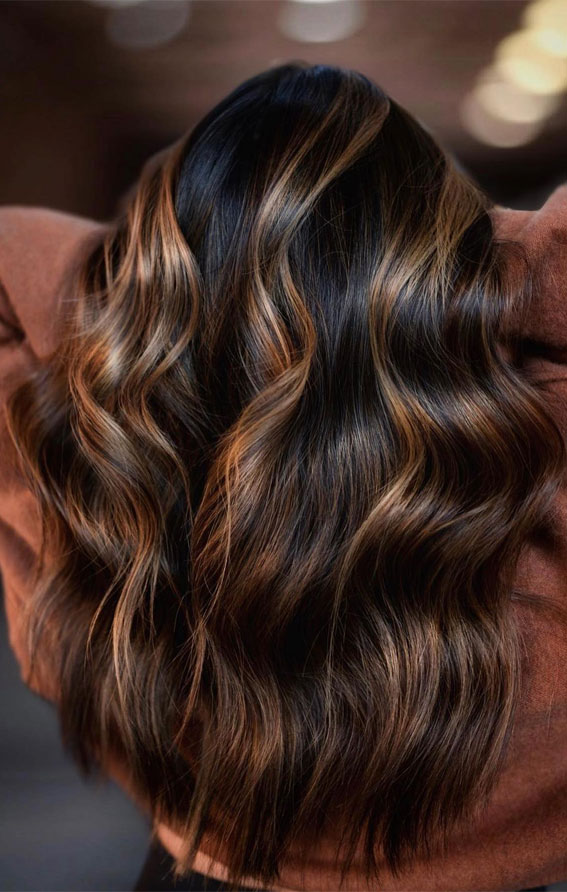
The contrast between a dark brown base and warm caramel highlights does something specific to a face. It brightens without washing out, because the dark base holds the depth while the warm caramel pulls light forward. This mid-back length with layers and no bangs works best on medium to thick hair, because the layers need density to hold their shape. The technique is balayage, painted freehand so the caramel lands mostly on the mid-lengths and ends, leaving the root area dark. The tone is warm caramel, which reads friendly against both cool and warm complexions. The texture is wavy, which softens the contrast between the two colors. If your hair is fine or low density, the layers might collapse and the highlights might look sparse. Skip this one if you need volume from the root.
Long Layers Visual Idea
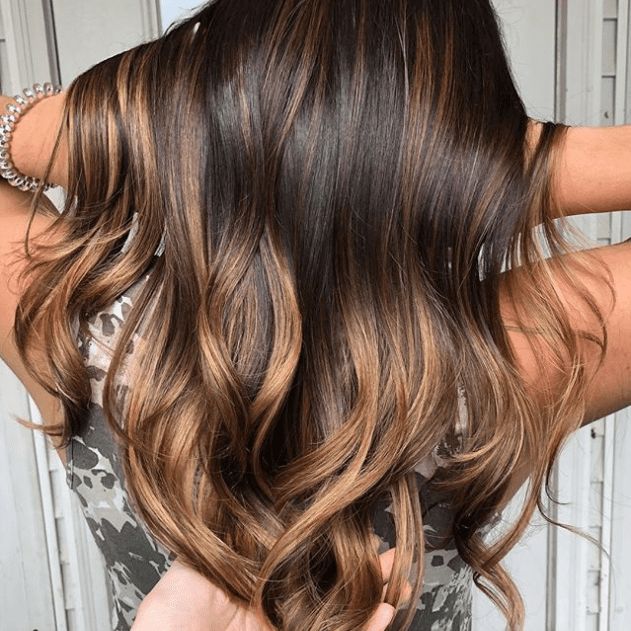
I will admit I was skeptical about warm golden brown highlights on a dark brown base. They sounded like a summer holdover. But here is what I noticed after a week of watching this color sit on mid-back length with long layers and no bangs. The warm golden brown highlights blend into the dark brown base in a way that hides the grow-out line. No harsh demarcation, no stripe at week four. The technique is balayage, painted freehand so the warm tone lands softly on the mid-lengths and ends. The tone is golden brown, which leans warm but not orange. The texture is wavy and thick, which helps the highlights read as natural dimension rather than painted streaks. The upkeep is minimal: a trim every ten weeks, a toning gloss every third wash to keep the golden tone from turning brassy. The middle part keeps the color distribution even on both sides.
For a winter color, this one travels well into spring without looking dated. The grow-out is the best part.
No Bangs Visual Idea
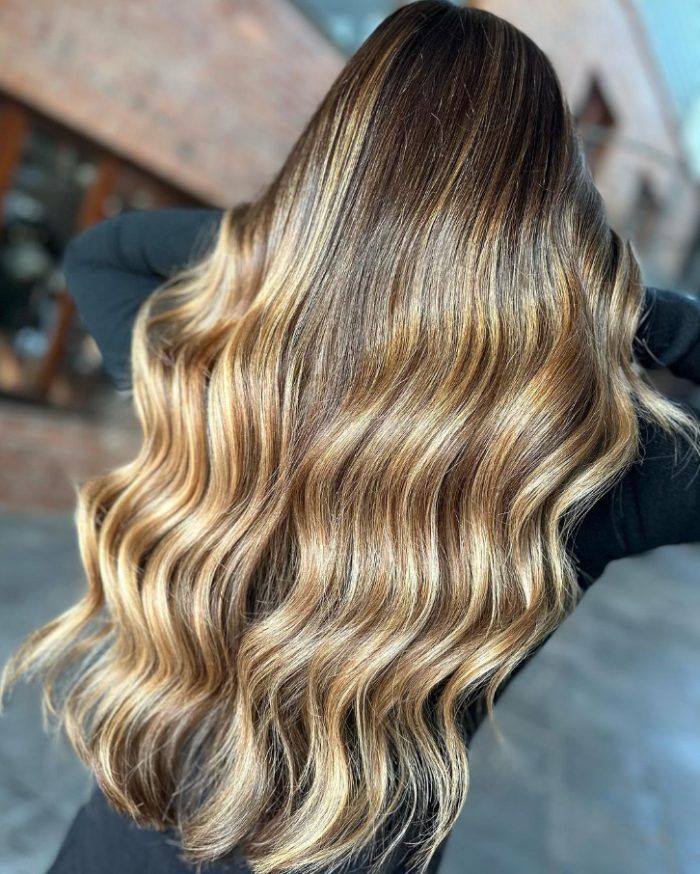
This is the most dimensional brown I have seen in a while. The technique stacks two tones on a dark brown base: caramel and blonde highlights, painted in alternating sections so no two strands read the same color. The stylist used a fine-tease balayage, pulling thin sections of hair and painting them from mid-shaft to end, leaving the root area untouched. The result is a multi-tonal effect where the caramel catches warm light and the blonde catches cool light, all on the same head. The tone is a mix of warm caramel and neutral blonde, which keeps the overall look balanced. The length is mid-back with layers, no bangs, a middle part. The texture is wavy and thick, which helps the highlights separate and read individually. Without bangs, the color does all the work around the face. The dark brown base stays visible at the root and underneath, so the overall impression is still brown, just brown with a lot of secrets.
Dark Brown With Warm Balayage Visual Idea
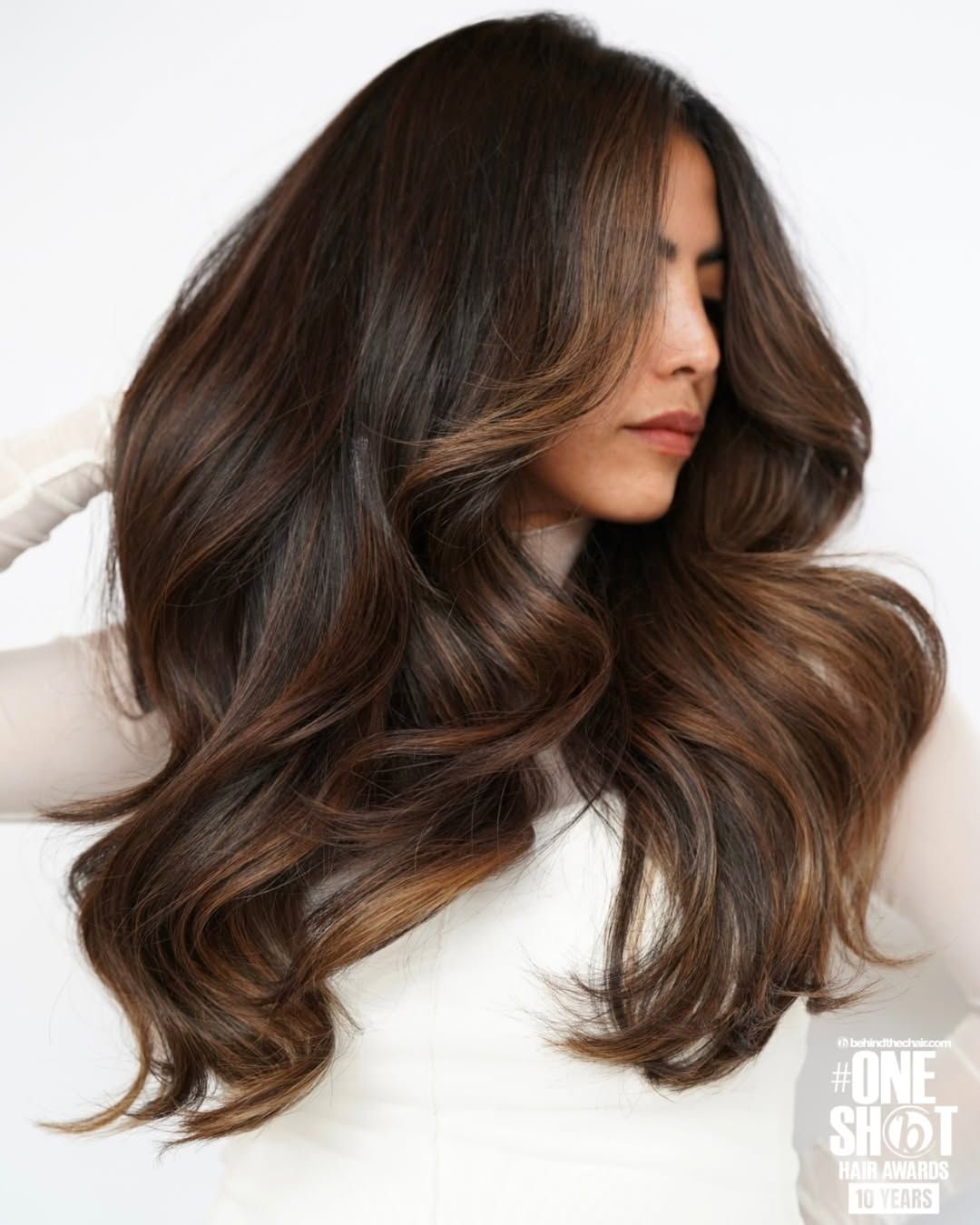
Can you do a warm balayage on dark brown hair at home? Technically yes. Should you? Probably not. The mistake people make is assuming balayage is just painting color on the surface. On dark brown hair, a warm balayage needs lift first, and hand-painting that lift evenly across mid-back length with long layers and no bangs is a skill most bathroom mirrors cannot support. The technique requires the stylist to feather the warm tone from mid-shaft to end, leaving the root area dark and the transition soft. The tone is warm, leaning toward golden rather than copper, which means it will not clash with the dark brown base. The texture is wavy and thick, which helps the balayage blend naturally. The side part adds asymmetry, so the warm highlights fall heavier on one side. Book the salon. This is not a box-color project.
Side View Visual Idea
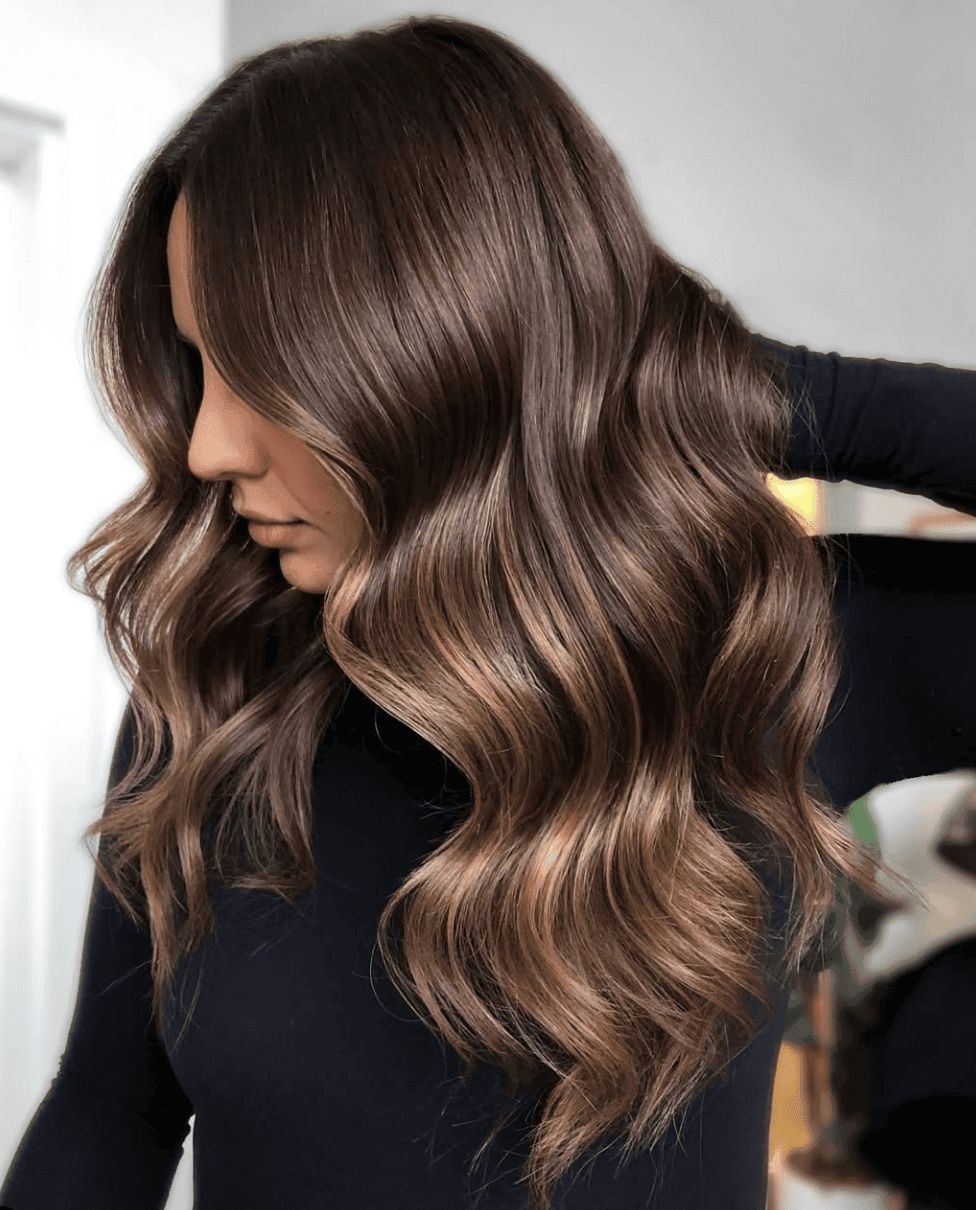
I was not prepared for how much a side view could sell me on a colour. Compared to warm caramel balayage, which can read as too golden for winter, this ash blonde version feels intentional. It is cooler, more muted, and it makes the medium brown base look richer. The balayage is painted in loose, voluminous waves on thick, wavy hair that falls to mid-back, and from the side the ash tones catch the light in a way that warm highlights never do.
But ash tones are fickle. They fade to a brassy yellow faster than you expect, and you will need a toning session every four to six weeks to keep that cool edge. The payoff is worth it for the first two weeks, but the third week is a gamble.
Dark Blonde To Light Brown With Balayage Visual Idea
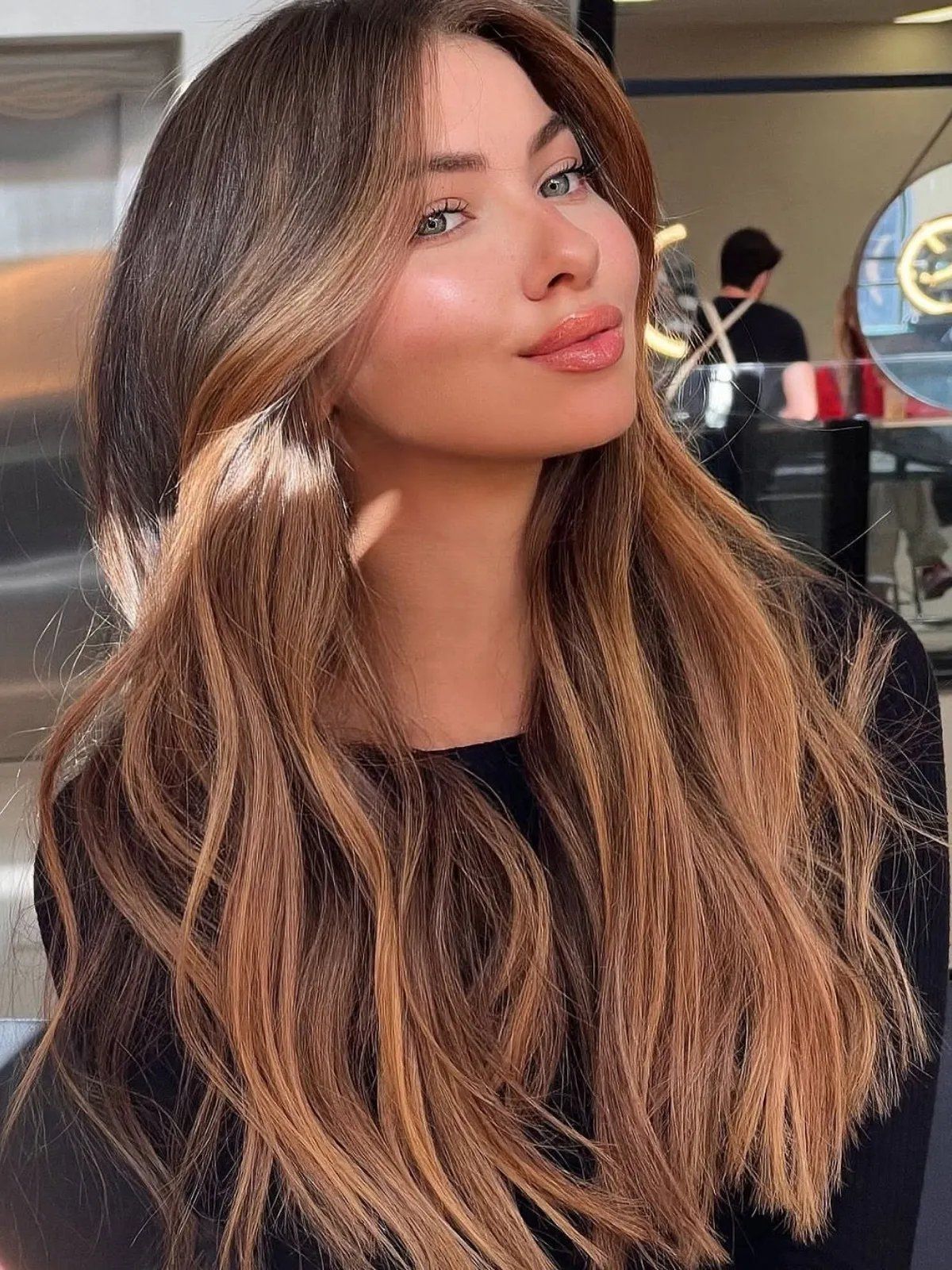
The line between dark blonde and light brown is where this balayage lives, and it never looks like a mistake. The colour is painted in long, loose waves on thick, wavy hair that falls to mid-back, with curtain bangs that soften the front. On Monday it reads as a sun-kissed blonde, by Friday the waves have loosened and the colour has settled into a warmer brown, but there is no harsh root line because the balayage was painted to fade softly.
This shade range is transitional, which means it suits anyone who wants a low-commitment lightening effect without the constant upkeep of full blonde. The dark blonde base gradually melts into light brown, and the balayage technique ensures the grow-out is seamless. It holds up across a real week better than most highlighted colours because the contrast is subtle from the start.
Front View Visual Idea
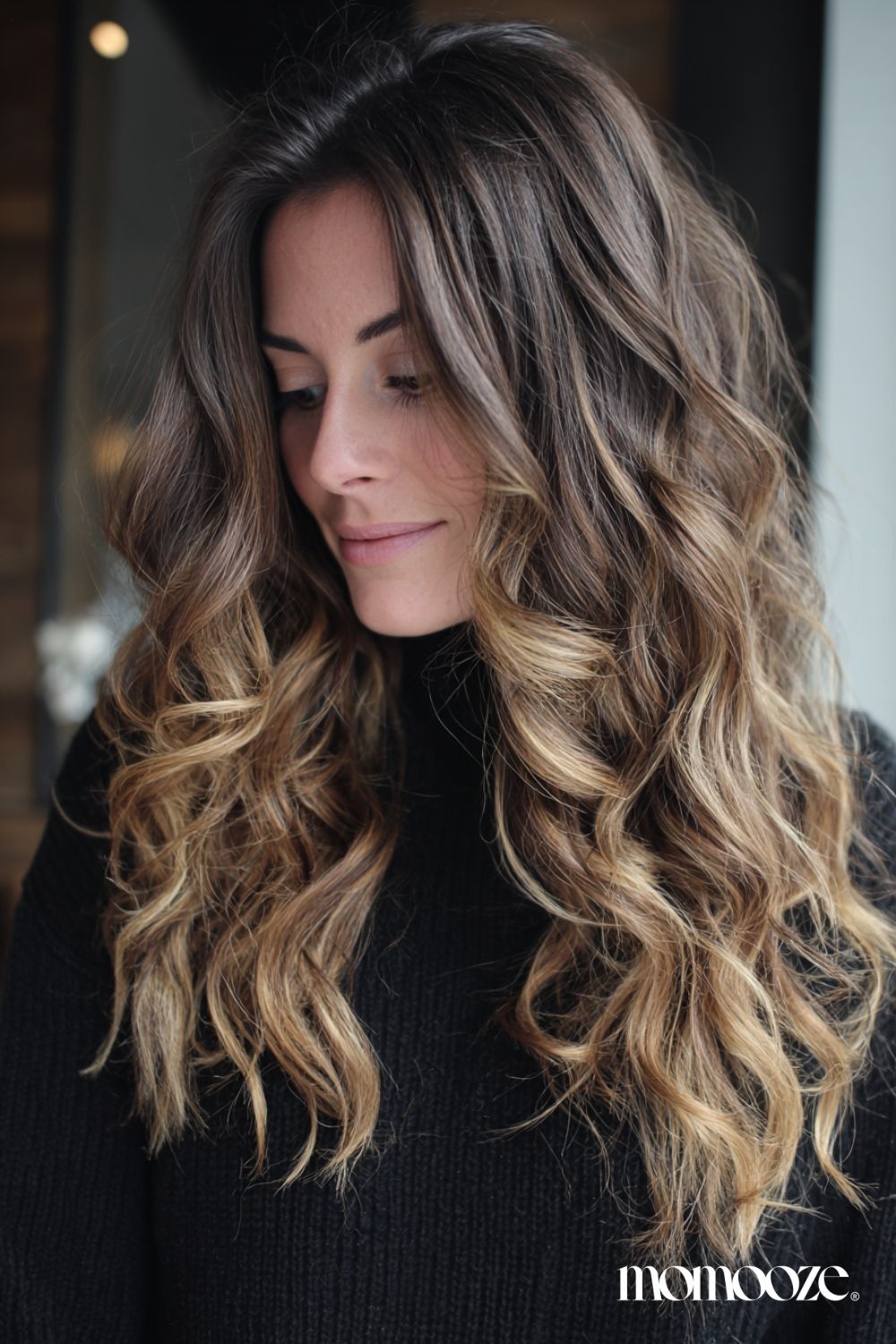
I will be honest: I knew this colour would mean regular salon visits. I booked it anyway. Every eight weeks I sit for a full highlight appointment, because the blonde highlights on medium brown need to be retouched at the root and the toner needs refreshing to keep them from turning brassy. The front view shows the dimensional highlights in a wavy blowout on thick, wavy hair that falls to mid-back with a side part.
In between appointments, I use a purple shampoo to stretch the time between toning sessions. But the highlights still fade after about four weeks, and the contrast softens. The wear is predictable: two weeks of crisp blonde, two weeks of blended warmth, then a call to the salon.
Collarbone Visual Idea
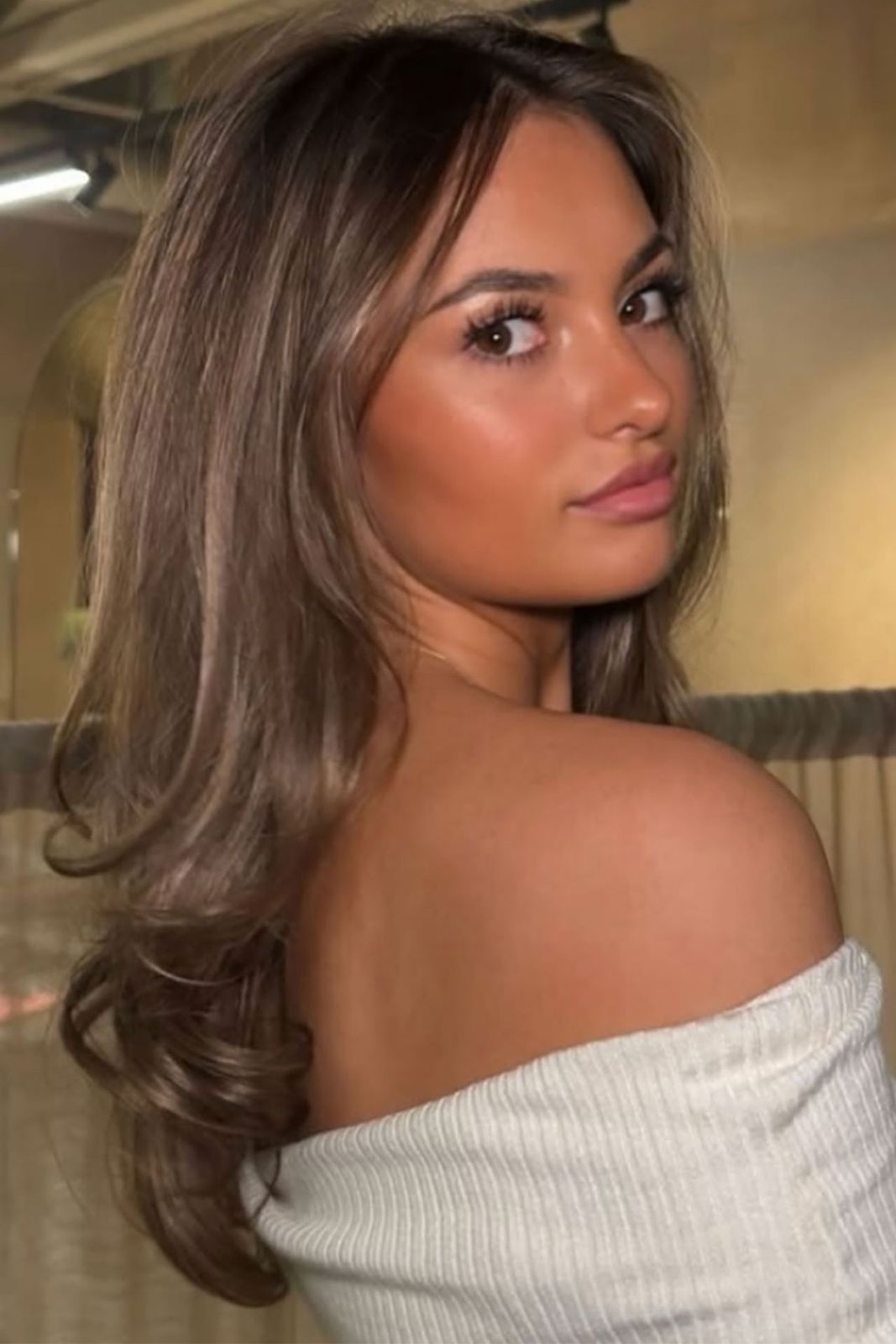
This is the most subtle way to add dimension to mousy brown hair. The colourist weaves ultra-fine highlights throughout the mid-lengths and ends on a collarbone-length cut, barely lifting the base. The result is a lighter brown tone that catches light but never shouts, on fine, wavy hair with a middle part and soft waves. The technique is salon-leaning because the fine highlights require precision, but the effect is natural and muted.
Back View Visual Idea
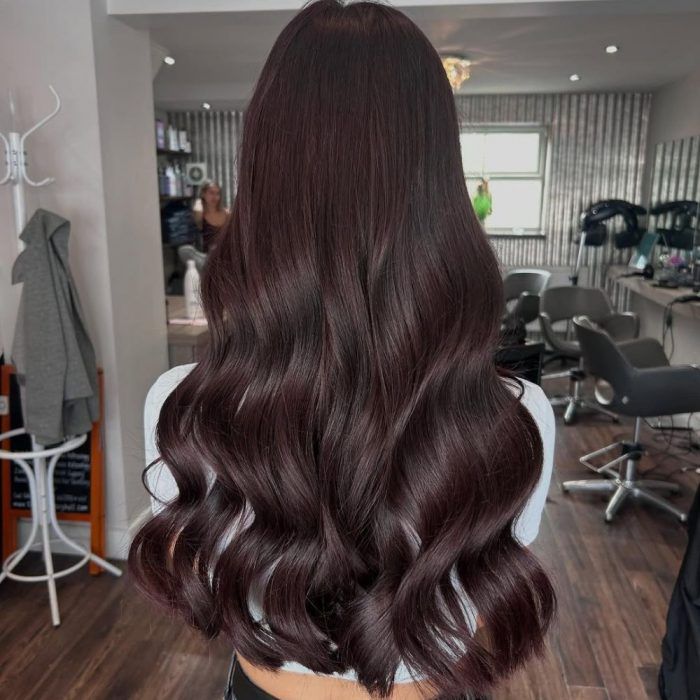
I was not sure about burgundy in my brown until I saw it from behind. Warmer reds like auburn or copper can feel too bright for a cold-weather palette, but this deep cool brown with subtle burgundy hints is different. It reads as dark brown in low light, then flashes red when the light hits, on thick, wavy hair that falls to mid-back with long layers and loose waves.
It is perfect for winter evenings and holiday parties, where the burgundy catches candlelight without screaming for attention. Compared to warmer winter reds, this shade stays sophisticated and moody. The deep cool brown base keeps it grounded, and the burgundy hints add just enough warmth to feel seasonal without tipping into autumn territory.
Chin Visual Idea
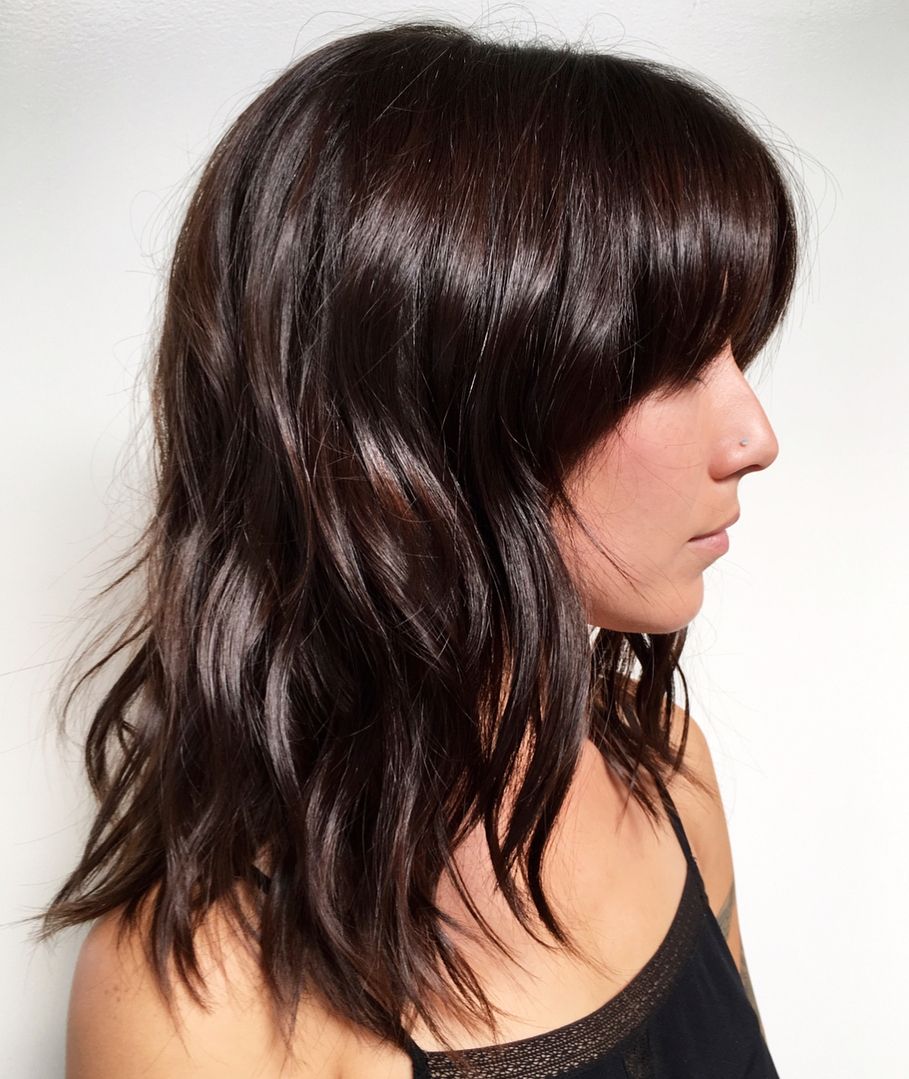
Who does a deep chocolate brown with subtle warm undertones actually flatter? More people than the trend posts suggest. The warm undertone lifts sallow skin, so if you have olive or golden undertones, this shade is your winter cheat code. It also makes brown eyes look darker, almost espresso. The chin-length lob with side-swept bangs and loose waves keeps the whole thing from feeling heavy. Medium density hair holds the wave without going flat by 4 pm. The glossy finish is the real payoff, but that is a salon job, not a bathroom mirror one.
Final Thoughts
After writing all of these, I noticed something: the best winter browns are the ones that do not fight your natural base. Ash, caramel, copper, espresso, they all work if the root shadow is soft and the highlight placement is intentional. I am booking the deep espresso with caramel balayage next. It is the one that buys me six calm weeks.
- Trim the baseline every eight weeks
- Tone at week six, not week ten
- Use a purple shampoo once a week for ash tones
- Root shadow every other appointment
- Skip heat styling two days after the color