

I keep seeing copper everywhere, and not just on my own head. The woman next to me at the salon asked for a root shadow that blurs into bright copper, and I watched her walk out looking like she’d been lit from inside. It’s the color of the season, and it’s not going anywhere.
This roundup has 29 ways to wear Winter Copper Hair Color, from low-maintenance root shadows to full-on fiery transformations, short bobs to mid-back layers, salon visits to DIY-friendly tones. Whether your hair is fine and flat by 4 pm or thick and coily, there’s a copper here that fits your week, not just your Pinterest board.
Bright Copper Mid-Back Layers
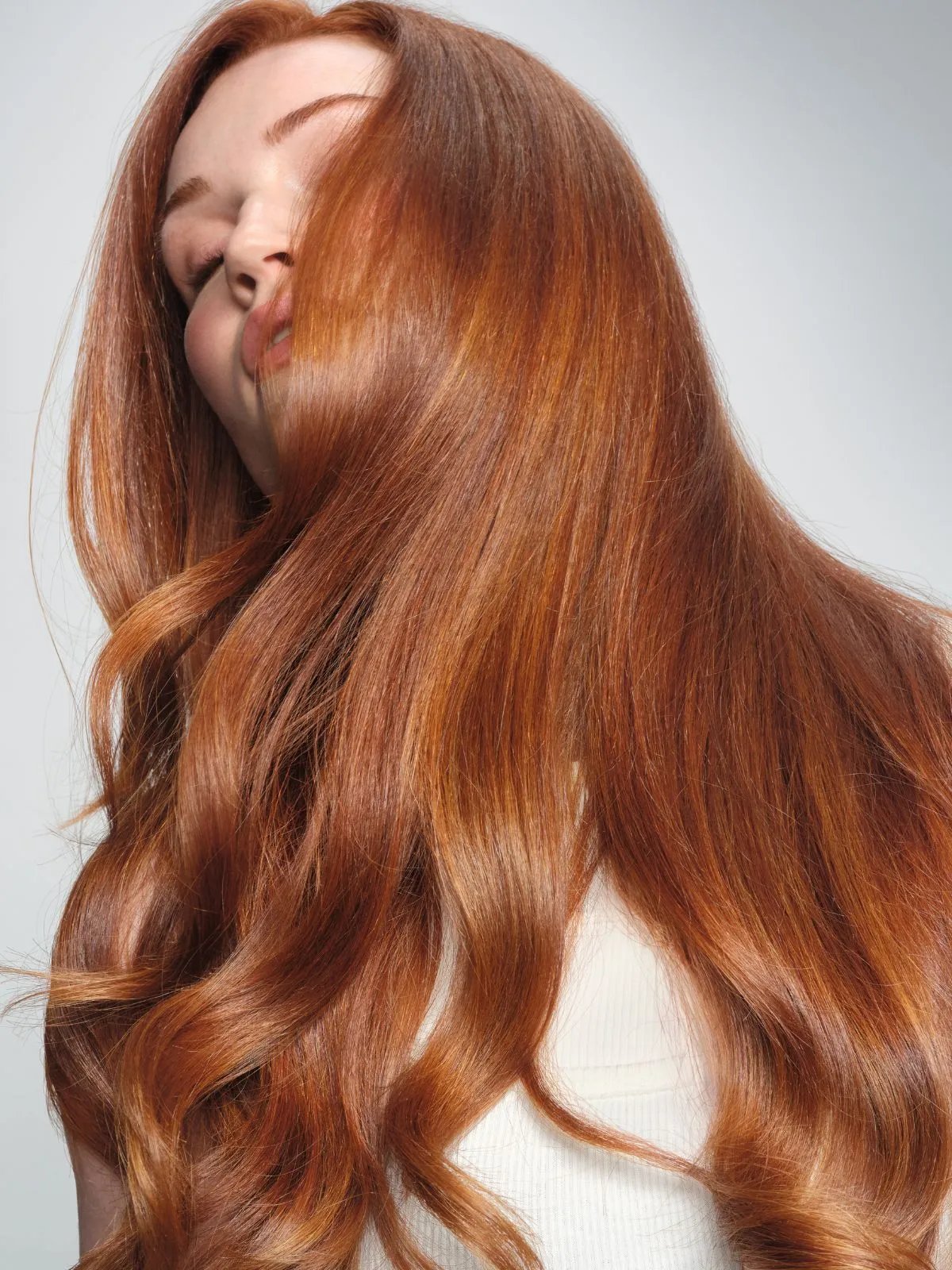
That intense copper shine reads expensive, not brassy, because the base is a true copper with no orange or yellow fighting for attention. On mid-back layers, the colour catches light at every bend, so the wave pattern matters more than the length. Fine hair needs a round brush to hold the curl; thick hair air-dries into a soft S-wave and looks done. The middle part widens a round face, but a side part softens it fast. A gloss every six weeks keeps the shine from going flat, and that is the real maintenance cost here — not the cut, not the root line, just the gloss.
Vibrant Copper With Curtain Bangs
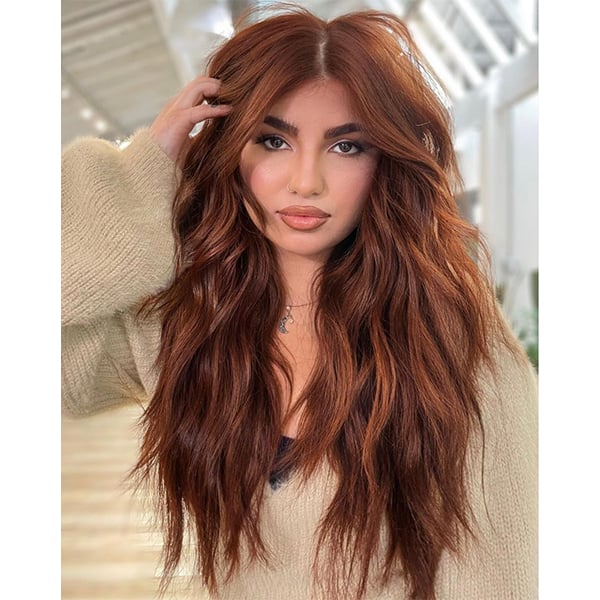
Can a copper this bright still feel wearable on a Tuesday? Yes, because the curtain bangs do the work. They sweep to the sides, so the colour frames the face without landing on it, which means no harsh line where the copper hits your forehead. The technique is a full-head single-process colour, not highlights, which gives that saturated, even tone from root to tip. On mid-back wavy hair, the copper looks layered and dimensional even without a second shade. The honest downside: curtain bangs need a trim every three weeks to stay off your glasses, and that is a standing appointment, not a maybe.
Fiery Copper Shag With Full Bangs
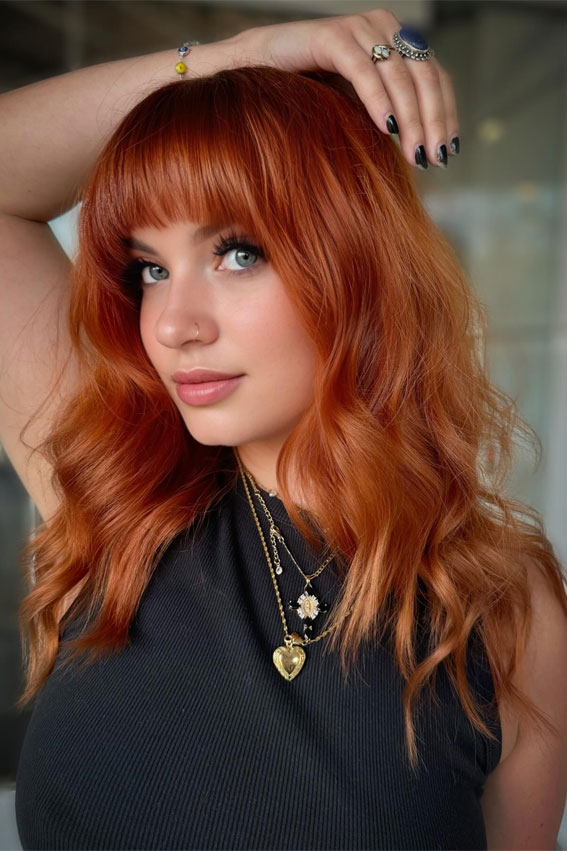
This one holds up better than any other copper cut I have tried. The shag layers mean the colour shifts as the hair moves, so even on day four, when the roots start to show, the texture hides them. The full bangs sit straight across, which makes the fiery copper read graphic and intentional, not accidental. For winter, this is the cut that actually looks right under a beanie — the shag texture pops back out with a shake. Medium density hair holds the shape; fine hair might need a texture spray to keep the layers from collapsing.
Choppy Shaggy Lob In Fiery Copper
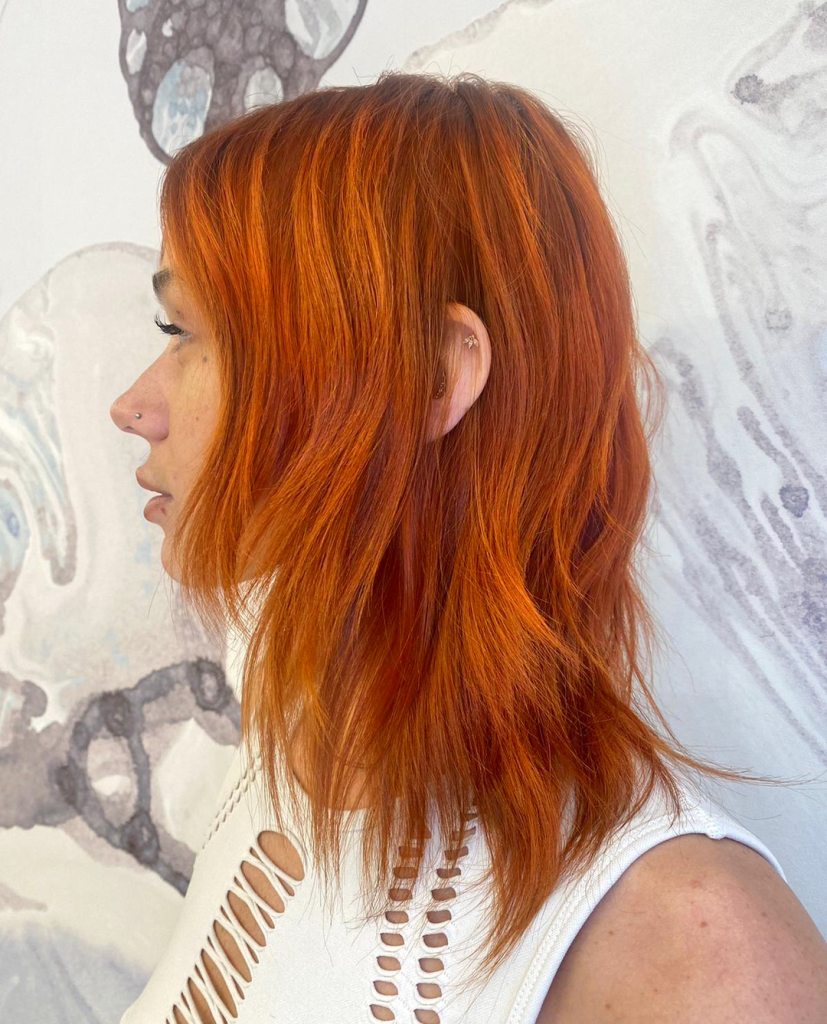
A lob this short shows every mistake, so book the salon. The choppy bangs and textured ends mean the fiery copper has to be applied with precision — one uneven section and the whole shape looks off. Compared to a longer layer cut, this lob holds the vibrancy better because there is less hair to fade. The colour is a single-process bright fiery copper, no balayage, no root shadow, so the grow-out is a hard line by week five. Thick wavy hair gets that piecey texture with just a sea salt spray; fine hair needs a paste to avoid looking stringy.
Shoulder Length Copper-Red With Blunt Bangs

Who actually looks good in a blunt bang and a copper-red that bright? Fine, straight hair, for one. The blunt line adds weight that fine hair usually lacks, and the copper-red reads sharp against a straight texture, not muddy. The shoulder length keeps the colour close to the face, so the tone has to be right — too orange and it fights pale skin, too brown and it disappears on medium skin. The honest downside: blunt bangs show every oil streak by 2 pm, and this colour fades faster than a deeper copper because the red pigment lifts out first. A toning shampoo every other wash buys you an extra two weeks before the brass sets in.
Collarbone Copper-Red With Blunt Bangs

I will admit I was skeptical about blunt bangs on fine hair. The photo shows a collarbone-length lob in a warm copper red, straight with just a slight wave at the ends, and those bangs hit exactly at the brow. Here is the honest week: the colour holds its depth for about four washes before it starts pulling brassy at the roots, and the bangs need a flat iron every morning if you want them straight. My fine texture goes flat by 3 pm without a dry shampoo touch-up at lunch. The middle part helps, but the bangs are the real commitment — they show every half-inch of grow-out by week three.
Vibrant Copper Chin Bob
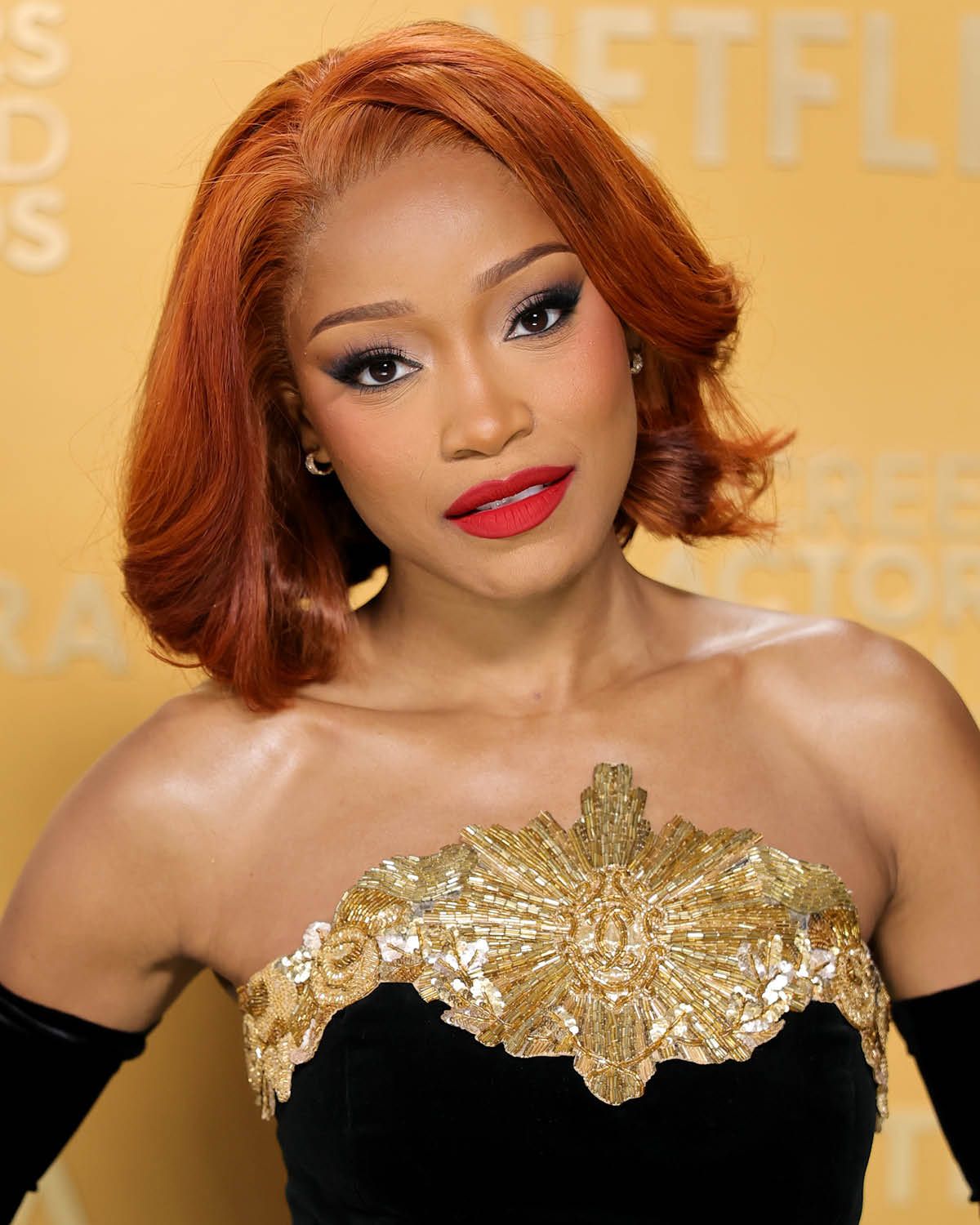
My gut reaction to this vibrant copper bob was pure envy. The chin-length cut has layers throughout, no bangs, a side part, and the ends are flipped out into voluminous waves. That copper shade is not shy — it lands somewhere between a new penny and a sunset, and on medium-density wavy hair it catches every light in the room. The side part gives it lift at the crown, which is exactly what a bob needs to avoid looking like a helmet. This is a winter colour that actually reads warm when the daylight goes grey at 4 pm. It does not whisper.
No Bangs Wavy Copper Chin Bob
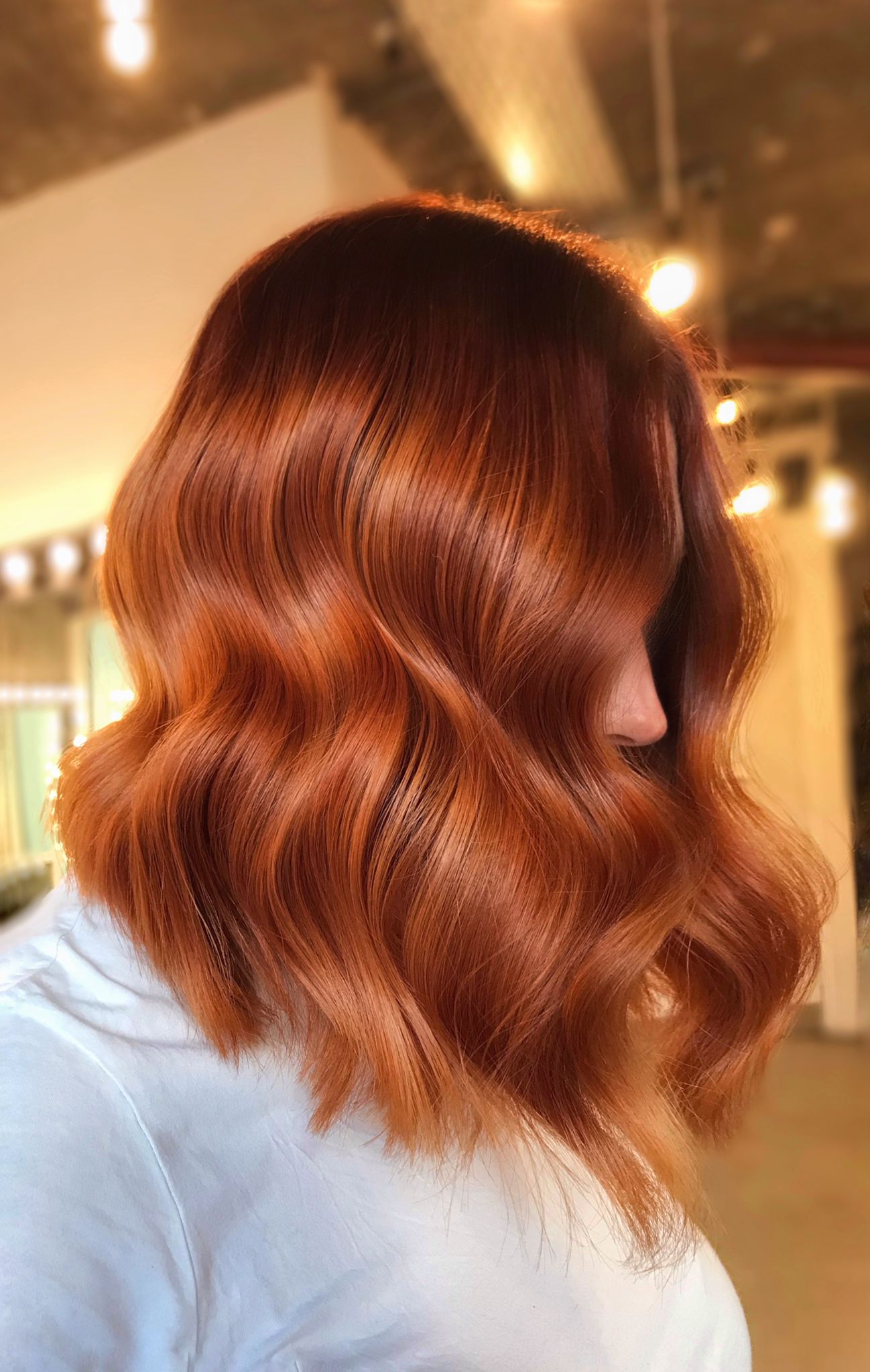
The side view tells the real story here. This wavy copper bob has no bangs, a deep side part, and the wave pattern starts at the jaw, not the root. That is the technique trick — if you wave from the mid-lengths down, the bob keeps its structure at the crown and the colour shows in ribbons rather than one flat block. The vibrant copper tone reads brighter on the waves than it would on straight hair because the light hits each curve at a different angle.
Here is the honest downside: this is not a bathroom-mirror job. Getting that wave pattern even on both sides of a side part takes a curling iron and a mirror check from the back. The bob itself needs a trim every six weeks or the back starts stacking unevenly. The colour needs a refresh every four to five weeks because the copper fades faster on the wavy sections where the cuticle is more open. Worth it, but book the salon time.
Deep Rich Copper Curls
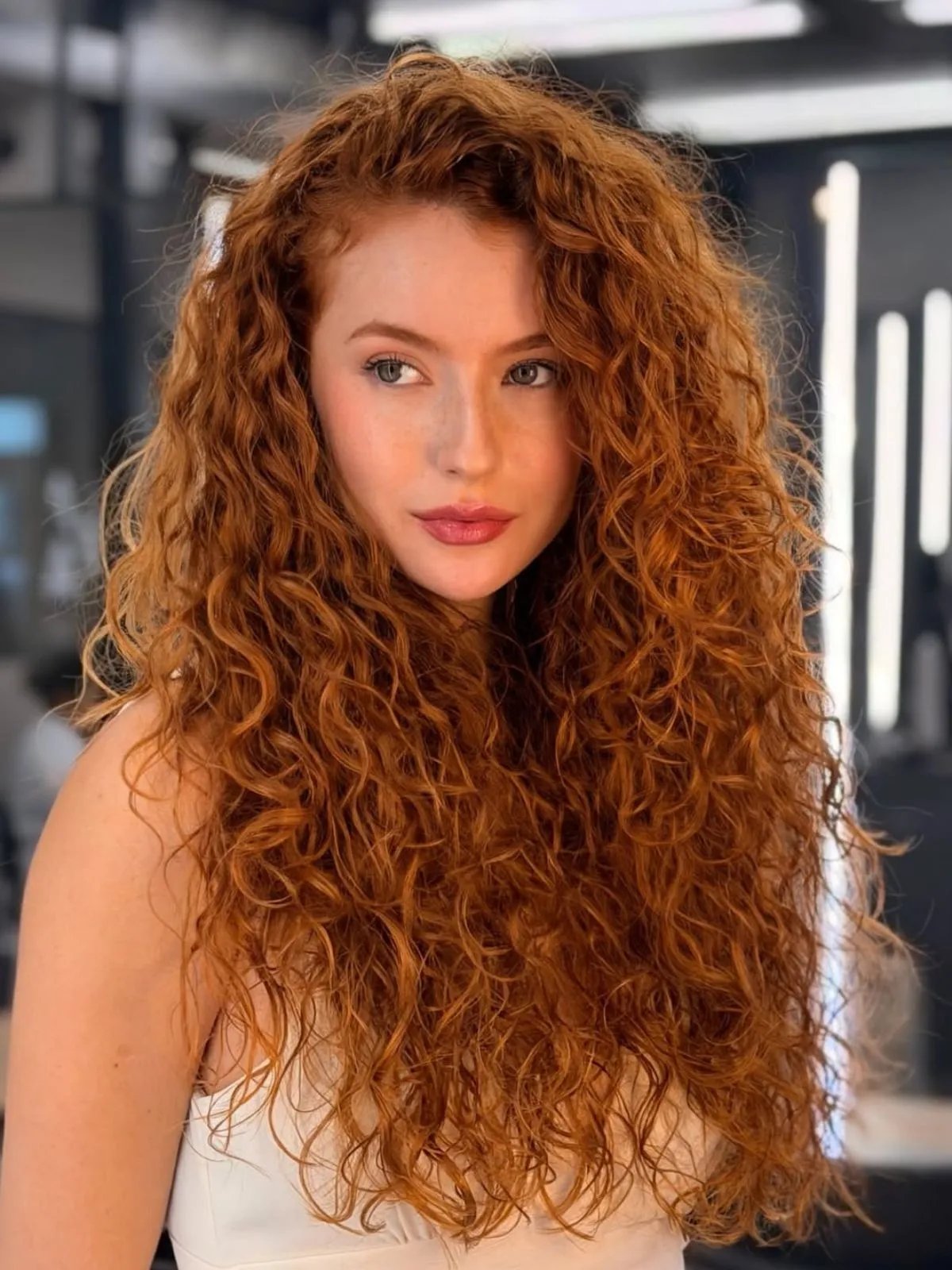
Do you have thick, curly hair that swallows colour whole? Then these deep copper curls might be your match. The photo shows mid-back length, long layers, a middle part, and defined voluminous curls in a deep, rich copper that looks almost mahogany in the shadows and glows amber in direct light. The key is the depth — a true deep copper with enough brown base that the curl pattern does not get lost in a flat red. Ask your stylist for a single-process colour with a demi-permanent gloss on top. That gloss is what gives curly hair that wet-looking shine without product build-up. Skip this if your hair is fine or low density; the weight of the colour and the curl together can pull the shape down.
Rich Copper Curls with Reddish-Brown
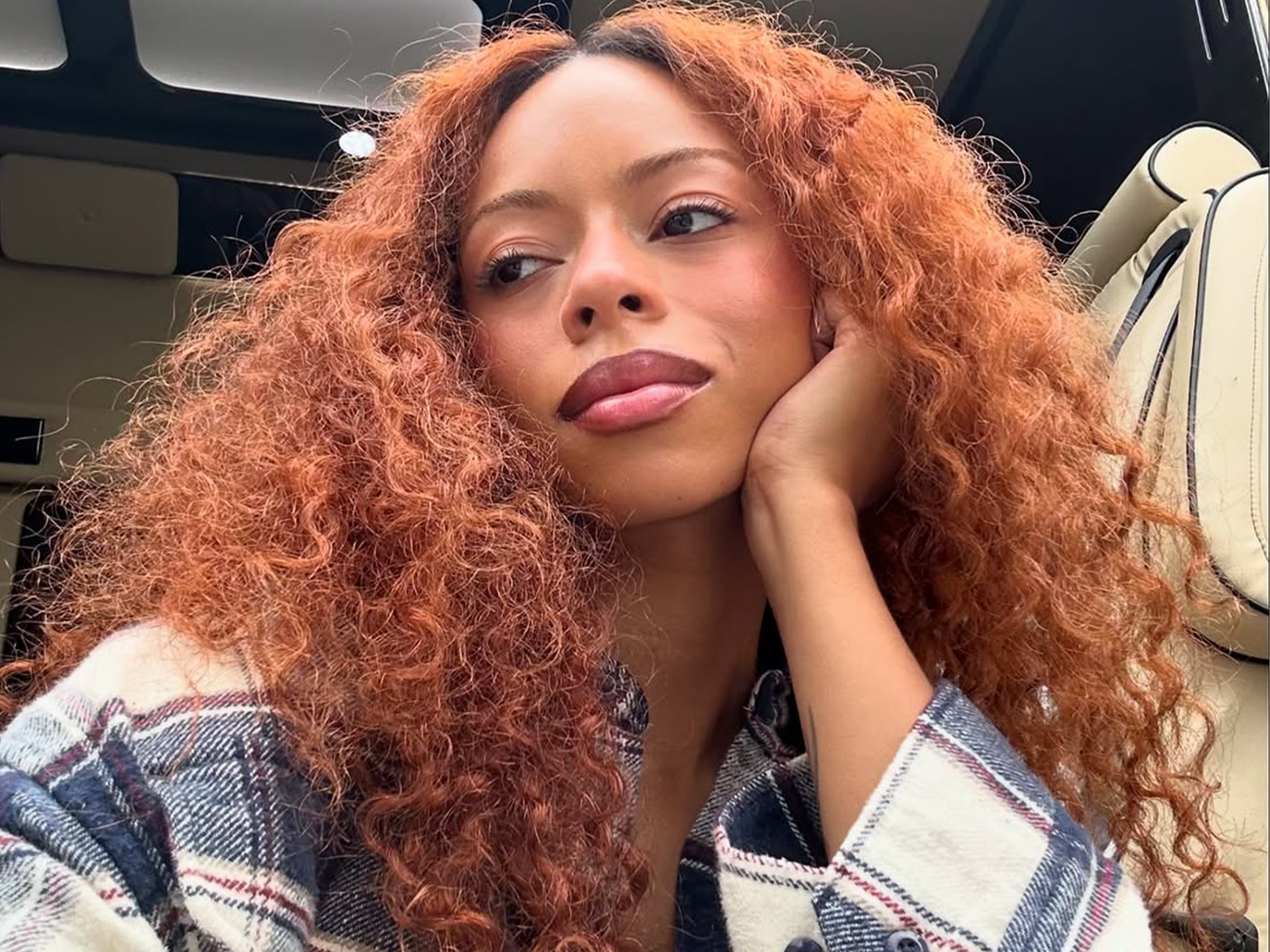
Here is the verdict: this is the most wearable copper in the roundup. The photo shows mid-back curly hair, side-parted, with tight defined curls in a copper with reddish brown undertones. The reddish-brown base means the colour does not scream — it sits closer to auburn, with the copper showing only at the curl peaks where the light hits. That is the wear reality. The reddish-brown undertones fade slower than straight copper, so you get six to seven weeks before the roots need attention instead of four. The tight curl pattern hides grow-out better than loose waves, too. The trade-off is that the colour reads more brown than copper in low light. If you want copper that announces itself, this is not it. If you want copper that still looks professional at a Tuesday meeting, this is exactly it.
Cowboy Copper Waves
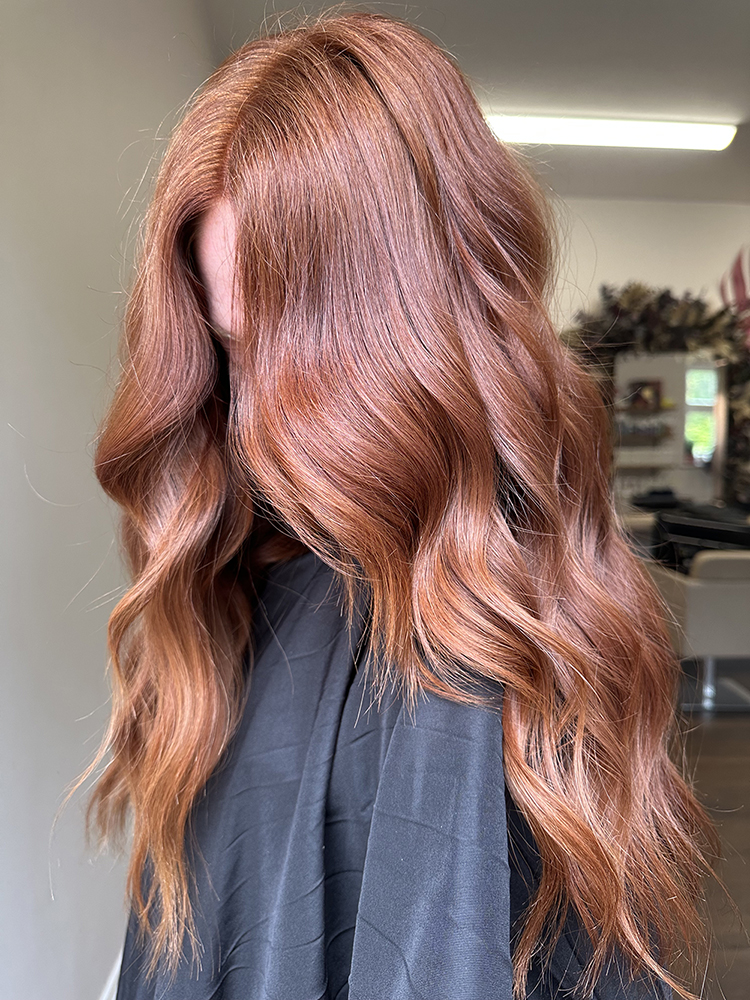
There’s a reason cowboy copper hair took over every feed this fall, and it’s not just the name. This shade is rich copper with brown undertones, which means it reads warm without tipping into orange, the way a true copper can on fair skin. On mid-back layers with no bangs and a middle part, the loose waves catch the light in a way that feels like late afternoon in November, not like a costume. The brown undertones also do something sneaky: they make the color look lived-in on day one, so you don’t get that harsh, just-dyed line at the root. It’s a salon job, no question, because getting the undertone balance right is the whole trick. Too much brown and it’s just a brunette, too little and you’re back to Halloween.
This is the shade I’d book for a holiday party circuit, the one that works under warm restaurant lighting and in a dim living room. The waves hold their shape because the thick, wavy texture gives them somewhere to sit, and the mid-back length keeps it from feeling heavy. I’ve seen this color on fine hair too, and it works, but it needs more wave to show the dimension. Book the consultation first, because cowboy copper is a trend with a specific recipe, and you want the stylist to know the brown undertones are the point, not an accident.
Lustrous Copper Straight Hair
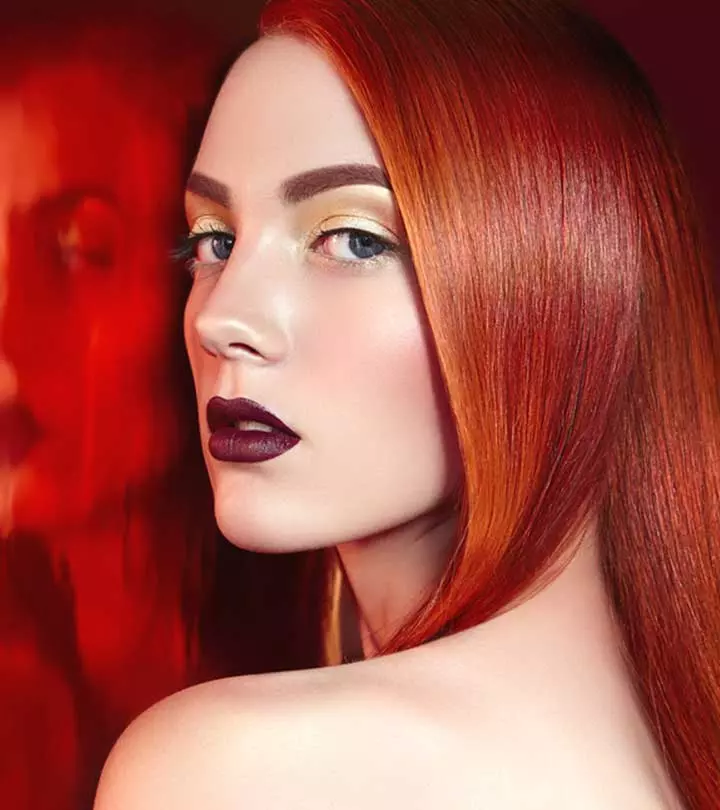
What if the copper you’ve been seeing everywhere actually looked better straight than wavy? Rich copper straight hair with subtle red undertones does something unexpected: the red catches the light along the length, so the color looks glossy even before you add a flat iron. On mid-back layers with a middle part, the straight texture lets the copper sit flat and even, which is exactly why it reads as lustrous shine rather than a flat color block. This is a salon-only job, because the red undertones need to be woven through the base, not painted on top, otherwise you get a stripe effect at the roots. I tried a box version once, and it turned brassy by week two, so trust me on this one. The technique is what makes the difference, the red undertones are what give it depth, and the straight, thick texture is what carries the shine.
Lustrous Rich Copper Waves
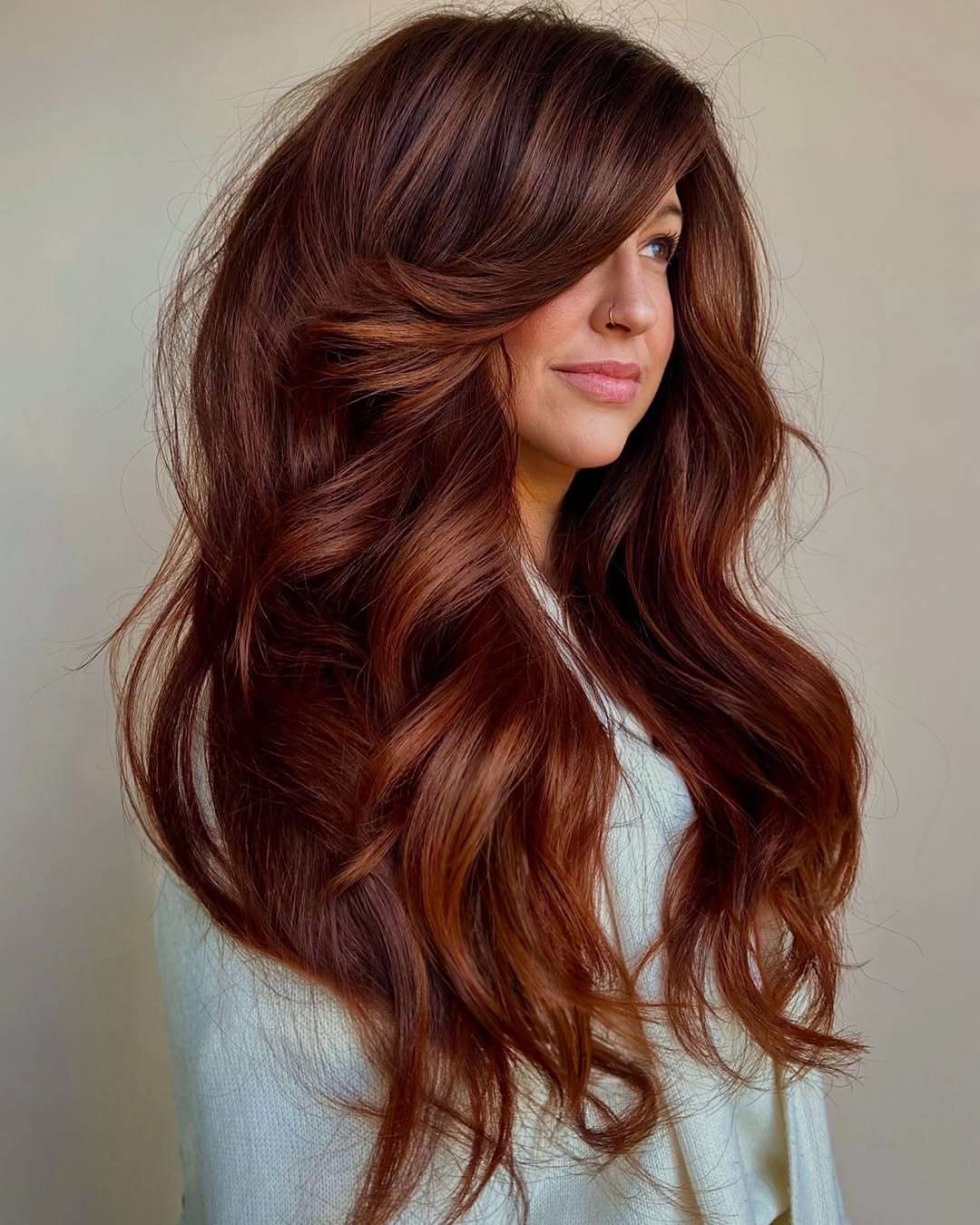
My first thought when I saw this color was that it’s the rare copper that doesn’t need a filter. Deep copper waves with reddish undertones on mid-back long layers, side-swept bangs, and a side part, this is the shade that makes thick, wavy hair look like it’s moving even when it’s still. The reddish undertones are what keep it from going flat, because they add a warmth that reads as vibrant rather than muddy. It suits thicker textures best, the volume gives the waves somewhere to land, and the side-swept bangs soften the whole thing without demanding daily styling. The honest downside is the upkeep: this color needs a refresh every six to eight weeks, because the red fades faster than any brown I’ve lived with. If you’re not ready for that rhythm, pick a deeper copper with more brown, because this one will show every skipped appointment.
Vibrant Copper Hue Mid-Back
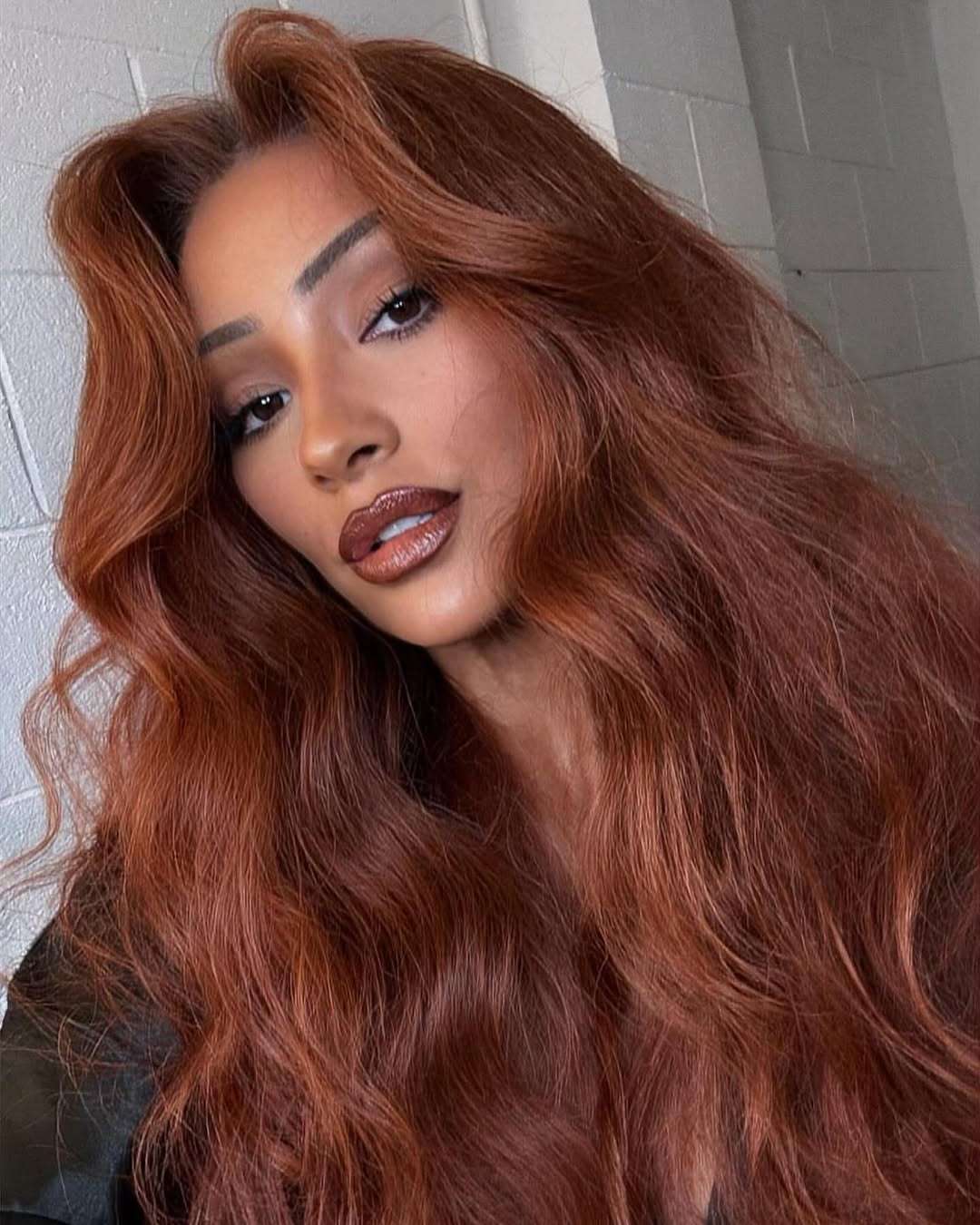
I’ll admit it, I booked this color twice in one season, and I’d do it again. The vibrant copper hue with reddish undertones on mid-back long layers, no bangs, and a side part is the kind of shade that makes you check your reflection in every window. The reddish undertones are what give it that almost-lit-from-within quality, and the loose, voluminous waves on thick, wavy texture make it look intentional, not accidental. But here’s the reality of a week with this color: it’s gorgeous on day one, and it’s still gorgeous on day six, but the vibrancy fades faster than you’d like. The reddish undertones are the first to go, so by week four you’re left with a warmer, softer copper that’s still pretty, just not the same. That means a refresh every six to eight weeks is non-negotiable, and the grow-out line will show if you skip it. It’s a salon job, and it’s worth every hour in the chair, but don’t book it if you can’t keep the rhythm.
Auburn Copper With Lighter Highlights
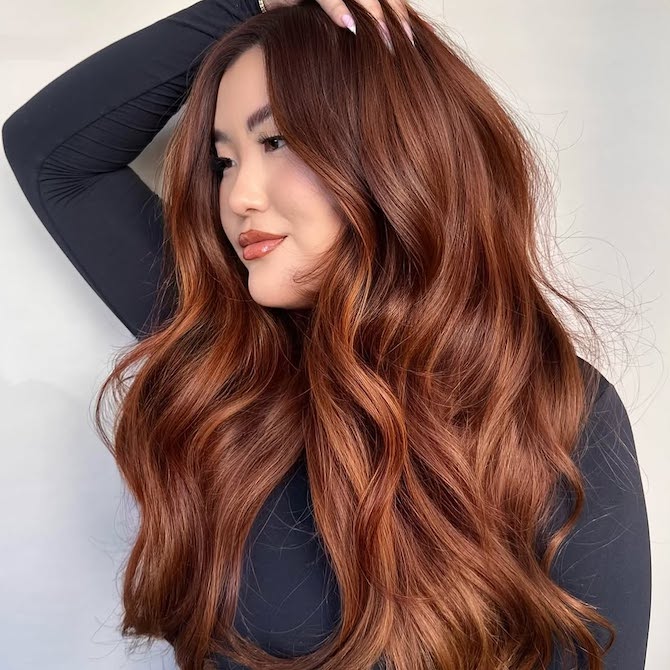
Auburn copper balayage is the quieter cousin of the full-on copper trend, and honestly, it might be the smarter pick. The rich auburn copper base with lighter copper highlights woven through the mid-back layers gives you dimension without the commitment of an all-over bright shade. The balayage technique means the lighter copper highlights sit where the light naturally hits, so the color moves with you instead of sitting flat. On medium-density wavy hair with a middle part, the loose waves catch those lighter pieces and create a soft, sun-washed effect that reads as expensive, not brassy. The styling is simple: a texturizing spray on damp hair, then let it air dry or use a diffuser for loose waves. The balayage grows out softly because there’s no harsh root line, which is the whole point of choosing this over a solid copper. If you want the copper effect but you’re not ready for the upkeep of a full color, this is the version that gives you the best of both.
Multi-Dimensional Copper With Auburn
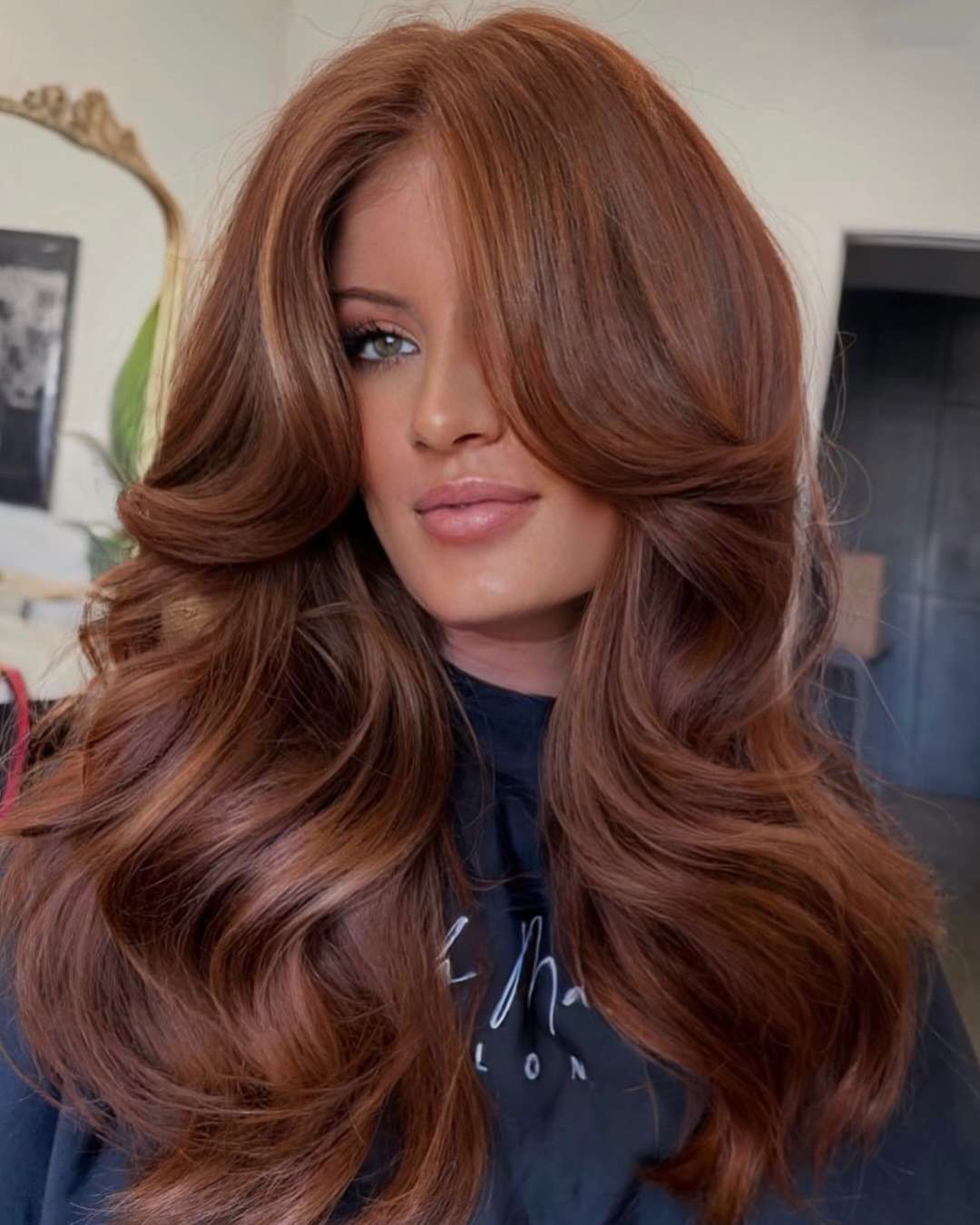
Ever wonder why some copper looks flat and some looks like it cost twice as much? The trick is a rich copper auburn base with lighter copper highlights woven through the mid-lengths and ends. On collarbone-length layers with curtain bangs, the undertone sits deeper at the root while the highlights catch light on the waves. That middle part and voluminous blowout let the dimension read front to back. This is a salon technique, not a box dye gamble. A stylist paints the auburn undertone first, then hand-paints the brighter copper pieces so the color lands where the hair naturally moves.
Fine hair reads thicker here because the two tones create the illusion of density. Curtain bangs frame without stealing weight from the layers. The grow-out is forgiving since the root stays close to the base shade. A refresh every eight weeks keeps the auburn from pulling too brown.
Copper With Warm Blonde Highlights
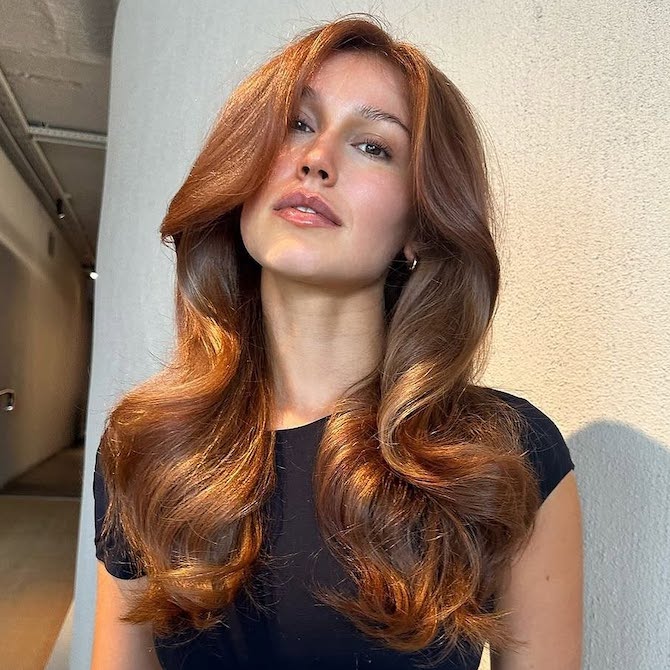
This one flatters medium to warm skin tones best. The copper with blonde highlights sits close to the root and graduates into warm blonde highlights through the mid-shaft and ends. On collarbone-length layered hair with no bangs, the blonde reads as brightness, not brass. Thick, wavy texture holds the dimension because the waves catch both tones. Straight or fine hair will need a texture spray to keep the highlights from disappearing into the base.
Upkeep is straightforward. The grow-out is soft since the root matches the darker copper at the scalp. A trim every eight to ten weeks keeps the ends clean. Color refresh every six to eight weeks, but a purple shampoo once a week stops the blonde from shifting yellow. Skip this if your base is very dark brown — the contrast requires a lift that adds damage.
Copper Base With Honey Blonde Gradient
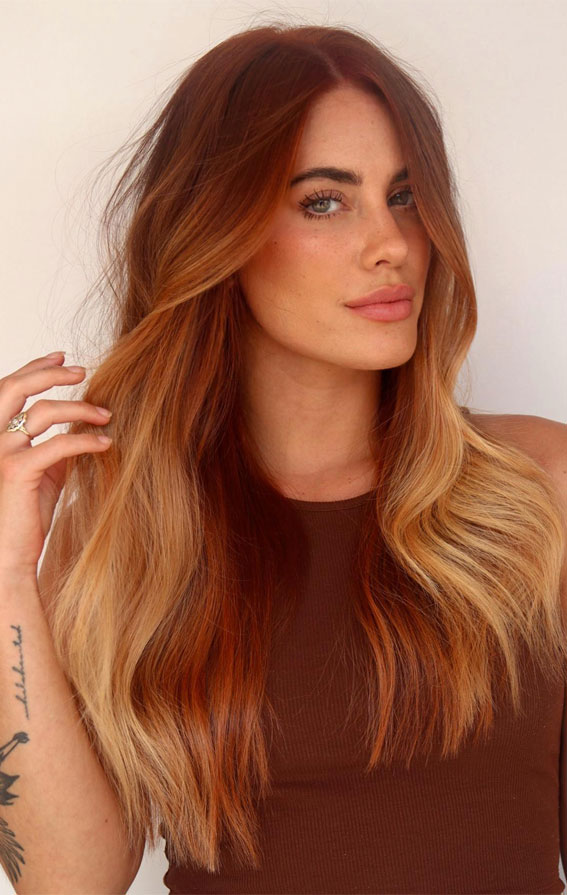
The transition from copper honey blonde at the root to honey blonde highlights at the ends looks seamless in the chair and then reveals its truth by week three. On collarbone-length layers with curtain bangs, the gradient works because the lighter pieces sit on the lower half. Wavy, thick texture helps the blend read naturally. The honest downside: the blonde portion fades faster than the copper, so by week twenty-nine the ends can look brassy against the root. A toner at six weeks is not optional, it is the difference between dimensional and dishwater. This is a salon job, full stop. The stylist paints the gradient in sections, keeping the copper dense at the scalp and the honey blonde sparse toward the ends. Do not try this at home.
Visual Idea
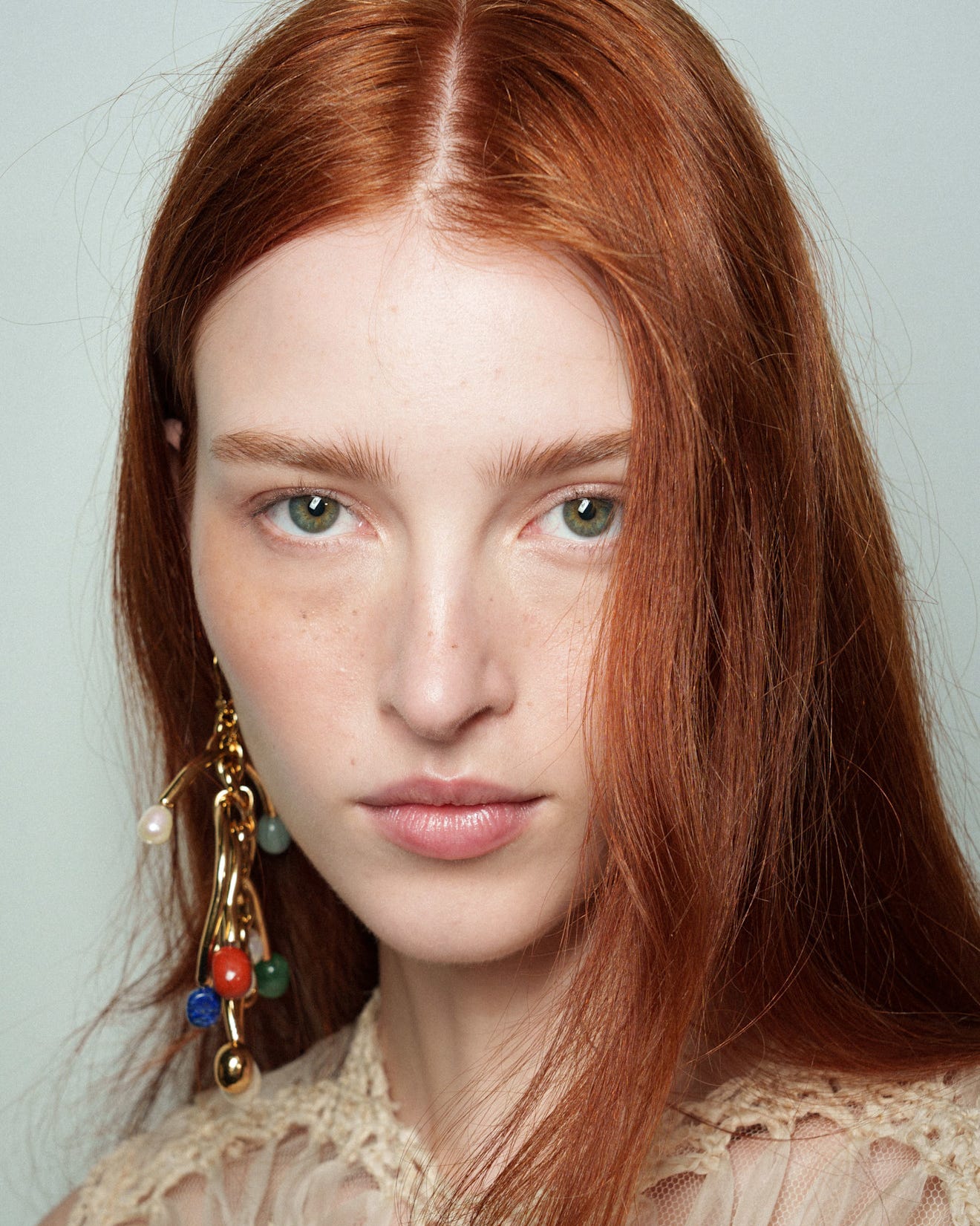
This is the color that makes you stop scrolling. Rich copper with subtle blonde hits on mid-back layers, no bangs, a middle part, and wavy texture that catches every tone. It lands in autumn like a second skin. The blonde pieces are sparse enough to read as light, not highlights. Thick hair carries the dimension best because the waves separate the shades. Fine hair would need a root shadow to keep the copper from washing out. Salon only, but the grow-out is long — eight weeks before the root line reads.
Mid-Back Visual Idea
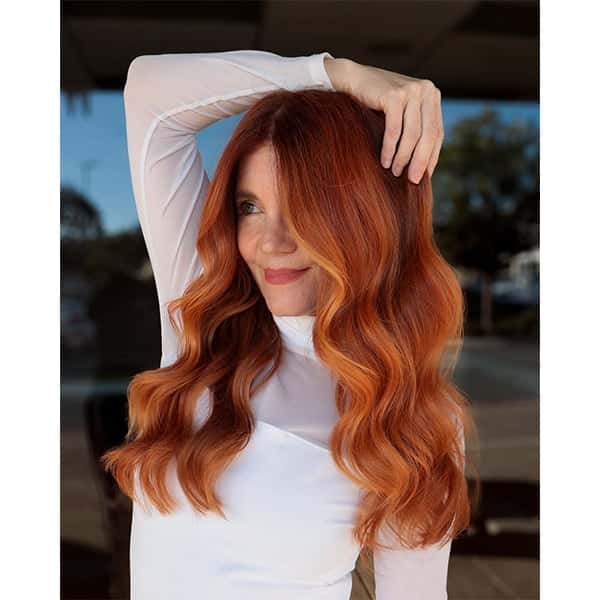
Can a balayage actually look sun-kissed in winter? On mid-back layers with no bangs and a middle part, vibrant copper with golden blonde balayage does exactly that. The stylist paints the golden pieces freehand, starting mid-shaft and concentrating them around the face. Wavy, thick texture breaks up the color so it reads as natural dimension, not stripes. The copper base keeps the warmth anchored while the blonde lifts the ends. This is a three-hour salon appointment minimum. The payoff: the grow-out is soft because the root stays copper and the blonde fades into it. Fine hair would need more density at the root to avoid a see-through effect.
Layers Visual Idea
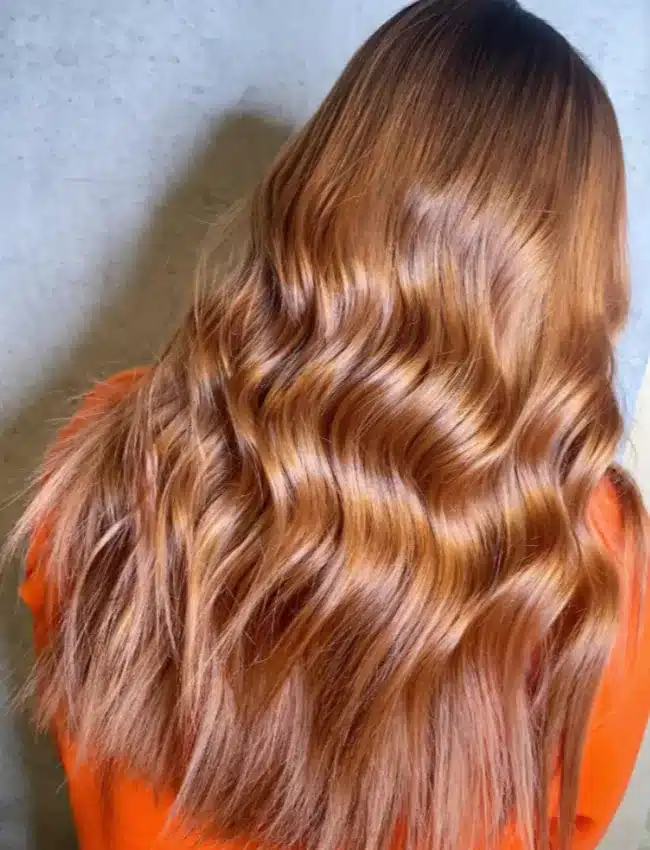
This is the one for medium density hair that needs convincing. The copper base gets lifted by lighter copper highlights placed through the mid-back length, and the technique matters more than the shade alone. Loose waves catch every highlight layer, so the colour reads dimensional instead of flat. No bangs, middle part, back view showing how the layers stack. It is not a low-maintenance colour — highlights need toning every eight weeks or they drift brassy. But if your hair is medium density and you want movement without losing weight, this is the structure that delivers.
No Bangs Visual Idea
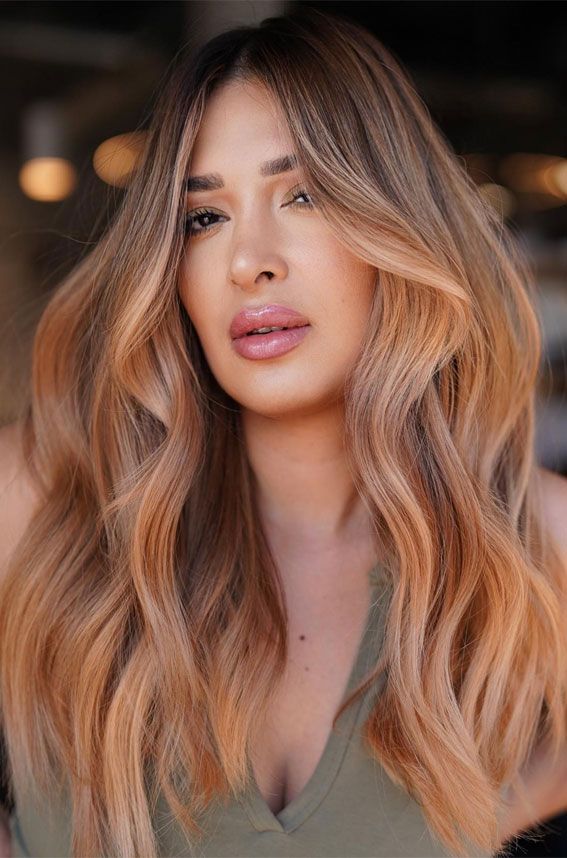
I will admit I was skeptical of the dark brown base with warm copper balayage combo. Then I saw it on thick, wavy mid-back hair and understood the appeal. The contrast does the work — the dark roots stay cool and grounded while the copper warms the lengths. No bangs, middle part, front view showing how the balayage frames the face without a hard line. This is a salon job, full stop. The transition from dark to copper needs a skilled hand to avoid a stripe effect. Book a stylist who understands balayage placement, not just colour.
Shoulder Visual Idea
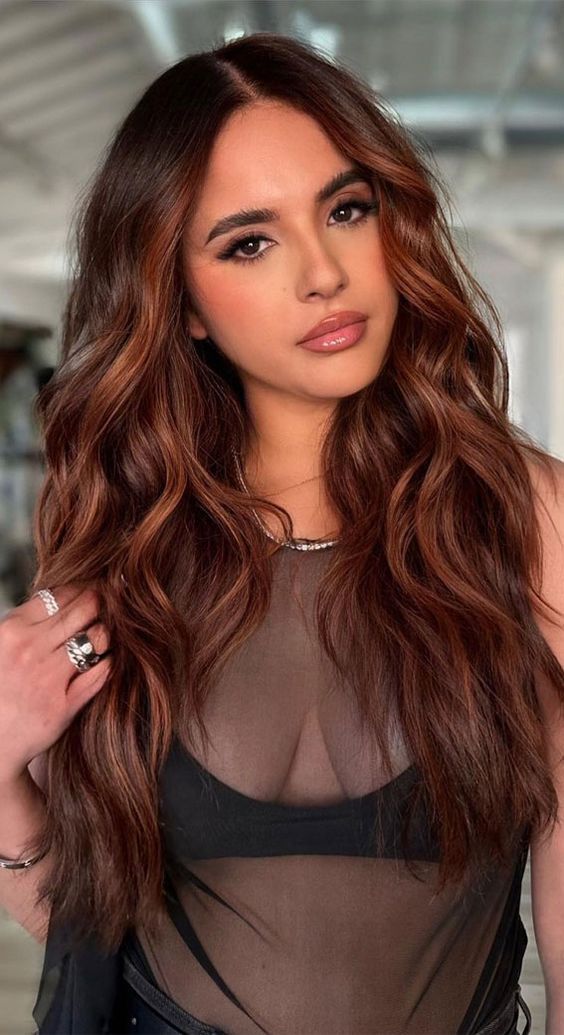
The dark brown base with subtle copper balayage is the quiet cousin of the full copper family. Where a vibrant copper shouts, this one murmurs. Shoulder length, wavy, thick texture, front view with a middle part. The balayage is so subtle it reads like a natural sun hit, not a salon appointment. The honest downside: it is easy to lose the copper entirely between toning sessions. If you want people to notice the warmth, you need a stronger lift. This is for the person who wants a hint, not a statement.
Copper With Warm Undertones Visual Idea
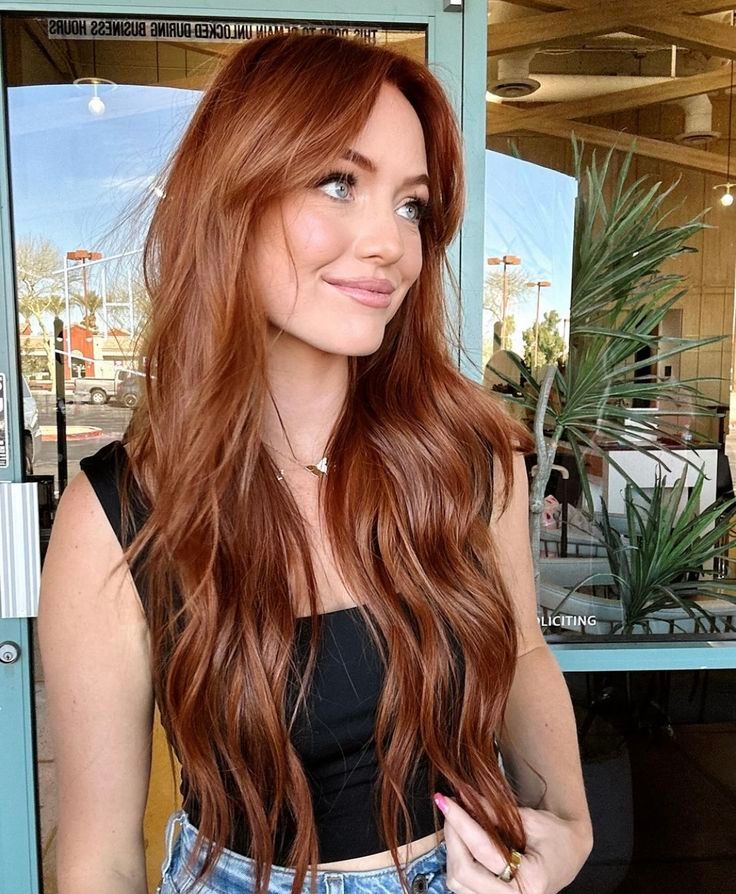
Ever wonder why some copper hair looks flat and some looks lit from within? The answer is undertone. This mid-back length with long layers and side-swept bangs uses a warm undertone that leans golden, not orange. The technique starts with a copper base, then a gloss or toner shifts the undertone toward amber. Side view, loose waves, medium density hair. The warmth catches light differently than a neutral copper — it glows rather than glints. It is a subtle difference that changes the whole read of the colour. Ask for a warm-toned gloss over your copper.
Collarbone Visual Idea
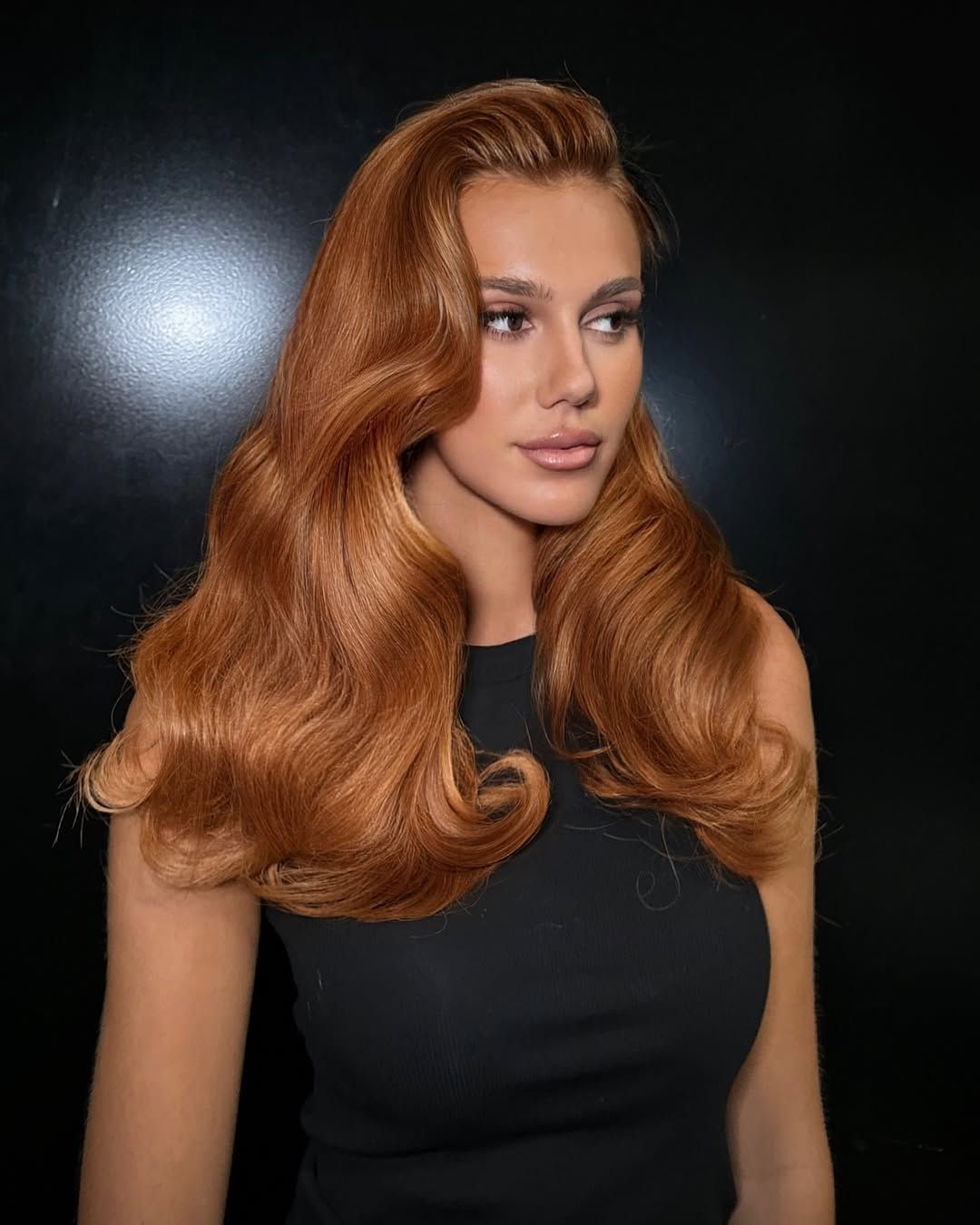
Warm copper with golden undertones is the shade that makes me understand the hype. Collarbone length, long layers, no bangs, side part, soft waves with curled ends. The golden undertone keeps it from veering into carrot territory, and the medium density wavy texture lets the colour breathe. Wear and upkeep are moderate — a gloss every six weeks keeps the gold from fading to brass. This suits anyone with warm-leaning skin who wants a copper that is inviting rather than aggressive. It is the color equivalent of a good conversation.
Long Layers Visual Idea
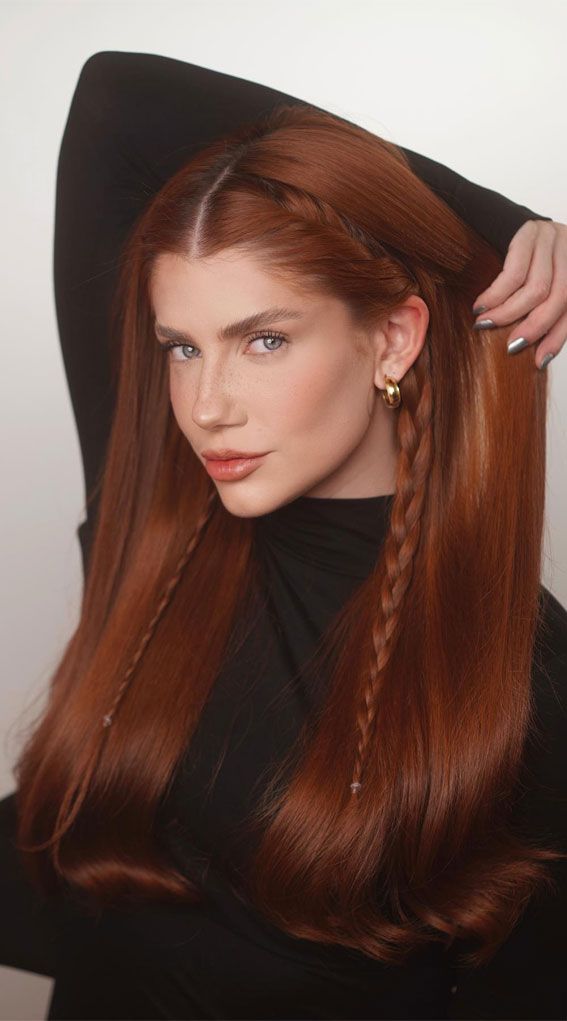
Best grow-out in this roundup. That warm copper with golden undertones catches the light differently every time you move your head, and the long layers keep the colour from sitting flat against your back. But here is what the photo does not tell you: maintaining that golden shimmer means a round brush and a blow-dryer every wash day. Air drying lets the roots go dull by noon, and the mid-back length makes sectioning a full arm workout. This is a salon colour, no question — the golden undertone needs a professional hand to land evenly through thick, wavy hair. Skip it if you want a wash-and-wear copper.
Medium Copper With Golden Undertones Visual Idea

The light in this one is doing something specific, and it is not just the camera. That medium copper with golden undertones catches the grey of late afternoon and turns it warm — which is exactly why this shade lands so well in early winter. The sun sits lower, the days are shorter, and a flat, ashy brown reads dead by 3 pm. This colour reads alive. The wispy bangs and straight, fine texture let the golden undertone shine through without competing with waves. It is a transitional shade, not a statement. It says I thought about this, not I spent four hours in a bowl.
Copper Visual Idea
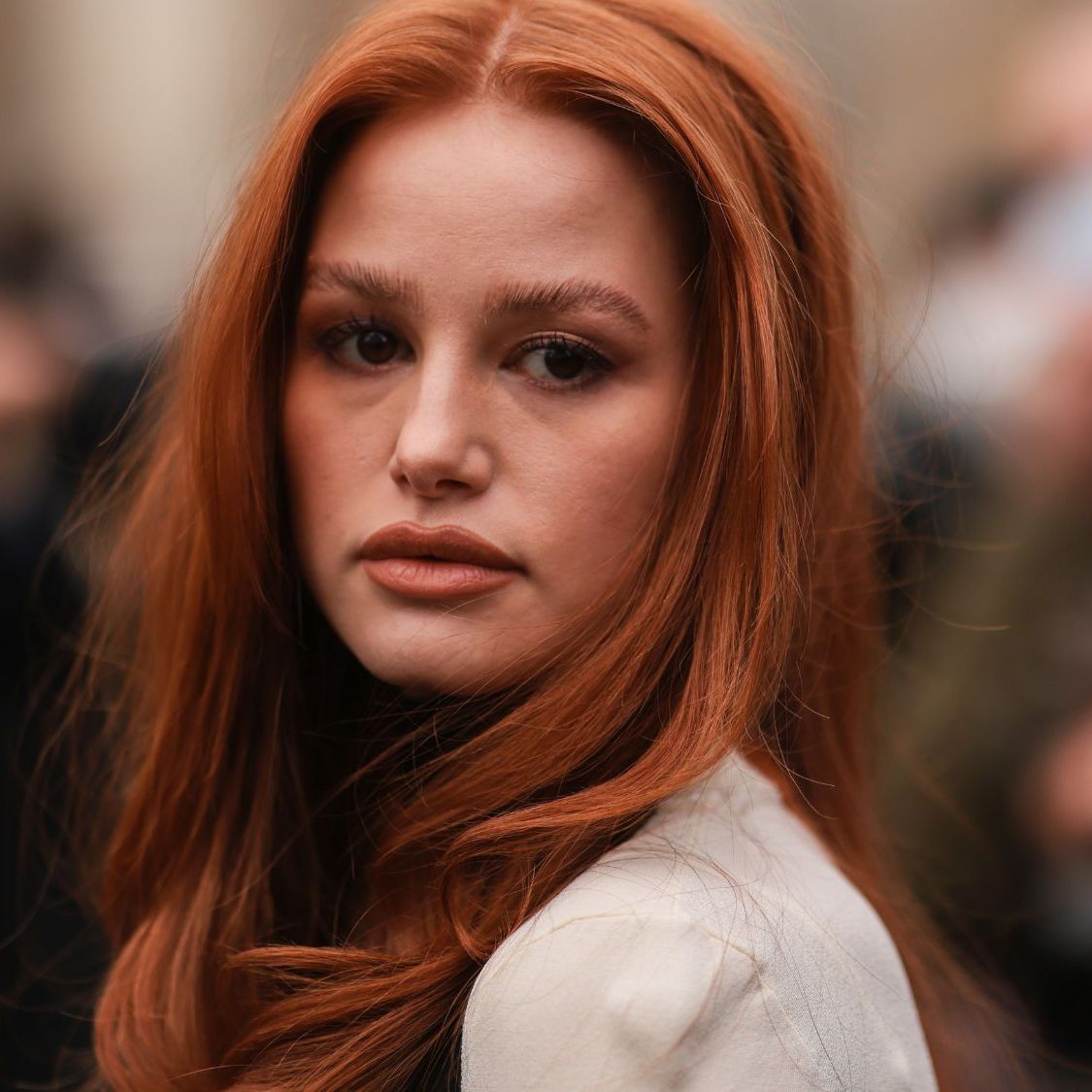
When did a single, pure copper start looking this expensive? No golden undertone, no auburn warmth, no red lift — just copper, sitting on thick, wavy hair at mid-back length. Achieving that clean, vibrant copper hue with minimal undertones means the stylist has to lift your natural base evenly first, then deposit the colour in one smooth pass. Any patchiness in the lift shows up as a different colour. That is why this is a salon-only job. The layers keep the colour from pooling at the ends, and the air-dried texture softens what could read as too flat. It is simple, but simple is harder than it looks.
Front View Visual Idea
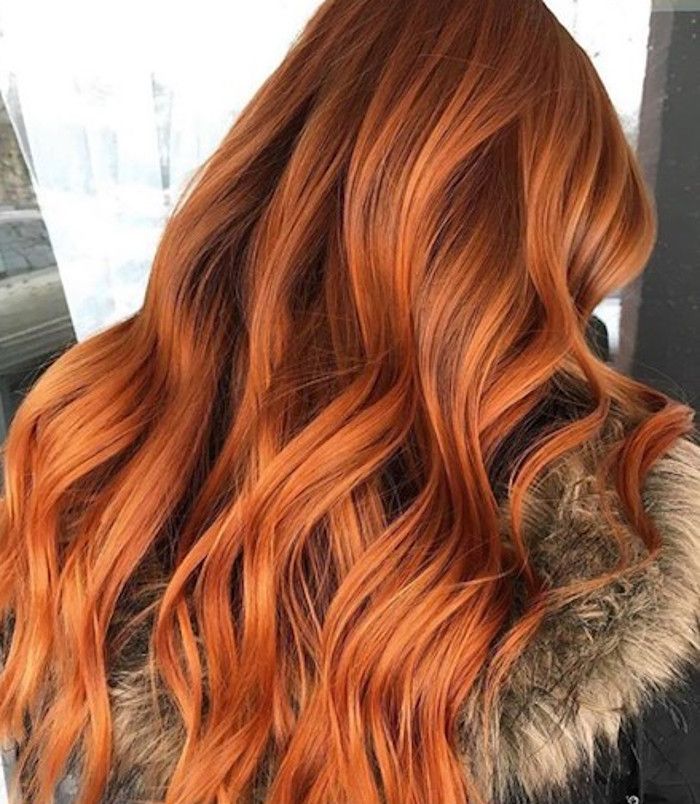
I will admit it: I was not sure a warm copper with golden undertones could read this inviting without red tones pulling it into autumn territory. But this front view proves it can. The loose waves catch the light in a way that feels like a room with good lamps, not a statement colour.
Here is what keeps it wearable. The layers are cut to stack around the face, so the warm, inviting copper glow sits close to your skin without overwhelming it. The mid-back length gives the colour room to breathe, and the thick, wavy texture stops the golden undertone from looking brassy. A purple shampoo once a week keeps the warmth from tipping into orange, and a gloss every six weeks keeps the glow from fading into a flat, brassy blonde. It is not a low-maintenance colour. It is a colour that pays you back for the effort.
Final Thoughts
After writing all of these, I’m booking the collarbone copper with blunt bangs. It’s the one that surprised me, the grow-out is forgiving, and it reads as intentional without trying too hard. Copper is the color that keeps giving, even when the roots start to show.
- Tone at week six, not week ten.
- Trim the baseline every eight weeks.
- Use a heat protectant before styling.
- Ask for a root shadow to blur the line.