

I’ve been watching the salon chair next to mine all winter, and the same thing keeps happening: women with rounder faces and fuller figures are asking for the same old dark brown, and the colorist is nodding along. It’s not that brown is wrong, it’s that it’s the only thing anyone offers them. Then I saw a woman with a silver pixie and a woman with a cherry red bob, and I realized the problem isn’t the hair, it’s the lack of imagination.
This roundup gives you 38 Winter Hair Colors for Plus Size Women, from low-maintenance root shadows to bold copper waves, with honest notes on grow-out, face shape, and what actually holds past 4 pm. I’m Nora, and I’ve tested most of these on my own fine, flat hair, so you’re getting the real timeline, not the salon pitch.
Medium Brown With Subtle Auburn Undertones
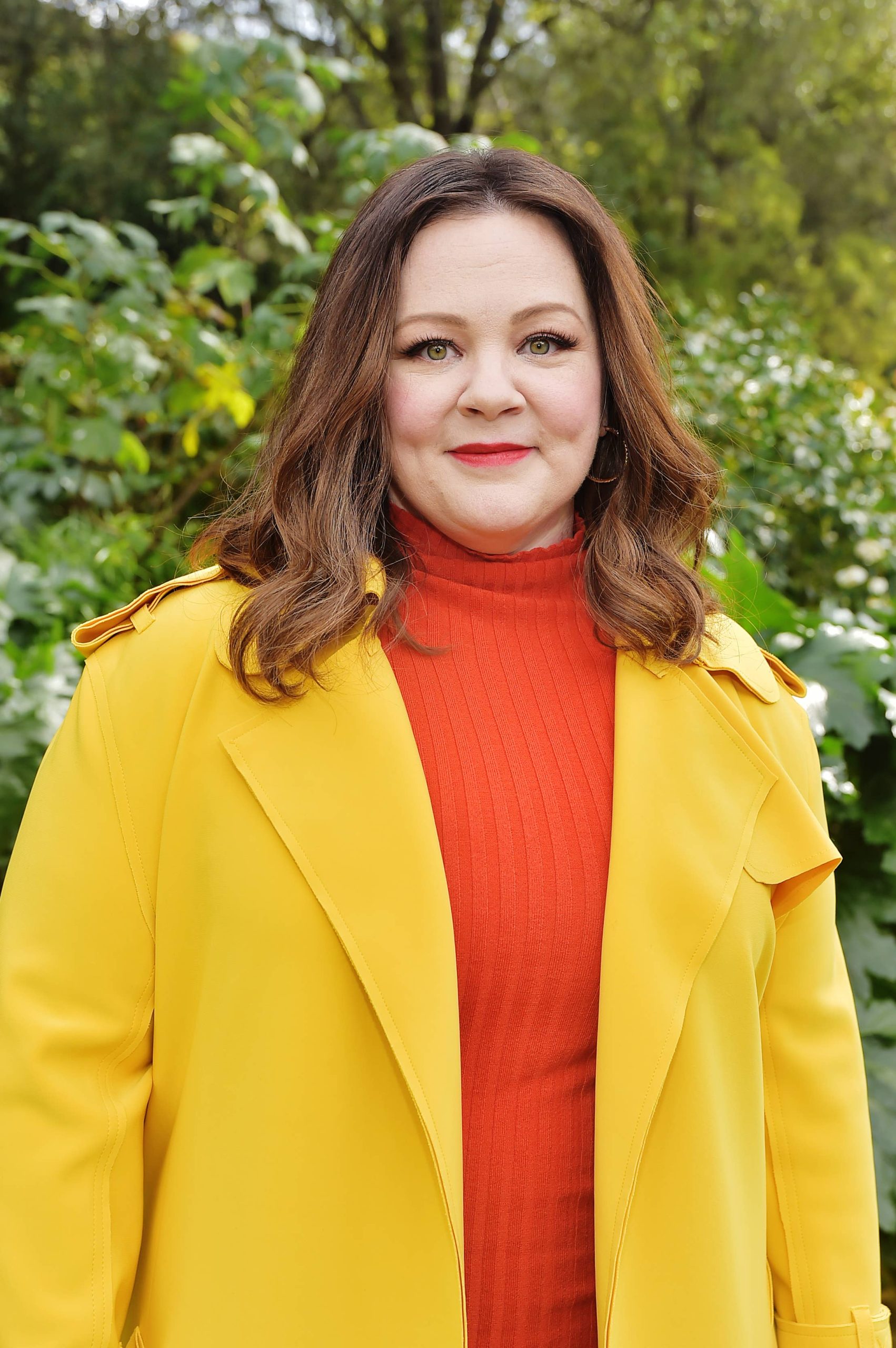
That rich, natural-looking brown with the auburn undertones catches the light in a way flat brown never does. It’s a medium brown auburn hair situation, straight and smooth, shoulder-length with long layers and a middle part. The warmth in the undertone reads as intentional against a warmer complexion, which is exactly why this is one of those Winter Hair Colors for Plus Size Women that actually delivers. No brassiness, no orange surprise — just a soft glow that makes the hair look thicker than it is. Straight, thick texture helps the shine read clearly, and the middle part widens a round face in a flattering way.
Textured Silver Pixie Cut
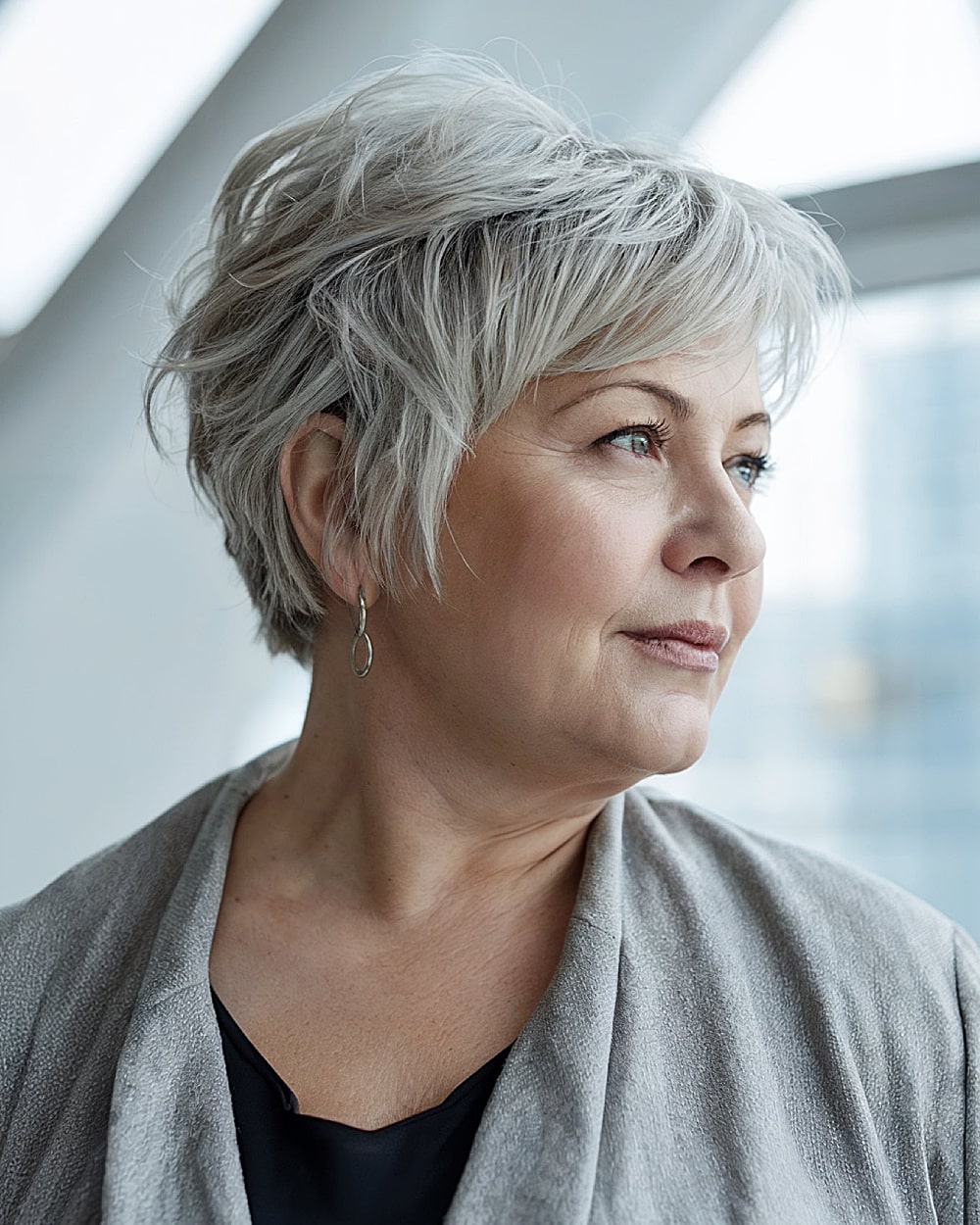
When did silver stop being a surrender and start being a power move? This textured silver pixie cut, ear-length with side-swept bangs and a deep side part, makes the case. The silver tone reads cool and deliberate against warm skin, which is the trick — it’s not trying to match anything, it’s making its own statement. Straight, fine texture works with a texturizing paste, not against it. The side view shows off the shape, and the side part softens a rounder face without hiding the cut. Bold winter choice, yes. But it earns its place.
Warm Copper Blonde Pixie
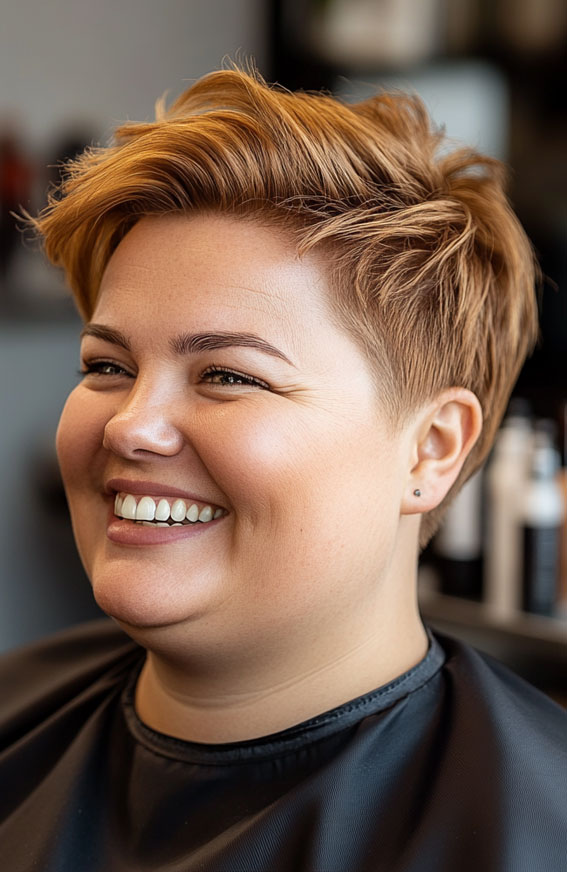
I will admit I was skeptical about a copper blonde pixie cut for winter. Then I saw how the warm copper blonde reads against a cooler season — it’s like carrying a heat lamp on your head. Short, textured bangs swept forward, deep side part, fine layered texture. The warmth brightens a complexion that goes grey in January. Styling takes about ten minutes with a bit of wax, which is honest. The colour needs a refresh every six to eight weeks, but the grow-out on a pixie is short enough that you barely notice. It holds up across a real week because the texture hides the second-day slump.
Vibrant Cherry Vinyl Red Bob
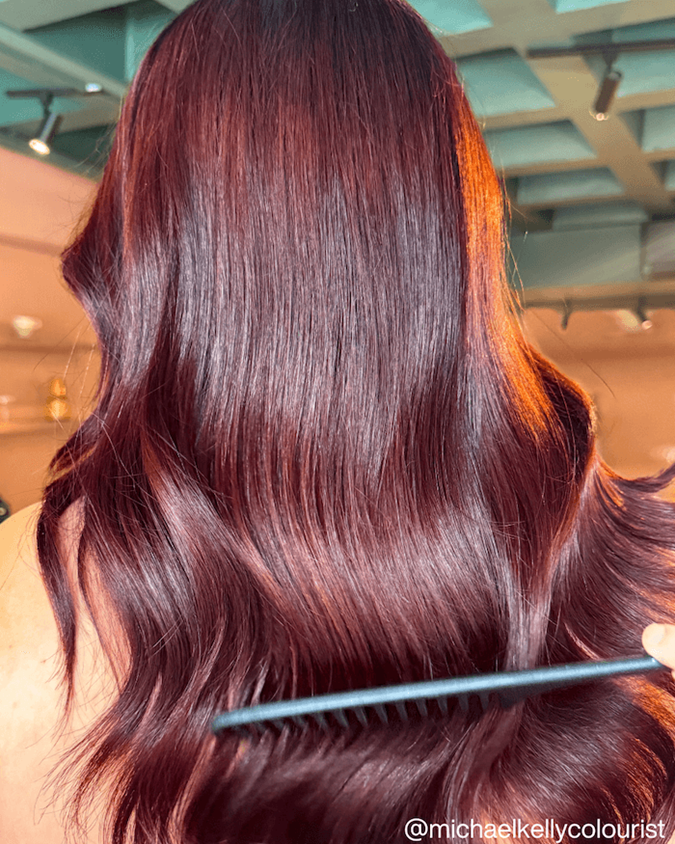
Best gloss in this roundup. The cherry red bob hits chin-length with a side part and subtle waves, straight fine texture that catches the light like wet paint. The technique is what makes it: a high-gloss colour that sits on top of the hair rather than sinking in, which is why it reads so saturated. The honest downside is that red fades faster than any other colour — you will see it dull by week three. A color-depositing conditioner every week is non-negotiable. But for the first two weeks, this cherry vinyl red is the most alive colour you will wear. It suits a warmer complexion because the red pulls the warmth forward.
Chin-Length Ash Blonde Bob
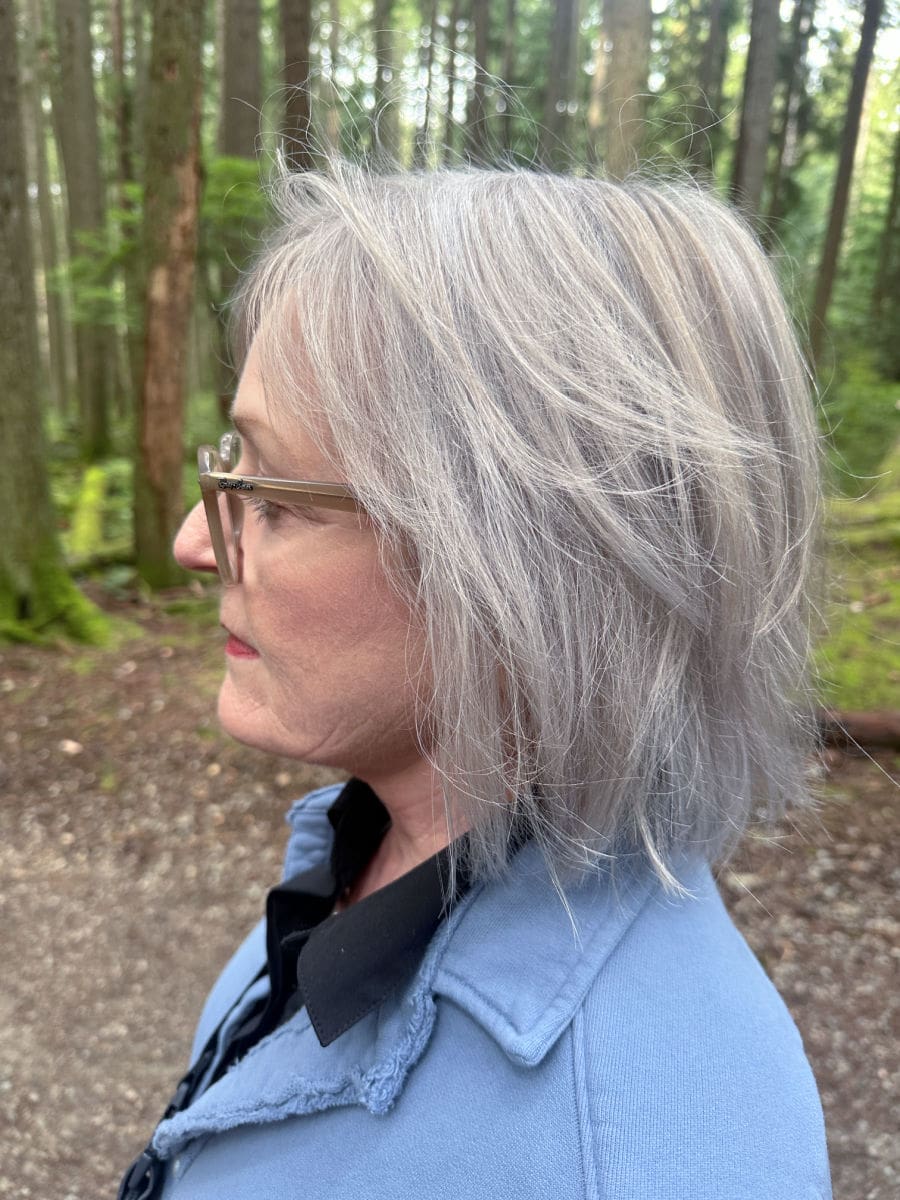
My gut says most ash blonde bobs wash out the person wearing them. The mistake is picking a tone so cool it reads grey against warm skin, and then wondering why you look tired. This chin-length ash blonde bob avoids that by keeping the ash tone soft, not icy. Side part, layered bob, straight fine texture with a smooth blowout. The ash reads sophisticated against a warmer complexion because it creates contrast without fighting it. A purple shampoo once a week keeps the brass away. The mistake people make is going too pale — stay in the silver-ash range, not platinum, and it works.
Natural Grey Collarbone Lob
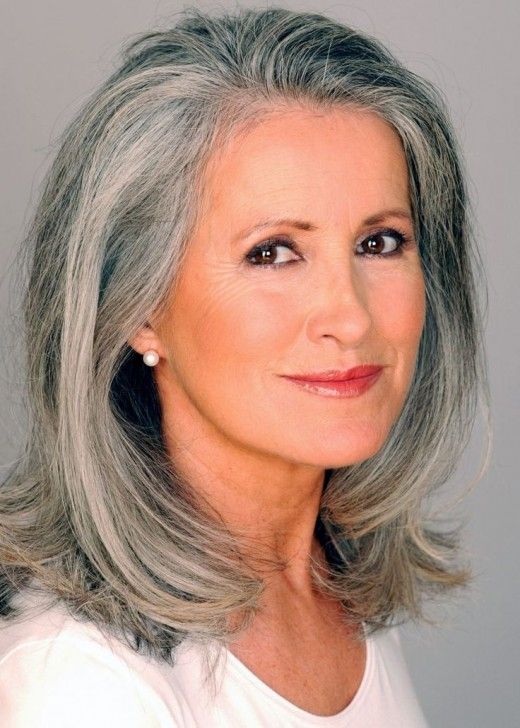
Natural grey hair gets dismissed as giving up. I think it is giving in to something smarter. This collarbone lob is fine, straight and side-swept, and the colour is exactly what grew out of your head. No toner, no root shadow, no monthly appointment. That is the whole point. For a plus size woman who is tired of the salon calendar, this is a quiet flex. The soft layers stop the lob from looking like a helmet. Side-swept bangs break the line across a rounder face. It suits medium density best. Fine hair works too, but you will want a dry texture spray to keep the shape past 4 pm. Trims every eight to ten weeks. That is it.
Collarbone Grey With Silver Streaks
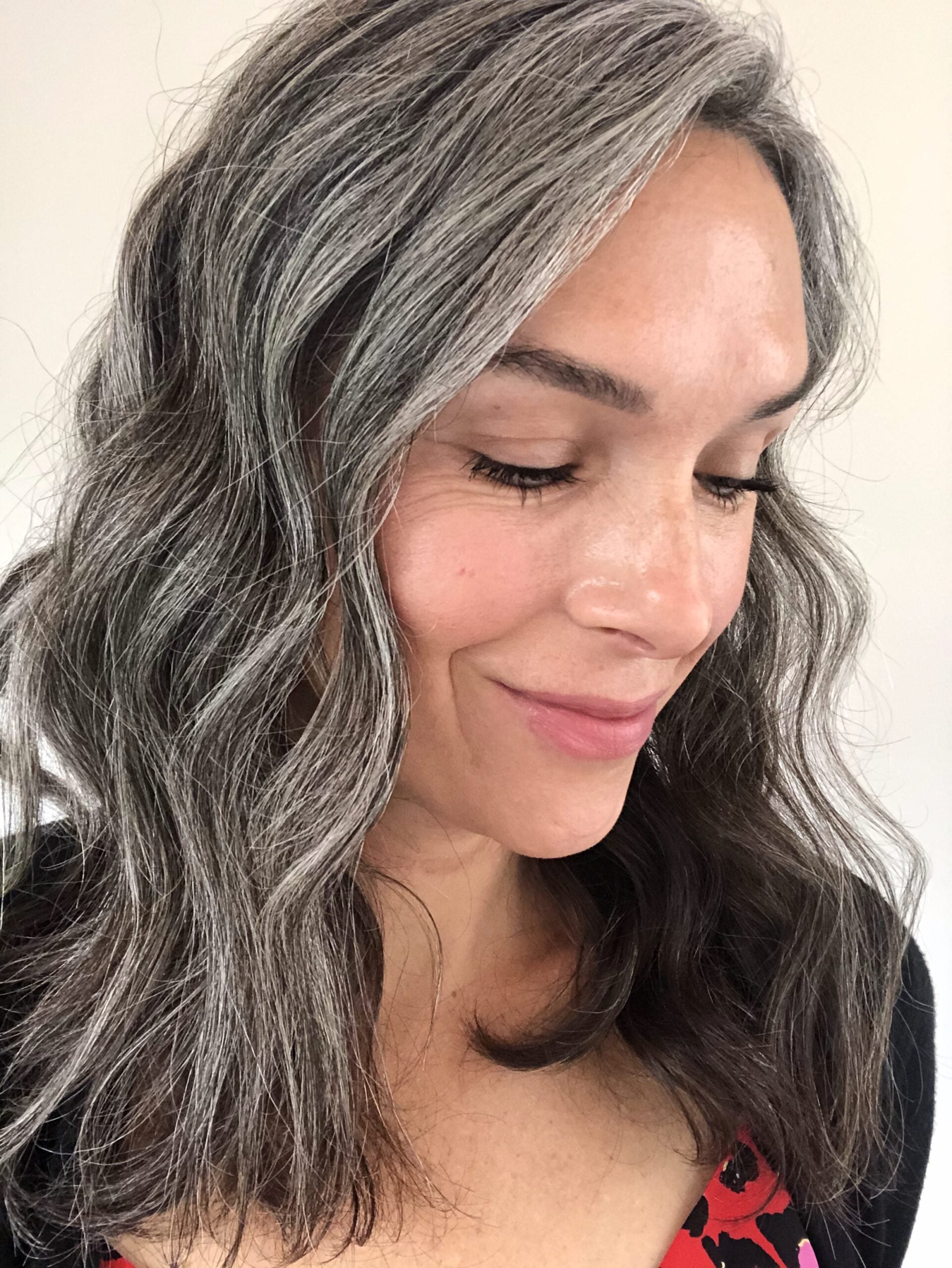
When did grey hair with silver streaks start looking like the most expensive thing in the room? This collarbone length cut has long layers and loose waves, medium density, and the colour is natural grey with deliberate silver streaks woven through. The streaks catch winter light in a way that solid grey does not. They add dimension without a full highlight schedule. The side profile shot shows how the silver sits mostly around the face. That is the trick. It lifts the complexion without being a full platinum commitment. Styling takes about 20 minutes with a curling wand. The colour grows out soft because the streaks are close to your natural shade. No harsh line, no panicked root touch-up.
Ash Blonde With Silver Highlights
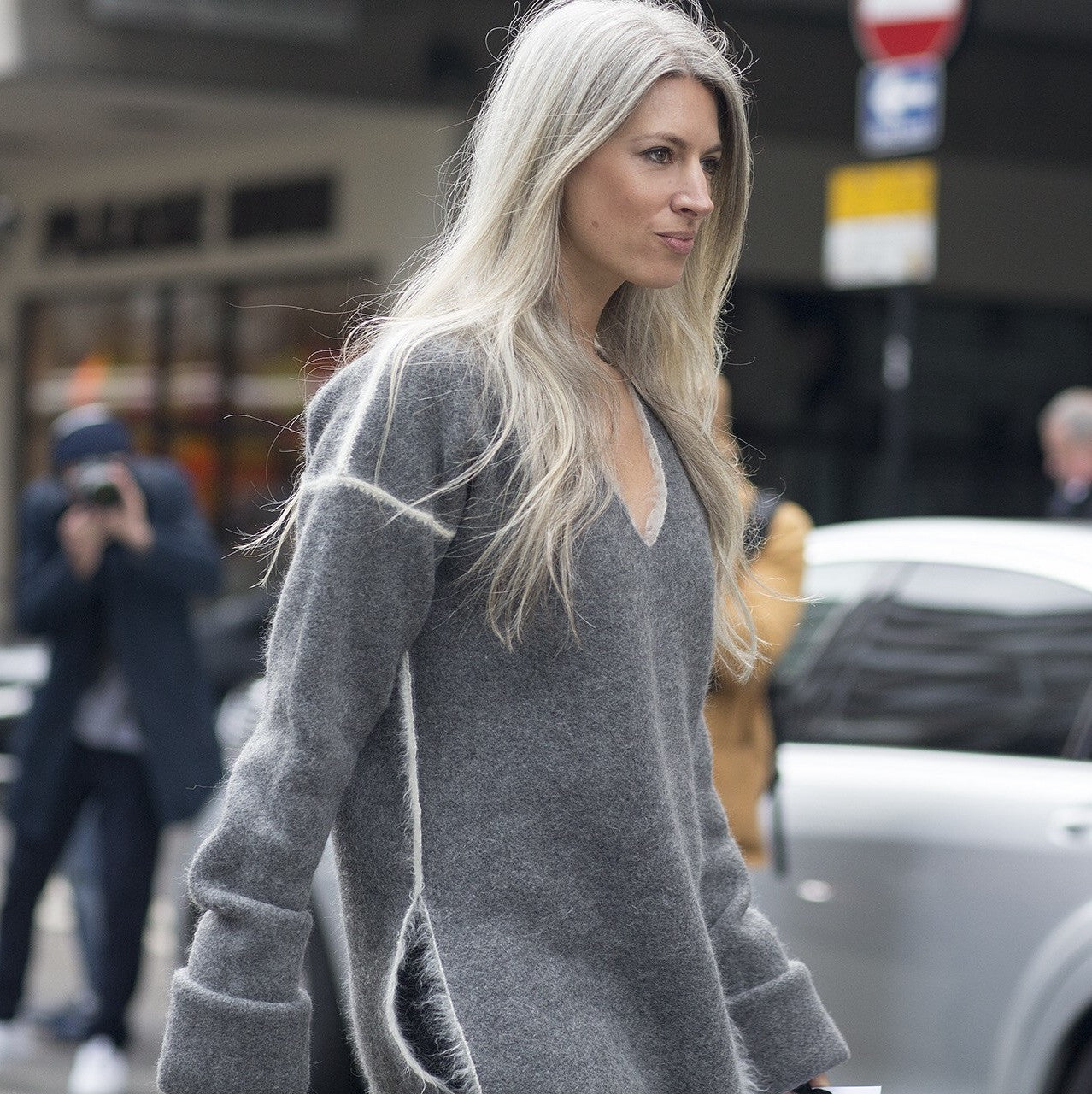
It is January. The sky is grey. Your hair should match. This mid-back length cut is straight, slightly textured, fine to medium density, and the colour is ash blonde with silver and white highlights. The silver reads cool against a warm winter scarf. The white highlights are placed mostly through the ends, which means the root line is not a crisis at week four. Ask your stylist for a fine weave of silver and white through the mid-lengths and ends. Keep the base ash blonde soft, not icy. A side part gives the straight texture some volume where it tends to fall flat. This is a salon job. The toner schedule is every four to six weeks. Trims every eight to ten weeks keep the long layers from looking stringy.
Mid-Back Length Ash Blonde With Platinum Highlights
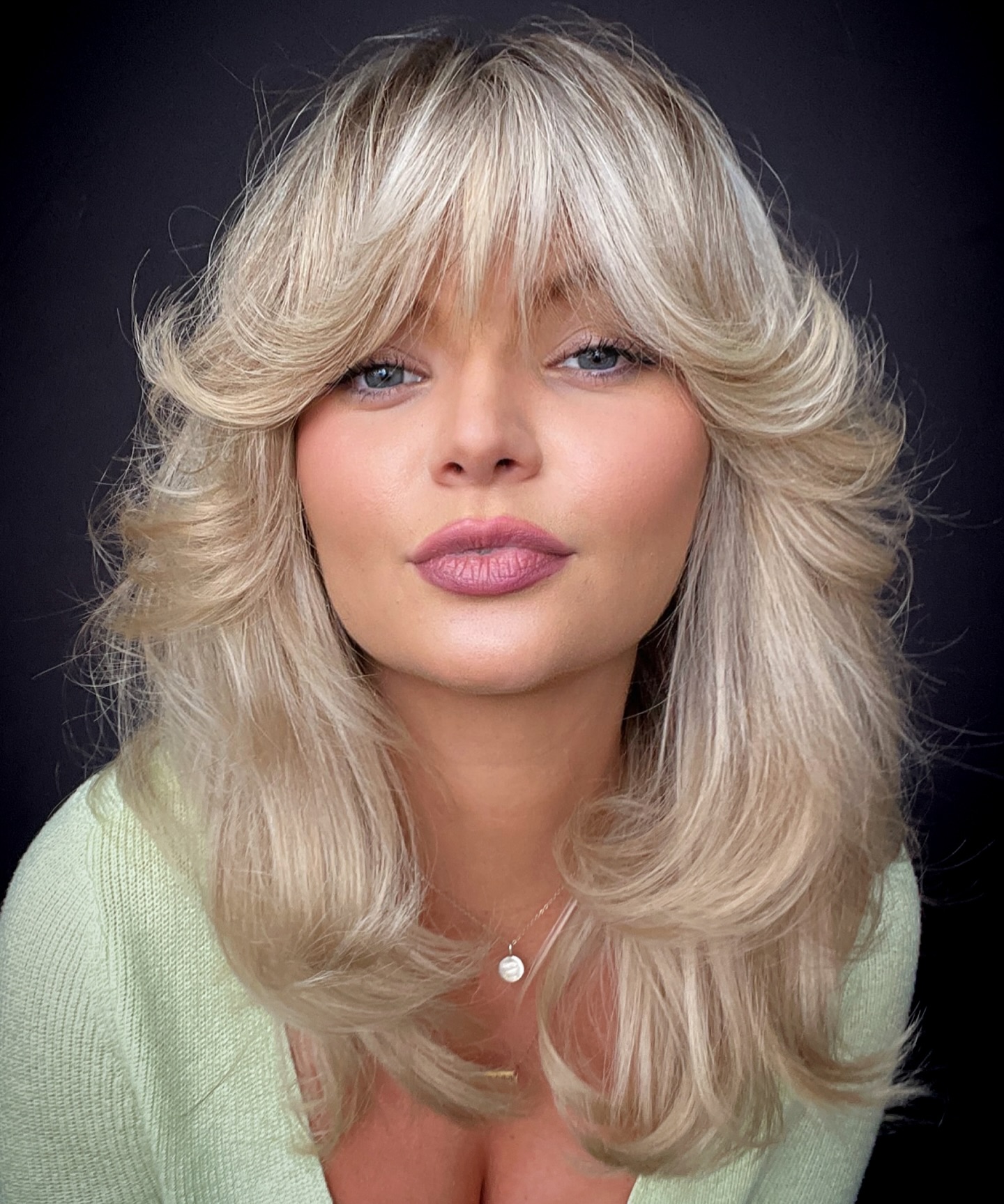
I will say it. Ash blonde platinum highlights look incredible on plus size women with thick, wavy hair. This mid-back length cut has long layers and full bangs, and the colour is ash blonde with platinum highlights through the top and front. The technique is a foil highlight with a heavy hand. The stylist lifts sections to a pale platinum, then tones everything to ash so the contrast is sharp but not brassy. The full bangs frame the face without hiding it. The honest downside: this colour fights you. Brassiness shows by week three. A purple shampoo is non-negotiable. The voluminous blowout takes 30 minutes with a large barrel curling iron. Book the appointment every six to eight weeks. The grow-out line is pale and obvious. You cannot ignore it.
Blue and Grey Ombre
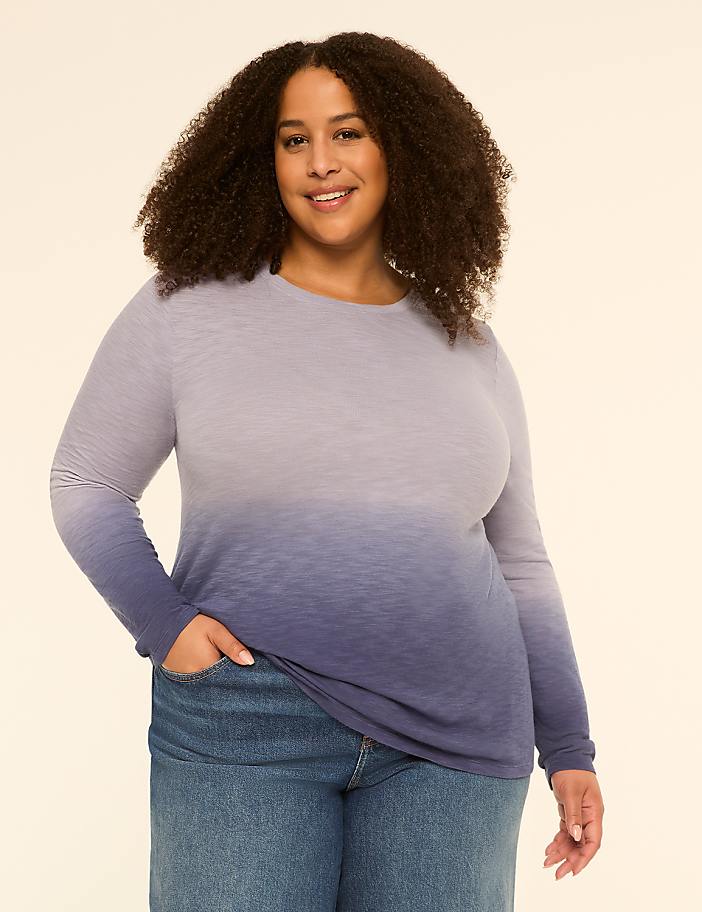
I did not plan to try a blue and grey ombre. I walked into the salon with a photo of a winter sky and said make it that. The colour is a shoulder-length cut with layers, wavy, thick, and the ombre goes from a deep charcoal grey at the roots to a dusty blue at the ends. The middle part shows the transition. It is not a hard line. The grey blends into the blue over about four inches. That is what makes it wearable. The blue is muted, not electric. It reads as cool and deliberate. The air-dried styling takes five minutes. The blue fades faster than the grey. A color-depositing conditioner every other wash keeps it from turning muddy. This is a salon job. Do not try it at home.
Icy Platinum Blonde Waves
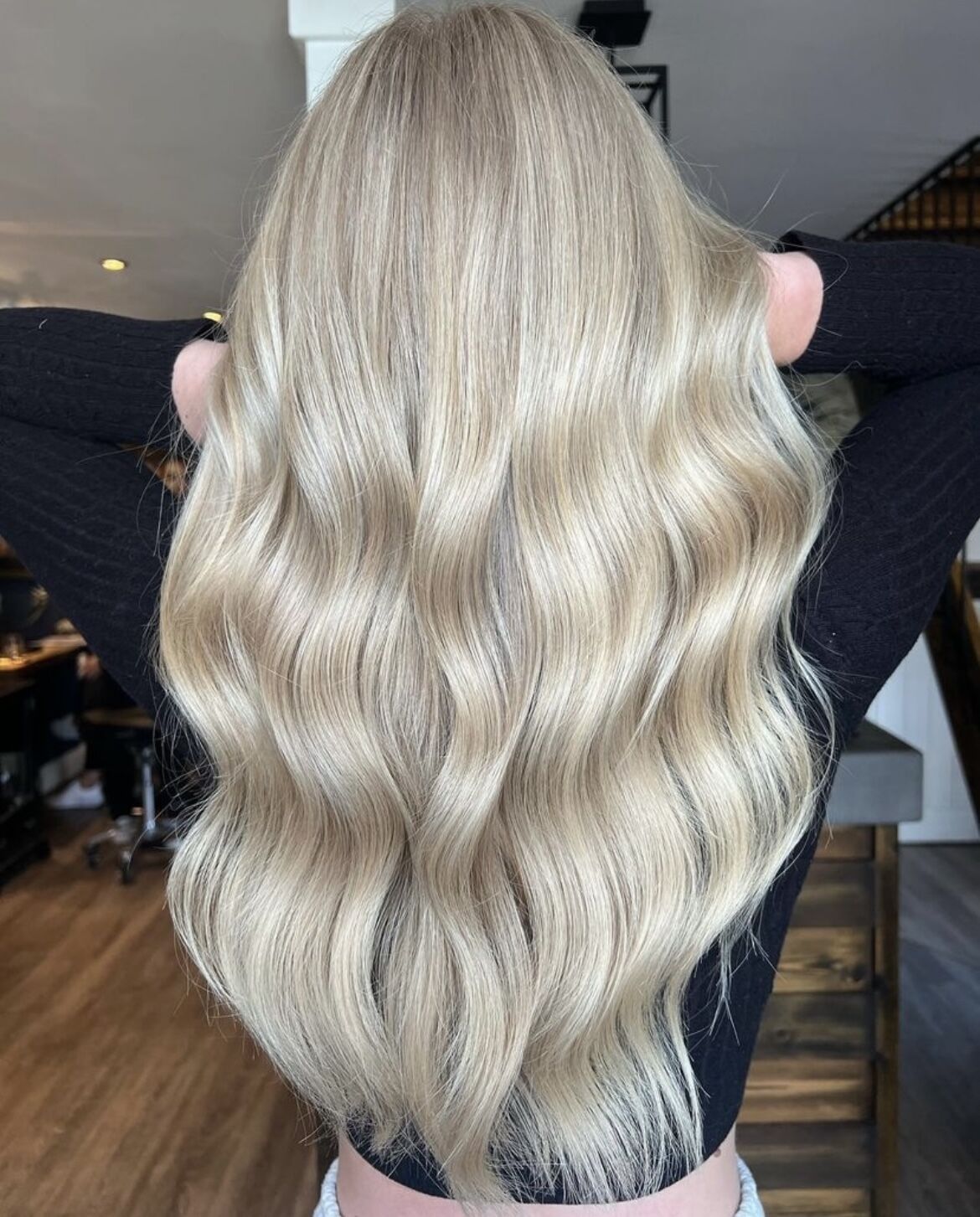
Have you ever wondered what it feels like to have hair that matches the snow outside, but in a good way? Icy platinum blonde hair is the winter commitment that asks for your time, your patience, and a standing appointment with your colorist. On thick, wavy mid-back length, the ash undertones keep it from veering into yellow territory, which is the whole battle. The middle part and long layers let those waves move without tangling into a mess by noon.
This shade genuinely flatters plus-size women with cool undertones in their skin, because it brightens the face without washing it out. The upkeep is real: toning every 2 to 3 weeks, touch-ups at 4 to 6, and trims every 8 to 10 weeks to keep the ends from snapping. If you are not ready for that calendar, pick a warmer blonde. If you are, this is the most glamorous thing winter will let you get away with.
Long Layers Ash Brown With Blonde Highlights
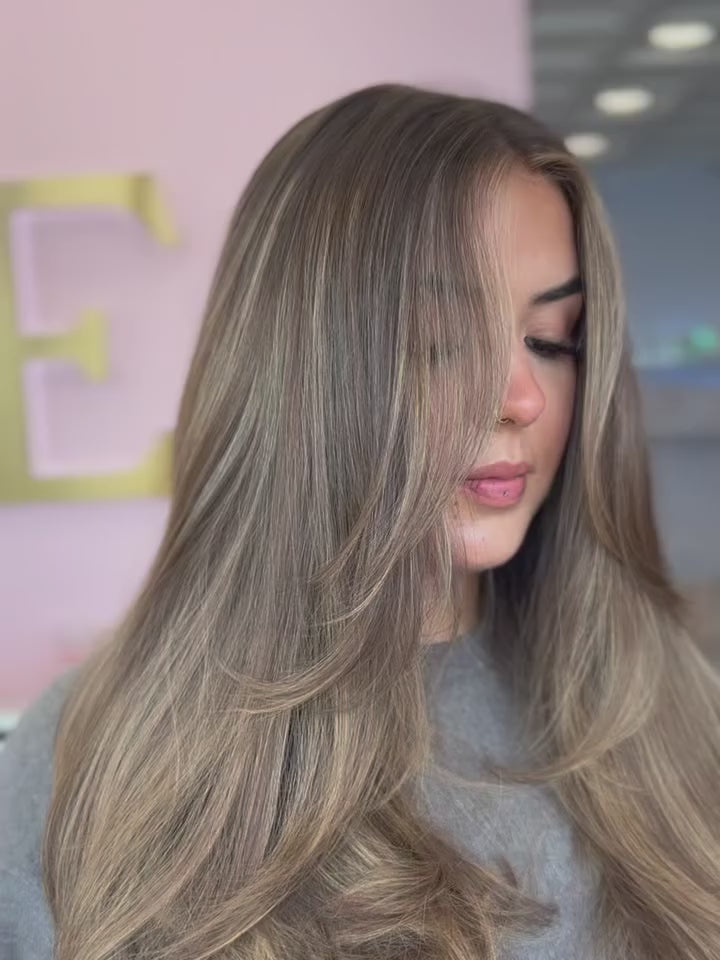
By Thursday, most dimensional colors have gone flat, but ash brown blonde highlights keep their separation because the contrast is built into the weave. The curtain bangs and long layers on straight, thick mid-back hair catch the light differently with every head turn, which is exactly what you want from a winter color that has to survive office lighting. The blonde pieces sit close to the face, so they do the brightening work without a full bleach situation.
This is the practical choice for a real week. A layered blowout takes about 25 minutes, and the highlights need a toner refresh every 6 to 8 weeks to stop them from turning brassy against the ash brown base. Trims every 8 to 10 weeks keep the layers from growing into one shapeless curtain. It holds up through hats, scarves, and the general chaos of January without demanding constant attention.
Pale Ash Blonde With Rose Undertones
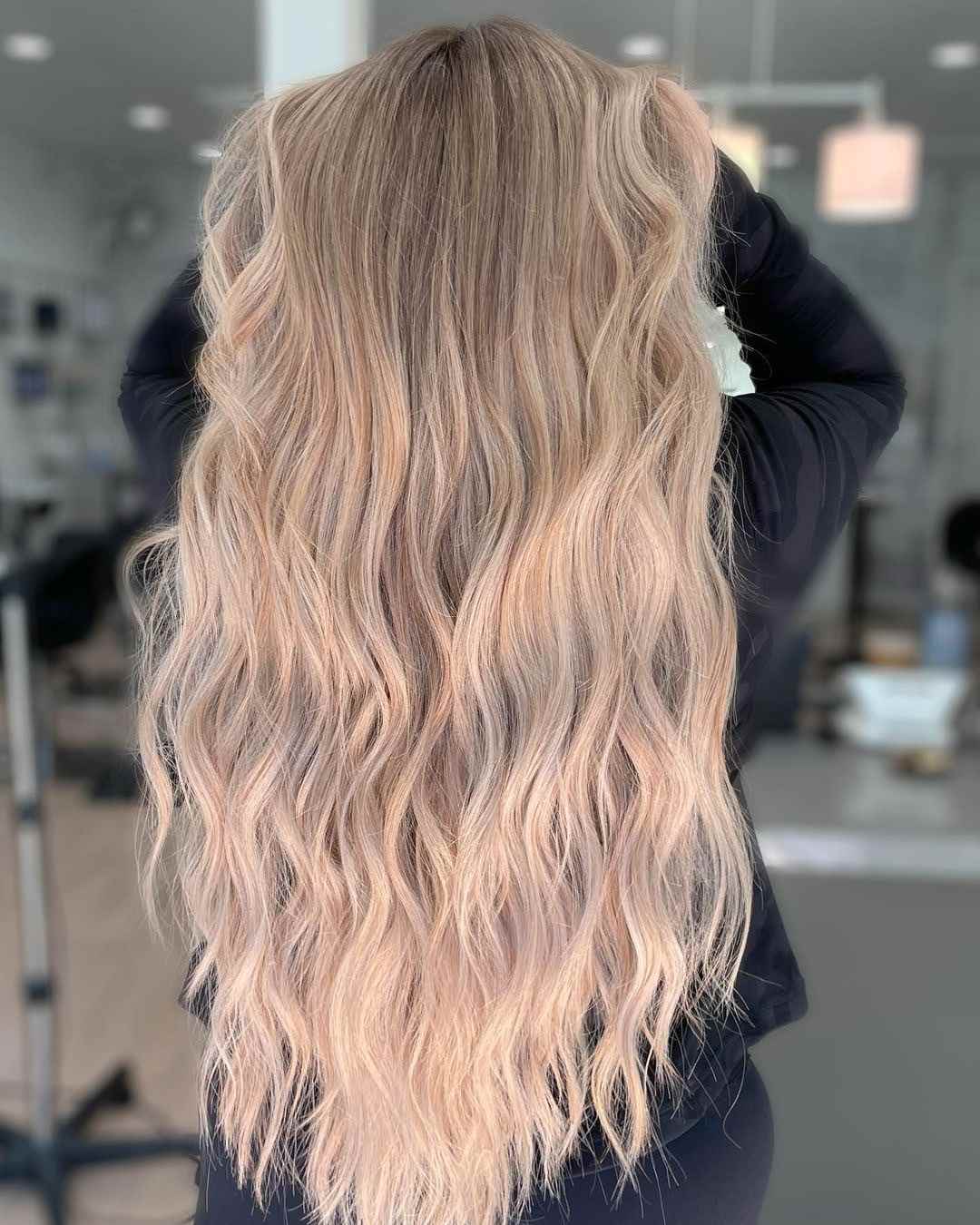
The mistake people make with pale ash blonde is going too gray, and the result is hair that looks dusty instead of deliberate. The fix is a whisper of rose in the formula, which warms the ash just enough to keep it from reading as dull. On thick, wavy mid-back hair with long layers, this pale ash blonde rose gold tone catches the light like a soft glow rather than a stark flash. The downside is that this delicate balance is high maintenance, it needs toning every 4 to 6 weeks or the pink fades and the ash turns muddy. Trims every 8 to 10 weeks keep the long layers moving, but the color is the real appointment to keep.
Ash Blonde With Pink Undertones
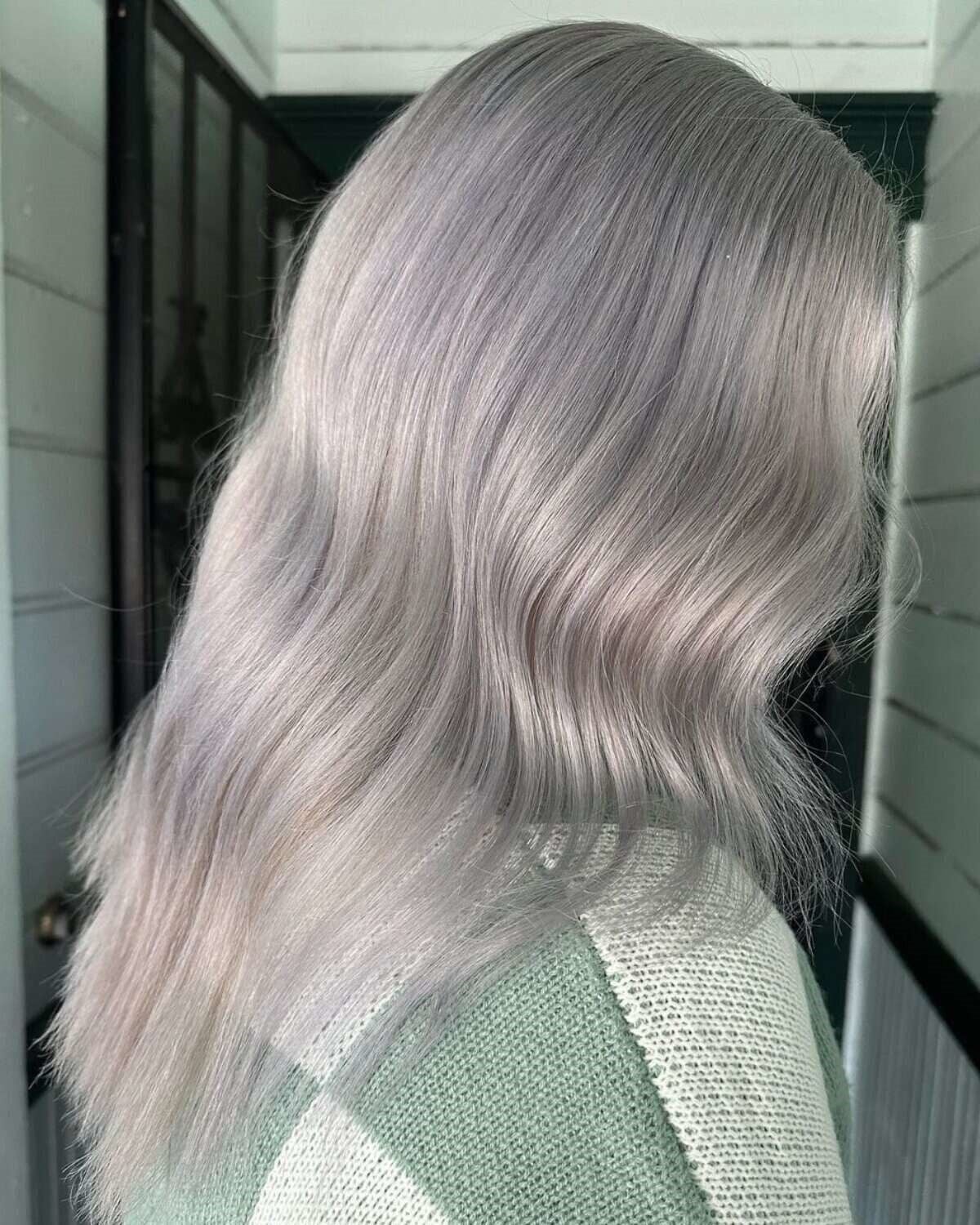
Mid-December, the party calendar fills up, and this is the color that shows up for it. Ash blonde pink undertones on a wavy, medium-density mid-back length reads as playful without screaming for attention, which is a hard balance to strike. The loose waves catch the pink in the low winter light, so it shifts between cool blonde and a hint of rose depending on how you move. It is a seasonal touch that does not require you to commit to full pink hair, just a tonal shift that makes the blonde feel current. The middle part and long layers keep it soft, and the side view shows off the dimension without any harsh lines. It is the winter equivalent of a good party playlist, subtle, but it sets the whole mood.
Ash Blonde Bob with Platinum Highlights
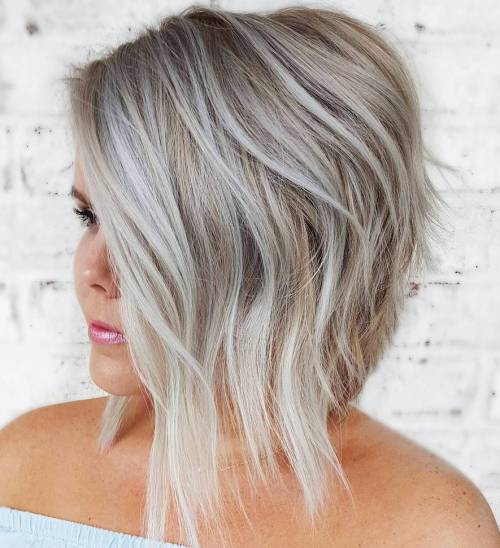
This is the color equivalent of a tailored coat: the ash blonde platinum bob works because the technique is precise. The platinum is woven in as fine highlights, not chunky streaks, so it adds brightness around the face while the ash blonde base keeps the overall tone cool. On a chin-length bob with side-swept bangs and wavy, medium-density texture, the contrast creates movement that a solid blonde would not have. The side part gives the highlights a place to land, and the waves break up the color so it never looks striped. It is a salon build, not a box job, and the shape needs a trim every 6 to 8 weeks to stay sharp.
Rich Medium Brown With Highlights
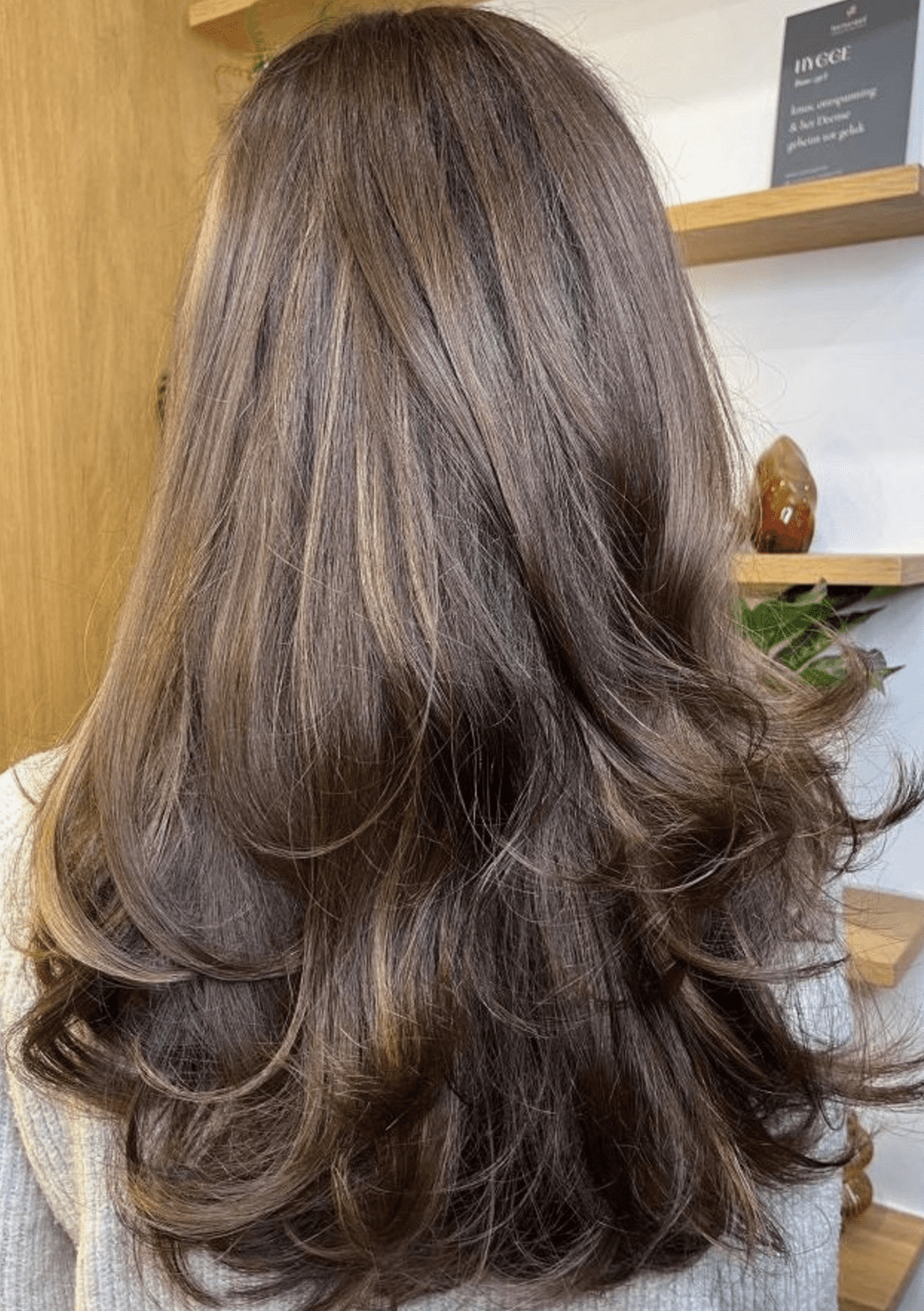
I have a confession: I spent years convinced medium brown was the beige of hair colors. Safe, fine, forgettable. Then I saw this mid-back length on a friend with thick, wavy texture and the subtle highlights caught the light in a way that made me rethink everything. The tone stays warm without going brassy, and the highlights sit close to the base shade so you get dimension without a harsh line. I booked it the next week. The grow-out is merciful, too.
The key is keeping the highlights fine and close to the natural shade, not chunky. My stylist wove them through the long layers so the color reads rich, not stripey. For anyone who wants depth without flatness, this medium brown with highlights is the quiet winner. I have not looked at beige the same way since.
Ash Brown Layered Bob
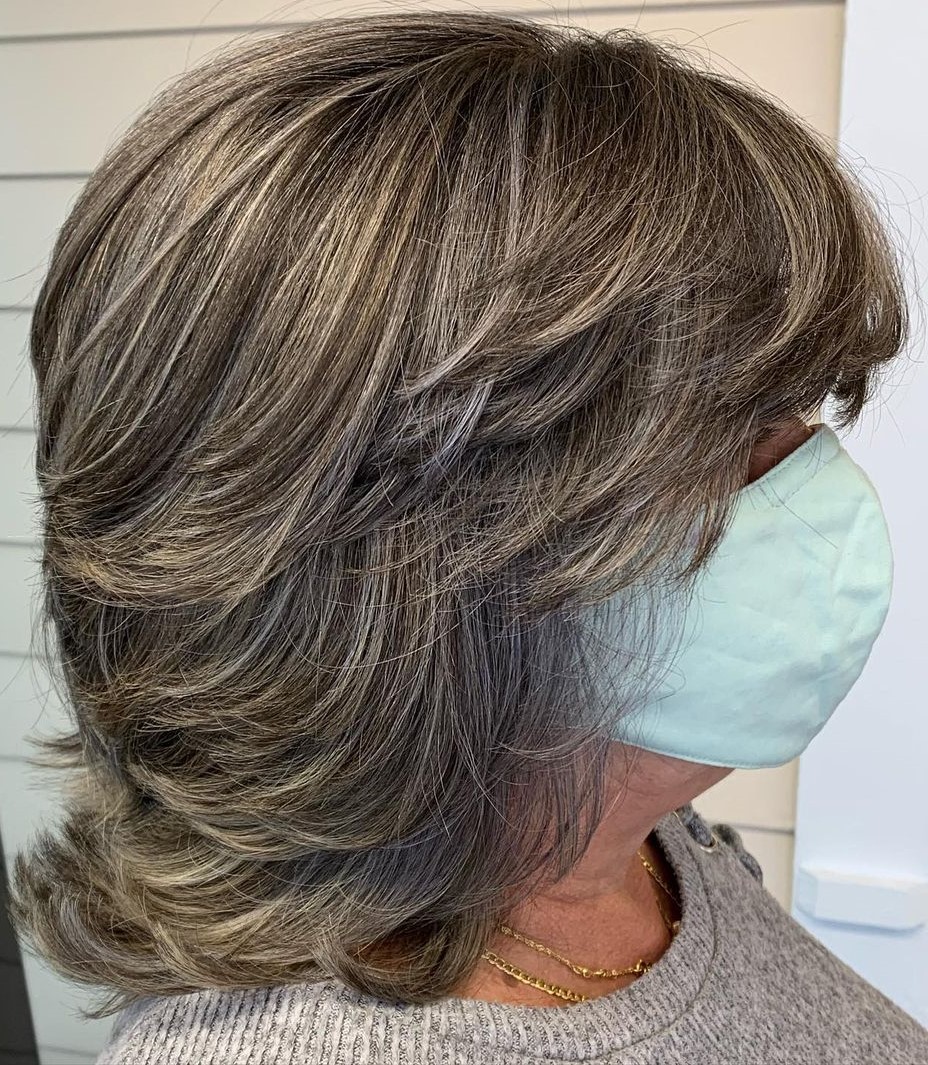
An ash brown base with silver and ash blonde highlights reads cool without reading icy, which is a narrower window than you think. On a chin-length layered bob with wavy, medium-density texture, the silver pieces catch the light and the ash blonde keeps everything from going flat. Side part, layered blowout, about 20 minutes. The bob needs a trim every 6 to 8 weeks to hold its shape, and the highlights will need toning every 4 to 6 weeks. This ash brown highlights bob works best if your skin runs cool, but the real test is whether you can commit to the toning schedule. I have seen people fall in love with the color and hate the upkeep in equal measure.
Angled Bob With Blunt Bangs
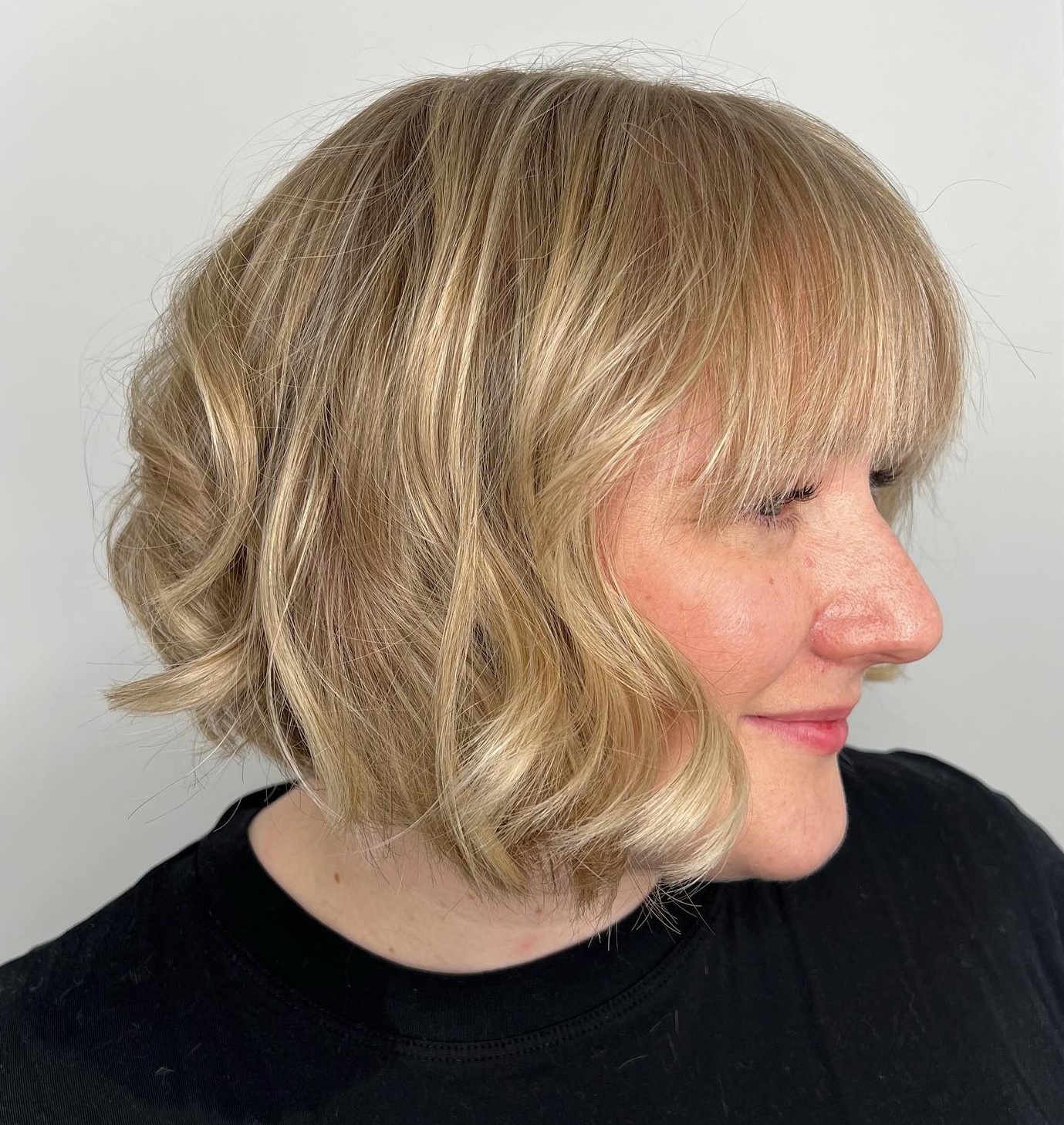
Can we talk about what happens to an ash blonde angled bob on day three? The blunt bangs start separating around noon, the beige highlights start looking more yellow than beige, and the angled shape that looked sharp on Monday looks droopy by Thursday. This chin-length cut with wavy, medium-density texture takes about 15 minutes of textured styling each morning. The beige highlights need toning every 6 to 8 weeks, and the angled bob and blunt bangs both need a trim every 6 to 8 weeks. I am not saying skip it. I am saying know what you are signing up for.
Dark Brown With Natural Highlights
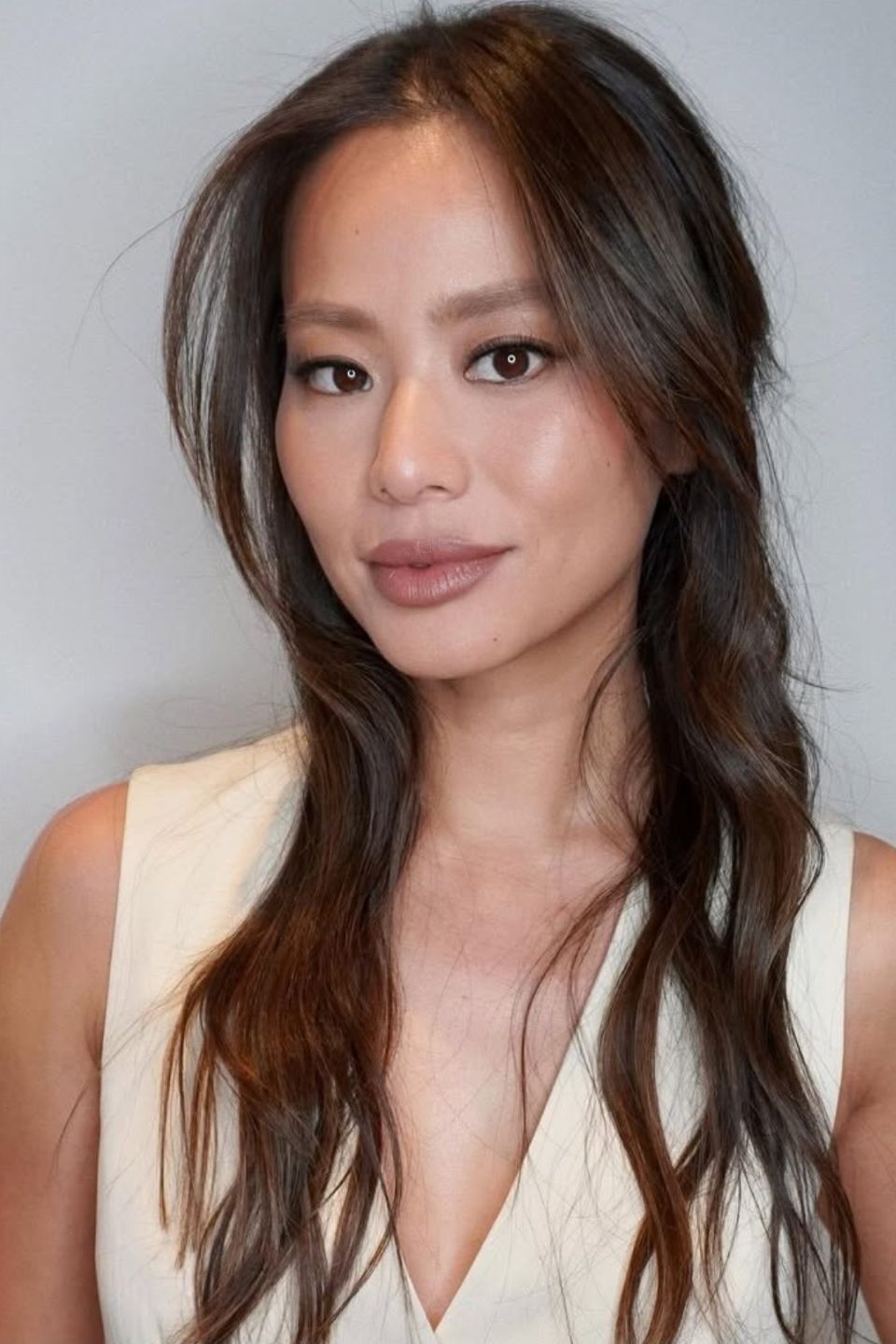
Here is the gut reaction: dark brown with subtle lighter brown highlights sounds foolproof. It is not. The mistake people make is going too subtle, and the whole thing reads as one flat, muddy brown. I have seen it happen. The highlights need enough contrast to register, otherwise the color just looks like your natural shade after a bad box dye. On this mid-back length with fine, wavy texture and a middle part, the highlights sit close to the base but they have to be placed where the light would naturally hit.
The honest downside is that too many stylists play it safe. You want the lighter brown to be visible, not whispered. Air-dried styling takes about 5 minutes, and touch-ups are every 10 to 12 weeks, but only if the initial placement had enough lift. If it did not, you are stuck with mud. This dark brown natural highlights look is low maintenance only when it is done right. When it is not, it is just dark brown.
Collarbone Length Dark Brown With Caramel Highlights
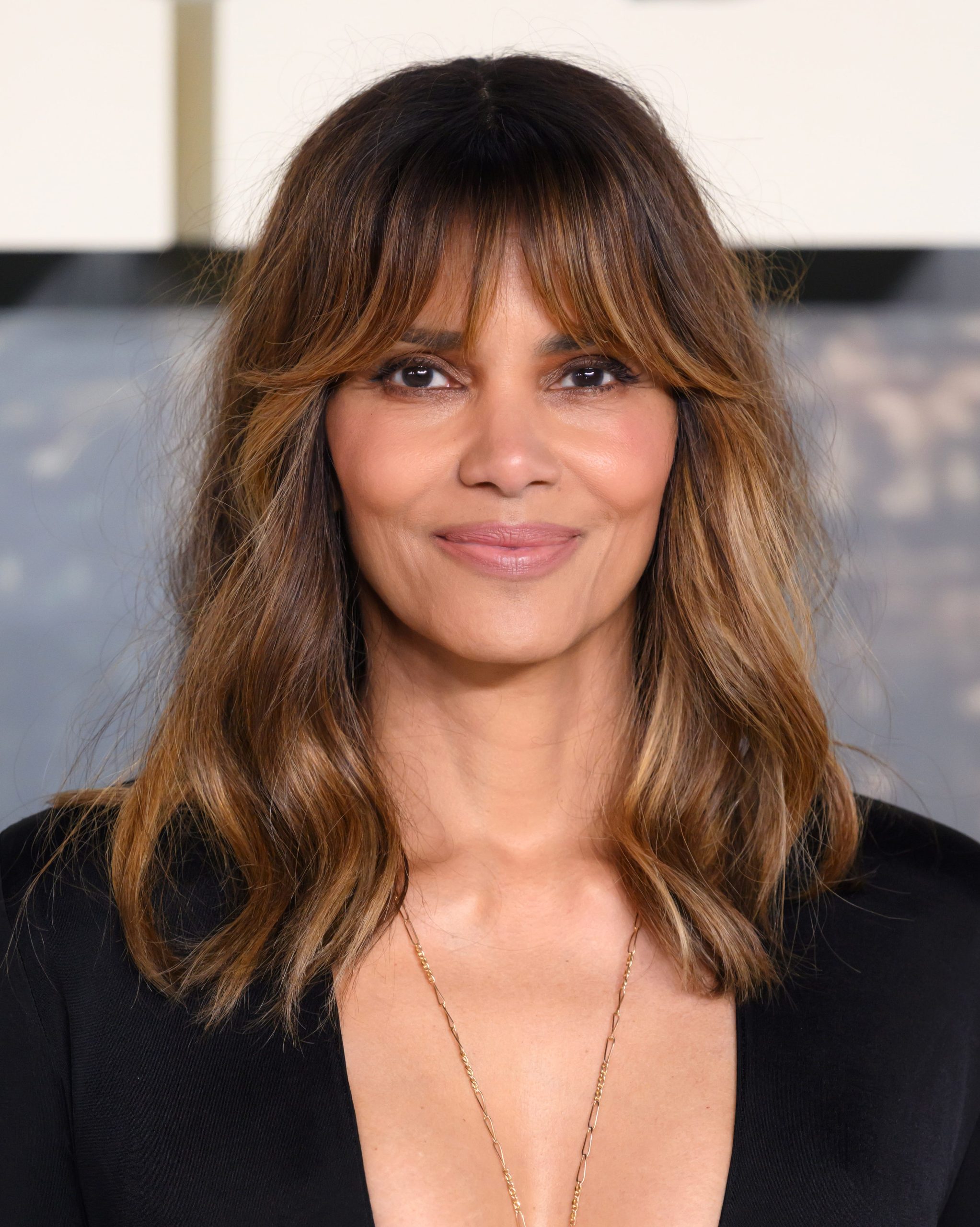
It is the week before Thanksgiving and the light is doing that low, golden thing it only does in late November. That is when this collarbone lob with curtain bangs and a dark brown base with subtle caramel highlights looks like it was made for the season. The caramel reads warm without reading orange, and on wavy, medium-density texture with a side part and loose wave blowout, the highlights catch the gold light and the dark base anchors everything. About 20 minutes for the blowout, toning every 6 to 8 weeks, trims every 8 to 10 weeks. This dark brown caramel highlights combination is the winter color that does not scream winter, it just fits.
Dark Brown With Caramel and Blonde Highlights
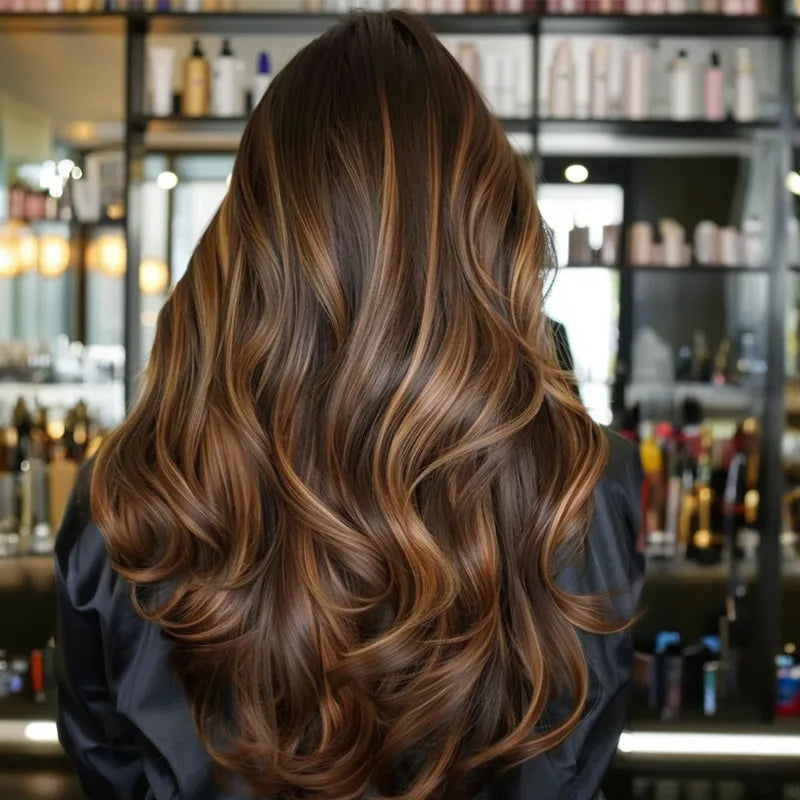
I’ve been burned by a muddy brown before, so I get the hesitation. But this is the winter hair color that finally made me understand the hype: a dark brown base that reads almost black in low light, then caramel and blonde highlights woven through the top and around the face. The technique is what sells it, a fine-tooth weave that lifts the dimension without turning the whole thing streaky. On my thick, wavy texture, the mid-back length carries the color well, and the loose waves catch the lighter pieces so they move. It’s a rich, warm look that doesn’t scream for attention, but it holds it. The golden blonde reads warm next to my skin, and the caramel keeps it from going brassy. For me, that’s the win.
Dark Base With Red Tones
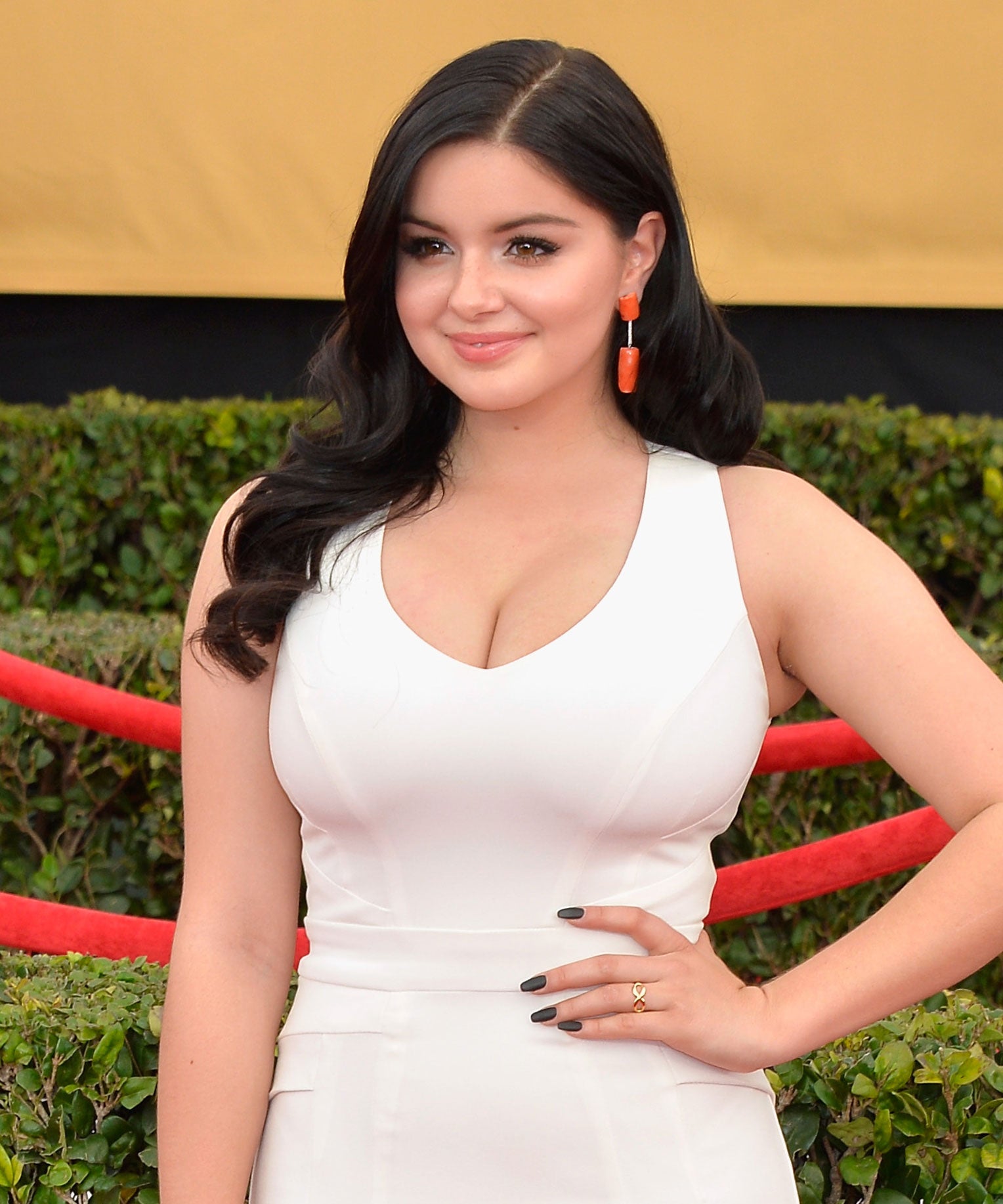
When did I stop being afraid of red? This winter, apparently. The dark base with red tones is the quiet rebel of the season, a deep brown that glows with auburn fire when the light hits. The technique is a gloss over the base, so the red sits on top of the dark instead of fighting it. On my shoulder-length, wavy hair, the red tones read as warmth, not a costume. The side part lets the color fall forward, and the layers give it movement. It’s a rich, dimensional look that doesn’t need a spotlight. The red fades faster than brown, sure, but the depth of the base means it never looks flat. I’m a convert.
Golden Blonde Stacked Bob
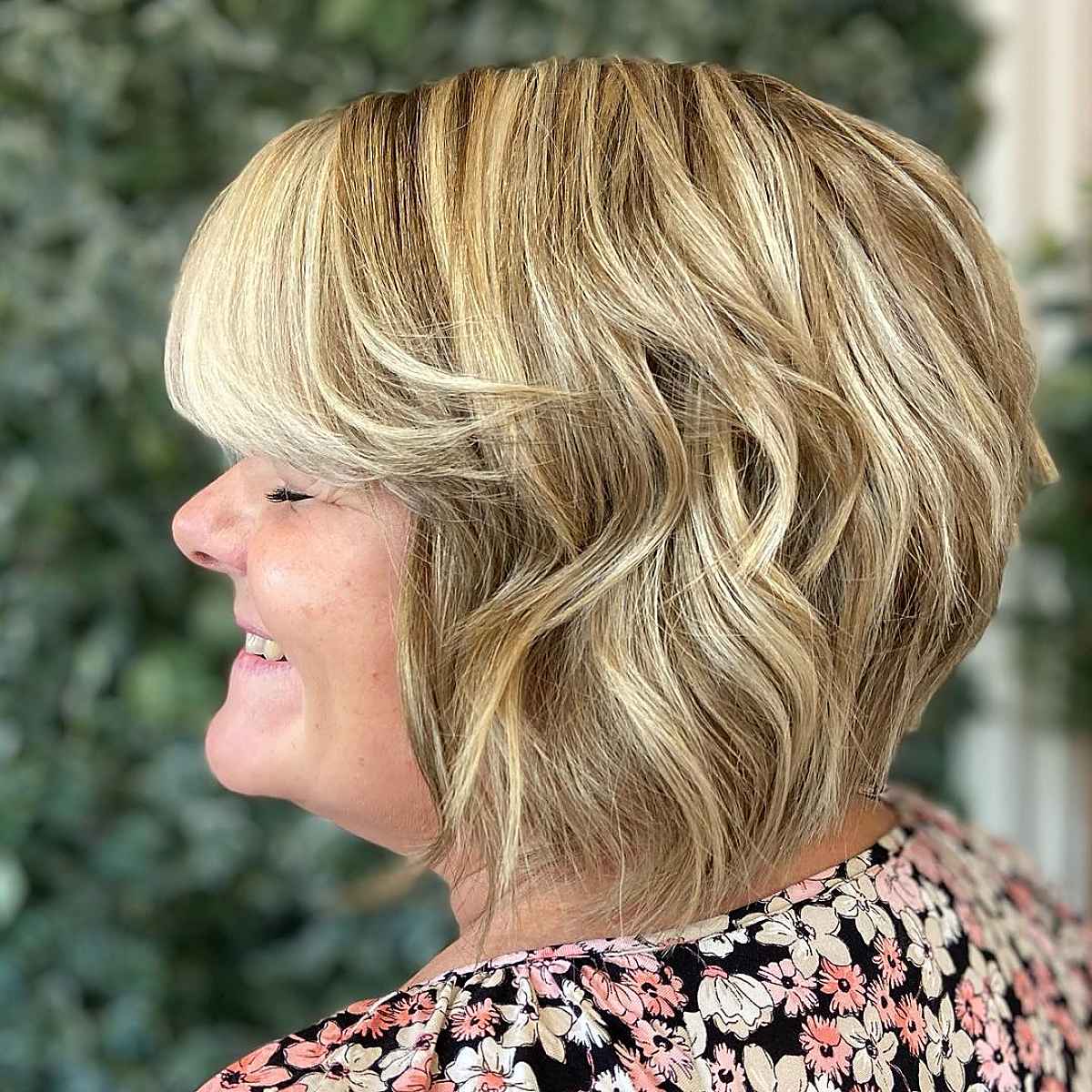
I’ve been burned by a muddy brown before, so I get the hesitation. But this is the winter hair color that finally made me understand the hype: a dark brown base that reads almost black in low light, then caramel and blonde highlights woven through the top and around the face. The technique is what sells it, a fine-tooth weave that lifts the dimension without turning the whole thing streaky. On my thick, wavy texture, the mid-back length carries the color well, and the loose waves catch the lighter pieces so they move. It’s a rich, warm look that doesn’t scream for attention, but it holds it. The golden blonde reads warm next to my skin, and the caramel keeps it from going brassy. For me, that’s the win.
Deep Auburn Waves
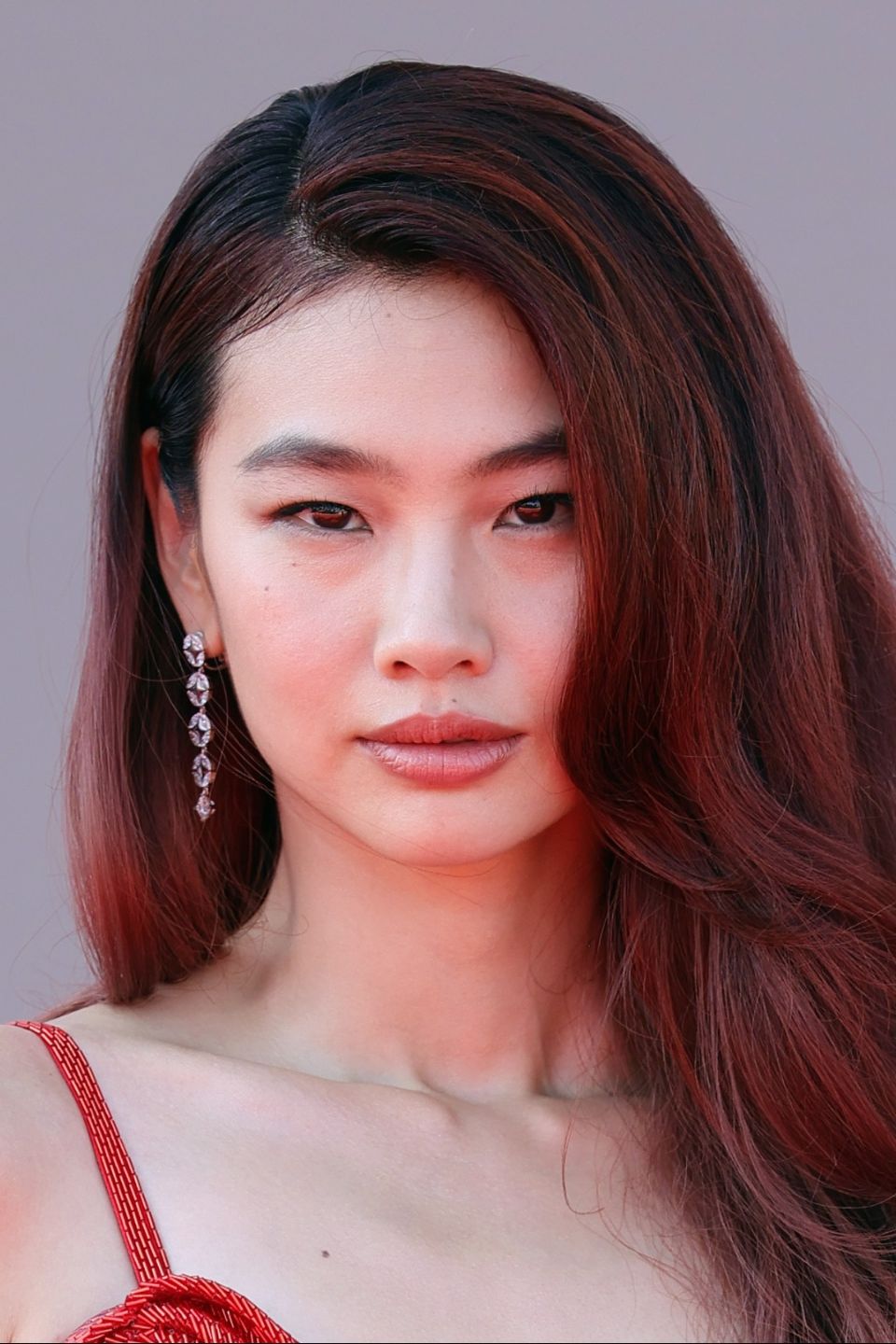
I’ve been burned by a muddy brown before, so I get the hesitation. But this is the winter hair color that finally made me understand the hype: a dark brown base that reads almost black in low light, then caramel and blonde highlights woven through the top and around the face. The technique is what sells it, a fine-tooth weave that lifts the dimension without turning the whole thing streaky. On my thick, wavy texture, the mid-back length carries the color well, and the loose waves catch the lighter pieces so they move. It’s a rich, warm look that doesn’t scream for attention, but it holds it. The golden blonde reads warm next to my skin, and the caramel keeps it from going brassy. For me, that’s the win.
Vibrant Copper Curls
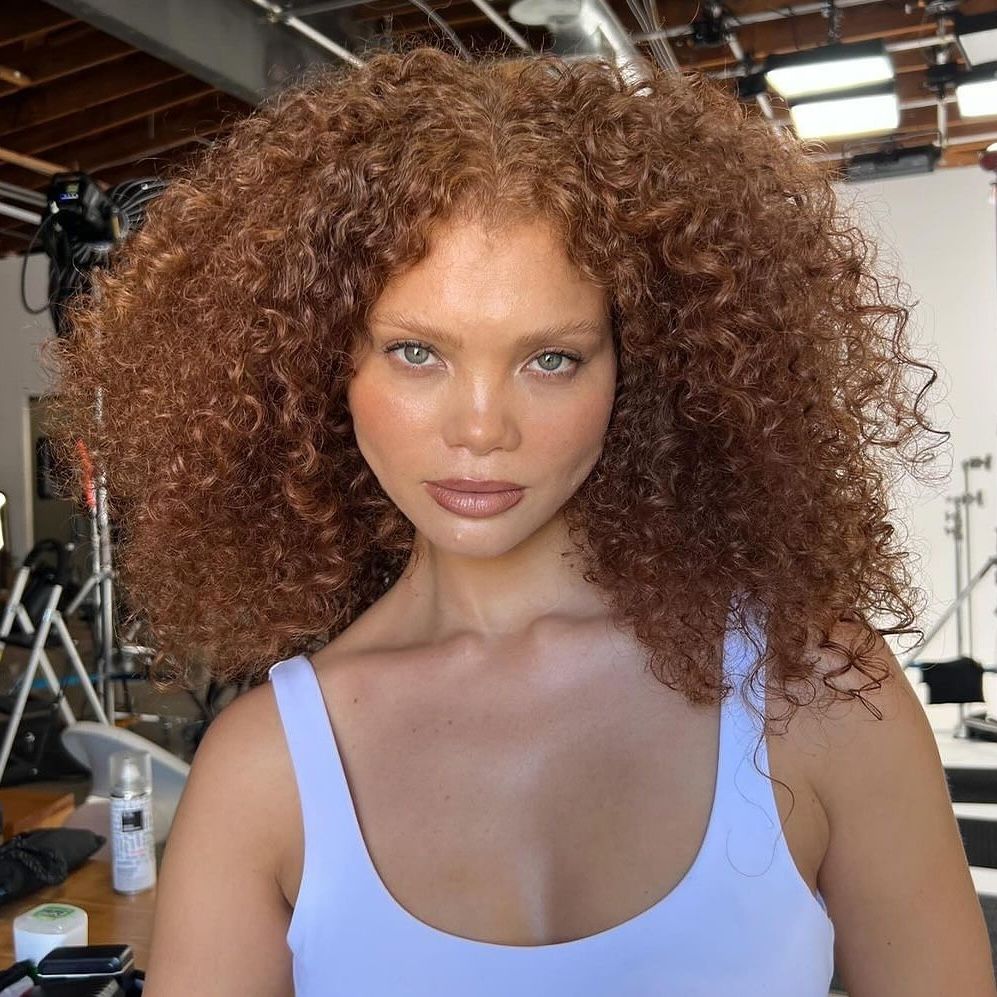
I’ve been burned by a muddy brown before, so I get the hesitation. But this is the winter hair color that finally made me understand the hype: a dark brown base that reads almost black in low light, then caramel and blonde highlights woven through the top and around the face. The technique is what sells it, a fine-tooth weave that lifts the dimension without turning the whole thing streaky. On my thick, wavy texture, the mid-back length carries the color well, and the loose waves catch the lighter pieces so they move. It’s a rich, warm look that doesn’t scream for attention, but it holds it. The golden blonde reads warm next to my skin, and the caramel keeps it from going brassy. For me, that’s the win.
Copper Red Wavy Blowout
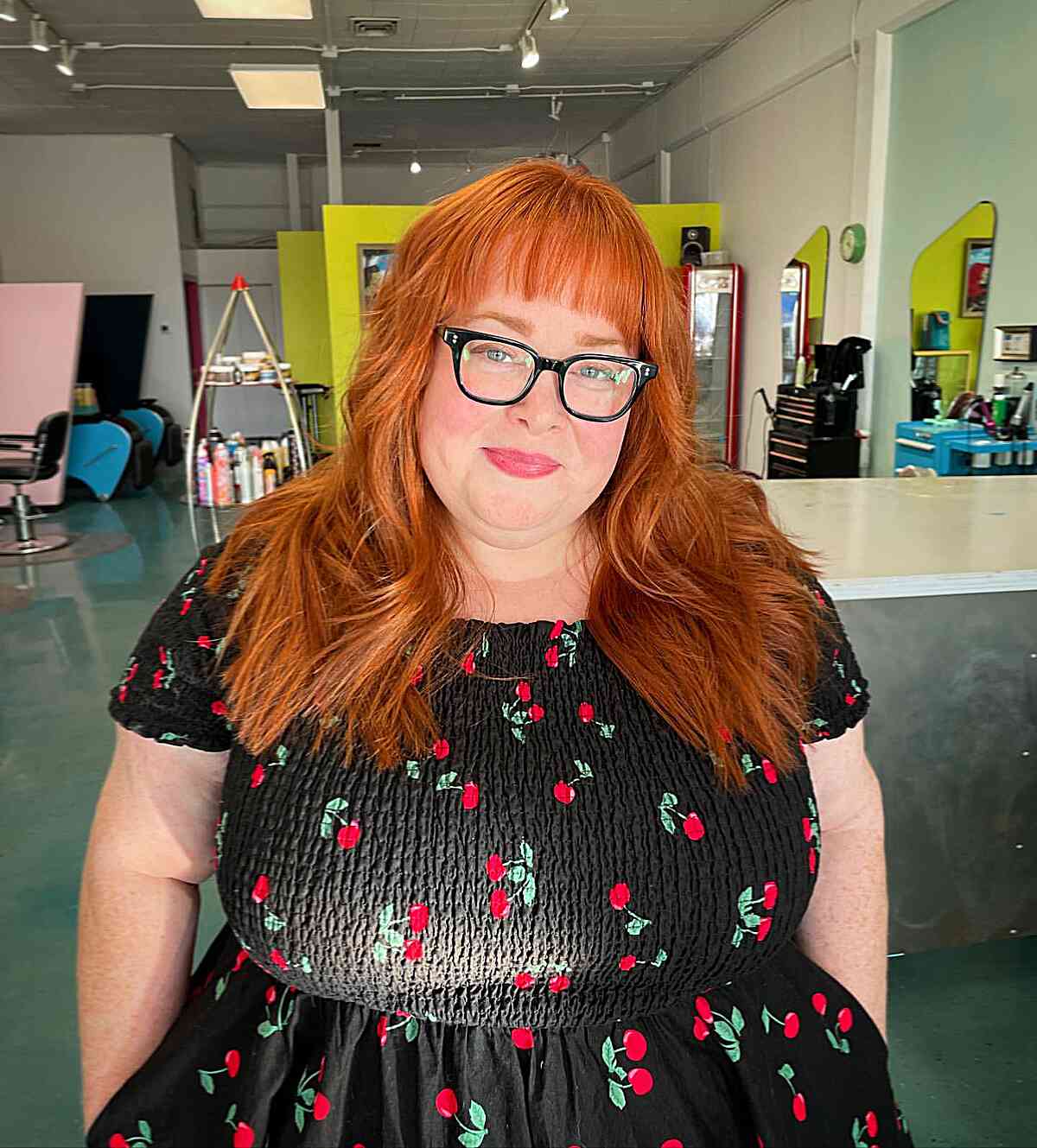
Picture a December party where the lights are low and everyone’s in black. Then this walks in. The vibrant copper red base reads like a fireplace, and the subtle lighter copper highlights catch every flicker. Shoulder-length, thick, wavy, with full bangs that sit just above the brow. Middle part, front view, styled into a blowout that holds its shape through dinner and dancing. The tone is warm, the technique is a single-process base with hand-painted highlights. For the season, it is the color equivalent of a cashmere throw. For the room, it is the thing people compliment first.
Shoulder-Length Medium Brown With Dimensional Highlights
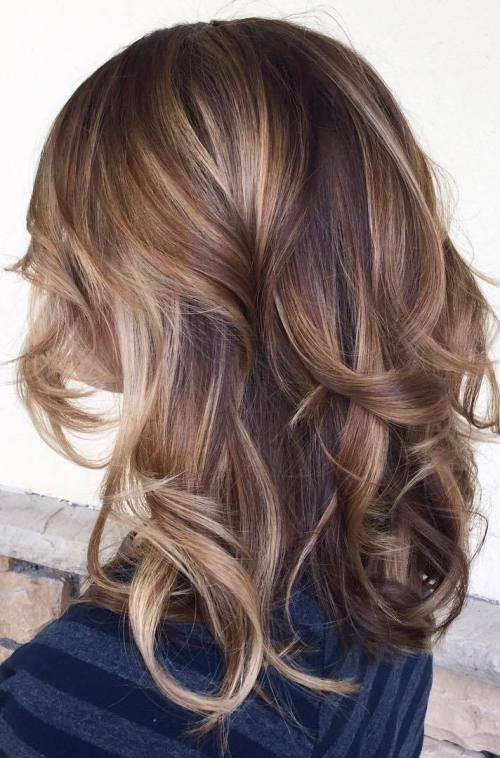
Best use of a side part I have seen in months. The medium brown base sits quietly, then the blonde and caramel highlights catch the light from the side framing. Shoulder-length, wavy, medium density, no bangs. The technique is foil highlights placed to follow the head’s curve, not random slices. The tone is warm, the effect is dimensional without being stripey. A side view shows exactly why: the highlights stack where the wave bends. This is not a color that screams. It is a color that earns a second look.
Dark Brown With Auburn Undertones
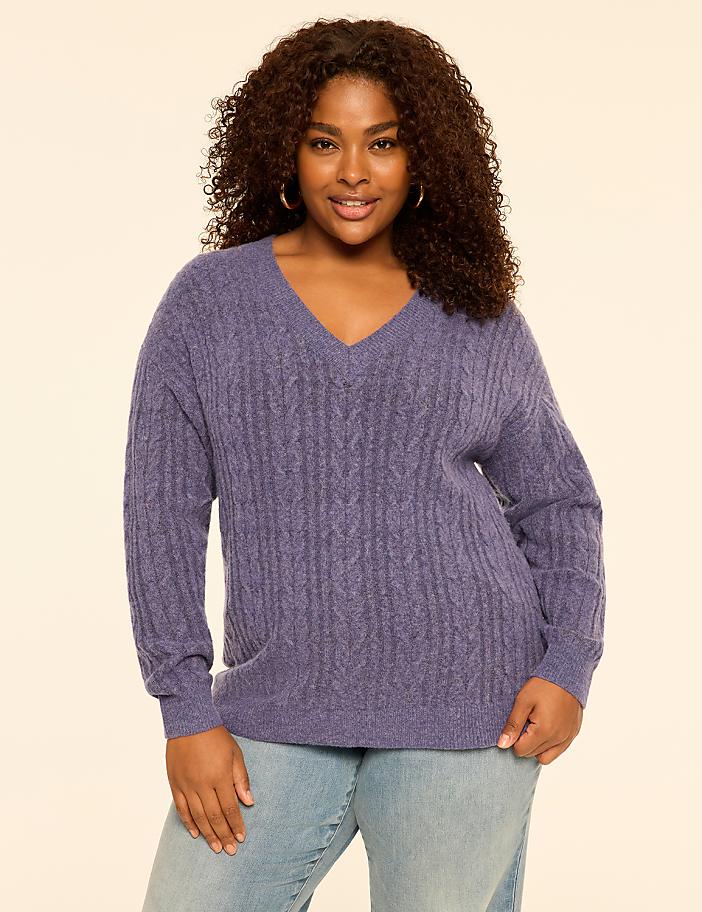
I spent years thinking dark brown was the safe choice. Then I tried it with auburn undertones and realized safe was never the point. The dark brown base is mid-back length, curly, thick, with long layers that let the natural curl pattern breathe. Middle part, front view. The auburn undertones are subtle, not loud. They show in direct light and disappear in shadow. That is the trick. The tone is warm, the technique is a gloss or semi-permanent color that adds depth without lifting the base. Wear and upkeep are minimal. Natural curls need a curl cream and about ten minutes. Trims every ten to twelve weeks. This color does not demand a salon visit every month. It just sits there, looking richer than plain brown ever did.
Mid-Back Medium Brown With Copper Highlights
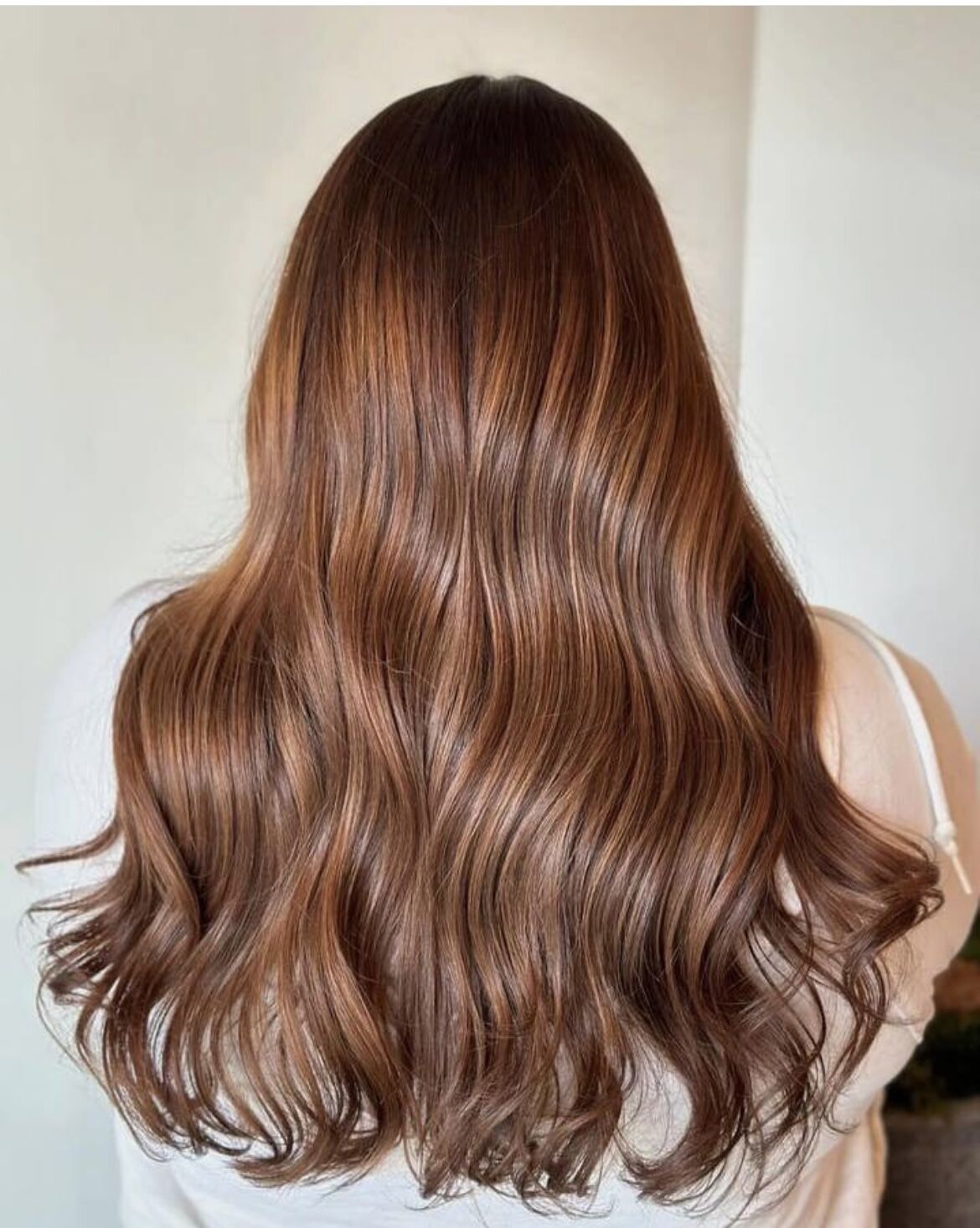
This is the color that makes richer skin tones look lit from within. The medium brown base is mid-back, wavy, thick, with long layers that move. Back view, middle part. The copper highlights are placed through the mid-lengths and ends, not at the root. The tone is warm, the technique is balayage or freehand painting. Copper on medium brown reads expensive, not brassy. It flatters because the contrast is soft, not harsh. The highlights catch light the same way gold jewelry does. Who should pass? Anyone who hates warm tones or wants a cool, ashy finish. Everyone else should book it. This is the color that gets called pretty before the person even finishes saying hello.
Vibrant Copper Red Waves
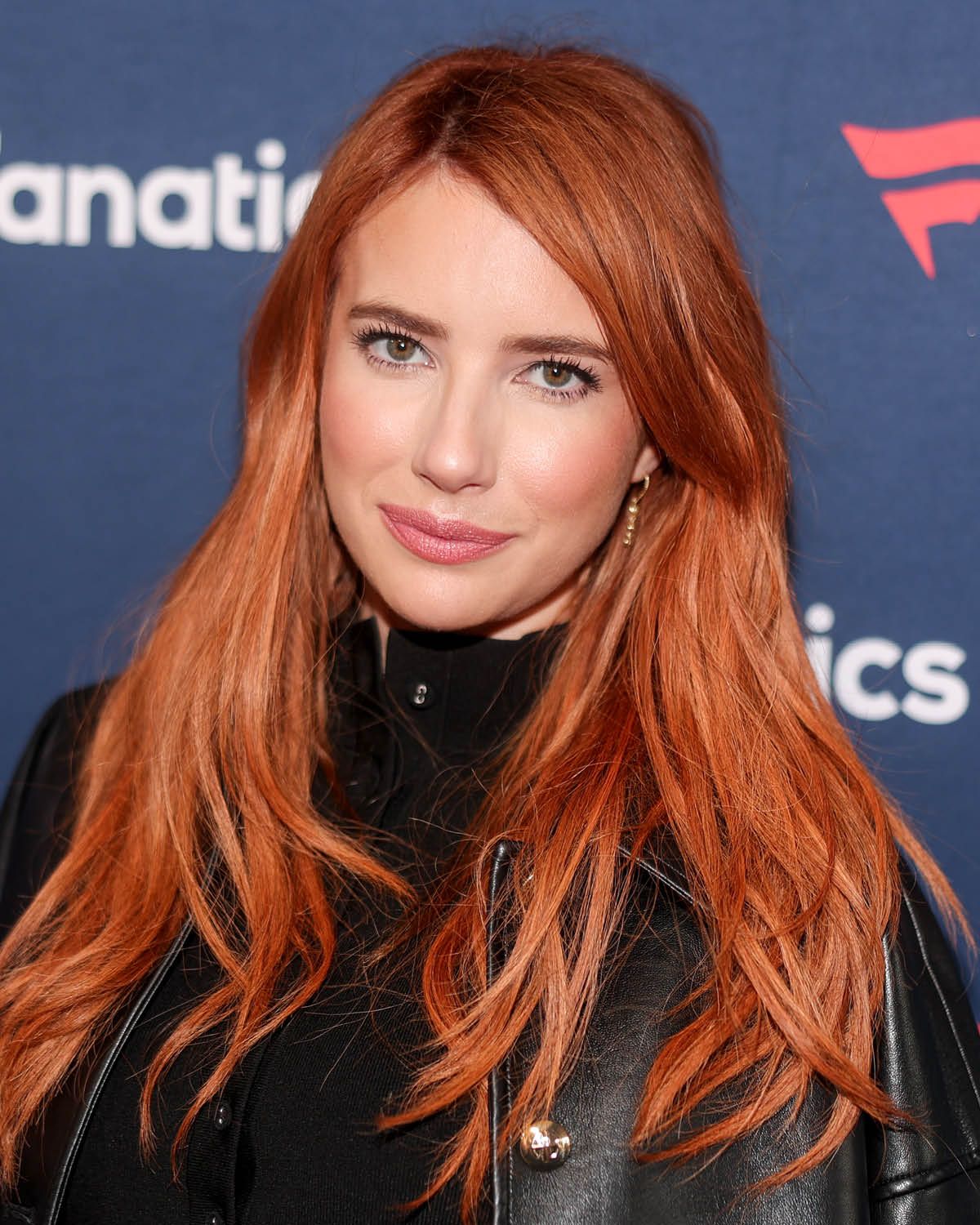
Does vibrant copper red actually survive a work week? Yes and no. The color is mid-back, wavy, medium density, with side-swept bangs and long layers. Middle part, front view. The tone is intense, the technique is a single-process all-over color. It looks incredible on day one. By day five, the red has faded to a softer copper, and the vibrancy is gone. That is the trade-off. Red shades fade faster than any other color. A color-depositing conditioner once a week keeps it from turning dull orange. Trims every eight to ten weeks for the layers and bangs. It is a high-maintenance color that rewards the effort. But only if you are ready to commit to the upkeep.
Deep Burgundy Red
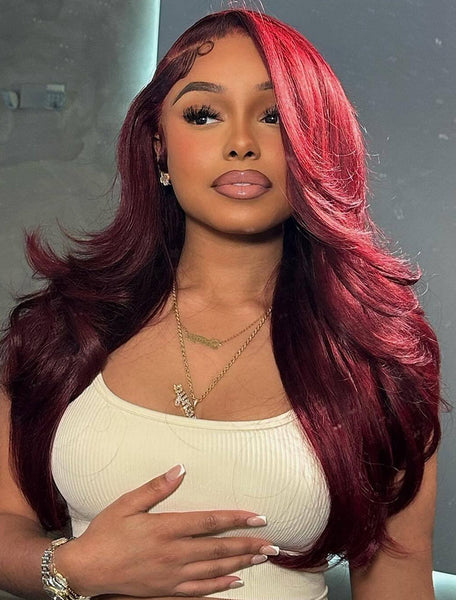
Deep burgundy red hair looks like a moody winter candle, until it doesn’t. The mistake most people make with this shade is letting it go flat, one-note, like you forgot to finish the job. The fix is in the technique: a full all-over application with a warm undertone underneath, not just a single tube slapped on from root to tip. At mid-back length with thick, wavy texture and side-swept bangs, this colour needs dimension from the cut itself, layers that catch light and keep the red from reading as a dark blob. The honest downside? Deep burgundy red hair fades fast, especially if you wash warm. By week four you are looking at a bruised brown if you skipped a color-depositing conditioner. That voluminous blowout with soft curls is not optional, it is the difference between expensive and flat.
Dark Brown Angled Bob
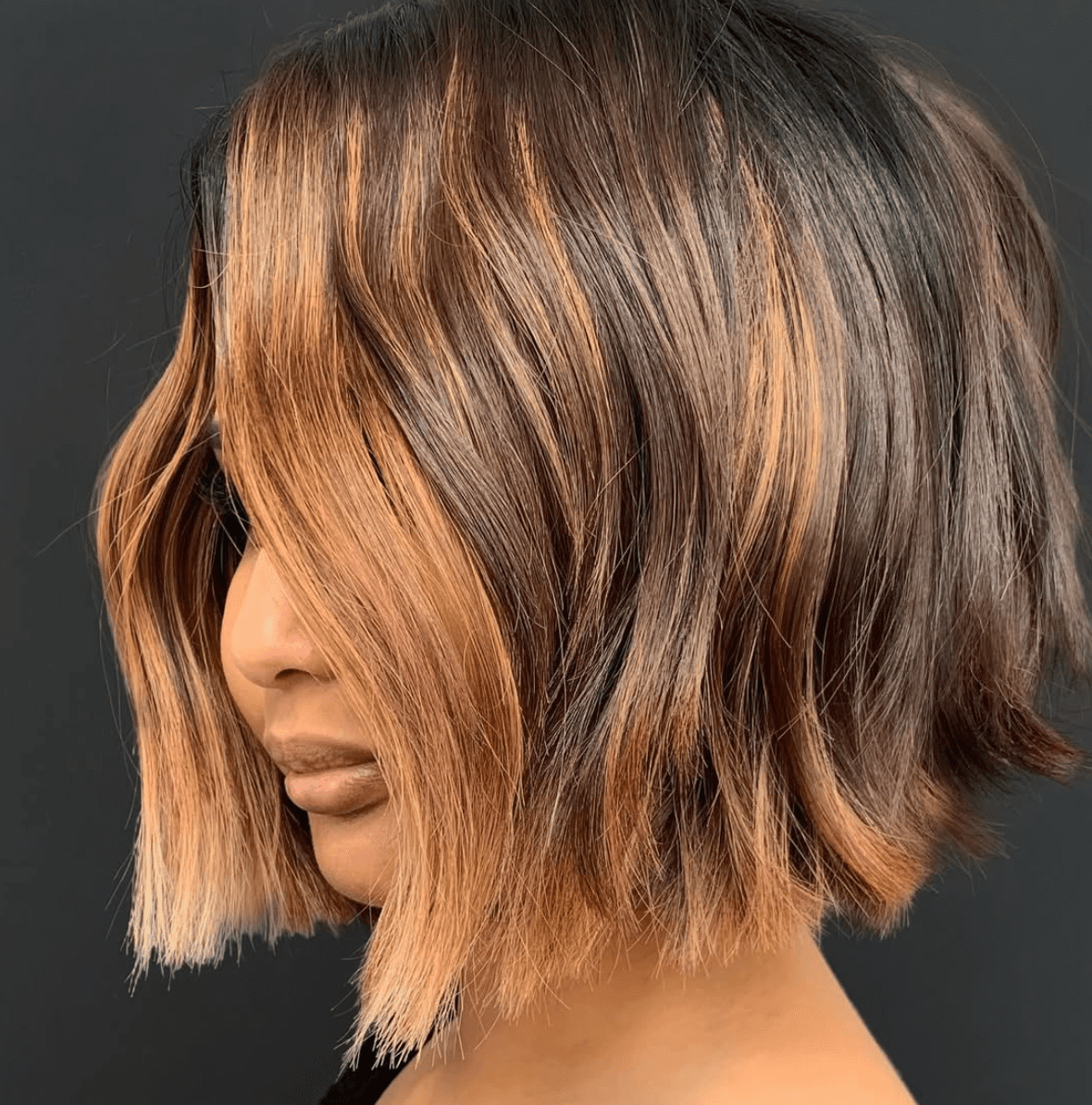
It is December, the tree is up, and you need a hair colour that works in candlelight and fluorescent office lighting. The dark brown caramel bob is that. An angled bob, chin-length, sleek, no bangs, with caramel highlights that catch every warm bulb in the room. The dark brown base keeps it grounded, the caramel lifts it just enough so your face does not disappear into the coat collar. Straight, medium density texture holds this shape without fighting you. This is the colour you wear to the holiday party where you want to look like you tried but not like you spent all afternoon. It lands in winter the way a good sweater does, familiar but better.
Visual Idea
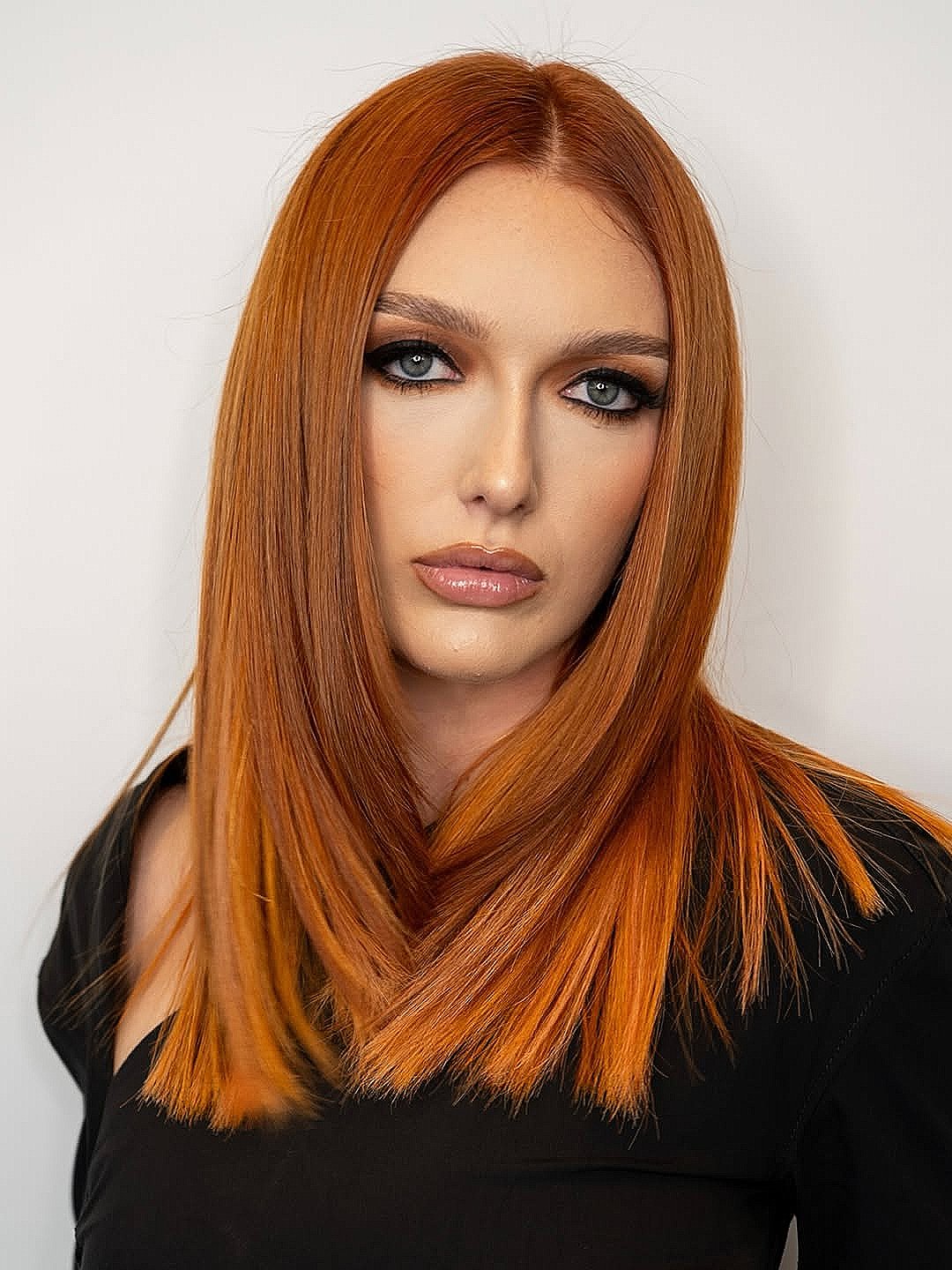
Bright copper is a commitment, not a whim. The technique that makes it work is a full saturation dye job on pre-lightened hair, because copper over brown reads as auburn, not bright. You want that intense, almost neon glow that says I meant this. At mid-back length with long layers, loose waves, and a middle part, the colour moves with you. Medium density wavy texture catches the light in each wave, no flat spots.
Maintaining it is the real skill. Bright copper fades to a brassy orange if you use the wrong shampoo, so a cool-water rinse and a sulfate-free wash are non-negotiable. The salon visit for this is three hours minimum, and you will be back for a gloss at week six. But the payoff is a shade that looks alive even in grey January light.
Mid-Back Visual Idea
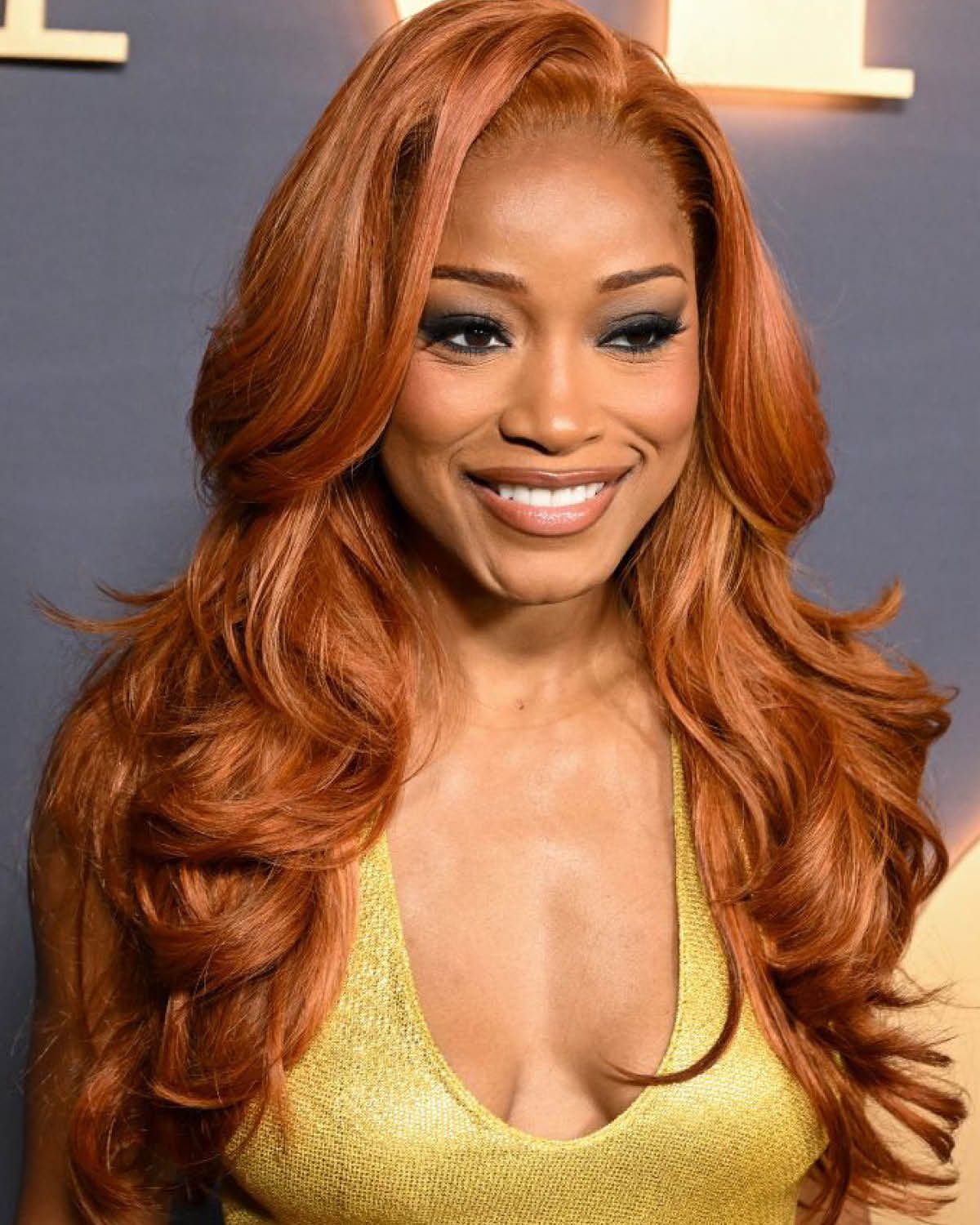
I will admit it: I was scared of copper red. I thought it would look costumey, like I was trying too hard for a season that already asks a lot of us. Then I saw this on a friend, mid-back length, thick wavy texture, all-over copper red with a side part and a blowout that gave her waves that actually held. And I understood. The transformation is not subtle, it is the kind of bold that makes people ask if you got a haircut when you really just changed your colour.
The technique is straightforward but not easy: a full saturation of copper red on a warm base, no highlights, no balayage, just pure pigment from root to end. The layers in the cut give the colour somewhere to land, so it does not sit flat. I booked it the next week. I have not looked back.
Shoulder Visual Idea
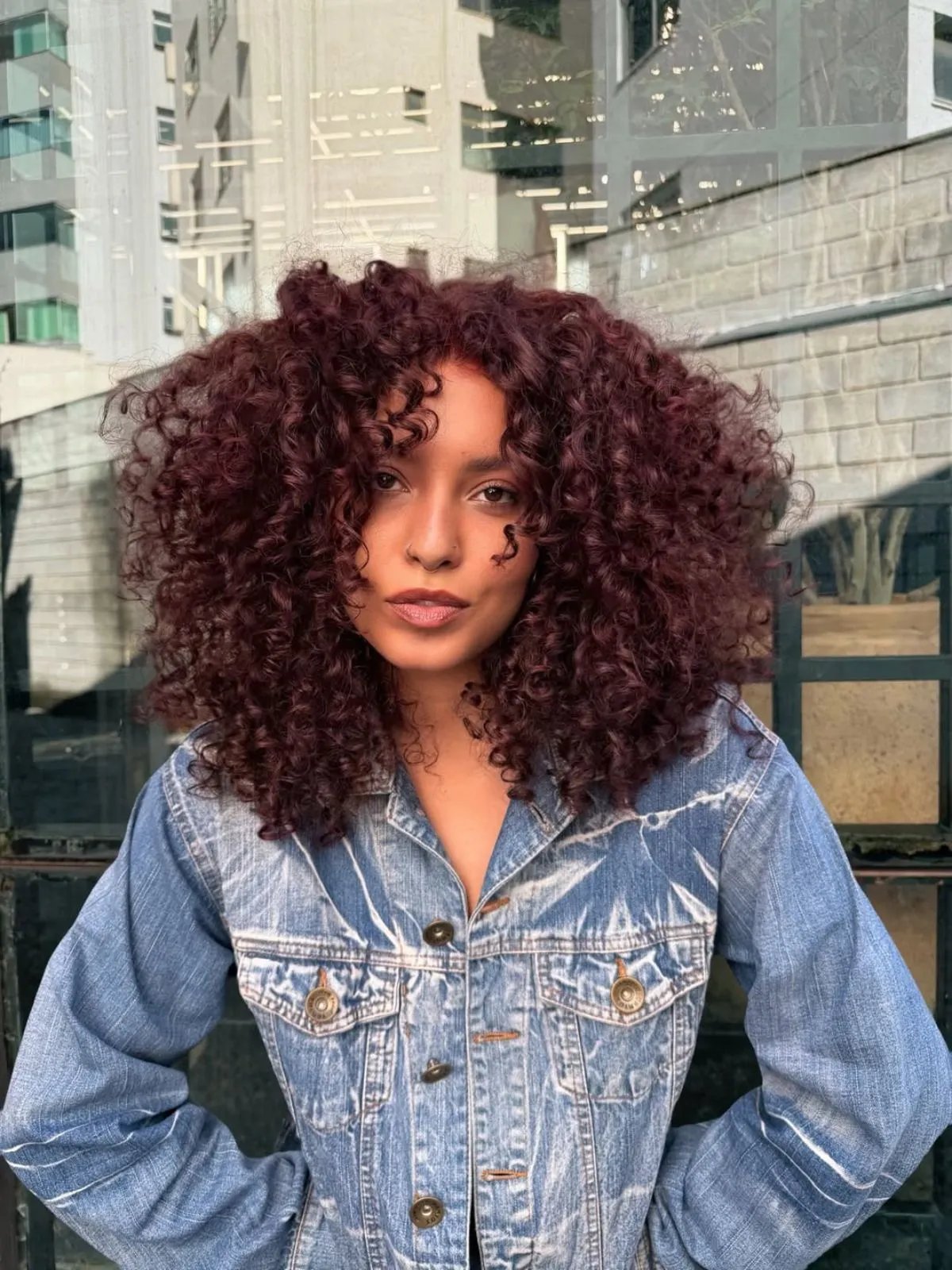
Deep burgundy on thick, curly hair at shoulder length is a specific kind of win. The colour reads rich, not flat, because the curls create natural highs and lows that keep the burgundy from settling into one dark mass. For plus-size women with cooler or neutral undertones, this shade sits close to the skin without washing you out. The middle part lets the curls frame evenly, no weird asymmetry. Upkeep is real: defined curls need a leave-in and a diffuser, and deep burgundy needs a color-depositing conditioner every other wash to keep the red from turning brown. But when it works, it works.
Long Layers Visual Idea
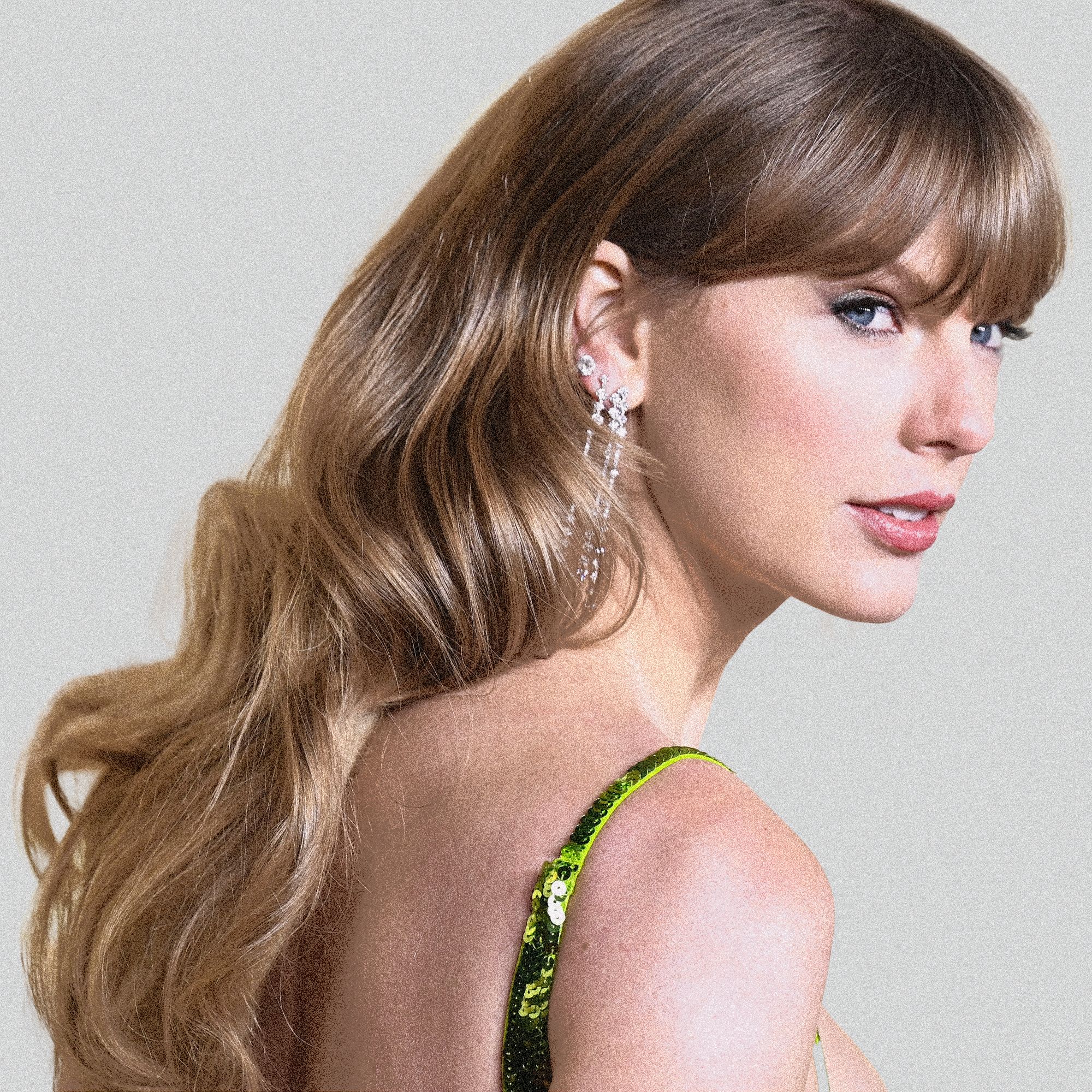
When did honey blonde get this quiet? The base is warm, the ash blonde highlights are subtle, and the whole thing lands somewhere between sunkissed and deliberate. On fine, wavy hair at mid-back length, loose waves hold their shape because the layers are long enough not to collapse. The side part helps the wispy bangs blend into the rest, so you are not fighting a separate fringe every morning. Styling is straightforward: a round brush on the bangs, a curling wand for the rest, done. The technique here is that the highlights are fine and spaced out, so they read as dimension rather than stripes. That is what keeps honey blonde from going brassy or flat. A trim every ten weeks keeps the ends from looking stringy. That is it.
What the photo does not show is how this behaves on day three. The ash tones do the heavy lifting, they keep the blonde from pulling yellow as the week goes on. A cool-toned shampoo once a week will maintain the balance. That is the only extra step. The rest is just letting the layers do their job.
Collarbone Visual Idea
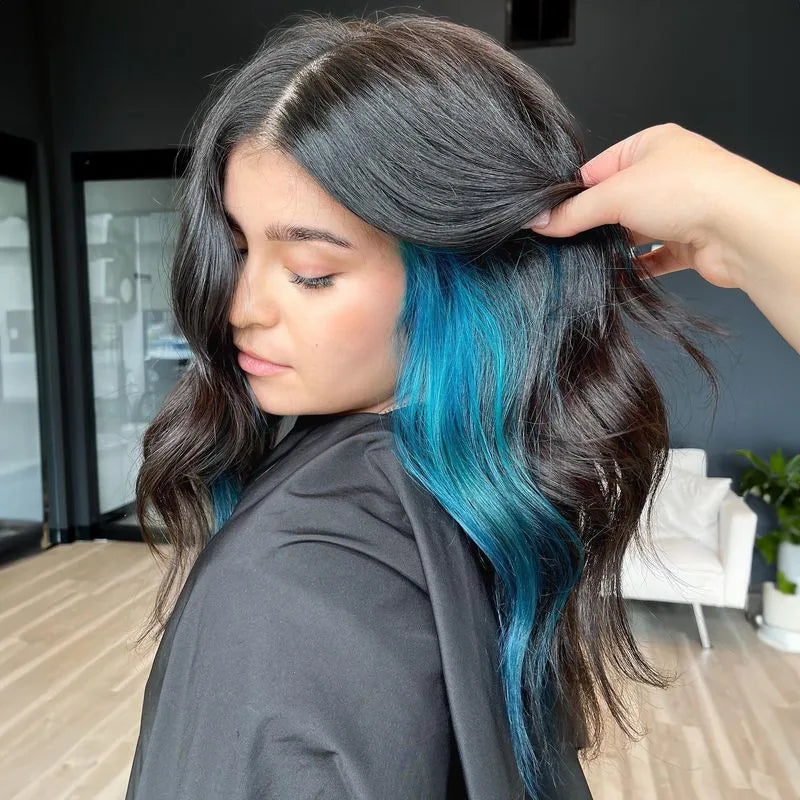
My gut says this is either going to look incredible or like a costume, and the difference is the stylist. Dark brown base with bright blue highlights, placed as peek-a-boo pieces underneath the layers, so the blue only shows when the hair moves. On thick, wavy collarbone-length hair, the middle part keeps it grounded. The honest downside is that bright blue fades fast, especially if your water is hard or you wash hot. Within three washes it can shift to a greenish-teal if the base is not properly pre-lightened. That is not a bathroom-mirror job. Book someone who knows how to keep blue cool and saturated, and expect to refresh the tone every four to six weeks. When it works, it works. When it does not, you are living with swamp highlights.
Curtain Bangs Visual Idea
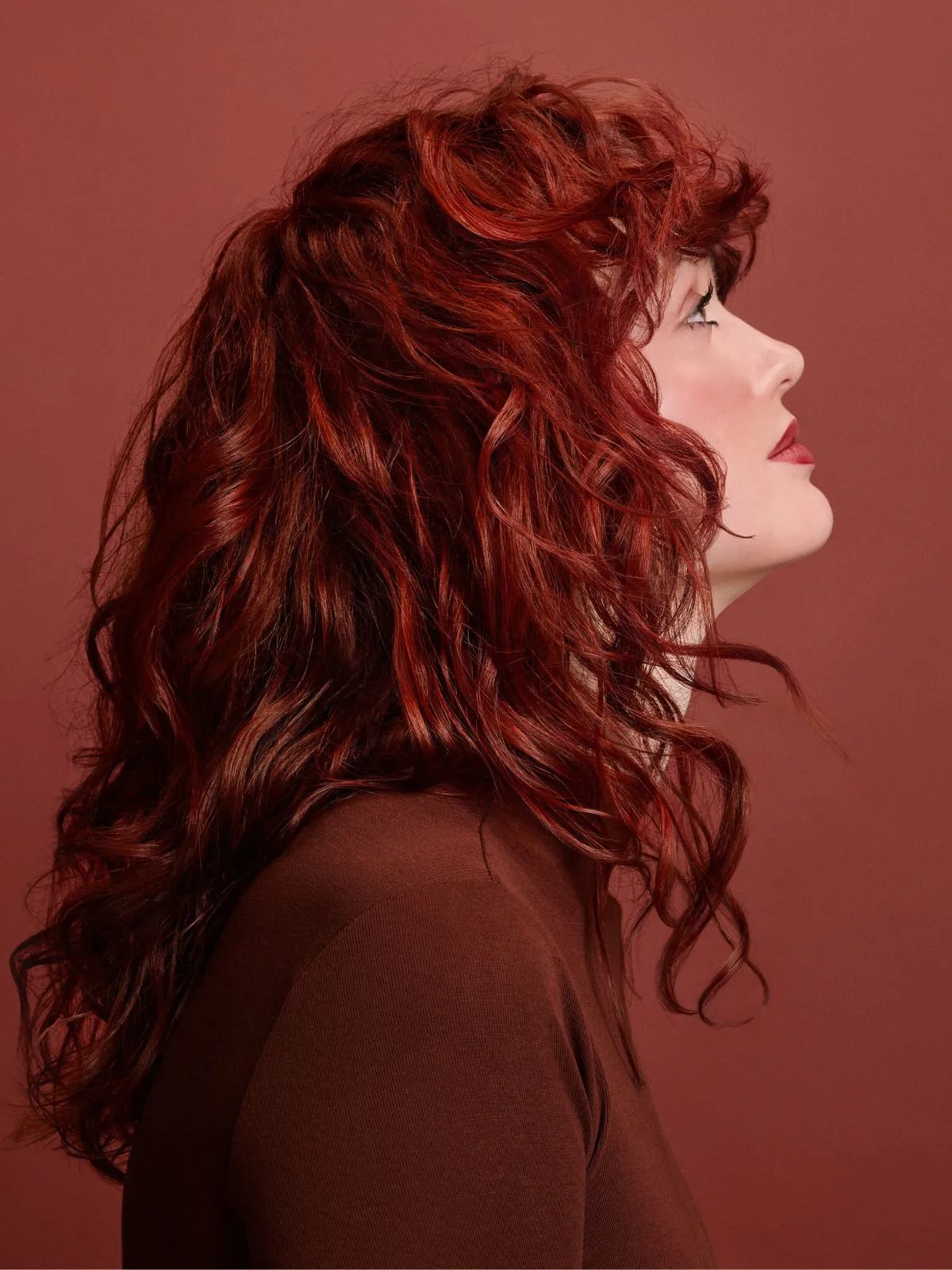
The light hits the copper first, then the auburn underneath, and suddenly it is January and your hair looks warm. Deep auburn base with subtle copper highlights is a winter color that does not rely on being dark or flat. On thick, wavy mid-back length hair, the curtain bangs frame the face without committing to a full fringe. The loose waves add volume, and the copper highlights catch the low winter sun in a way that a solid auburn cannot. This is the kind of color that works for holiday parties and also for a Tuesday when you just want your hair to look like it has dimension. The season suits it because auburn and copper read as rich and grounded, not washed out by grey skies. A gloss treatment every six weeks will keep the copper from turning brassy. That is the only maintenance, and it is worth it.
What makes this work is the placement. The copper is woven through the mid-lengths and ends, not the roots, so the grow-out is soft and the deep auburn base stays intact. The curtain bangs are cut to blend into the layers, so they do not separate into two distinct pieces. That is the difference between a bangs situation and a cohesive look. A salon job, yes, but one that buys you months of easy mornings.
Final Thoughts
After writing all of these, I’m still not a fan of the wolf cut, but I did book a root shadow for my own dark brown after seeing how much longer the grow-out looks on everyone else. The surprise for me was the silver streaks, I thought they’d wash me out, but on a collarbone lob, they just read as intentional. If you’re stuck in a winter rut, pick one of these and ask for a consultation first. That’s the real trick.