

I keep seeing the same thing in the salon chair next to mine: women asking for gray blending highlights, not to hide the gray, but to make it part of the plan. It’s a shift from covering to working with what’s growing in. I used to think gray meant a hard line at week five, but these blends change that.
Here are 31 gray blending highlights ideas, from low-maintenance grow-outs to bolder, more deliberate silver. Whether your hair is fine and flat by 4 pm or thick and curly, there’s a version here that fits. I’ve included the honest upkeep, the face shapes they flatter, and the exact words to say to your stylist.
Mid-Back Gray Blend With Ashy Blonde
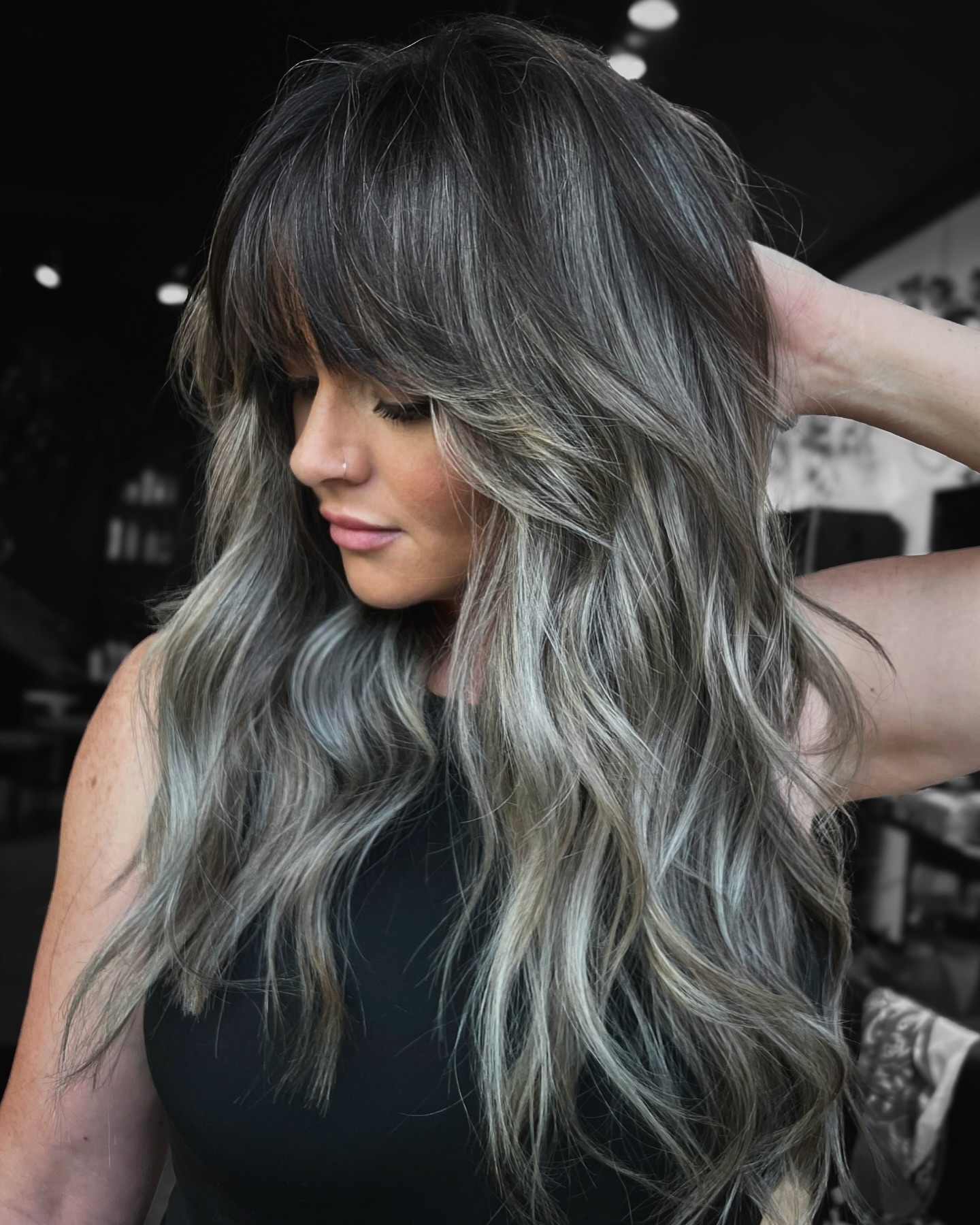
The trick to a mid-back gray blend is that it doesn’t try to hide the roots. The ashy blonde gray blend starts darker at the crown and lightens through the mid-lengths. That deliberate root shadow buys you six calm weeks between appointments. The tone is cool, almost silver, which reads clean against the wavy thick hair. When did brown start looking this expensive?
This length needs a blowout to hold the loose waves. Ten minutes with a round brush, or fifteen if your hair is as thick as it looks. A toner every six to eight weeks keeps the ash from pulling warm. It suits anyone who wants to grow out their natural gray without a harsh demarcation line. The middle part widens a round face, so a slight side sweep is worth trying first. A collarbone version of this would need fewer layers, but at mid-back the layers keep the weight from pulling the wave out.
Short Pixie With Natural Gray Blend
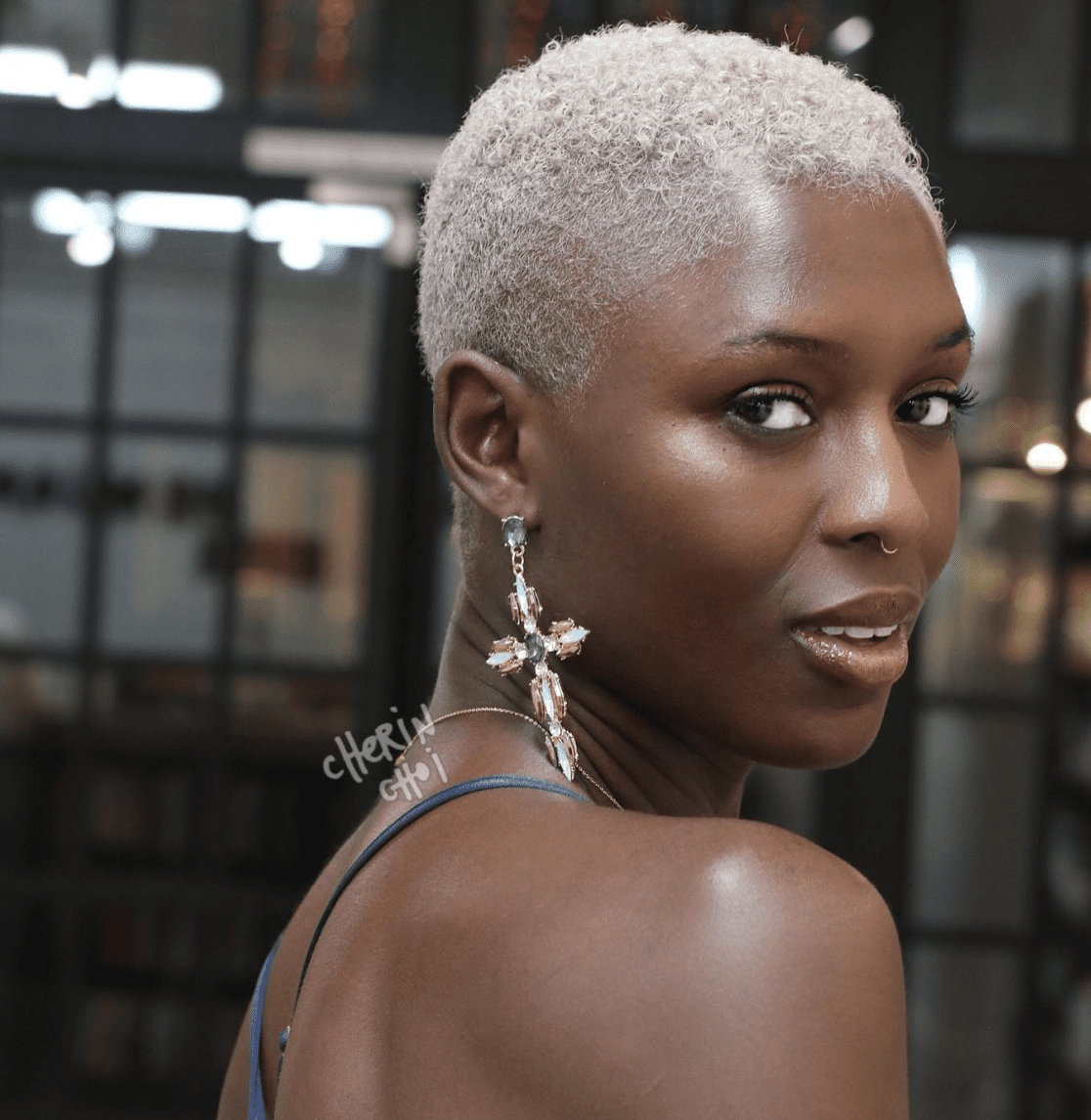
Thinking of a pixie for your gray? The natural gray pixie relies on texture, not length. The subtle blonde highlights are painted on, not foiled, so they look like natural variation rather than a highlight. The tone is a cool, soft gray that blends with the base. This is a salon job. The placement of those subtle blonde highlights is what keeps the short, wavy, fine hair from looking monochrome. A bathroom mirror won’t get the distribution right.
Collarbone Layers Dark Base Silver
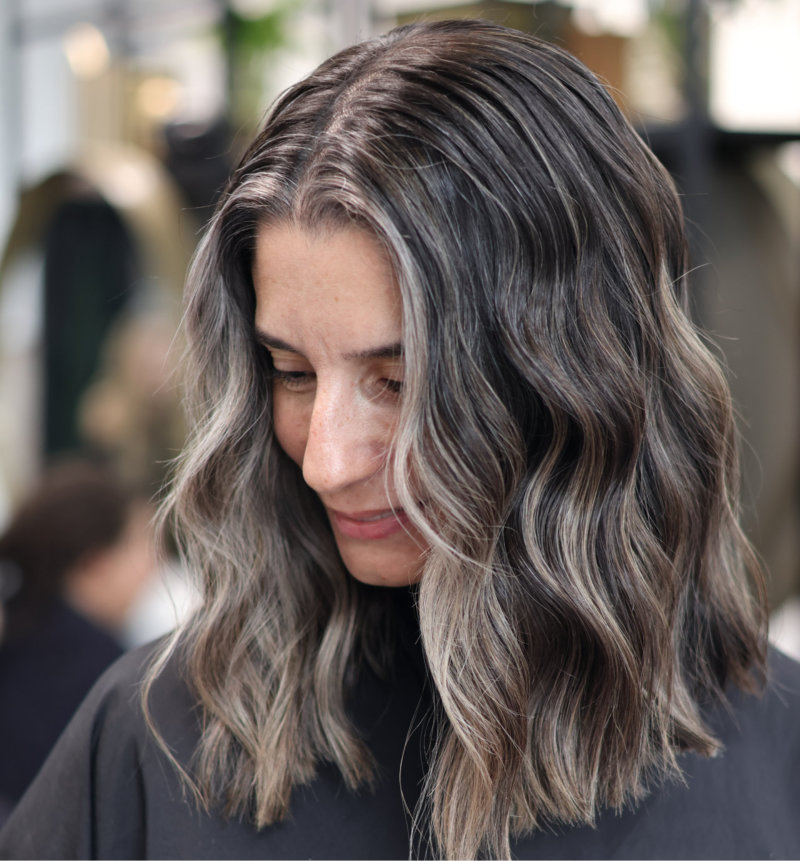
The dark brown silver blend is the most dramatic option in this roundup, and the most demanding. A dark base with blended gray and silver highlights creates a stark contrast that catches light from every angle, but that contrast is also the problem. Silver on dark shows every fade, every warm shift, every week past the toner appointment.
This collarbone length with layers and a middle part works because the wavy blowout softens the edge. Medium density hair holds the shape without going flat. The silver highlights need touching up every eight to ten weeks, and the base may need attention sooner if your natural gray is coming in fast. Book this if you want the drama. Skip it if you want low maintenance.
Chin Bob Ashy Gray Highlights
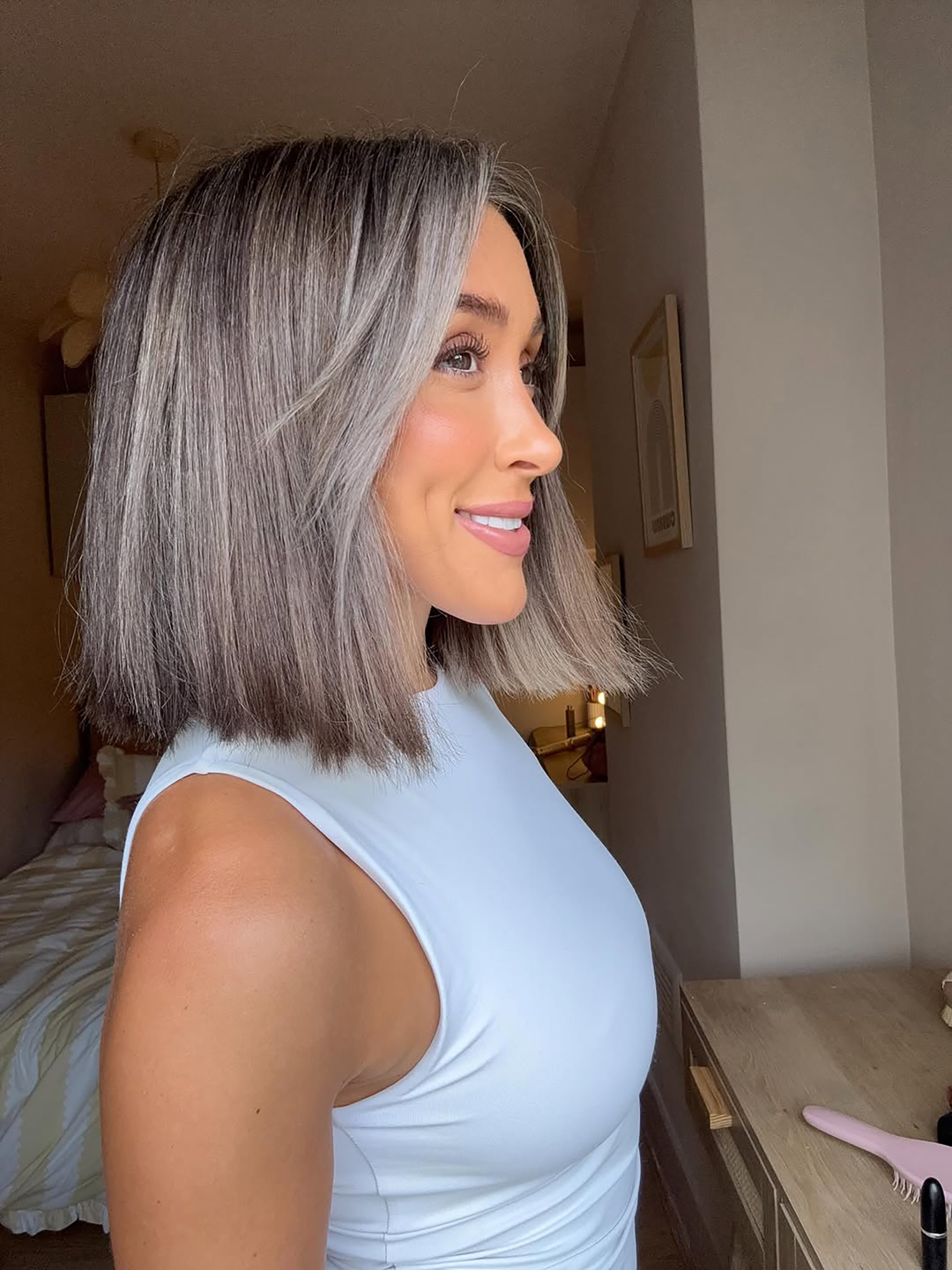
This ashy gray bob with highlights looks polished on day one. The woven highlights create a soft transition against the darker base, so the grow-out stays subtle for weeks. The ashy tone stops the color from turning brassy, and the straight fine texture keeps the sleek blowout going past lunch. By week three, the grays blend without a hard line. It’s a bob that fades gracefully, not abruptly.
Mid-Back Waves With Curtain Bangs
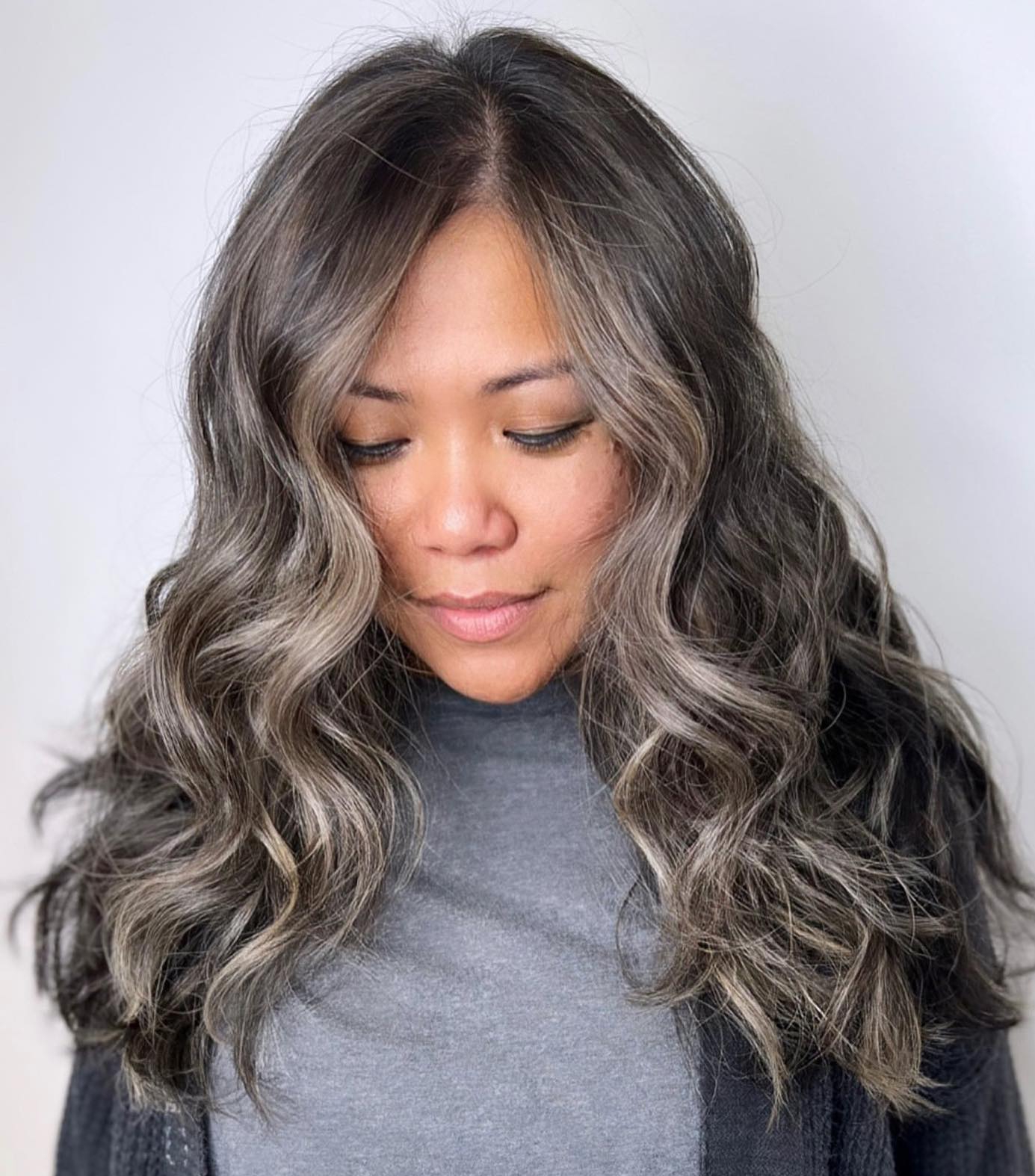
Who does the gray blend curtain bangs actually work for? Oval and heart-shaped faces, mostly. The curtain bangs frame the forehead and soften the cheekbones, so the gray blending highlights don’t land too severe. The mid-back length with loose waves adds volume, and the ashy tone keeps the whole thing cool-toned. It’s a face-framing trick that makes the gray transition look deliberate, not accidental. The thick wavy texture grabs the color well, so the grays sit on the surface rather than sinking in. That means more dimension and less flatness.
When you sit in the chair, be specific. Ask for curtain bangs that start at the brow and feather outward. Request long layers throughout the mid-back length so the waves hold shape rather than collapse. And tell the stylist you want a seamless gray blend curtain bangs that lets your natural gray grow without a line. The technique matters: woven highlights, not chunky streaks. That’s the whole point.
Collarbone Waves Vibrant Gray
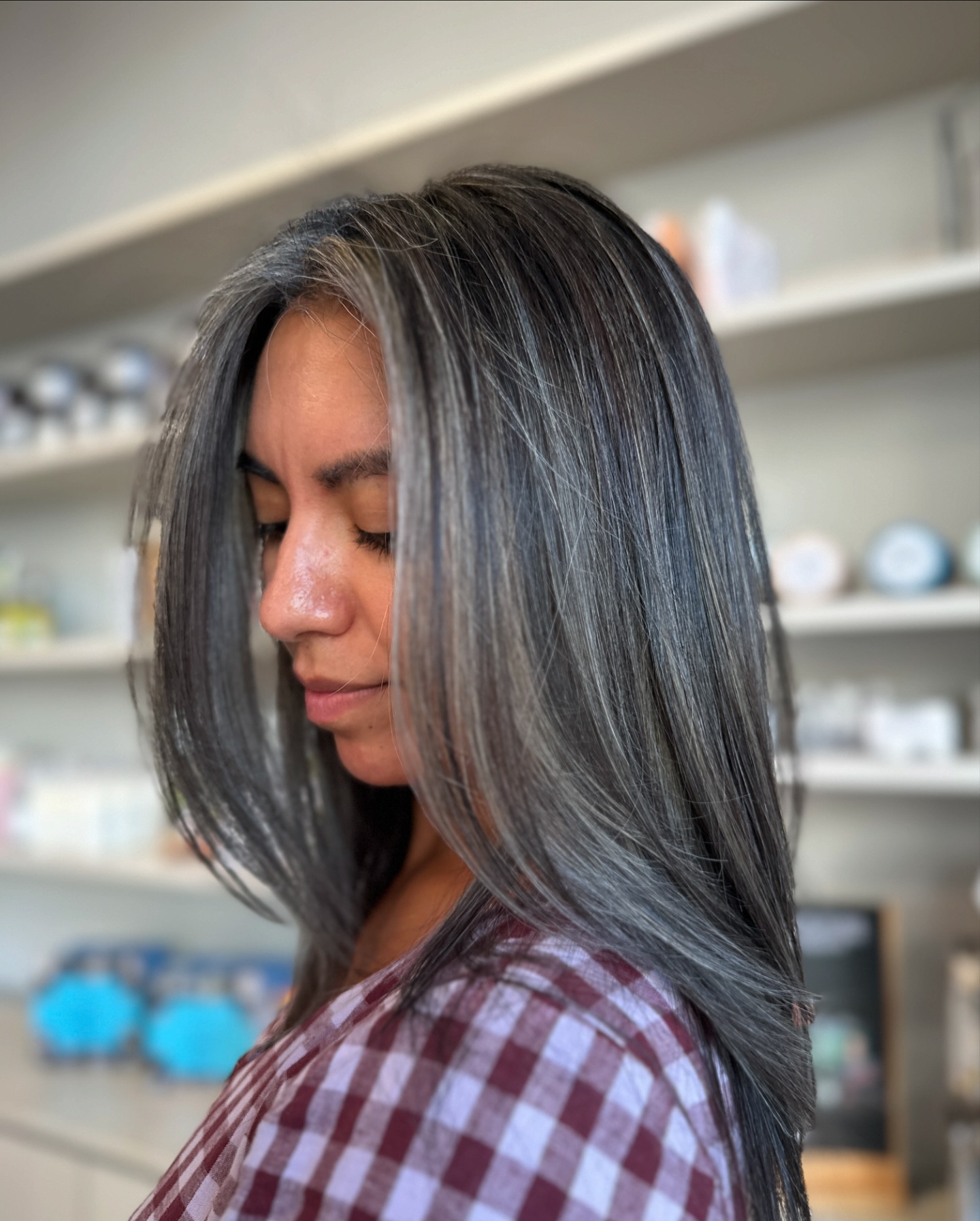
Vibrant gray highlights don’t fade quietly. That makes them a good pick for spring and summer, when you want the color to pop under natural light. The collarbone length with loose waves shows off the bright tone against the darker base, and the wavy medium texture catches the light at every bend. The waves break up the color, so the vibrant gray highlights read as dimension, not streaks. The upkeep is real: expect a toner every 8-10 weeks to keep the vibrancy from turning muddy. The gray blending technique needs that refresh because the brighter the highlight, the faster it warms up. It’s a seasonal statement that asks for regular attention, but the payoff is a color that actually announces itself.
Long Layered Loose Curls
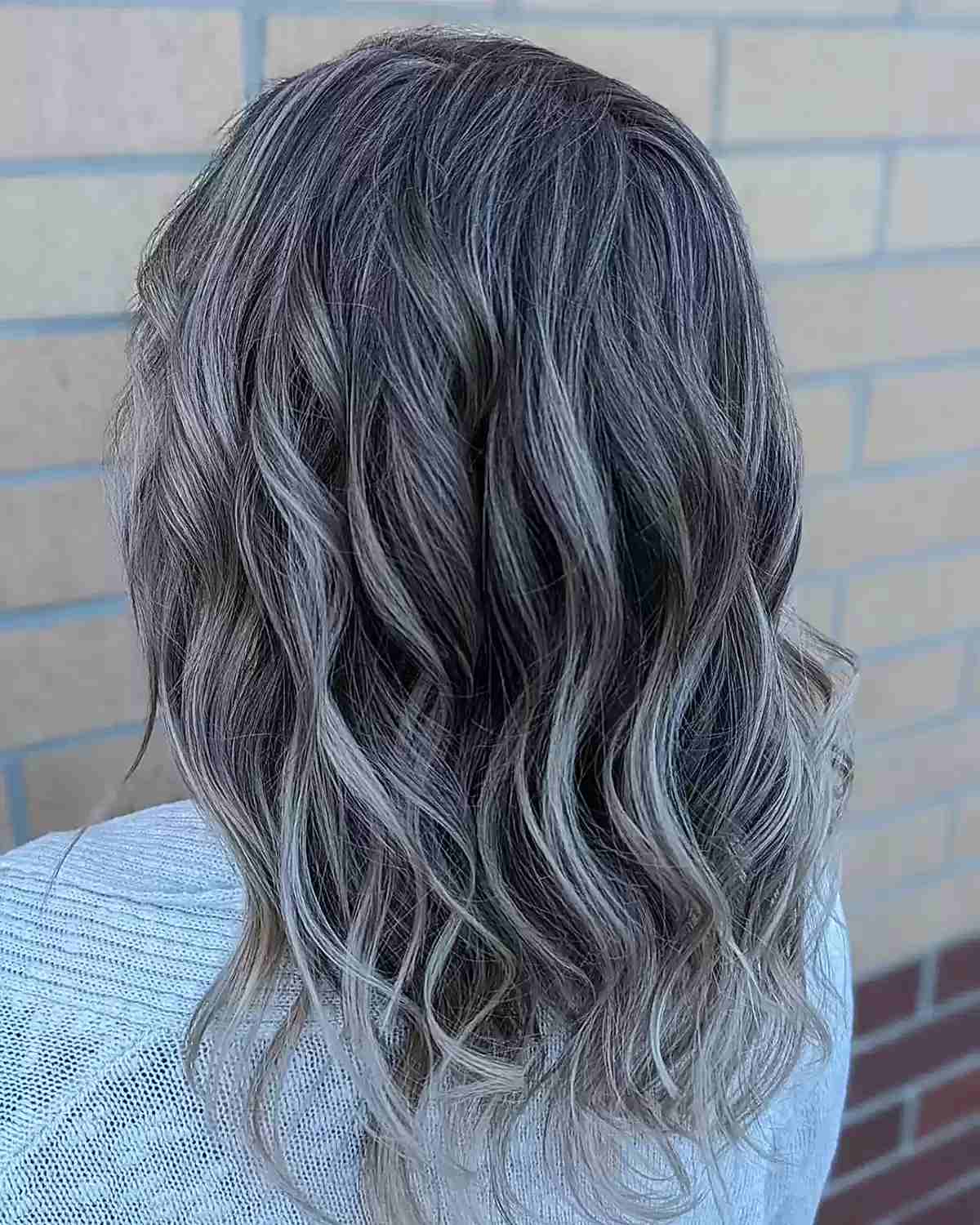
I confess: I was skeptical about long layers with thick, wavy hair and a natural gray blend. Too often, layers get cut too aggressively, and the curl pattern turns stringy by midday. The trick is keeping the layers long enough that the weight pulls the wave down, not out. Here, the loose curls start below the shoulder, so the volume stays at the ends, not the crown. The gray reads as a soft interweaving, not a stripe. The honest downside is split ends. With thick texture, the ends dry out faster, and a trim every six weeks is non-negotiable. Skip that, and the gray looks dull, the curl frays. A gloss treatment every eight weeks keeps the blend seamless and the wave defined.
Collarbone Layers Dramatic Gray Blend
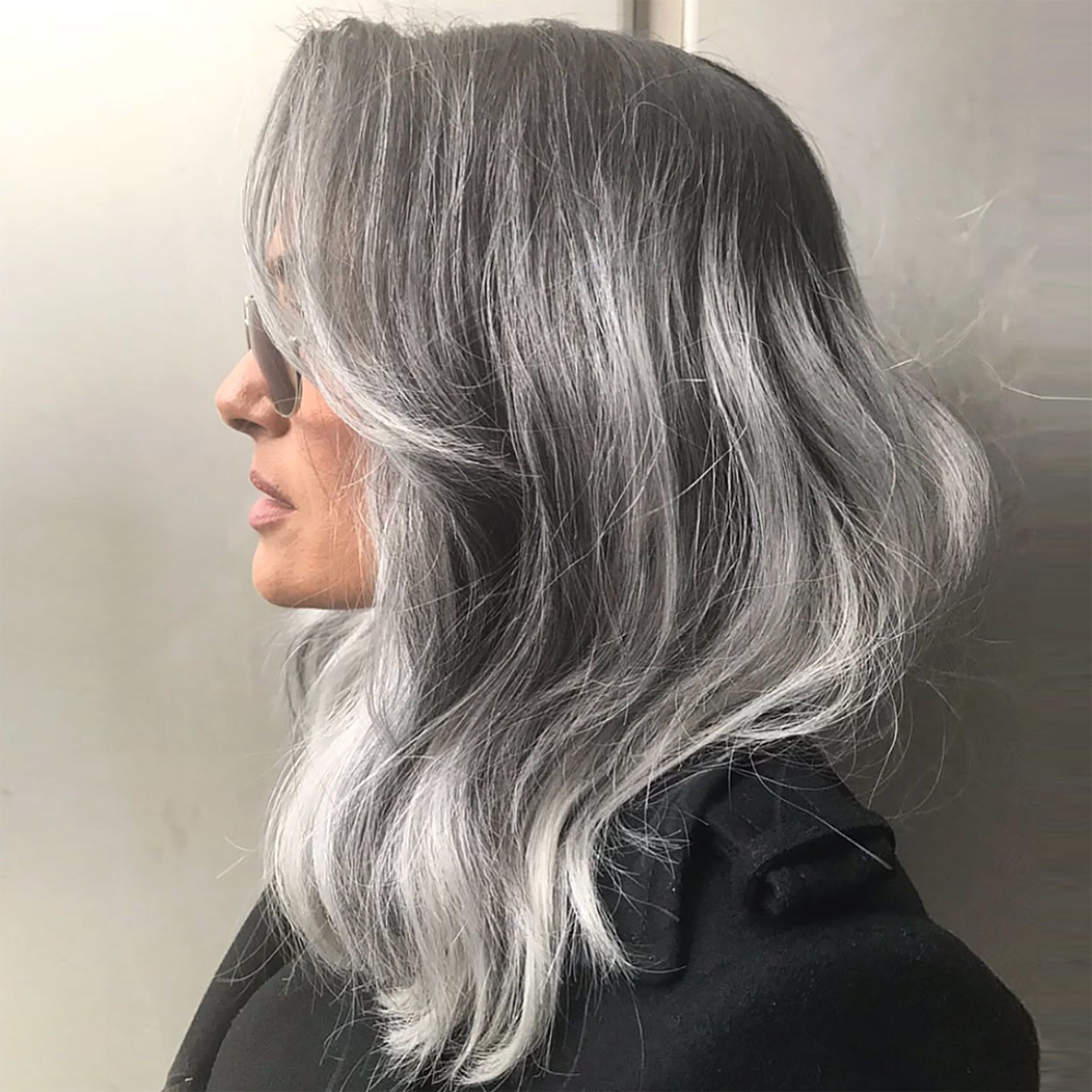
My gut reaction to this: that is a lot of gray, and I mean that as a compliment. The dramatic gray blend works because it is not one shade. It is a dark base with silver and gray highlights woven through the layers, plus a few brighter strands near the face for contrast. This is not a bathroom-mirror job. The multi-tonal technique requires a stylist who understands placement — the silver needs to hit the mid-lengths, not the roots, or the grow-out turns muddy. Collarbone length with curtain bangs keeps the weight off the face while the gray does the talking. Thick, wavy texture holds the definition without product. Book a consultation first. The payoff is worth the chair time.
Long Layers Seamless Gray Blend
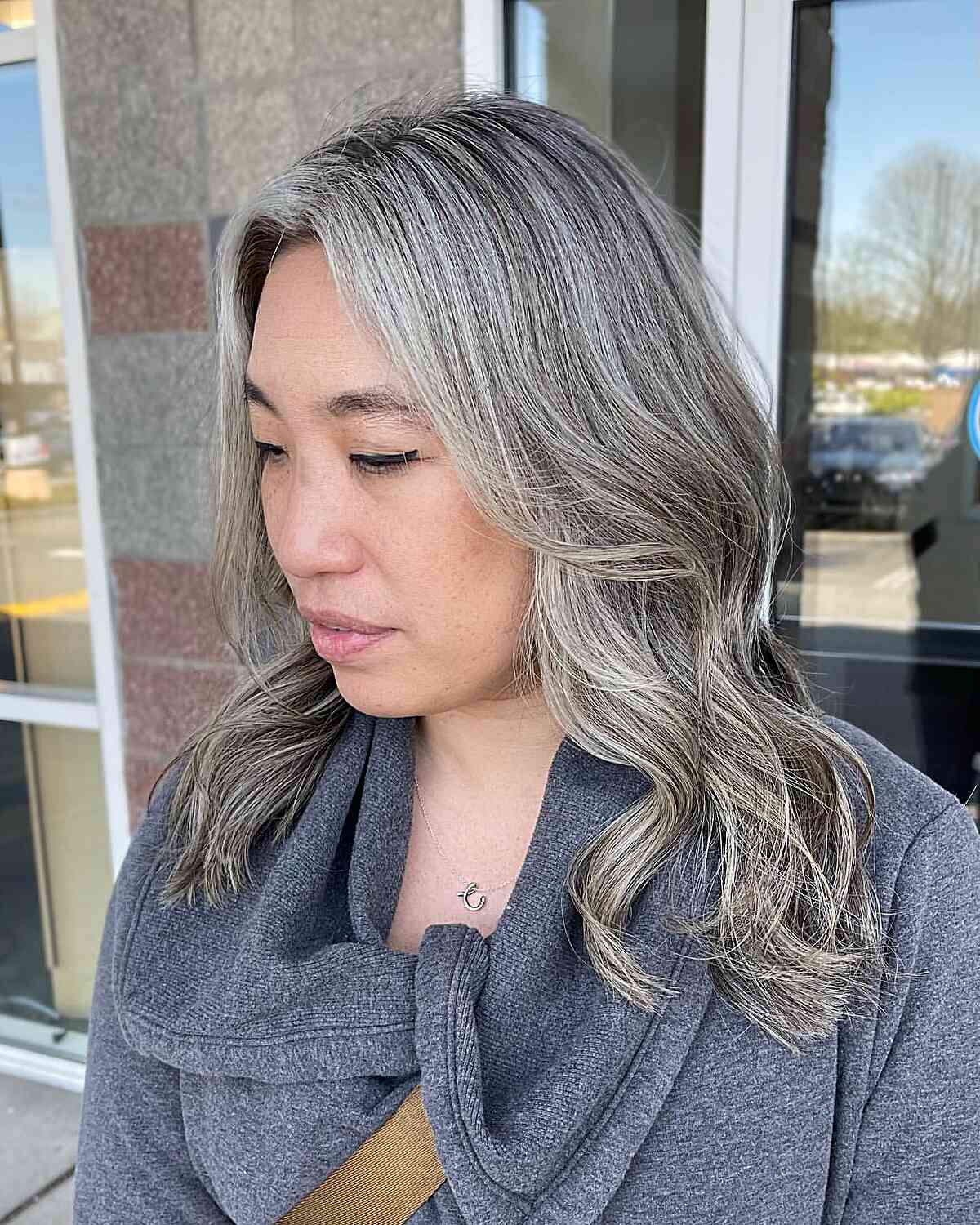
Here is the thing about a seamless gray blend: it does not look like you tried. The seamless gray blend here uses curtain bangs to soften the transition between natural gray and lighter tones, so the colour reads as grown-in, not applied. Mid-back length with long layers means the weight pulls the wave straight, which flatters medium-density hair that tends to poof. The tone stays neutral, neither warm nor icy, which is the hardest part to maintain. A toner every ten weeks keeps it from tipping beige. Styling is fifteen minutes with a rough dry and a round brush on the bangs. The grow-out is invisible — that is the whole point. A trim every eight weeks keeps the ends healthy.
Collarbone Wavy Ashy Highlights
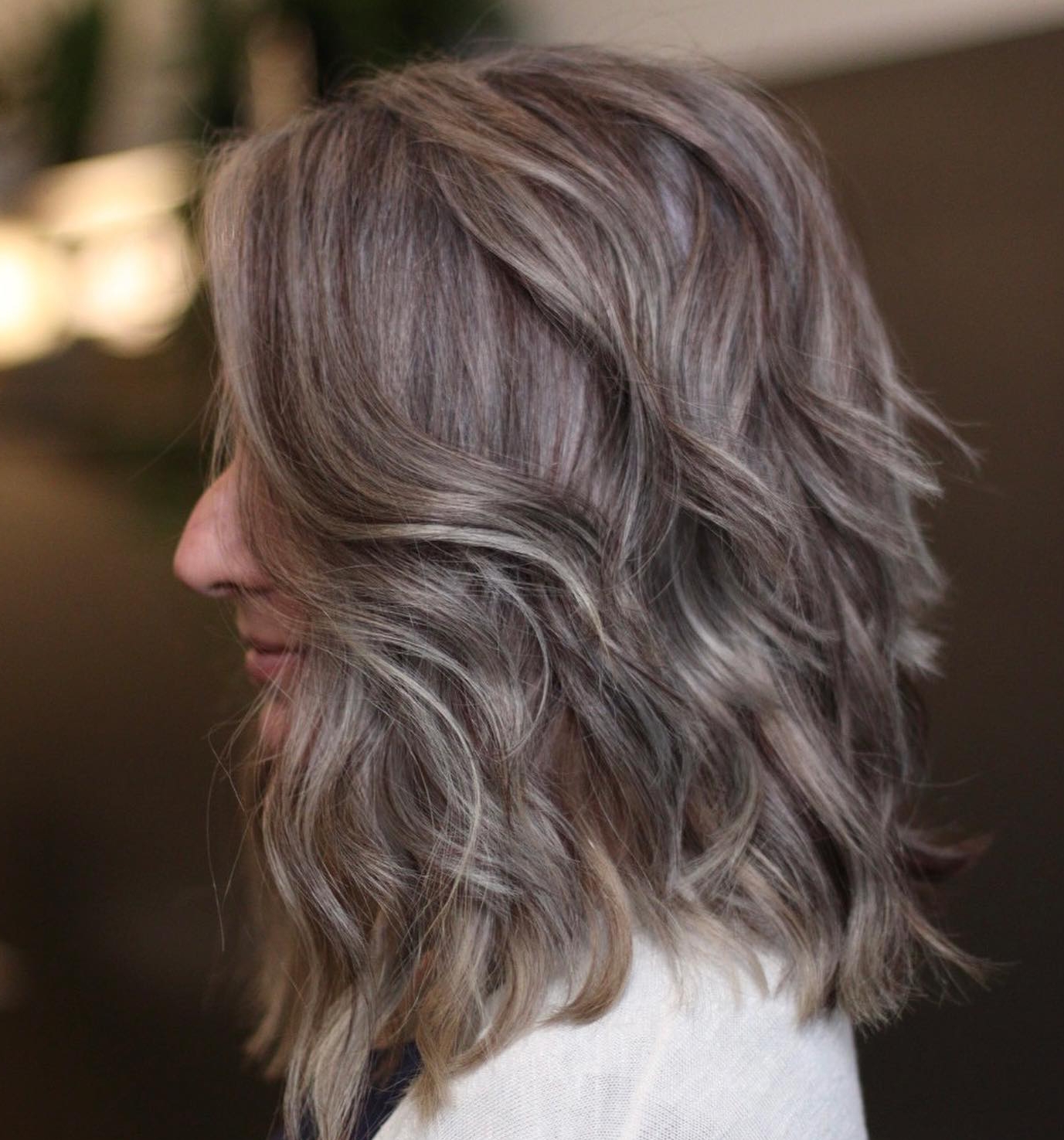
How much time are you willing to sit in a bowl? Because that is the real question with an ashy gray base blend. The ashy highlights here are painted onto a gray base, and the tone is cool enough that any warmth in the natural colour will fight it. Collarbone length with wavy texture, medium density — the ash reads as soft dimension, not stripe. The salon time is two hours minimum for the initial application, and the toner needs a refresh every six weeks to keep the gray base from turning brassy. The cost is not just money; it is the commitment to a cold tone. If you want low effort, pick a warmer blend. This one asks for attention.
Long Layers Natural Gray Blend Curls
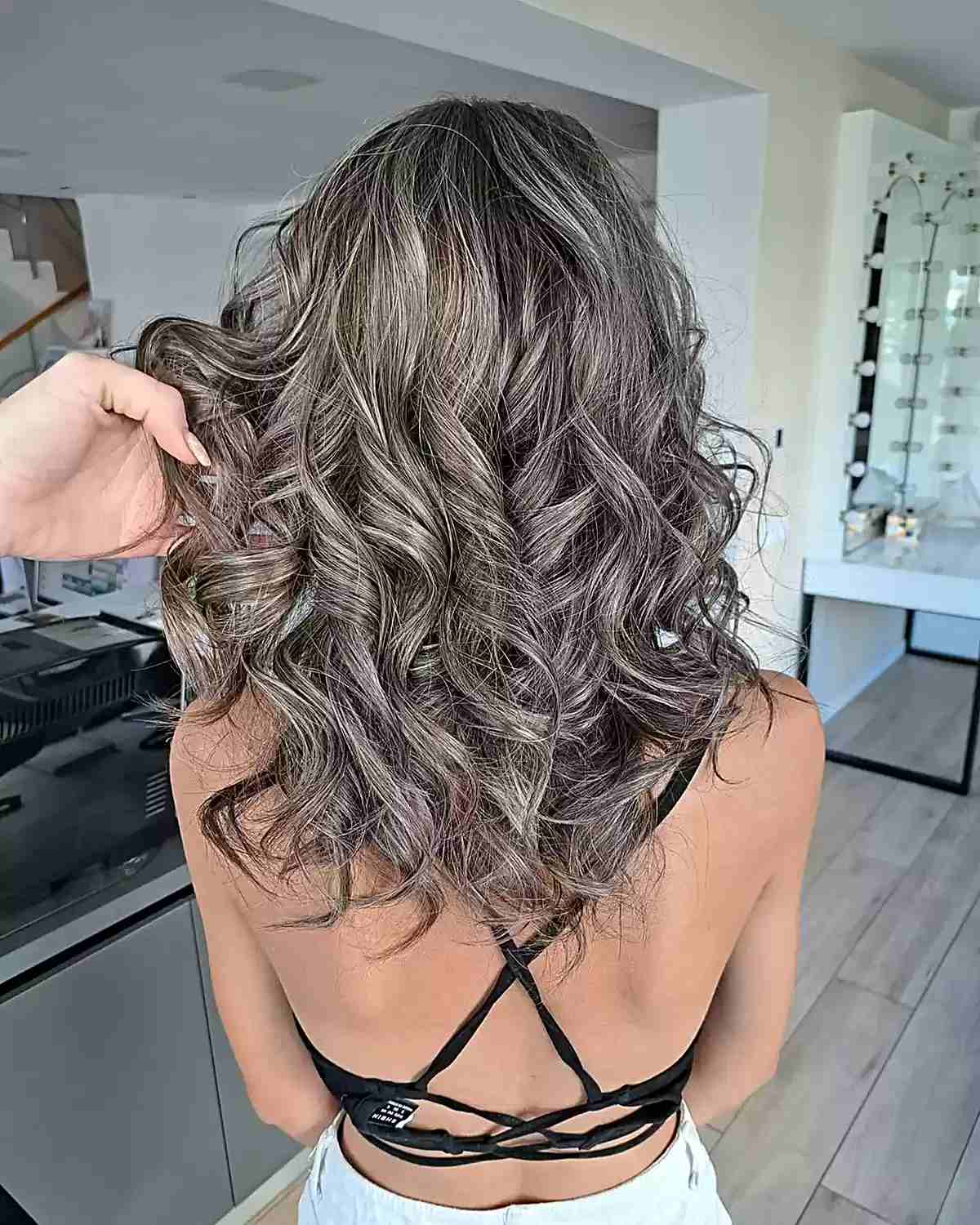
This is the one to book if your hair is thick and wavy. The gray blending curls technique weaves silver through the mid-back length, leaning on your natural texture to soften the transition. A dark base underneath keeps the contrast rich, while the lighter strands catch light at the crown. The lived-in look means grow-out is gentle, no harsh line at the root. But thick curls need moisture or they turn frizzy by midday. A cream styler and a diffuser buy you control, and a quarterly gloss treatment keeps that cool tone from warming toward yellow. Skip this if your hair is fine or straight, it needs the body to carry the blend without falling flat.
Ash Gray Bob Solid Tone
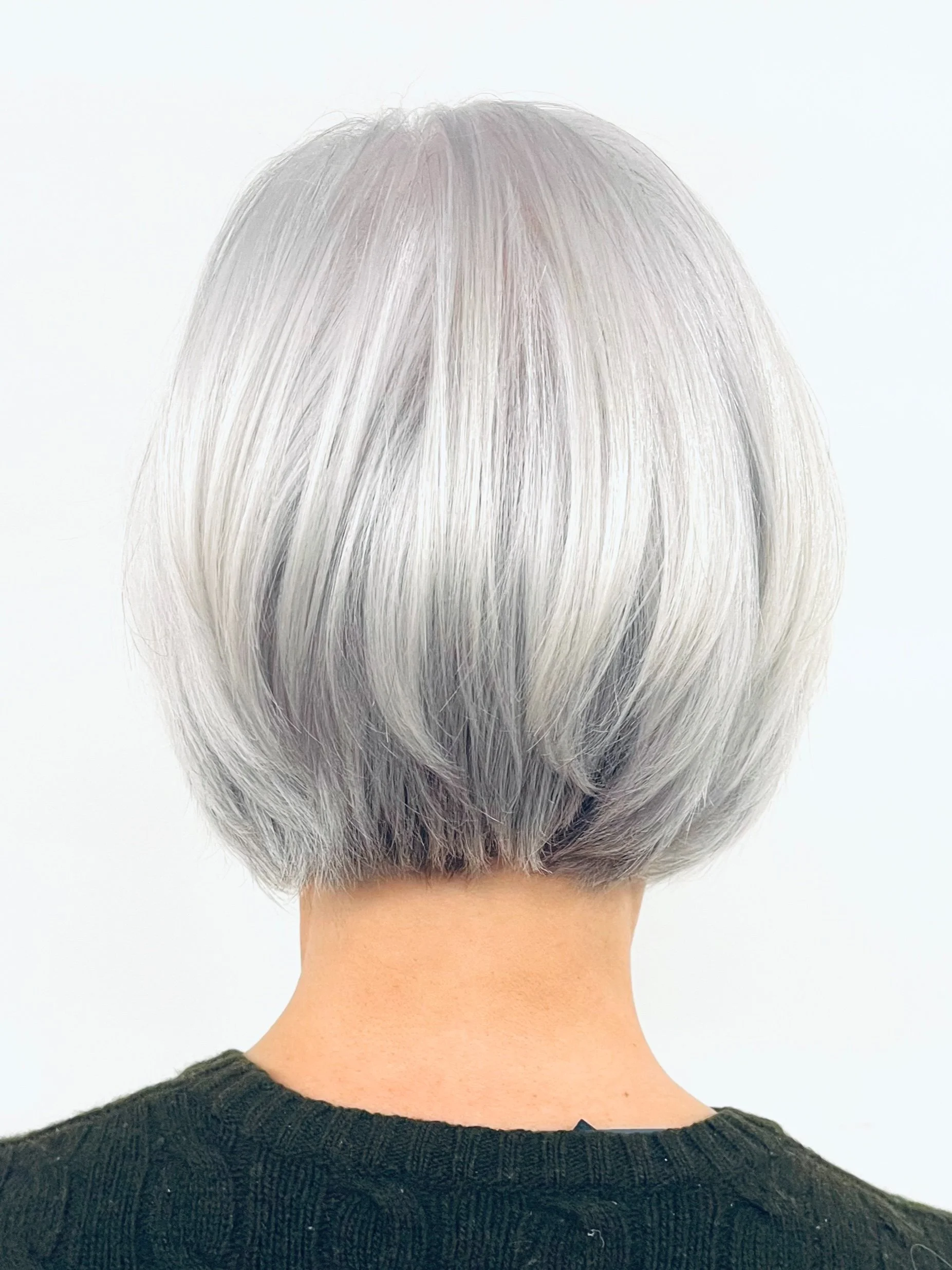
January called, it wants its hair colour back. The ash gray bob lands at the ear, cut blunt and styled straight for maximum opacity. The technique is a solid tone, no highlight, no streak, just one cool layer from root to end. Fine, straight texture works best, it shows the even pigment without frizz or wave breaking the line. This is a sit-down-salon colour, not a box job, because ash needs precise mixing to avoid turning muddy. Pair it with a turtleneck, let the silver do the work.
Shoulder Blend Soft Waves
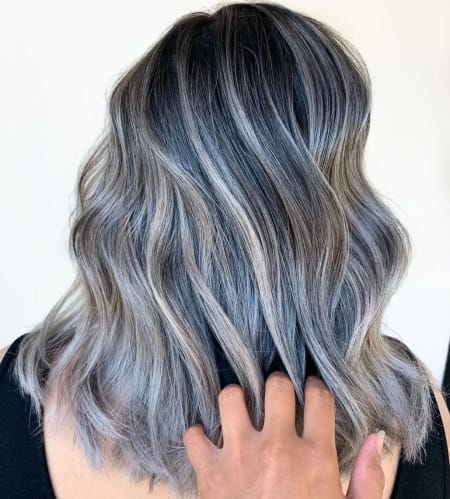
I will confess, I tried to do this at home once. It did not go well. The natural gray blend highlights need a stylist’s eye for placement, especially on medium density hair where the color needs to sit inside the wave, not on top of it. At the salon, they paint thin slices around the face and through the mid-lengths, letting the shoulder-length cut carry the blend. At home, you get a stripe. The soft wave is your friend here, a 10-minute rough dry and a twist while damp gives you that seamless finish. Book the salon, save the DIY for a root shadow later.
Gray Base With Ash Blonde Highlights Mid-Back Gray Ash Blonde Blend
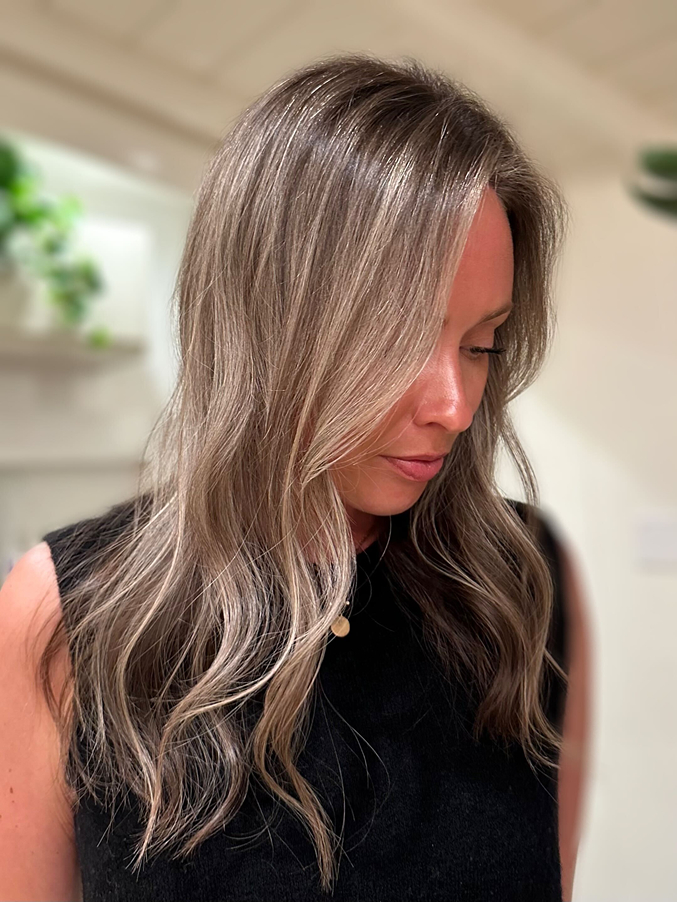
Gorgeous, but it has rules. The gray ash blonde blend starts with a natural gray foundation, then face-framing ash blonde highlights are woven through the mid-back length. The technique is dimensional, ash blonde on gray, not brassiness waiting to happen. A toner refresh every six weeks keeps the cool tone alive, skip it and you get yellow by week eight. Straight out of the salon it looks bright and polished. By day four, the waves soften, the highlights settle and the blend starts reading like a grown-in neutral. The upkeep is non-negotiable if you want that precise ash blonde highlights to stay icy. But the grow-out is soft enough that you can stretch a week past your appointment without looking desperate.
Layered Bob Side Swept Bangs
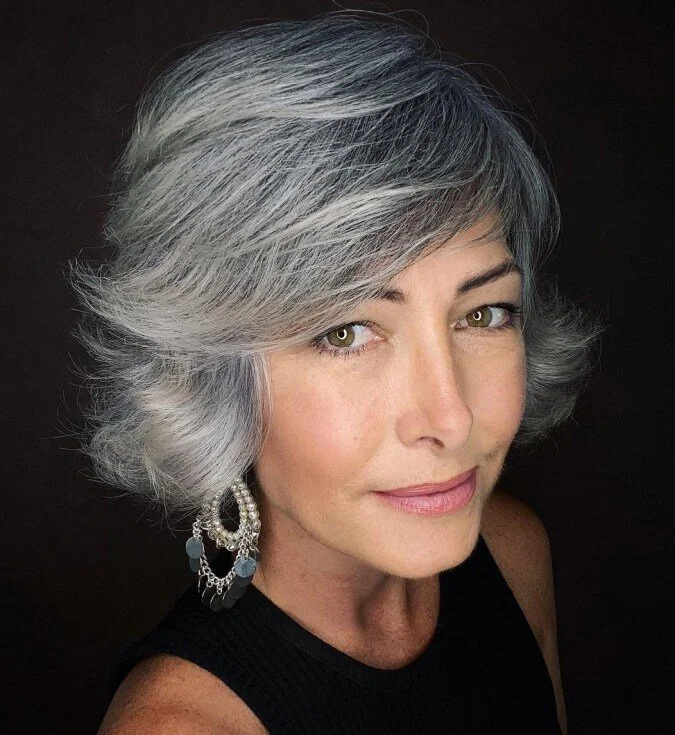
Have you got fine hair or a round face? This layered bob gray blend might be your answer. The cut hits at the ear, layered through the crown to add volume where fine hair goes flat. Side swept bangs soften a rounder jawline, the sweeping angle breaks up symmetry. The gray blend is subtle, silver slices through a dark base, no harsh contrast. Textured, wavy styling keeps the layers from looking choppy. One honest downside: those layers on thick hair can split if you skip a trim past eight weeks. The tips fan out, the blend gets messy. Keep your shears appointment and this bob behaves.
Chin Bob Blunt Bangs Silver
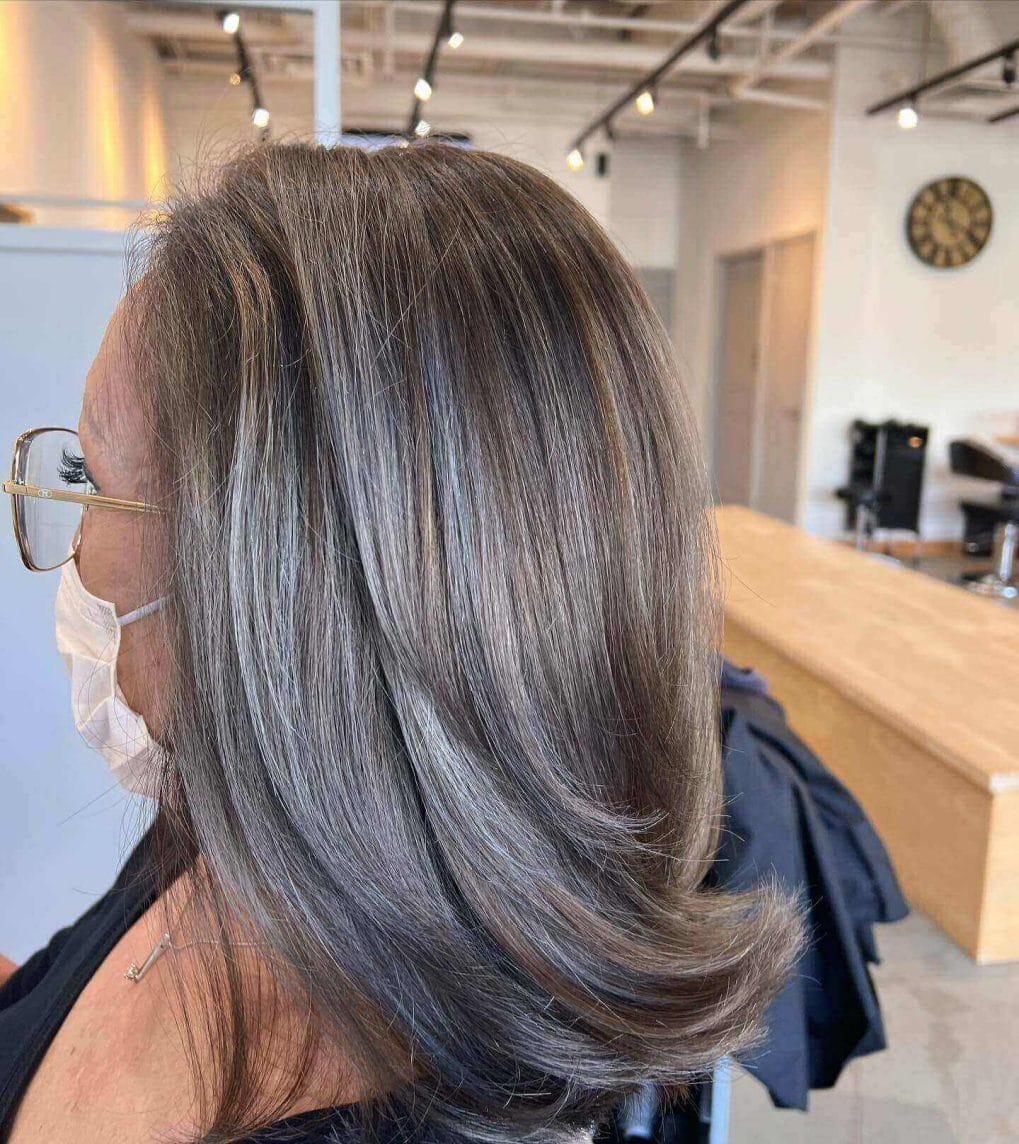
For a silver highlights bob like this, the dark gray base is painted on first, then the stylist selects fine sections for the highlights, placing them through the crown and face-framing areas for maximum contrast without a harsh stripe. The blunt bangs are cut last, after the colour is set, so they frame the silver pieces exactly. This chin bob works on straight, medium-density hair that holds a sleek line.
- Chin length, blunt bangs
- Silver highlights woven against dark gray base
- Straight, medium texture
- Blowout or flat iron for crisp finish
- Ask for fine silver babylights, not chunky pieces
The technique requires a steadier hand than most colour jobs. One misplaced highlight reads as a stripe, and the bangs demand precision cutting. This is not a job for a friend with a box dye. Book a pro.
Stacked Bob Silver Ash Blonde
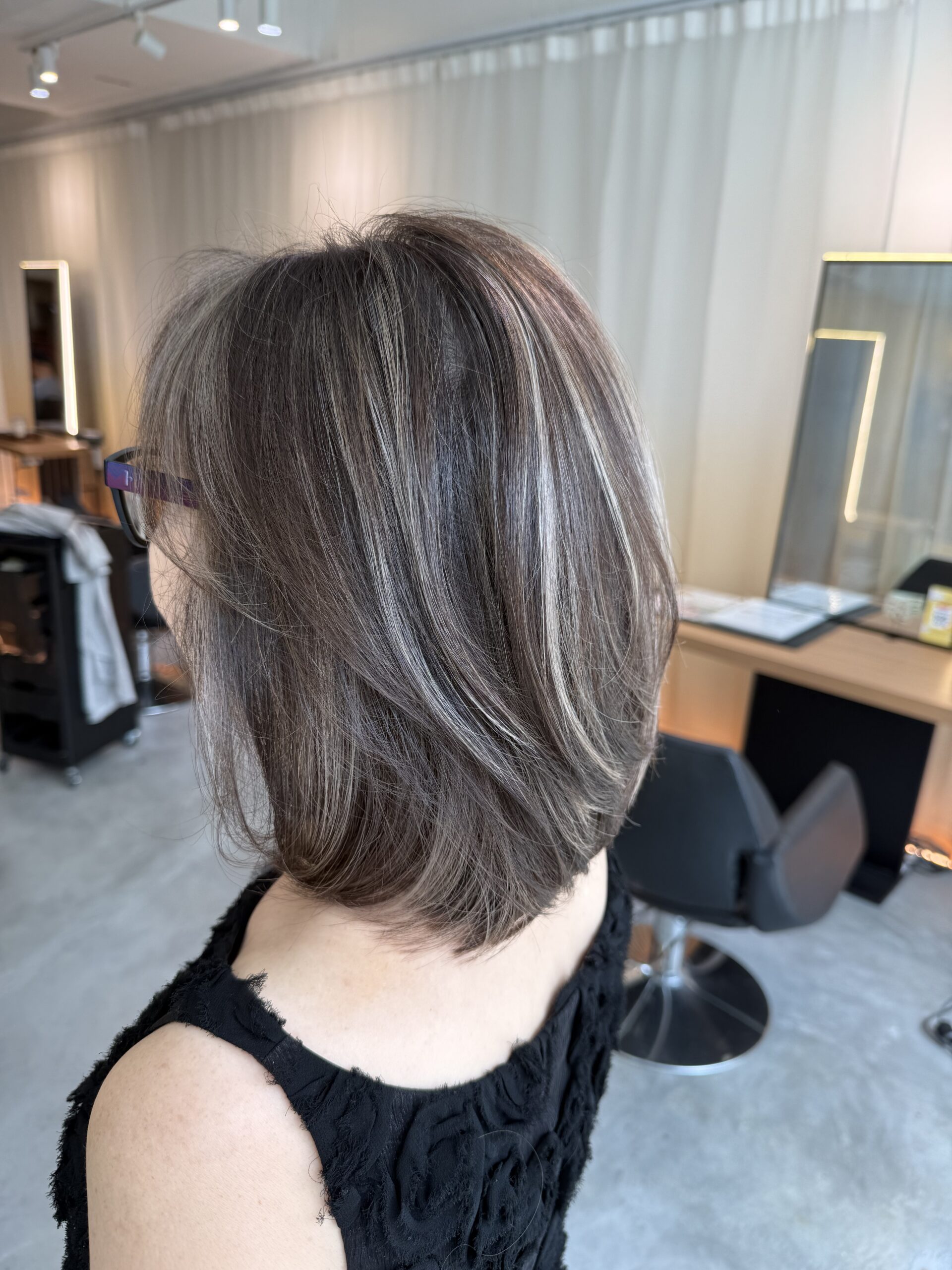
A single tone of silver reads flat next to this stacked bob. The stacked bob highlights here use both silver and ash blonde to avoid flatness: the silver strands sit closer to the face for contrast, while the ash blonde weaves through the back for soft dimension. The highlights are fine and many, so the colour shifts in every light rather than landing as one solid block.
- Chin-length stacked bob, subtle layers
- Silver and ash blonde highlights on dark brown base
- Straight, medium density
- Blowout smooths the stacked shape
- Ask for alternating silver and ash blonde babylights
The result is a bob that reads rich and dimensional. The two tones give the illusion of more texture even on straight hair, and the stacked shape holds the curve at the nape without additional curling.
Collarbone Ash Blonde Gray Blend
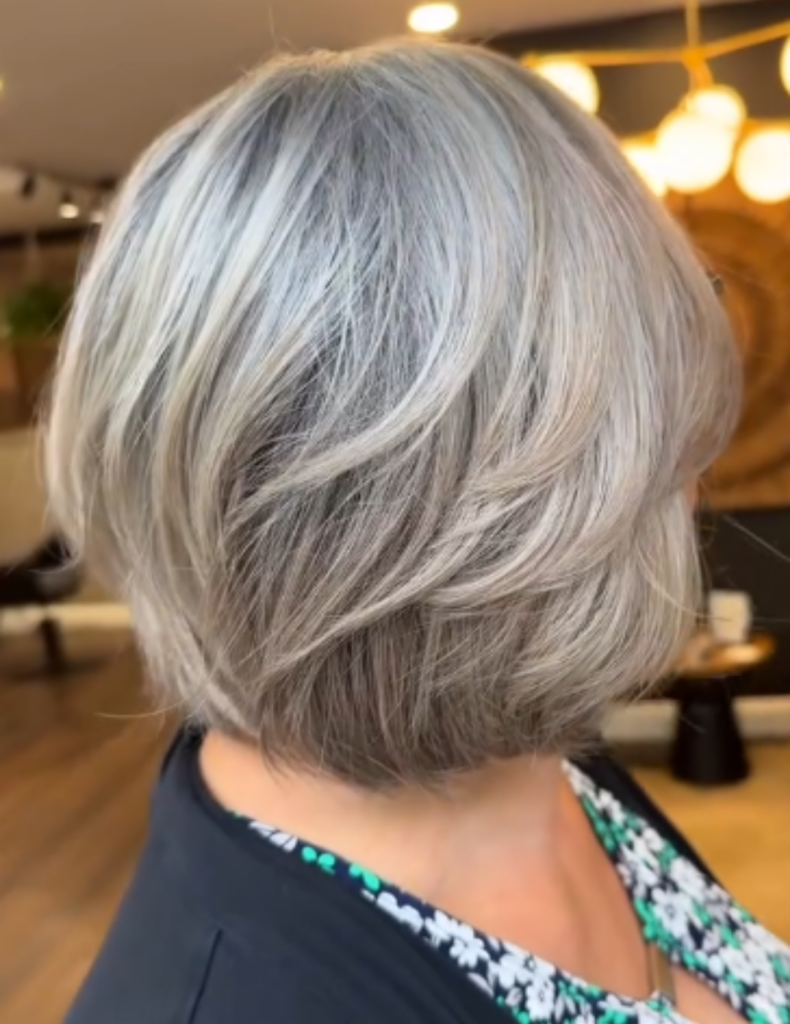
Tuesday morning, same wash, still wave-y. The ash blonde gray blend on this layered collarbone bob settles into soft waves that hold through day two with just a spritz of water. The ash tone keeps brassiness at bay for about three weeks, then you notice a slight warmth near the roots. By day three the waves drop, but a quick rough-dry brings them back. No curling iron needed.
Collarbone Lob Platinum Highlights
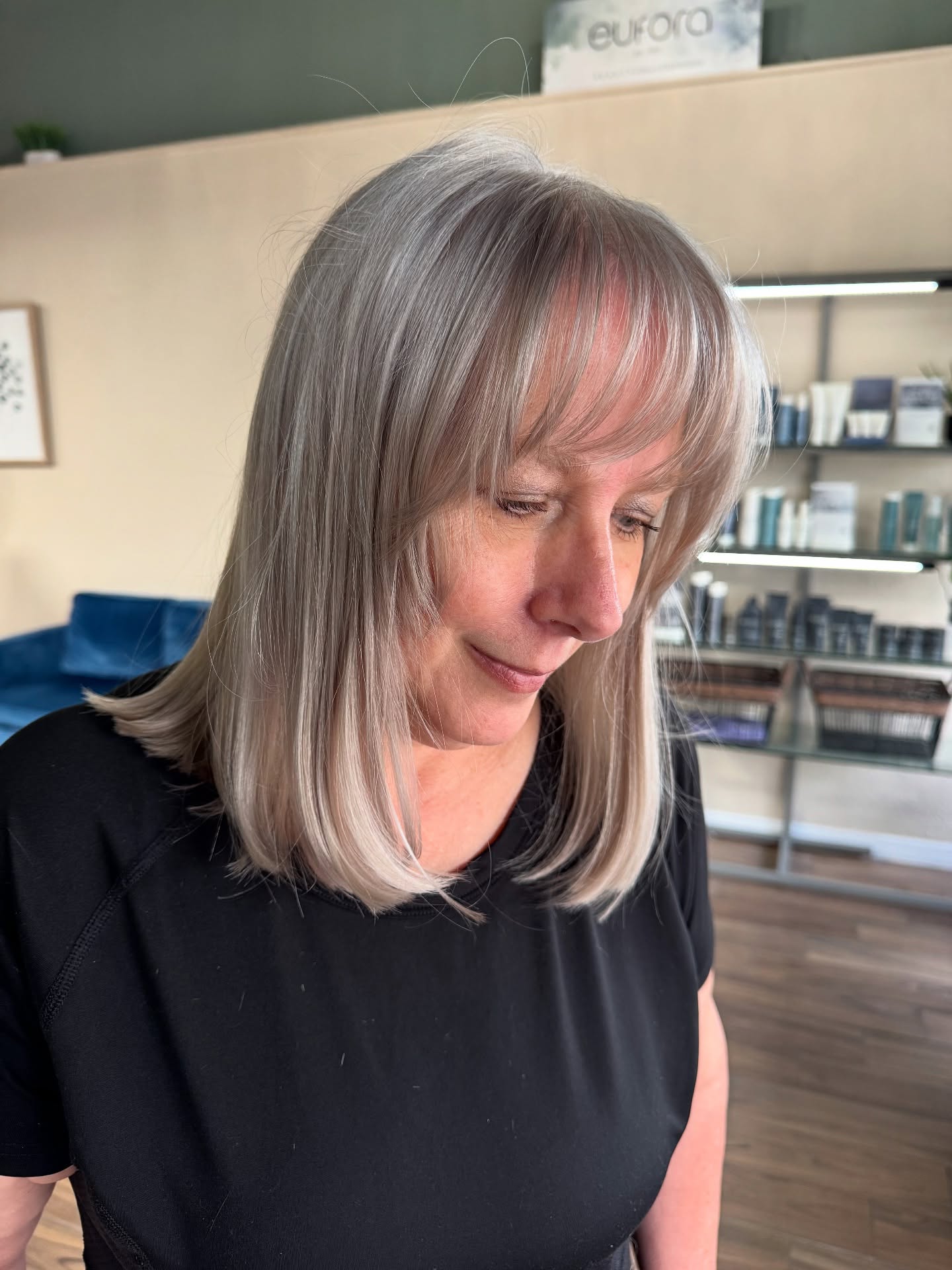
Do you actually have the patience for a lob that needs a side part and a blowout every morning? This collarbone cut with blunt bangs flatters fine, straight hair best because the blunt line gives the illusion of density.
- Gray base with platinum highlights for contrast
- Blunt bangs, collarbone length
- Fine straight texture holds volume
- Ask for a subtle root smudge
The platinum is the showy part, but it’s also the upkeep. You’ll be back for toner every four to six weeks, and if you skip it, you get brass. This is not a home job; the blending needs a stylist’s hand.
Gray Blending Highlights Shoulder Ash Blonde Gray Blend
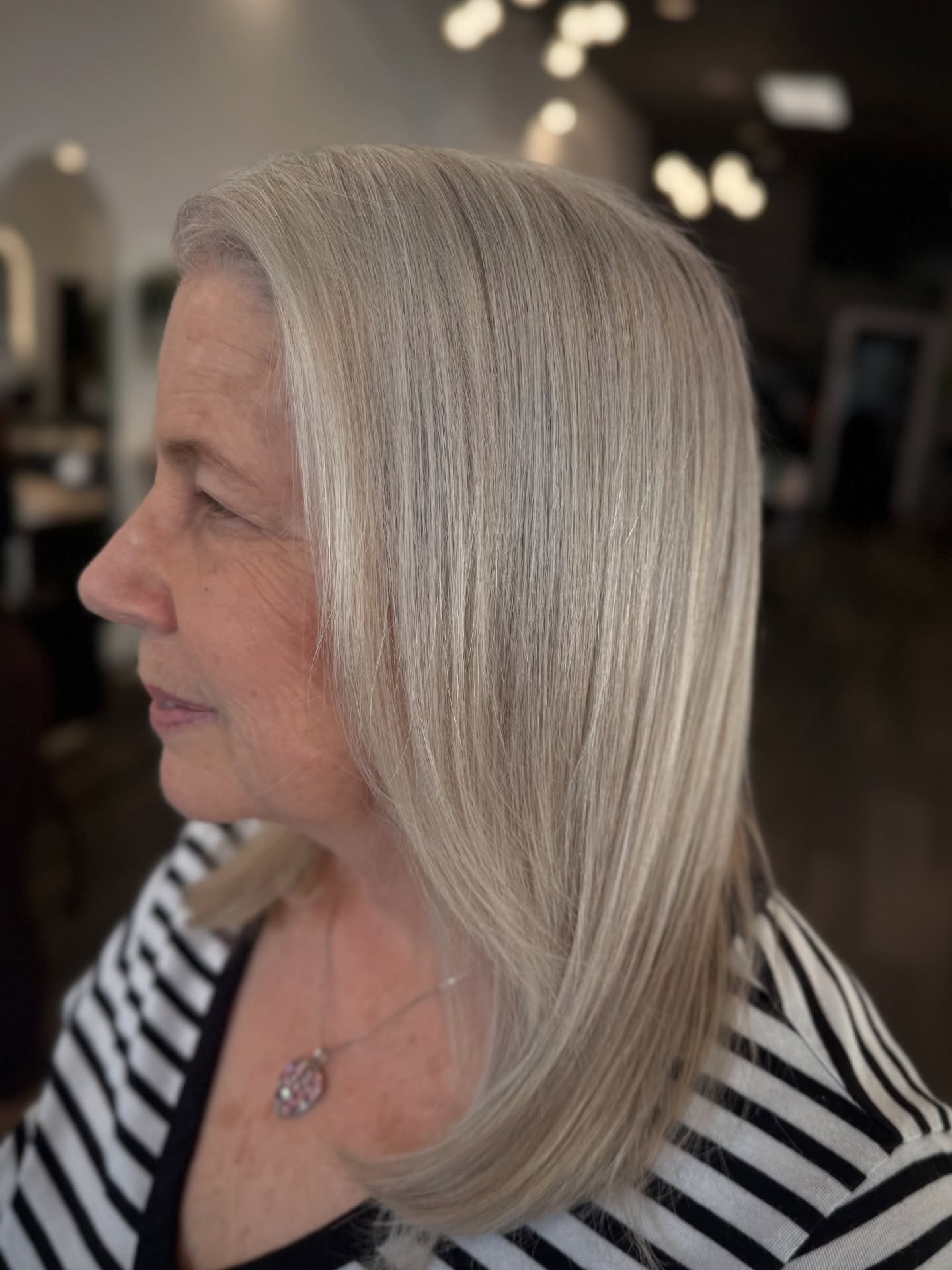
Okay, this is what I call a slow-burn colour: ash blonde highlights blended into a gray base looks like you woke up with expensive hair, not like you sat in a chair for four hours.
The whole trick is in the placement. The stylist takes fine vertical sections and weaves ash blonde through the gray, leaving the root area untouched so the grow-out line disappears. This shoulder-length lob with a side part works on fine, straight hair because the low-contrast strands add dimension without weighing it down. The soft dimensional effect comes from alternating highlight widths, and it holds up for months, though you will want a toner refresh every six to eight weeks to keep the cool tone from turning honey.
Chin Wavy Bob Side Swept Bangs
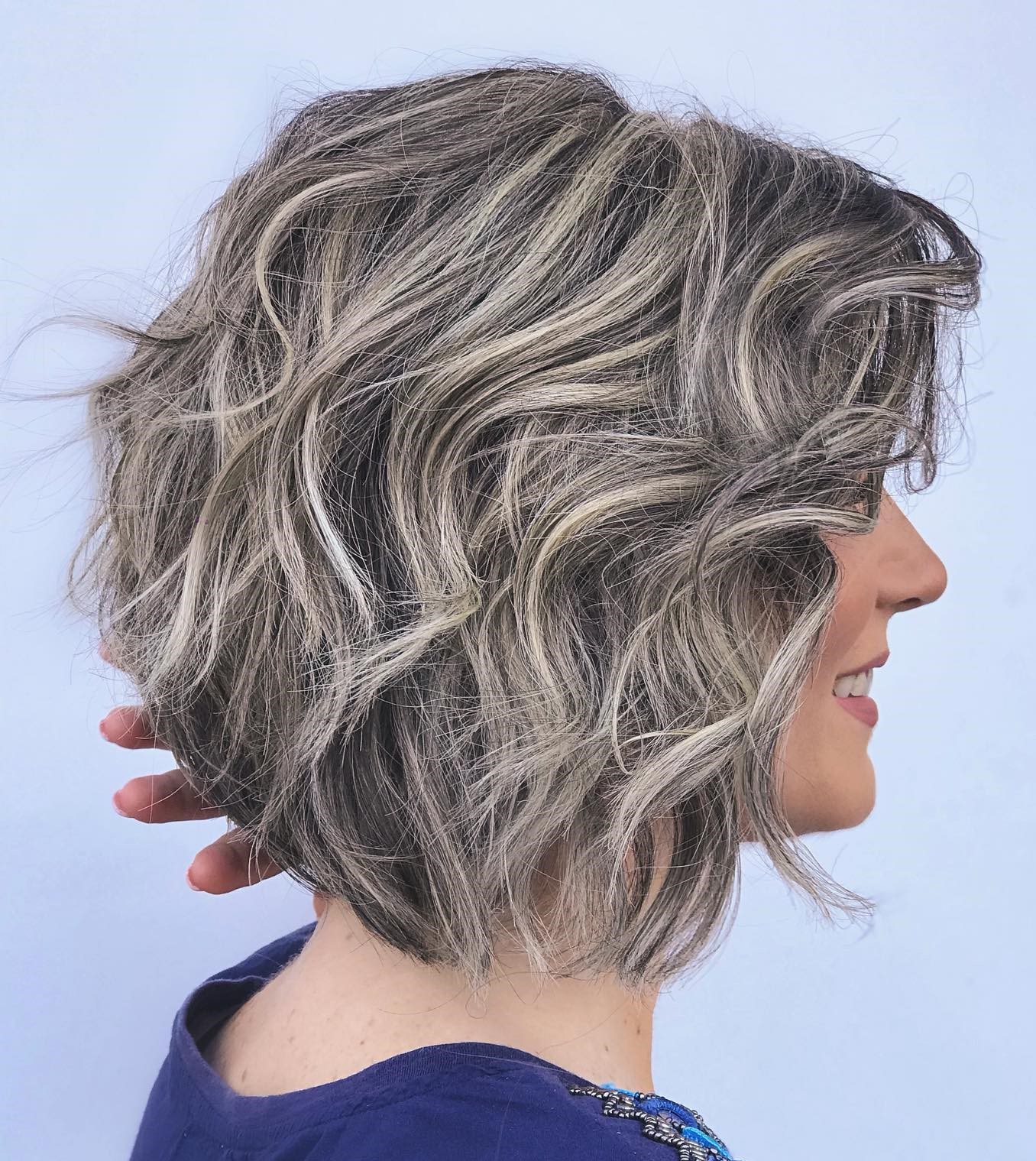
This bob earns its place. It takes a wavy blowout about fifteen minutes to get that bend, and the side swept bang refuses to stay put after day two. The chin length and wavy texture make the wavy bob gray highlights read as intentional, not grown out. The cool ash tone hides fading well, and the gray blending technique means you can push a refresh to eight or ten weeks. That routine works if you like the fact that it moves rather than sitting stiff.
Collarbone Dark Base Gray Streaks
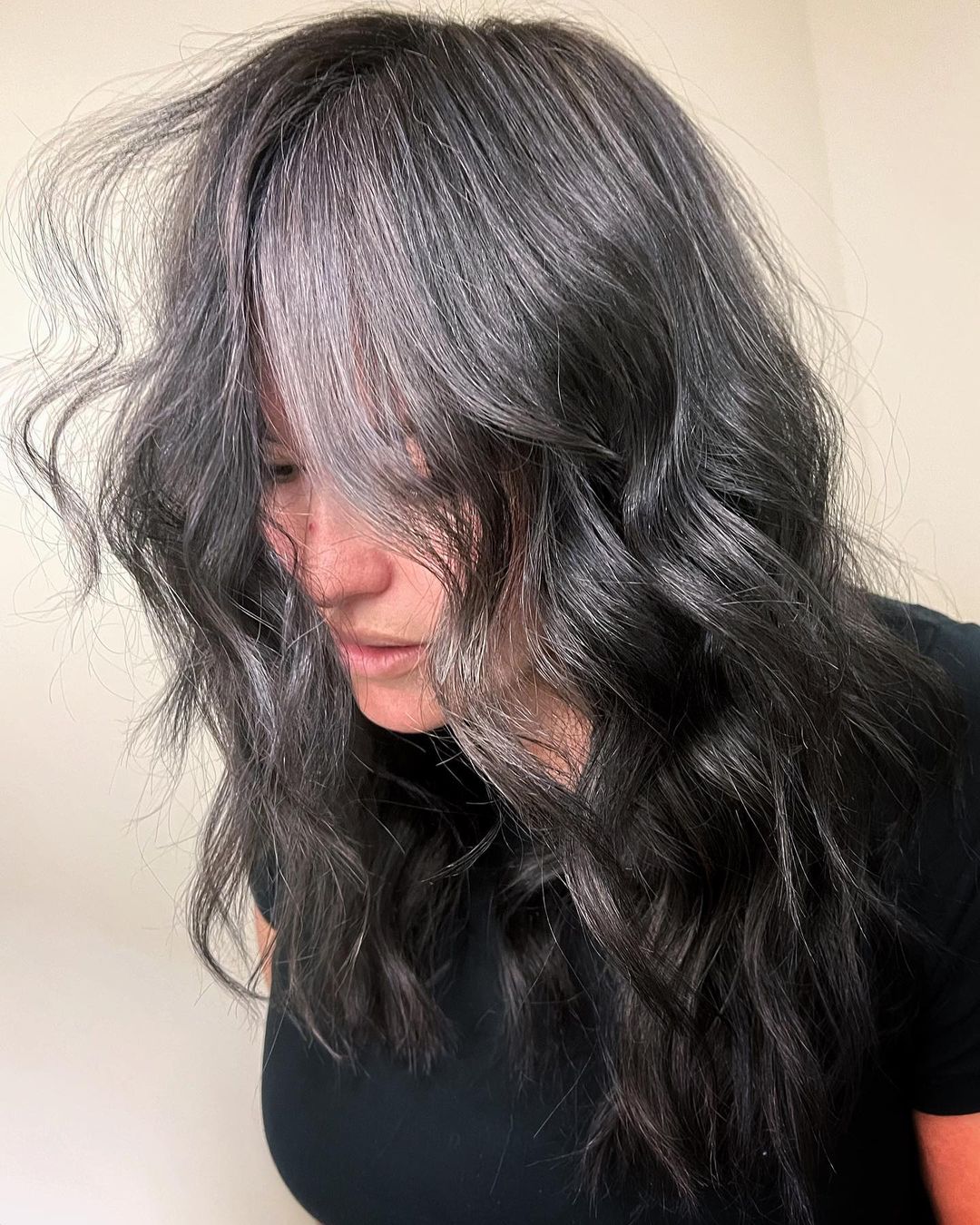
When autumn arrives, this contrast lands. The dark base gray streaks cut through the collarbone length like a sharp line through a muted field. The wavy, thick texture catches the light differently with each movement, which is why the gray highlights stand out without competing. The tone stays cool, not icy, so it reads as intentional rather than frosty. This is a conscious seasonal move: the contrast suits the shorter days and heavier coats. It demands a salon appointment every six to eight weeks to keep the gray from dulling, but the payoff is a visual anchor for the whole silhouette.
Gray Blending Highlights Collarbone Soft Waves Blend
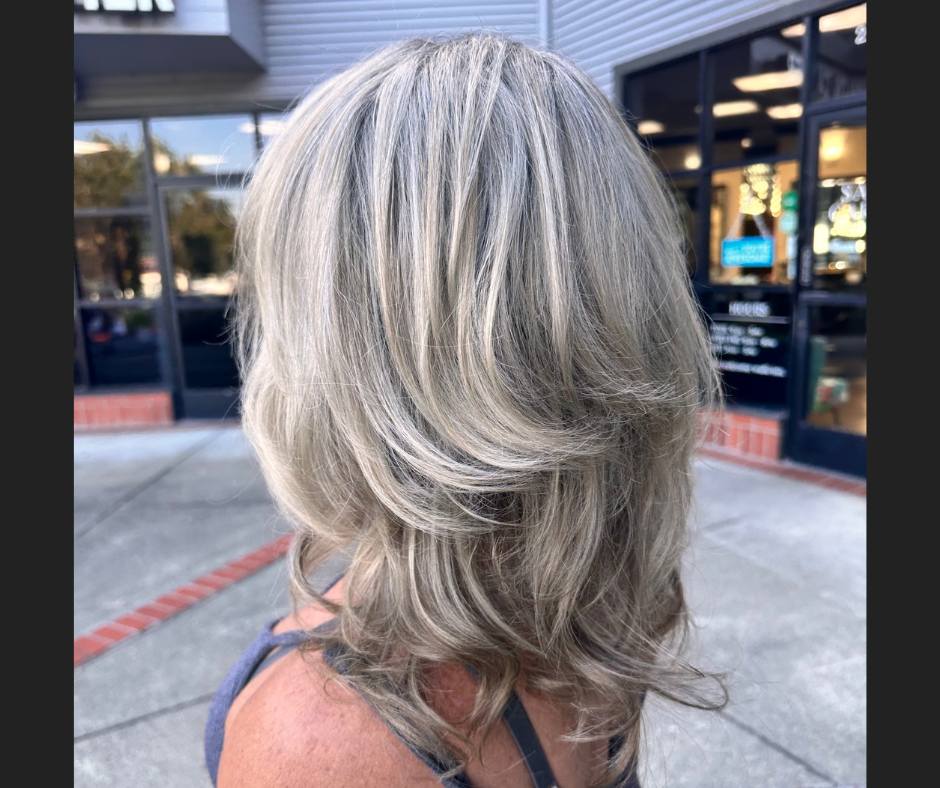
I thought highlights were supposed to be obvious. The mistake is letting them show up as a stripe rather than a shadow. A true seamless blend means the gray blending waves move into the collarbone length without a visible line of demarcation. The tone needs to be neutral, not warm, or the brass will outshine the silver by week three.
The soft wavy blowout helps because the curves scatter the light, preventing that stripe effect. The gray blending technique requires a stylist who understands lowlight placement, not just foil after foil. A purple shampoo once a week keeps the cool tone honest. Skip that, and you lose the seamless effect within one wash cycle.
Collarbone Natural Gray Interwoven
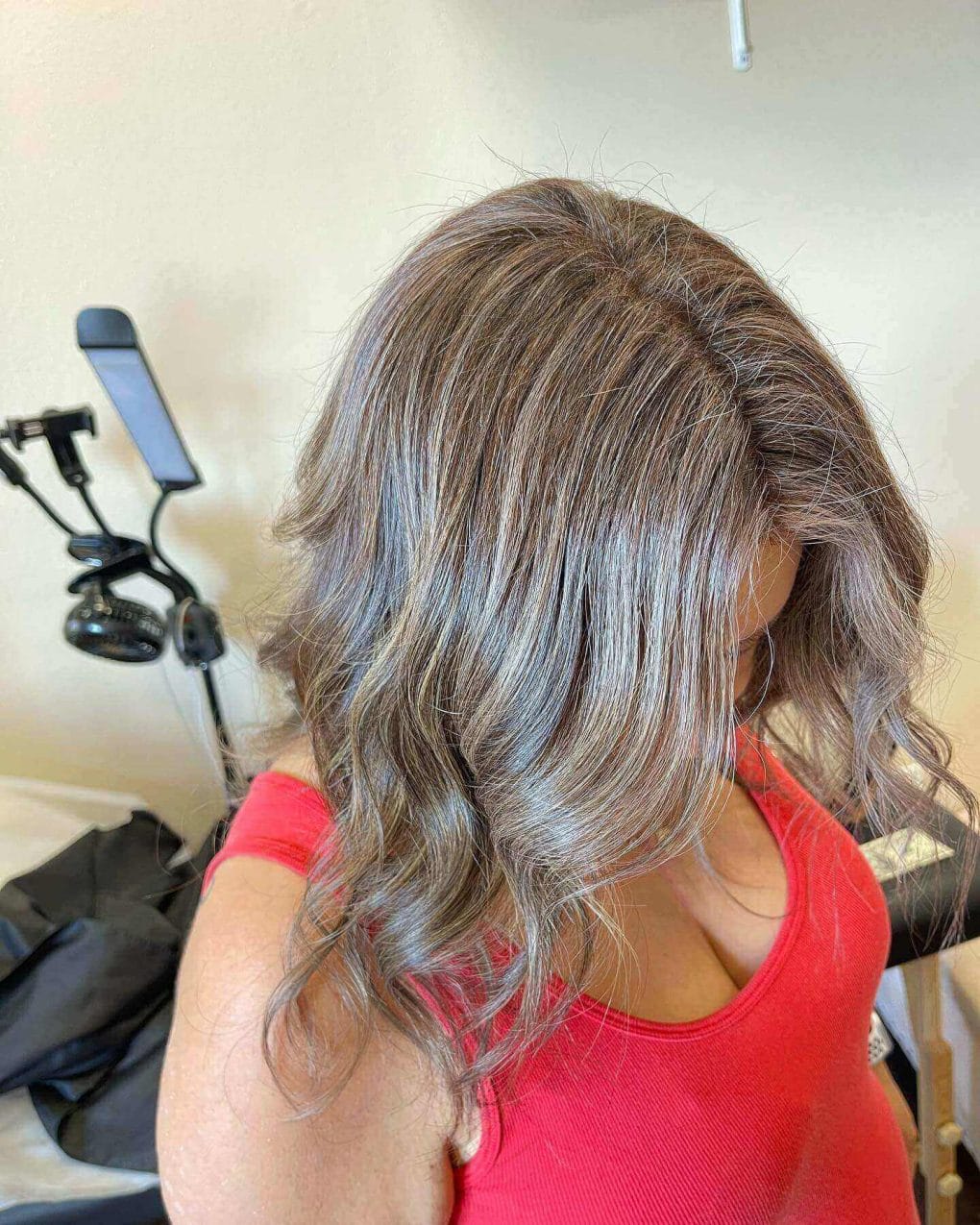
Are you tired of a harsh root line? The natural gray interwoven look is for anyone who wants the gray to look like it grew there on purpose. The collarbone length and wavy, medium texture let the strands blend without effort. The seamless gray blending works best on someone who already has some natural gray coming in, because the interwoven highlights mimic that salt-and-pepper rhythm. If you want a clean, all-over color, this is not the one.
Mid-Back Shag Textured Layers
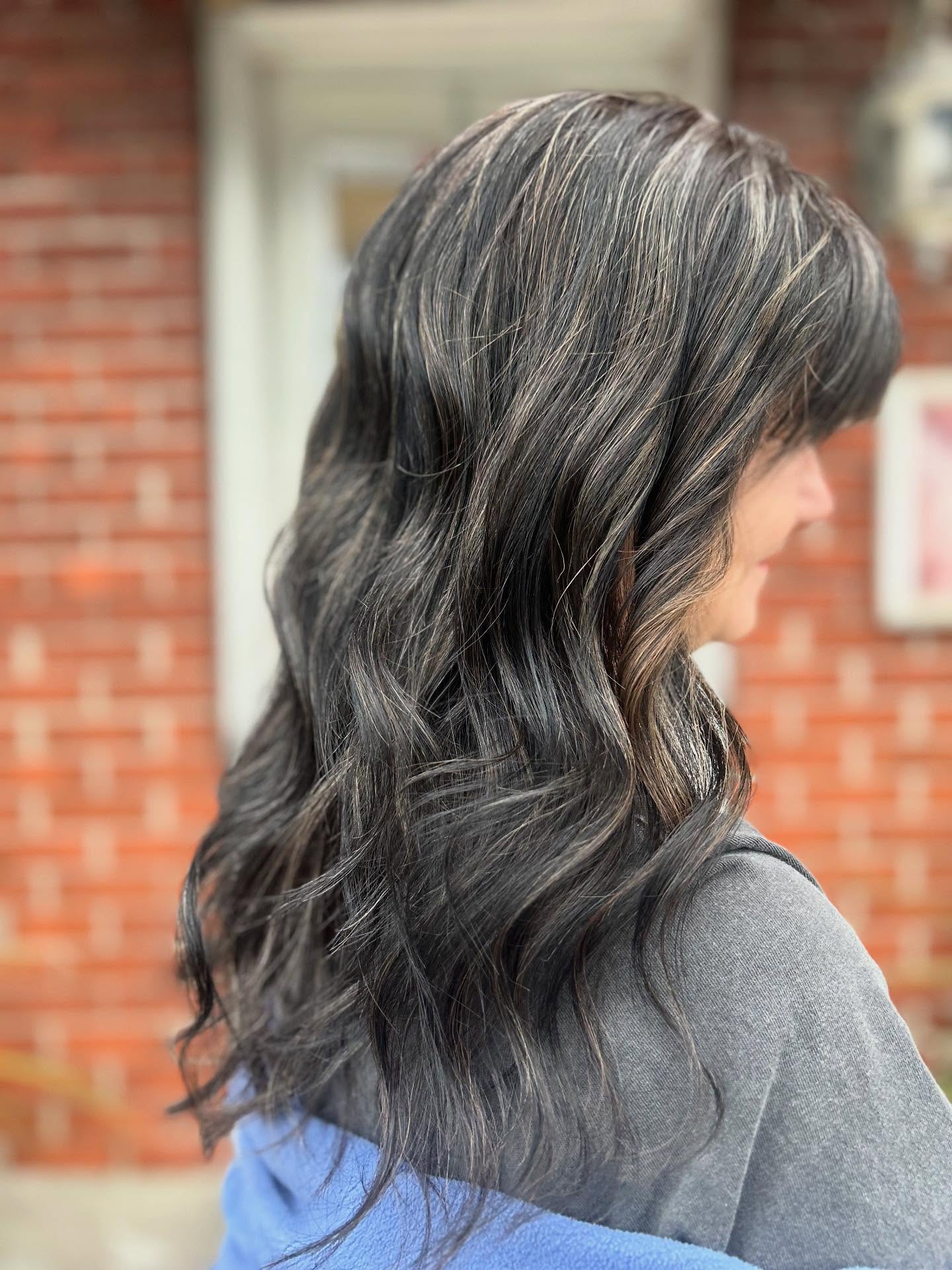
Sunday morning, air-drying in a T-shirt. The mid-back shag with textured layers lets you do exactly that. The wavy, thick texture does the work for you: the textured shag gray blend falls into place without a brush. The air-dried waves last through a full work week if you sleep on a silk scarf. Day five, the layers still separate without looking stringy.
The upkeep is minimal. A refresh every eight to ten weeks keeps the gray blending crisp, but the grow-out is kind because the technique uses lowlight and highlight together, not a solid block. The length means you can pull it back when the roots start showing at week six. This is not a high-maintenance cut; it’s a high-reward one.
Collarbone Air Dried Blend
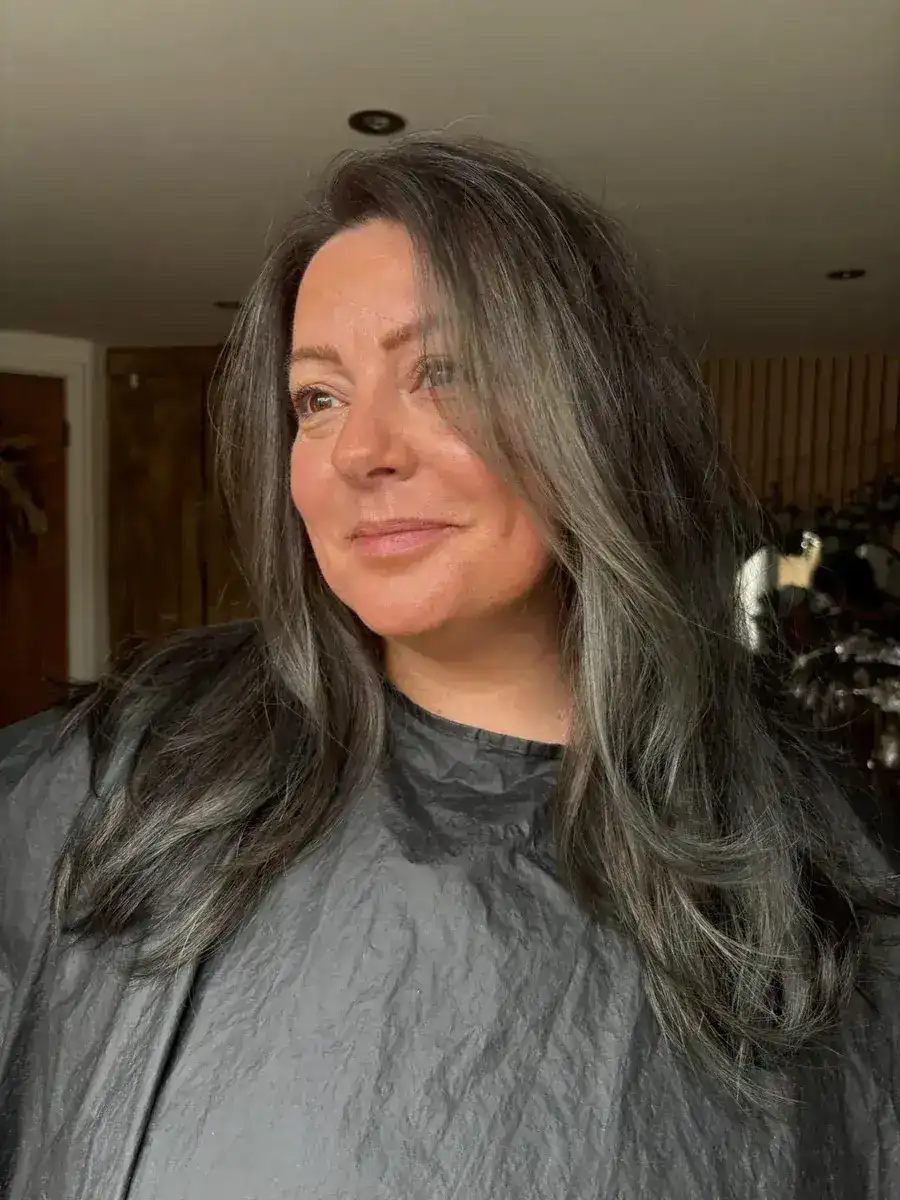
A middle part and air-dried waves make this collarbone length read like you woke up this way. The natural gray blending is the whole point here — no harsh line, no heavy toner fighting your base. The tone stays cool, never yellow, which is rare for air-dried hair. Thick, wavy texture helps it settle without effort. For summer, this is the low-maintenance win. Book the salon for the initial blend, then let it grow.
Mid-Back Subtle Highlights Blend
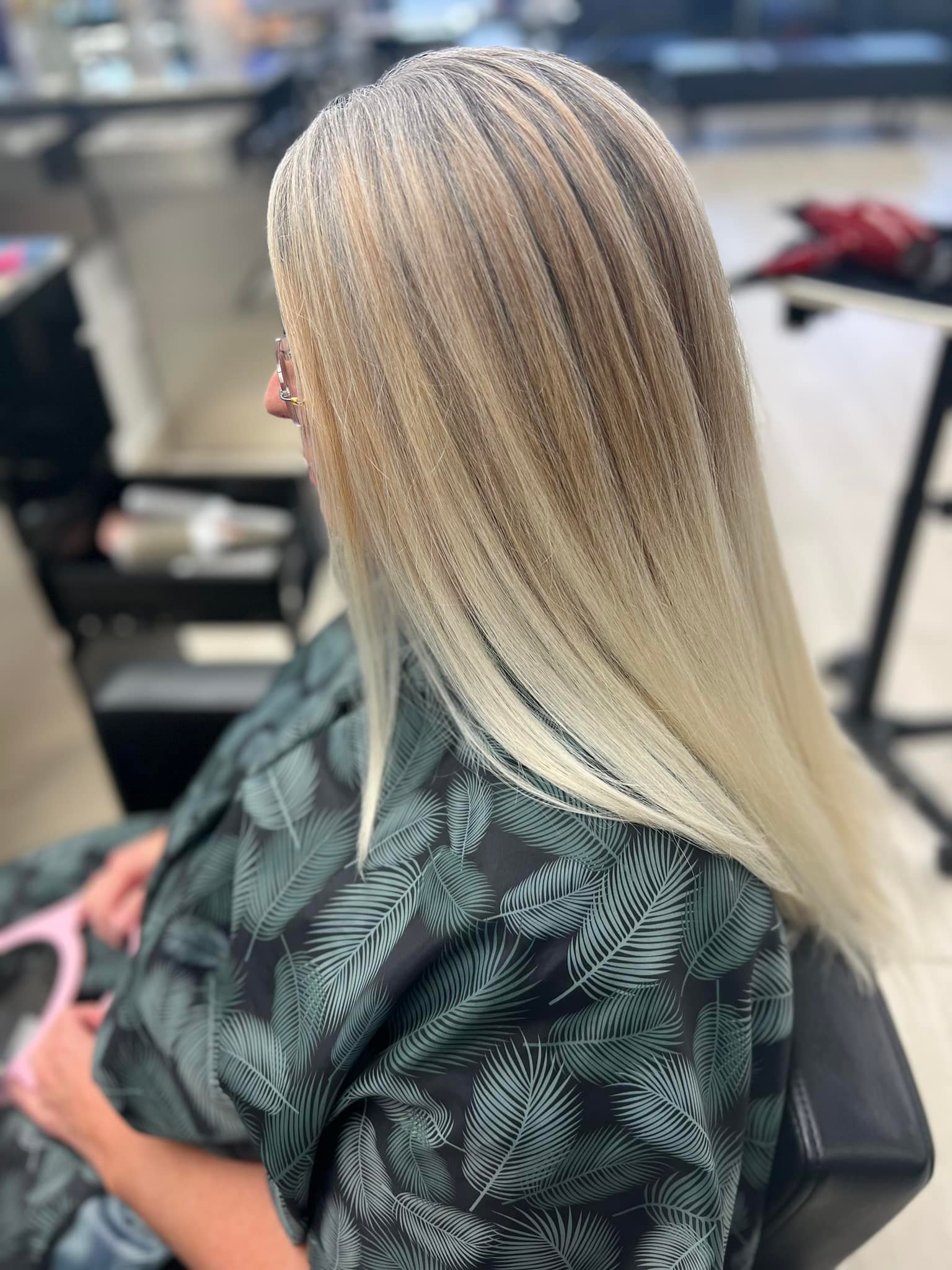
Verdict: this is not a bathroom-mirror job. The subtle highlights gray technique requires a stylist who understands how fine density reads. On straight, fine hair at mid-back length, the colour needs to be woven, not painted, so the lighter base looks natural against your gray. The honest downside? If the weave is too thick, the contrast reads as stripes, not a blend. If it’s too thin, the gray swallows the colour by week four.
This is a salon-only job because the grow-out line has to be invisible. A skilled colourist will place the subtle highlights gray around the face and through the ends, keeping the root area darker. That way, the lighter base acts as a slow fade, not a hard line. Fine hair needs this precision — one wrong section and the whole thing looks like a failed bleach attempt.
Chin Bob Silver Dark Contrast
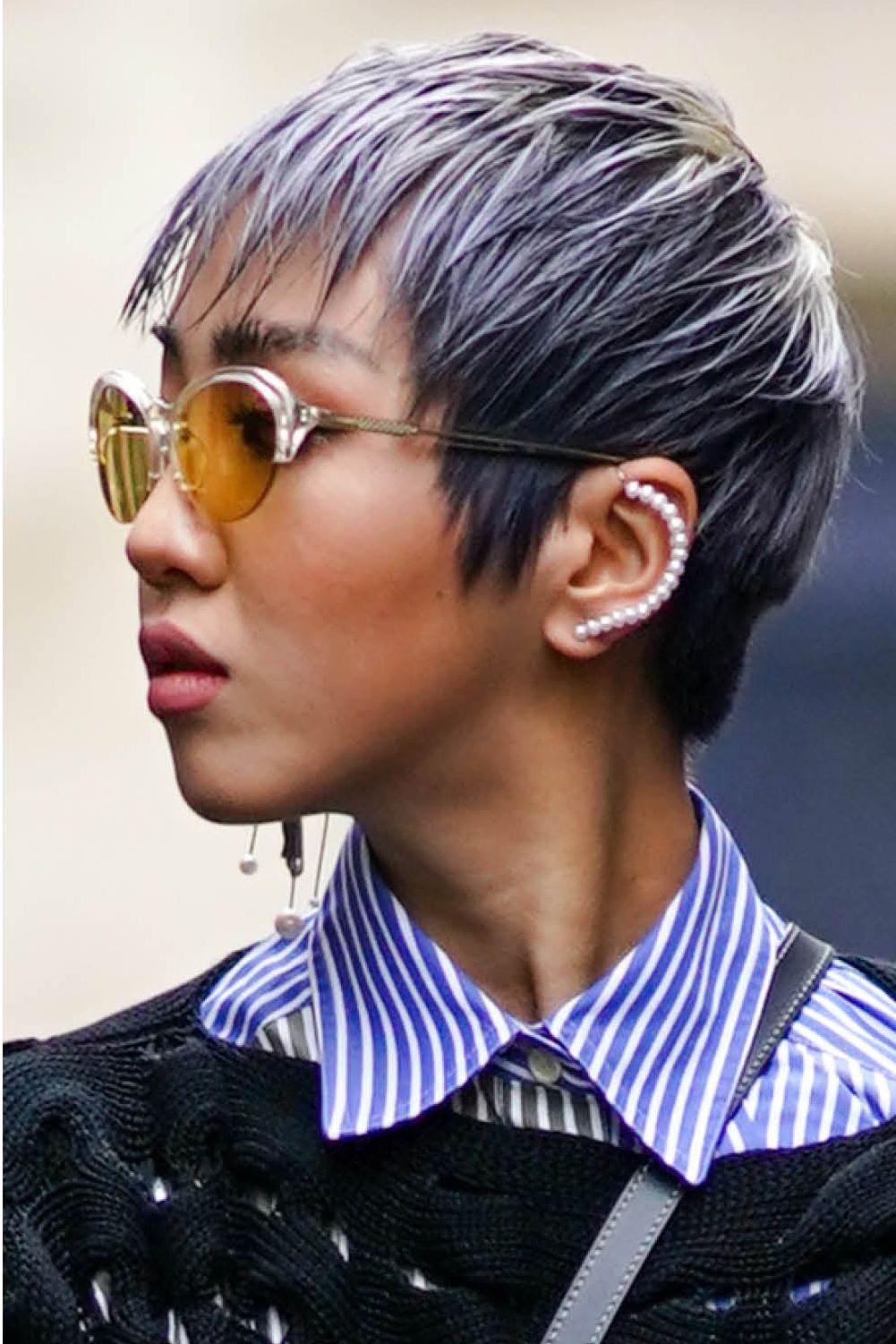
When did a chin length bob start looking this sharp? The silver dark contrast is the reason. On fine, straight texture, the silver pieces sit against a dark base, creating that high-impact line without needing heavy layers. A side part and a blowout keep the chin length bob sleek. This is not a grow-out colour — it’s a commitment to the contrast.
Angled Bob Ash Blonde Pink Tones
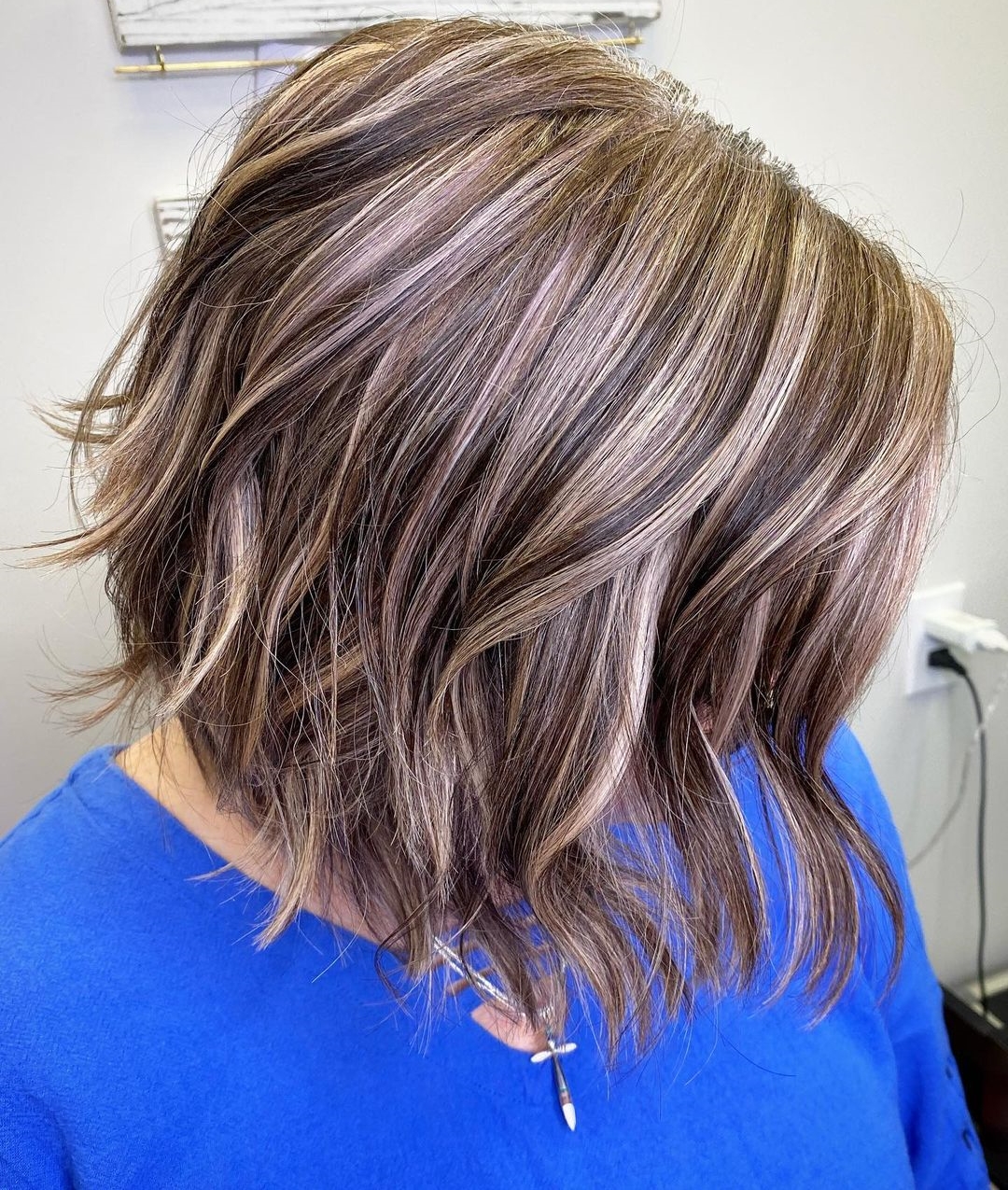
My gut says this is for someone who wants dimension without going full silver. The dark brown base keeps the chin length angled bob grounded, while the ash blonde pink tones add a lift that straight gray can’t give. On wavy, medium density hair, the textured waves catch the pinkish highlights and throw light around.
The honest downside? The pink tones fade fast. By week four, they lean more beige than pink, so a color-depositing conditioner becomes your best friend. Who should pass? Anyone who hates toning. This is a maintenance colour, not a set-it-and-forget-it.
Collarbone Wavy Gray Brown Blend
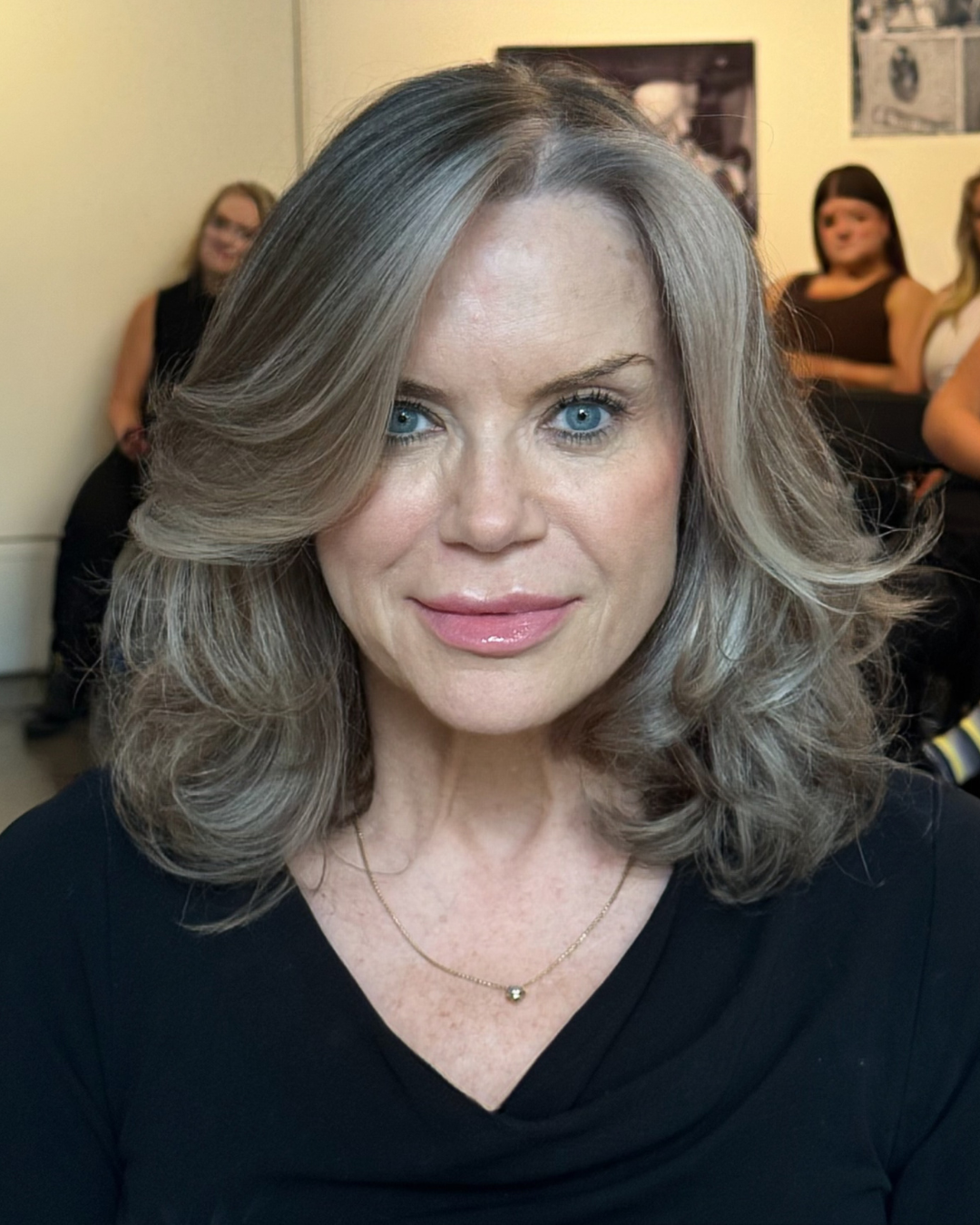
A middle part and loose waves let the gray brown blend do the work. On wavy, medium density hair at collarbone length, the colour reads as grown-in, not painted on. The wear reality is that this blend hides a lot. No visible root line for weeks, and the brown base keeps the gray from looking flat.
Upkeep is a trim every ten weeks and a gloss if the brown starts to warm up. It’s the closest thing to a wash-and-wear gray blend I have seen.
Close Crop Visible Gray Roots Blend
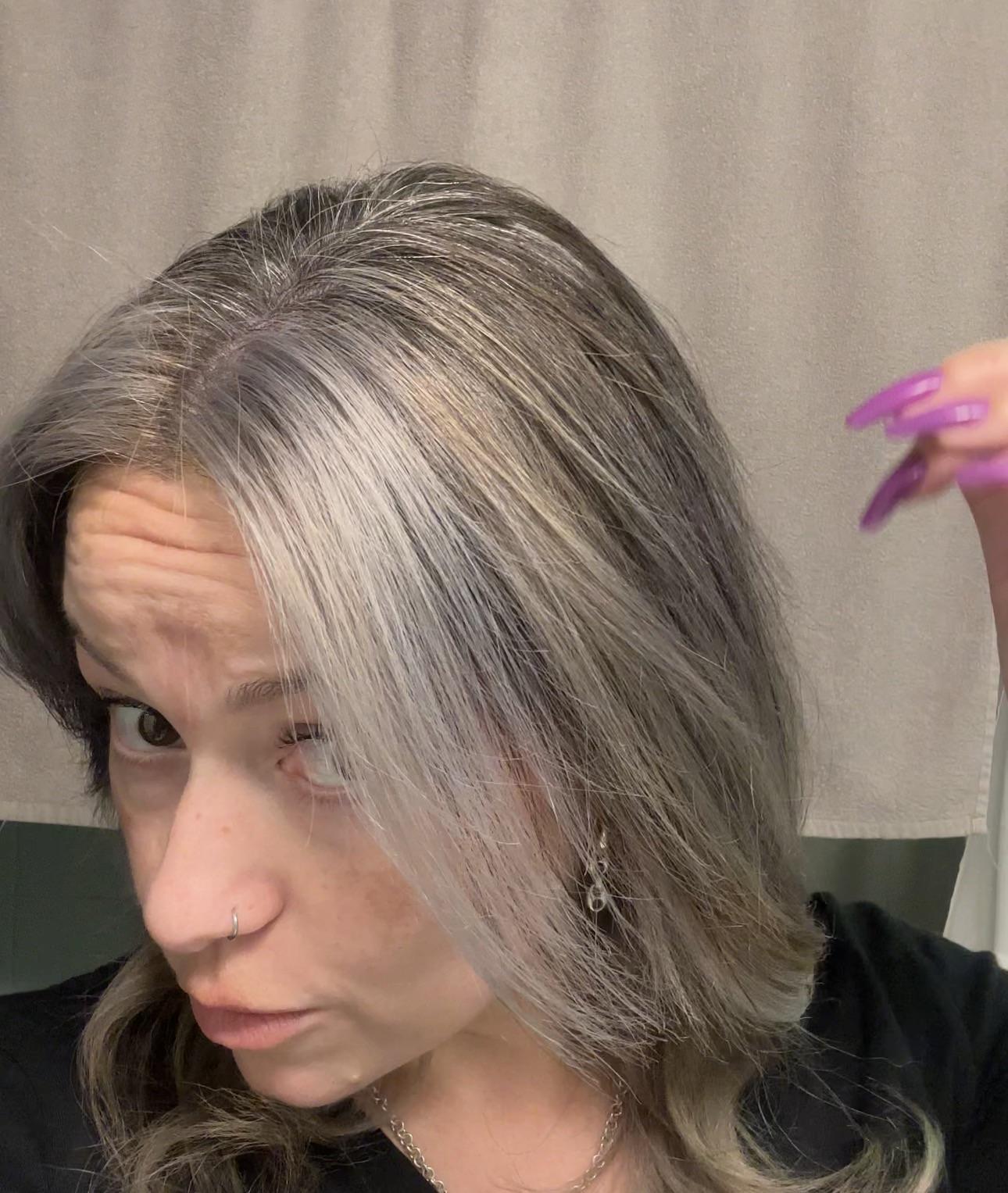
I’ll admit it: I used to panic at the first sign of visible gray roots. Then I learned this technique. The visible gray roots blend is built with a collarbone-length layered cut, side-parted, wavy texture on medium-density hair. The colour uses a dark base with blended highlights woven through the mid-lengths and ends, so the roots grow in as part of the design, not a mistake.
- Professional toner every 8 weeks keeps the blended highlights from turning brassy.
- Root shadow refresh at the salon, not at home — the line is too fine to guess.
- Purple shampoo once a week maintains the cool tone between appointments.
- Book a stylist who specialises in gray blending; this is not a box dye job.
The payoff is six to eight weeks of grow-out that actually looks intentional. That is the whole point.
Final Thoughts
After writing all of these, I noticed one thing: the best gray blends don’t try to match the gray exactly. They let the natural silver sit next to a slightly darker or lighter tone, so the grow-out line disappears into the mix. That’s the trick.
I’m booking the collarbone dark base with gray streaks next. It’s the one that looks like it took hours but actually just needs a trim every ten weeks. That’s my kind of low upkeep.
- Trim the baseline every eight to ten weeks.
- Tone at week six, not week ten, to keep ash from turning brassy.
- Use a purple shampoo once a week to hold the cool tone.
- Ask for a root shadow if you want to stretch the grow-out.