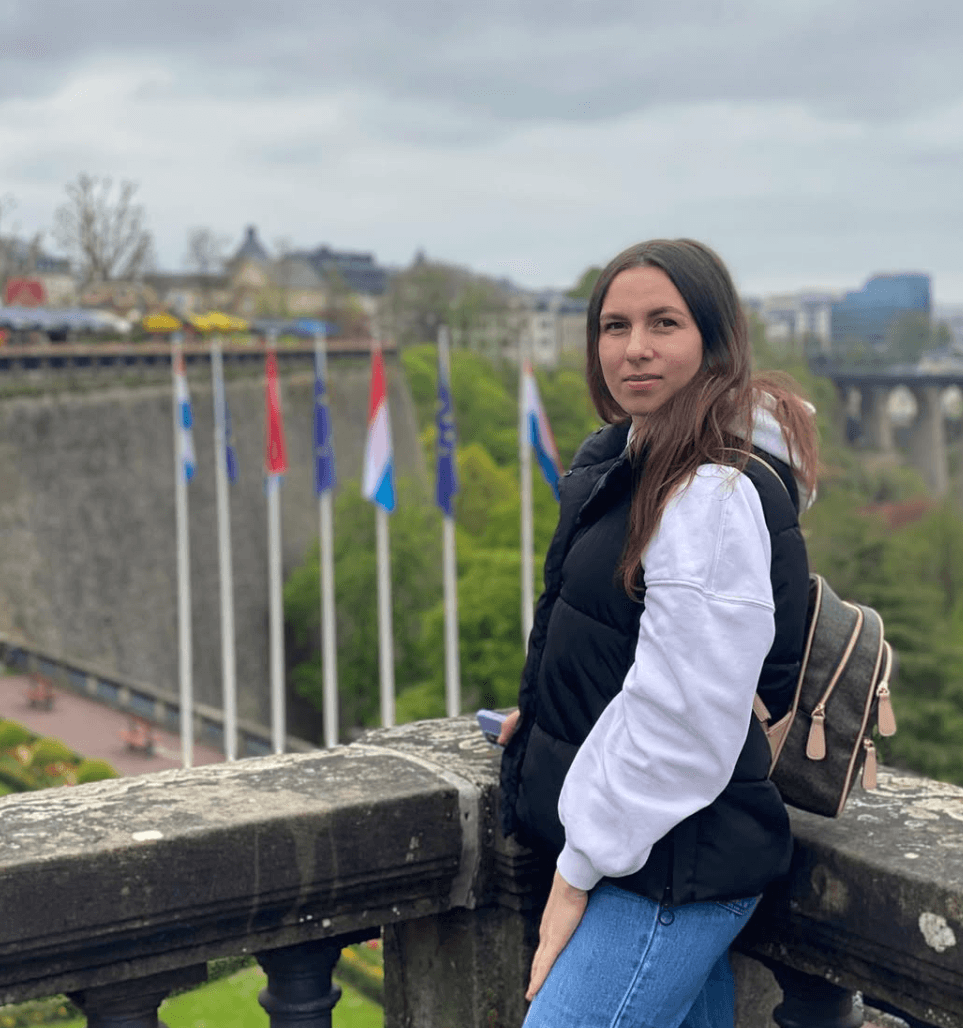

I started noticing it in the chair next to mine: women asking for darker roots, not lighter. The blonde ends stayed, but the top went back to brown. Reverse balayage, they called it. I thought it was just a phase. Then I saw the grow-out schedule.
This roundup has 40 versions of the technique, from chin bobs to mid-back waves, ash to caramel. Every one buys you time between salon visits. For someone like me, with fine hair that goes flat by 4pm and a root line that shows at week five, that matters. Reverse Balayage is the color that works with your schedule, not against it.
Long Layered Reverse Balayage Melt
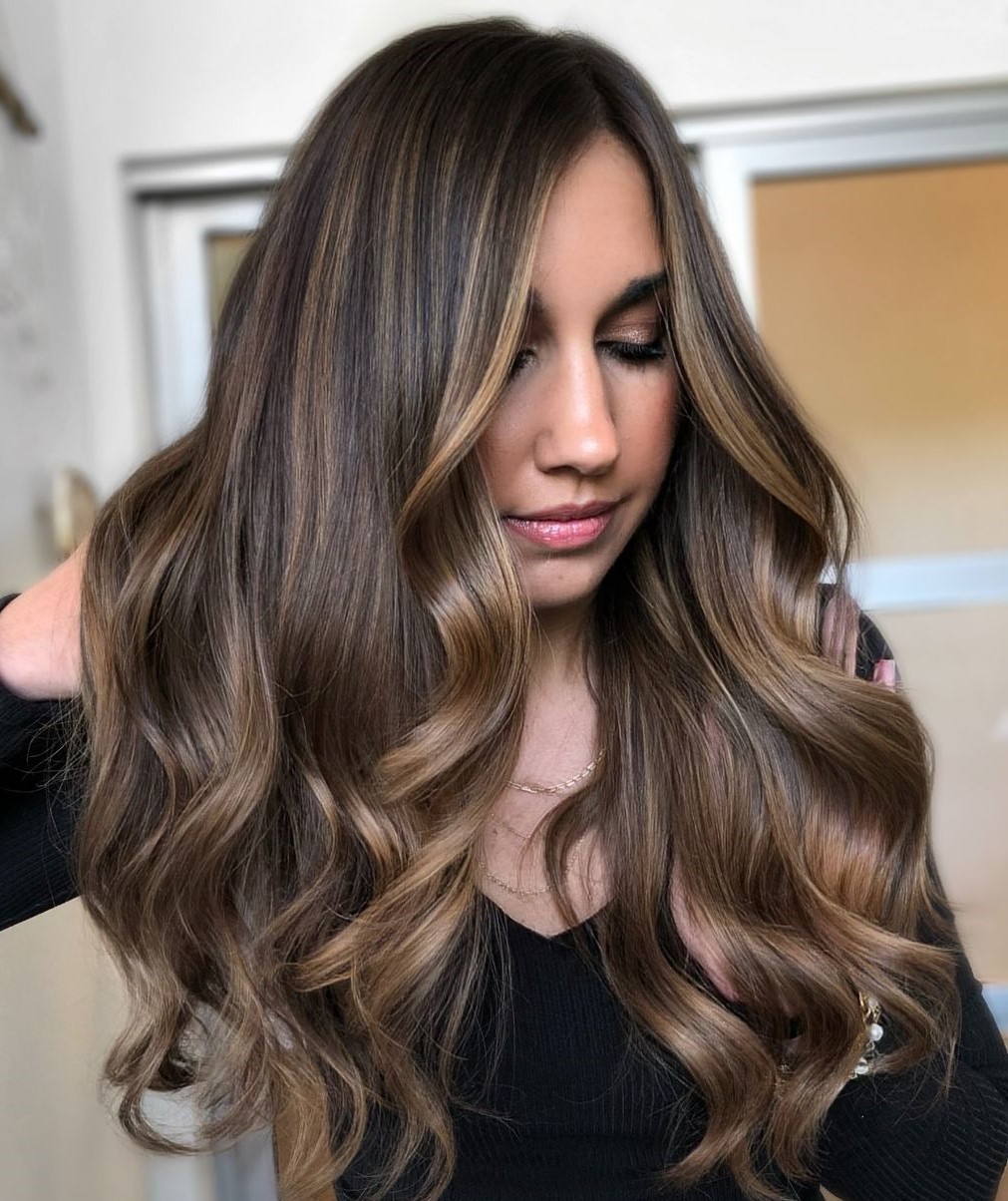
The medium brown base, the lighter brown and blonde highlights, the way the light splits across each layer — that reverse balayage technique took work. A whole lot of foils died so this mid-back length could have that dimensional colour melt, a warm tonal shift from root to end. Wavy texture, medium density, and every strand placed so it catches something different. The kind of salon job where you don’t ask how many sections it took.
Ash Blonde Lob With Curtain Bangs
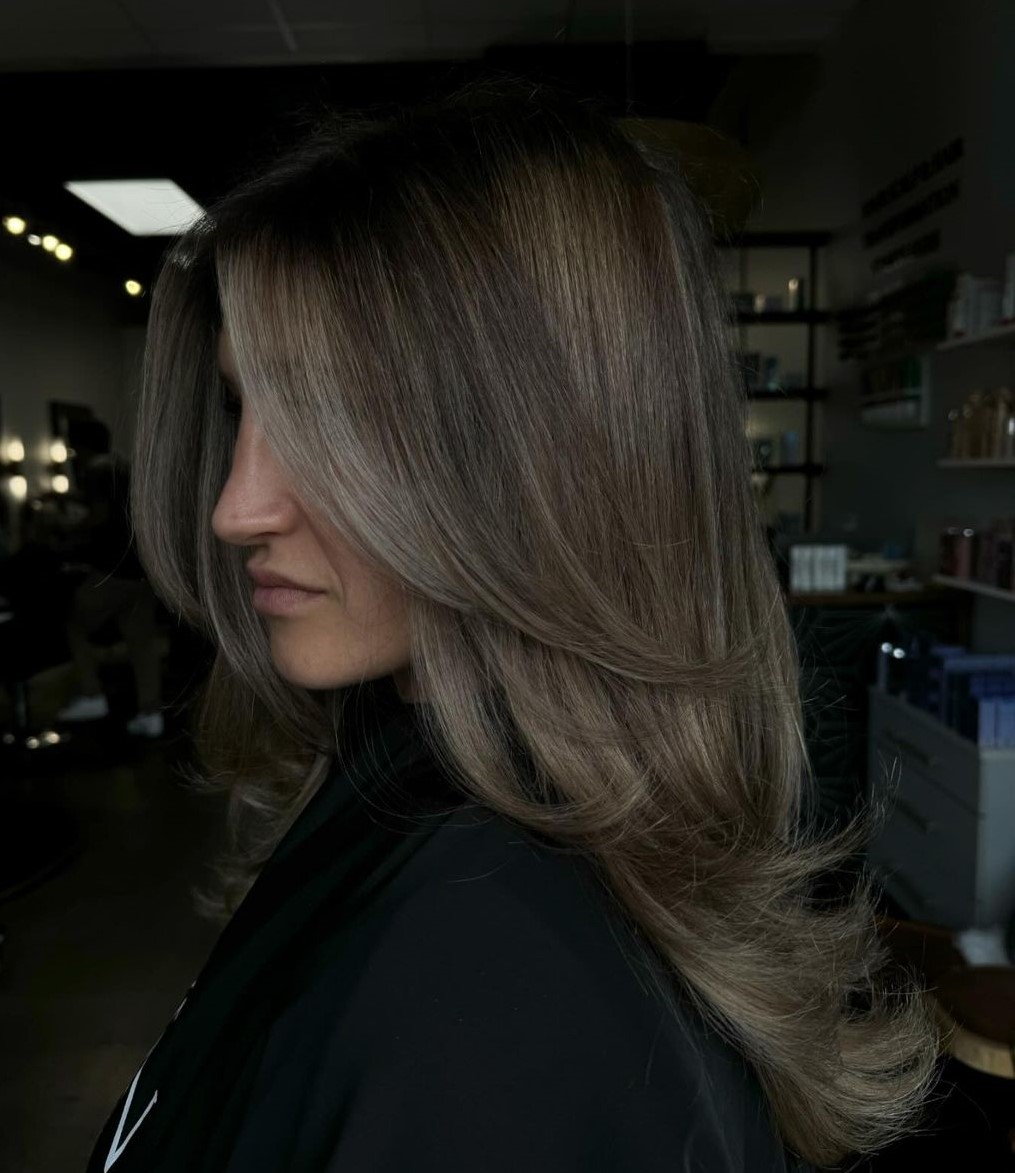
Why would you take a perfectly cool ash blonde lob and drop ash brown reverse balayage into it? Because the contrast makes the blonde look sharper, that’s why. The fine, straight texture holds the shoulder length clean, and those curtain bangs sweep just past the cheekbone. This is a salon job, not a bathroom-mirror experiment — adding lowlights to ash blonde without a trained eye goes muddy fast. The tone stays cool, the technique keeps the depth subtle, and you walk out with a lob that actually has dimension, not just flat.
Collarbone Lob With Wavy Texture
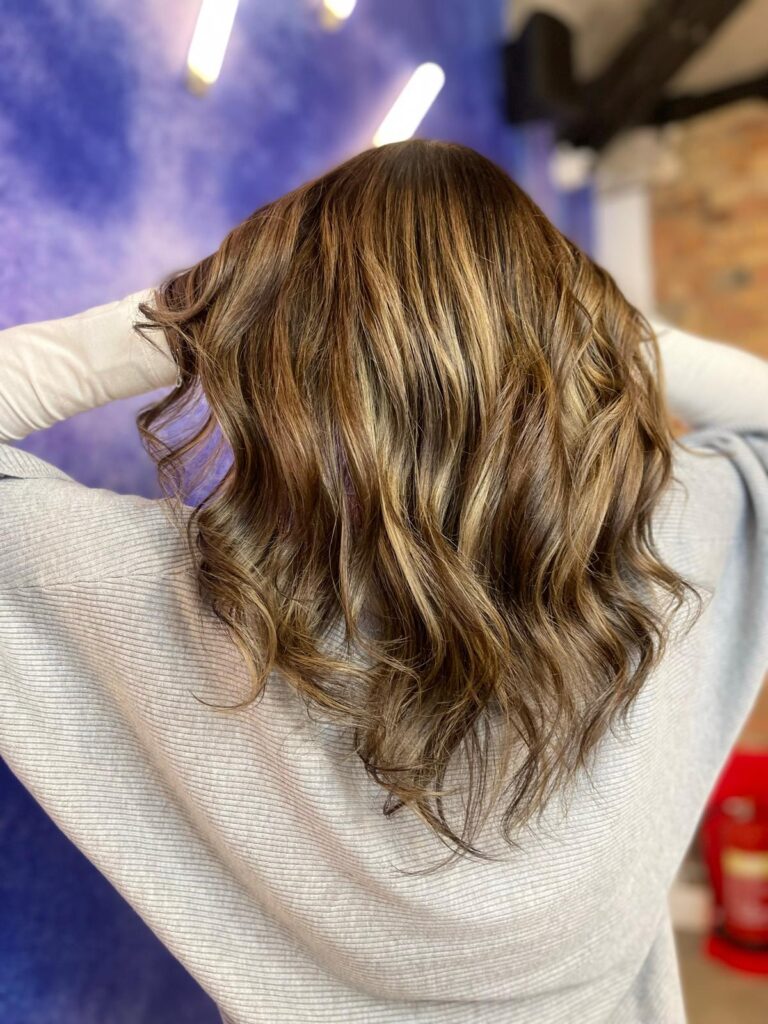
I’ll admit, I was skeptical about how long this collarbone lob would keep its wave. Loose curls on medium-density wavy hair usually drop by lunch. But the reverse balayage collarbone trick here is that the medium brown base and lighter pieces create enough visual texture that even when the curl relaxes, your eye still reads movement. Warm tone throughout, and the colour is low-maintenance because the regrowth just blends into the base. You will need to refresh the waves with a curling wand every morning, but the colour holds its own for eight to ten weeks.
Thick Wavy Mid-Back Ash Brown
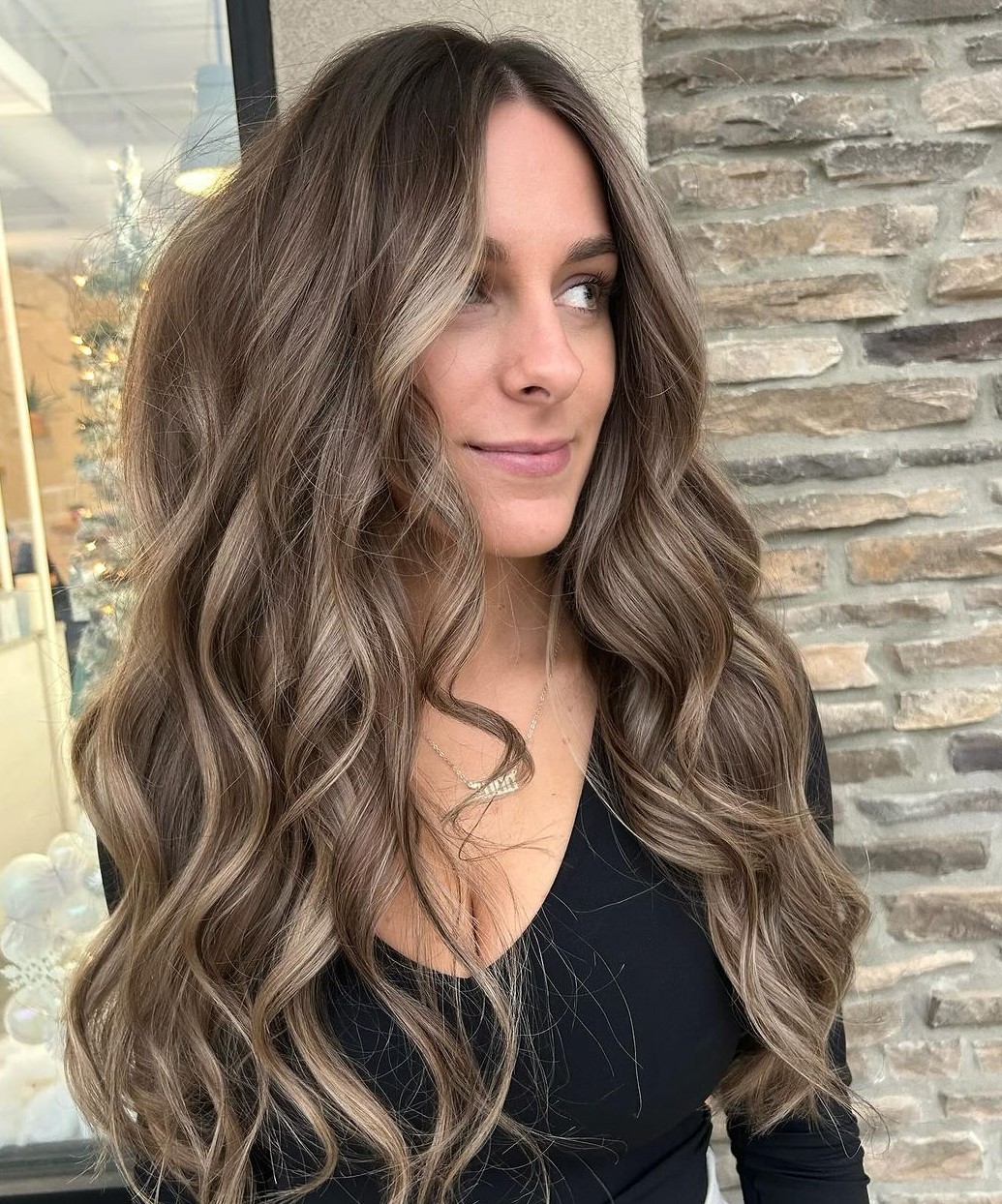
Thick hair owners, this one’s for you. Those fine hair fantasies everyone pins? They skip the weight of a full mid-back head of waves. But an ash brown balayage with ash blonde highlights? It actually works on thick texture because the lighter pieces break up the density so it doesn’t sit like a solid sheet. The cool tone reads polished, not muddy, and the wavy wave pattern helps the colour spread naturally.
The honest downside: ash brown on thick hair needs maintenance or it pulls green. A toner every eight to ten weeks keeps those ash blonde highlights from turning brassy. And the sheer volume means more styling time to get the waves uniform. But if you have the thickness and the patience, this is the cool-toned length that actually earns its keep.
Dark Brown With Caramel Highlights
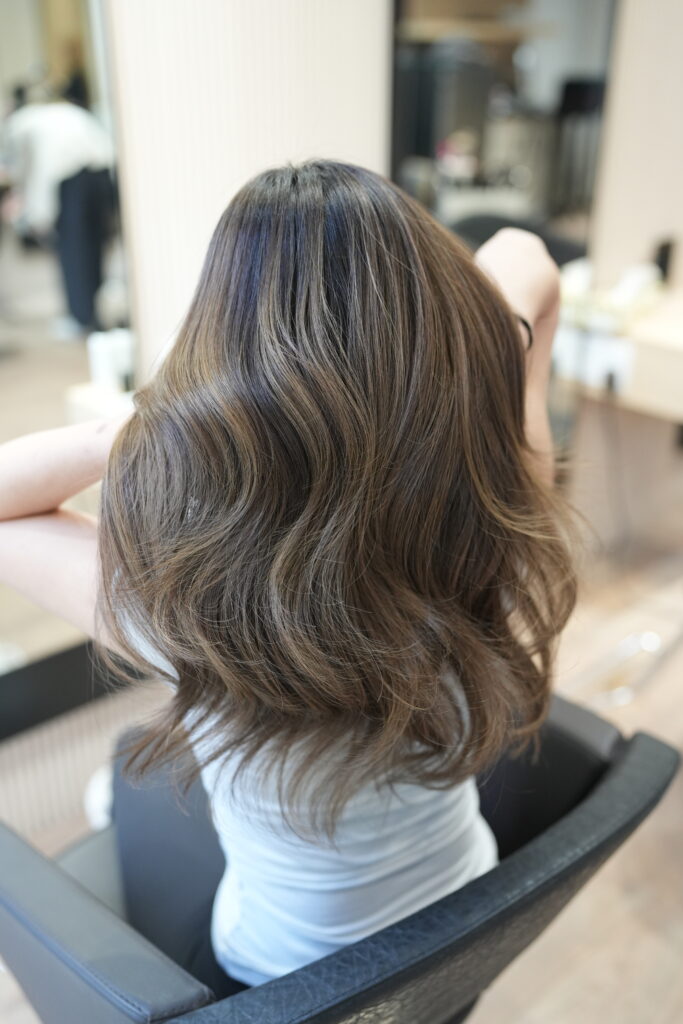
The dark brown base sits heavy, then caramel and ash blonde highlights break it up in thin ribbons. This back-view medium crop, mid-back length, thick wavy texture, uses dark brown caramel balayage to keep the color from looking like a zebra crossing. The warm caramel tones lift the dark base without shouting — ash blonde pieces add a cool counterpoint so it doesn’t read flat or too hot. Technique is everything here: the highlights are painted from mid-shaft to ends, leaving the root intact for that soft, grown-in feel. No hard lines, no sudden transitions. Just a color melt that knows where it’s going.
Dark Brown With Copper Auburn
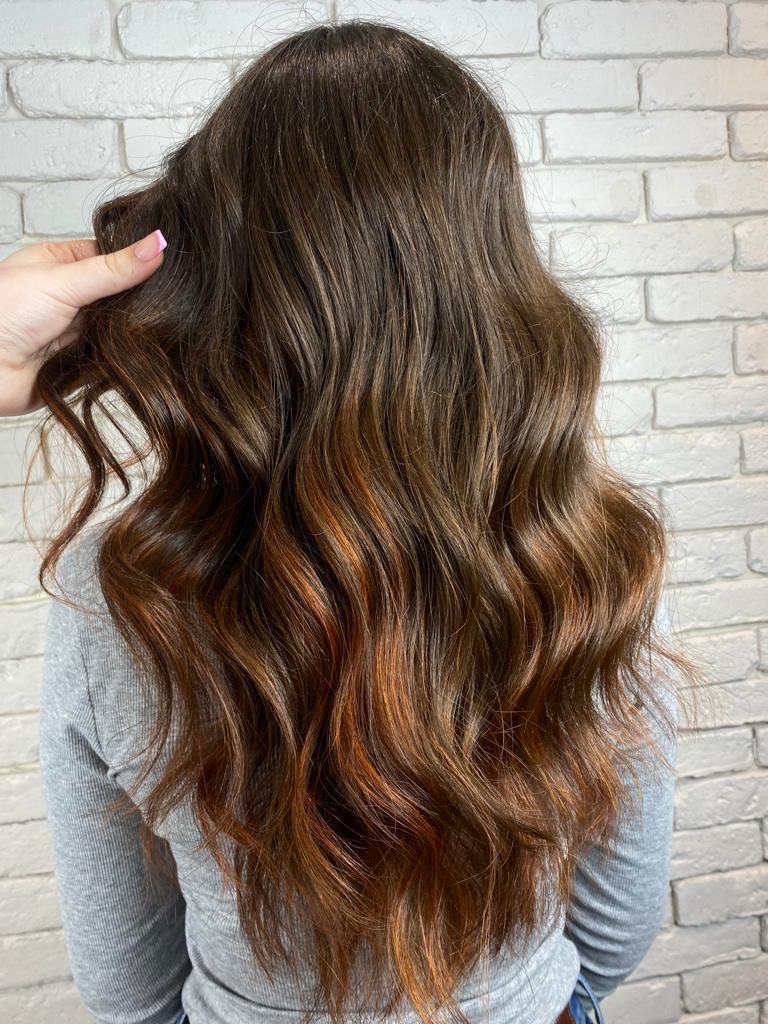
The first time I saw copper and auburn pieces against a dark brown base, I actually stopped scrolling. This is mid-back, thick, wavy hair with loose waves that catch the light like autumn leaves. The dark brown copper balayage technique places vibrant copper and auburn highlights throughout, not just at the ends. The tone is warm and fiery, perfect for when the weather turns cold and you want your hair to do the heavy lifting. The dark brown base keeps the copper from looking costume-y. It’s a grown-up take on autumn hair. The copper and auburn highlights are spaced so each wave catches a different shade. It’s the kind of colour that demands a second look. It’s not subtle. That’s the point. This is the autumn antidote I didn’t know I needed.
Collarbone Dark Brown With Copper Red
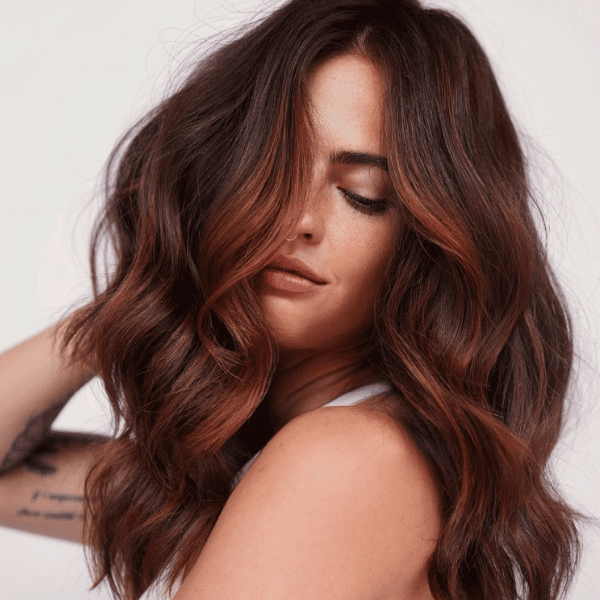
How much maintenance are you willing to sign up for? This collarbone-length cut with a wavy blowout and medium density hair gets its fire from a dark brown copper red balayage. The copper and red balayage pieces start below the ear and fade into the ends. To keep it from turning orange, tell your stylist you want a soft root shadow, a copper red balayage that starts below the ear, and a gloss every six weeks. That’s the short list. It’s not a one-and-done colour.
Dimensional Lob With Seamless Blend
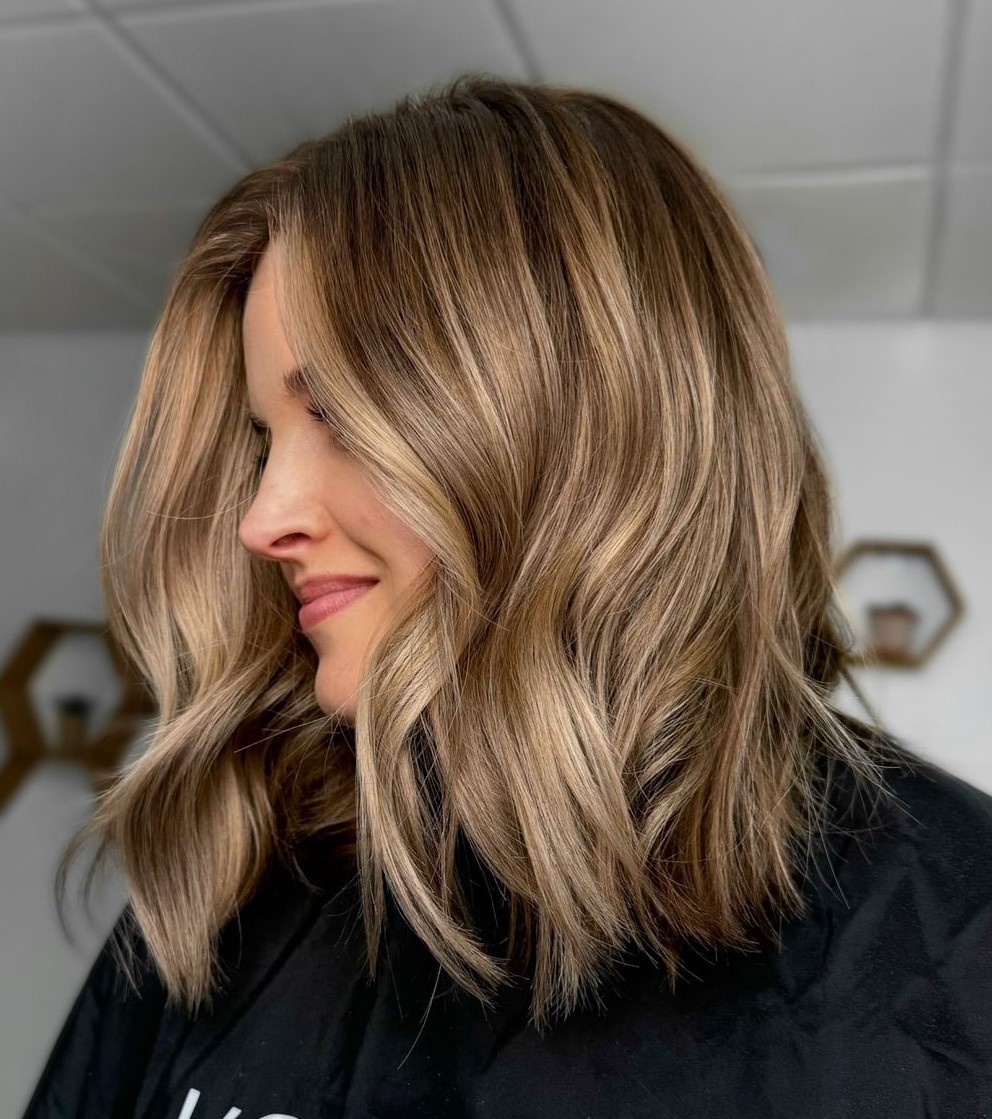
A side-part lob with a seamless blend of reverse balayage is one of those cuts that looks good from every angle. The side part and collarbone length flatter oval and heart faces because the asymmetry balances the jawline and the length doesn’t drag the face down. Round faces also benefit because the side part creates a vertical line that elongates.
The reverse balayage lob technique places the darkest tones at the ends, so the lighter brown and blonde highlights sit near the face without a harsh regrowth line. The blend is so seamless that the line between highlight and base is invisible. The medium brown base keeps it natural, and the wavy texture helps the colour catch the light. Each wave shows a different tone. The reverse balayage technique also means the roots stay darker longer, so you can push the refresh to ten weeks. This is the lob for anyone who wants dimension without the stripey look.
Long Layers With Warm Caramel
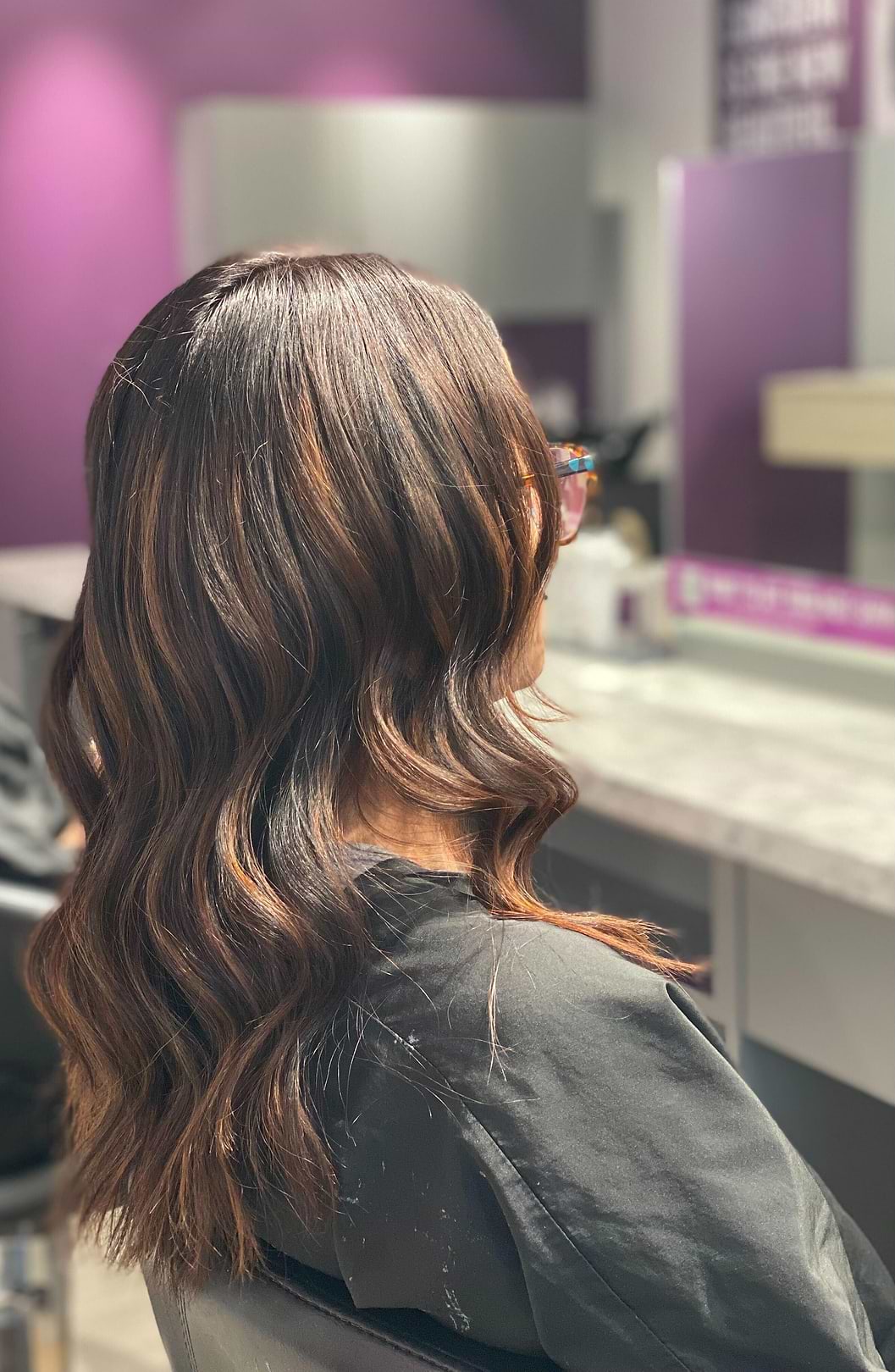
I almost went too warm with my caramel once. The problem with warm caramel highlights on a dark brown base is that too much warmth turns the whole thing muddy. This mid-back long layers cut with loose waves and medium density hair uses a dark brown warm caramel balayage with warm caramel highlights that are spaced out. The trick is to ask your stylist for a few caramel pieces, not a full coat. Use copper accents sparingly, maybe two or three pieces near the face. If you overdo it, you lose the dimension and end up with a flat, orangey mess. That’s the honest downside. Keep it restrained and the colour stays rich. The dark brown base needs to stay dominant for the caramel to pop.
Thick Wavy Dark Brown With Ash
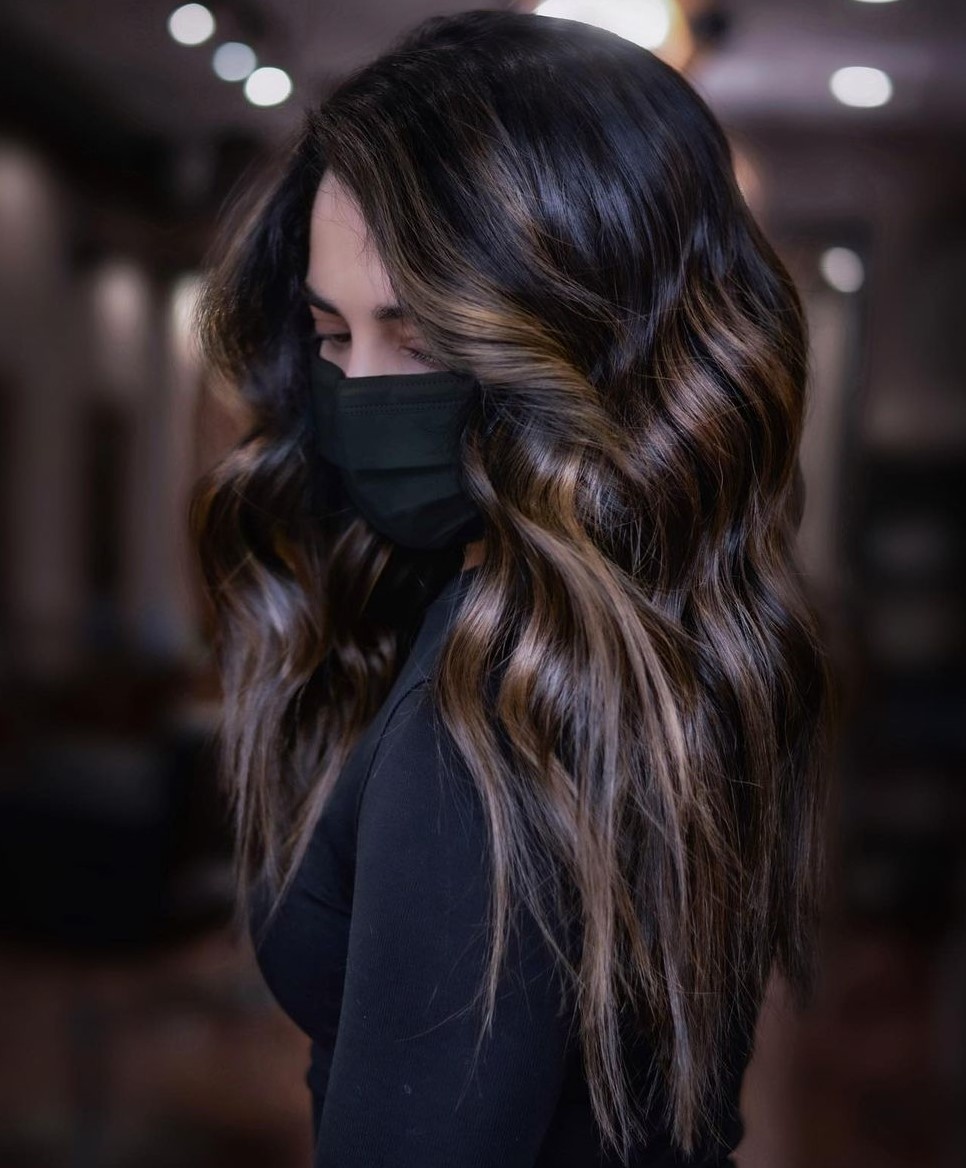
This is the cool-toned version of a reverse balayage that actually works. Thick wavy mid-back hair with a middle part and loose waves gets its dimension from a dark brown ash blonde balayage. The ash brown and subtle blonde highlights are placed throughout the waves, so the colour shifts from dark to silver without looking stripey. The upkeep is straightforward: a toner every eight weeks keeps the ash tones bright and prevents them from turning green. The waves do the work of showing off the highlights. It’s low drama, high payoff.
Thick Wavy Collarbone Ash Blonde
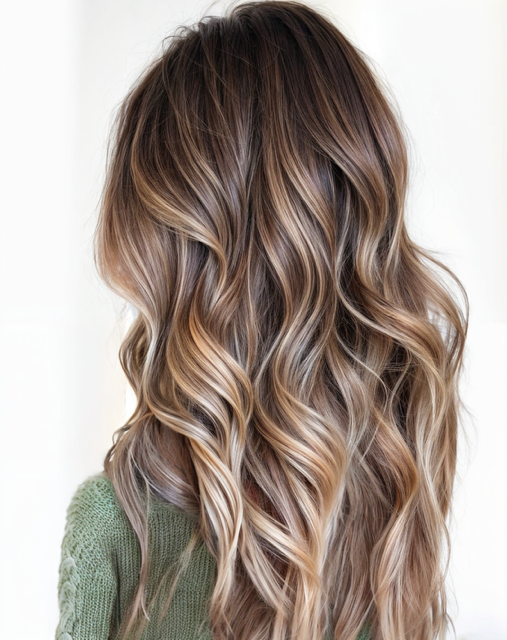
So you found a box dye in the back of the cabinet. This thick wavy collarbone ash blonde is not that. The technique is a reverse balayage, where the medium brown ash blonde highlights are painted onto a deeper base, creating a striking contrast that a single-process color just can’t manage. The collarbone length and thick texture need that dimension to avoid looking flat. Tone is everything here. Ash reads cool, so it skips the brass a warm box dye would leave. A salon book it, this is not a bathroom mirror job. The foil placement needs to follow the wave pattern, and that takes a third hand.
Ash Blonde Lob With Darker Roots
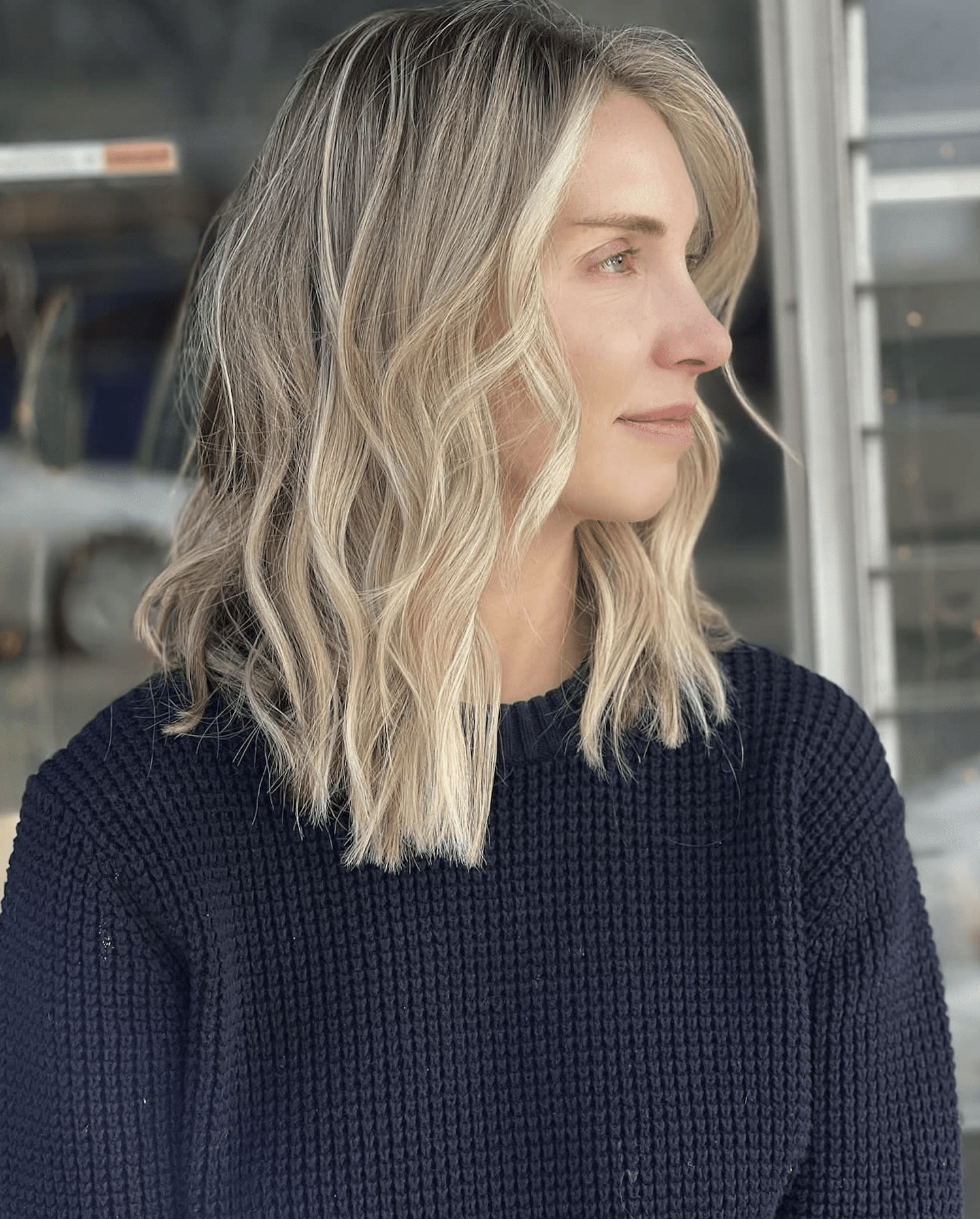
The first wash is a liar. That fresh-from-the-salon ash blonde lob with darker roots looks perfect in the bowl, but hard water starts talking by day three. The ash blonde lowlights are what save it. They add depth so the brass doesn’t read as loudly when it creeps in. The darker roots buy you time, too. A reverse balayage on a collarbone lob means the lightest pieces sit mid-length, not at the ends, so fading is less obvious.
A wavy, medium-density texture helps. The waves scatter light, so the grow-out line stays soft. Without those subtle lowlights, the ash would go flat by the end of week two. The real trick is the purple shampoo rotation. Every third wash, not every day. Too much and the ash turns violet. Too little and you are back at the toner appointment by week five.
Mid-Back Dark Brown With Blonde Caramel
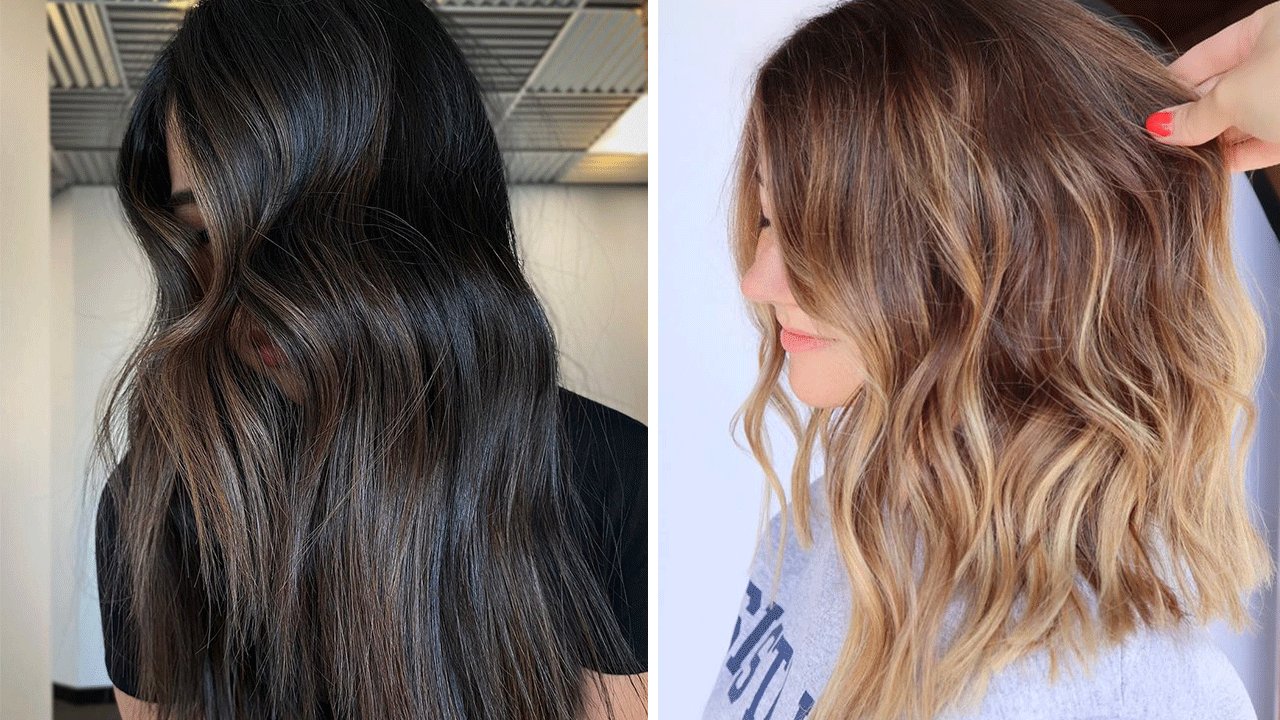
Why do short crops get all the contrast credit? A mid-back dark brown with blonde caramel proves length can carry dimension just as hard. The reverse balayage places the ash blonde and caramel highlights lower, so the dark brown blonde caramel base stays rich at the root. For summer, the lighter ends catch sun without washing out the whole head. For winter, the deep base keeps it from looking brassy against scarves and coats. Thick, wavy texture holds the separation so the colors don’t bleed into one.
Seamless Dark Brown Blend
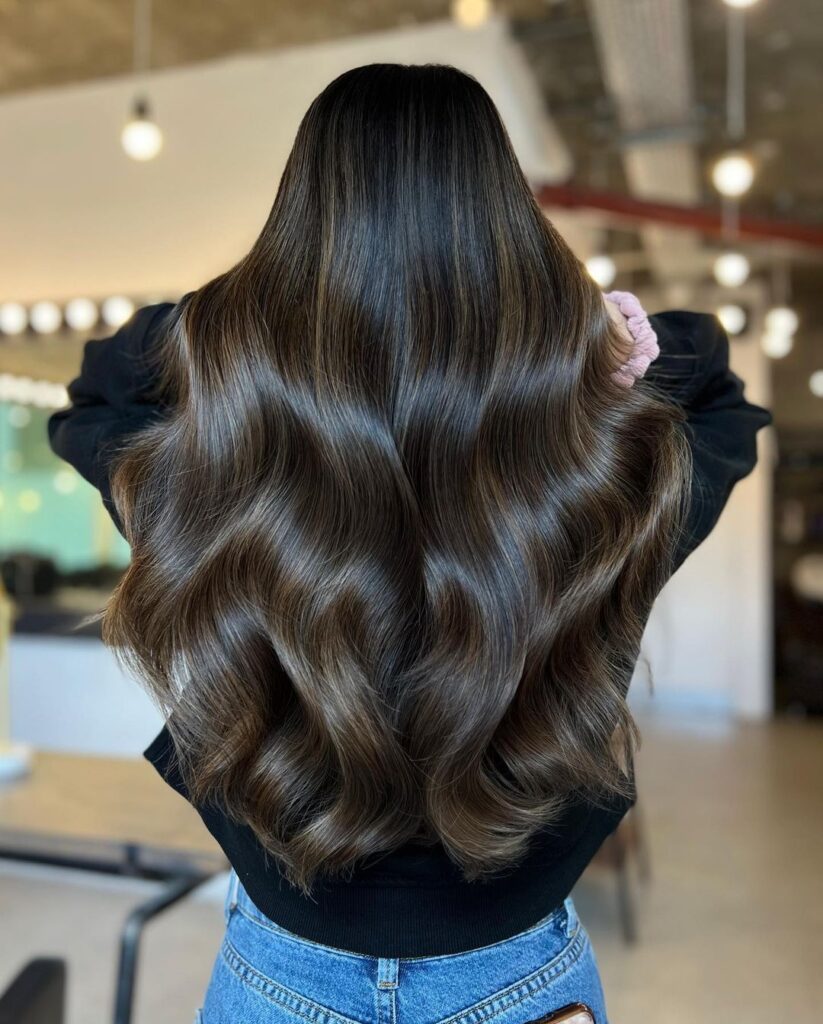
I used to think seamless meant boring. Then I saw the foil map for a dark brown seamless blend on thick wavy hair. The ash blonde and caramel highlights are painted in a staggered pattern. Fine slices at the crown, wider panels at the mid-back length. This is a reverse balayage at its most technical. The base is the star, and the highlights are placed to soften the line between natural and colored. No harsh demarcation. The thick texture helps hide the transition, but the real work is in the sectioning. Ask your stylist for a root-mid fade and a soft ribbon of caramel through the mids.
Dark Brown To Blonde Balayage
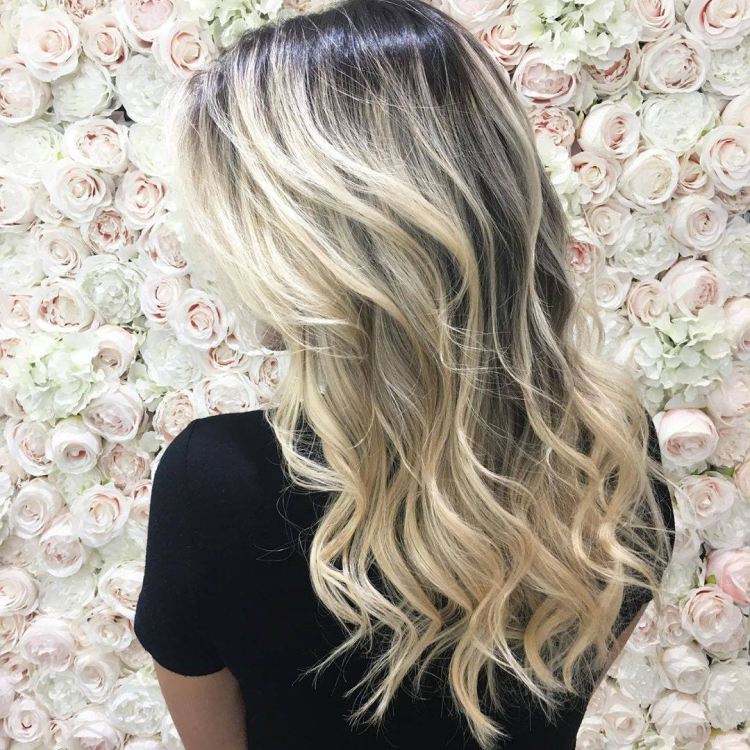
Summer sun has a way of punishing long dark brown blonde balayage ends, turning that seamless blend into a brassy line. The dark brown base holds, but the blonde balayage highlights lift and yellow by August. This mid-back length with thick wavy texture hides the damage better than straight hair would. The technique is the real hero here: a soft root shadow that keeps the grow-out looking intentional. Just know that by week ten, those ends will need a toner or a trim.
Dark Brown With Warm Gradient
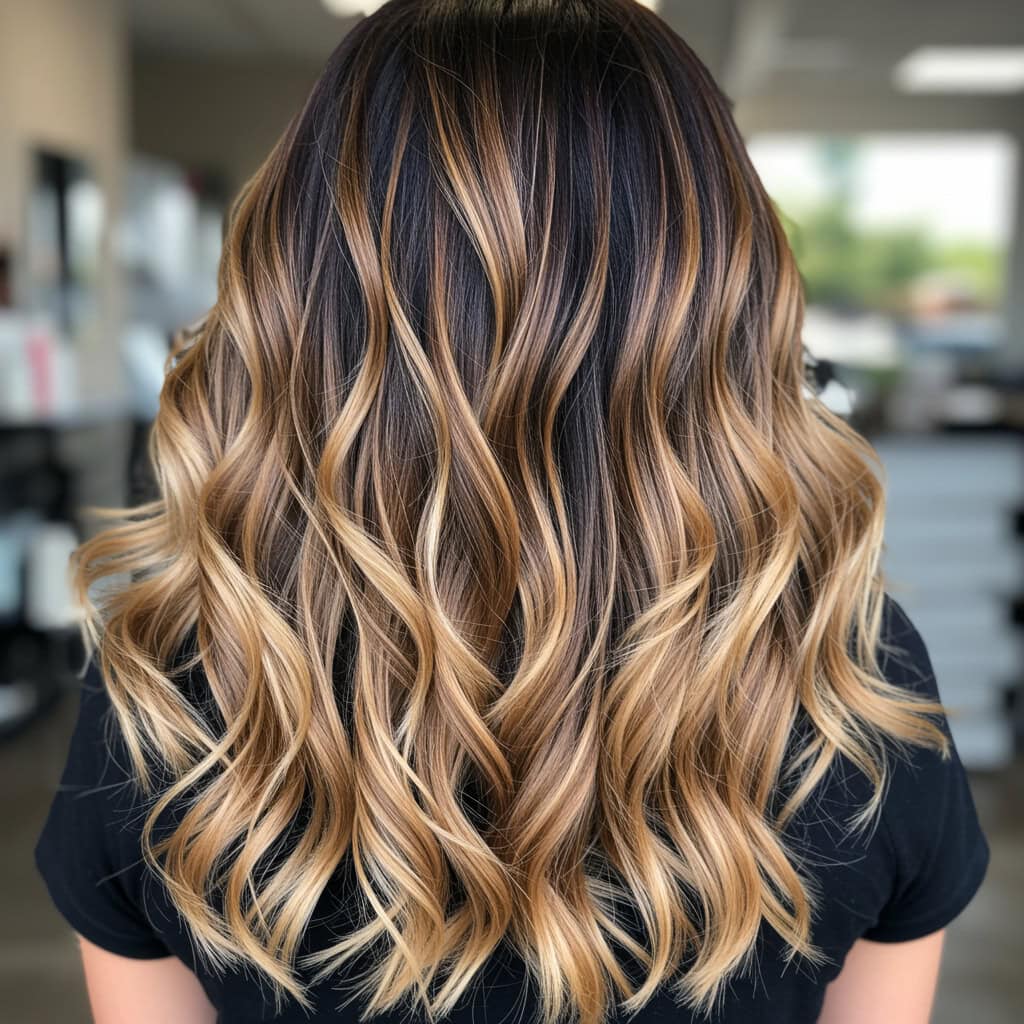
Four hours. That’s what this gradient demands. The dark brown base meets caramel and honey blonde balayage that melts into a warm gradient, hitting mid-back on thick, wavy hair. The back view shows the contrast: dark roots, ends that glow without going brassy.
The salon marathon is real. Your stylist will paint each section by hand, blending the caramel and honey tones so there’s no harsh line. The technique takes time because the reverse balayage starts darker at the root and lightens gradually. Plan for a full afternoon and a book. The warm gradient is worth the chair time, but it’s not a lunch-break job.
Collarbone Dark Blonde With Highlights
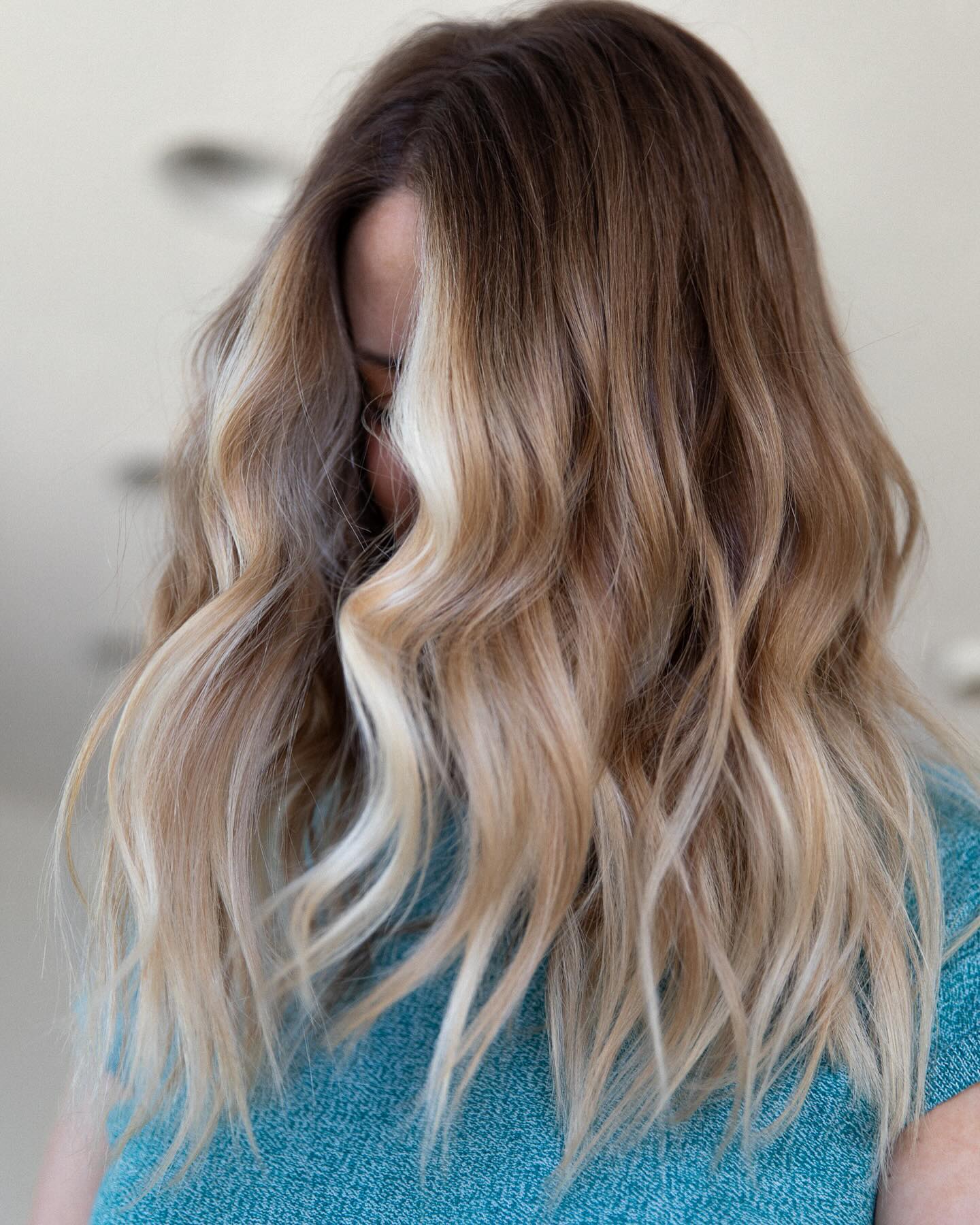
The light hits the highlights just below the jaw. This collarbone cut uses a dark blonde base with lighter blonde balayage that lifts the ends. The tone stays bright, not brassy, thanks to the cool-leaning highlights. The wavy, thick texture gives the colour dimension. Who it flatters: round and oval face shapes, because the lighter pieces sit near the collarbone and widen the eye line. Upkeep means a toner every six to eight weeks and a trim to keep the collarbone length sharp. Skip it if your face is long or square; the horizontal line can shorten the face too much.
Mid-Back Dark Blonde Blend
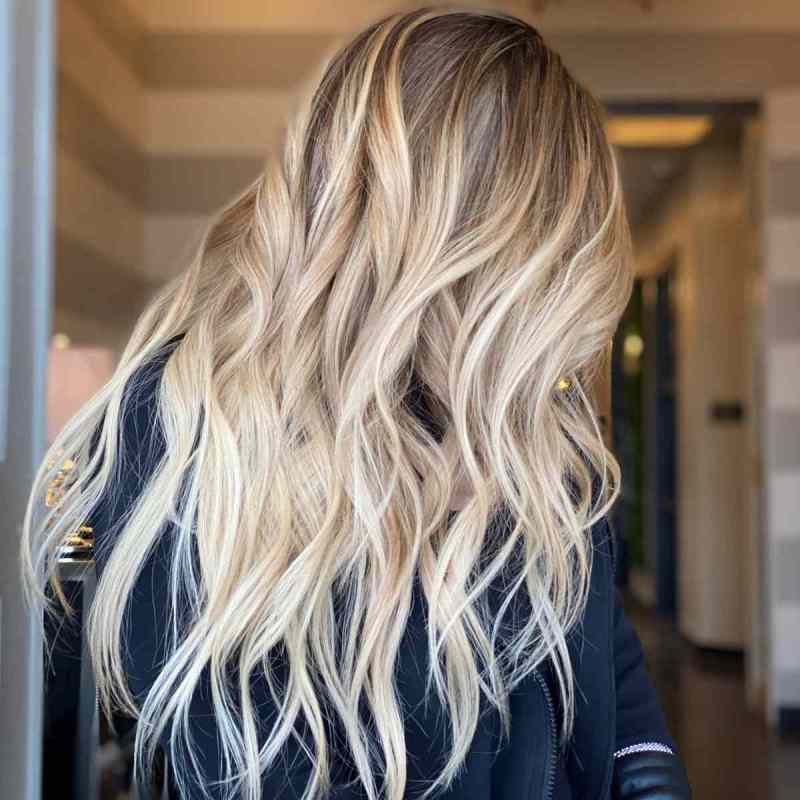
I see this all the time: the blonde goes brassy because no one told them about gloss. This mid-back length uses a dark blonde base with lighter blonde highlights, but the seamless blend is the trick. The mistake is skipping a glossing treatment. Without it, the highlights separate and turn yellow, especially on wavy, thick hair. The fix is simple: a clear or slightly cool gloss every few weeks keeps the dark blonde seamless blend from falling apart. It’s not a big ask, but it’s the difference between a blend that looks intentional and one that looks faded.
Ash Blonde Collarbone With Side Bangs
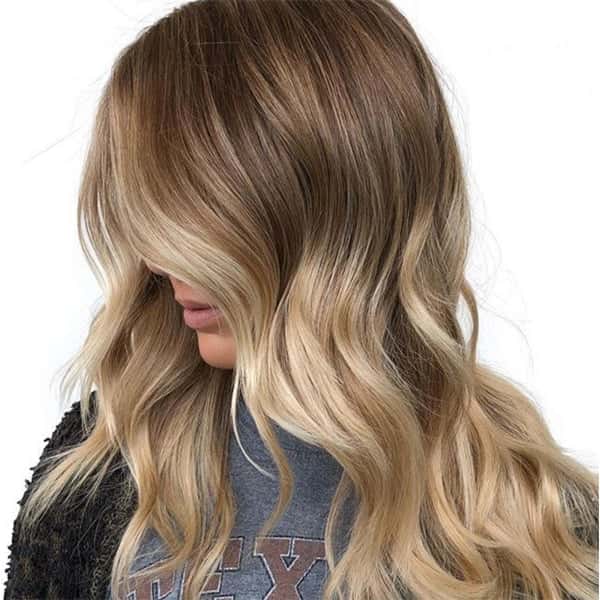
What makes this side profile work? The ash blonde base with lighter ash blonde highlights, placed to catch the light across the cheekbone. The side bangs soften the forehead without hiding the collarbone length. The tone is cool, almost silvery, which reads modern against medium-density wavy hair. This is a spring or summer look, ideal for brunch or a wedding where you want the hair to do the talking. The key is the soft blend: no harsh lines, just ash tones that fade into each other.
Back View Medium Crop Mid-Back Dark Blonde Blend
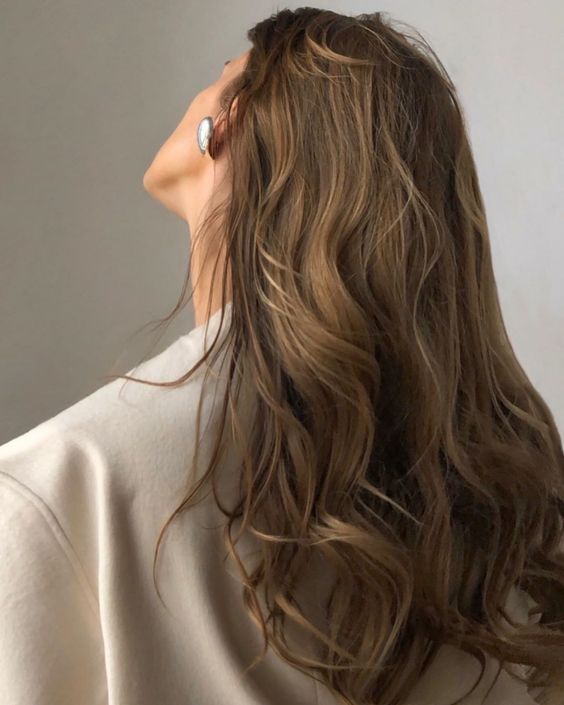
I’ll admit it: I’m sceptical this look works on anyone who doesn’t have a stylist on speed dial. The back view shows a mid-back length with a dark blonde base, then golden blonde and ash blonde balayage that weaves through wavy, medium-thickness hair. The crop is medium, meaning the layers start higher, so the blend has more surface area to go wrong.
Maintaining a dark blonde golden ash balayage at this length is a salon commitment. You need a gloss every few weeks to keep the golden and ash tones from fighting each other. Without that, the ash goes muddy and the gold goes brassy. DIY toning is a gamble; I’d book the appointment. The result is gorgeous when fresh, but the upkeep is real.
Chin Length Lob With Ash Blonde
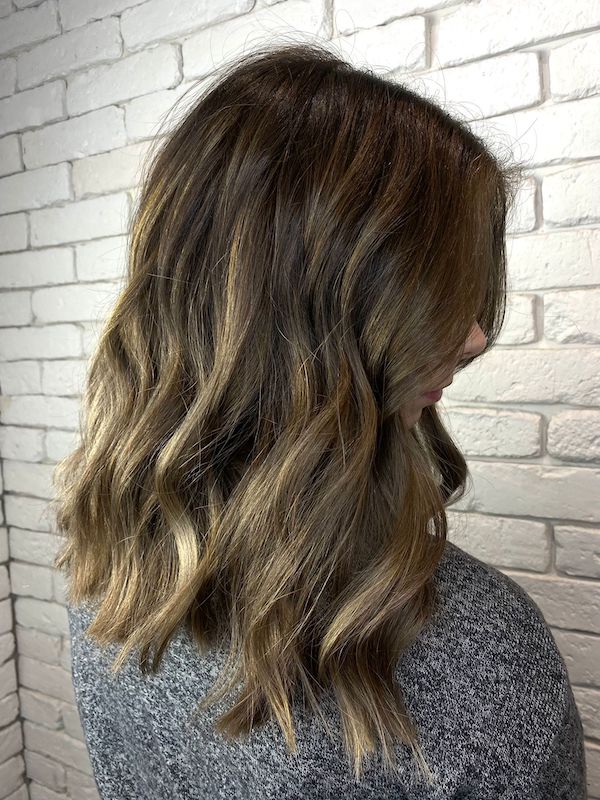
The dark brown ash blonde contrast here is doing all the heavy lifting. A chin-length lob with a dark brown base and ash blonde balayage that starts mid-shaft, so the roots stay deep and the ends read icy. On wavy, medium-density hair, the loose waves catch that cool tone differently at every bend. The middle part keeps it clean, no bangs competing with the colour line. A trim every six weeks keeps the chin length sharp, and a toner every six to eight keeps the ash blonde from pulling green.
Shoulder Length With Face-Framing
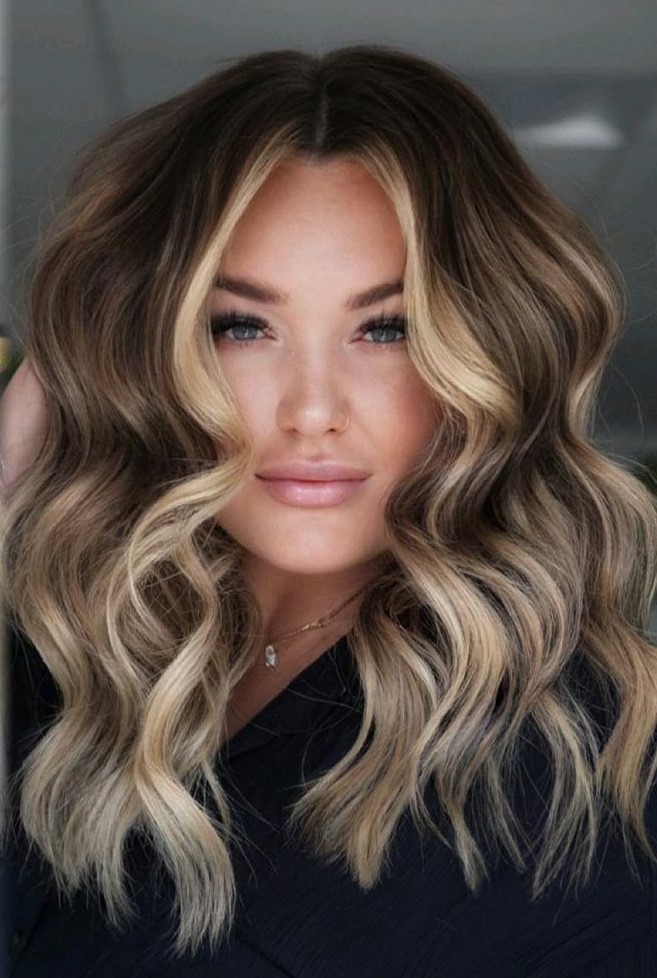
Face-framing bangs beat a blunt cut for thick, wavy hair every time. The dark blonde face framing here starts lighter at the front pieces and fades into the shoulder-length layers, so the hair has movement instead of a solid wall of colour. The middle part keeps the bright pieces symmetrical. Honest downside: those front highlights need a toner every six to eight weeks or they warm up fast. A trim every six to eight weeks for the bangs, or they hit the lip and start curling under. Worth it for the brightness.
Collarbone Dark Blonde Money Piece
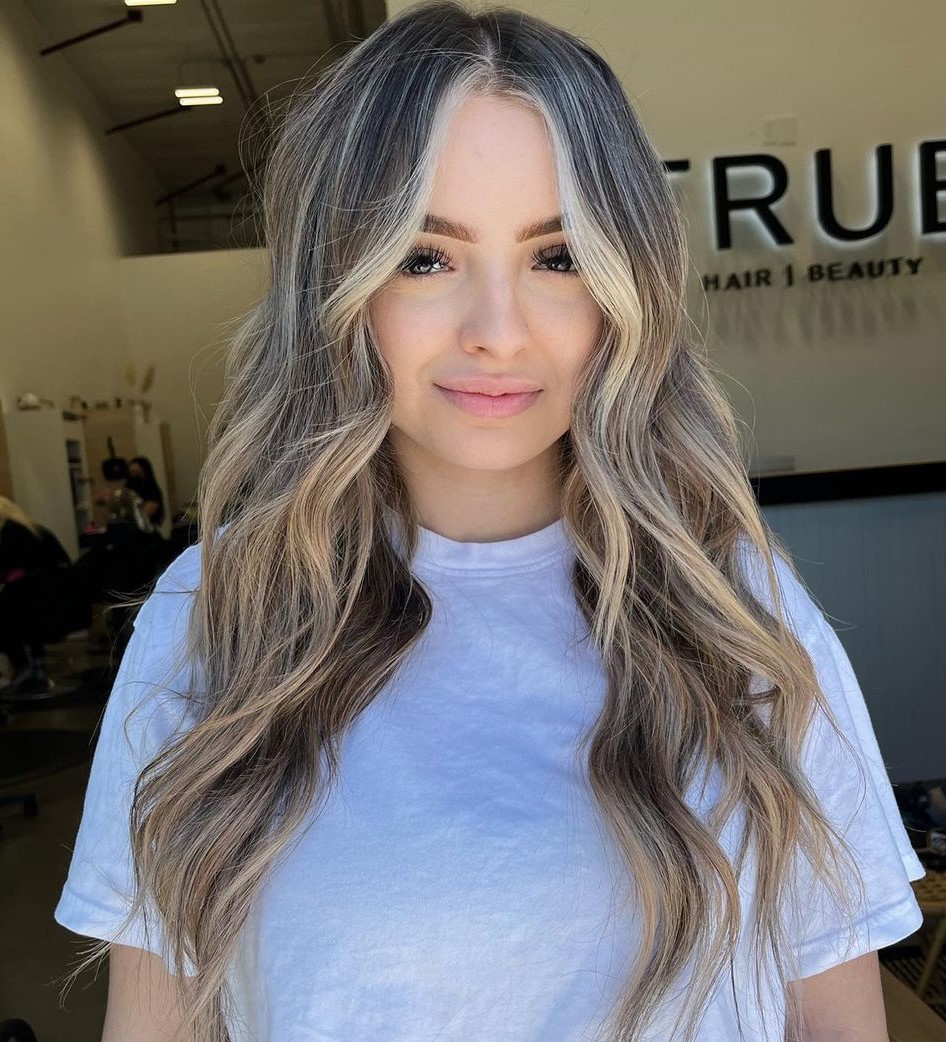
The colourist paints the dark blonde money piece first, two thicker sections at the front, then works the ash blonde highlights through the rest of the collarbone layers. The curtain bangs are cut to land on the money piece, so the bright frame hits right at the cheekbone. Wavy, medium-density hair holds the shape without product. Styling steps: rough dry the waves, tuck the curtain bangs behind the ears, let the money piece fall forward. A toner every four to six weeks on those front pieces or they go brassy fast.
Chin Lob Cool Ash Tones
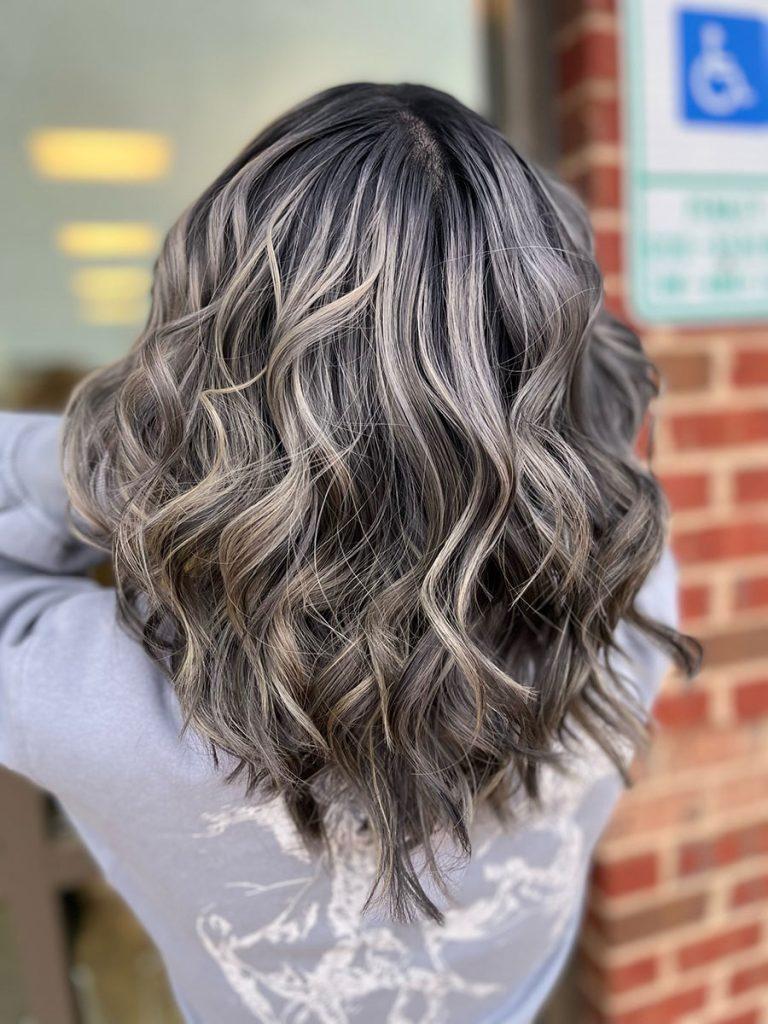
I did not expect to want silver highlights on a dark ash brown base. But here we are. The back view shows the colour placement best: the dark ash brown base sits closest to the scalp, then the ash blonde and silver highlights weave through the mid-lengths and ends. On wavy, medium-density hair, the cool tones read almost metallic in winter light. The chin-length lob keeps the weight off the colour line, so the silver pieces stay visible instead of disappearing into the layers. A toner every four to six weeks, non-negotiable.
Chin Bob With Caramel Highlights
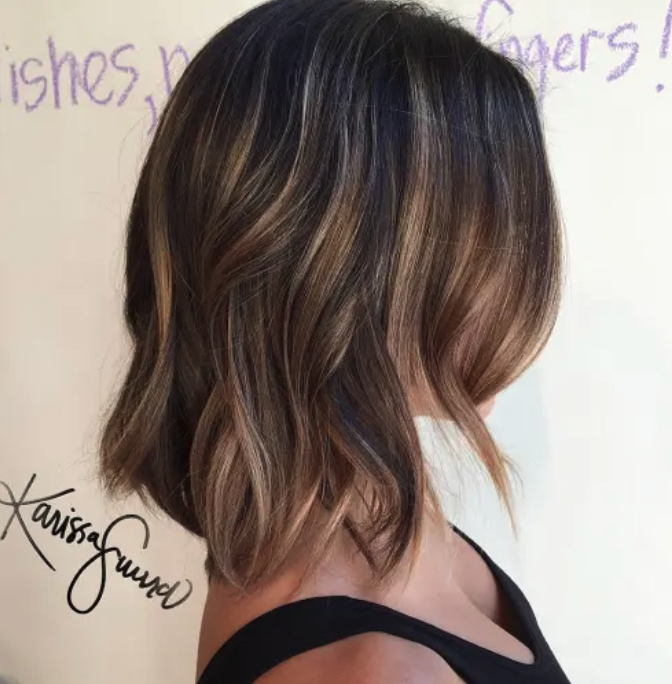
How often can you push a dark brown caramel blonde bob before the colour looks muddy? About eight to ten weeks between full appointments, with a toner refresh at six if the caramel starts pulling orange. The dark brown base stays rich, the caramel and blonde highlights add dimension through the wavy, thick texture. No bangs, so the colour does the framing. A trim every six weeks keeps the bob sharp, and the side view catches the caramel pieces wrapping around the jaw. Colour-safe shampoo only, or the warm tones fade first.
Layers Mid-Back Dark Blonde With Knot
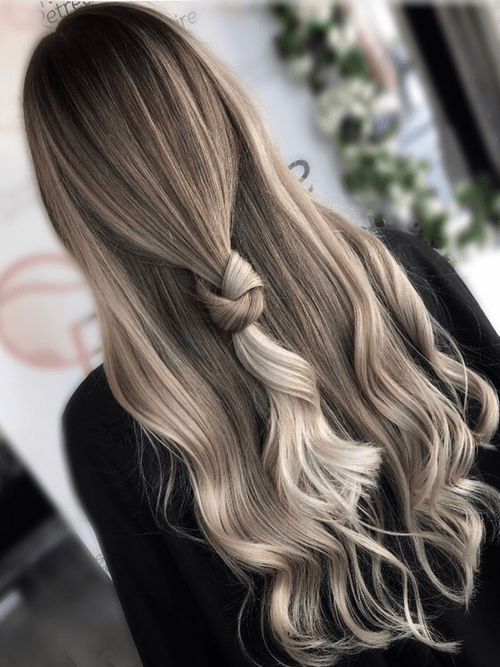
I’ll admit, I was skeptical about a knot detail on mid-back hair. But with a dark blonde knot detail and lighter blonde highlights applied through reverse balayage, the knot reads as intentional. The reverse balayage darkens the roots and lightens the ends, so the knot catches the lighter sections and pops. This works best on thick, wavy hair — the density holds the knot’s shape without collapsing by noon. Fine hair? The knot will look like a sad twist. The tone is neutral, not too warm or ash, which keeps the blonde from going brassy. Mid-back length gives enough rope to tie, and the waves add grip. If your hair is medium density or thinner, skip the knot and let the reverse balayage do the talking.
Collarbone Lob With Honey Blonde
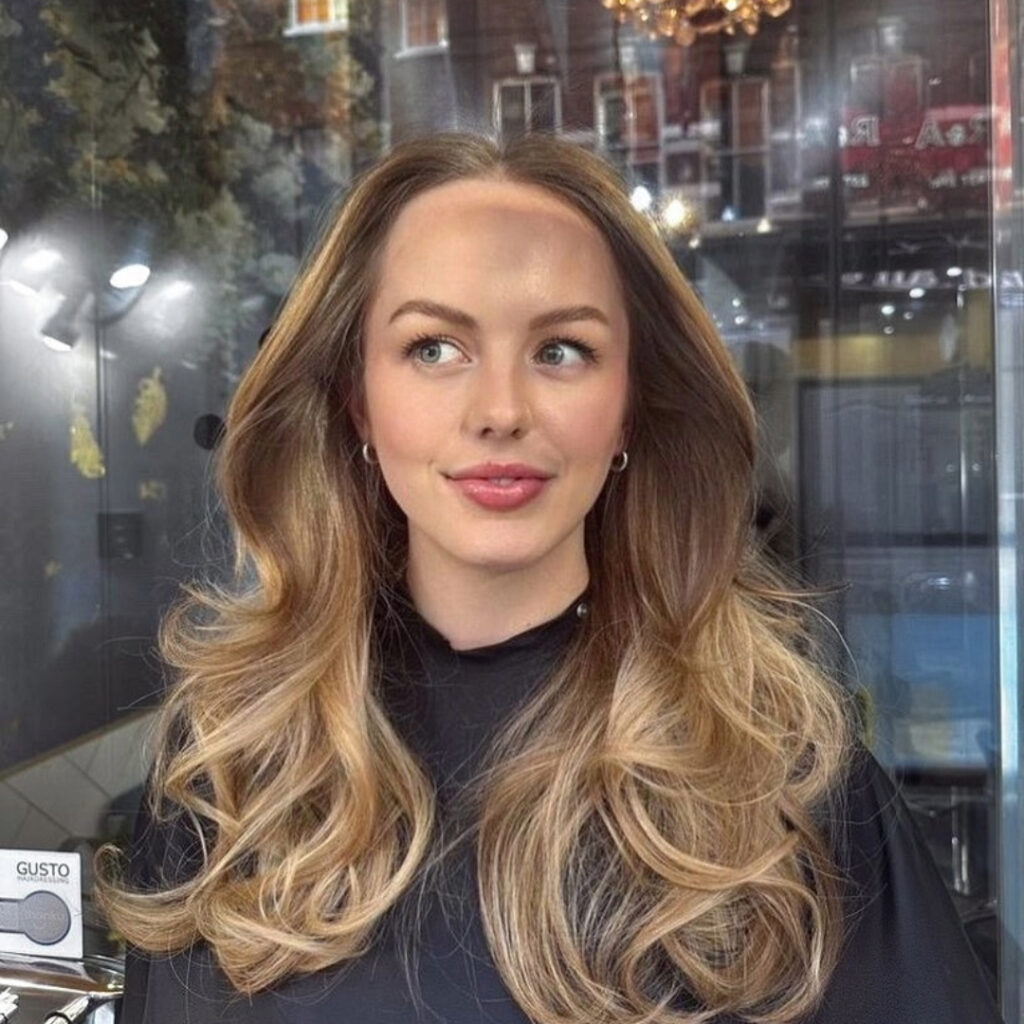
The biggest mistake I see with honey blonde darker blonde highlights is reaching for purple shampoo. Honey blonde has warm undertones — purple shampoo strips that warmth, leaving it dull and ashy. The reverse balayage technique places darker blonde highlights through the mid-lengths and ends, so the base stays honey and the depth comes from the darker pieces. The tone is intentionally warm, which means you need a shampoo that preserves warmth, not cancels it. Collarbone length keeps the waves light, and medium density hair holds the soft wave pattern without falling flat.
Dark Blonde Bob Contrast
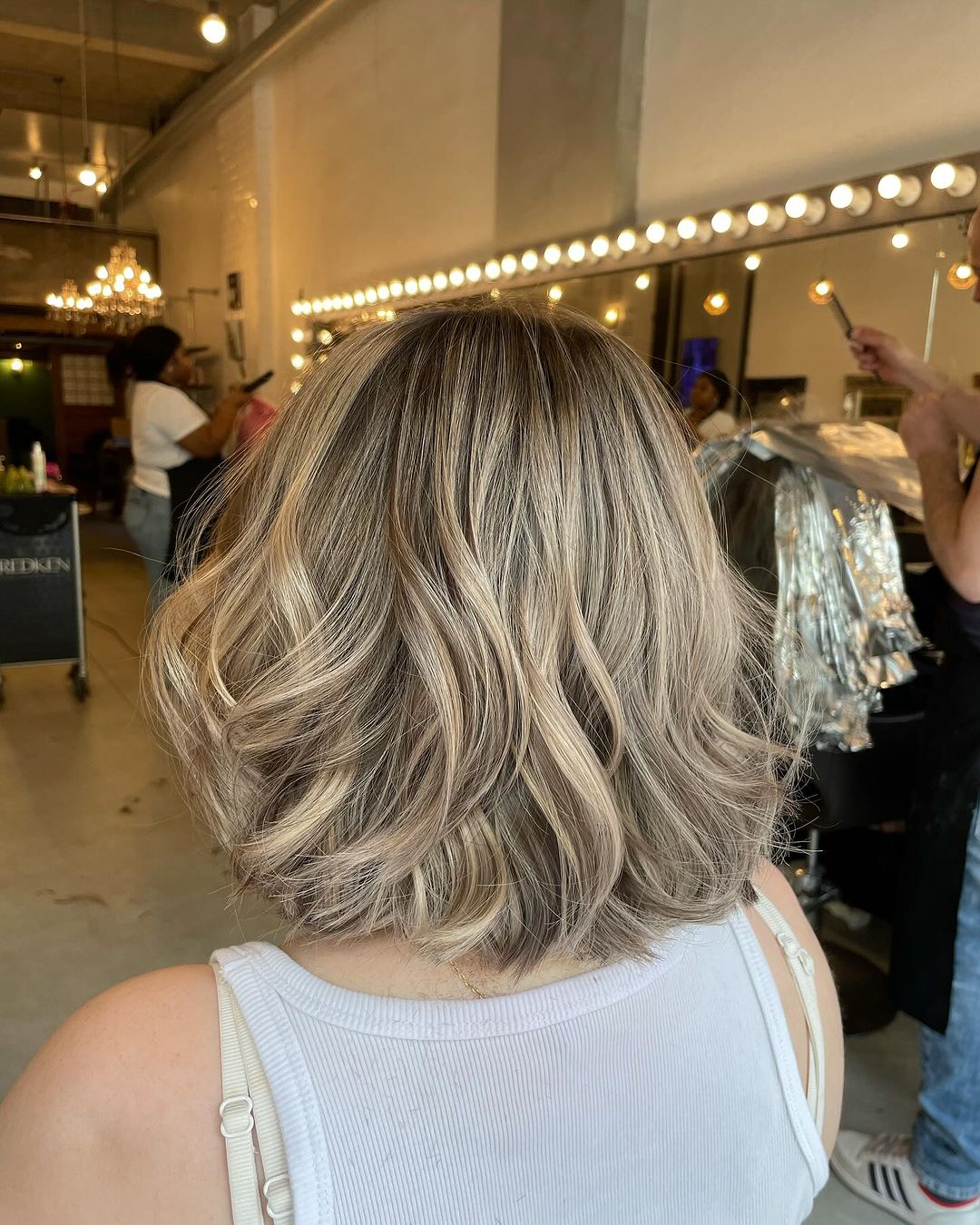
This is the kind of back view that makes you book an appointment. The reverse balayage starts with a dark blonde base at the roots and gradually releases lighter blonde highlights through the mid-lengths and ends. From the back, you see a soft gradient — not a harsh line, just a subtle lift in color. The thick, wavy texture adds movement, so the lighter pieces catch light as you turn your head. The tone leans neutral-cool, which keeps the blonde from looking brassy and makes the dark blonde lighter blonde contrast read as sophisticated, not streaky.
The bob hits at collarbone, which is long enough to show the gradient but short enough to keep the contrast concentrated. Middle part shows the symmetry of the color placement. If your hair is fine or straight, the contrast will be more visible but the waves won’t hold as well. This look demands thick hair to get that dimensional back view. The reverse balayage is the key — it darkens the roots so the grow-out is soft, not obvious.
Dark Brown Base With Blonde Balayage Mid-Back Dark Brown Blonde Blend
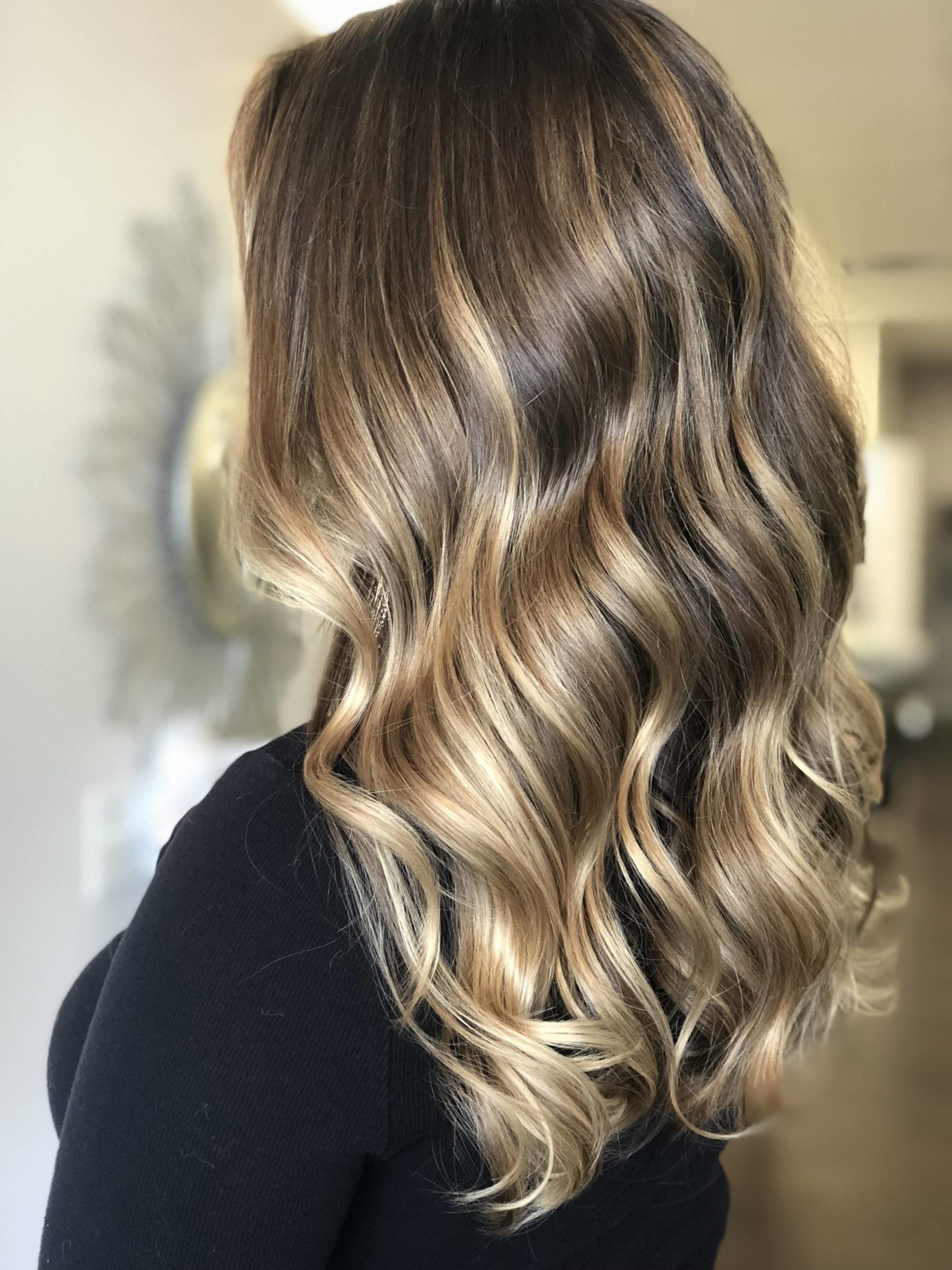
You see the photo and think, that looks effortless. But can mid-back thick hair ever really pull off high-contrast blonde balayage without looking like a project? The reverse balayage darkens the roots and blends into blonde ends, which softens the grow-out, but the dark brown blonde blend still needs regular toning to stay cool against the dark brown base. The blonde balayage highlights require a professional — this is not a DIY job, the placement needs a stylist to avoid blotchiness. The thick wavy texture helps blend the transition, but if your hair is straight, the contrast will be stark.
Collarbone Dark Brown Ash Beige
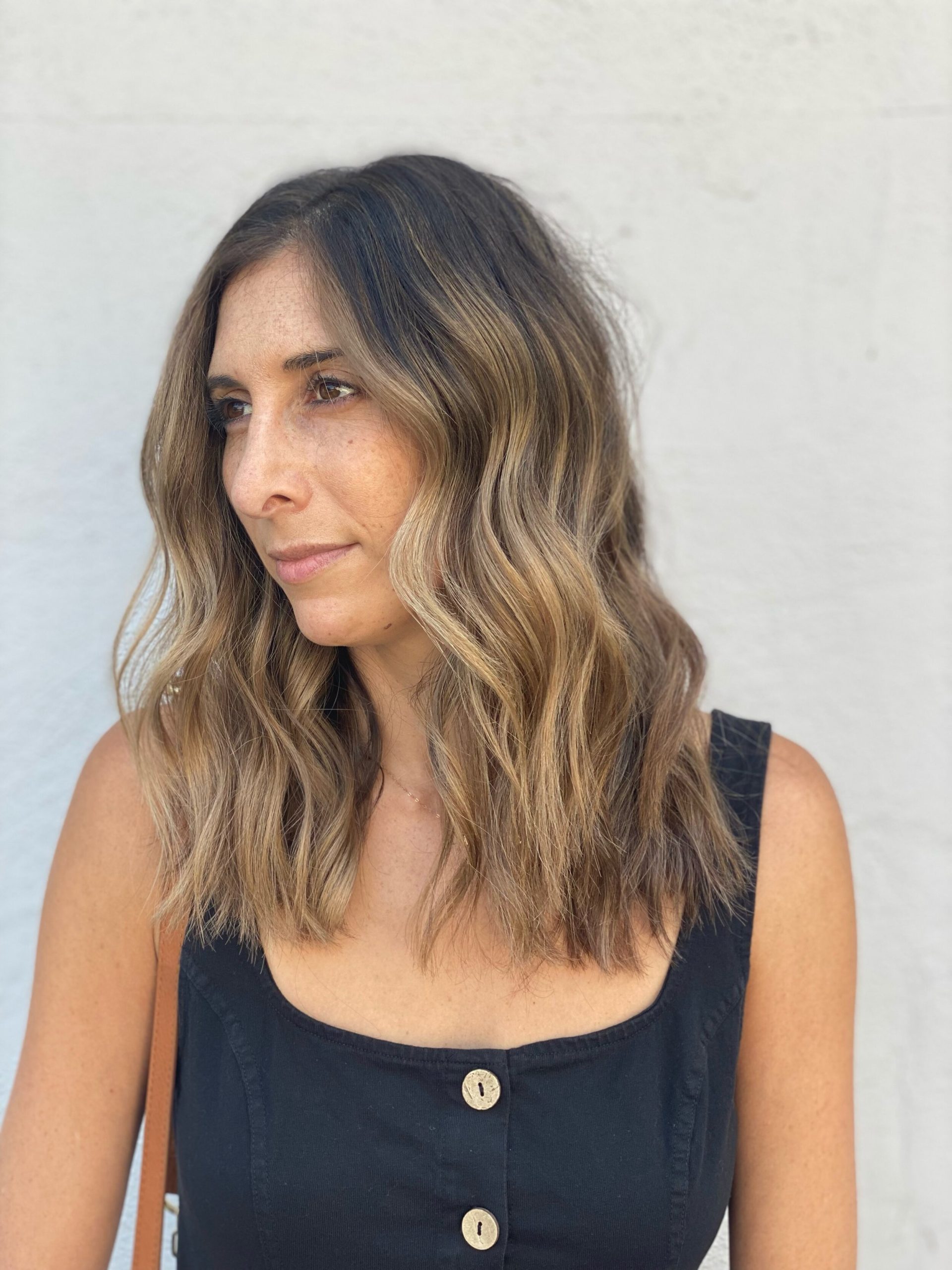
I wanted to love this, but the upkeep gave me pause. The reverse balayage places ash and beige blonde balayage around the face and ends, so the side profile shows a soft blend from dark brown roots into cool, dusty tones. The dark brown ash beige blonde combo fades fast on medium density waves — the ash can turn muddy, and the beige can pull yellow if you skip a toner. The dark brown base is easy, it grows out without a line, but the lighter sections need a toner every 8 weeks or so. Collarbone length keeps the waves light, but if you’re not ready for that commitment, skip the ash tones and go warmer.
Collarbone Medium Blonde Textured
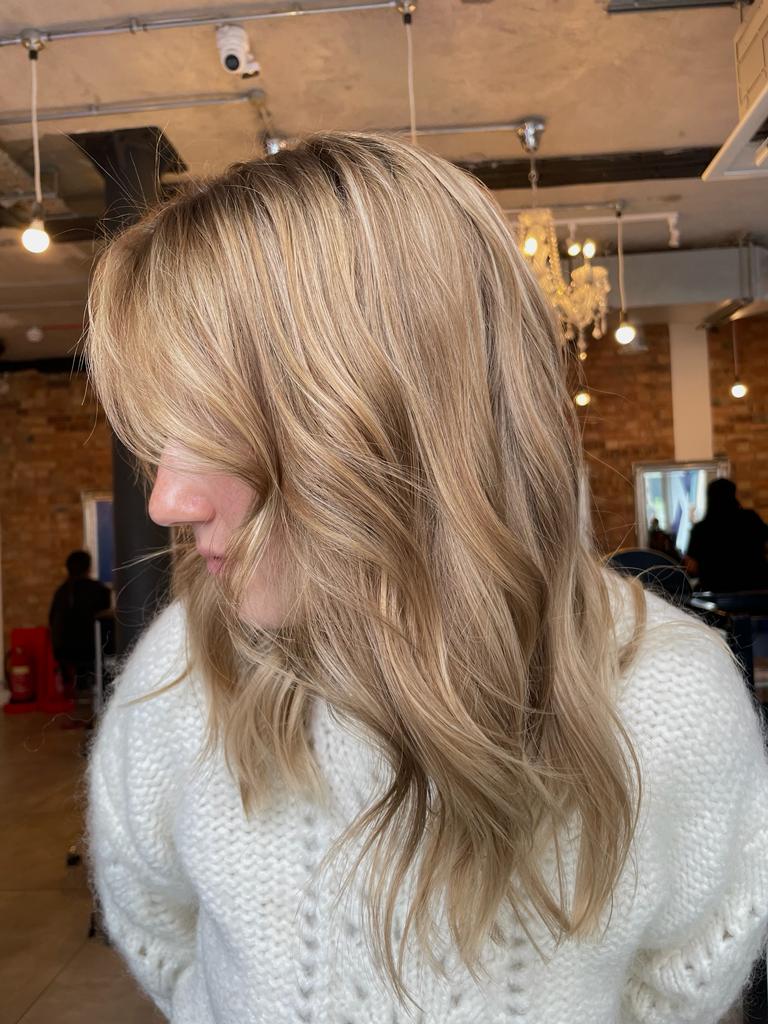
Ever wonder why some blonde looks alive and other blonde just sits there? The difference is the technique. This collarbone length uses balayage to create medium blonde textured waves, with lighter blonde and ash blonde highlights woven through. The multi-tonal approach gives the hair movement that flat single-process color can’t mimic. On wavy hair, it catches light differently with every turn. Single-process blonde is flat; this is dimensional.
Mid-Back Dark Brown Ash Balayage
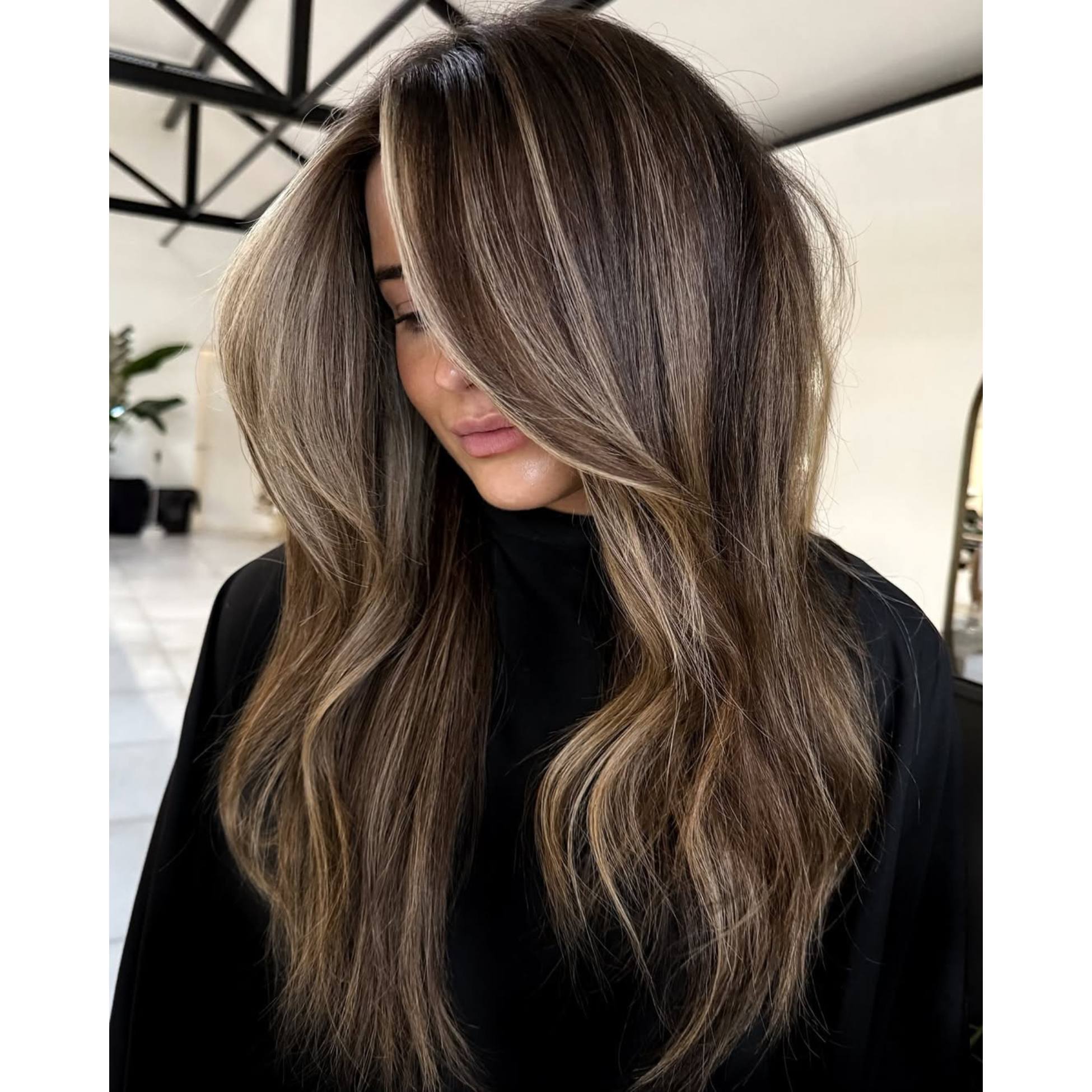
I’ll admit, I used to think balayage was just for blondes. Then I saw this dark brown ash blonde balayage on thick mid-back hair. The technique starts with a dark brown base, then the stylist paints ash blonde balayage sections starting below the crown. The key is the placement: the lighter pieces stay far enough from the roots to create contrast without a harsh line. On thick wavy texture, the ash tone reads cool and smoky, not brassy. The stylist uses a sweeping motion, not a solid block, so the colour graduates naturally.
The blowout is what makes it work. Loose waves with a round brush lift the mid-lengths, letting the ash blonde catch the light. Without that volume, the colour can look flat. The length helps too — mid-back gives enough canvas for the balayage to transition from dark to ash. It’s a technical colour, not a quick gloss.
Long Wavy Rich Contrast
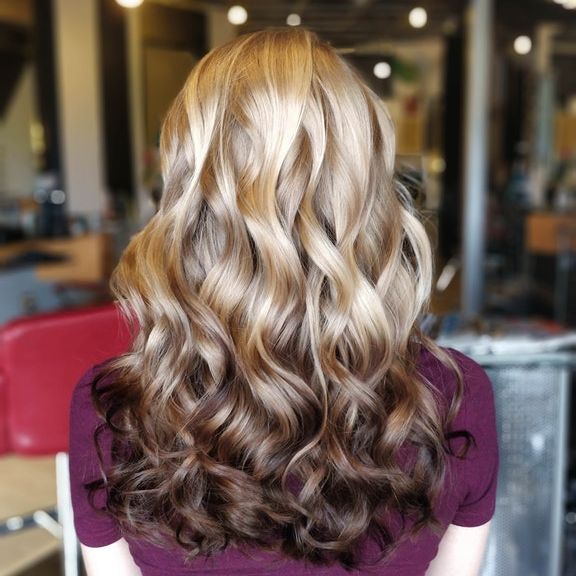
There’s a reason this colour shows up in October. The dark brown blonde balayage uses a dark brown base with lighter brown and blonde balayage highlights, creating a rich contrast and blend that echoes fall foliage. On thick wavy mid-back hair, the warm tones catch the low autumn light without going brassy. The balayage technique keeps the roots dark, so the colour feels grounded, not flashy. It’s a seasonal shift that doesn’t scream ‘I dyed my hair’.
Collarbone Long Bob Subtle
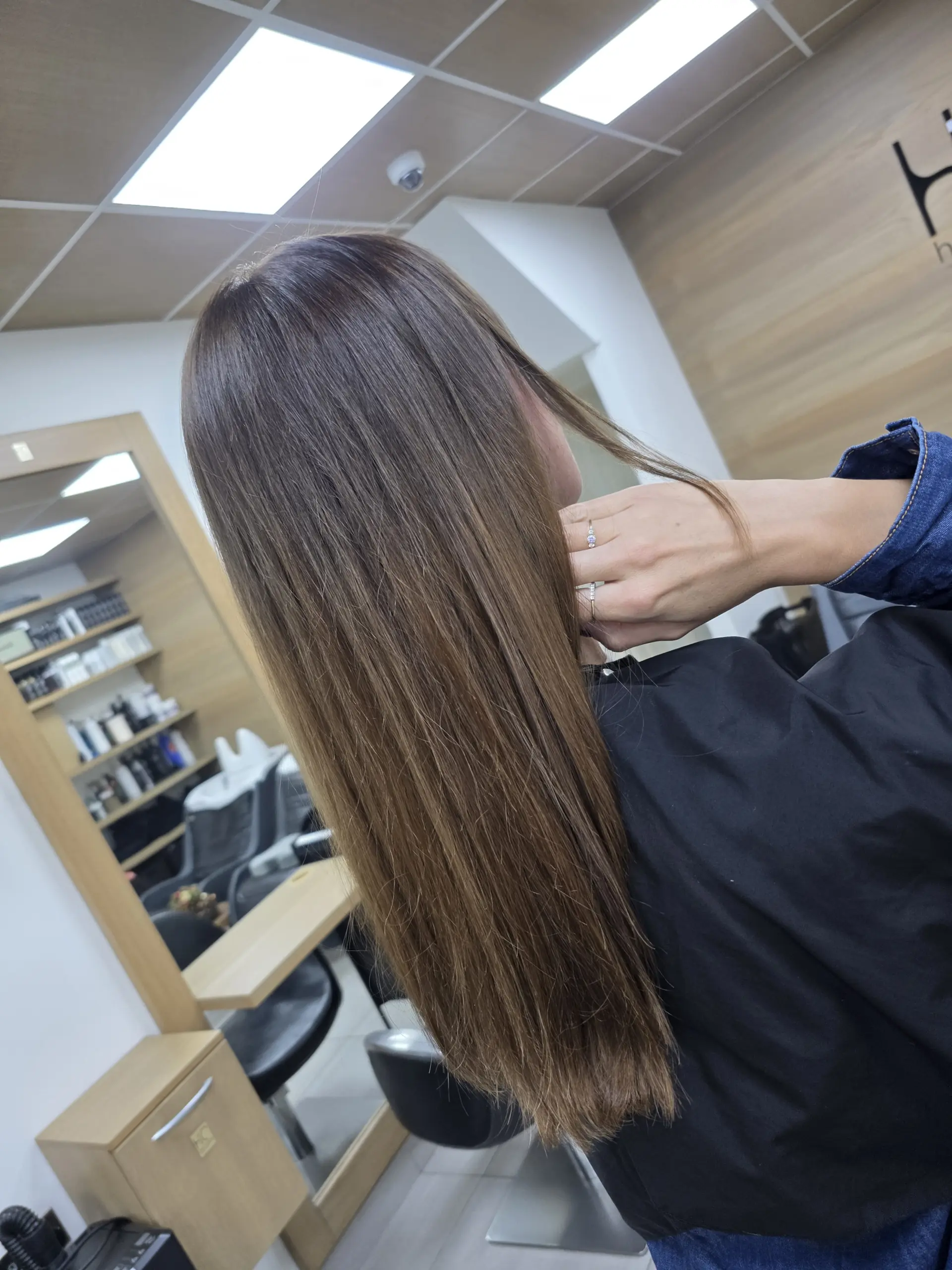
This is the lowest-maintenance colour I’ve seen in months. The collarbone long bob uses a medium brown base with subtle lighter brown highlights applied via balayage. The technique keeps the highlights fine and scattered, so there’s no harsh root line when they grow. On straight medium-density hair, the natural-looking highlights read as sun-kissed, not salon-made. The cost in chair time is about two hours, and you can stretch the next appointment to ten or twelve weeks. The trim rhythm is every six to eight weeks for the bob shape, but the colour itself fades gracefully. It’s the kind of colour that doesn’t demand attention.
Chin Blunt Bob Ash Blonde
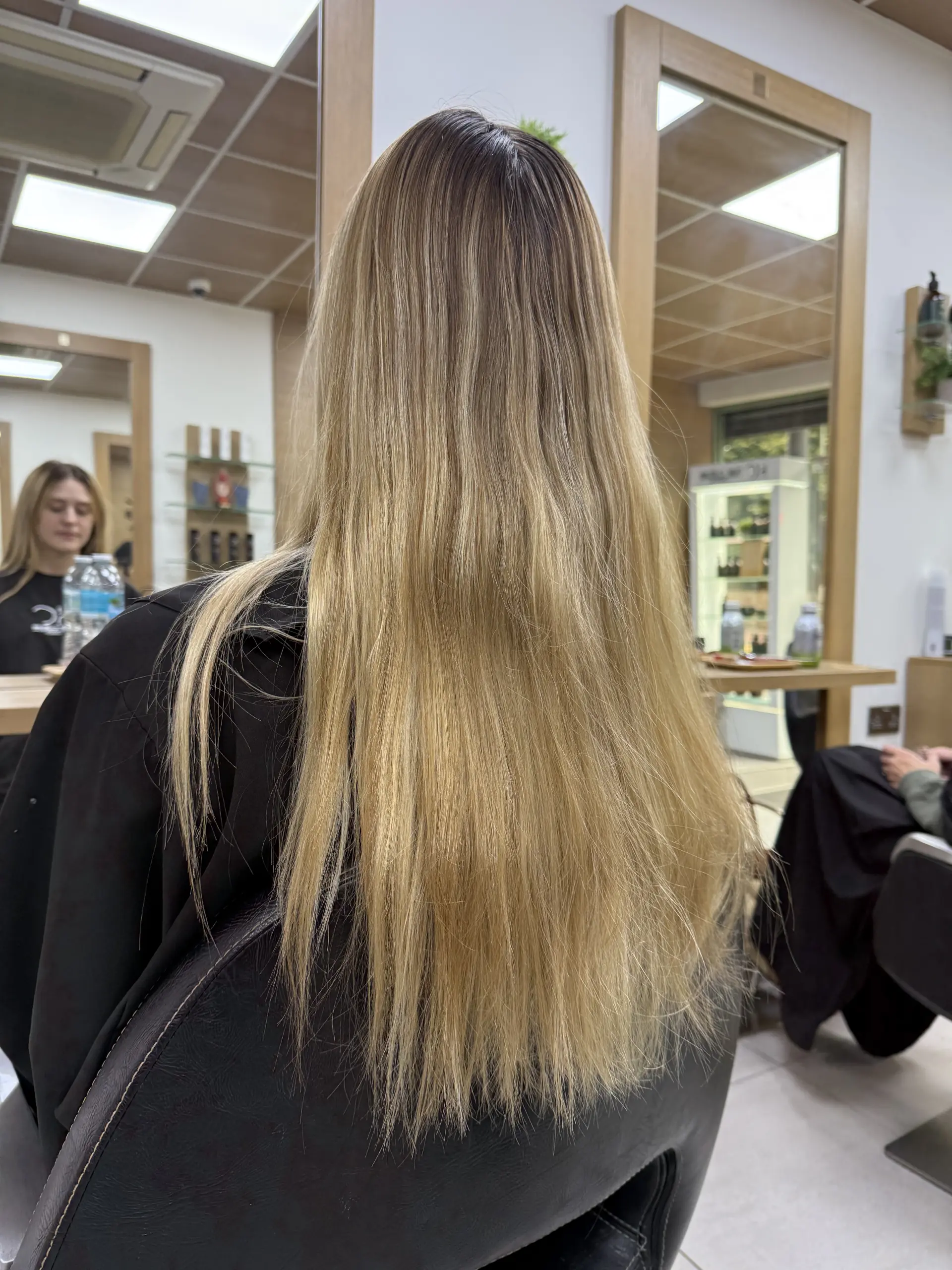
She walks in with a sharp chin-length bob and the light bounces off the ash tones. This ash blonde lighter blonde bob uses balayage to weave lighter blonde highlights through an ash blonde base. On straight fine hair, the blunt cut holds its shape. It flatters oval and heart-shaped faces. Wear is ten minutes with a flat iron. Upkeep requires a toner every six weeks and a trim every six weeks. If your hair is thick or wavy, the blunt cut can look heavy.
Collarbone Dark Blonde Face-Framing
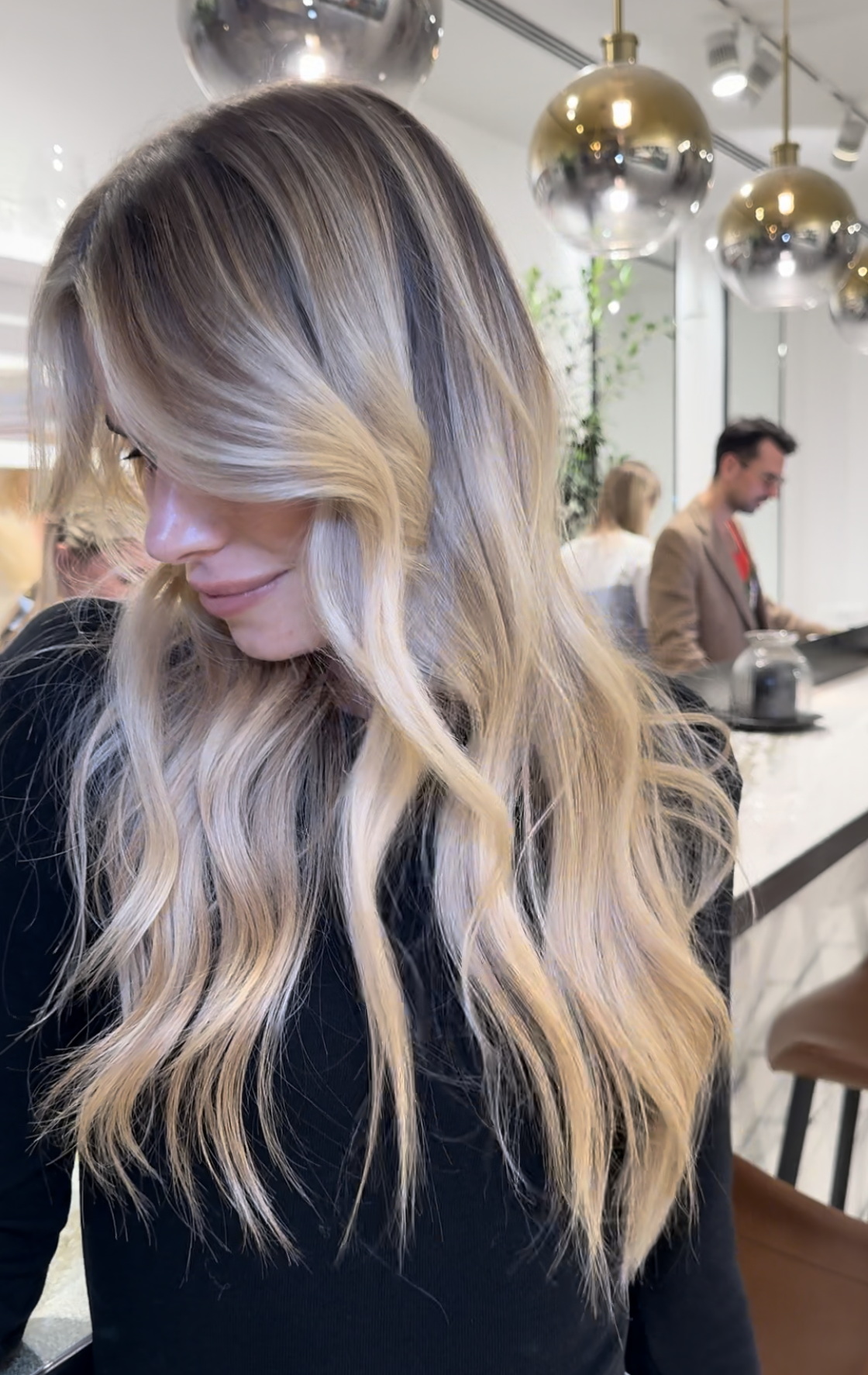
I keep seeing this dark blonde face-framing layers look done wrong. The curtain bangs fall flat against the forehead, and the lighter blonde balayage gets buried under heavy waves. The result is a muddy mess instead of the dimensional lift you paid for. The mistake is curling everything inward, which hides the lighter pieces behind the darker base.
The fix is all in the styling direction. Blow-dry the bangs with a round brush, pulling them away from the face and to the side. For the collarbone length, use a medium-barrel iron and wrap each section away from the face, not toward it. That keeps the lighter pieces on top where they catch light. The texture should be loose waves, not tight curls, so the face-framing layers have movement and separation. Skip any heavy cream or oil that weighs down medium-density hair. A texture spray at the roots gives volume without flattening the balayage. And trim those curtain bangs every six weeks, or they’ll lose their shape and start falling into your eyes. The balayage technique places lighter blonde balayage around the face intentionally, so don’t bury it.
Visual Idea
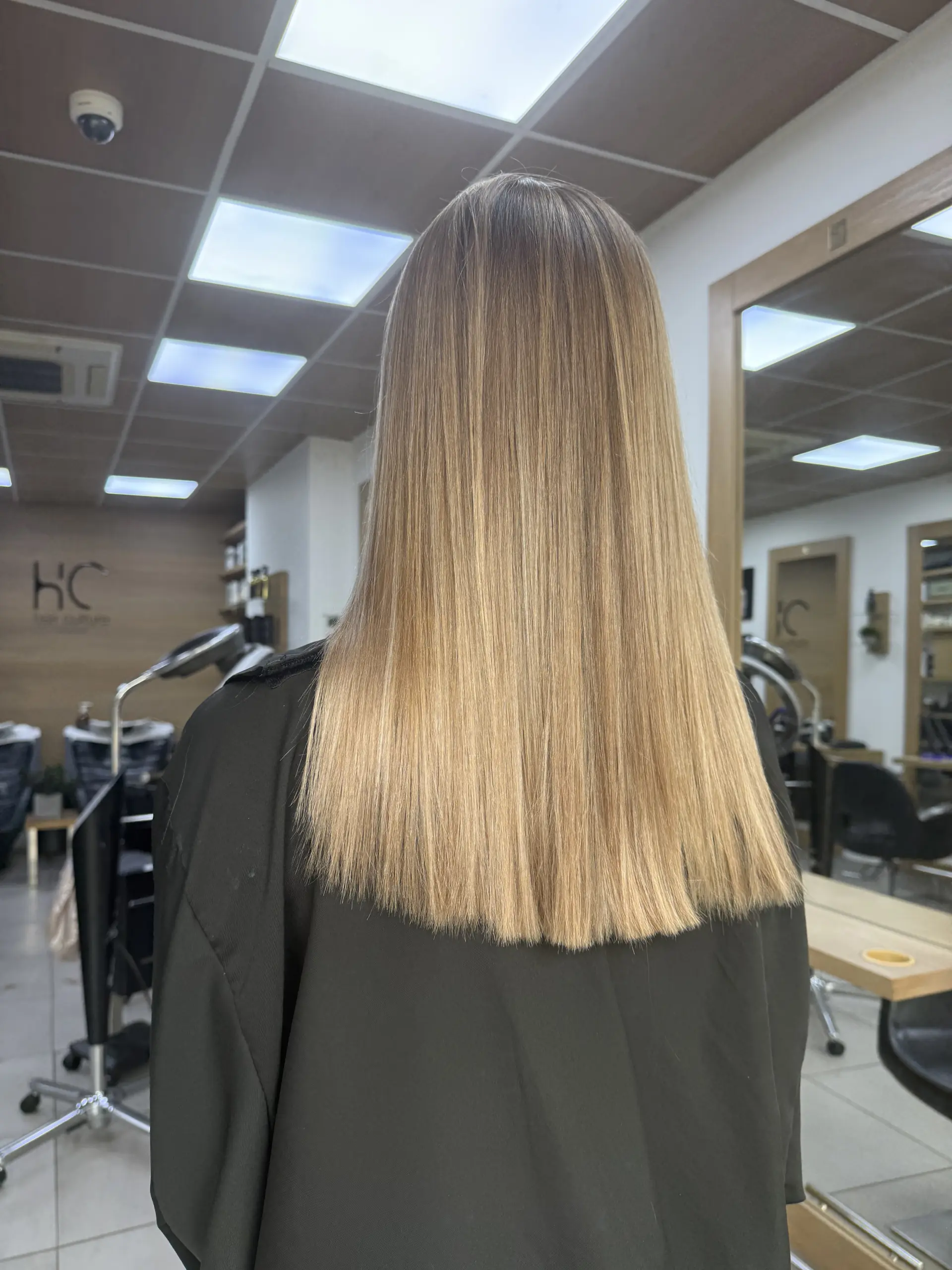
Ever wonder why a blunt chin-length bob looks so sharp from the back? It’s the ash blonde base with lighter blonde highlights placed just at the ends, a balayage technique that keeps the top solid and the cut crisp. The straight, fine texture lets the line land cleanly. No layers, no softness. That middle part and straight styling show off the precision. This is a look that says I booked a stylist, and I showed up.
Collarbone Visual Idea
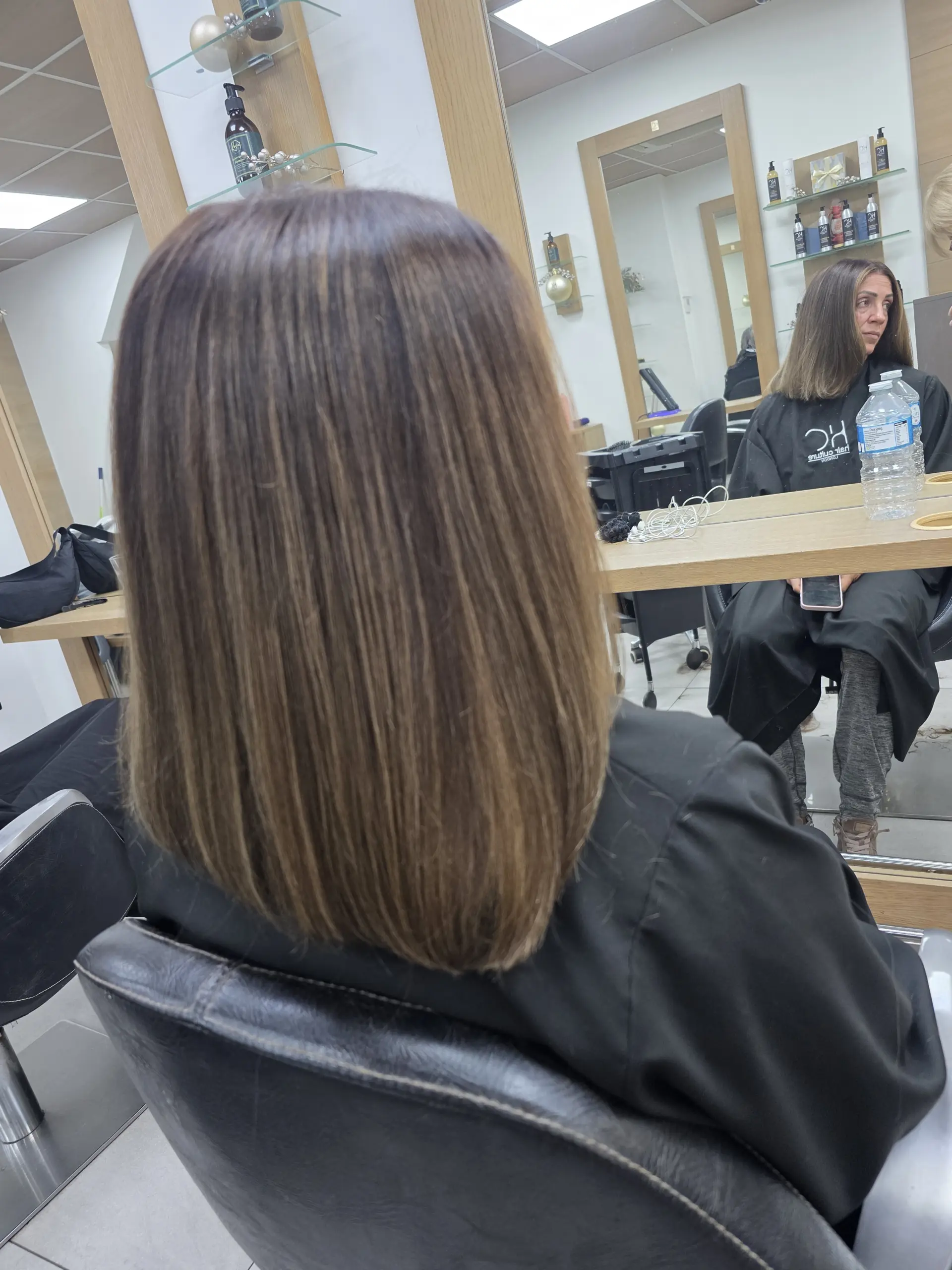
I’ll admit, I’ve wondered if subtle lighter brown highlights on a medium brown base are worth the salon trip. The collarbone long bob is straight, medium density, and the balayage technique is so soft you almost miss it. A home gloss kit could probably get close, and for less time in a chair. But then I look at the back view: the way the lighter pieces fall evenly through the middle part, no banding, no hot spots. That takes a stylist who knows how to weave fine sections and place them precisely. So maybe it is worth the price. Just barely, and only if you plan to keep it for months without touching it up.
Mid-Back Visual Idea
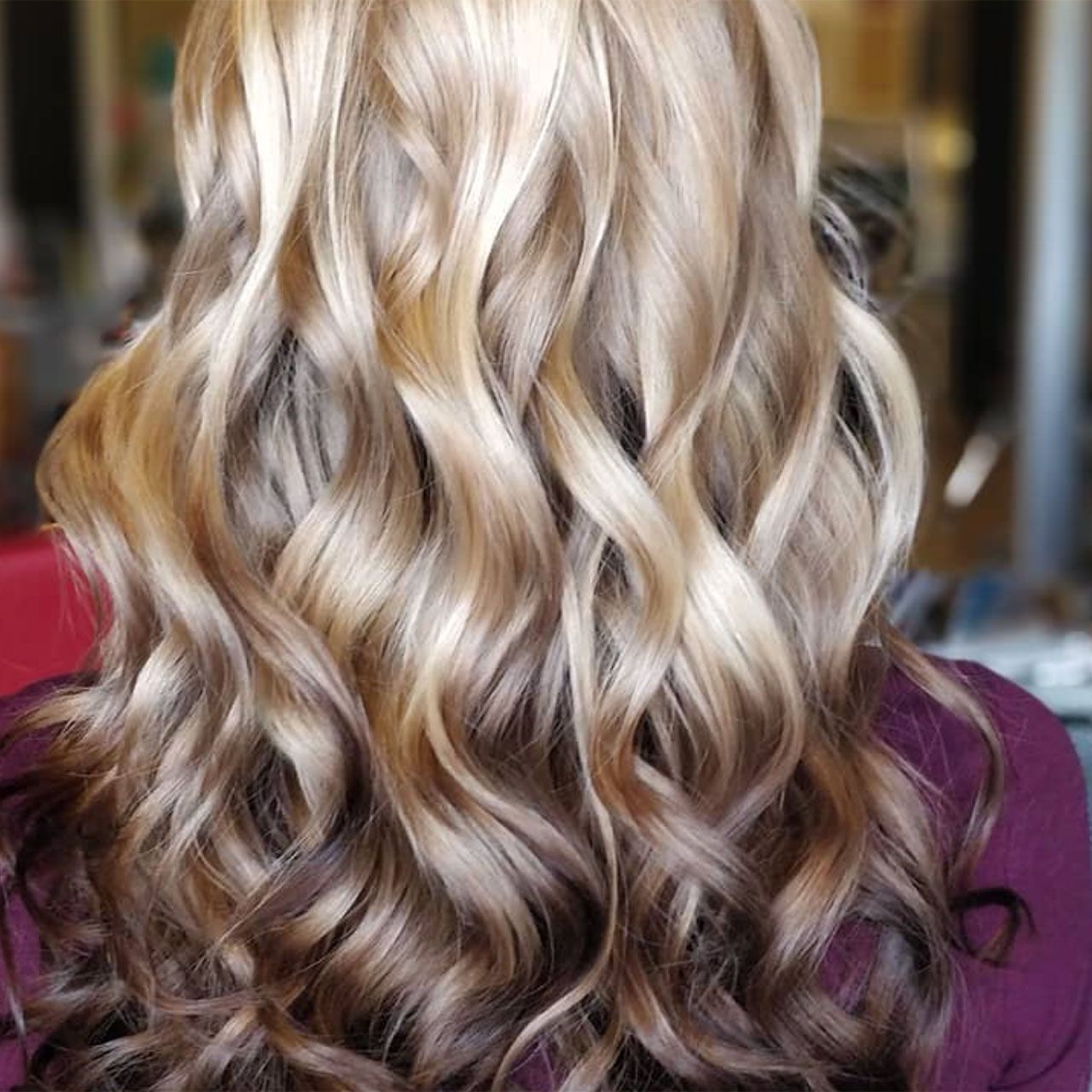
The curl holds at the ends, then the weight pulls the midsection straight by noon. That dark brown base sinks deep under the blonde and caramel highlights, so the reverse balayage reads as depth rather than damage. The layers are cut long to handle the density, but thick hair this length still drops a wave in four hours. Fine-haired friends, skip this. You need the bulk to carry the technique.
Lob Visual Idea
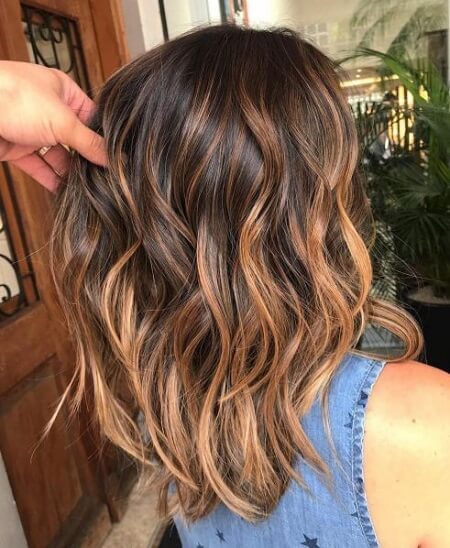
Warm caramel and blonde balayage on a dark brown base is the easier sibling of the all-over blonde lob. The collarbone length keeps the wave visible without the weight that kills curl at mid-back, and medium density carries the tone without going brassy. It reads sun-kissed without the six-hour bleach session, the grow-out is invisible, and you still get dimension. Blonde lobs demand a toner every four weeks.
This one asks for a trim every ten weeks and nothing else. I have recommended this to three friends this year, and none of them has called me about root regret.
Final Thoughts
I started this roundup skeptical. I’m ending it with a consultation booked. What I didn’t expect was how much the darker root changes the shape. It softens the face, adds depth, and the grow-out? Invisible. I’m booking the collarbone lob with ash blonde curtain bangs. That week-five root line? Gone.