
I keep seeing dark chocolate brown in the chair next to mine. It’s the shade everyone lands on when they want to go deeper without going black, and it reads warm without trying. I’ve had my own grow-out line at week five, so I know the difference between a color that fades politely and one that turns brassy.
Dark Chocolate Brown Hair is having a moment, and this roundup has 30 ideas that actually work. Some are low upkeep, some need a salon appointment, and they range from collarbone bobs to mid-back waves. Whether your hair is fine, thick, or somewhere in between, there’s a version here that will hold up past 4 pm.
Dark Chocolate Base With Light Brown Balayage
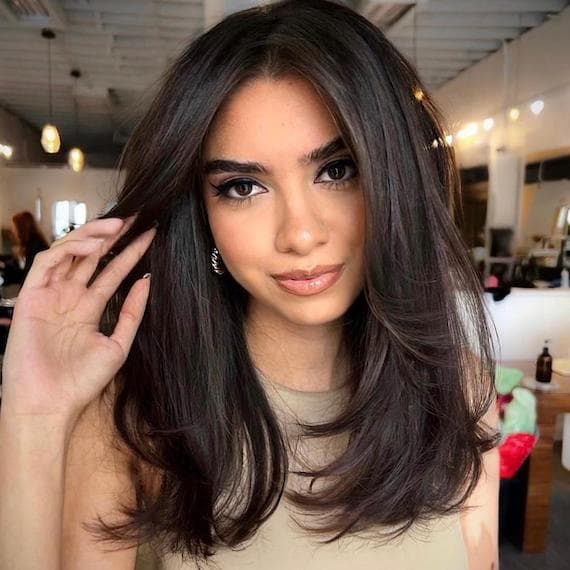
A middle part and curtain bangs do not always work on a rounder face, but the lighter brown balayage changes the math. The dark chocolate brown base stays deep at the roots, and the lighter pieces land around the cheekbones, which draws the eye outward instead of straight down. Shoulder-length, thick, wavy. The balayage is painted freehand, so the transition is blurred, not striped. That is the move: soft contrast, no hard line. This kind of dark chocolate brown balayage asks for a trim every six to eight weeks, but the colour itself stretches ten to twelve. I have watched that root shadow keep a good three weeks of grace.
Voluminous Mid-Back Waves With Subtle Balayage
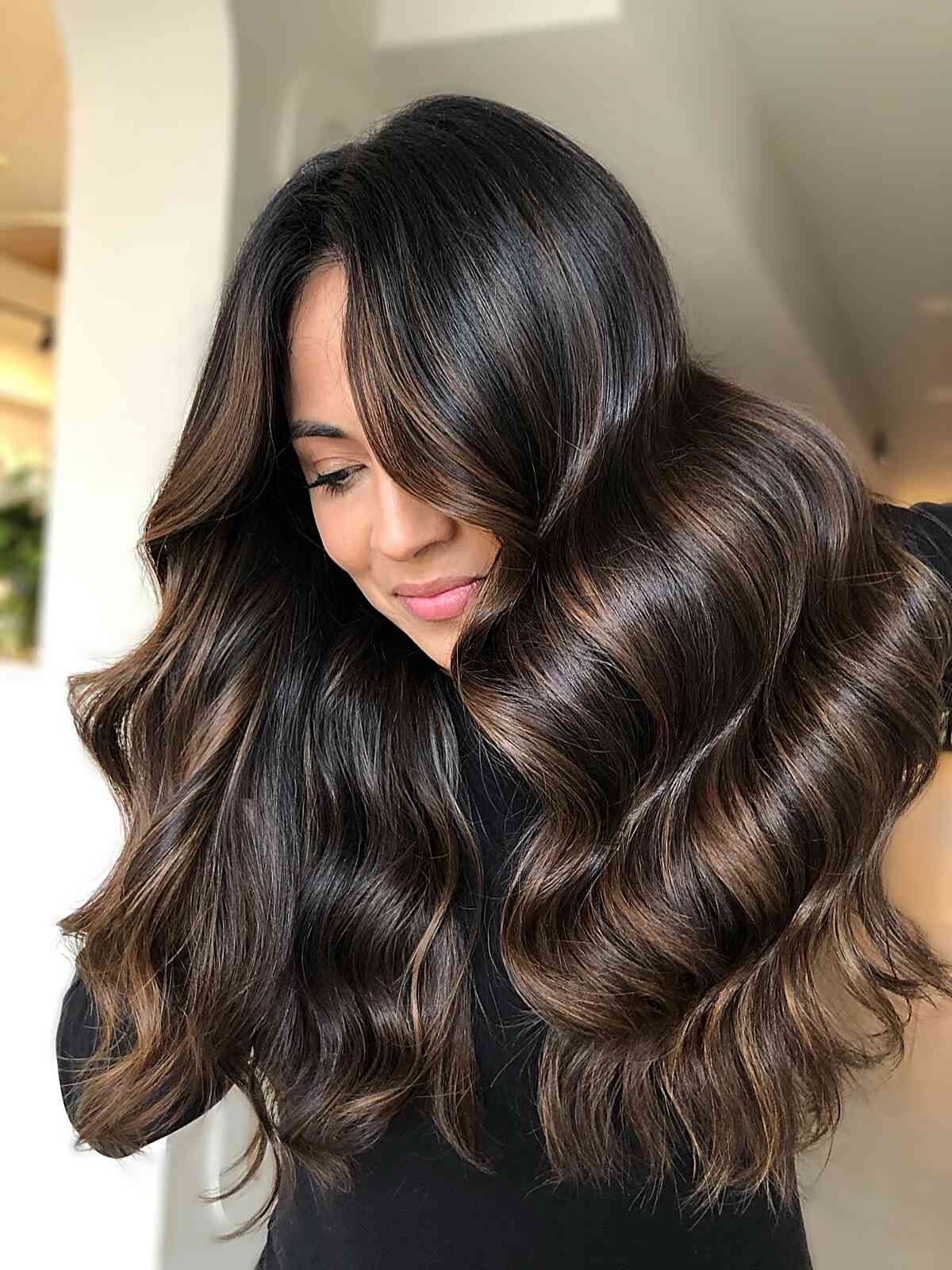
Can thick hair actually hold a wave past the first hour? The answer is yes when the wave is built with a large barrel and the hair has some texture to grip. These dark chocolate brown waves fall to the mid-back, and the subtle balayage is scattered through the mid-lengths and ends, not packed at the top. The side part adds lift on one side, which keeps the volume from turning into a triangle.
The balayage is the real trick here. Because the lighter pieces are concentrated below the ears, the regrowth blends instead of announcing itself. Cooler skin tones read clean against this shade, no orange cast. Thirty minutes with a curling wand, a trim every eight weeks, a colour appointment every ten to fourteen. It holds all evening, even in humidity.
Glossy Dark Chocolate Brown Blowout
Deep Uniform Dark Chocolate Brown
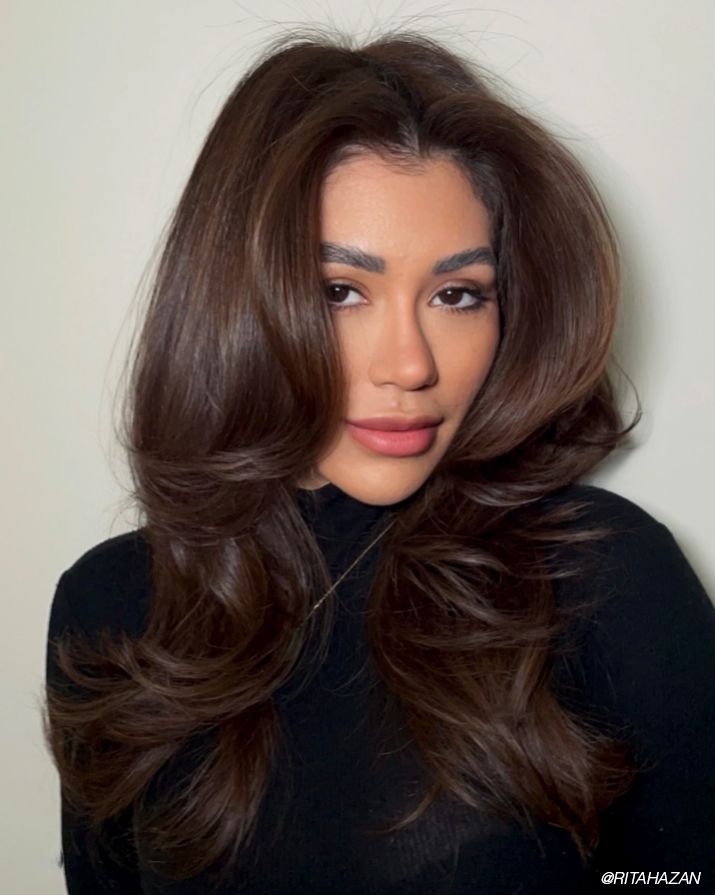
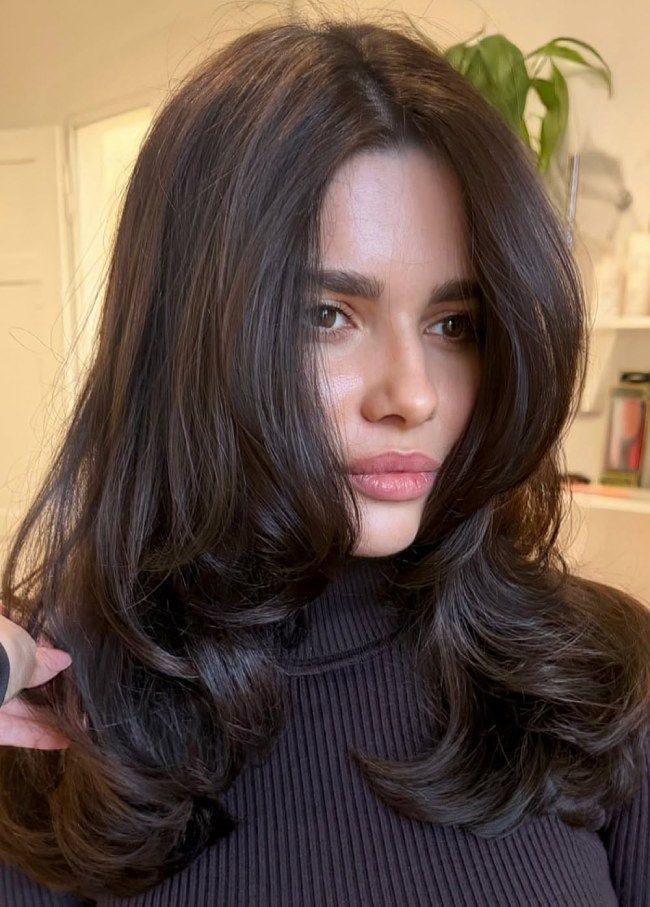
I used to think dimensional colour was always better. Then I saw this deep dark chocolate brown from the back, no highlights, no balayage, just one rich shade running from root to tip. The lighter brown undertones are subtle, barely there, just enough to stop it from looking flat. Mid-back, thick, wavy, loose waves. No bangs.
Uniform colour has one honest problem: the grow-out line. Dimensional techniques hide an eighth of an inch. This does not. You refresh the roots every four to six weeks, no negotiation. But the payoff is a colour that looks wet even when dry, and a single shadow across the whole head. The trim rhythm is the same, every eight weeks. The shine is the reward.
Dark Chocolate Base With Caramel Highlights
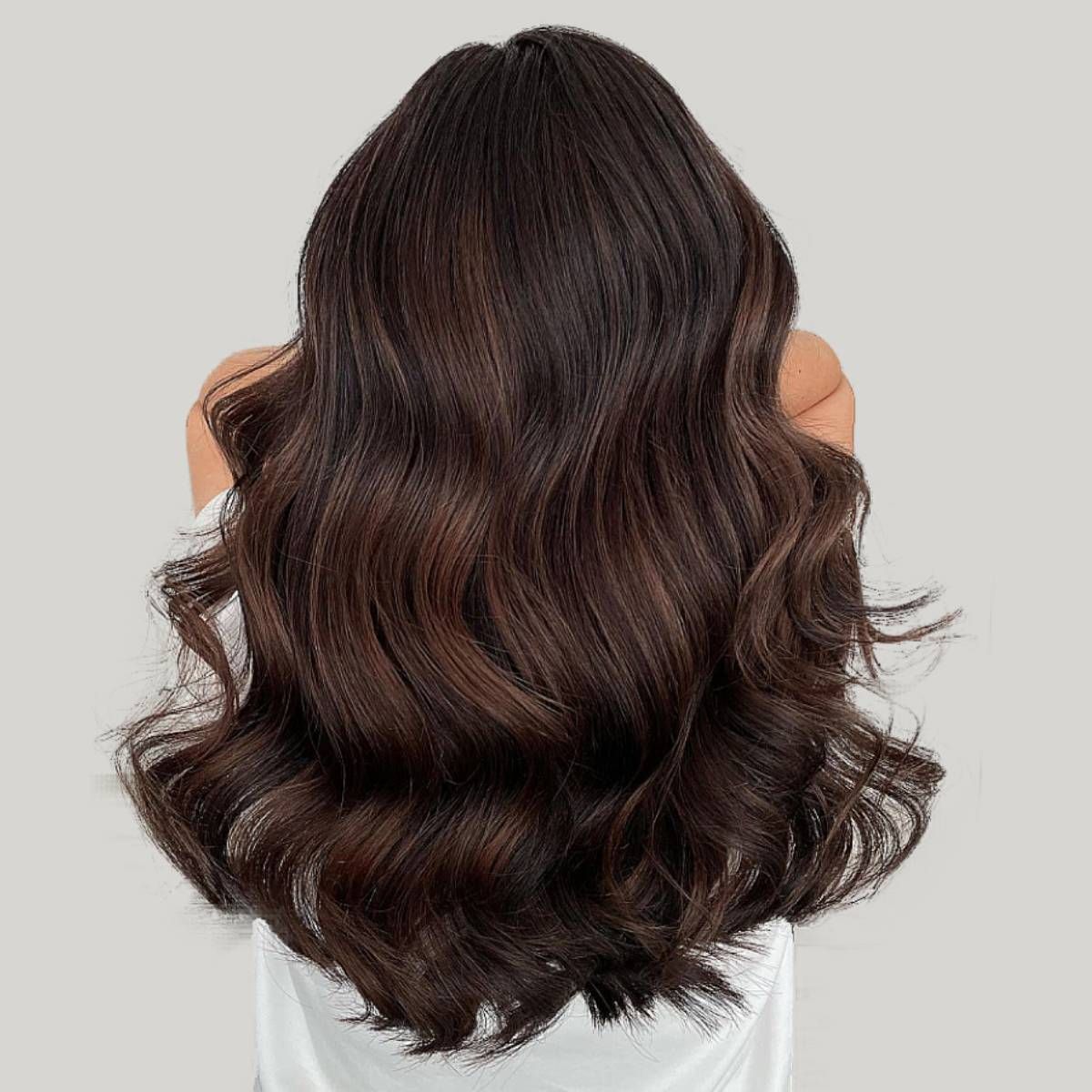
Warm undertones in skin sometimes fight with a pure dark chocolate brown. The fix is caramel highlights, which bridge the gap. This dark chocolate brown caramel highlights sits on a thick, wavy base at mid-back, with long layers and no bangs. The caramel pieces are painted from the mid-lengths down, so they hit the light when the hair moves, but the root stays dark and cool.
This is for anyone with warm or olive skin who has been told brown will wash them out. It will not, because the caramel lifts the colour toward the skin without competing. The technique is foil highlights, not balayage, which means the separation is a little more defined. That works here. A trim every six to eight weeks keeps the ends healthy, and the colour appointments stretch to ten to twelve. Ask for caramel, not honey, which can pull too yellow.
Dark Chocolate Brown With Curtain Bangs
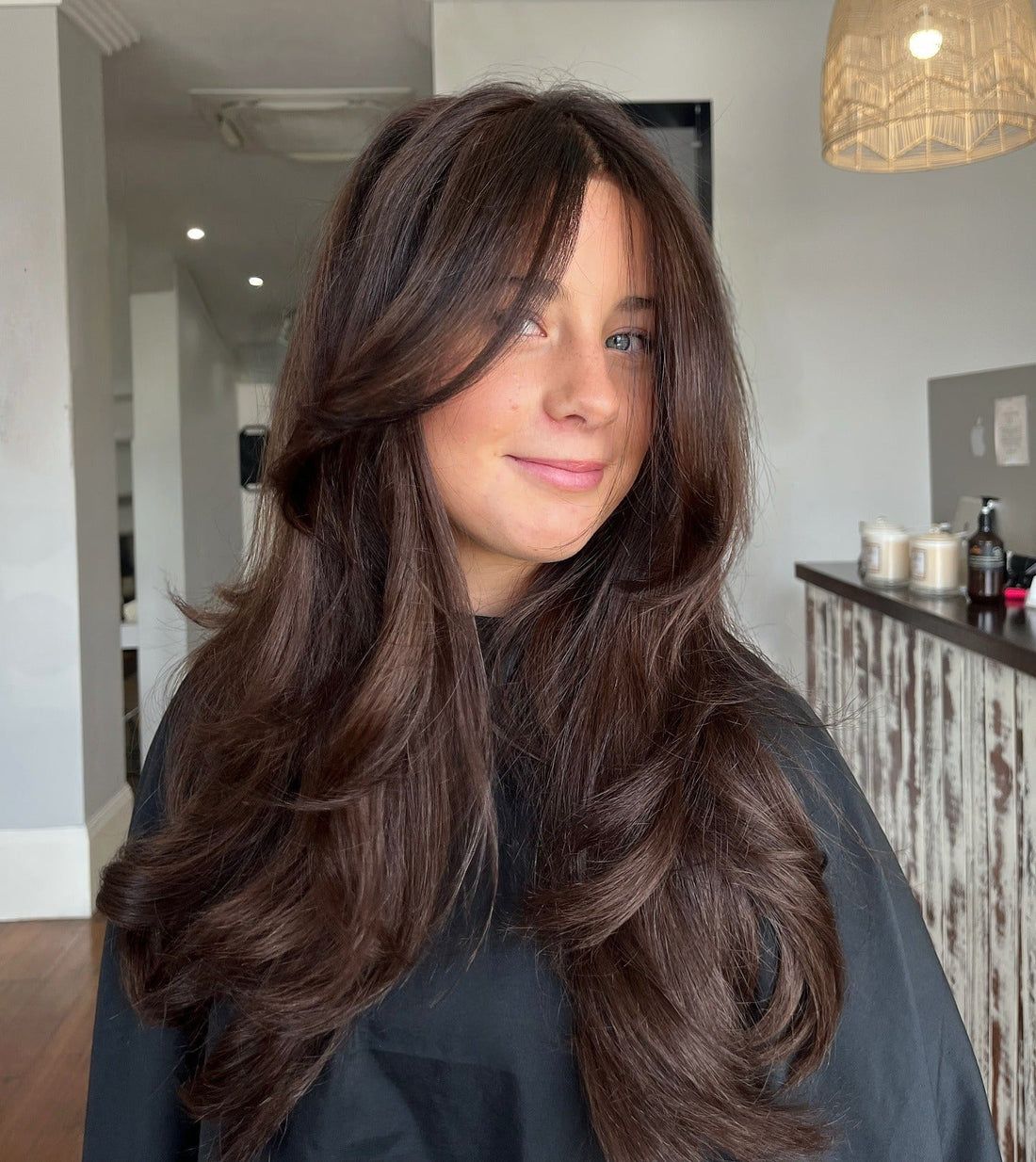
Can a fringe actually make your morning routine shorter? These dark chocolate brown curtain bangs do the opposite, but the payoff is worth it. The colour is a solid dark chocolate brown, applied as a single-process base, with a warm neutral tone throughout. The length hits mid-back, straight and thick, and the curtain bangs land just past the cheekbones. Here is the honest morning: wet the bangs, blow them forward with a round brush, then sweep each side back. That takes five minutes. The rest of the hair gets a quick root blast and a bend with a large barrel. The whole thing is twenty-five minutes, and it holds until dinner. A middle part keeps the bangs symmetrical and widens a round face. Book the salon for the cut, the curtain bangs are not a bathroom-mirror job.
Dark Brown With Subtle Warm Undertones
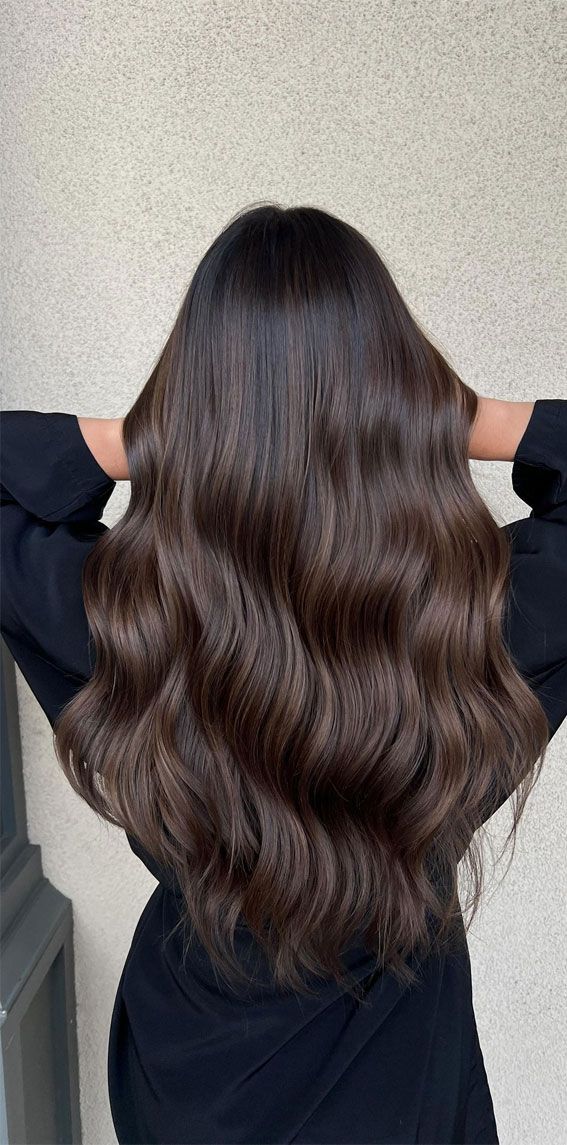
I sat in the chair and said, “I want brown, but brown that catches the light.” The stylist mixed a dark brown base with a warm gloss, and what came out was a dark brown with subtle warm undertones that shifted in every window. The technique is a single-process colour with a gloss overlay, the tone is warm without being orange, and the length is mid-back with long layers. The texture is thick and wavy, styled into loose waves with a one-inch barrel.
Here is the honest downside: the warmth fades. By week three, the undertone pulls flat. A gloss treatment every six weeks brings it back, but that is an extra appointment. The grow-out is soft, no hard root line, so you can push colour to eight weeks. I wore this through autumn and got more compliments than I expected. It is not a low-maintenance colour, but it is a warm one.
Dark Chocolate Brown With Blonde Highlights

I took one look and thought, that is a lot of contrast. The dark chocolate brown base sits deep and serious, and then the blonde highlights cut through like a hard line. The technique is foil highlights, the tone is cool blonde against warm brown, and the length is mid-back with curtain bangs. The texture is thick and wavy, styled into a wavy blowout. This is not a subtle look, it is a deliberate one. The contrast means you see every new root, so root touch-ups land every four to six weeks. And the blonde needs a toner every six to eight weeks or it shifts brassy. This is a salon colour, full stop. DIY highlights on a dark base end up patchy and orange. If you want the drama, book a colourist who knows how to place the foil so the blonde reads intentional, not accidental.
Dark Brown With Cinnamon Highlights
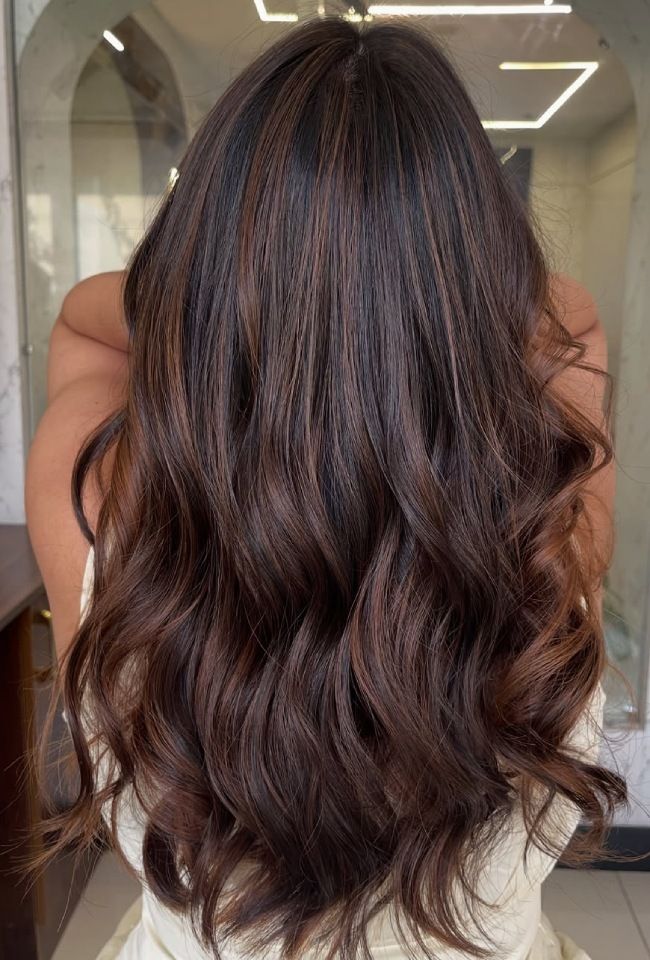
Cinnamon highlights work best on warm skin with golden or olive undertones. The red-brown streak reads natural, not costumey. The colour is a dark brown base with cinnamon highlights, the technique is balayage applied to the mid-lengths and ends, and the tone is warm with a red-gold shift. The length is mid-back, the texture is thick and wavy, styled into loose waves from a middle part.
If your skin runs cool or pink, the cinnamon pulls ruddy. I have seen it look like a mistake on a cool undertone. The highlights sit best on medium to thick hair, fine hair can look weighed down by the colour density. The grow-out is forgiving, the balayage placement means no harsh root line for ten to twelve weeks. The back view shows the dimension best, the cinnamon catches light where the base stays dark. Skip this if you hate red tones in your brown. It is warm, it is dimensional, and it is not for everyone.
Collarbone Lob With Caramel Highlights
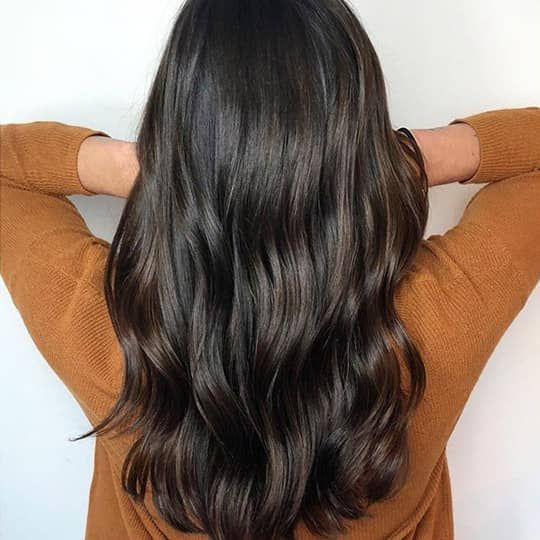
Does a shorter length make highlights look better or just more obvious? This collarbone lob lands in the middle. The colour is a dark chocolate brown base with subtle caramel highlights, the technique is balayage painted through the top and sides, and the tone is warm caramel against the deep brown. The length hits the collarbone, the texture is thick and wavy, styled with a round brush into soft waves. The highlights show more on a shorter cut, every piece moves and catches light. Upkeep is manageable: trims every six to eight weeks keep the lob shape clean, and the balayage grow-out is soft for ten to twelve weeks. A heat protectant before the round brush stops the ends from drying out. The middle part keeps the face open, good for oval and heart shapes.
Dark Brown With Lighter Brown Highlights — Thick
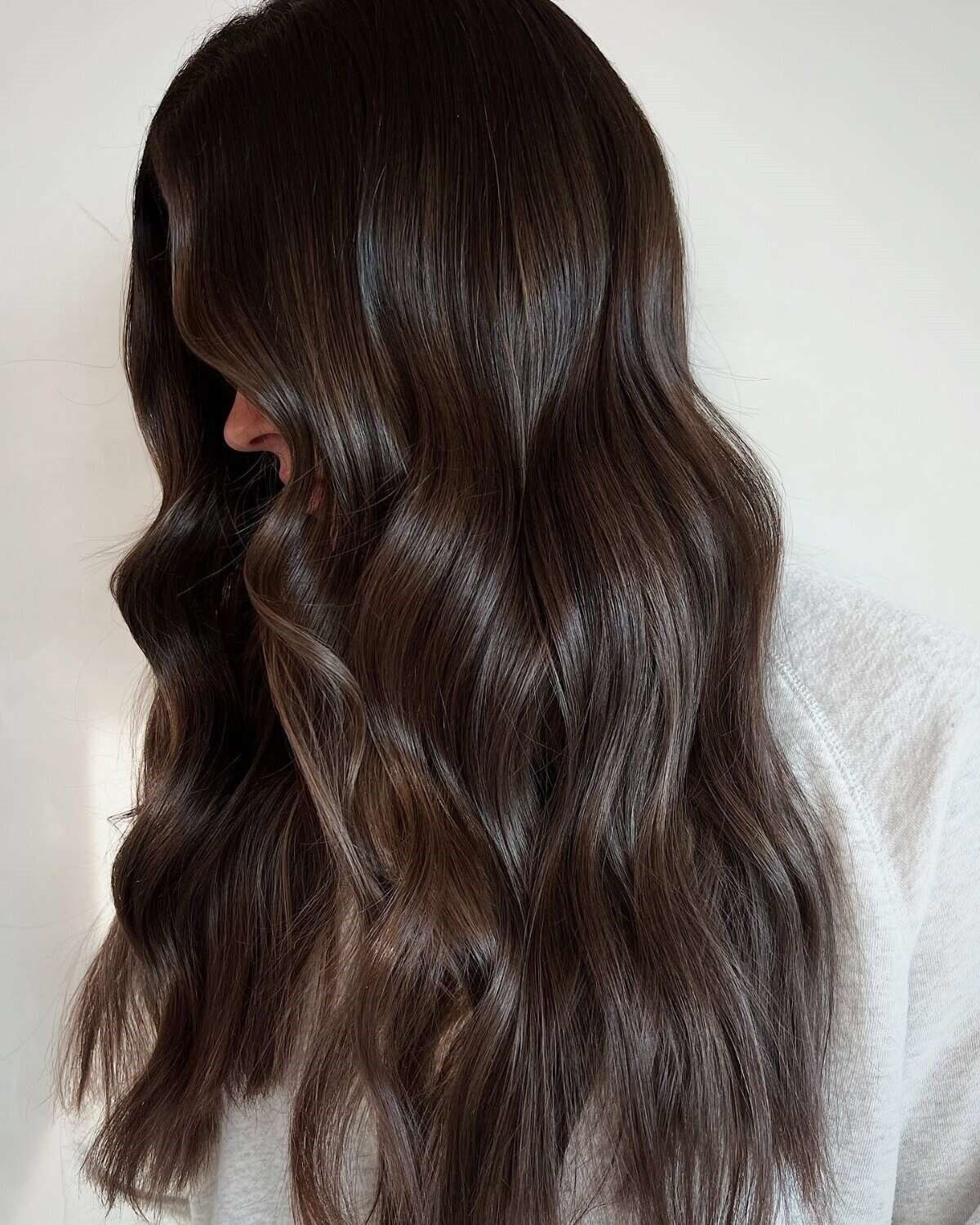
I will defend this technique until my colourist retires. The dark brown lighter brown highlights sit close to your natural level — they are not there to scream, they are there to catch light when you turn your head. Even on thick, mid-back layers, the dimension stays subtle. Lighter brown highlights painted through a side part mean the roots do not announce themselves at week three. The trade-off? Warmth. Those fine highlights can pull brassy faster than a full balayage, and brassiness on a dark base shows up as orange, not gold. A purple shampoo helps, but it only does so much.
Your colourist should weave the lighter brown highlights through the mid-lengths and ends, leaving the root area dark. The piecey effect lands soft, not striped. For thick, wavy hair, this is the quiet win.
Collarbone Dark Chocolate Bob With Caramel Highlights
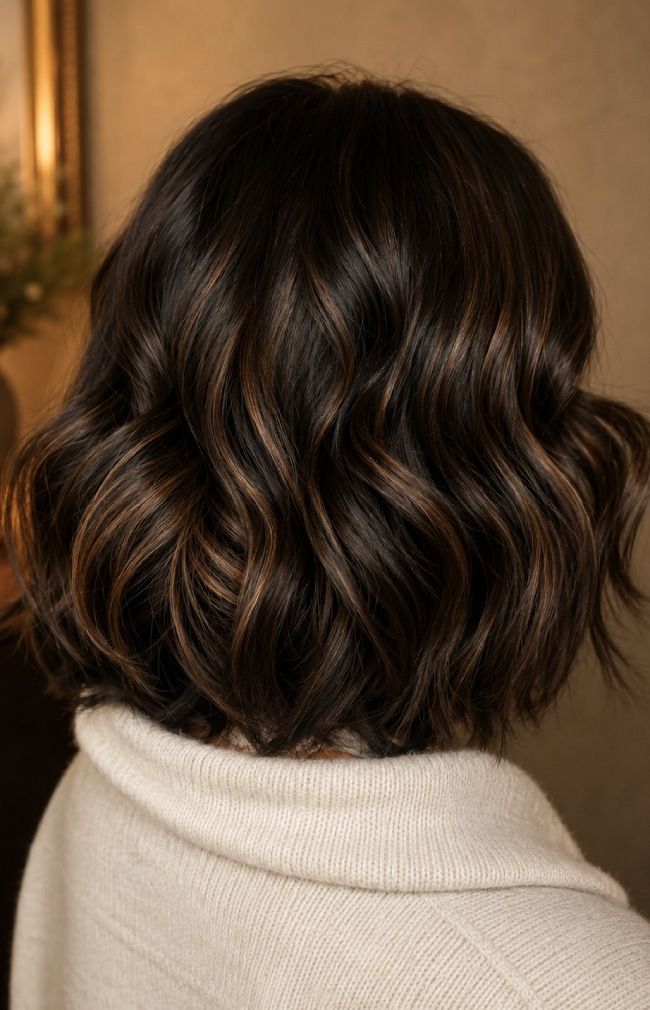
How much personality can a collarbone-length bob hold? This one shows you. The dark chocolate bob sits blunt at the bottom, thick and wavy, with caramel highlights sliding through the front pieces only. The highlights hit where a bob’s shape matters most: the ends and the face-framing section. The rest stays deep. A middle part keeps the weight symmetrical. That is 15 minutes of loose waves, no round brush required. The shape demands a trim every six to eight weeks, or the bob turns into a sad A-line. Fine by me — a good bob is worth the calendar reminders.
Shoulder Length With Caramel Highlights
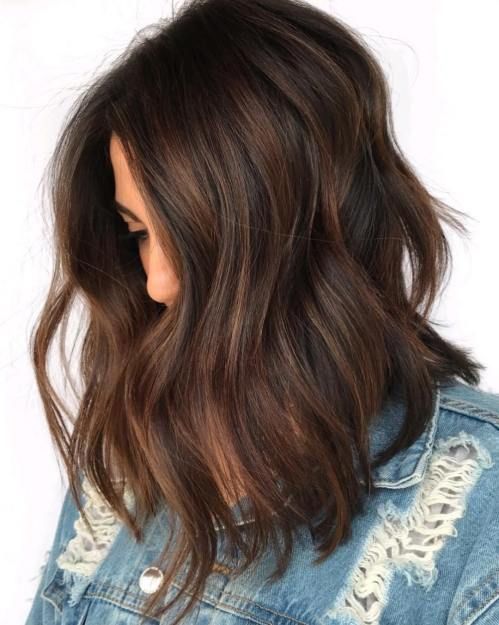
Here is the exact sentence you say at the salon: “I want a dark chocolate brown shoulder length base with caramel highlights, but keep the highlights fine and scattered, not chunky.” The goal is shimmer, not stripe. A few caramel highlights at your natural level, woven through the mid-lengths and ends, so the dark chocolate brown shoulder length section stays dominant. The highlights on my own hair sit about one shade lighter than my base. That close gap means the grow-out blends. No harsh line at month two. Use layered soft waves to show the dimension — straight hair hides it. Wavy texture lets the light bounce differently every inch.
Lustrous Dark Chocolate With Warm Undertones
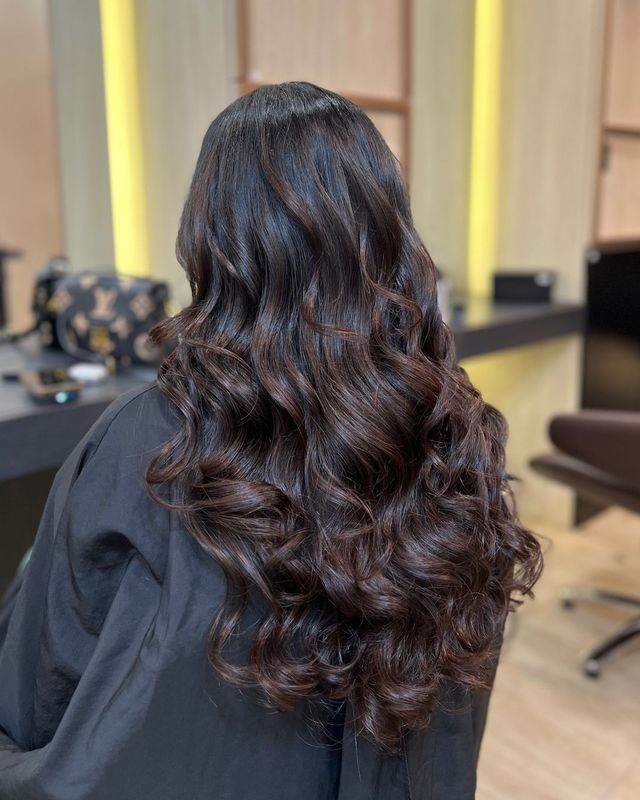
I used to think cool browns were the only sophisticated choice. Then I grew out my own colour into a rich dark chocolate brown with warm undertones, and I ate my words. Warm undertones catch the sun differently. On straight-to-wavy mid-back layers, a side part and a soft blowout produce a gloss that a flat brown cannot touch. The grow-out phase is the catch. Warm tones fade to a coppery amber, not a neutral taupe. Root touch-ups every four to six weeks keep the line clean. On thick hair, that is a solid 25-minute weekly blowout, plus a colour-safe shampoo. Not a low-maintenance plan. But for the way it catches evening light? I make the time.
A cool brown sits flat in dim rooms. This one glows. That is the difference worth paying for.
Glossy Dark Chocolate With Full Fringe
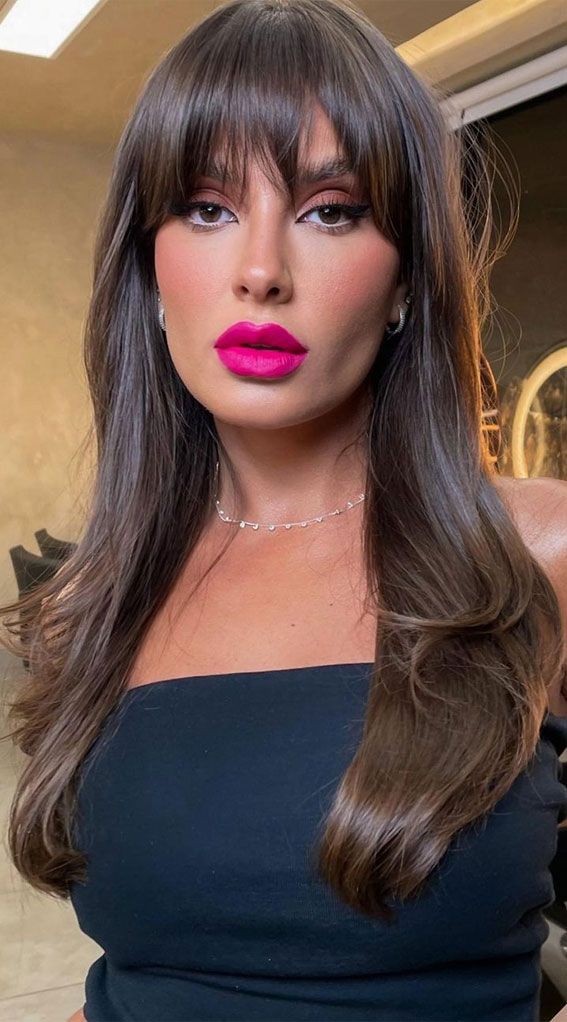
A full fringe changes how a colour reads. This glossy dark chocolate shade sits behind a blunt, brow-skimming line of bangs, and the contrast makes the brown look deeper, almost black in the shadow of the fringe. The tone is cool-leaning, no red or copper fighting the bang’s straight edge. The hair is mid-back, thick and straight, blown out with soft waves below the chin. The fringe is the anchor: it widens a narrow forehead, shortens a long face, and demands a trim every four weeks. A middle part keeps it symmetrical. Without that weekly scissor habit, the fringe hits your lashes and the whole shape collapses.
Glossy Deep Dark Chocolate Waves
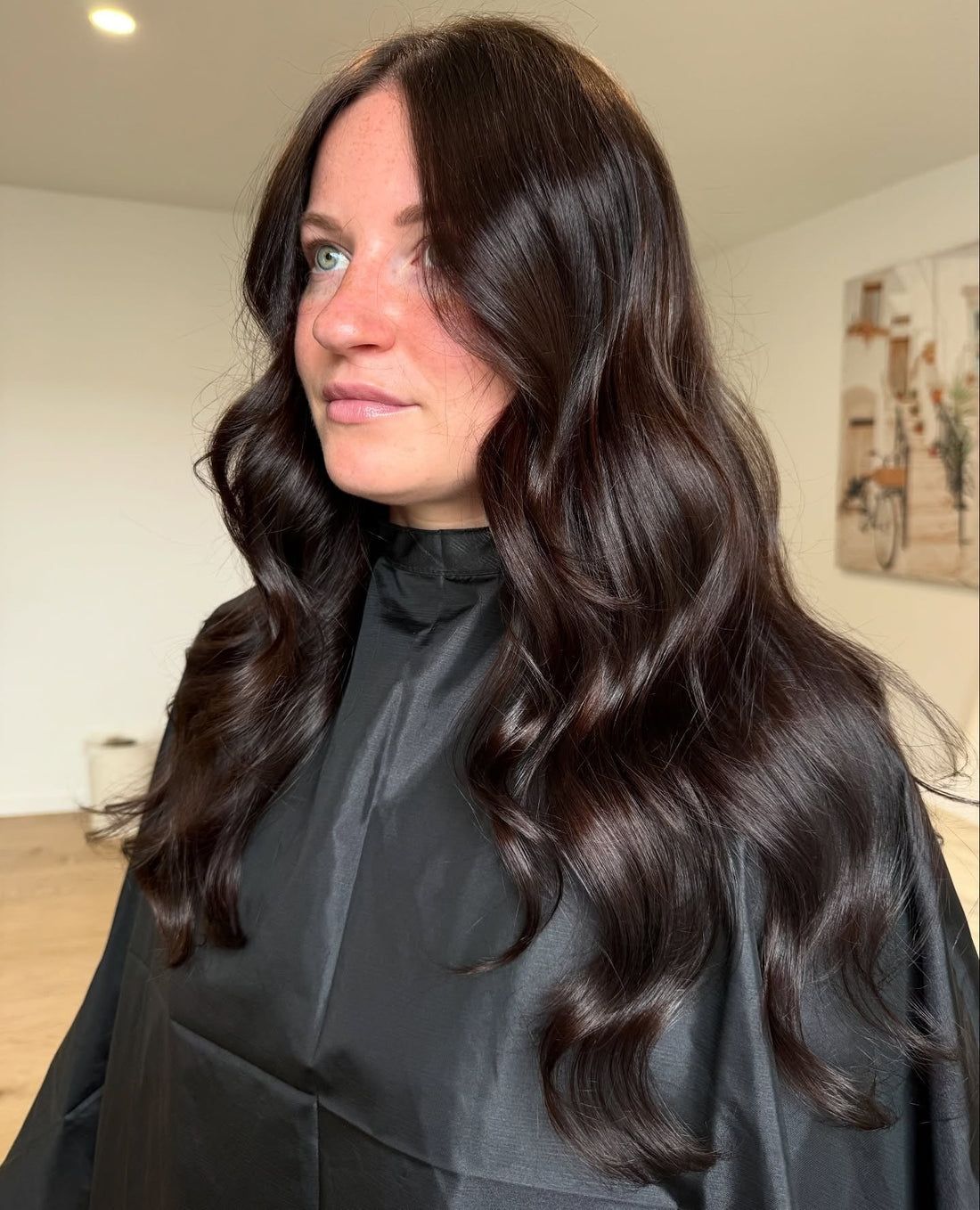
Can a single colour look this layered? This deep dark chocolate brown reads almost black in the underlayer, then catches warm light on the wave crests. The tone is neutral, no ash, no amber, just brown that sits in the middle of the spectrum. The hair is thick and wavy, mid-back, with loose waves that take about 25 minutes with a large-barrel iron. The high-gloss finish comes from the uniform colour — no highlights to scatter light, so the surface reflects cleanly. This holds through a workday and into dinner. A colour-depositing conditioner every second wash keeps the richness from drifting flat. Trim every eight weeks, root touch-up every five.
Visual Idea
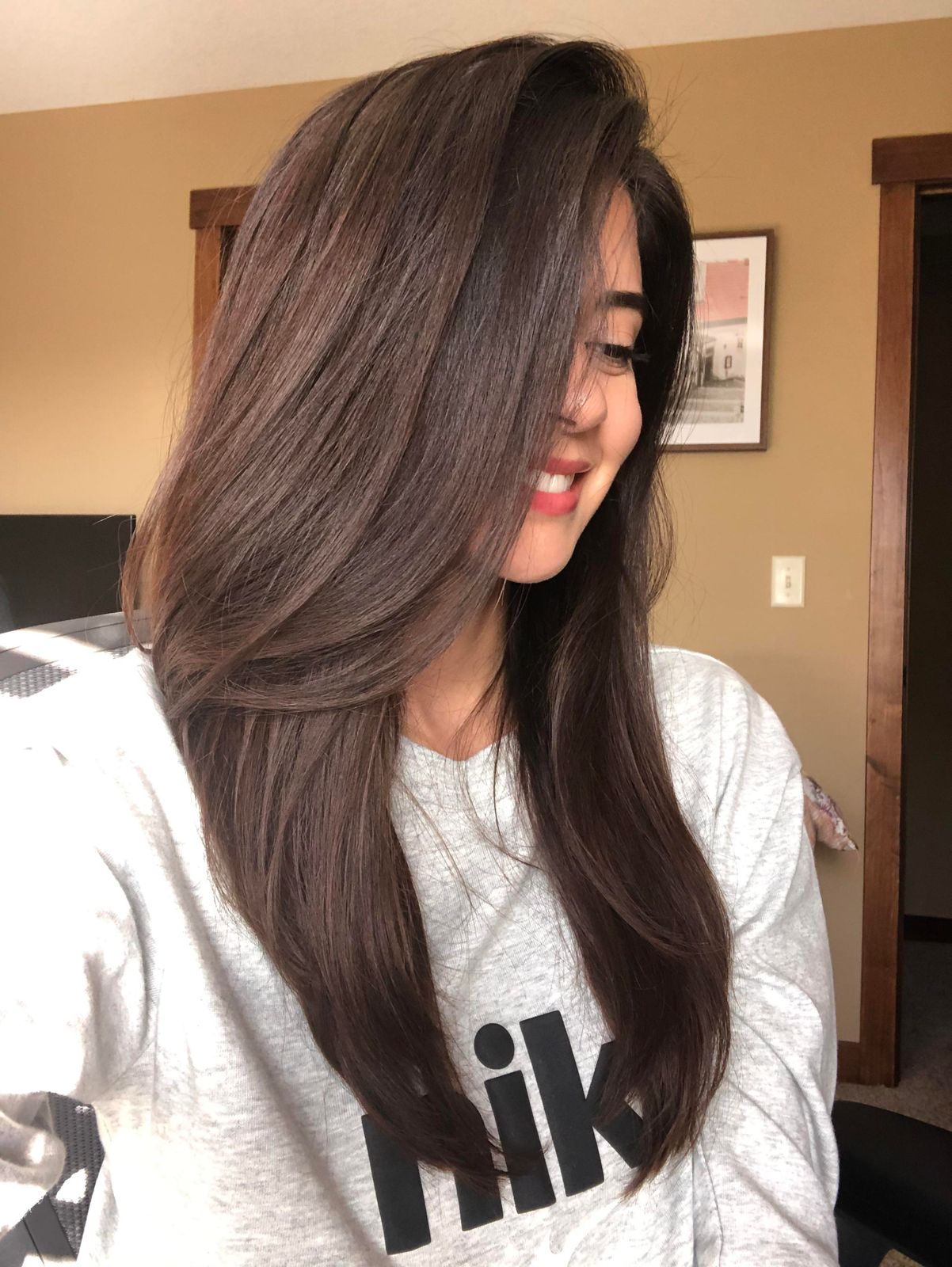
This is a salon colour, full stop. The technique is a single-process application, one shade from root to tip, no highlights, no balayage, no root shadow. The colour is a rich, deep brown with a cool undertone, and the result is uniform. That sounds simple, but a single-process brown on thick, straight hair needs a stylist who can saturate every strand without overlap or patchiness. At home, you risk banding and a tone that pulls red. The hair is mid-back with long layers, side-parted, blown out straight. The layers add movement without breaking the colour’s solid front. Book the consultation first.
Chin Visual Idea
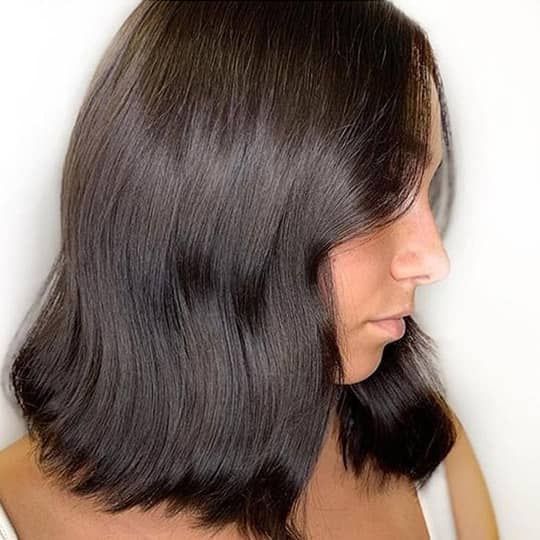
Ever had a haircut that looks sharp in the salon mirror and shapeless by Tuesday? That is the risk with a blunt bob at chin length, especially on medium density straight hair. The dark brown with subtle cool undertones keeps the sleek line honest, but the face-framing pieces are the real workhorses here. They give the blunt edge some movement, which matters because a chin-length cut on straight hair can sit there like a helmet if the ends are too heavy. The side parting adds a little lift at the root, though I will warn you: by mid-afternoon, the crown can go flat. It is a precise, salon-only shape that needs a trim every six weeks to keep that baseline crisp.
Visual Idea — Thick
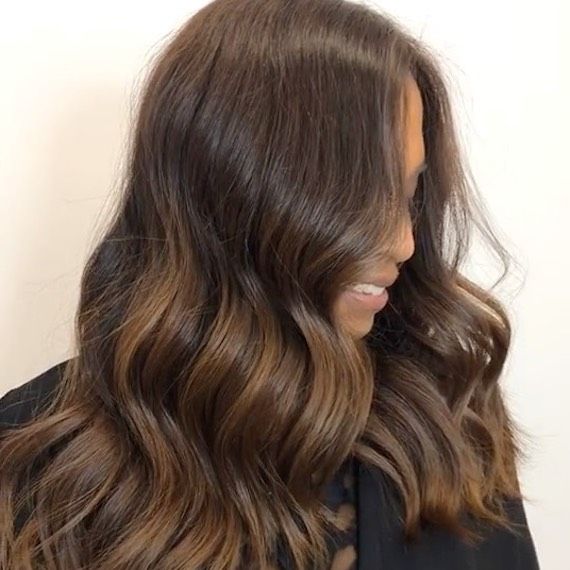
The verdict is in: thick, wavy hair was made for a dark chocolate brown shade with subtle caramel undertones. This is not a colour that shouts, it is a colour that catches the light at the ends and lets the root stay deep and rich. The technique is what makes it work. On hair this dense, you cannot just paint caramel everywhere or you lose the depth entirely. The stylist has to weave the lighter tone through the mid-lengths and ends only, leaving the root area untouched so the waves read as glossy and dimensional, not brassy.
The side parting helps too, it breaks up the volume so the mid-back length does not feel like one heavy curtain of hair. Loose waves give the caramel somewhere to land, and the result is a colour that looks expensive without looking worked on. Ask for a soft, hand-painted caramel that starts below the ear and fades out before the ends.
Visual Idea — This Is A Side View Of Long
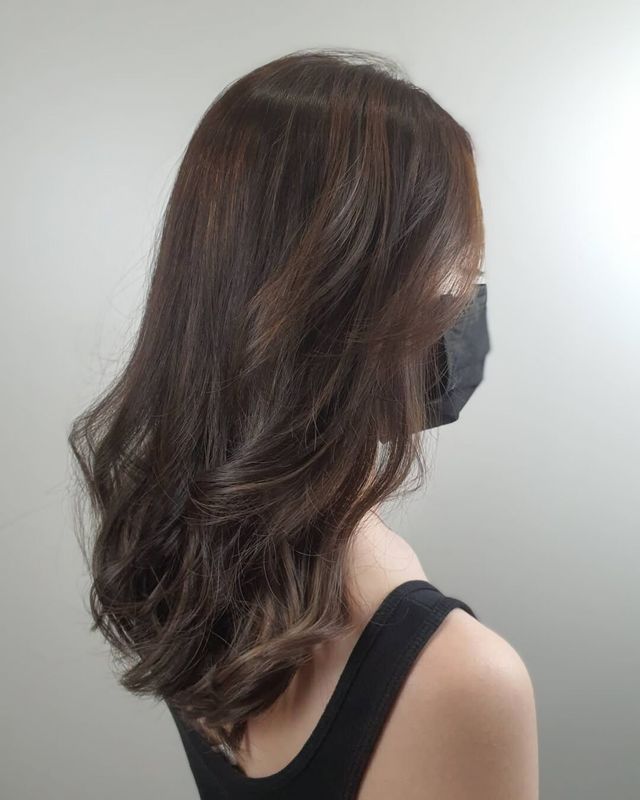
My gut reaction to this one: finally, a balayage that does not announce itself. The dark brown base with subtle, lighter brown highlights creates dimension without the stripe effect that full highlights give you. This is the side view, so you can see exactly how the lighter pieces sit underneath the top layer, which is the whole trick. Full highlights lift every strand from root to tip, which means a visible grow-out line by week four. This balayage starts the lighter brown lower down, around the cheekbone, so the root stays dark and the grow-out just looks like a shadow.
Wear and upkeep is where this wins. The collarbone length with soft face-framing layers means the waves have somewhere to move, and the middle parting keeps it modern. I would book a refresh every twelve to sixteen weeks, not the eight-week cycle that full highlights demand. The medium density texture carries the dimension well because there is enough hair for the lighter pieces to peek through without getting lost.
Long Layers Visual Idea
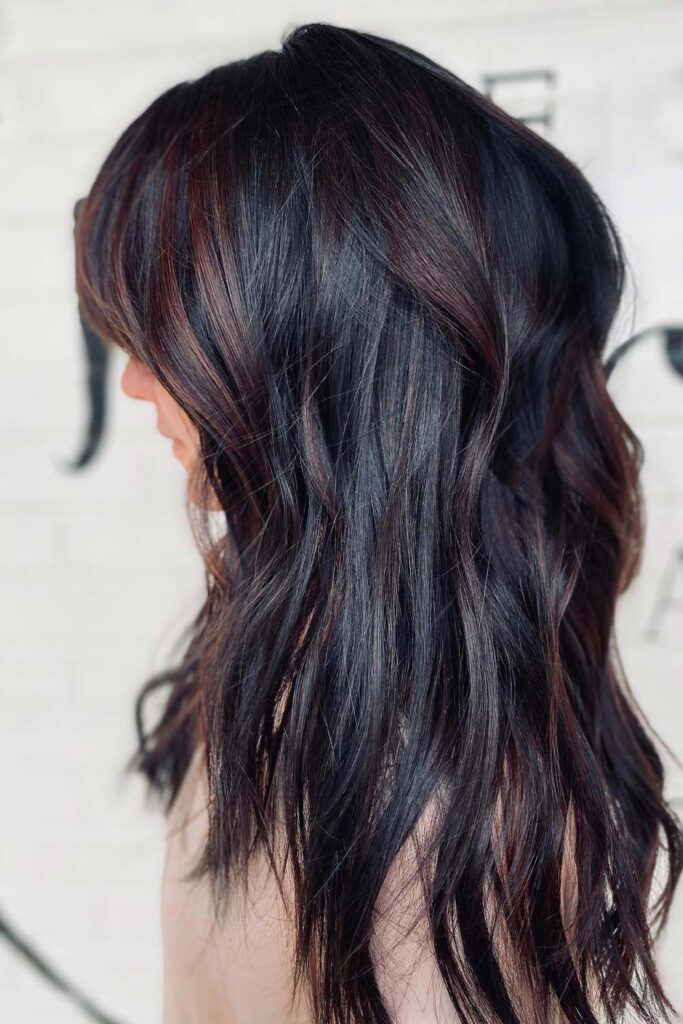
That deep red undertone is not for everyone. On medium-thick wavy hair at mid-back length, the dark brown with deep red undertones reads warm and expensive in direct light, almost black in the shade. The colour technique is a single-process base with a red-toned gloss, no highlights, so the effect is uniform but shifts with the light. It flatters skin with warm or neutral undertones best. Cool or very pink complexions can look ruddy next to it. The long layers keep the wave pattern from turning into a triangle, and the middle part lets the red hit both sides evenly. No bangs means the colour does the work.
Side-Swept Bangs Visual Idea

Can we talk about how side-swept bangs behave on thick, wavy hair? They look effortless in the first hour, then they have opinions. The dark brown base with subtle lighter brown highlights gives the mid-back length some dimension, but the bangs are the real project. Here is the honest styling routine:
First, blow dry them sideways with a round brush while they are still damp, that is non-negotiable. Second, let them cool completely before you touch them, or they will spring back to the middle. Third, a spritz of texture spray at the root keeps them from separating into two awkward curtains by noon. The middle parting works because the bangs sweep across and break up the symmetry. This is a salon cut, the bangs need to be cut dry and angled so they blend into the layers, not chopped straight across. Expect to re-style them every morning, this is not a wash-and-go situation.
No Bangs Visual Idea
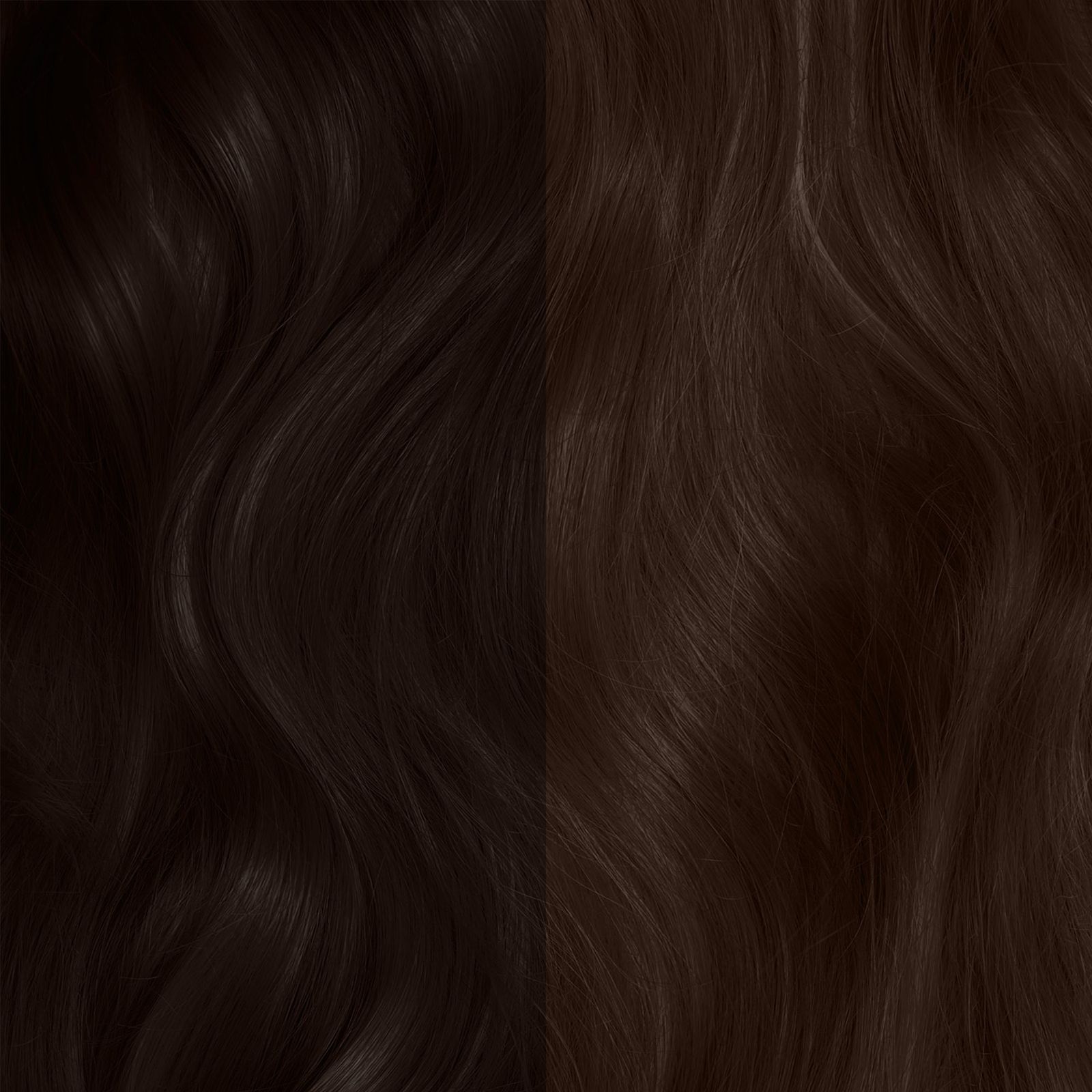
I will admit, I almost skipped this one. A mid-back length of natural dark brown, no highlights, no bangs, just air-dried waves. It looks like the easiest colour you could ask for. And that is the trap. Doing this shade at home means fighting patchiness, especially on medium density hair. One wrong section and you have a dark band near your ears and a lighter spot at the crown. The subtle lighter brown undertones only read as intentional if they are even. That takes a second pair of hands and a bowl of light you do not have in a bathroom mirror. Book the salon chair for this one. The uneven colour will show fast if you rush.
Visual Idea — Long
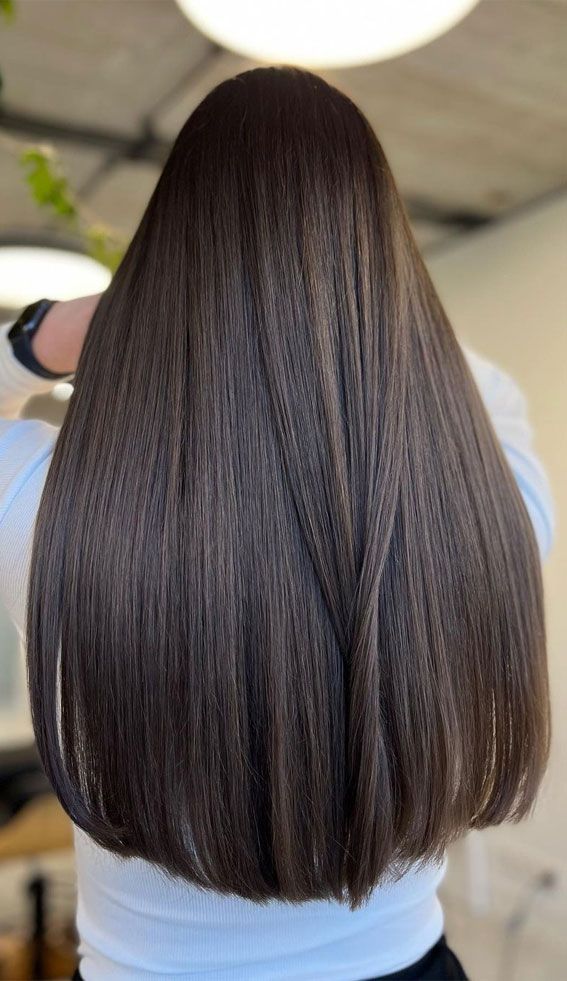
Best use of a blunt cut this side of the roundup. Long, straight dark chocolate brown hair, thick and sleek, cut clean across. No layers, no texture, just that single blunt line. The uniform dark brown shade does the work. On thick hair, a blunt baseline holds the shape against gravity, no flip at the ends, no droop by lunch. The reflection snaps back because the cut surface is a straight edge. Shine lives on a clean line. If your hair is fine or even medium density, skip this. It will look stringy by week two. Thick straight hair only.
Back View Visual Idea
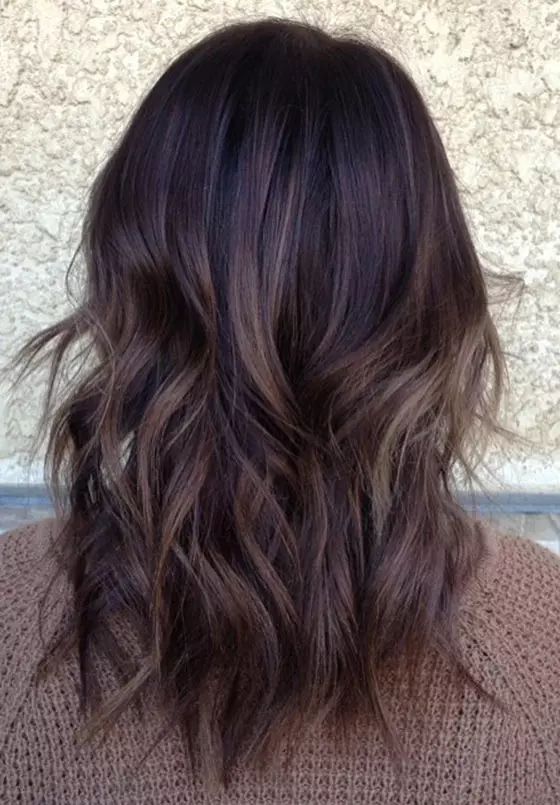
You see the back first, not the face. Dark brown with subtle cool-toned highlights, mid-back length, layered, middle part, thick wavy texture. The cool tones sit darker than a warm caramel, closer to a shadow than a sun stripe. That is the trick. Warmer highlights pop forward and catch light fast. Cool-toned highlights recede, so they read as depth instead of colour. The downside: upkeep. A warm highlight fades into brassy yellow. A cool highlight fades into ash, which on dark brown reads as muddy grey. You need a toning gloss every eight weeks to keep those cool-toned highlights reading as intentional and not like old colour.
Visual Idea — Medium Density
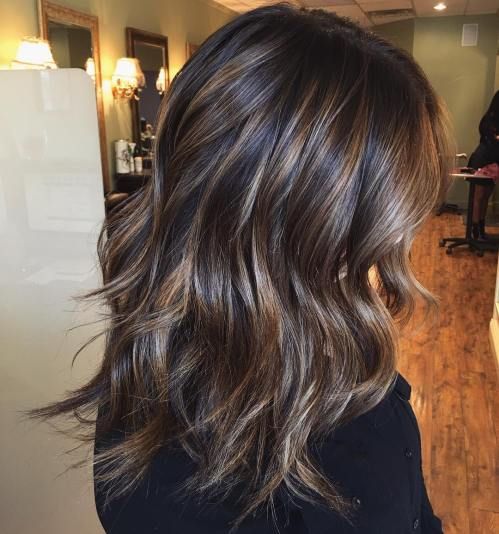
The waves are not deep, just a gentle S bend from a middle part. Medium density, wavy hair in dark chocolate brown with subtle lighter brown highlights, mid-back length, side view. Medium density is the sweet spot for this shade. Thick hair would eat the lighter brown highlights entirely. Fine hair would make them look like roots. Medium density lets the colour sit visible but not loud. The dark chocolate brown base anchors the width. The subtle lighter brown highlights add dimension without shouting dimension. This is the colour that looks expensive in low light and obvious in sunlight. It does not scream. It stands there.
Collarbone Visual Idea
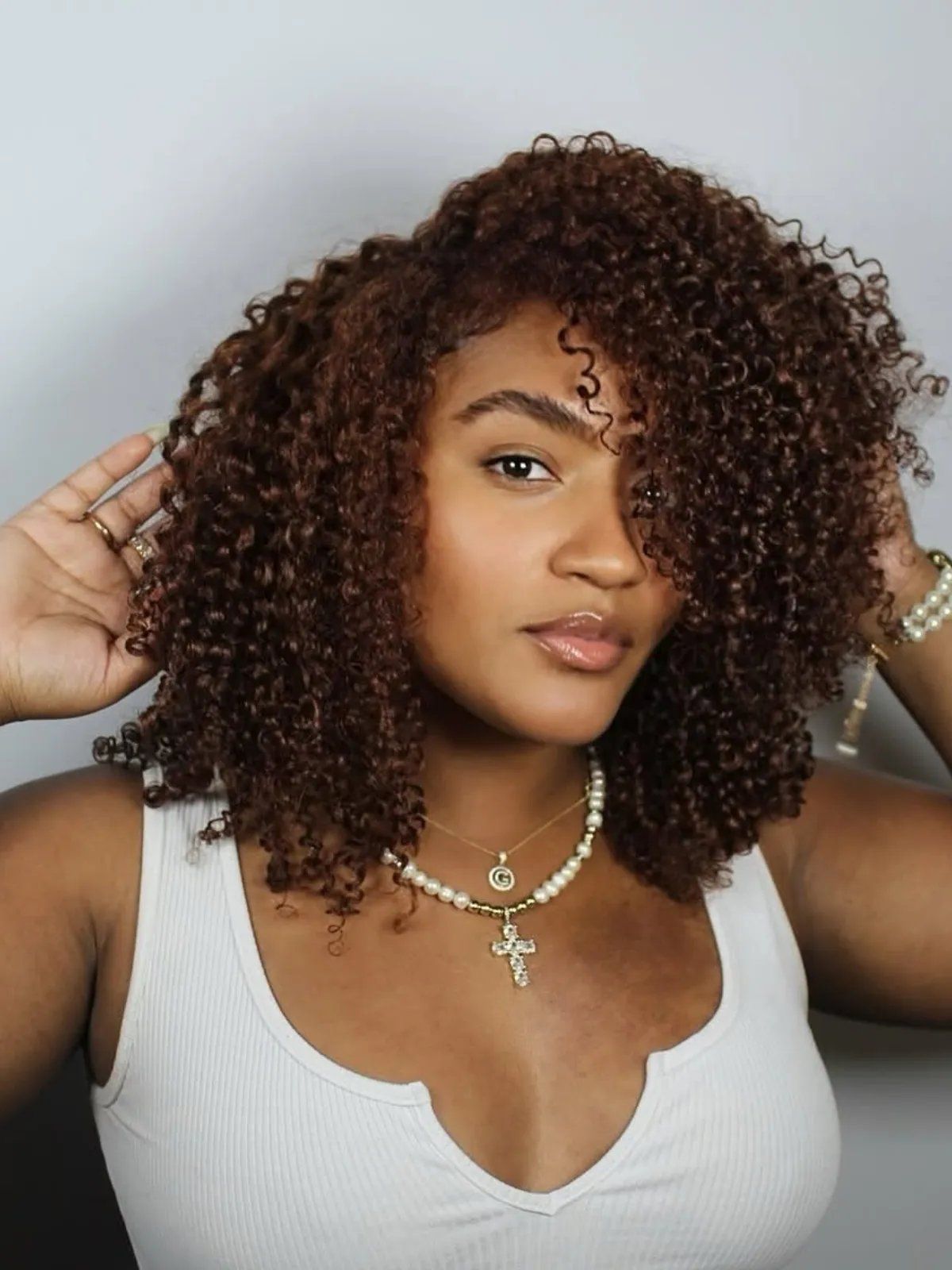
Does collarbone length ever feel stuck? Yes. The dark chocolate brown is rich, the waves are there, the middle part is clean. But at collarbone, the hair hits a shirt line every time you turn your head. It rests on the shoulder and then falls forward, and that constant rub frays the ends faster than you expect. You need a trim every six weeks, not eight. Otherwise the ends lose the shape and the colour looks dull at the bottom third. The waves help, they hide the first signs of fraying for about two weeks. Book it. But you will see the stylist twice a season.
Bob Visual Idea
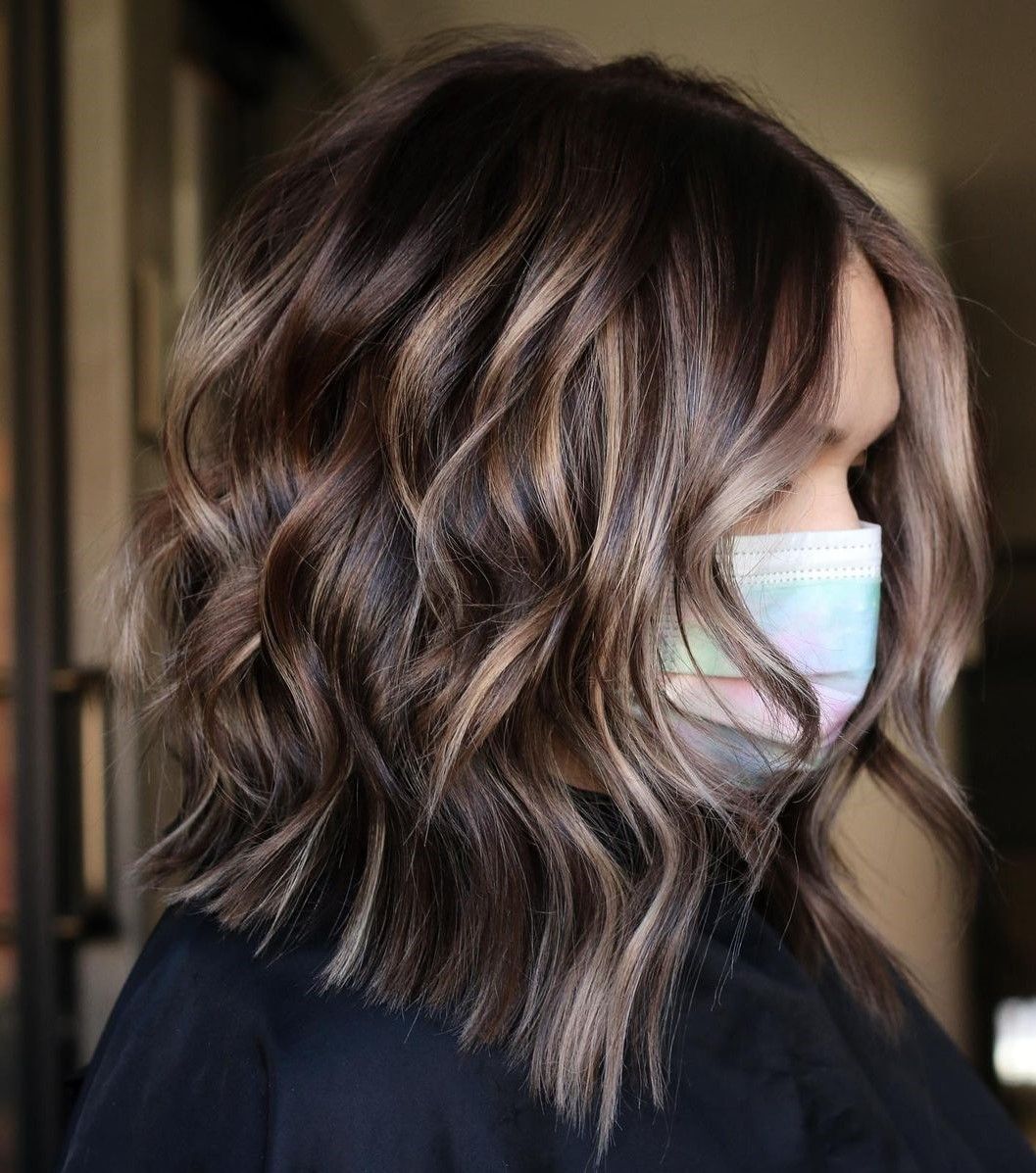
This bob lives or dies on the contrast. Dark chocolate brown base, blonde highlights starting a couple inches from the root. The technique is a partial weave, not a full foil. That keeps the dark side heavy and the light side a surprise. A collarbone bob with a middle part and wavy texture. The waves are the key: they catch the blonde at different angles, so the colour reads dimensional even though it’s only one technique. No bangs, which means the highlight placement has to do the framing. Ask your stylist for a collarbone bob with a soft A-line and a partial weave of blonde highlights through the top and sides. This is not a bathroom-mirror job.
Middle Visual Idea
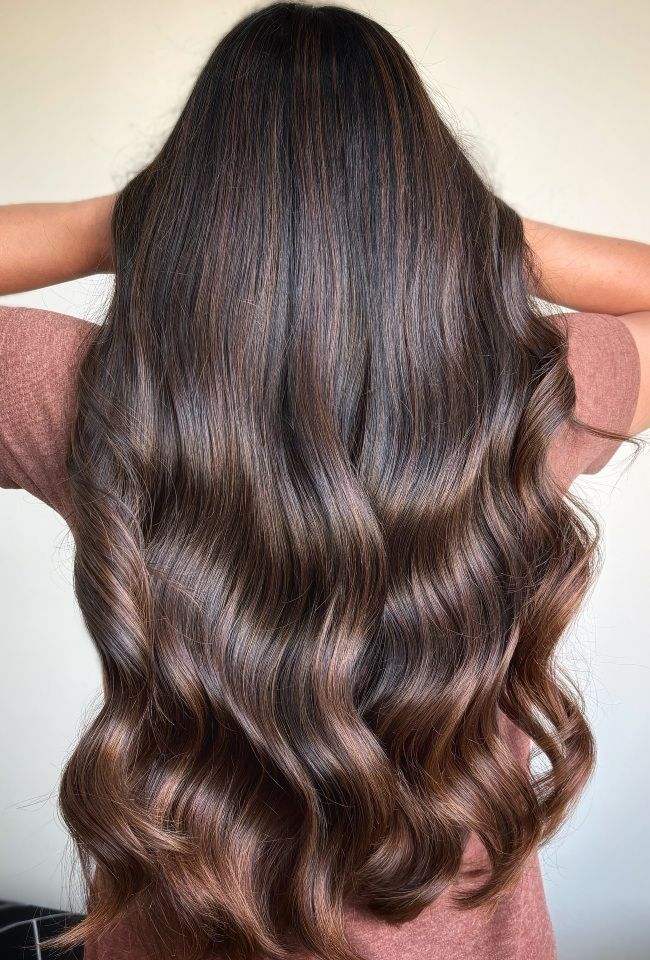
I looked at this and thought: that’s a lot of colour for a back view. Caramel and copper highlights on a dark brown base, balayage technique. The sections are wide, the placement is heavy through the mid-lengths and ends. It is not subtle. Compared to a uniform dark chocolate brown, this one demands a plan. The grow-out is kinder than a full foil because the balayage blurs the root line. But the copper will fade. It pulls warm, then brassy, then dull. A toning gloss every six to eight weeks keeps the copper from turning orange.
Thick, wavy hair at mid-back length. The layers are long and soft, which lets the balayage travel. A blunt cut would trap the colour at one line. The upkeep is a trim every ten weeks and a gloss every eight. If you want a low-maintenance dark brown, pick a single shade. If you want dimension and you are ready to schedule the gloss, this is the one.
Side Visual Idea
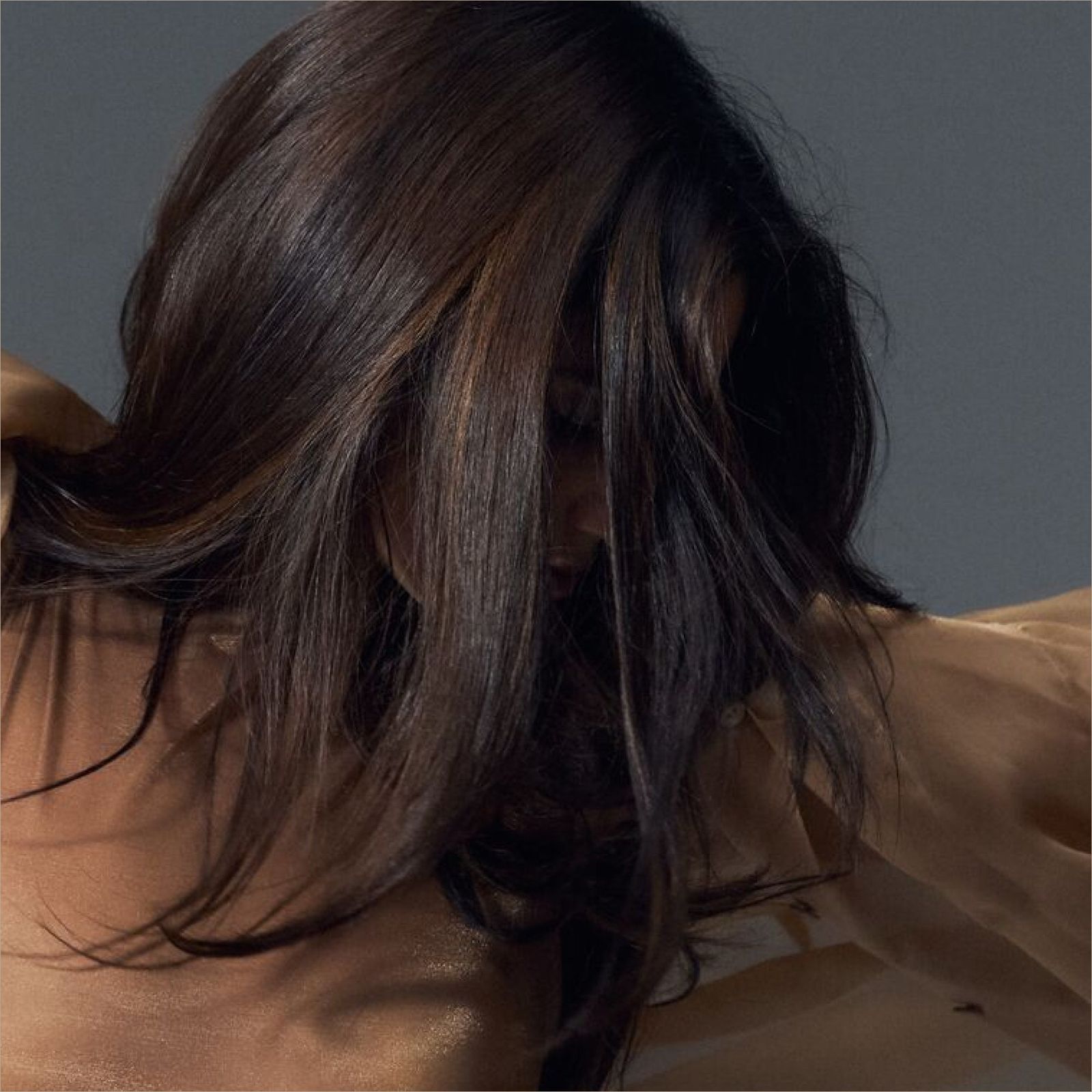
The dimensional dark chocolate brown here is doing something smart: it stays dark at the root and gets slightly lighter through the mid-lengths and ends. Subtle lighter brown highlights, not chunky, not stripey. The technique is a babylight balayage, fine sections painted close to the root but not on it. That creates a soft grow-out without a visible line. Wavy, thick hair at mid-back length, side part, loose waves. The waves help the colour read as movement, not as streaks. This is a salon colour. The babylight technique takes time and a steady hand. At home, you will either get a line or a patch. Who it suits: anyone with medium to thick hair who wants a richer brown without going full dark. The highlights add depth without changing the base.
Final Thoughts
After writing all of these, I noticed the same thing keeps coming up: it’s not the base that makes dark chocolate brown work, it’s the placement of the lighter pieces. A few caramel highlights near the face change everything, and a root shadow buys you six calm weeks.
I’m booking the collarbone lob with caramel highlights next. It’s the one I kept coming back to, and it’s the easiest to grow out.