Gray blending is the art of weaving silver tones into dark brown hair so the grow-out line becomes a non-issue. Right now, soft face-framing layers and curtain bangs are the go-to shapes for this technique, keeping the look intentional without the harsh demarcation of a full dye job.
This collection of 25 Simple Gray Blending Hair Dark Brown ideas runs from short, blunt bobs to long, layered waves, so you can match the approach to your texture and lifestyle. Fine hair needs a blunt baseline to hold density; thicker hair can carry long layers and more movement. Every option tackles the same core problem: a visible root line that demands a salon visit every three weeks.
Collarbone Layers With Soft Curtain Bangs
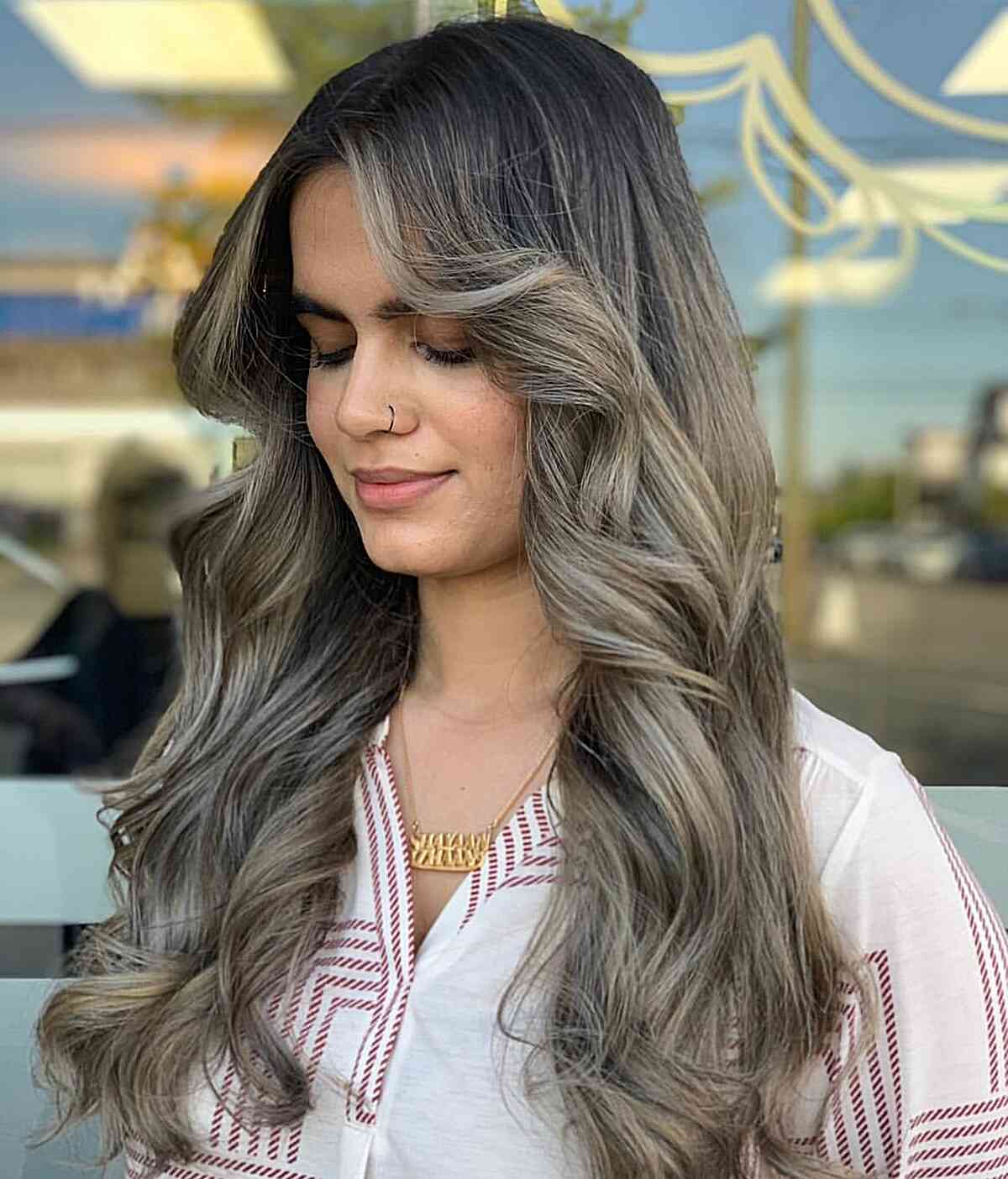
Wondering if gray blending works with dark brown hair? This collarbone cut proves it does. The wavy, medium-density hair is layered to hit right at the collarbone, with soft curtain bangs that sweep outward. The gray and ash blonde blend runs through the mid-lengths, creating a seamless gradient that softens the transition. These curtain bangs suit round and heart faces, while the layers give movement to natural waves. Ask your stylist for: collarbone layers with soft curtain bangs, gray and ash blonde blend. Blow-dry the fringe with a round brush to shape it, and plan a trim every six to eight weeks to keep the collarbone length sharp.
Collarbone Lob With Gray Highlights
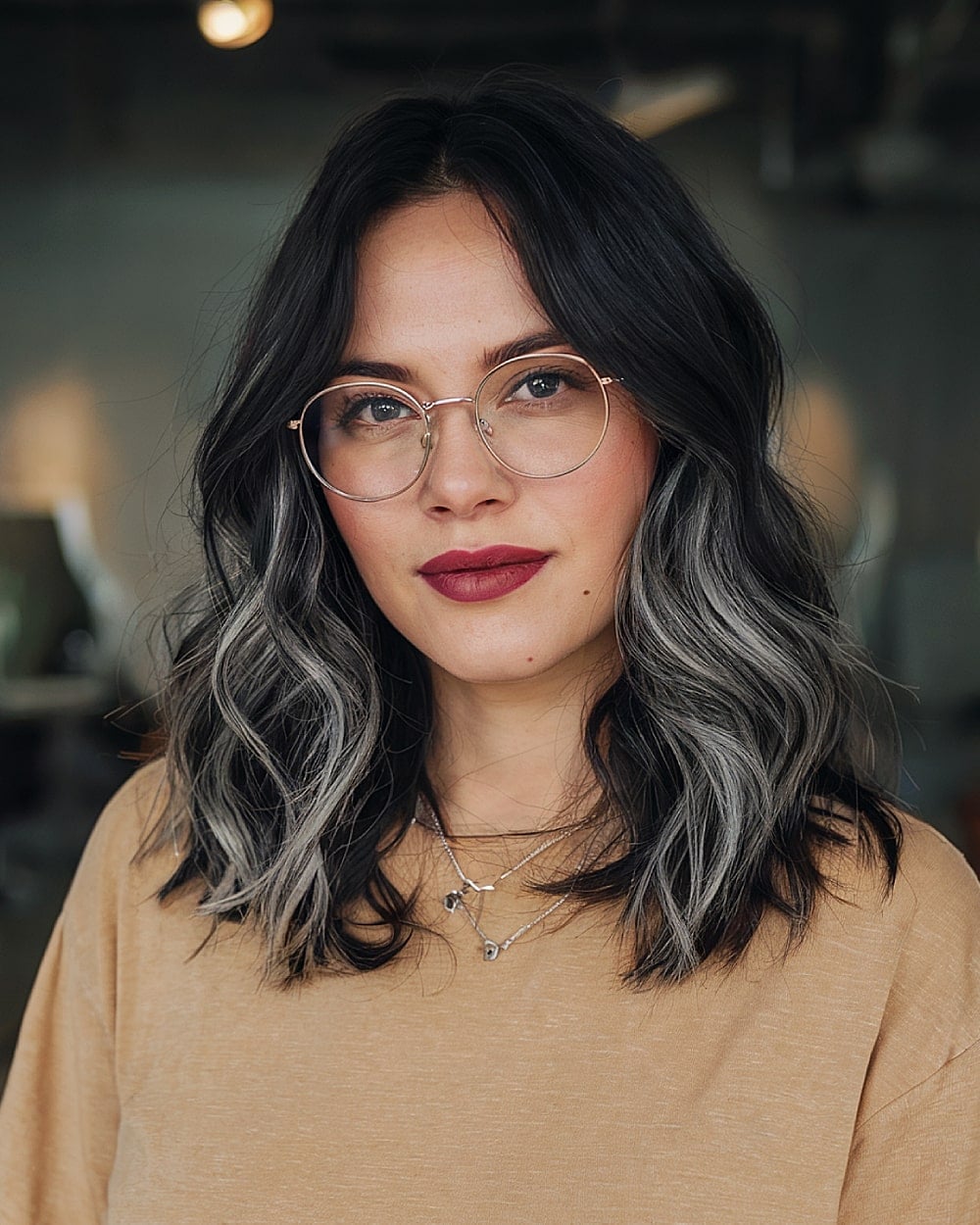
The lob here is built on soft layers that keep the wavy, medium-density texture from looking heavy. Gray highlights are woven through the dark brown base in thin, subtle pieces rather than chunky streaks, so the blend reads as natural. The curtain bangs frame the face without committing to a full fringe. Ask your colorist for: collarbone lob with soft layers and curtain bangs, gray highlights. Style it with loose waves to let the dimension show, and trim the lob every six to eight weeks to maintain the collarbone length.
Wavy Collarbone Layers With Ash Blonde Gray Blend
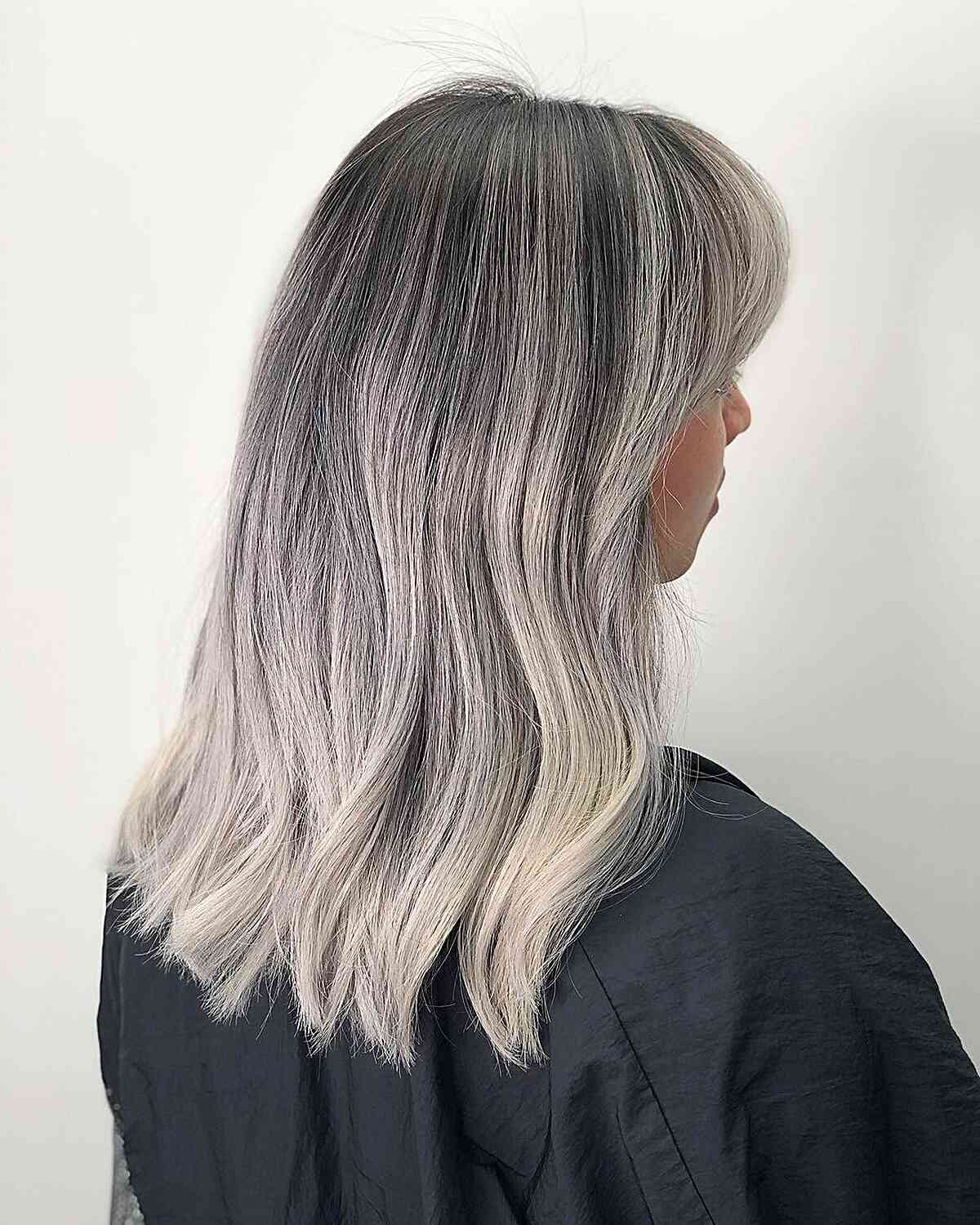
Gray-only blending gives a cooler, more silver finish, while adding ash blonde warms it slightly and keeps the dark brown base from looking flat. On this collarbone cut, the curtain bangs and wavy blowout let both tones catch the light. Ask your colorist for: collarbone layers with curtain bangs, gray and ash blonde blend. It suits medium-density wavy hair that needs movement, and a texturizing spray helps the waves hold their shape.
Collarbone Layers With Side-Swept Bangs
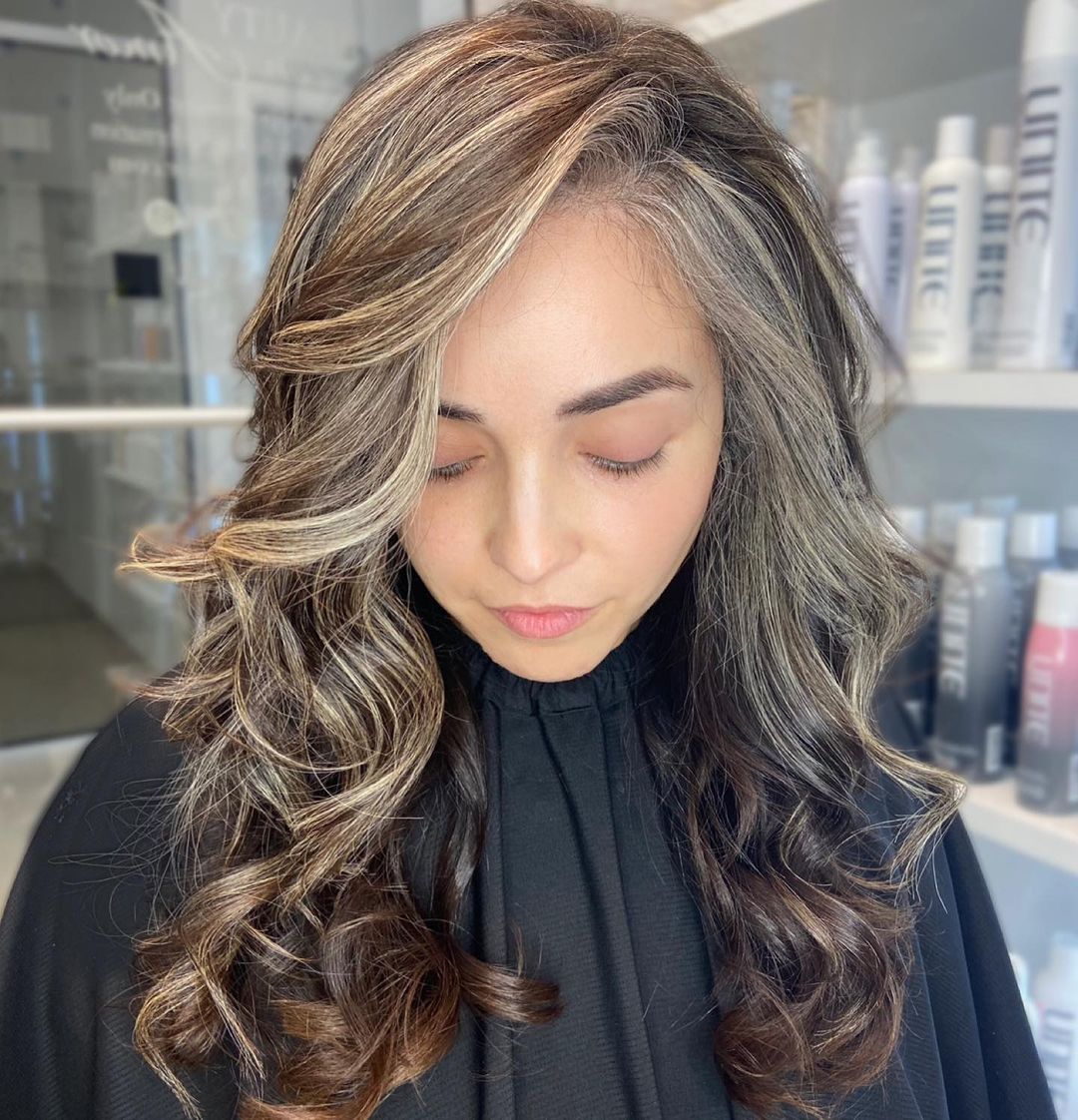
Not sure how to describe the bangs you want? Say you want them side-swept but soft, not blunt. This cut has collarbone-length layers with face-framing pieces that blend into the side-swept fringe. The gray highlights are woven through the dark brown base, adding dimension without a harsh line. Ask your stylist for: collarbone layers with side-swept bangs, blended gray highlights. The side-swept style works with most face shapes because it can be swept either way. Keep a side parting and loose waves to match the look.
Shoulder Length Layers With Gray Blend
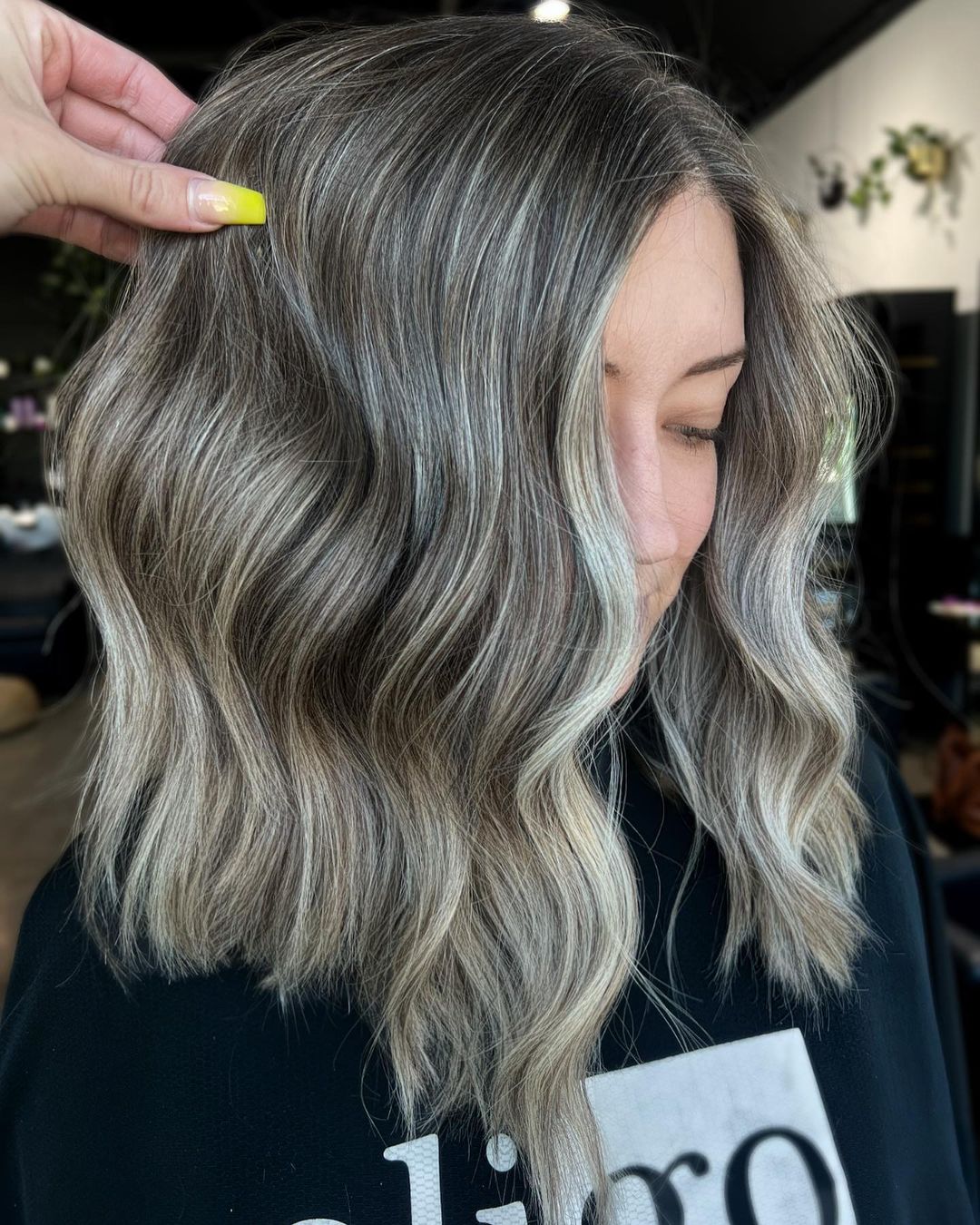
This shoulder-length cut skips bangs entirely, which makes it a low-commitment option for the gray blend. The soft layers add movement to wavy, medium-density hair, and the side parting creates volume at the crown. The gray highlights blend into the dark brown base with a seamless transition, so grow-out is less obvious. Ask your stylist for: shoulder length soft layers, blended gray highlights. Daily styling is quick: enhance the natural wave with your hands and a bit of product, then let it air dry. Trim every six to eight weeks to keep the layers from losing their shape.
Blunt Collarbone Bob With Curtain Bangs
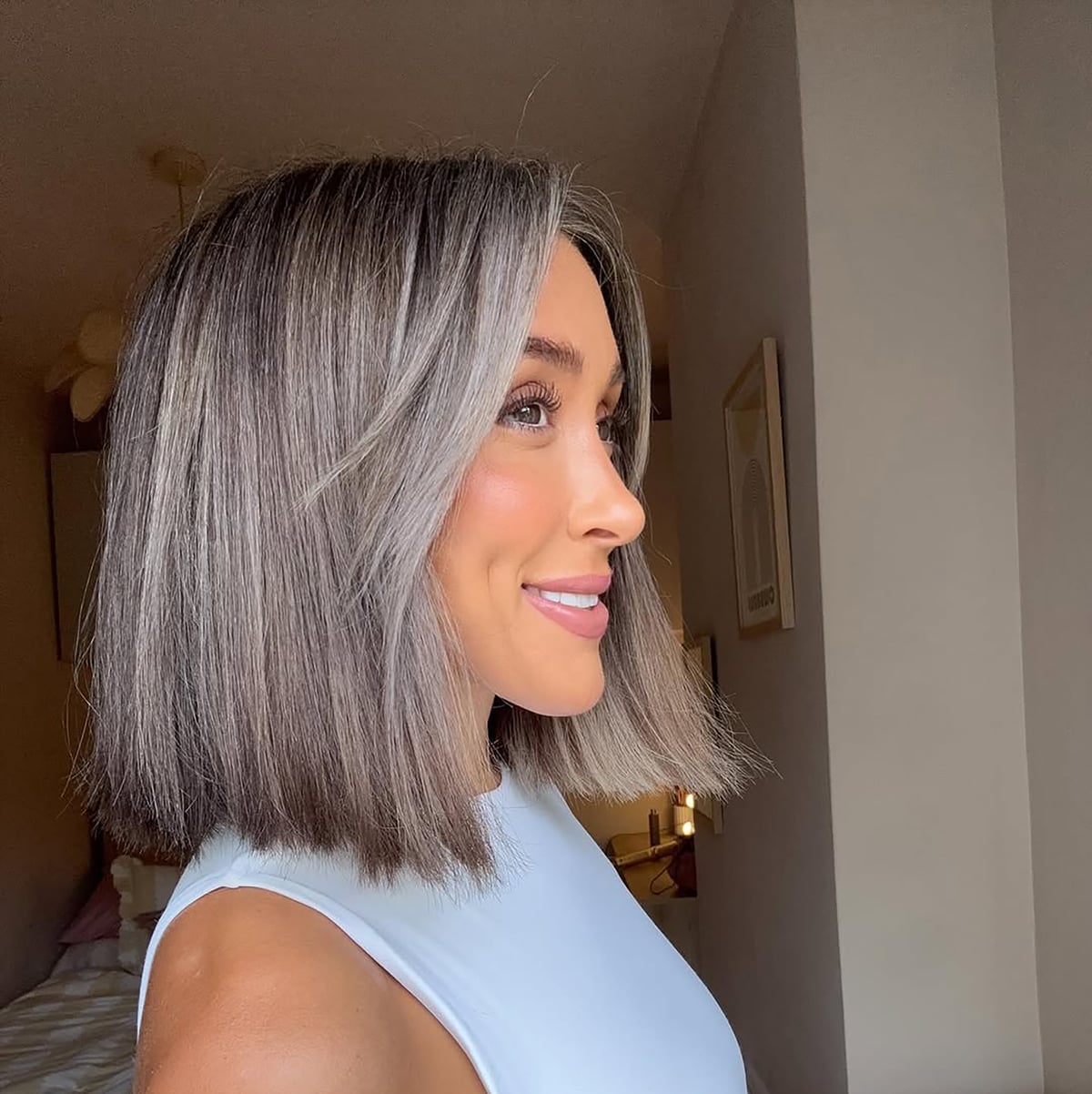
A blunt bob cut just past the jaw and a pair of curtain bangs create a clean frame for fine, straight hair. The side part and blowout add polish, but the real work is in the color: a seamless gray blend woven through dark brown. On straight, fine texture, the contrast can read as stark if the placement is too blocky. Ask your stylist for: blunt collarbone bob, seamless gray blend, curtain bangs. A toner appointment every four to six weeks keeps the gray from pulling yellow against dark brown.
Chin Length Bob With Side-Swept Bangs
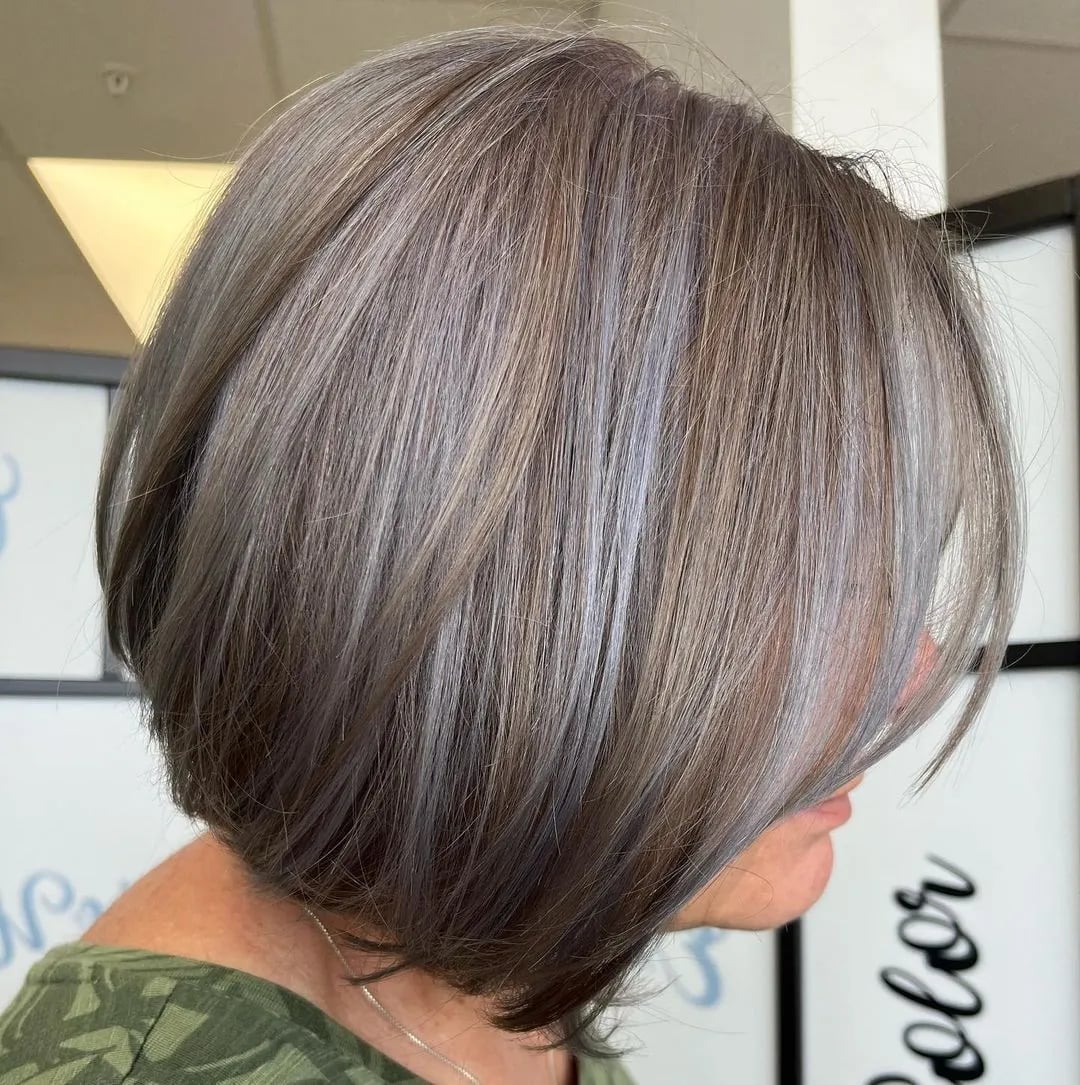
A chin length bob with side-swept bangs is a clean, graphic shape, but the blended gray streaks on fine, straight hair demand attention. The dark brown base keeps the contrast subtle, yet the lighter pieces can read as brassy if the toner fades. Ask your colorist for chin length bob, side-swept bangs, blended gray streaks. A flat iron gives the sleek finish this style depends on, and the bob needs a trim every four to six weeks to hold its line. Fine hair shows every misplaced strand, so the precision of the cut is what carries the look.
Collarbone Bob With Blunt Bangs, Air Dried
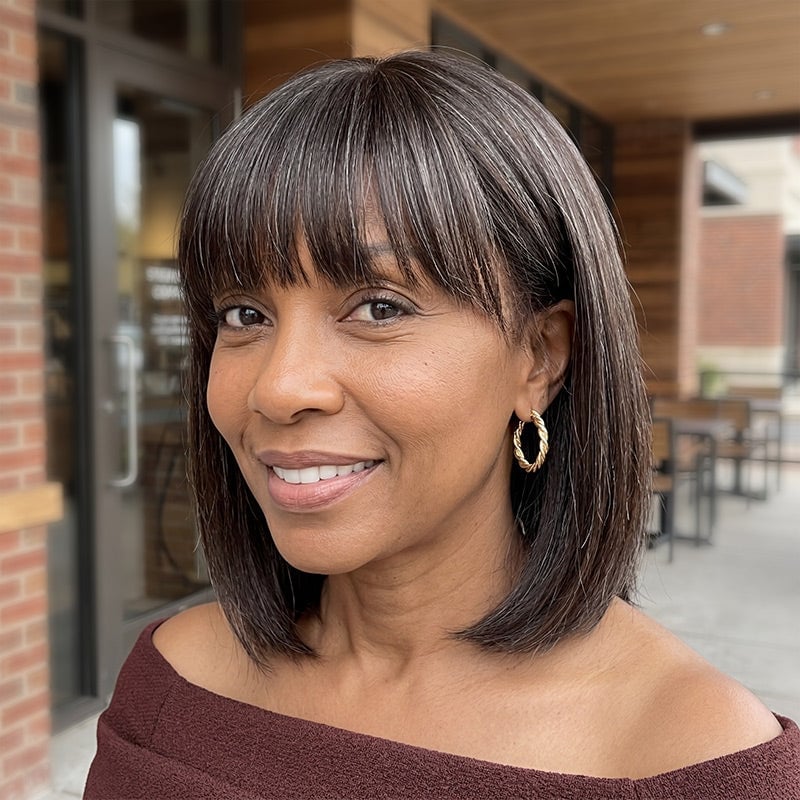
Air drying a bob with blunt bangs is a practical test of a cut’s architecture: if the baseline is clean and the weight distribution is even, it dries into shape on its own. This collarbone bob with a middle part and subtle gray blending across the whole head relies on the blunt line for structure, since fine, straight texture offers no wave to hide uneven ends. The gray reads as a soft shadow rather than streaks, which lowers the maintenance. Ask your stylist for: collarbone bob, blunt bangs, subtle gray blend. Plan a trim every six to eight weeks to keep the blunt edge crisp.
Collarbone Layers With Face-Framing Bangs
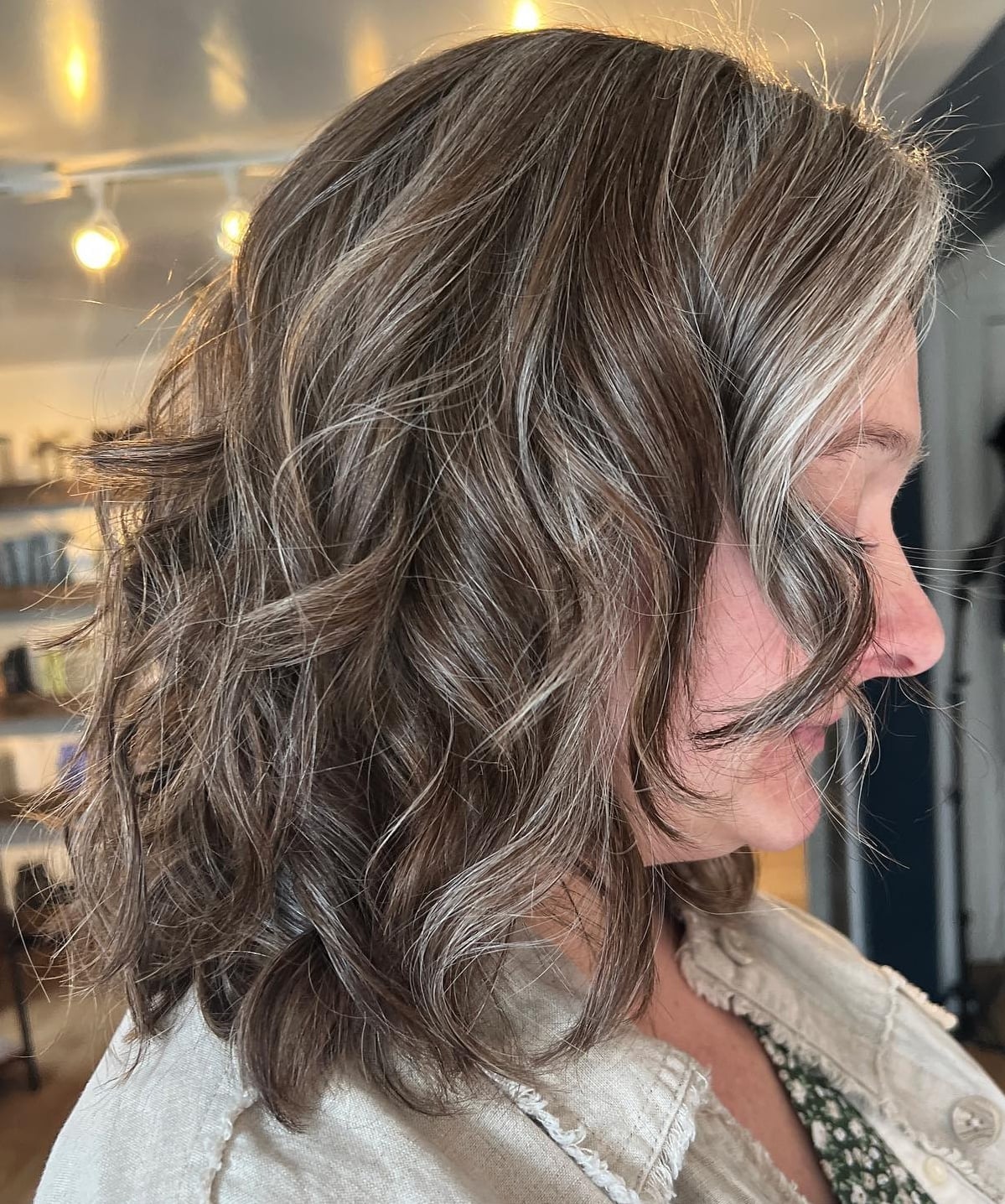
Who actually benefits from face-framing curtain bangs and collarbone layers? Anyone with a strong jawline or a square face shape, because the soft angles of the curtain bangs break up straight lines without shortening the face. This version uses wavy, medium density hair and a side part, with gray highlights concentrated around the face to brighten the dark brown base. The layers are subtle enough to keep the length but add movement to the wave pattern. Ask your stylist for: collarbone layers, face-framing curtain bangs, blended gray. A trim every eight weeks prevents the face-framing pieces from losing their shape.
Mid-Back Long Layers With Gray Blend
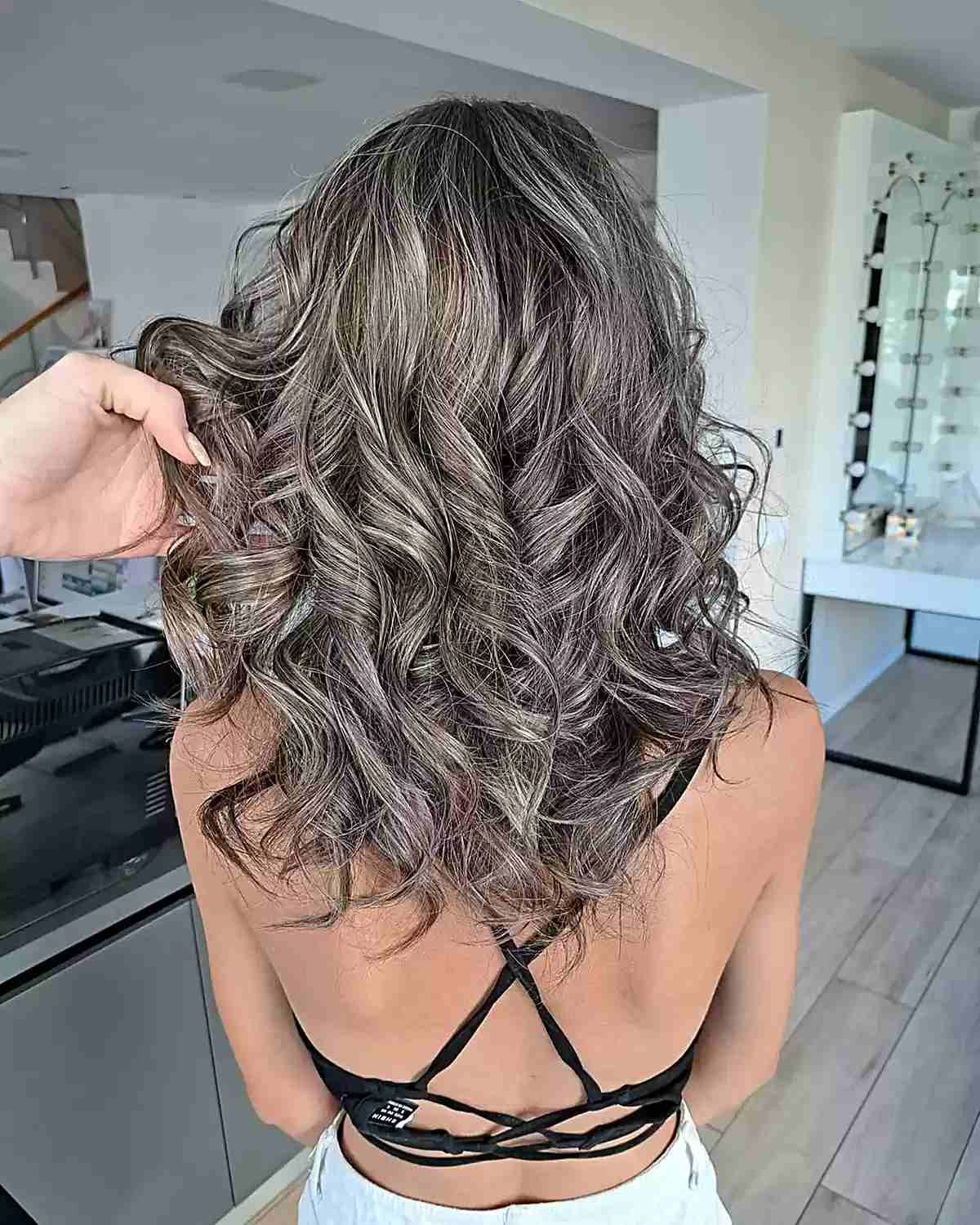
Long, thick, wavy hair presents a specific challenge for gray blending: the color needs to travel far enough down the shaft to avoid a harsh line at the roots, but not so far that it looks like a grown-out highlight. The solution here is a mid-back length cut with long layers and loose curls, with the dark brown base carrying the gray blend in a soft, graduated pattern. The middle part and back view show that the gray is evenly distributed rather than concentrated at the top.
The loose curls break up any remaining demarcation, making the transition look natural rather than painted. Ask your colorist for: mid-back length with long layers, loose curls, gray blend. A trim every eight to ten weeks maintains the layer movement, and a toner refresh every six weeks keeps the gray cool against the dark brown.
Mid-Back Loose Waves With Gray Blend
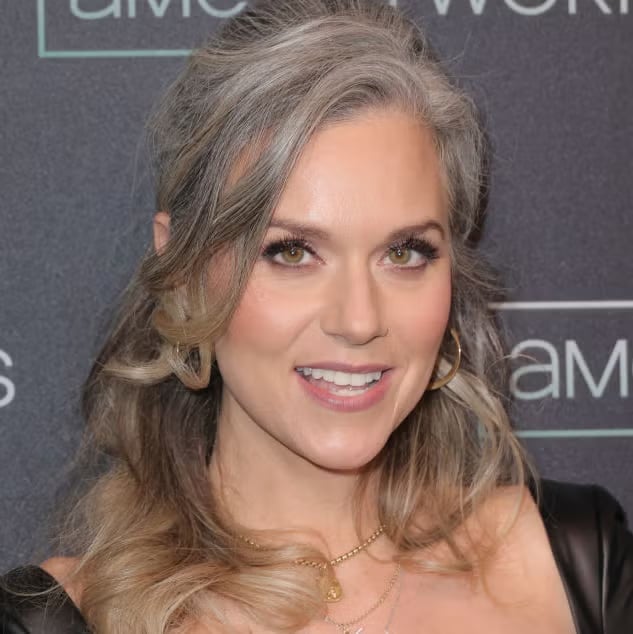
A side part versus a middle part: the difference is subtle but real. With a side parting, the dark brown base and gray blending fall with a bit more weight on one side, creating an asymmetric softness that loose waves carry well. Medium density, wavy hair at mid-back length is the starting point here. Ask your stylist for mid-back length loose waves, side parting, seamless gray blend. The side part also means the gray strands catch light differently on each side, which keeps the blend from looking flat. A wave-enhancing product applied to damp hair and air dried or diffused is enough for this finish. Trims every eight to ten weeks keep the ends healthy and the wave pattern defined.
The loose wave itself is the key element. No bangs, no extra texture, just a side-swept shape that lets the gray appear as a natural part of the base color. For anyone who finds a middle part too symmetrical or severe with gray, this is the alternative that still feels relaxed.
Mid-Back Long Layers With Gray Balayage, Wavy
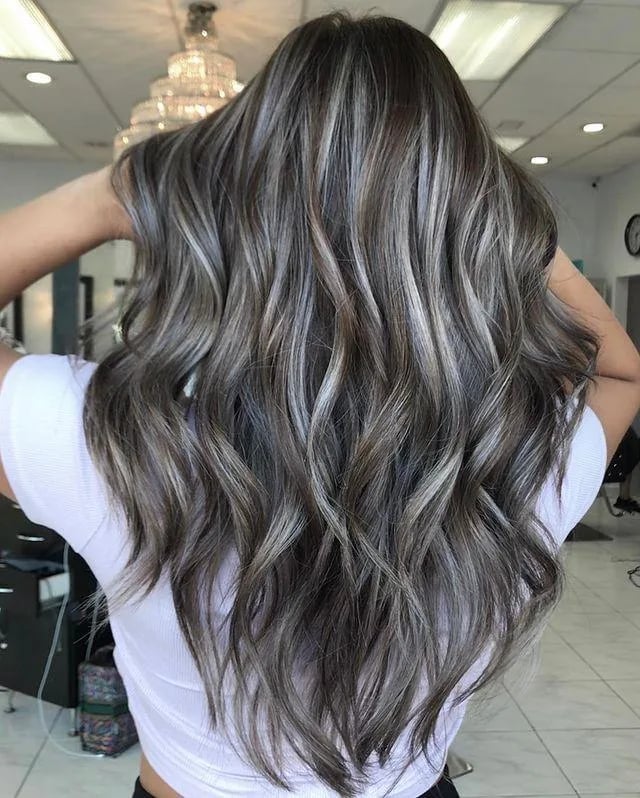
Seen from the back, the design is clear: the gray balayage is painted on in soft, vertical sections that follow the long layers. The gradient moves from dark brown at the roots to a lighter, ashy tone at the ends, with no hard line. Medium density, wavy hair at mid-back length benefits from this approach because the layers let the balayage show movement. Ask your colorist for mid-back length long layers, loose waves, gray balayage. The middle parting keeps the color balanced evenly on both sides. Dry texturizing spray defines the waves and helps the blend look seamless. Trims every eight to ten weeks are the standard for this length.
Mid-Back Layers With Face-Framing Bangs
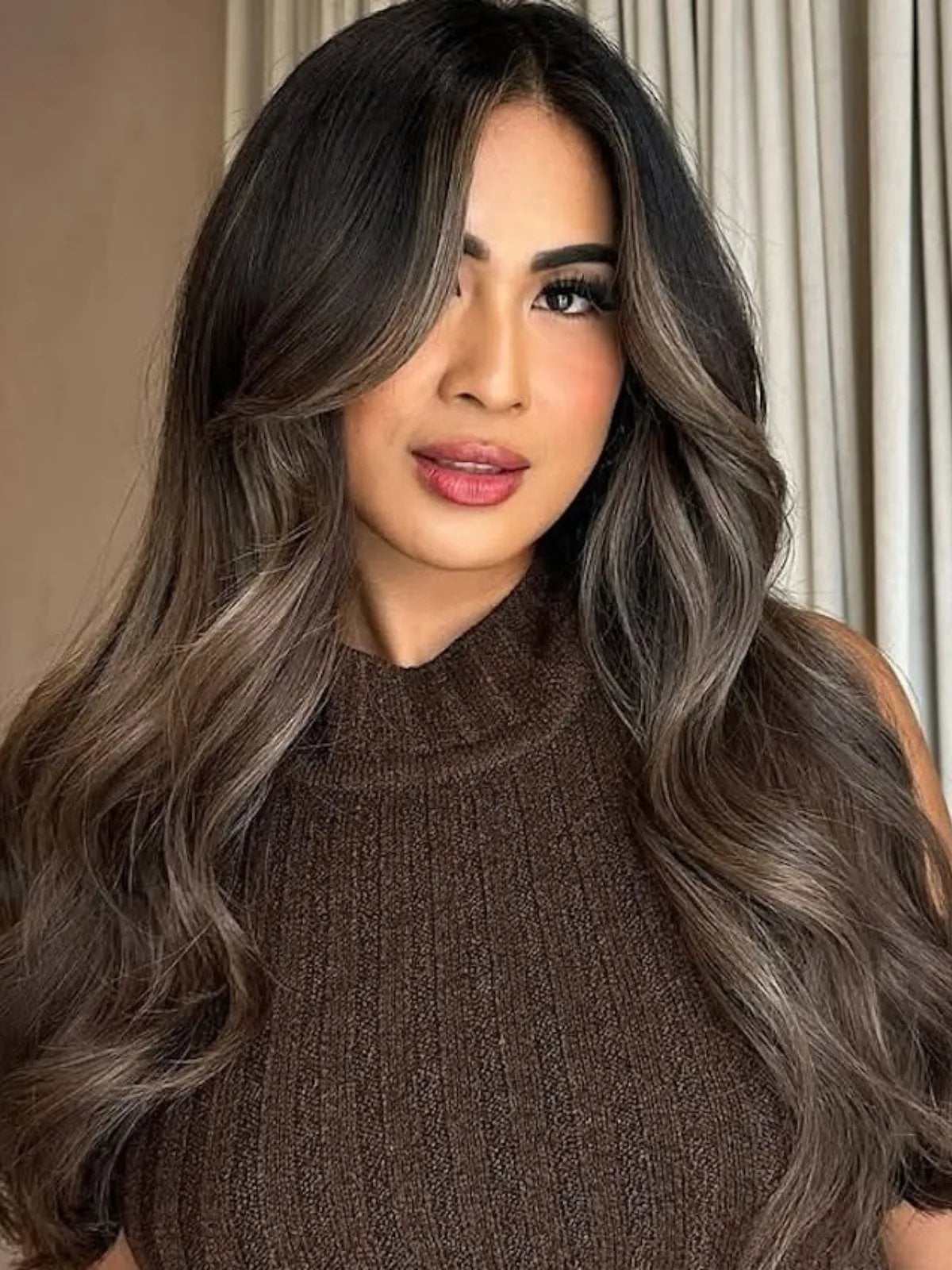
What exactly should you ask for when you want ash blonde and gray tones blended into face-framing pieces? Start with the cut: mid-back length with face-framing layers that start around the jaw and get longer toward the back. The face-framing bangs themselves should be soft, not blunt, so they blend into the loose waves. For the color, the ash blonde and gray highlights are painted onto those front sections and then woven through the mid-back length. Medium density, wavy hair holds this combination well because the waves disguise any hard color lines. Ask your stylist for mid-back length with face-framing layers, ash blonde and gray blend. The middle parting keeps the framing pieces even. A curl-enhancing cream and a diffuser add definition without making the waves stiff.
The key is to keep the face-framing sections long enough to tuck behind the ear if needed. Too short and they look separate; too long and they lose the framing effect. This length, paired with the ash blonde and gray blend, gives the dark brown base a lift around the face without a full color overhaul.
Mid-Back Wavy Hair With Seamless Gray Blend
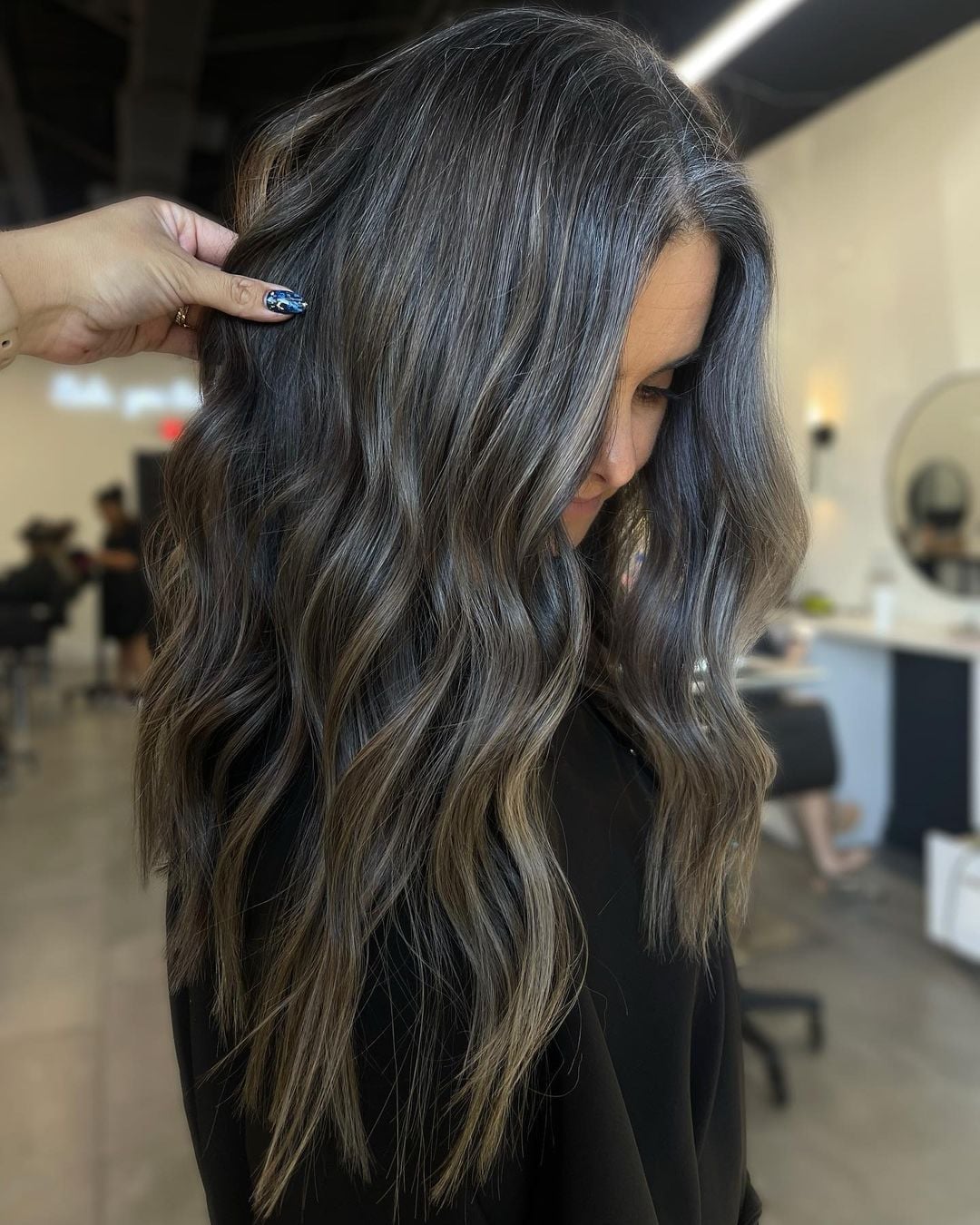
Thick, wavy hair at mid-back length can swallow color if the blend is not placed thoughtfully. The seamless gray blend here avoids that by concentrating the lighter strands in the mid-lengths and ends, leaving the roots dark brown, so the gray shows as dimension rather than regrowth. Long layers let the thick texture move freely without getting heavy. Ask your colorist for mid-back length wavy hair, seamless gray blend, middle part. A sea salt spray applied to damp hair and air dried or diffused encourages the natural wave pattern without weighing it down. Trims every eight to ten weeks prevent the ends from splitting, which matters more with thick hair because split ends travel faster.
This finish typically looks best on day two, after the hair has settled. A quick refresh with a water mist and a scrunch is usually enough to bring the wave pattern and the gray blend back into focus.
Mid-Back Air-Dried Waves With Gray Blend
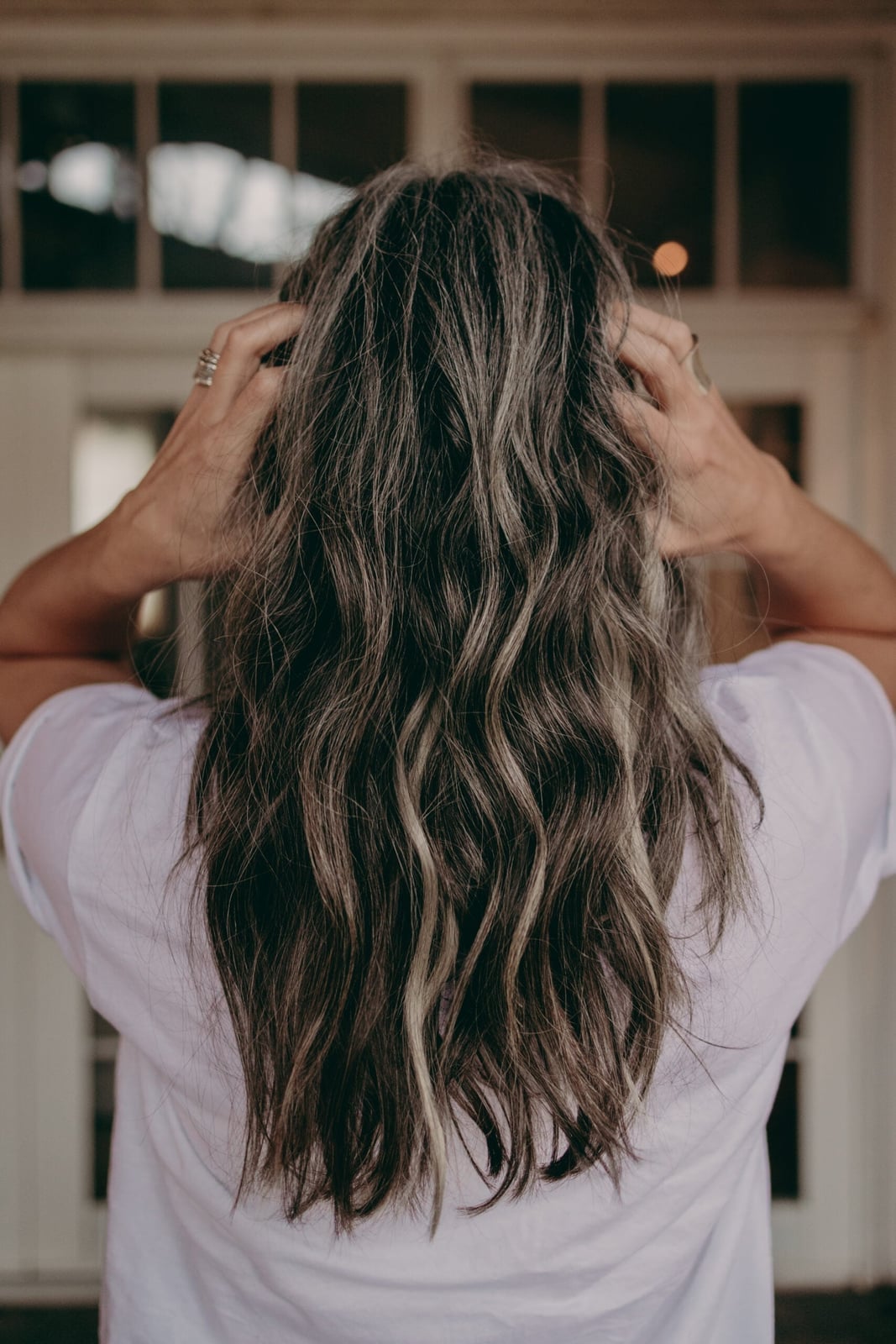
Air drying is the low-maintenance option, but achieving this specific gray blend requires a salon visit. The dark brown base and prominent gray blending are painted in a way that relies on the natural wave pattern to distribute the lighter strands evenly. Thick, wavy hair at mid-back length is ideal because the texture does the work of making the blend look organic. Ask your colorist for mid-back length air-dried waves, prominent gray blend. Styling is limited to applying product to wet hair and letting it dry without heat. The dimensional gray blend moves with the hair instead of sitting on top of it. A DIY approach with box color cannot replicate the soft transitions visible in the back view here.
Mid-Back Voluminous Curtain Bangs With Gray Blend
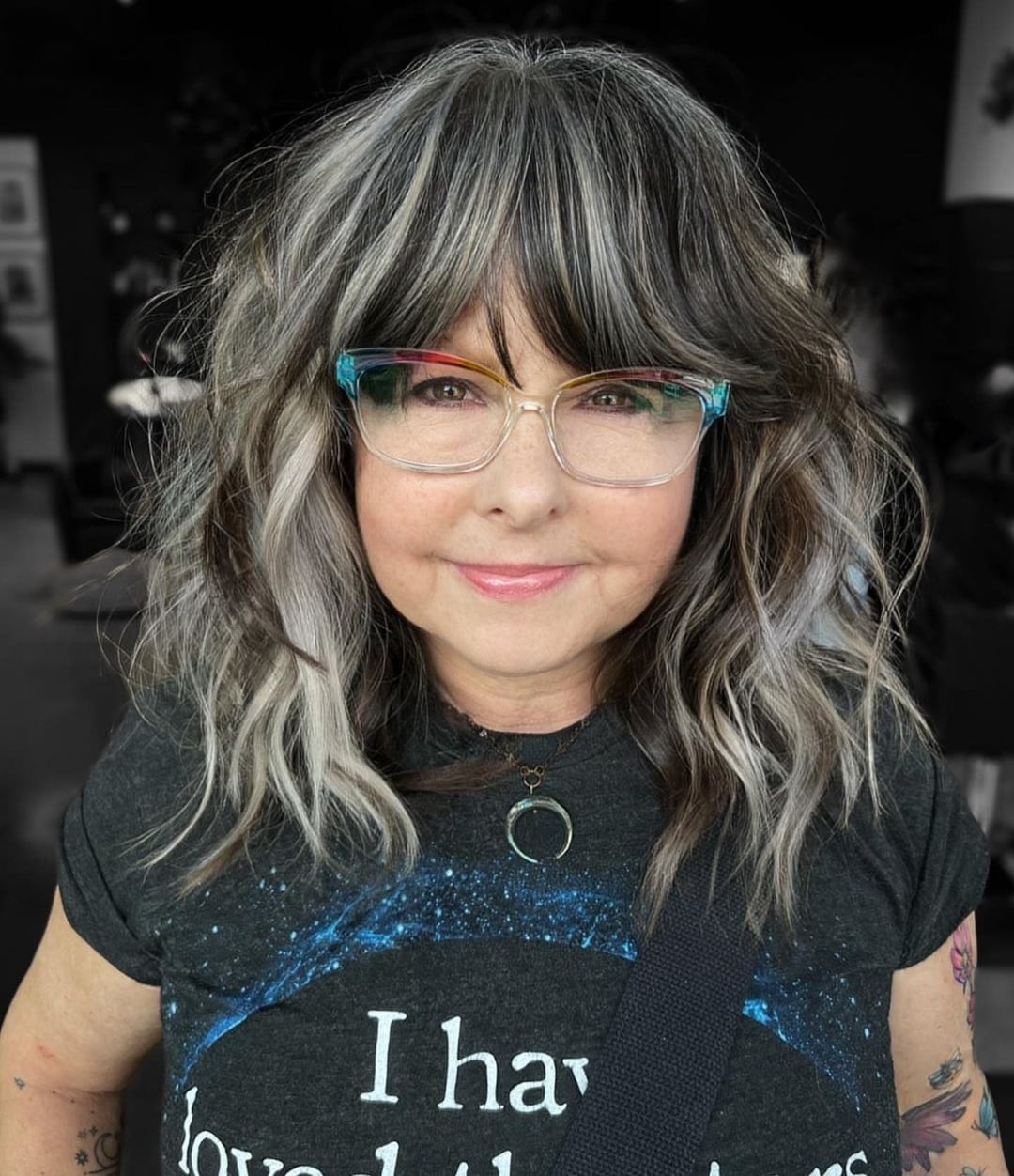
Who actually suits voluminous curtain bangs on thick, wavy hair? Anyone with a round or square face shape, because the curved pieces pull the eye outward instead of down. The mid-back length and long layers give the hair enough weight to keep the volume from turning into a triangle, while the curtain bangs frame the forehead without shortening it. The gray and ash blonde blend runs through the face-framing layers, which is where the eye lands first.
The thick texture is the reason this works: fine hair would collapse under the weight of the bangs, but wavy, dense hair holds the shape. Ask your colorist for mid-back length with voluminous curtain bangs, gray and ash blonde blend. Blow-dry the bangs with a round brush to set the curve, then let the rest air dry. A trim every eight to ten weeks keeps the curtain shape from growing into an awkward in-between length.
Mid-Back Layers With Soft Curtain Bangs
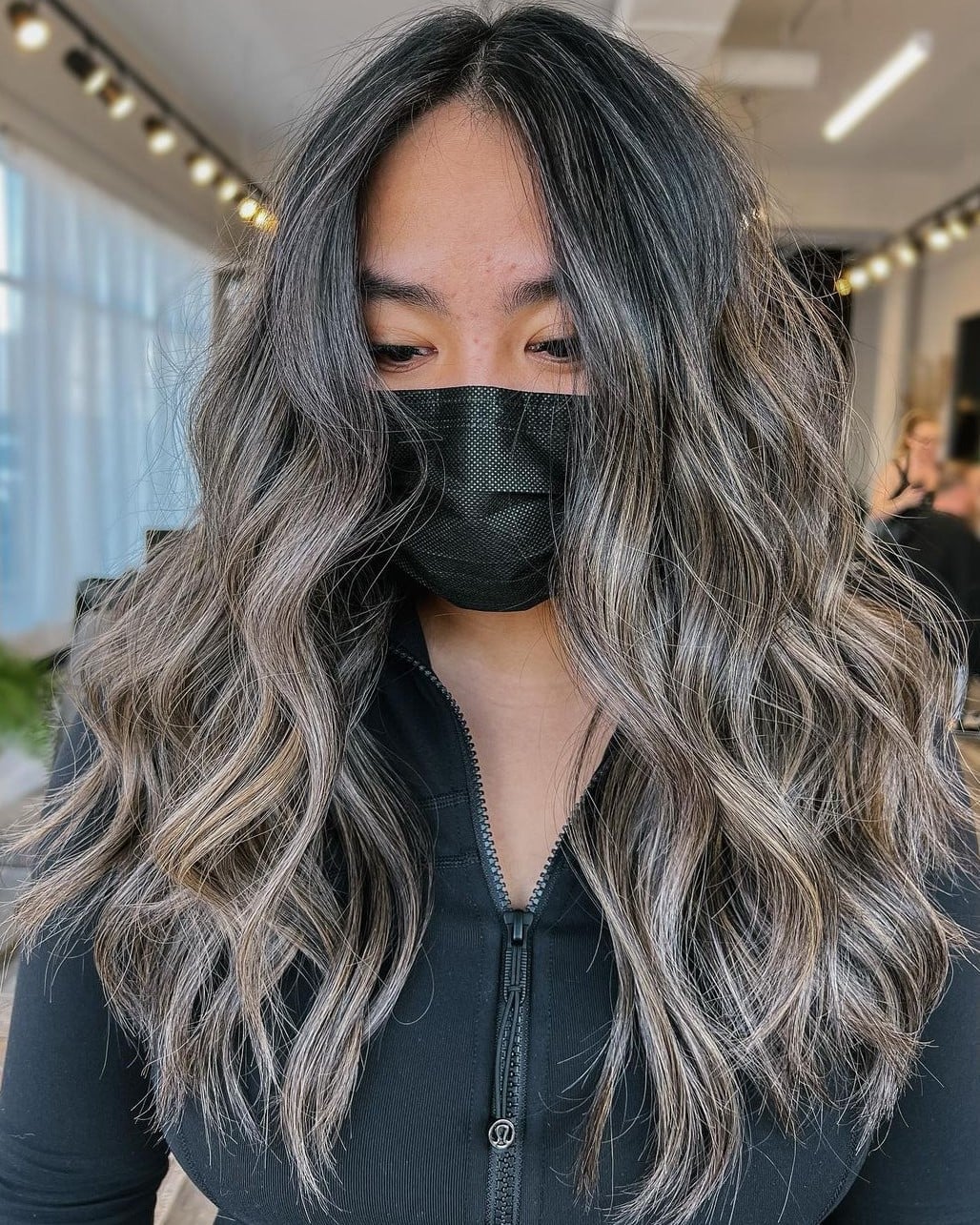
Soft curtain bangs are quieter than the voluminous version, and on long, layered hair that difference matters. The wispier ends blend into the face-framing layers, which suits someone who wants the gray and ash blonde blend to do the talking. The mid-back length and long layers keep the movement going, and the soft bangs add softness around the forehead without a hard line.
Thick, wavy hair carries this style well because the texture gives the bangs natural separation. Ask your colorist for mid-back length long layers, soft curtain bangs, gray and ash blonde blend. Apply a texturizing spray on damp hair, then use a diffuser to encourage the wave pattern without extra heat. Trim every eight to ten weeks, since soft bangs grow out faster than they look like they should.
Collarbone Layers With Face-Framing Blend, Wavy
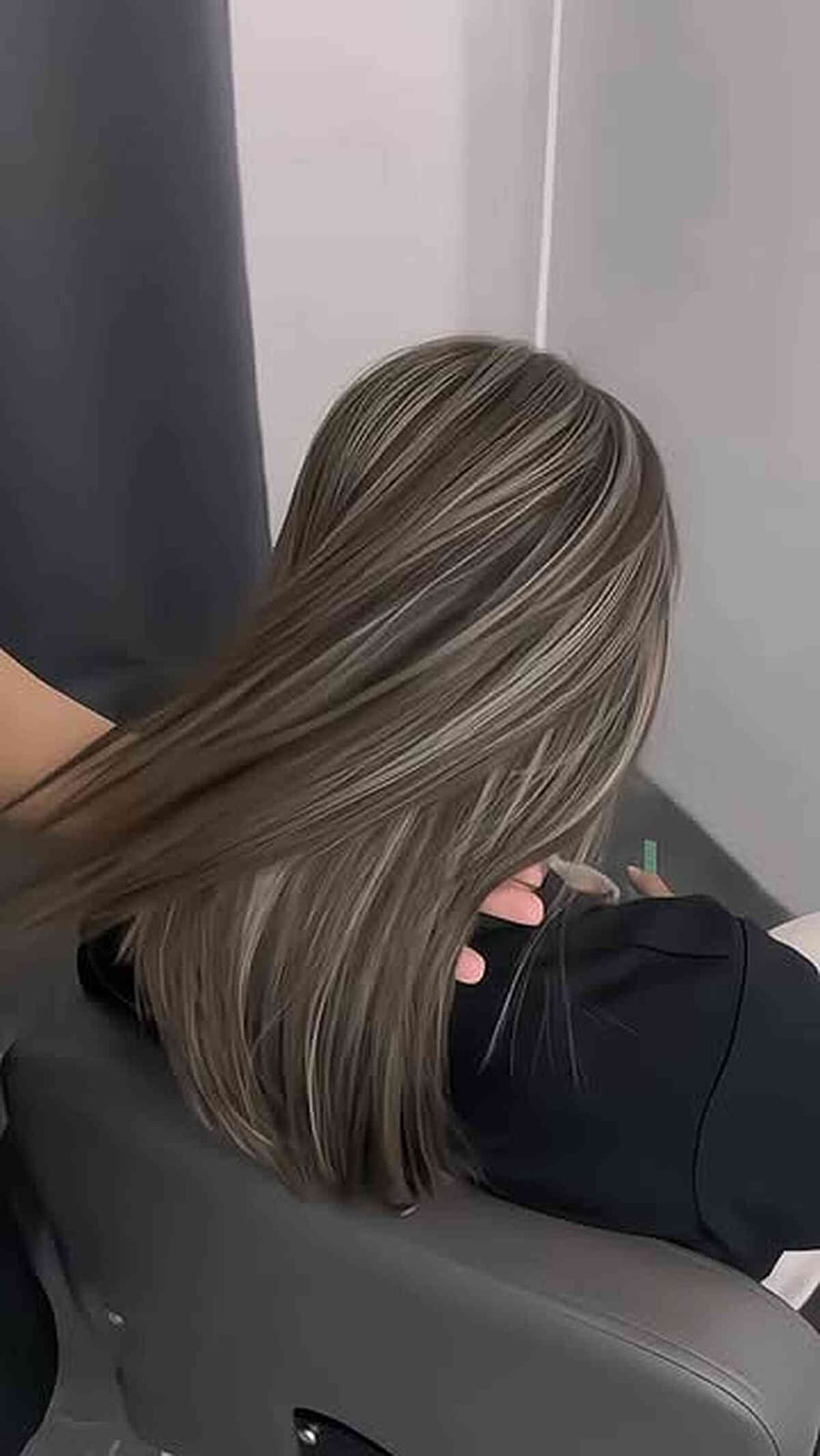
A wavy blowout on collarbone-length layers with face-framing bangs is a style that wears its maintenance on its sleeve. The side parting and soft waves need a round brush and a few minutes of heat to hold their shape, and the gray and ash blonde blend shows every day of grow-out. Ask your colorist for collarbone layers with face-framing bangs, gray and ash blonde blend. Medium-density wavy hair holds the wave pattern without going flat by midday, which gives the style a longer life between washes. A trim every six to eight weeks keeps the collarbone length from creeping past the shoulder, where the face-framing pieces lose their intent.
Mid-Back Air-Dried Waves With Natural Blend, Long Layers
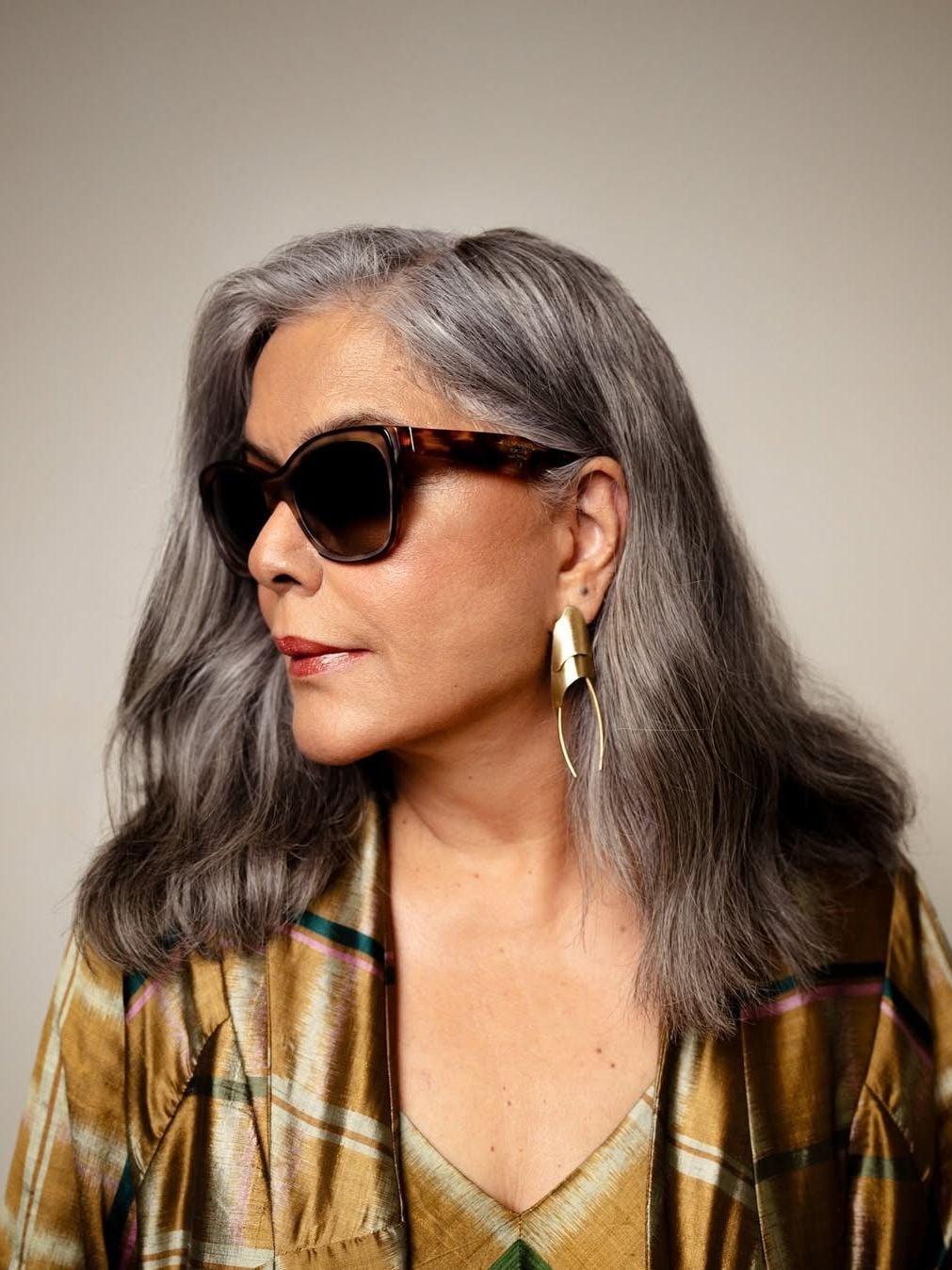
Air-dried waves with a natural gray blend are the lowest-effort option here, but they are not a no-effort option. Thick, wavy hair at mid-back length takes time to dry, and without a diffuser or a smoothing product, the waves can frizz instead of settle. The dark brown base with significant gray blending creates a lived-in look, but that same blend means the gray pieces need a toner to stay silver and not yellow. Ask your colorist for mid-back length air-dried waves, natural gray blend, side part. A smoothing product on wet hair, then air drying, is the daily routine, and it works best when the long layers are cut to follow the natural wave pattern. Skip this if you cannot commit to the drying time or the toning appointments.
Mid-Back Layers With Dimensional Blend, Wavy
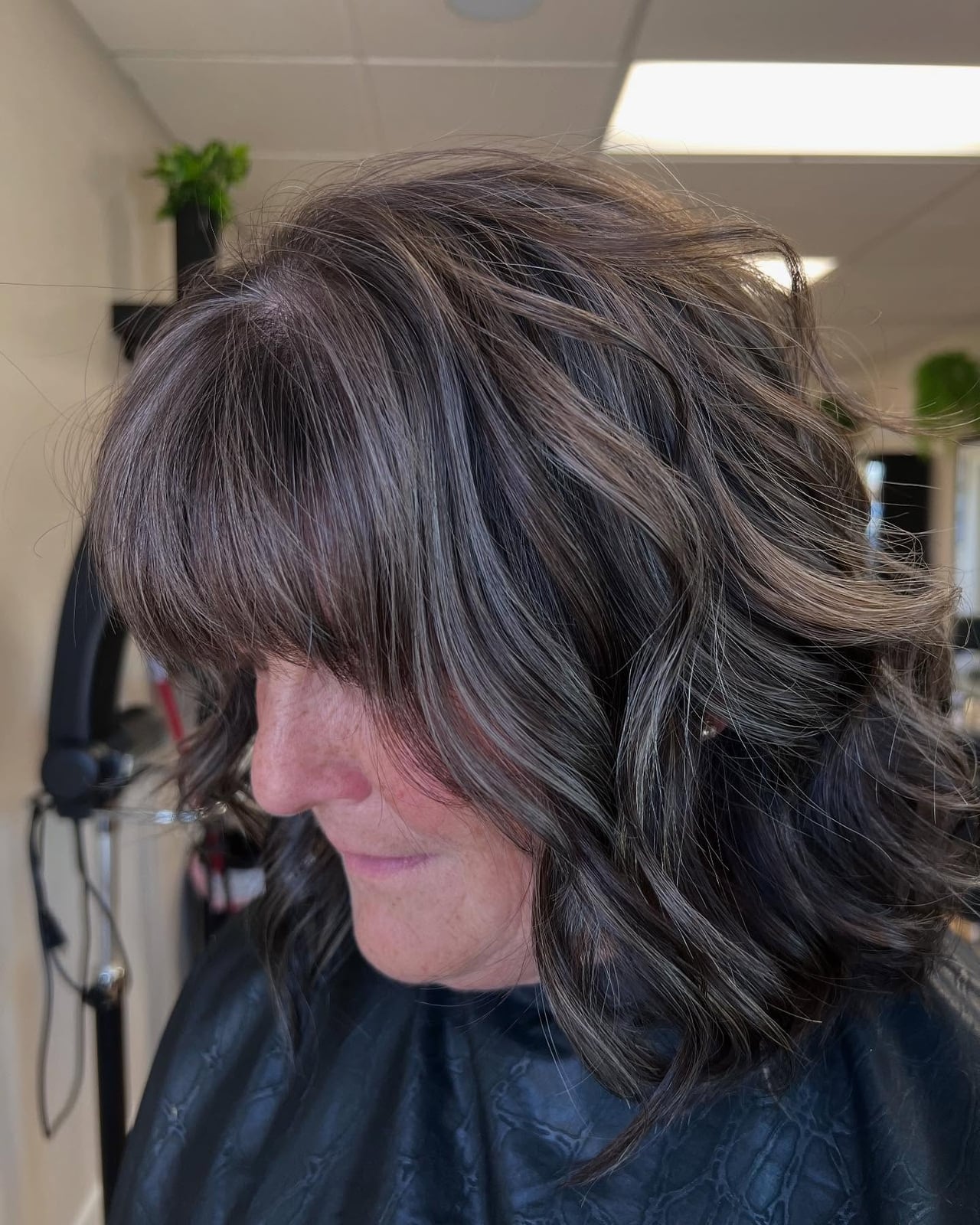
The back view tells the story here: the gray and ash blonde highlights are painted in vertical sections that follow the subtle layers, so the color looks built into the wave pattern instead of painted on top. This approach works because thick, wavy hair at mid-back length has enough surface area to carry two tones without them competing. The dark brown base stays visible at the roots, while the lighter strands concentrate in the mid-lengths and ends, creating a gradient that moves with the hair.
Ask your colorist for mid-back length subtle layers, loose waves, dimensional gray and ash blonde blend. On thick texture, the layers prevent the wavy shape from turning into a triangle, and the middle part keeps the weight distribution even. A trim every eight to ten weeks preserves the layering and stops the ends from dragging down the wave pattern. The color technique itself requires a salon appointment given the precision of the placement.
Mid-Back Long Layers With Ash Blonde Dimension
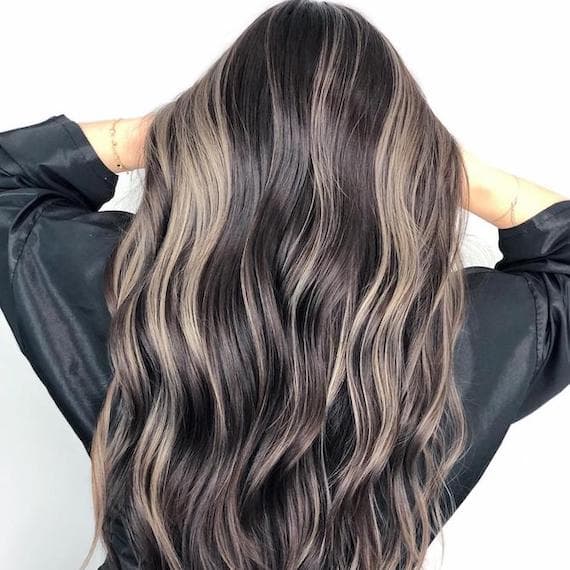
Ash blonde highlights versus gray highlights: the difference is warmth. Gray blending reads cooler and more silver, while ash blonde brings a subtle taupe undertone that softens the contrast against dark brown. On thick, wavy hair at mid-back length with long layers, the ash blonde version reads as less stark, which makes it the better option if the goal is dimension without a high-contrast look. The middle part and loose waves let both tones catch the light evenly. Ask your colorist for mid-back length long layers, loose waves, ash blonde highlights.
Mid-Back Wavy Layers With Ash Blonde Highlights, Side
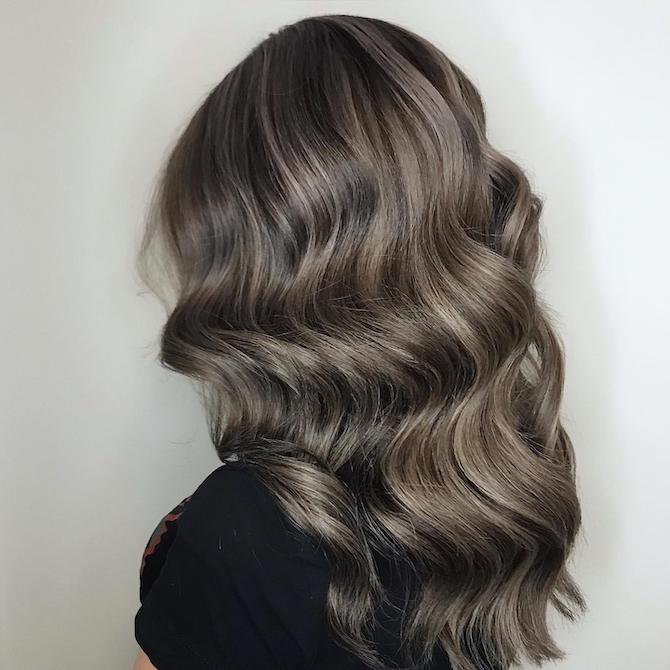
What exactly do you say to get ash blonde highlights that sit naturally on one side of the head? Start with the cut: mid-back length long layers that add movement without removing density. Then specify the side parting, because the highlights need to be placed to fall with the heavier side of the part. The ash blonde pieces are woven through the dark brown base in thin sections, concentrating on the top layer so the color looks sun-lightened.
Ask your colorist for: mid-back length wavy layers, side parting, ash blonde highlights. Thick, wavy texture is ideal here because the natural bend helps the lighter strands peek through the darker ones without additional styling. Low heat encourages the wave pattern to hold the side-swept shape. The color requires a salon visit; the side placement is difficult to replicate at home.
Mid-Back Long Layers With Gray Dimension, Close-Up Take
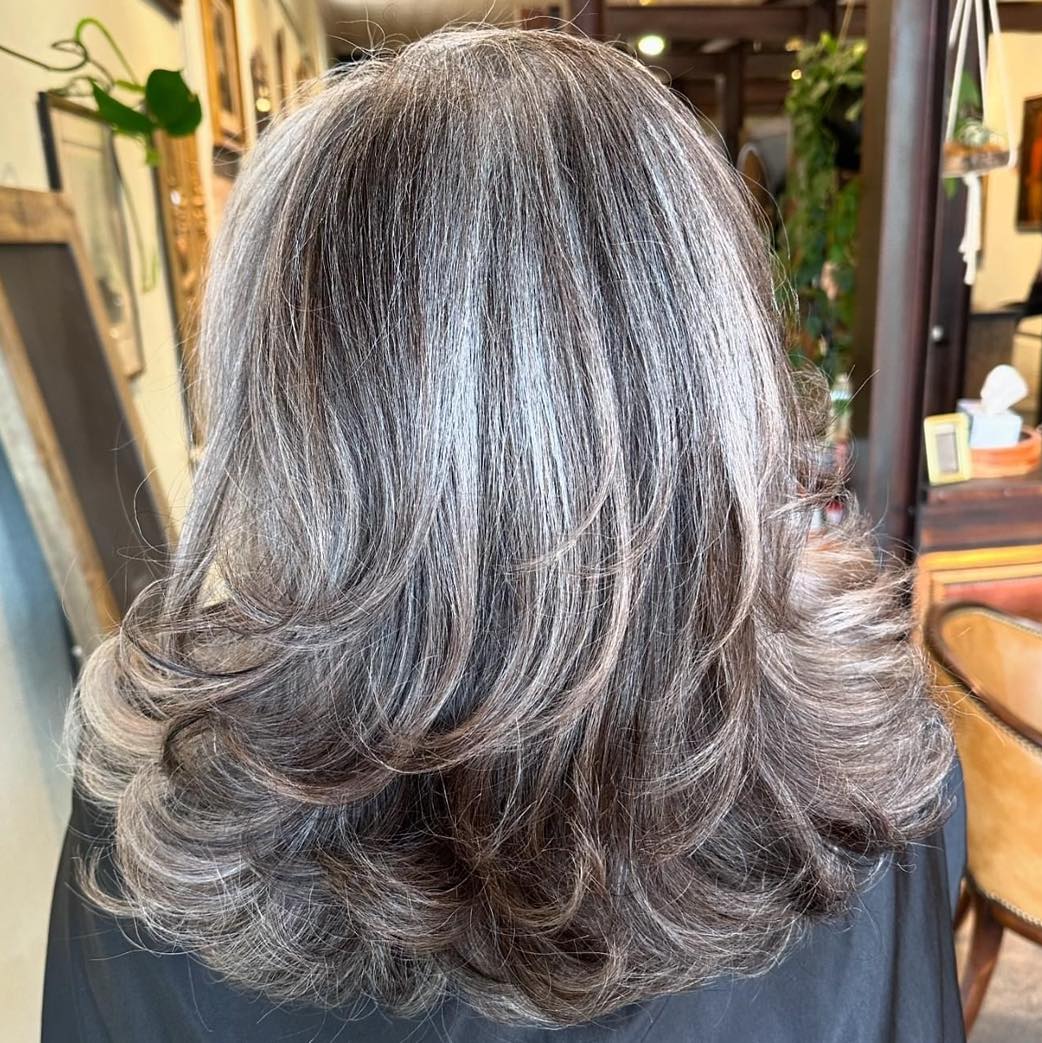
Gray blending on dark brown hair has a specific trade off: the lighter strands can fade toward a warmer, brassy tone over time, especially on long layers that are exposed to more heat styling and sun. The blowout here makes the dimension look polished, but maintaining that cool gray tone requires a purple shampoo used once a week and a toning appointment roughly every six to eight weeks. Thick, wavy hair at mid-back length with a side part and soft waves shows the blend clearly, which means any brassiness will also be visible.
Ask your colorist for mid-back length long layers, soft waves, gray blending. If you are not ready for that upkeep cycle, this is the style to skip. The cut itself is straightforward, but the color is the commitment. A blowout with a round brush adds the volume that makes the gray dimension visible, but air drying will produce a more muted, less dimensional result. The gray blend reads best when the hair is styled with some volume at the crown.
Mid-Back Soft Waves With Ash Blonde Blend
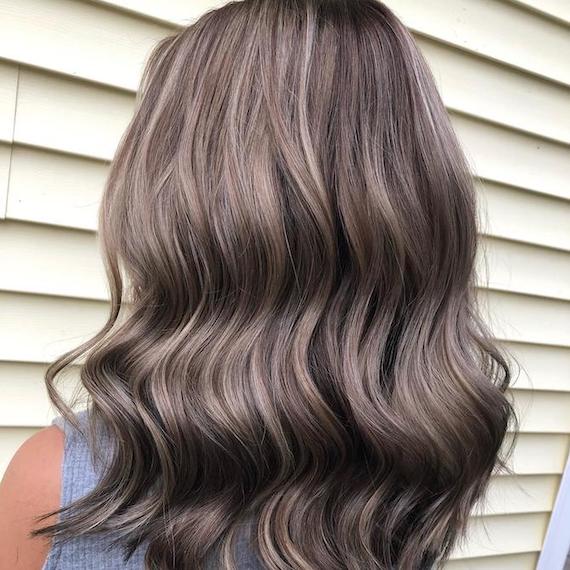
Who does this suit best? Thick, wavy hair at mid-back length with a middle part, because the density carries the ash blonde blend without the highlights getting lost. The soft waves are wide and relaxed, which means the color transitions look seamless, not striped. Fine or thin hair would benefit from a tighter wave pattern to create the illusion of volume, but on thick texture, the soft wave is the right call. Ask your colorist for mid-back length soft waves, middle parting, ash blonde blend. Apply a smoothing serum to damp hair and use a diffuser on low speed for styling.
Mid-Back Wavy Hair With Ash Blonde Highlights, Close-Up Take
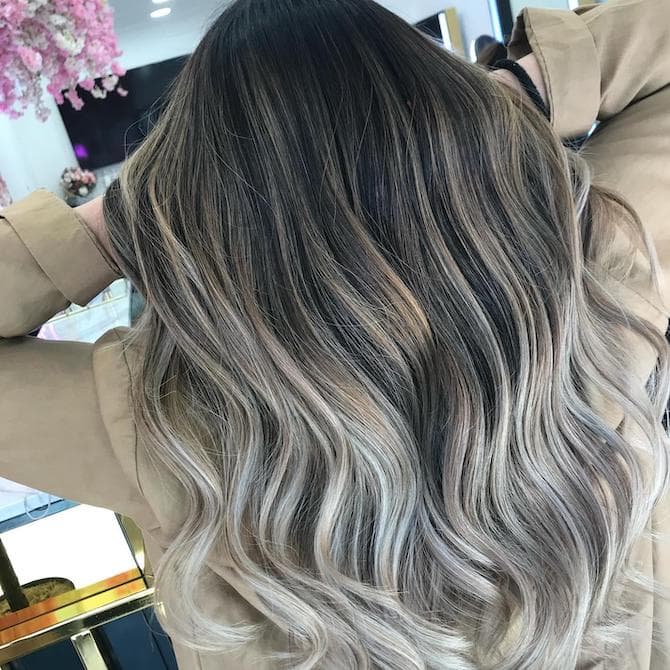
The design is visible from the back: the ash blonde highlights are painted in thin vertical sections that follow the long layers, so the dark brown base is the dominant shade. On thick wavy hair at mid-back length, the soft wave pattern distributes the lighter strands without a stripy effect. The middle parting keeps the weight balanced on both sides, which matters for a seamless color blend.
Ask your colorist for: mid-back length wavy hair, middle parting, ash blonde highlights. The wavy blowout adds movement and shine, but the real polish comes from the placement: highlights concentrated in the mid-lengths and ends, not at the roots. A trim every eight to ten weeks maintains the shape, and a texturizing spray on dry hair keeps the waves defined without weighing down the texture.
Final Thoughts
For fine hair, stick with a blunt cut and minimal layers to keep density intact. Thicker hair benefits from long layers and strategic blending to reduce bulk and add movement. Pick your starting point based on how much time you want to spend with a round brush.
- Schedule salon toning every six to eight weeks to maintain cool tones.
- Use a color-safe shampoo and conditioner to preserve vibrancy.
- Deep condition weekly to combat potential dryness from lightening.
- Trim collarbone-length styles every six to eight weeks for shape.
- Longer styles can be trimmed every eight to ten weeks.
Embrace your natural gray with sophisticated blending techniques.