Honey brown highlights add warmth and dimension to any brown base without demanding a full color overhaul. The shift toward lived-in color means softer regrowth lines and less time in the chair, which suits anyone who wants a natural-looking lift.
This collection of 22 variations covers every brown base, from dark chocolate to light brown, across lengths from collarbone to mid-back. Simple Honey Brown Highlights work on fine hair that needs volume, curly textures that crave definition, or straight strands that fall flat. Each section gives you the exact shade, technique, and upkeep so you can walk into the salon with a clear ask.
Mid-Back Length Hair With Honey Highlights
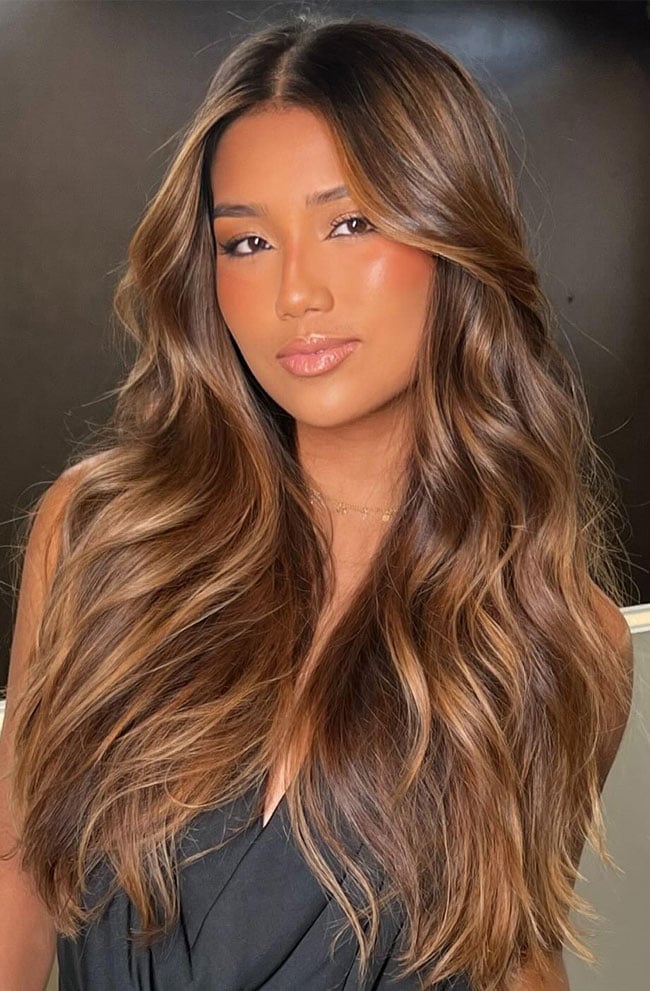
The design here is about contrast without commitment. A rich brown base keeps the overall look grounded, while the honey highlights are prominent enough to read as deliberate without shouting. That middle parting and the loose, glossy waves let the color travel through the length rather than landing in one heavy block.
This works best on thick, wavy hair that already has some natural movement to catch the lighter strands. Oval and long faces benefit from the middle part and the vertical weight of mid-back length. Ask your colorist for: mid-back layers with honey highlights, middle part. A large barrel curling iron creates those soft, uniform waves; a trim every six to eight weeks keeps the shape from looking weighed down.
Collarbone Length Curly Hair With Honey Tones
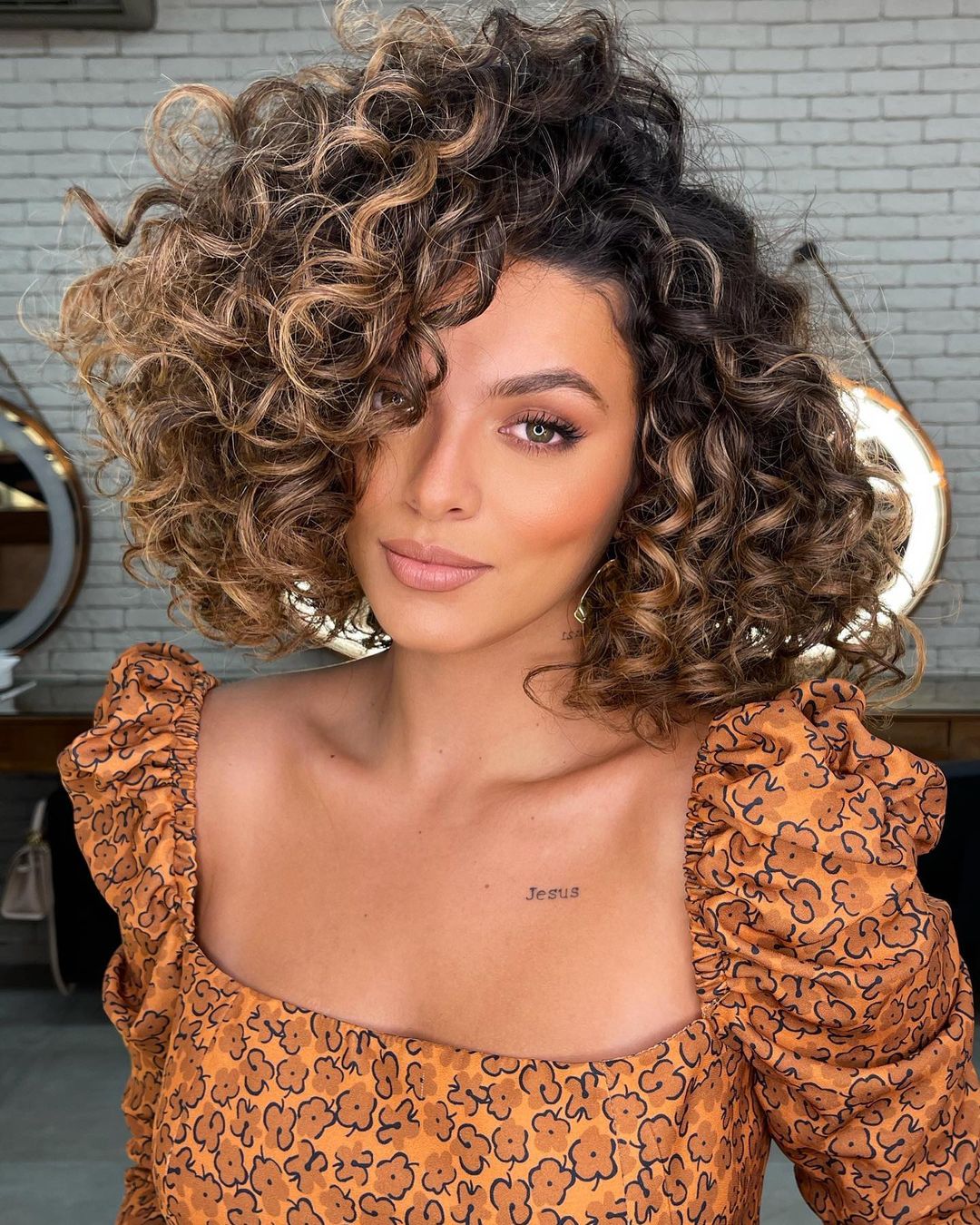
How do you keep curly hair from swallowing a highlight? A balayage technique that starts lighter around the face and diffuses toward the ends. The medium brown base stays dark enough to anchor the curl pattern, while the honey-toned highlights hit the spiral ridges and make each ringlet distinct. This is a collarbone length with a side part and no bangs, which means the color contrast does the framing. Ask your colorist for: collarbone length curly cut with honey highlights. Apply a curl cream to soaking wet hair, then air dry or diffuse on low heat. Plan a trim every eight to ten weeks to prevent the ends from thinning out.
Collarbone Lob With Wavy Honey Highlights
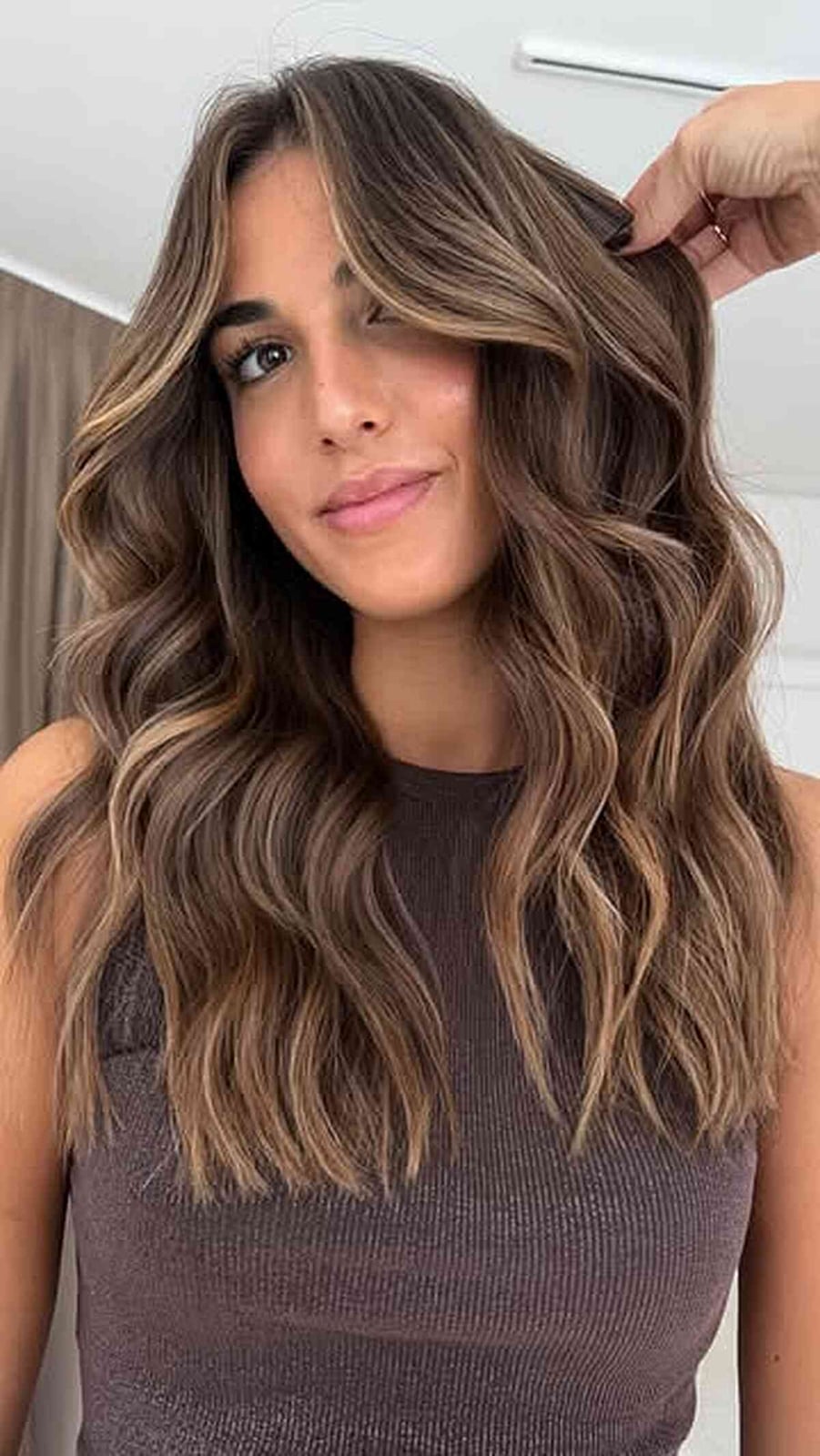
A collarbone lob sits in a useful middle ground. It is longer than a blunt bob, so the honey highlights have more canvas to read as dimension rather than stripes. But it is short enough that the dark brown base still feels intentional, not just leftover. That side part and the loose waves give it a lived-in quality that a sharper cut would miss. Ask your colorist for: collarbone length wavy lob with honey highlights. A texturizing spray on dry hair lifts the wave pattern without heat. Expect a trim every six to eight weeks to keep the lob from creeping toward your shoulders.
Glossy Mid-Back Waves With Honey Dimension
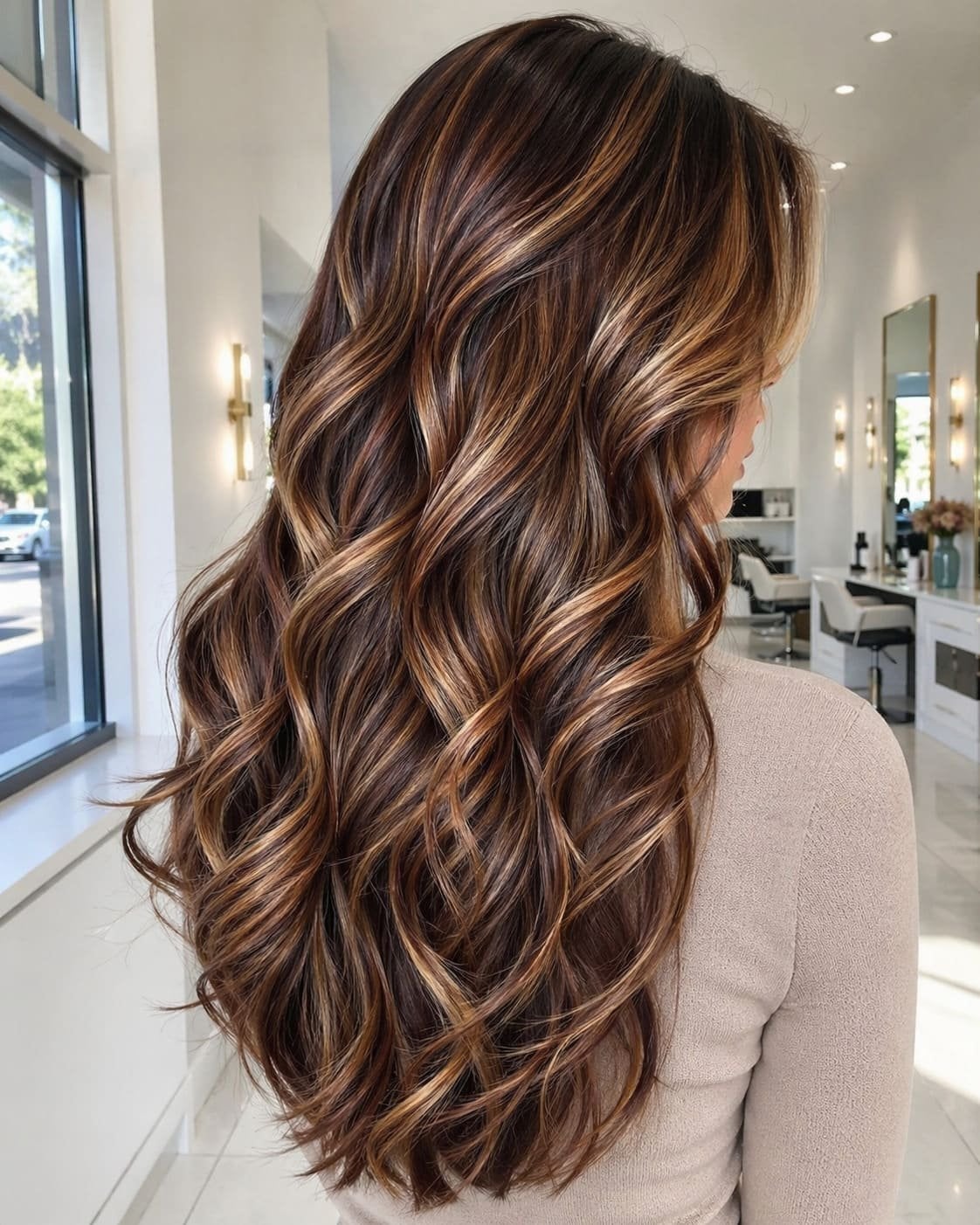
The glossy finish is the real work here. A rich brown base with honey-toned highlights needs shine to keep the lighter pieces from looking dry or brassy. The loose, flowing waves reflect light at different angles, which makes the dimension look like movement instead of flat color blocks. A side view shows how the gloss sits evenly through the mid-lengths and ends.
Styling steps: apply a shine serum to damp hair from the ears down, then use a large round brush for volume at the roots while drying. Finish with a one-inch curling iron for soft bends. Ask your colorist for: mid-back length wavy hair with glossy honey highlights. A trim every six to eight weeks maintains the weight distribution through the layers.
Mid-Back Waves With Curtain Bangs Honey
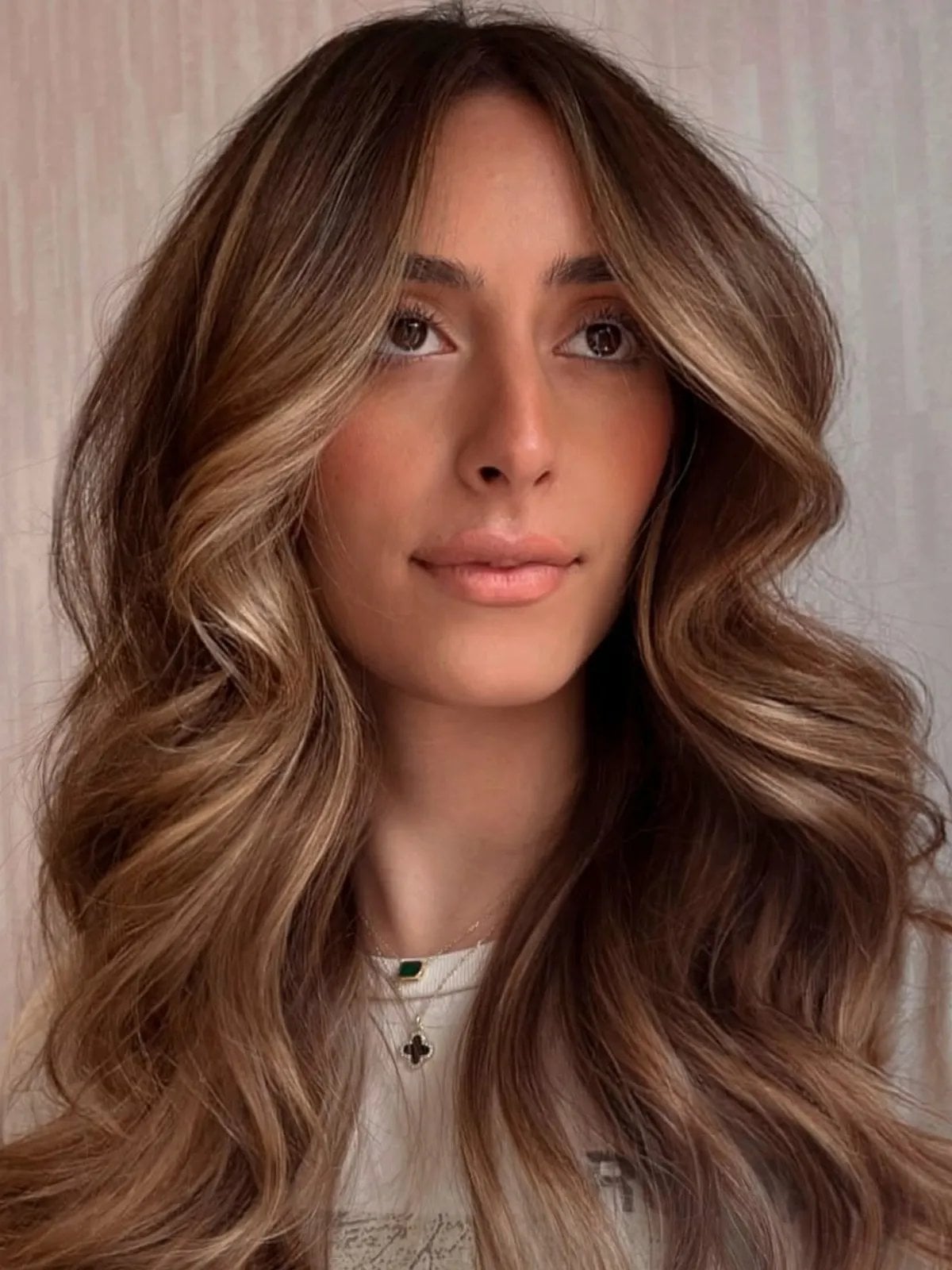
How do you ask for curtain bangs that stay integrated with the rest of your haircut? Start with the bangs, then build the rest around them. The brown base with subtle honey highlights keeps the curtain bangs connected to the mid-back waves that carry the color through the length. The middle parting keeps everything symmetrical, which is what makes curtain bangs look like a planned style, not a growing-out fringe.
This works for everyday wear and transitions easily into work because the blowout holds the shape without product shine. Square and round faces benefit most from the soft diagonal lines the bangs create. Ask your colorist for: mid-back layers with curtain bangs and honey highlights. Blow-dry the bangs with a round brush, directing them away from the face, and plan a bang trim every four to six weeks. The length itself needs a trim every eight weeks.
Shoulder Length Bob With Honey Highlights
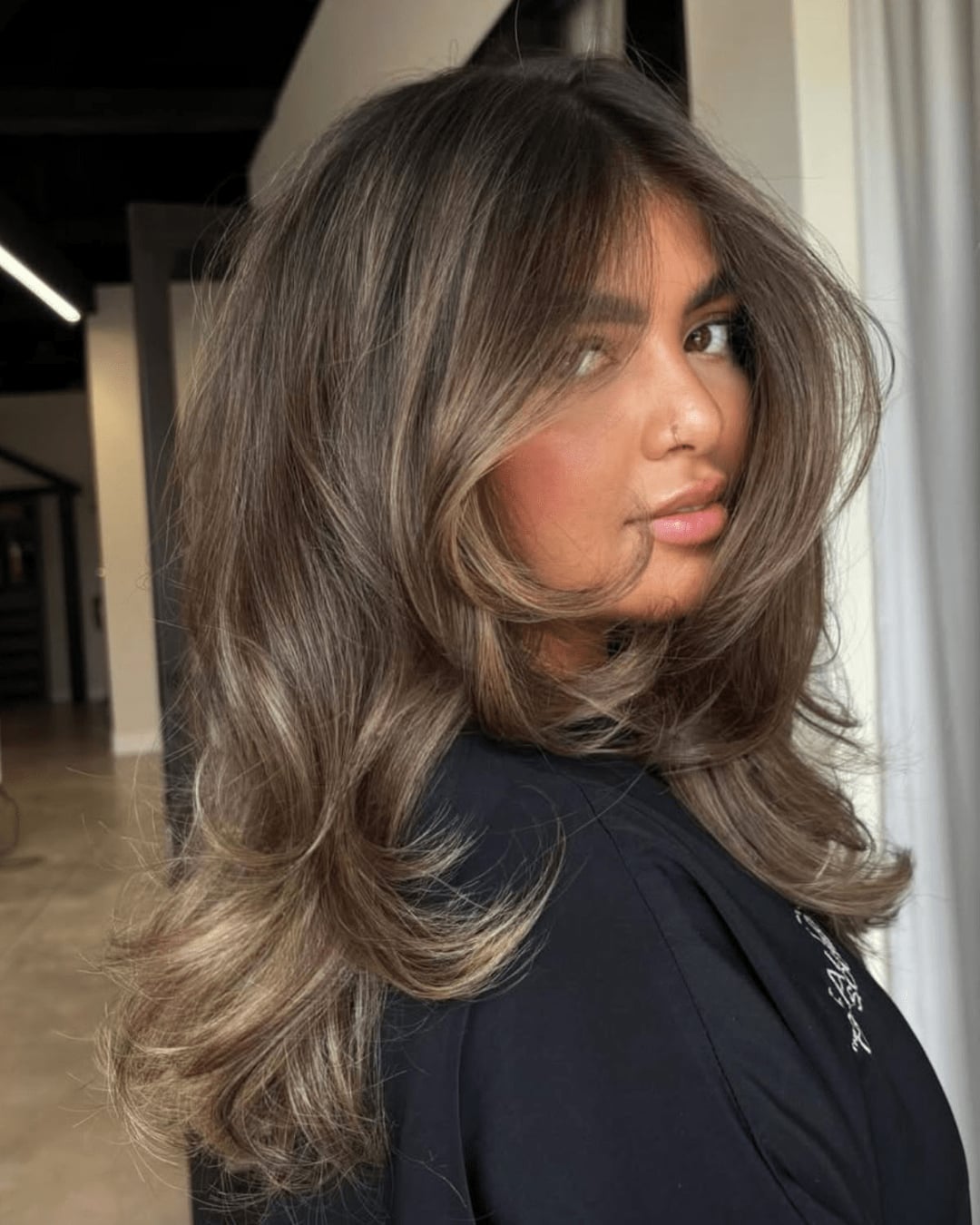
The genius of this bob is how the face-framing layers pull double duty: they soften the line of the cut and give the honey highlights a natural place to land. Thick, wavy hair at shoulder length holds the shape well, and the curtain bangs work with most face shapes. Ask your colorist for: shoulder length bob with curtain bangs and honey highlights. A round brush blow-dry keeps the style polished.
Shoulder Length Light Brown With Honey
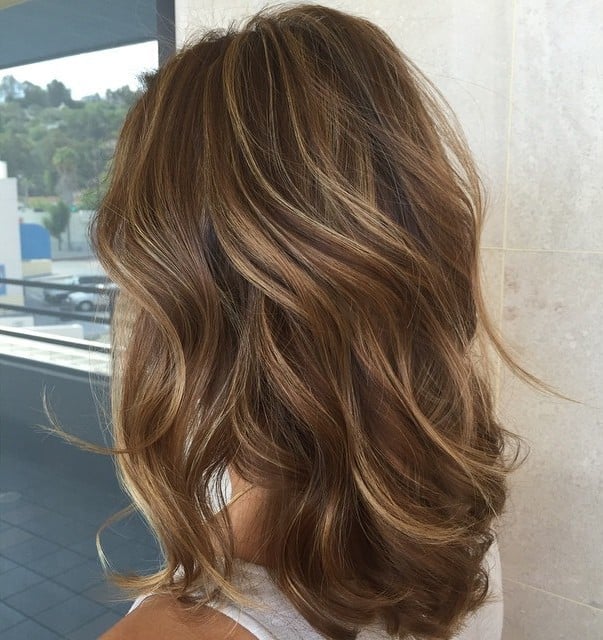
On a light brown base, honey highlights read less as a contrast and more like a natural extension of the color. The application here is fine and distributed throughout, which creates that sun-kissed effect without obvious regrowth lines. Thick, wavy hair at shoulder length carries the dimension well, and a middle part helps elongate a rounder face. Ask your colorist for: shoulder length light brown hair with honey highlights. A sea salt spray encourages the natural wave, and a trim every six to eight weeks keeps the ends healthy.
Shoulder Length Brown With Honey Layers
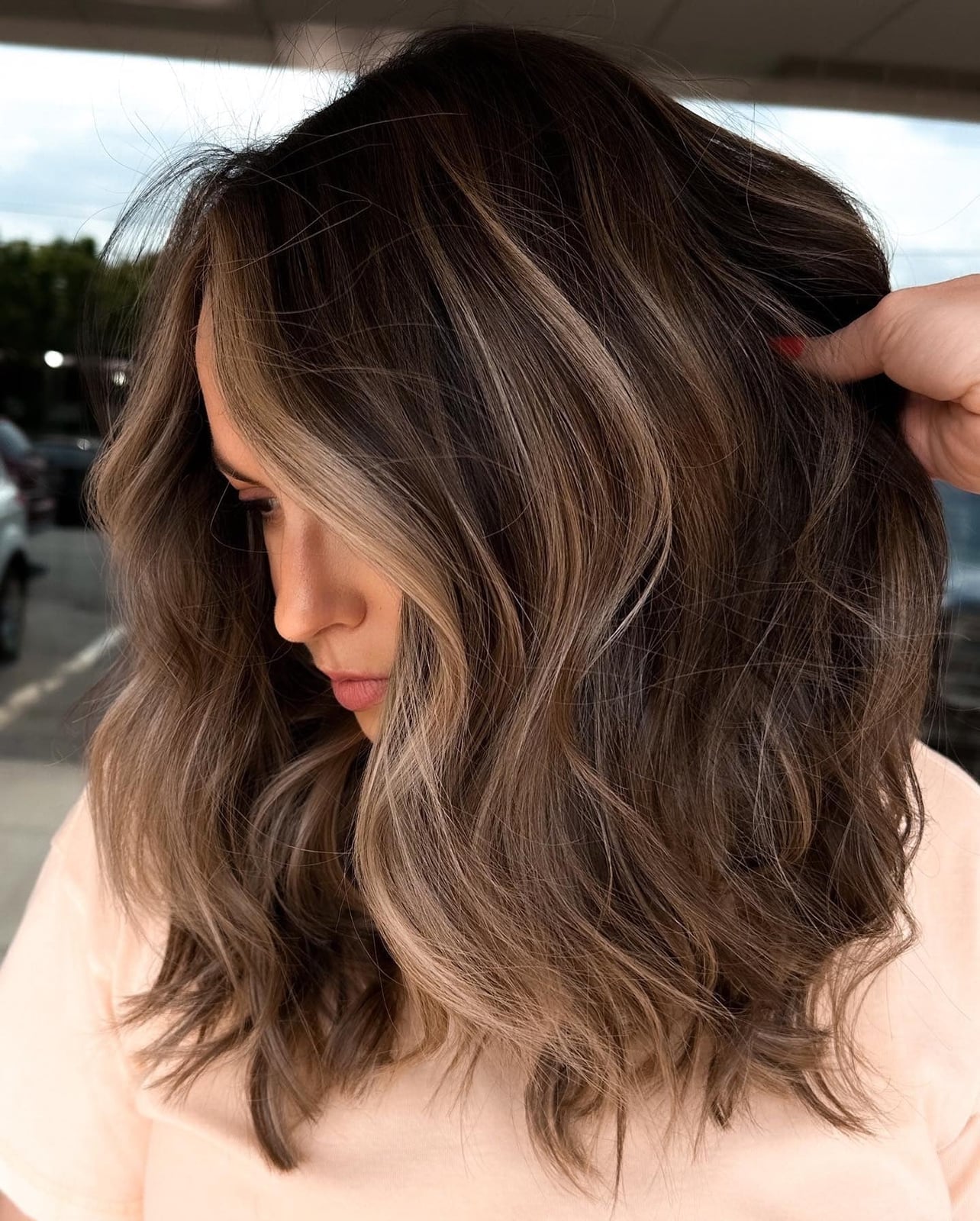
The practical rule with face-framing highlights is that they grow out faster than the rest of the color. Those lighter pieces around the jaw start to drift toward the chin after about six weeks, so the trim rhythm and the toning rhythm overlap neatly. Thick, wavy hair at shoulder length benefits from the reduced weight of the layers, and the soft framing around the jaw works to soften a square face shape.
Ask your stylist for: shoulder length with face-framing layers and honey highlights. A flat iron on the face-framing pieces gives them a little extra polish without a full blowout, and sticking to the six-to-eight-week trim schedule keeps the shape defined rather than shaggy.
Mid-Back Waves With Subtle Honey
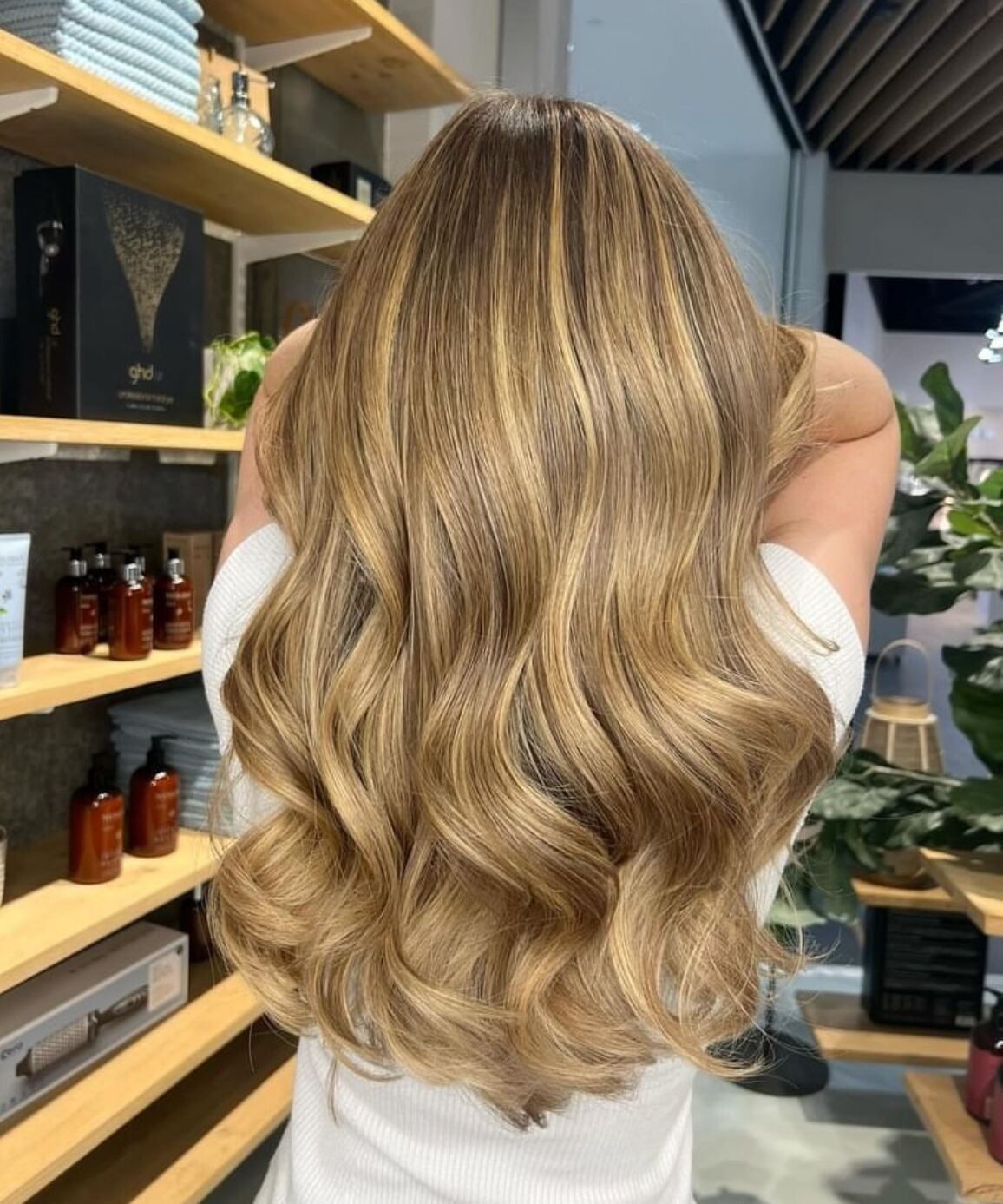
Subtle honey highlights on thick, wavy hair sound like a straightforward request, but the execution matters more than the concept. A balayage or fine weaved technique places the color where the light naturally hits, which avoids the stripe effect that can happen with foils on dense hair. Thick, wavy hair at mid-back length has enough surface area to show off the dimension, and a middle part suits an oval face shape.
Ask your colorist for: mid-back length with subtle honey highlights and waves. This is a salon-only job. The hand-painted placement is what keeps it soft rather than chunky. A texturizing spray and a quick scrunch after air-drying is the most effort this style asks for on a daily basis.
Mid-Back Layers With Honey Highlights
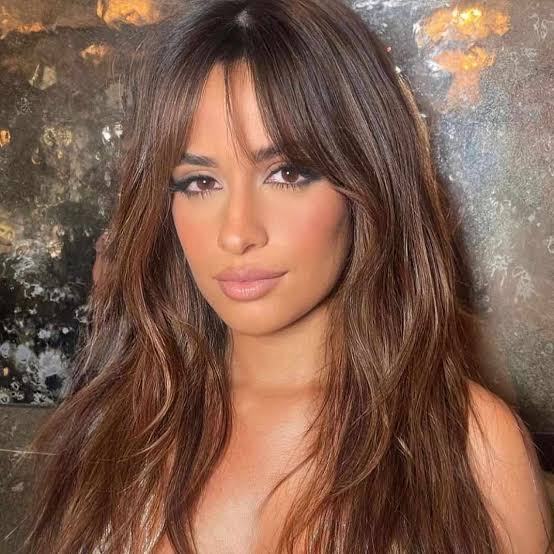
The honey highlights are woven through the face-framing layers and curtain bangs so the lighter pieces move with the hair. Thick, wavy hair at mid-back length with curtain bangs and face-framing layers softens an angular jawline. Ask your colorist for: mid-back length with face-framing layers, curtain bangs, and honey highlights. A round brush for the bangs and a light hold spray for the waves are the only tools you need.
Dark Brown With Subtle Honey Mid-Back, Wavy
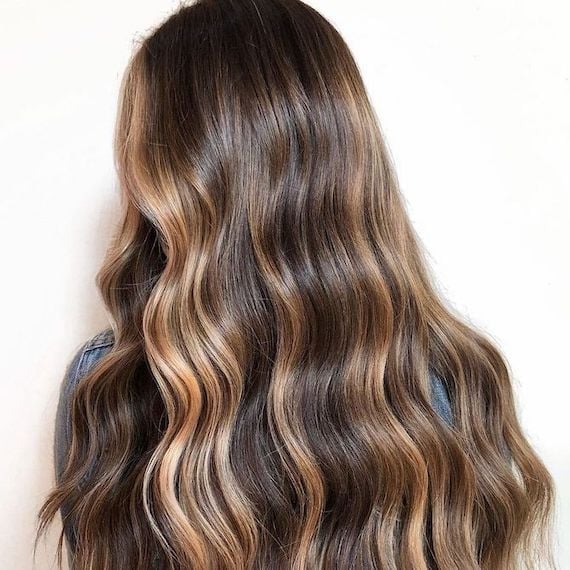
The clever part of this design is how little it announces itself. On a dark brown base, honey highlights create a warm shift that keeps the dimension subtle even when the waves move. That restraint separates it from a lighter brown base, where the same honey tone would pop with far more contrast and appear as a brighter blonde moment. For warmth without commitment, the darker canvas wins; for highlights that become the headline, start lighter.
Thick, wavy hair at mid-back length carries the effect best, since the loose layers give each highlighted strand room to move. Straight textures work too, though you will want extra layers to create the same sense of flow. Ask your colorist for: mid-back length dark brown with subtle honey highlights. A heat protectant before styling keeps the waves defined, and a trim every six to eight weeks keeps the ends from looking tired.
Shoulder Length Brown With Honey Blonde
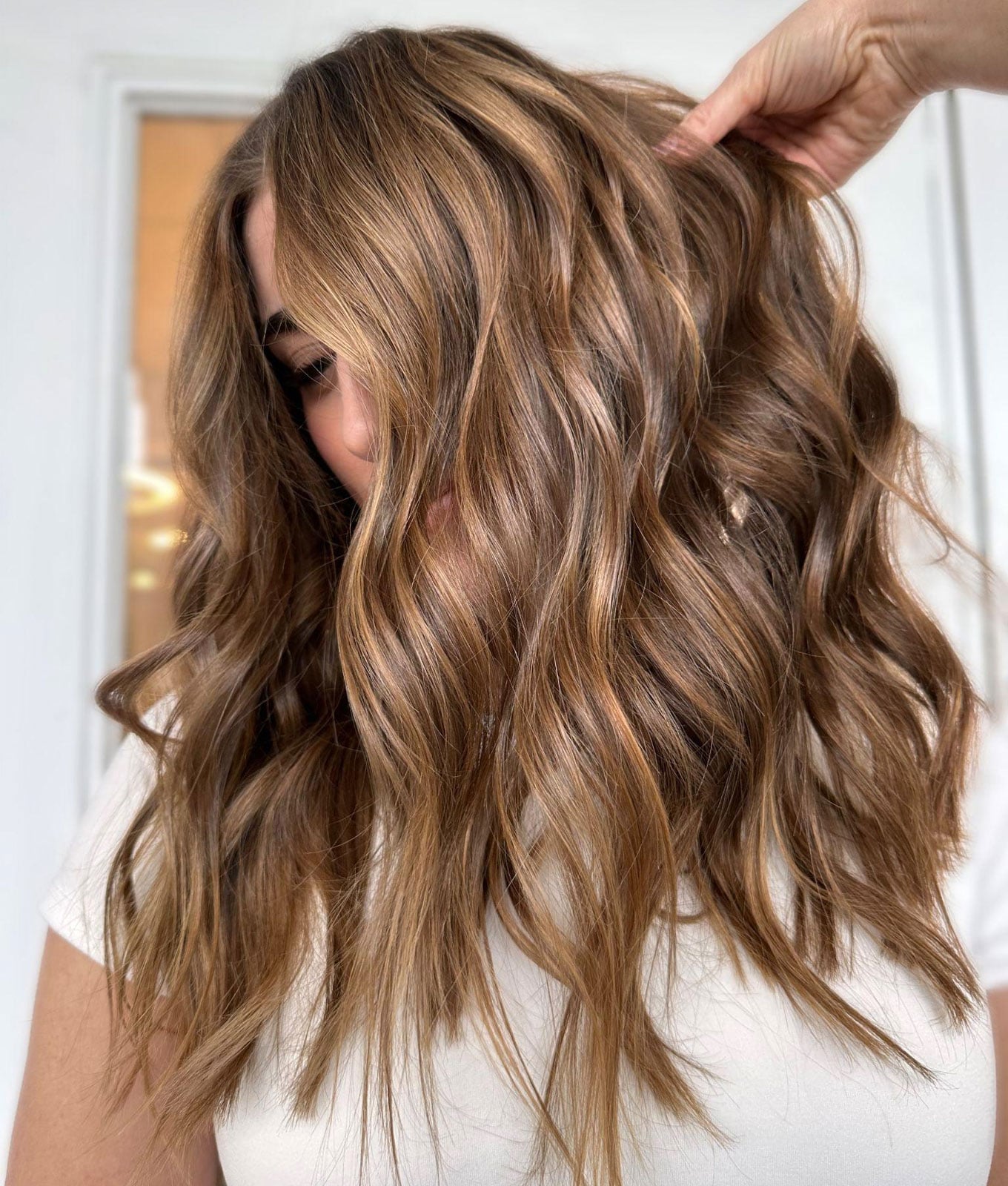
Honey blonde highlights on a shoulder-length brown base give you the brightness of blonde without the upkeep of a full transformation. The face-framing pieces pull the light toward the front, which suits thick, wavy textures best, since the soft waves let the color blend naturally rather than sit in stripes. Angular faces benefit from the softness around the jaw, while those with very fine hair might find the contrast too heavy at this length. Ask your colorist for: shoulder length with face-framing pieces and honey blonde highlights. A volumizing spray at the roots before blow-drying keeps the shape from falling flat, and a trim every six to eight weeks maintains the line.
Collarbone Lob With Even Honey Highlights
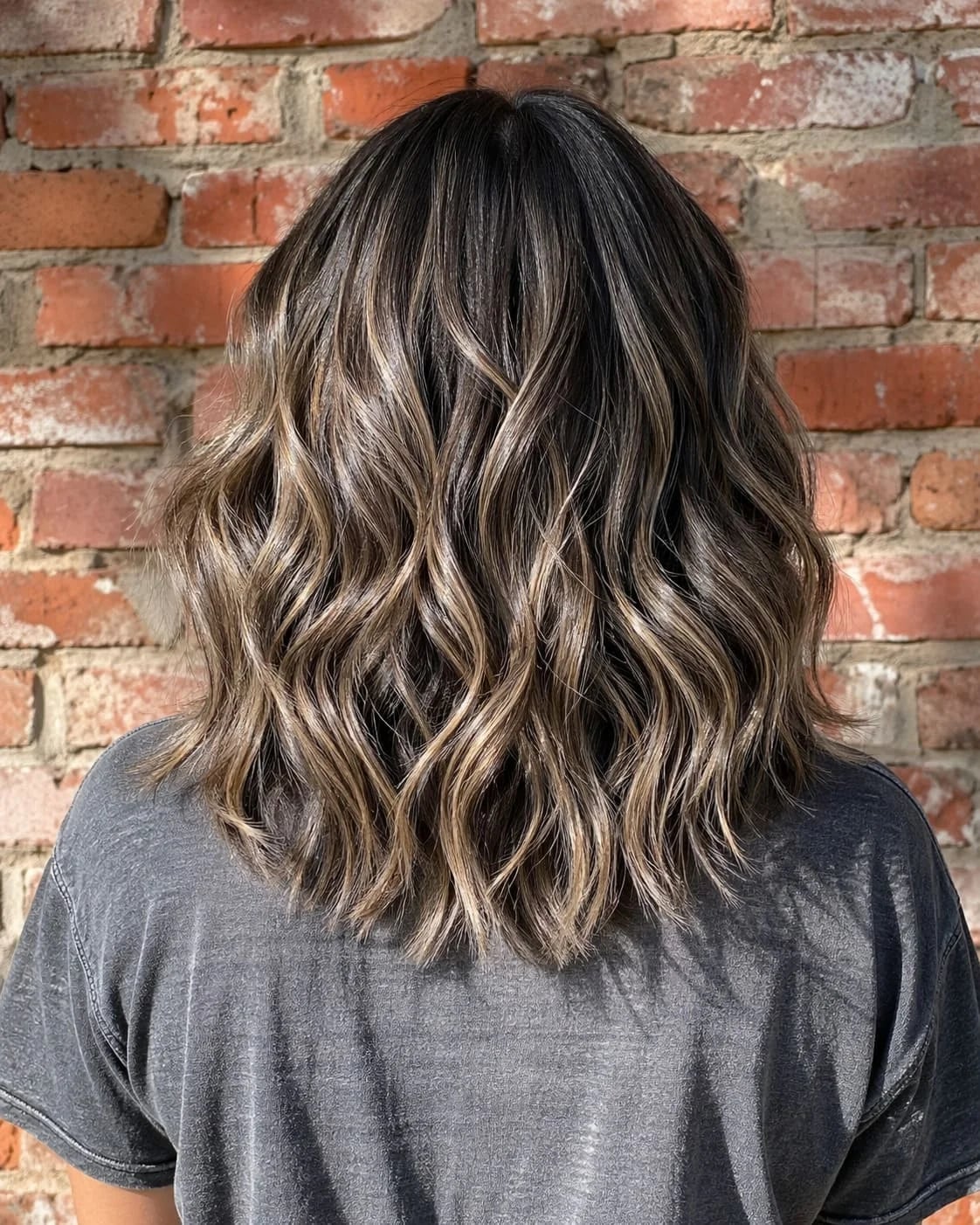
Do you want highlights that look evenly placed no matter how you part your hair? That is the appeal of this collarbone lob, where the honey is distributed consistently through the layers rather than concentrated at the front. The middle part shows off the symmetry, and the thick, wavy texture gives the color enough surface to read clearly without looking striped.
The trade-off is maintenance. Even distribution means regrowth shows more uniformly, so you will be back for a toner or a touch-up around the eight-week mark to keep the honey from warming into brass. A smoothing cream on damp hair keeps the waves defined and the color glossy between appointments. Ask your colorist for: collarbone length lob with even honey highlights.
Mid-Back Waves With Honey Blonde Bangs, Wavy
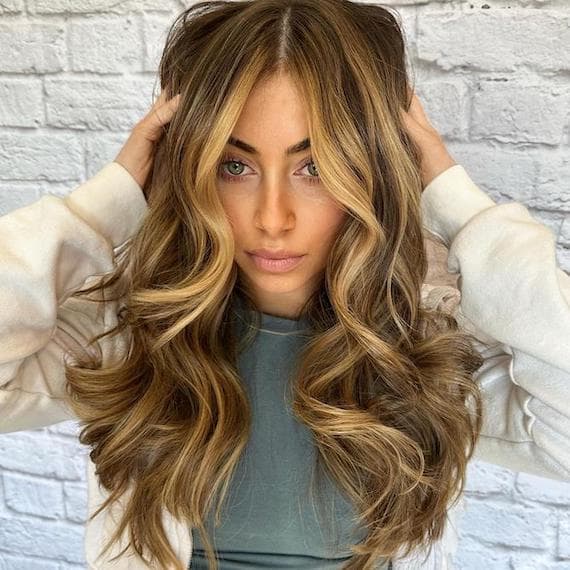
Unlike a full head of highlights, this technique concentrates the honey blonde around the face and lets the medium brown base do the heavy lifting through the lengths. The curtain bangs are the focal point, since the lighter pieces frame the features and give the impression of more color than there actually is. That makes it a smart choice if you want brightness where it counts but prefer to keep the rest of the hair closer to your natural shade.
Thick, wavy hair at mid-back length takes the volume well, and the glossy finish keeps the contrast from looking harsh. The middle part helps the curtain bangs fall correctly, softening angular faces in the process. Ask your colorist for: mid-back length with honey blonde highlights and curtain bangs. Because the bangs grow out faster than the rest, plan a trim every six to eight weeks to keep the shape intact.
Dark Brown With Contrasting Honey
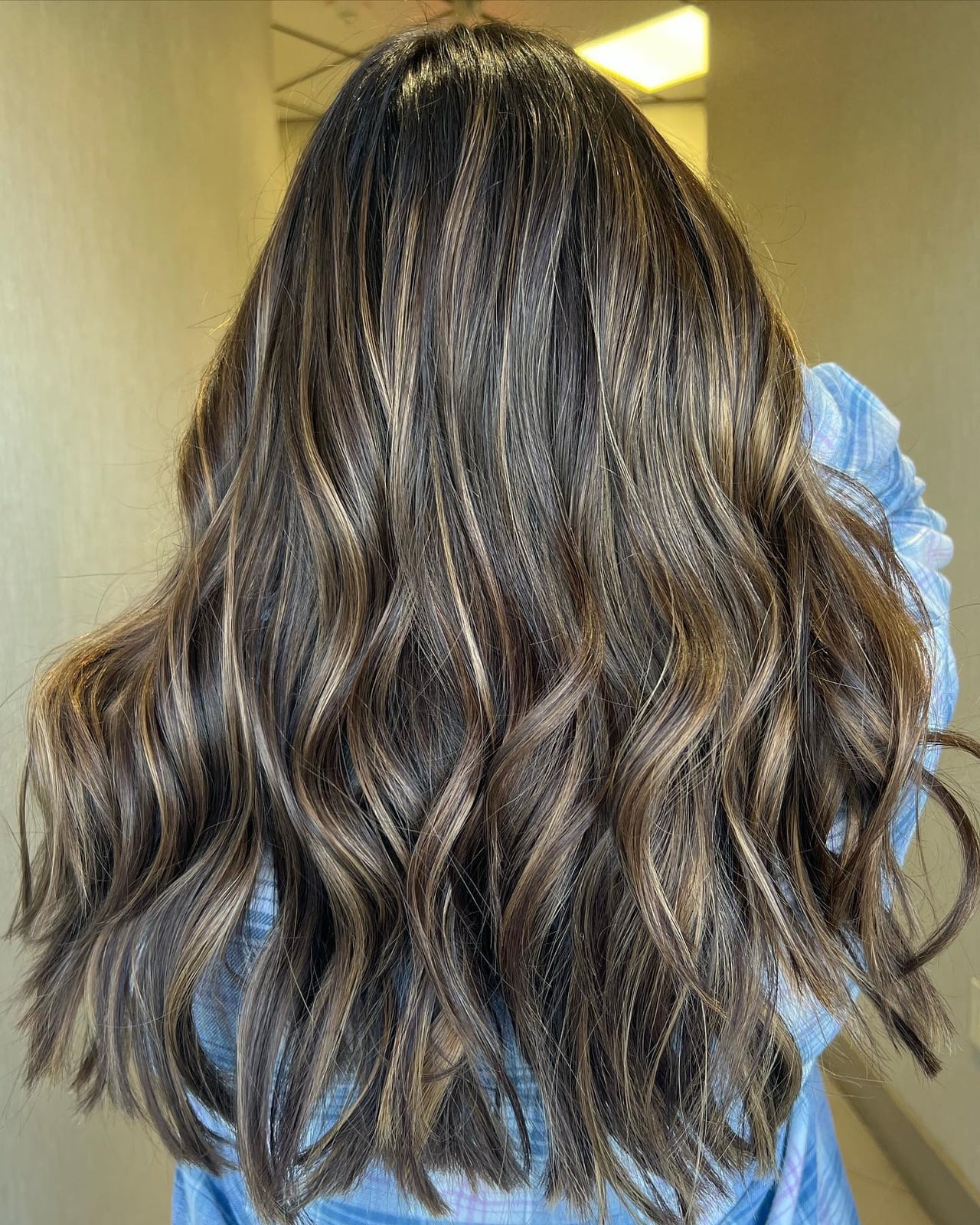
The contrast here is the point, and it works because the honey tones are placed deliberately against the dark brown base instead of blended into it. That creates a striated, dimensional effect. It is a look that suits thick, wavy hair at mid-back length, where the loose curls give the lighter strands room to separate and show off the contrast. On very fine hair, the same placement can look sparse, so consider a fuller weave if your density is on the lower end.
The trade-off is maintenance. Contrasting highlights show regrowth and brassiness faster than subtler blends, so plan for a toning appointment every six to eight weeks to keep the honey from turning orange. This is a salon job, not a DIY project, because getting the placement right on dark bases takes experience. Ask your colorist for: mid-back length dark brown with contrasting honey highlights.
Collarbone Brown With Woven Honey
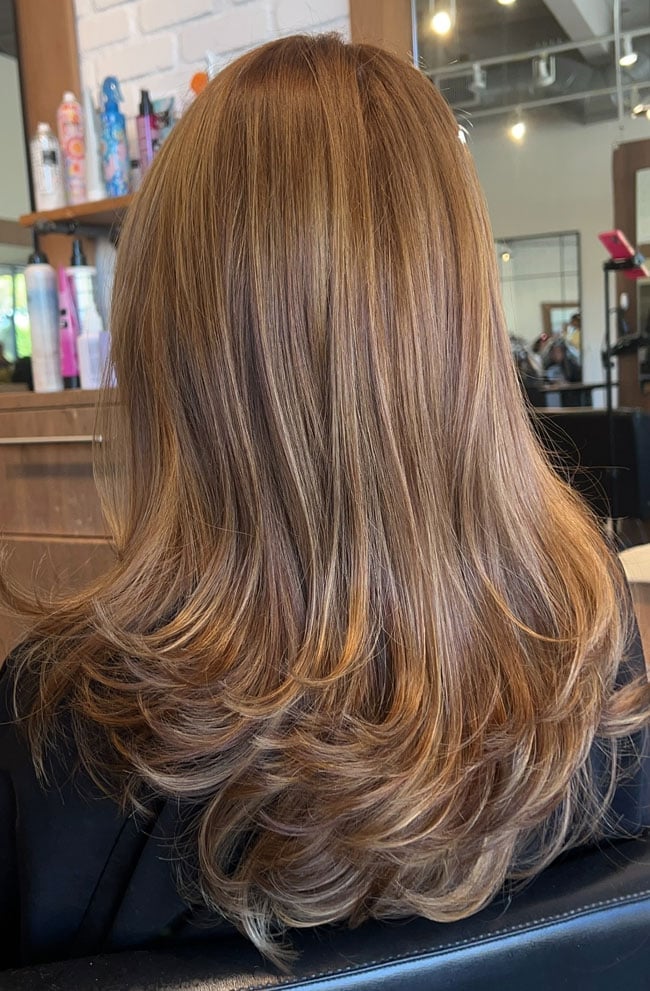
Woven honey highlights mean your colorist paints thin sections rather than chunky ribbons, so the blend looks more like a natural gradation than a stripe effect. The brown base stays dominant at the roots while the honey strands surface through the mid-lengths and ends, creating movement without a harsh grow-out line. This approach works best on thick, wavy hair at collarbone length because the texture helps scatter the color. A middle part suits oval faces by balancing the vertical line. Ask your colorist for: collarbone length brown with woven honey highlights. A texturizing spray adds definition to the waves, and a trim every six to eight weeks keeps the ends healthy.
Collarbone Dark Brown Honey Highlights
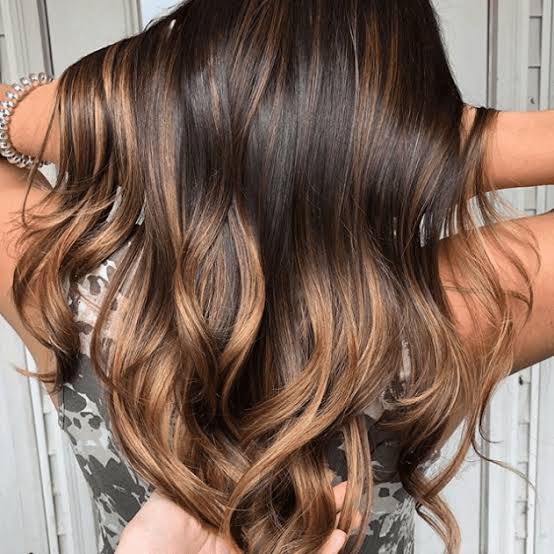
How do you keep dark brown hair from looking flat when you add honey brown highlights? The trick is spacing: the highlights here are visible but not packed, so the dark base remains dominant. At home, use a diffuser on low heat to encourage the natural wave pattern without disturbing the color placement. A wide-tooth comb while the hair is damp prevents breakage at the highlight line. The layers in this collarbone-length cut add movement, and the wavy, thick texture helps the tones blend softly. Ask your colorist for: collarbone length dark brown with honey brown highlights. A trim every six to eight weeks maintains the shape.
Mid-Back Brown With Honey Blonde
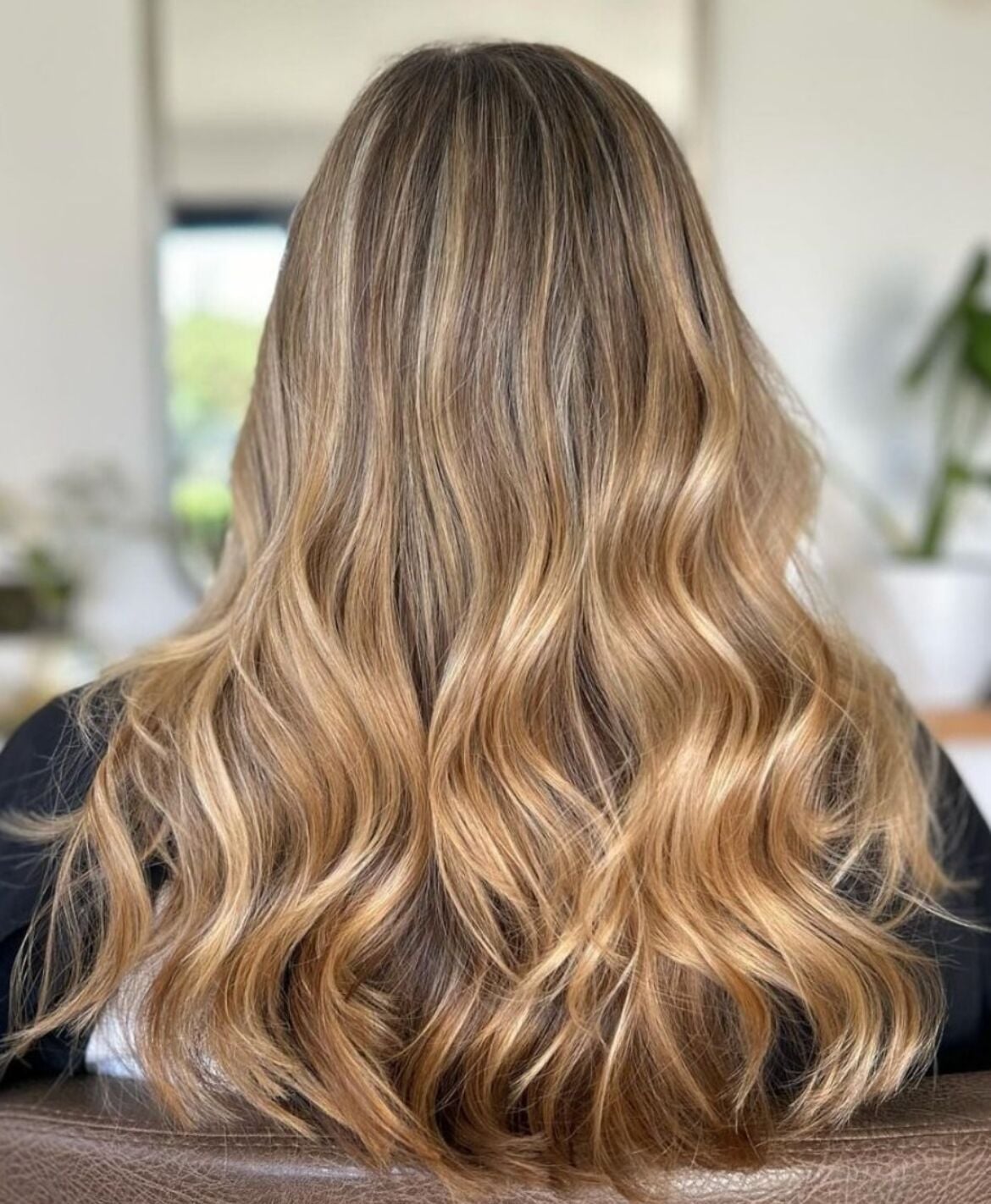
The difference between honey blonde highlights on a brown base versus a dark base comes down to contrast. Here, the brown base is medium enough that the honey blonde looks like a warm cousin to the brown, not a stark jump, which keeps the overall look soft and dimensional. On a darker base, the same honey blonde would pop more, creating a sun-kissed effect. This mid-back length with loose waves and layers lets the color travel through the hair, so the highlights catch light at different points. The thick, wavy texture helps the blend look natural, not painted on.
Ask your colorist for: mid-back length brown with honey blonde highlights. A heat protectant and a lightweight styling cream help define the waves without weighing them down. A trim every six to eight weeks prevents the ends from thinning out the color’s impact.
Collarbone Lob With Honey Blonde Bangs
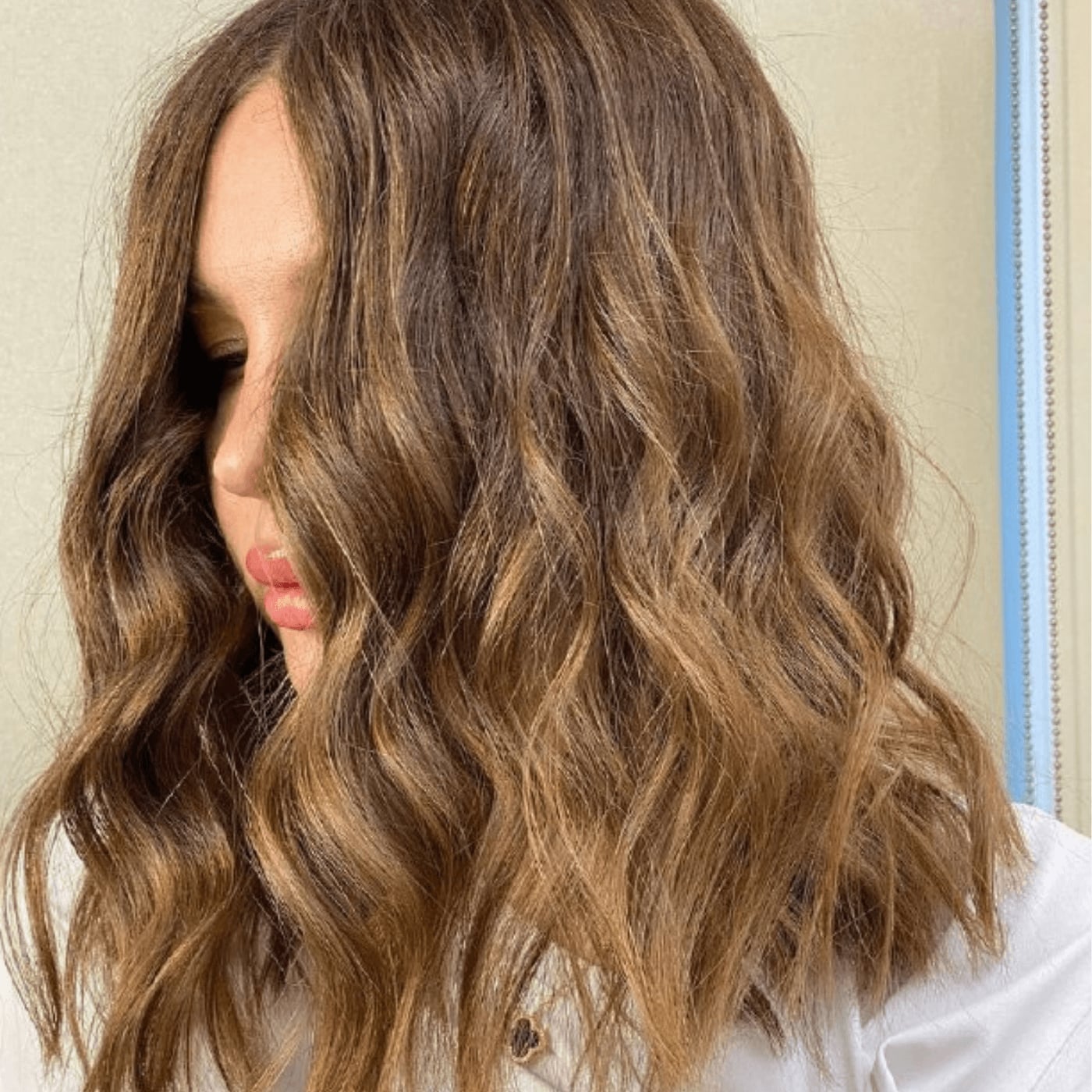
A lob with curtain bangs and honey blonde highlights is a design that relies on proportion. The collarbone length keeps the cut modern, while the side part and curtain bangs soften angular jawlines and balance longer face shapes. The brown base grounds the color, and the honey blonde highlights are blended enough that they don’t look like separate pieces. This is a salon-leaning look because the curtain bangs need precise cutting to frame the face without overwhelming it. Ask your colorist for: collarbone length lob with honey blonde highlights and curtain bangs. A round brush and a texturizing spray give the bangs their shape. A trim every six to eight weeks keeps both the cut and the color fresh.
Collarbone Dark Brown With Mid-Length Honey
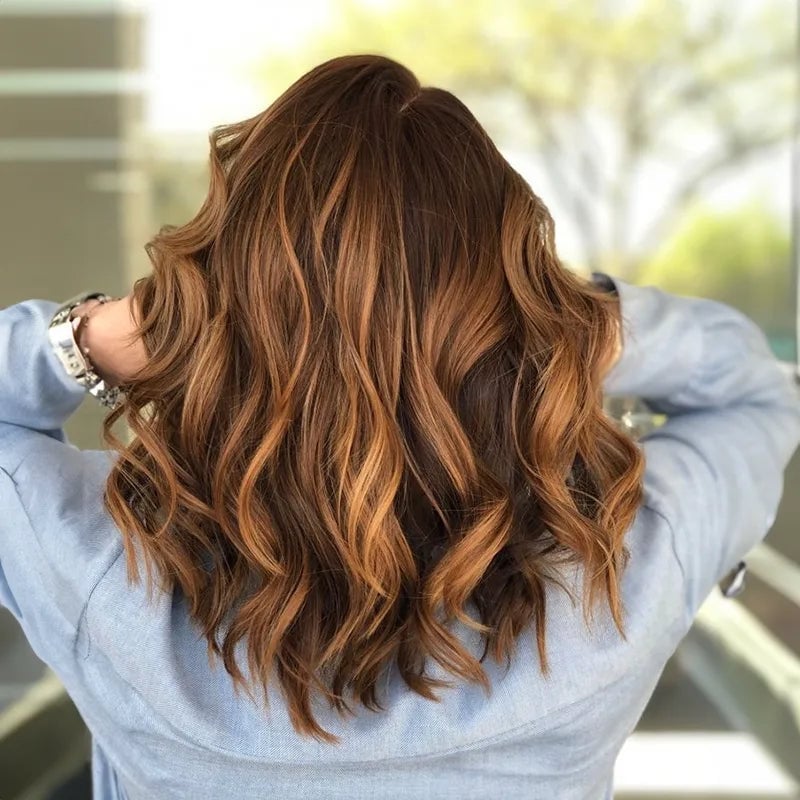
Concentrating honey highlights on the mid-lengths and ends is a strategy for a lived-in color that grows out gracefully. The dark roots stay intact, so there is no obvious regrowth line for the first several weeks. The collarbone length and wavy, thick texture give the highlights enough room to move without looking sparse. The warm honey tones add dimension against the dark brown base without overpowering it. Ask your colorist for: collarbone length dark brown with honey highlights on mid-lengths and ends. A smoothing serum on the ends reduces frizz and keeps the lighter sections from looking dry. A trim every six to eight weeks maintains the shape and prevents split ends from dulling the color.
Collarbone Bob With Honey Highlights
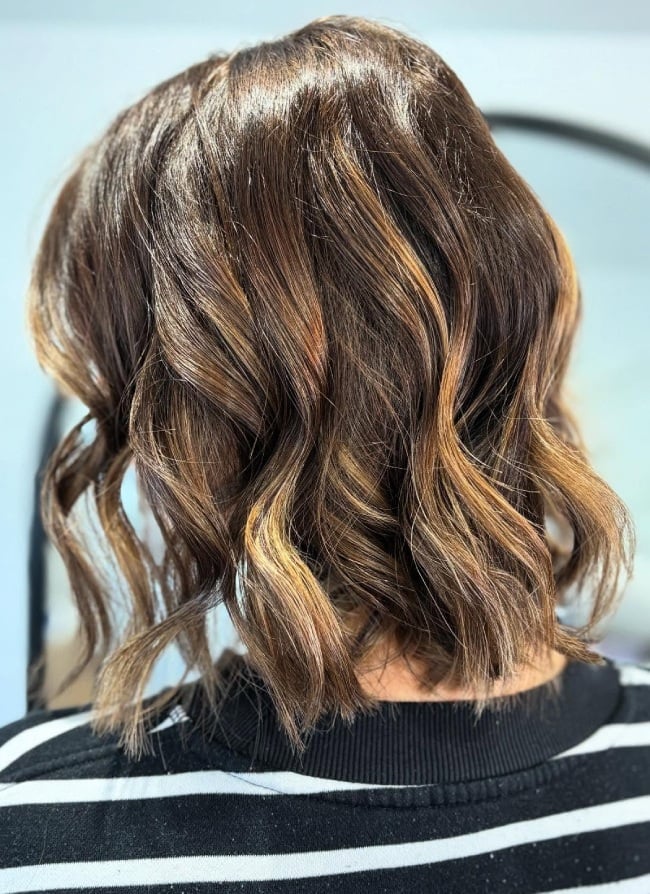
What makes a collarbone bob with honey highlights look natural? It comes down to how the color is woven into the brown base. Here, the honey-blonde pieces are placed through the interior, not just the top layer, so the wavy texture catches them at different depths. The back view shows the payoff: the layers break up the color, creating dimension that a single-process shade cannot. Ask your colorist for: collarbone length bob with subtle honey highlights. Thick, wavy hair holds this shape well, and the bob suits most face shapes. A texturizing spray will revive the waves between washes.
Mid-Back Straight Hair With Honey
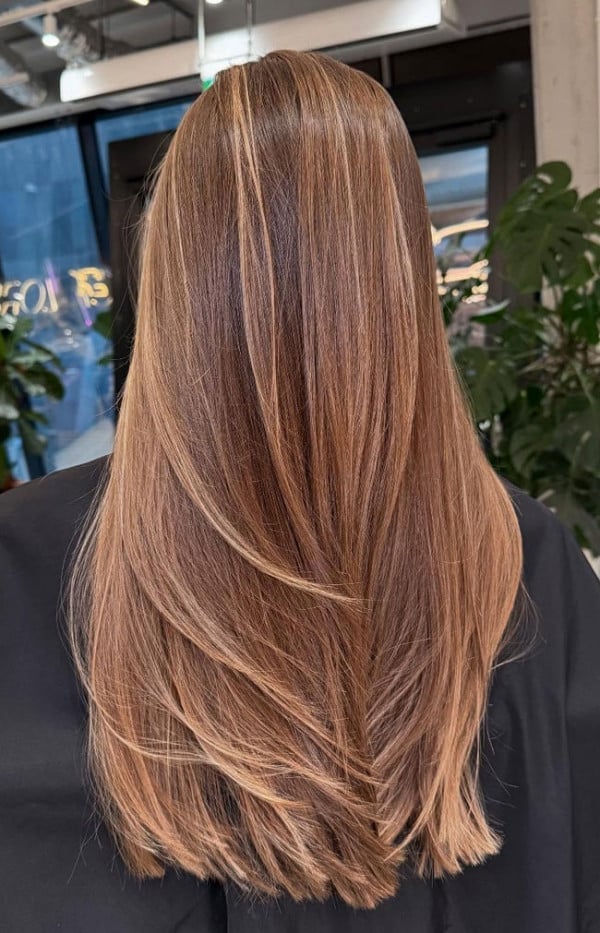
Straight, thick hair shows every color placement, which is both a gift and a warning. The honey-toned highlights here are subtle enough to blend with the brown base, yet the straight texture means any unevenness would be obvious. The soft, blown-out layers give the hair movement, so the highlights shift as you turn your head. This is a salon job, not a DIY project: getting a seamless blend on straight hair takes a practiced hand with foils or balayage. Ask your colorist for: mid-back length straight hair with subtle honey highlights. The layers add swing to a texture that can otherwise hang flat, and the cut suits most face shapes. A trim every six to eight weeks keeps the ends clean, since split ends show more on straight hair.
Final Thoughts
For a low-maintenance look, ask your colorist to weave highlights through the mid-lengths and ends rather than starting at the root. A balayage technique softens the grow-out line, so you can stretch toning appointments to every eight weeks. Fine hair benefits from finer slices; thicker hair can handle wider ribbons of honey.
- Maintain highlights with a color-depositing conditioner every 2-3 washes.
- Use a color-safe shampoo and conditioner to prevent fading.
- Deep condition weekly to keep highlighted hair hydrated.
- Schedule toning glosses every 6-8 weeks to refresh warmth.
Find your perfect honey brown highlight shade.