Light brown hair with blonde highlights is the color equivalent of a well-worn leather jacket: familiar, flattering, and only getting better with age. The current shift is toward lived-in color and soft, face-framing layers, moving away from chunky streaks and flat, poker-straight styling.
This collection of 22 ideas for Simple Light Brown Hair with Blonde covers everything from a chin-length bob to mid-back waves, with balayage, root shadows, and curtain bangs in the mix. Whether your hair is fine and falls flat or you’re tired of a visible grow-out line, there’s a low-upkeep option here that still delivers dimension.
Chin Length Bob With Subtle Blonde Balayage
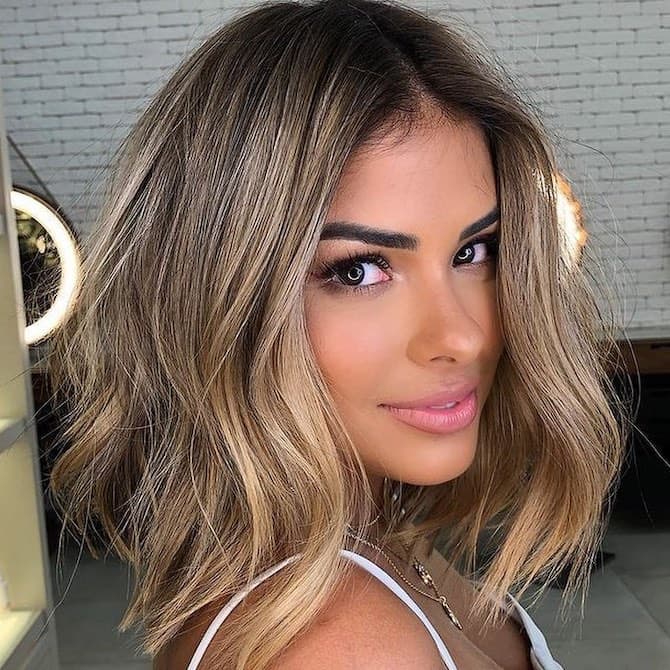
What makes a chin-length bob look modern rather than severe? A seamless balayage from a light brown base into soft blonde at the ends, like this wavy, medium-density cut with a side parting. The absence of bangs keeps the line clean, while the balayage transition prevents the haircut from feeling flat. Ask your colorist for: chin length bob with subtle blonde balayage. Fine hair gains volume from the side part, and the wavy texture gives the color extra dimension. A trim every six to eight weeks keeps the bob shape precise.
Shoulder Length Layers With Side Swept Bangs
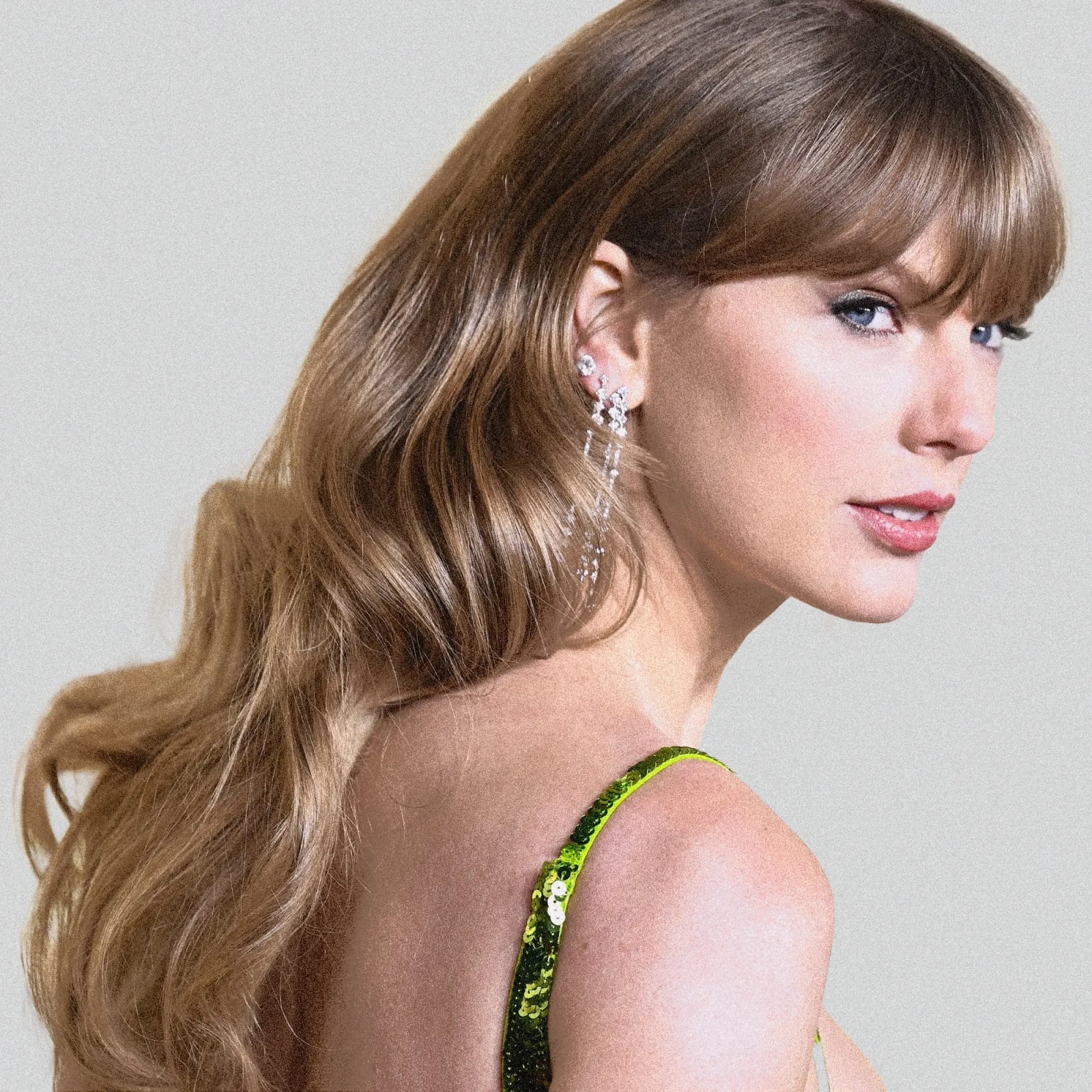
The design here is strategic: soft layers at shoulder length create movement, while side-swept bangs break up the line across the face. On wavy, medium-density hair, the dimensional blonde highlights catch the light without looking chunky. This cut suits square and oval faces, as the side sweep and layers soften angular jawlines. Ask your colorist for: shoulder length layered cut with side swept bangs and blonde highlights. Side-swept bangs need a quick blow-dry each morning, and the layers encourage natural wave formation. Schedule a trim every eight weeks to keep the bangs in shape.
Shoulder Length With Curtain Bangs And Highlights
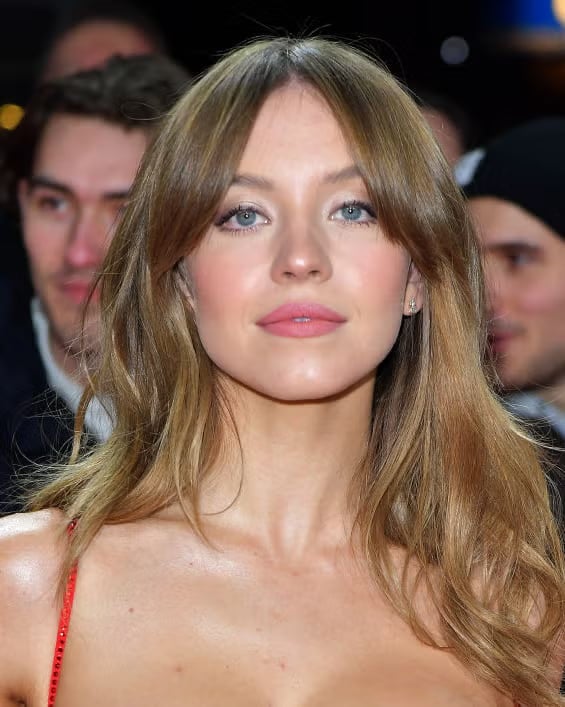
Curtain bangs rely on precise placement: they should graze the cheekbones and blend into the cut. Here, a shoulder-length layer set is paired with subtle blonde highlights woven through a light brown base. The highlights are painted finer near the roots and slightly heavier toward the ends, which mimics natural sun exposure.
This technique works on medium wavy texture because the waves break up the color and keep it from looking stripey. Ask your colorist for: shoulder length cut with curtain bangs and subtle blonde highlights. The middle part lets the bangs frame both sides evenly, and the cut suits most face shapes for that reason.
Collarbone Length With Curtain Bangs And Blonde Highlights, Wavy
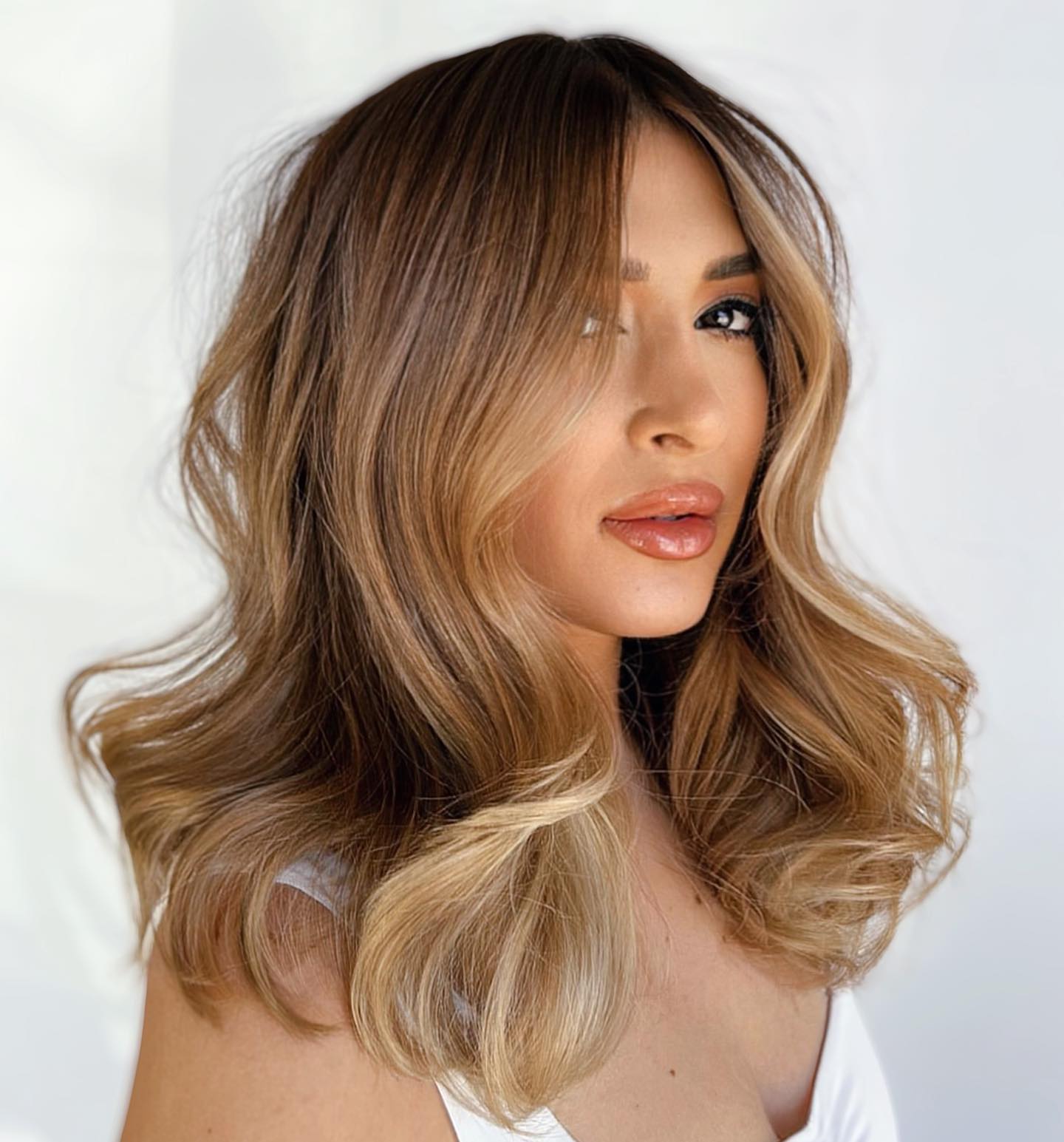
Face-framing blonde highlights on thick, wavy hair create the kind of dimension that lasts between salon visits. Here, a collarbone-length cut with soft curtain bangs and a middle part shows how the lightest strands sit around the face, drawing attention upward. The one real drawback: those face-framing highlights will need a toner refresh every six to eight weeks, as they are the first pieces to show brassiness. Ask your colorist for: collarbone length with curtain bangs and blonde highlights. Thick wavy hair handles the contrast well, and the curtain bangs soften a square or round face without requiring daily styling.
Collarbone Lob With Root Shadow And Curtain Bangs
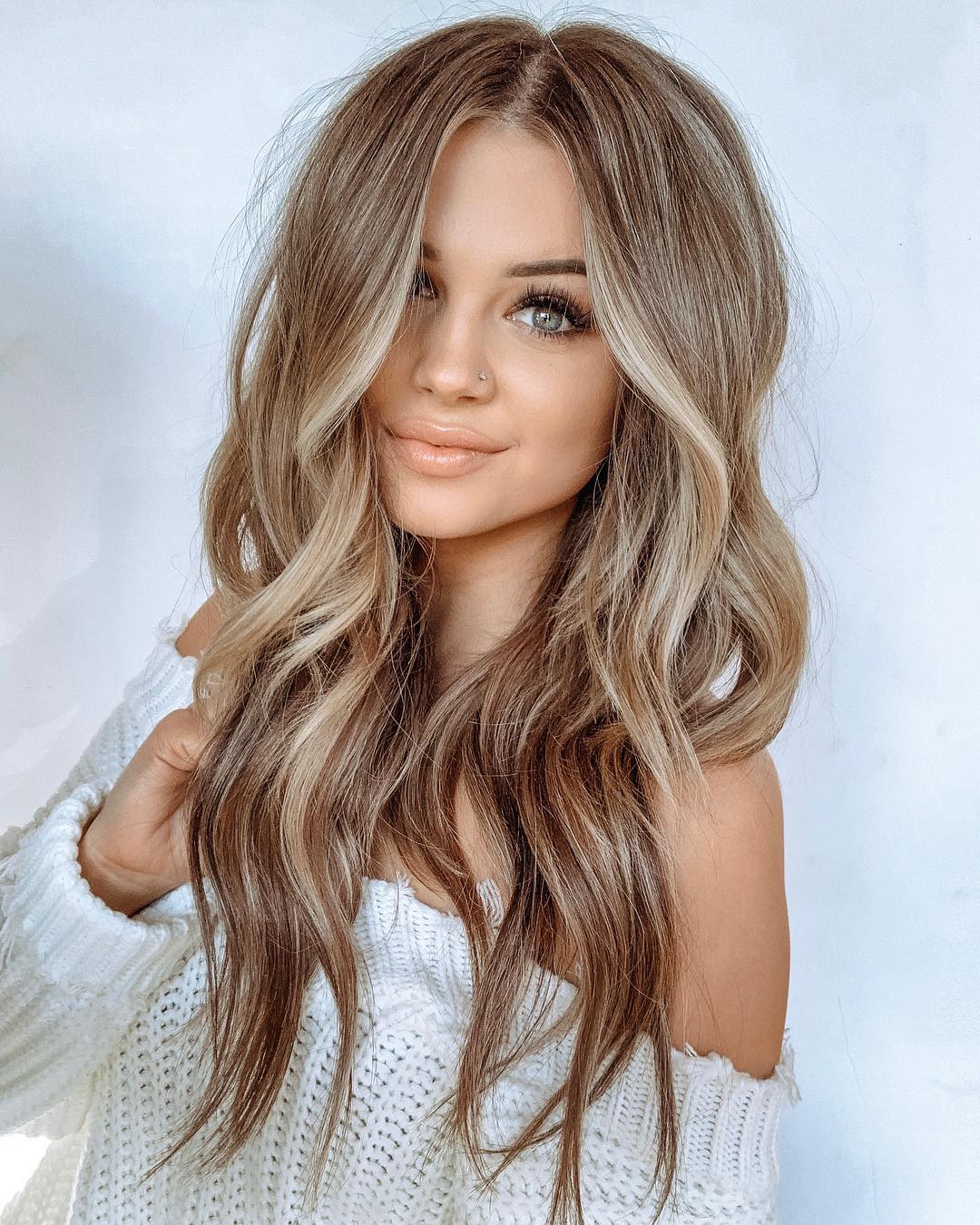
Think of a root shadow as the difference between a grown-out highlight and a deliberate one. Traditional highlights start at the root and require touch-ups every four weeks. A root shadow, by contrast, keeps the base darker at the scalp and blends lighter pieces further down, so the grow-out period stretches to ten or twelve weeks. Here, a collarbone lob with thick, wavy texture uses a light brown base with a deeper root shadow and blonde highlights that emerge near the cheekbones.
The curtain bangs and middle parting soften round and heart-shaped faces. Ask your colorist for: collarbone lob, root shadow, curtain bangs. Blow-dry the fringe with a round brush for shape, and plan for a trim every eight weeks to keep the lob from losing its weight line.
Collarbone Layers With Lived-In Blonde Highlights
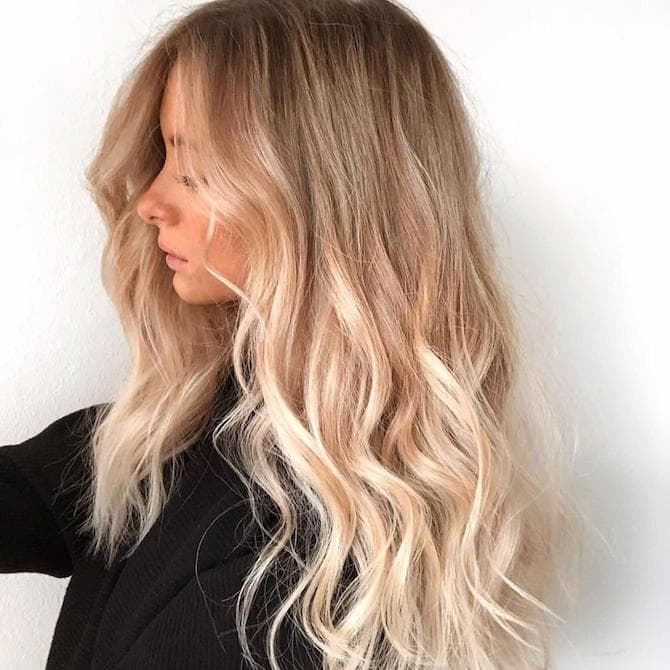
A lived-in highlight design works harder than a fresh foil because the grow-out is part of the plan, not a problem. The curtain bangs and face-framing layers break up the light brown base, while the blonde pieces stay soft rather than stripey. This is a salon-only color: the balayage application needs a stylist who can paint freehand, and the layers need a dry cut afterward to land correctly. Ask your colorist for: lived-in blonde highlights with a root stretch. Thick, wavy hair starting at collarbone length holds the wave pattern best, and the middle part suits most face shapes. The lived-in effect means less frequent toning, but the layers still need a trim every eight weeks to keep the shape clean.
Collarbone Lob With Face Framing Layers And Balayage
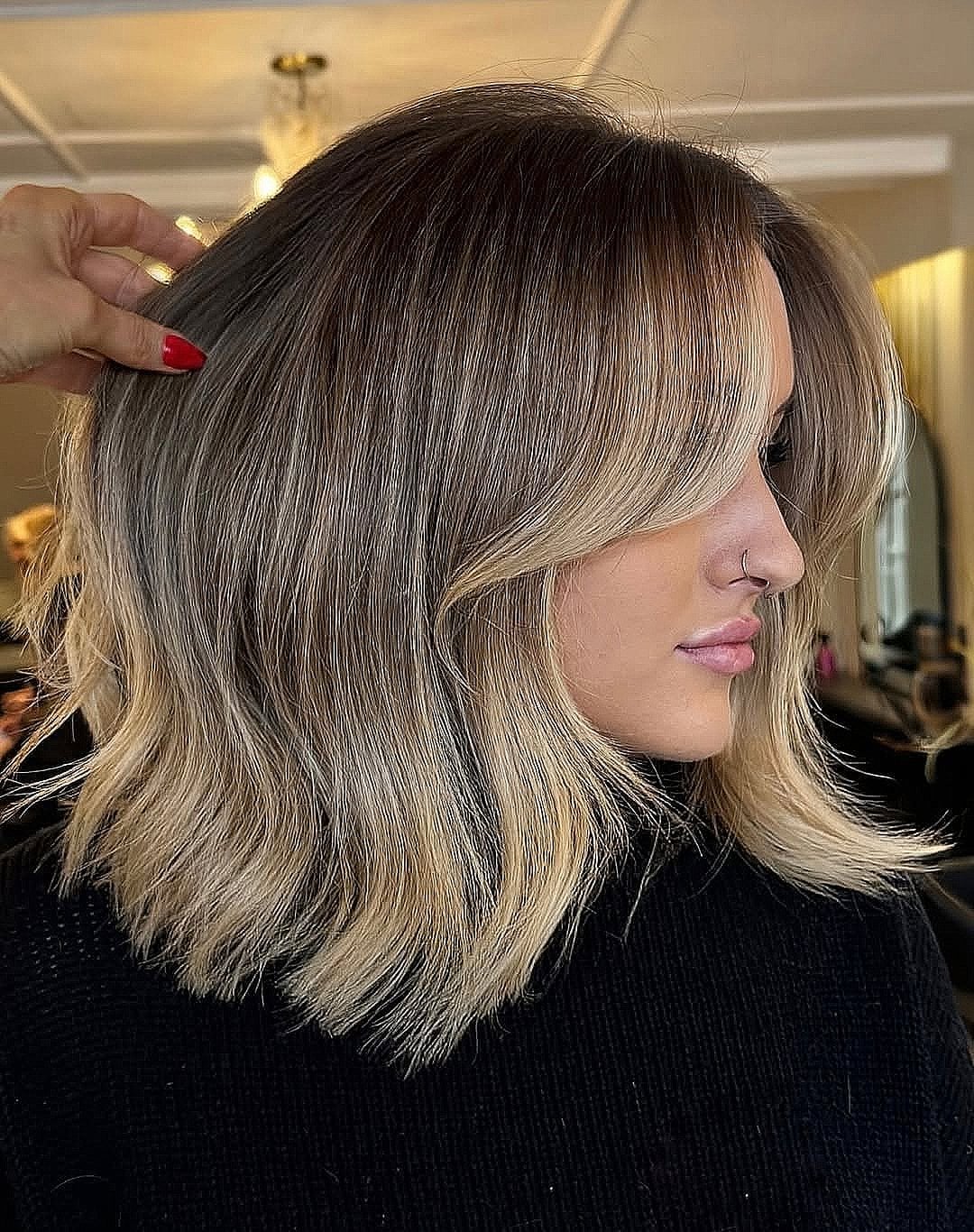
Does a lob with face-framing layers actually work on thick, wavy hair, or does it turn into a triangle? It works when the balayage is placed to lighten the ends more than the roots, so the visual weight stays low. The curtain bangs and shorter face-framing pieces soften the jaw, which is why this cut flatters round and square faces equally. Ask your colorist for: collarbone lob with face framing layers and blonde balayage. The blowout styling adds polish, but the real benefit is how the layers fall on their own: thick hair gets movement instead of a solid block. The middle part keeps the face-framing pieces symmetrical, and the wavy texture gives the balayage a natural gradient.
Collarbone Length With Dimensional Blonde Highlights
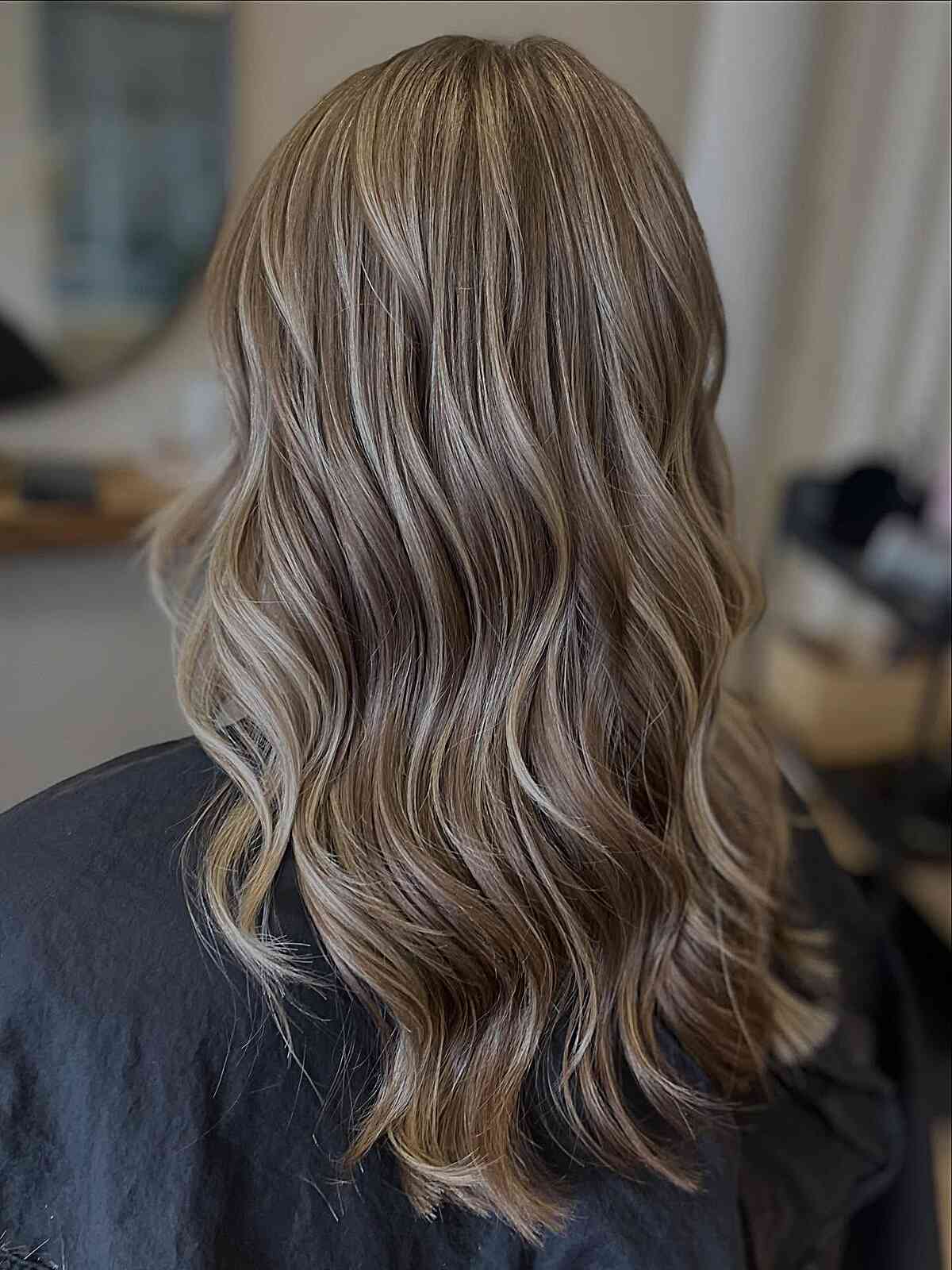
The dimensional effect comes from weaving fine slices of blonde through the light brown base in thin sections, so the color shifts subtly from root to tip. The back view shows the payoff: the middle part lets the highlights fall evenly on both sides, and the loose waves break up any hard lines. Ask your colorist for: collarbone length with dimensional blonde highlights. This is a salon color technique; the weaved foils take about two hours to place correctly. The highlights add visual interest to straight hair but really show when the hair is waved, since the bend exposes the lighter and darker strands. Dimensional highlights need a gloss every six to eight weeks to keep the blonde from turning brassy, though the natural base helps camouflage it longer.
Thick hair starting at collarbone length gives the highlights enough density to show depth, not just a few streaks. The loose waves are easy to achieve with a large barrel curling iron and a heat protectant, and the style holds well on thick texture without a ton of product.
Collarbone Layers With Wavy Blowout And Highlights
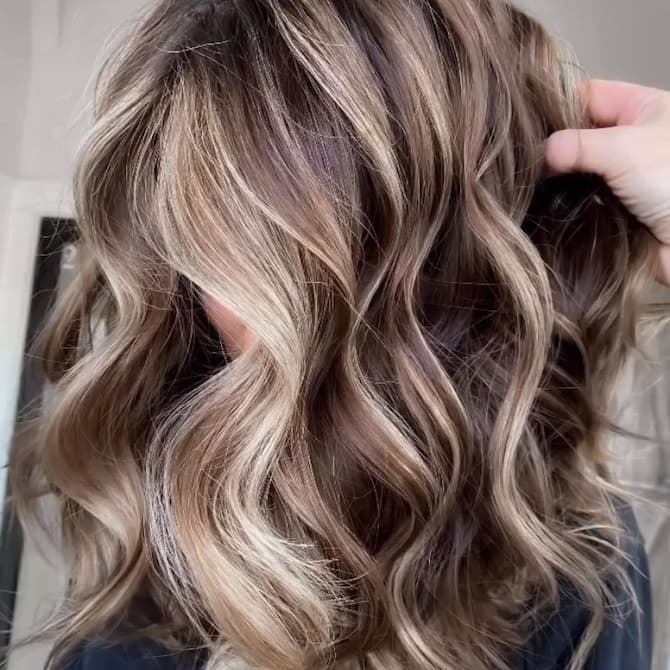
How do you ask for highlights that look blended rather than painted on? The words matter: request a light brown base with fine blonde highlights woven through the top and the layers, not just the ends. The wavy blowout makes the color read as natural because the bends scatter the light, so the highlights look like they grew in rather than were applied. Ask your stylist for: collarbone length layered cut with a wavy blowout and blonde highlights. The layers are cut into the length, not just the ends, which gives thick hair internal texture without losing weight. The middle part suits most face shapes, and the collarbone length is versatile enough to tuck behind the ears or wear loose. The wavy blowout adds texture and volume, and the highlight placement means the color still looks dimensional when the waves drop.
Shoulder Length With Ash Blonde Base And Beige Highlights
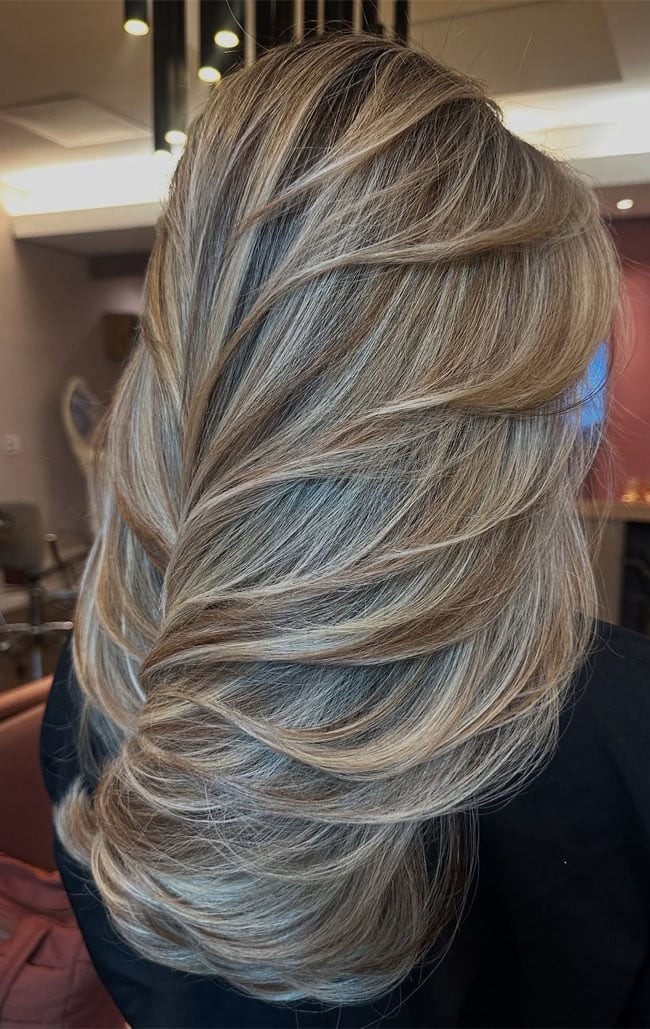
An ash blonde base with beige highlights is the cooler cousin of a warm blonde balayage. The ash cancels out brassiness, while the beige highlights add a subtle warmth that keeps it from looking flat or silvery. Ash tones fade faster than warm tones, so expect to use a purple shampoo and book a gloss every six weeks. Ask your colorist for: shoulder length with an ash blonde base and beige highlights. The curtain bangs and face-framing layers soften round and square faces, but they also mean the color needs to reach the front pieces, which is a detail to confirm with your stylist. Thick, wavy hair starting at shoulder length holds the wave pattern well, and the long layers prevent the cut from feeling heavy. The middle part keeps the face-framing pieces balanced, and the beige highlights pick up soft lighting without washing out.
One real drawback: ash tones can look dull on days when the hair is not freshly washed, so dry shampoo is your friend to lift the root area without disturbing the tone.
Shoulder Length Long Layers With Layered Blowout
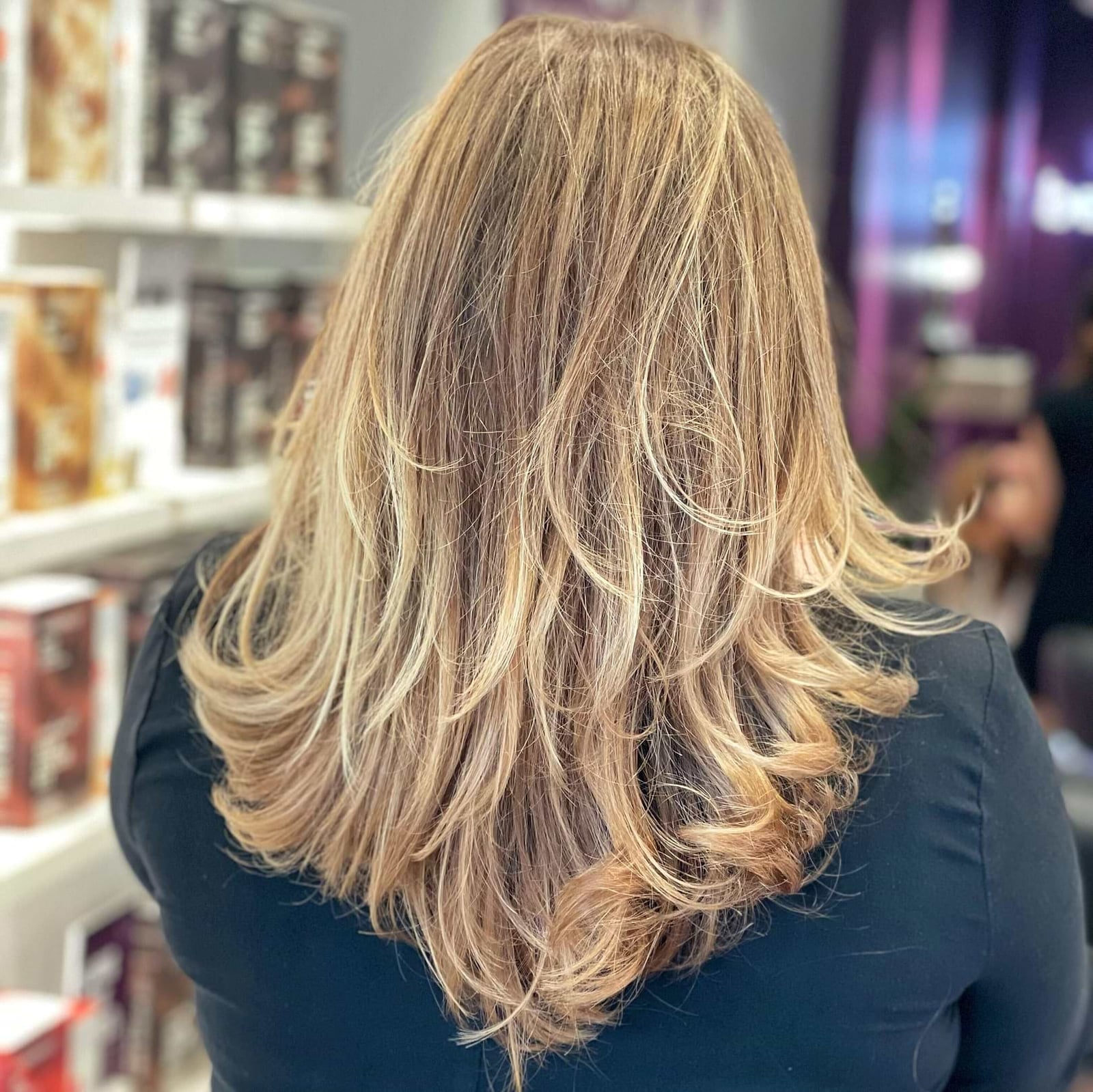
The layered blowout is a reminder that volume is a shape, not an accident. Long layers cut into shoulder length hair create graduated movement that a single length cut cannot match. The light brown base carries blonde highlights. Thick or wavy textures benefit most here: the layers prevent bulk from building at the ends, and the blowout has structure to hold onto.
Ask your stylist for: shoulder length long layers with a layered blowout. This is a salon only finish if you want the root lift and curved ends that define the shape. On wash day, expect about twenty minutes with a round brush and a medium heat setting. A trim every eight weeks keeps the layers from losing their rhythm. The blonde highlights will need a toning session around the same interval to stay bright.
Mid Back Waves With Face Framing Layers And Side Swept Bangs
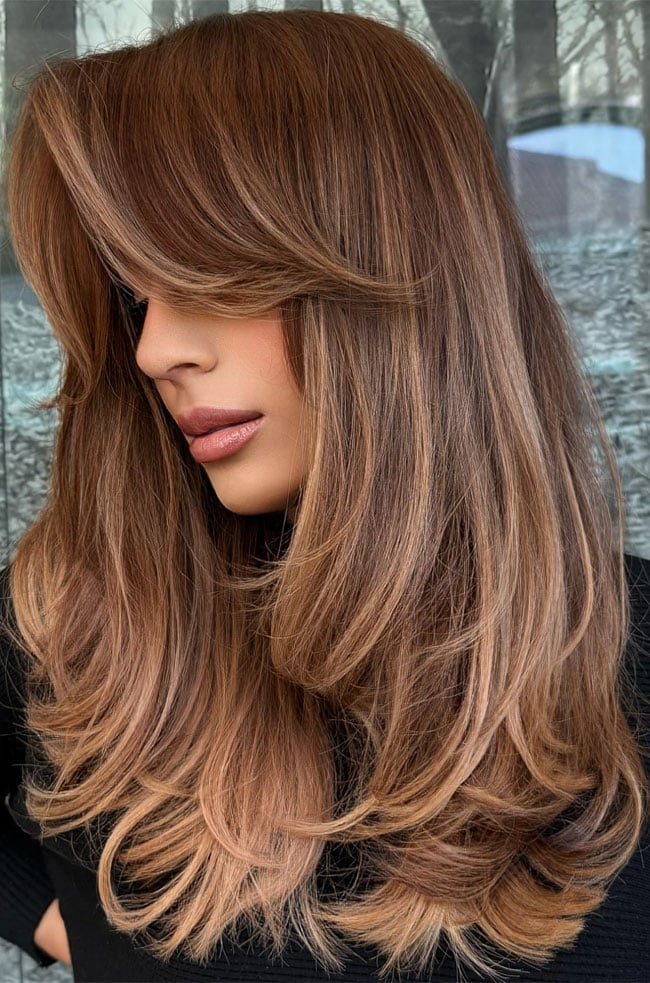
Can thick, wavy hair at mid-back length look soft rather than heavy? Yes, when face-framing layers and side-swept bangs do the work. The layers start around the chin and graduate down, removing weight where hair tends to widen. The side-swept bangs break up the forehead line without the commitment of a full fringe. The light brown base with subtle blonde balayage adds depth without obvious regrowth lines.
Ask your colorist for: mid-back length with face framing layers and side swept bangs. This combination works best for oval and round faces, as the angle of the bangs and the face-framing pieces create vertical lines. It also suits square jawlines by softening the corners. The key is starting with enough density at the nape so the layers do not look sparse. If your hair is fine, skip the heavy layering and keep the weight in the lower third.
Mid Back Layers With Curtain Bangs And Blonde Balayage
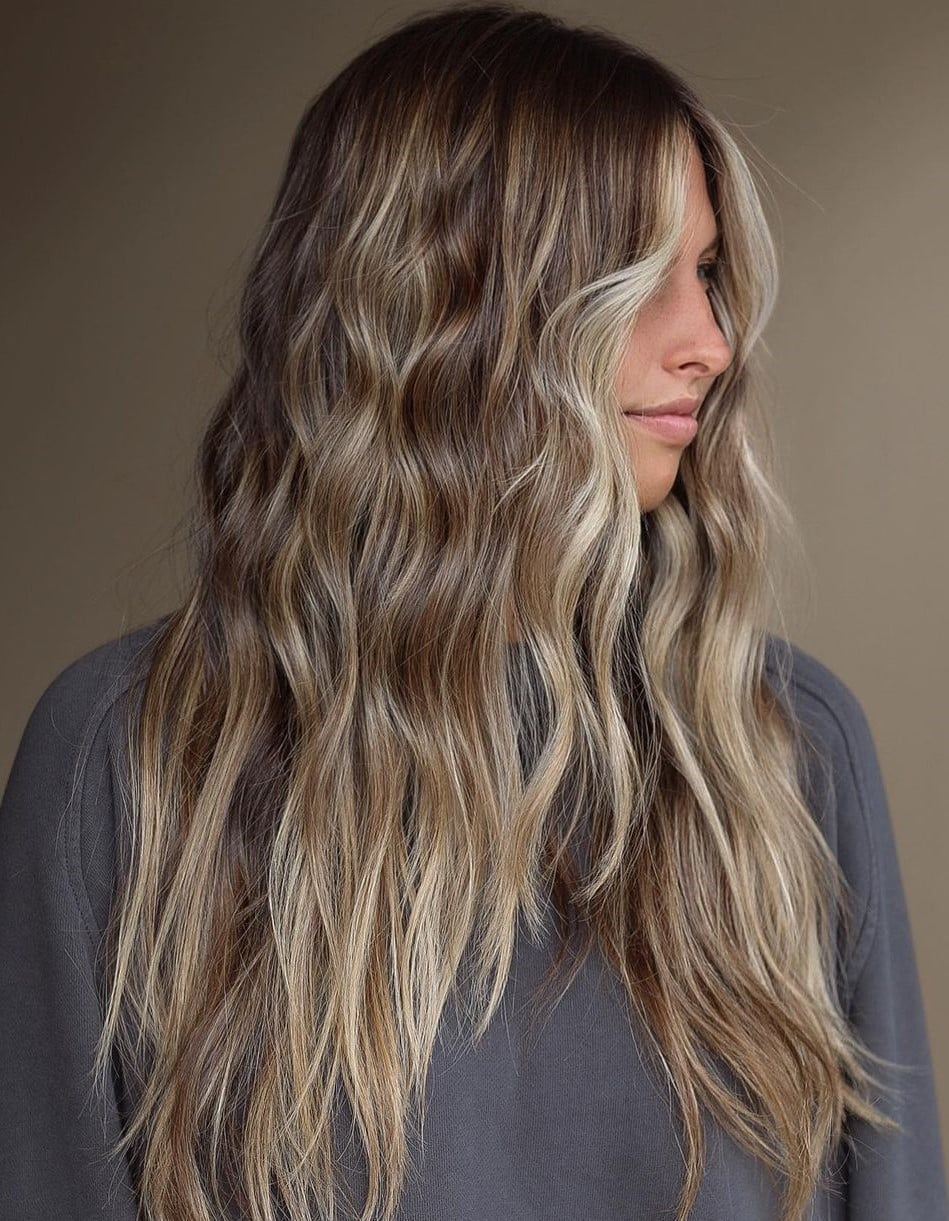
Balayage is a painting technique, not a foil pattern. The colorist hand-paints the lightener onto sections of the mid-lengths and ends, leaving the root area untouched. This creates the graduated brightness you see here: the light brown base stays darker at the crown, and the blonde builds gradually toward the ends. Curtain bangs are cut to open in the center and blend into the face-framing layers.
Ask your colorist for: mid-back length with curtain bangs and blonde balayage. The technique works on thick, wavy hair because the soft graduation prevents a blunt line where the color starts. The parting is middle, which lets the curtain bangs fall symmetrically. Because the root area is not lightened, the grow-out is subtle enough to stretch salon visits to twelve or fourteen weeks.
Mid Back Layers With Curtain Bangs And Blonde Highlights, Loose Waves
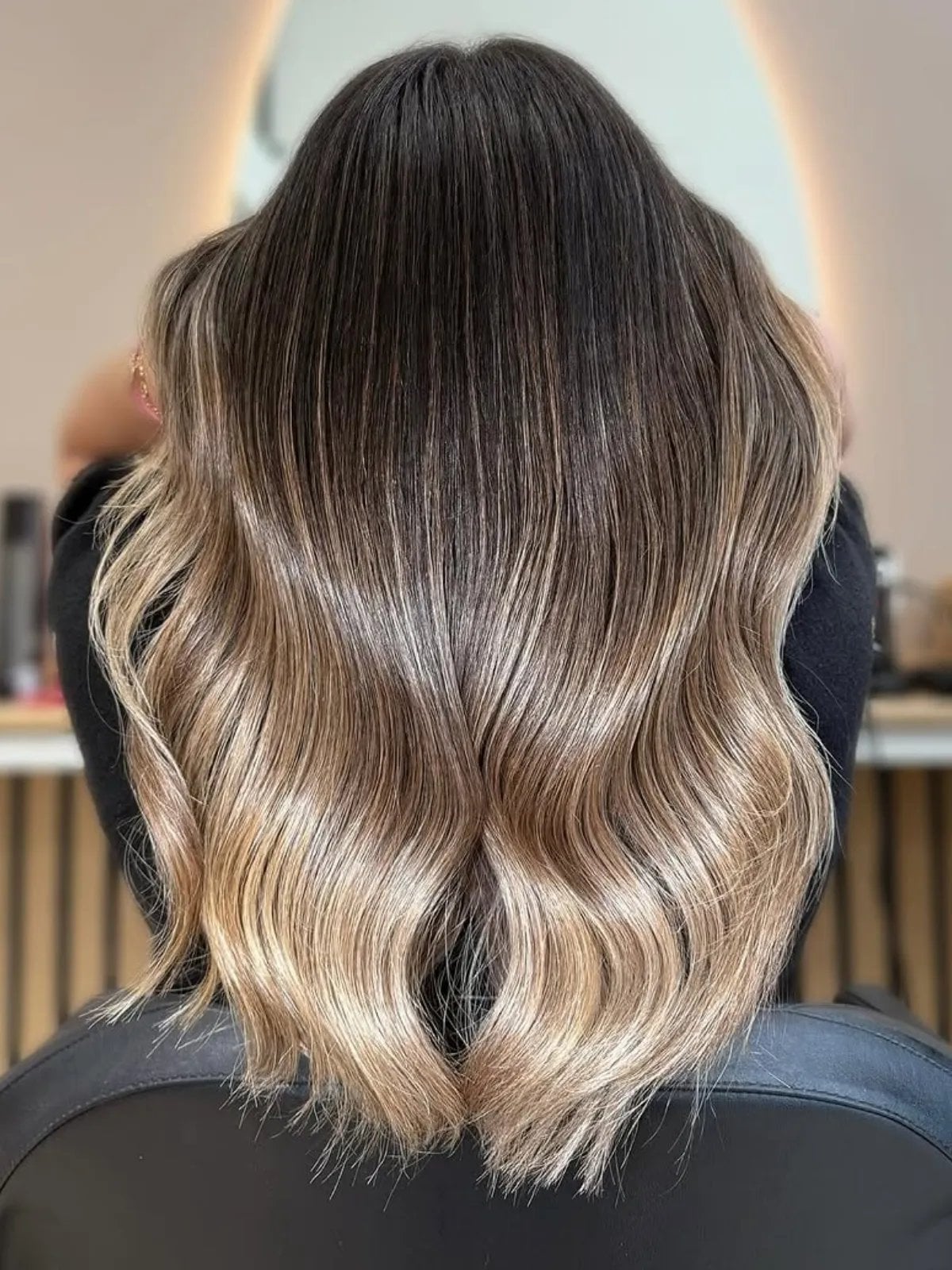
What exactly do you tell the colorist when you want this? Start with the base: light brown. Then specify that you want blonde highlights, not balayage or babylights. Highlights are woven from root to end in selected sections, giving a more consistent brightness than a painted technique. The layers are cut to support the loose waves, and the curtain bangs are long enough to tuck behind the ears or let fall forward.
Ask your stylist for: mid-back length with curtain bangs and blonde highlights. Then add: “Thick highlights, not chunky, about every half inch.” The middle parting keeps the face-framing pieces balanced. For a round face, ask the stylist to start the curtain bangs at the brow bone rather than the cheekbone. For a heart-shaped face, keep the layers soft around the temples so the width at the forehead does not feel exaggerated.
Mid Back Ash Brown With Face Framing Layers
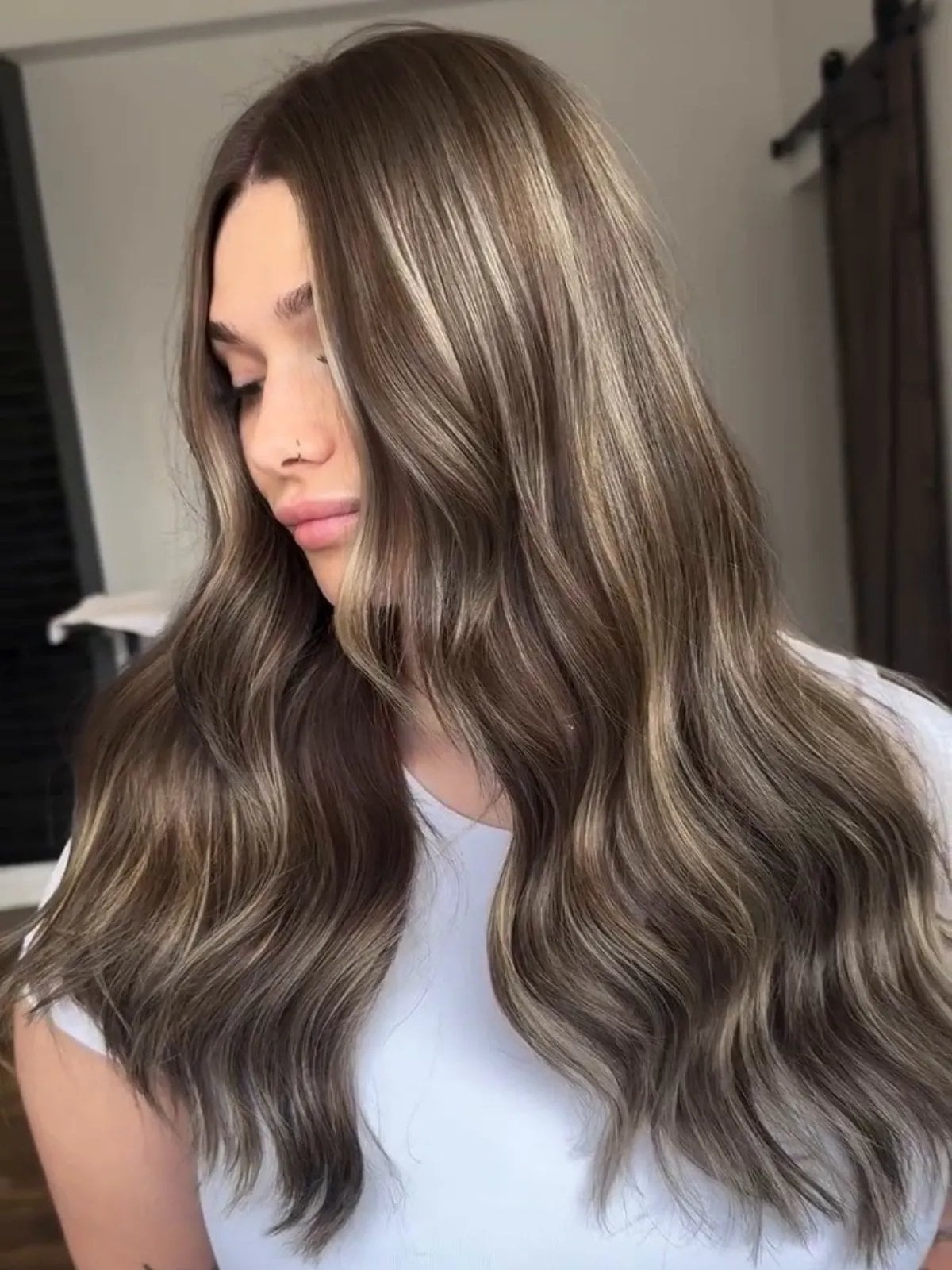
Ash brown is a cool-toned brown with green or blue undertones, and it fights the same enemy every cool color faces: warmth. The blonde highlights here lean beige, which helps both tones stay cohesive. The face-framing layers are cut at an angle, shorter near the chin and longer toward the shoulders. This gives the front view a soft V-shape that falls into the curtain bangs.
Ask your colorist for: mid-back ash brown with face framing layers and blonde highlights. Upkeep is a factor. Ash tones fade warm after about four weeks, and the blonde highlights will pick up yellow from hard water and heat styling. A purple shampoo used twice a week buys you another three weeks between toning appointments. The face-framing layers need a trim every ten weeks, or they start grazing the collarbone and lose their shape.
Mid Back Layers With Wavy Curls And Blonde Highlights
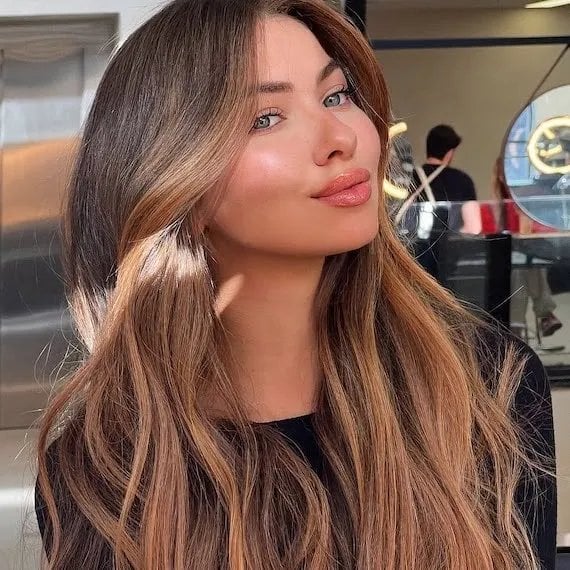
Balayage highlights are hand-painted for a softer line at the root, while a foil highlight starts closer to the scalp. That difference matters most when your hair texture has natural volume, because a heavy root line can look blocky on waves that already have movement. This version keeps the color dimensional from root to tip.
The light brown base and blonde highlights are painted onto mid-back length layers. The wavy texture does the blending work for you. Ask your colorist for: a balayage highlight. Thick, wavy hair at mid-back length benefits from layers that add texture and volume without extra styling effort.
Mid Back Layers With Soft Blowout And Highlights
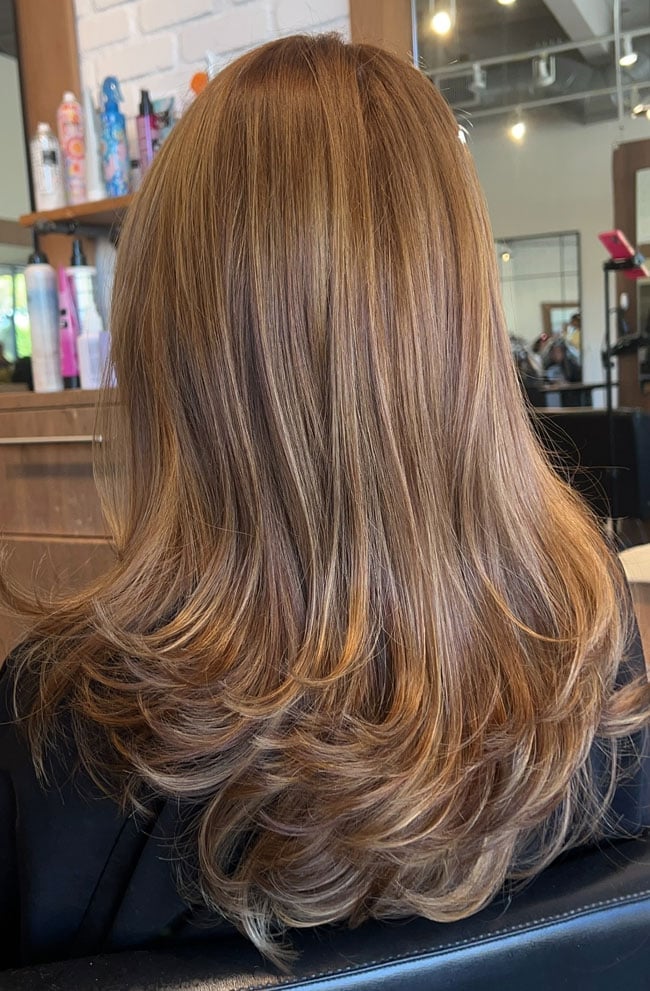
A soft blowout on mid-back length hair is a design that looks like it took an hour but actually took two. You get a polished finish with movement and volume, but replicating it at home for thick, wavy hair is a genuine challenge. The layers here are cut to add dimension, and the subtle blonde highlights woven through the light brown base add dimension that a single-process color cannot. That combination makes the blowout look polished and planned.
This is a salon-only proposition unless you own a round brush and a dryer with a concentrator nozzle and have the patience for both. The payoff is a style that holds its shape for a full day and works for both work and events. Ask your colorist for: subtle blonde highlights throughout mid-back length layers. Thick, wavy hair starting at mid-back length adds movement and polish, and the style suits most face shapes. A glossing serum on the ends keeps the shine going between washes.
Mid Back Layers With Seamless Blonde Balayage
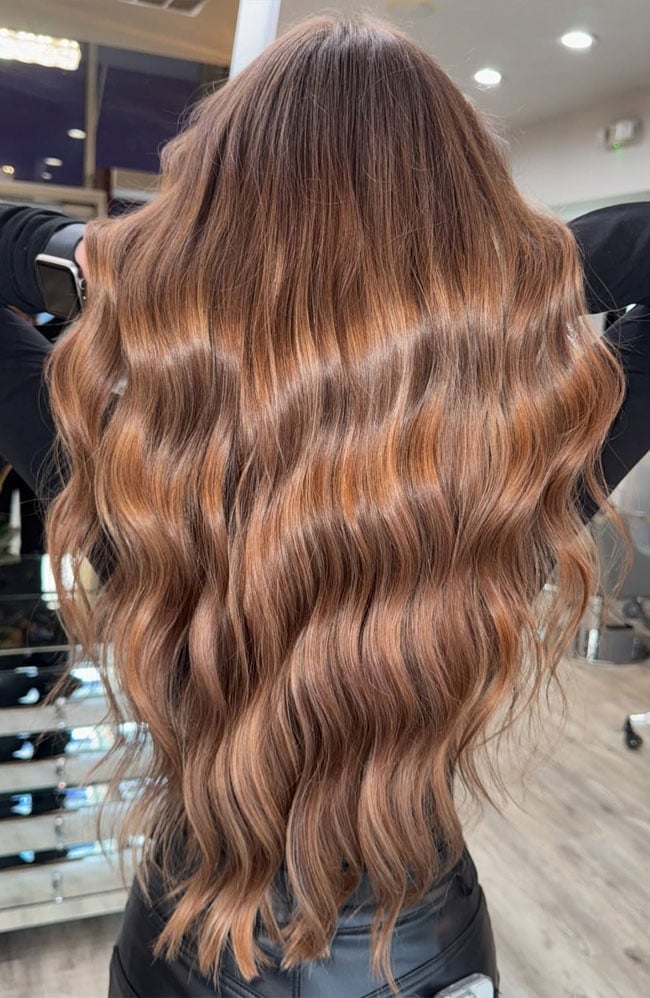
Can a color technique make you forget you have roots? A seamless blonde balayage on a light brown base comes close. The balayage effect here is painted onto mid-back length layers, starting lower on the shaft than a traditional highlight, so the grow-out is gradual. That matters for wavy, thick hair, where a harsh root line can look chunkier than it actually is. The natural glossy texture and loose waves create a blended finish that looks like it was kissed by the sun, not the salon.
This color suits many hair textures, though very fine hair may need a lighter hand on the saturation to avoid looking weighed down. The balayage effect works on mid-back length hair regardless of texture because the length gives the color room to breathe. Ask your colorist for: a seamless blonde balayage on mid-back length layers. Thick, wavy hair starting at mid-back length has a low-maintenance grow-out that means fewer salon visits.
Mid Back Layers With Wavy Blowout And Balayage
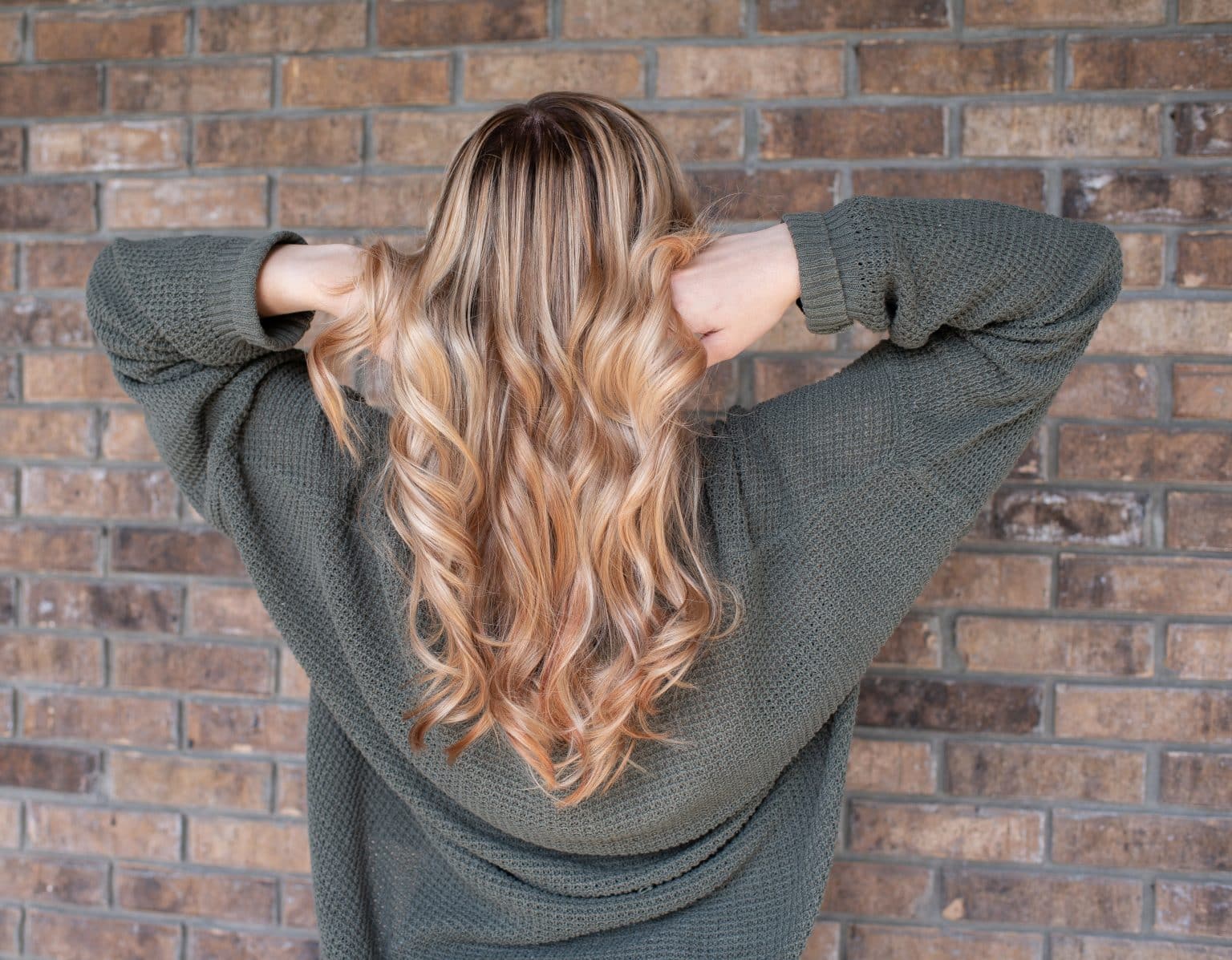
A wavy blowout on mid-back length layers is built on two things: the cut and the color. The layers are cut to stack weight at the mid-back, creating a U-shape that moves when you walk. The balayage technique here is painted freehand onto the light brown base, so the blonde balayage hits the ends and the face-framing pieces first. That placement means the color lands where the waves bend, which is exactly where light would catch naturally.
The wavy texture adds volume, and the balayage highlights grow out gracefully because there is no solid root line to chase. A glossing treatment every six to eight weeks keeps the tone from warming up. Ask your colorist for: mid-back length layers with a wavy blowout and blonde balayage. Thick, wavy hair starting at mid-back length works for everyday wear.
Mid Back Ombre From Light Brown To Blonde
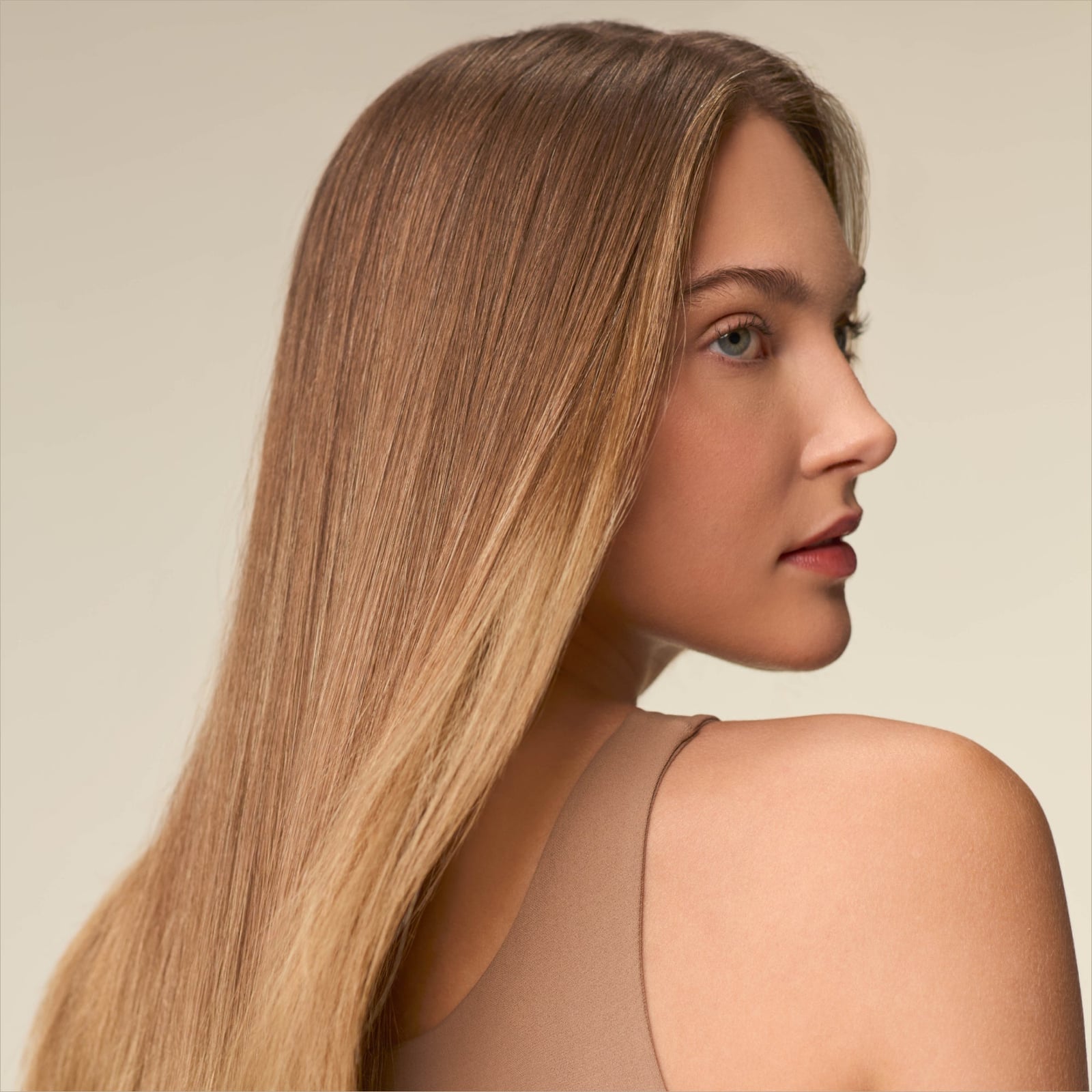
An ombré transition from light brown to blonde on mid-back length hair is one answer for skipping the root touch-up schedule. The color here starts at the root with a light brown base and shifts gradually to blonde toward the ends, with a side parting that makes the gradient visible from the front. On fine, wavy texture, the ombré effect looks deliberate rather than grown-out, and the subtle waves keep the transition from looking harsh.
A smooth ombré requires sectioning and a steady hand, so plan for about three hours in the chair and a salon-leaning skill level. The payoff is a grow-out that can stretch to four months before the contrast starts to look muddy. Ask your colorist for: a mid-back length ombré from light brown to blonde. Fine to medium textured hair starting at mid-back length pairs well with air-dried styling, which enhances the natural texture.
Mid Back Blowout With Straight Thick Hair
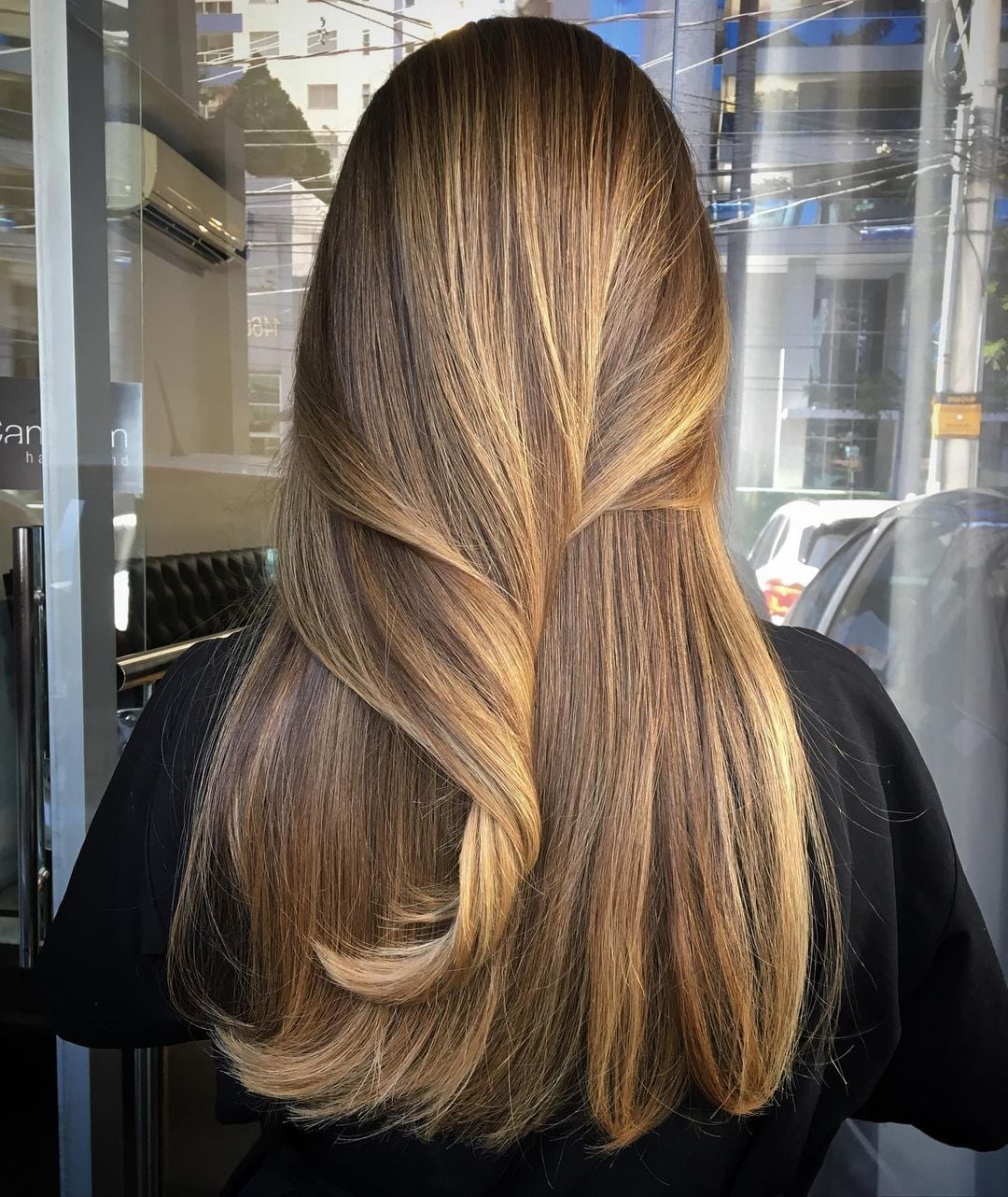
A smooth blowout on thick, straight hair is a design that relies on weight, not texture. The mid-back length holds the light brown base with blonde balayage in a seamless blend that reads as one continuous color rather than separate sections. This is a look that needs density to stay sleek past the first hour. Ask your colorist for: mid-back length with blonde balayage and a smooth blowout. It suits most face shapes, though the straight fall can emphasize a long face if the part is central.
Thick hair holds a blowout longer than fine hair, but it also takes more heat to get there. Keep styling tools on medium settings and use a heat protectant to avoid cooking the ends. The balayage grows out softly, so you can stretch toning to ten or twelve weeks. A trim every eight weeks keeps the ends blunt enough for the blowout to slide without snagging.
Collarbone Layers With Wavy Blowout Glossy Finish
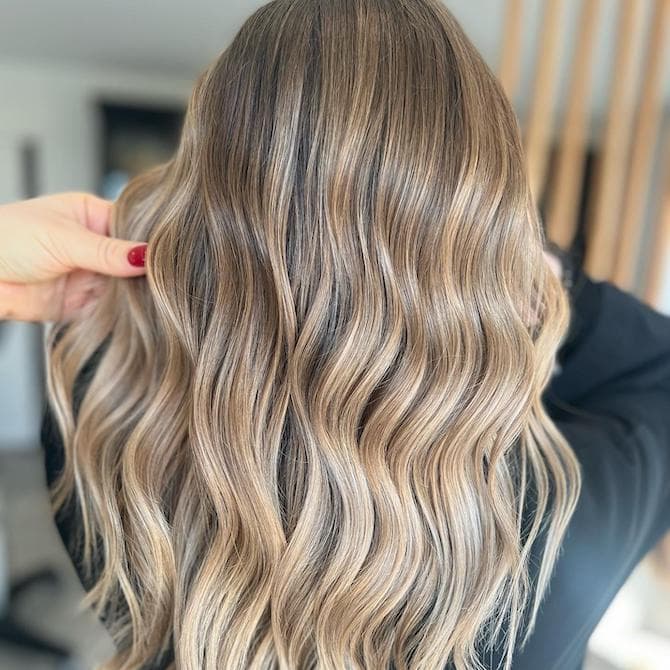
A matte finish looks undone, while a glossy finish looks deliberate. This collarbone-length cut with layers and a middle parting goes for gloss, using a wavy blowout on thick hair to catch light across the waves. The light brown base with blonde highlights gets its depth from the sheen, not from extra lowlights. Ask your colorist for: collarbone length layers with a wavy blowout and glossy finish. It suits most face shapes; the collarbone length is long enough to pull back but short enough to air-dry in a pinch.
The real drawback is the shine itself. A glossy finish shows every flyaway and every split end in high definition, so this style demands regular trims and a serum that does not weigh the waves down. A trim every six weeks keeps the edges clean enough to reflect light evenly. The layers add movement without losing volume, which is the point.
Final Thoughts
When deciding between balayage and traditional highlights, remember that balayage grows out softer, so you can stretch salon visits. And if you’re tempted by bangs or face-framing layers, only commit if you’re ready for trims every six to eight weeks to keep them in shape.
- Tone every 6-8 weeks to keep blonde bright.
- Trim balayage every 10-12 weeks to maintain shape.
- Use color-safe shampoo and conditioner.
- Limit heat styling to prevent fading.
Subtle blonde on light brown always delivers.