Lowlights are the secret weapon for adding depth and dimension to blonde hair, moving beyond a single flat tone. The trend leans towards natural, blended shades that enhance the base color rather than overpower it, with lived-in color and soft face-framing layers taking center stage.
This collection of 32 Simple Lowlights for Blondes covers the spectrum from subtle, sun-kissed dimension to richer, more deliberate contrast. Whether your hair is fine and prone to falling flat or thick and needing structure, you will find a look that works with your length, texture, and maintenance preferences. No more guessing which shade to ask for or worrying about a visible grow-out line.
Long Layered Dark Blonde with Subtle Lowlights
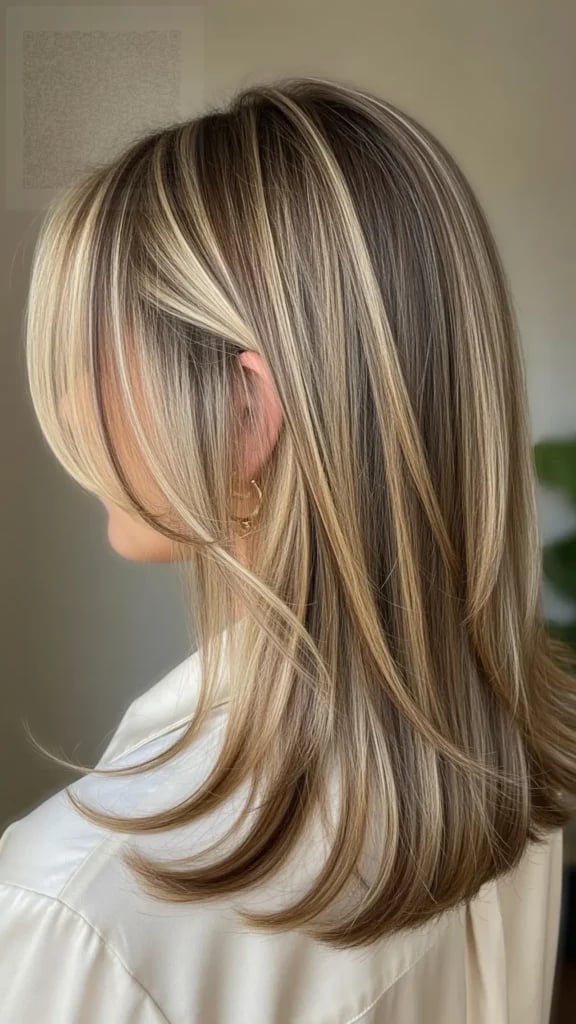
How do you add depth to long blonde hair without going full dark? The answer is a dark blonde base threaded with subtle lowlights and highlights, a mix that gives thick, wavy hair texture it never had before. A middle part and loose waves let the side view show how each tone sits next to the next, so the color reads as dimensional rather than flat.
Ask your colorist for: dark blonde base with subtle lowlights and highlights, long layers. The technique relies on fine slices rather than chunky sections, which keeps the blend soft enough that regrowth looks intentional for weeks. Thick hair that reaches mid-back or longer benefits most from the weight of the darker pieces, while oval and long faces get extra balance from the side volume. A texturizing spray on the waves keeps the separation visible, and a trim every eight to ten weeks stops the ends from thinning out the color story.
Mid-Back Honey Blonde with Darker Lowlights
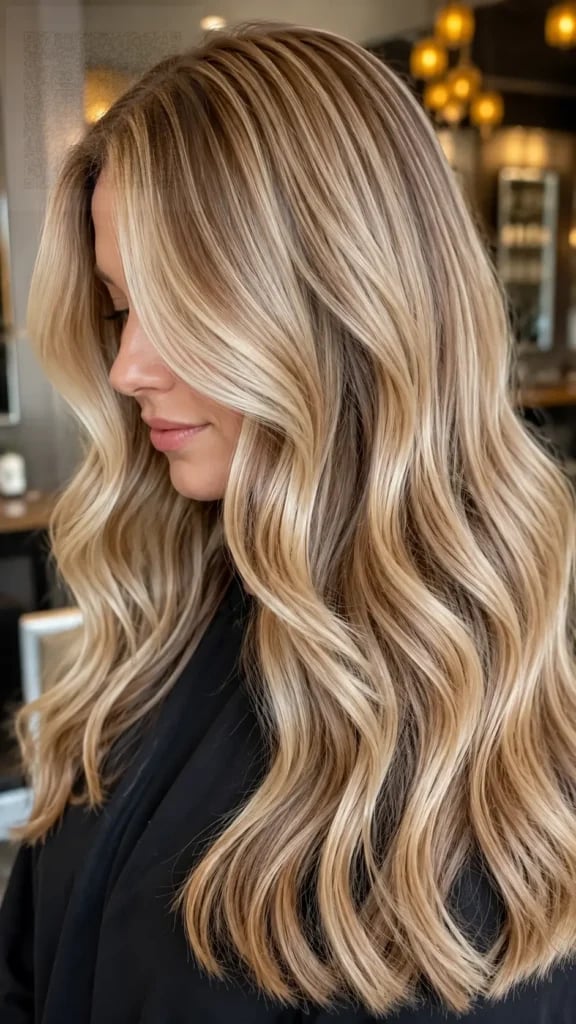
A honey blonde base with darker blonde lowlights woven underneath creates depth that shows from every angle. A middle part and face-framing layers pull the warmer and cooler strands forward, which prevents the honey from washing out a round or square face. The darker pieces sit deeper in the wave pattern, so the lighter sections appear first.
Ask your colorist for: honey blonde base with darker blonde lowlights, soft waves. The lowlights are painted on thicker sections than the highlights, which keeps the overall tone warm without tipping into brassy. Thick, wavy hair at mid-back length holds the contrast best, and a smoothing serum on the mid-lengths and ends adds the gloss that makes the honey look polished. A trim every six to eight weeks keeps the layers from losing their shape.
Dimensional Dark Blonde with Subtle Lowlights
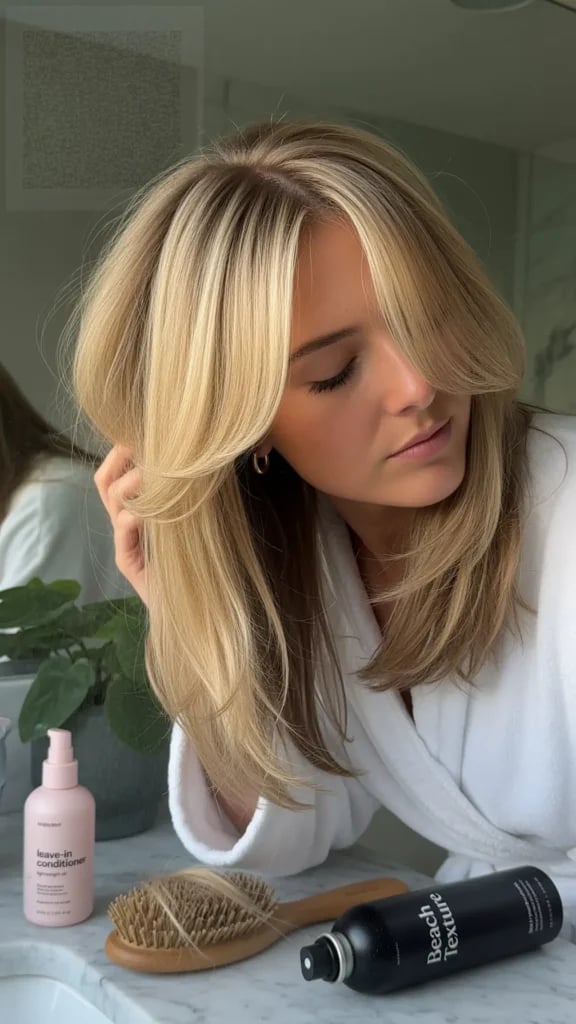
A flat dark blonde is a single note. This version adds subtle lowlights and highlights to the same base, so the hair reads as textured even when it is still. The side view shows the difference: the lighter strands sit on the surface of the loose waves, while the darker ones anchor the depth underneath. A middle part keeps the balance even on both sides.
Ask your colorist for: dark blonde base with dimensional lowlights and highlights, long layers. The salon application takes about three hours, but the payoff is a color that moves with the hair rather than sitting on top of it. Thick, wavy hair at mid-back length or longer gives the layers room to separate, and oval or heart face shapes get a softer frame from the side volume. A large barrel curling iron enhances the existing wave pattern, and a trim every eight to ten weeks maintains the shape.
Ash Brown with Blonde Balayage and Curtain Bangs
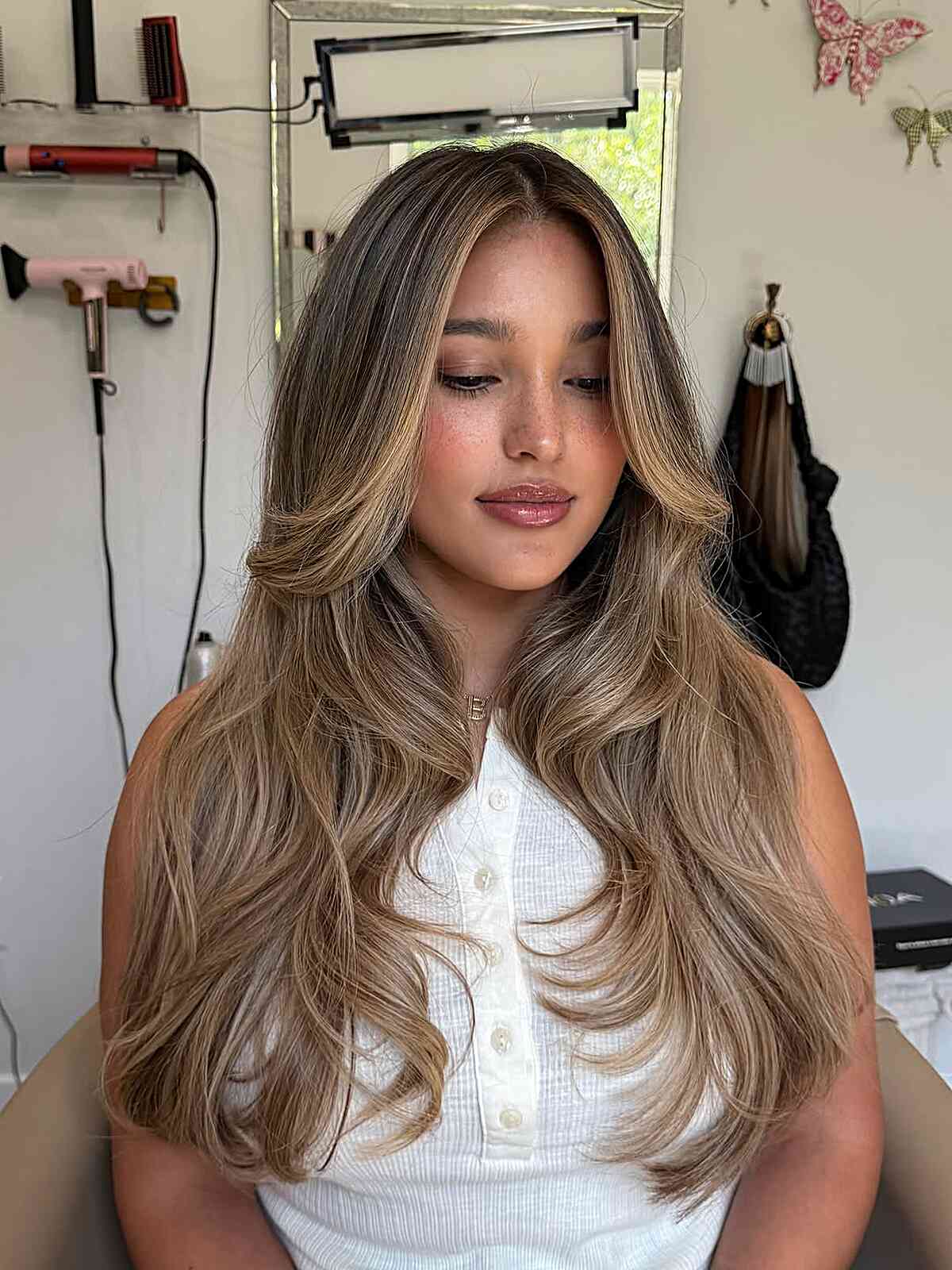
An ash brown base is low-maintenance by nature, but the blonde balayage lifts the long, thick hair into something that catches attention. The curtain bangs are the real workhorse here: they frame the face from the center outward, which softens a square or round jawline while the long layers keep the rest of the hair moving. The middle part guides the eye down the length, and the wavy texture gives the balayage a lived-in finish.
Ask your colorist for: ash brown base with blonde balayage, long layers, curtain bangs. The balayage is painted freehand from the mid-lengths down, so the darker root remains visible and the lighter pieces feel sun-kissed. This works best on thick wavy hair that is already long, because the curtain bangs need weight to sweep properly. A round brush during blow-drying directs the bangs to the sides, and a trim every six to eight weeks keeps the fringe from grazing the eyes.
Collarbone Bob with Root Shadow and Curtain Bangs
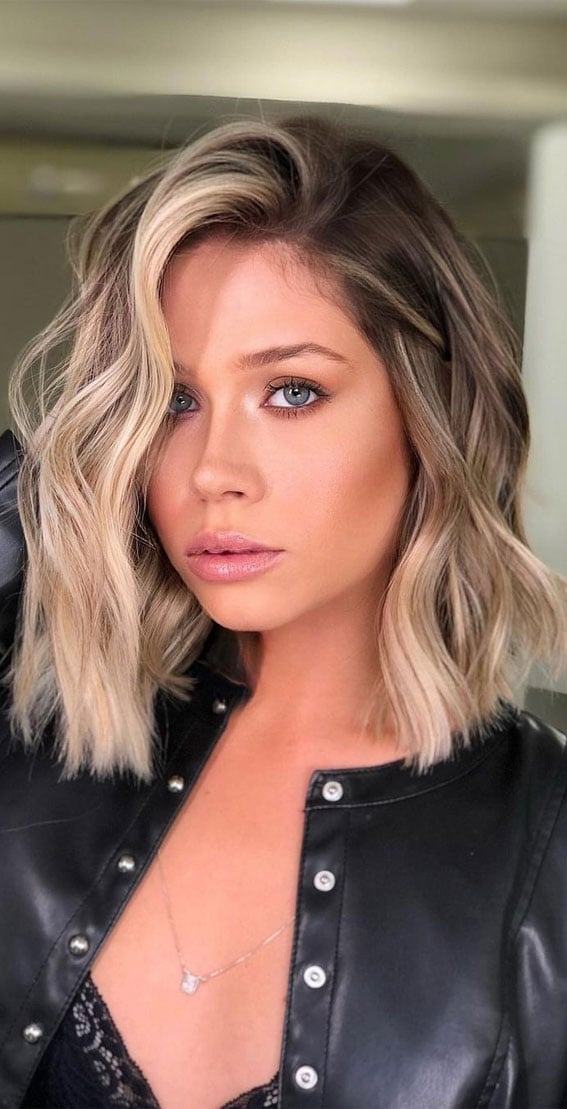
A collarbone bob with curtain bangs and a visible root shadow is the color equivalent of a good foundation: it does the work without announcing itself. The dark blonde base sits darker at the roots, then blends into lighter blonde highlights through the mid-lengths and ends, which means the grow-out is seamless for weeks. The wavy blowout gives the medium-density hair enough body to hold the shape, and the curtain bangs soften the transition from root to highlight.
Ask your stylist for: collarbone bob, dark blonde base with highlights, root shadow, curtain bangs. The root shadow is applied as a demi-permanent shade that fades gradually, so the regrowth line stays soft for about six weeks. Medium density wavy hair holds the bob structure best, and oval or heart faces get the most from the curtain bangs. A volumizing spray at the roots before blow-drying adds lift, and the bob needs a trim every six to eight weeks to keep the collarbone line sharp.
Ash Blonde Lob with Shadowed Roots
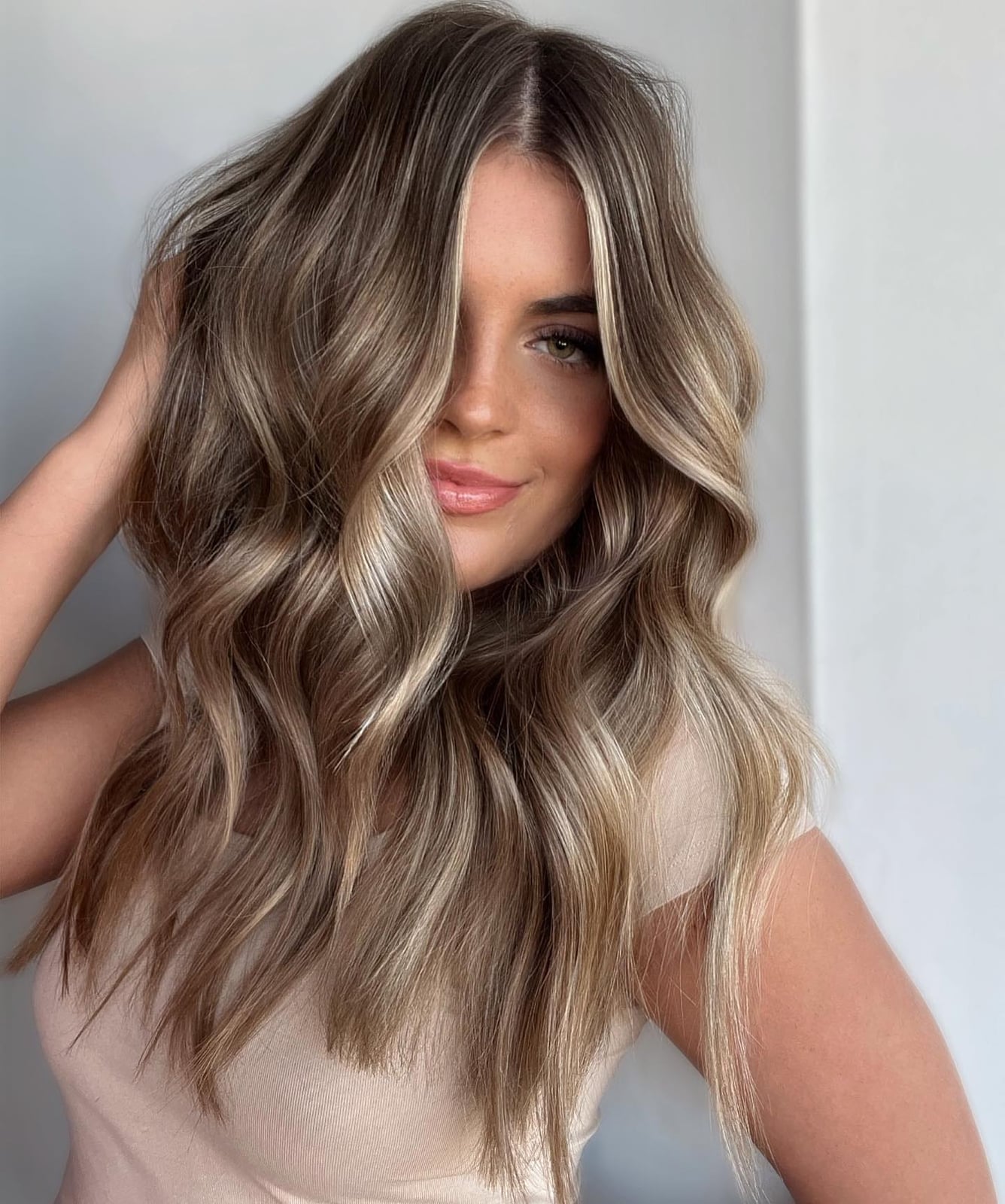
Is it possible to have cool-toned blonde without the brassiness? Yes, but you need a colorist who understands ash tones. This collarbone lob keeps the base ash blonde and adds darker, shadowed roots that blend into subtle lowlights throughout the thick, wavy blowout. The face-framing layers and curtain bangs soften a square or round face nicely. Ask your colorist for: ash blonde base with shadowed roots and subtle lowlights, collarbone length layers. Ash tones can pull greenish if your water has high mineral content, so a purple shampoo once a week is essential. Shadowed roots need a toning appointment every six to eight weeks to keep the contrast defined and intentional.
Blonde Lob with Natural Looking Lowlights
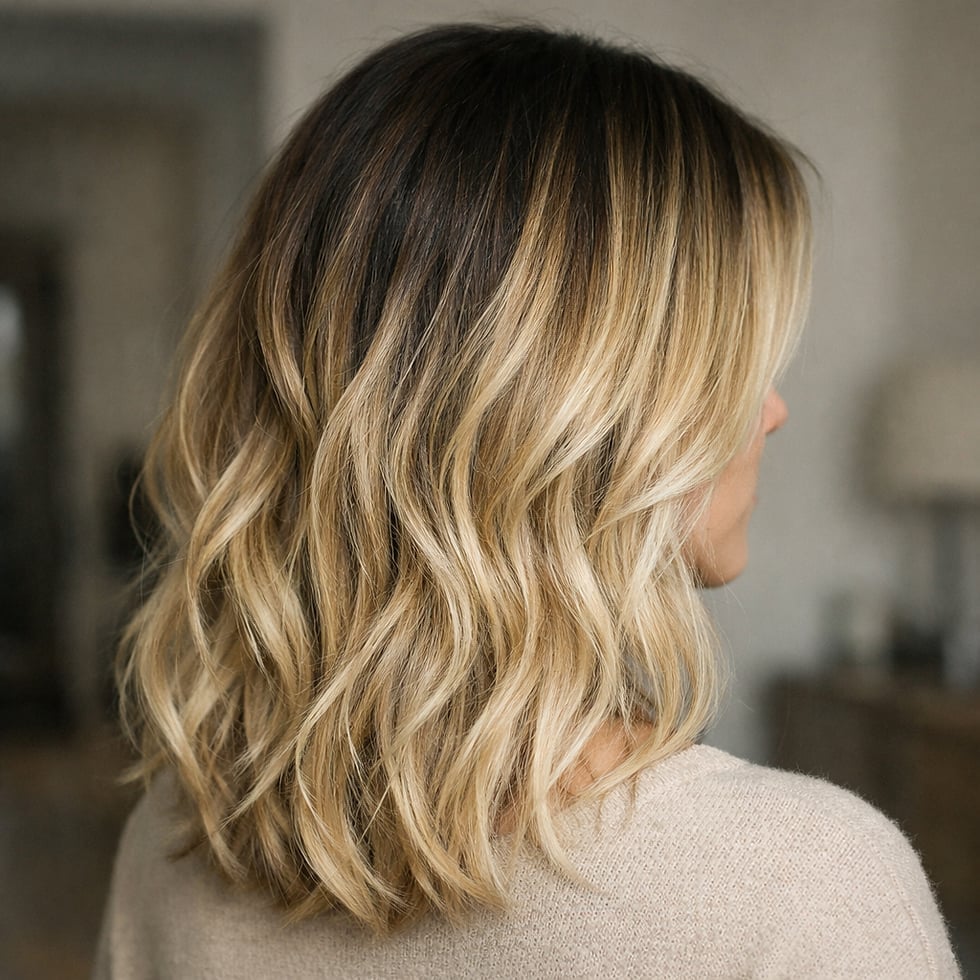
This is not a seasonal color that only works under a summer sun. A blonde lob with natural-looking dark blonde lowlights lands just as well in January as it does in July, because the technique mimics the way hair naturally lightens and darkens throughout the year. The collarbone length is styled in soft waves, with the darker pieces woven through the medium-density texture so the blend reads as sun-kissed, not salon-striped. Ask your colorist for: blonde lob with natural looking lowlights, soft waves. The lowlights keep the overall tone from washing out a fair base, making this a solid choice for anyone who wants dimension without a high-contrast grow-out line.
Mid-Back Dark Blonde with Lighter Lowlights
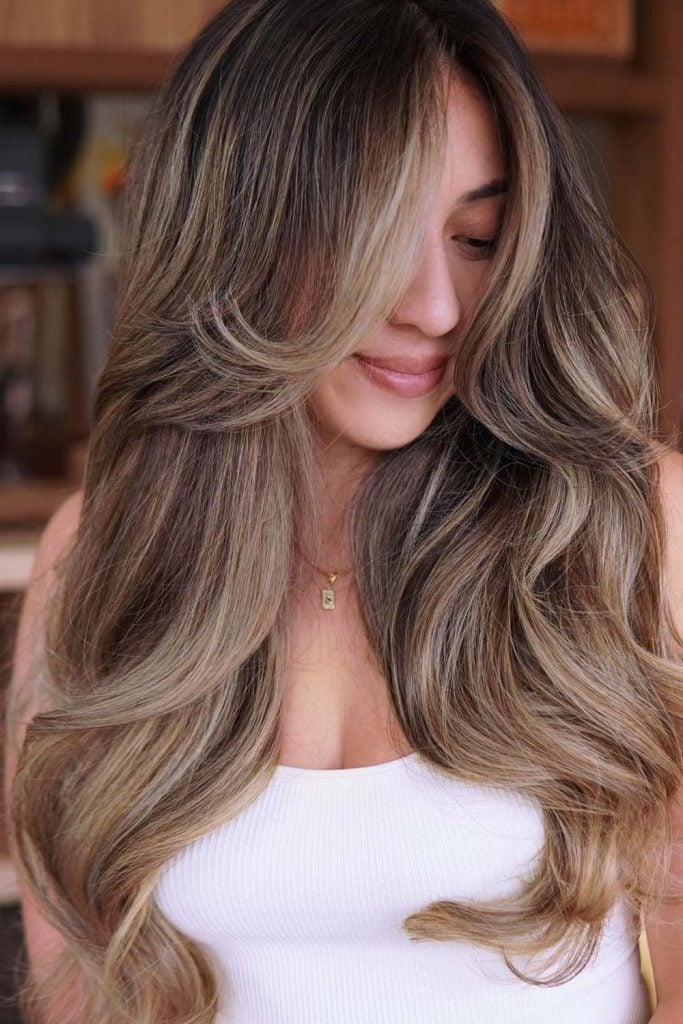
The design here is deliberate: a dark blonde base with lighter blonde lowlights, placed so the dimension wraps around the face rather than sitting evenly throughout the length. The mid-back hair is cut with long layers and curtain bangs, and the blowout emphasizes the face-framing pieces. This is not a color that relies on the back of the head for impact.
Ask your stylist for: dark blonde base with lighter blonde lowlights, face-framing layers, blowout style. The lighter lowlights sit closer to the front pieces, so the color conversation happens around your face. The thick, wavy texture holds the waves for a full day without product overload, but the real ask is for those face-framing layers to be cut to graze the jawbone, not shorter. A trim every six to eight weeks keeps the layers from collapsing into a single triangle.
Collarbone Lob with Subtle Dimensional Blonde
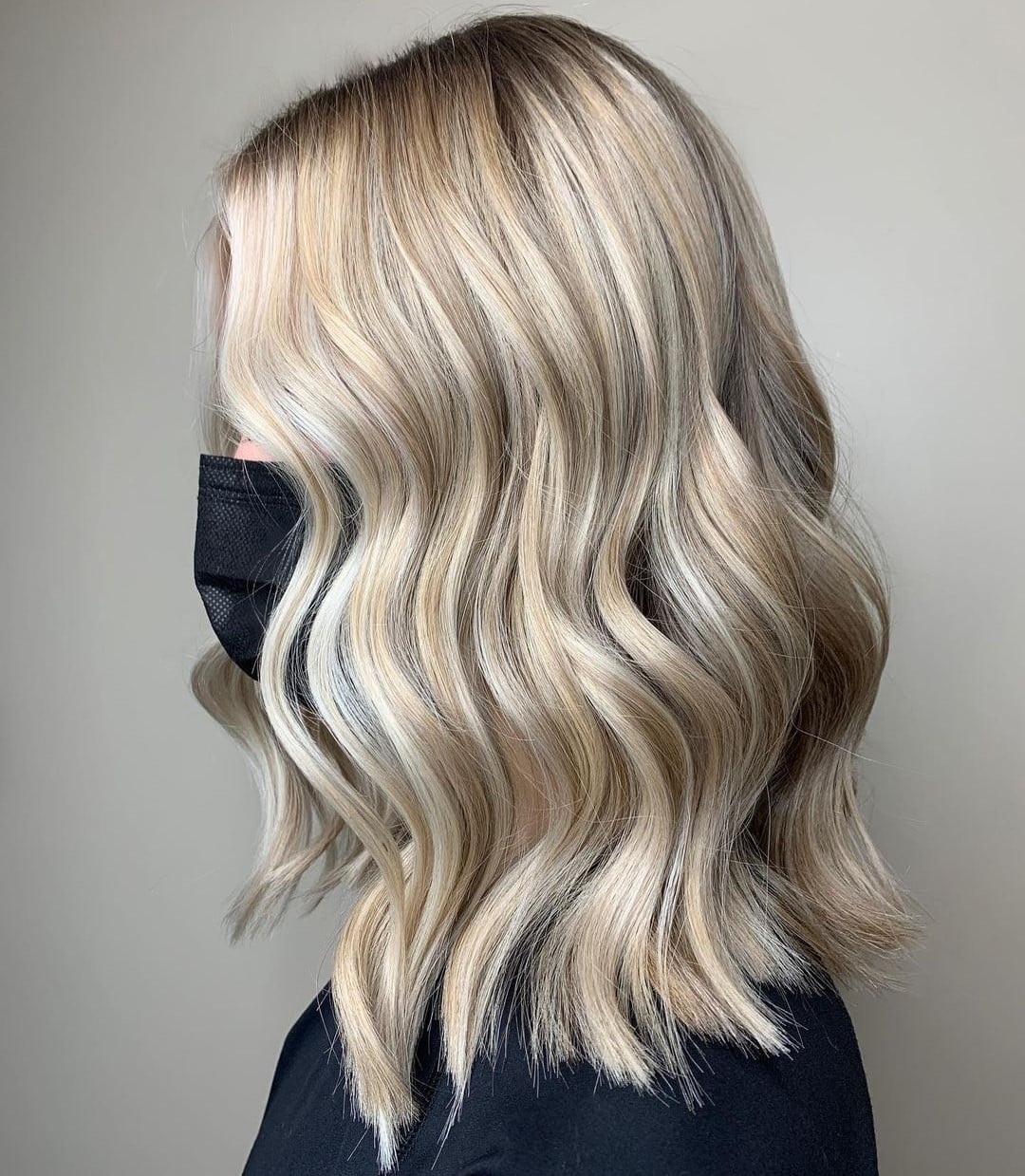
The technique here is precise: dark blonde lowlights are painted into the mid-shaft and ends of a collarbone lob, leaving the root area lighter for a soft, lived-in grow-out. The result is a dimensional blonde that reads as naturally sun-lightened rather than salon-banded. The medium-density wavy texture is styled in loose waves, with the side view showing how the darker pieces catch light differently than the base. Ask your colorist for: collarbone lob with subtle dimensional blonde lowlights, loose waves. The drawback is that this placement works best on hair that has some natural wave or bend; on dead-straight hair, the lowlights can look like solid chunks rather than blended depth. A trim every eight weeks keeps the shape clean.
Long Ash Brown with Blonde Balayage
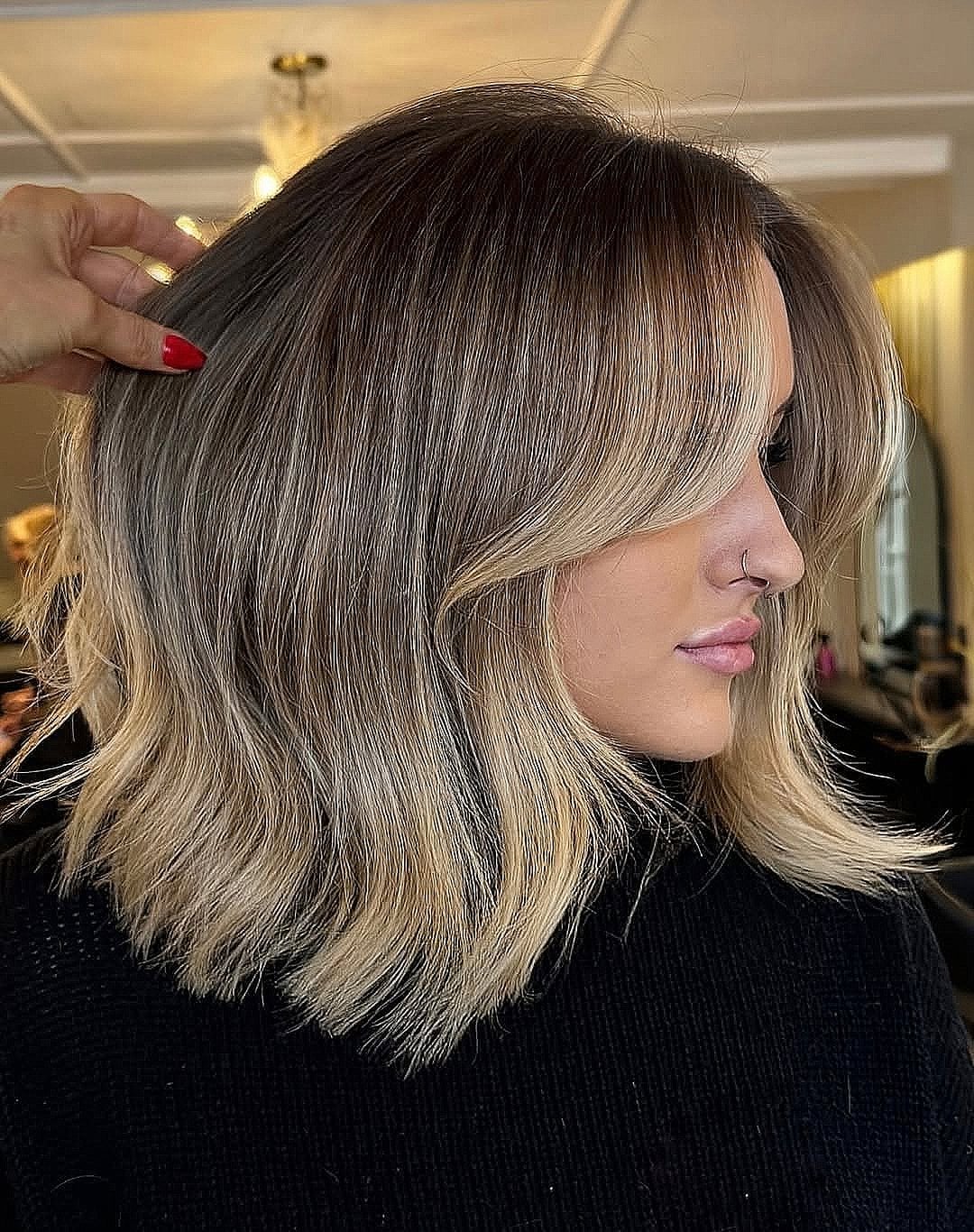
Balayage or traditional highlights on ash brown hair: which is the smarter investment? Balayage wins here because the hand-painted blonde pieces are concentrated on the mid-lengths and ends, leaving the root area ash brown and low-maintenance. The long, thick, wavy hair is cut with long layers and soft curtain bangs, with the face-framing pieces catching the lighter balayage for a natural, lived-in effect. Ask your colorist for: ash brown base with blonde balayage, long layers, soft waves. This is a salon-only job; the hand-painting requires a colorist who can gauge saturation by eye, not by foil count. DIY balayage on ash brown often results in muddy tones because the ash base fights the warm lift. Plan for about three hours in the chair every ten to twelve weeks.
Mid-Back Dark Blonde with Highlights and Lowlights, Curtain Bangs
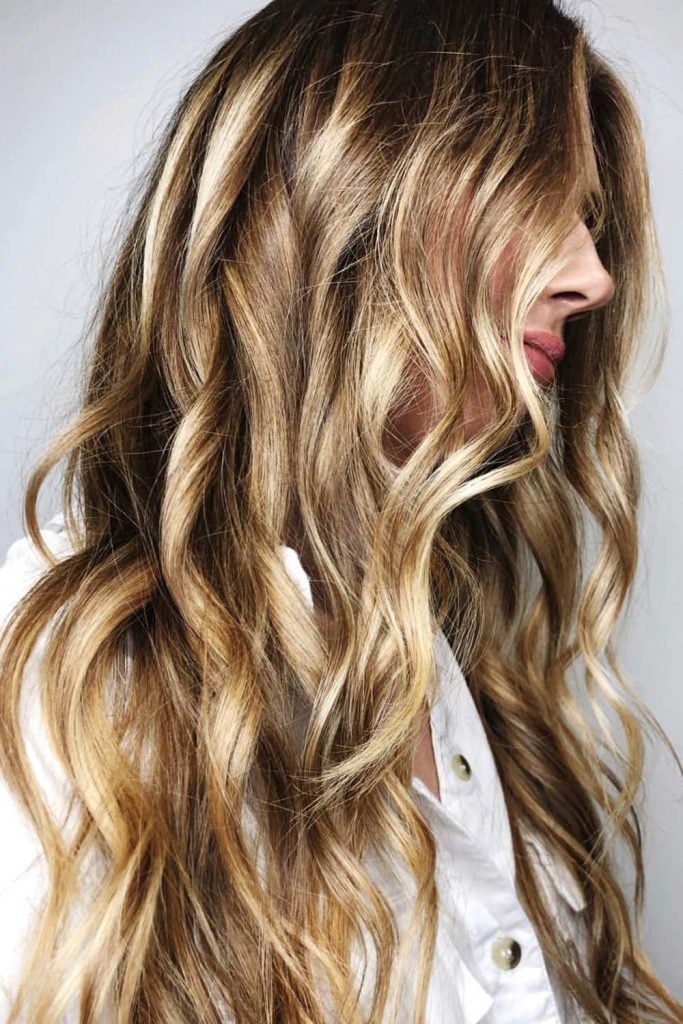
Not every layered, multi-tonal color works on fine hair, but this one does because the curtain bangs and face-framing layers keep the dimension visible without needing much bulk. The dark blonde base with lighter blonde highlights and subtle lowlights gives thick, wavy hair of mid-back length a natural depth that does not read as stripey. Oval and heart faces benefit most from the soft framing around the jaw and cheekbones.
Ask your colorist for: dark blonde base with lighter blonde highlights and subtle lowlights, face-framing layers. A root lifting spray before blow-drying keeps the crown from falling flat, and a trim every six to eight weeks prevents the curtain bangs from grazing your eyelashes. The trade-off is that the blend relies on professional placement; a single-process gloss at home will muddy the tone.
Mid-Back Ash Blonde with Lowlights and Balayage
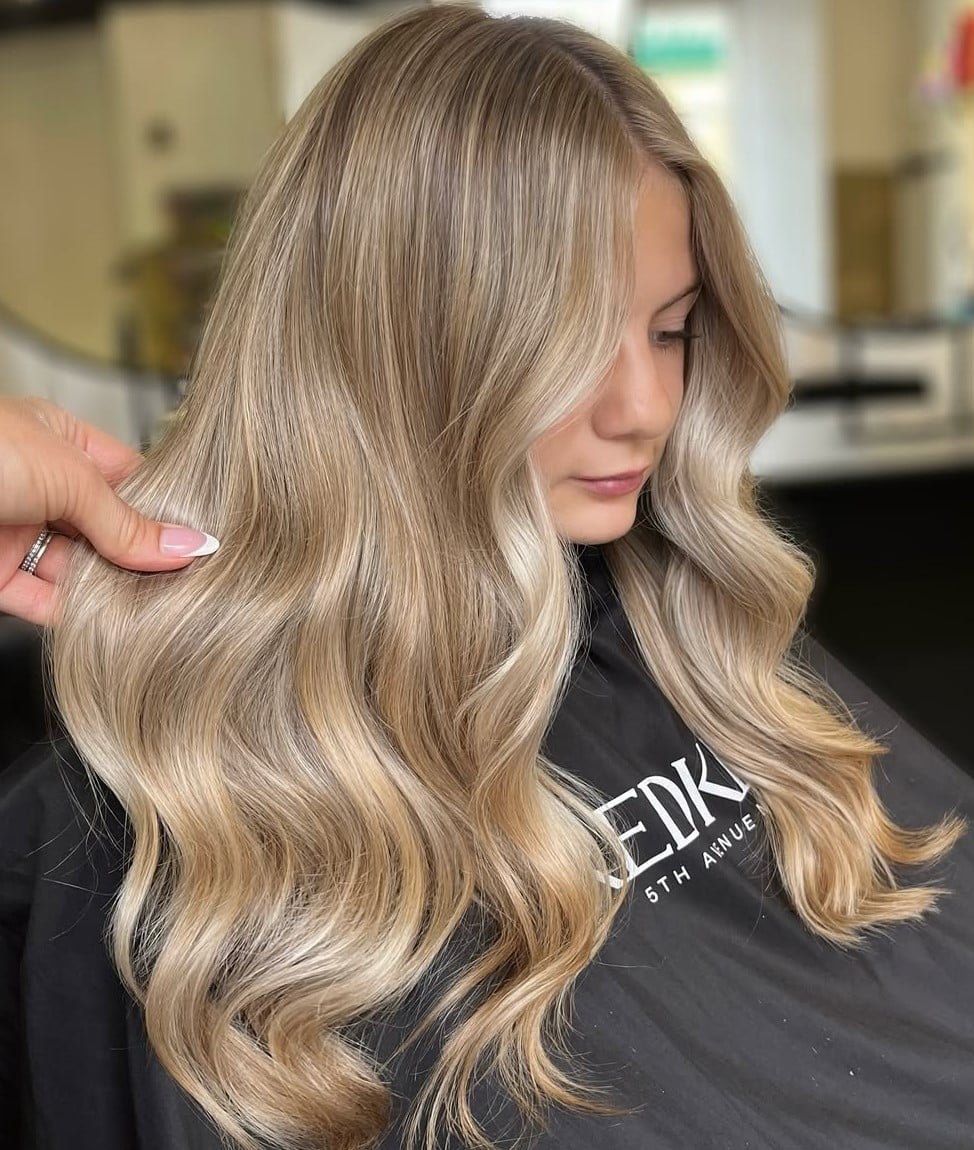
The design here is a side-parted ash blonde base with subtle lowlights and balayage, applied through long layers on thick, wavy hair of mid-back length. The grow-out is the selling point: a balayage technique means the root line stays soft for about ten weeks before you need a toning appointment. Ask your colorist for: ash blonde base with subtle lowlights and balayage, long layers, side part. A texturizing spray on dry waves refreshes the shape between washes.
Mid-Back Ash Blonde with Darker Highlights
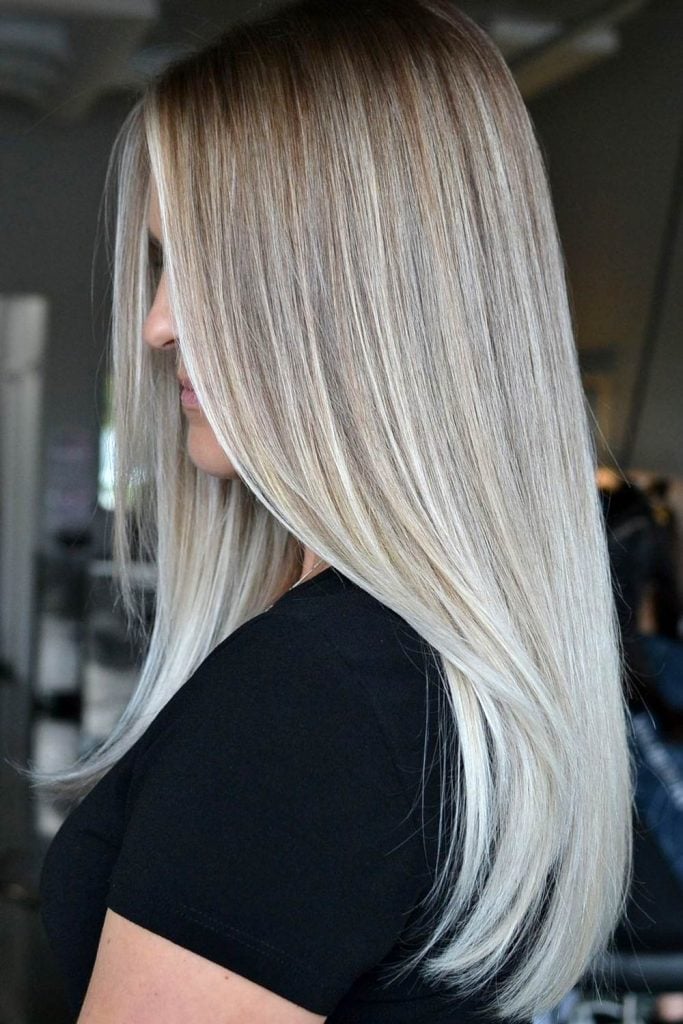
Ash blonde on fine, straight hair of mid-back length is a trickier proposition than it looks. The tone requires a cool base to avoid pulling green, and the darker blonde highlights need to be placed sparingly so they do not weigh down the fine texture. Curtain bangs help distribute the contrast evenly around the face, making the color read as intentional rather than accidental.
Ask your colorist for: ash blonde base with darker blonde highlights, smooth blowout. The honest drawback is the toning schedule: ash shades fade warmer within four to six weeks, and a single gloss appointment missed means brassy ends. A smoothing balm on dry hair keeps the cuticle flat and the shine visible, but this is not a color you can stretch past eight weeks without a shadow root.
Mid-Back High Contrast Blonde and Brown Lowlights
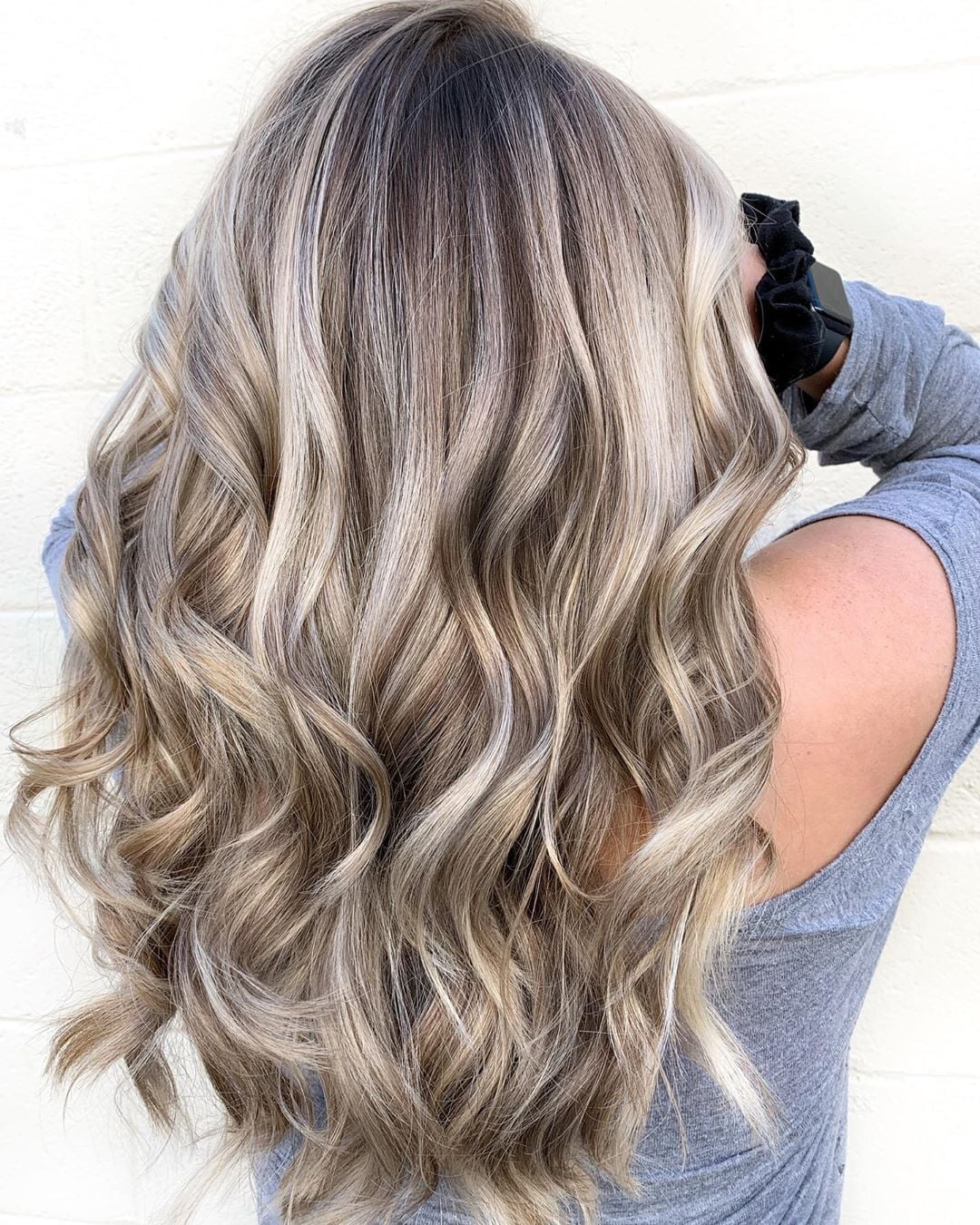
Is high contrast lowlights a winter-only move, or does it work year-round? The answer depends on how you wear it. On thick, wavy hair of mid-back length, the dark brown lowlights alternate with lighter blonde sections to create a deliberate, graphic dimension that reads as bold rather than accidental. The loose curl texture helps the two tones blend at the edges, so the contrast does not look blocky.
Ask your colorist for: high contrast dark brown and blonde lowlights, loose curls. This color lands best in cooler months when the deeper brown echoes richer outerwear tones, but it also holds up through summer if you use a purple shampoo once a week to keep the blonde from yellowing against the brown. The occasion is anything that benefits from a strong visual anchor: a dinner out, a presentation, a day you want your hair to make the first impression.
Mid-Back Beige Blonde with Subtle Lowlights
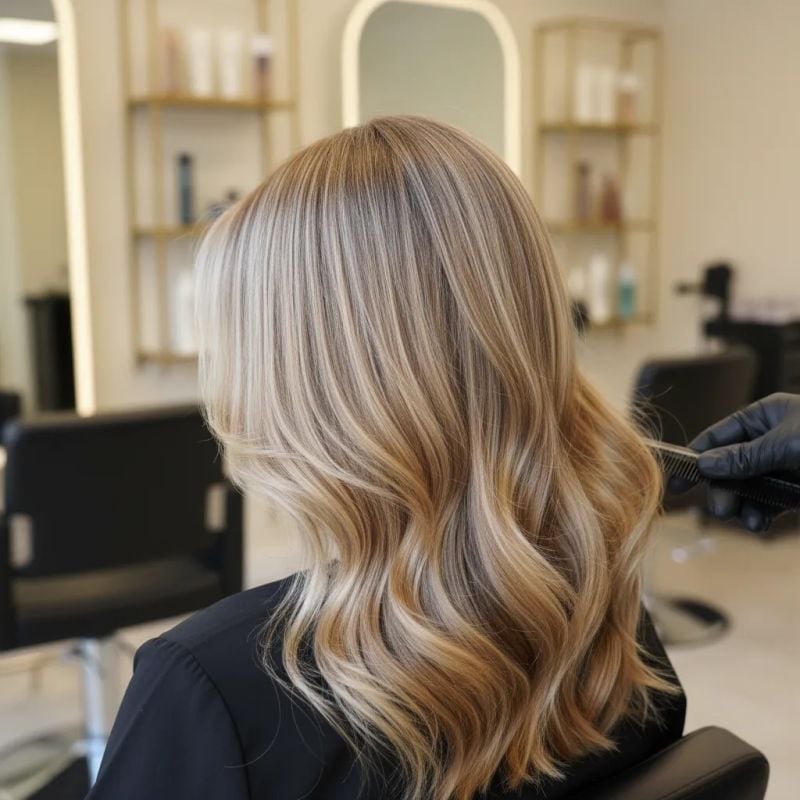
A beige blonde base reads as a neutral, almost creamy blonde until you add subtle dark blonde lowlights through the mid-lengths and ends. On thick, wavy hair of mid-back length, the back view reveals how the lowlights sit deeper than the base, creating a soft, tonal shift that does not rely on highlights for interest. Ask your colorist for: beige blonde base with subtle dark blonde lowlights, loose waves. The key is to request the lowlights painted on larger sections so they read as shadow rather than stripes.
Mid-Back Honey Blonde with Rich Dimension
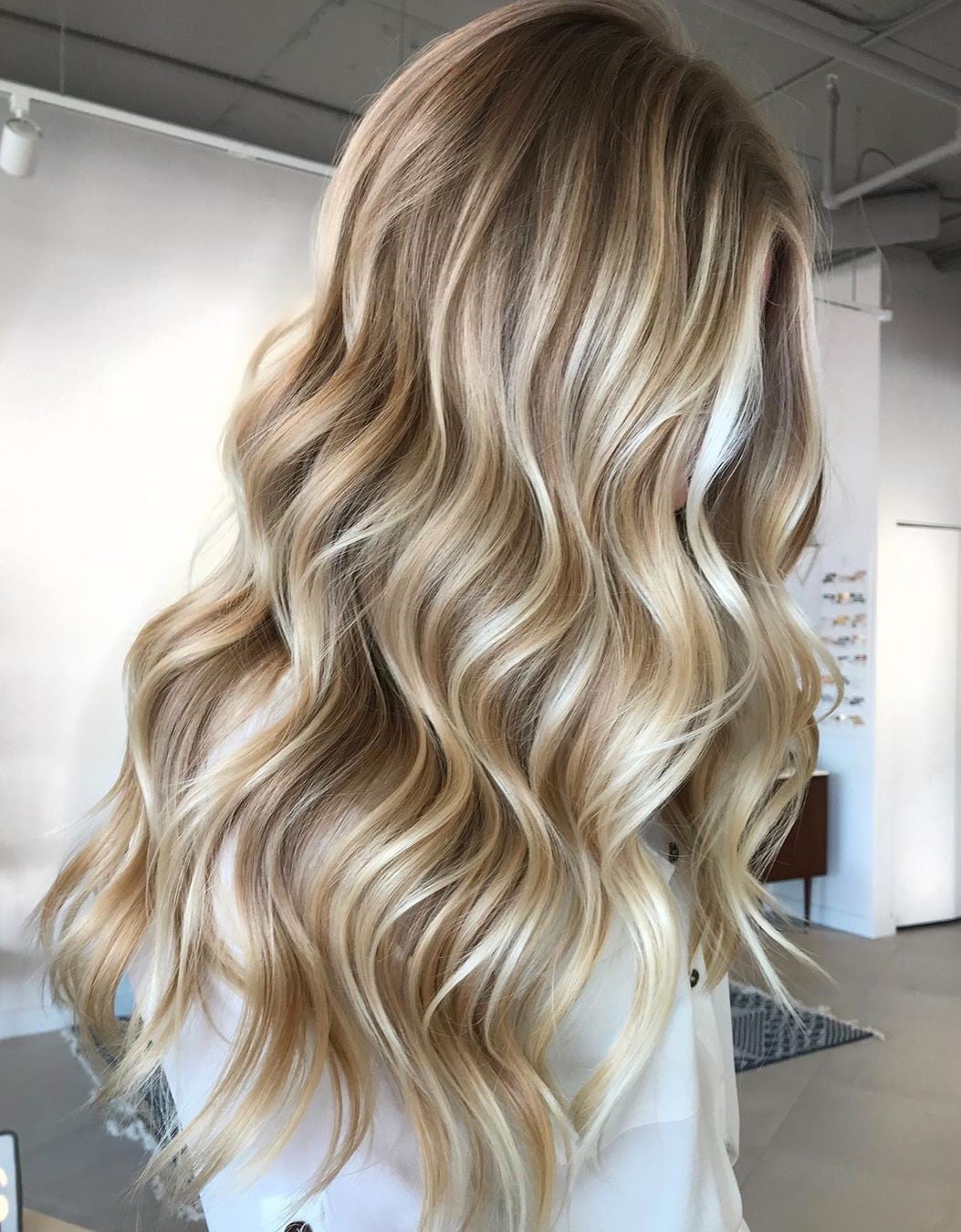
Layering a honey blonde base with both lighter highlights and darker lowlights creates the kind of depth that reads as expensive rather than brassy. The technique works by placing the darker pieces underneath and weaving the lighter strands through the top, so every wave catches a different tone. Ask your colorist for: honey blonde base with highlights and darker lowlights. Thick, wavy hair at mid-back length has enough surface area for the contrast to register without looking busy.
The side view and middle parting here let the dimension do the work. No bangs means the color can travel uninterrupted from root to end, and the loose waves soften the transition between shades. A trim every six to eight weeks keeps the ends healthy enough to hold the gloss. This is a salon-only job, given the precision of the placement.
Mid-Back Ash Blonde with Natural Dimension
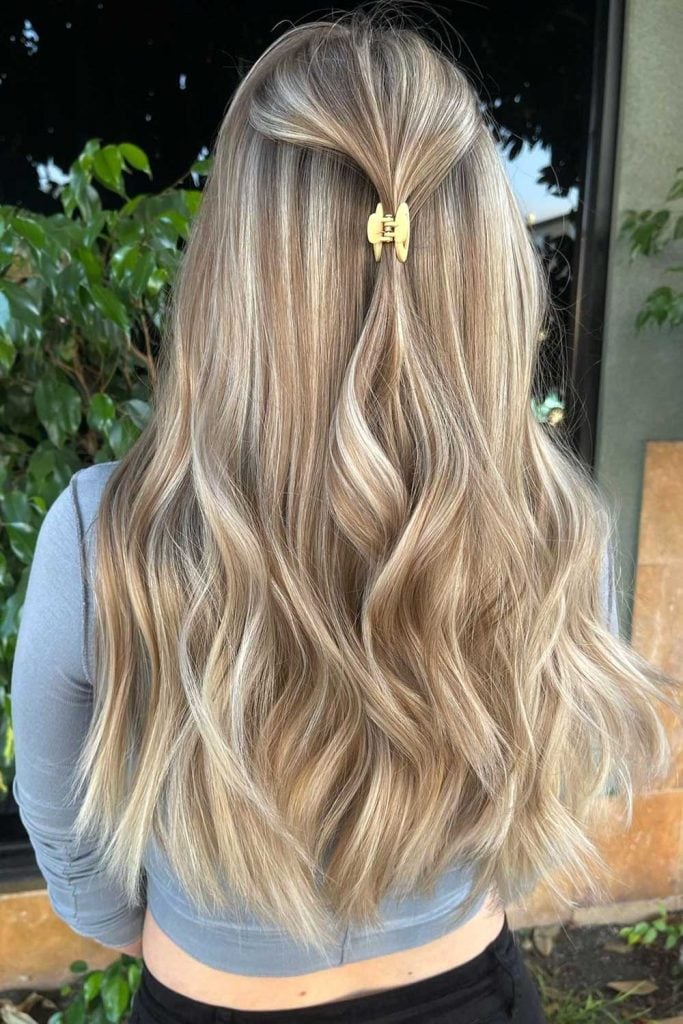
The difference between this and a more processed blonde is subtle but deliberate. Where a high-lift toner can leave hair looking one-dimensional, the ash blonde base here is anchored by subtle dark blonde lowlights that mimic natural shadow. Ask your colorist for: ash blonde base with subtle dark blonde lowlights. Thick, wavy hair at mid-back length benefits from the weight of the darker tones, which keep the color from feeling top-heavy.
The front view and middle parting show the lowlights running through the interior, so the dimension reads from every angle. A wavy blowout on thick hair needs about twenty minutes with a round brush, no curling iron required. Trim every six to eight weeks. This is a salon color: blending ash tones into a darker base requires a trained eye.
Collarbone Light Blonde with Subtle Lowlights
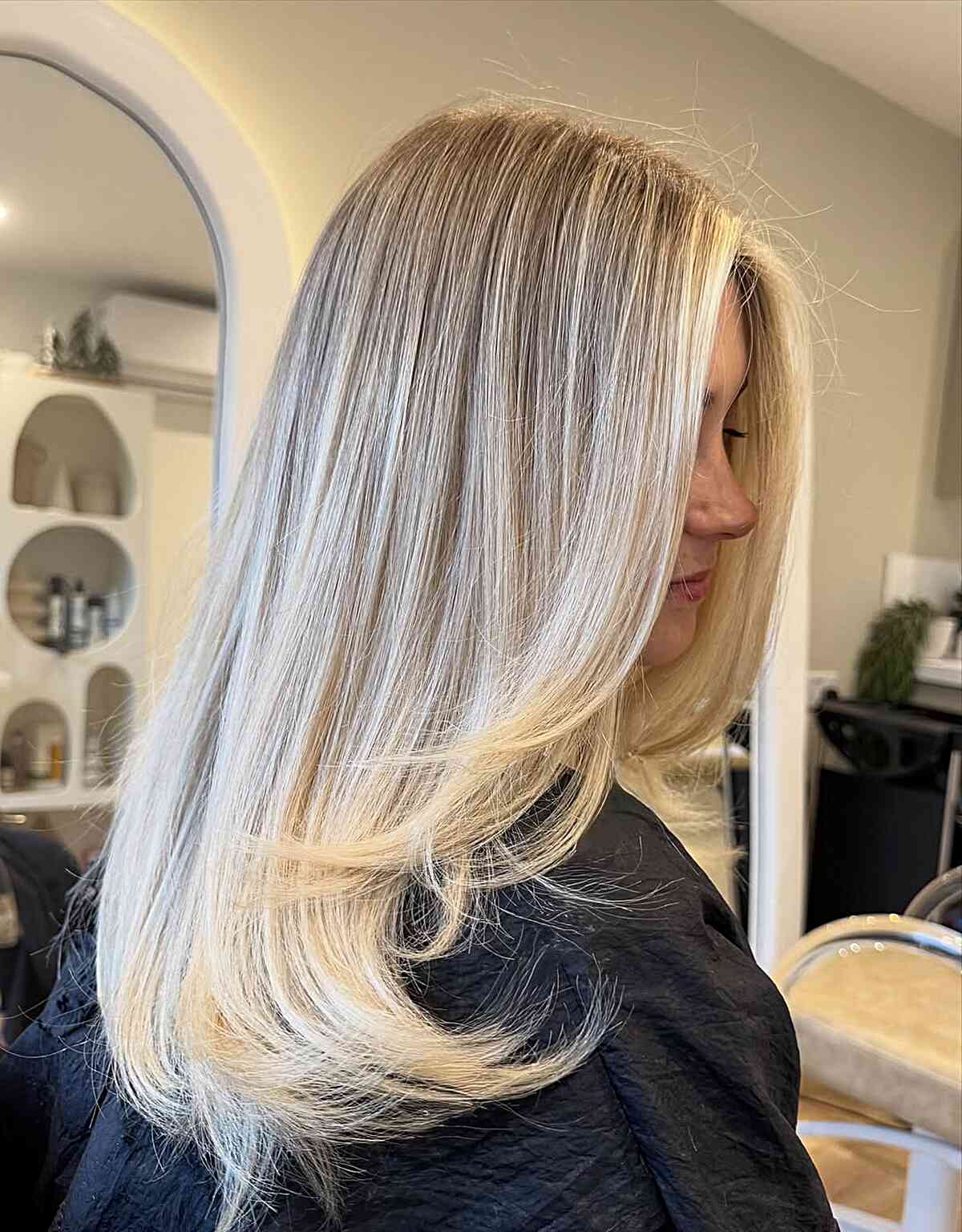
Wondering if light blonde with lowlights works on a shorter cut? It does, provided the lowlights stay subtle. Here the collarbone length gets a side view of blended pieces that add depth without muddying the base. Ask your colorist for: light blonde base with subtle lowlights. The straight, thick texture and face-framing layers soften a round face by drawing the eye downward. A blowout with a round brush takes about fifteen minutes, and the ends stay smooth because the cut lands at collarbone, away from the shoulders.
Mid-Back Ash Blonde with Beige Lowlights, Face-Framing Layers
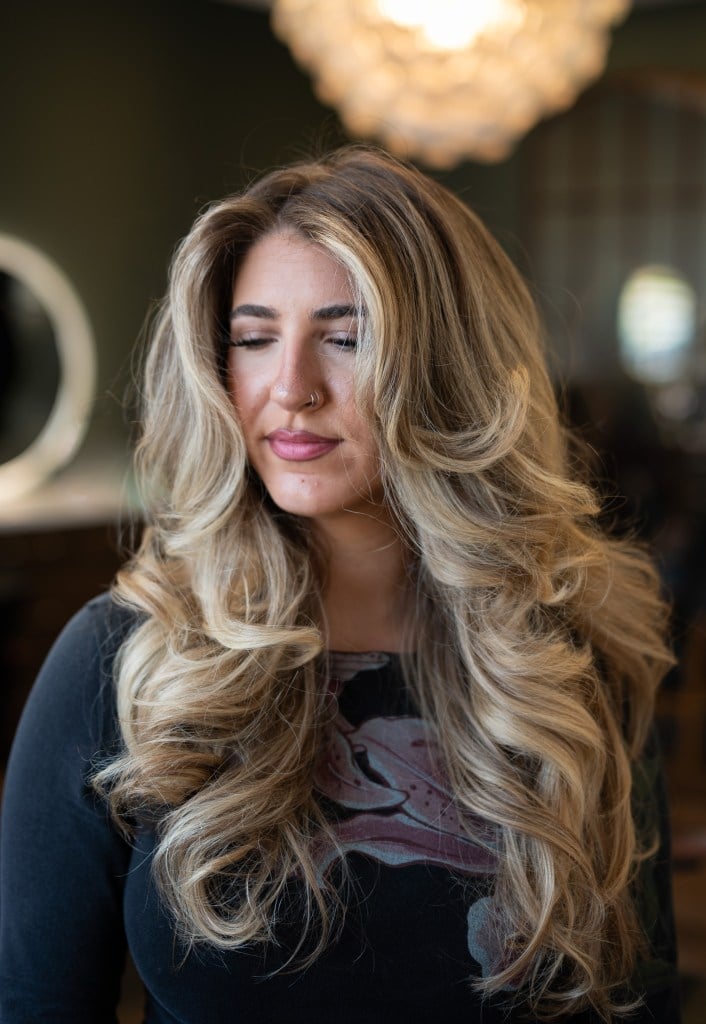
The face-framing layers here are cut so they catch the light from the side parting, which makes the beige lowlights visible even when the rest of the hair is down. Ash blonde as a base can skew cool, but the beige undertone in the lowlights keeps the overall dimension warm without going golden. Ask your colorist for: ash blonde base with beige lowlights and face-framing layers. Thick, wavy hair at mid-back length holds the voluminous blowout for most of the day.
A volumizing mousse at the roots before drying gives the lift you see in the front view; the layers then fall naturally without needing a re-curl. The side parting means the lowlights peek through on one side more than the other, which is a deliberate asymmetry. Trim the layers every six to eight weeks to preserve the shape. Blow-dry time runs about twenty-five minutes with thick hair.
Mid-Back Ash Blonde with Subtle Blonde Lowlights, Wavy
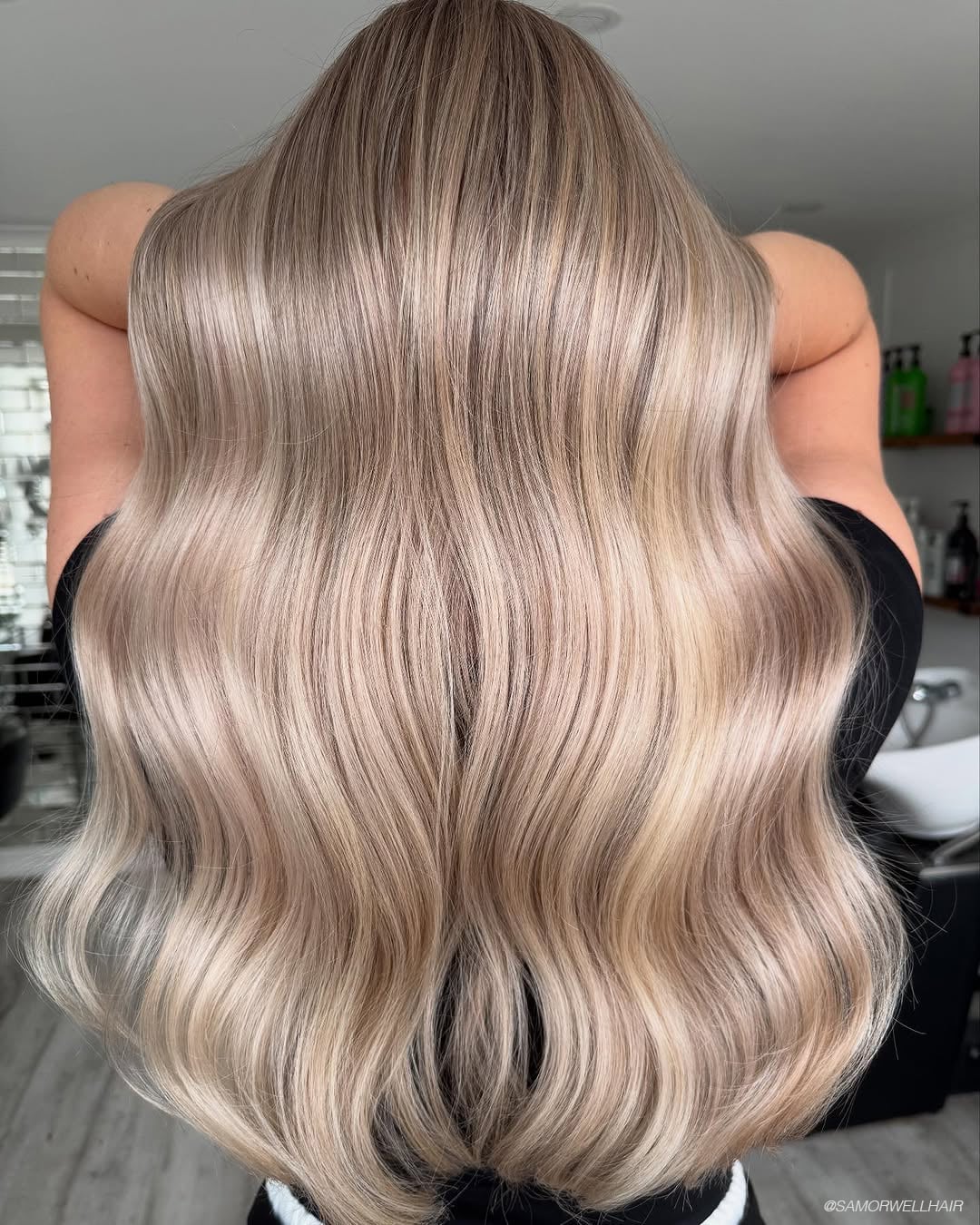
Ash blonde that leans too cool can look flat after a few weeks, especially on wavy hair where light hits the bends unevenly. The subtle blonde lowlights here are a safeguard: they add a touch of warmth at the mid-lengths so the color reads as dimensional rather than ashy. Ask your colorist for: ash blonde base with subtle blonde lowlights. Thick, wavy hair at mid-back length gets enough movement from the soft waves to show the contrast.
The honest drawback is that ash tones fade faster than golden ones. A toning appointment every four to six weeks keeps the base from turning brassy or muddy. From the back view, the lowlights are barely visible in direct light, which is the point: they create depth without announcing themselves. No bangs means the waves flow uninterrupted. Trim every eight to ten weeks.
Collarbone Honey Blonde with Face-Framing Highlights
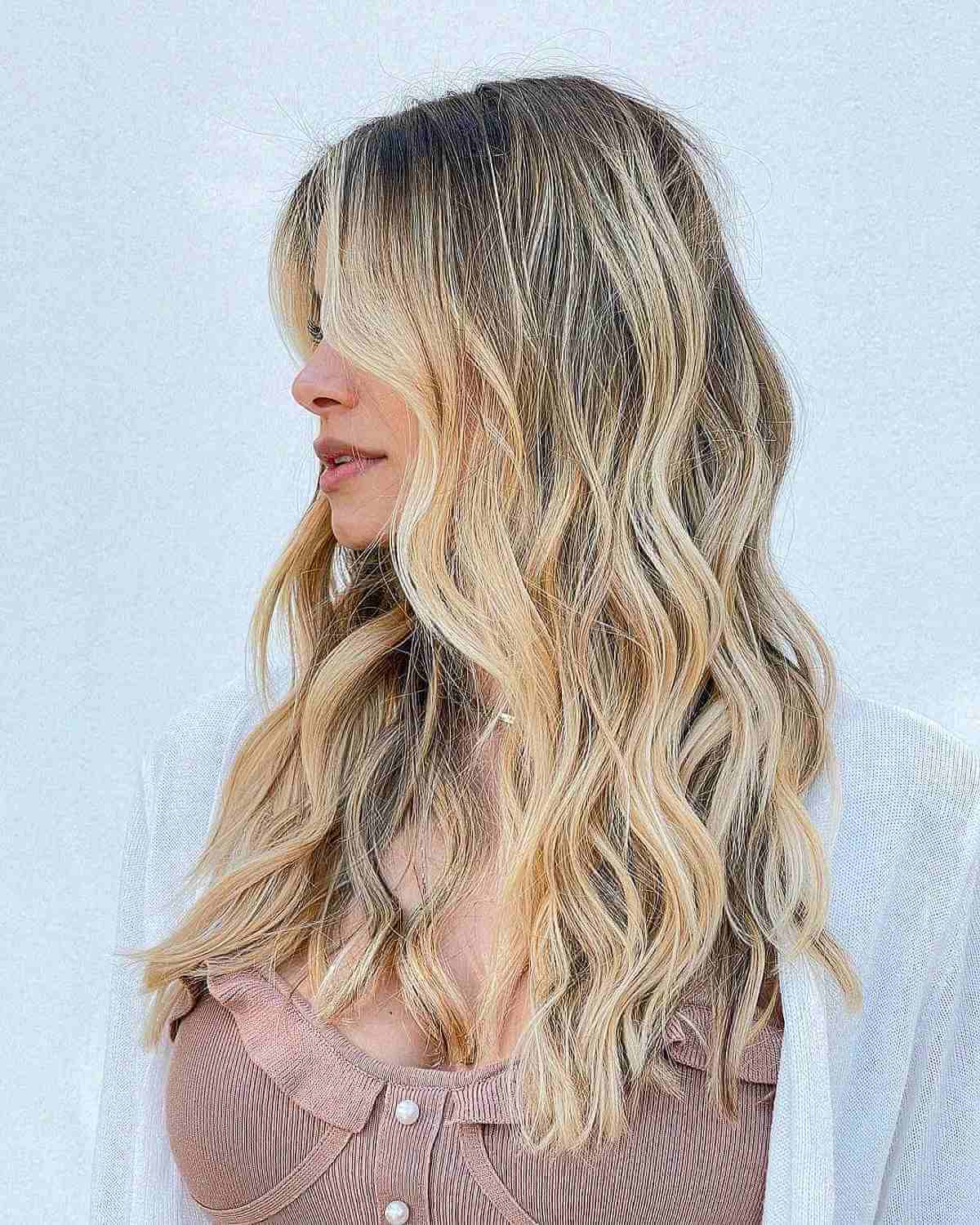
Is there a better shade for the golden hour than honey blonde? A collarbone cut with curtain bangs and loose waves sets the stage for a honey blonde base, darkened by subtle lowlights and brightened by face-framing highlights. The technique keeps the overall tone warm and dimensional rather than flat. Ask your colorist for: honey blonde base with darker blonde lowlights and face-framing highlights, collarbone length. A smoothing serum on the front pieces keeps them sleek through a workday.
Mid-Back Cool Ash Blonde with Subtle Lowlights, Curtain Bangs
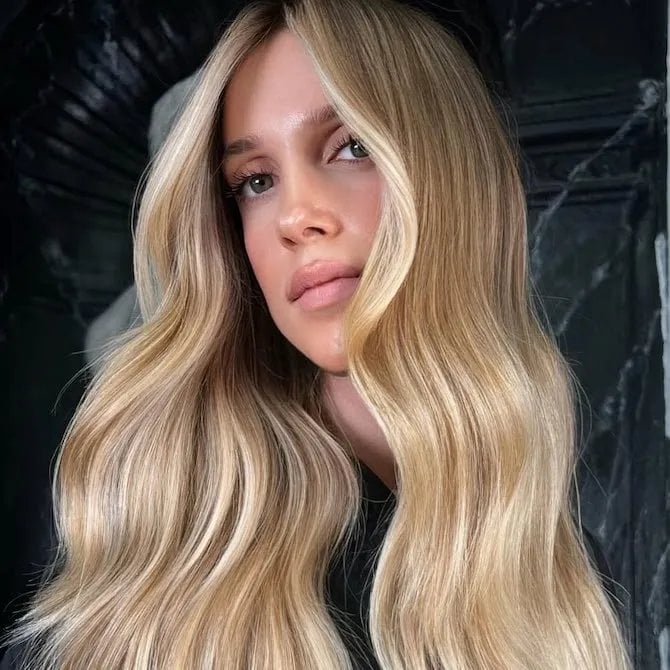
Precision over volume. Long layers carry a cool ash blonde base, and the real work is done by subtle dark blonde lowlights woven through the ends. They sit just deep enough to look like natural shadow, not contrast. Wispy curtain bangs frame the face without stealing focus from the dimensional blonde.
Ask your colorist for: cool ash blonde base with subtle dark blonde lowlights, mid-back length, wispy curtain bangs. For thick, wavy hair, this combination holds its shape without heavy product. A round brush on the bangs, directing them outward, is all the styling this needs.
Collarbone Ash Blonde with Darker Lowlights
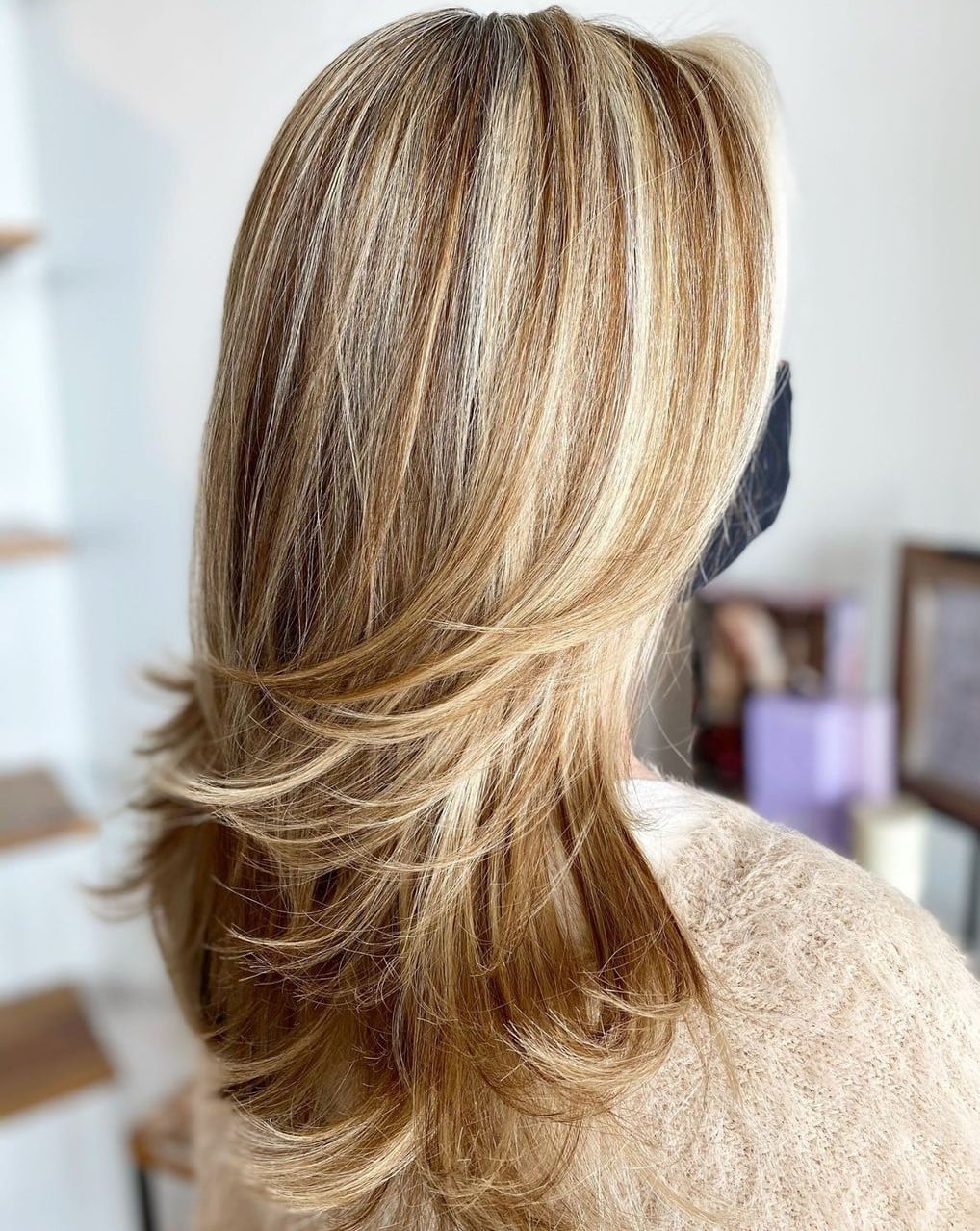
A smooth blowout reveals how darker lowlights sit against an ash blonde base. The collarbone cut keeps the layers visible, and the curtain bangs soften the front without shortening the overall length. The technique applies the darker tone in fine slices for a textured look. Ask your colorist for: ash blonde base with dark blonde lowlights, collarbone length, smooth blowout, curtain bangs. Thick, wavy hair benefits from root volume before blow-drying.
Mid-Back Honey Blonde with Caramel Dimension, Styled in Loose Waves
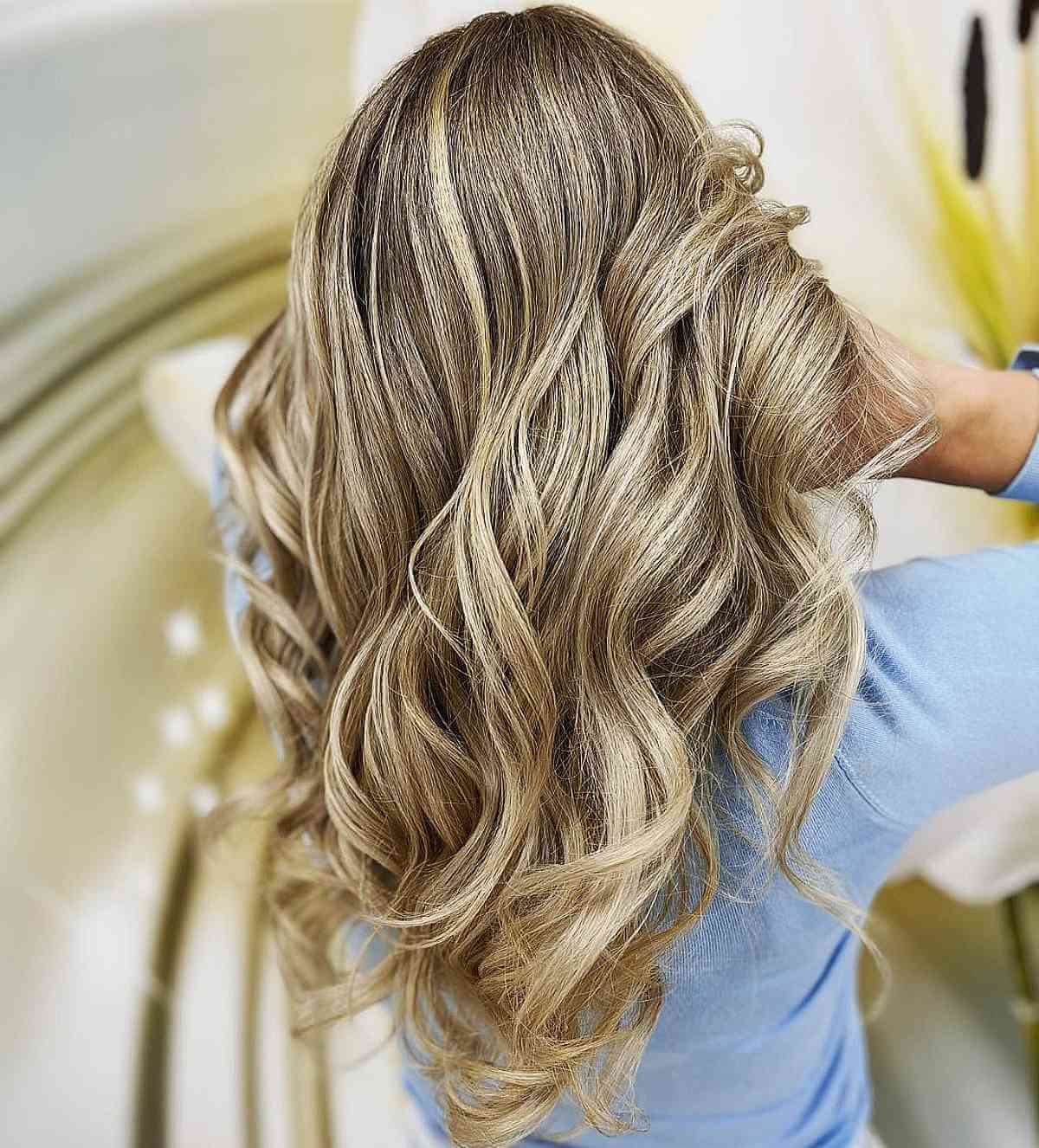
A single-process honey blonde gives you warmth. A honey blonde base with caramel highlights and lowlights gives you depth, movement and a reason to wear loose waves. The back view here shows the blend: caramel tones weave through the mid-lengths, while the base stays rich at the roots. It is a salon-only technique, because placing both lighter and darker pieces in the same session requires a practiced hand.
Ask your colorist for: honey blonde base with caramel highlights and lowlights, mid-back length, loose waves. The dimensional color blend means you can skip a root touch-up for a few weeks without looking undone. A heat protectant before waving is the only at-home step.
Mid-Back Ash Blonde with Platinum Highlights, Styled in Loose
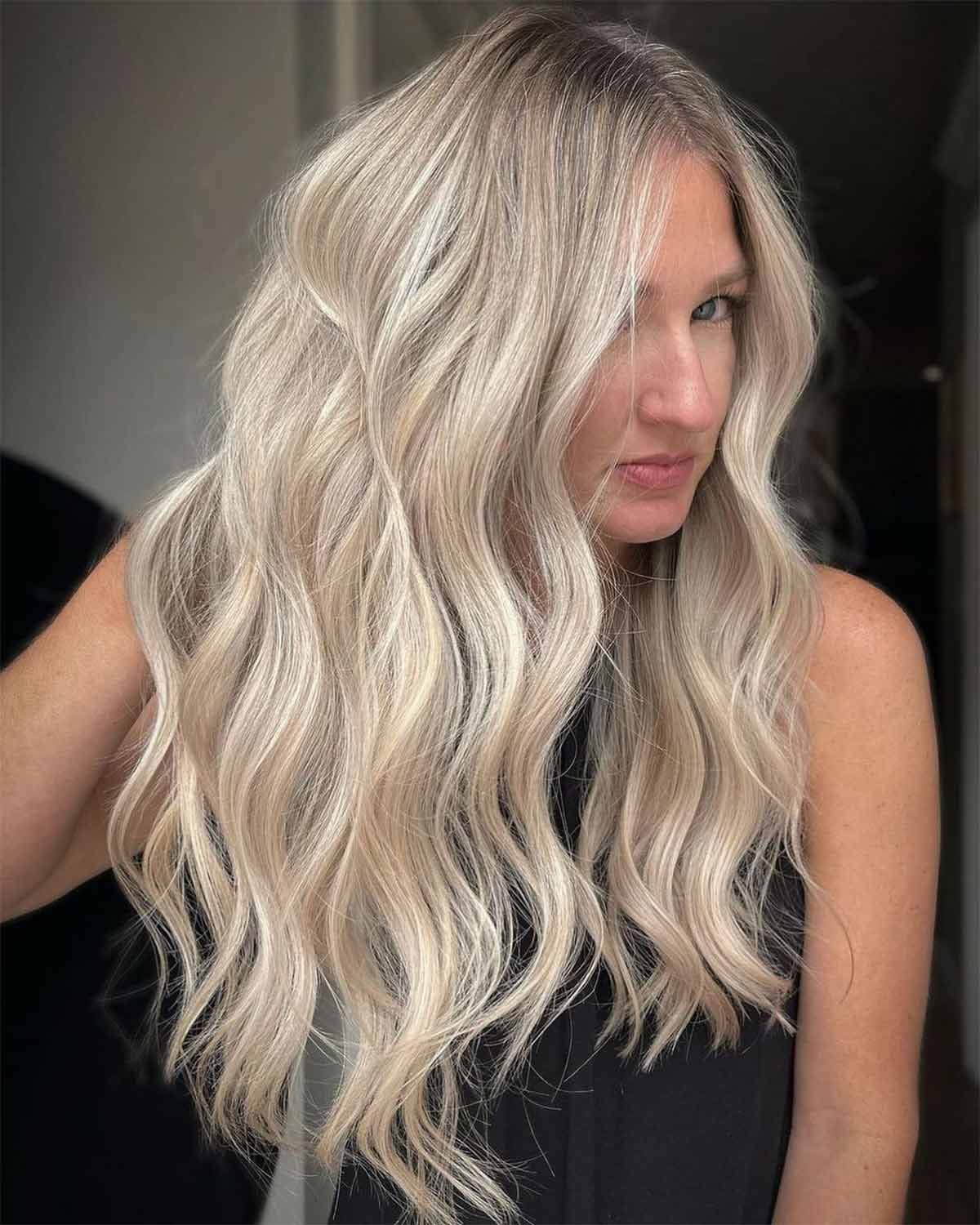
A practical rule: the lighter the highlight, the more important the root shadow. This mid-back length cut uses an ash blonde base as the anchor, with bright platinum highlights for lift and a subtle root shadow to soften the grow-out. The combination works for thick, wavy hair that can carry the contrast without looking striped. Ask your colorist for: ash blonde base with platinum highlights and root shadow, mid-back length. A purple toning shampoo once a week keeps the ash tones from warming up between appointments.
Mid-Back Ash Blonde with Subtle Lowlights, Close-Up Take
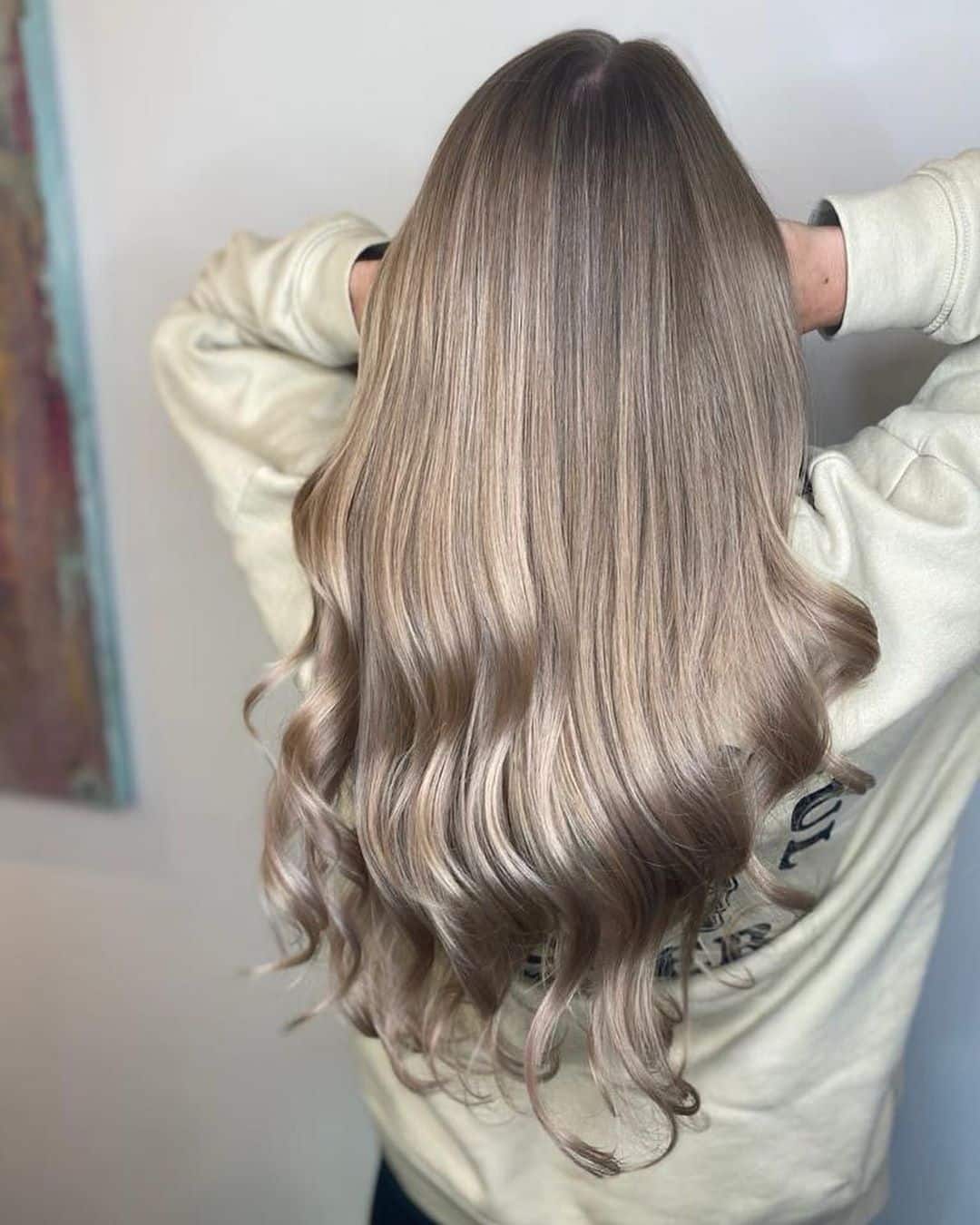
The genius of this back view is that the dimensional color does not need a perfect wave pattern to read as expensive. Mid-back ash blonde is fine on its own, but those subtle, darker lowlights woven through the middle part give the thick, wavy texture a quiet depth that catches the eye without screaming for attention. The root-to-end blend means the grow-out stays civil for about six weeks before the ash tone starts to cool unevenly. Ask your colorist for: ash blonde base with subtle darker lowlights, mid-back length, soft waves. A toning appointment at eight weeks keeps the ash from drifting green, and a texturizing spray on dry hair extends the lived-in feel for a second or third day.
The middle part does the heavy lifting here by letting the lowlights fall in natural vertical ribbons. Dense hair benefits from this placement because the darker pieces stop the blonde from looking flat or brassy. A trim every eight to ten weeks keeps the ends healthy enough to hold the wave without splitting.
Mid-Back Ash Blonde with Dark Blonde Lowlights, Long Layers
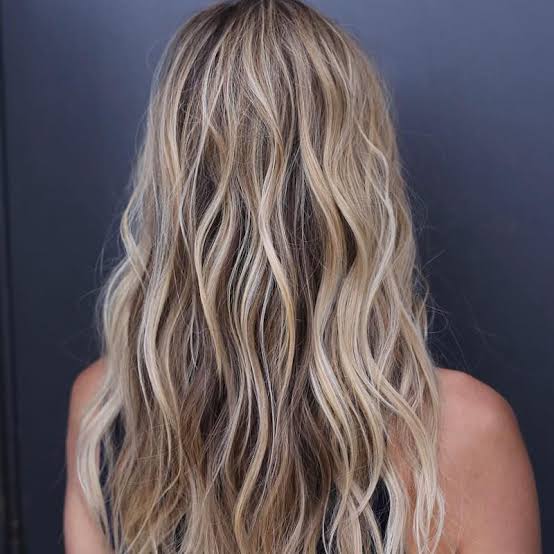
The dark blonde lowlights here anchor the ash blonde against a low contrast face. A wavy blowout on thick, mid-back hair shows the color placement clearly: the darker ribbons sit underneath the lighter top pieces, so the dimension looks natural. Ash blonde shifts tone faster than a neutral beige, so expect a toning appointment every six to eight weeks to keep the cool base from turning muddy.
Collarbone Ash Blonde with Deeper Lowlights, Wavy
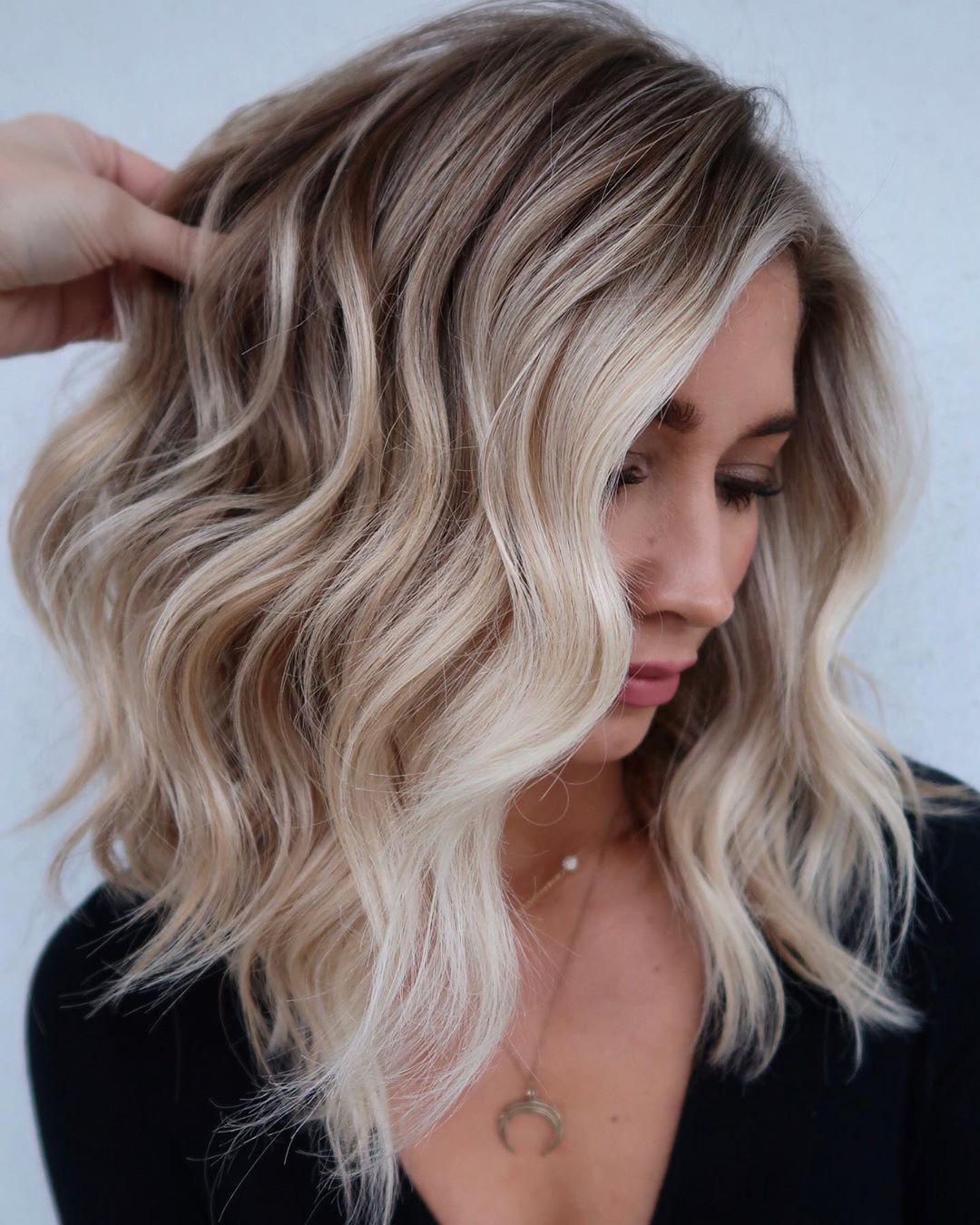
Why does collarbone ash blonde with deeper lowlights look like it belongs in a cashmere sweater rather than a pool selfie? Because the darker pieces absorb light instead of reflecting it, which makes the shade feel heavier and more appropriate for cooler months. A lob with loose waves and a middle part lets the deeper lowlights peek through without dominating the texture. Medium-density hair holds the wave without turning the darker pieces into solid blocks of color, so the dimension stays soft and blended.
Collarbone Strawberry Blonde with Face-Framing
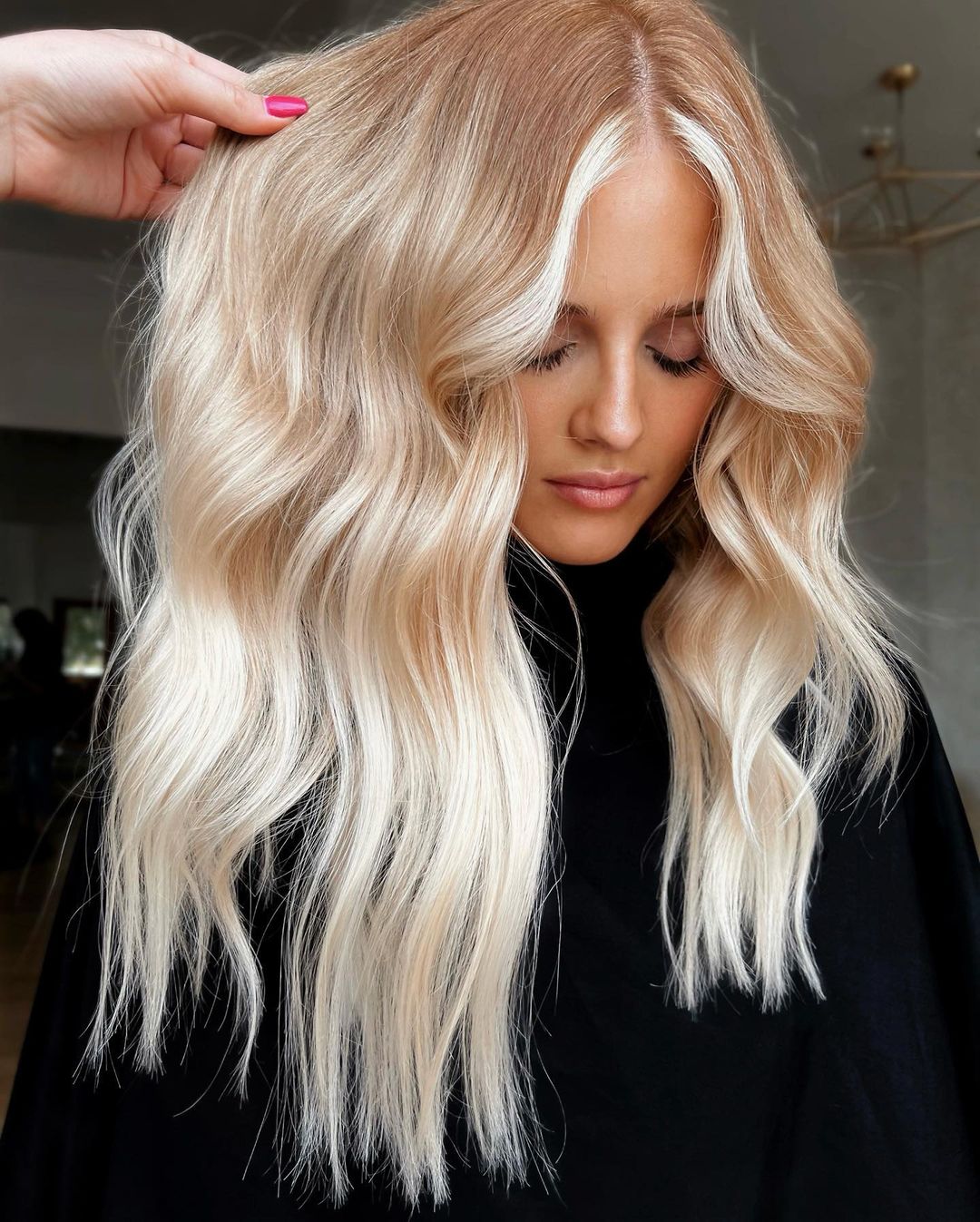
The lighter blonde pieces around the face are the detail that makes strawberry blonde feel deliberate. A collarbone-length cut with wavy texture and curtain bangs lets those face-framing highlights show every time the head turns. The base is a light strawberry blonde, not a pink rose gold, so it looks sun-warmed instead of salon-painted. Ask your colorist for: light strawberry blonde base with lighter blonde face-framing pieces, collarbone length, curtain bangs. Bring a photo of the exact placement you want, because the difference between face-framing pieces and chunky highlights is about three foil sections.
Ask your stylist for: collarbone length with soft layers and curtain bangs. The layers should stay long enough that the curtain bangs blend into the face-framing pieces instead of stopping abruptly at the cheekbone. Medium density works best here because it allows the lighter pieces to show without exposing too much scalp between strands.
Mid-Back Blonde with Subtle Lowlights, Air Dried
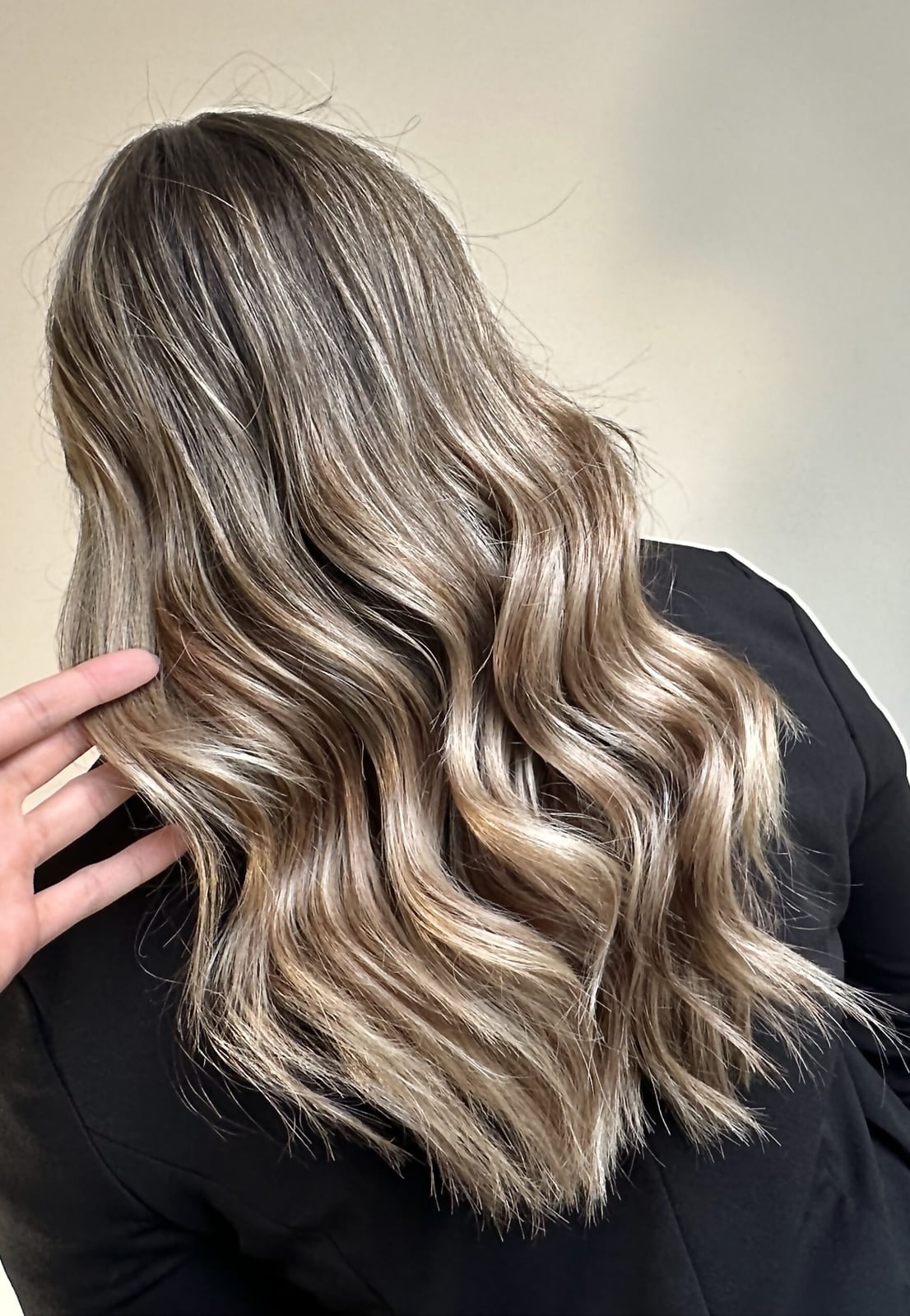
An air-dried finish on a mid-back length reveals whether the cut and color are actually working together. The long layers here are cut to follow the natural wave pattern, so the blonde base with subtle lowlights lands in the right places without styling intervention. Thick, wavy texture is the ideal canvas because the lowlights settle into the bends of the wave instead of sitting on top like a stripe. Ask your colorist for: blonde base with subtle lowlights, mid-back length, layered cut. The layers should be long enough that the ends do not flip outward when air dried.
The subtle lowlights do the job of preventing the blonde from looking flat, but they are subtle enough that a root shadow is not necessary. An eight-week trim rhythm keeps the layered shape from turning into a triangle, and a lightweight leave-in conditioner encourages the wave to form without frizz.
Mid-Back Cool Ash Blonde with Subtle Lowlights, Office-Safe Version
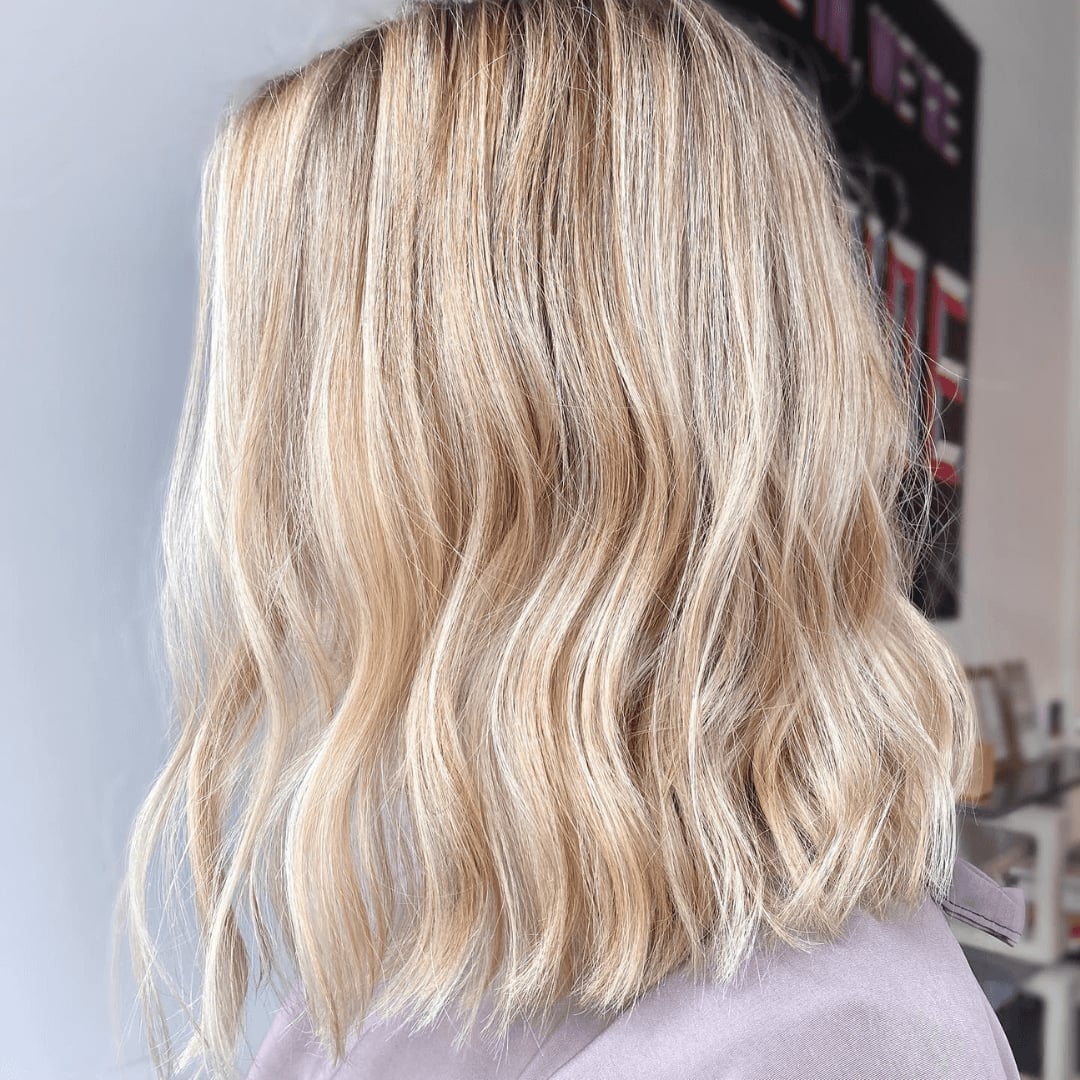
A cool ash blonde base with subtle darker lowlights creates a color that looks natural. This version keeps the contrast low, so the dimension appears as natural depth. The mid-back length and long layers give the wavy, thick texture room to move without looking heavy.
Ask your colorist for: cool ash blonde base with subtle darker lowlights, mid-back length, long layers. This is a salon-only project: the lowlights need to be woven finely enough to avoid a chunkier result. Loose waves show off the blend. A trim every eight to ten weeks keeps the long layers from fraying at the ends.
Mid-Back Blonde with Subtle Brown Lowlights, Middle
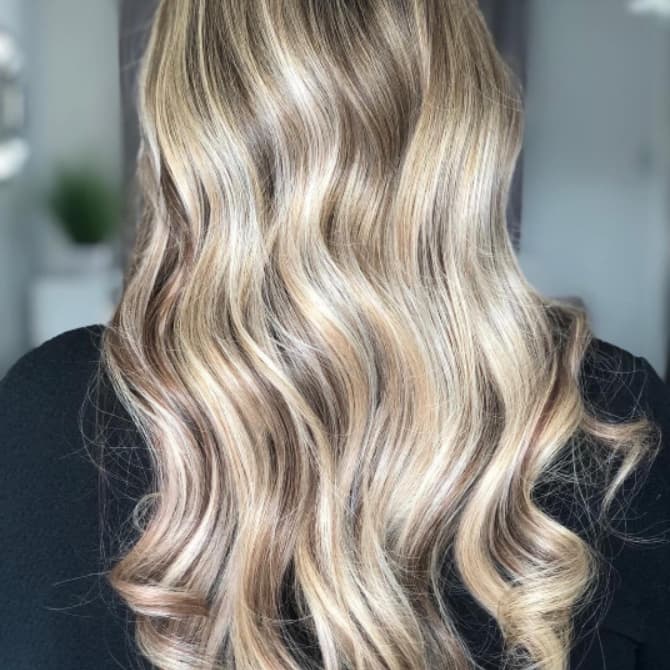
Can a blonde with brown lowlights still read as blonde? Yes, when the brown is woven in as a subtle shadow rather than a separate color. This back view shows the payoff: a blonde base with darker brown lowlights running through the mid-back length, creating depth without muting the lightness. The loose waves and middle parting let the dimension show evenly on both sides.
Ask your colorist for: blonde base with subtle dark brown lowlights, mid-back length, loose waves. This tone suits anyone whose natural base sits in the warm or neutral blonde range; it can look muddy on very cool ash blondes. The thick, wavy texture carries the contrast well because the lowlights sit beneath the surface layer. A toning appointment every six weeks keeps the blonde bright and the brown from pulling too warm.
Final Thoughts
For a natural, low-maintenance result, choose lowlights one to two shades darker than your base blonde. For more noticeable contrast, go three to four shades deeper. The right depth depends on how much dimension you want and how often you’re willing to tone.
- Refresh lowlights or tone every 8-12 weeks, depending on fade rate.
- Use color-safe shampoos and conditioners to maintain vibrancy.
- Deep condition weekly to keep hair healthy and glossy.
- Avoid excessive heat styling to prevent color stripping.
Subtle lowlights add dimension without commitment.