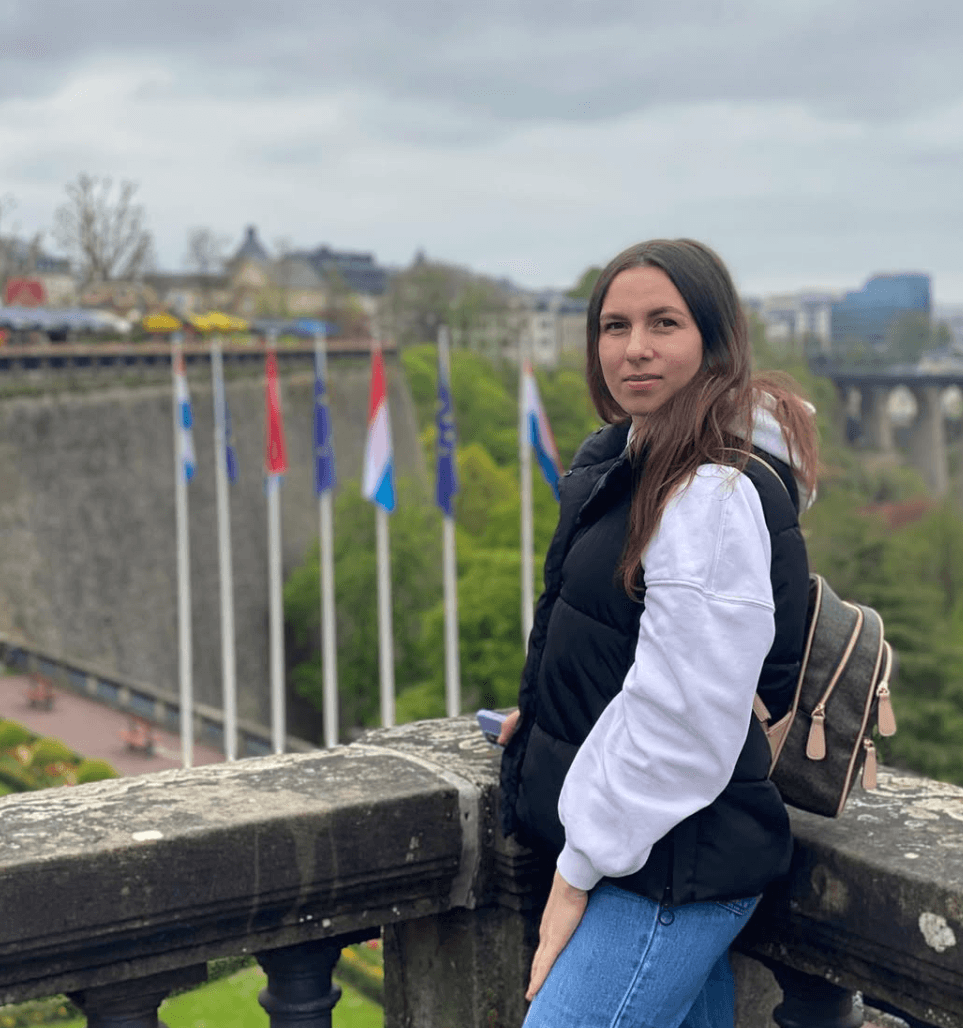

I keep seeing the same thing in my salon chair: dark roots that melt into something lighter, no hard line, no brassiness. Winter ombre is quieter than the summer version, less about contrast, more about a slow fade that buys you time between appointments. I like that kind of honesty.
This roundup has 29 takes on Winter Ombre Hair, from subtle brown-to-blonde shifts to cooler ash and silver finishes. Some need a salon booking, some work on fine hair that goes flat by 4 pm, and a few are straight-up grow-out hacks for anyone who, like me, has regretted a bleach job by Friday.
Dramatic Dark Ash to Platinum Ombre
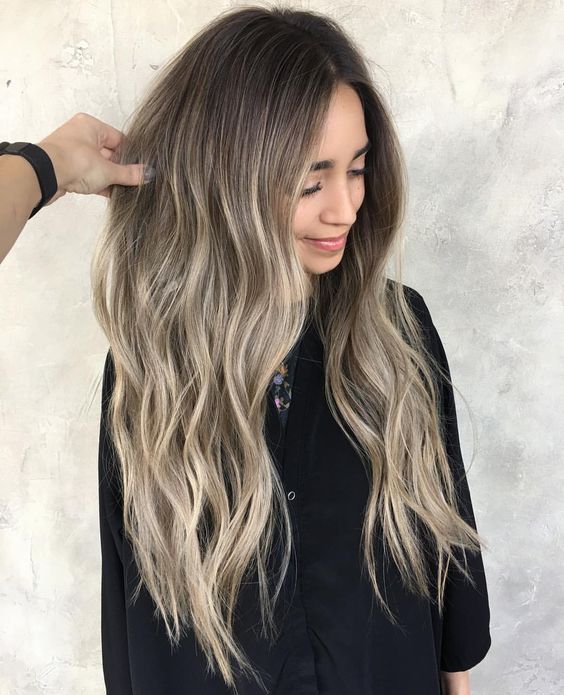
This one is for people who do not want to be asked if their hair is natural. The dark ash to platinum ombre starts at the root with a base almost the colour of wet slate and climbs to a platinum blonde that is one shade off white. The technique is a freehand balayage, painted in sections so the lightest pieces land around the face and at the ends. On mid-back length with thick, wavy texture, the contrast reads as deliberate, not grown out. The middle part helps the dark side meet the light side cleanly. It is a salon colour, start to finish. Do not try this in a bathroom mirror.
Soft Dark Brown to Blonde Ombre
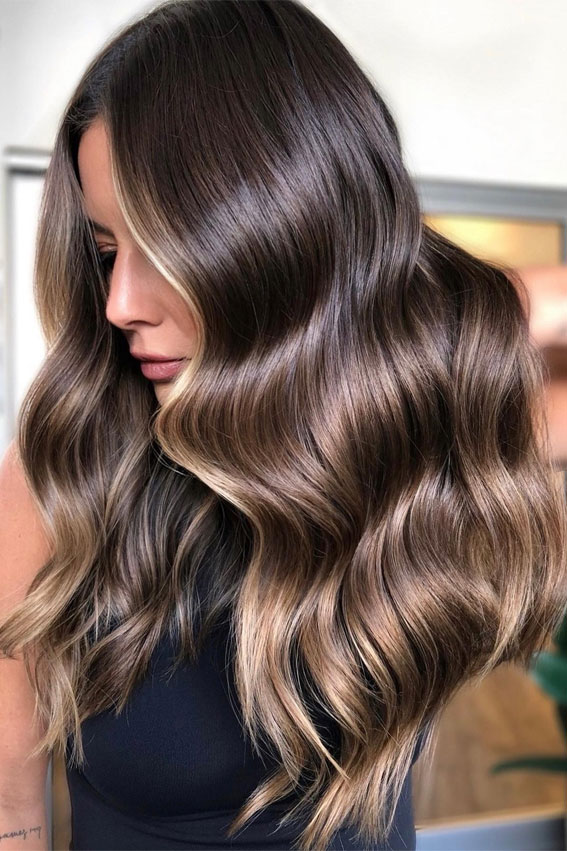
What if you want the lightness without the line of demarcation? The dark brown to blonde ombre solves it by keeping the transition zone wide, about six inches of graduated colour. The base is a warm dark brown that moves through a mid-brown and lands on a lighter blonde that is still recognisably golden, not white. The technique is a root smudge followed by a hand-painted balayage, which means the blonde starts lower and softer than a traditional foil highlight.
Upkeep is manageable. The root shadow buys you about eight weeks before the dark brown needs a refresh, and the blonde ends only need a toner if they start pulling warm. On mid-back length with thick, wavy texture, the waves hide the transition line further. A curling wand and fifteen minutes gets you a wavy blowout that looks like it cost more than it did.
Dark Brown to Ash Blonde with Bangs
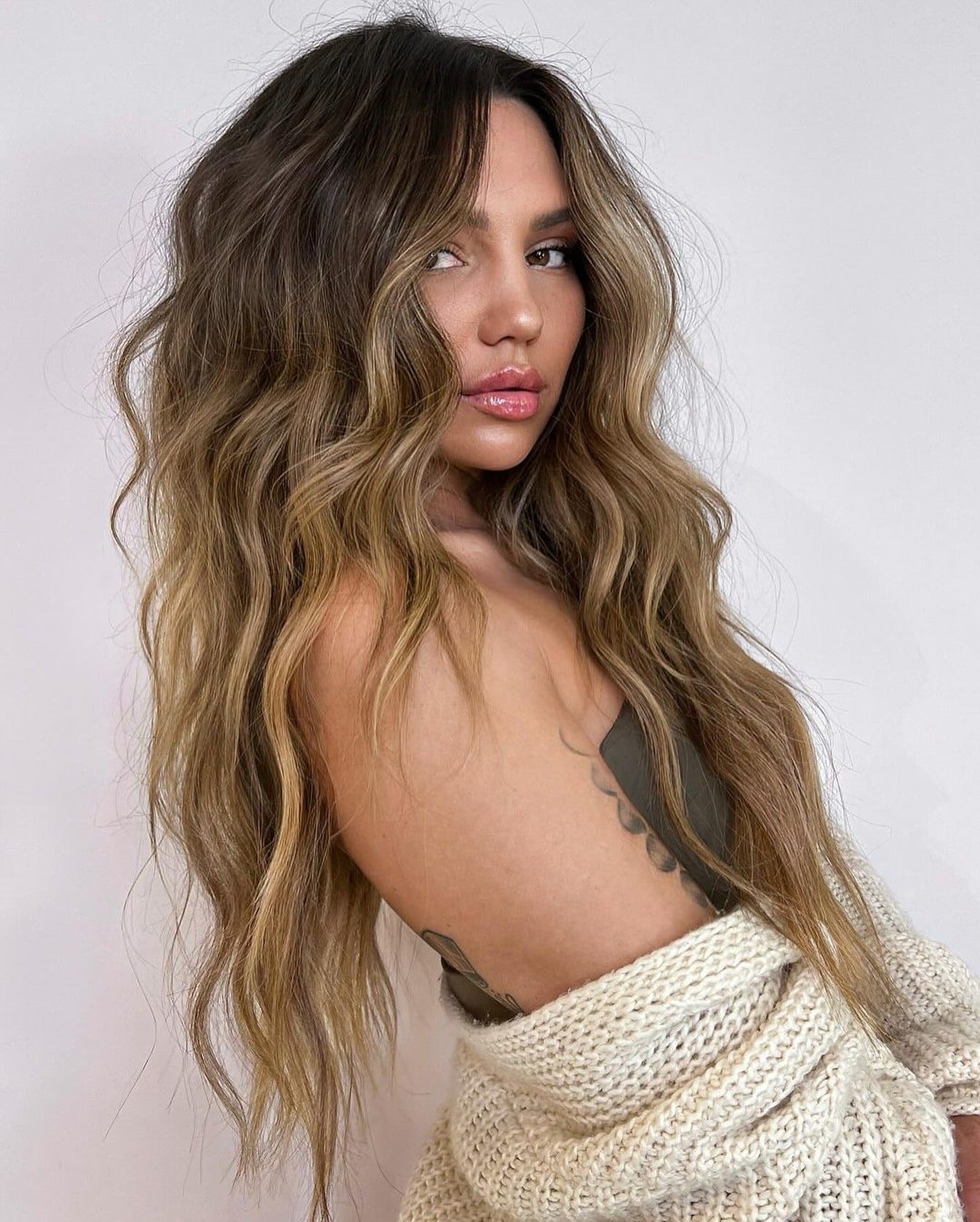
I did not expect to recommend curtain bangs with an ombre, but here we are. The dark brown ash blonde ombre starts with a cool dark brown root and graduates into an ash blonde that sits just above the ears, then continues to the ends. The curtain bangs frame the transition, so the darkest colour sits at the hairline and the lightest falls at the cheekbones. It is a clever trick: the bangs make the ombre look intentional rather than accidental.
This suits medium to thick texture best. The curtain bangs need enough weight to sweep to the side without separating into sad strings. On fine hair, they fall flat by noon. The colour works on mid-back length with wavy texture, and the loose waves soften the contrast. A salon booking is non-negotiable. The bangs alone require a stylist who understands how they will sit when dry, and the ombre needs a balayage that lands the ash blonde at the right height.
Subtle Ash Blonde to Lighter Blonde
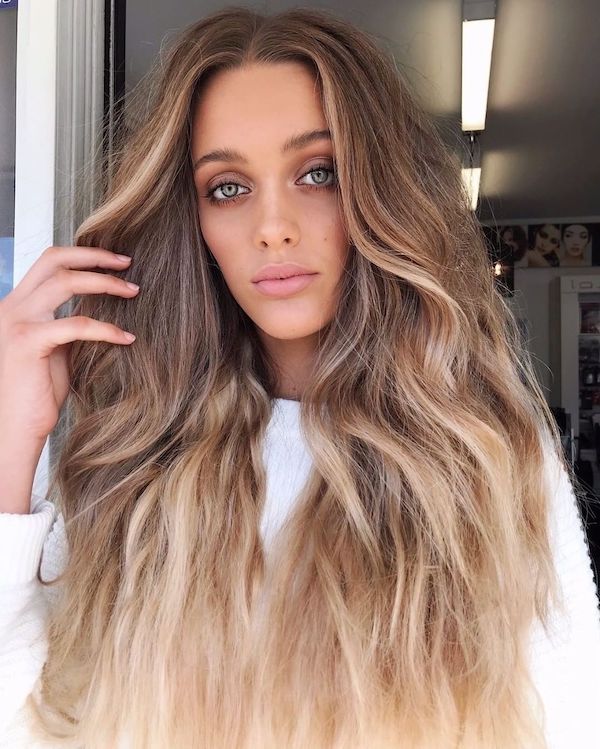
The ash blonde ombre is barely an ombre. That is the point. The base is a cool ash blonde, almost mushroom-toned, and it shifts into a lighter blonde that is maybe two shades brighter. The technique is a low-contrast balayage with a toner that knocks the warmth out of both sections. On mid-back length with fine to medium density and wavy texture, the effect is dimensional without being high-maintenance.
What to tell your stylist: keep the base at a level seven ash, paint the lighter pieces no more than two levels lighter, and finish with a violet toner. No visible line. The curtain bangs should stay at the base colour so the lightness reads as a gradual shift, not a stripe. This is a salon colour, but it is one of the lower-commitment ones. The grow-out is soft because the base is already light.
Dark Brown with Cool Ash Blonde Ends
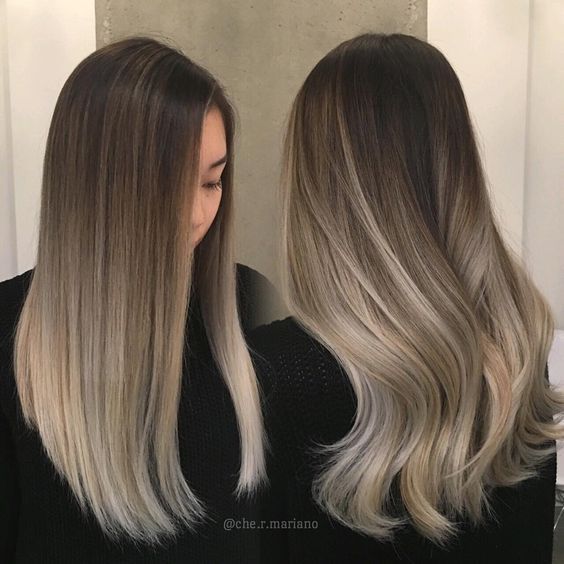
I will admit it: I booked this twice in one season. The dark brown cool ash blonde is a cheat code for anyone who wants blonde without the root commitment. The base is a rich dark brown, and the ends fade into ash blonde ends that start about three inches above the hemline. The technique is a mid-shaft balayage that keeps the colour off the scalp, so the grow-out is a soft blur rather than a hard line.
Upkeep is the real story here. The ash blonde ends need a toner every six to eight weeks, or they start pulling greenish on some water. On mid-back length with straight, thick texture, the ends stay cool-toned longer because the hair is not porous from previous lightening. The colour works styled straight or wavy. Straight shows the contrast more clearly. Wavy hides the transition line. Both are fine. Just book the toner appointment before you need it.
Mid-Back Dramatic Dark Brown to Ash Blonde Contrast
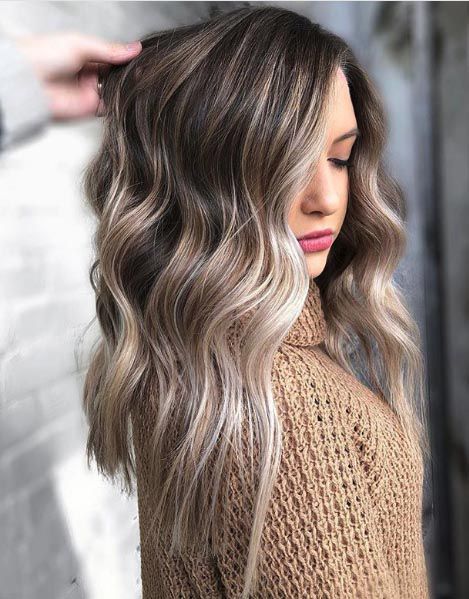
I sat in the chair for four hours and still flinched when the stylist held up the mirror. That dark brown ash blonde contrast is not a suggestion, it’s a commitment. The mid-back length gives the ombre room to breathe, and the loose waves catch the light so the ash blonde reads silver instead of yellow. Side part, no bangs, long layers that move. My hair is medium density, and it handled the bleach better than I expected, but the dramatic contrast only works if the dark base stays glossy. Mine went brassy at week three, and I learned the hard way that a purple shampoo is not optional. The grow-out line blurs beautifully, though. That’s the trick.
Cool Grey to Silver Purple Ombre
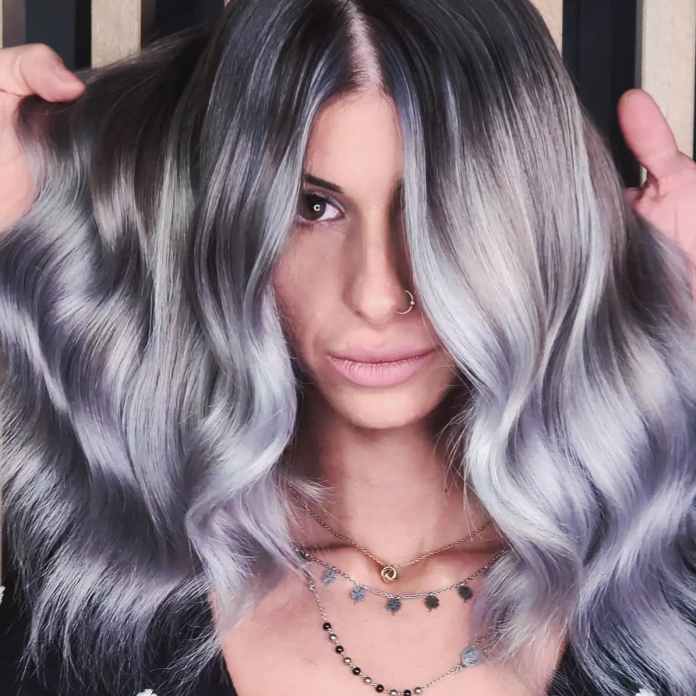
Can grey and purple live in the same head without looking like a bruise? Apparently yes, if the grey is dark at the roots and the silver and subtle purple only show at collarbone length. The side bangs soften what could be a harsh line, and the waves give the multi-tonal effect somewhere to play. This is a winter look, no question, it suits a grey coat and a cold wind. But I was skeptical until I saw how the light purple reads as lavender only in direct sun, otherwise it’s just a cool silver. That’s the part that won me over. Medium density, wavy texture, and it needs a salon every three weeks to stay icy.
Dark Brown to Deep Burgundy
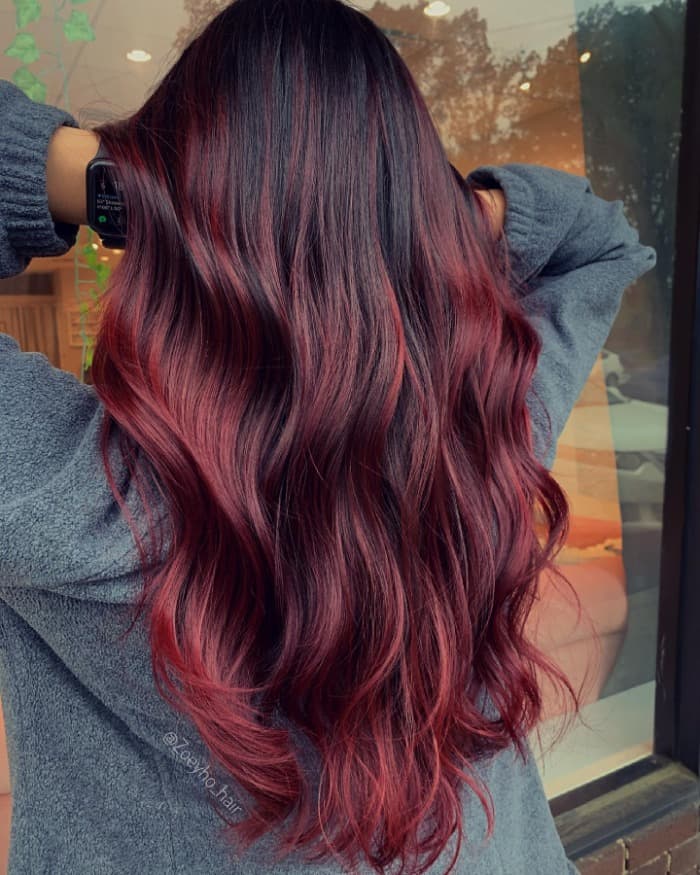
I tried this at home once. Once. The deep burgundy turned out patchy and my bathroom sink looked like a crime scene. So here’s my confession: this dark brown deep burgundy ombre is a salon job, full stop. The colour needs a professional hand to keep the burgundy rich instead of muddy, especially on thick hair like mine. Middle part, no bangs, collarbone length with layers that make the waves catch the red. The technique is a soft blend, not a hard line, and that’s what keeps it from looking like I dipped my ends in wine. Book the appointment. Your towels will thank you.
Collarbone Dark Brown to Deep Red
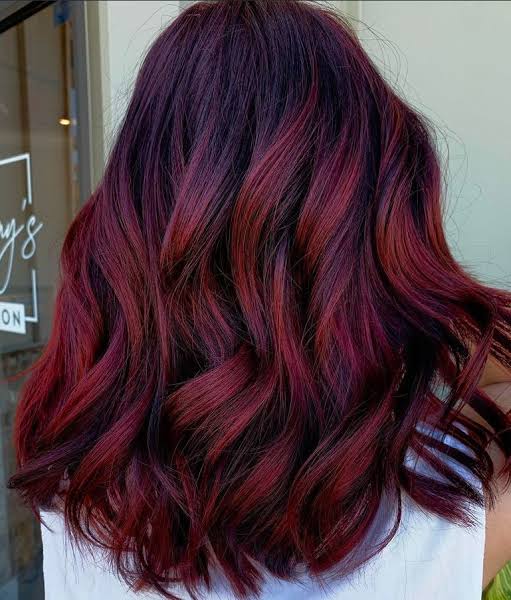
This one is not for everyone, and I mean that as a compliment. The dark brown deep red ombre flatters warm undertones, the kind of skin that tans instead of burns. If you’re cool-toned, the red can pull orange and fight your complexion. Collarbone length, middle part, thick wavy texture, no bangs. The deep red sits at the ends and moves with the waves, so it looks alive, not painted on. I have fine hair, and this would weigh mine down, but on thick hair it’s a showstopper. The technique is a graduated blend, dark at the roots, red creeping up through the mid-lengths. It’s vibrant without being loud.
Cool Blue to Silver Ombre
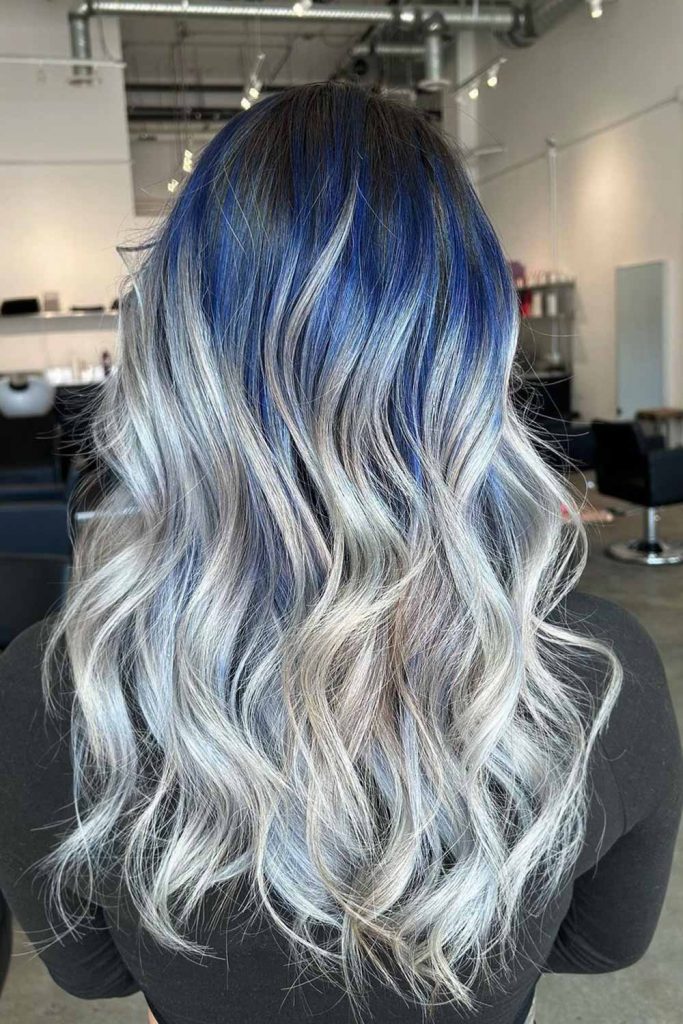
Blue is a liar. It looks like fun until you realize it fades to green if you so much as look at a swimming pool. The dark blue silver blue ombre, though, is the rare version that holds its cool. Mid-back length, wavy medium density, no bangs, and the silver and lighter blue blend so softly that the grow-out line disappears. I compared this to a natural brunette ombre, and there’s no contest if you want drama. But here’s the honest downside: this is a high-maintenance colour. Salon every four to six weeks, toning in between, and if you skip it, the blue turns muddy. It’s beautiful. It’s also a part-time job.
Dark Brown with Deep Red Waves
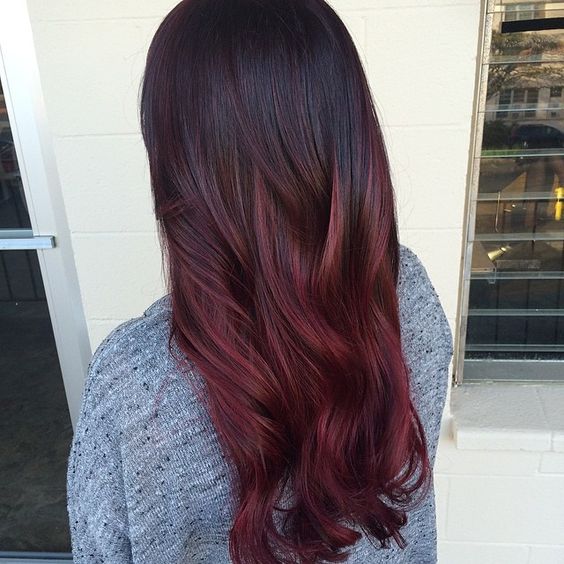
I saw this from the back and thought, okay, that is a lot of red. The dark brown deep rich red ombre starts subtle at the roots, then deepens into something almost wine-stained by the ends. Mid-back length, thick, wavy texture. The waves catch the light and the red moves with them. By day three, the colour still reads strong, no weird patchiness near the root line. Day five, the ends are a little drier, but the tone holds. That is the thing with a deep red on thick hair: the pigment grabs and stays. It does not fade into pink the way a pastel would. It dulls. A colour-depositing conditioner buys you another week.
Vibrant Red to Orange Ombre
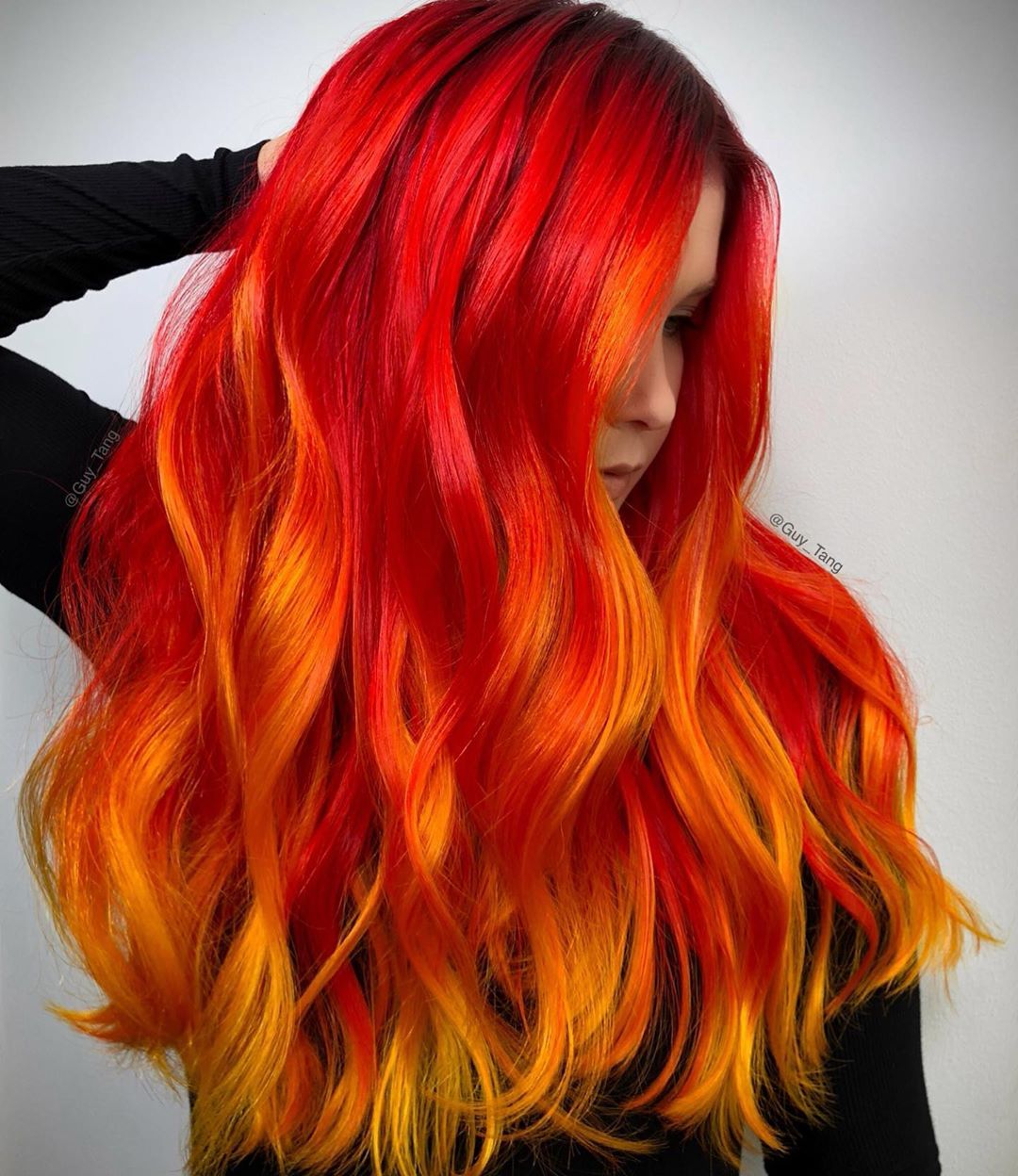
Do you have the skin tone for a red to orange ombre? Not everyone does. This is a fiery orange gradient that starts warm at the roots and gets hotter toward the ends. Mid-back, wavy, thick texture. The red to orange ombre reads electric on neutral to warm undertones. On cool skin it can look jarring, like a costume. The waves help: they break up the colour blocks so the transition is not a straight line. If you have very fair, pink-toned skin, this will fight you. If your skin has gold in it, this is your shade. The colour is the statement. The cut is just holding it.
Pastel Multi-Color Ombre Lob
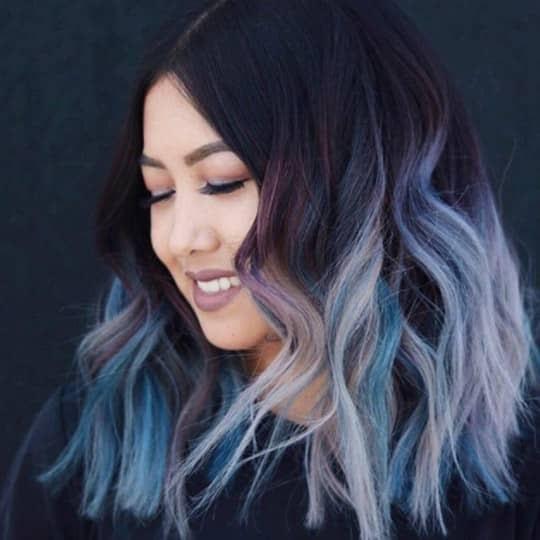
Best left to a pro. The dark brown pastel ombre here is a lob, collarbone length, wavy, medium density. The technique: the stylist lightens the ends in sections, then applies three pastel shades — purple, blue, grey — in a gradient. Each colour has its own placement so they do not bleed into one muddy stripe. The pastel shades require a base that is lifted almost to white, which is where most home jobs go wrong. The brown root keeps it grounded, stops it from looking like a costume wig. Book the consultation first. This is not a bathroom-mirror job.
Copper Base to Blonde Ombre
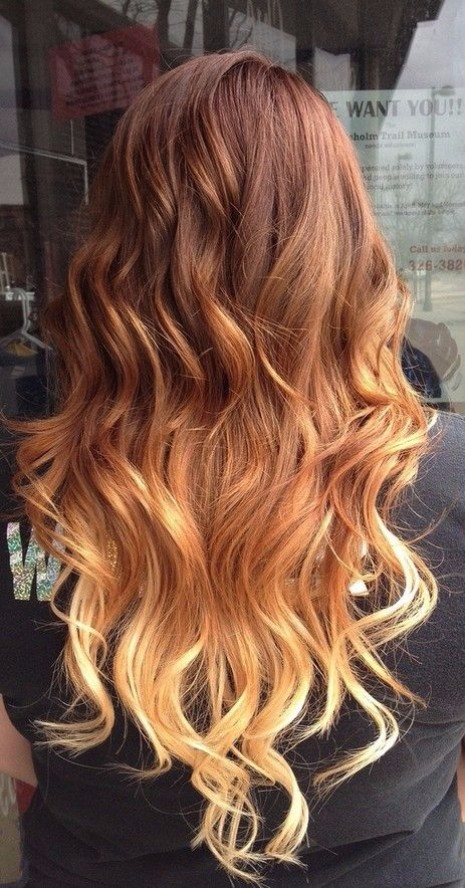
I wanted this for a full season before I admitted the upkeep was too much. The copper base blonde ombre starts warm at the roots and shifts to bright blonde ends. Mid-back, wavy, medium density. The honest downside: copper fades fast. The bright blonde ends yellow by week four if you do not tone. I watched a friend do this and by week six the copper was gone, just a brassy blonde mess. The waves help disguise the fade for a while, but eventually you are looking at a root touch-up every six weeks. I skipped it. I still think about it.
Dark Brown with Caramel Blonde Highlights
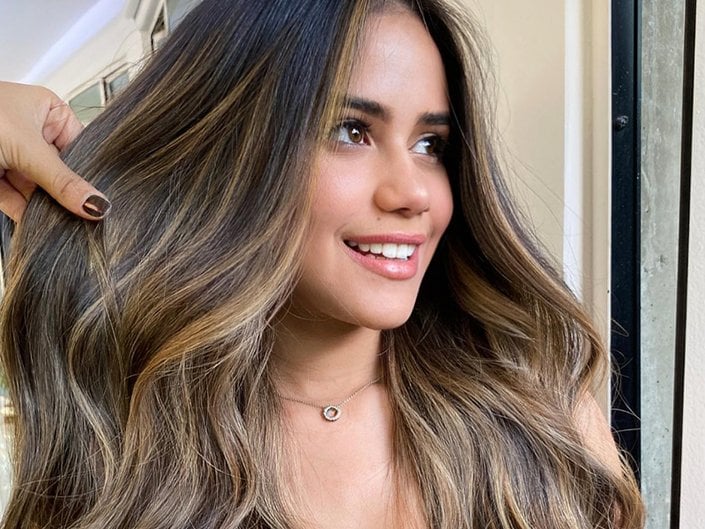
I noticed this one first because the dark brown caramel blonde base did not look flat. Mid-back, thick, wavy texture. The caramel and blonde highlights are woven through the top layers, not just painted on the ends. That is the difference between dimensional and streaky. Styling it for a week means: day one, loose waves, the highlights catch every bend. Day two, a low ponytail, the caramel shows at the temples. Day three, half-up, the blonde peeks through. Day four, you can let it air dry and the brown base carries it. The highlights do the work. You just show up.
Collarbone Lob with Caramel Highlights
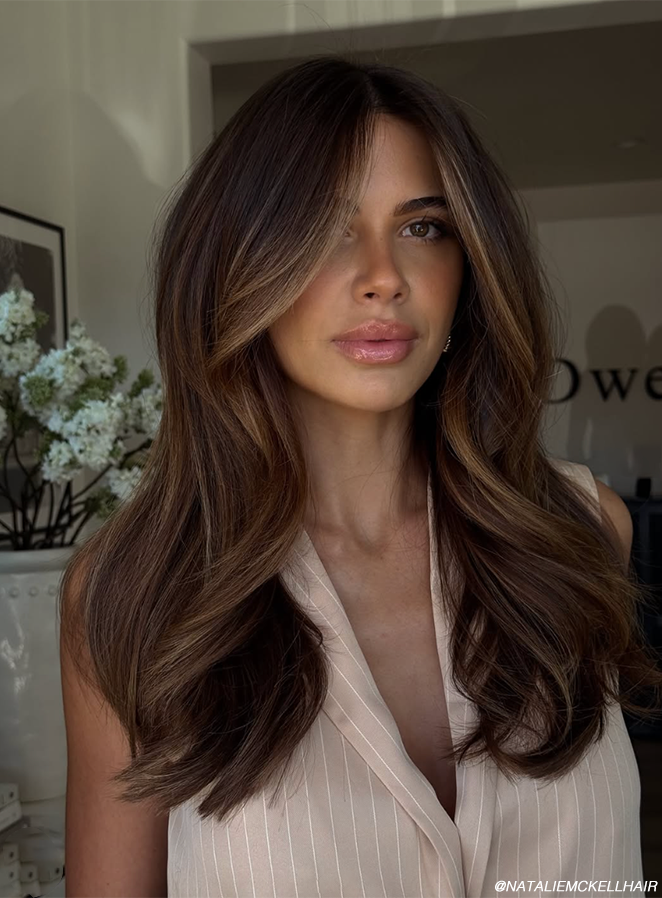
Who doesn’t want a little caramel with their coffee? This collarbone lob pairs a dark brown base with caramel highlights that start at the cheekbones and melt downward. The side-swept bangs soften a strong jawline, and the middle part keeps the front view from feeling heavy. It’s a warm, polished look for thick, wavy hair that needs a bit of movement without losing length. The dark brown caramel highlights read as a smooth gradient, not a stripe, which is exactly the point. If your hair is fine, the layers will give it a lift that lasts past noon. I’d book this one for the subtle rose gold tone in the caramel, it keeps the winter light from washing you out.
Platinum Blonde with Ash Highlights
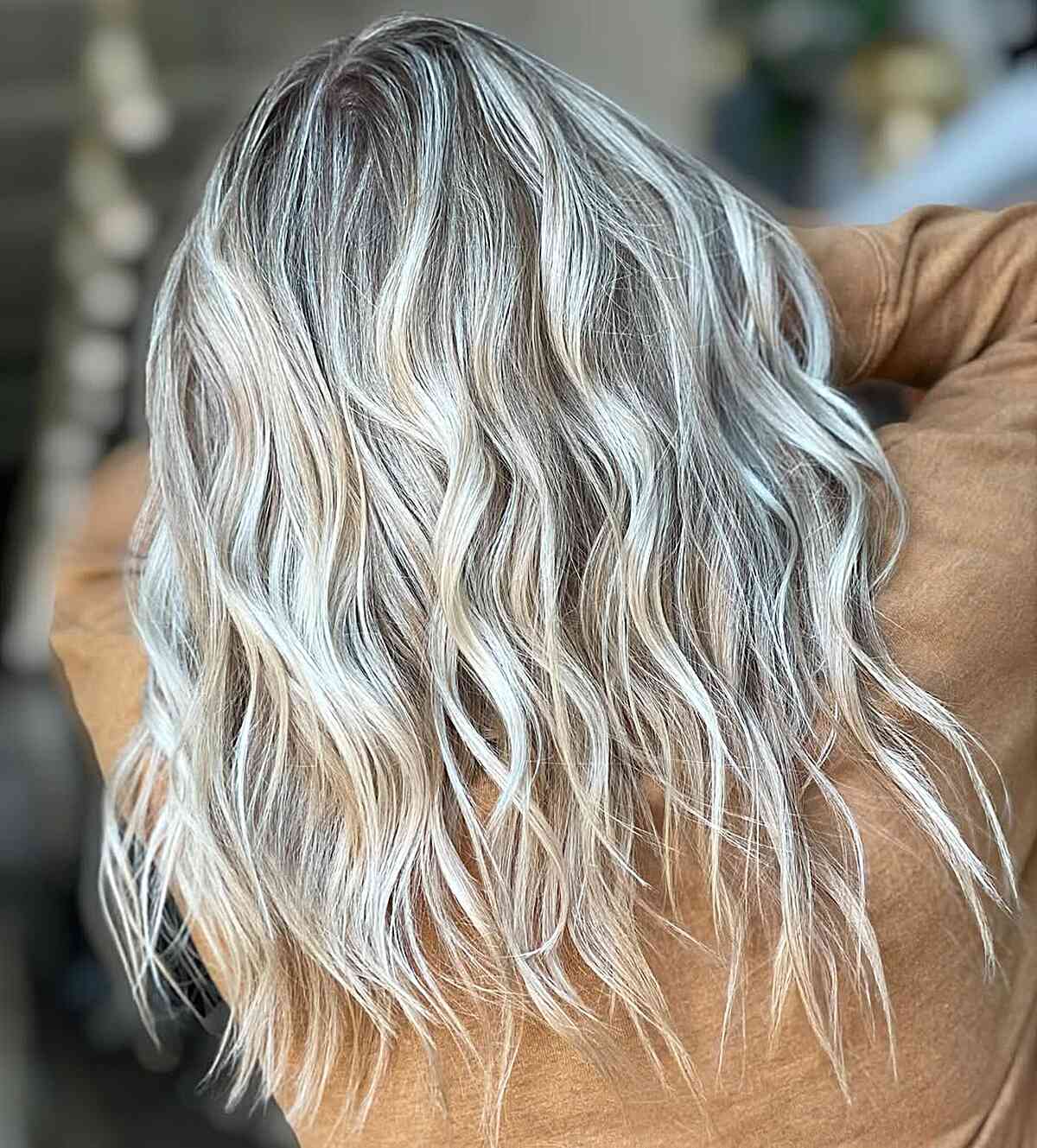
Platinum blonde ash highlights on a platinum base is the winter equivalent of a cool drink of water. The ash blonde highlights add a frosty dimension that stops the whole thing from reading as one flat block of white. On shoulder length hair with long layers, the colour catches the light and moves with you, which is the entire point of an ombre. This is not a subtle rose gold tone situation, this is bright, cool and unapologetic. I’ve seen ash blonde highlights go brassy by week three, so keep a purple shampoo nearby. The middle part and loose waves give it a softness that a slicked-back style wouldn’t. It’s a salon colour, no question, but the grow-out is kinder than you’d think.
Sleek Bob with Dark to Medium Brown Ombre
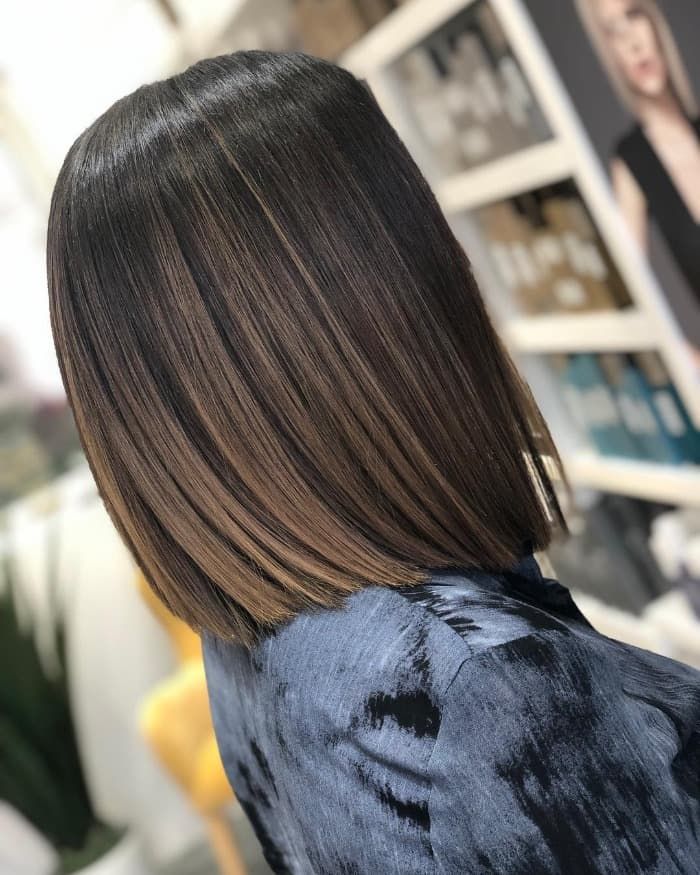
I’ll admit it, I’m a sucker for a bob that means business. This sleek bob runs dark brown to medium brown ombre from the roots to a chin-length blunt line, and the smooth gradient is what makes it work. The colour transition is so gradual that it feels like a shadow, not a statement. On straight, thick hair, the dark brown to medium brown ombre shows off the technique, which is all in the placement. A root shadow at the crown blurs any grow-out line, so you’re not at the salon every month. The middle part adds a graphic sharpness that balances the roundness of a blunt bob. It’s a low-maintenance colour for a high-impact shape.
Rose Gold Ombre on Shoulder Length Hair
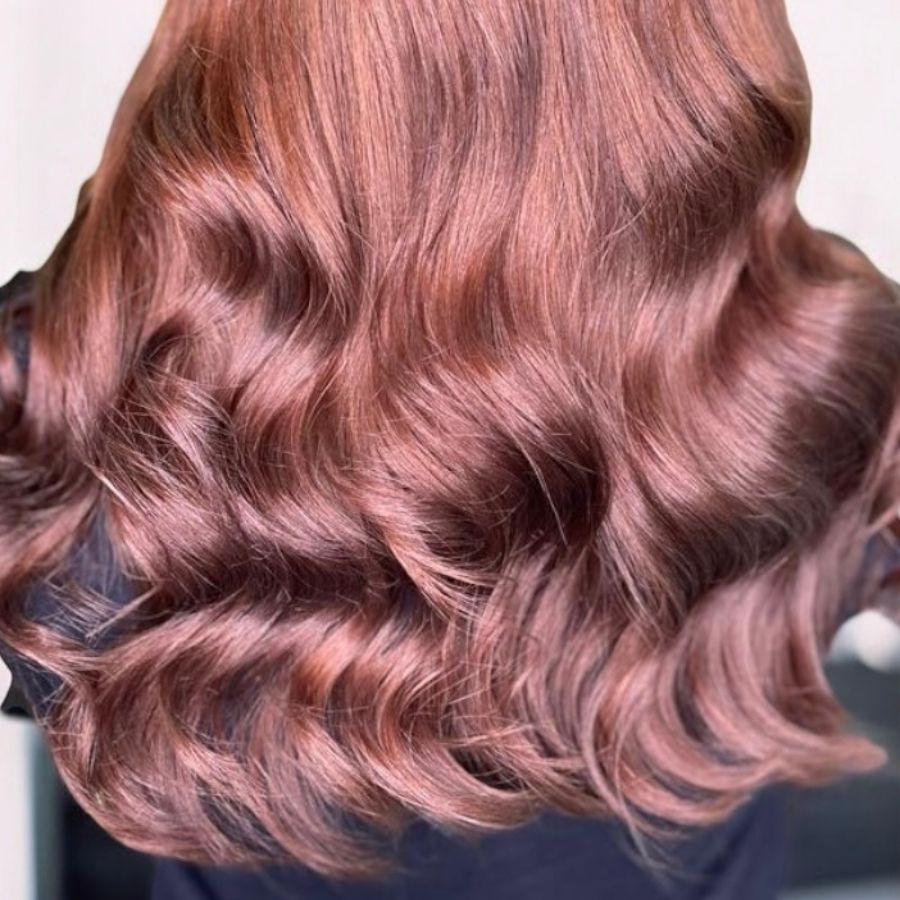
I have a confession: I used to think rose gold was a summer-only colour, then I saw it on a grey January day and changed my mind. This rose gold ombre starts with a medium brown base and melts into vibrant rose gold ends, and the subtle rose gold tone is what keeps it from looking like a costume. The shoulder length cut with layers gives the wavy texture room to move, which is how you see the colour shift. I’ve had rose gold ombre before, and the fade is real, it turns peachy by week four if you’re not careful. But that first month of soft pink light on brown hair? Worth the toning. The medium brown rose gold base means dark roots never look like an accident.
Medium Brown to Vibrant Rose Gold
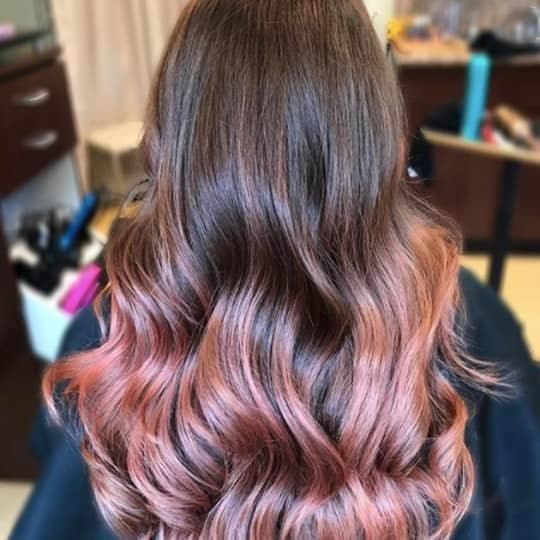
Vibrant rose gold ends on a medium brown base is the colour equivalent of a cashmere scarf, warm, soft and quietly expensive. The dark brown to medium brown ombre creates a smooth gradient that lets the rose gold tone peek through without shouting. On mid-back length hair with long layers, the colour catches the light in waves, which is exactly what you want from a winter ombre. The medium brown rose gold base means the roots blend seamlessly as they grow, so you’re not living on a six-week salon schedule. I’ve found that a subtle rose gold tone fades into a pretty champagne rather than a muddy orange, which is the whole reason I keep coming back. It’s a romantic, wearable take on a bold colour.
Deep Teal to Bright Blue Ombre
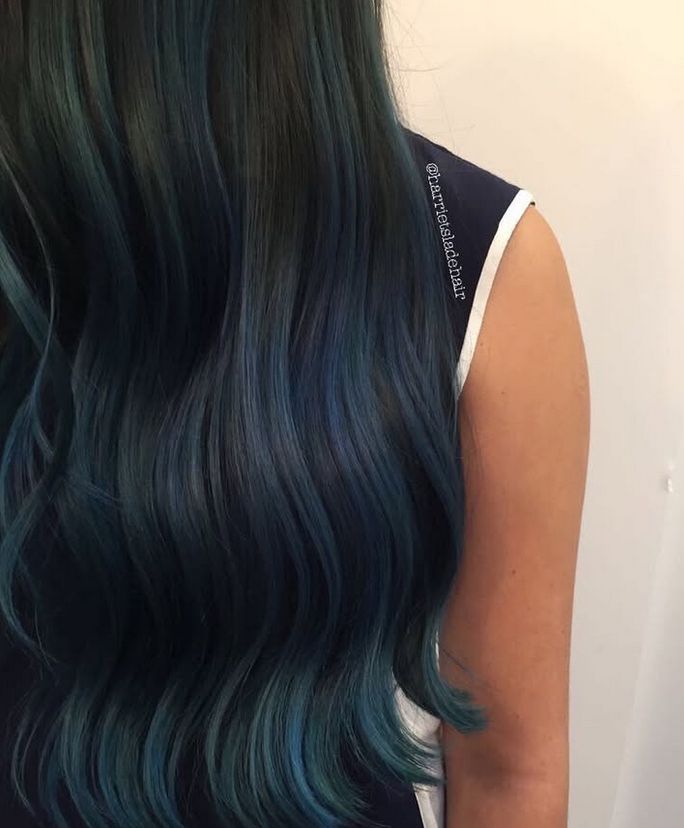
Who actually pulls off a dark teal bright blue ombre without looking like they raided a mermaid costume bin? Someone with thick, wavy mid-back hair who wants the world to know they didn’t take the easy route. The technique here is a two-step lift and deposit: bleach the ends to a pale blonde, then layer on a teal base that melts into bright blue ends. The tone stays cool and aquatic, no warmth allowed. On fine hair this reads more costume than commitment, but on medium to thick texture the weight of the colour holds its shape. The length gives the gradient room to breathe, and the waves break up what could be a solid block of blue. It is a salon-only job, and you will be there for hours.
Black to Silver Grey Ombre Lob
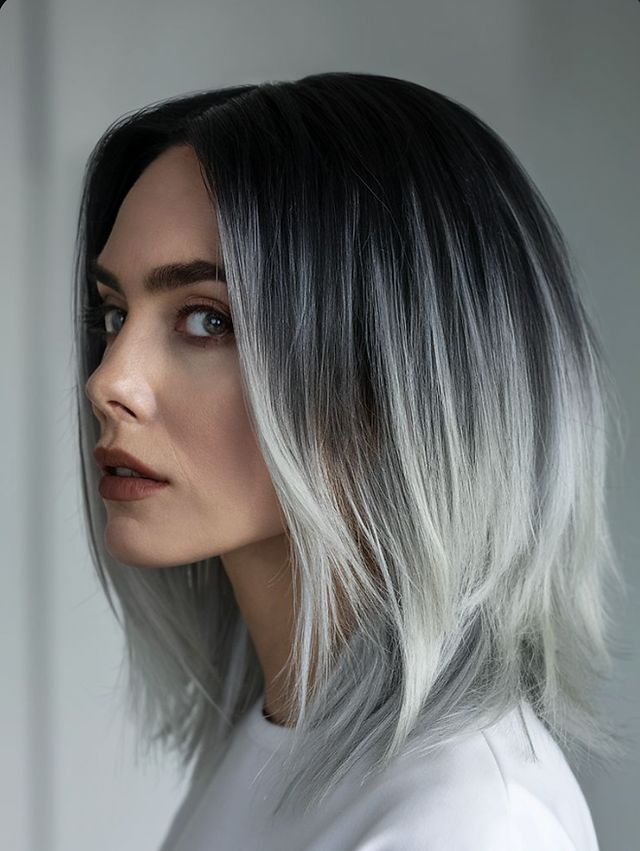
A black to silver grey ombre is not a softer version of anything. It is a sharp, deliberate contrast that looks best on a chin-length lob with a side part and straight, fine texture. The technique demands a full bleach on the lower half, then a silver toner that lands somewhere between pewter and bright silver grey. No warm undertones survive this process. This is not a bathroom-mirror job: the black base has to stay completely untouched while the ends lift to near-white, and that precision requires a stylist. Compared to a soft brown-to-blonde fade, this one announces itself. The grow-out line shows at week four, and the silver ends need a purple shampoo every third wash to stay cool.
Dark Brown to Light Brown Blonde Chin Lob
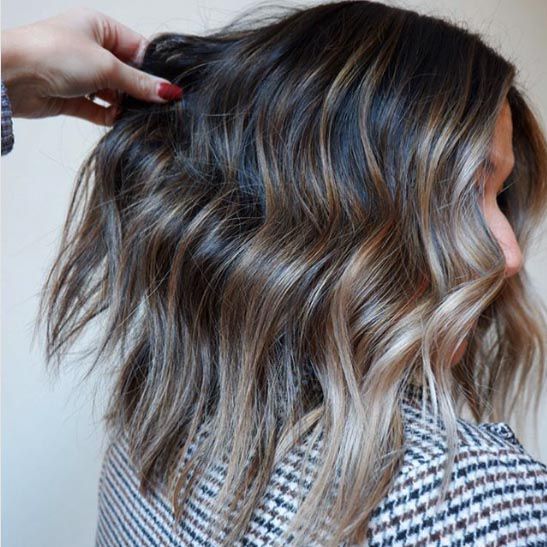
The trick to a dark brown light brown blonde ombre on a chin-length lob is that the transition is not one gradient, it is three. The base stays a warm dark brown, then a medium brown section softens the middle, and the ends land on a pale light brown and blonde that reads almost beige. The technique is a hand-painted balayage that keeps each section separate rather than blending them into a single blur. On wavy medium-density hair the separate tones catch the light differently, which keeps the lob from looking like one solid chunk of colour. The middle part helps the symmetry. A trim every eight weeks keeps the ends from thinning out, and a toner every second visit stops the blonde from drifting warm.
Platinum Blonde to Dark Grey Ombre
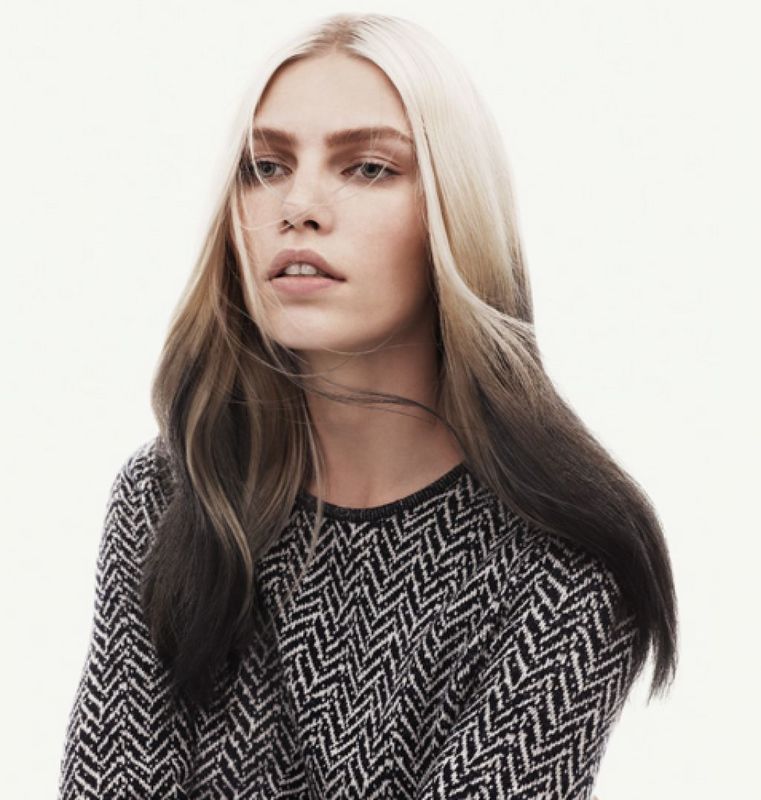
I walked into the salon with a photo of a grey sky and said make my hair look like that. The stylist did not blink. The result was a platinum blonde dark grey ombre that starts at the roots as a cool white and drops into a charcoal grey that is nearly black at the tips. The dramatic ombre transition sits just below the shoulder on straight fine hair, and the blunt bangs cut straight across the forehead. The bangs are the part that needs the most upkeep: they show the root line at week three, and the platinum fades to a pale yellow if I skip the purple shampoo for more than two washes. The grey ends hold their tone longer, about six weeks before they start reading more blue than grey. It is a high-maintenance look, but the contrast is worth the calendar space.
Collarbone Dark Brown to Ash Blonde Shoulder Length
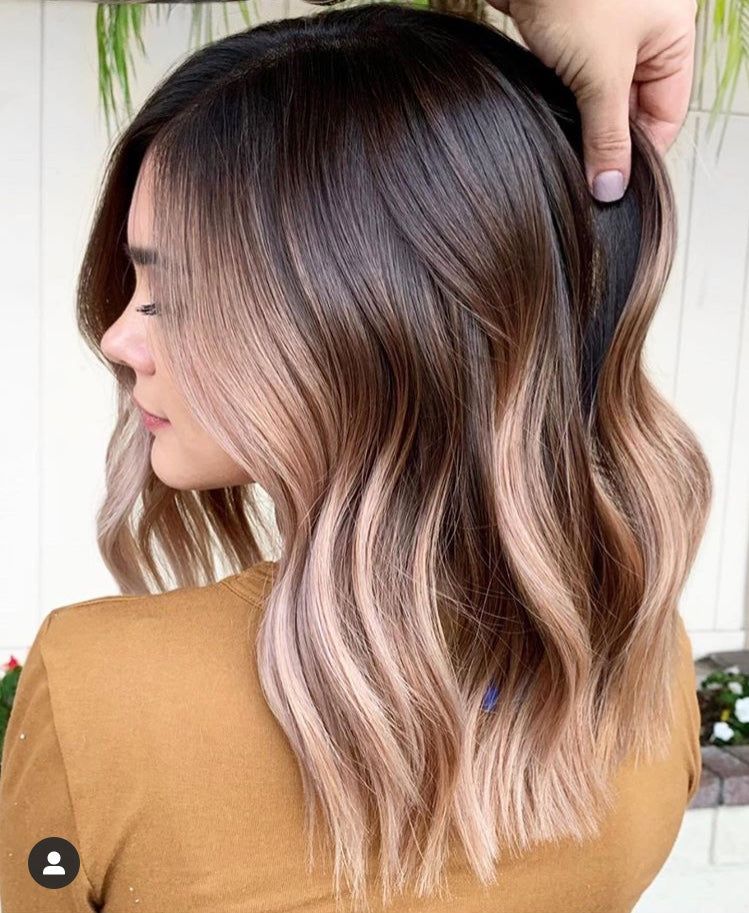
I will admit the smooth transition on this dark brown ash blonde shoulder length look is genuinely well executed. The colour starts at a deep brown near the roots and fades into an ash blonde that lands just above the collarbone, with no visible line between them. The technique is a low-contrast balayage that keeps the blonde close to the brown in tone, so the shift reads more like a shadow than a stripe. Here is the honest downside: the ash blonde pulls green on some base shades. If your natural brown has any red or gold undertones, the ash can settle into a muddy olive by week three. Wavy medium-density hair hides that better than straight fine hair, which shows every tonal shift. A toner at week four keeps the ash clean, but it is not a set-it-and-forget-it colour.
Dark Brown to Vibrant Purple Ombre
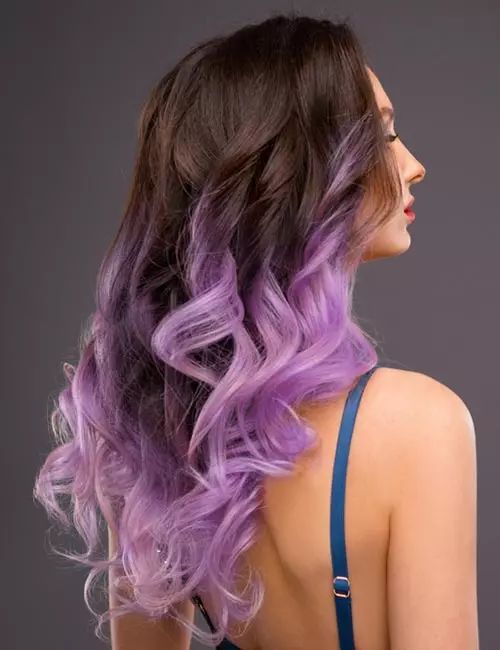
This dark brown vibrant purple ombre is the most honest colour I’ve written about this winter. The vibrant purple starts around the ears and runs to the ends, and on a mid-back length with loose curls, the shift reads as deliberate rather than accidental. It suits warm undertones best, because the purple leans cool and will make pink or red skin look flushed. The technique is a two-step process: a dark brown base is kept intact, then the lower half is pre-lightened before the purple is laid over it. Thick, wavy hair carries the dimension; fine hair will show every gap in the saturation. This is a salon job, and it costs you a full afternoon, then a toning visit every four to six weeks. The purple fades fast, so book the upkeep before you book the colour.
No Bangs Dark Brown to Golden Blonde Lob
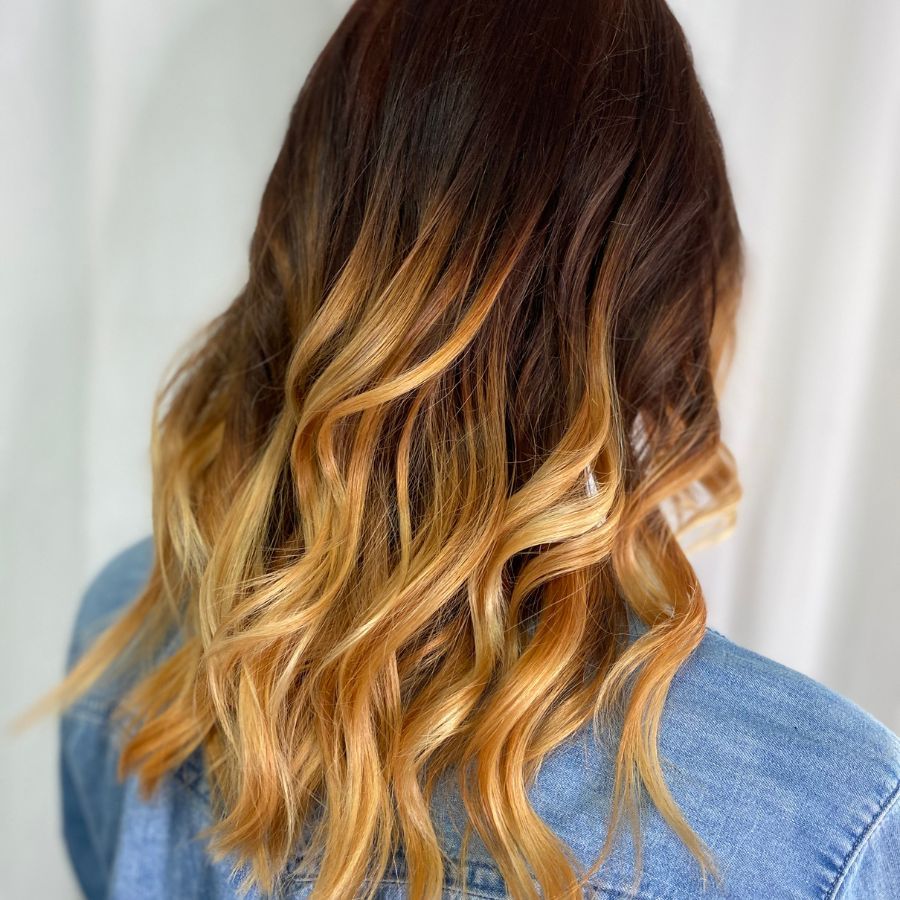
Do you want the transition to be the whole point, or do you want it to whisper? This dark brown golden blonde ombre on a collarbone lob with a middle part picks the first option, and I respect that. The golden blonde starts abruptly around the chin, so the dark roots stay rich and the ends turn warm without any of the soft, smudged blending that’s been everywhere lately. On medium-density wavy hair, the contrast reads clearly; on fine hair, the line can look harsh. It’s a lob with no bangs, which keeps the face open and the colour visible from the front. The technique is a classic ombre with a hard line, not a balayage, so the grow-out is predictable: you’ll see the line move down as your hair grows. If you want a gentler fade, ask for a shadow root. But if you want the distinct transition, this is the one.
Dark Brown Base with Creamy Blonde
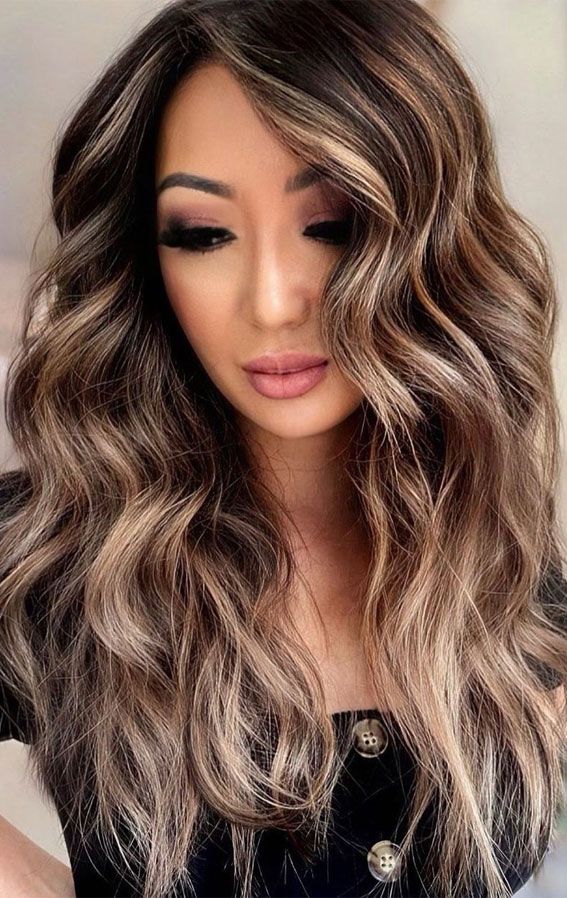
The trick to this dark brown creamy blonde is that the creamy blonde highlights are woven through the top half, not just dumped on the ends. The base stays dark brown, the highlights run in fine vertical slices from root to tip, and the contrast lands somewhere between ombre and full-on highlights. It’s a collarbone length with layers, no bangs, and a middle part that shows the symmetry of the placement. The creamy blonde tone is what makes it work: it’s not yellow, not ash, but a soft butter that reads warm against the dark base. Thick, wavy hair holds the slices visible; fine hair will swallow them. The upkeep list is short: a gloss or toner every six to ten weeks to keep the creamy tone from turning brassy, and a trim to keep the layers from losing their shape. The blowout takes about ten minutes, which is the easy part.
Mid-Back Seamless Dark Brown to Golden Blonde Ombre
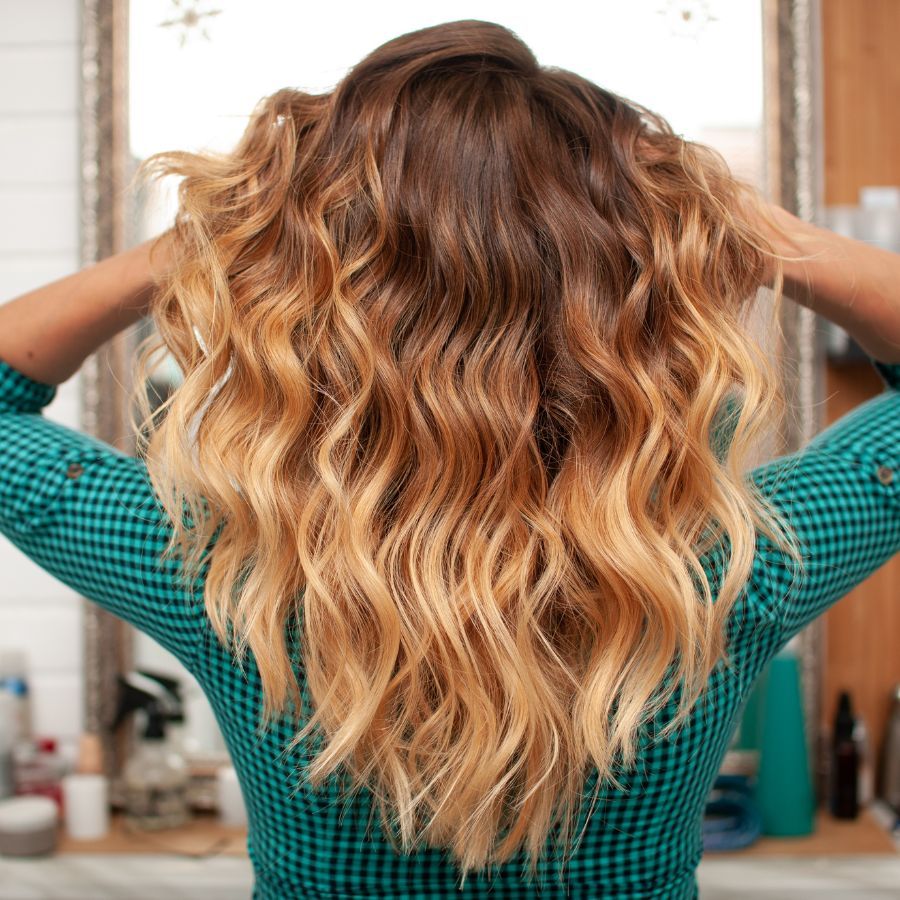
I’ll admit it: I’ve spent years telling people that a seamless blend is overrated, that you need a visible line to make ombre worth the chair time. Then I saw this one, a mid-back length of long layers with dark brown golden blonde that starts at the roots and melts into bright golden ends with no demarcation at all. The seamless blend is the whole trick, and it’s harder than it looks. The colourist has to paint the lightener in a gradient, heavier at the ends and barely there at the midpoint, so the dark brown fades into the golden blonde over six inches instead of two. On thick, wavy hair, the effect is radiant, like the colour is lit from the inside. The maintenance is lighter than you’d think: touch-ups every eight to ten weeks, mostly at the roots to keep the base fresh. I was wrong about seamless. This one converted me.
Final Thoughts
After writing all 29 of these, I am booking the dark brown to deep red. It is the only one that does not need a toner at week six and still looks intentional when the roots show. Ombre, when it works, is just a slow surrender to your natural colour. That is the whole point.