
Highlights have stopped playing backup to the haircut. In 2027, they earn their spot by landing exactly where your layers fall, so the color moves when your hair moves. The shift is subtle: softer placement, less contrast, more lived-in dimension that grows out without that telltale stripe.
This collection of 28 Trendy Highlighting Hair ideas runs from short bobs that need a trim every six weeks to mid-back lengths that let balayage stretch between appointments. It covers fine strands that want face-framing lift, thick hair that needs blended lowlights, and every fringe situation in between. What you get: a cut and its highlight in one package, no guesswork.
Collarbone Lob With Gray Blonde Highlights
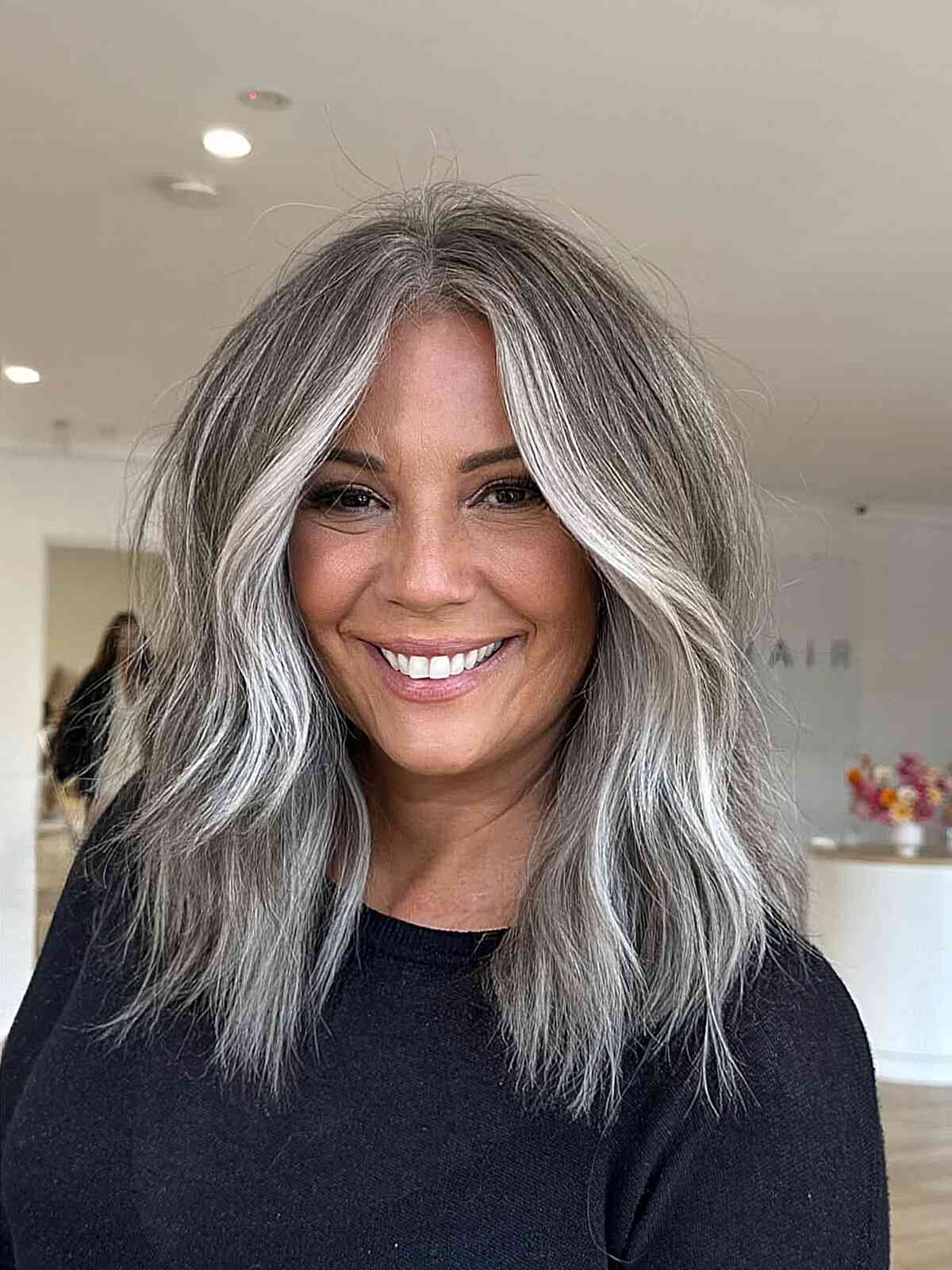
The face-framing highlights here soften the collarbone line, letting the lob move naturally with you. Fine to medium hair starting at collarbone length benefits most, and the curtain bangs help round and square faces feel less boxed in. Ask your colorist for: collarbone lob with gray blonde highlights and curtain bangs. A large barrel curling iron and a trim every six weeks keeps the shape from turning into a triangle.
Creamy Blonde Collarbone Bob With Face-Framing
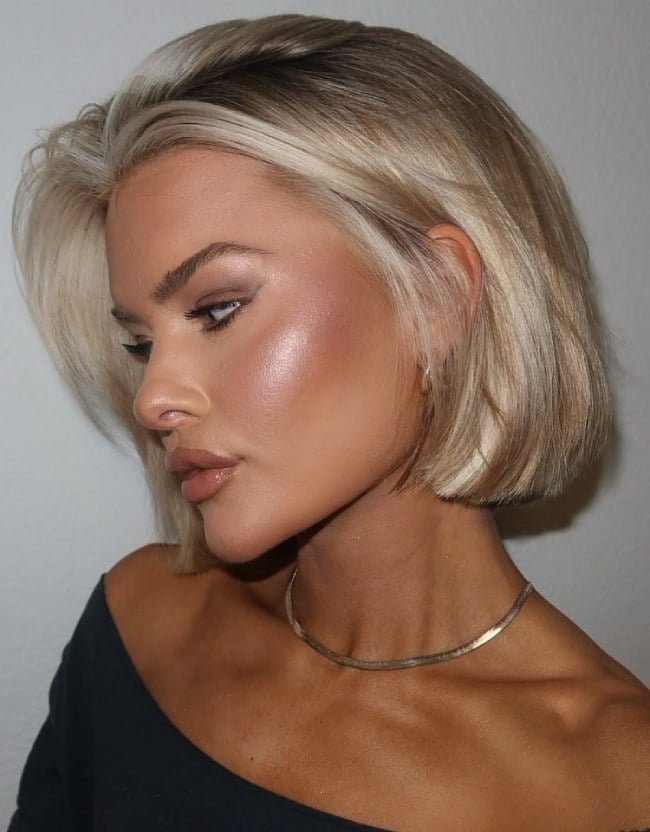
If ash tones make you look washed out, this is the alternative. The warm creamy blonde base avoids the purple-shampoo cycle while the face-framing pieces add movement to what is otherwise a straight, fine bob. Long faces get the most out of the side part and those shorter front sections. Ask your colorist for: creamy blonde collarbone bob with face-framing pieces. It is the color equivalent of a cashmere sweater: soft, reliable, never shrill.
Chin Length Bob With Textured Waves and Blonde Highlights
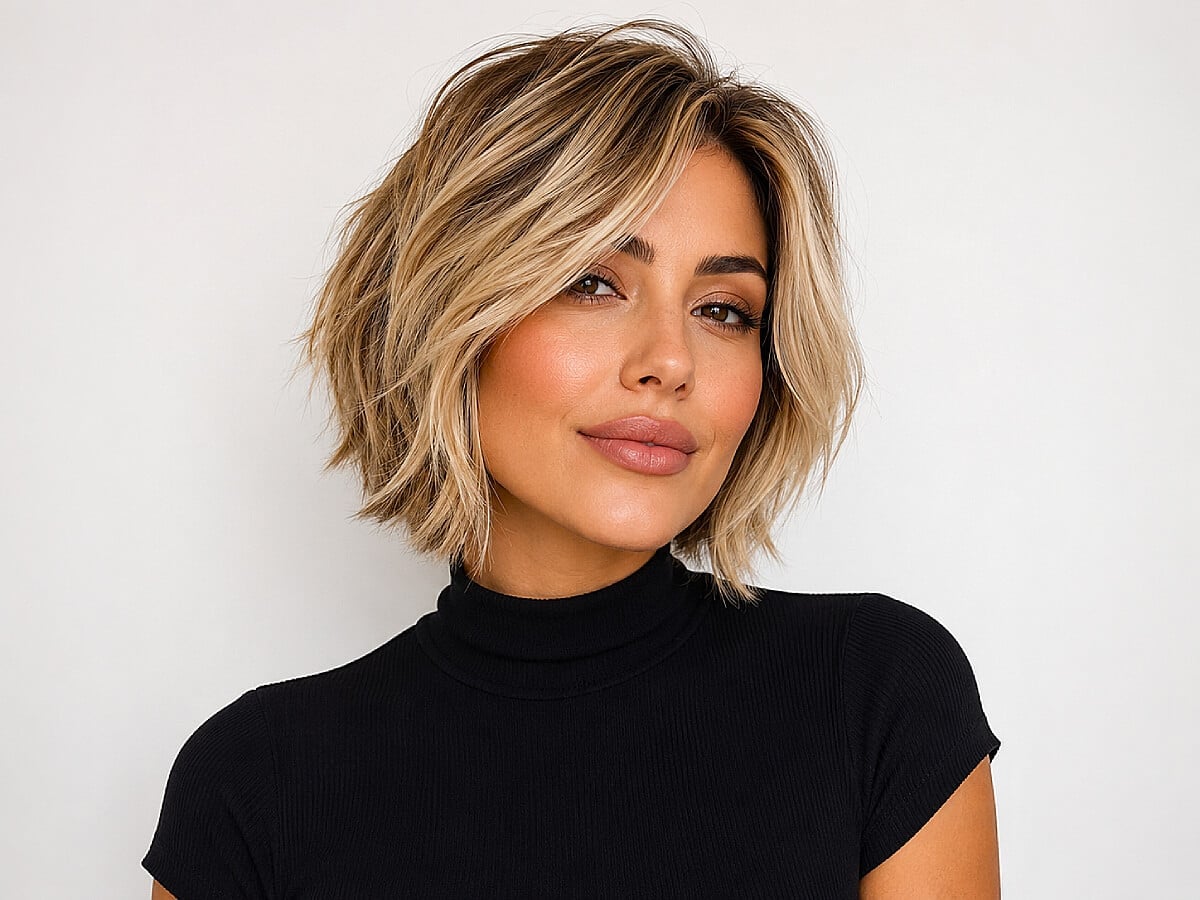
Wondering how to make a chin-length bob look like it has more going on than a blunt line? The answer is textured waves and side-swept bangs. The lighter face-framing highlights add depth without the commitment of full blonde. Square and round faces get softened by the angle of those bangs. Ask your colorist for: chin length bob, textured waves, side-swept bangs, blonde with face-framing highlights. A texturizing spray is your friend here.
Ash Blonde Layered Bob With Platinum Highlights
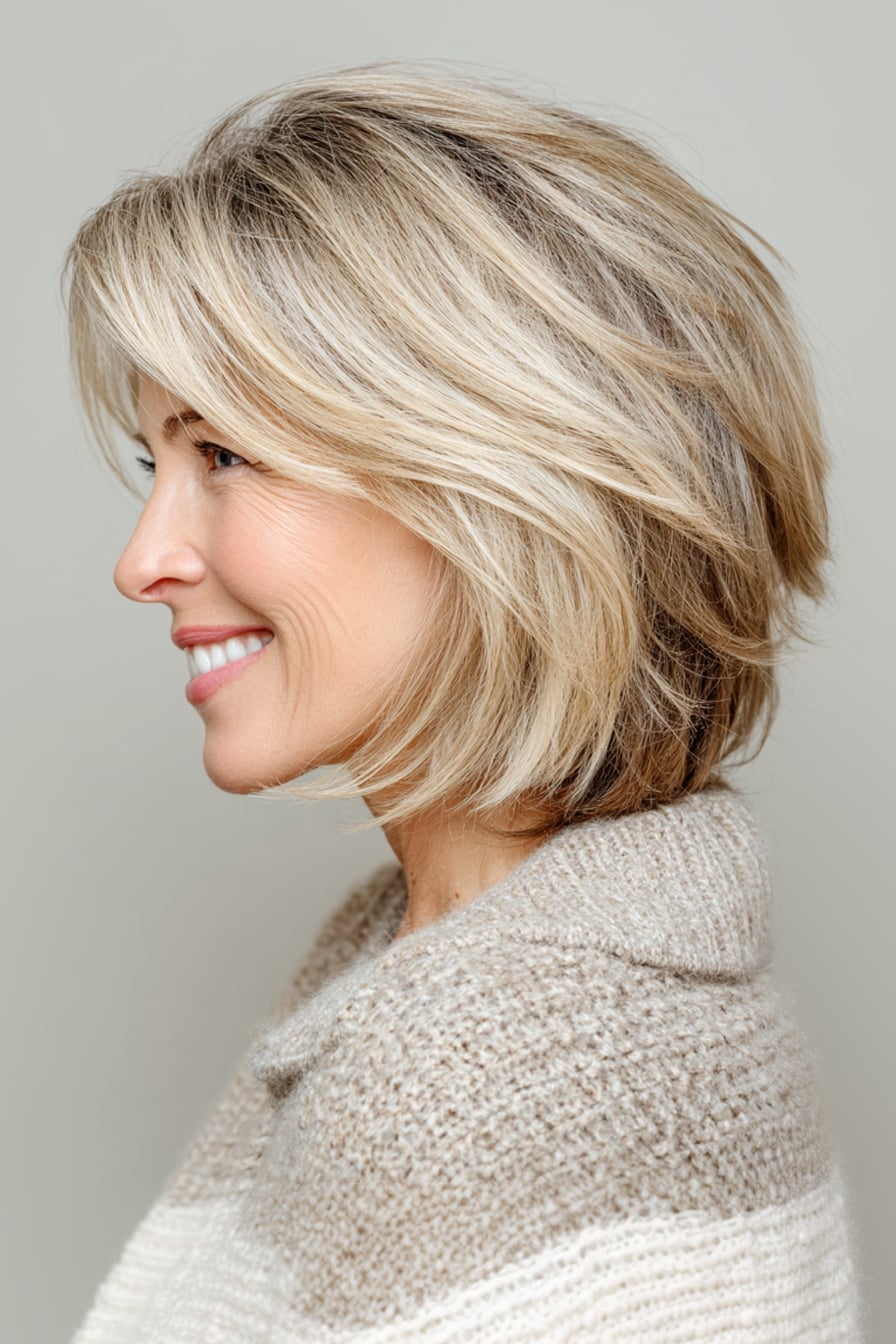
Those face-framing layers are cut intentionally shorter around the jaw, which softens square jawlines without losing structure. Fine, straight hair at collarbone length works best. Ask your colorist for: collarbone layered bob, ash blonde with platinum highlights, side-swept bangs. A round brush blowout gives it that smooth finish, and toning every six weeks keeps the ash from drifting.
Shoulder Length Bob Balayage With Loose Waves
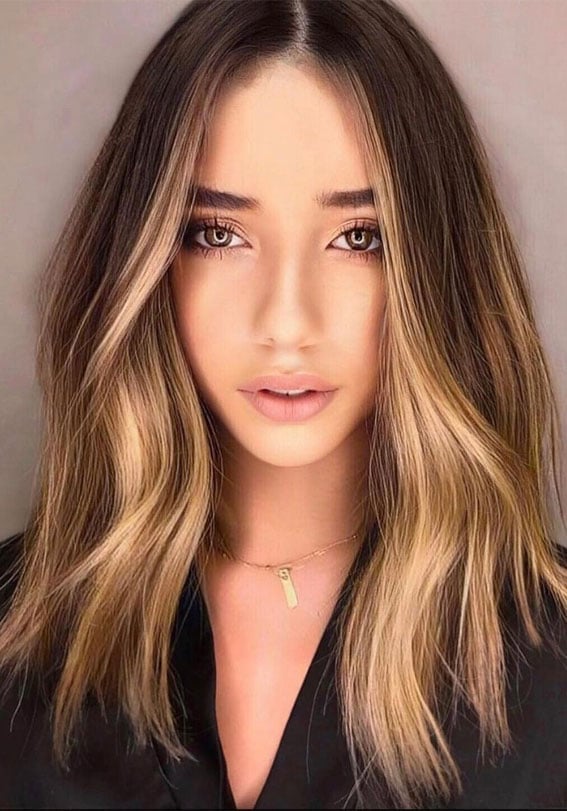
Ask your colorist for: shoulder length bob, dark brown to blonde balayage, curtain bangs. Air drying with a curl cream or a quick diffuser pass is all the styling it needs. A trim every eight weeks keeps the bob shape clean without losing the lived-in texture.
Shoulder Length Shag With Blue Highlights
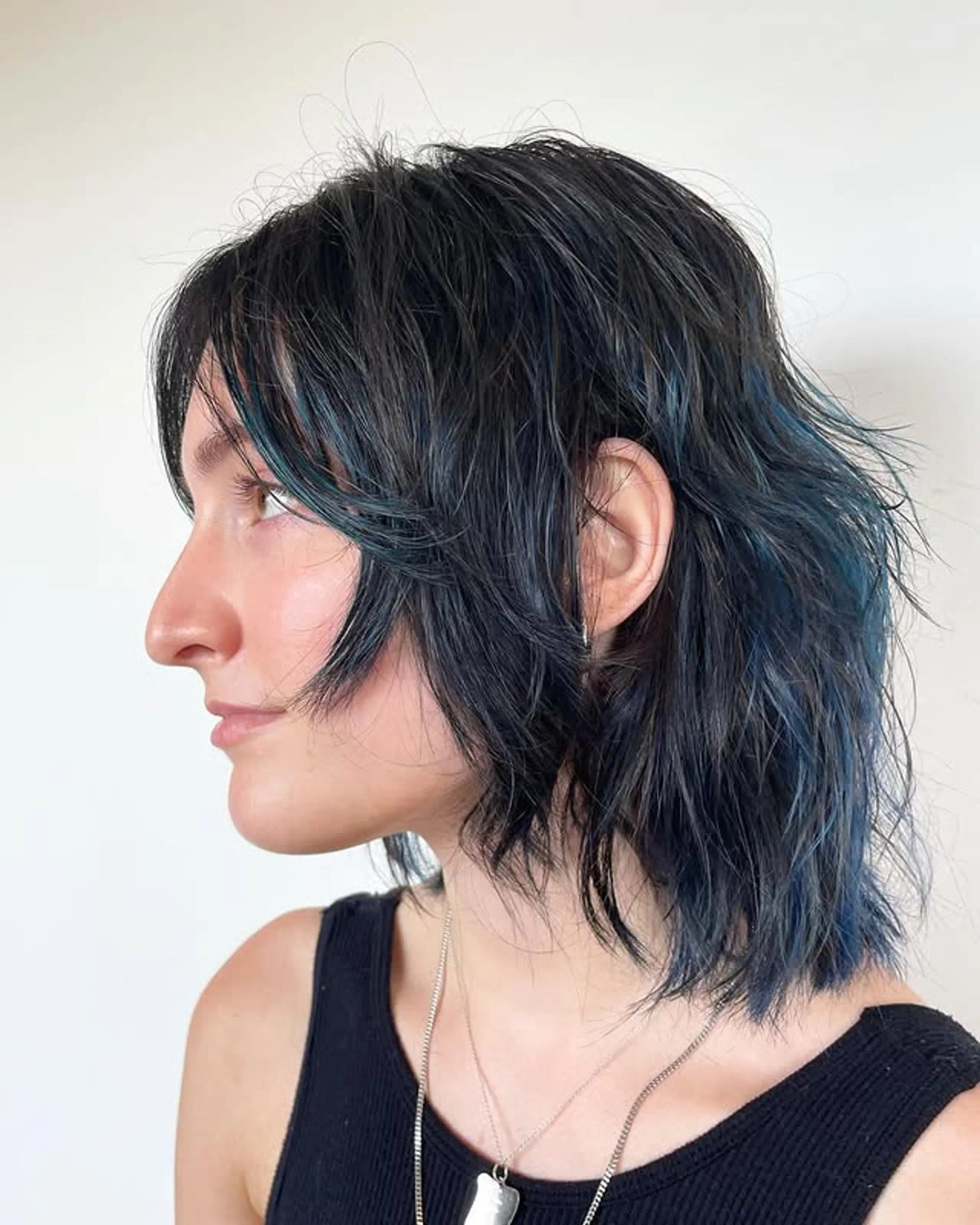
If you are flirting with a fashion color but keep going back to brunette, this is the compromise that actually delivers. A shoulder-length shag cut in dark blue-black with blue highlights woven through the ends and wispy bangs. The wavy, fine texture keeps the blue from looking like a solid block, which matters because the real drawback is how fast vibrant blue fades. Ask your stylist for a shoulder-length shag with dark blue-black base and blue highlights, wispy bangs. A sea salt spray gives the messy, textured finish that makes the color pop, and a trim every eight to ten weeks keeps the shape from turning sad.
Shoulder Length Shag With Blonde Highlights, Wispy Bangs
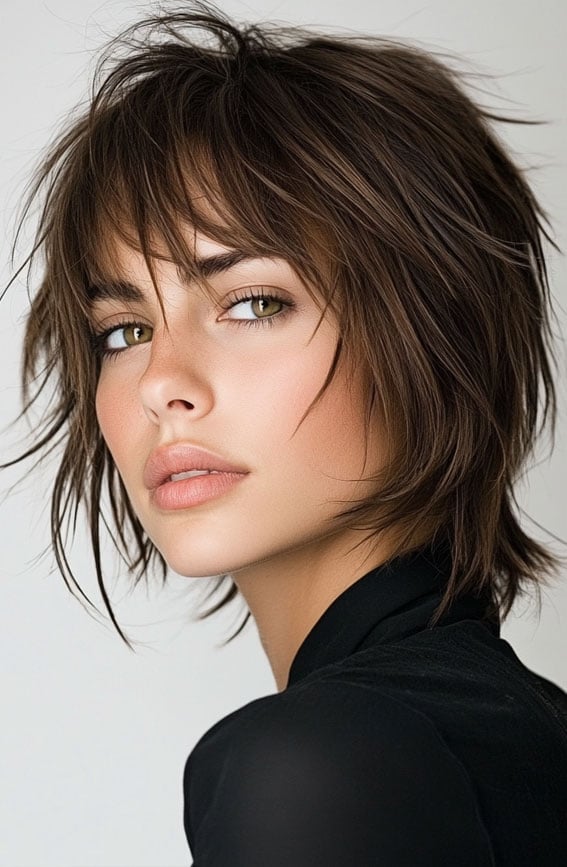
Wondering if shaggy layers and wispy bangs actually work on anything other than a Pinterest board? They do, but it depends on the cut. This shoulder-length shag has choppy layers and wispy bangs, a brown base with blonde highlights slicing through the texture. The uneven weight of the choppy layers softens a square jaw, while the wispy bangs break up a round hairline without hiding it. Ask your stylist for a shoulder-length shag with choppy layers, wispy bangs, brown with blonde highlights. Medium-density wavy hair holds the shape best, and a texturizing paste defines the pieces without crunch.
Shoulder Length Curly Black With Copper Highlights
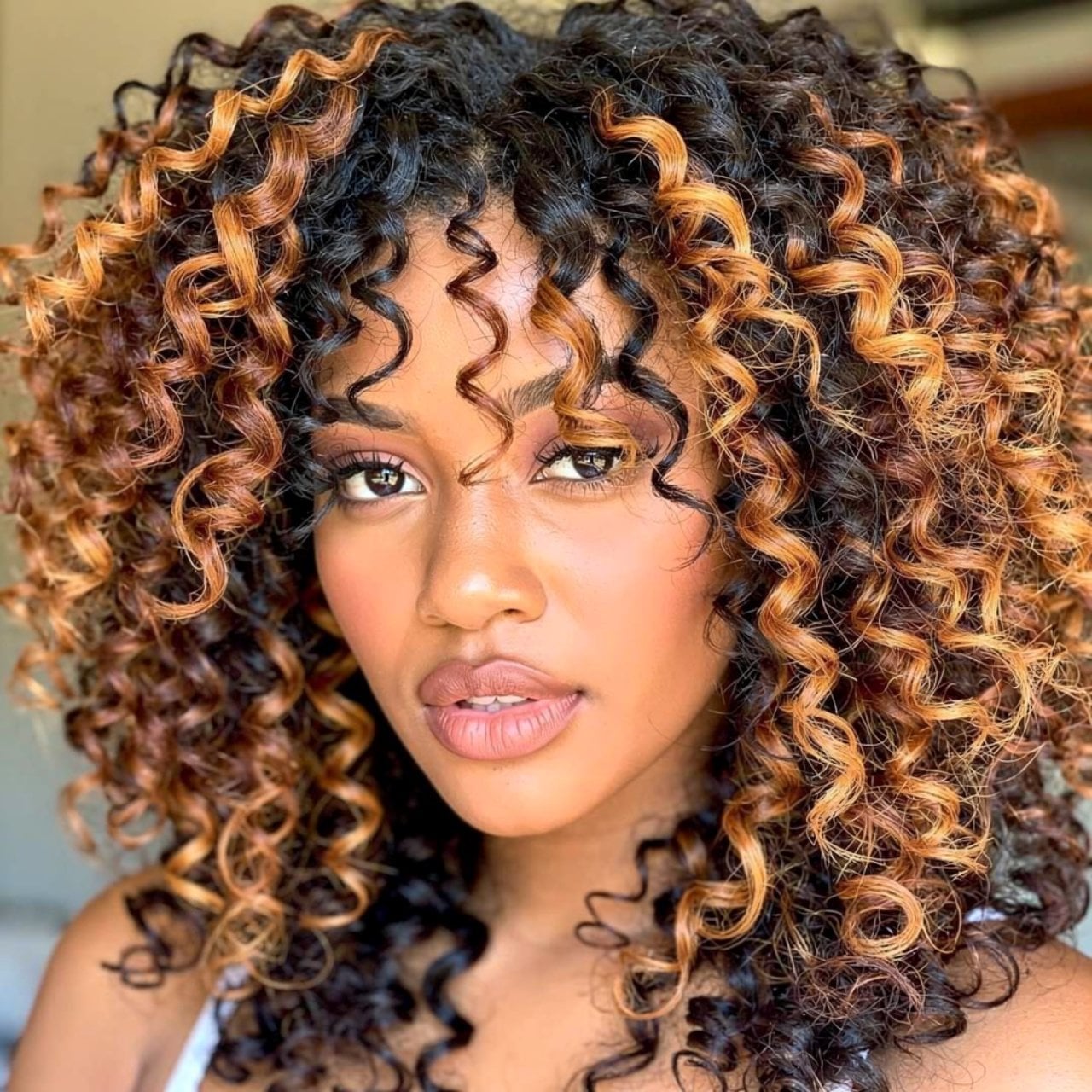
A dark base with copper highlights is an autumn staple that works year-round if you pick the right placement. The shoulder-length cut has thick, defined curls and a middle part, with copper woven through the black base. No bangs, which keeps the volume at the crown and the length full. The contrast between the warm copper and the cool black base gives the curls a dimensional pop that flat color cannot match. Ask your colorist for shoulder-length curly hair, black with copper highlights. A diffuser and curl-defining cream set the shape; refresh with water and product between washes so the copper stays visible.
Collarbone Shag With Ash Blonde Highlights
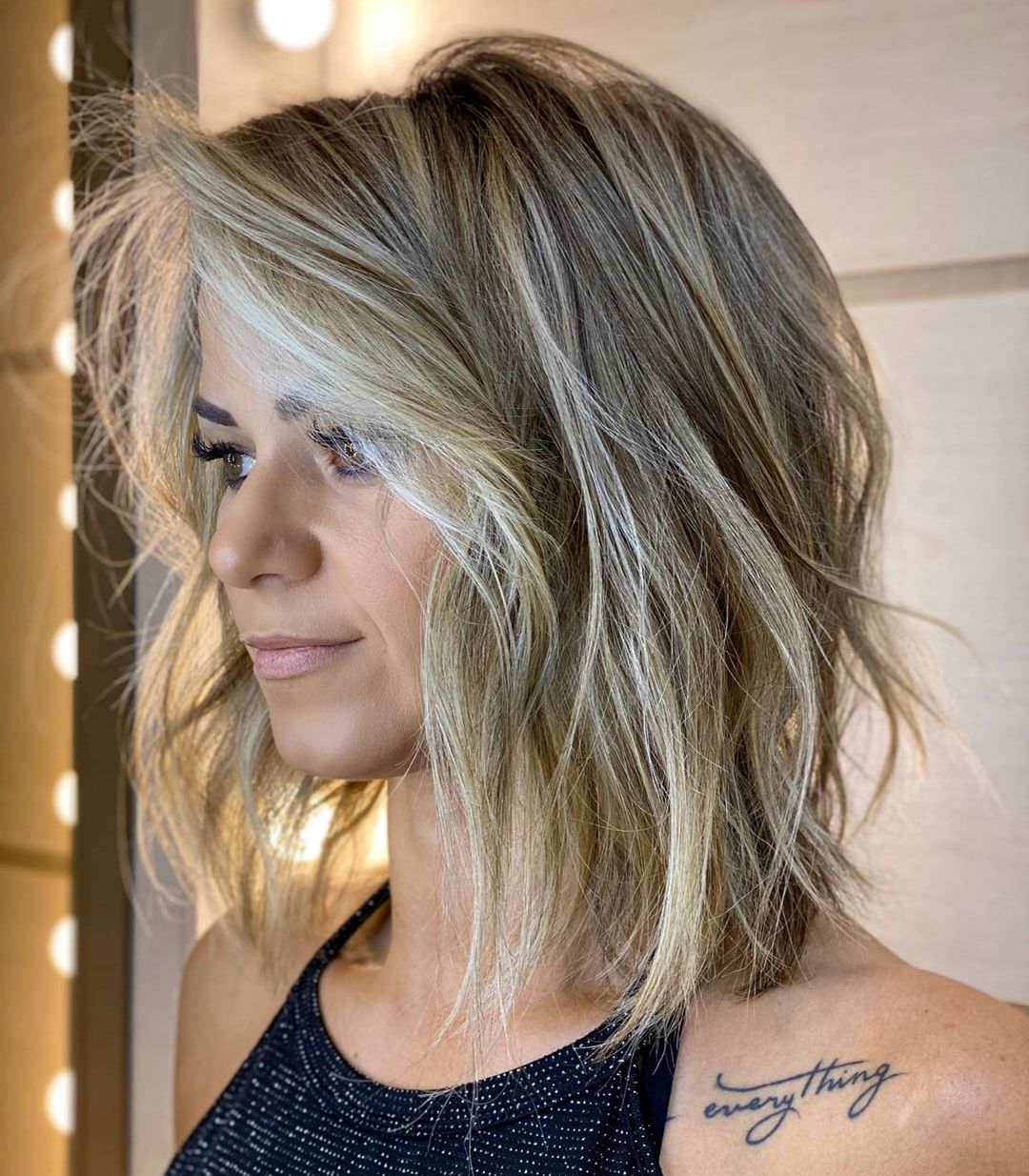
A textured shag at collarbone length wears differently than a blunt cut: it asks for a bit of daily input. The ash blonde base has lighter blonde highlights that catch on the wavy, medium texture, and the wispy bangs are swept to the side. The textured blowout in the photo is a styled moment, but the cut also works air-dried with a little sea salt spray for a more lived-in finish. Ask your stylist for a collarbone shag, ash blonde with lighter highlights, wispy bangs. A trim every six to eight weeks keeps the layers from tangling at the ends, and a purple shampoo every other wash maintains the cool tone.
Chin Length Layered Bob With Frosted Highlights
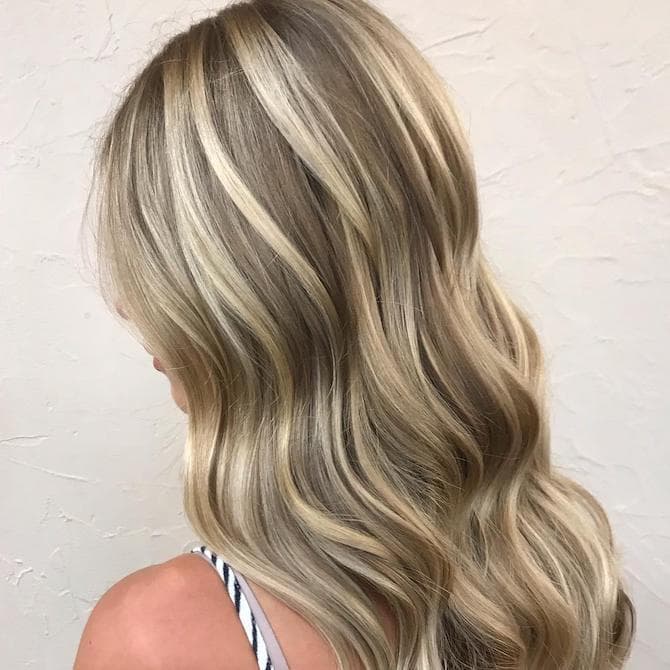
A frosted highlight on a dark base looks like a salon specialty because it is. This chin-length layered bob has a middle part, wavy texture, and cool frosted highlights that sit on the surface of the darker hair. The fine, wavy texture makes the contrast read clearly rather than muddy. Ask your colorist for a chin-length layered bob, dark base with frosted blonde highlights. The DIY version of this is a bad idea: getting the frost effect requires precise foil placement that home kits cannot replicate. A salon appointment is the only reliable route, and a gloss toner every six weeks keeps the cool tone from turning brassy.
Collarbone Length Layers With Blonde Highlights
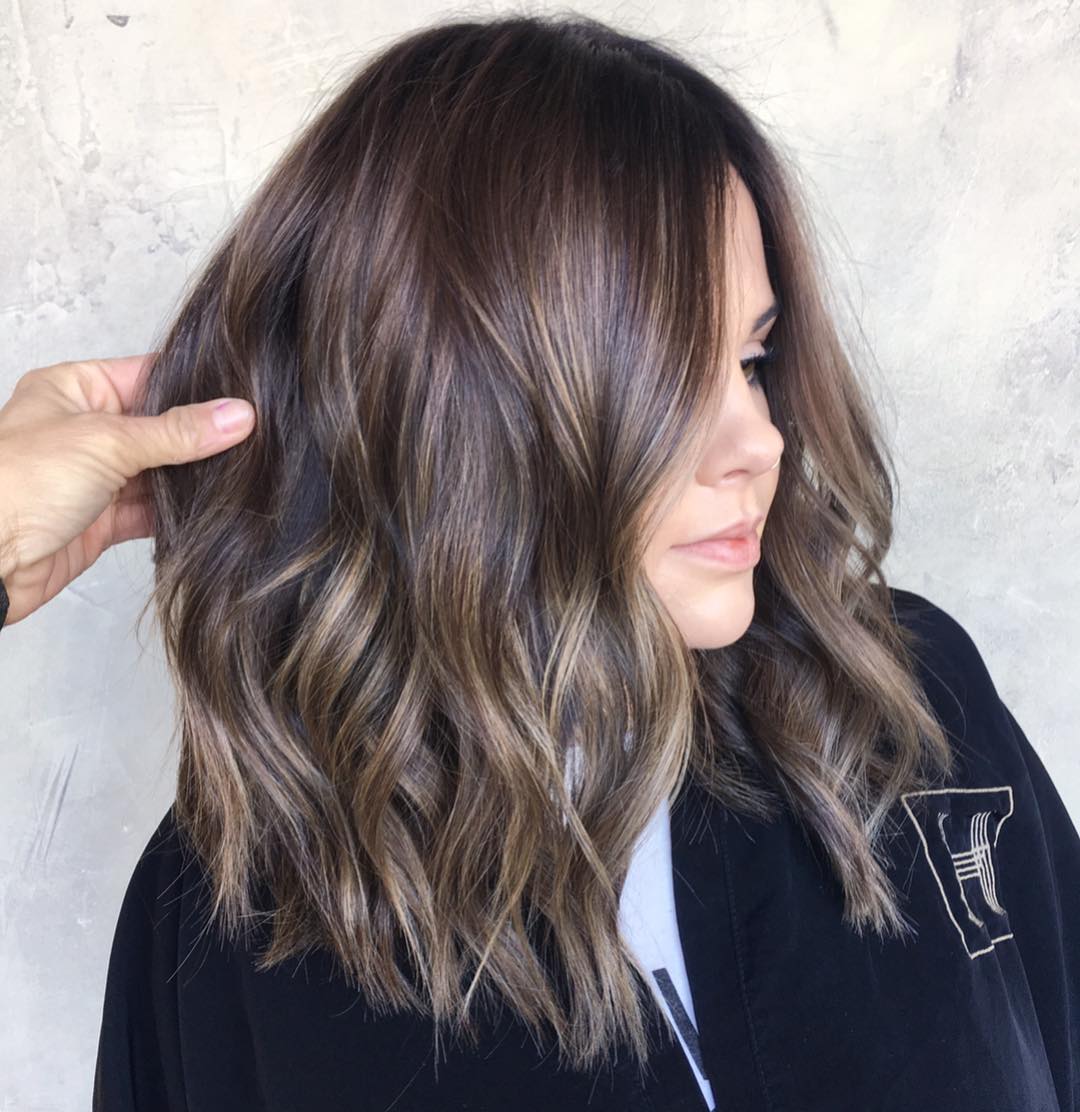
A side part and subtle layers turn collarbone-length dark brown hair into a study in precision: the blonde highlights land mostly at the front, where they catch the light when you move. Thick wavy texture at this length holds the shape without losing density, and the layering prevents a solid block of color. Ask your colorist for: dark brown with blonde highlights, subtle layers. A heat protectant before blow-drying keeps the ends smooth, and a trim every eight weeks maintains the collarbone line.
Collarbone Layered Dark Brown With Blonde Highlights
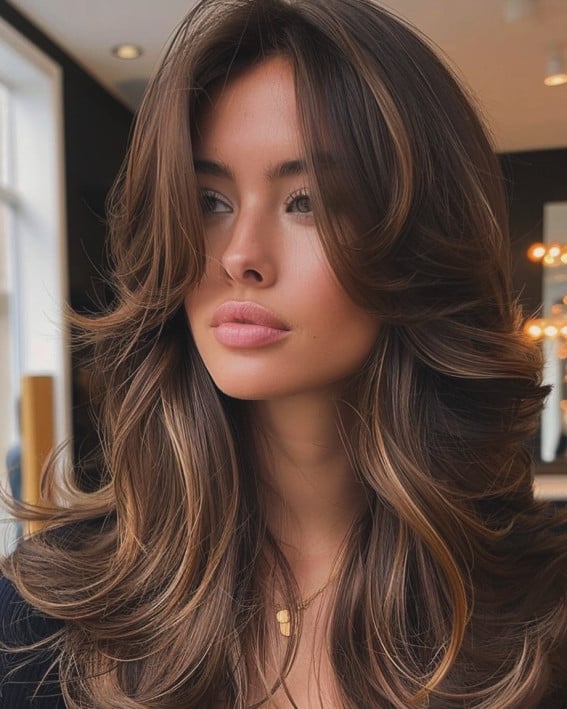
Can thick, wavy hair wear a collarbone cut without looking heavy? Yes, if the layers start at the jaw and the curtain bangs break up the line. The dark brown base with blonde highlights creates contrast. The face-framing layers soften angular faces without requiring daily styling. Ask your stylist for: collarbone length with layers, curtain bangs. A round brush and a blowout give a smooth finish; the baseline needs a trim every six weeks to keep the curtain bangs in shape.
Collarbone Lob With Gray Blonde Highlights, Long Layered Shag
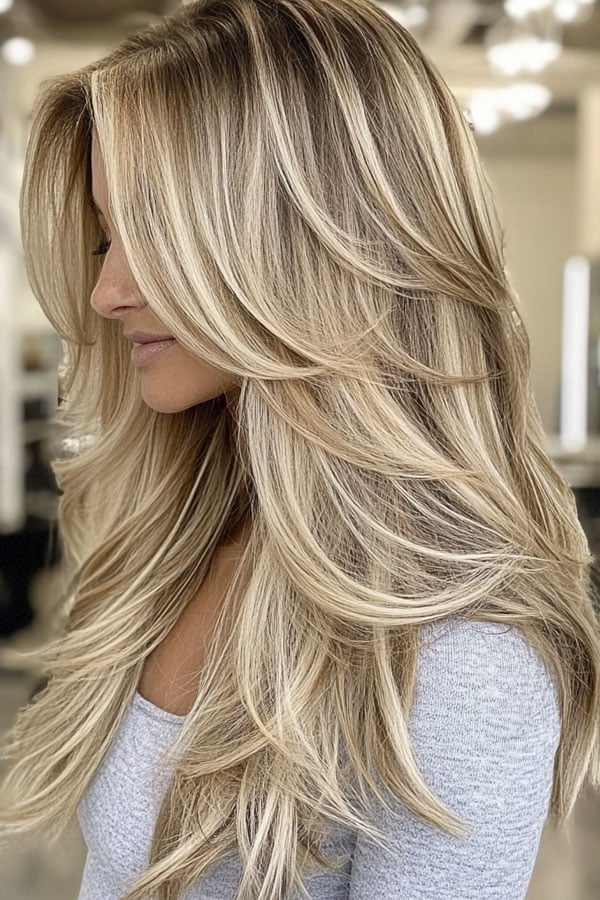
A blunt collarbone cut gives you weight; a long layered shag gives you movement. This version uses honey blonde with platinum highlights and curtain bangs to build volume at the crown and soften the edges, so the roots grow out with less demarcation than a solid blonde would show. The middle part and side-swept face-framing layers work for fine to medium texture starting at collarbone length, and the layers lift the hair off the neck without losing length. Ask your colorist for: honey blonde with platinum highlights, curtain bangs, long layered shag. A large-barrel curling iron creates the soft waves, and a six-week trim keeps the bangs from sliding into your eyes.
Mid-Back Layers With Face-Framing Blonde Highlights
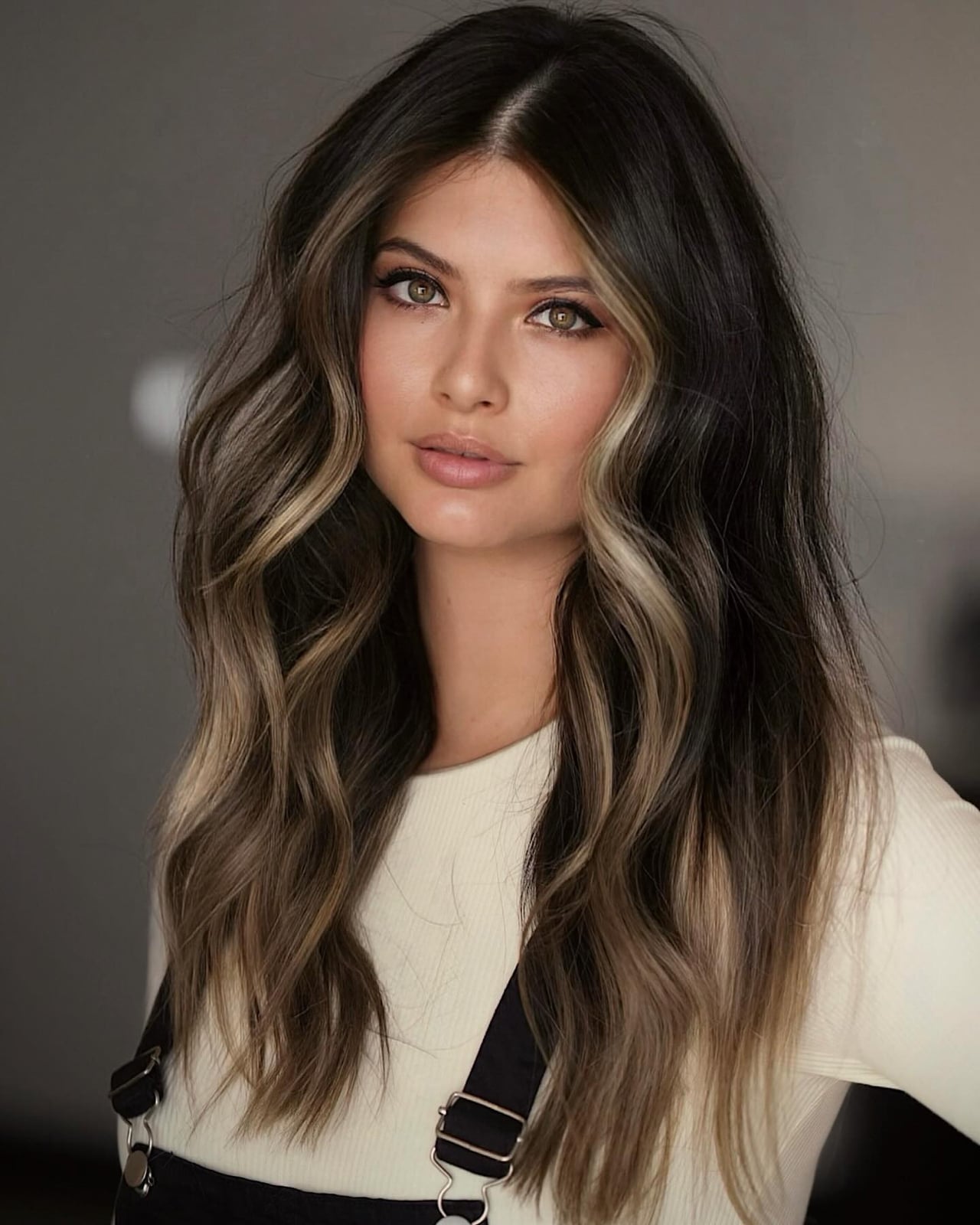
The face-framing blonde highlights start near the cheekbone and fade into the dark base, creating a deliberate contrast. Thick wavy hair at mid-back length carries the long layers well, and the face-framing bangs soften a square jawline without requiring a full fringe commitment. Ask your colorist for: mid-back length with face-framing blonde highlights. A texturizing spray enhances the wavy texture, and a trim every eight to ten weeks keeps the ends healthy. The bangs will grow out gracefully into longer layers if you skip a trim or two.
Mid-Back Shag With Full Bangs and Highlights

How do you ask for a shag that does not look like a costume from 1974? Start with the words mid-back shag, full bangs, and blended highlights. The dark brown base with blonde and caramel tones gives dimension without a stripe effect, and the full bangs anchor the cut so it reads as deliberate. Ask your stylist for: a mid-back shag with full bangs and blonde and caramel highlights. The air-dried texture in the photo is the goal: a curl enhancer on damp hair, then leave it alone. The bangs need a trim every four to six weeks to keep them out of your line of sight.
Mid-Back Long Layers With Blonde Balayage
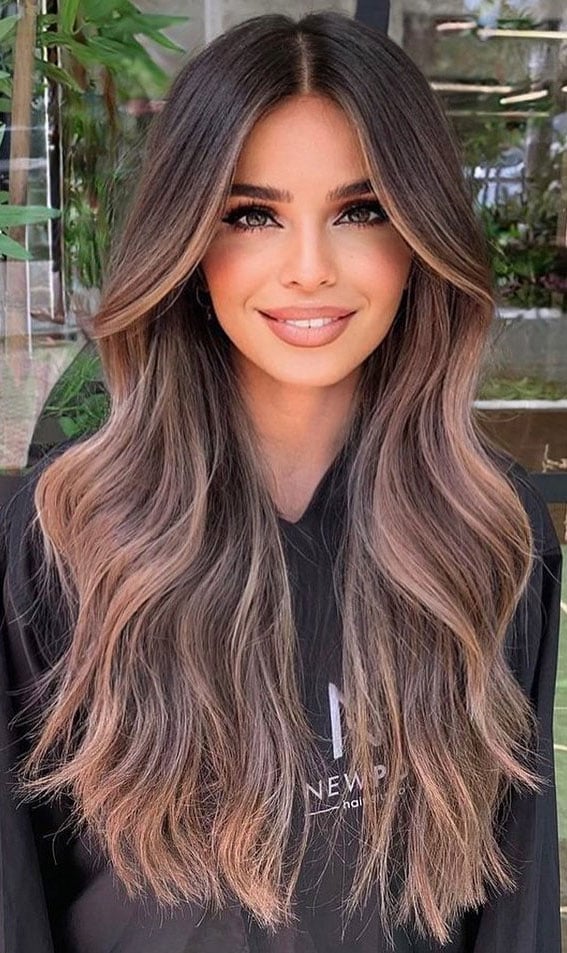
Balayage works by painting color directly onto the strands, which is why the dark brown base melts into blonde without a visible line of demarcation. The mid-back length gives the color room to travel, so the darkest pigment sits at the roots and the lightest lands at the ends. Long layers keep the shape moving, and the wavy texture catches the gradient from every angle.
This suits thick, wavy hair that can carry the weight of a long cut, and the curtain bangs soften round and square faces. Ask your colorist for: mid-back long layers, dark brown to blonde balayage, curtain bangs. Use a texturizing spray on damp hair and diffuse to boost the waves. The balayage grows out softly, so you can stretch touch-ups to every 10 to 12 weeks.
Mid-Back Layers With Face-Framing Blonde, Office-Safe Version
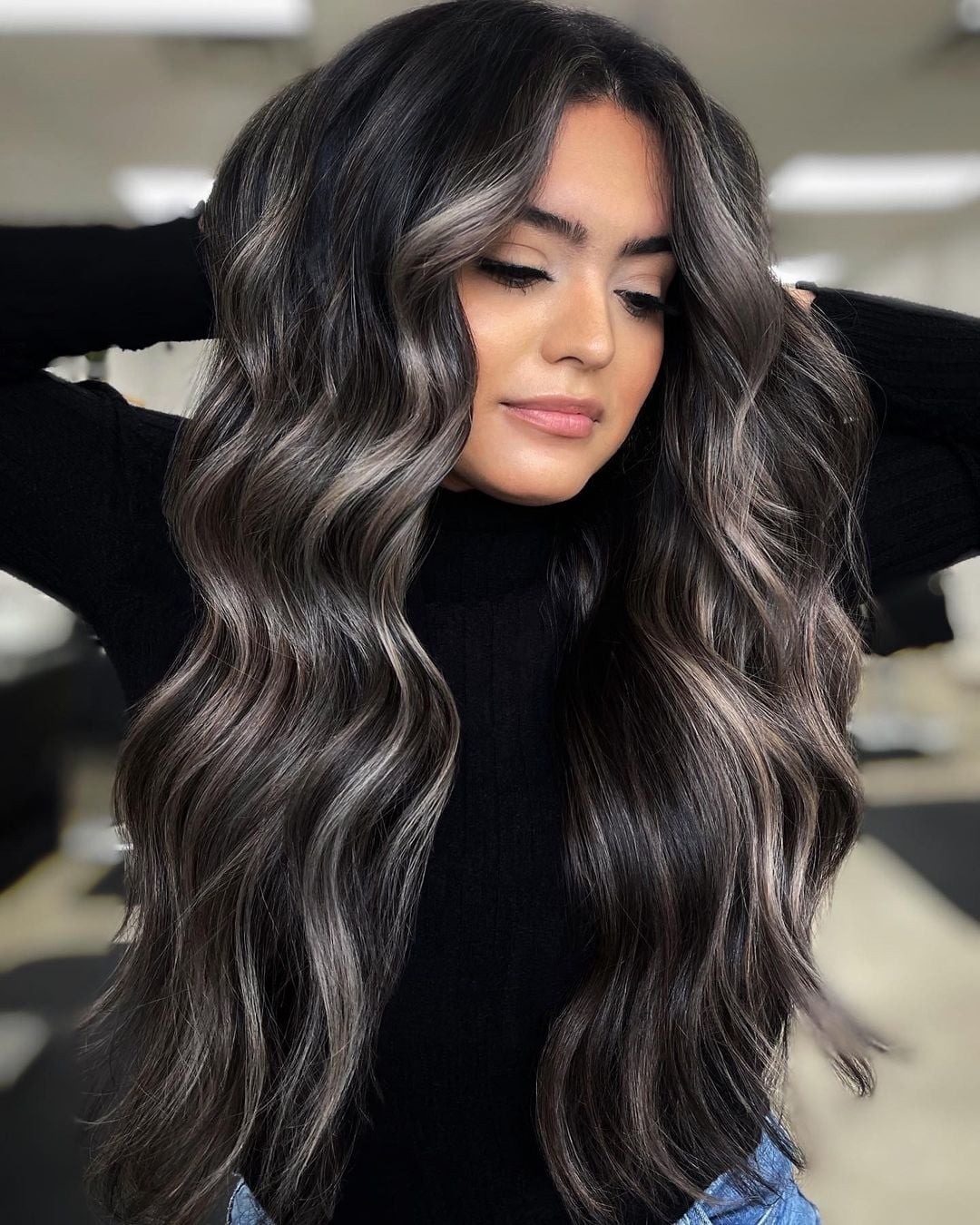
Ash blonde and gray highlights are cooler and more restrained than golden tones, which makes them a sensible pick for a professional setting. The dark base keeps the contrast subtle, while the placement draws attention to the front without committing the whole head to blonde. Loose waves soften the overall effect, so the color never looks stark.
Thick, wavy hair at mid-back length carries these highlights well. Ask your colorist for: mid-back length with face-framing blonde highlights and bangs. A texturizing spray adds grip and keeps the waves from falling flat by midday. Plan a trim every 8 to 10 weeks to maintain the shape and keep the ends healthy.
Mid-Back Shag With Honey Blonde Highlights
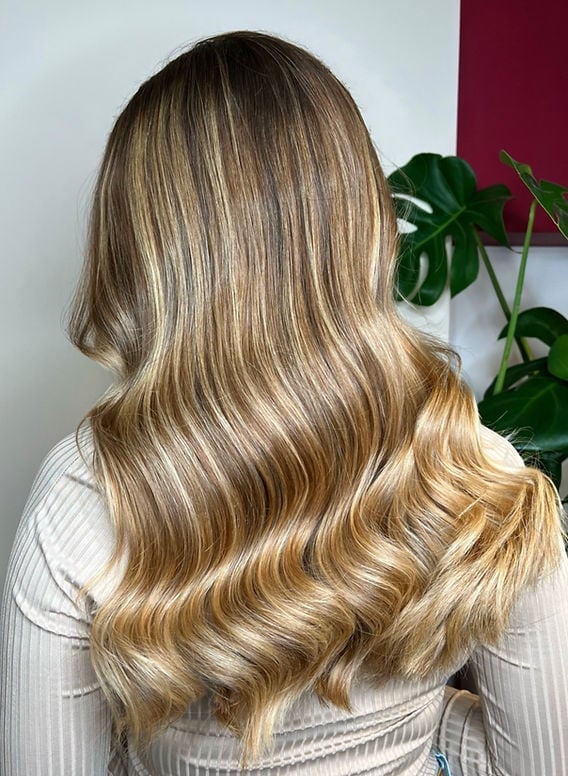
This one sits between a classic shag and a layered cut, with the auburn highlights doing most of the talking against the dark brown base. The back view shows off the length and the layering, which gives the waves their movement. It is a warm, dimensional option for anyone who wants color that feels rich without being brassy.
Auburn fades faster than cooler tones, so expect to refresh the color more often or reach for a color-depositing conditioner between salon visits. Thick, wavy hair at mid-back length is the ideal canvas for this cut. Ask your colorist for: mid-back long layered shag, honey blonde with platinum highlights, curtain bangs. A volumizing spray at the roots keeps the blowout lifted, and a trim every 8 weeks preserves the shape.
Mid-Back Layers With Curtain Bangs and Blonde Highlights, Wavy
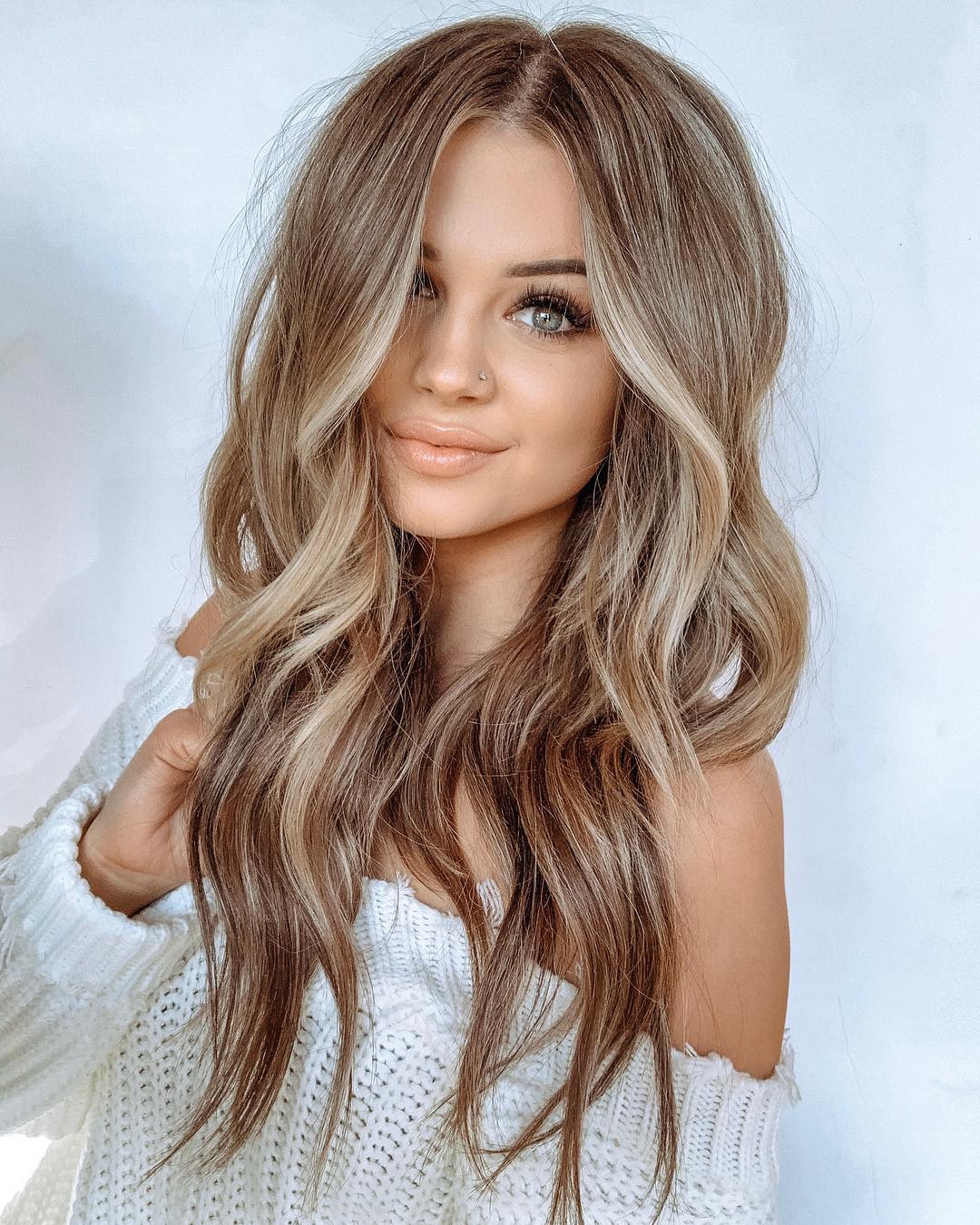
Curtain bangs are the longest of the bang family, sweeping away from the face to blend into the layers, which is why they suit oval and elongated face shapes so well. The dark blonde base keeps the overall tone grounded, while the blonde highlights add brightness without tipping into full platinum. Loose curls and a blowout give the mid-back length its volume and bounce.
This cut works best on thick, wavy hair that can hold the shape of the layers. Ask your stylist for: mid-back layered hair, dark blonde with blonde highlights, face-framing curtain bangs. Use a large barrel iron to create loose curls, then run a finger through them to break them up. Trim every 8 to 10 weeks to keep the curtain bangs from growing past their intended length.
Mid-Back Layers With Rich Caramel Highlights
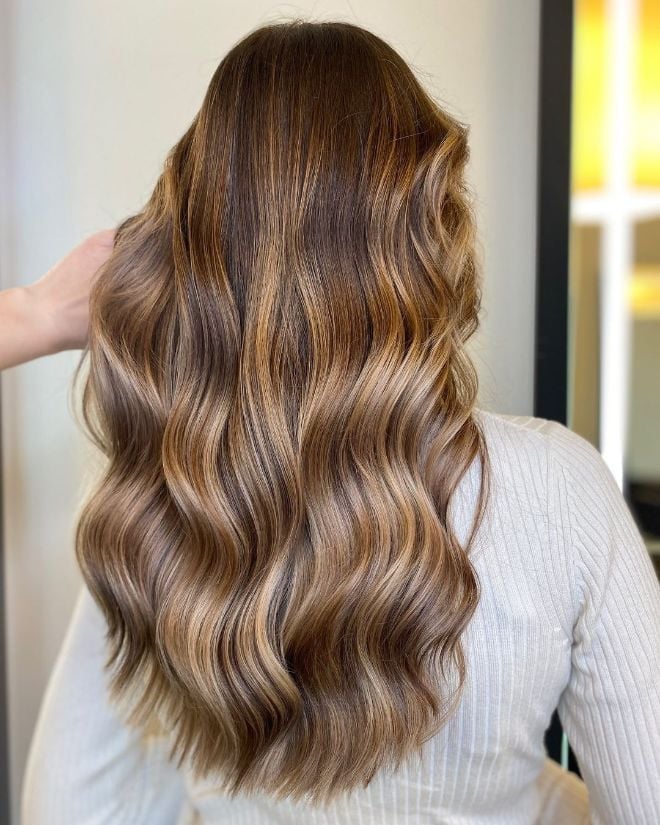
Caramel highlights add warmth to a dark brown base, and when placed throughout the mid-back length, they create a multidimensional effect. Loose waves help blend the color and also minimize the appearance of split ends on long layers, so the ends look healthier than they might otherwise. The back view shows the full range of the caramel against the darker roots.
This is a low-maintenance option for thick, wavy hair, since the highlights grow out without a harsh line. Ask your colorist for: mid-back length, dark brown with caramel highlights, subtle layers. A smoothing product adds shine and tames any frizz. Refresh the highlights every 10 to 12 weeks to keep the warmth from dulling.
Mid-Back Layers With Caramel Balayage
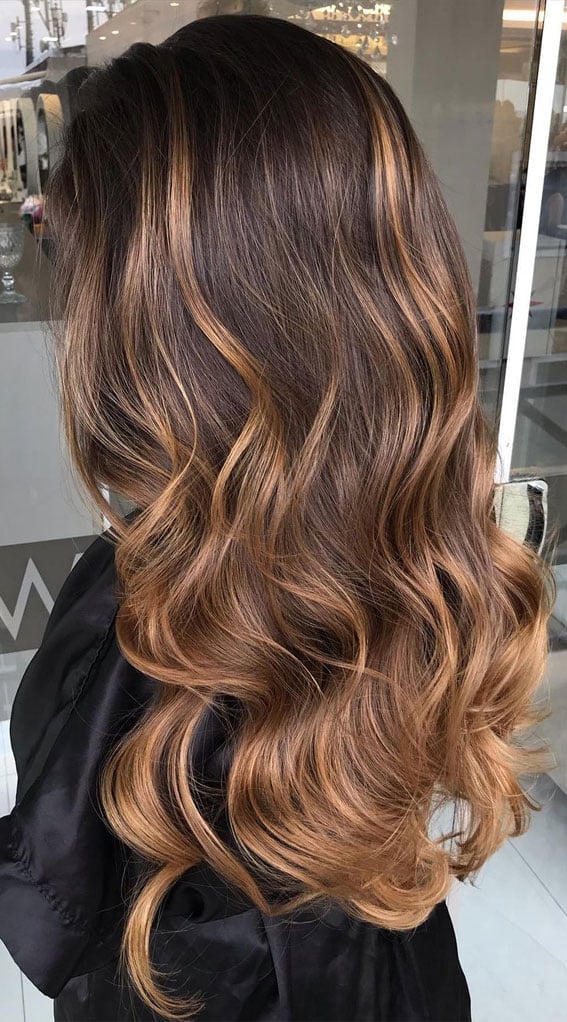
A caramel balayage on a dark brown base is a design that looks simple until you try it at home. The seamless blend from root to mid-back requires a colorist who can paint freehand without leaving a hard line. Ask your colorist for: mid-back long layers, dark brown with caramel balayage. A side part and soft long layers add movement to thicker wavy textures, and the warmth of the caramel gives a grown-in effect. This is a salon-only situation; a DIY kit risks muddy banding that defeats the whole point.
Mid-Back Layers With Blonde Balayage Highlights, Loose Waves
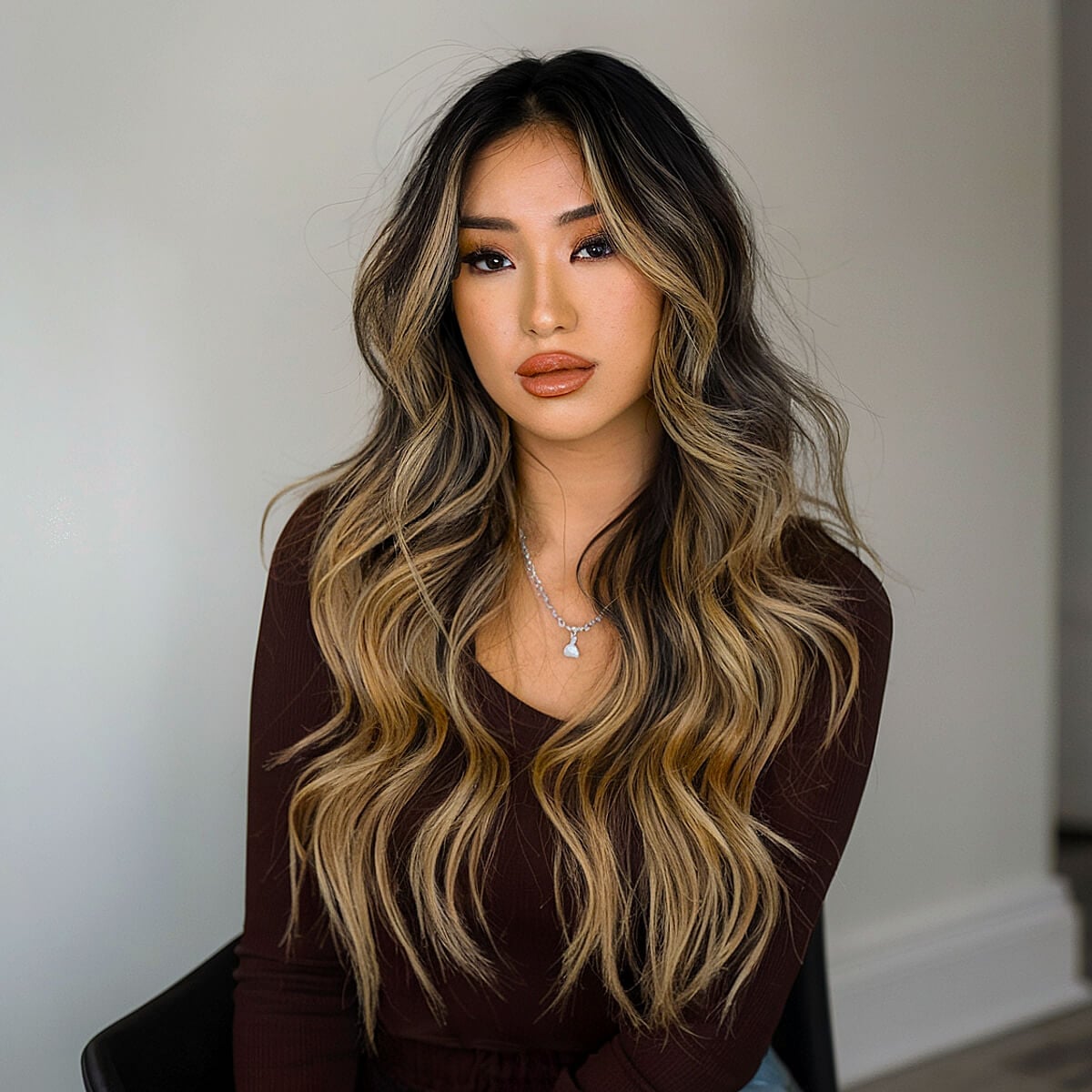
Blonde balayage on a dark brown base works because the colorist paints the lightener onto the mid-lengths and ends, leaving the root untouched. The result is a sun-kissed effect that grows out without a harsh demarcation line. Ask your colorist for: mid-back layers, dark brown with blonde balayage. The middle part and loose waves show off the contrast through the length, and the layers prevent the thickness from turning into a solid triangle. A smoothing serum helps the waves hold their shape and keeps the blonde section from grabbing.
This technique suits wavy, thick hair at mid-back length best. The balayage placement follows the natural fall of the hair, so the lighter pieces land where the light would hit anyway. A touch-up every ten to twelve weeks maintains the blend without a full redo.
Mid-Back Layers With Honey Blonde Highlights, Close-Up Take
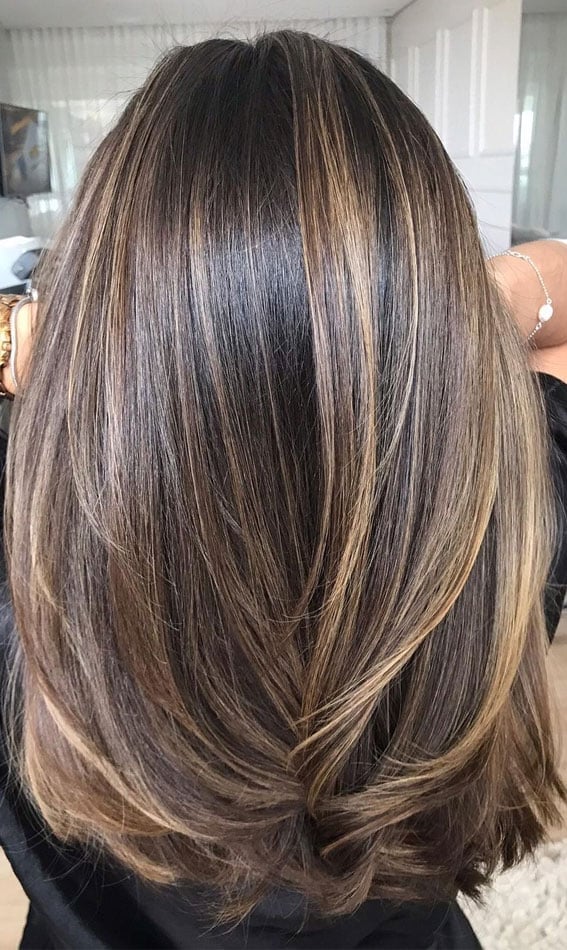
Honey blonde highlights are a summer move that also works for the transition into fall. The warmth adds a healthy look and the contrast against a dark brown base adds depth without going brassy. Ask your colorist for: mid-back length layers, dark brown with honey blonde highlights. A wavy blowout shows off the dimension, and the middle parting keeps the color distribution even on both sides. Thick wavy hair at mid-back length holds the shape well, and the layers keep the weight from pulling the wave out.
This highlight works for casual weekends and also holds up in an office setting. The honey tone sits close enough to neutral that it blends naturally. A gloss treatment every six to eight weeks keeps the warmth from drifting toward orange.
Mid-Back Blonde With Dimensional Highlights
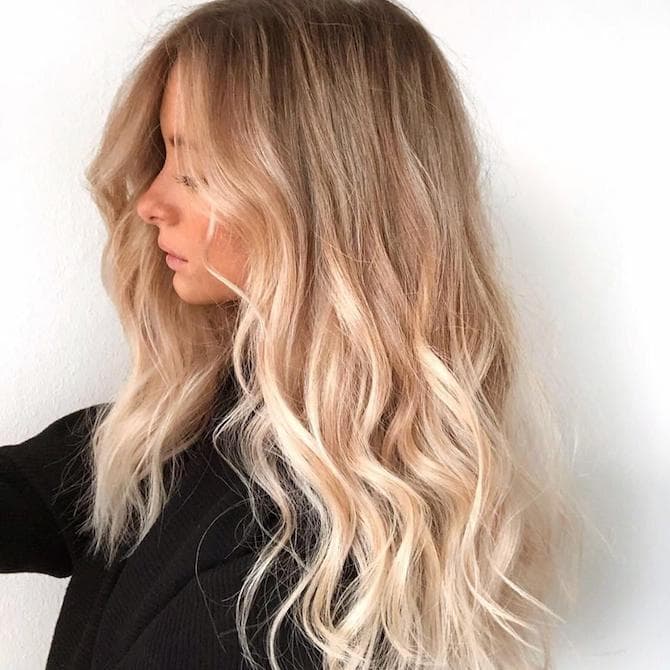
Dimensional blonde is a step away from a single all-over color. Multiple shades of blonde are woven through the mid-back length so the hair looks richer and less flat. Ask your colorist for: mid-back blonde with dimensional highlights, side part. The blowout and side parting emphasize the variation. The real drawback: keeping those tones from turning brassy requires a purple shampoo and a toning visit every eight to ten weeks. Thick wavy texture helps the different shades blend naturally, but fine hair may not have enough density to carry the effect.
Mid-Back Blonde Layers With Lighter Highlights, Straight Blowout
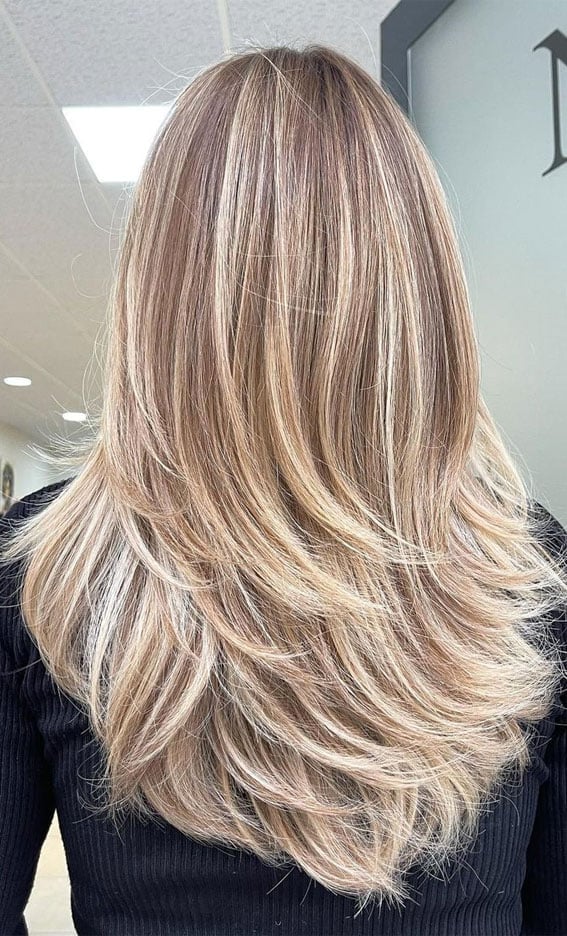
Is your hair thick and straight enough that it hangs like a curtain? Long, distinct layers are the fix. They carve shape into the silhouette and prevent the weight from pulling everything flat. Ask your stylist for: mid-back blonde with long layers and lighter highlights. The middle parting and straight blowout show the layering clearly, and the lighter highlights woven through the blonde base add movement that the cut alone cannot provide. This works best on thick straight hair at mid-back length; fine or thin textures may lose density with aggressive layering. A trim every eight weeks keeps the layers from growing into a single blunt line.
Mid-Back Wavy Dark With Ash Blonde and Gray Highlights
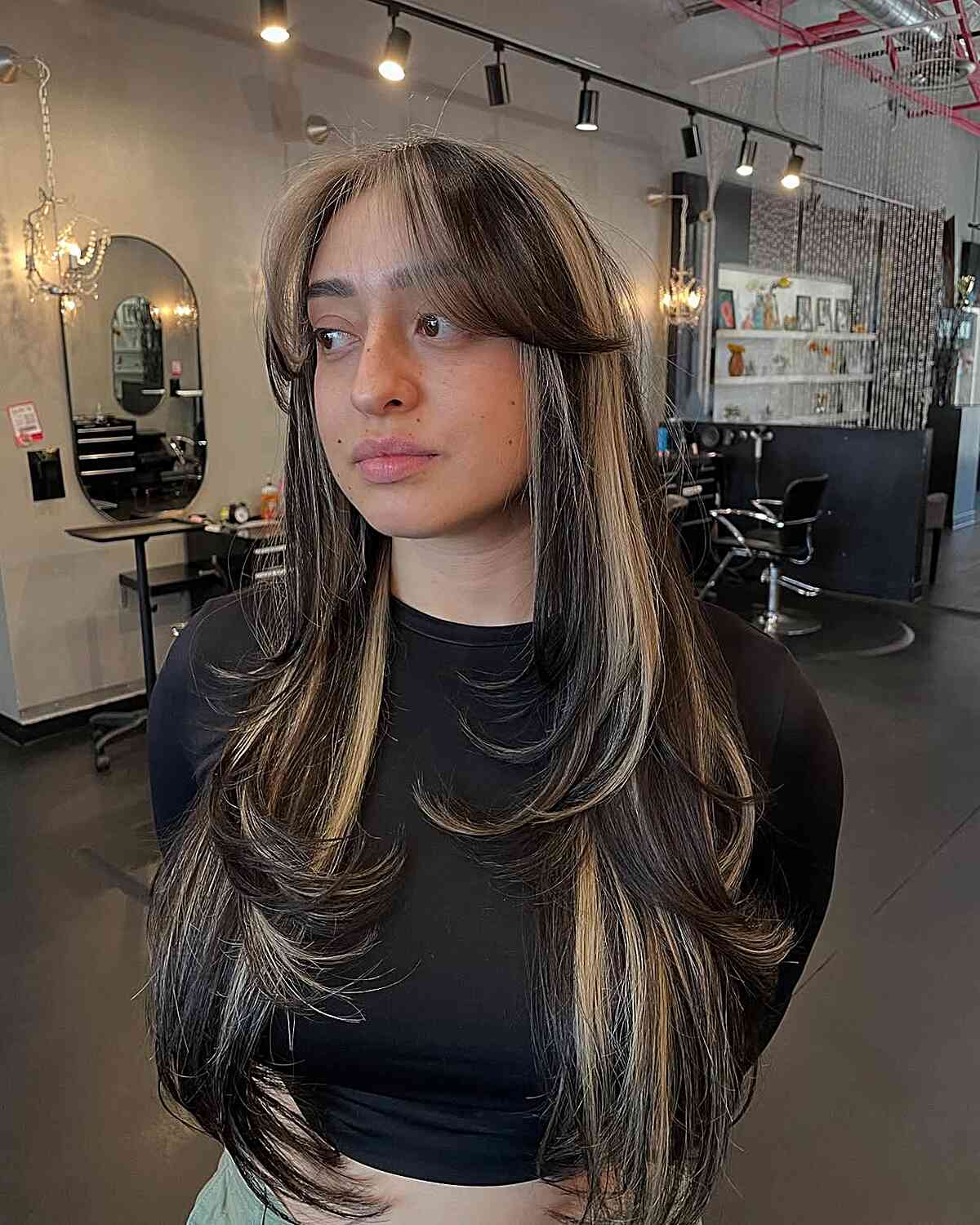
The design relies on a deliberate weight of chunky highlights against a dark base, a contrast that is bold rather than subtle. At mid-back with long layers and face-framing bangs, the color sits in visible blocks that create a graphic, almost striped effect when styled straight with volume.
This approach works best on thick, straight hair that can carry the contrast without the pieces disappearing into the texture. Ask your colorist for: mid-back wavy hair, dark base with ash blonde and gray highlights. A toner every eight weeks keeps the ash from turning muddy, and because the chunks are thick, grow-out is less precise than with fine highlights. Styling with a flat iron and a smoothing serum helps the color look intentional rather than a relic from 2014.
Mid-Back Long Layers With Auburn Highlights
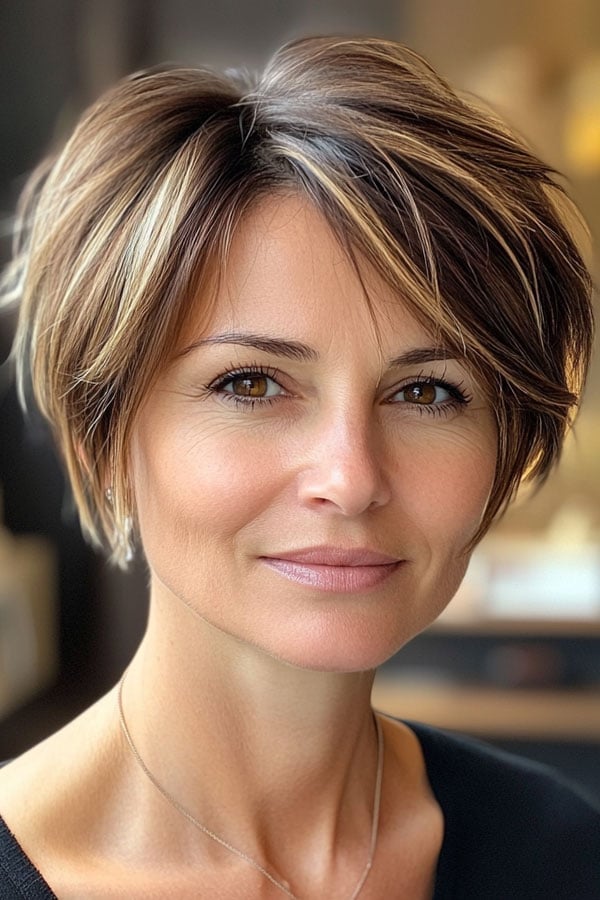
If a longer style feels like too much commitment but you still want dimension, a pixie with side-swept bangs and brunette-highlight contrast is the shorter sibling that asks for less. This cut lands at ear length with a textured, piecey finish that makes the blonde highlights catch in the natural movement of the layers. Fine, straight texture works here because the choppy edges add the volume a pixie needs. Ask your colorist for: brunette pixie with blonde highlights. No layers to grow out, no long blow-dry, just a trim every six weeks to keep the shape sharp.
Mid-Back Straight Fine With Ash Blonde Highlights
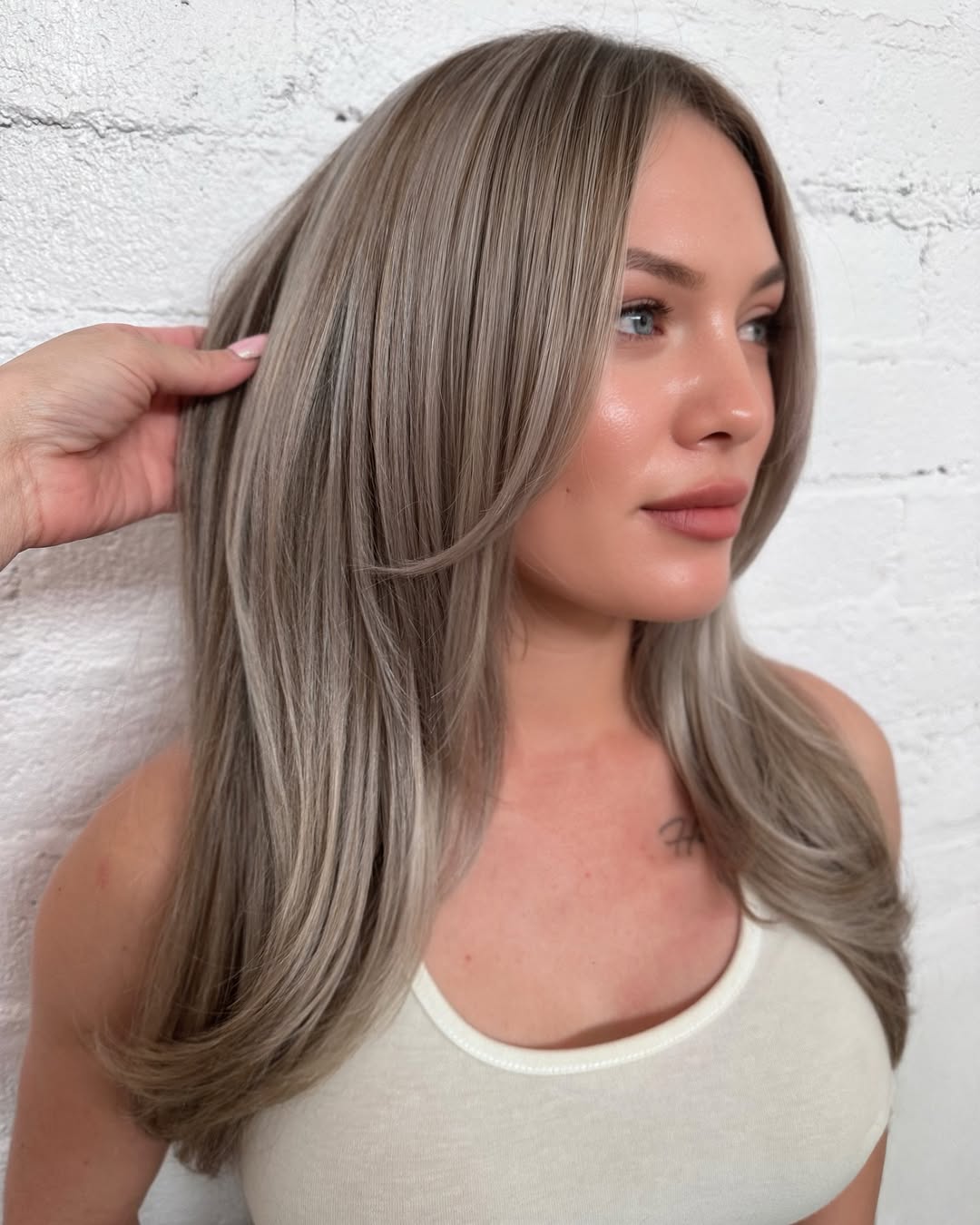
What exactly do you ask for when fine, straight hair needs dimension without looking weighed down? Start with the cut: mid-back long layers that stay soft enough to move, plus curtain bangs that frame the face without cutting into the length. The color should be an ash blonde base with lighter highlights concentrated in the front sections for a deliberate placement effect.
Fine hair shows every highlight line, which is exactly the point here. Ask your stylist for: mid-back straight fine hair, ash blonde with lighter highlights, face-framing layers. The side parting adds lift at the root, and the curtain bangs blend into the layers so there is no blunt line. A trim every eight weeks keeps the ends healthy and the shape clean.
Final Thoughts
Fine hair benefits from a blunt baseline and face-framing highlights that stop a few inches from the ends. Thick hair takes blended balayage or subtle lowlights to add depth without bulk. Match the placement to your cut, not the other way around.
- Schedule salon toning every 6-8 weeks to maintain highlight vibrancy.
- Use color-safe shampoo and conditioner to prevent fading.
- Incorporate a deep conditioning treatment weekly for dry or processed hair.
- Trim ends every 8-10 weeks to preserve the cut’s shape and health.
- Protect hair from heat styling with a thermal protectant spray.
Find the highlight placement that best complements your cut and enhances your natural texture.