
I noticed it first in the chair next to mine. A woman with my same fair skin was asking for a root shadow so soft it barely qualified as color. That’s when I realized winter hair for pale skin isn’t about going darker or lighter. It’s about finding the tone that doesn’t fight your skin.
This article rounds up 36 winter hair colors for pale skin, from low-maintenance root shadows to copper accents that need a toning appointment every six weeks. It covers short cuts and long layers, salon-only techniques and one you can try at home. I’ve tested a few of these myself, and my fine, straight hair taught me that not every cool blonde holds its shape past 4 pm.
Platinum Blonde With Ashy Root Shadow
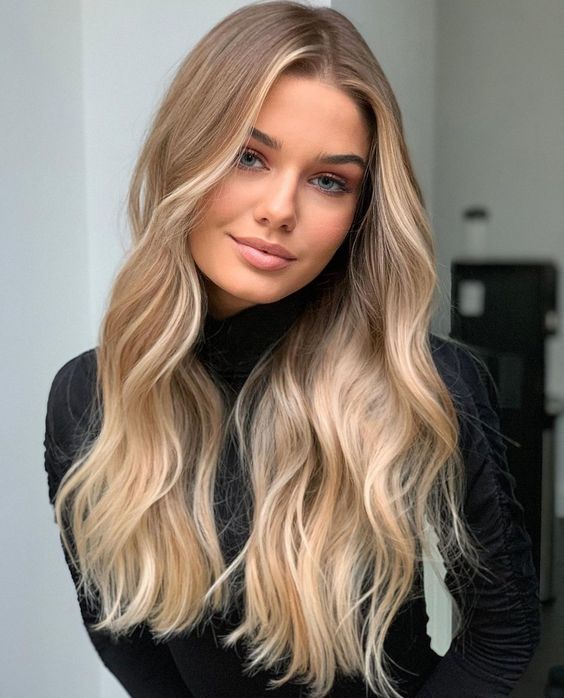
The trick with a platinum blonde with root shadow this cool is that it only looks good on pale skin if you lean fully into the ash undertones. Any warmth reads muddy. The middle part and voluminous waves give it lift, so the bright platinum does not wash you out. It reads deliberate. The face-framing layers keep it from feeling heavy. Who suits this? Anyone with naturally cool or neutral skin who is ready to commit to a root touch-up every four weeks. Who should pass? Anyone whose skin pulls yellow, or who wants to stretch a salon visit past six weeks. The shadow buys you time, but the tone does not. This is a winter colour that demands maintenance, and it pays off exactly as much as you put in.
Visual Idea
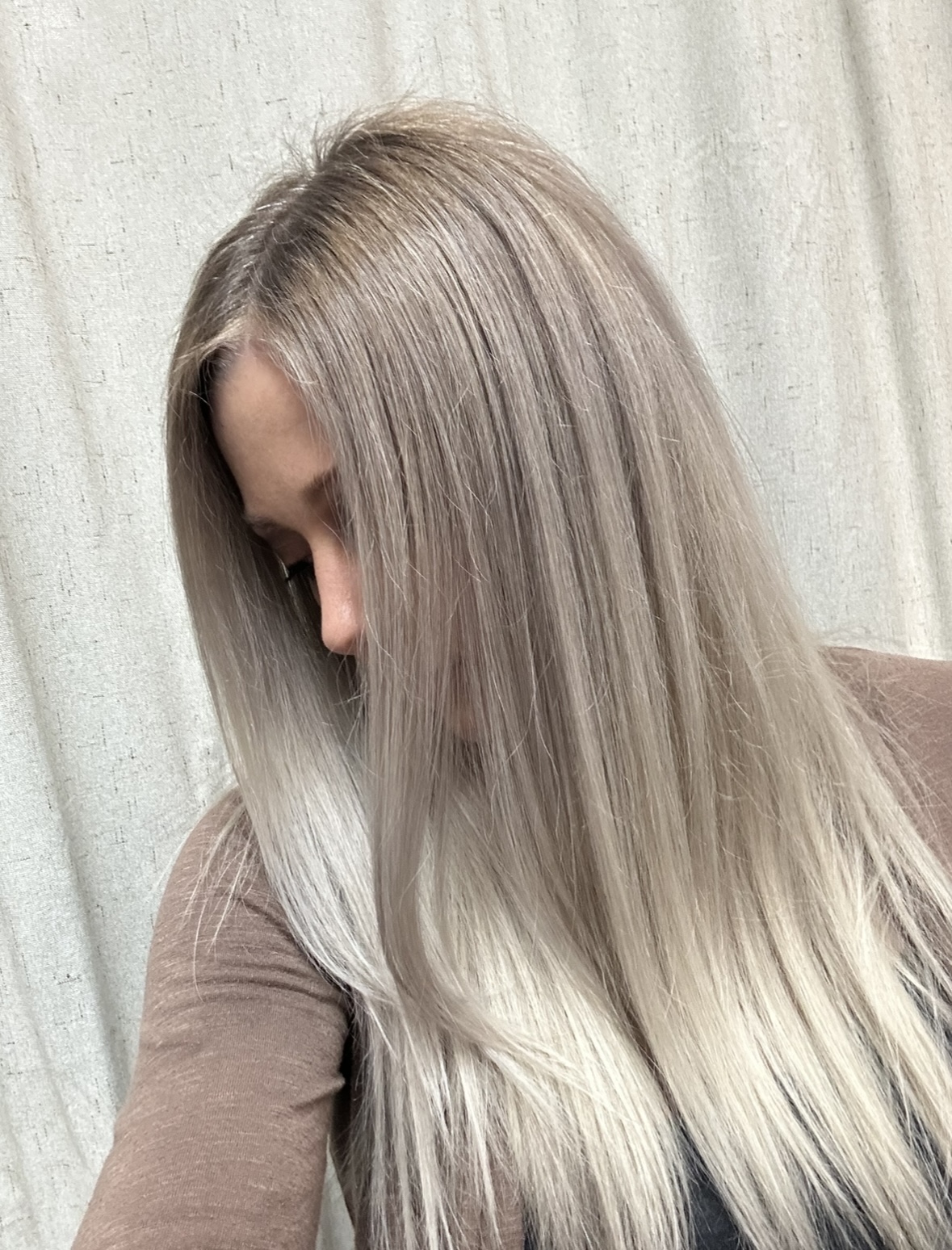
If the previous section was the full commitment, this is the compromise that actually works. Ash blonde with platinum blonde root shadow on straight, fine hair reads as subtle dimension rather than a stark line. The no-bangs, middle-part, mid-back length is low drama. The root shadow here is softer, less deliberate. It lets the ash tone sit on the ends without fighting your natural base. For pale skin, this is the version that gets compliments without the constant question of how often you tone it.
Collarbone Visual Idea
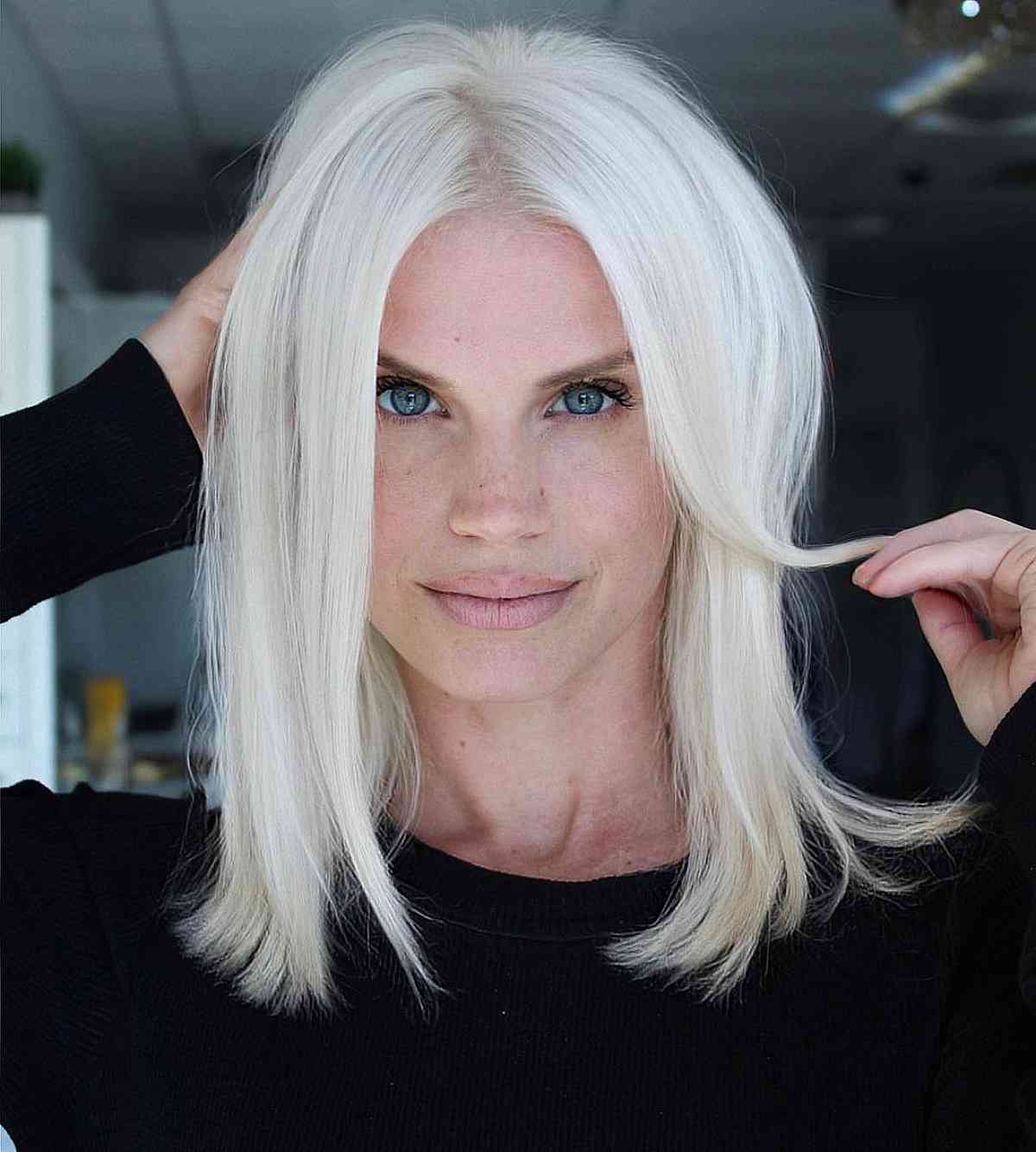
How does a white blonde hold up on fine, straight hair? The collarbone length helps. The curtain bangs break up the density, so the icy shade has room to read as a deliberate colour choice rather than a flat sheet. The straight with volume styling works because the cut is doing the work. The long layers keep it from falling into a triangle. Wear reality: this shade shows every bit of regrowth. The collarbone landing means you can let it grow a little longer between trims, but the tone needs a purple shampoo every other wash to stay white instead of yellow.
Shoulder Visual Idea
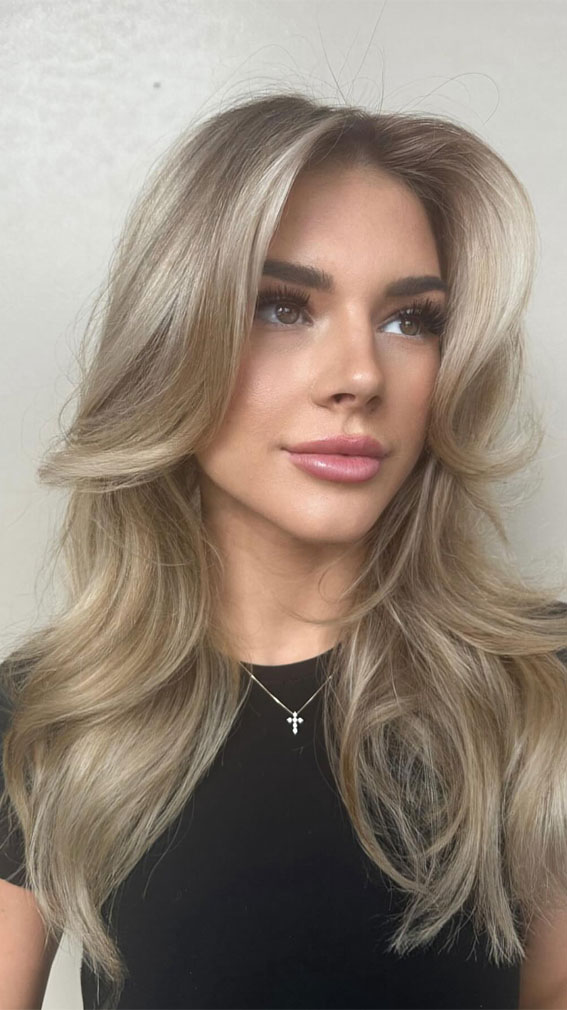
The technique behind this shoulder-length ash blonde is doing the heavy lifting so you do not have to. The platinum highlights are placed to catch light, while the root shadow keeps the overall tone grounded. On thick, wavy texture, the face-framing curtain bangs and long layers create movement that a solid colour would kill. The blowout styling pushes the wave pattern into a soft S-curve, which is exactly what a shoulder cut needs to avoid sitting like a helmet. The dimension comes from the contrast between the ash base and the bright pieces. It is a salon job, not a box colour, because the placement of the highlights against the root shadow requires a stylist who understands how cool tones interact with pale skin, especially in winter.
Ash Blonde With Subtle Highlights Visual Idea
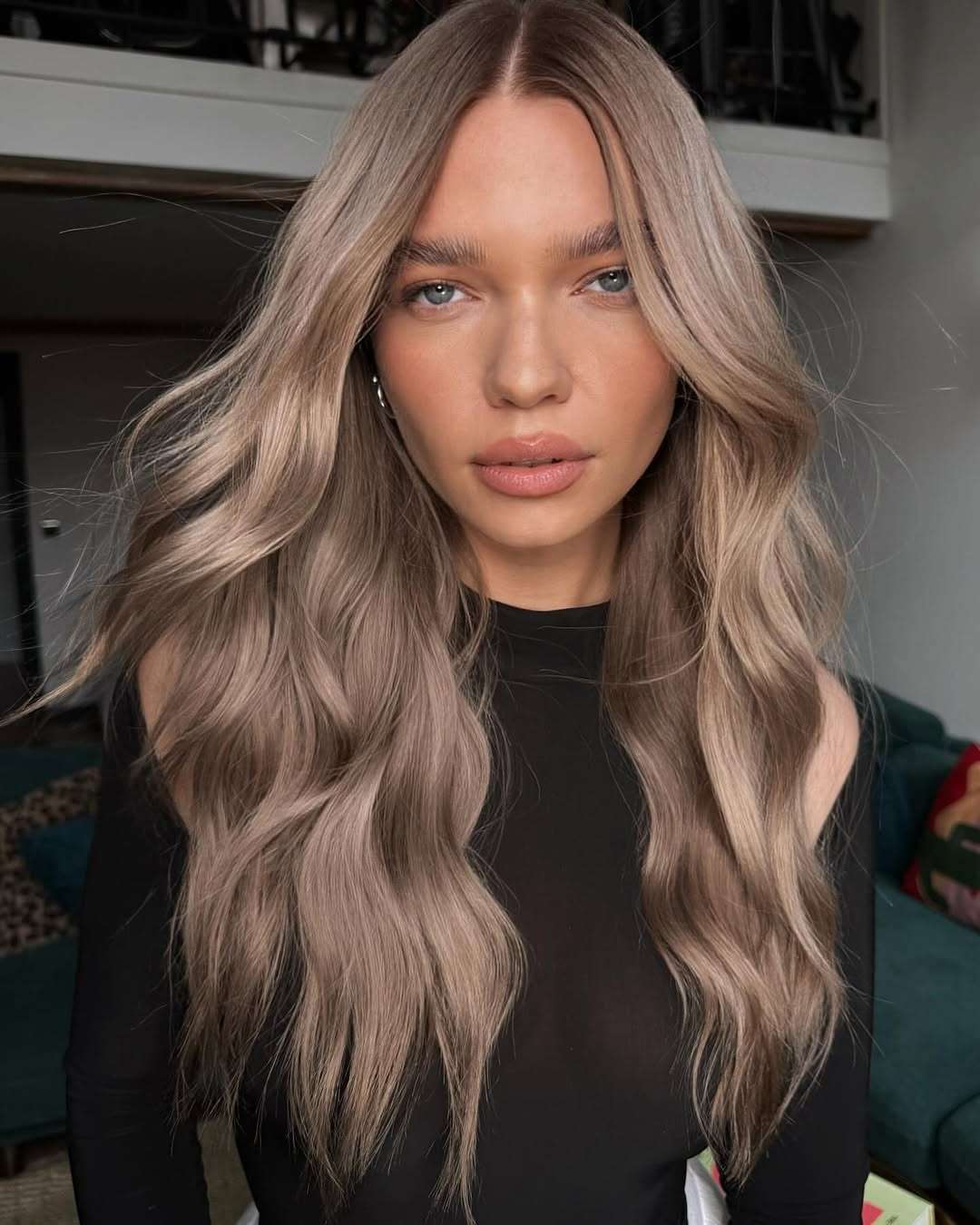
A woman walks into a coffee shop and you cannot tell if she colours it or not. That is the goal here. Ash blonde with subtle highlights on a collarbone cut with no bangs, styled in a wavy blowout. The medium density texture holds the wave without looking overworked. Who this flatters: anyone with pale skin who wants to brighten their face without the stark contrast of a solid blonde. The subtle highlights sit close to the natural tone, so the grow-out is gentle. Who should pass: anyone who wants a dramatic change. This is a shift, not a transformation.
Long Layers Visual Idea
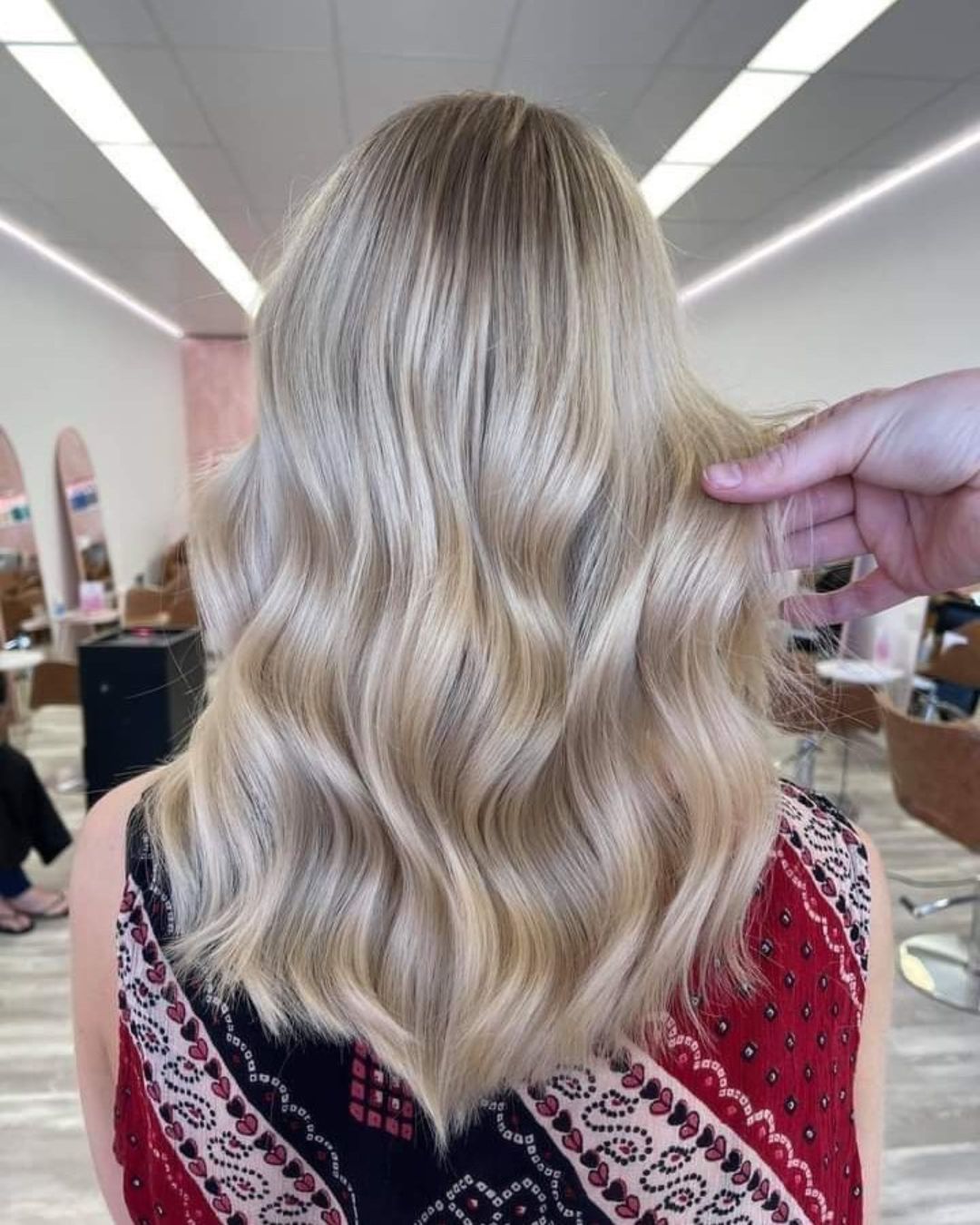
The ash blonde here doesn’t fight the winter light — it settles into it, cool and deliberate. The colour is a soft ash blonde with subtle highlights woven through shoulder-length layers, the technique a gentle foil weave that keeps the tone from going flat. Texture is wavy and medium density, which gives the highlights room to catch without looking stripey. To keep that cool tone from tipping into brassy, you will need a purple shampoo used once a week, a toning conditioner every other wash, and a heat protectant that won’t dull the ash. The payoff is a winter colour that actually looks like it belongs in January.
Chin Visual Idea
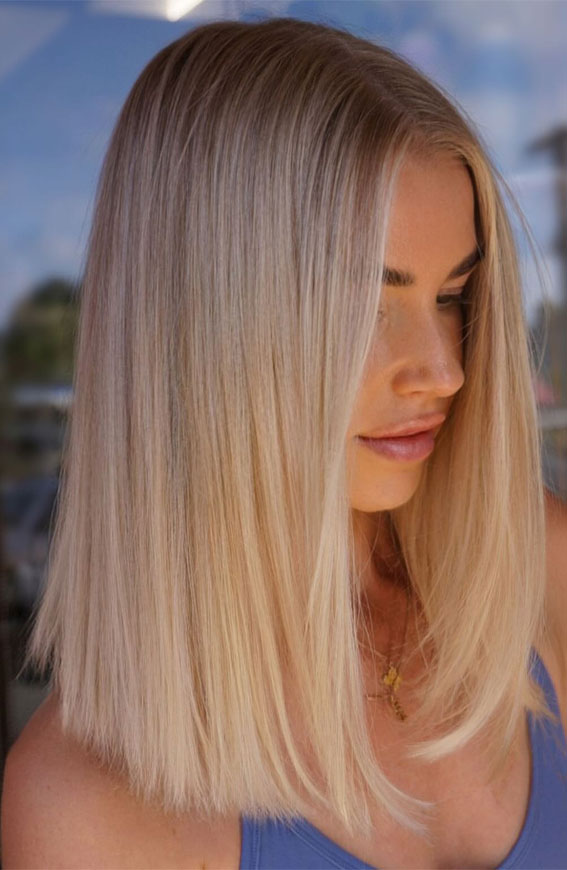
I’ll admit it — I’ve gone platinum before and regretted the upkeep. This chin-length blunt lob in ash blonde with subtle platinum highlights is the cooler, smarter version. The tone is icy but not sterile, thanks to the platinum threads that lift the ash. Texture is straight and fine, which means the sleek side part reads clean, not flat. The honest downside: brassiness shows by week three. A violet toning mask applied to damp hair for five minutes buys you another two weeks of cool.
Layers Visual Idea
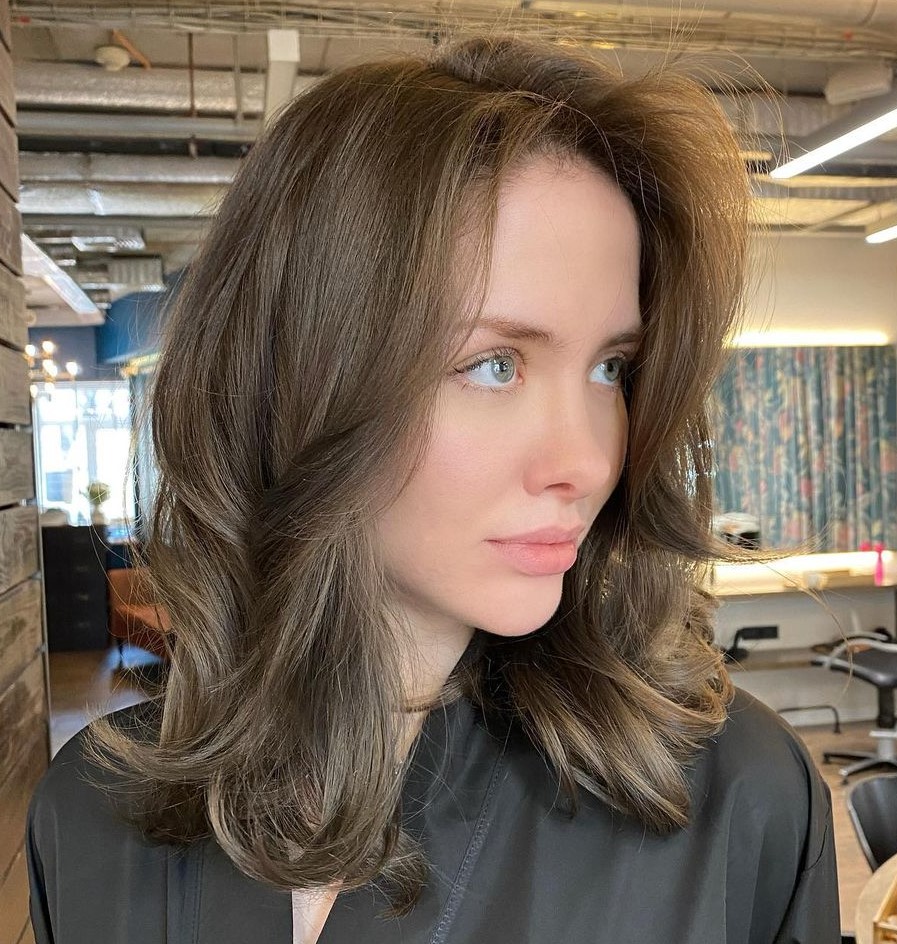
Ever tried to get ash brown at home and ended up with something warmer? That is because ash tones are finicky — they need a clean canvas and precise placement. This collarbone-length layered cut uses ash brown with subtle cool-toned highlights, the technique a hand-painted balayage that keeps the base dark while the highlights add dimension. Texture is wavy and medium density, so the layers move without tangling. Achieving this at home is a gamble; the ash can pull green or muddy if the base isn’t lifted enough. A salon is the safer bet for a tone this deliberate.
Mid-Back Visual Idea
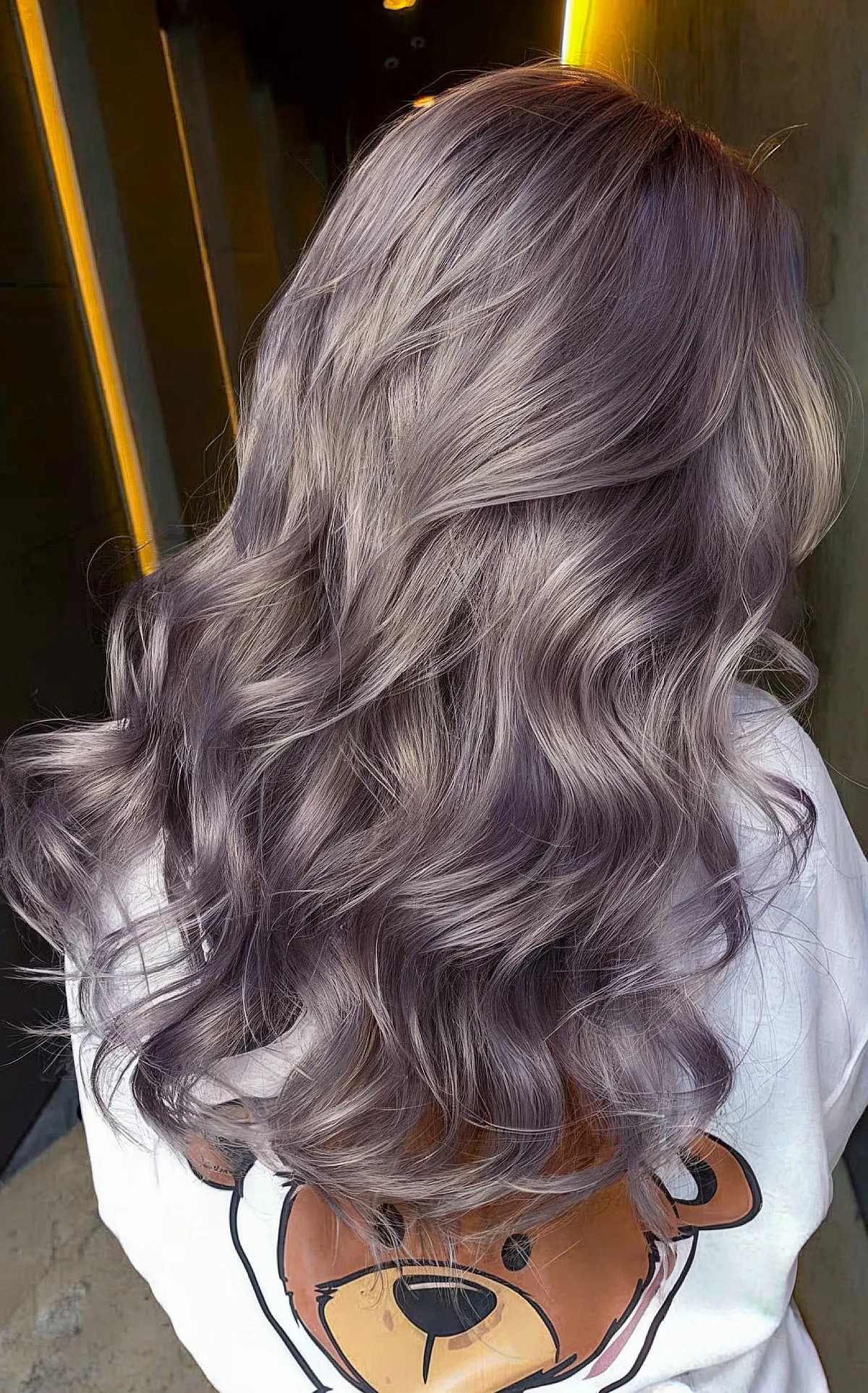
The violet undertone here is a buffer — it keeps the ash from going flat. This mid-back length with long layers uses ash blonde with violet undertones, the technique a full highlight with a violet gloss that softens the coolness. Texture is wavy and thick, so the colour reads dimensional rather than solid. The violet shifts over a week: it starts cool and smoky, then fades to a softer ash by day five. A purple shampoo used twice a week maintains the tone, but skip it once and the violet mutes to grey. A toning appointment every six weeks keeps the undertone from disappearing entirely.
Lob Visual Idea
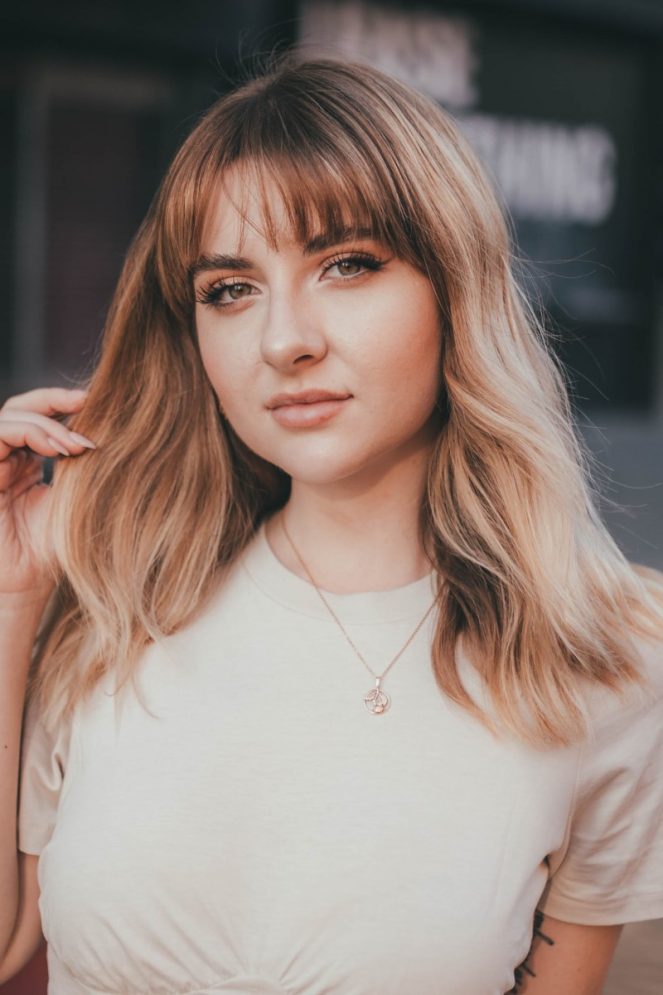
This warm blonde works best on pale skin with yellow undertones. The lob hits at chin length with blunt bangs, the colour a warm blonde with subtle highlights that add brightness without going brassy. Texture is wavy and fine, so the loose waves hold shape without weighing down. The tone is golden, not honey — it reads sunny against pale skin that leans warm. If your skin has pink or blue undertones, this warmth can clash. Stick with ash tones instead. For warm undertones, this is the lob that actually makes winter feel less gray.
Platinum Blonde With Ash Tones Visual Idea
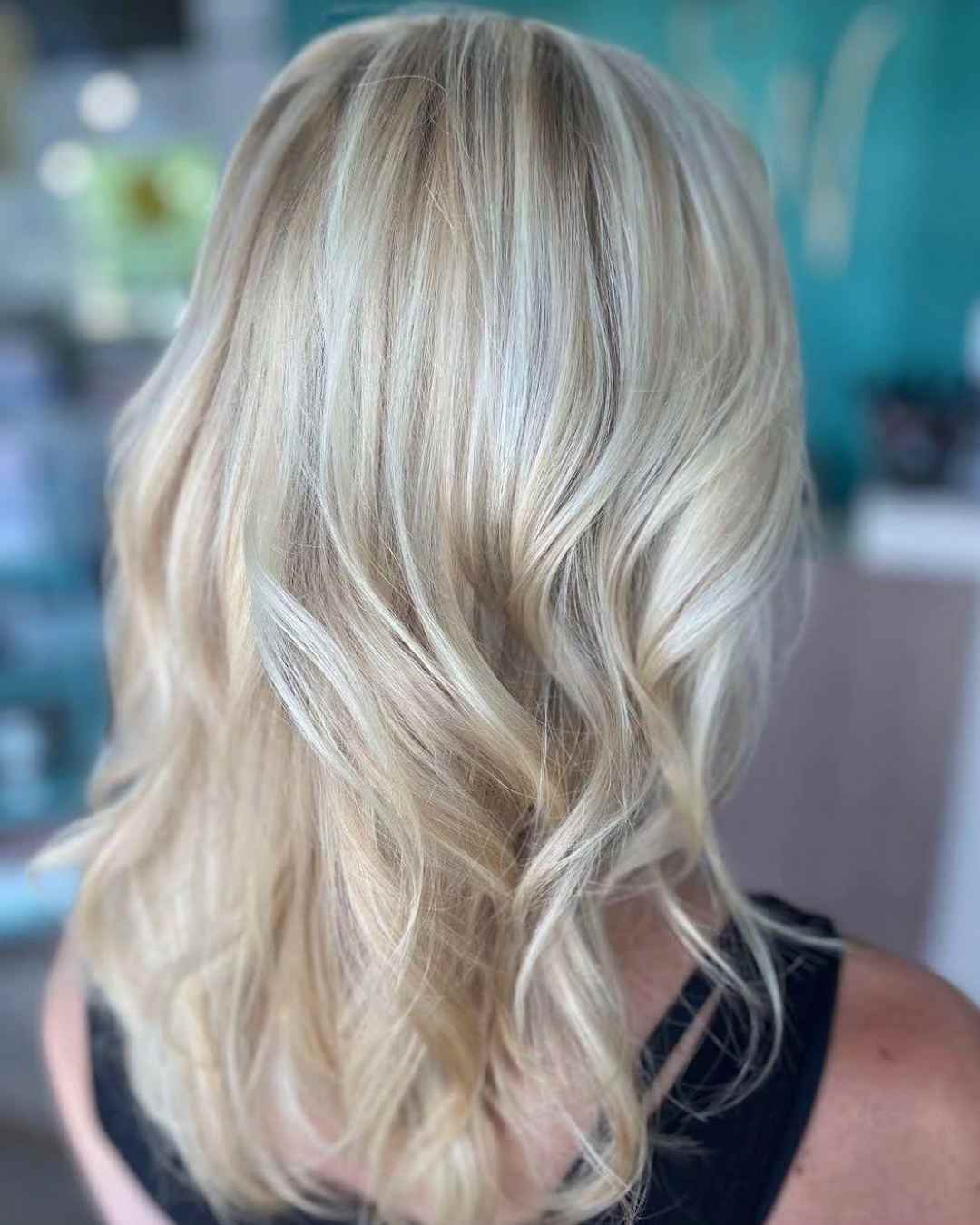
Platinum blonde in winter is a deliberate act of defiance. While everyone else goes darker, you go lighter, and the contrast against a grey sky is what makes it work. This is not a shade that hides — it sits at shoulder length with wavy medium density, the ash tones canceling any hint of yellow. The technique is straightforward: a full bleach followed by an ash toner that pulls the warmth out completely. The result is a cool, almost silver blonde that reads as intentional rather than accidental. It’s the hair equivalent of wearing white after Labor Day — you know the rules, you just don’t care.
Ash Blonde With Cool Undertones Visual Idea
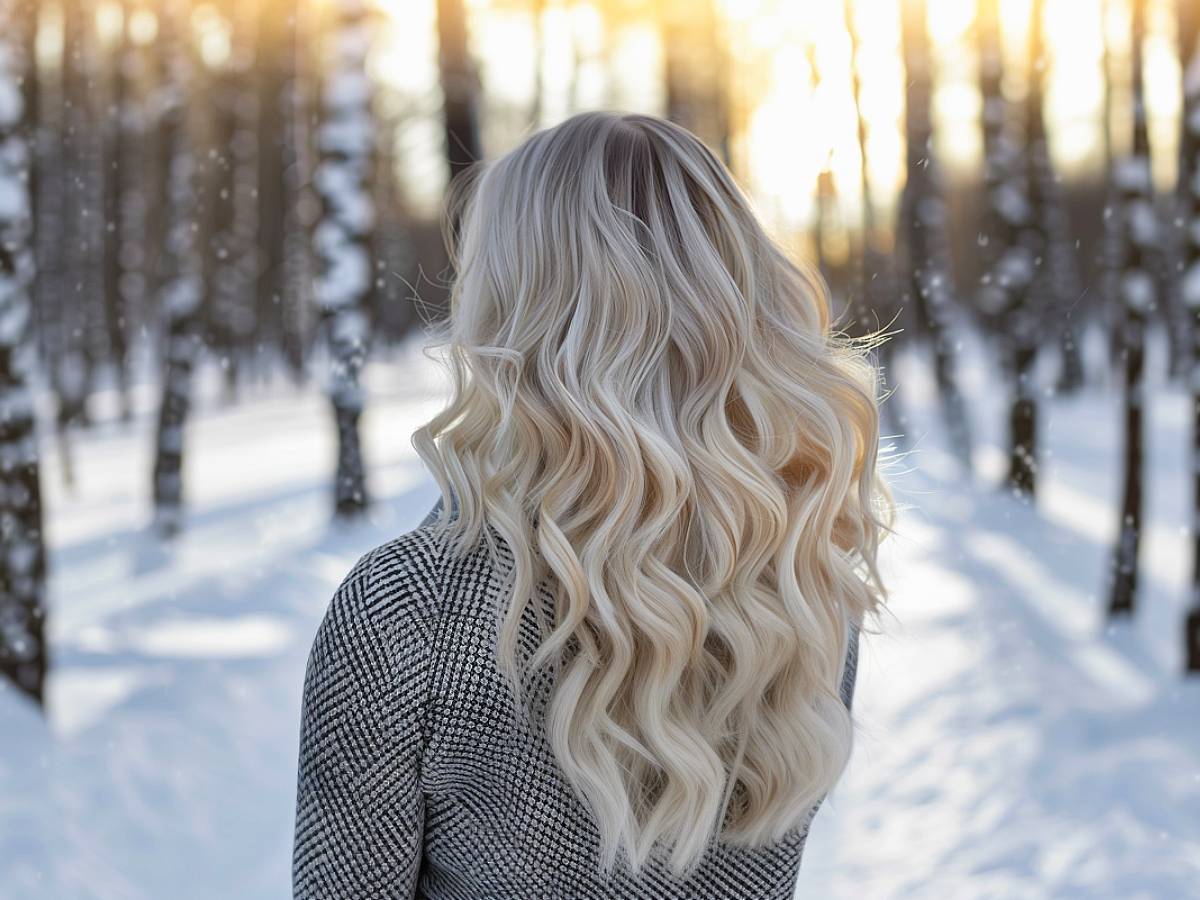
The cool undertones in ash blonde don’t happen by accident. They require a toner that cancels every hint of gold — usually a violet or blue based formula applied after the lift. The base shade is lifted to a pale yellow, then toned to an icy ash that reads almost silver in certain light. At mid-back length with loose curls and medium density, the cool tones catch the light in a way that warm blonde can’t. The technique is precise: the stylist must avoid over-toning into a muddy grey, which is a fine line.
This shade shines in winter settings — against a grey sky, a cream sweater, or the soft light of an overcast afternoon. It’s the kind of blonde that looks expensive because it requires maintenance, but for occasions where you want to look polished without trying, it delivers. A holiday party or a winter wedding is where it earns its keep.
Rose Gold Blonde Visual Idea
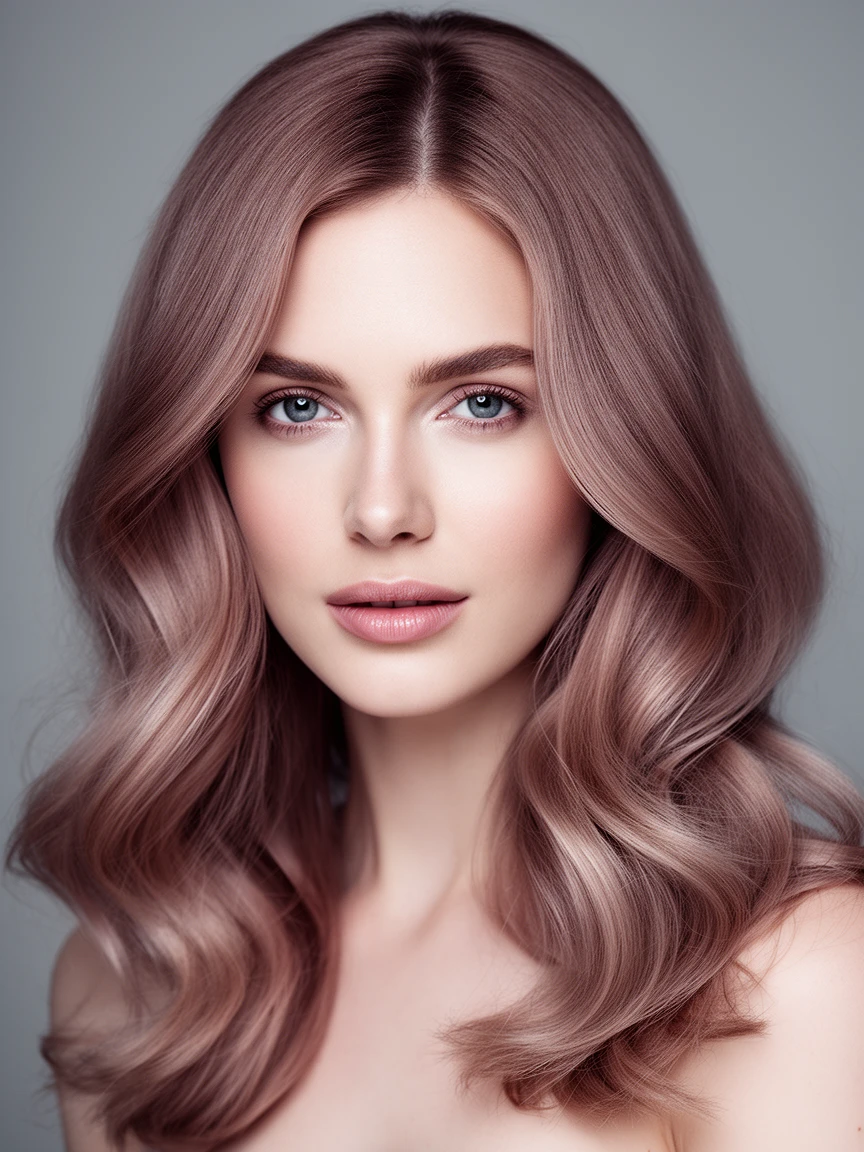
Rose gold has a habit of fading before you’ve had time to enjoy it. The pink tones are the first to go, leaving a peachy blonde that isn’t quite as interesting. At mid-back length with soft waves and thick texture, the rose gold hue is stunning for about two weeks. Then it needs a color-depositing conditioner or a gloss to revive the warmth. The technique is a blend of pink and gold tones applied over a lightened base, and the tone is warm but not brassy. The length and texture help — the waves catch the light and hide uneven fading. But be prepared to refresh it more often than any other blonde.
Vibrant Red With Warm Undertones Visual Idea
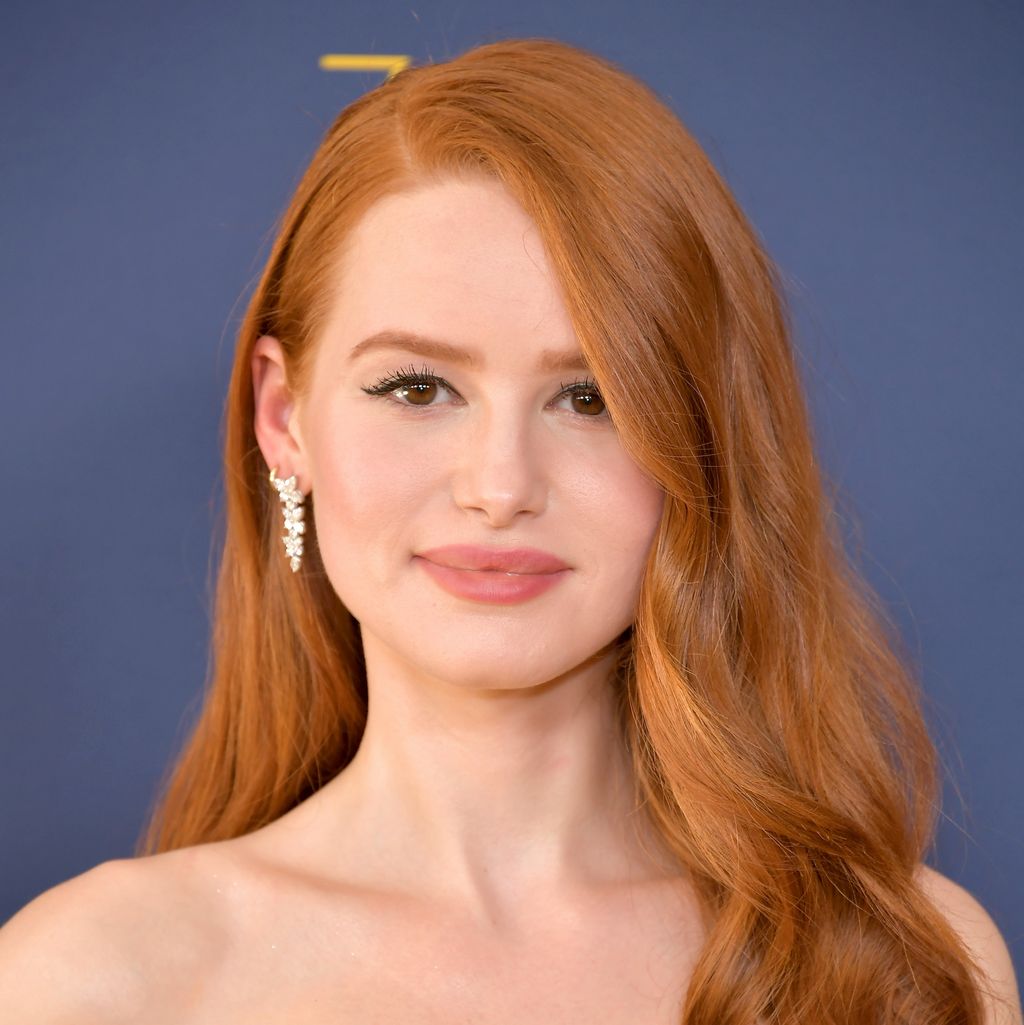
Vibrant red works on pale skin when the undertone is warm, not cool. The warmth prevents the red from clashing with the skin’s natural pink or blue tones. At mid-back length with voluminous loose curls and thick texture, this shade reads as rich and intentional. The technique is a direct dye deposit over a pre-lightened base — the stylist uses a warm copper-red formula to achieve the tone. It’s a shade that flatters pale skin with warm undertones, especially those with green or hazel eyes.
Who should pass? Pale skin with very cool or rosy undertones — the warm red can read as too orange against that base. Also, if you have fine hair, the heavy pigment can make it look flat. This is a shade for those who want to make a statement and have the density to carry it.
Copper With Warm Undertones Visual Idea
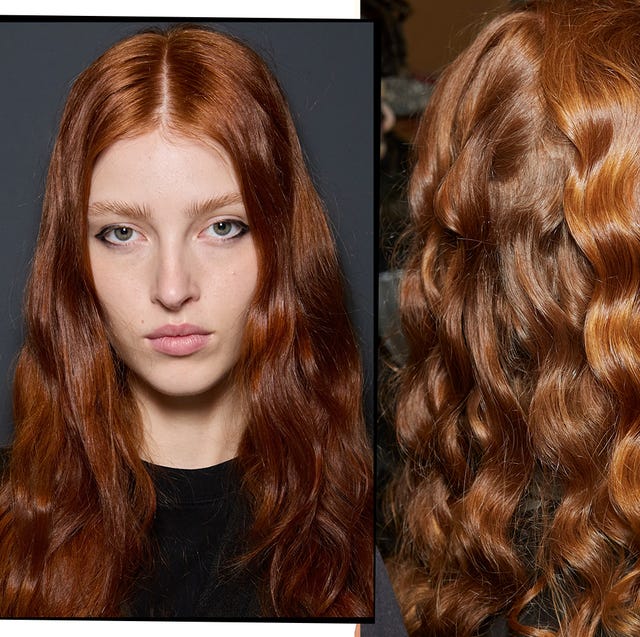
Copper catches the low winter light in a way that blonde can’t. At collarbone length with wavy medium density, the warm undertones glow against grey skies. The technique is a single-process copper dye, no highlights needed — the tone does the work. It’s festive without being loud, winter-appropriate without feeling dark. The shade adds warmth to pale skin without washing it out.
Vibrant Copper Red Visual Idea

I’ll admit, I was skeptical about the Vibrant Copper Red Visual Idea. Getting this intensity means a double-process color, and the tone has to be pure copper, not orange. On a collarbone lob with curtain bangs and loose waves, the color catches the light. This is not a box dye situation. You need a stylist who understands how to build the tone without the brass. Ask for a vibrant copper red base with a gloss finish. I booked this twice in one season.
Copper Red With Subtle Blonde Highlights Visual Idea
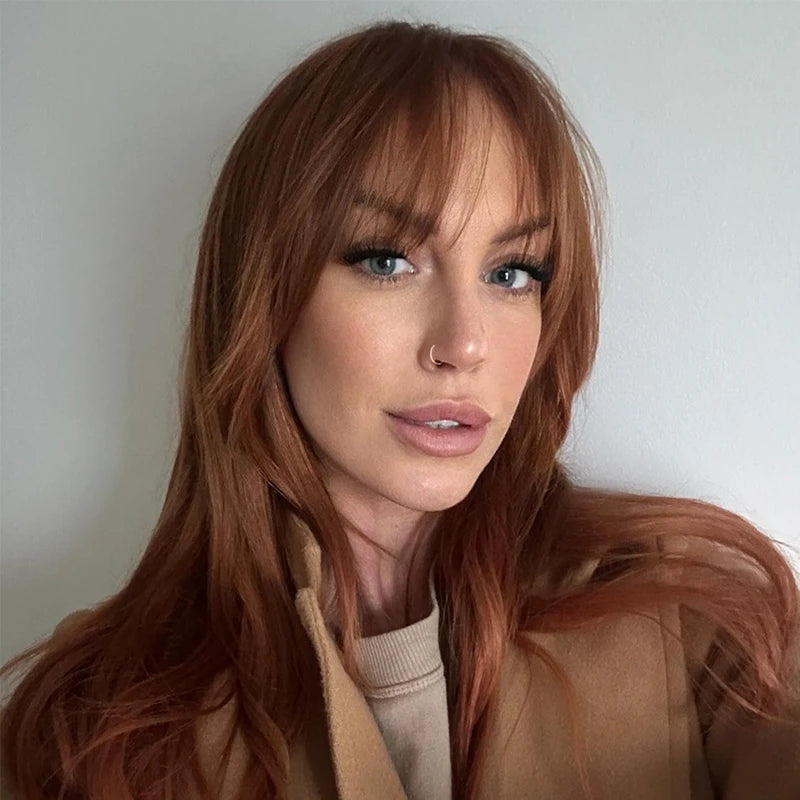
Ever wonder if the Copper Red With Subtle Blonde Highlights Visual Idea works on pale skin? It softens the copper so it doesn’t overwhelm a fair complexion. The curtain bangs and long layers frame a round or square face well. Wavy, medium density hair is ideal because the highlights need texture to blend. Skip it if your hair is very fine or very straight, the contrast can look stripey. The blonde highlights have to stay cool to avoid going brassy against the copper. It is a flattering blend if your stylist places the highlights right.
Copper With Blonde Highlights Visual Idea
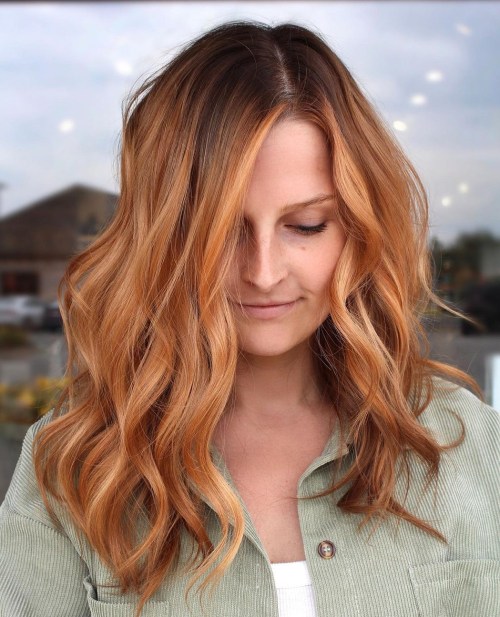
Solid copper is gorgeous, but the Copper With Blonde Highlights Visual Idea is the one I keep coming back to. Solid copper is flat after a week. The blonde highlights give it dimension. The highlights grow out softer than a solid color, so you get more time between appointments. The blonde pieces lift the copper, so it doesn’t sit heavy on pale skin. On a shoulder-length cut with long layers and loose waves, the dimension really shows. It ages better than solid copper.
No Bangs Visual Idea
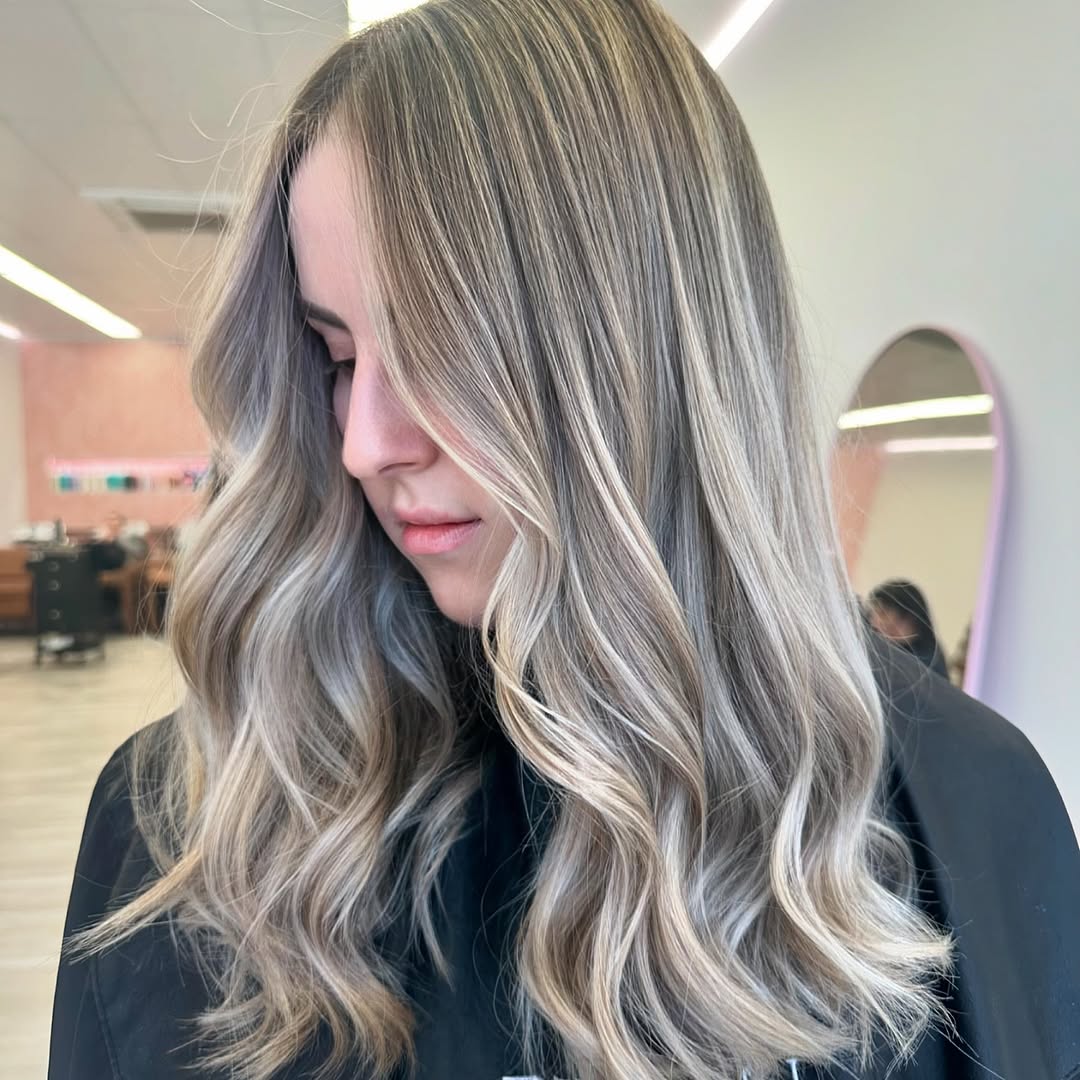
I have a confession: I used to think taupe brown was just beige that gave up. Then I saw it on a mid-back length of thick, wavy hair, and the color had a quiet depth that dark winter light actually flatters. The cool-toned taupe brown sits somewhere between mushroom and ash, with a violet undertone that keeps it from looking muddy. It’s a single all-over color, no highlights to break up the base, which means it reads as a solid, expensive wash of tone. The tone is cool through and through, so it aligns with the season’s muted palette.
The honest downside: taupe can tip into gray or pull lavender fast, depending on the lighting and your base. The violet undertone is a double-edged sword. You want it subtle enough to stop the brown from becoming dull, but too much and you look like you tried a purple shampoo and never washed it out. A colorist who balances the ratio is worth the appointment. Keep the violet as a whisper, not a shout, and this color will carry you through the grayest months. It photographs surprisingly well in dim light, and that’s a rare trick for a muted hue.
Back View Visual Idea
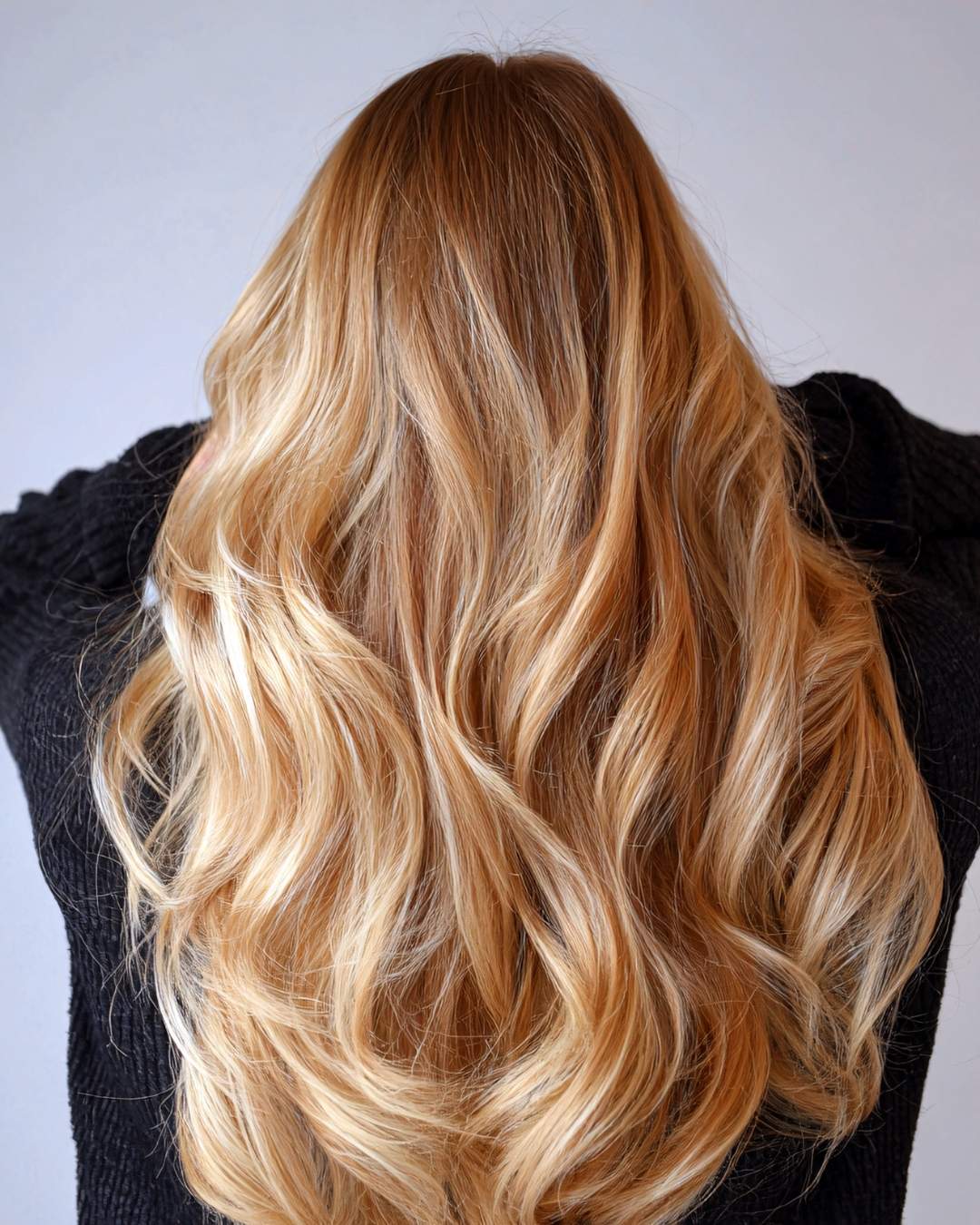
My gut reaction is that this blonde has no business being this bright when the sun goes down at 4pm. But that’s exactly why it works. The warm blonde base with golden and ash blonde highlights creates a dimensional mix that catches every flicker of holiday light, at an office party or a family dinner. The technique is a foil highlighting process, and the tone alternates between warm gold and cool ash, so it never reads as flat or brassy. The mid-back length of thick, wavy hair gives the highlights room to move, and the loose waves make the blonde look like it’s lit from within. It’s built for the season: the brightness compensates for the lack of sun, and the dimensional highlights keep it from looking like a flat blonde blanket. It’s the kind of color that carries a room even when the lighting is dim, which is exactly what you want when the holidays roll around.
Light Golden Copper Visual Idea
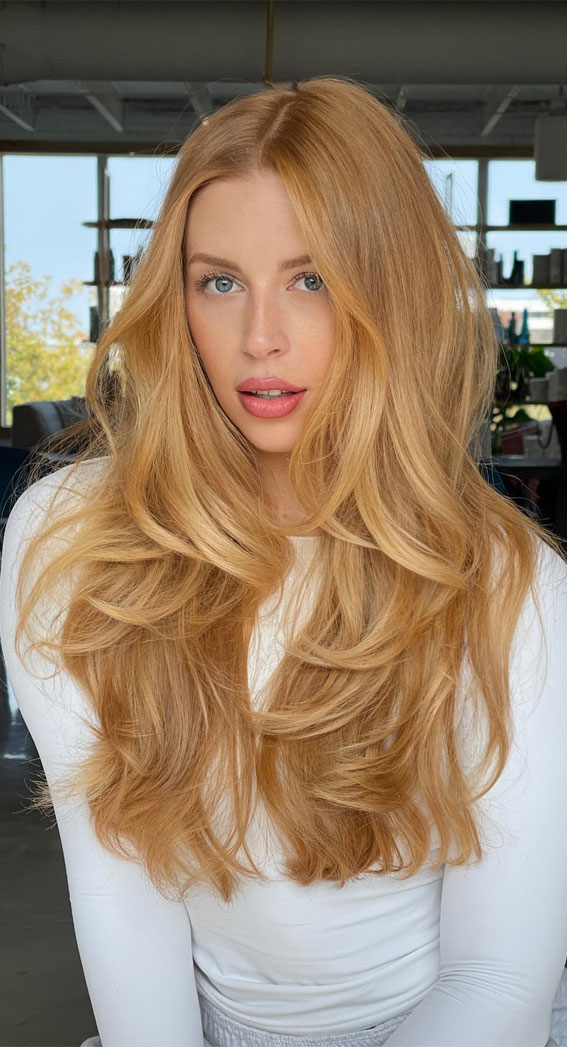
Verdict: this one works. Light golden copper on pale skin sounds risky, but it pulls off the trick. The tone is warm without tipping into orange, so it reads as intentional rather than brassy. On a mid-back length with thick, wavy texture and a voluminous blowout, the colour catches light in a way that softens the contrast against fair skin. It flatters pink and neutral undertones best, adding a glow that doesn’t fight your natural flush.
Who should pass? If your skin leans very cool or olive, the warmth can sit wrong. But for most pale complexions, this is the rare warm shade that doesn’t wash you out. It reads as sunkissed in winter, which is a nice trick to have.
Side View Visual Idea
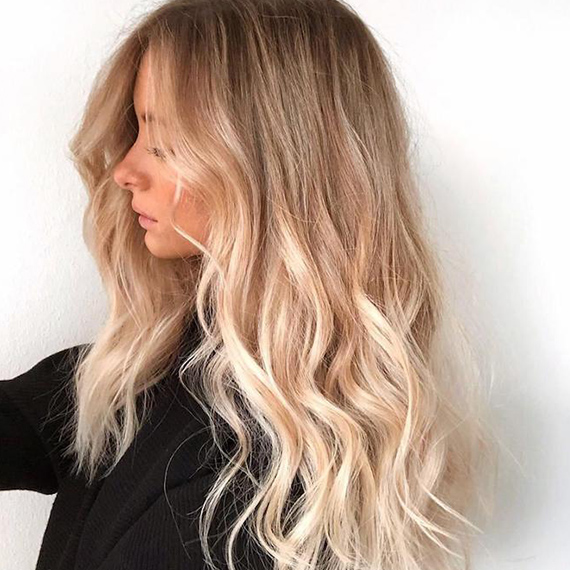
Look at the side view, the lighter blonde highlights sit exactly where the hair bends, that is not an accident, they are placed to catch movement and break up the golden blonde base. The technique here is hand-painted balayage, the stylist painted the lighter pieces freehand so they land around the face and through the mid-lengths, no foils, no hard lines. The result is a blend that shifts from golden to pale blonde as the light moves, which is exactly what you want from dimensional colour.
This is not a bathroom-mirror job. The placement requires a stylist who can see how the hair falls when dry, because the lighter sections need to sit where the waves naturally turn. DIY highlights here would end up too chunky or too scattered. Book the appointment, bring a photo of this side view, and let them map it out on dry hair first.
Front View Visual Idea
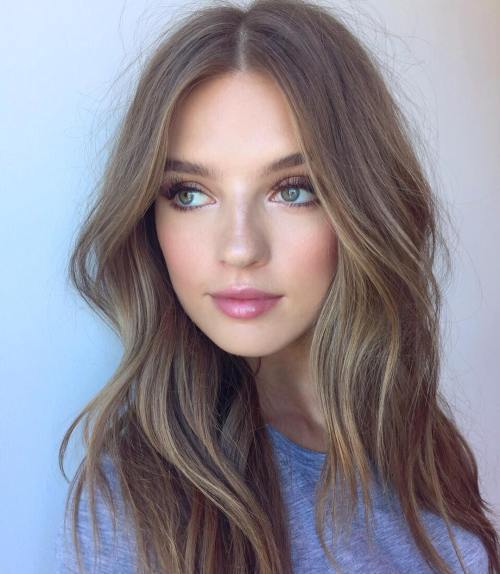
Have you ever tried to paint caramel highlights on your own head? I have, and the result was a stripey mess that looked more tiger than sun-kissed. This front view shows a medium brown base with caramel highlights that are soft and blended, no harsh bands. The trick is the stylist wove the caramel pieces through the top layers only, leaving the base intact underneath. For styling, keep it simple: a heat protectant, then a round brush blow-dry to smooth the waves, or air-dry with a texture spray for a looser finish. The caramel catches light either way, which is the whole point.
Middle Visual Idea
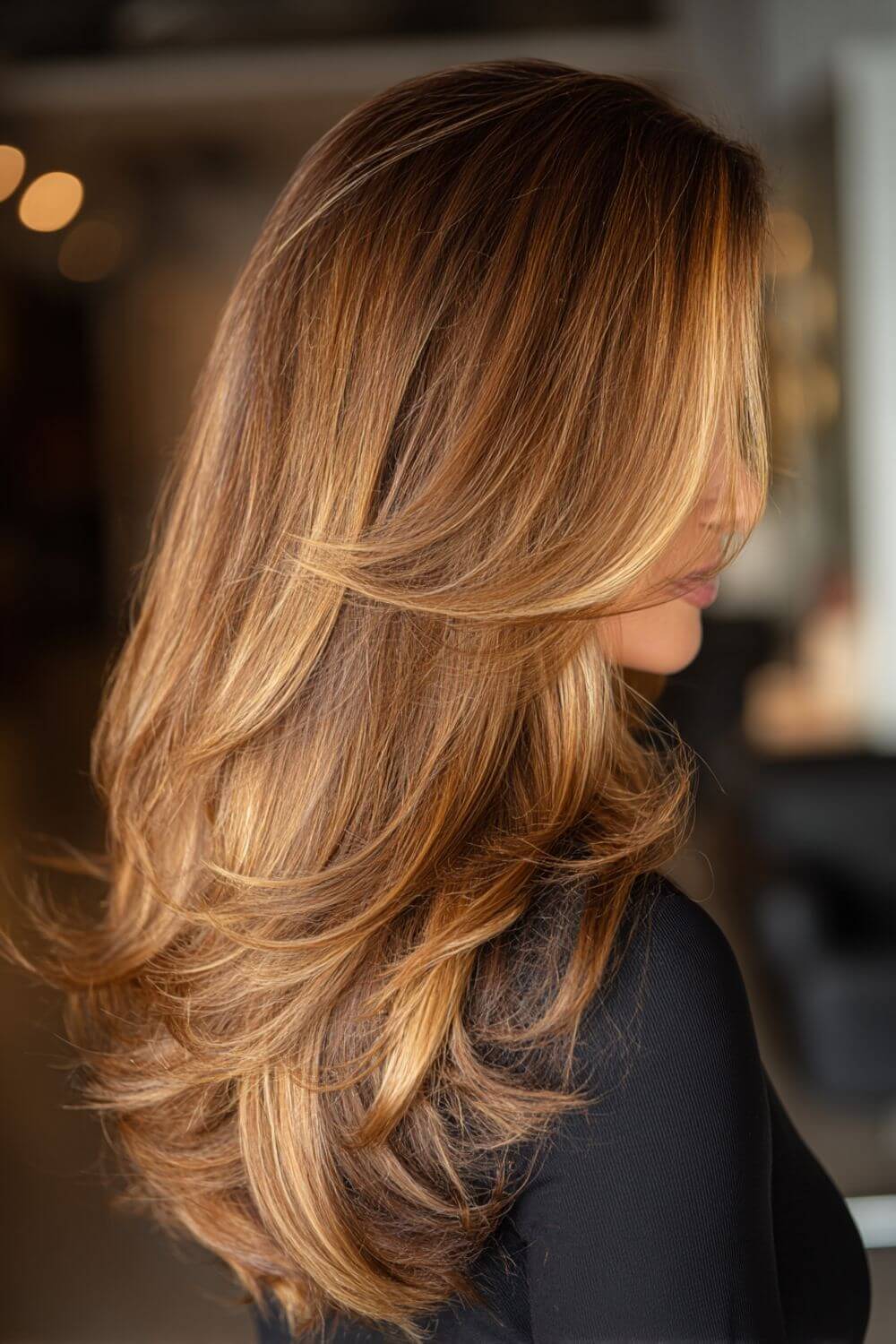
A middle part shows every inch of a balayage’s grow-out, which makes this warm brown base with golden blonde balayage a smart winter choice for pale skin. The technique is classic balayage, hand-painted so the golden blonde tone emerges naturally from the deeper base. The mid-back length with wavy, medium density texture gives the layered blowout room to move. The grow-out phase through winter is genuinely low: the warm brown matches many natural roots, so new growth blends without a stark line.
The balayage fades gradually into a softer blonde over weeks, which works with pale skin’s cool undertones. The middle part keeps the colour symmetry visible. A trim every ten weeks prevents the ends from feeling wispy. This is a colour that travels from October to March without a single panic toning session.
Blowout Wavy Visual Idea
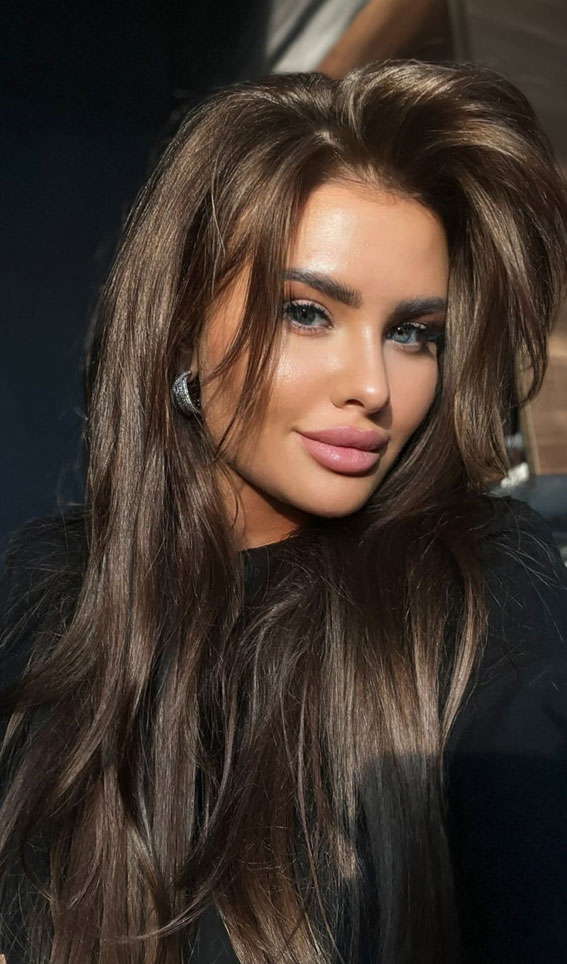
This is the colour for anyone who found platinum too harsh. Dark brown with subtle lighter brown highlights adds dimension without screaming for attention. The technique is a soft balayage or babylight placement, painted freehand so the lighter strands catch light mid-length and through the ends. The tone stays warm, not ashy, which keeps pale skin from looking washed out. The length hits mid-back, and the texture is naturally wavy and thick, which helps the highlights read as movement rather than stripes. A middle part and long layers let the colour breathe. This one suits you if you have warm undertones and want a richer alternative to all-over brown.
Bright Blonde With Golden Undertones Visual Idea
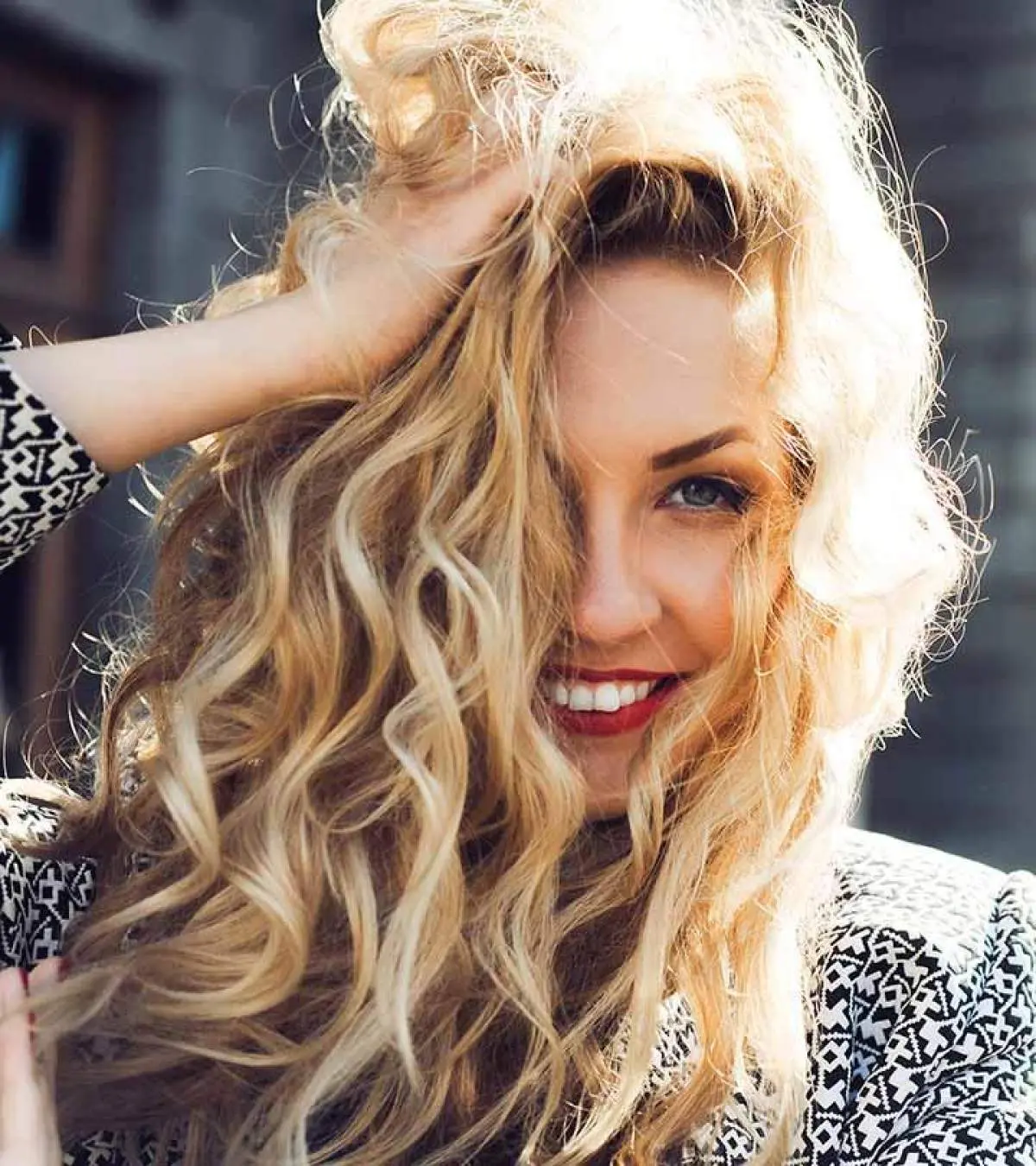
I was skeptical about bright blonde in December, but this one has a case. The colour is a solid bright blonde with golden undertones, warm enough to glow against pale skin without turning brassy. The tone is pure gold, no ash, no chill. The length is mid-back, the texture thick and curly, and the technique is a single-process all-over colour with a gloss finish. No highlights to maintain, just one vivid statement.
This lands best at winter events: holiday dinners, New Year’s parties, the kind of gathering where light bounces off ornaments and your hair catches it. The golden undertones pick up warm candlelight, not fluorescent office light. It’s a mood booster in the darkest months. You book a salon for this one — the lift from dark to bright requires careful processing, and a gloss lock keeps the yellow out.
Loose Waves Smooth Visual Idea
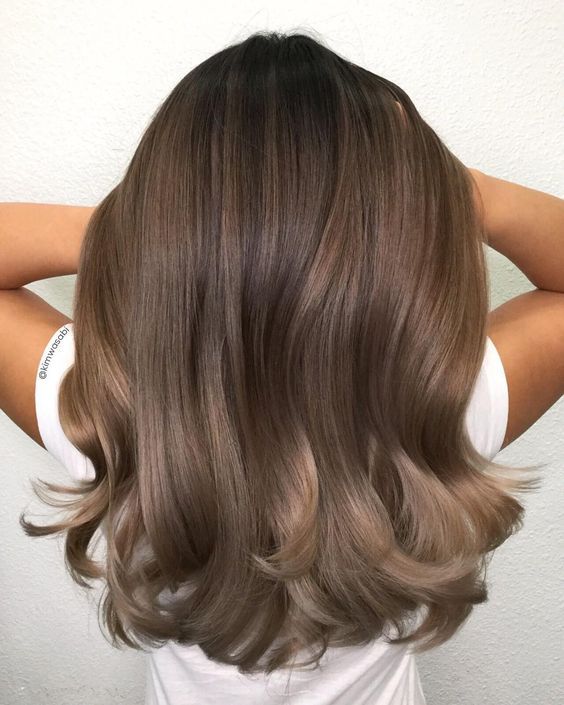
The line between dimensional and muddy is about three sections of foil. This balayage starts with a dark brown base and weaves in cool-toned ash brown, painted on the mid-lengths and ends so the root stays deep and the ends lighten softly. The tone is deliberately cool, a shade that reads greyish brown in dim light and a dusty taupe in sun. The length reaches mid-back, the texture is thick and wavy but smooth at the root.
Balayage is not a bathroom-mirror job. The painterly hand placement is what keeps the ash tone from turning into a solid stripe. A stylist knows how far from the root to start the lightener, and which sections to finish before the ash tone dulls. Book three hours and leave with a root shadow that fades gently into cool brown, not a hard line. The grow-out is forgiving by design.
Wavy Thick Visual Idea
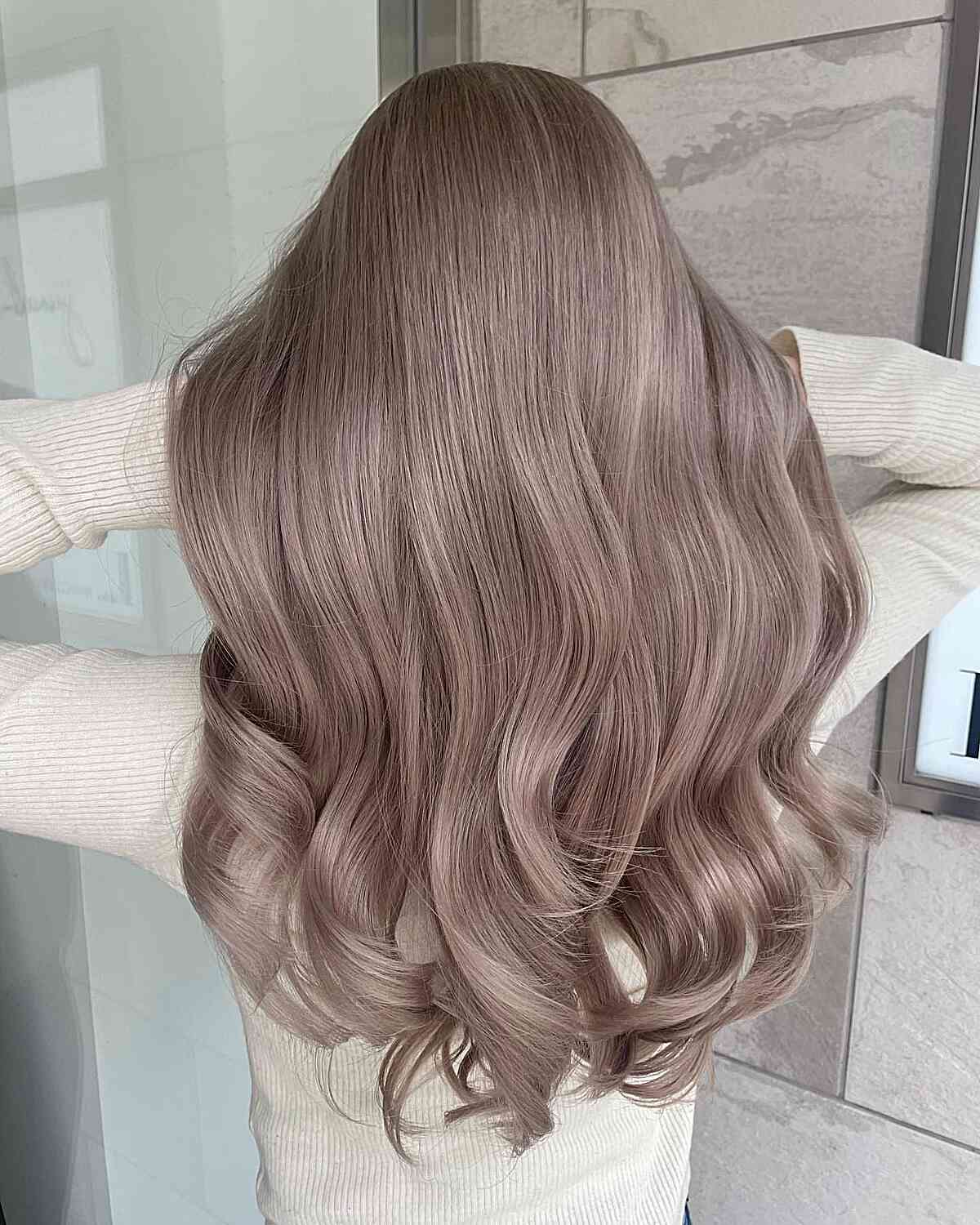
You know that moment when your bright highlights turn brassy by Tuesday? This one avoids that. Light brown with subtle blonde highlights lands in the middle ground: light enough to brighten the face, dark enough that regrowth looks intentional. The highlights are fine and spaced apart, set on the top layer and through the ends, so the overall colour reads soft and natural. The base is a neutral light brown with a hint of warmth, the highlights a buttery blonde. Length is mid-back, texture thick and wavy.
Wear and upkeep is the selling point. The highlights blend into the base for about ten weeks before you start noticing a line. No heavy toner needed — the neutral base keeps yellow at bay. A weekly gloss or a clarifying shampoo every other wash is enough. This colour works for anyone who wants brightness without a strict salon schedule.
Warm Brown With Golden Blonde Balayage Visual Idea
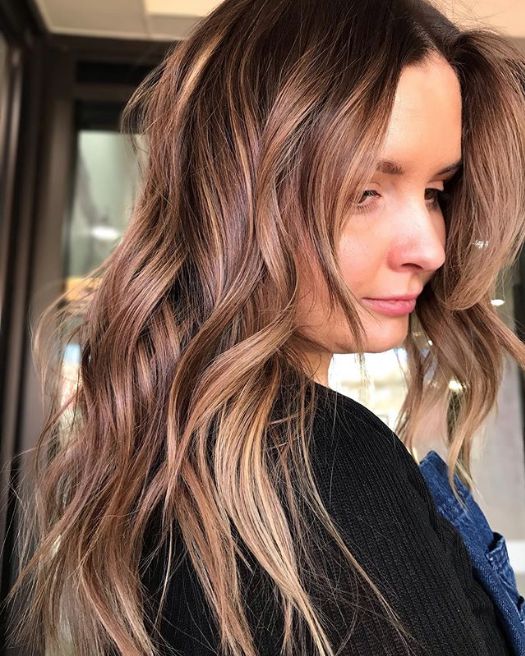
A solid warm brown is fine. This balayage is better. The base is a rich warm brown, the balayage painted in golden blonde sections that start around the cheekbones and feather down to the ends. The technique creates a blended gradient, not a sharp line, so the colour moves with the wave. The tone stays warm throughout: no ash, no copper, just a buttery gold that lifts the eyes. Length is mid-back, texture medium density and wavy. Against a solid single-process, this balayage reads as sunlit and dimensional. It catches motion, not just light.
Curtain Bangs Visual Idea
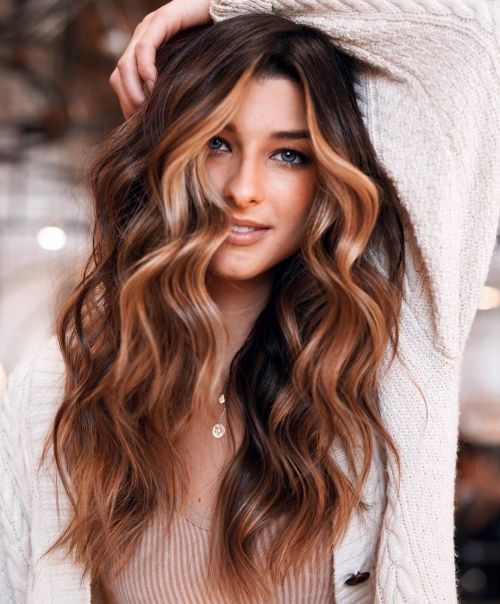
Who can actually wear curtain bangs with a medium brown base, caramel and blonde highlights? This collarbone cut with wavy, medium density texture and a side part works best if your hair holds a bend naturally. The caramel and blonde face-framing highlights brighten pale skin without washing it out, but if your hair is fine and straight, the fringe may separate by noon. Stick to a medium texture for this to hold its shape.
Rich Auburn With Red Undertones Visual Idea
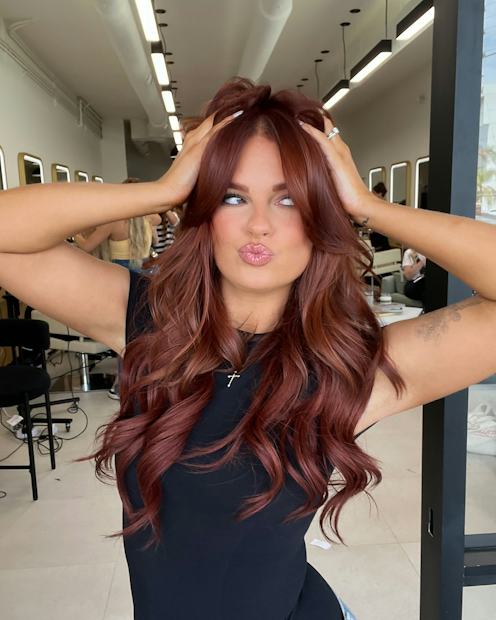
Rich auburn with red undertones lands like a holiday ornament on pale skin, carrying warmth without turning orange. This collarbone length with wavy medium density texture and curtain bangs suits the December party circuit, where low light catches the red tones. The middle part lets the colour read evenly from front to back. A depth that feels festive but not costume.
Deep Burgundy Visual Idea
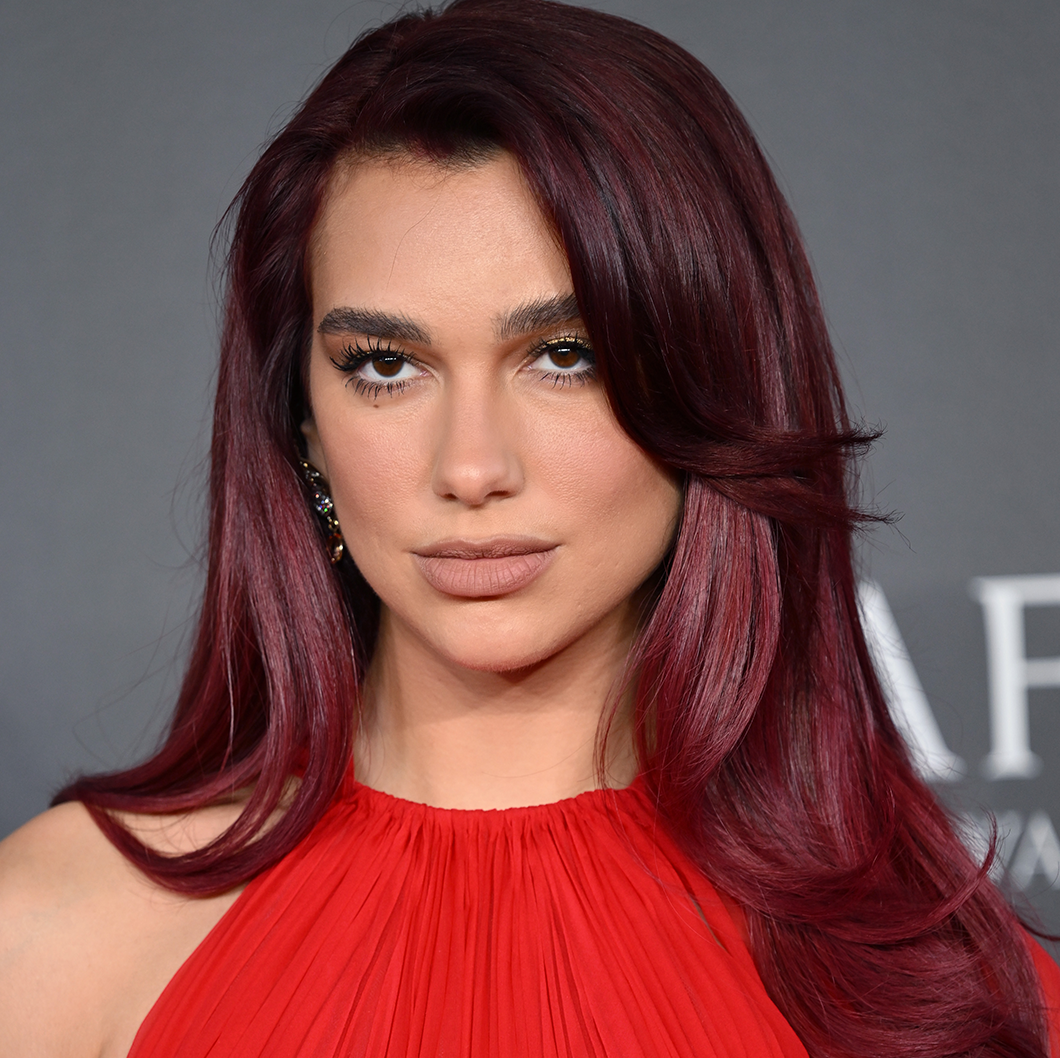
I’ll confess: deep burgundy looks striking on pale skin in theory, but in practice it fades faster than a New Year’s resolution. The deep burgundy base on this mid-back length with wavy thick texture and side swept bangs is gorgeous for the first five washes. Then the red pulls toward brown, especially if you live in a hard-water area. The long layers help diffuse the fade, but you will need a colour-depositing conditioner between salon visits. The tone works best for short-term special occasions, not for a whole season of daily wear.
Back View Medium Crop Visual Idea
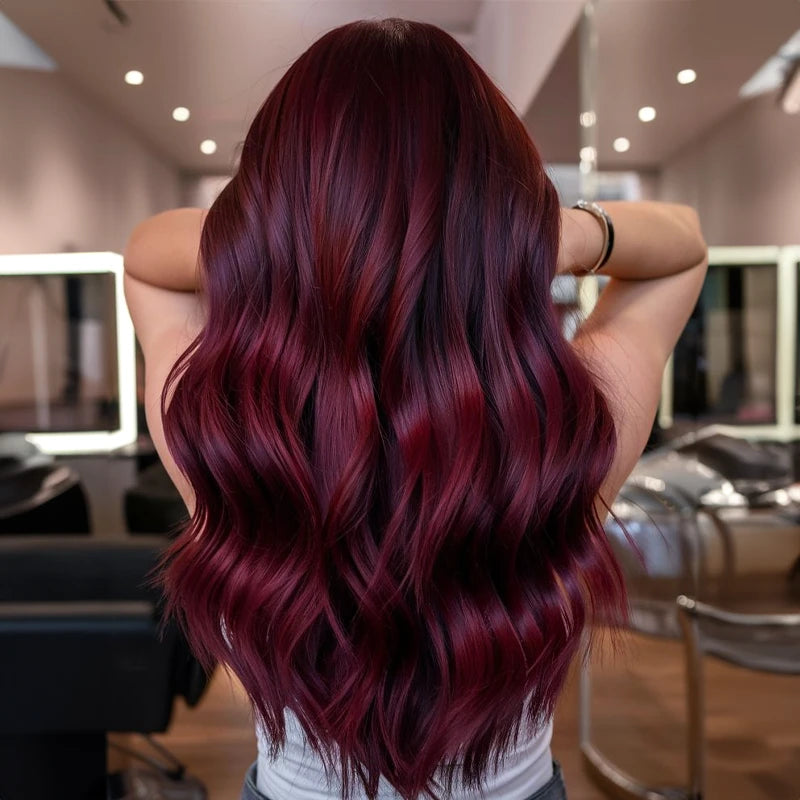
A back view tells the truth about colour longevity, and this deep burgundy red shows how a solid shade wears through winter. The colour is a single tone: deep burgundy red, applied all-over, no highlights. The mid-back length with wavy thick texture and a middle part allows the pigment to gather in the waves, which makes fading less obvious. I’ve found that this shade holds its drama for about three weeks, then softens into a wine tone that still flatters pale skin. The back view from a medium crop framing means you see the full colour story as it moves.
Upkeep is straightforward: wash in cool water, limit heat styling, and plan a toning gloss at week four. The wavy texture hides root regrowth for two extra weeks. This is not a set-and-forget colour, but the honesty of a single tone means you know exactly when it needs a refresh.
Wavy Medium Density Visual Idea
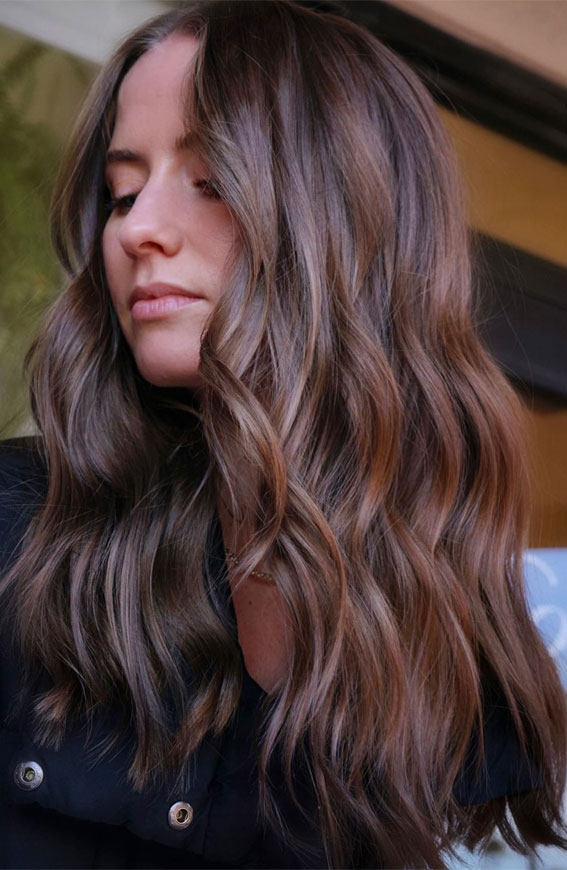
Chestnut brown with reddish undertones is the winter hair color for pale skin that nobody warns you about. The mistake is going too saturated, like a mahogany box dye that reads purple against a fair complexion. A softer chestnut, almost translucent at the ends, lets your skin breathe instead of fighting it. Collarbone-length waves, medium density, keep the colour from feeling heavy. The tone should lean warm but not spicy, think melted chocolate, not cinnamon candy.
Platinum Blonde Visual Idea
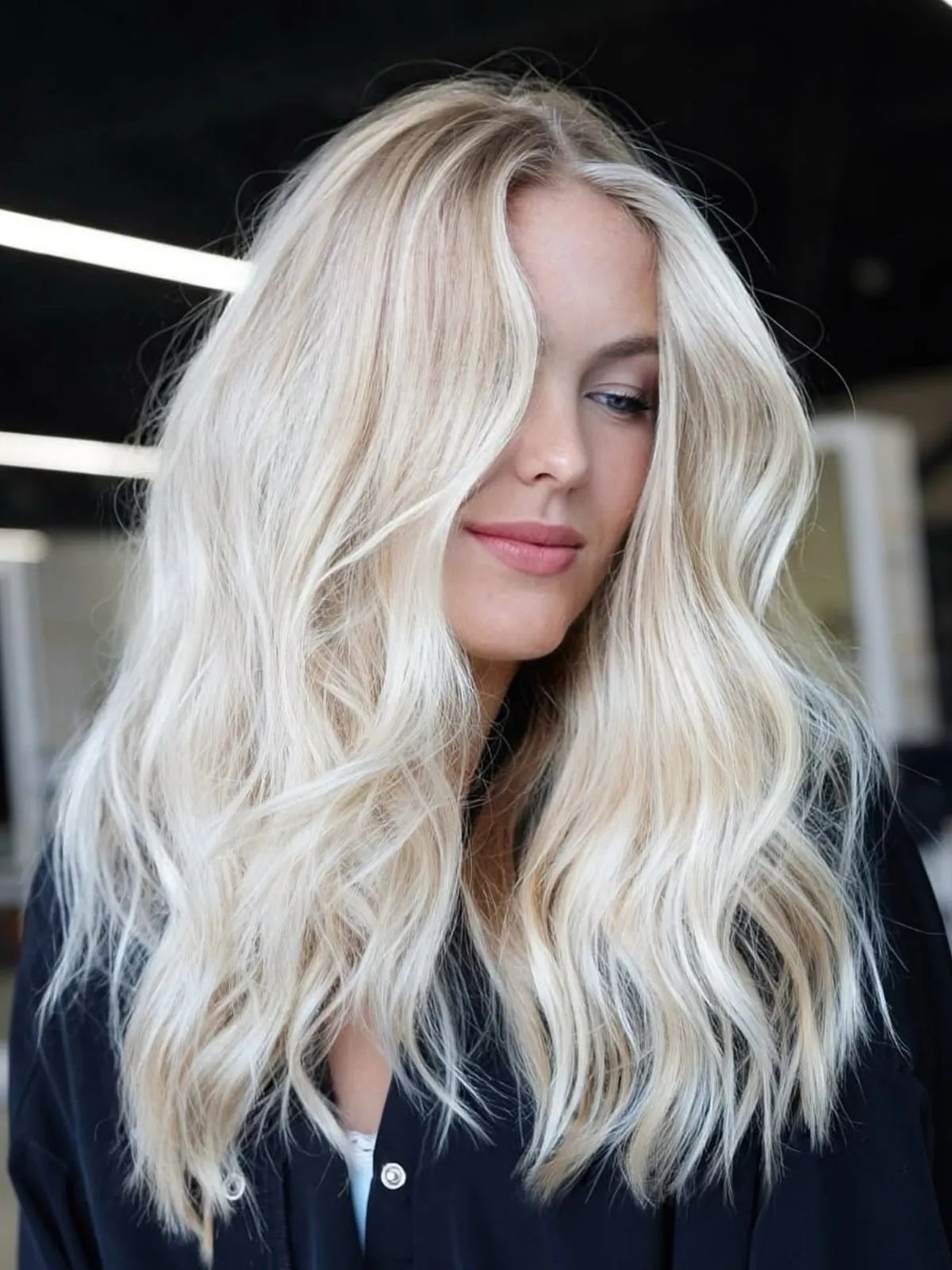
Platinum blonde on pale skin is not a suggestion, it’s a commitment. The technique is a full lift to pale yellow, then a violet toner that knocks out every hint of warmth. Mid-back length, thick wavy texture, the weight pulls the colour into a sleek curtain. This is not a bathroom-mirror job. A stylist controls the porosity, the timing, the damage. One uneven section and you get hot roots or a greenish cast. Book the consultation first, then the appointment. Your hair will thank you later.
Side Visual Idea
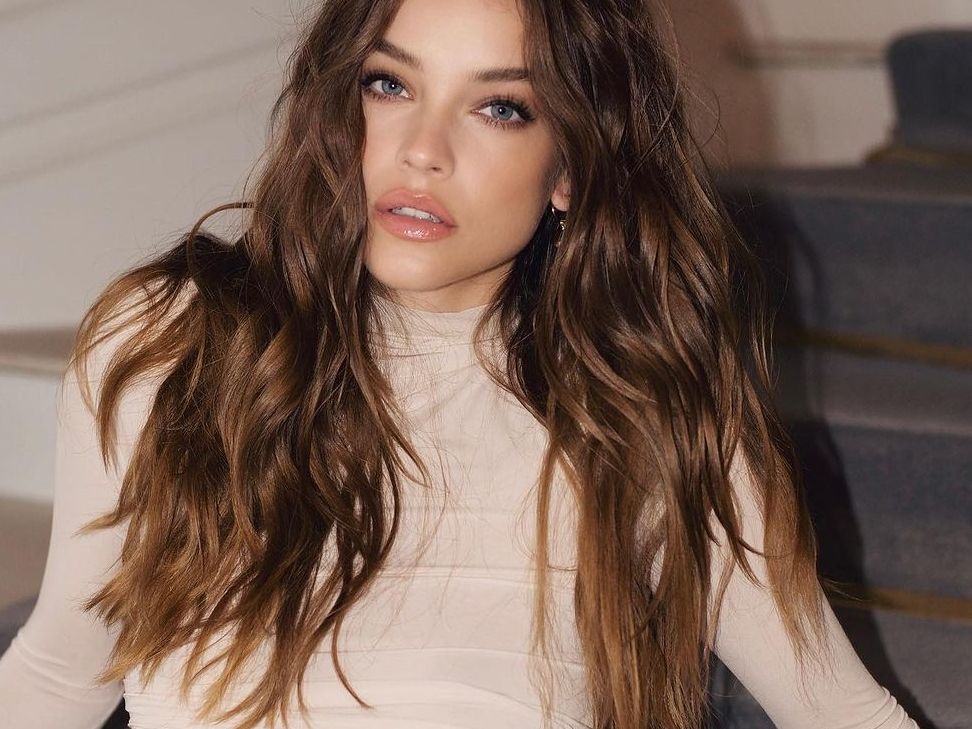
A medium brown with warm undertones and subtle highlights sits in a different category than a cool ash brown. The ash version reads flat on pale skin, like a shadow that never lifts. This one, with its golden-brown base and fine ribbons of light, has dimension without shouting. The highlights are painted, not foiled, so they grow out as a soft fade, not a stripe.
Compare that to a full colour change like platinum or copper, which demands a salon visit every four weeks. This brown lets you stretch to eight. A gloss at home keeps the warmth from turning brassy. It’s the winter hair color for pale skin that works with your schedule, not against it.
Final Thoughts
After writing all 36 of these, I keep coming back to that root shadow I saw in the salon. It’s the one that actually works for my skin and my schedule. What I didn’t expect was how many of these colors share a quiet logic: a cool base, a warm accent, nothing fighting the skin. I’m booking the ash blonde with subtle highlights next. It’s the one that looks like I tried, but I can skip a toning appointment and still look intentional.