

I kept seeing the same thing in the salon chair next to mine: women asking for gray, but not the flat kind. Not the old-lady-at-the-drugstore kind. They wanted silver that moved, ash that caught the light, cool tones that didn’t read blue. Winter is when gray hair actually works — the low sun, the grey sweaters, the whole palette shifts.
So I gathered 31 Winter Hair Colors for Gray Hair, from a five-minute toner refresh to a full salon day. Some of these I have tried on my fine, flat-by-4-pm hair. Some I watched a friend grow out over six months. All of them are real — no filter, no influencer gloss, just what the color looks like at week three and whether your roots will show at week five.
Icy Platinum Blonde With Cool Ash
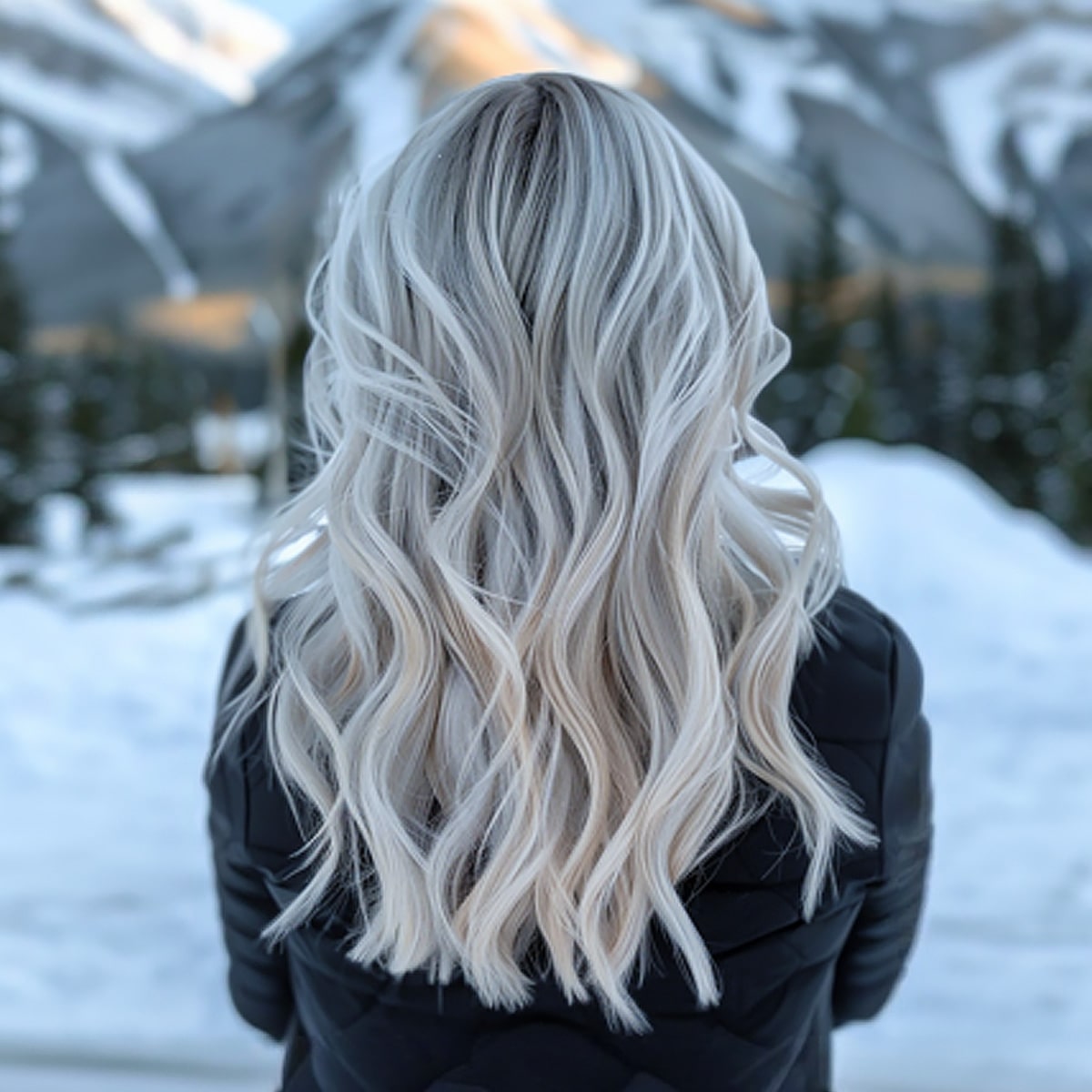
There’s a specific chill to this icy platinum blonde that reads like January light, not summer beach. The cool ash undertones keep it from tipping into yellow, which is the whole battle with blonde on gray hair. On a winter complexion, that blue-gray cast in the tone picks up the coolness in your skin and makes everything look deliberate. This shade suits medium to thick hair best, because the wavy texture holds the light and shows off the dimension in the mid-back length. Fine hair can pull it off too, but you will see every root at week three, so book accordingly.
Voluminous Platinum Blonde Blowout
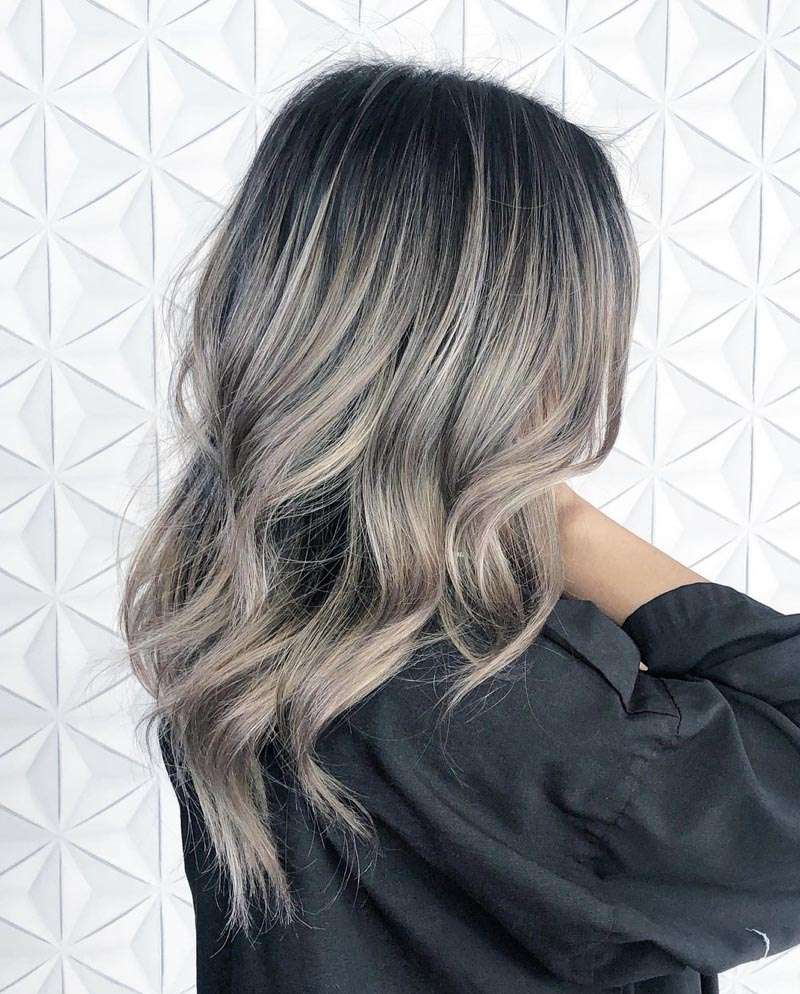
This is the platinum blonde blowout that makes you understand why stylists spend years learning to blow-dry. The long layers are cut to move, and the straight, thick texture gives the blowout something to grip, so the volume actually holds past noon. Cool ash tones in the color keep the brightness from looking brassy, which matters when you are this light. The technique is a round brush at the roots, working section by section, and a flat iron to seal the ends. It is a salon finish, not a bathroom-mirror job, and the mid-back length means you will be there for a while.
What you are paying for is the polish. The blowout smooths the cuticle, which makes the platinum read as expensive rather than fried. With thick hair, you need the heat high enough to set the shape, so a heat protectant is non-negotiable. Expect to be in the chair for a root touch-up and toning every four to six weeks, because the grow-out line on this bright a blonde is not subtle.
Extreme Platinum Blonde With Icy Undertones
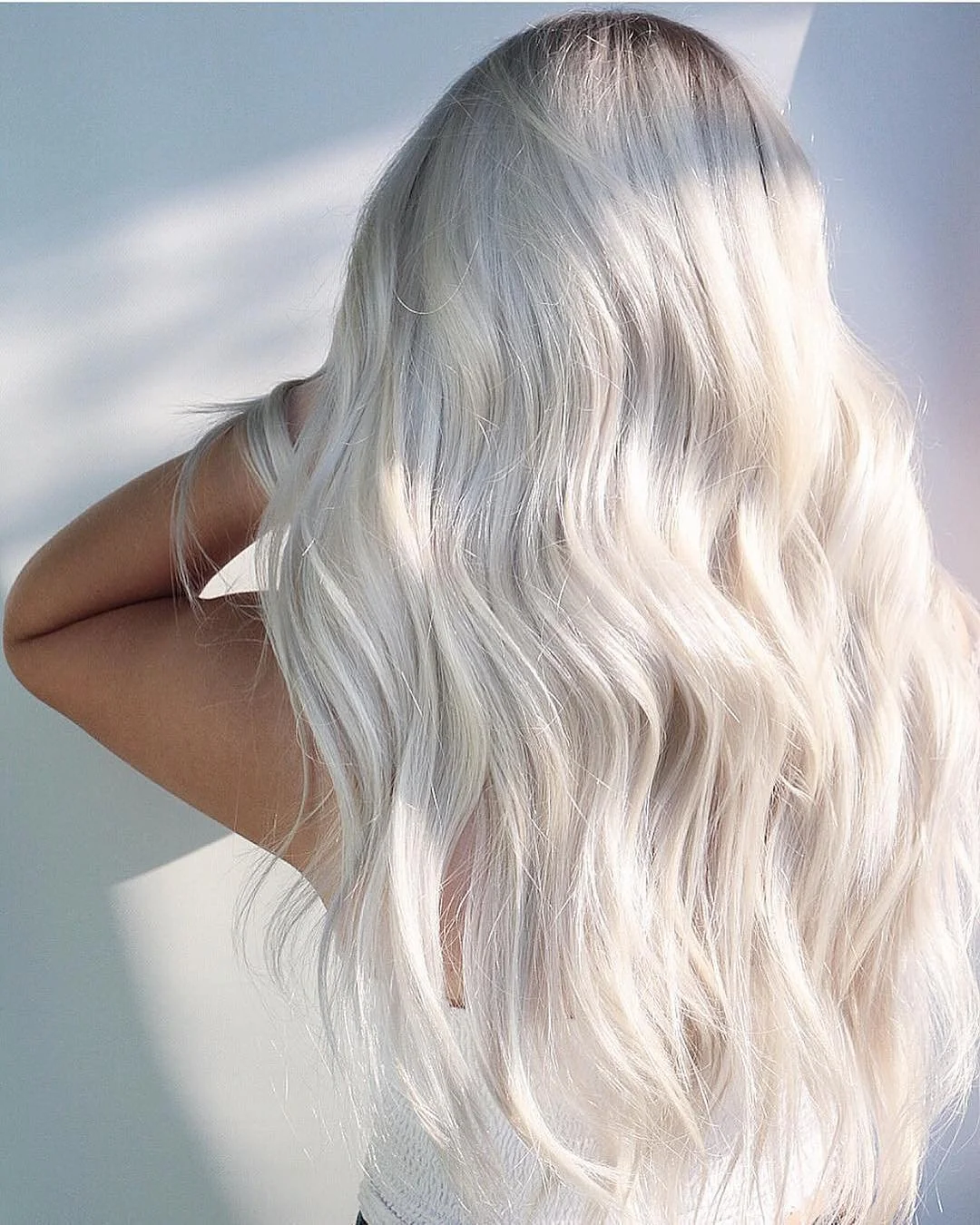
You want to know how this extreme platinum blonde survives a real week? It does not, not without work. The icy undertones are gorgeous on fine, wavy hair, but that level of lightness means your strands are more fragile than they look. By day three, the loose waves start to droop and the ends feel dry, so you are re-wetting and re-styling more than you planned. The mid-back length makes it worse, because the weight pulls the wave out. It is a look that needs a stylist’s hands and a lot of patience, and skip it if you cannot commit to regular toning.
Textured Gray With Lighter Undertones
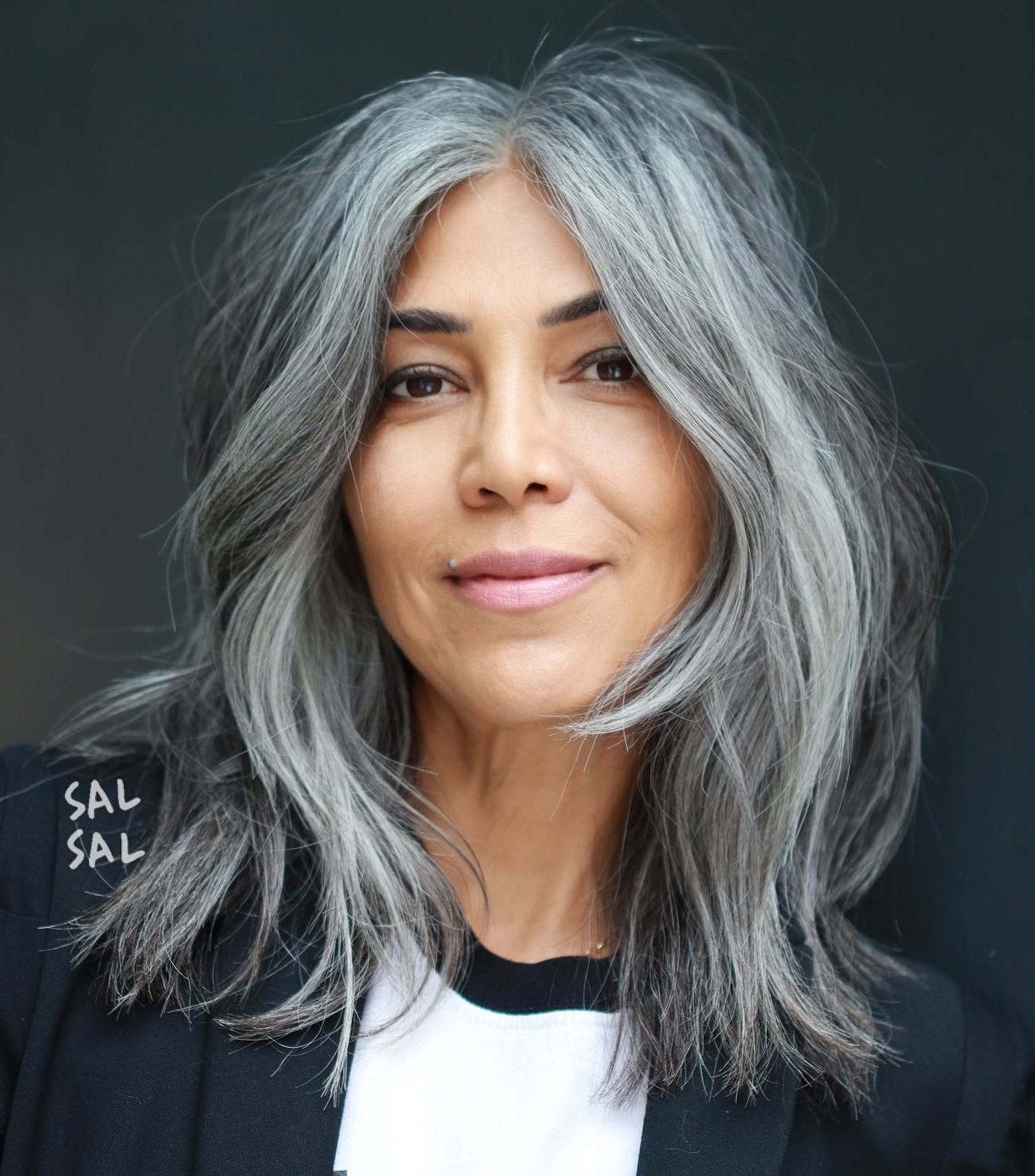
My gut reaction to this medium gray hair was that it finally makes gray look like a choice, not a surrender. The lighter gray undertones give it a soft, smoky dimension that matches winter’s muted palette perfectly, so it does not fight your coat or your complexion. The shoulder-length cut with face-framing pieces is where the magic is, because those lighter pieces catch the light and break up what could be a flat block of color. On thick, wavy texture, the loose waves hold their shape and the multi-tonal effect shows. Upkeep is gentler than blonde: a gloss every six weeks keeps the undertone fresh, and you can let the roots grow a bit without panic.
Rich Gray Base With Silver Highlights
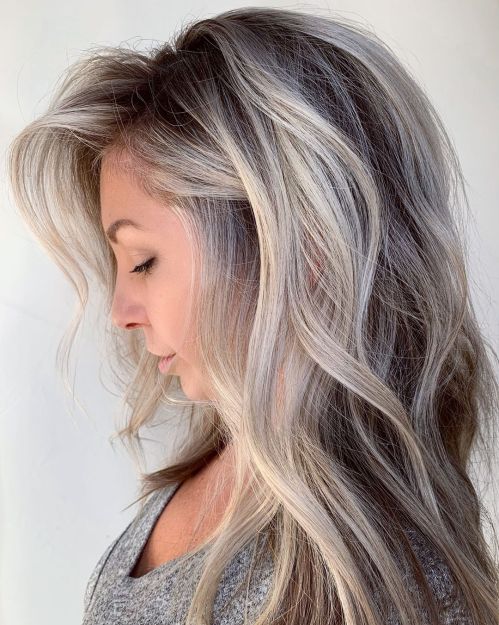
I will confess: I did not expect to like gray hair with silver highlights this much. The rich gray base gives it weight, and the striking silver and white highlights add a brightness that reads as intentional, not accidental. This is not a color you can fake at home. The technique is a foil placement that weaves the highlights through the mid-back length, and getting that placement right takes a stylist who understands how gray reflects light. On wavy, thick hair, the dimension is obvious, and the silver pieces catch the light with every movement.
Book the salon for this one. Ask for a gray base with fine, woven silver and white highlights, placed to frame the face and break up the mass. The highlights need to be babylights, not chunky streaks, or you will get a stripe effect. A trim every eight weeks keeps the ends clean, and the color itself will hold for six to eight weeks before the base needs refreshing.
Cool Grey Base With Subtle Highlights
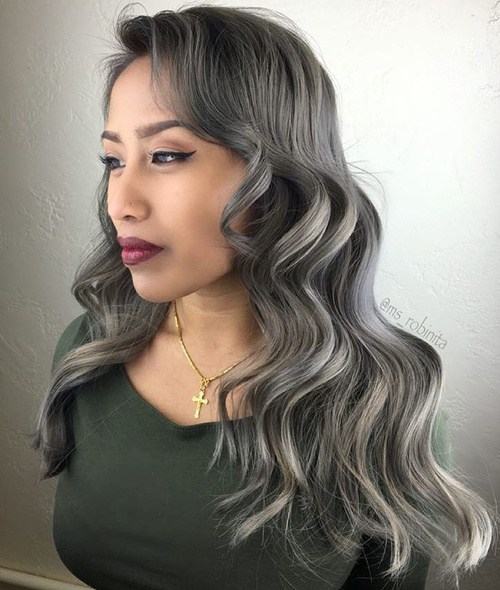
I remember the exact moment I stopped fighting my gray. I was staring at a root line that refused to blend, and I thought: what if I just let it win? That is what this color feels like. A cool grey base, painted with lighter grey highlights that catch the light without screaming for attention. Mid-back, wavy, medium density. The highlights are subtle, barely there unless you tilt your head. Which is exactly the point. It is not a statement. It is a quiet agreement with your own hair.
Ash Gray With Silver Highlights
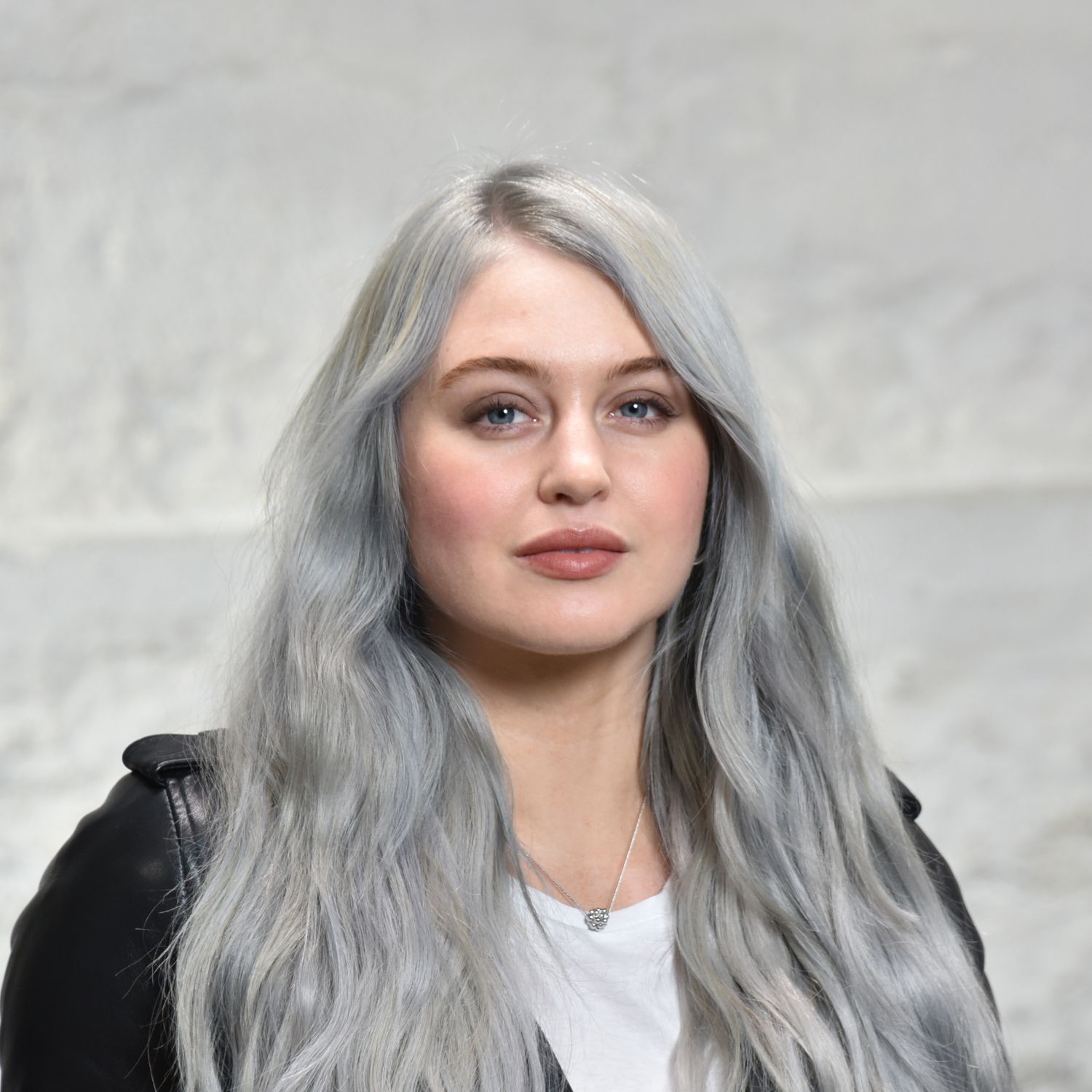
Have you ever stood in the hair color aisle and wondered what the difference is between ash gray and silver gray? I have. Ash gray hair sits cooler, flatter, like a winter sky before snow. Silver highlights, on the other hand, read like light hitting metal. This combination layers the two. An ash gray base, mid-back and wavy, thick enough to hold the texture, with silver highlights woven through the surface. The silver lifts the ash without warming it up.
Compared to a straight silver, this reads deeper. Compared to a flat gray, it has movement. The highlights catch the eye, then disappear. That is the trick. It is not one note. It is a chord.
Dimensional Gray With Cool Tones
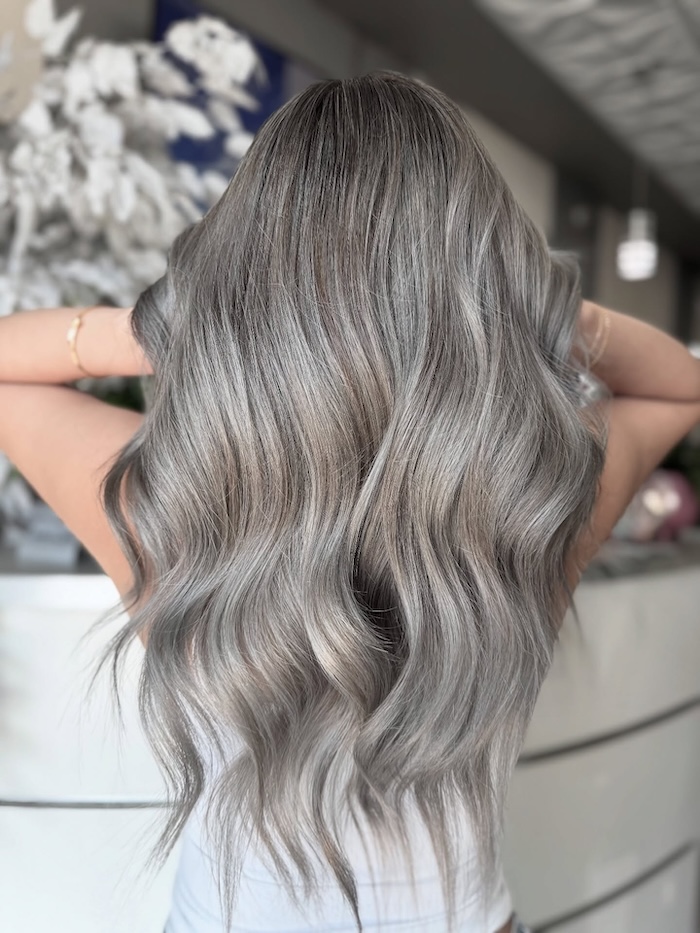
This one flatters a specific person. If you have cool undertones and a face with angular features, the dimensional gray hair with cool dimension will read sharp and intentional. The layers, mid-back and wavy, thick enough to hold the shape, catch the light at different points. That is the dimension. It is not a uniform gray. It is a gray that shifts as you move. If your skin runs warm, or your face is round, this can read harsh. Try a warmer gray instead. But if you are cool and sharp, this is yours.
Dark Smoky Grey With Lighter Highlights
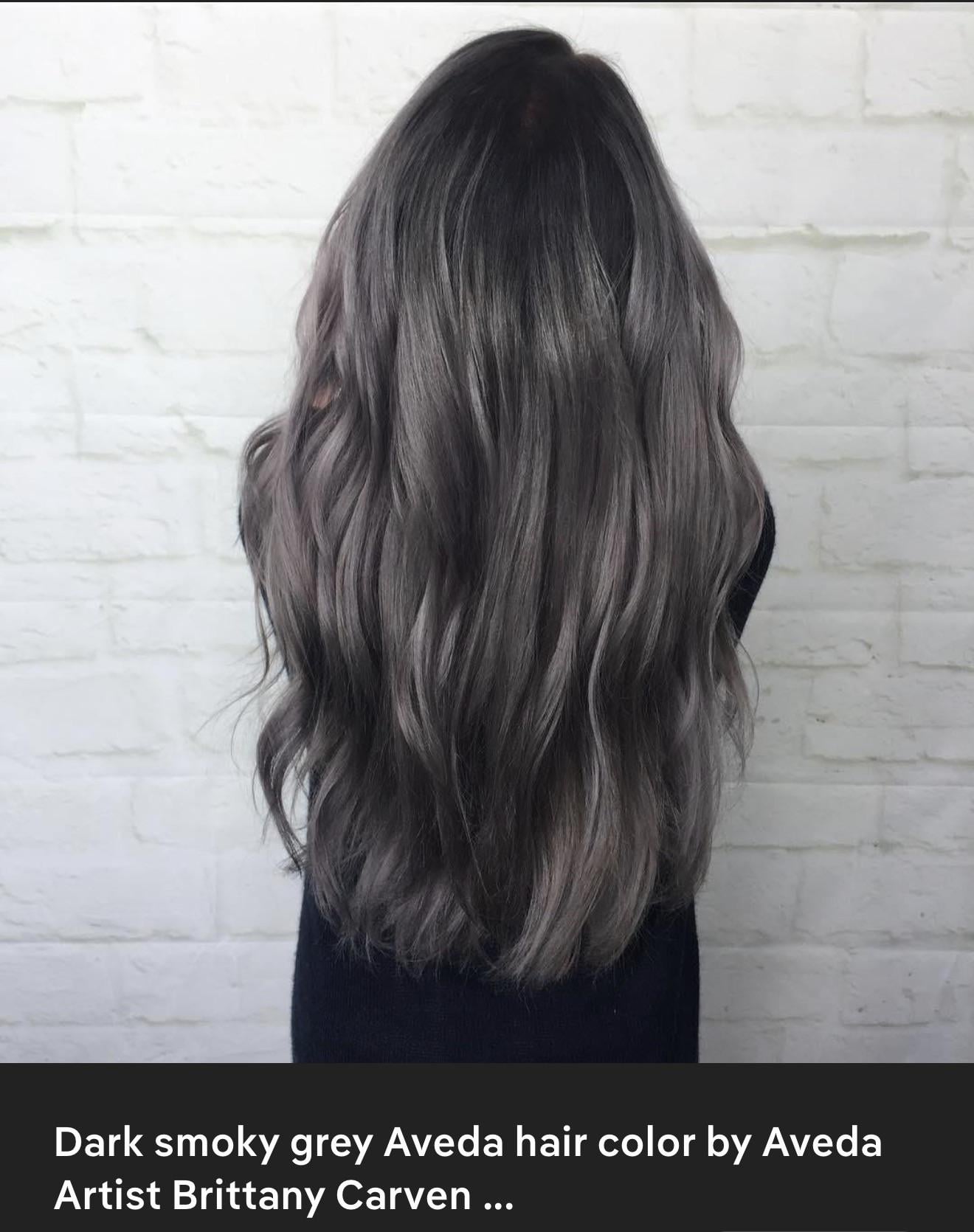
I will admit it. I was nervous about dark smoky gray hair. I thought it would look like I forgot to wash out the toner. But the subtle lighter gray highlights save it. They sit on the surface, mid-back, wavy and thick, and they pull the whole thing into focus. The base is dark, almost charcoal, and the highlights are a soft, dusty gray just a shade or two lighter.
Here is the wear reality. The grow-out is forgiving because the base is dark and the highlights are close to it. You will not see a sharp line for about eight weeks. The waves help, breaking up any hard edges. I wash it twice a week, and it holds. The dark base does not fade quickly. The highlights stay cool. It is a low-fuss color that still looks like you thought about it.
Vibrant Blue-Gray With Blue Highlights
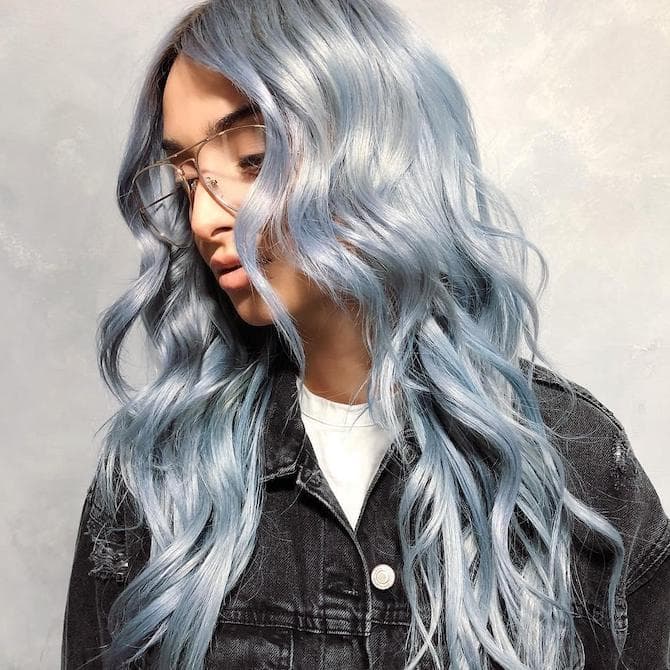
My first reaction was: that is not gray. But blue gray hair is gray with a secret. The base is blue-gray, a cool, muted slate, and the lighter blue highlights sit on top, brighter, almost icy. Mid-back, wavy and thick. The technique is the whole story. The stylist pre-lightens selected sections, then applies a blue toner at two different strengths. One for the base, one for the highlights. It is a salon-only job. The highlights are not random. They are placed to catch the light and read as a single, seamless color. It is gray, but it is not boring.
Gray With Ash Blonde and Lavender
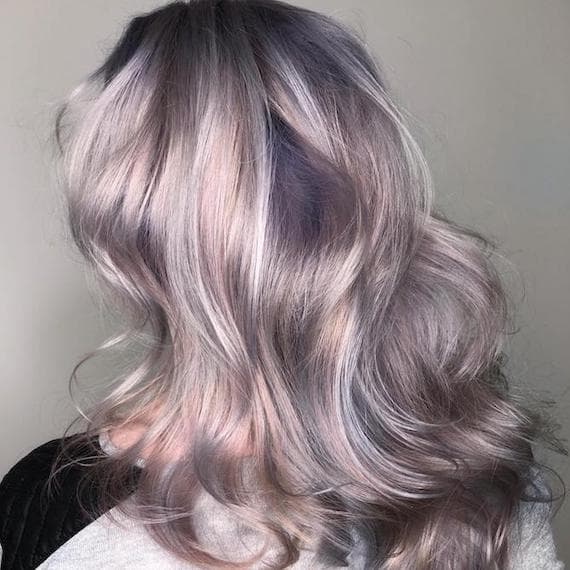
Who decided lavender was only for spring? This collarbone-length gray with lavender highlights and ash blonde pieces earns its place in December. The technique is a foil highlight weave that keeps the cool base intact while those violet tones catch holiday light. A wavy thick texture helps the lavender spread instead of pooling. Tone stays icy because your stylist uses a violet toner (the one time purple shampoo might actually matter). Middle part, back view, no bangs. Looks intentional at a party, reads as gray up close.
Natural Gray With Silver and Ash Tones
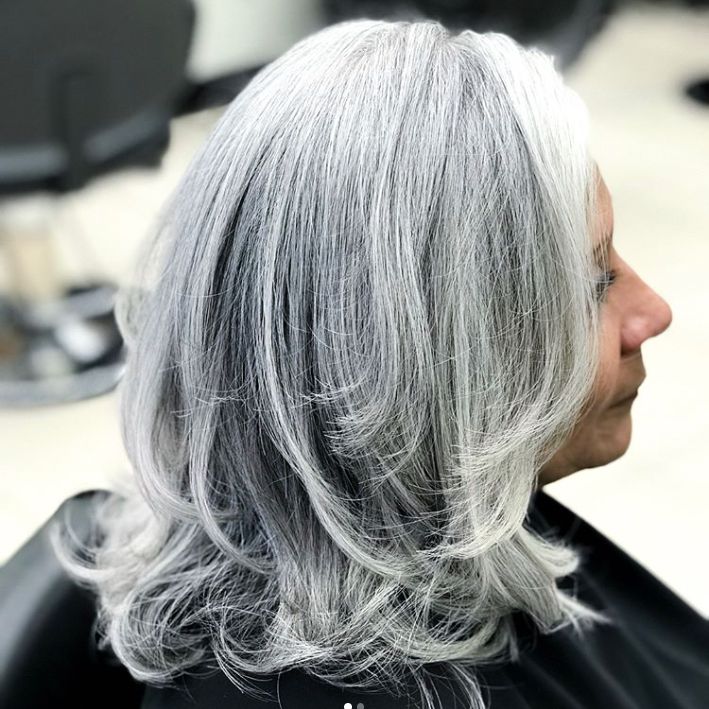
If you want to try a diy fade to natural gray hair, this is the version that works. Mid-back, long layers, middle part. The natural gray base meets silver and ash tones in a way that looks planned, not neglected. No harsh line, no brass. You can do this at home with a gloss if your natural gray is already 70 percent or more. If it is less, the contrast reads accidental.
The loose waves are mostly air-dried (thick wavy hair helps). The trick is a purple shampoo once every three washes, no more. Wash it too often and the silver flattens to beige. Skip the toner altogether and your ash tones drift warm by week six.
Natural Gray With Silver Sheen
I spent years hiding my gray underneath box dye. Then I saw a mid-back natural silver gray hair that caught the light like tinsel and I felt like a fool. Long layers, middle part, a subtle silver highlights weave that does not announce itself. The tone is cool, the texture is wavy and thick enough to hold a shine without product. It is not about being low maintenance, though it is; it is about your hair finally matching how you feel.
Natural Gray With Silver and Curtain Bangs
Curtain bangs and a middle part are a specific geometry. The bangs sweep outward, so they widen a narrow forehead and soften a long face. A round face gets the opposite effect: the parting pulls the eye down, and the bangs add width at the wrong spot. The natural gray with silver highlights here is cool, almost metallic, which reads sharp against warm skin. The shoulder-length layers keep the weight off the bangs, so they actually swing instead of sitting flat. Medium density helps. Fine hair will show every part line by noon.
Rich Silver Color Collarbone Bob
Does a collarbone bob hold its shape through a work week? It can, if the layers are cut into the interior, not the perimeter. This one has long layers and a side part, so the rich silver gray hair falls forward into loose waves that do not need re-curling. The natural gray shade here is uniform, which means less tonal upkeep but more visible root regrowth against the silver. Thick, wavy texture carries the volume. Straight or fine hair would need a round brush and ten extra minutes. The bob sits at collarbone, so it hits the shoulder seam on a coat and flips outward unless you dry it downward.
Clean Silver Grey Mid-Back
I was ready to be annoyed by another silver gray, but this one earned my respect. The clean silver gray base is a consistent silver grey from root to tip, no banding, no muddy patches, just one even, cool silver gray with lighter ends. That gradient effect is the whole trick: the lighter ends catch the light so the color reads dimensional instead of flat. On my fine, straight hair, the color sits close to the scalp and shows every ridge, so I keep it smooth. The silver gray with lighter ends means the grow-out is forgiving, because the ends are already lighter than the roots. I booked this as a full salon color, and the colorist used a gloss to seal the silver gray with lighter ends. It is not a quick bathroom job, but the result is a cool, muted appearance that lasts.
Silver Gray With Lighter Ends
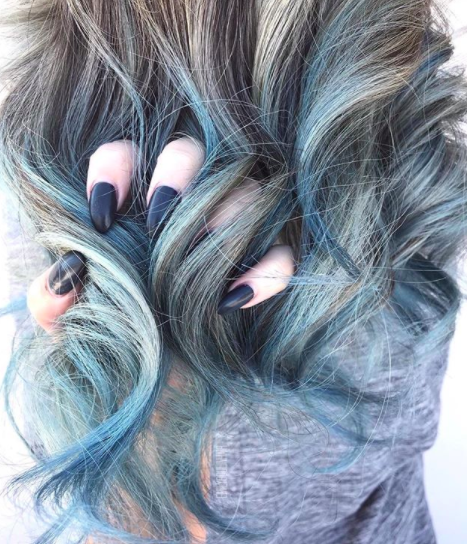
Ever had a color that looks better the longer you ignore it? This silver gray with lighter ends is that color. The base is a consistent silver grey, and the lighter ends create a gradient effect that softens the whole head. I have fine, straight hair, and the lighter ends give the illusion of movement without me lifting a curling iron. The color is cool toned, so it reads crisp against warm skin, and the silver gray with lighter ends means the grow-out is a non-event. I wash it twice a week, and by day 31 the ends still look intentional. This is a salon color, no question, but the payoff is a clean silver gray that does not fight my texture.
Collarbone Ash Blonde With Silver Highlights
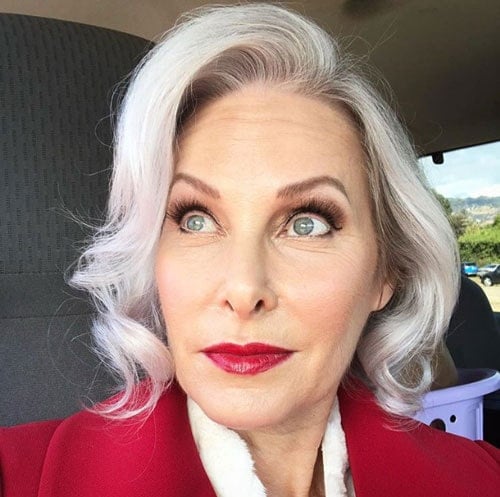
Let me be honest: I was not planning to like this one. The ash blonde with silver highlights sits on a collarbone-length cut with layers, and the color is a cool, muted ash blonde with silver undertones. The silver highlights are subtle silver highlights, not stripes, so they read as texture rather than contrast. On my fine, straight hair, the layers give the color somewhere to land, and the side part adds a little volume where I need it. The ash blonde with silver undertones is the kind of color that looks expensive without trying too hard. I have worn it wavy and straight, and the silver highlights hold their own either way. This is a salon color, and the colorist used a toner to keep the silver from going brassy.
Ash Blonde With Silver Undertones
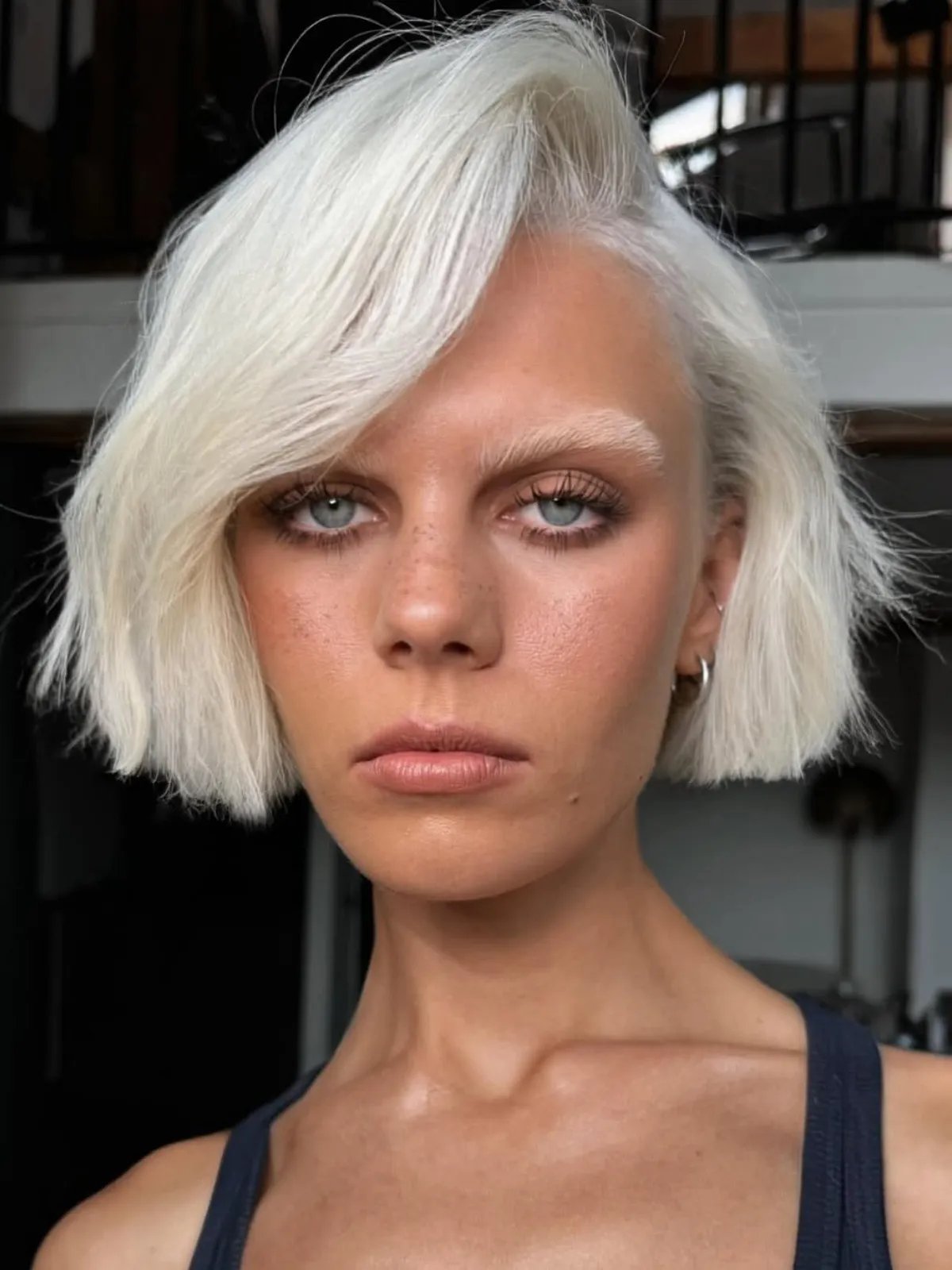
Ash blonde with silver undertones is a color that asks you to commit. The base is a cool, muted ash blonde, and the silver undertones peek through in the right light, giving the whole thing a clean silver gray feel. On my fine, straight hair, the color sits close to the scalp, so I keep the roots shadowed to avoid a harsh line. The silver undertones mean the color shifts from silver gray to ash blonde depending on the angle, which is the kind of dimension I live for. I wash it with a purple shampoo once a week to keep the silver from going yellow. This is a salon color, and the colorist used a gloss to seal the silver undertones. It is not a low-maintenance shade, but the payoff is a cool, muted appearance that reads intentional.
Collarbone Ash Blonde With Grey Undertones
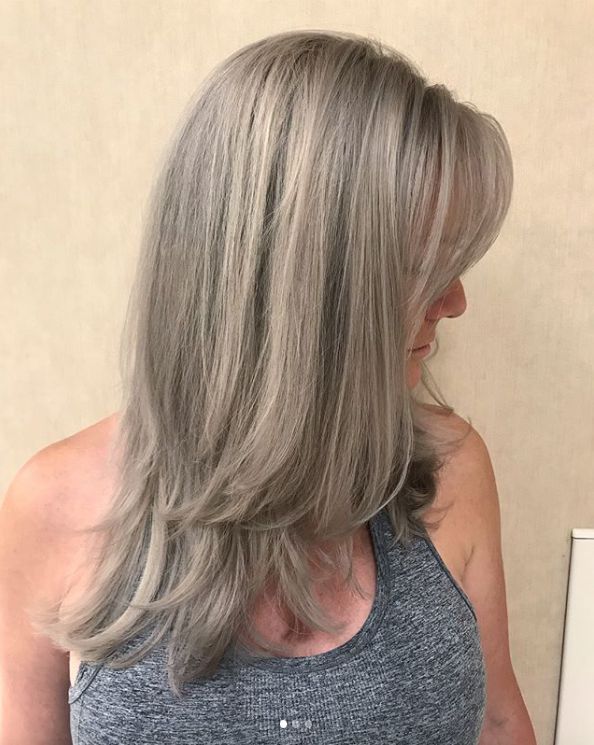
Ash blonde with silver undertones is a color that asks you to commit. The base is a cool, muted ash blonde, and the silver undertones peek through in the right light, giving the whole thing a clean silver gray feel. On my fine, straight hair, the color sits close to the scalp, so I keep the roots shadowed to avoid a harsh line. The silver undertones mean the color shifts from silver gray to ash blonde depending on the angle, which is the kind of dimension I live for. I wash it with a purple shampoo once a week to keep the silver from going yellow. This is a salon color, and the colorist used a gloss to seal the silver undertones. It is not a low-maintenance shade, but the payoff is a cool, muted appearance that reads intentional.
Ash Blonde With Platinum Highlights
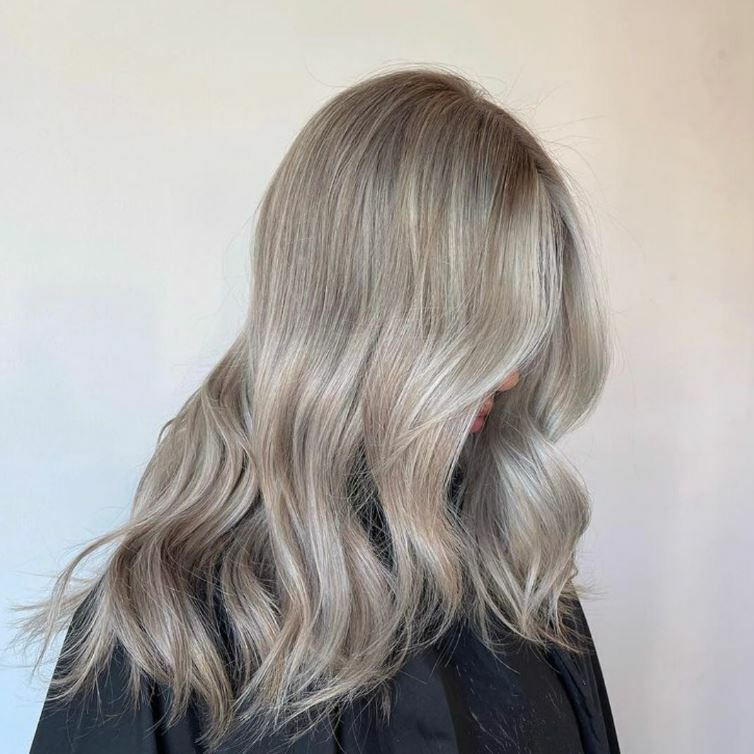
This is my favorite trick in the winter color book. Ash blonde with platinum highlights reads like a single shade from across the room, then splits into two distinct tones when the light catches it. The technique is a soft babylight weave, fine sections painted close to the root so the platinum never lands in chunky stripes. On a collarbone cut with side-swept bangs and thick, wavy texture, the contrast stays subtle. The ash blonde base keeps the cool tone grounded; the subtle platinum highlights lift the ends without screaming for attention. My stylist calls it a tonal whisper. I call it the reason I stopped scanning for brass.
It works because the two shades share the same temperature. Ash and platinum both sit cold on the spectrum, so the transition reads as depth, not contrast. On a wavy blowout, the platinum catches light in the bends while the ash recedes into shadow. The side part helps, too — it lets the highlights fall forward instead of sitting flat against the scalp. I book this every eight weeks, and I never leave without a toner gloss.
Cool Gray Bob With Darker Roots
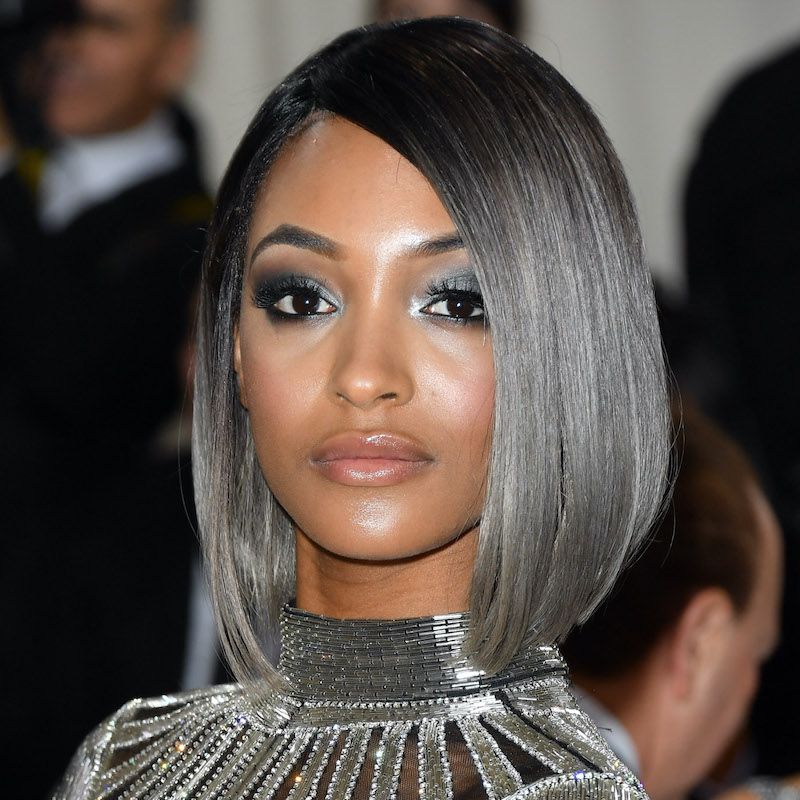
I saw this and immediately wanted to cancel my next root appointment. The cool gray bob sits at chin length, cut sharp and straight, with darker roots that shade from a natural level five into the gray about an inch down. On fine, straight texture, the contrast lands hard — the dark root anchors the face, the gray floats away from it. The side-swept bangs sweep the whole thing forward. It is the kind of winter color that does not fight the season. It matches the sky. And the darker roots mean I can stretch a salon visit to six weeks without anyone knowing.
Dark Brown With Ash Grey Highlights
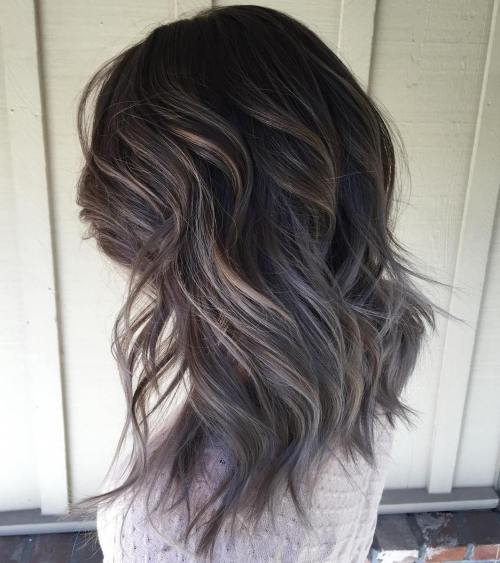
Can you get dark brown ash gray highlights at home? I have tried. I have also tried to fix a kitchen-sink bleach job with a box dye. The answer is no. This collarbone long bob layers a dark brown base with striking ash grey and silver highlights, woven through the mid-lengths and ends in fine ribbons. The side view shows the gradient best — the brown holds the root, the gray takes over around the jaw, the silver flickers at the ends. Loose waves push the contrast into every bend. A professional paints these shades in sections, then toners them separately. That is not a bathroom-mirror skill. Book the chair.
Uniform Cool Ash Gray
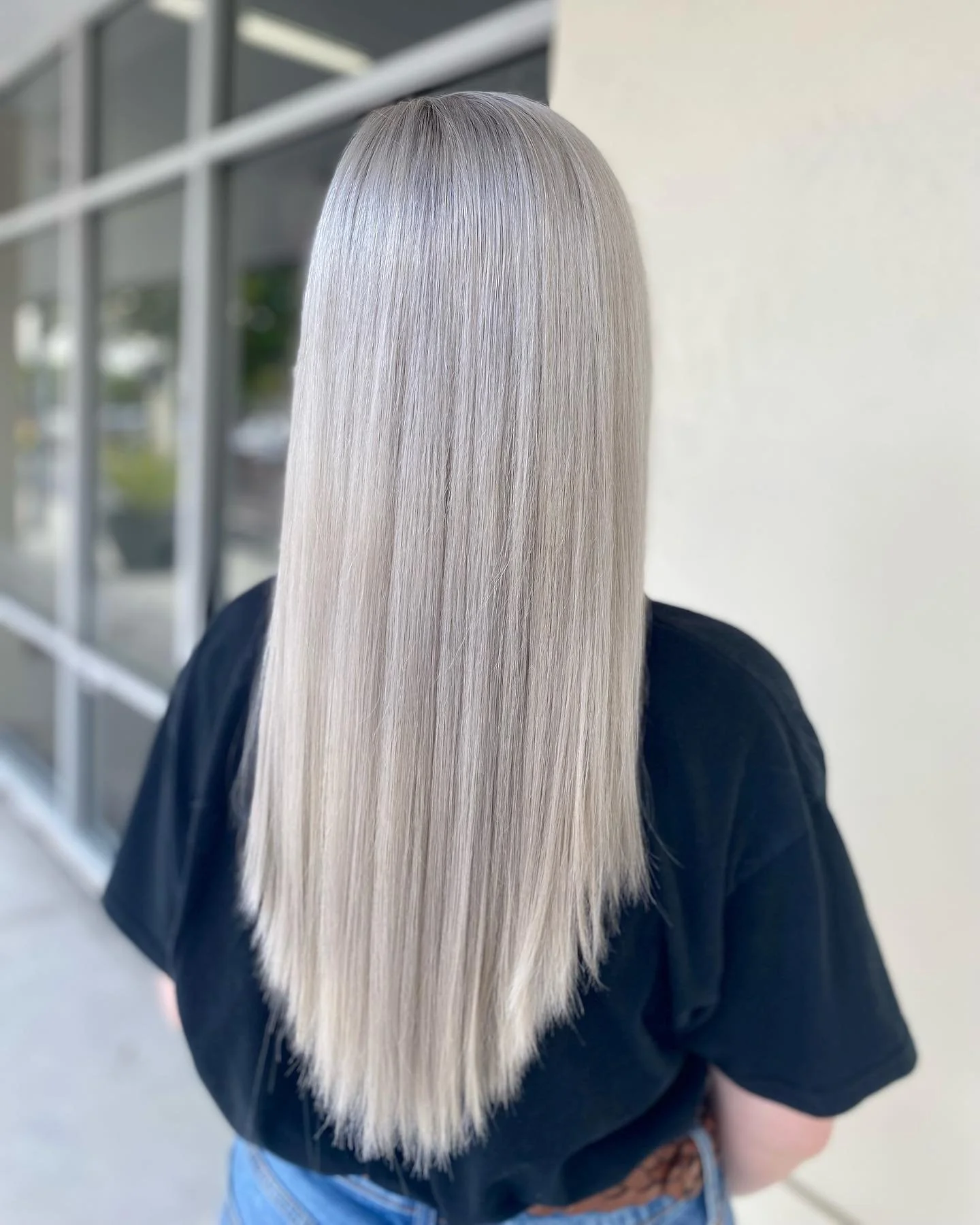
I will admit it: I spent years avoiding a single-shade gray. I thought it would look flat, like I had given up and let the color land wherever it wanted. Then I sat under the dryer and watched my stylist gloss the last section into a uniform cool ash gray, and I was wrong. Mid-back, straight, thick, no bangs, no highlights, no shadow root — just one even tone from scalp to ends. The middle part splits it cleanly down the back. The blunt ends hold the line. It is the opposite of dimensional. That is the point. It reads intentional, like I chose this exact gray and nothing else. I did. And I have not reached for a toner gloss in ten weeks.
Gray With Blonde Highlights
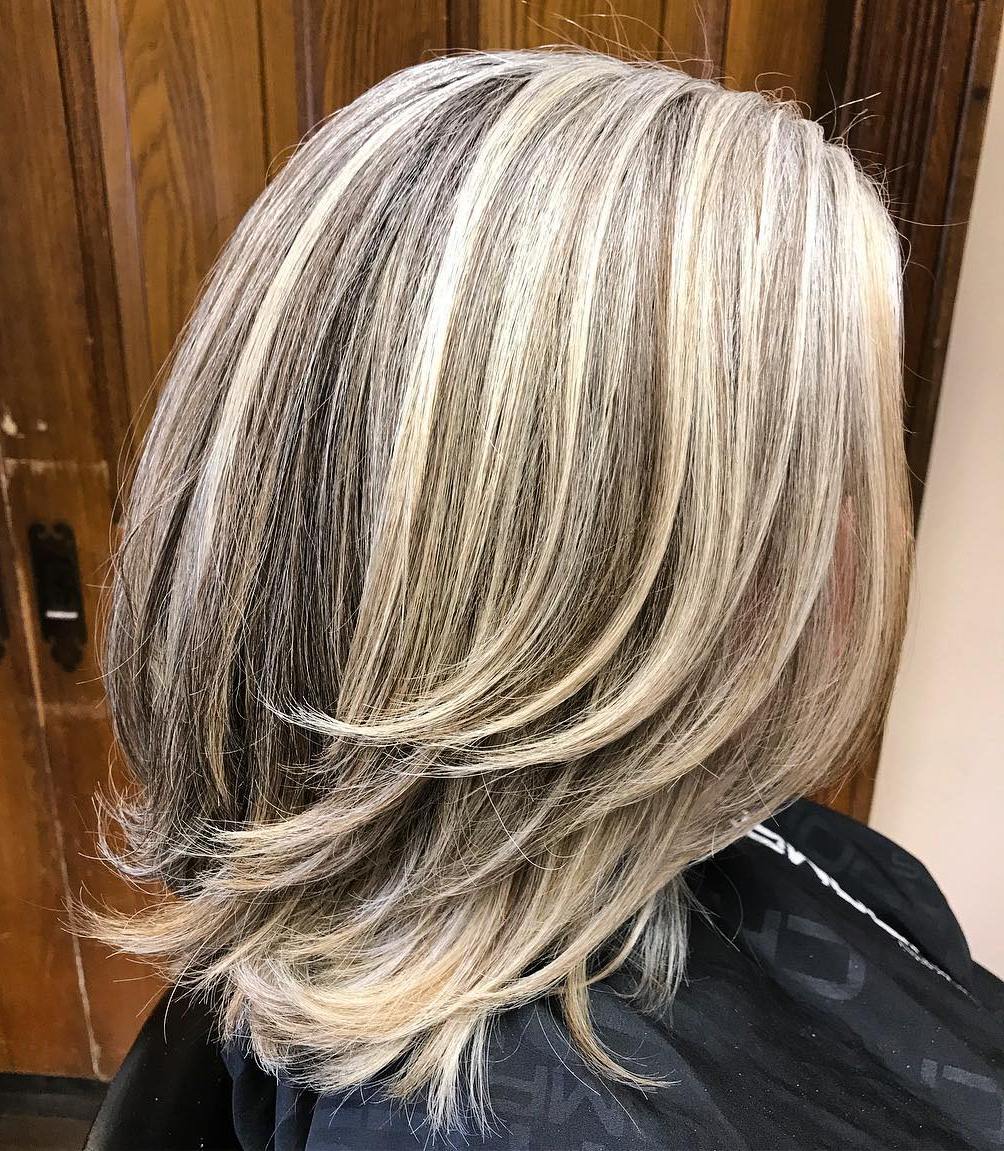
A solid gray is a statement. A solid blonde is a commitment. Gray with blonde highlights sits in the middle, and I think that is the better place. The collarbone layered bob keeps a gray base through the root and crown, then drops prominent blonde highlights through the mid-lengths and ends. On a middle part with soft waves, the blonde reads like sunlight hitting a winter coat — warm but not aggressive. The gray base stops the blonde from pulling yellow. The blonde stops the gray from reading dusty. It is a compromise that works. I would take this over a full blonde any season.
Angled Bob With Blended Highlights
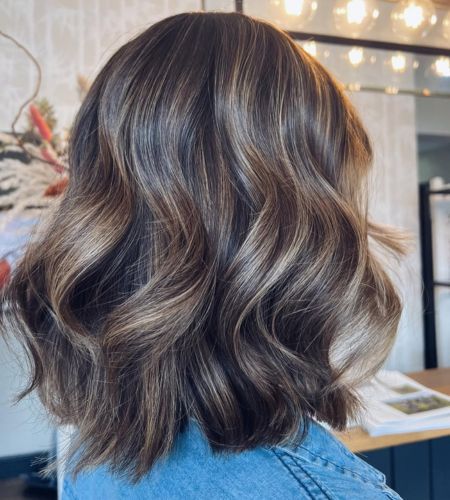
This angled bob is the rare cut that flatters more than it excludes. The side part and the forward angle widen a narrow face, and the wavy blowout gives medium density hair the movement it needs to avoid looking flat by 4 pm. The gray ash blonde highlights are woven through, not painted on, so the subtle dimension reads as texture rather than stripes. If your hair is fine and straight, the angle will hold better than a blunt bob, but you will need a round brush and some patience to get the wave to sit. It is a salon job, book the appointment, this is not a bathroom-mirror cut.
Chin Length Bob With Lighter Highlights
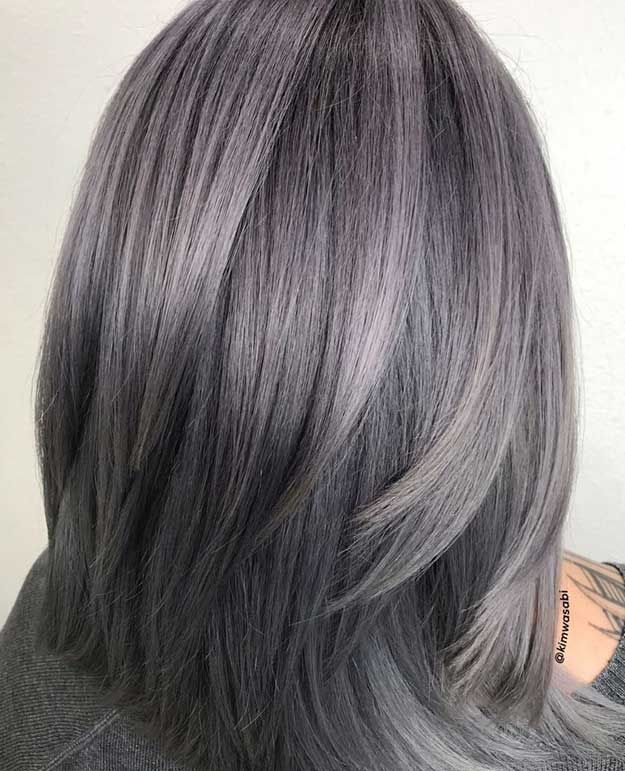
How does a chin-length bob survive a week of real life? The layers are doing the heavy lifting here, they give straight, thick hair volume without any curling iron. The medium gray with lighter highlights means the grow-out line is soft, so you can stretch a salon visit to eight weeks before anyone notices. The lighter gray highlights catch the light at the ends, which keeps the shape from reading as a solid helmet. A middle part widens a round face, so if that is you, ask for a deep side part instead. It is a salon job, but the payoff is a bob that still looks styled on day five.
Gray Color Transition Bob
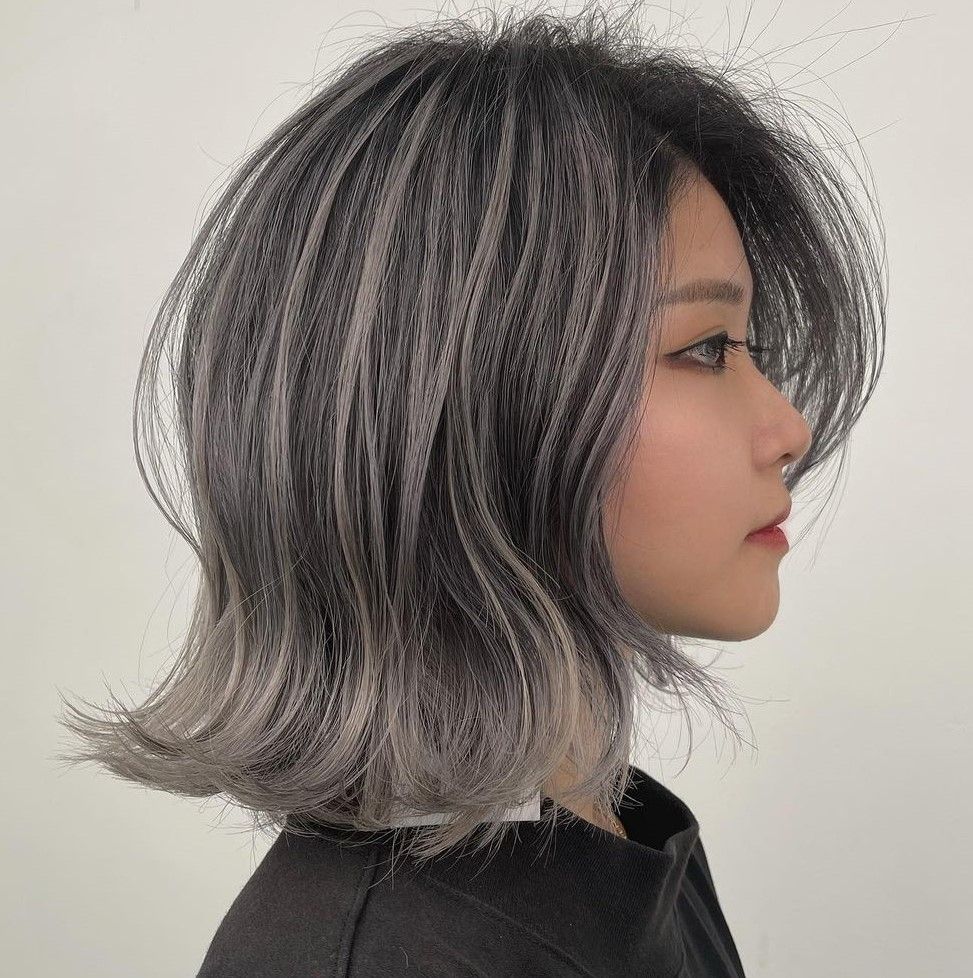
I will admit, I was skeptical about the gray color transition at first. It sounded like a fade that would need constant touching up. But the technique is clever: darker roots melt into lighter ends, so the grow-out is part of the design, not a flaw. The gradient of gray tones is built with a shadow root and a gloss on the ends, which means you can go ten weeks between appointments and still look intentional.
Loose waves make the gradient visible, so this bob works best on wavy, medium density hair that can hold a bend. Straight hair will show the color shift more sharply, which is fine if that is the look you want. It is low maintenance in the best way, the color grows out beautifully and the shape holds its line. I booked this twice in one season.
Cool-Toned Gray Fine Bob
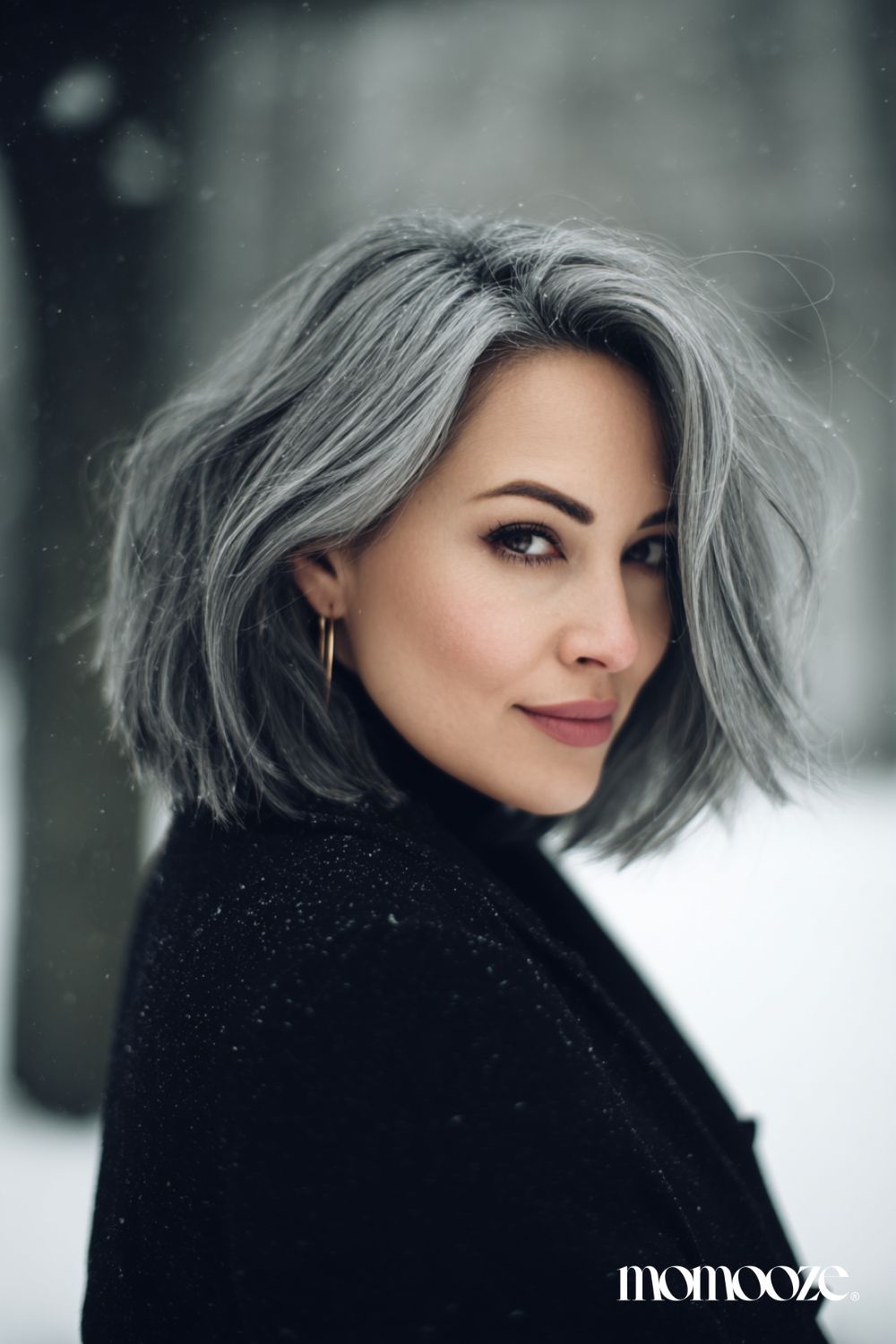
This is the winter color I keep coming back to. The cool-toned shade reads as crisp against the grey light of January, and it does not fight the natural coolness of fine gray hair. The wavy texture is doing the volume work here, because fine hair goes flat fast, and a blowout with a bend at the ends gives it lift without any product. The bob length is chin, which is short enough to hold shape but long enough to tuck behind an ear. It is a salon job, but the cool tone is easy to maintain with a purple shampoo once a week. This is the one I would book for a winter refresh.
Salt and Pepper Short Bob
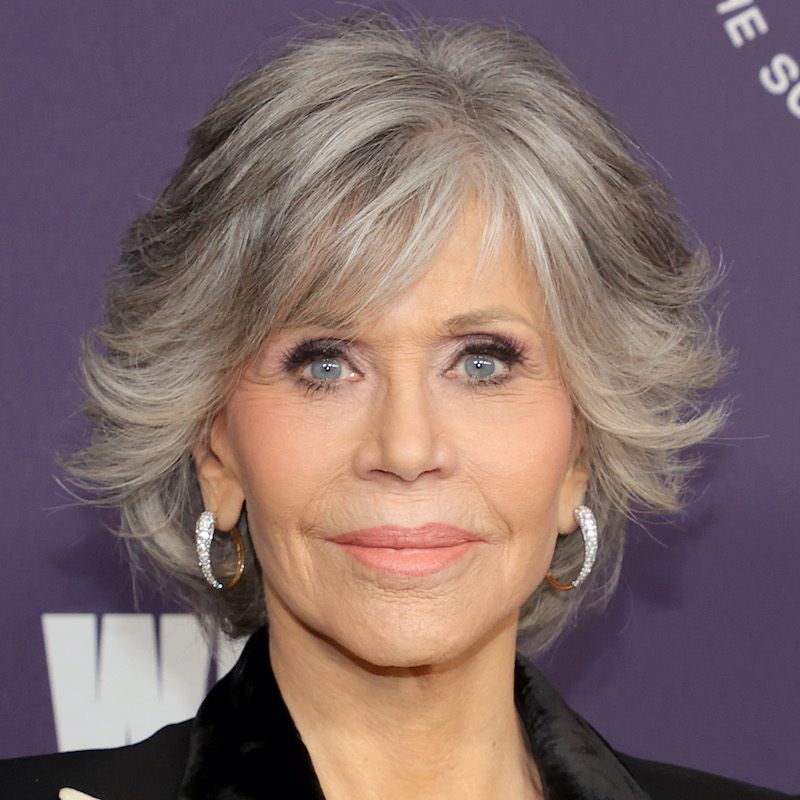
This short bob is the best grow-out in this roundup. The salt and pepper gray hair is a natural salt and pepper gray blend, which means the color is doing the work of hiding the line between dyed and natural. The textured layers and wispy bangs add movement to fine, wavy hair, and the ear length keeps it from looking like a helmet. Now the honest part: this is not a DIY job. Getting a natural salt and pepper gray blend at home is a gamble, you will likely end up with stripes or a muddy brown. Book a stylist who knows how to place the dark and light pieces so the blend looks organic. It is low maintenance after that, just trims every five weeks to keep the shape.
Silver With Lighter Grey Highlights
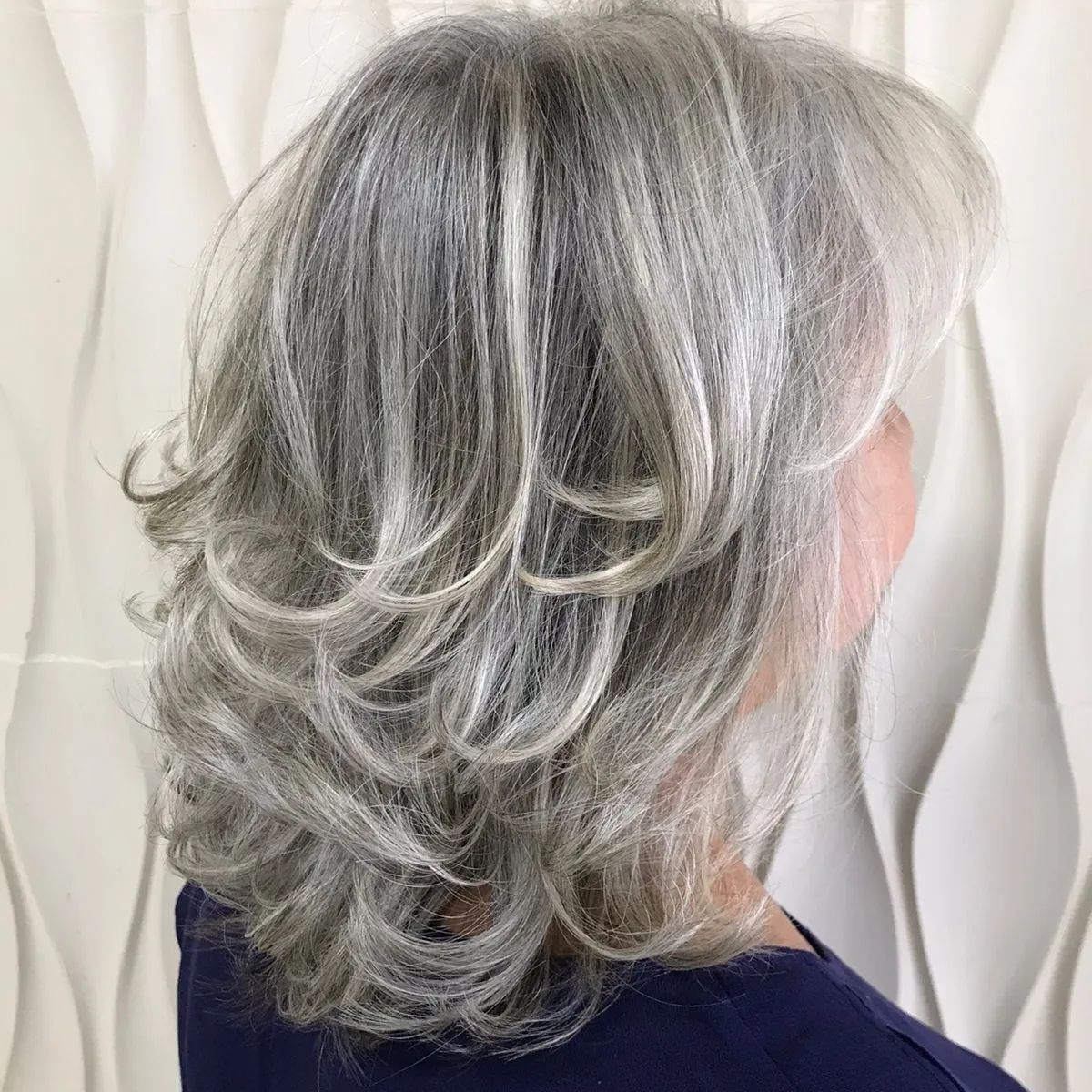
Have you ever watched a winter sky turn silver at dusk, then catch a lighter cloud moving through? That is what this shag does to your head.
Mine went from flat silver to something dimensional in one salon session. The silver with lighter grey highlights lands like a striking contrast up close, then softens from across the room. My wavy, thick layers catch both tones differently, so the colour never sits still. Shoulder-length with no bangs, middle part, curled for movement. It reads as one piece but acts like three.
Final Thoughts
After writing all 31 of these, I kept circling back to the one I saw in that salon chair first: the cool gray bob with darker roots. It is the one I am actually booking next. Not because it is trendy — because it buys me eight weeks between appointments and still looks intentional when the grow-out line shows up.