

I started seeing it in the chair next to mine around October: redheads asking for something warmer, something that would hold through the gray months without washing out by week three. Copper is having a moment, sure, but the winter version is different. It is deeper, less orange, more like the inside of a penny than the outside.
This roundup has 32 Winter Hair Colors for Redheads, from a five-minute gloss to a full afternoon of highlights. Some work on fine hair that goes flat by 4 pm, some need thick texture to hold the shape. A few are bathroom-mirror safe. Most are not. I have the grow-out lines to prove it.
Vibrant Copper Base With Blonde Highlights
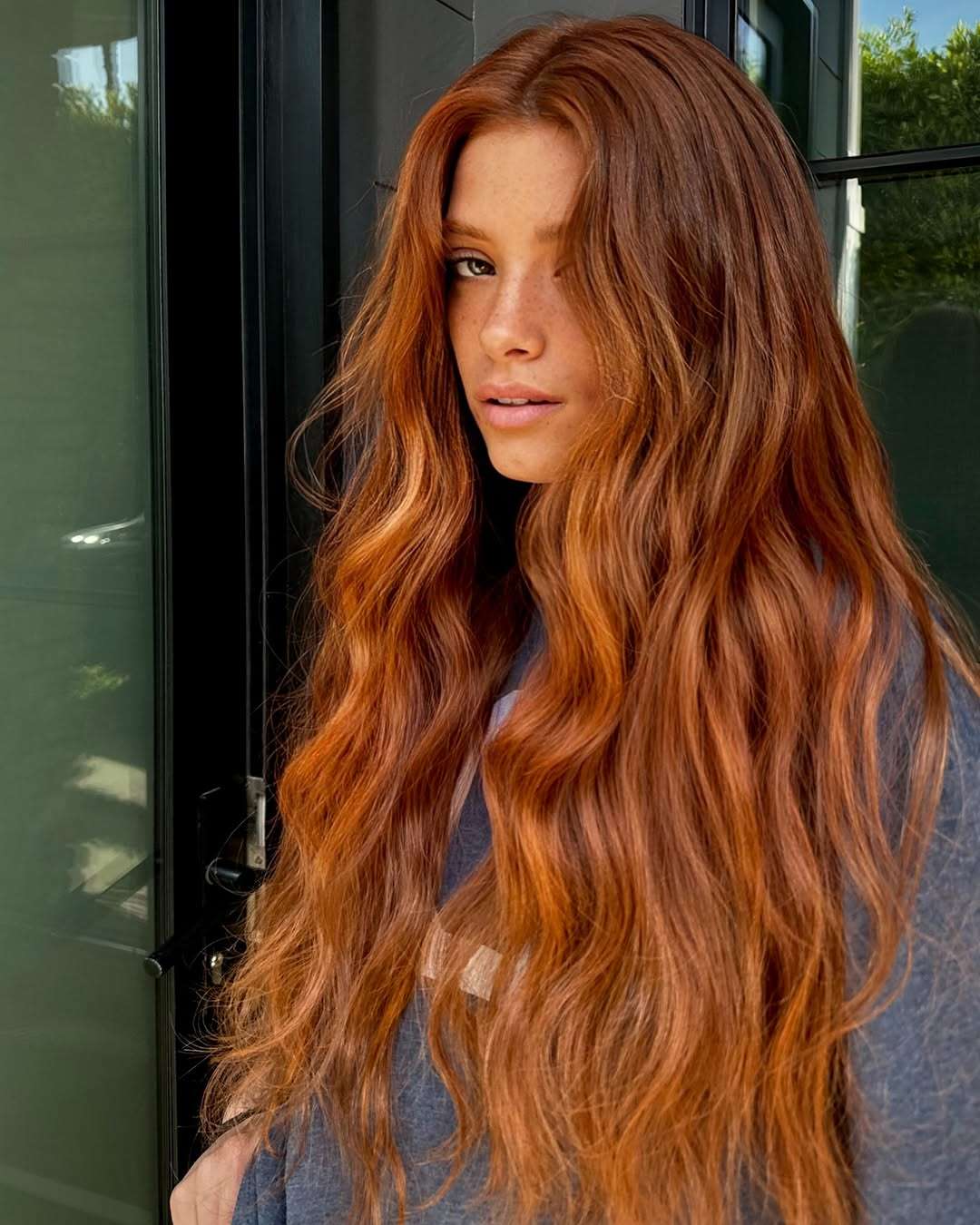
The copper is the headline, but the blonde highlights are the plot twist. A vibrant copper base reads warm and grounded, then those lighter strands catch the winter light and keep it from going flat. Mid-back length with loose waves, thick texture — the contrast shows best when there is enough hair to carry both colours. A middle part lets the blonde peek through evenly on both sides. No bangs, which is smart: a fringe would fight the colour placement. This is a salon job, no question. The blonde needs precision to land bright against copper, not brassy.
Shag Cut With Burnt Copper
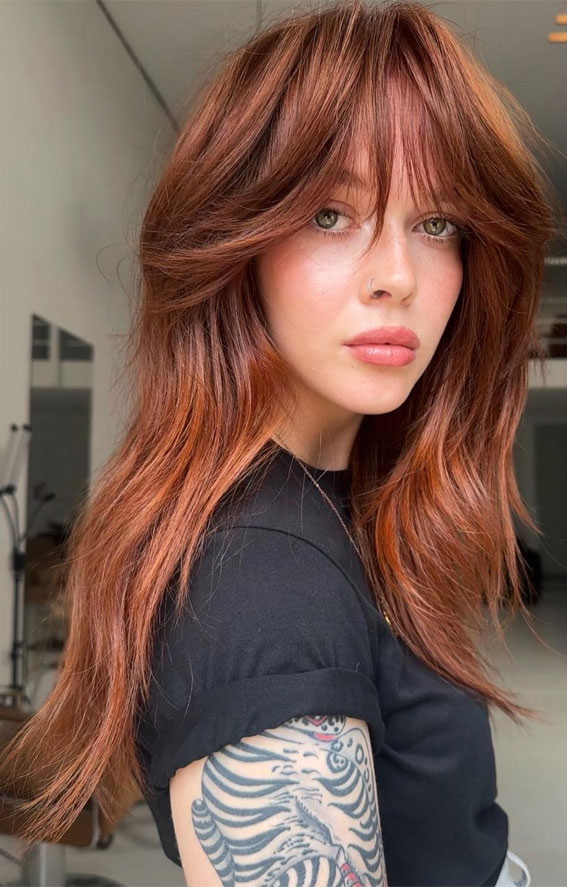
I will take burnt copper over bright copper every winter. A shag cut with long layers and soft bangs, all in a burnt copper tone that reads deeper and dustier than the vibrant stuff. It does not scream for attention. It sits there, warm, dimensional, and somehow more grown-up. The shag structure does the work: soft waves, thick texture, a middle part that lets the layers fall where they want.
Wear and upkeep are reasonable. Air-dry or a quick wave — maybe 15 minutes. The colour fades slower than a bright copper because it starts darker. A trim every 8 to 10 weeks keeps the shape. The bangs need more frequent attention, but that is the trade-off for a cut that looks deliberate without trying.
Collarbone Wavy Hair With Curtain Bangs
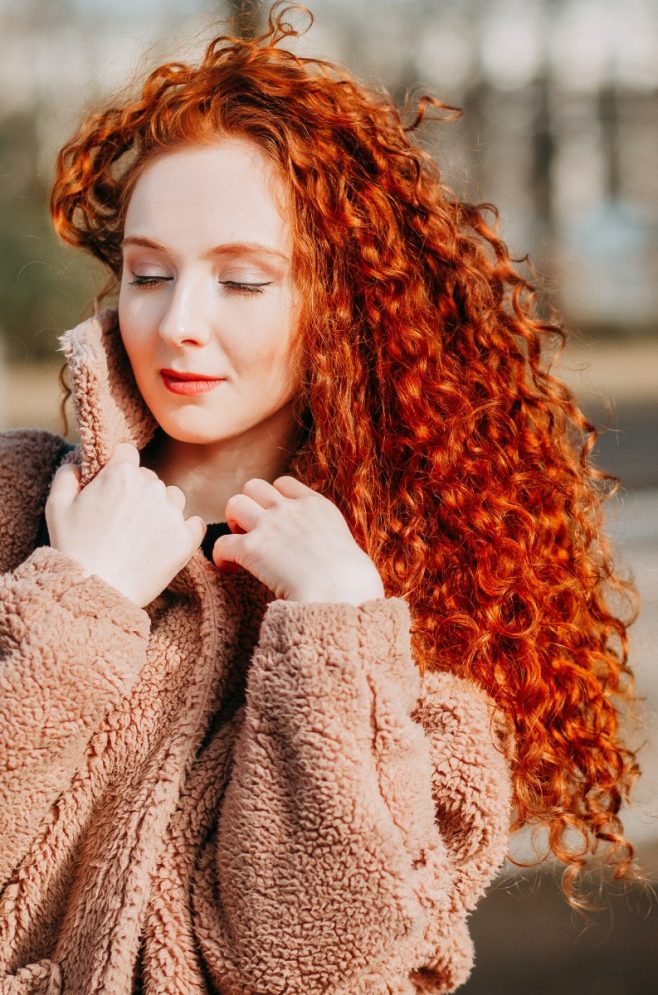
What is the fastest way to brighten a grey January afternoon? A vibrant copper red at collarbone length with curtain bangs. The colour is loud in the best way, warm enough to fight the cold light. Wavy blowout, medium density, a middle part that frames the face without hiding the bangs. Ask your stylist for a vibrant copper red gloss over a lightened base — that is what keeps it from turning brassy. The curtain bangs should graze the cheekbone, not the jaw. This is a salon job: the tone needs a professional eye to land that specific red without going orange or burgundy.
Warm Copper Red With Auburn Highlights
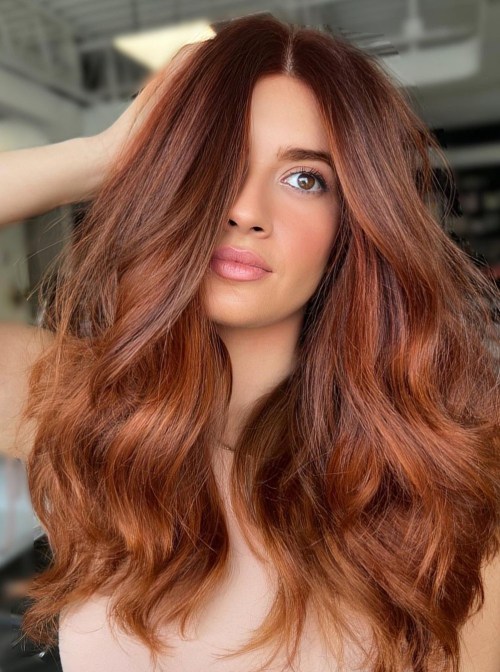
The technique here is subtle but it changes everything. A warm copper red base, then lighter auburn highlights woven through the mid-back length. The auburn lifts the copper without washing it out, creating a dimensional effect that reads rich instead of flat. Loose waves, medium-thick texture, no bangs, a middle part. The highlights are placed to catch the eye as the hair moves, not sit in neat rows.
This is not a single-process colour. The stylist paints the auburn highlights onto the copper base, so the two tones melt into each other. That is what stops it from looking striped. The effect is warm, layered, and surprisingly low-maintenance for a two-tone job — the highlights grow out softly because they were painted, not foiled from the root.
Rich Copper Red Mid-Back Length
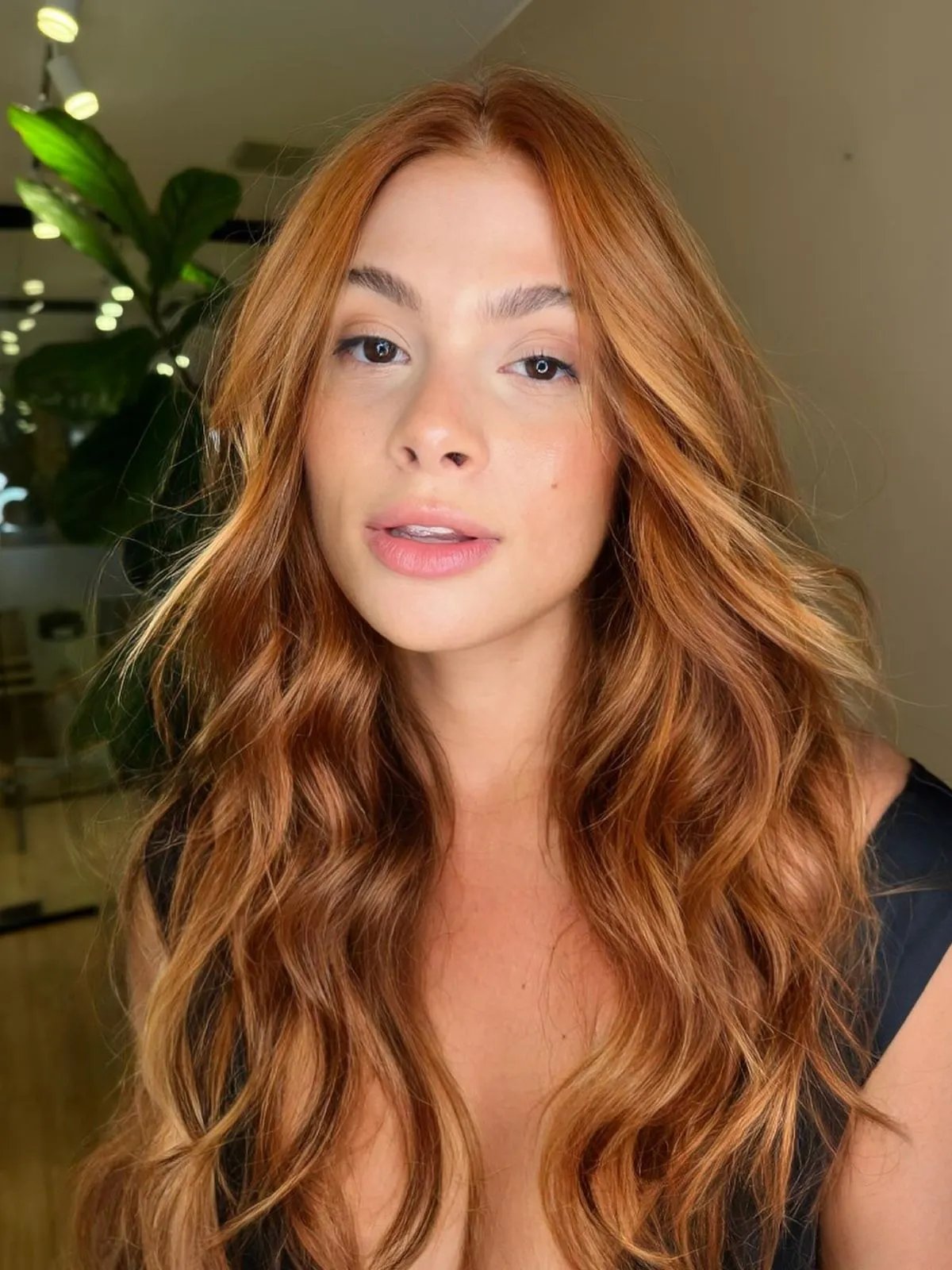
I will admit it: I worried a solid rich copper red would look flat. Mid-back length, loose waves, medium density, no bangs, a middle part. One colour, no highlights, no balayage. But the tone is so saturated that it holds its own. The red is deep enough to read as intentional, not accidental.
Here is the wear reality: solid colours fade faster than dimensional ones. This rich copper red needs a gloss or a refresh every 6 to 8 weeks. The good news is that the fade is even — it does not go patchy, just softer. A quick 20-minute wave routine is all the styling it needs. If you want a uniform red that does not require a colour map to maintain, this is it.
Copper Base With Lighter Copper Highlights
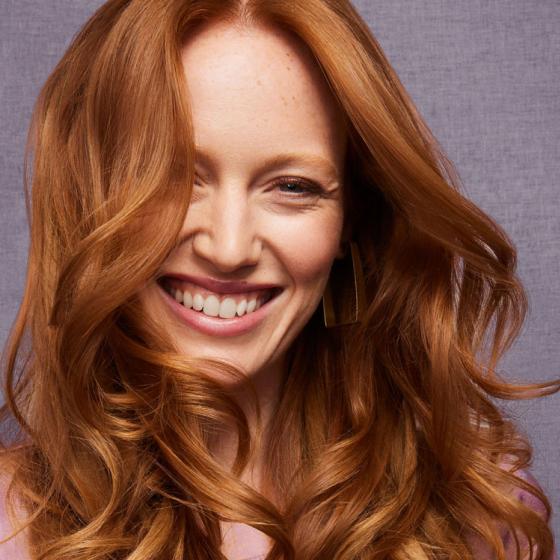
Can you get that dimensional copper base lighter highlights at home? Technically, yes. Realistically, no. The lift has to be precise — too much and you get orange, too little and the lighter copper highlights disappear into the base. A salon does this in one session with foils. You would need three tries and a friend with good lighting. Mid-back, wavy, thick. The tone stays warm, never brassy, because the contrast is small. Book it. This is not a bathroom-mirror job.
Bright Copper Curls
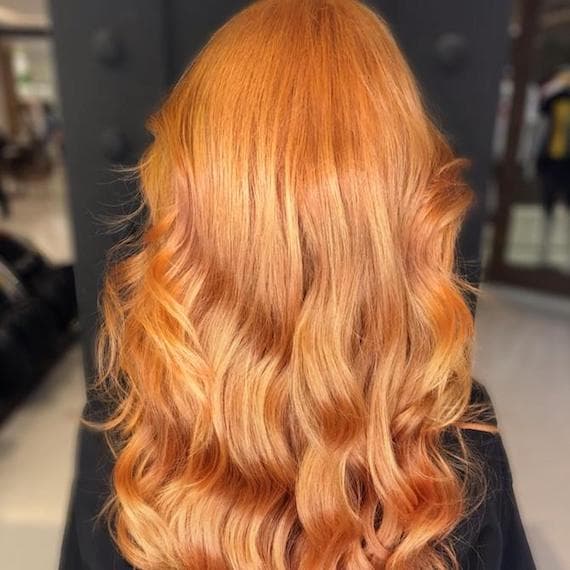
Best winter red in this roundup. The bright copper curls hit that sweet spot between fire and jewel. Mid-back, thick, wavy, long layers. The tone is pure bright copper — no brown, no rust, just that straight-ahead radiance. But here is the honest downside: it fades. Fast. By week three, that intensity starts to soften, and by week 32 it looks more like a warm strawberry than a true copper. A salon refresh every four to six weeks keeps it honest. Worth it for the weeks it glows. Not for anyone who wants to stretch a color.
Balayage Copper With Blonde Sun-Kissed Effect
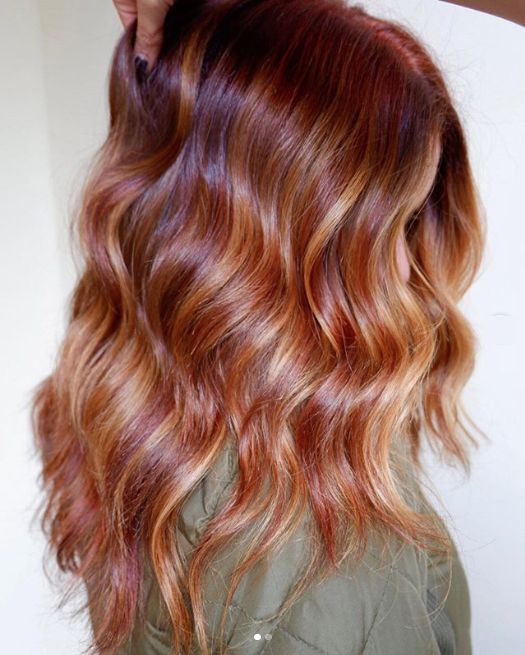
The copper blonde balayage is not one color. It is a system. The stylist paints the mid-lengths and ends with a lighter formula, leaving the root area untouched. That is the whole trick: the natural root acts as the shadow, the copper sits in the middle, and the blonde takes the ends. The result is a sun-kissed effect that does not scream highlight. Mid-back, wavy, thick, side part. The tone shifts from deep copper at the crown to a soft, warm blonde at the tips. No harsh line, no obvious regrowth. Just a gradient that looks like you spent a month somewhere sunny.
Warm Rust Brown With Copper Highlights
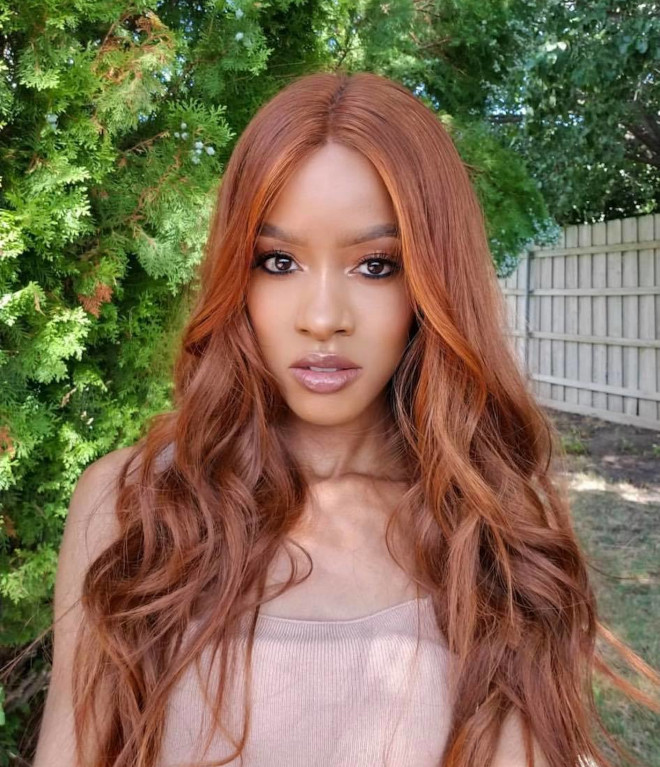
Who actually suits a rust brown copper highlights? Anyone whose natural red leans brown already. The warm rust brown base sits close to the scalp, so the regrowth is soft — no obvious line, no urgent root touch-up. The lighter copper highlights sit on the mid-lengths and ends, catching light without screaming for attention. Mid-back, wavy, medium density, middle part. The tone is earthy, not fiery. It works for winter because it does not fight the low light. A refresh every eight to ten weeks keeps the dimension alive. Skip it if your natural red is bright. You will miss the punch.
Rich Auburn With Golden Highlights

This one felt right the second I saw it. The rich auburn golden highlights land somewhere between a holiday candle and a winter sunset. Mid-back, thick, wavy, long layers, middle part. The tone is deep auburn at the root, then the golden highlights flicker through the lengths — not streaky, not chunky, just spaced enough to catch every bit of winter party light. This is the color for festive occasions. It glows under warm restaurant lighting and holds its own against a dark coat collar. The golden highlights will soften as they grow, but a refresh every six to eight weeks keeps them bright. A crowd-pleaser without trying too hard.
Deep Red Voluminous Curls
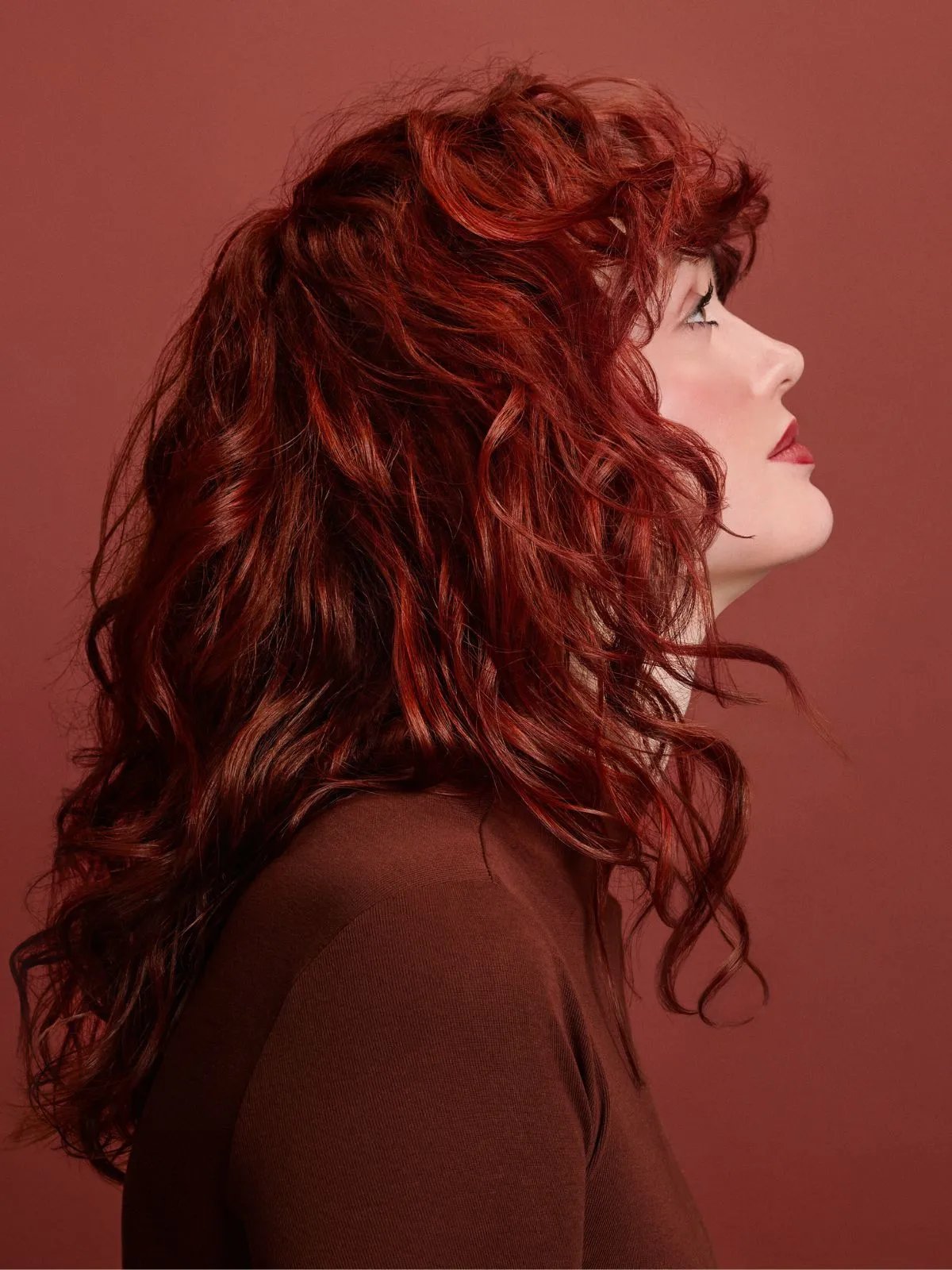
That deep red looks almost black in low winter light, then hits a lamp and turns into something else entirely. I have watched this colour shift from a moody burgundy to a near-crimson depending on the bulb, and that is the whole point. It is not a one-note red, it is a chameleon. The technique is a single-process gloss over a pre-lightened base, applied to mid-back length, thick, curly texture that already has volume built in. No highlights needed, no dimension tricks.
Here is the winter reality check. That richness fades fast. By week four the gloss starts pulling brown, and by week six you are booking a refresh. The curls hide the grow-out line for about two weeks longer than straight hair would, but the tone itself needs a salon appointment every six to eight weeks to stay this saturated. I keep a colour-depositing conditioner in my shower just to stretch the time between visits. Worth it when the light hits right, but you have to commit to the schedule.
Cowboy Copper With Copper Highlights
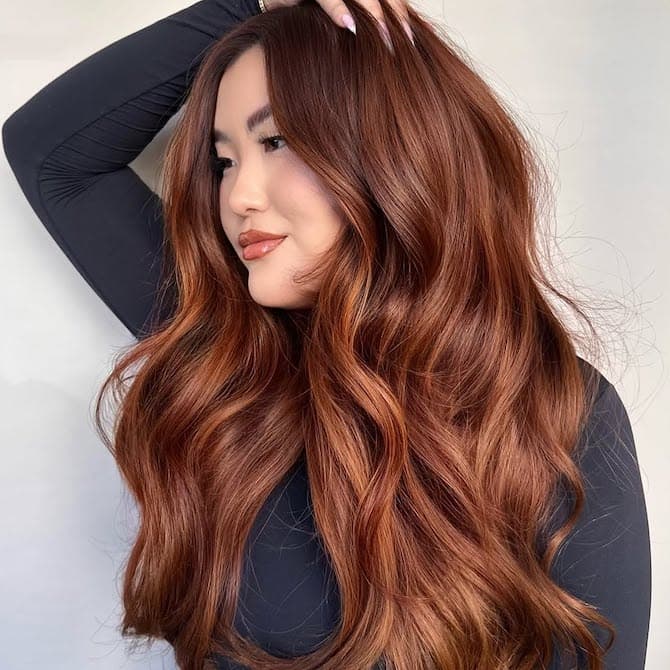
Cowboy copper hair beats a traditional auburn for winter, and I will die on that hill. The warm reddish-brown base stays grounded while the copper highlights catch whatever weak January sun exists, so it never looks flat the way a straight auburn can. Mid-back length, wavy, medium density texture, side part, loose waves. The technique is a full base colour with hand-painted highlights woven through the mid-lengths and ends. No harsh line, no stripe. It reads like a natural redhead who spent a month in the sun, which is exactly the trick.
Intense Fiery Red With Orange Undertones

I will admit it: I booked this fiery red orange undertones shade in November and immediately regretted it for about two weeks. The bright red was so loud I startled myself in every bathroom mirror. Mid-back length, thick, wavy texture, loose waves, middle part. The technique is a full permanent colour applied to virgin or pre-lightened hair, no highlights, no balayage. Just pure, unapologetic orange-red from root to end.
Here is the honest downside. This colour bleeds onto pillowcases, fades noticeably by week three, and requires a toner at the four-week mark or it shifts into an unflattering pinkish-orange. I have sat through that toning appointment three times now. It is the most high-maintenance red I have ever worn, and I keep going back because nothing else makes winter feel less grey. If you want easy, pick something darker. If you want a colour that announces itself, this is it.
Mid-Back Deep Burgundy Red Curls
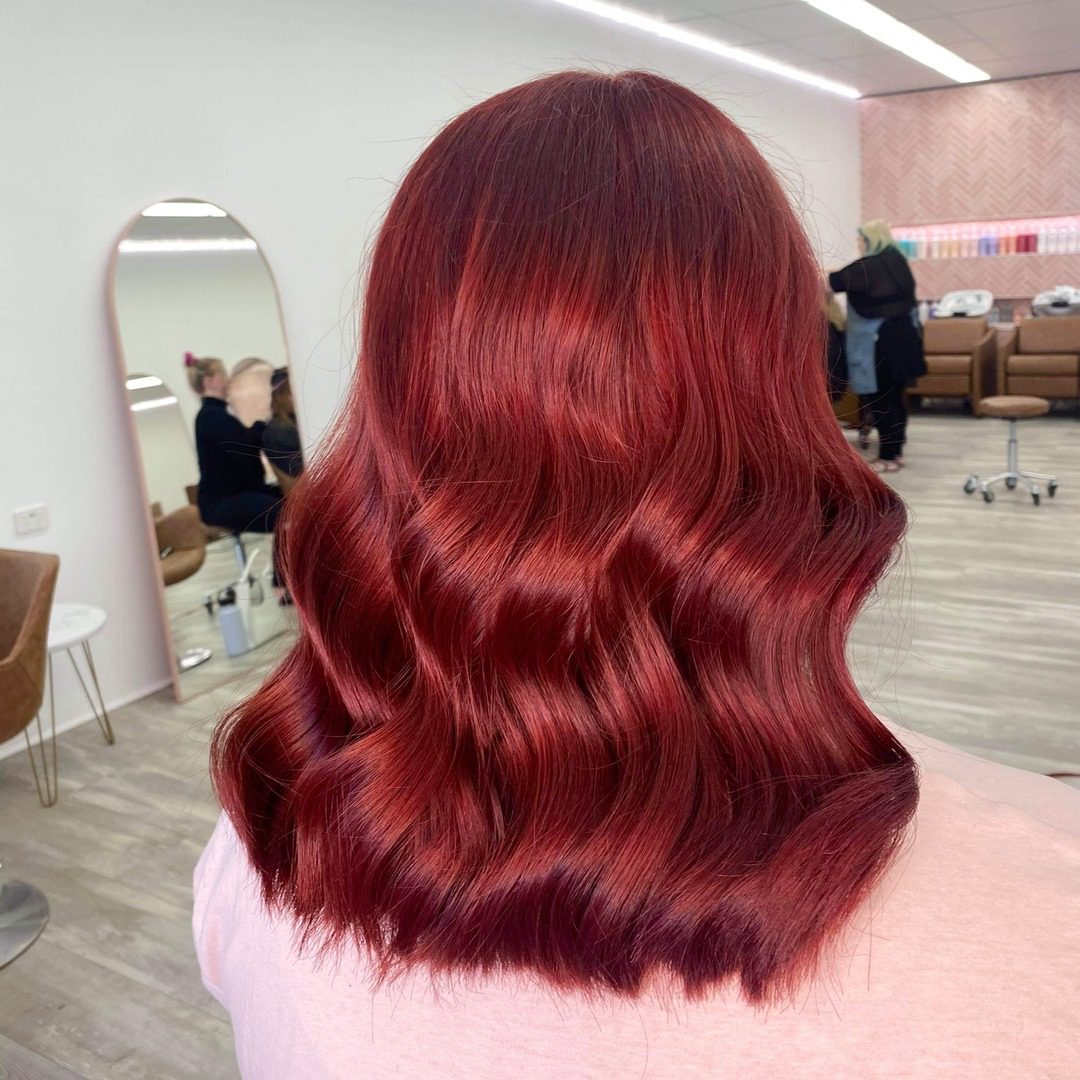
Is deep burgundy red hair for everyone? No, and I mean that kindly. This shade works best on skin with cool or neutral undertones, because the blue-red base can pull purple against warm yellow skin in a way that reads more bruise than luxury. Mid-back length, thick, wavy texture, loose curls, middle part. The technique is a single-process gloss over a level-four or level-five base, no highlights, no dimension beyond what the natural curl creates.
The upkeep is predictable but not punishing. The deep burgundy holds its saturation for about six weeks before it starts leaning brown, and a gloss appointment every eight weeks keeps it from looking tired. Curly texture helps here, the bends in the hair scatter light so fading is less obvious than it would be on straight hair. If your skin runs warm, skip this one. If it runs cool, this is the most flattering winter red I have tried.
Vibrant Copper Red Collarbone Length

A vibrant copper red collarbone length is the most practical winter red I have found, and I say that as someone who has chased impractical reds for years. The shorter length means less hair to fade, so the copper red holds its saturation for a full eight weeks before it needs a refresh. Collarbone length, wavy, medium density texture, side part, soft waves. The technique is a semi-permanent gloss over a pre-lightened base, applied all over with no dimensional work. Simple, fast, effective.
Vibrant Cherry Red Lob
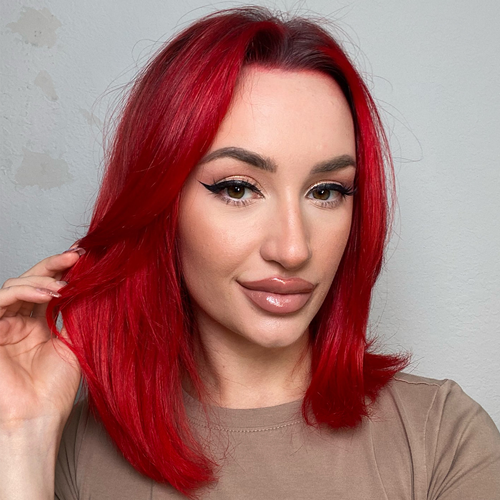
Who said red is just for summer? This vibrant cherry red lob is winter’s answer to holiday parties, and it’s not subtle. The technique is a single-process gloss over a lifted base, applied to collarbone-length hair with soft waves. The tone is cool-leaning cherry, not warm copper, which reads electric against winter light. Medium-density wavy texture holds the wave pattern without falling flat by noon. It’s a bold choice that lands exactly where you want it: at the center of the room, under the Christmas lights.
Deep Red With Darker Undertones Lob
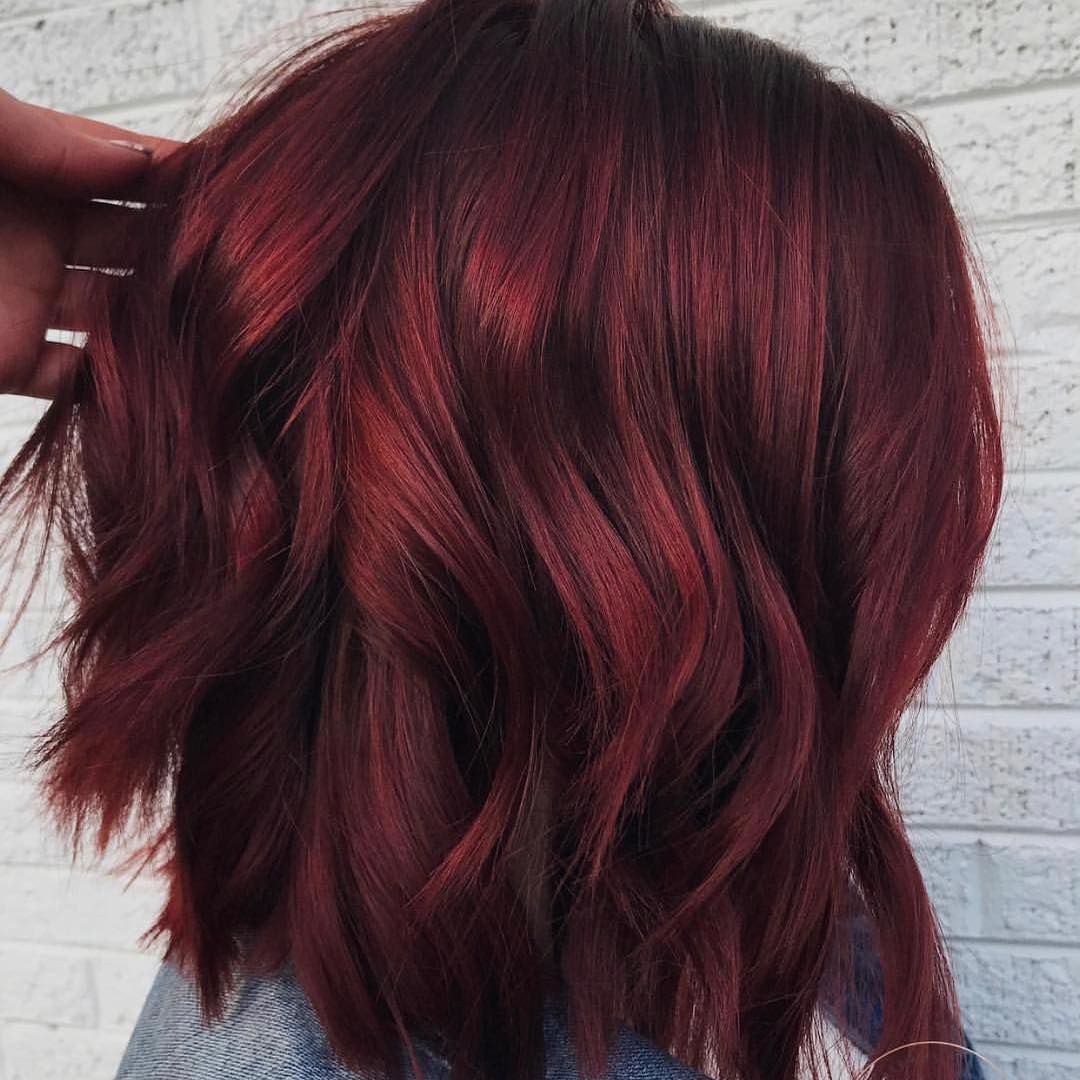
The deep red dark undertones lob is built on a trick I respect: the base is a deep red, but the stylist weaves in subtle darker undertones at the roots and through the midshaft. That technique creates depth without a visible line, so the colour reads rich rather than flat. The tone is cool and wine-stained, not bright, which makes it a winter-appropriate choice for anyone who wants red without the shout. On a collarbone-length lob with loose waves and medium-density wavy texture, the darker undertones catch the light differently with every turn of the head.
Here is the technical part worth knowing. Those darker undertones are applied as a lowlight, not a shadow root, which means the colour has dimension from the first day. The base shade stays deep red, the lowlights sit a half-shade darker, and the result is a colour that looks expensive and grown-up. It is not a DIY job. A stylist controls the placement so the undertones stay subtle, not muddy. For fine hair, this technique adds visual weight without extra product.
Copper Red Angled Bob
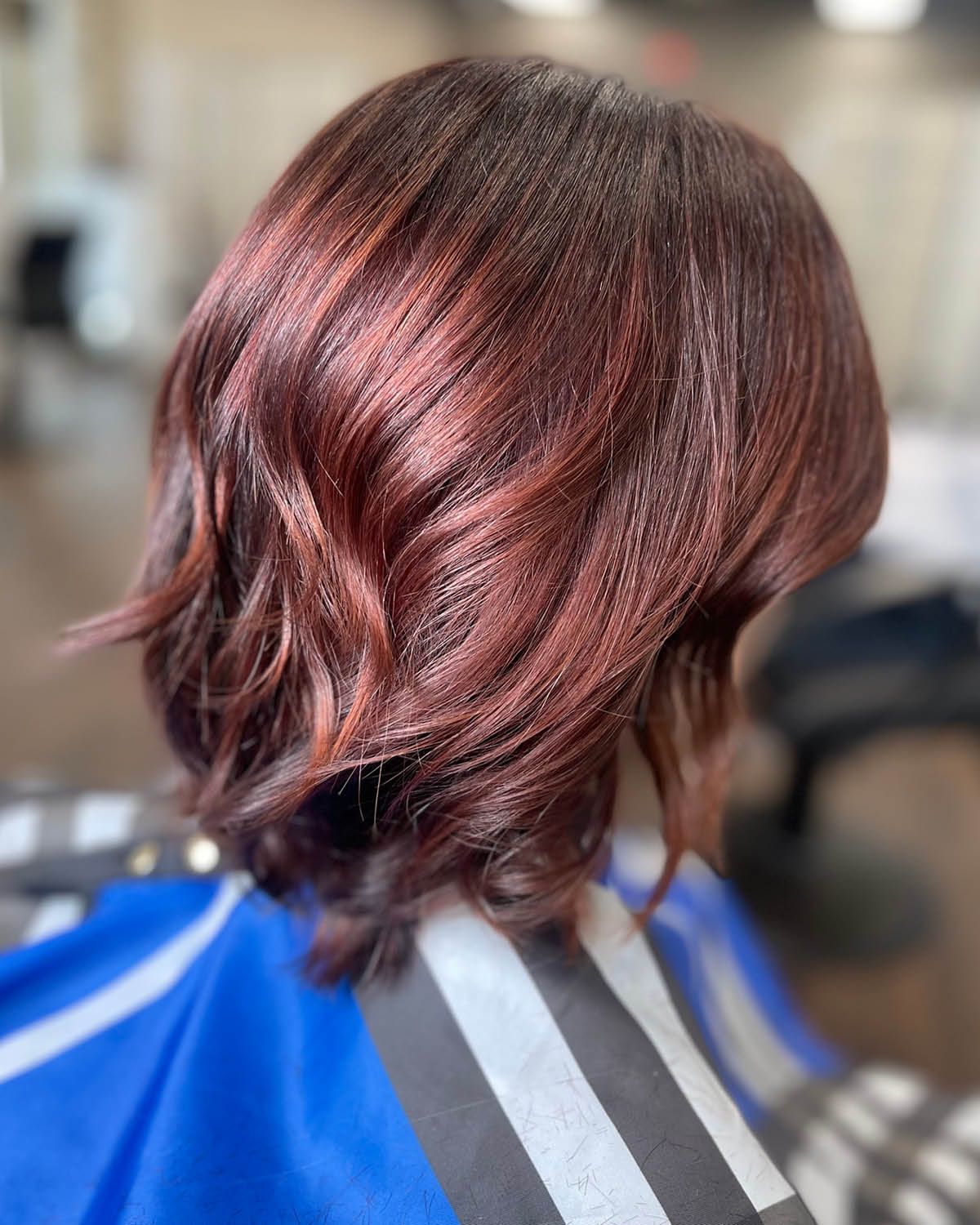
Can you get subtle darker red lowlights at home? I would not try it. The copper red angled bob is a salon colour because the lowlights need precise placement to read as depth, not mistake. The base is copper red, warm and bright, and the subtle darker red lowlights are painted underneath to keep the shape from going flat. The tone is warm with a brown undertone, which makes it forgiving on grown-out roots. On a chin-length angled bob with loose waves and medium-density wavy texture, the angle cuts the colour into clean lines. The bob itself is a salon cut, too. One wrong snip and the angle disappears.
Visual Idea
Rust red fades fast in winter. The honest downside of this chin-length bob with a middle part and wavy texture is that the bold rust red shade starts pulling brassy by week three. The tone is warm and earthy, not cool, so it clashes with winter’s grey light once the top notes go. Medium-density wavy hair helps hide the fade for a week or two, but by week five, you are scheduling a gloss. I still recommend it for the first month. That month is spectacular.
Mid-Back Visual Idea
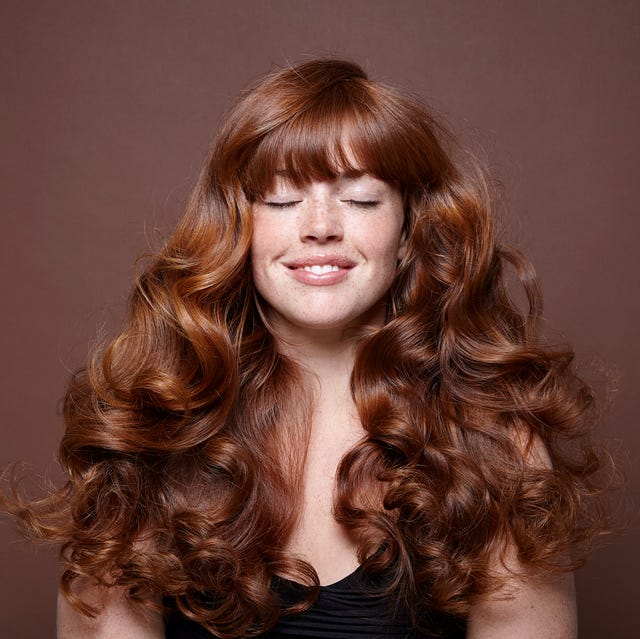
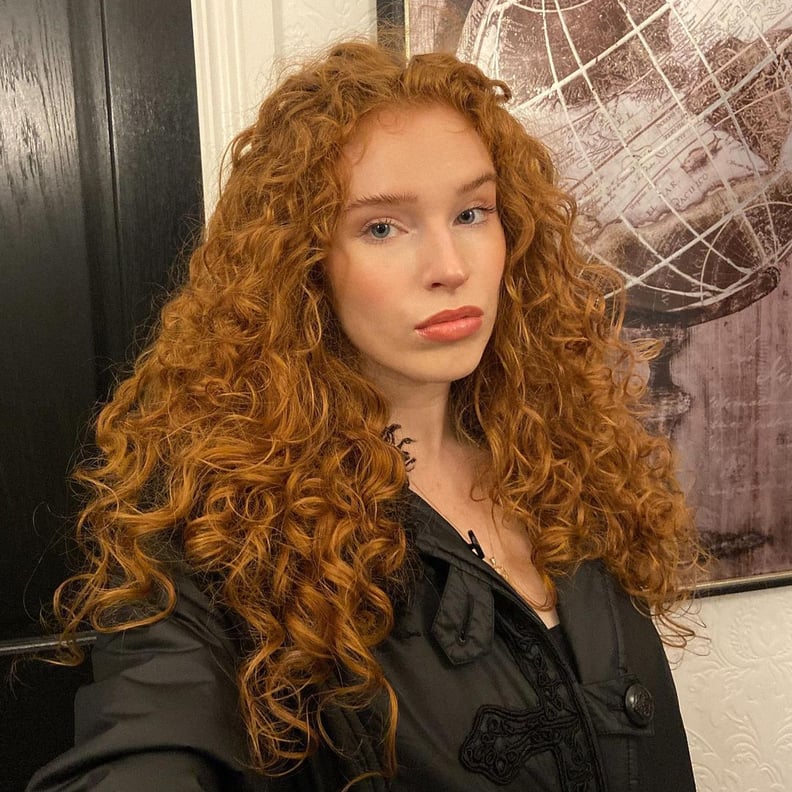
The warm ginger with full bangs is a face-shape gamble that pays off for oval and heart shapes. The full bangs shorten a long forehead and balance a wider jaw, but they demand commitment. On mid-back length with long layers and loose curls, the warm ginger tone is golden and bright, not brassy. Thick wavy texture is the ideal here: the bangs have enough weight to sit right, and the layers hold curl without collapsing.
Wear and upkeep are the real story. The warm ginger fades to a softer blonde over eight weeks, which is actually a good grow-out if you do not mind a lighter look. The bangs need a trim every three weeks, no exceptions. I have seen this look on women with fine hair and the bangs go stringy by lunch. Skip it if your hair is thin. The full bangs need density to read as intentional, not accidental.
Copper Red Visual Idea
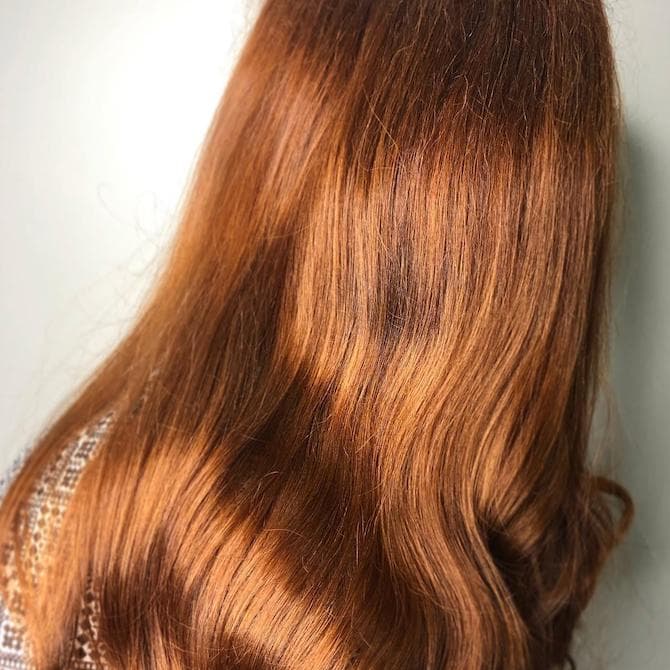
What makes copper red different from, say, auburn? It is the brightness. Auburn sinks toward brown. Copper red stays in the orange family, and on a mid-back length with thick, wavy texture, that warmth catches the light in a way that feels alive, not flat. The technique here is a single-process all-over colour: no highlights, no root shadow, just one saturated tone from scalp to ends. The tone leans warm and clear, no brown or violet muddiness. That is the winter trick for redheads.
A copper base reads electric against grey winter coats and muted scarves. It does not compete with holiday sparkle the way burgundy can. It stands next to it. For a mid-back length with layers and a middle part, the colour needs to be dense enough to carry through the waves. A sheer gloss would disappear. A permanent colour holds the saturation through wash and wear. That is the difference between a copper that glows and a copper that fades into rust by week three.
Shoulder Visual Idea
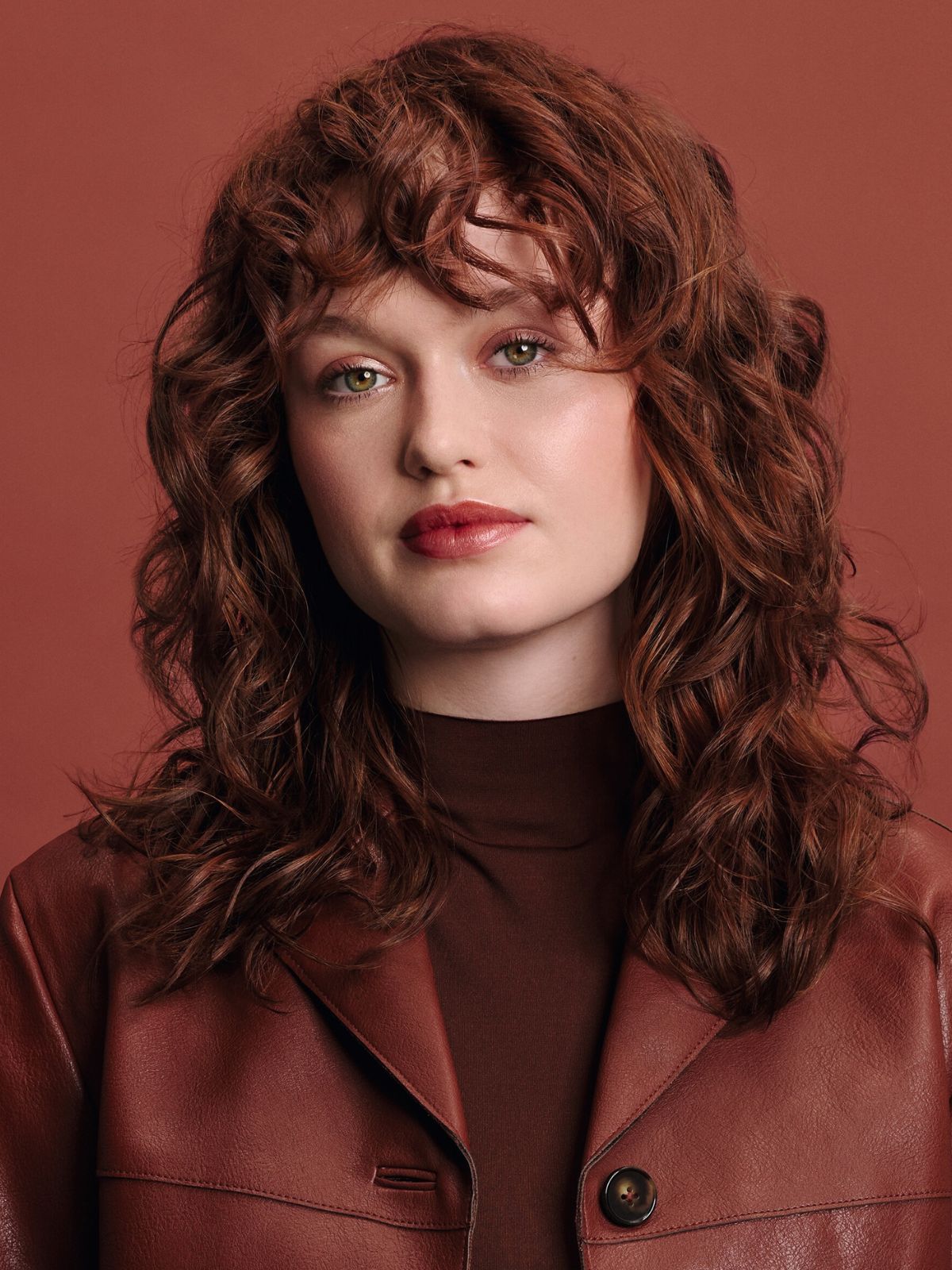
I will confess: I used to think a deep auburn red at shoulder length meant daily styling or it looked flat. Then I watched a friend with medium-density, wavy hair and full bangs wash and go. The colour does the work. The deep auburn base has subtle copper undertones, so under indoor light it reads rich and brownish, but step into the winter sun and the copper flickers through. The tone is warm but not bright, which means it does not need a perfect wave to look intentional. A side part, a quick scrunch, and the colour carries the shape. No round brush required.
Deep Rich Burgundy Red Visual Idea
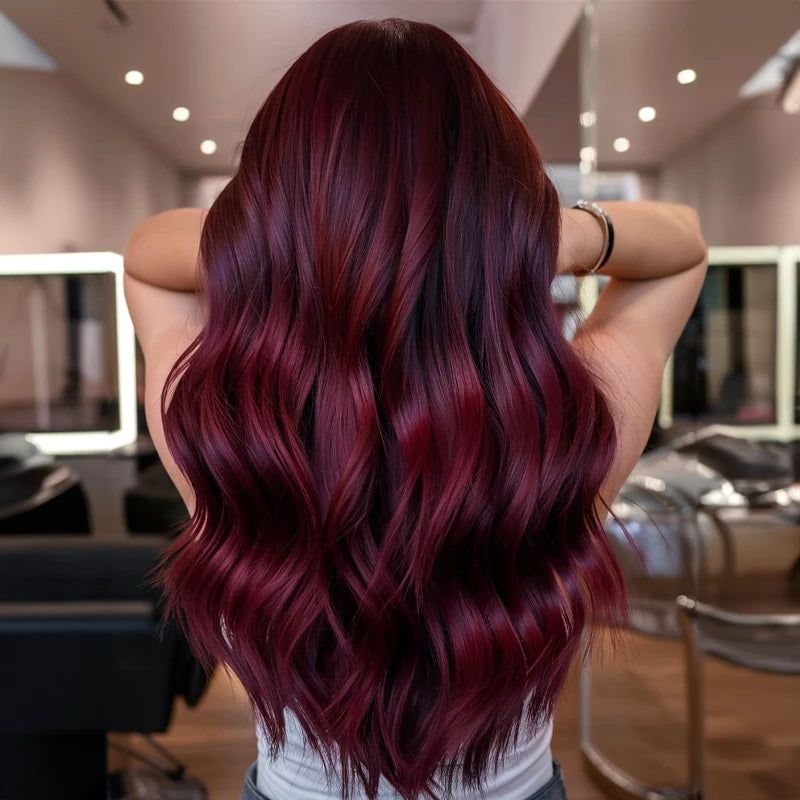
My gut reaction to a deep, rich burgundy red on a mid-back length with thick, wavy texture: that is a winter evening colour. It is not a daytime copper that bounces light. It is a shade that absorbs light, then releases it in flashes. The base is dark enough to read almost wine-like under dim restaurant lighting, and the technique is a single-process all-over colour, no highlights, so the saturation is even from root to end. The tone is cool-leaning burgundy, not warm copper, which makes it a good fit for redheads who want depth without orange.
The season matters here. Burgundy works best when the light is low and the evenings are long. It matches the mood of December and January, when you want a colour that feels rich, not loud. The mid-back length gives the colour enough canvas to show the depth, and the loose waves catch the burgundy undertones in a way that straight hair would not. It is a colour for sitting by a fire, not for walking through a parking lot at noon.
Rich Copper With Balayage Highlights Visual Idea
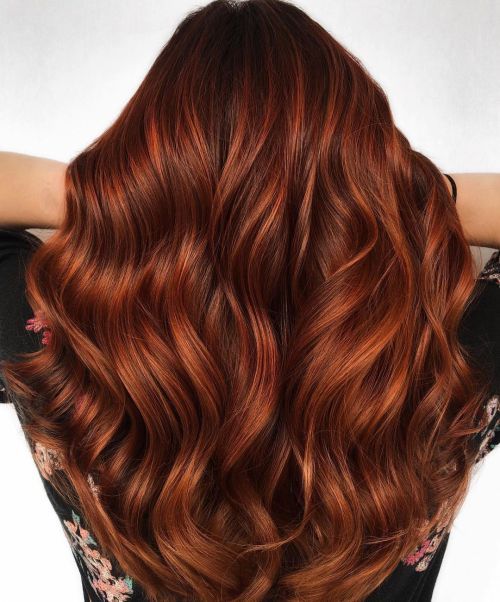
Here is what I notice about a rich copper with balayage highlights on a mid-back length with thick, wavy texture: the highlights are not placed where you expect. They start lower than a foil highlight would, closer to the mid-lengths, and they are painted freehand onto the surface of the wave. The technique is balayage, which means the colour is swept on by hand, not woven into foils, so the transition from the copper base to the lighter pieces is soft, not striped. The tone of the base is a warm copper, and the highlights are a few shades lighter, still in the gold family, so the dimension reads natural, not brassy.
The result is a colour that shifts as the hair moves. In a ponytail, the copper dominates. In loose waves, the lighter pieces catch the light first. That is the point of balayage on a redhead: you keep the copper identity at the root and add brightness where the hair bends. It is a technique that rewards texture. On straight hair, the highlights would sit in flat bands. On wavy, thick hair, they follow the curve of each wave, and that is what makes the colour look expensive without looking complicated.
Long Visual Idea
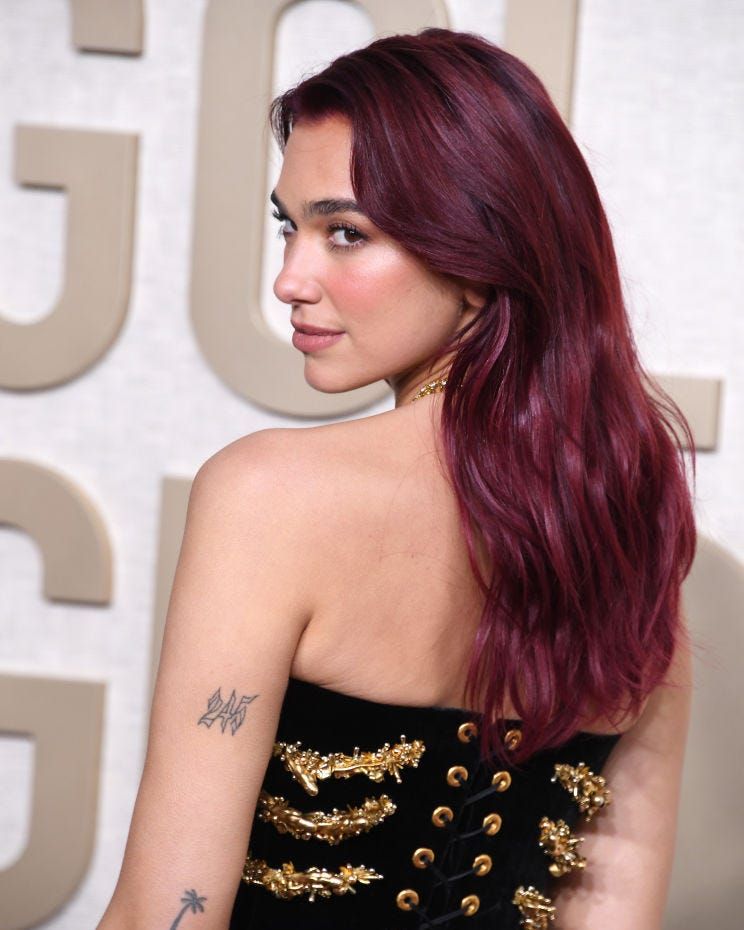
Can you get a vibrant, deep cherry red at home? Technically, yes. Should you? That depends on your starting colour and your tolerance for uneven results. The colour is intense, a cherry red that leans cool and saturated, and on long, wavy, thick hair, the length means the colour needs to be mixed in enough volume to cover from root to tip. A box dye from the drugstore will deposit colour unevenly on long hair, especially if the ends are porous from previous colour. The result is a root that is too dark and ends that are too bright, or vice versa. A salon application ensures the colour is mixed fresh, applied in sections, and processed evenly from scalp to ends. That is the difference between a cherry red that glows and a cherry red that looks like a mistake. Book it.
Chin Visual Idea
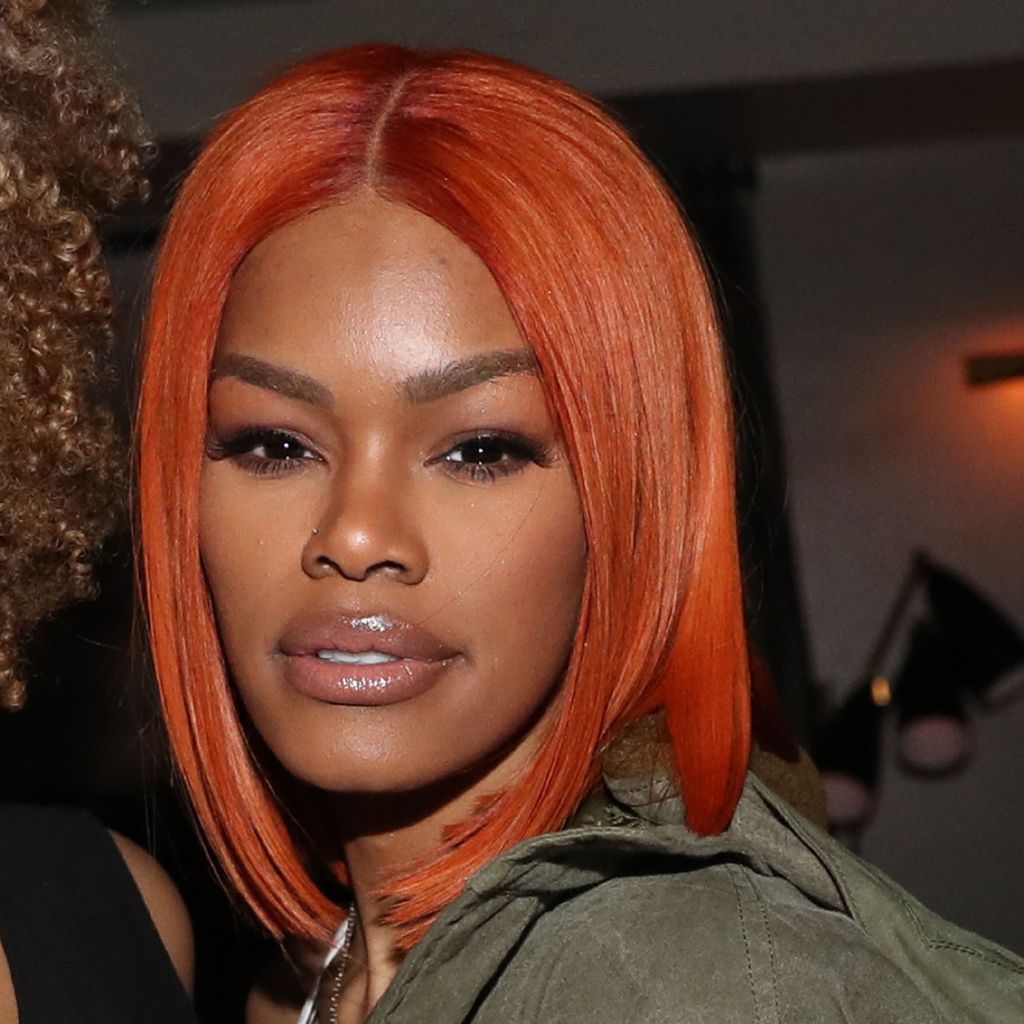
Vivid orange is the winter color that refuses to apologize. It sits at chin length, straight and sleek, a blunt bob with no bangs and a middle part. The tone is pure, almost neon, and that is its power and its problem. It reads as intentional, not accidental. But it asks for commitment: a gloss every three weeks to stop it from fading into a washed-out peach, and a stylist who knows how to keep the pigment from grabbing patchy. This is not a color for low-maintenance weeks. It is a color for when you want people to notice.
Rich Copper Visual Idea
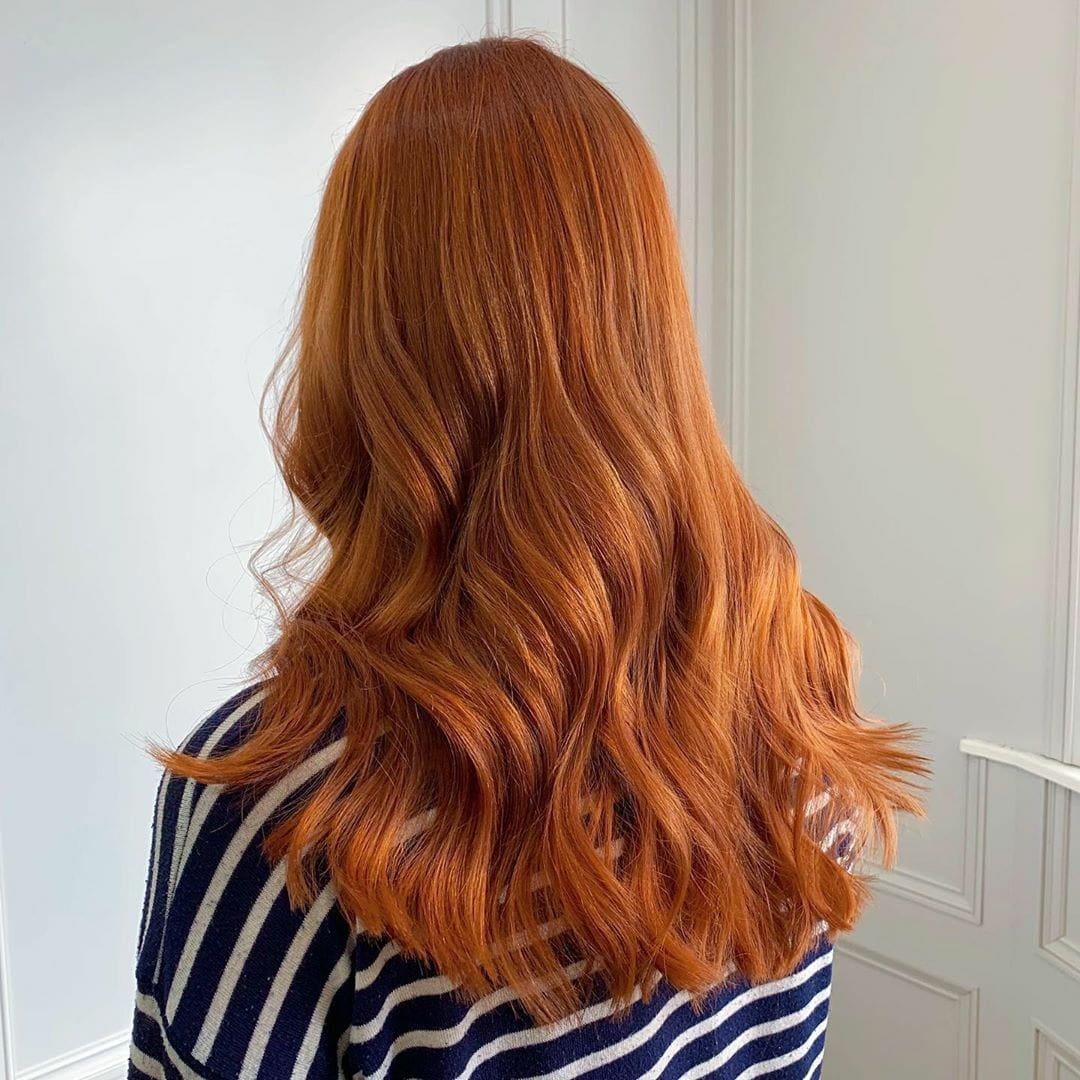
Rich copper works because it does not try to be subtle. On mid-back length with loose waves and thick texture, the color catches every bend and holds it. The tone is warm, not brassy, and that distinction matters. Fine hair reads it as a solid wash of light. Thick hair gets dimension from the way the waves shift the pigment. The back view shows no banding, no stripe, just a uniform copper that runs from root to tip. It flatters anyone whose natural red leans a little cool, because the warmth fills in what winter drains out.
Upkeep is straightforward: a color-depositing conditioner once a week, a trim every ten weeks to keep the ends from going see-through. The grow-out is gentle, no harsh line, because copper fades into itself. I have seen this color work on straight hair, wavy hair, and coily hair. It is one of the few reds that does not need a specific texture to look good.
Dark Burgundy With Subtle Red Undertones Visual Idea
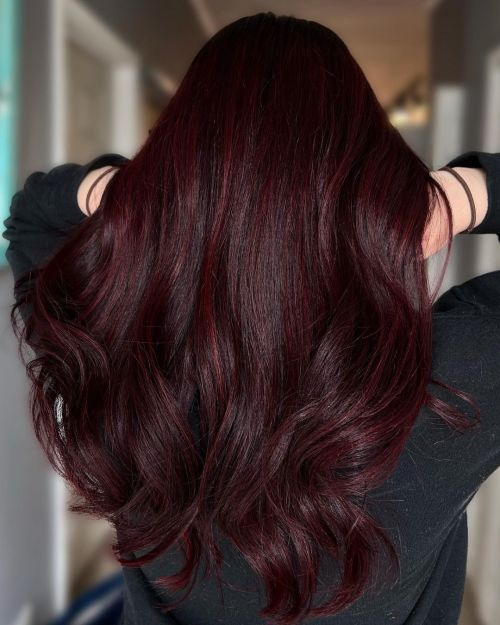
Does a winter color have to be bright to be noticeable? Dark burgundy with subtle red undertones says no. On mid-back length with loose waves and a middle part, the color reads almost black in low light. Then a window hits it and the red wakes up, just enough. The technique is a single-process dye, no highlights, no balayage, and that is what makes it last. The tone is cool, almost wine-like, and it does not fade into orange. It fades into a softer burgundy, which is still wearable.
Upkeep is minimal: a sulfate-free shampoo, a gloss every six weeks to keep the red from going flat. The grow-out is forgiving because the base is dark. I have worn this through a full winter and only needed one touch-up. It is the color for people who want red but do not want to talk about it every day.
Bright Ginger Visual Idea
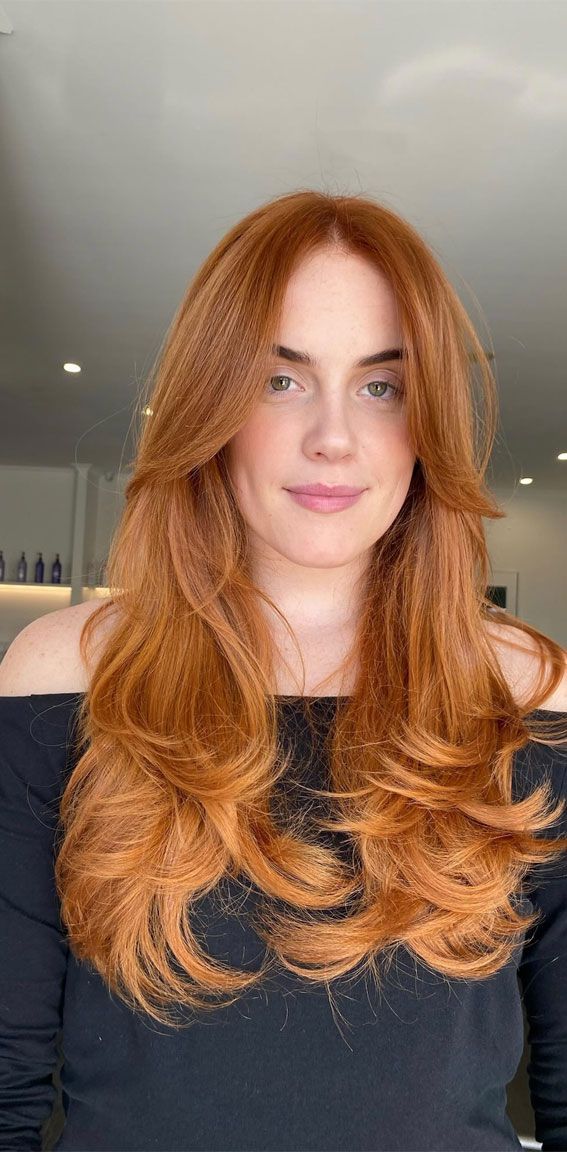
Bright ginger in winter feels like a contradiction, and that is exactly why it works. Shoulder-length with face-framing layers and a voluminous blowout, the color is unapologetically warm. The tone is pure, no brown, no copper, just straight ginger. It lands in December like a stubborn reminder that not everything has to go dark for the season. I did not expect to like it this much. But it reads as cheerful without being childish, and that is a hard balance to strike.
Long Layers Visual Idea
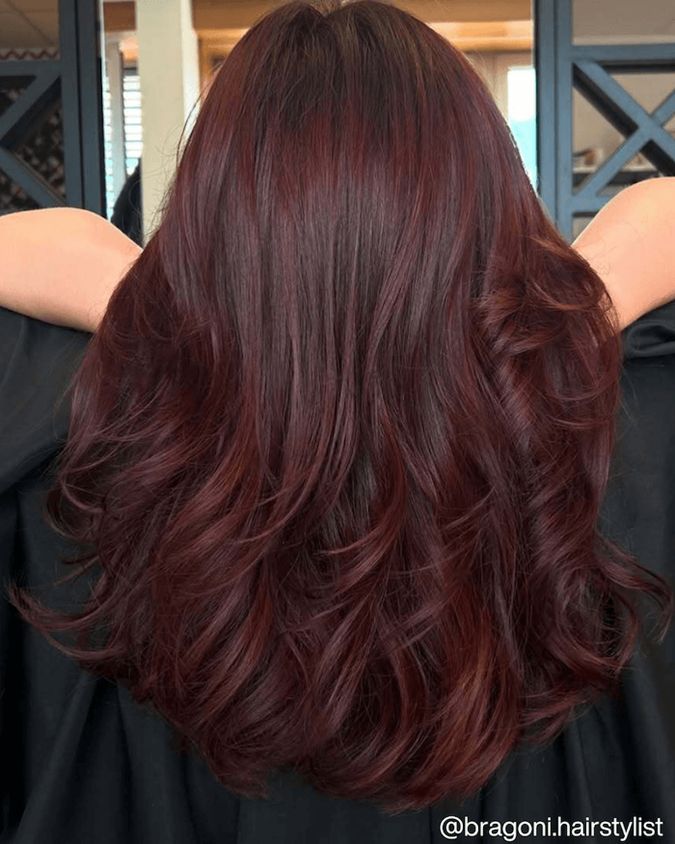
Deep burgundy red on long layers is a technique question as much as a color one. The mid-back length with loose waves and a middle part shows how the pigment sits differently on each section. The base is a single-process dye, applied from root to tip, but the layers catch the light at different angles and create a natural variation. The tone is cool, almost black-red, and it does not shift toward orange. That is the result of a stylist who knows how to under-pigment the ends so they do not grab darker than the roots.
Maintenance is about the tone, not the root. A purple shampoo once a week keeps the cool red from going muddy. The grow-out is soft because the color is dark enough to blur the line. I have seen this technique fail when the stylist over-saturates the mid-lengths. When it works, it looks like the color grew there.
Vibrant Copper Visual Idea
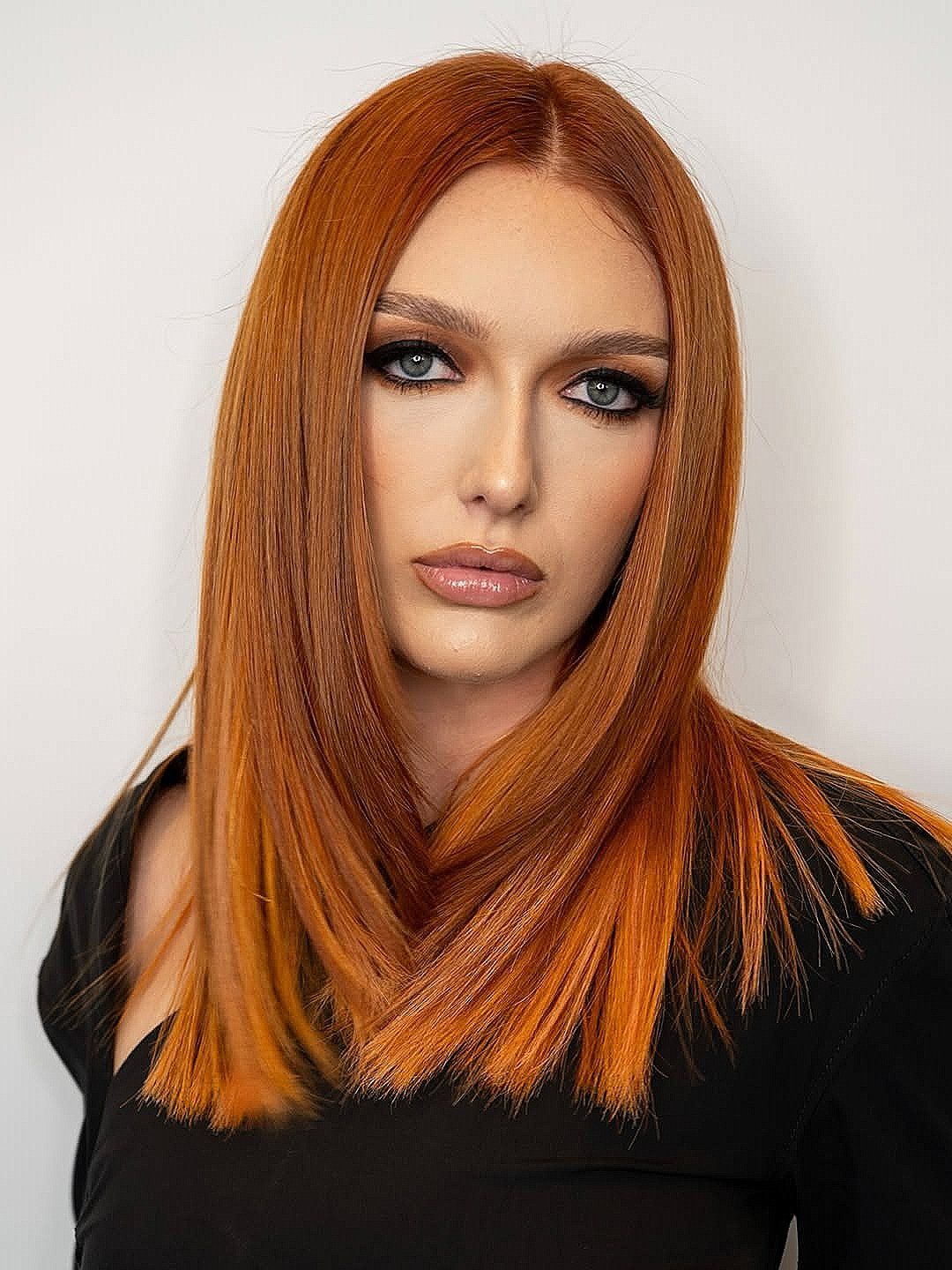
Can you get this vibrant copper at home without turning your hair orange? I have tried. Let me save you the panic. This is a mid-back, straight blowout with curtain bangs and a middle part, thick hair that takes colour evenly. The vibrant copper base is the star, and it is not a box dye situation. A single-process salon job gets you that rich, even saturation. At home you risk patchiness and that telltale orange glow around the roots. I would book a pro for the first application, then maintain with a colour-depositing conditioner between visits. The curtain bangs need a trim every six weeks, but the mid-back length means you can stretch it to eight. This is winter hair that does not quit, but you have to respect the process.
Upkeep is straightforward: a sulphate-free shampoo, cool water rinses, and a weekly deep condition. The vibrant copper fades faster than you expect, especially if you wash hot. A gloss treatment every four weeks keeps it from turning brassy. Skip the DIY bleach if you have ever had a bad box colour experience. I have, and I learned the hard way.
Layers Visual Idea
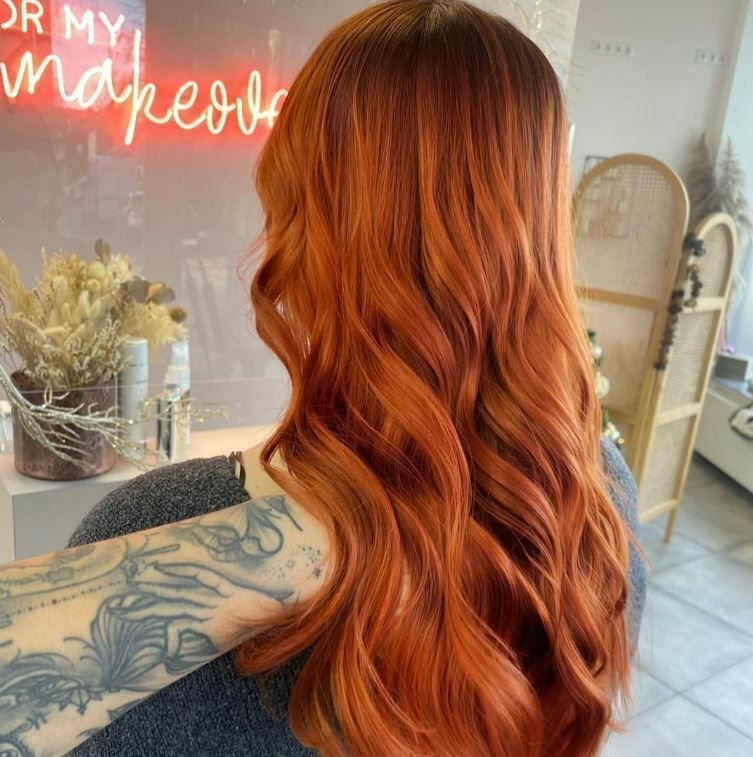
I want to believe lighter, warmer highlights over a vibrant copper base work in winter. I really do. The photo shows mid-back, wavy, thick hair with no bangs, a middle part, and that copper base shot through with lighter, warmer ribbons. It is beautiful. But here is the honest downside: those lighter, warmer highlights go brassy fast in winter. Dry indoor heat and hat friction pull the warmth into yellow. You will be toning every three weeks, maybe more. The layers add movement, sure, but they also show every fading highlight first. If you are okay with a purple shampoo routine and a gloss appointment every month, go for it. If you want a colour that stays the same from December to March, pick a single shade instead.
The thick, wavy texture helps hide the grow-out line for about four weeks. Then the lighter pieces start to look separate rather than blended. I have been there. Winter is not kind to multi-tonal copper.
Final Thoughts
After writing all 32 of these, I noticed something. The ones that looked best in the photo were not the ones I wanted to book. The ones I wanted to book were the ones that let my natural copper breathe for eight weeks before needing a touch-up. That is the winter test. It is not about the brightest shade. It is about the one that still looks good when the roots show.