

Choppy layers are exactly what they sound like, disconnected, uneven ends that create texture and movement without the precision of a classic layered cut. This season, the shift is toward cuts that look lived-in from day one, not after a week of awkward settling.
The 26 ideas here span short to long, fine to thick, and that tricky middle ground between polished and undone. Simple Choppy Layers work for anyone tired of hair that falls flat, a grow-out line that shows too soon, or bangs that refuse to cooperate. Each option keeps the maintenance realistic and the result deliberate.
Platinum Choppy Bob With Side-Swept Bangs
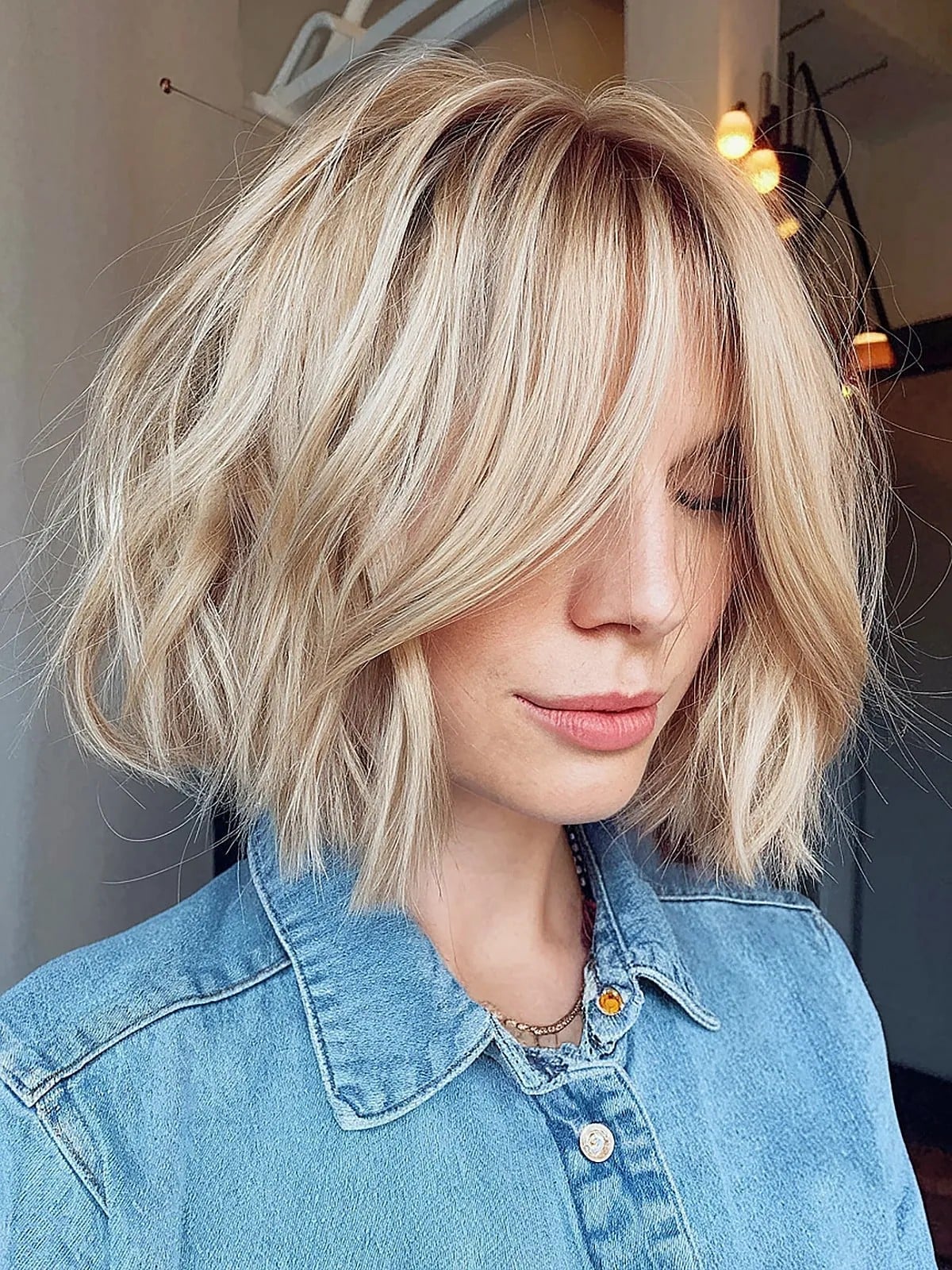
Ever wonder why some bobs look like they just happened, while others look like they tried too hard? This chin-length choppy bob lands firmly in the first camp, with side-swept bangs and a fine, wavy texture that gives it a lived-in finish. The platinum blonde color is softened by a root shadow, so the grow-out is a lot friendlier than you’d expect. It’s a cut for fine hair that wants a bit more body without the commitment of a severe fringe. Ask your stylist for: chin-length choppy bob, side-swept bangs, platinum blonde with root shadow. The choppy ends are the whole point, so bring reference photos and let them do the precision work.
Textured Chin Bob With Subtle Highlights
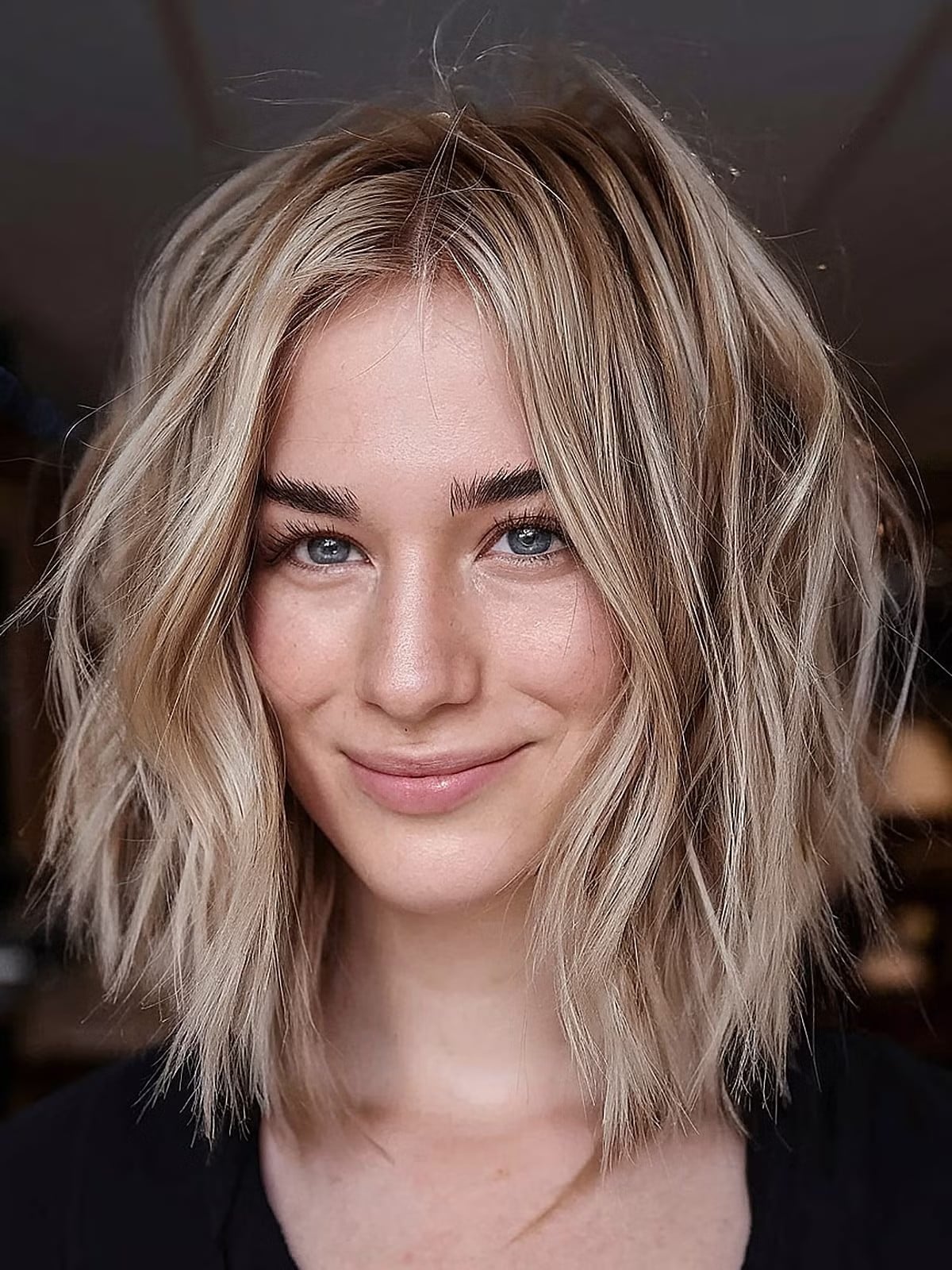
The beauty of this chin-length choppy bob is in the details: textured waves, a side parting, and subtle blonde highlights that add dimension without shouting for attention. Fine hair holds the shape well, and the lived-in texture means you’re not fighting it all day. A texturizing paste on the ends keeps the choppy layers defined, and you’ll want a trim every six to eight weeks to keep the shape sharp. Ask your stylist for: chin-length choppy bob, textured waves, subtle blonde highlights. The side part does the volume work, so this one suits those with narrower face shapes who need a little width at the cheekbone.
Edgy Blonde Bob With Choppy Fringe
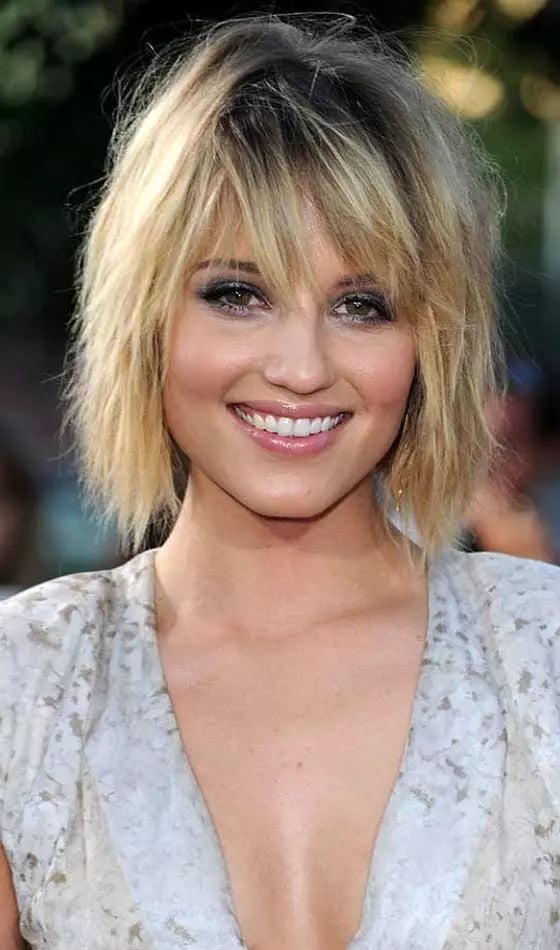
If a soft, rounded bob feels like playing it safe, this one is the antidote: a chin-length cut with a choppy fringe and straight, fine texture that reads sharp, not sweet. The difference is the fringe, cut blunt but uneven, so it creates a textured effect that differs from a standard bang. It is a salon-only situation, because the precision of the choppy texture is not something to attempt at home with kitchen shears. Ask your stylist for: chin-length choppy bob, choppy fringe, textured ends. This cut makes a statement without saying a word.
Medium Brown Choppy Bob With Asymmetry

What if your bob could look different from every angle? This medium brown version does exactly that, with short choppy bangs and a side part that creates a deliberate asymmetry. The chin-length cut works with fine, straight hair because the choppy layers add volume. The side part also elongates round faces, making the line appear longer rather than wider. Ask your stylist for: chin-length choppy bob, short choppy bangs, side part. The textured finish is key, so a matte paste on the ends will keep the layers from looking flat. It’s a cut that needs a trim every six weeks to hold its edge.
Brunette Choppy Bob With Textured Bangs

Building a choppy bob with textured bangs is a matter of precision, not guesswork. This chin-length cut on fine, straight brunette hair relies on the bangs being cut at an angle that falls naturally to the side, and the layers being sliced to remove bulk while keeping the ends blunt enough to read as choppy. It’s a salon-only style because the texture is created with a razor, not a one-length trim. Ask your stylist for: chin-length choppy bob, choppy bangs, textured finish. The result is a lived-in look that doesn’t need much styling, but you’ll be back for a trim every six weeks to keep the bangs from growing into an awkward middle ground.
Black Choppy Bob With Tousled Waves
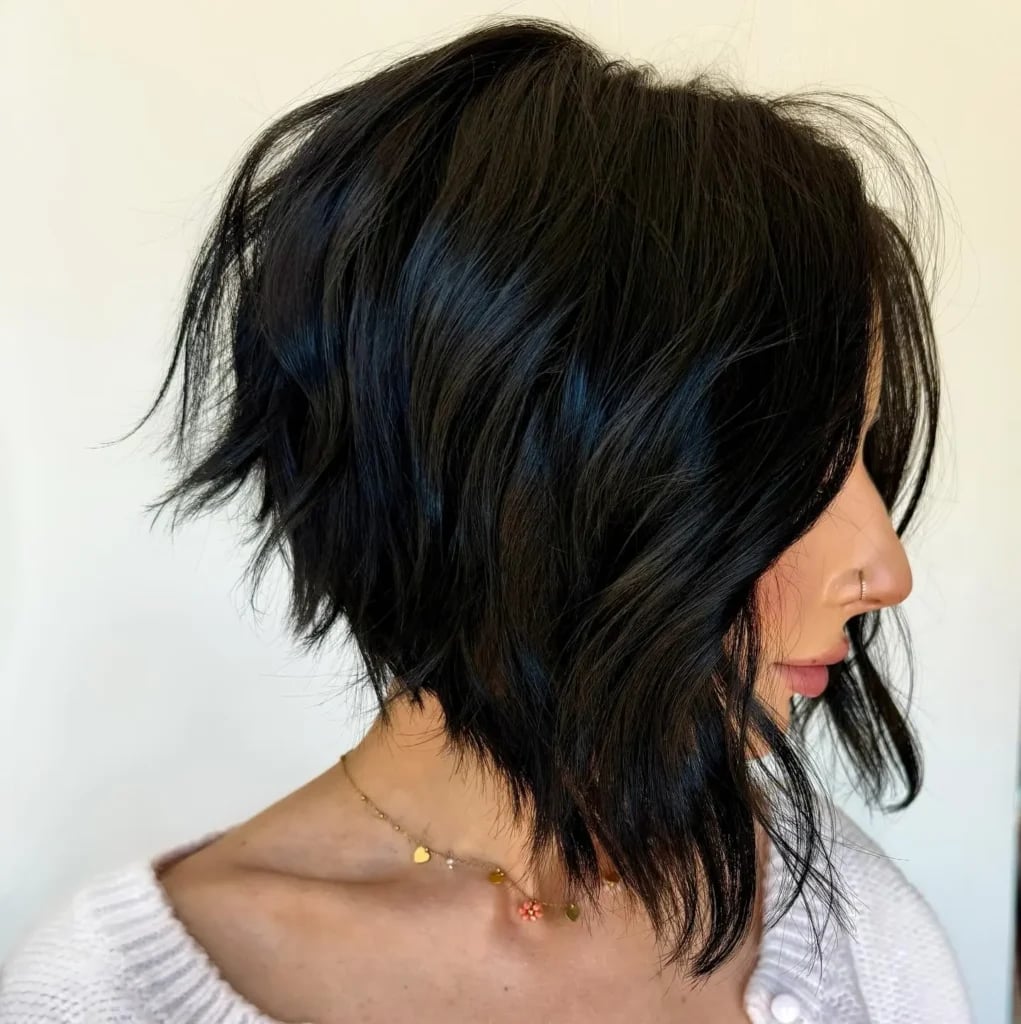
A chin-length choppy bob with textured ends and no bangs relies entirely on the cut’s internal structure for movement. On fine, wavy hair, those choppy layers create lift at the roots and a deliberate air-dried finish. The honest trade-off: without a sea salt spray and some scrunching, the texture can read as flat rather than intentionally tousled.
Ask your stylist for: chin-length choppy bob, tousled waves, textured ends. This cut needs a trim every six weeks to keep the ends from looking straggly rather than choppy.
Dark Blonde Choppy Bob With Balayage
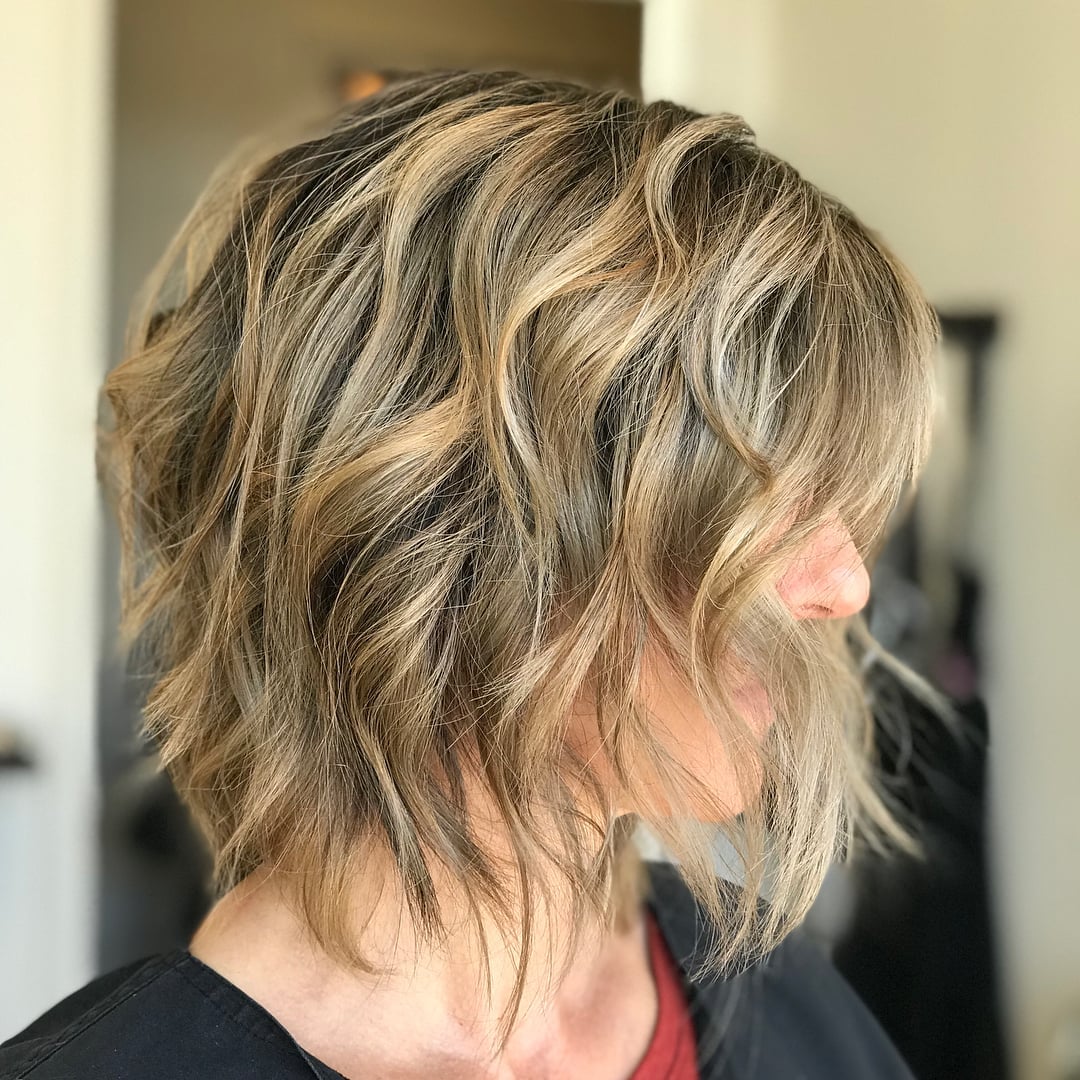
What makes a chin-length bob with visible layers and balayage highlights work for summer? The dark blonde base warms up in natural light, and the textured waves keep the shape from looking too precise. On medium density, wavy hair, the choppy ends land somewhere between polished and undone, which is exactly where you want to be when humidity is a factor. Ask your stylist for: chin-length choppy bob, textured waves, balayage highlights. A texturizing spray on dry hair reinforces the choppy finish.
Medium Brown Shag With Curtain Bangs

A collarbone-length shag with choppy layers and curtain bangs depends on regular maintenance to keep its shape readable. The medium brown base with subtle highlights provides enough contrast for the layers to register, and the soft blowout gives the wavy texture a smoother finish than a rough dry. That softness is the design: it keeps the shag from tipping into full 70s territory.
Ask your stylist for: collarbone length shag, choppy layers, curtain bangs, soft blowout. A round brush on the fringe during drying sets the curtain shape. Plan a trim every eight weeks, or the layers lose their definition.
Brown Shag With Textured Curtain Bangs, Collarbone
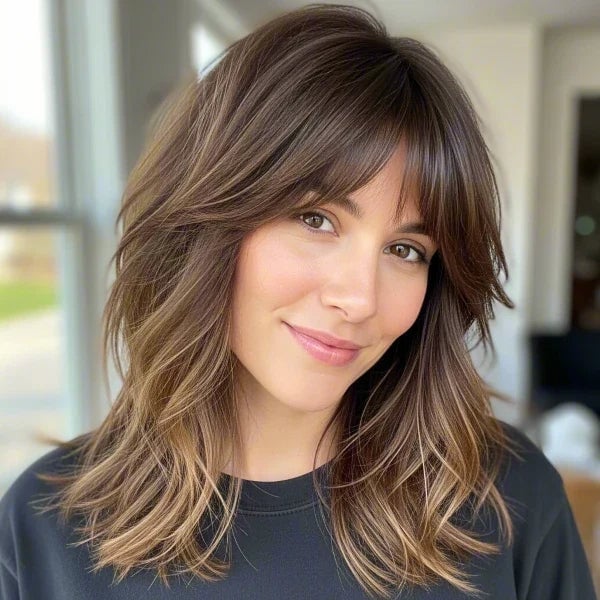
How do you describe this cut to a stylist without leaving the consultation confused? The key details are the distinct choppy layers throughout the collarbone-length shag and the curtain bangs that start shorter at the center and blend into the sides. The brown base with blonde highlights gives the layers visual separation, and the textured blowout adds volume on medium density, wavy hair.
Ask your stylist for: collarbone length shag, distinct choppy layers, curtain bangs, textured blowout. A texturizing spray on dry hair adds the grit that keeps the layers from collapsing into each other.
Collarbone Shag With Face-Framing Layers

A collarbone-length shag with choppy layers and curtain bangs works best when the face-framing pieces are cut to hit just below the jaw. This placement softens a square jawline and balances a round face, regardless of the middle parting. The brown base with blonde highlights adds dimension without requiring frequent toning, and the textured blowout keeps the wavy, medium density hair from looking heavy at the ends. Ask your stylist for: collarbone length shag, choppy layers, curtain bangs, textured blowout.
Dark Brown Layered Shag With Air-Dried Texture

The side view of this collarbone-length shag does the talking: the face-framing layers and curtain bangs are cut to land exactly where thick, wavy hair wants to fall. It is not a one-pass cut. The interior layering removes bulk so the wave pattern sits instead of poofing, and the air-dried finish proves the design works with, not against, your natural texture.
Ask your stylist for: collarbone length layered shag, curtain bangs, air-dried texture. This cut lives on drying time you get back: skip the blowout, apply a curl-enhancing cream to damp hair, and let it do its thing. A trim every eight weeks keeps the curtain bangs from grazing your chin and the layers from losing their shape.
Long Shag With Visible Choppy Layers

Visible choppy layers that start at the crown and continue to the ends are not something you fake with a texturizing spray. This long shag uses point-cutting and shear-over-comb techniques to carve out distinct sections of movement, so the medium brown base with blonde highlights looks deliberate, not grown out.
Ask your stylist for: long shag, prominent choppy layers, curtain bangs. This is a salon-only concept. The curtain bangs and middle parting need precision to blend into the longer lengths, and the layering pattern is too specific to replicate at home. Book a stylist who knows how to build a shag, not just trim one.
Ash Blonde Bob With Textured Choppy Layers

Does a collarbone-length bob with choppy layers actually work on medium-density wavy hair? Yes, if the layers are concentrated at the ends and the curtain bangs are cut long enough to sweep, not stick. The ash blonde base with subtle highlights adds dimension without making the texture look busy, and the middle parting keeps the weight distributed evenly.
Ask your stylist for: collarbone length bob, choppy layers, curtain bangs, ash blonde. This cut suits hair that air-dries with a natural bend but isn’t thick enough to swallow the shape. The layers add movement where a blunt bob would just sit.
Ash Blonde Choppy Bob With Fine Waves
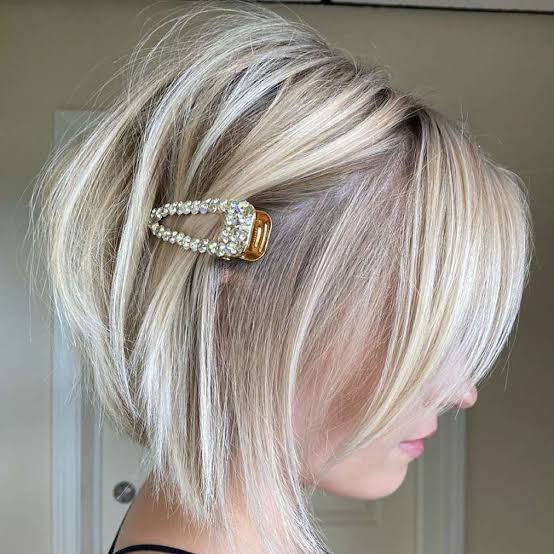
Fine, wavy hair usually needs convincing to hold a shape, but this collarbone-length bob uses strategic layering and a textured blowout to manufacture volume where there is none naturally. The side view shows how the curtain bangs and choppy ends add density without the weight that would pull fine strands flat.
Ask your stylist for: collarbone length choppy bob, curtain bangs, fine wavy texture, ash blonde. A texturizing paste applied to the ends and fringe keeps the definition from vanishing by lunch. Plan for a trim every six weeks: fine hair shows split ends faster, and the choppy effect relies on clean edges.
Shoulder Length Choppy Layers With Balayage
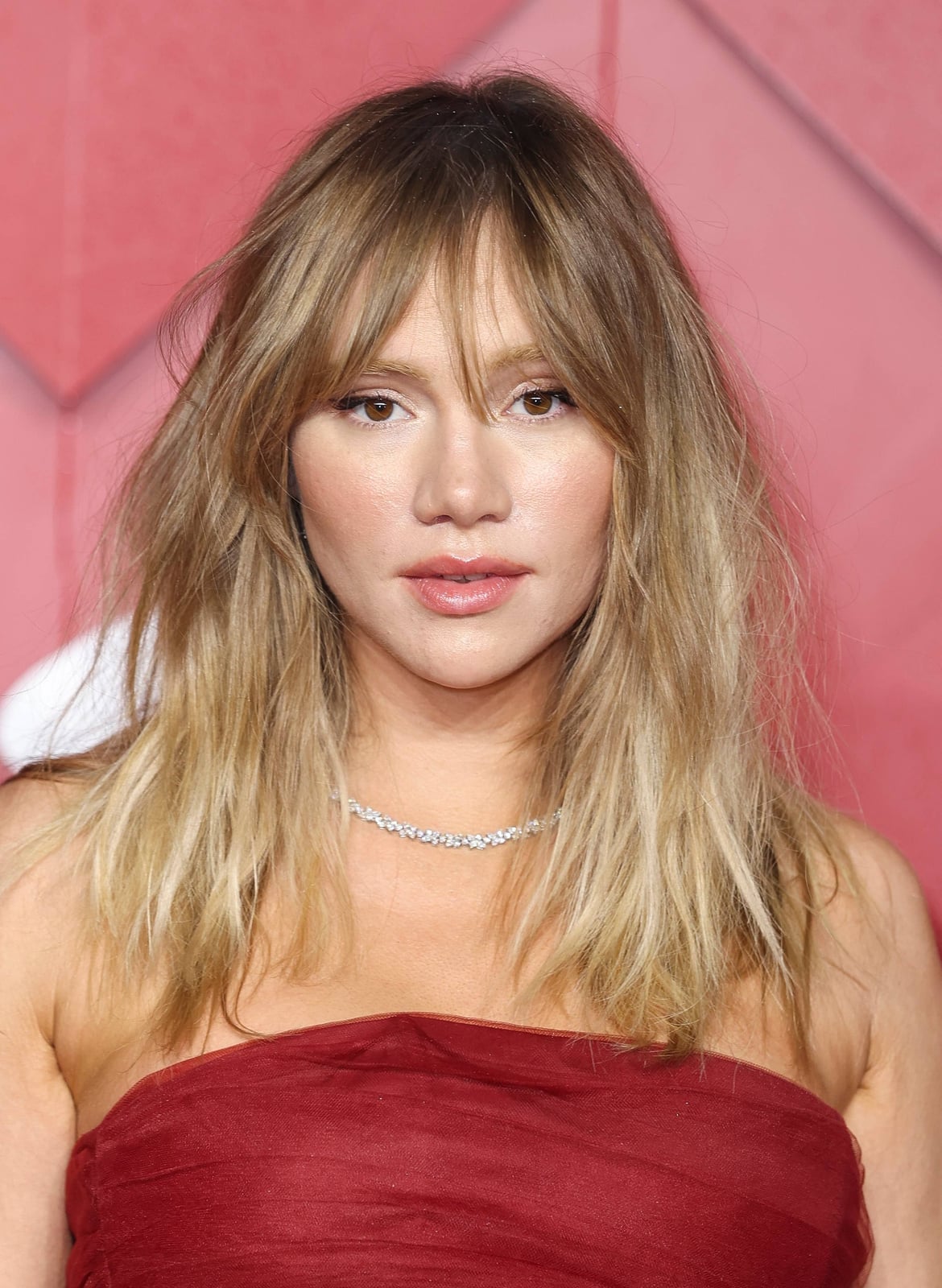
Shoulder-length hair with choppy layers and a blonde balayage adds dimension without a full color commitment. The textured waves and curtain bangs keep the cut loose and breezy, while the middle parting prevents the layers from piling up in one spot. It lands between polished and undone, which suits casual styling.
Ask your stylist for: shoulder length choppy layers, curtain bangs, blonde balayage. This is a solid spring-to-fall cut: the balayage blends as the sun fades, and the layers keep the hair off your neck without a bob. A trim every eight weeks maintains the shape.
Shoulder Length Choppy Layers With Air-Dried Texture
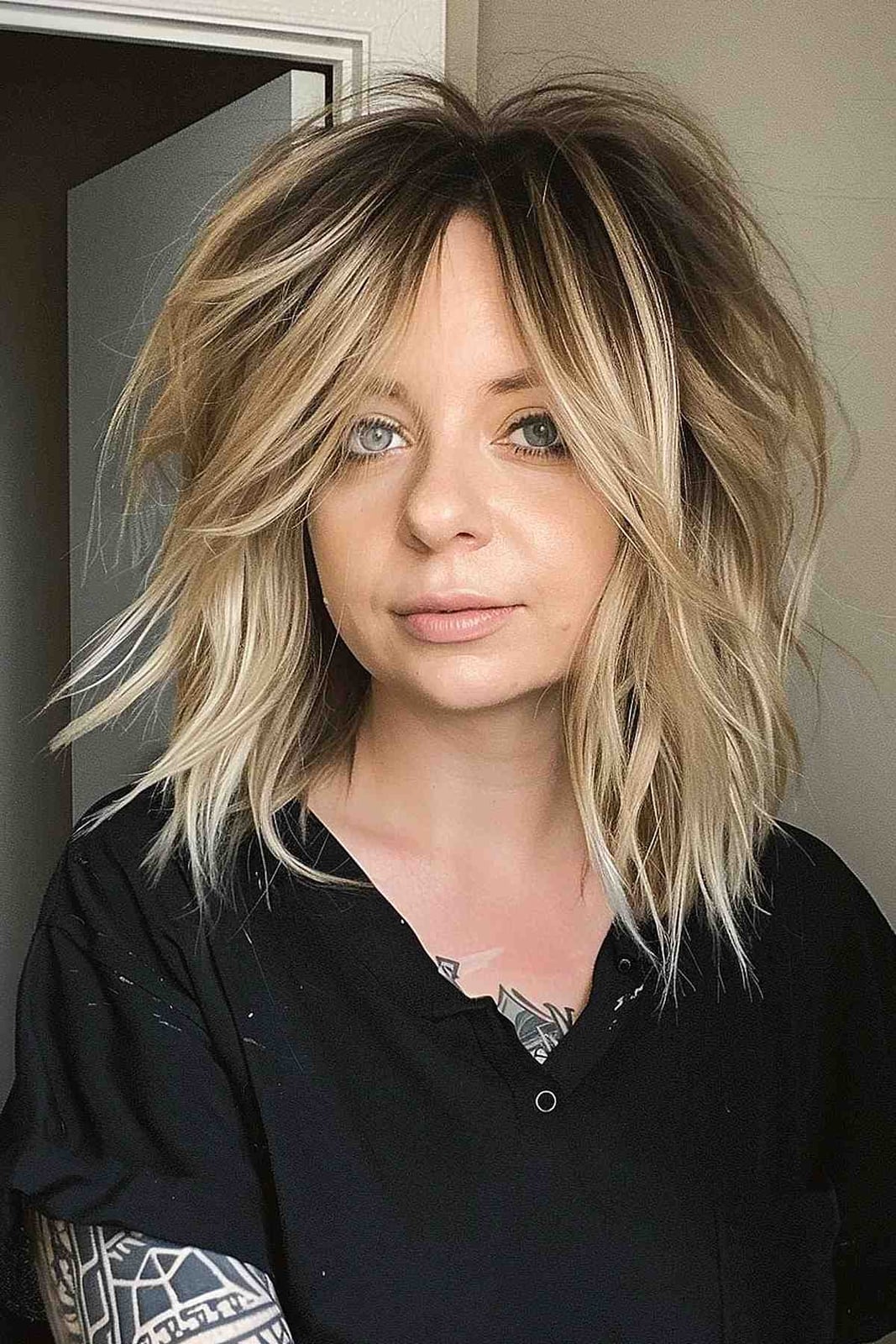
The trick to making air-dried hair look intentional is cutting it so the shape does the work for you. This collarbone-length cut uses choppy layers and curtain bangs to create movement without heat, and the blonde balayage adds dimension that stops the texture from reading as messy. It suits medium-density wavy hair that already air dries with some bend; straight hair will need a spritz of salt spray to get the same lift. Ask your stylist for: collarbone length choppy layers, curtain bangs, air-dried texture.
The middle part keeps the face-framing pieces even, and the layers hit at angles that catch light on their own. Expect a trim every eight weeks to maintain the blunt-ish ends that keep choppy layers from looking ragged.
Dark Blonde Shag With Face-Framing Layers
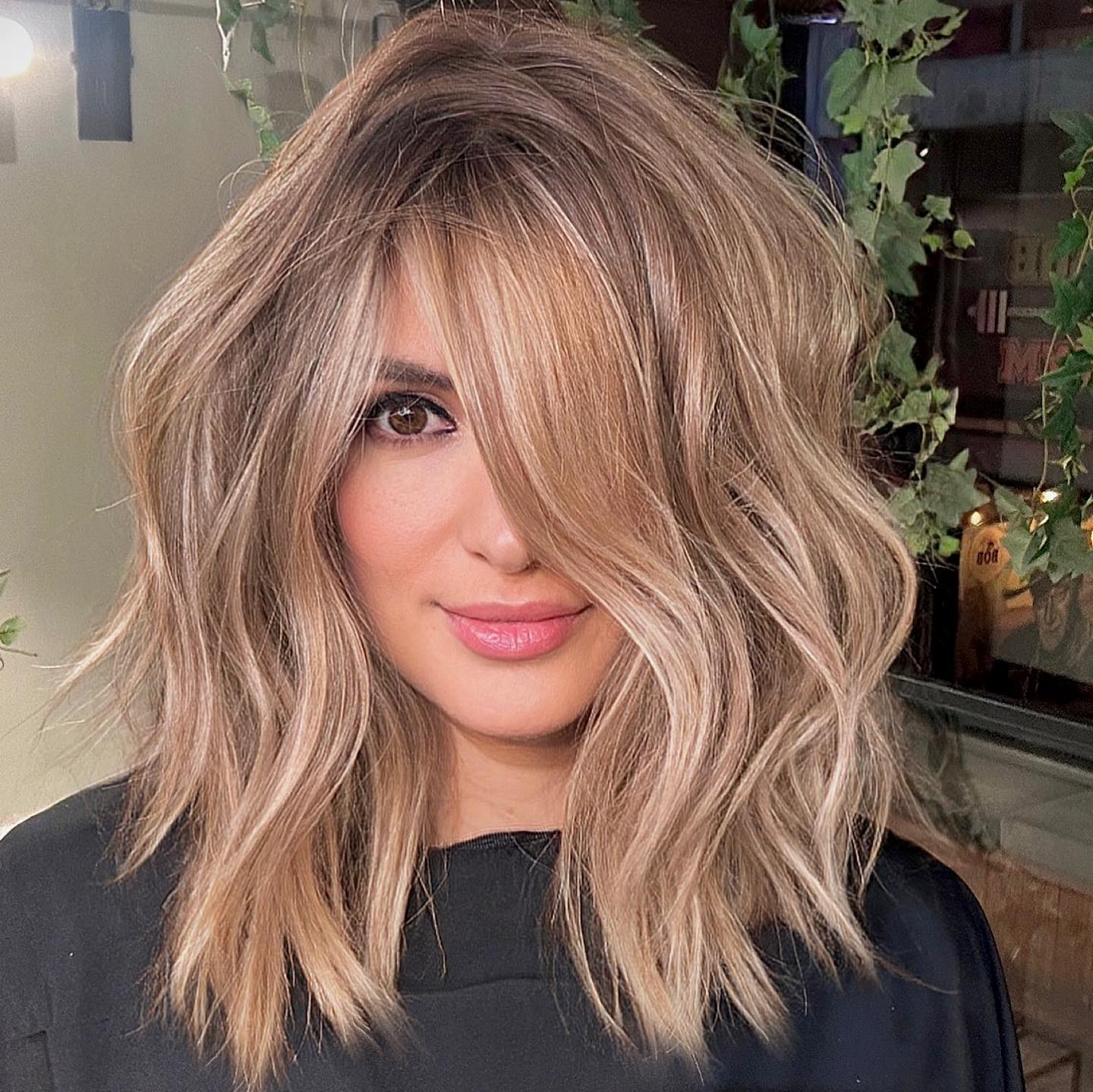
If a uniform blunt cut feels too stiff but a full mullet shag sounds like a commitment, this sits in the middle. It is a collarbone-length shag with choppy layers that start higher up, and the dark blonde base with lighter blonde highlights keeps the texture from reading as flat. The side part and curtain bangs direct the eye across the face rather than straight down, which suits thick, wavy hair that needs weight removed to move freely. Ask your stylist for: collarbone length shag, choppy layers, curtain bangs, dark blonde highlights.
Where a standard layered cut stacks weight at the bottom, this one distributes it evenly so the wave pattern stays consistent. A gloss treatment at the salon every six weeks helps the highlights stay defined without brassiness.
Honey Blonde Long Layers With Air-Dried Waves
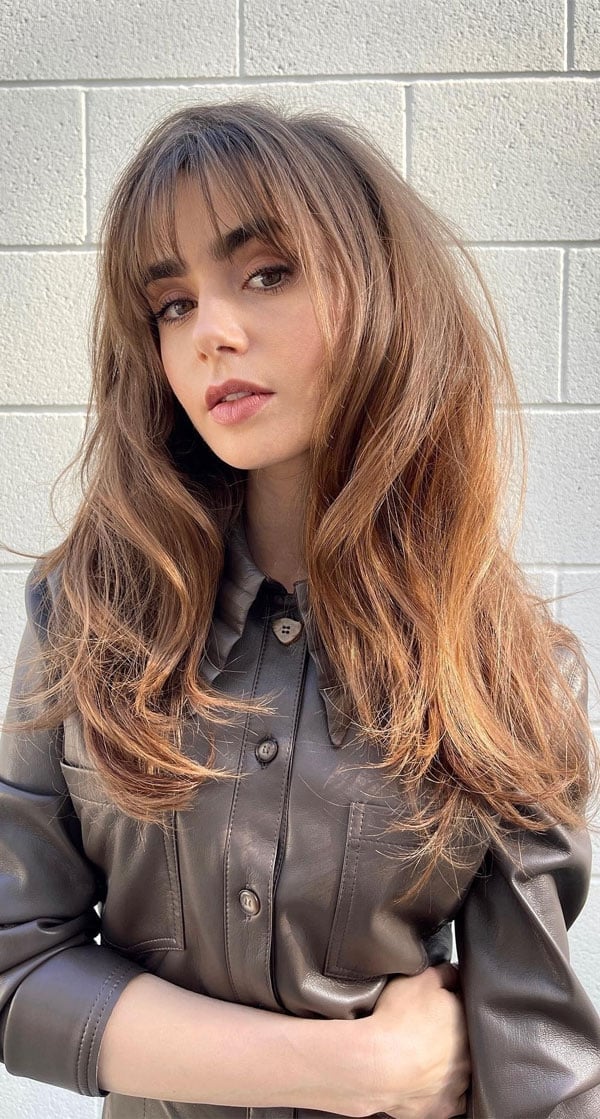
Long layers on mid-back hair sound like a safe bet, but subtle ones can disappear into the length if your texture is not naturally wavy. This honey blonde cut with lighter highlights relies on air-dried waves to make the layers visible at all; without that bend, the shape reads mostly as one length. It works best on medium-texture hair that holds a wave from a scrunch and air dry, and the side parting adds a slight asymmetry that prevents the shape from being boring. Ask your stylist for: mid-back length subtle layers, honey blonde, air-dried waves. The trade-off is straightforward: you cannot skip styling entirely if you want the layers to show.
Medium Brown Long Layers With Curtain Bangs, Mid-Back

Does adding length mean losing shape? Not when the cut uses soft, blended layers that create movement from the shoulders down. This mid-back haircut pairs those layers with curtain bangs and a middle part, and the medium brown base with blonde balayage adds dimension that keeps the hair from looking like a solid sheet. It genuinely flatters thick, wavy hair that needs weight removed without sacrificing density, and the bangs soften the transition from forehead to cheekbone. Ask your stylist for: mid-back length long layers, curtain bangs, medium brown balayage. Straight hair will need a large-barrel curling wand on the ends to mimic the wave pattern shown here.
For those with fine hair, the same cut can look thin if the layers are carved too deep; ask for the layering to stay mid-shaft to preserve bulk. A trim every ten weeks keeps the ends fresh enough to hold a curl.
Brown Long Layers With Face-Framing Bangs
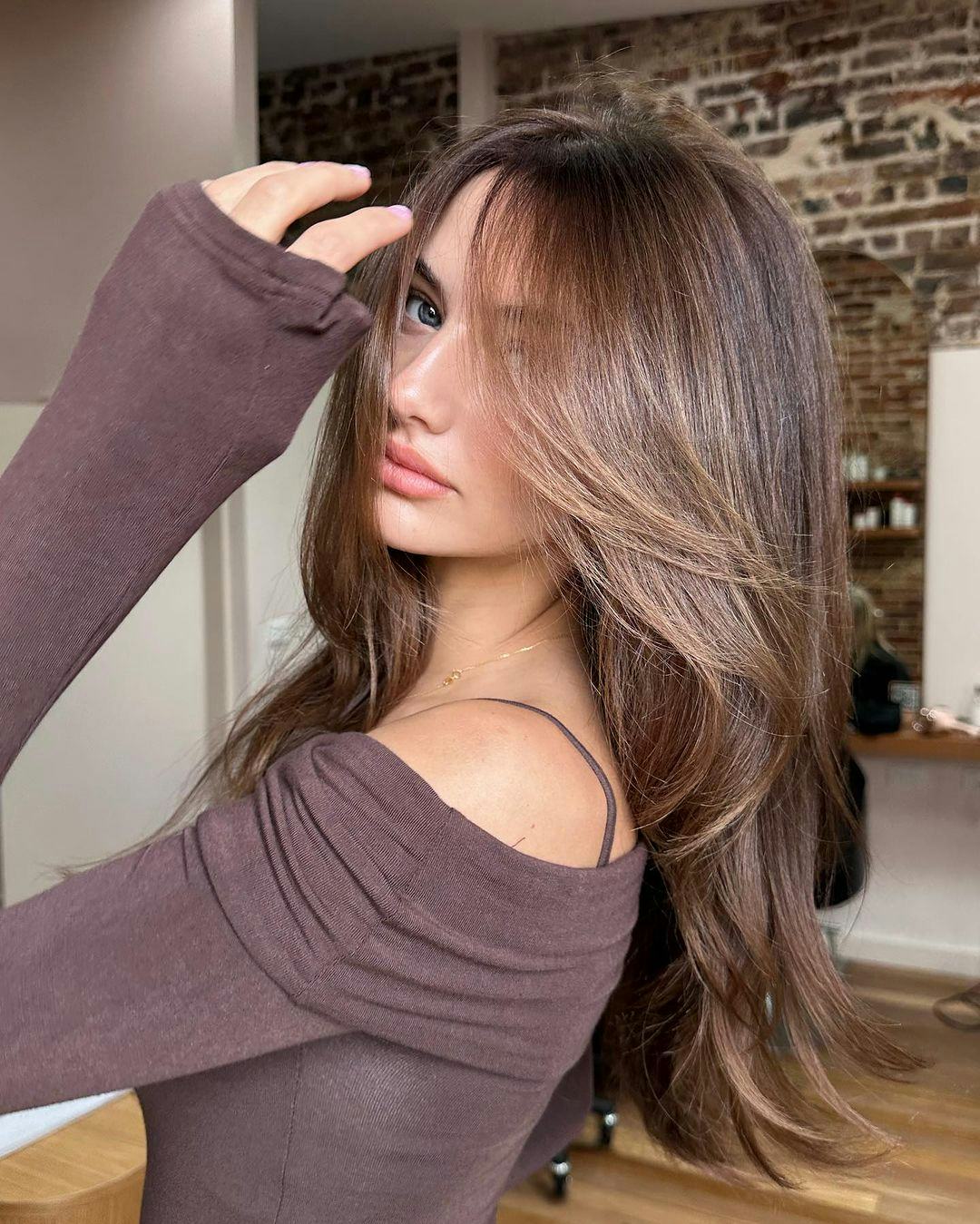
A mid-back cut with prominent layers and long face-framing pieces changes how the hair wears over a week. The first day, the curtain bangs and brown-with-blonde-balayage contrast are the star; by day four, the layers start blending into the length, and the face-framing pieces need a quick re-wet to bounce back. It suits thick, wavy hair that can handle the weight removal, and the middle part keeps the framing even on both sides. Ask your stylist for: mid-back length long layers, face-framing layers, curtain bangs, brown balayage.
Upkeep here is about refresh, not full restyle. A spritz of water and a scrunch reactivates the wave pattern, and the balayage grow-out is gentle enough to stretch trims to every ten weeks. The layers near the jawline add volume, so skip heavy products that weigh them down.
Dark Brown Mid-Back Hair With Smooth Layers
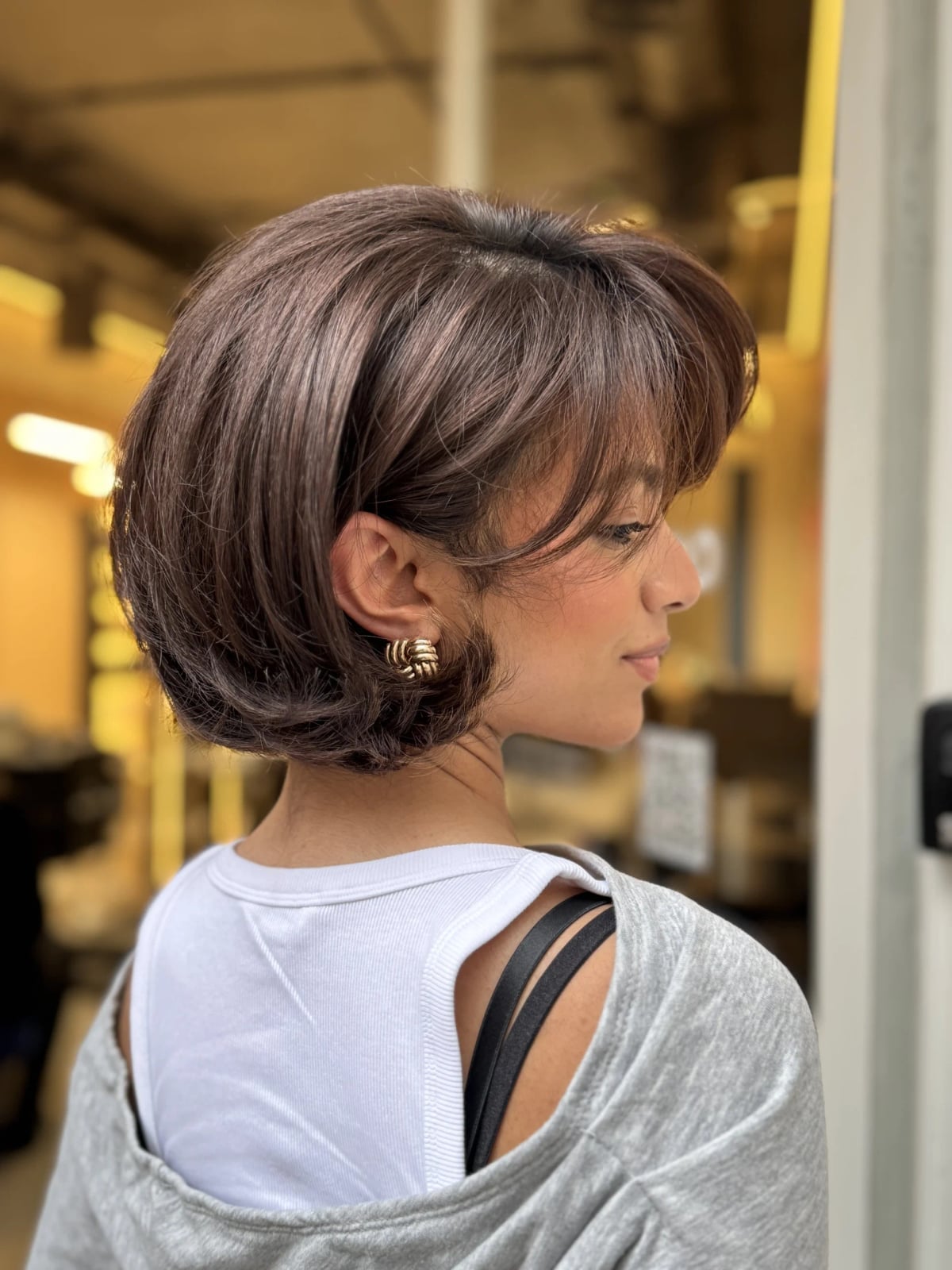
Long layers on thick, straight hair are a study in precision: each one is cut to blend into the next so the movement reads as a smooth blowout, not a shag. This mid-back cut keeps the weight at the ends, which is exactly why it holds its shape for a full day at the office. Ask your stylist for: mid-back length long subtle layers, dark brown, smooth blowout. A boar bristle brush and a heat protectant are the tools, and a trim every ten to twelve weeks keeps the ends from splitting. This is a salon-only technique, since the layering needs to be graduated by eye to avoid a triangle effect on thick hair.
Silver Gray Choppy Pixie Cut
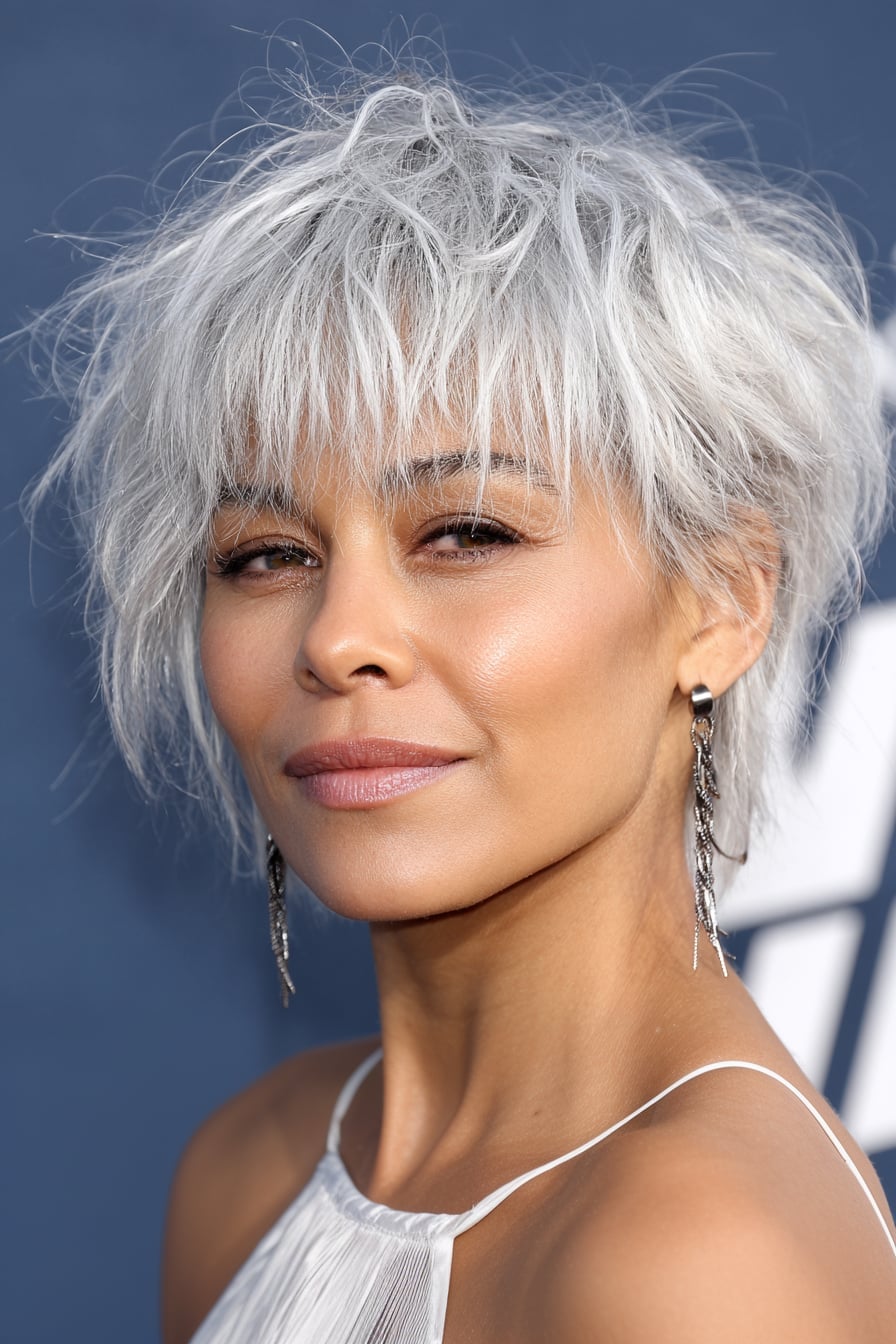
Wondering how to ask for a pixie that avoids a uniform helmet look? The key is the fringe and the finish. This ear-length cut is built on fine, wispy texture with a choppy fringe that breaks up the hairline, and the silver gray color adds an edge that a softer blonde wouldn’t. Ask your stylist for: short choppy pixie, choppy fringe, silver gray color. A texturizing paste or wax is what you’ll reach for daily to define the pieces, and a trim every four to six weeks is essential to keep the shape sharp.
Dark Brown Pixie Bob With Side-Swept Bangs
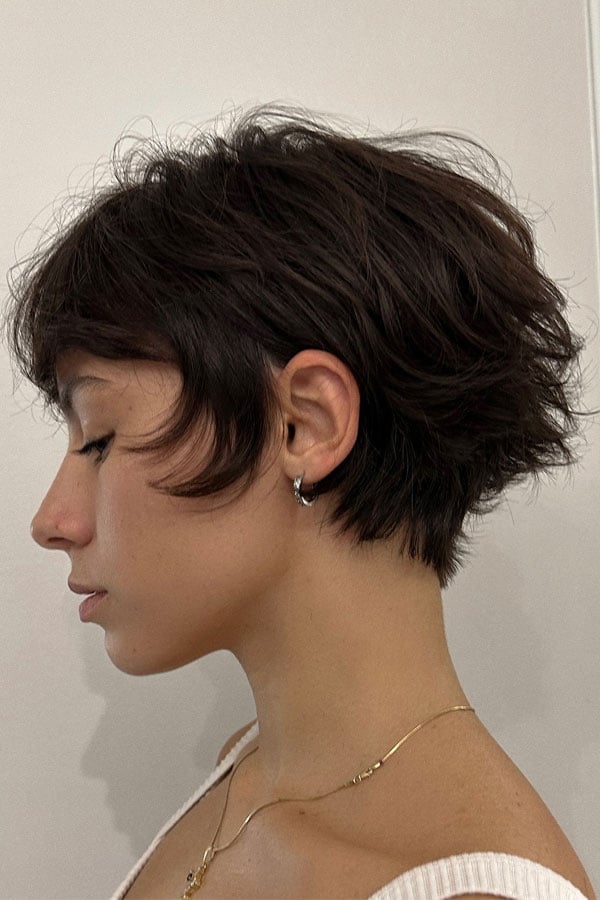
If a traditional pixie feels too severe, this pixie bob is the compromise that keeps the easy upkeep but softens the edges. The difference is the side-swept bangs, which sweep across the forehead instead of sitting straight, and the wavy, fine texture that gives the cut an air-dried, lived-in feel. The choppy layers around the ear and neckline are what keep it from looking like a grown-out bob. Ask your stylist for: pixie bob, side-swept bangs, dark brown, air-dried texture. A texturizing spray on damp hair and a trim every four to six weeks are the whole routine.
Ash Blonde Choppy Pixie With Textured Bangs, Close-Up Take
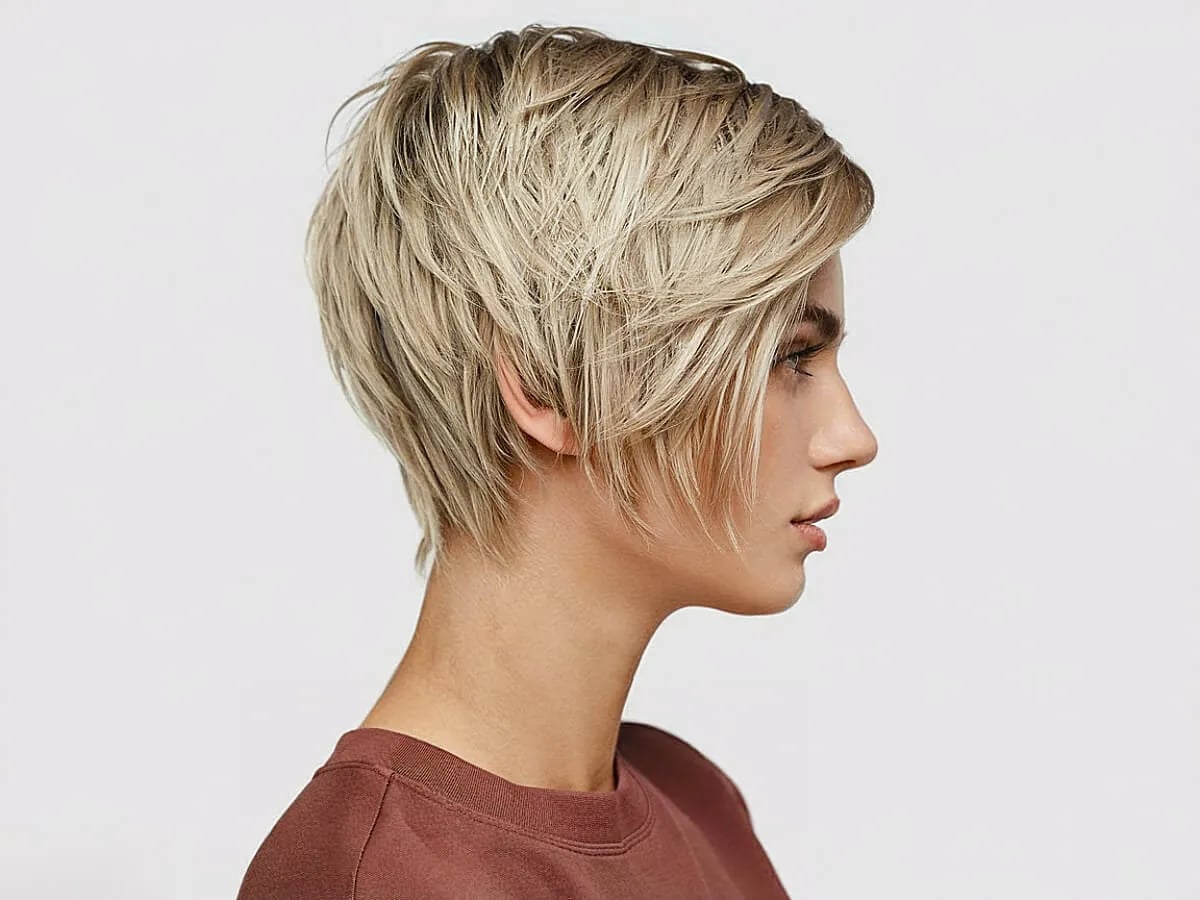
A pixie cut this short lives or dies on the precision of its choppy layers, and here the side view reveals exactly why the texture works. The ear-length cut uses short, uneven bangs and a side part to create movement on straight, fine hair, which otherwise tends to lie flat. The honest trade-off: that choppy texture requires a trim every four to six weeks, or the piecey ends start merging into a uniform fuzz rather than a deliberate cut. Ask your stylist for: short choppy pixie, short choppy bangs, ash blonde. A wax or paste applied to dry hair defines the edges and keeps the separation readable.
Platinum Shag With Wispy Bangs
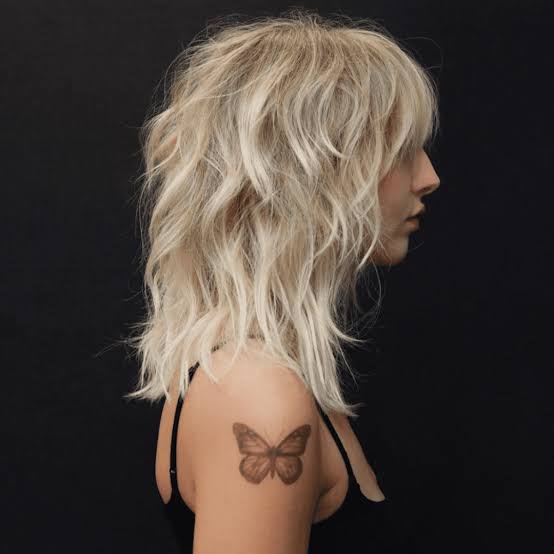
Who should consider a platinum shag with wispy bangs? Anyone with medium-density wavy hair who wants movement without losing length. The collarbone length keeps it practical, while the prominent choppy layers add shape to natural waves and the wispy bangs soften the forehead without the commitment of a full fringe. The root shadow is a practical touch, giving the grow-out a grace period before the platinum needs a refresh. Ask your stylist for: collarbone length shag, choppy layers, wispy bangs, platinum blonde. A dry shampoo or texturizing spray adds grit, and a trim every eight weeks keeps the layers from disappearing.
Medium Brown Long Shag With Visible Layers
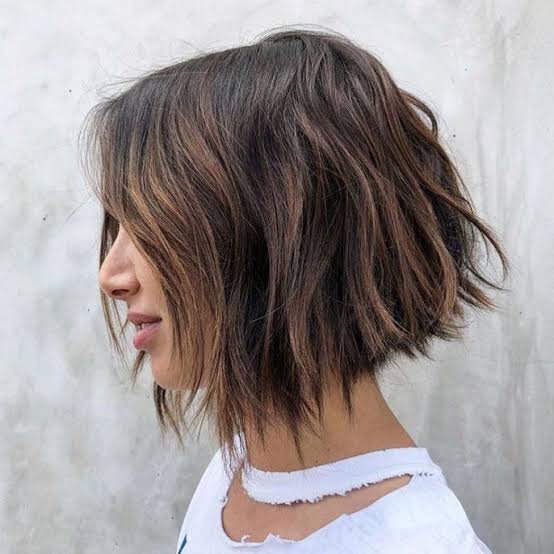
A long shag earns its keep when the layers are actually visible. This cut drops the choppy ends right at the chin, with short bangs swept to a side part, so the medium brown base lets the subtle highlights do the talking. It suits thick, wavy hair that starts at collarbone length; the visible layers add movement without turning into a pyramid. Ask your stylist for: long shag, prominent choppy layers, curtain bangs. For everyday wear, apply a texturizing spray to damp hair, then scrunch as you air-dry to keep the piecey texture honest. You will need a trim every 8 to 10 weeks to stop the choppy ends from looking like a mistake.
Final Thoughts
For fine hair, keep a blunt baseline and add choppy layers only through the ends to preserve density. For thick hair, let the layers run deeper to remove weight and let the shape move.
- Schedule trims every 6-8 weeks to maintain the choppy effect.
- Use texturizing sprays or sea salt sprays to enhance the lived-in finish.
- Air-dry or use a diffuser on low heat to preserve natural wave and texture.
- Consider a color refresh every 8-10 weeks for highlighted or dimensional colors.
Choppy layers offer a versatile path to modern texture.