
Face-framing layers are a haircut technique that adds softness and dimension by cutting the front sections shorter than the rest, creating a gentle curve around the face. Lived-in, glossy natural texture is the current mood, and these layers work with it rather than against it.
This collection of 29 ideas spans lengths from chin to mid-back and textures from straight to curly, with options for fine or thick hair. Simple Face Framing Layers solve the problem of hair that falls flat or needs a refresh without a full chop, and they suit round, square, oval, and long face shapes alike.
Collarbone Lob With Curtain Bangs

A collarbone lob that lands in that sweet spot between short and long relies on its face-framing layers to provide shape. The curtain bangs soften a middle part, which works particularly well for oval and heart-shaped faces. Fine, wavy hair gets a boost here because the layers add movement without sacrificing the body a blowout provides. Ask your stylist for a collarbone lob with curtain bangs and face-framing layers. Blow-dry the fringe with a round brush, directing it away from your face to create bounce. A trim every six to eight weeks keeps the shape intact.
Mid-Back Length With Soft Face-Framing Layers
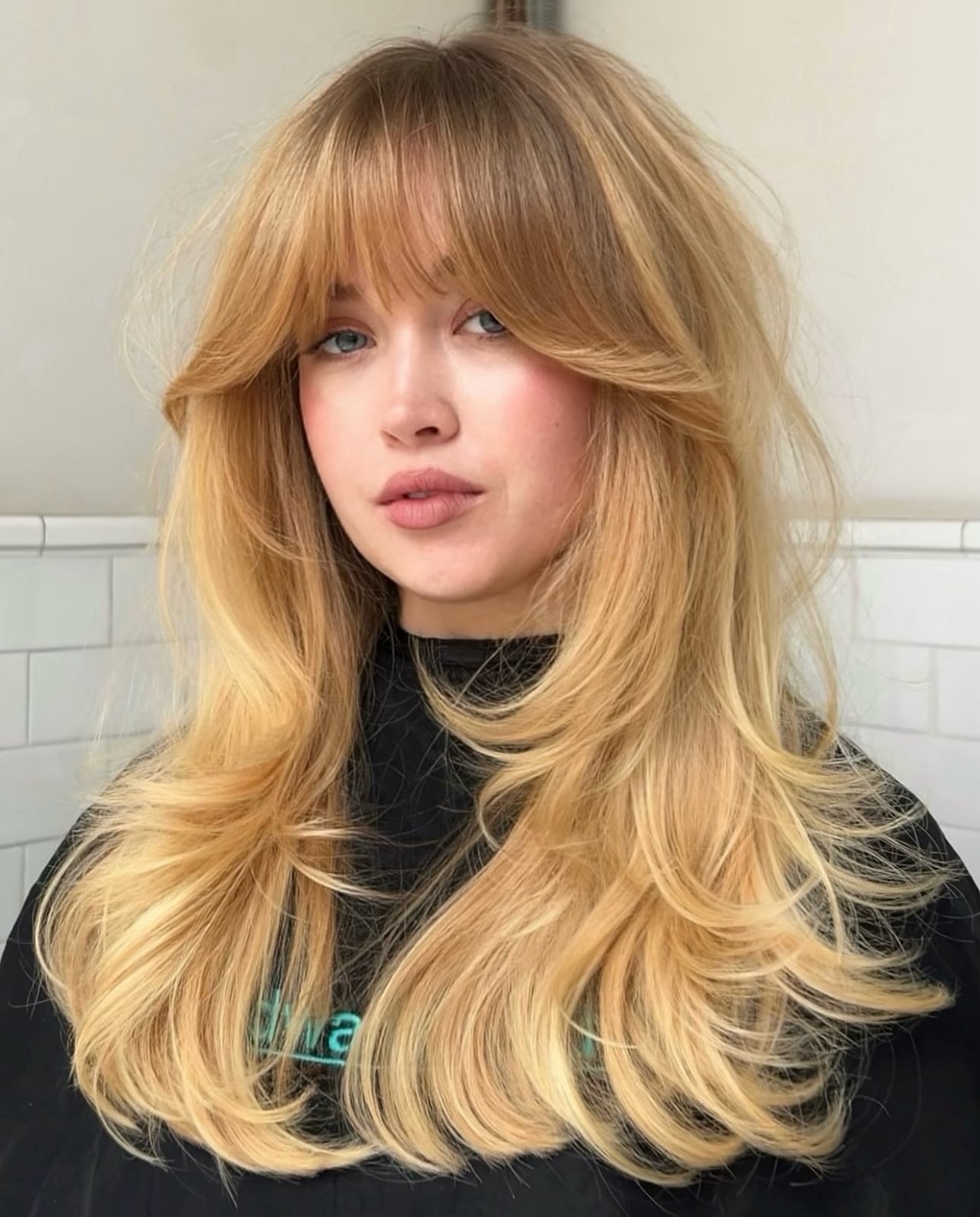
The technique here is about blending: layers that start around the cheekbone and gradually dissolve into the mid-back length. This prevents the dreaded triangle effect, where shorter pieces sit heavy on top and leave a thick wall of hair below. A side part gives the face-framing bangs more sweep, which adds width to longer or narrower face shapes.
Ask your stylist for mid-back length with soft face-framing layers and bangs. For the air-dried finish shown here, work a curl-enhancing cream into damp hair and let it dry naturally. The layers need a refresh every eight to ten weeks to stop them from growing out into a single blunt line.
Collarbone Long Layers With Curtain Bangs, Straight
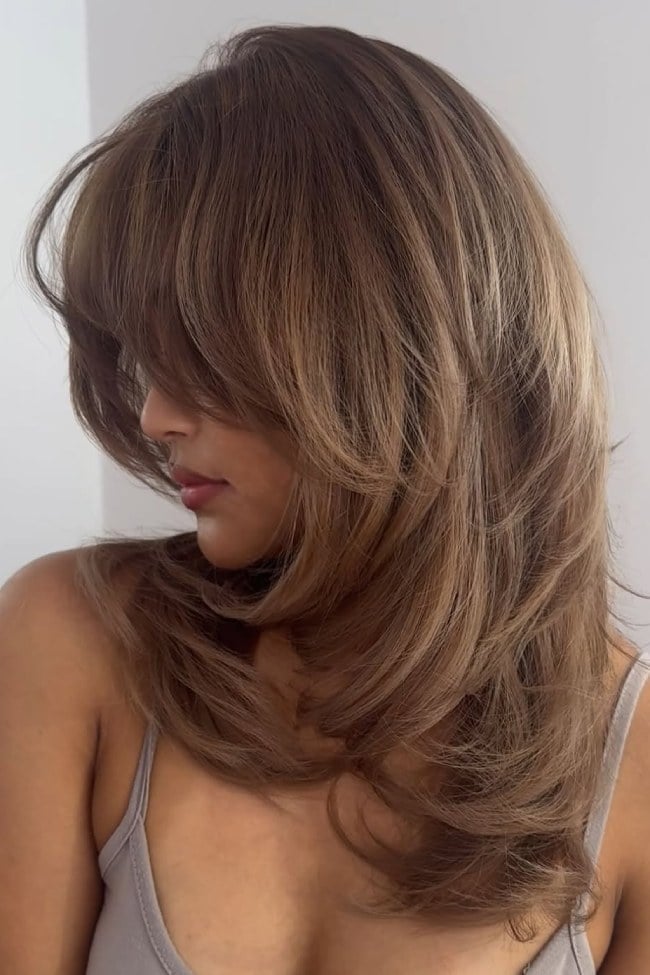
What exactly do you say to get this look? Start with the baseline: collarbone length. Then add the structure: long layers that keep the weight in the body while the curtain bangs blend into the front pieces. The side part is the final piece of the puzzle, creating asymmetry that flatters narrow or long face shapes. Ask your stylist for collarbone length with long layers and curtain bangs. For thick hair like this, a volumizing spray at the roots before blow-drying prevents the weight from pulling everything flat. The baseline needs a trim every six to eight weeks, though the bangs may need a touch-up sooner.
Chin Length Bob With Side-Swept Bangs

Compared to a blunt bob that sits like a solid block, this version uses face-framing layers around the jaw to soften the line. The side-swept bangs add to that effect, drawing the eye diagonally rather than straight across. Fine, straight hair needs a flat iron to keep the bangs lying smoothly and to add a slight flick at the ends. Ask your stylist for a chin length bob with face-framing layers and side-swept bangs. A trim every six weeks keeps the shape precise.
Shoulder Length Layers With Curtain Bangs
Where a blunt bob hits the shoulders and stops, this shoulder-length cut uses soft face-framing layers to keep the hair moving. The curtain bangs open up the face without committing to a full fringe, and the middle parting keeps the weight evenly distributed on both sides. This makes it a reliable choice for most face shapes, including round and square. Ask your stylist for shoulder length with face-framing layers and curtain bangs. A texturizing spray on the ends gives it that lived-in feel, and a trim every six to eight weeks stops the layers from disappearing.
Collarbone Shag With Curtain Bangs, Dark Brown With Blonde Highlights
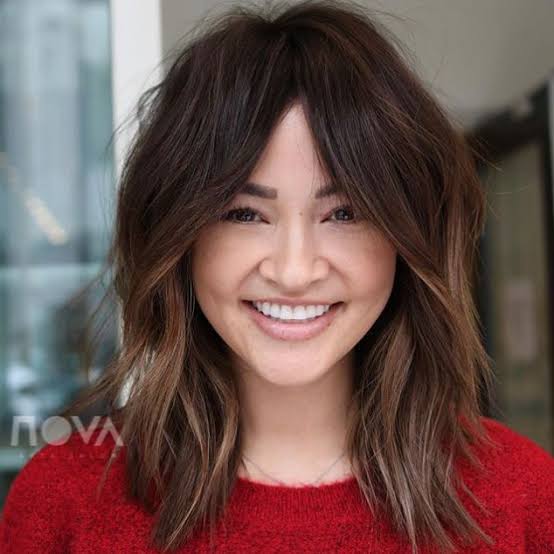
The shag cut builds its shape around those curtain bangs: shorter pieces at the top graduate into wavy layers that hit the collarbone. Thick hair gets the most out of this design, since the internal layering removes bulk while the highlights add depth. Ask your stylist for: collarbone shag with curtain bangs and face-framing layers. The blonde pieces are placed to catch movement rather than create a stripe, so the wavy texture reads as lived-in. This one travels from summer festivals into autumn without looking out of place.
Chin Length Layered Bob With Curtain Bangs
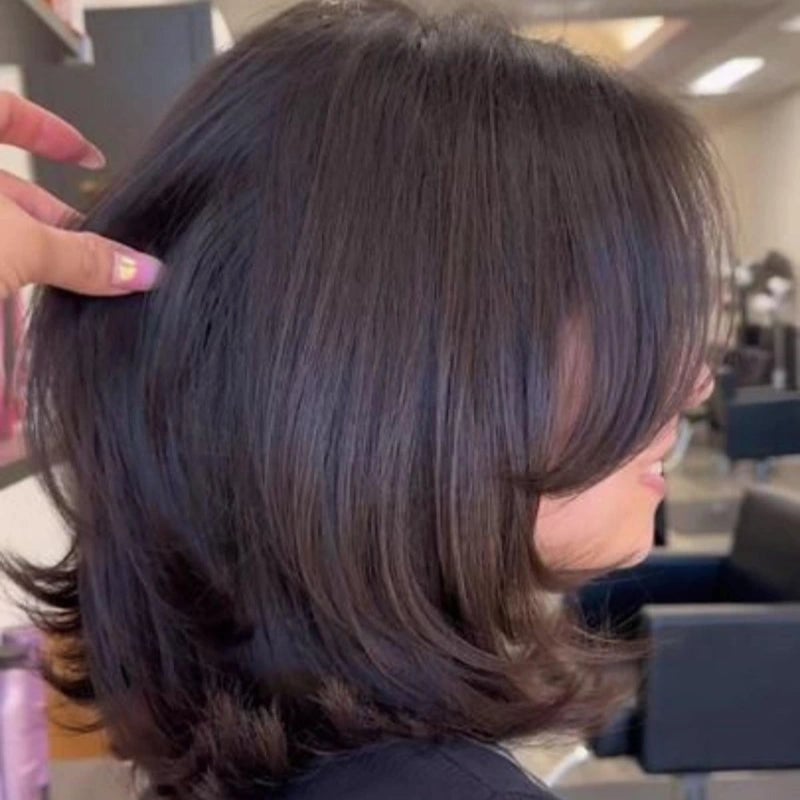
Can a chin-length bob flatter a round face? Yes, when the curtain bangs sweep away from the center and the layers hit just below the jawline. The straight, thick texture here keeps the silhouette clean, not poufy. Ask your stylist for: chin length layered bob with curtain bangs. The middle part lengthens the oval, while the curtain pieces soften the perimeter. A smoothing serum handles any flyaways, and the bob needs a trim every six to eight weeks to hold its line.
Shoulder Length Layers With Wispy Bangs, Platinum Blonde
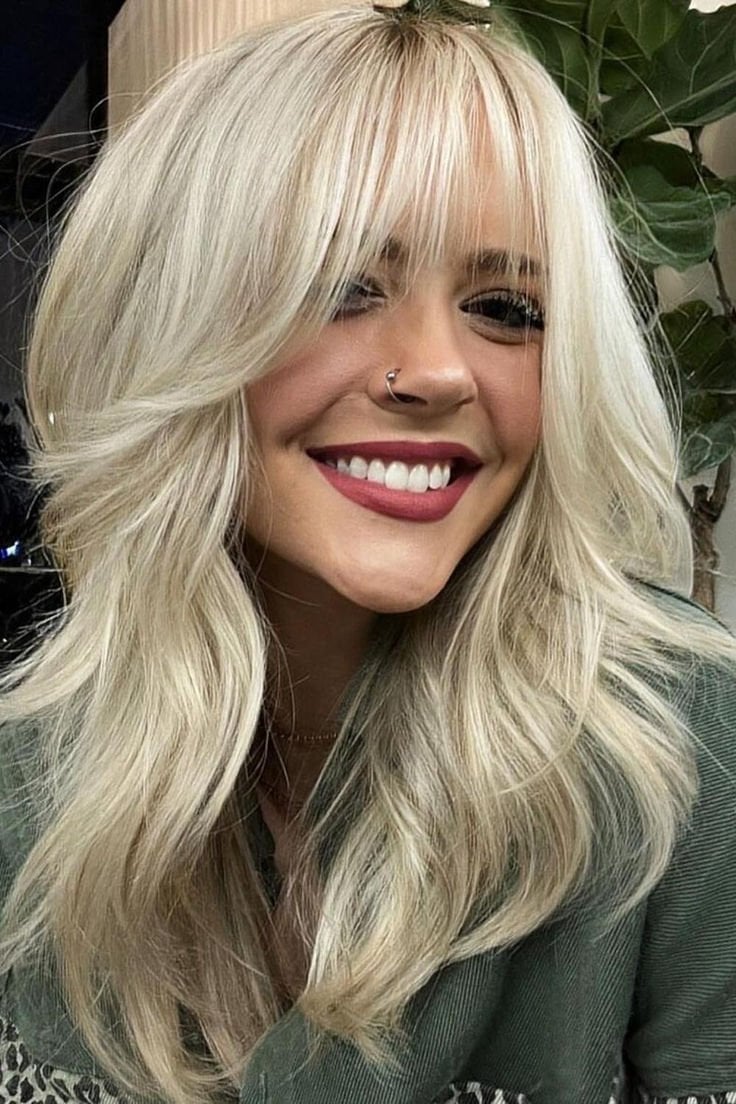
The long layers here are cut to stack volume at the crown, not to shorten the overall length. Wispy bangs are the key: they are point-cut at the ends so they feather instead of sitting as a solid block. Ask your stylist for: shoulder length with long layers and wispy bangs.
A texturizing spray applied to damp roots keeps the lift from falling flat. The side part pushes the wispy fringe across the forehead for a softer frame. Platinum blonde needs a purple shampoo once a week and a toner every four to six weeks. Trim the ends every eight weeks to prevent the wispy pieces from looking ragged.
Collarbone Layers With Face-Framing Bangs
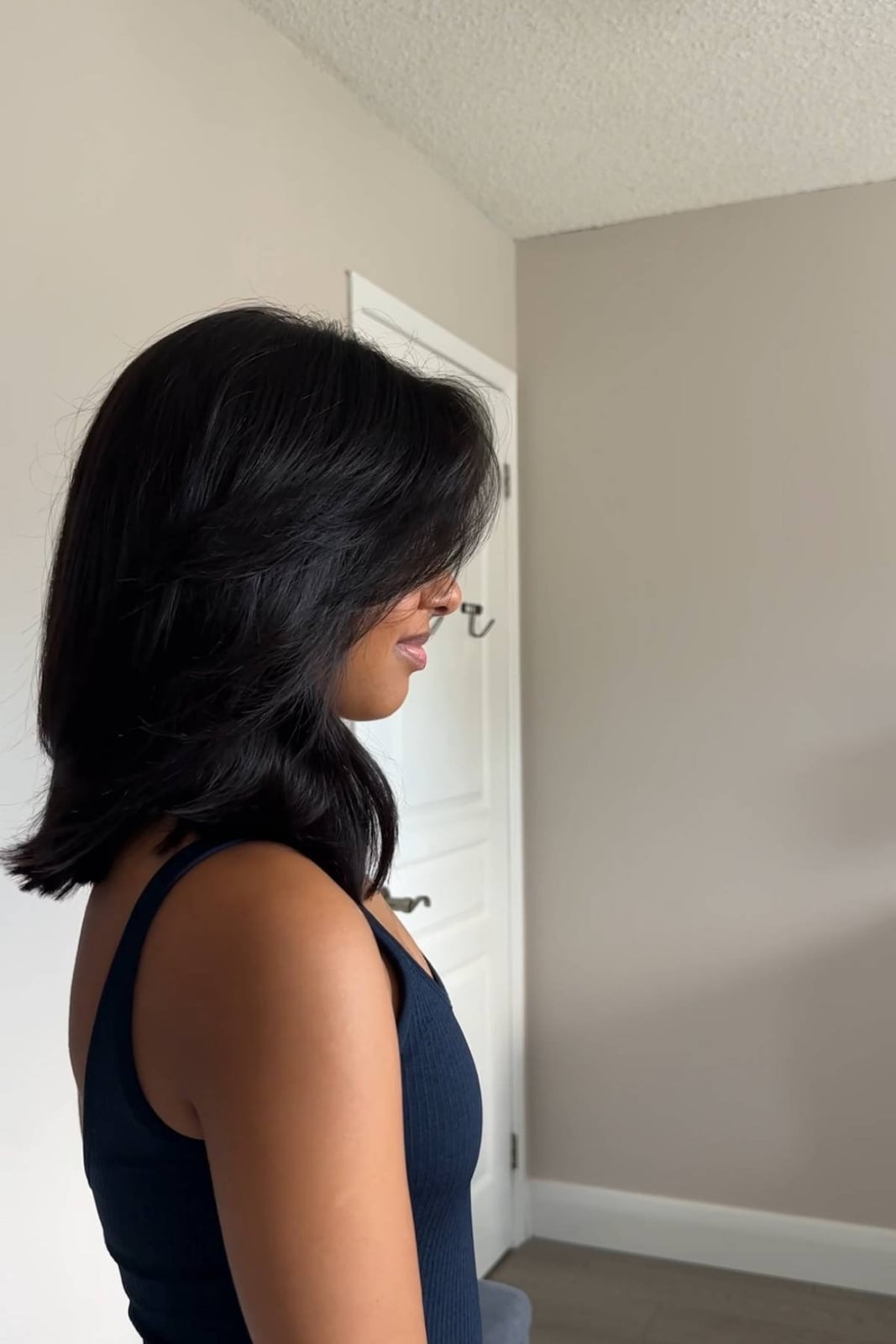
The collarbone length keeps the baseline heavy while the face-framing bangs lighten the front. Thick, straight hair holds the shape without needing much coaxing. Ask your stylist for: collarbone length with face-framing layers and bangs. Be specific about the framing: you want the shortest layer to graze the cheekbone and the longest to blend into the body. The side part helps the bangs fall forward rather than split. A smoothing cream tames the density, and the baseline needs a trim every eight weeks to avoid the layers overtaking the shape.
Shoulder Length Layered Curls With Highlights
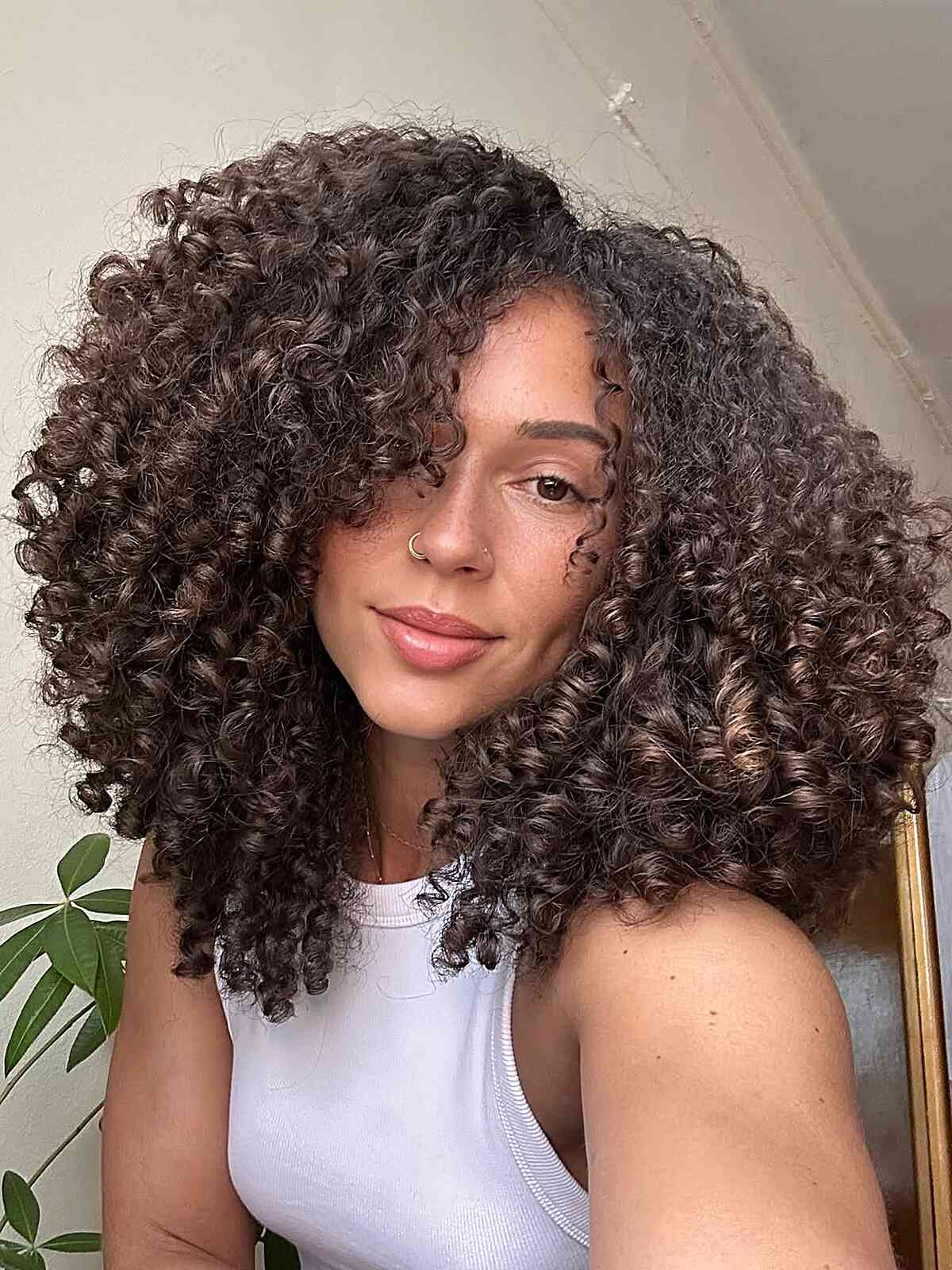
Do curly bangs actually cooperate on thick, shoulder-length curls? Yes, if the layers are cut to the curl’s natural spring. The face-framing pieces here are cut dry and at full shrinkage, so they land at the brow instead of floating past the nose. Ask your stylist for: shoulder length layered cut with face-framing layers. Subtle highlights break up the dark brown base without creating a stripe. This is a salon-leaning cut: dry-cutting curly texture takes experience, and the layers need to account for the curl pattern. A leave-in conditioner applied to soaking wet hair preserves definition.
Chin Length Bob With Face-Framing Layers
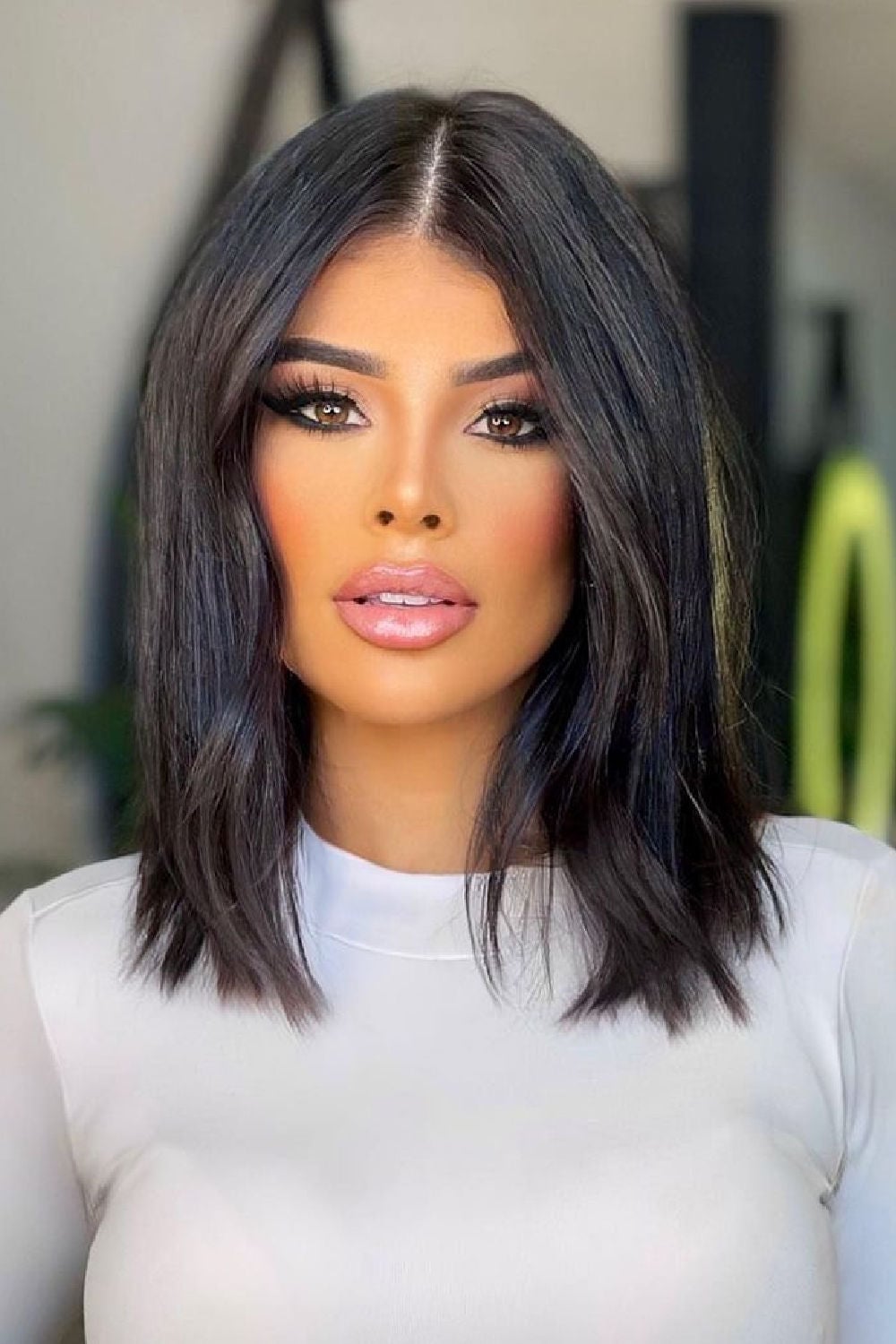
This bob stops at the chin with no bangs, which makes the face-framing layers the whole point. For medium, wavy hair, those layers give the cut movement and keep the jawline from looking boxed in. Ask your stylist for: chin length bob with face-framing layers. A side parting adds a little lift at the crown, but the real drawback is the grow-out: the layers start to lose their shape around week six, so plan on a trim then. A volumizing mousse at the roots before blow-drying keeps the bounce honest.
Shoulder Length Ash Blonde Layers With Curtain Bangs
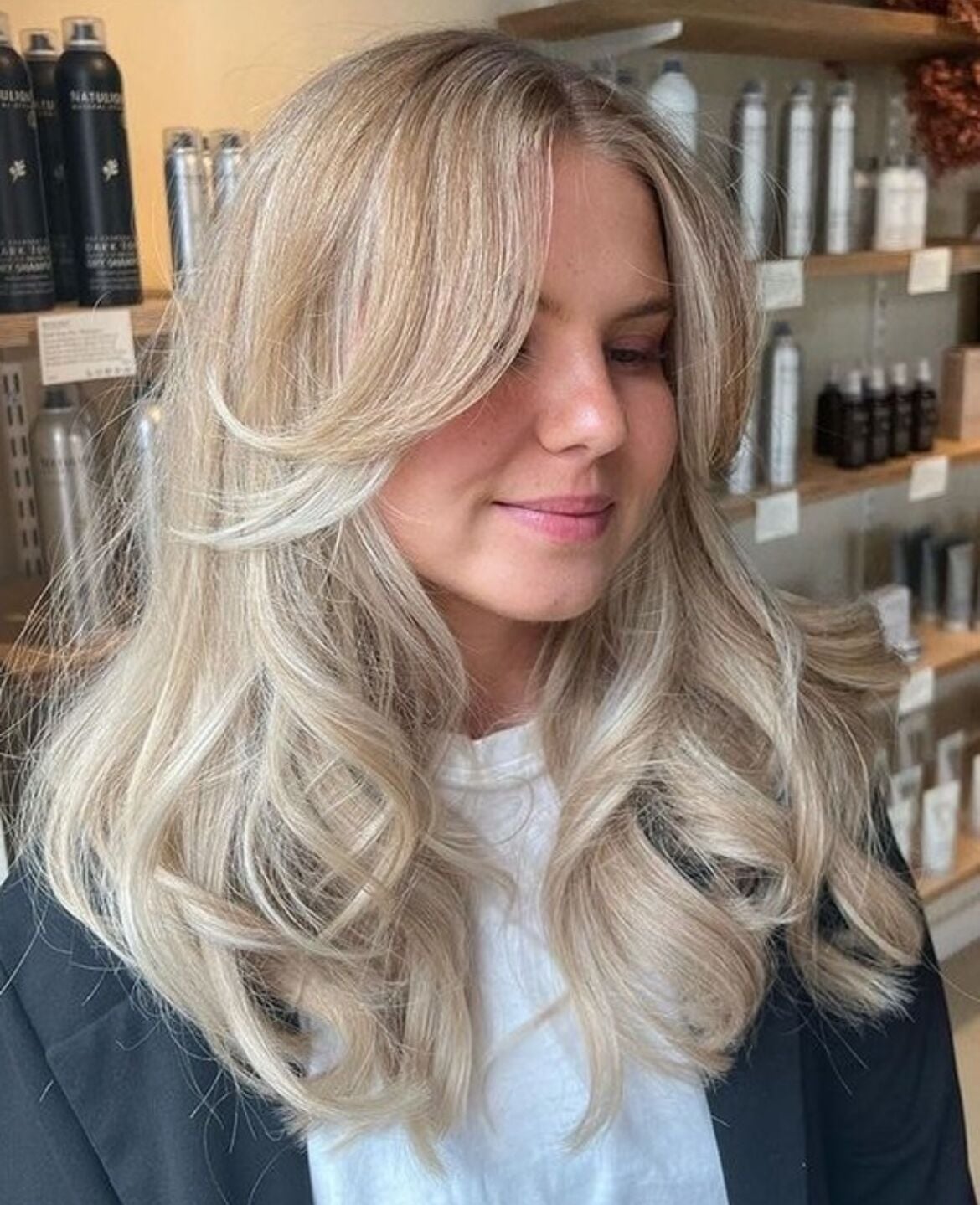
Ash blonde reads best when it has room to breathe, and shoulder-length layers give it exactly that. The curtain bangs are cut to blend into the long layers, so the face-framing effect shows up without a hard line. For thick, wavy hair, the weight is what keeps the ash tone from washing out.
Ask your stylist for: shoulder length ash blonde with long layers and curtain bangs. A purple shampoo once a week keeps the ash from drifting brassy, and the bangs need a trim every six to eight weeks. Blow-dry with a round brush to get the volume at the crown to match the texture.
Collarbone Layers With Curtain Bangs and Highlights, Wavy

Wondering what to do with your hair when the weather keeps flip-flopping between damp and dry? This collarbone cut with long layers and curtain bangs is the transitional answer. The dark brown base with subtle highlights gives the waves dimension, so the style does not fall flat in humidity. Ask your stylist for: collarbone length with long layers and curtain bangs. A middle parting lets the bangs open up and frame the face, and a smoothing serum on damp hair keeps the frizz in check before you blow-dry. Trim every six to eight weeks to keep the shape.
Collarbone Layers With Subtle Highlights
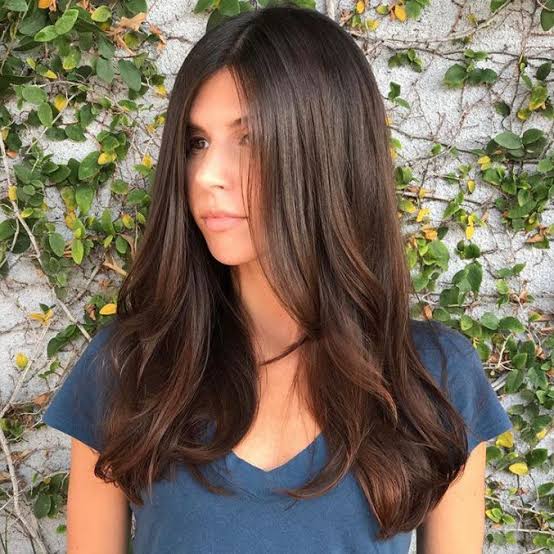
The genius of this cut is that the face-framing layers start right at the collarbone, which gives a square jawline something soft to lean into. With no bangs and a side parting, the layers do all the work of drawing the eye outward. For thick, wavy hair, the subtle highlights break up the density so the style reads as lighter than it is.
Ask your stylist for: collarbone length with face-framing layers. If your hair is fine rather than thick, the layers can still work, but you will want to keep them longer so they do not remove too much weight. A texturizing spray on the waves adds grip, and a trim every eight to ten weeks keeps the ends from looking straggly.
Mid-Back Length With Curtain Bangs
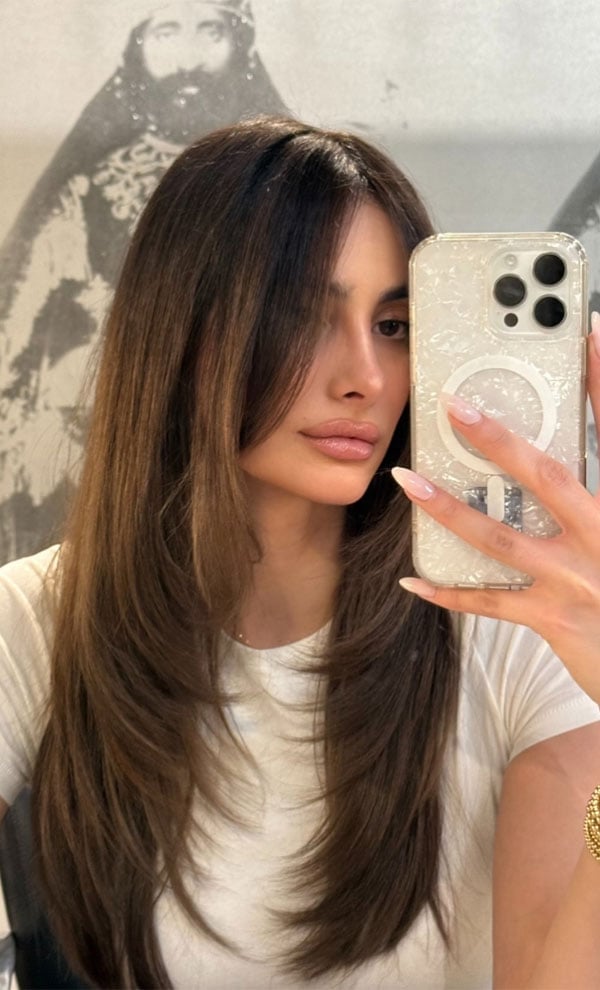
Curtain bangs are the shortcut to face-framing when your hair is this long. The mid-back length keeps the weight, while the long, soft layers and prominent curtain bangs give the front some shape. For thick, straight hair, the bangs are what stop the style from reading as a flat curtain of hair.
Ask your stylist for: mid-back length with curtain bangs and long layers. To get the bangs to sit right, ask for them to be cut dry, so the stylist can see how they fall. A flat iron on the bangs and front pieces is all you need for styling, and a trim every eight to ten weeks keeps the shape.
Mid-Back Layers With Face-Framing Effect
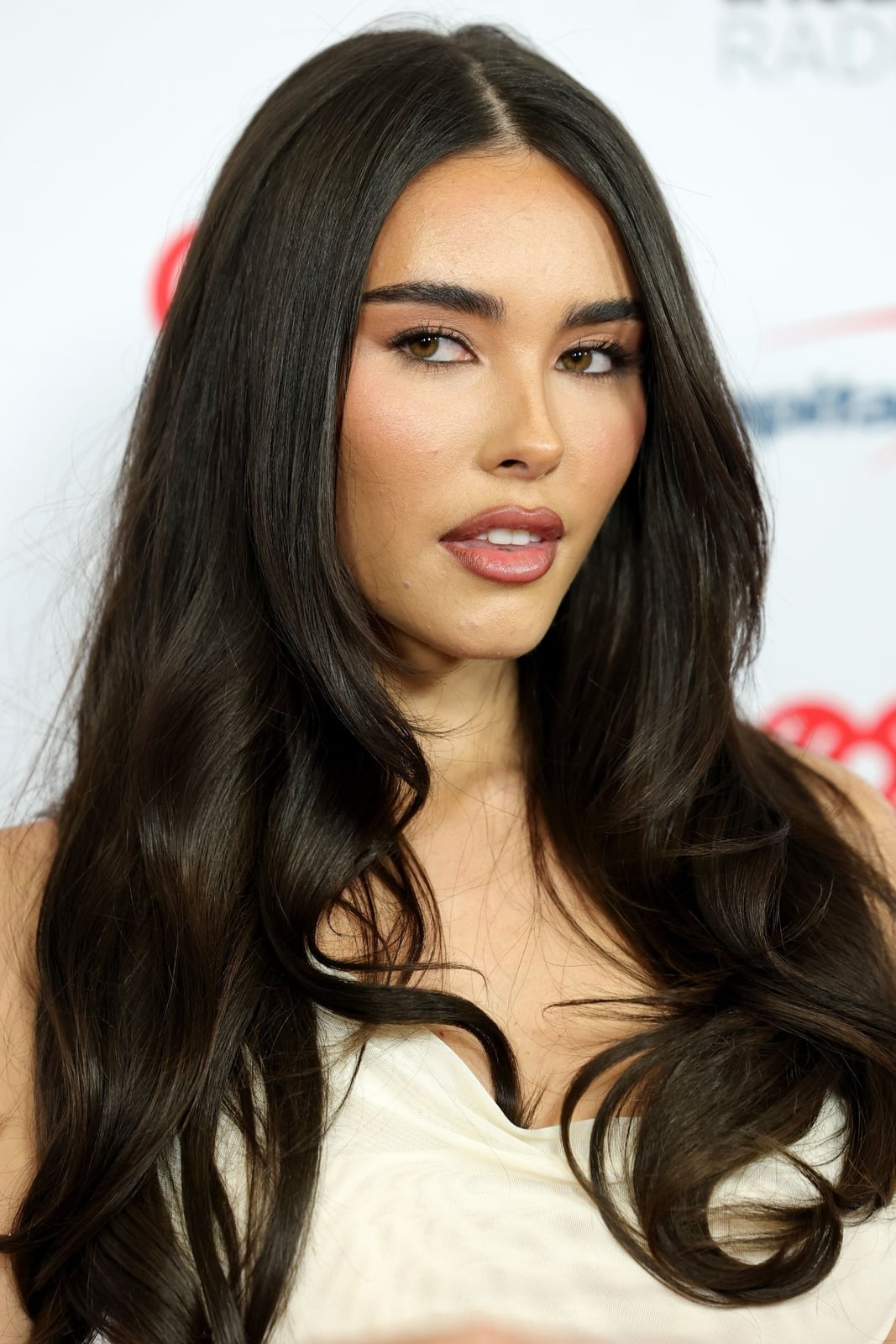
This is the cut you choose when you want face-framing layers without committing to a shorter length. The layers start around the chin and sweep outward, which keeps the long, thick, wavy dark brown hair from feeling heavy. A middle part and curtain bangs complete the frame. Ask your stylist for: mid-back length with long face-framing layers. On thick, wavy hair, the waves can get unruly by afternoon, so a blowout with a round brush is your daily reality, not a special occasion. A volumizing mousse before drying helps hold the shape. Expect a trim every eight to ten weeks to keep the layers from blending into one blunt mass.
Collarbone Wavy Hair With Honey Balayage
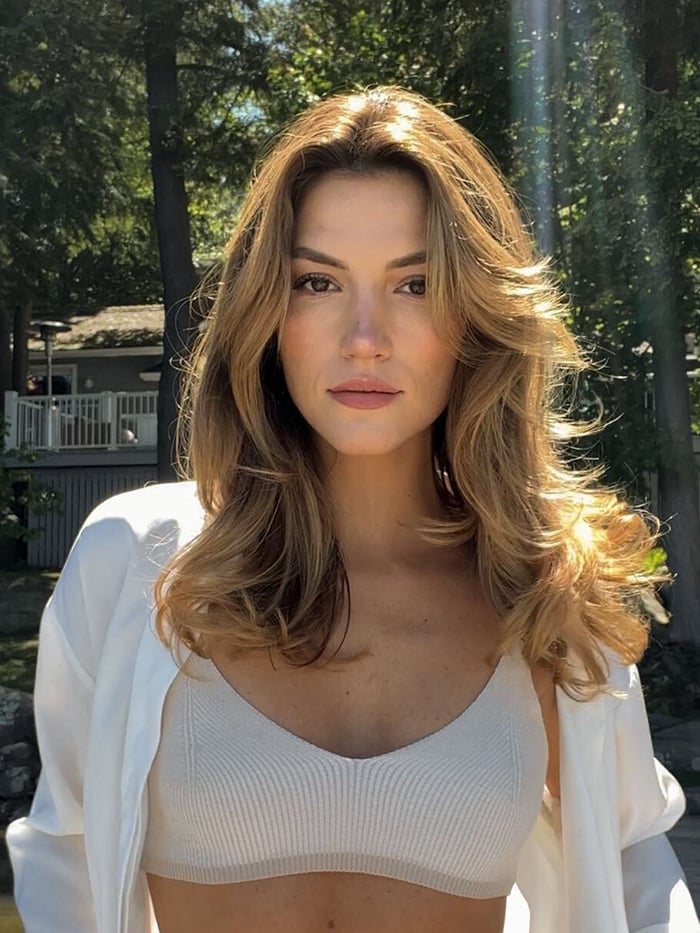
The honey blonde balayage here is painted so the lighter pieces sit right at the cheekbones, which makes the face-framing layers the point of the whole cut. The collarbone length keeps the waves from dragging down, and the side part adds a little asymmetry to the front. Ask your colorist for: collarbone length with face-framing layers and honey balayage. A texturizing spray on damp hair will encourage the natural wave and let the color show through. This is a cut that wears well for a few weeks, but the balayage needs a gloss or toner every six to eight weeks to keep the honey tone from turning brassy.
Collarbone Layers With Blonde Balayage
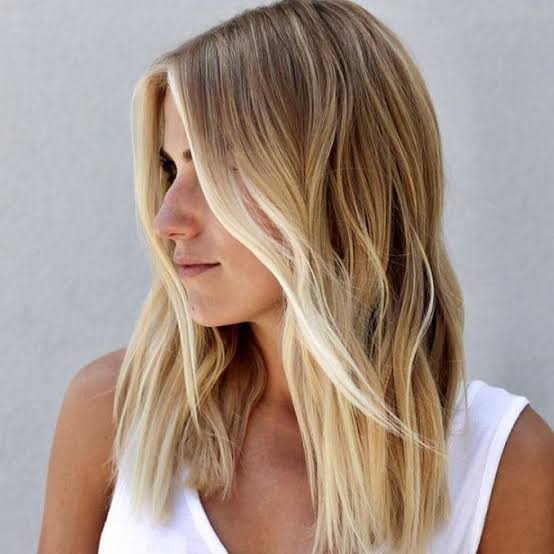
Why does this collarbone length work so well for spring? Because the fine, wavy texture and air-dried finish mean you can skip the heat tools when the weather turns humid. The layers start around the cheekbones, so the face-framing effect is immediate, and the blonde balayage lightens the ends without a harsh root line. Ask your colorist for: collarbone length with face-framing layers and blonde balayage. A volumizing mousse applied to damp hair gives the roots lift, then you let it dry. It is the kind of cut that looks intentionally undone, which is exactly what you want when you are spending the afternoon outside.
Mid-Back Long Layers With Subtle Highlights
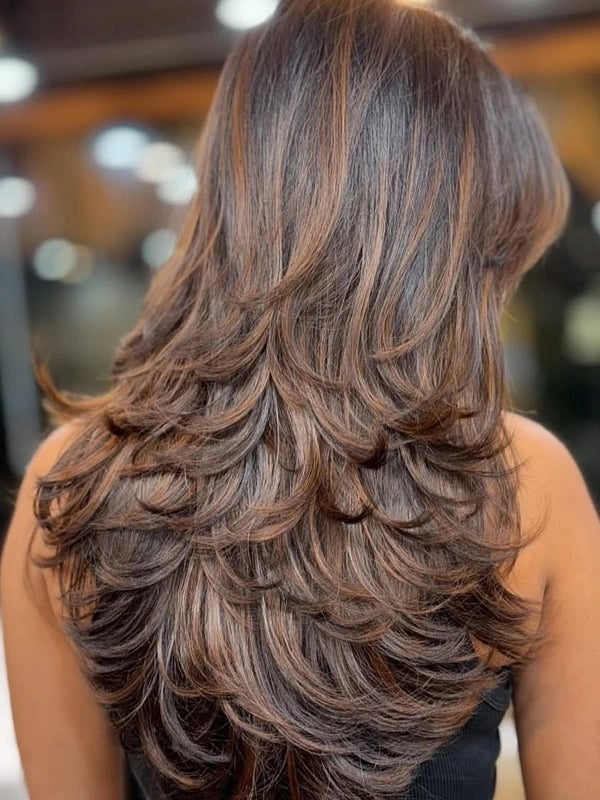
Long layers here are cut to create sculpted movement through the back, which is the part you see most when your hair is down. The dark brown base has subtle highlights that catch light, and the thick, wavy texture benefits from the weight removal. This cut suits diamond face shapes, since the layers add volume at the sides and soften the angles around the cheekbones. Ask your stylist for: mid-back length with long layers and subtle highlights. Use a smoothing serum on the ends to keep frizz at bay, which matters when you have density. Trims every eight to ten weeks maintain the shape, and the highlights need a refresh every twelve weeks to keep them from looking muddy.
Collarbone Loose Waves With Face-Framing Pieces
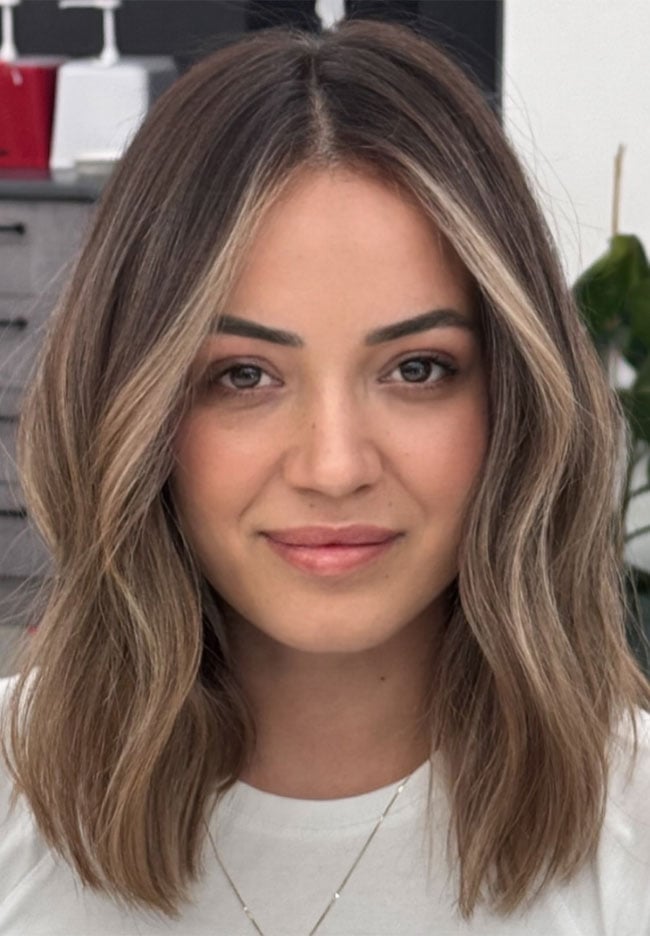
What makes these face-framing pieces work is that they are cut to blend seamlessly with the hair, so the frame feels built in, not added on. The collarbone length long layers are styled into loose waves, and the medium brown base gets lighter blonde pieces right at the front. Ask your stylist for: collarbone length with face-framing pieces and loose waves. To get the exact words right, you want to mention that the front sections should start at the cheekbones and blend downward. A trim every six to eight weeks keeps the pieces from losing their shape.
Mid-Back Straight Hair With Soft Layers, Middle
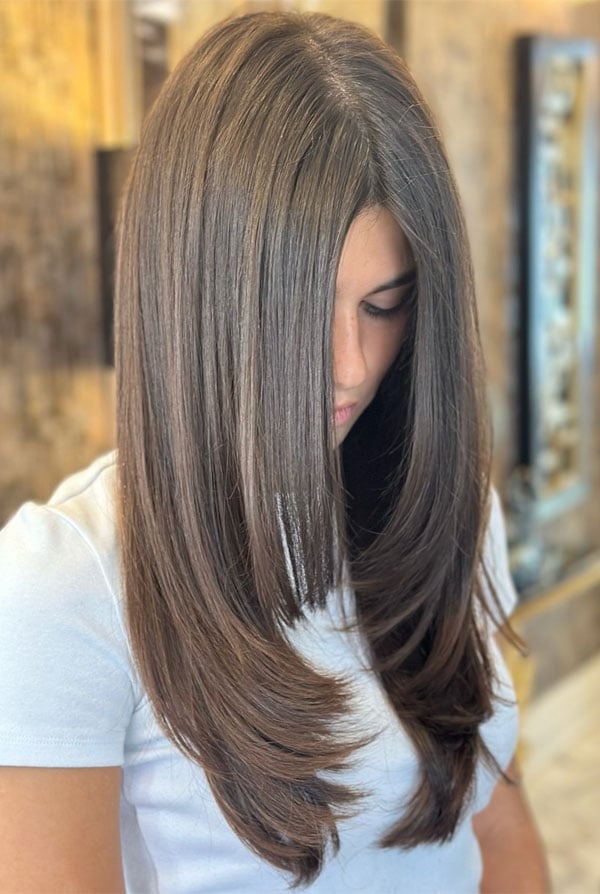
Face-framing layers work on fine, straight hair if the stylist keeps them subtle and starts them around the collarbone. A blunt, one-length cut on fine hair tends to look flat, but soft, long layers add shape without sacrificing the sleek, glossy finish you probably want. Subtle lighter strands give the impression of dimension without actual weight removal, which is crucial when you have very little to spare.
Ask your stylist for mid-back length with soft face-framing layers. The daily effort is minimal: run a smoothing serum through damp hair, brush it straight with a boar bristle brush, and go. A blow-dry adds more shine, but air-drying works if you accept a slightly softer finish. Fine hair does not hold a layered shape the way thick hair does. A trim every eight weeks keeps the ends from disappearing into the length.
Mid-Back Straight Fine Hair With Ash Blonde
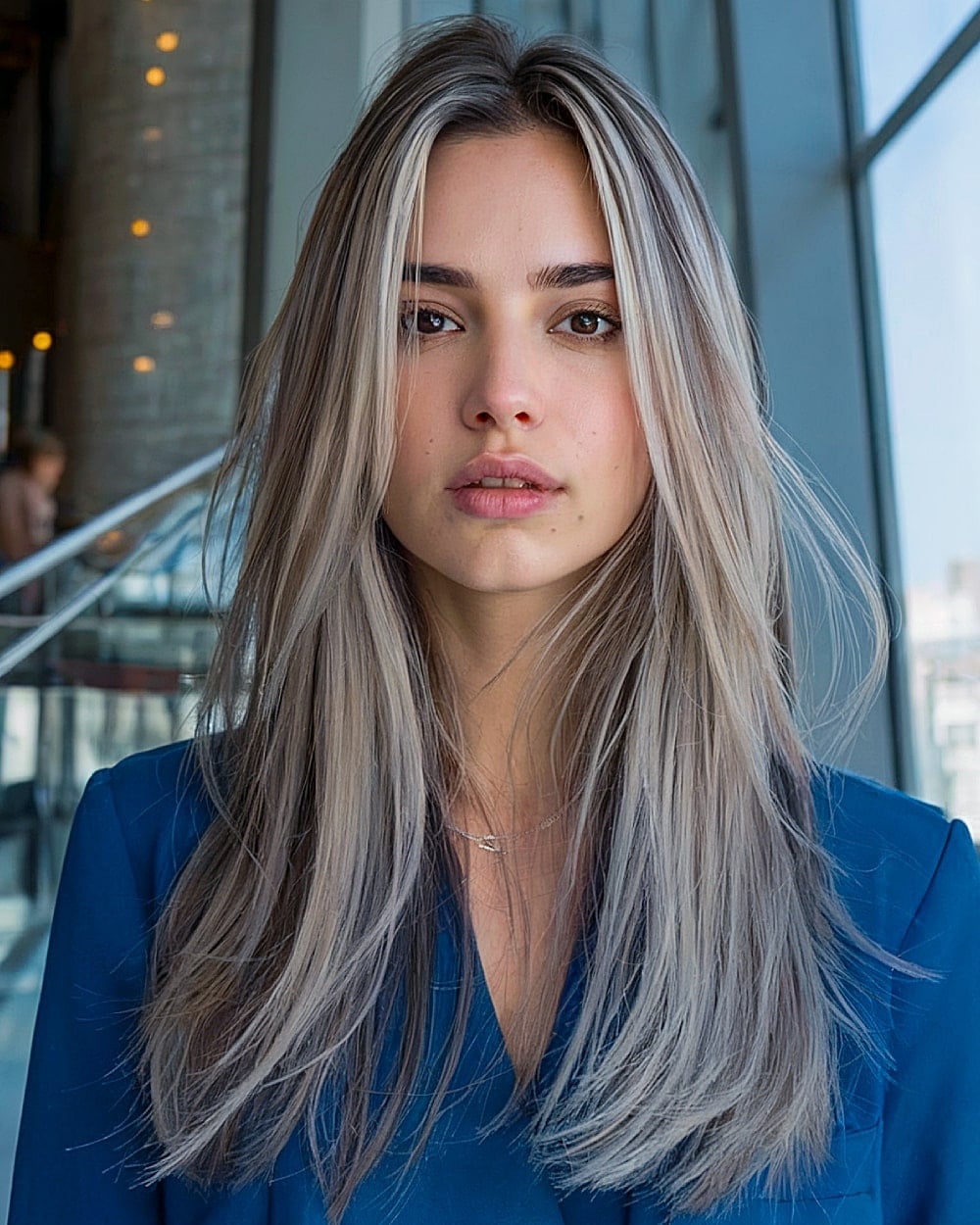
A two-tone trick: a cool ash blonde mid-length and shaft, with the natural dark root left untouched. On fine straight hair, this does two things at once. The ash blonde reflects light, making the hair look denser than it is, while the dark root creates a shadow that hides the scalp between wash days. The subtle layers are cut so softly they barely register. They are there to prevent the ends from flipping out, not to add visible shape.
Ask your colorist for: mid-back length with subtle layers and ash blonde color. Upkeep is the main draw: the dark root means a grow-out of six to eight weeks before you need a toner refresh, not a full foil. Between salon visits, a purple shampoo once a week keeps the ash from warming up. Trim every ten weeks, and let the hair air-dry. A diffuser or round brush would add volume this style explicitly does not want.
Mid-Back Long Layers With Subtle Waves, Straight
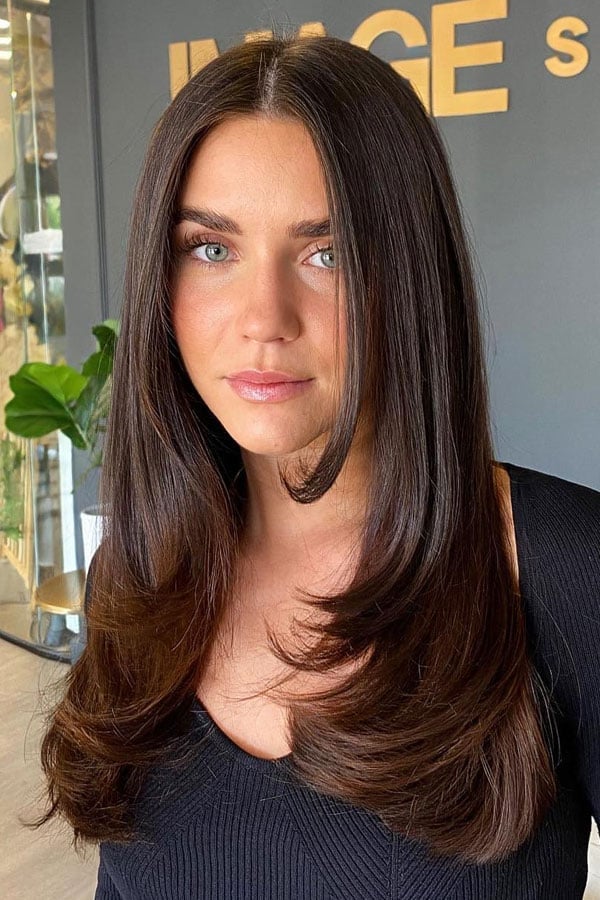
A one-length cut on thick, straight hair can feel heavy and pyramid-shaped by lunchtime. These sculpted layers, starting mid-length and progressing toward the ends, solve that by carving out movement without removing the weight entirely. The subtle lighter ends catch the wave bends, making the layers look deliberate. This is a cut for someone who wants the length of mid-back hair but the swing of something shorter.
Ask your stylist for mid-back length with sculpted long layers. Compared to a uniform blunt cut, these layers cost you about three inches of visual thickness but gain you a silhouette that moves when you turn your head. The soft wave is done with a large barrel curling iron, wrap each section away from the face and brush through once cool. A trim every eight weeks keeps the layers defined.
Collarbone Shag With Blunt Bangs

Wondering what to do with thick wavy hair that refuses to hold a sleek blowout? A collarbone shag with blunt bangs is the autumn equivalent of pulling on a leather jacket: it does the work for you. The chunky face-framing layers cut into the waves give the hair shape without requiring you to style it into submission, and the blunt bangs add a graphic edge that balances the shag’s choppiness. The medium brown with subtle highlights keeps the look modern.
Ask your stylist for a collarbone shag with blunt bangs and face-framing layers. This is a cut for cool-weather seasons when you want to tuck a sweater collar around the ends and still have a silhouette. Bangs need a trim every four weeks, but the shag can stretch to ten weeks before it loses its structure.
Mid-Back Curly Shag With Curly Bangs

Curly hair at mid-back length often falls into one of two camps: triangle-shaped from too much weight, or shapeless from too much length. A shag with multiple layers, cut into thick dark brown curls, solves both problems by removing bulk from the interior while leaving the perimeter heavy. The curly bangs are the critical detail. They shorten the visual front of the hair, which keeps the face from being swallowed by volume.
Ask your stylist for mid-back length curly shag with curly bangs. This cut genuinely flatters thick, high-density curls that can hold a shape on their own. Curl types that are fine or low-density tend to collapse under the layering, pass if your strands are sparse. The middle parting and air-dried finish are not a styling choice but a necessity: a diffuser adds volume, and this cut already has plenty. Trim every ten to twelve weeks to maintain the shape without losing length.
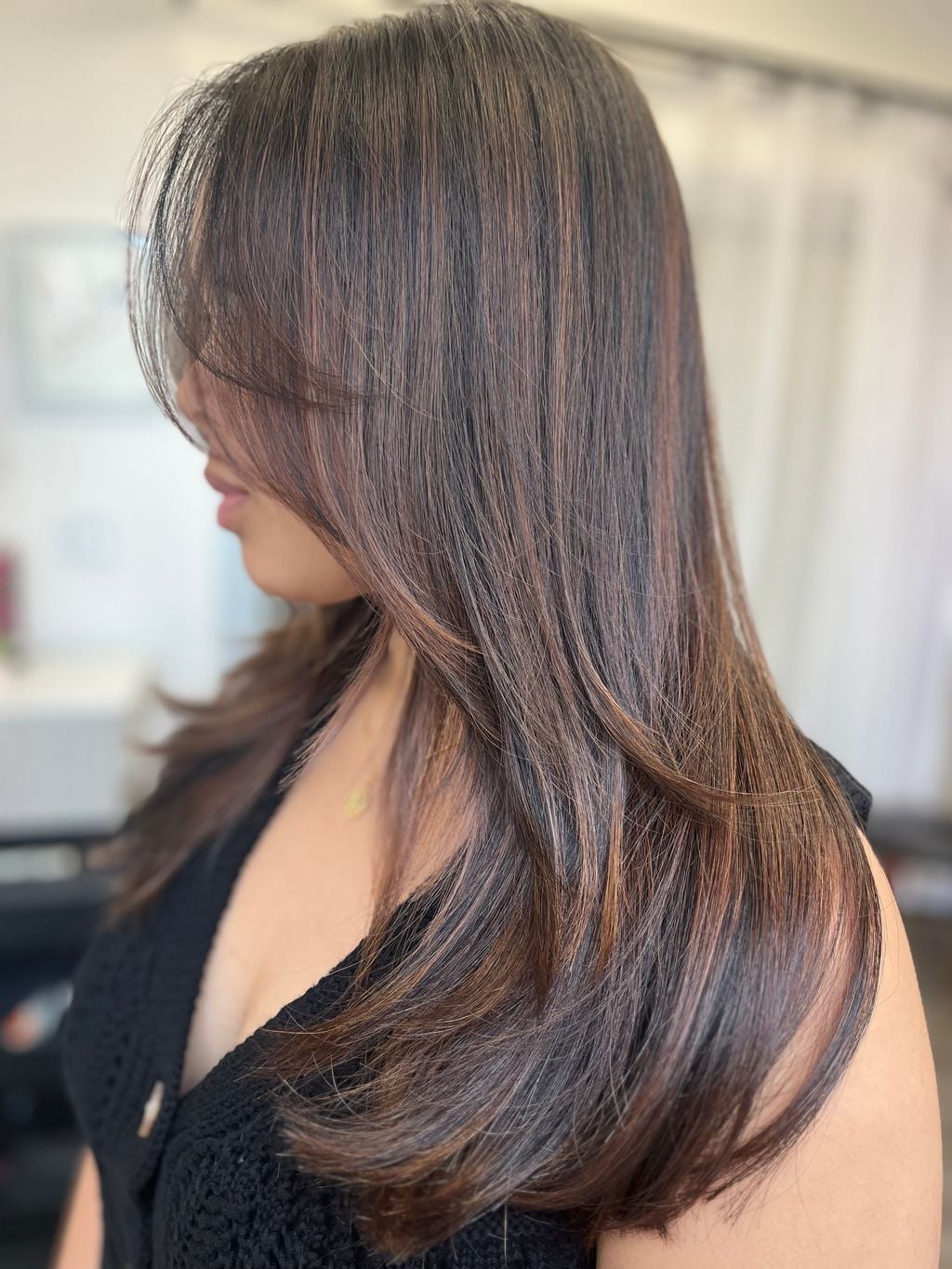
Collarbone Dark Brown Layers With Curtain Bangs
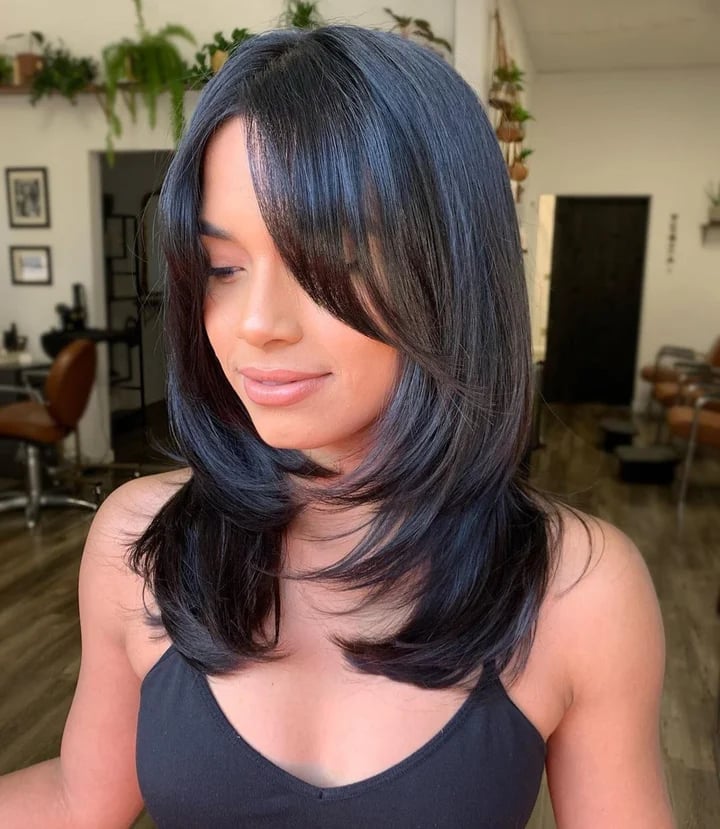
On thick, straight hair, the trick is to ask for long face-framing layers that start around the collarbone, so the weight stays put while the front pieces do the work. The curtain bangs, parted to the side, soften the line without committing to a full fringe. Ask your stylist for: collarbone length with long face-framing layers and curtain bangs. This works best on dense hair that can handle the removal of bulk without going wispy. A flat iron keeps the blowout smooth and the bangs behaving; expect a trim every six to eight weeks to preserve the shape.
Mid-Back Black Hair With Face-Framing Pieces
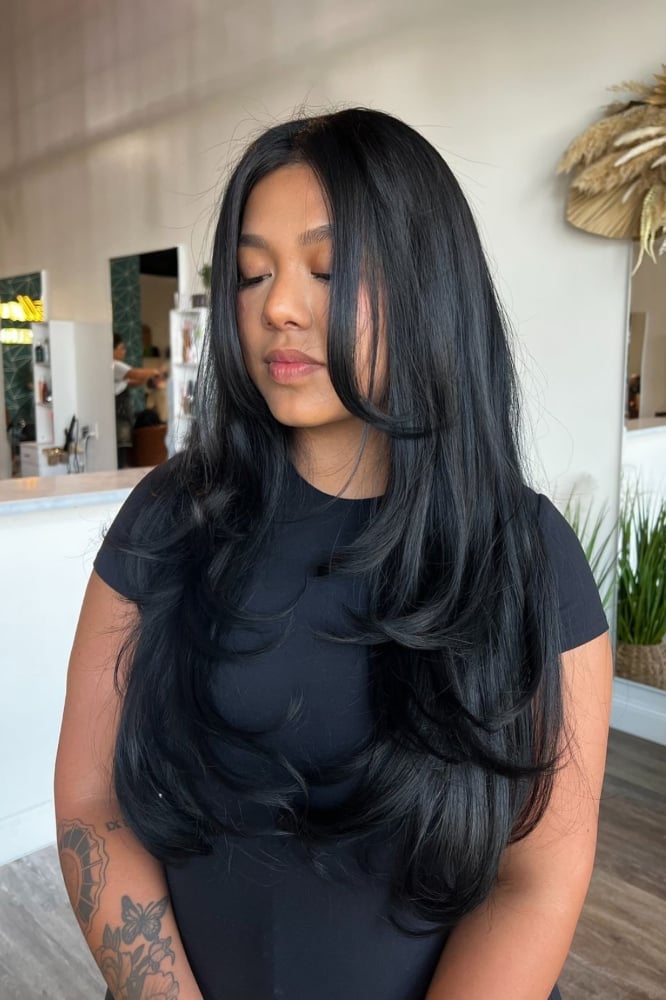
Can thick, straight black hair at mid-back length feel heavy? Yes, which is exactly why the face-framing pieces matter here. Long layers begin around the collarbone and extend to mid-back, with soft front sections that break up the mass. Ask your stylist for: mid-back length with long layers and face-framing pieces. A middle part lets the pieces fall naturally, and air-drying is fine for texture, but a smoothing serum keeps the finish polished. The trade-off: without styling, the pieces can blend back into the length, so expect to spend a few minutes coaxing them forward. A trim every eight to ten weeks keeps the shape honest.
Mid-Back Wavy Hair With Blonde Balayage
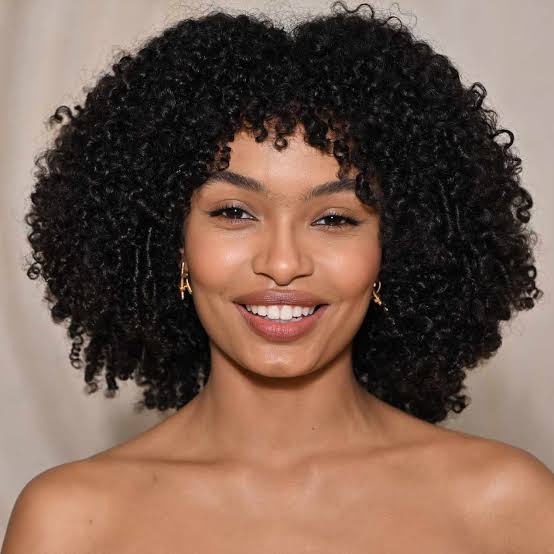
The blonde balayage here is painted freehand, starting lower on the lengths so the dark brown base stays rooted at the crown. Long layers frame the face and pair with wispy curtain bangs, which blend into the waves rather than sitting as a separate piece. Ask your colorist for: mid-back length with long layers, curtain bangs, and blonde balayage. On medium-textured wavy hair, the color adds dimension that catches the movement. A texturizing spray and a scrunch revive the wave pattern; a toning appointment every eight to ten weeks keeps the blonde from going brassy.
Collarbone Shag With Face-Framing Layers
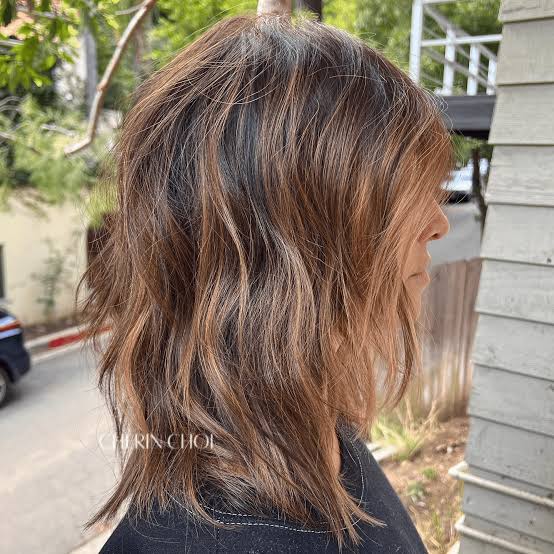
A collarbone shag with visible layers and curtain bangs is a precise cut that hides its complexity well. The dark brown base with subtle blonde highlights gives the wavy blowout depth, while the middle part lets the face-framing layers fall symmetrically. Ask your stylist for: collarbone shag with face-framing layers and curtain bangs. It suits thick, wavy hair that can hold the texture without falling flat. The honest drawback: this is a salon-dependent shape, and once the layers grow out, the shag loses its rhythm, so plan on a trim every six to eight weeks.
Final Thoughts
For fine hair, ask for layers that start at the cheekbones or jawline and avoid thinning the ends. For thick, wavy hair, opt for longer layers to prevent excessive volume.
- Trim face-framing layers every 6-8 weeks to maintain shape.
- Use a round brush when blow-drying to enhance the curve around the face.
- Apply a heat protectant spray before using hot tools.
- Wash hair 2-3 times a week to preserve natural oils and texture.
Face-framing layers are a low-commitment way to refresh your look.