
Simple low maintenance haircuts are the ones that do most of the work before you leave the salon: the shape, the layers, the fringe all cut so your morning routine stays short. The trend right now points to soft face-framing layers and curtain bangs, with lived-in color that grows out without a harsh line.
This collection of 28 cuts spans from cropped pixies to mid-back layers, so there is a starting point for fine, thick, curly, or straight hair. Simple Low Maintenance Haircuts solve the real struggles: fine hair that falls flat, a visible grow-out line, or a fringe that refuses to sit. Pick the one that matches your texture and your patience for a blow dryer.
Textured Silver Gray Pixie Cut
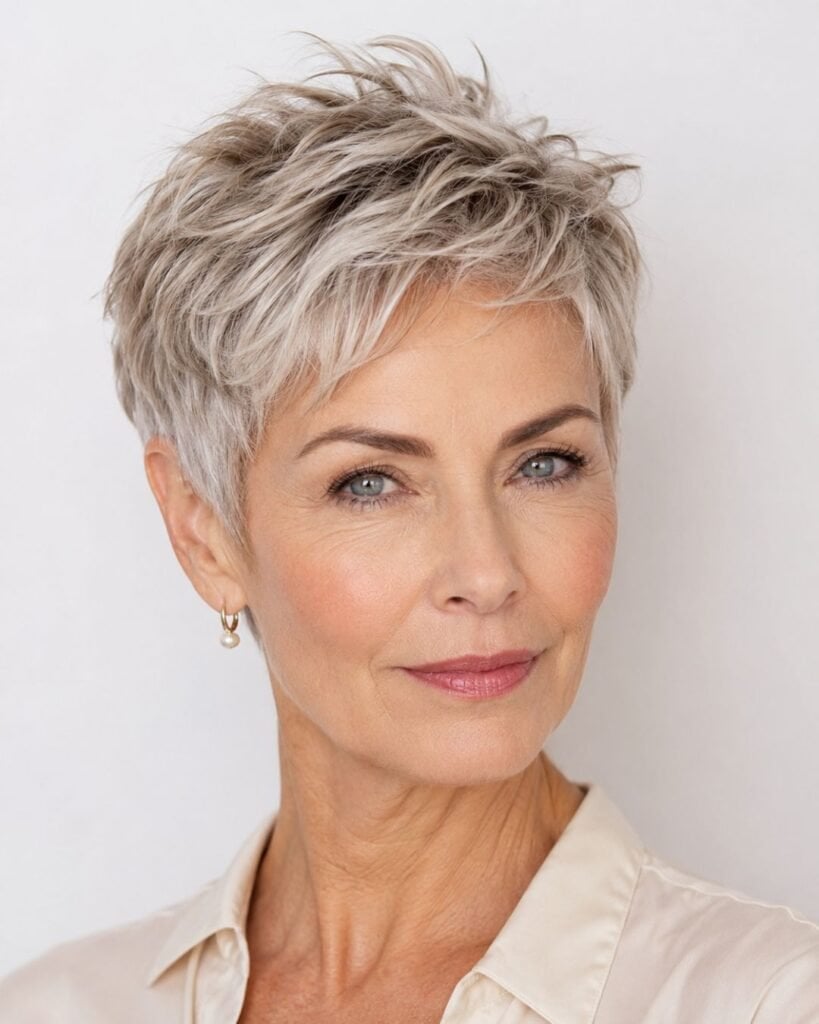
A tousled silver gray pixie cut works because the wispy bangs and ear-length finish do the heavy lifting for you. Fine, wavy hair benefits from the choppy layers, which add volume without any round-brush acrobatics. Ask your stylist for: short, textured pixie with wispy bangs, side part. A dab of texturizing paste on dry hair and a quick tousle is all the styling this needs, and a trim every four to six weeks keeps the shape honest.
Platinum Blonde Textured Pixie Crop

On fine, straight hair, the cut’s internal layers create movement that would otherwise fall flat. Ask your stylist for: short pixie crop, piecey side-swept bangs, platinum blonde. A texturizing spray and fingers produce the lived-in finish, but the color needs a refresh every four to six weeks to keep the blonde from going brassy.
Dark Blonde Short Shag With Balayage
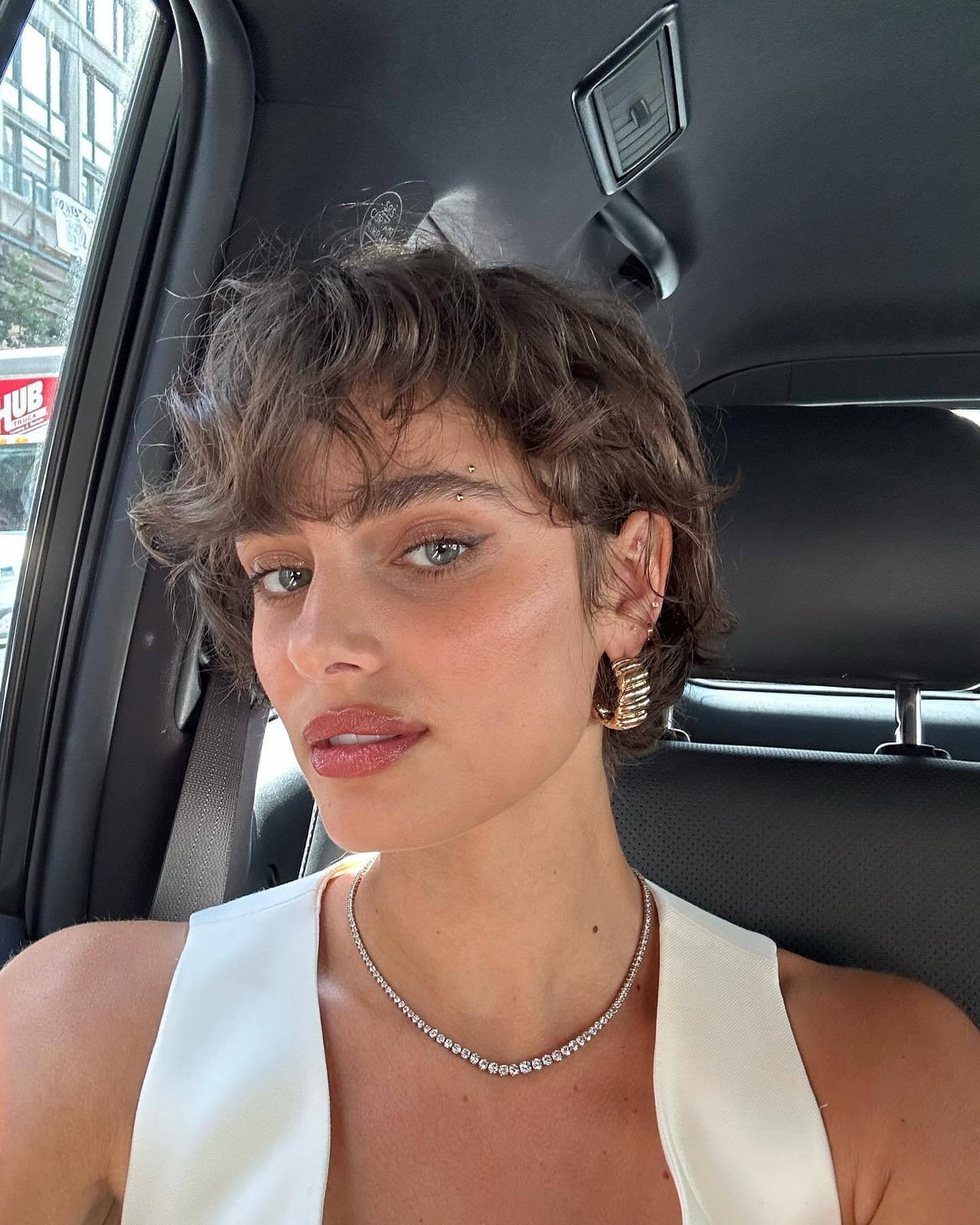
How do you get a shag that doesn’t turn into a helmet? You start with the right words. This ear-length cut relies on choppy layers and short, textured bangs, while the dark blonde balayage adds dimension so the shape doesn’t read as one solid block. Ask your stylist for: short shag, choppy layers, short textured bangs. Medium-density wavy hair takes to the tousled styling naturally, and a trim every six to eight weeks keeps the layers from blending into a bob.
Fine Dark Brown Pixie With Side Fringe

Unlike a blunt pixie, which needs constant reshaping, this fine, straight dark brown version with a side-swept fringe has a bit more give. The short textured fringe is the focal point, and the ear-length cut keeps the rest out of your face. Ask your stylist for: pixie cut, short fringe swept to the side, dark brown. Daily styling means a matte wax worked through the fringe to define it, and a trim every four to six weeks is the price of keeping the lines clean. Round and oval face shapes get the most out of the soft angles.
Layered Dark Brown Pixie With Side-Swept Bangs

The mistake most people make with a layered pixie is asking for it on fine, straight hair and expecting the sweep to hold itself. The side-swept bangs need some help, so the cut has to be layered short enough to give them weight. Ask your stylist for: layered pixie cut, side-swept bangs, dark brown. A styling cream applied to damp hair gives the texture grip, and this one is best left to a salon, since the layers are what make the difference. A trim every four to six weeks keeps the shape from growing out into a mullet.
Textured Warm Brown Pixie With Highlights
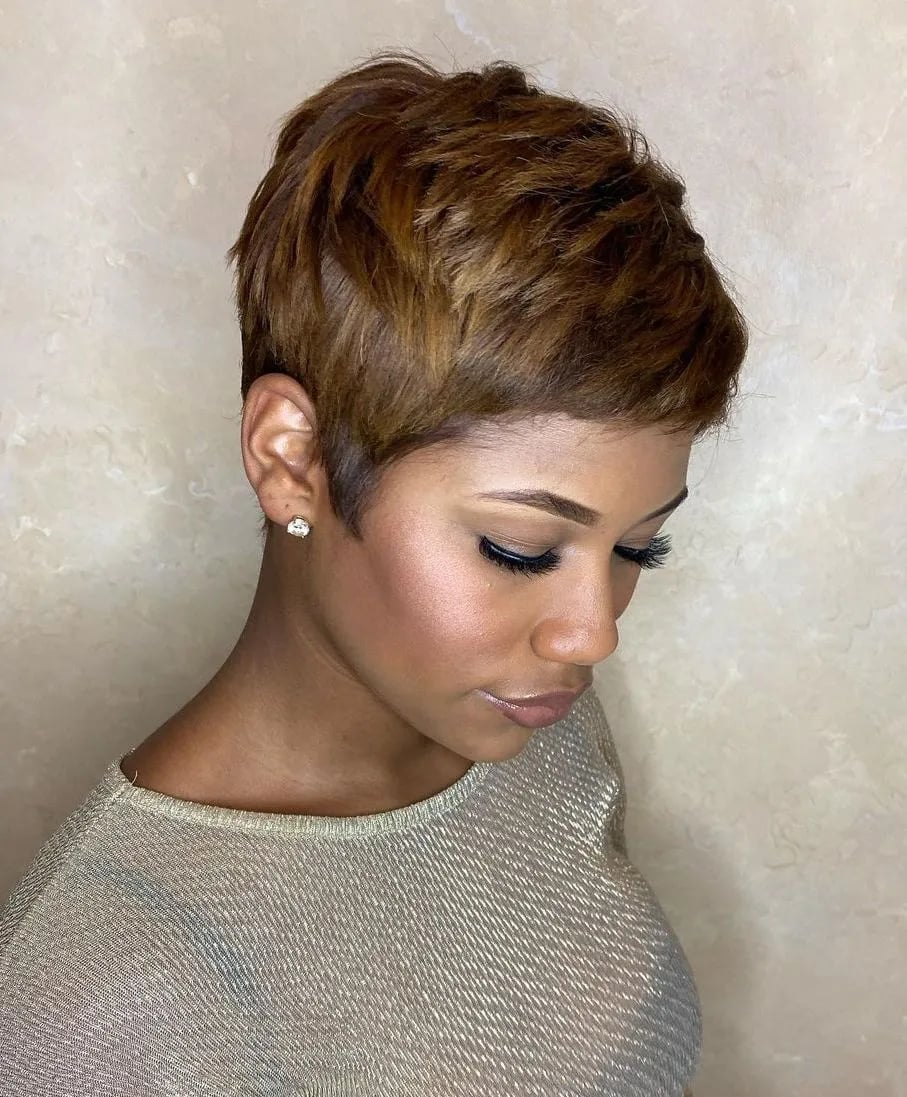
Does a pixie cut work on thick hair, or does that just mean a helmet of frizz? This ear-length version with choppy layers and a side-swept fringe is the answer for straight, dense hair that tends to hold its shape. The warm brown with subtle highlights keeps the texture from reading as one heavy block, which is the usual drawback of thick hair cut this short. Ask your stylist for: short pixie, choppy layers, side-swept fringe, warm brown with highlights. A texturizing spray scrunched through damp hair gives the lived-in finish, and a trim every four to six weeks is non-negotiable to keep the shape from growing out into a wedge.
Curly Dark Brown Layered Crop
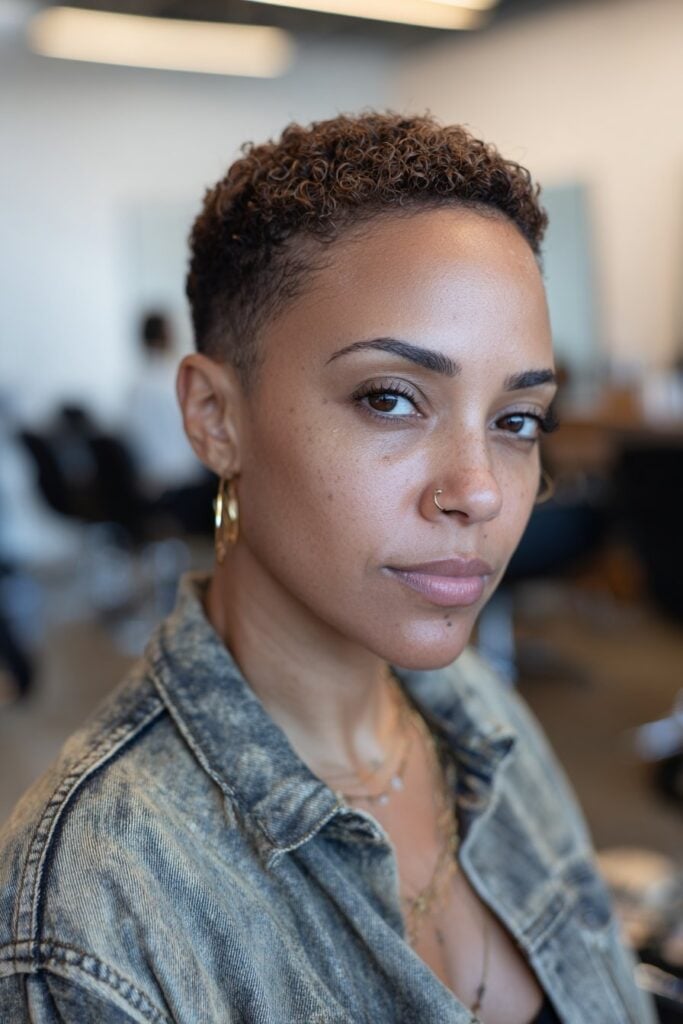
The design of this curly layered crop is built around the fade on the sides and back, which creates contrast so the top can stay soft. Short, wispy bangs frame the forehead without adding bulk, and the dark brown base with blonde highlights gives the fine curls some depth. Air-drying is key: a curl-defining cream worked through damp hair, then hands off. The texture dries into a tousled finish that looks deliberate, not messy. Ask your stylist for: short layered crop, wispy bangs, air-dried texture. A trim every six to eight weeks keeps the fade clean and the bangs from getting in your eyes.
Air-Dried Wavy Chin Bob
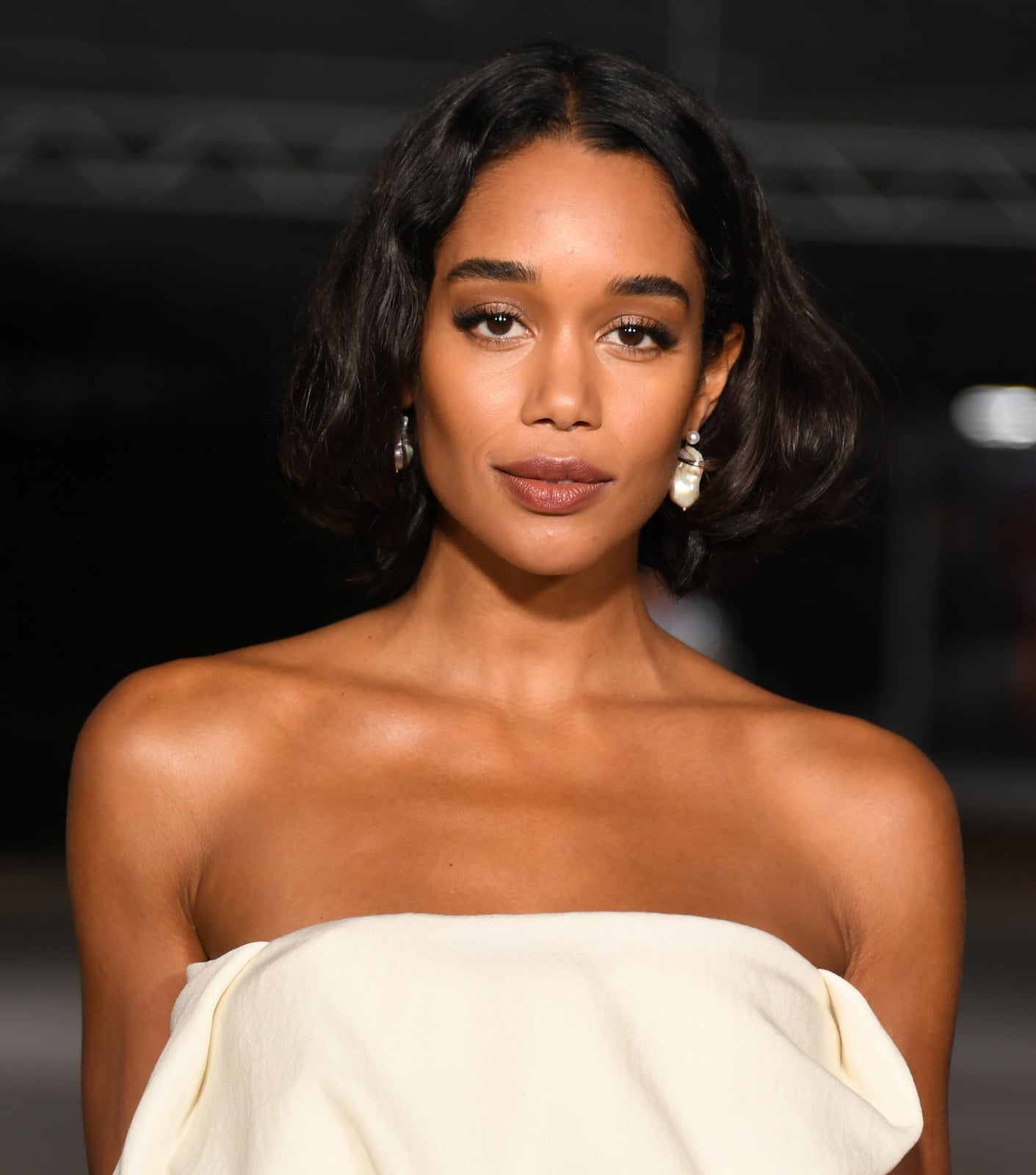
A blunt bob usually signals a strict blow-dry routine, but this chin-length version with a side parting and subtle waves is the exception. The medium, wavy texture air-dries into a glossy finish that skips the round brush entirely. The blunt cut gives the waves a clean line so the shape holds its structure, even when you do nothing but scrunch. A texturizing spray on damp hair encourages the wave pattern, and the side part keeps it from falling flat. Ask your stylist for: chin-length blunt bob, air-dried texture, side part. A trim every eight to ten weeks preserves the edge, which is what makes this a true low-maintenance cut.
Chin Length Ash Blonde Blunt Bob
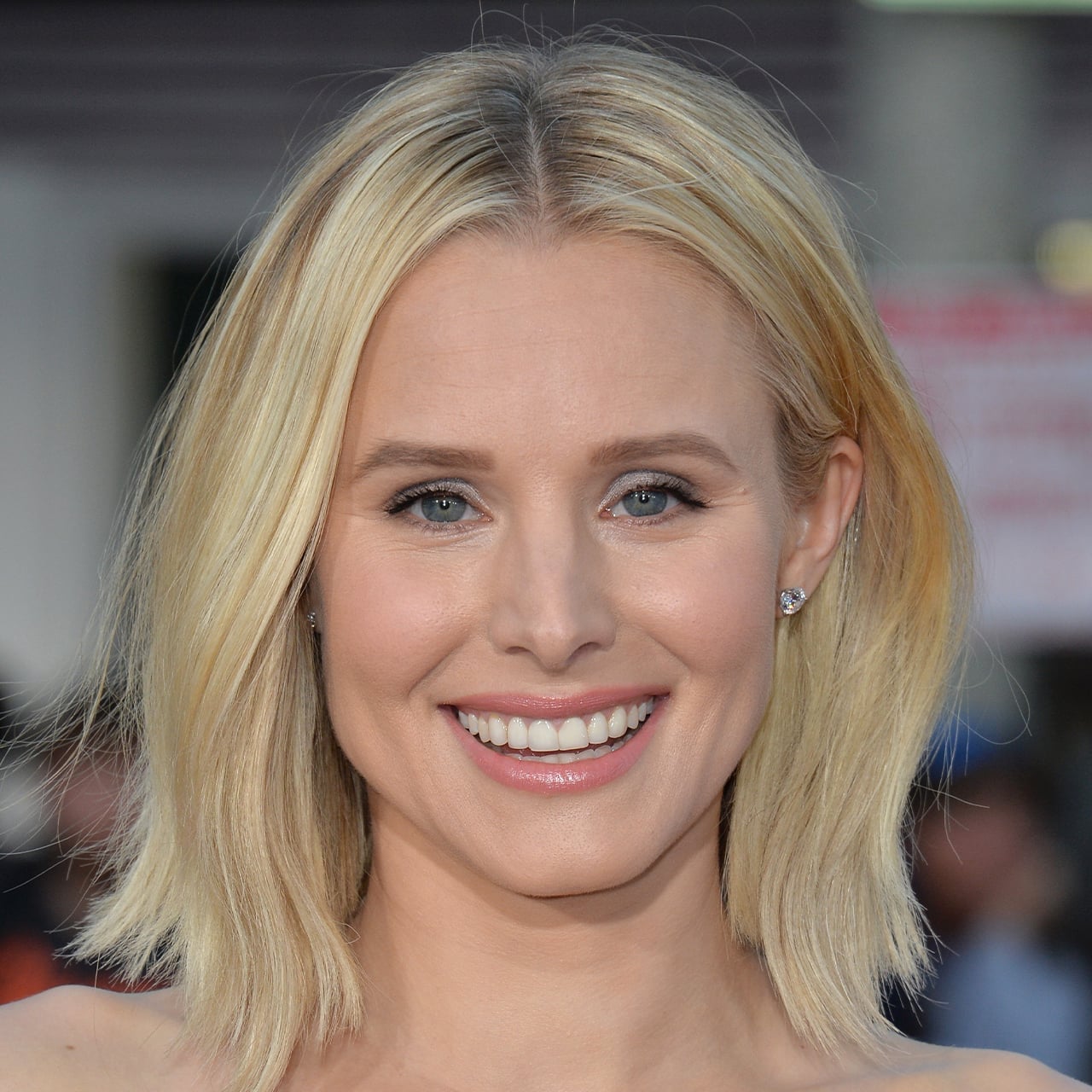
How do you ask for a blunt bob that doesn’t end up looking like a helmet? Start with the words, not the picture. This chin-length ash blonde version has a straight finish and the blunt cut is what gives fine hair its weight and swing. There are no bangs to negotiate, just a clean line that sits at the chin. Ask your stylist for: chin-length blunt bob, straight finish, side part. The key is specifying the straight styling, since a blunt bob on fine hair can look flat if the cut is not precise. A smoothing cream gives it the sleek finish, and a trim every six to eight weeks keeps the line sharp.
Classic Dark Brown Chin Bob
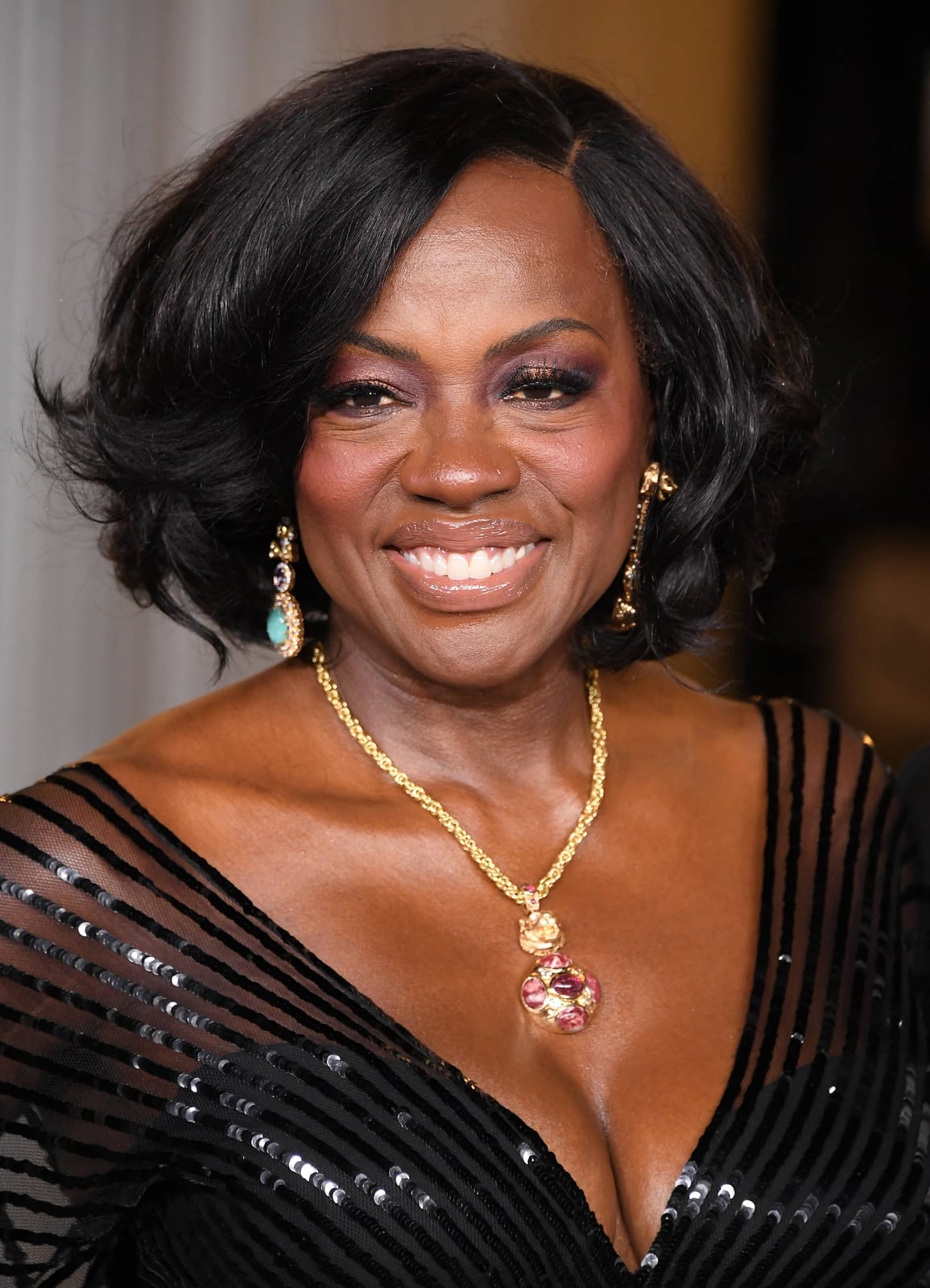
Compared with the air-dried wavy bob, this classic dark brown chin bob asks for a bit more effort, but it rewards you with a polished finish. The thick, wavy texture takes a blowout well, and the soft waves with a side parting give it a rounded shape that flatters most face shapes. The drawback is that this one needs a large barrel curling iron to get the waves to sit right, and it won’t air-dry into the same finish. Ask your stylist for: chin-length bob, soft waves, side part. A trim every eight to ten weeks keeps the ends healthy and the shape from growing out into a shag, which is not what you signed up for.
Ash Blonde Choppy Shag With Wispy Bangs

The trick to a shag that doesn’t look like you lost a fight with a pair of kitchen shears is understanding where the choppiness lives. On fine, wavy hair, those short, choppy bangs and chin-length layers need precise placement, or the texture reads as damage rather than design. A side part helps the wispy bangs sit naturally. Ask your stylist for: choppy shag, wispy bangs, ash blonde with balayage. This is a DIY haircut only if you are comfortable with point-cutting into dry hair, and even then, a salon is safer for the balayage placement. A trim every six to eight weeks keeps the shape sharp.
Collarbone Lob With Face-Framing Layers

Does a lob actually look good on thick, wavy hair, or does it just turn into a triangle? It works, provided the face-framing layers and curtain bangs are cut into the weight, not tacked on top. The collarbone length keeps the shape from bouncing up too short. Ask your stylist for: collarbone lob, soft face-framing layers, curtain bangs. A round brush and a blow-dryer on the bangs and front sections give the polished finish, while the rest can dry with the wave pattern. Plan a trim every six to eight weeks. It suits round and heart face shapes best.
Honey Blonde Collarbone Lob With Curtain Bangs

A collarbone lob on fine, straight hair can look flat fast, so the design has to do the volume work. The honey blonde highlights add dimension, and the curtain bangs create the illusion of movement at the front. The side part helps the bangs sweep rather than sit as a solid fringe. Ask your stylist for: collarbone lob, soft layers, curtain bangs, honey blonde. A blowout with a round brush on the bangs and a spritz of dry shampoo at the roots the next day keeps it from going limp. A trim every six to eight weeks maintains the shape.
Dark Brown Collarbone Lob With Balayage
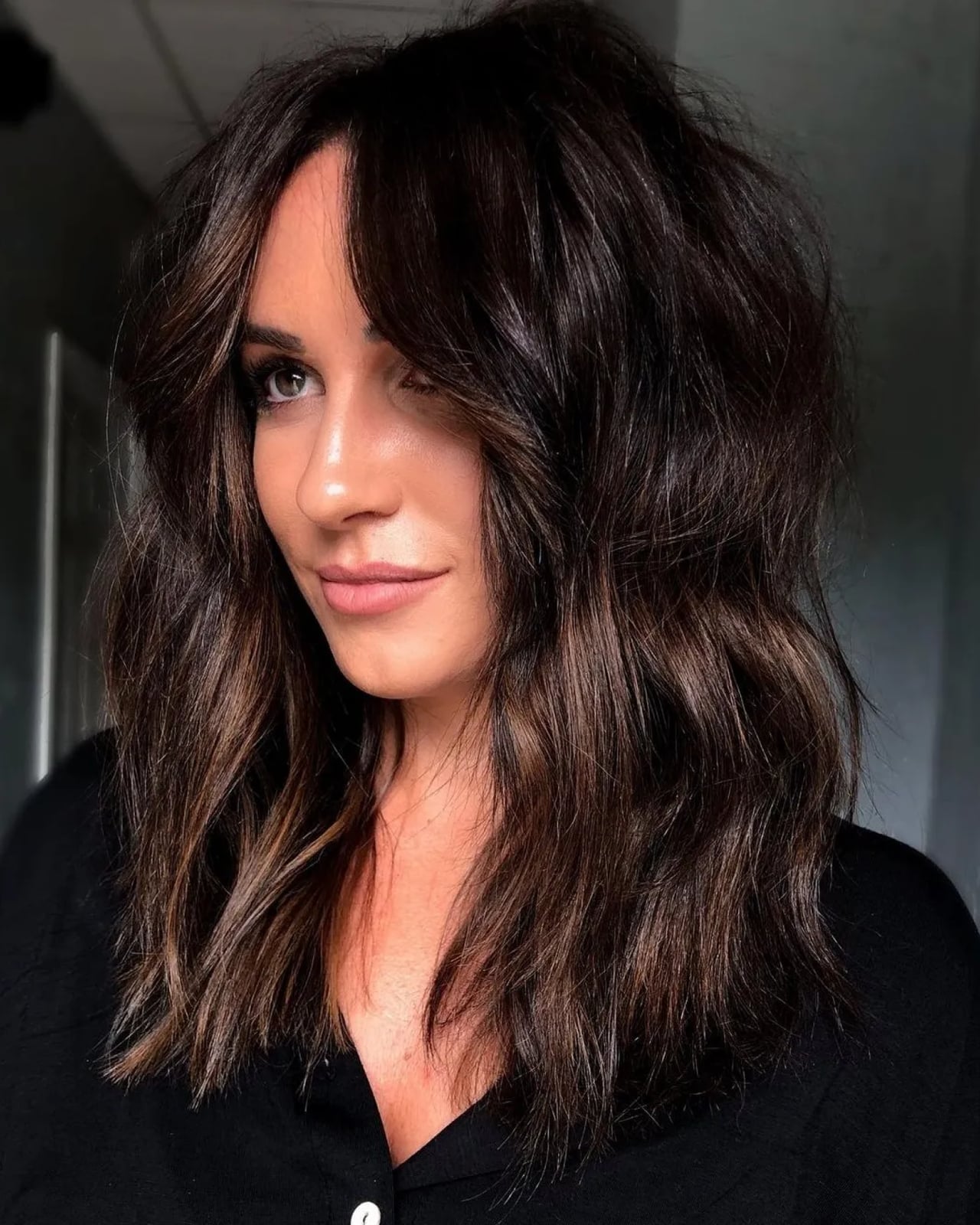
The balayage in this collarbone lob is painted onto the face-framing pieces and the mid-lengths, leaving the root line dark so the grow-out is invisible for months. Medium-density, wavy hair holds the loose wave pattern without needing heat on every section. The drawback is that the lighter pieces can feel dry if the balayage is lifted too much, so a bond-repairing mask once a week helps. Ask your stylist for: collarbone lob, face-framing pieces, dark brown with balayage. A wave-enhancing cream on damp hair and a diffuser produce the texture with minimal effort.
Collarbone Shag With Choppy Layers

How do you ask for a shag without getting a dated look? Focus on the words. A collarbone-length shag with choppy layers and wispy bangs needs the layers to be cut into the interior, not just the perimeter, so the texture looks modern. The middle part and subtle highlights keep the dark brown base from looking heavy. Ask your stylist for: collarbone shag, choppy layers, wispy bangs. Bring a reference photo to show exactly how short you want the wispy bangs and how much weight you want removed from the ends.
Collarbone Lob With Natural Waves

The trick to air-dried waves on a lob with curtain bangs is timing, not technique. Apply a leave-in conditioner to sopping wet hair, scrunch once, then walk away until it’s 80 percent dry. Scrunch again only at that point, or the wave pattern falls apart before it sets. This works best on medium-density wavy hair; fine hair needs a lighter product, and very thick hair needs sectioning. Ask your stylist for: collarbone lob, soft layers, curtain bangs, natural waves. The middle parting keeps the face-framing pieces symmetrical, so your bangs land where they should without any pinning.
Medium Brown Shag With Collarbone Layers

A collarbone shag with curtain bangs and a side parting is a cut that rewards medium-density wavy hair and punishes fine straight hair. The textured layers give the waves somewhere to land, and the blonde highlights keep the shape from reading as one heavy block. If your hair is thin or poker-straight, the shag will look more like a mullet than movement, because the layers lack the weight to separate. Ask your stylist for: collarbone shag, curtain bangs, medium brown with highlights. The downside is that the layers need a salon cut every six to eight weeks, or the shape softens into an unflattering round blob.
Dark Brown Angled Collarbone Bob
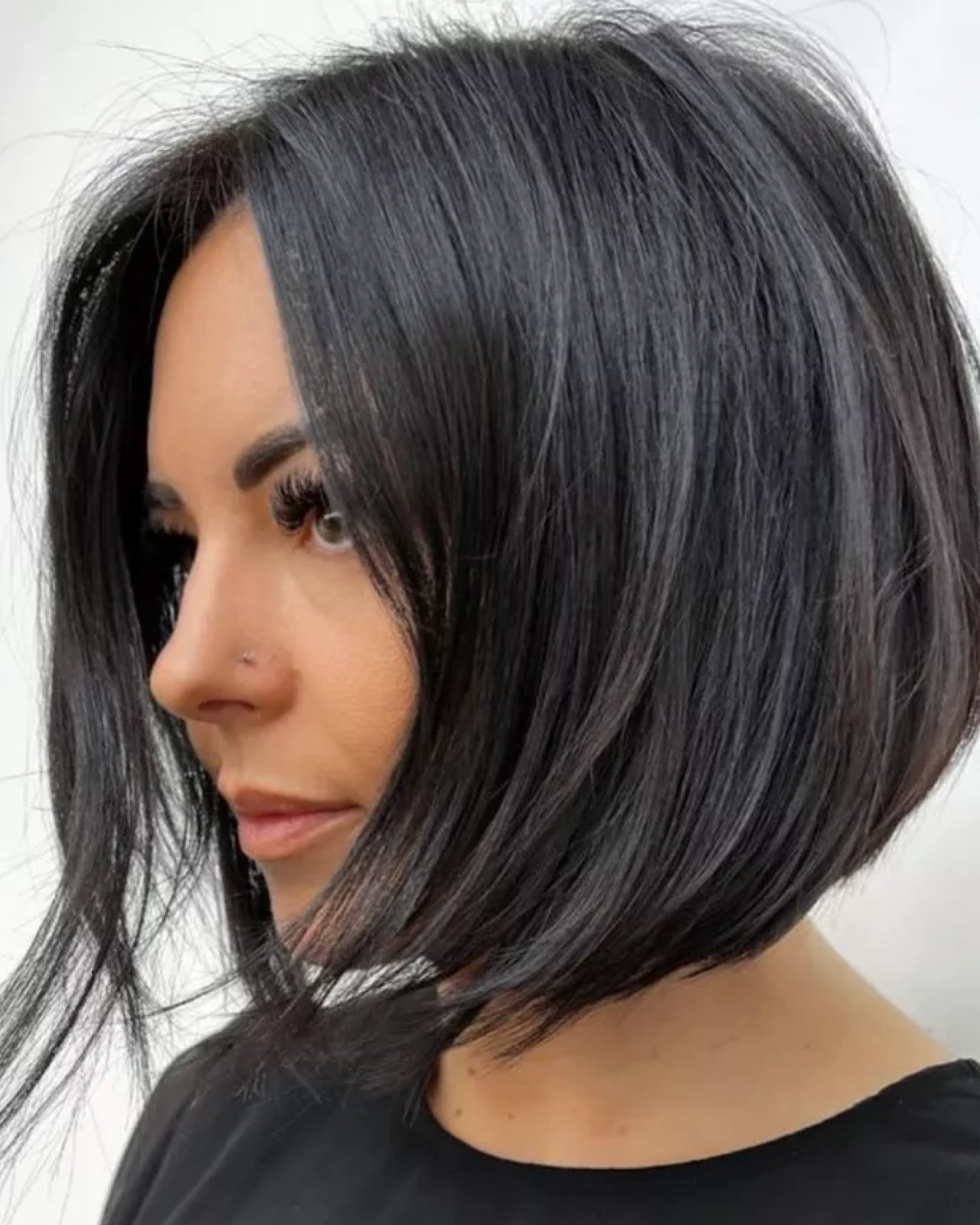
An angled collarbone bob with side-swept bangs is not the same as a blunt bob, and the difference shows in the grow-out. The sharp angle from the front to the back means the front pieces stay longer, so the shape holds for about eight weeks before the line starts to soften. On fine straight hair, the blowout gives the angle its crispness, and a side parting prevents the shorter back from looking chopped. Ask your stylist for: angled collarbone bob, side-swept bangs, dark brown. A trim every six to eight weeks keeps that clean line, or it turns into an accidental A-line.
Shoulder Length Layers With Curtain Bangs

The layering technique here is called point cutting, where the stylist cuts into the ends at an angle rather than straight across. On thick wavy hair, this removes bulk without creating a blunt line that would make the waves look heavy. The curtain bangs are cut long enough to tuck behind the ears, which is the difference between a style that needs daily blow-drying and one that air-dries into place. Ask your stylist for: shoulder length with soft layers, curtain bangs. The DIY version is risky because point cutting on thick hair requires a precise hand. A salon visit is the safer bet.
Blonde Collarbone Shag With Curtain Bangs

What do you say to get a collarbone shag with curtain bangs that actually layers well with your waves? You name the parts. Ask your stylist for: collarbone shag, textured layers, soft curtain bangs, blonde. The textured layers are key for medium-density wavy hair, because they prevent the shag from looking like a single heavy curtain. The curtain bangs should be cut to graze the cheekbones, long enough to air-dry into a soft curve but short enough to stay out of your eyes. The middle parting splits the bangs evenly, and the blonde highlights add dimension so the layers show movement.
Mid-Back Length Long Layers With Caramel Highlights

The real trick with face-framing layers on thick, straight hair is that they actually do what they promise: add movement without sacrificing the weight that keeps the shape from looking stringy. These start around the cheekbones and reach the mid-back length, so the caramel highlights land where they catch light naturally. The middle parting and blowout finish make the layers look deliberate.
Thick, straight hair that is mid-back length is the ideal candidate; finer hair can get lost in the length. Ask your stylist for: mid-back length, long layers, face-framing layers, caramel highlights. The highlights need a refresh every eight to ten weeks, and skipping a trim for more than twelve weeks lets the face-framing pieces lose their shape.
Mid-Back Layers With Subtle Highlights
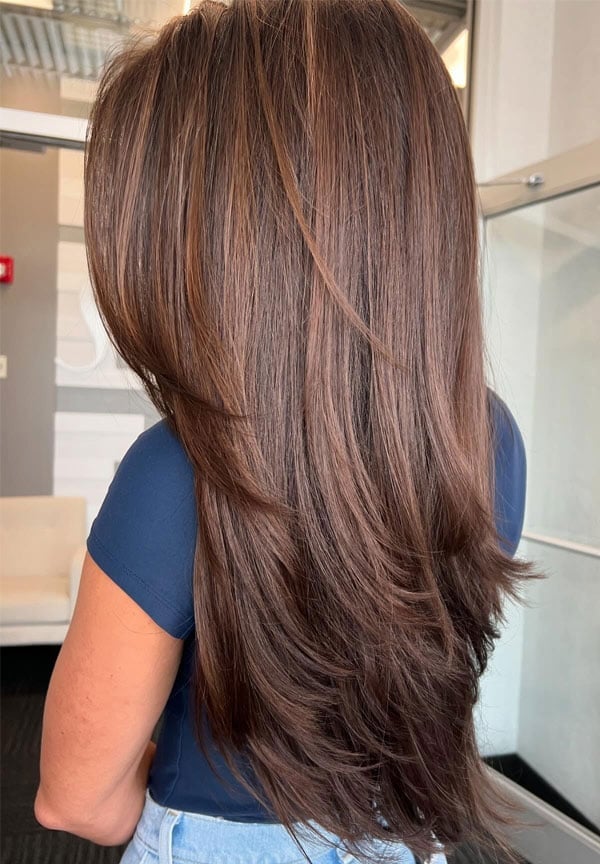
A blowout on mid-back, thick, wavy hair is not a five-minute job. The layers here start around the collarbone and create a soft face-framing effect, which means the hair has enough internal structure to hold the wave pattern without a full round-brush marathon. The subtle lighter brown highlights add dimension without screaming for attention.
The styling time settles around fifteen minutes with a diffuser on medium heat, and a smoothing serum cuts the frizz before it starts. Ask your stylist for: mid-back length, long layers, face-framing effect, subtle highlights. A trim every ten to twelve weeks keeps the ends healthy, and the color can go twelve weeks before the highlights start to look muddy.
Mid-Back Length Long Layers With Natural Waves, Dark Brown

The mistake people make with this cut is assuming that air-dried waves on thick, dark brown hair happen without strategy. They do not. The long, subtle layers and no bangs mean the texture has to do the work, and on thick, wavy hair, that requires a styling product applied to damp strands and a scrunch that actually breaks up the curl clumps.
Getting it right at home is possible, but the salon is where the layers get the precision that stops the shape from falling into a triangle. Ask your stylist for: mid-back length, long subtle layers, no bangs, natural waves. The front-to-side views show exactly how the layers should fall, so bring a photo. A trim every ten to twelve weeks keeps the ends from looking straggly.
Mid-Back Straight Hair With Cascade Layers
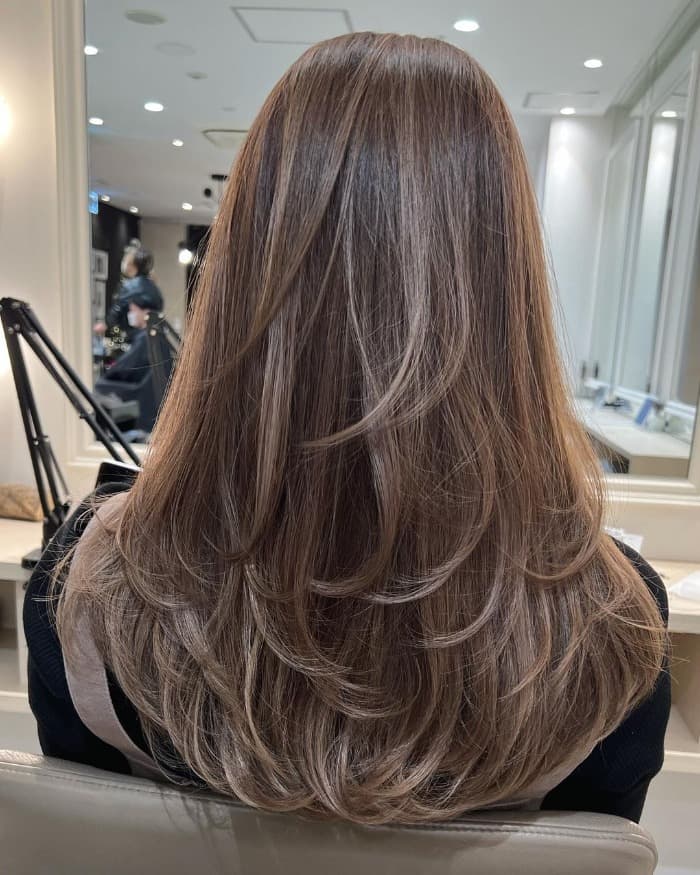
Cascade layers on thick, straight hair are about internal architecture. The layers start shorter near the crown and graduate down the back, creating volume at the top without removing the weight that keeps the mid-back length from going flat. The rich brown base with lighter brown highlights creates movement rather than just chopped ends.
Thick, straight hair is the ideal candidate; finer hair can look sparse with this much internal layering. Ask your stylist for: mid-back length, cascade layers, straight hair. The shorter crown pieces can flip outward during humid weather, so a smoothing balm is your friend. A trim every ten to twelve weeks preserves the graduation.
Ash Blonde Mid-Back Long Layers With Curtain Bangs
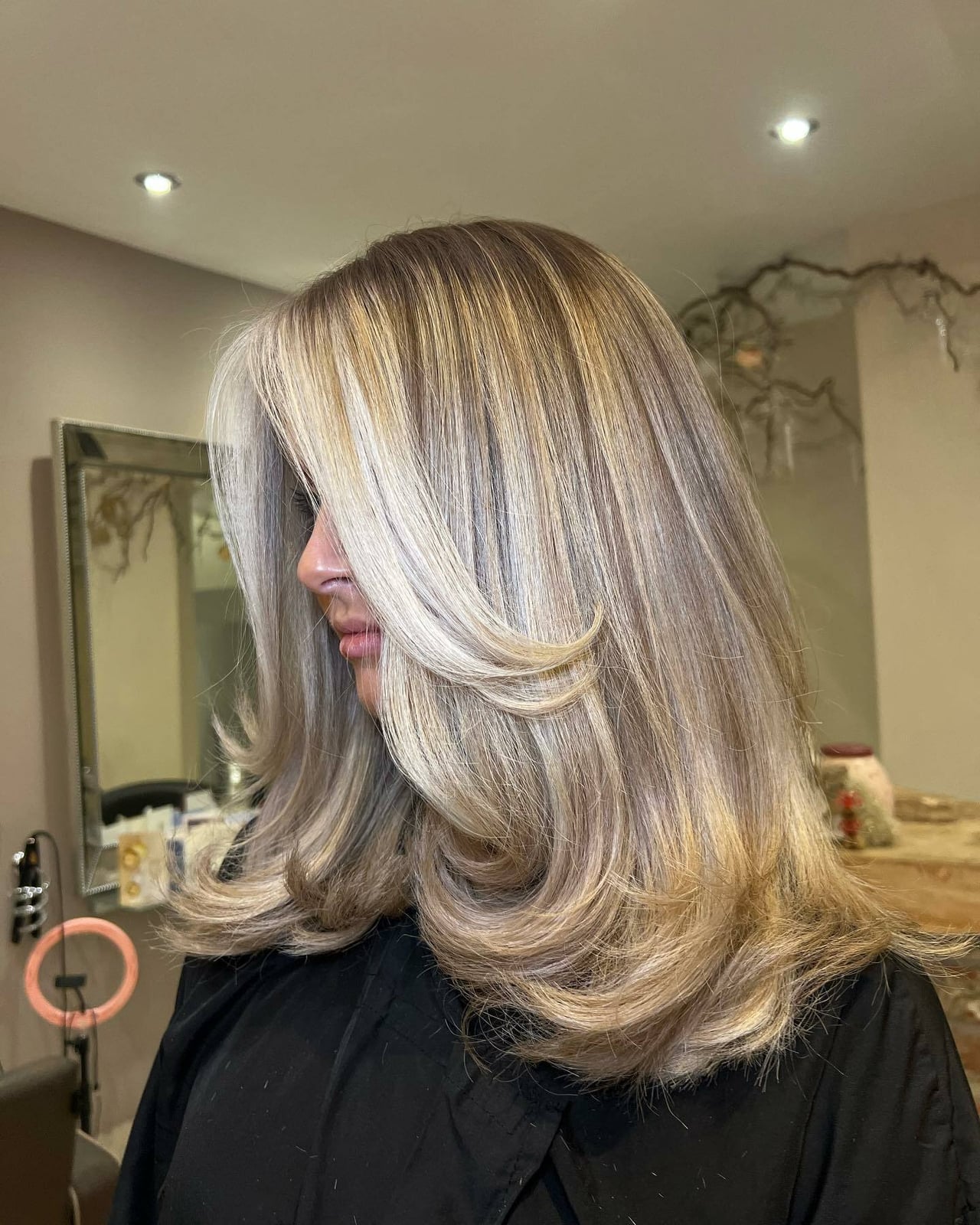
How do you ask for voluminous waves and curtain bangs on thick, wavy hair without getting a triangle shape? You specify the layers and the parting. The long layers here reach mid-back, and the curtain bangs are cut to sweep away from the middle parting, which keeps the volume distributed across the width instead of concentrated at the ends.
Thick, wavy hair at mid-back length handles this shape well, and the ash blonde with highlights keeps the overall look from being one flat color. Ask your stylist for: mid-back length, long layers, voluminous curtain bangs, ash blonde. A bouncy blowout with a round brush is the finishing move, and a trim every ten to twelve weeks keeps the bangs from turning into awkward face-framing chunks.
Ash Blonde Mid-Back Wavy Layers With Curtain Bangs, Close-Up Take
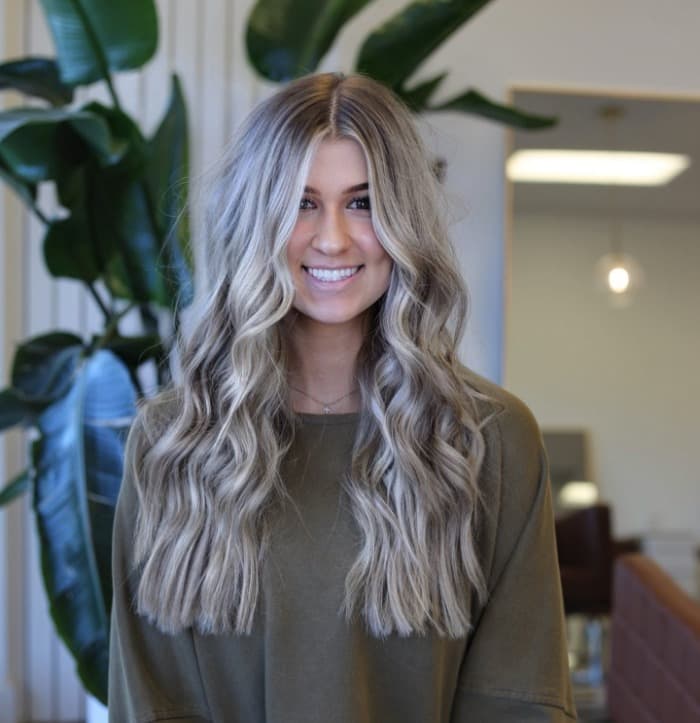
Curtain bangs are a rare feature that suits thick, wavy hair without requiring a flat iron. The mid-back length gives the waves room to move, and the long layers keep the weight from pulling the curl out. This cut is a genuine match for anyone with dense texture who wants simple low maintenance haircuts that still look styled.
Ask your stylist for: mid-back length, wavy layers, curtain bangs, ash blonde. A diffuser attachment on your blow dryer enhances the natural wave pattern, and the ash blonde with highlights keeps the thickness from looking like a solid block. A trim every ten to twelve weeks keeps the layers from growing into a shapeless curtain.
Dark Brown Mid-Back Hair With Curtain Bangs
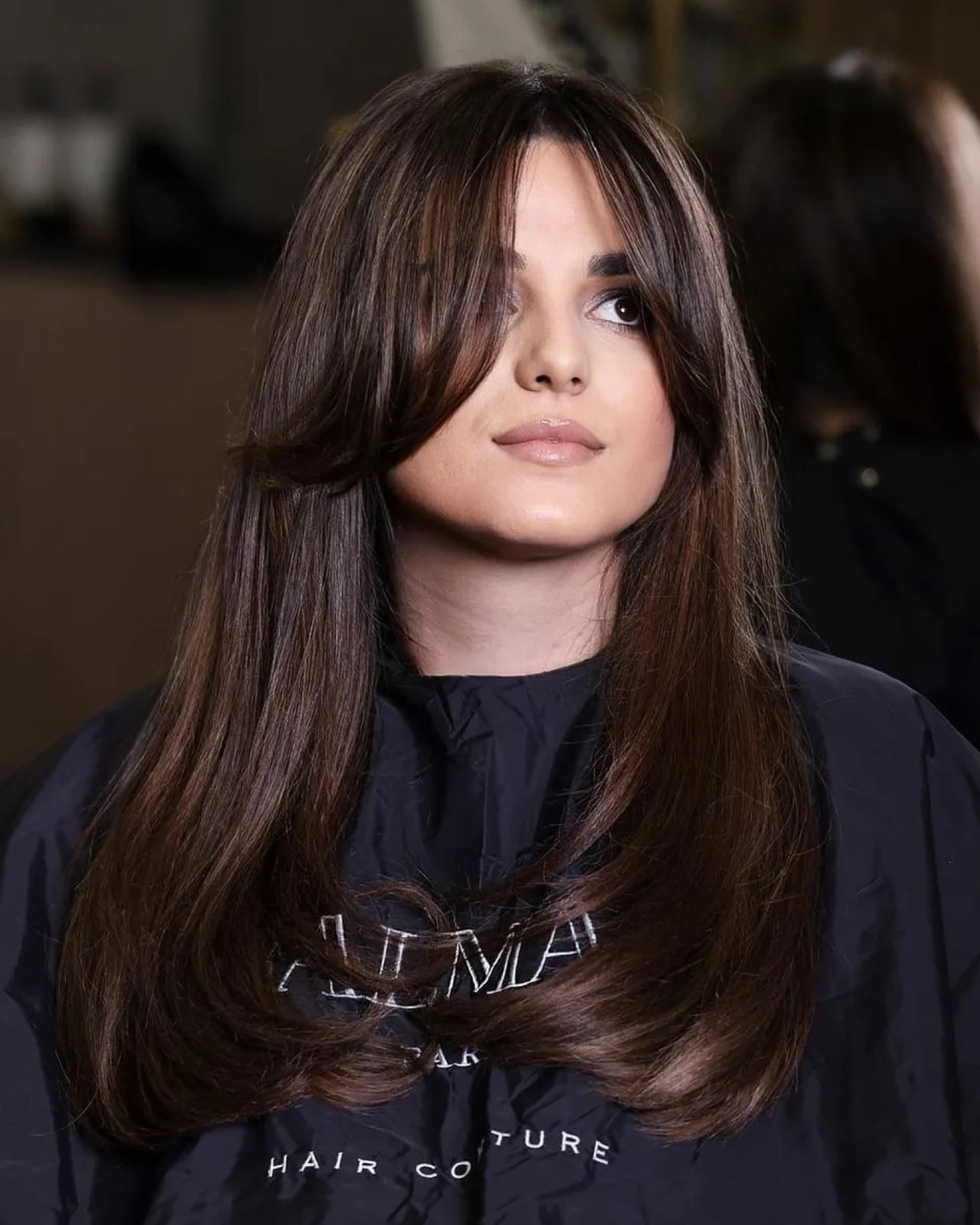
Thick, straight hair at mid-back length can look heavy, but the long layers here break up the mass and let the curtain bangs do the talking. The middle parting and smooth blowout with soft waves at the ends give the style a polished finish that holds for a full day. Ask your stylist for: mid-back length, long layers, prominent curtain bangs, dark brown. Use a round brush while blow-drying, focusing on the ends for those soft waves, and plan a trim every ten to twelve weeks to keep the shape from dragging the whole cut down.
Ash Blonde Chin Bob With Wavy Curtain Bangs
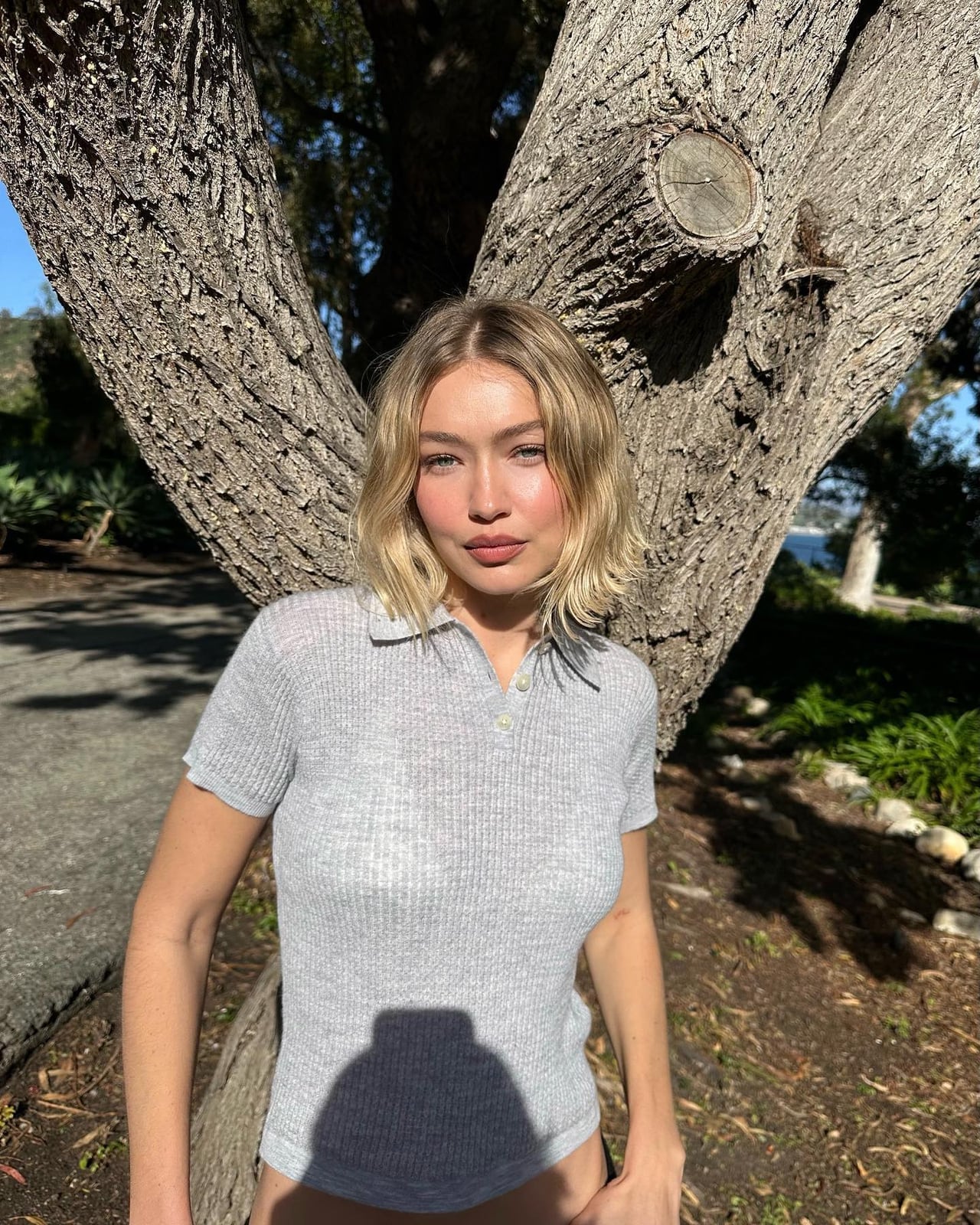
A chin-length blunt bob with wavy curtain bangs is a low-maintenance wash-and-go haircut, provided you work with the wave pattern. On fine, wavy hair, the blunt cut gives the ends density, and the middle parting lets the bangs fall naturally to either side. Ask your stylist for: chin-length blunt bob, soft curtain bangs, ash blonde, air-dried. Apply a wave spray to damp hair and let it air dry for the relaxed finish. The one catch: a blunt bob shows every split end, so a trim every six to eight weeks is non-optional to keep the line clean.
Final Thoughts
For fine hair, stick with a blunt baseline and skip heavy layers to keep fullness. For thick hair, long layers or a shag removes weight and adds movement, so the cut does the work for you.
- Trim blunt bobs every six to eight weeks.
- Refresh curtain bangs every four to six weeks.
- Use a heat protectant before any heat styling.
- Air dry wavy textures with a texturizing spray.
- Deep condition weekly for color-treated hair.
Choose a cut that works with your natural texture for true low-maintenance style.