
The simple textured pixie cut keeps proving that short hair has range. Soft face-framing layers and lived-in color have shifted the focus from rigid shapes to pieces that move with you.
These 25 variations cover the spectrum from a five-minute air-dry routine to a polished undercut. Whether your hair is fine, thick, wavy or curly, there is a version here that solves a specific problem: a fringe that refuses to sit right, a crown that falls flat by noon, or a grow-out line that shows up too fast. The common thread is texture that works for you, not against you.
Vibrant Red Wavy Pixie With Side Swept Bangs
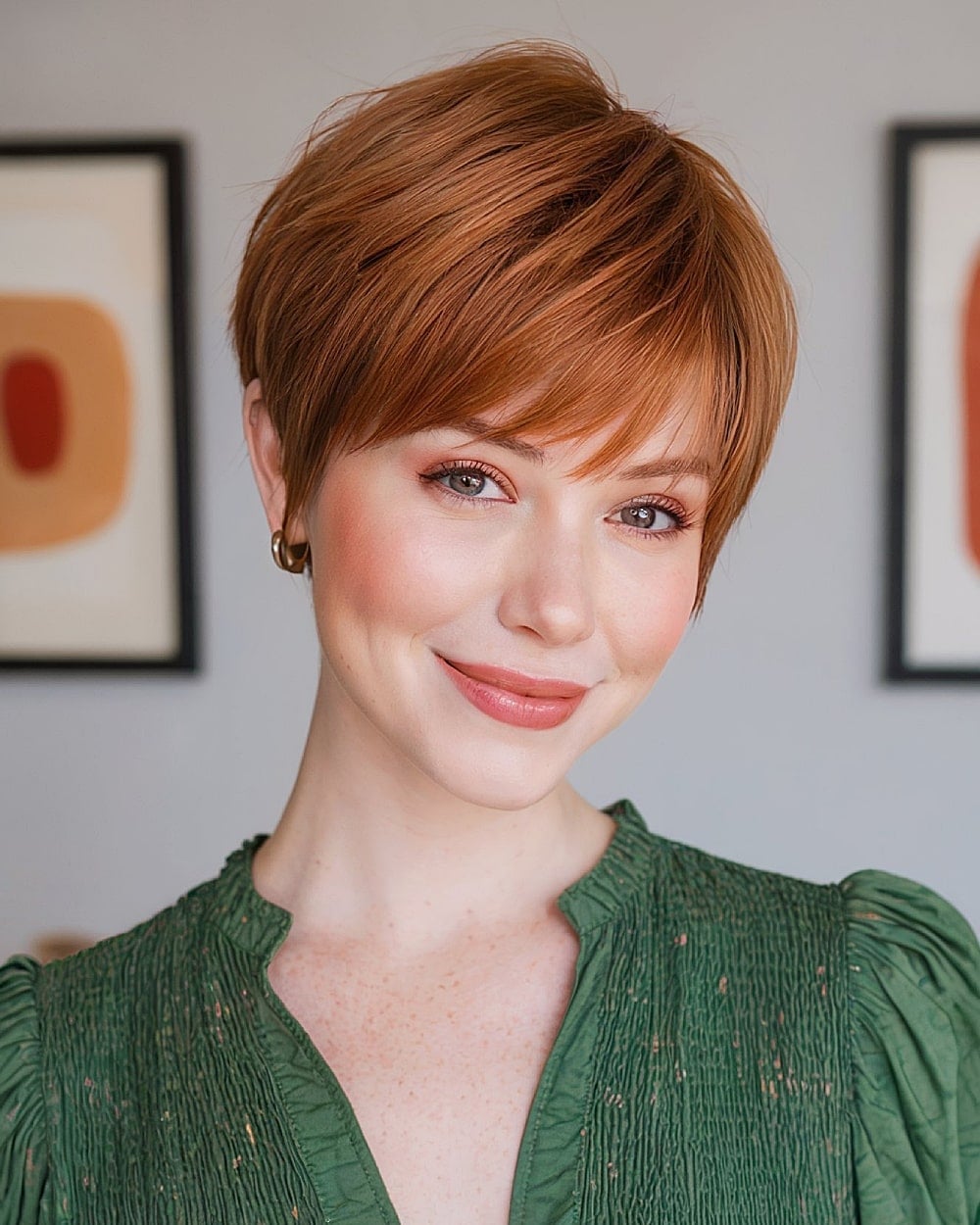
This vibrant red pixie relies on choppy, piecey layers that break up the fine wavy texture, giving it soft, natural volume without heavy styling. Ask your stylist for a vibrant red pixie with textured side-swept bangs at ear length. On damp hair, apply a texturizing spray, then air dry or quickly diffuse to keep the wave pattern defined and the layers visible.
Auburn Pixie With Soft Curtain Bangs
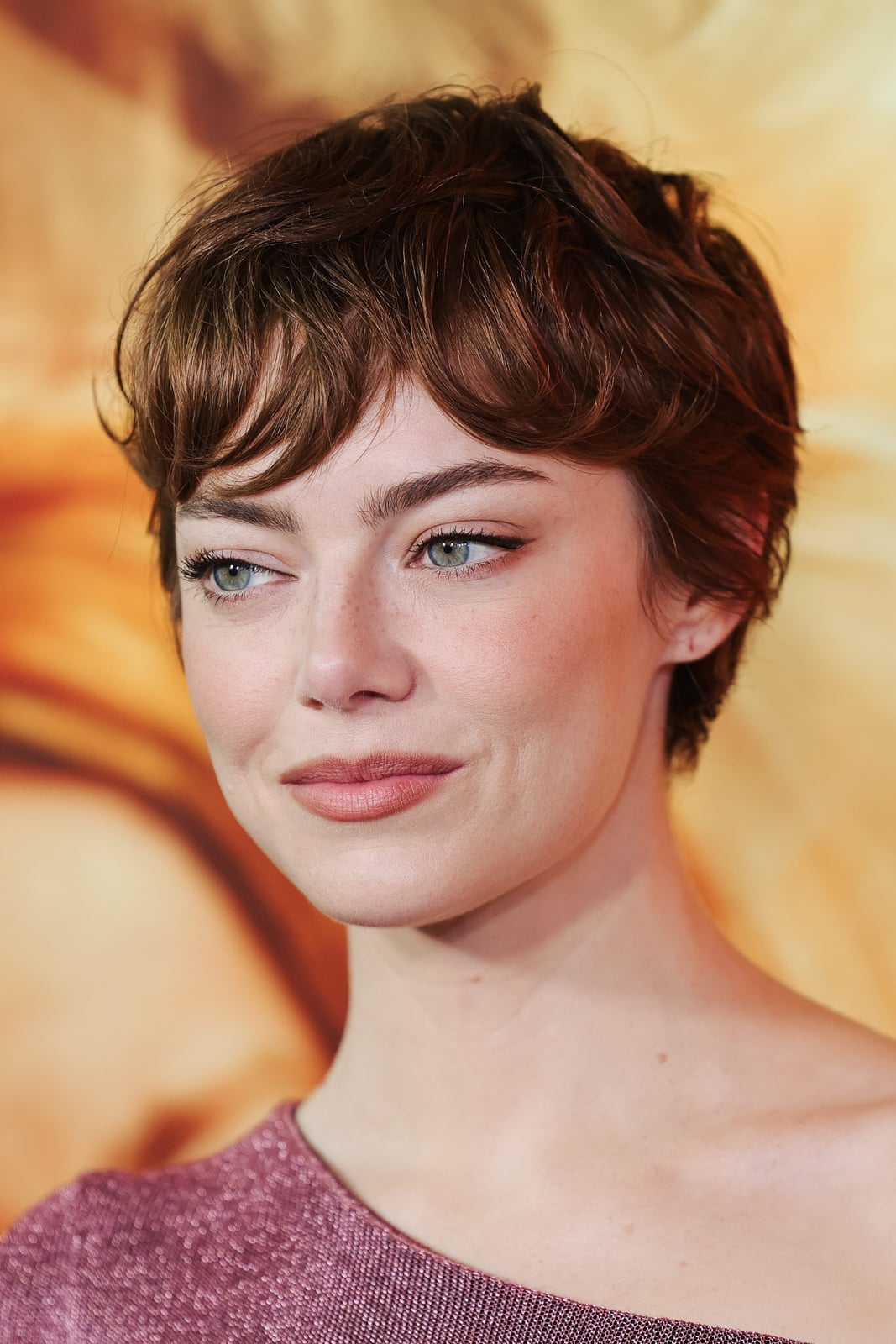
Wondering if curtain bangs work on a pixie? They do, especially when the auburn shade and air-dried wavy texture soften the whole silhouette. Ask your stylist for an auburn pixie with soft air-dried curtain bangs at ear length. The side parting and fine wavy texture create movement that complements oval and heart face shapes, making the cut feel intentional rather than severe.
Dark Brown Pixie With Blonde Highlights
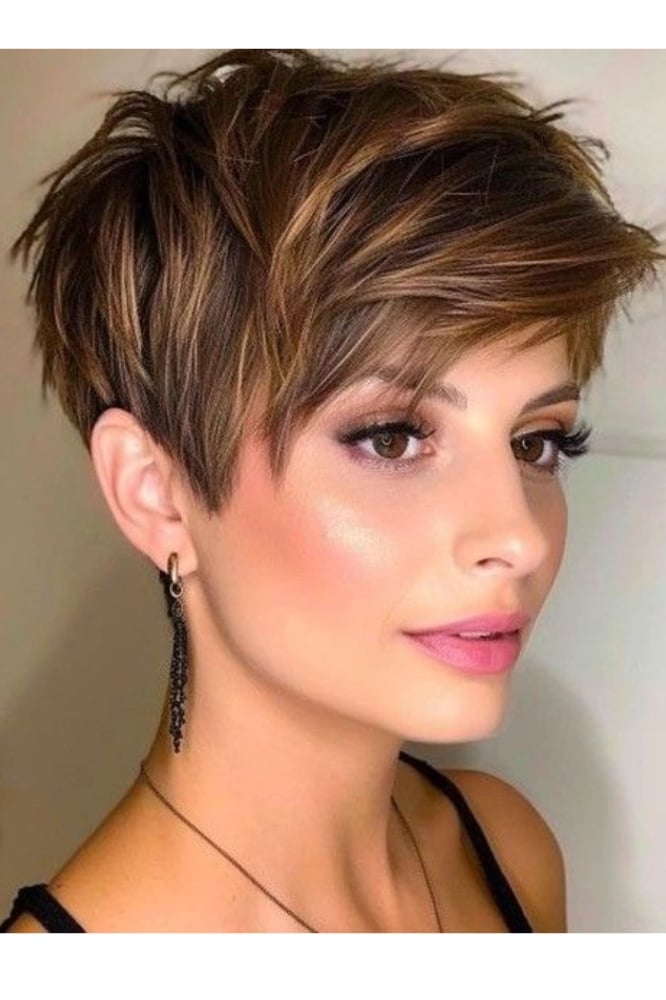
A solid dark brown pixie can feel flat, but adding subtle blonde highlights changes the whole game. Ask your stylist for a dark brown pixie with blonde highlights and wispy side-swept bangs. The wavy thick texture holds the blowout shape well, so the dimension from the highlights and the tousled finish work together. It is a more dynamic version of a classic pixie without requiring constant heat styling.
Choppy Layered Dark Brown Pixie
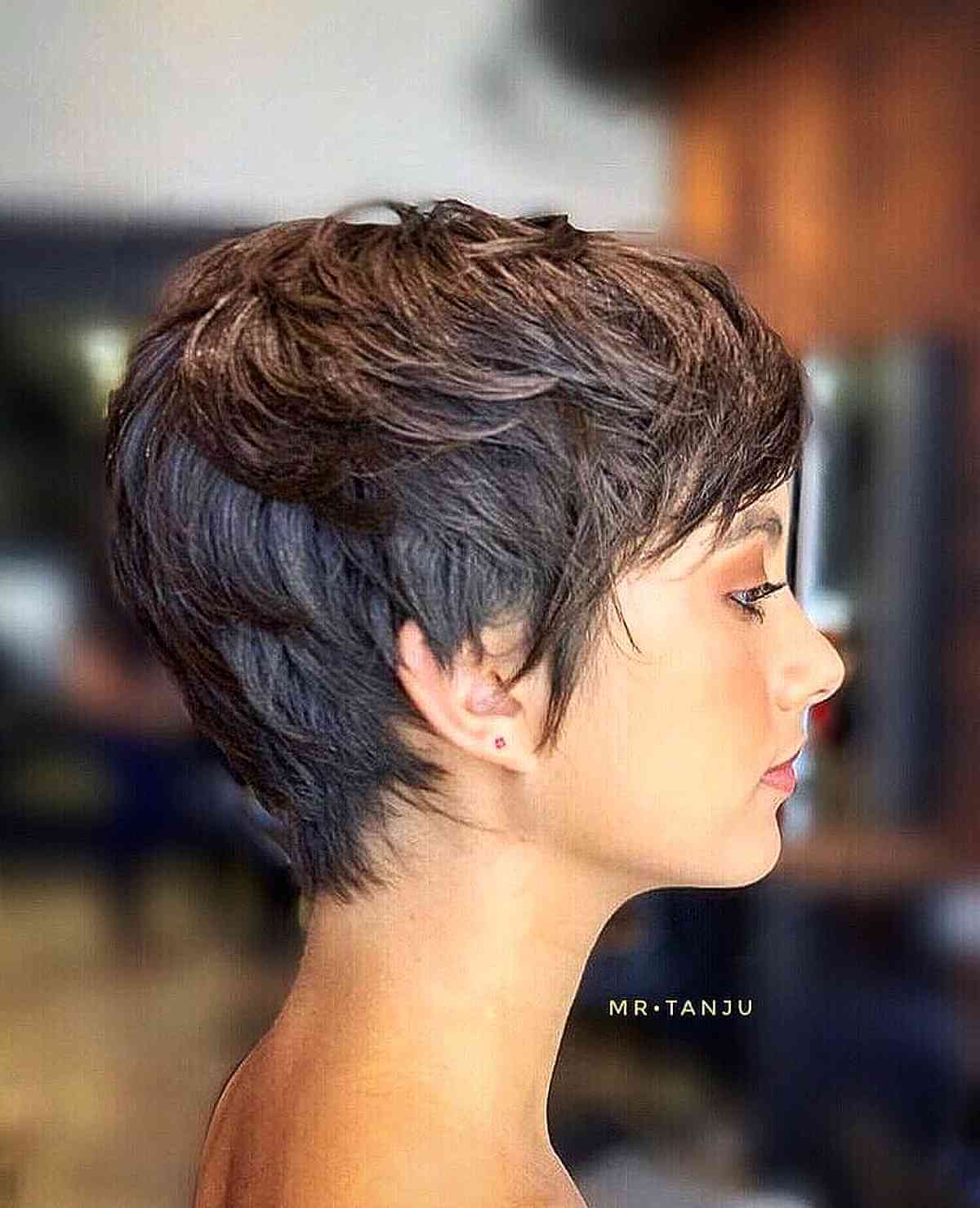
This side view reveals the secret: the choppy layers are cut throughout the dark brown pixie, not just on top, which gives the wavy medium-density hair its soft, tousled movement. Ask your stylist for a dark brown pixie with choppy layers all over. The trade-off is that the layered texture needs a texturizing paste worked through daily and a trim every four to six weeks to keep the shape sharp rather than shaggy.
Shaggy Dark Brown Pixie With Choppy Fringe
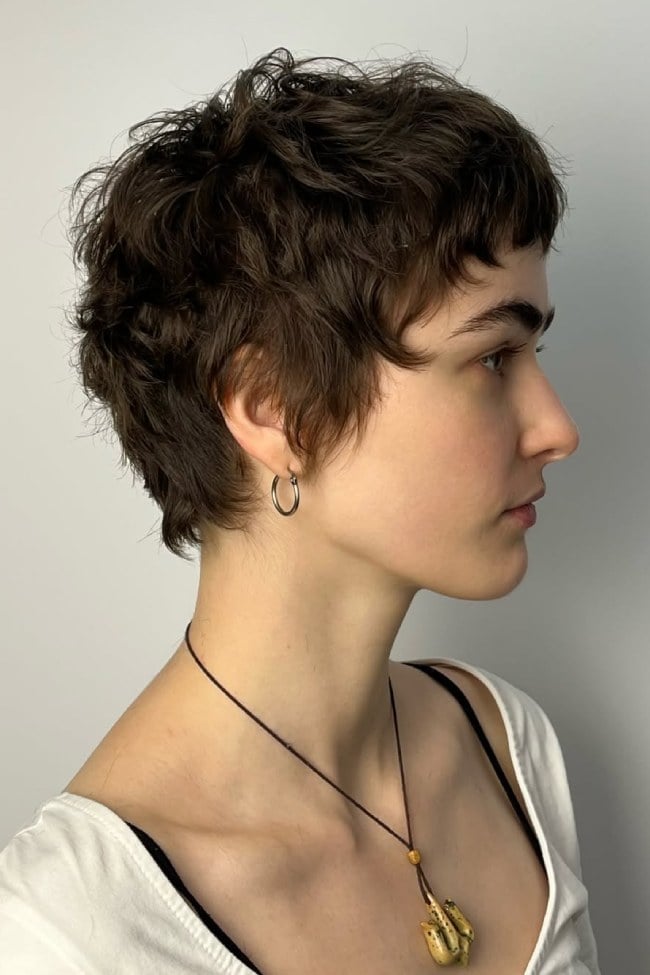
Ask your stylist for a dark brown shaggy pixie with a choppy fringe at ear length. The wavy thick hair and side parting give the fringe an edgy, piecey finish that works with the overall texture. A sea salt spray enhances the natural wave and keeps the fringe from falling flat.
Ash Blonde Pixie With Undercut
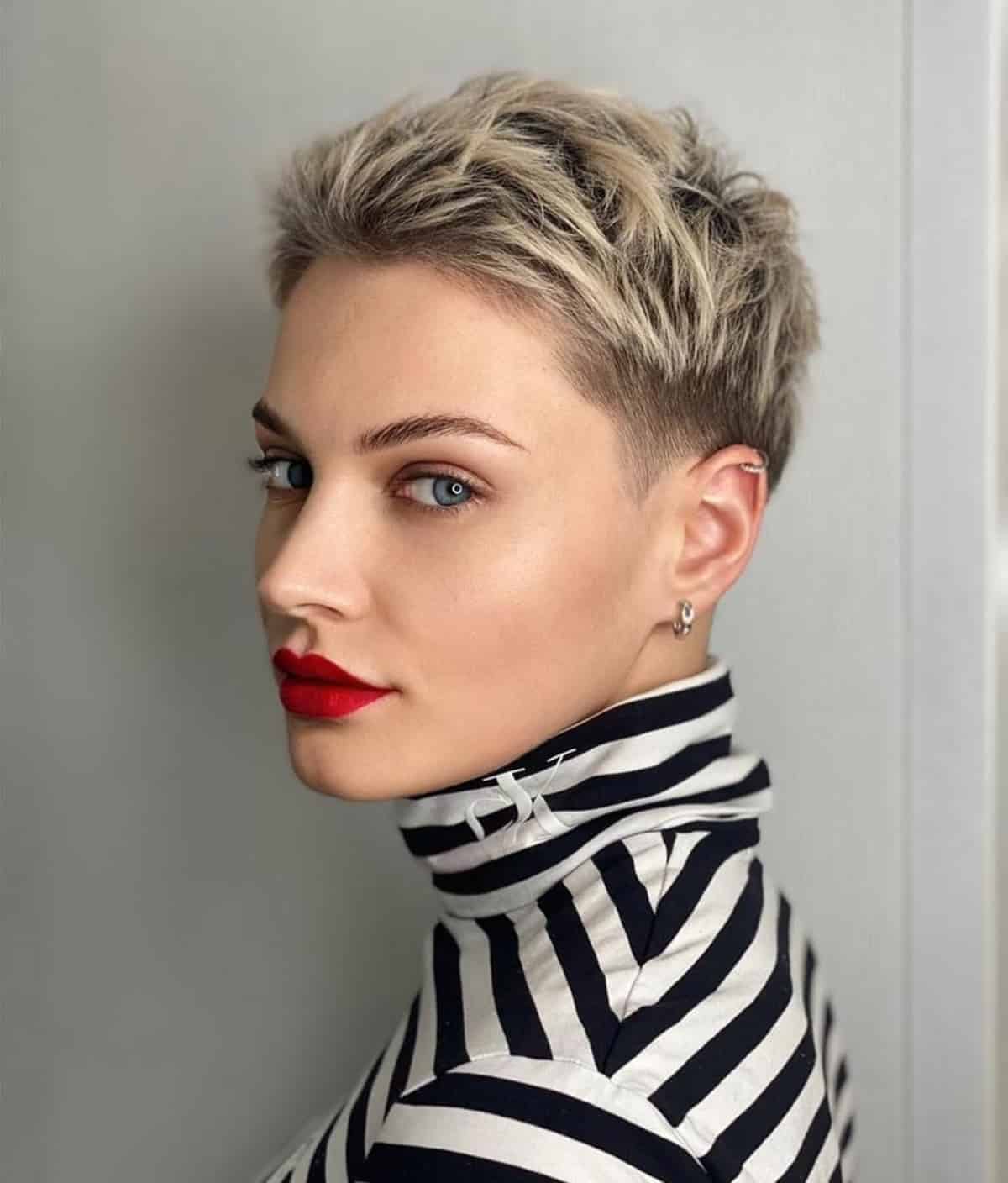
That undercut is the design detail that turns a standard pixie into a statement, but it comes with a contract. The shaved sides and back require salon visits every three to four weeks to keep the line sharp, and the grow-out phase is not subtle. Straight, thick hair starting at ear length handles the spiked, piecey top best. Ask your stylist for: ash blonde pixie with undercut, spiked texture. This is a salon-only cut; the undercut geometry is not something to attempt at home.
Polished Dark Brown Pixie With Short Fringe
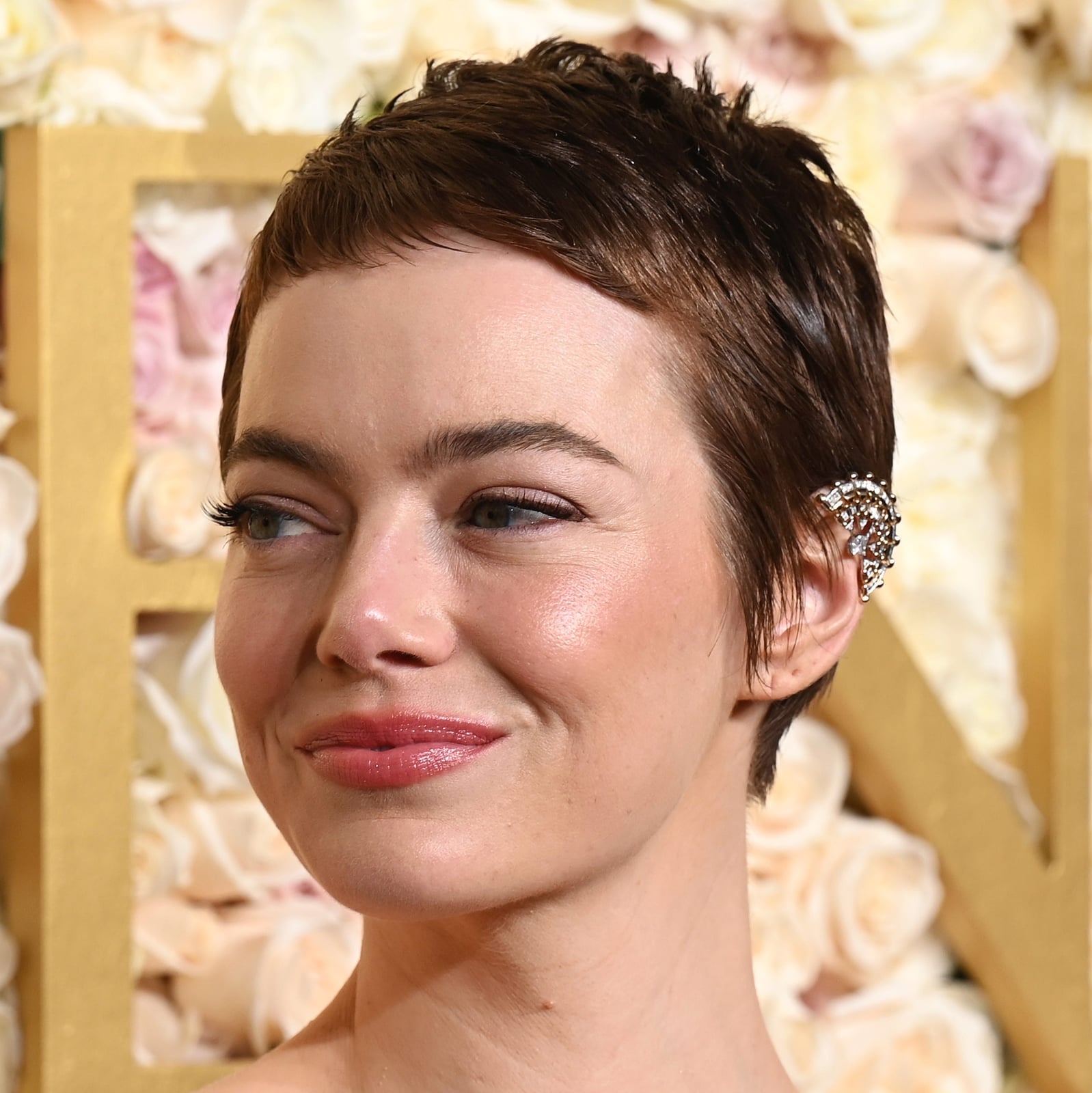
The mistake people make with a short fringe is letting the stylist go too short before the cut is shaped. A fringe that lands above the brow line on fine, straight hair leaves little room to style around it or tuck it away when you want a change. Start with a dark brown pixie at ear length, and have the fringe cut to just grazing the brows so it looks intentional. Ask your stylist for: dark brown pixie, short textured fringe, smooth polish. Once it is too short, you are stuck waiting for growth.
Natural Wavy Dark Brown Pixie
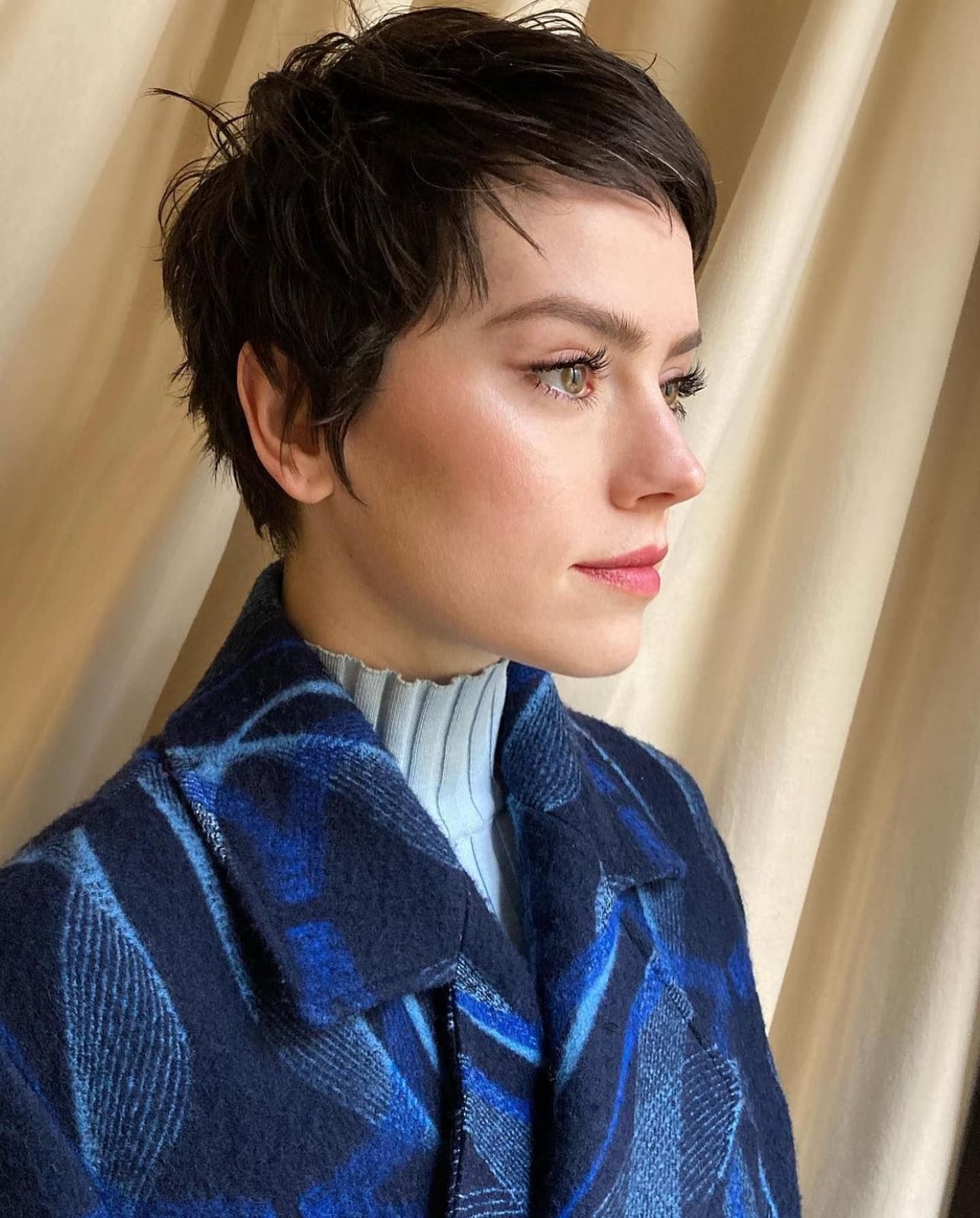
Unlike a sleek bob that demands a flat iron every morning, this pixie works with what your hair already does. Thick, wavy hair cut to ear length with textured layers air-dries into a shape that looks deliberate. The natural wave pattern does the work for you. Ask your stylist for: dark brown wavy pixie, natural air-dried texture. Apply a curl cream to damp hair and let it set. A diffuser speeds things up when you are in a hurry.
Bold Black Pixie With Textured Crop
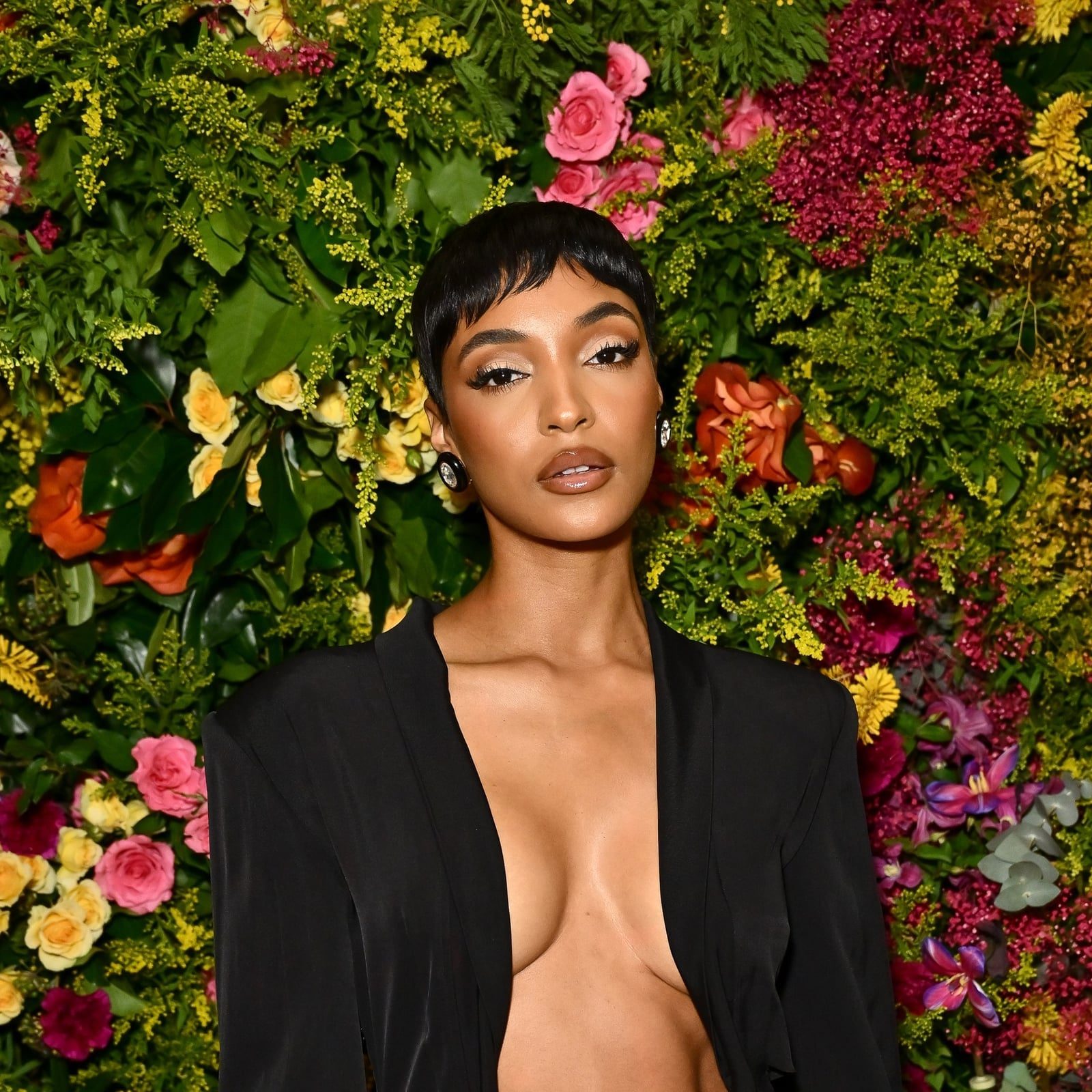
The bold black color and cropped silhouette draw attention to the bone structure of the face, so this cut works best for those who want a strong, graphic frame. Thick, wavy hair starting at ear length gives the textured fringe enough weight to sit forward without falling flat. Ask your stylist for: black pixie, bold textured fringe, messy crop. A middle parting keeps the look balanced. If your features are softer, a less dramatic fringe may suit you better.
Smooth Dark Brown Pixie
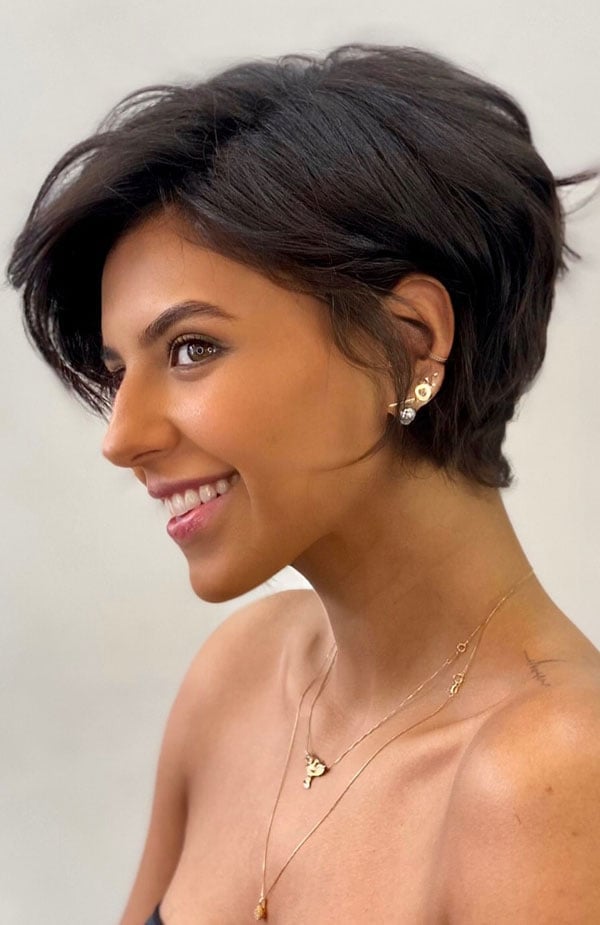
Straight, thick hair can read as one solid block without the right interior layering. This ear-length pixie relies on a clean side angle and a smooth finish, but the density means it needs volume at the crown to avoid looking flat. Ask your stylist for: dark brown pixie, smooth finish, clean lines. A perfectly smooth surface shows every uneven growth line, so a trim every six to eight weeks is required.
Air-Dried Dark Brown Pixie With Straight Fringe
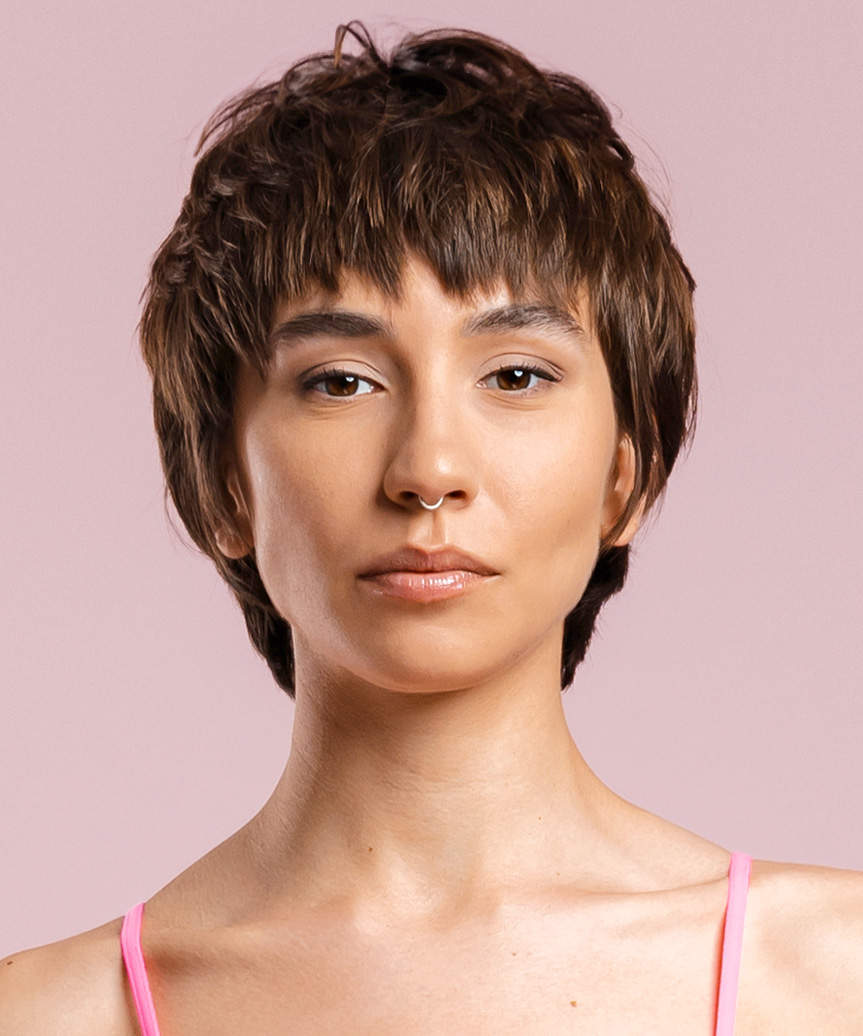
The design hinges on a straight fringe cut across the forehead, working with the hair’s natural air-dried state. Fine, straight hair starting at ear length takes to this approach because there is no heat to fight the texture. Ask your stylist for: dark brown pixie, straight fringe, air-dried texture. The straight fringe becomes the focal point, so it needs trimming every three to four weeks to stay precise.
For the rest, you simply wash, blot and use your fingers to nudge the fringe into place. No blow-dryer, no round brush, no five-step routine. The cut does the work, and the color stays a solid dark brown with no highlights to maintain. That is the appeal: a pixie that looks deliberate because you did almost nothing to it.
Textured Dark Brown Pixie With Wavy Pieces, Ear
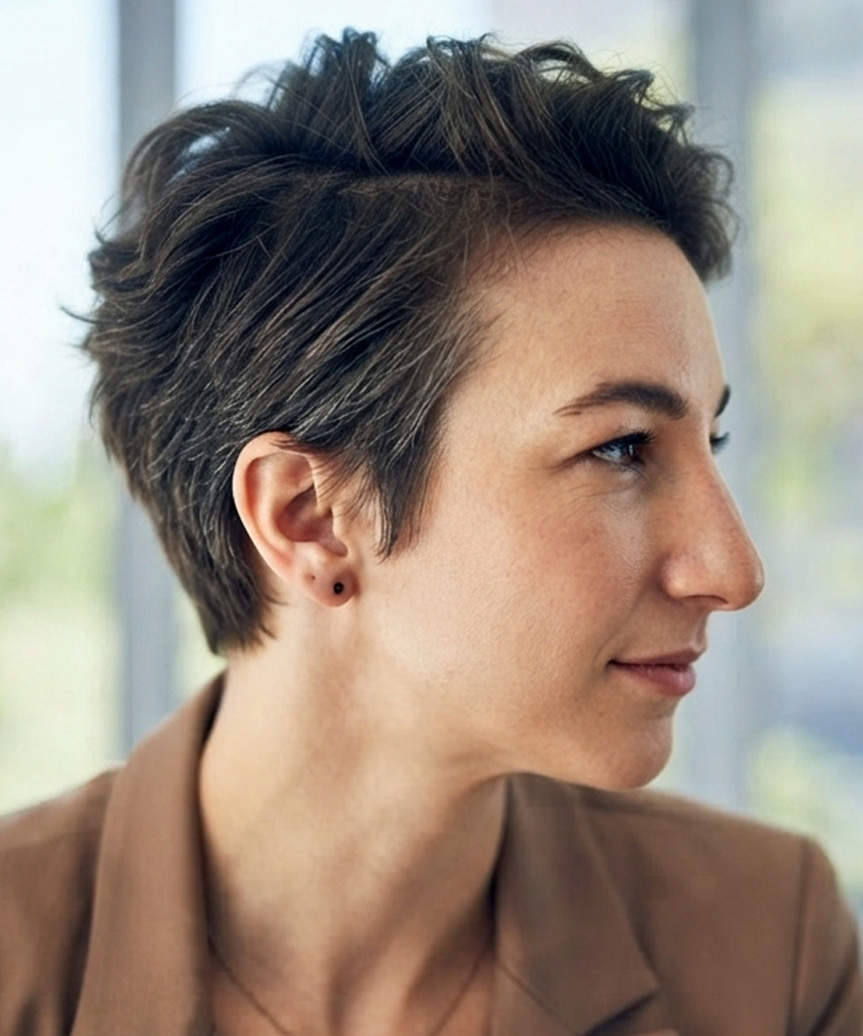
Wondering how to get those defined wavy pieces without looking like you tried too hard? Ask your stylist for: dark brown pixie, defined wavy pieces, piecey texture. The key is in the layering: shorter internal layers let the natural wave pop, while a short textured fringe keeps the front from going flat. A texturizing paste or pomade worked through damp hair defines each piece. Medium-density wavy hair starting at ear length holds the shape best. The side view shows the real structure, so your stylist should check it from every angle before you leave the chair.
Curly Dark Brown Pixie With Micro Fringe
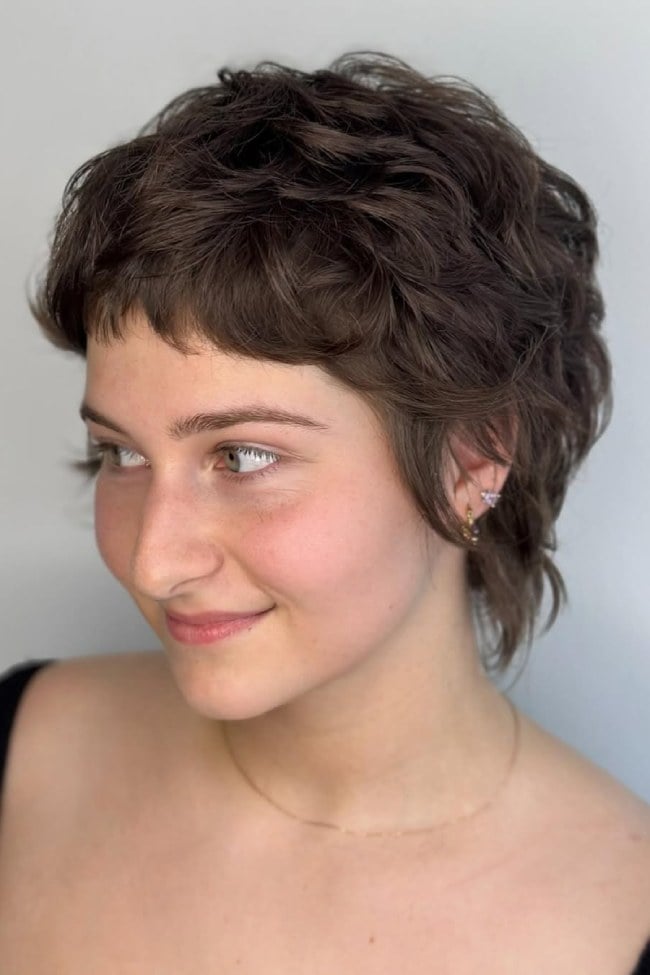
A curly pixie with a micro fringe is not the same as a standard curly crop. The micro fringe sits above the brow, which means it shows every bit of shrinkage and frizz if your curl pattern is loose. Fine curly hair starting at ear length is actually easier to manage here than thick curls: it dries faster and the soft curl pattern stays defined without expanding into a puff. Ask your stylist for: dark brown curly pixie, soft curls, micro fringe. The real drawback is that the micro fringe needs a trim every three weeks to stay short enough to look deliberate, not accidental.
Light Blonde Pixie With Textured Layers
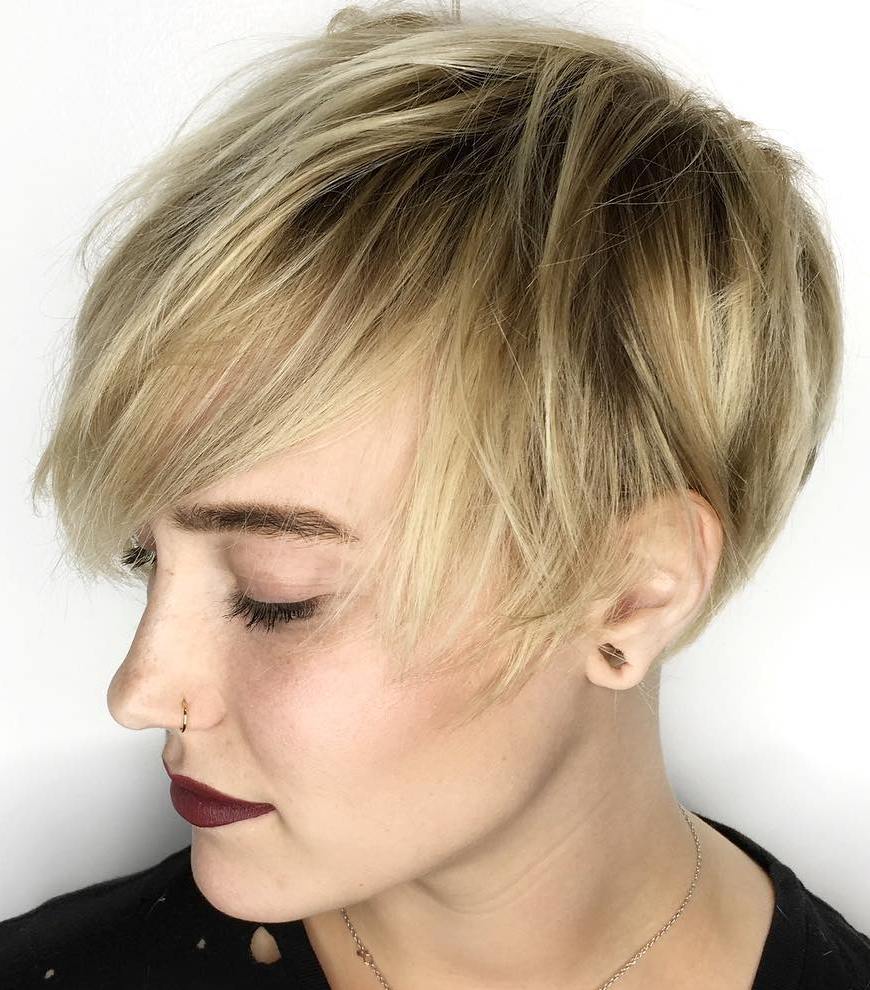
Can a pixie soften a strong jawline? Yes, when the textured layers hit at the right points. This light blonde version uses choppy layers and a side fringe to break up a square or angular jaw, drawing the eye upward to the crown. Wavy, medium-density hair starting at ear length holds the choppy shape without falling flat. Ask your stylist for: light blonde pixie, textured layers, side fringe. The side fringe should graze the brow, not sit above it, to keep the soft effect. A texturizing spray on damp hair enhances the choppy ends without adding weight. The highlights add dimension to the layers, making each piece visible.
Round faces should keep the side fringe longer and the crown height minimal. Long faces benefit from more volume at the sides. Either way, the layers create the shape.
Edgy Platinum Blonde Spiky Pixie
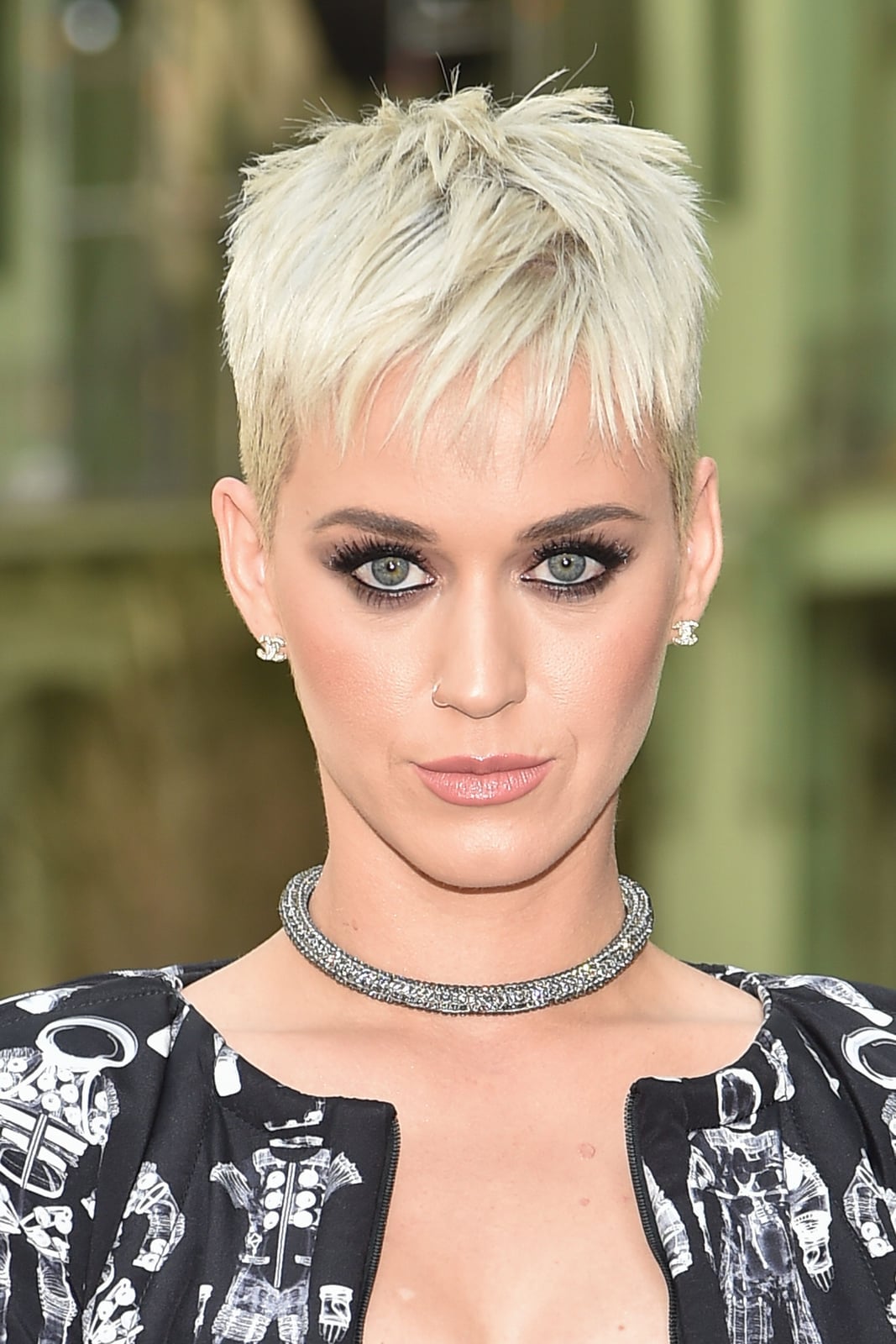
Without a strong hold wax or paste, the spikes collapse within an hour. Ask your stylist for: platinum blonde pixie, spiky texture, volume at crown. The short fringe is swept to the side, not left to sit flat, so you need to rework it each morning. This is a salon-only commitment: the bleach requires a root touch-up every four to six weeks, and the spikes need a trim every three weeks to keep the shape sharp. The real drawback is that you cannot skip a day. Skip it and the spikes turn into limp wisps.
Wavy Black Pixie With Textured Top
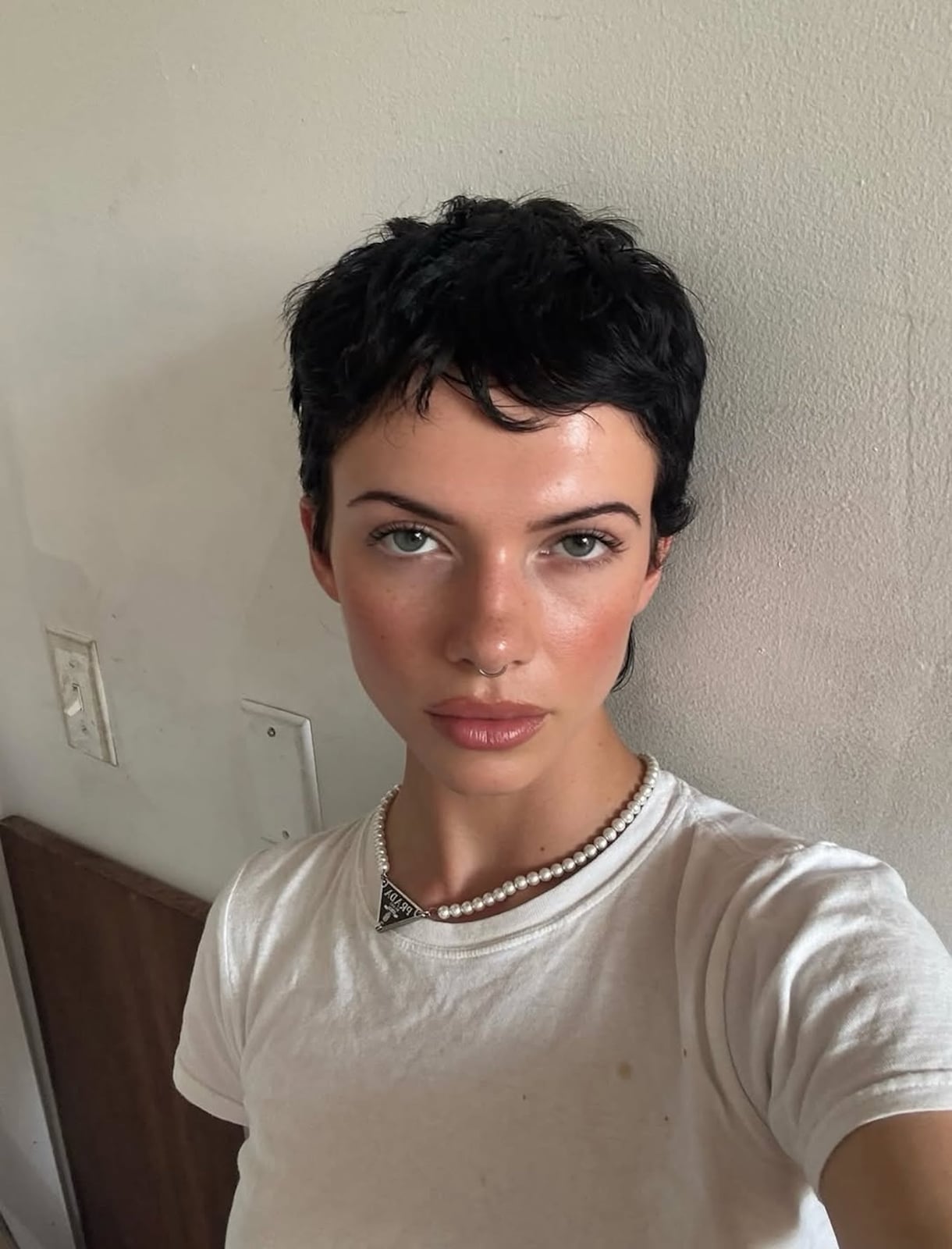
The textured top here comes from point-cutting into the crown layers, not a blunt scissor line. That technique creates visible separation without removing too much weight, which is key for fine, wavy hair that tends to collapse. The ear-length silhouette keeps the shape grounded while the top provides the movement. Ask your stylist for a black pixie with a textured top and lived-in look. A texturizing spray and a quick scrunch after air-drying are all this needs to hold its shape between trims.
Clean Silhouette Black Pixie
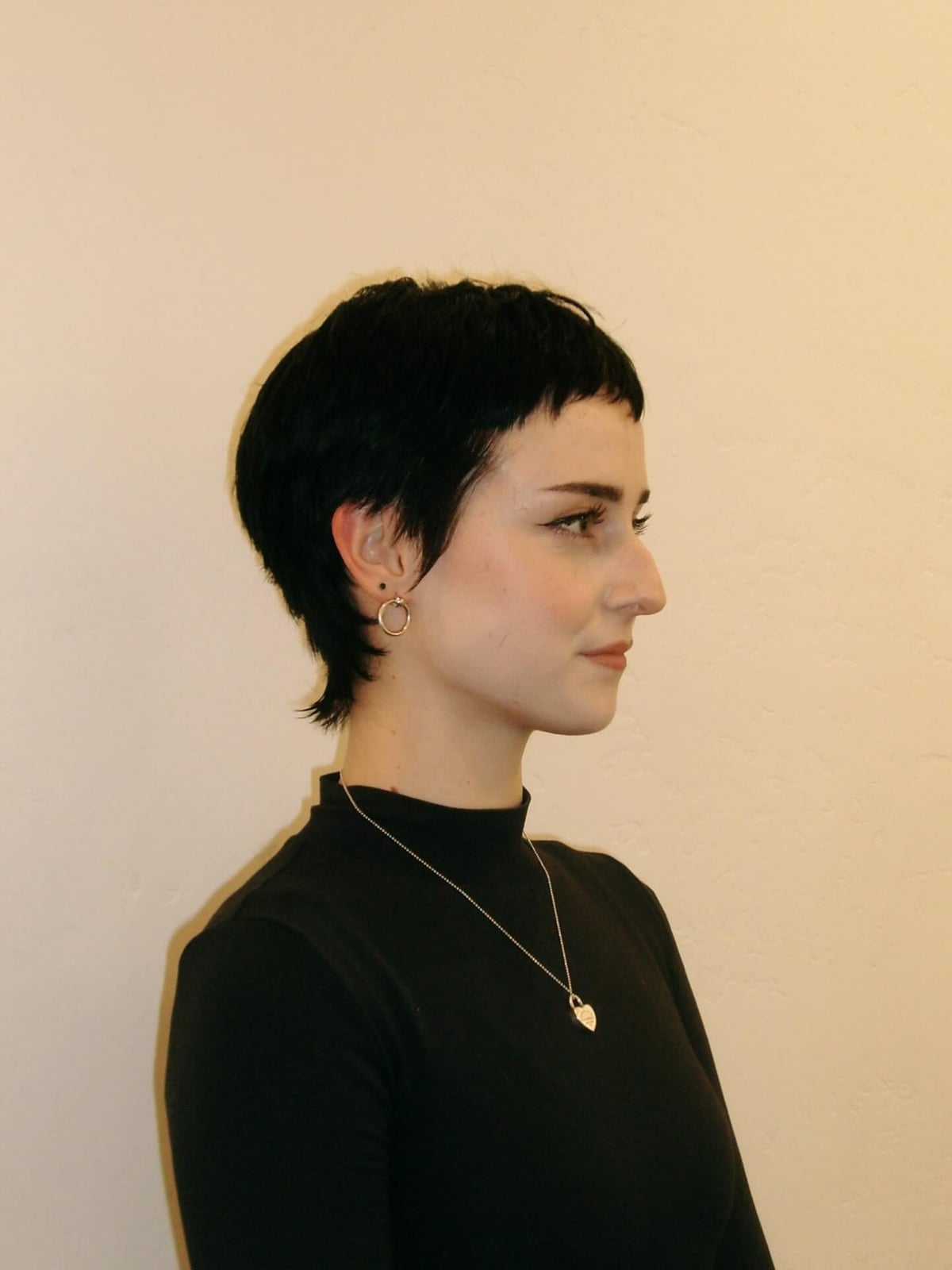
A clean silhouette sounds simple, but on fine, straight hair the nape is where the discipline lives. The slightly longer, textured nape here prevents that bare-neck look that can feel too severe for some. The trade-off is that the straight texture shows every uneven growth line, so precision matters more than it would on wavy hair. If you are not ready for a trim every six weeks, this is not the version to ask for. Air-dry with a side part and use a fine-tooth comb to keep the line crisp.
Ask your stylist for a black pixie with a clean silhouette and a textured nape. The side profile will reward the effort, but the maintenance is real.
Thick Curly Black Pixie With Defined Curls
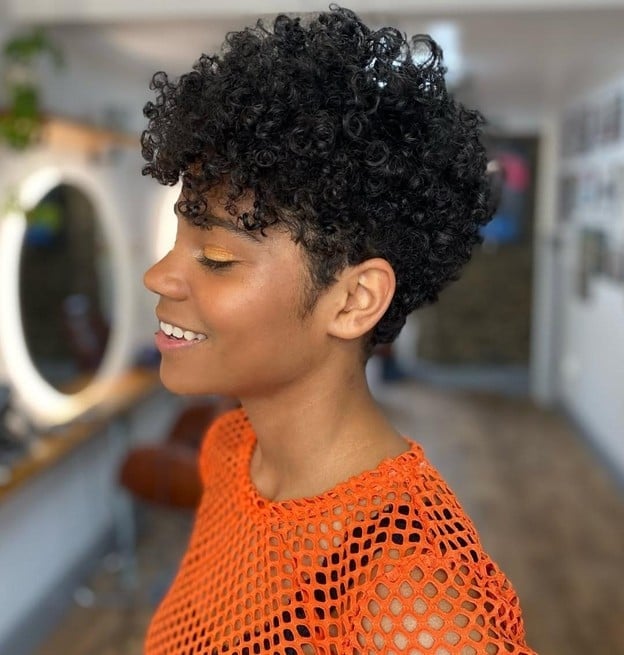
This is not a wash-and-go shape that hopes for the best. The defined curls here are the result of cutting each curl individually to its own dry length, which is why the shape holds its roundness even from the side. The middle part and ear-length perimeter frame the face without the bulk that longer curls can create. A curly pixie like this lands naturally in warmer months, when humidity is not the enemy and air-drying is the point. Ask your stylist for a black curly pixie with defined curls and a middle part.
Voluminous Dark Brown Pixie With Texture
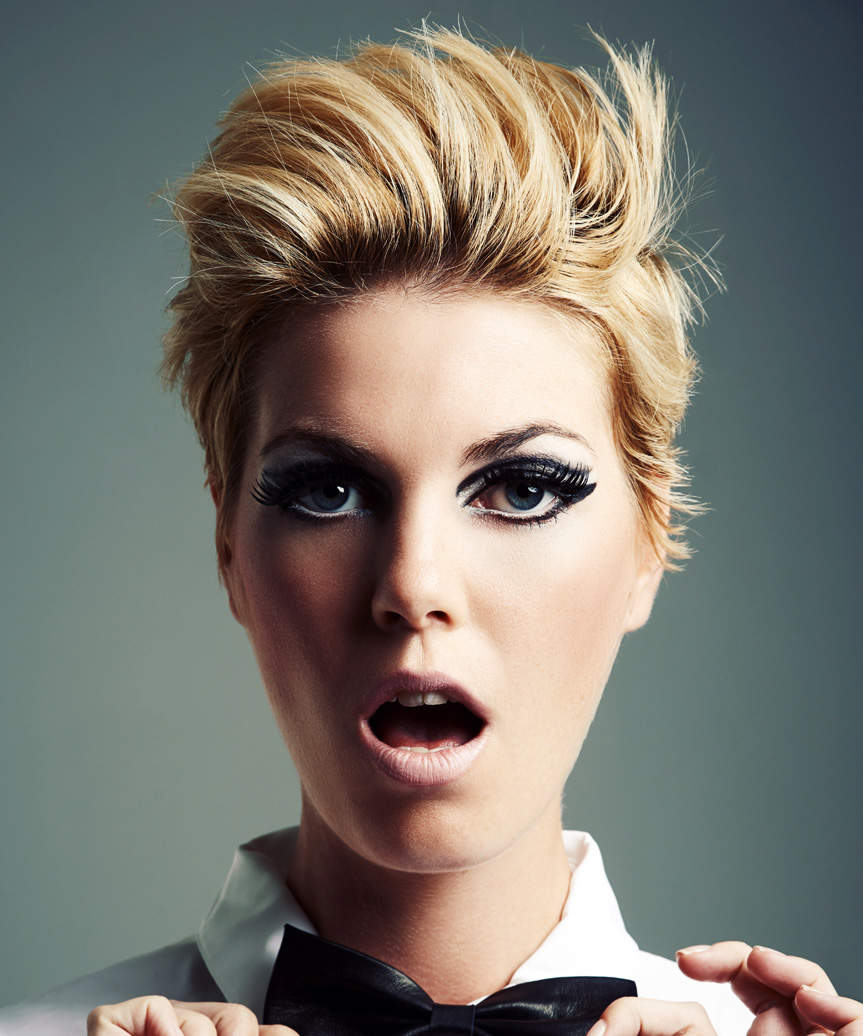
Does your hair have density but not enough height at the crown? This cut works because the volume is built into the layers, not teased or sprayed in after the fact. The wavy, medium-density texture here is cut with shorter interior layers that push the hair upward and keep it from falling flat. The subtle lighter highlights add depth, so the piecey sections look like deliberate texture. Ask your stylist for a dark brown pixie with volume at the crown and a piecey texture.
Gray Pixie With Choppy Bangs
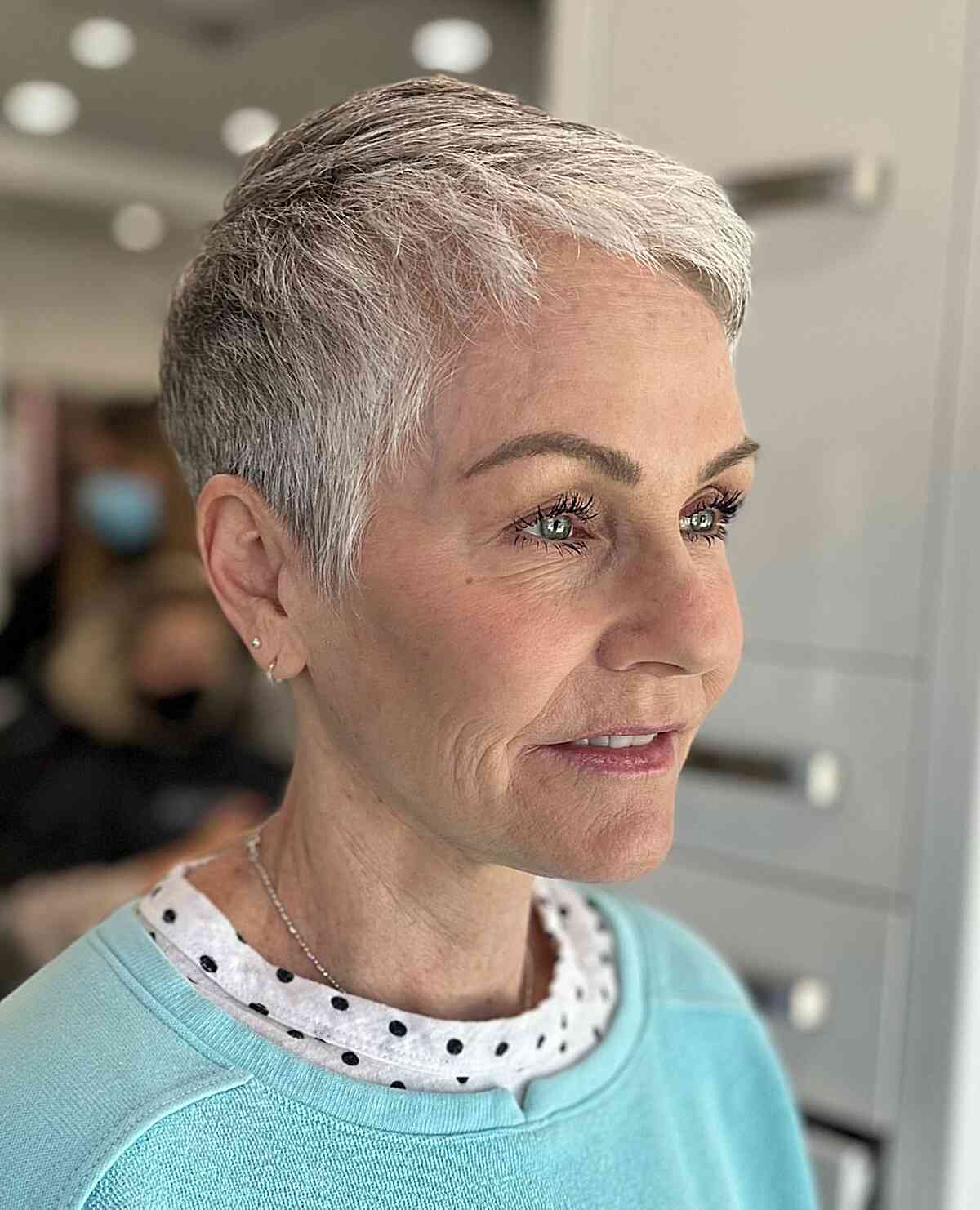
How do you ask for bangs that look like they were cut with a purpose rather than a mistake? The key is the word choppy, which signals your stylist to use vertical cutting rather than a straight horizontal line. On fine, wavy gray hair, that technique keeps the fringe from looking too thin or too heavy. The ear-length layers underneath give the shape its soft volume, while the bangs do the talking. Ask your stylist for a gray pixie with choppy bangs and soft volume. The fringe will need a trim every three to four weeks to keep its edge.
Platinum Blonde Pixie With Curtain Bangs
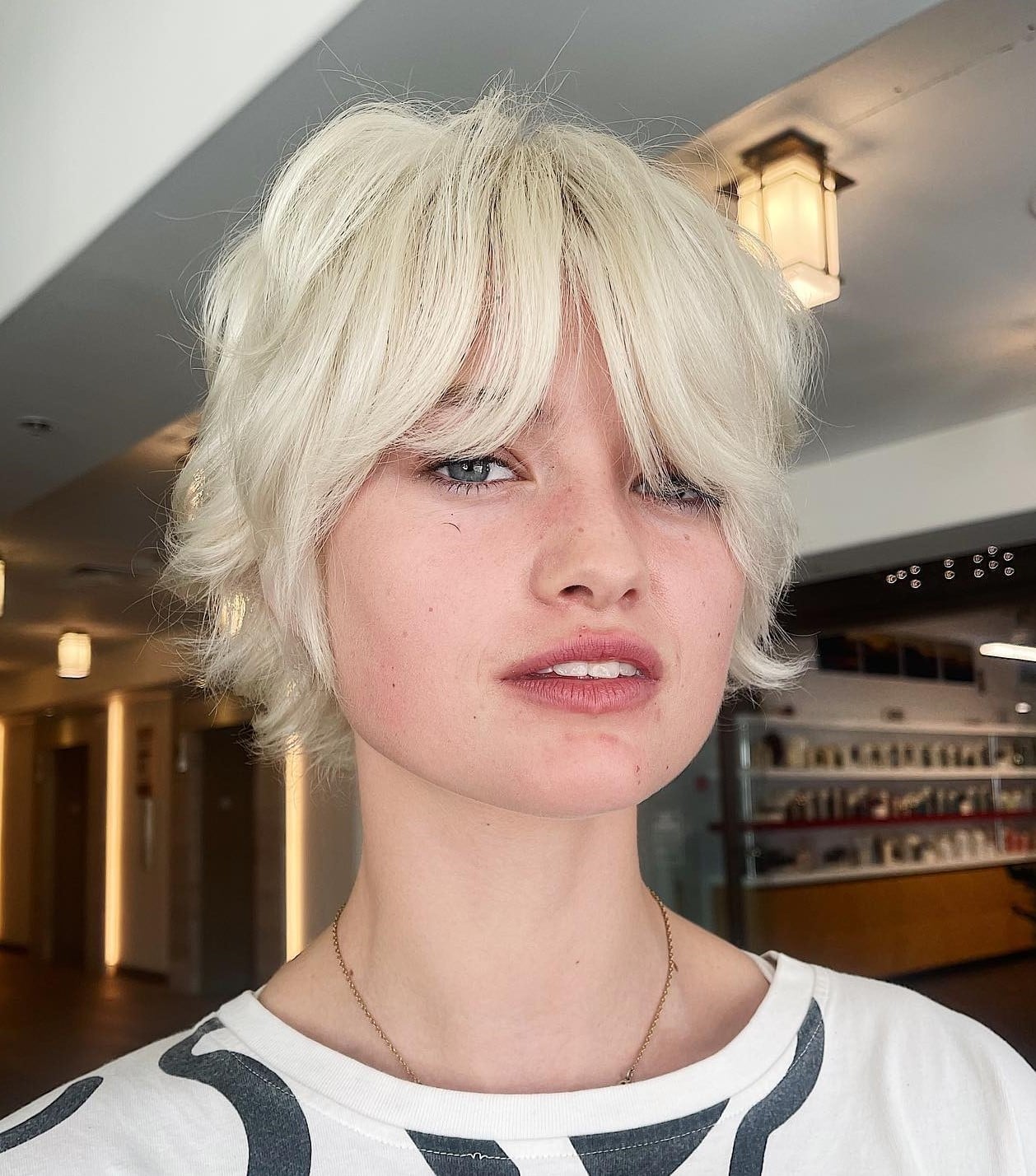
Before you commit to curtain bangs on fine, wavy hair, know this: they only behave if you style them with intent. This platinum blonde pixie, cut to chin length with a middle parting, needs a textured blowout to keep the bangs from going flat or, worse, separating into sad little strands. Ask your stylist for: platinum blonde pixie, chin length, textured curtain bangs. Use a round brush to direct the bangs outward as you dry, then finish with a texturizing spray for grip. The payoff is a soft, layered frame that moves, but it demands a few extra minutes each morning. Tone every six to eight weeks to keep the platinum from drifting brassy.
Short Black Pixie With Piecey Bangs
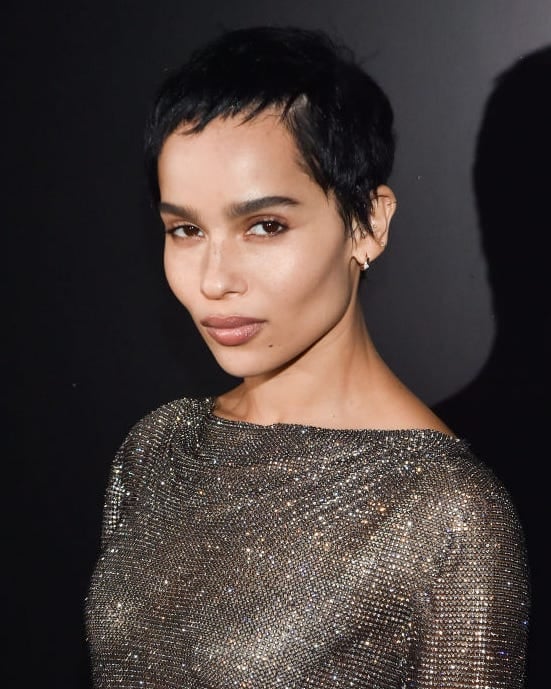
A short black pixie is cut to ear length with fine, straight hair, and every layer is chopped to end at a different point. The short, piecey bangs are swept to one side and sell the texture, but they are not a wash-and-go situation. On straight hair, that choppy finish needs daily coaxing with a texturizing paste, worked through with your fingers to break up any clumping. You can do it at home in about five minutes, though the first attempt may look less lived-in and more electrocuted. Ask your stylist for: black pixie, choppy texture, piecey side-swept bangs. A trim every four to six weeks keeps the points sharp.
Light Blonde Pixie With Tousled Texture
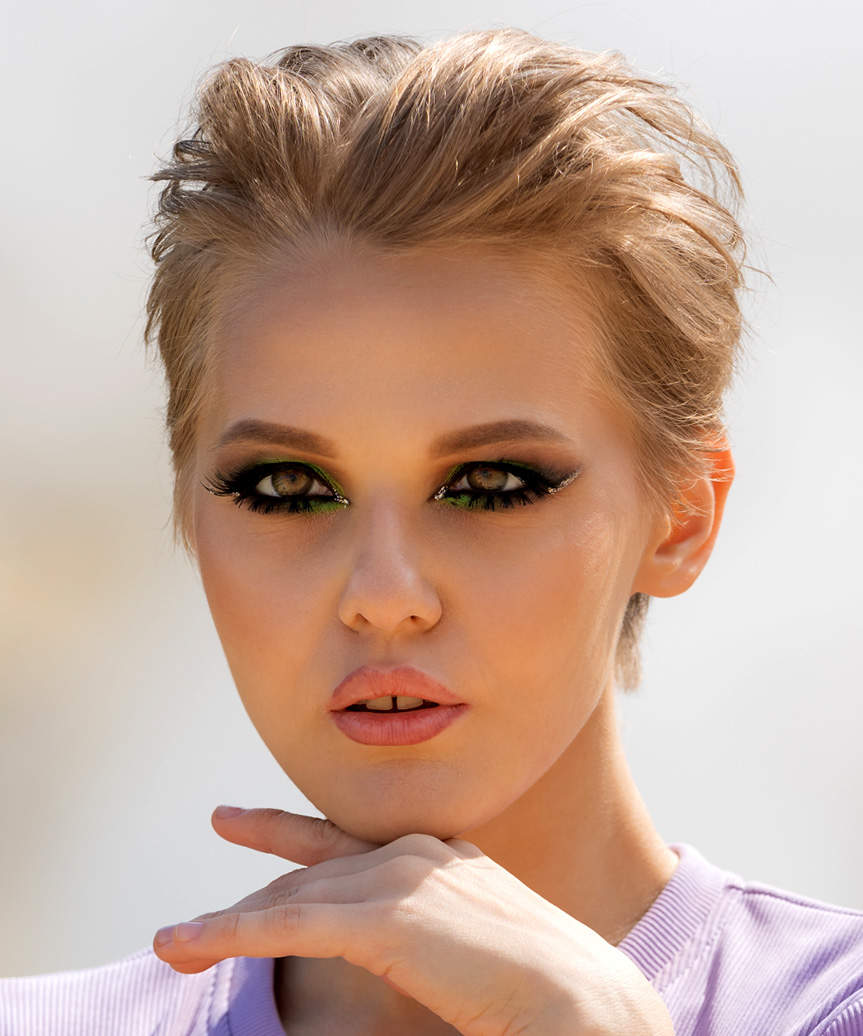
Building a tousled finish on medium-density wavy hair starts with the cut, which here is cut to ear length with no bangs. The technique is about encouraging what the wave already does, not forcing it. Ask your stylist for: light blonde pixie with dark roots, tousled texture. A sea salt spray or texturizing cream, scrunched in while the hair is damp, defines the wave without crunch. The darker roots add depth, so the blonde does not appear as a single flat block. This one air-dries into place, which is the point, and a trim every four to six weeks keeps the shape honest.
Textured Dark Brown Curly Pixie
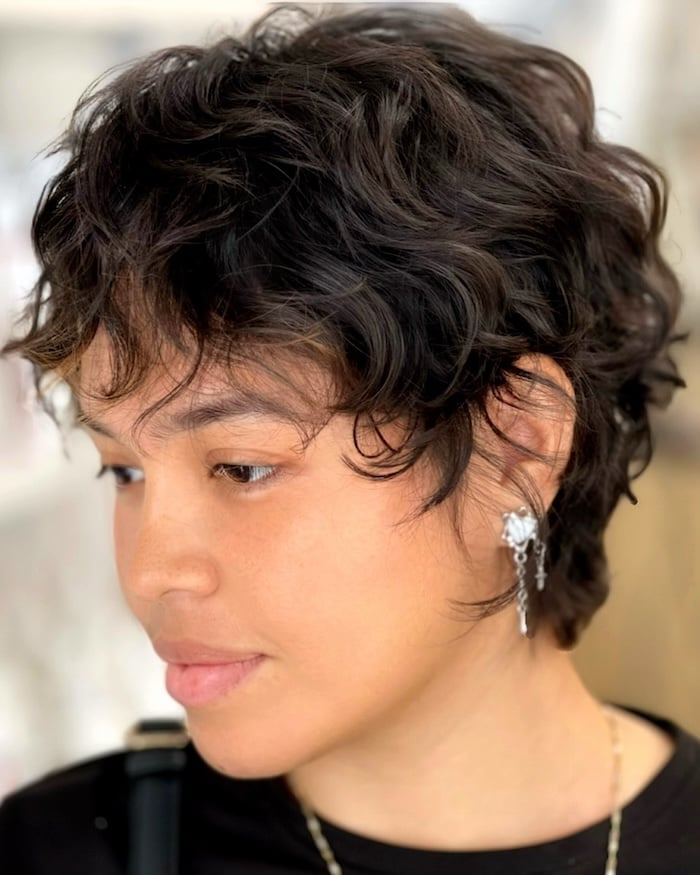
Set this dark brown curly pixie, cut to ear length with short bangs and a side parting, against a fine-textured pixie and the difference is all in the daily routine. Thick curls need moisture and definition, not the same product you would use on straight hair. A curl-defining cream, applied to wet hair and left to air dry or diffused on low, keeps the shape soft and the volume in check. Ask your stylist for: dark brown curly pixie, textured short bangs. The short bangs are the tricky part, they curl up faster than the rest, so they need a trim every three to four weeks to stay out of your eyes and keep the silhouette intentional.
Silver-Gray Pixie With Natural Curls

Wondering if a silver-gray pixie works with your natural curls? It does, provided your hair is medium-density and you are ready to commit to maintenance. This cut, ending at ear length with a side fringe and side parting, leans on air-dried texture rather than heat. Ask your colorist for: silver-gray pixie, natural curly texture, side fringe. A leave-in conditioner helps the curls form without frizz, and air drying preserves the shape. The silver demands a toning shampoo every six to eight weeks, otherwise it shifts toward yellow. The side fringe softens the face, which is why it suits round and square shapes alike, and the color does the talking.
Final Thoughts
For fine hair, keep the baseline blunt and add soft internal layers so the shape holds volume. For thick or curly hair, remove weight through texturizing and let the natural pattern define the cut. The right version of a simple textured pixie is the one that needs the least convincing to look like you.
- Trim every 4-6 weeks to maintain shape and texture.
- Use a texturizing paste or wax for definition.
- Air dry when possible to enhance natural wave or texture.
- Wash with a volumizing shampoo for finer textures.
Embrace the texture, personalize the cut.