
The wolf cut is a modern, textured haircut that blends shag and mullet elements, and in 2027 the emphasis is on simpler versions that don’t demand a full styling session. Choppy layers and face-framing pieces are in, while blended layers and one-length cuts have lost their grip.
This collection of 35 ideas for Simple Wolf Cut Hair spans shoulder-length to mid-back, with bangs from wispy to blunt, so you can match the cut to your hair density and how much time you want to spend with a round brush. If fine hair that falls flat by noon is your struggle, the choppy layers here add lift without extra product.
Shoulder Length Wolf Cut With Wispy Bangs

The side view tells you everything about this one: the choppy layers stack up through the back while the wispy bangs keep the front soft instead of demanding attention. It is a shoulder length wolf cut built for fine, straight hair that tends to fall flat, since the uneven lengths fake the volume you did not wake up with. The middle parting keeps the face open, and the wispy bangs suit most face shapes because they do not commit to a single line. Ask your stylist for: shoulder length wolf cut with choppy layers and wispy bangs. Texturizing spray on damp hair, then air dry or diffuse for the messy finish. A trim every six weeks keeps the layers from reading as just split ends.
Collarbone Wolf Cut With Blunt Bangs
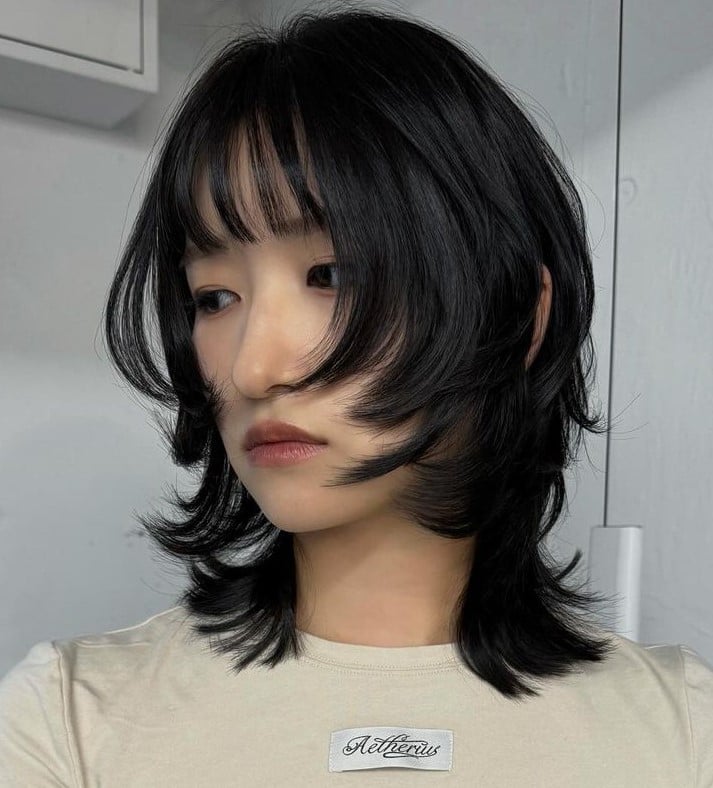
A blunt bang sits right with choppy layers when the stylist builds the cut around both. The collarbone wolf cut with blunt bangs starts with thick, wavy hair that can carry the weight of a straight-across fringe without looking sparse. The blonde streaks break up the dark brown base and give the air-dried texture a point of contrast. Ask your stylist for: collarbone length wolf cut with blunt bangs and choppy layers. To keep the bangs sharp, run a flat iron over them and leave the waves alone. A trim every four to six weeks keeps the fringe from creeping toward your eyebrows.
Collarbone Wolf Cut With Curtain Bangs
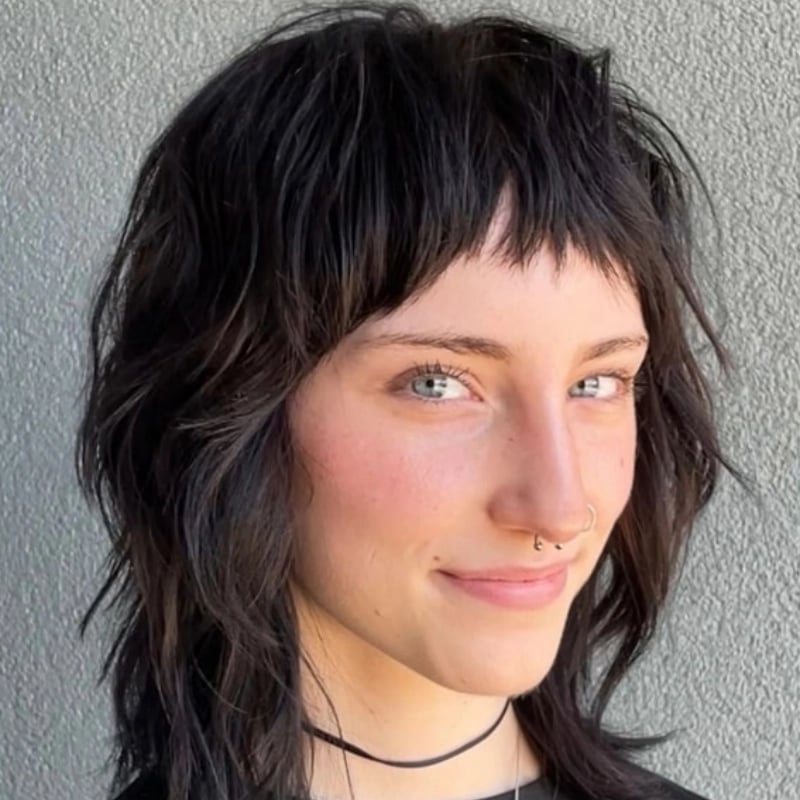
The curtain bangs do the framing while the choppy layers do the moving. This collarbone wolf cut with curtain bangs works because the layers are cut heavily through the ends, so the waves have room to swing without the whole shape collapsing. Medium density, wavy hair takes the texture best, and the curtain bangs soften a square jaw and balance an oval face. Ask your stylist for: collarbone wolf cut with choppy layers and curtain bangs. Blow-dry the bangs away from the face with a round brush, then hit the roots with dry shampoo for lift. The cut holds its shape for about six weeks before the layers start to blend.
Collarbone Wolf Cut With Mullet Tail
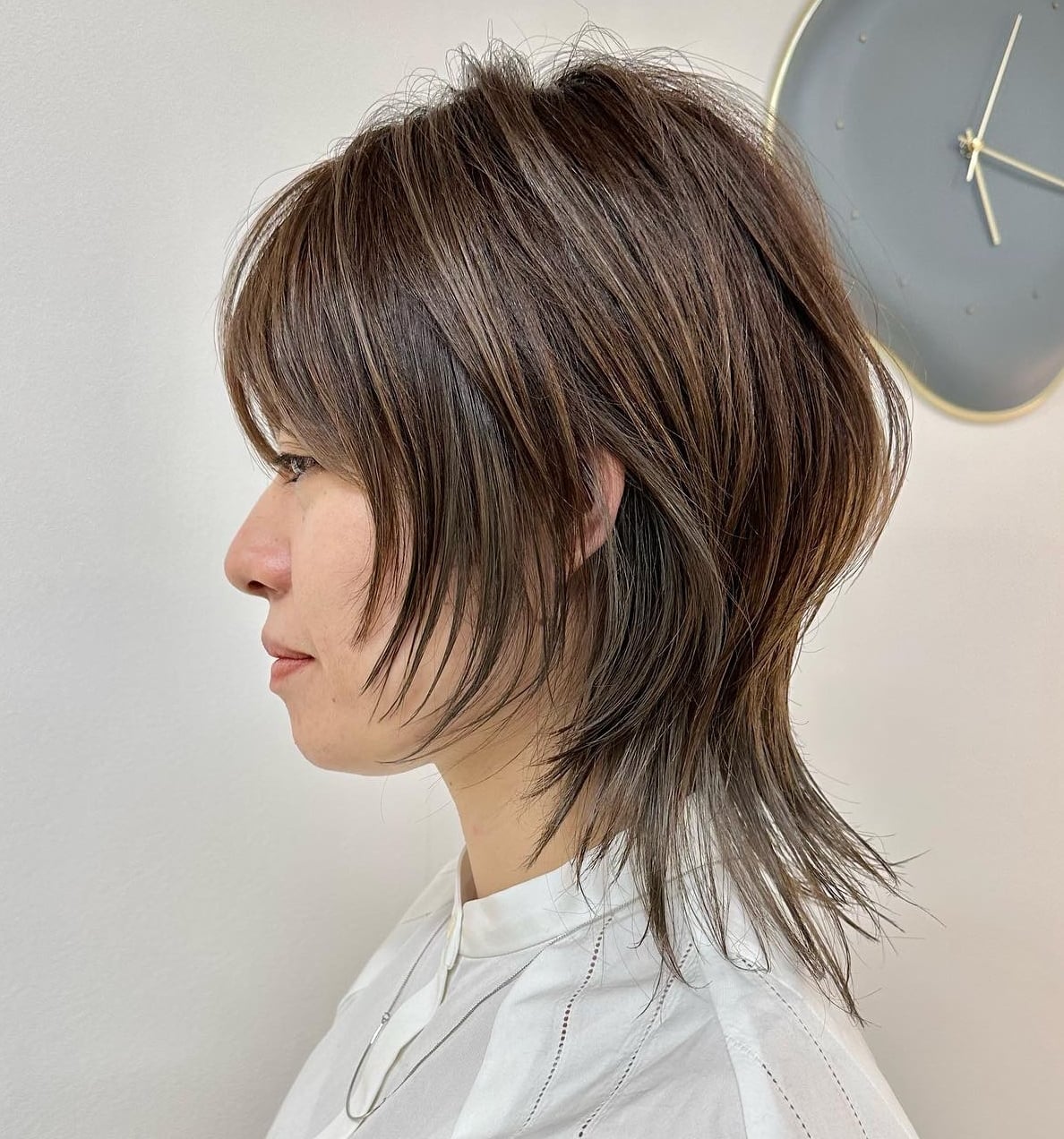
The shag energy is there, but this cut stops short of a full mullet. The collarbone wolf cut with mullet tail keeps the front wispy and soft while the back carries a distinct tail that gives the silhouette its edge. Fine, wavy hair at collarbone length handles the choppy layers well, and the lighter brown highlights keep the tail looking deliberate. Ask your stylist for: collarbone wolf cut with wispy bangs and a mullet tail. Work a pomade into the nape to define the texture, and plan on a trim every four to six weeks to keep the tail from growing into a full-on mullet.
Short Ear Length Wolf Cut With Color Contrast

The blonde base with purple and ash highlights does the loud talking, so the cut can stay simple. This short ear length wolf cut pairs shag elements with piecey, textured sections that give fine, wavy hair a boost of volume where it needs it most. The short, wispy bangs and side parting keep the front light and easy to push around. Ask your stylist for: short ear length wolf cut with wispy bangs and color contrast. Use a wax or paste to separate the pieces and define the waves. The color contrast makes it a natural fit for festival season, but the purple needs a toner touch-up every six to eight weeks to stay vivid.
Short Ear to Chin Curly Wolf Cut

Can fine, curly hair handle a wolf cut without turning into a triangular nightmare? Yes, when the cut lands between ear and chin and the layers are built for curl, not against it. The wispy bangs and middle parting keep the shape from feeling too heavy, while the layers give each coil room to spring. Ask your stylist for: short curly wolf cut with wispy bangs. This length works best for fine, curly textures because the shorter perimeter stops the hair from weighing itself down at the ends.
Shoulder Wolf Cut With Micro Bangs

Micro bangs sit a solid inch or two above the brow, which means there is nowhere to hide if the cut is off. The shoulder-length wolf cut here uses choppy layers and a middle parting to balance the short fringe, so the whole thing reads as deliberate rather than a trimming accident. Ask your stylist for: shoulder length wolf cut with micro bangs and choppy layers. Fine, wavy hair carries the piecey texture without looking bulky, and the side view shows exactly how the layers stack from short to long.
Shoulder Shag Wolf Cut With Choppy Bangs

The technical trick behind this shoulder-length cut is that the shag elements and wolf cut share the same layered foundation, but the choppy bangs are cut separately with point shears so they land short and messy rather than uniform. The dark brown base carries subtle auburn undertones that catch light in the textured, tousled finish.
Ask your stylist for: shoulder length shag wolf cut with short choppy bangs. Thick, wavy hair holds the shape best because the density keeps the layers from collapsing. A texturizing paste on dry ends and bangs maintains the lived-in look, and a trim every 6 to 8 weeks keeps the bangs from growing into regular fringe territory.
Shoulder Wolf Cut Face Framing Layers

Blunt bangs make a statement; face-framing layers make a suggestion. This shoulder-length wolf cut skips the heavy fringe and instead uses choppy layers that start around the jaw and graduate forward, softening the perimeter without committing to a full bang. Ask your stylist for: shoulder length wolf cut with choppy face-framing layers. Thick, wavy hair benefits from the reduced bulk, and the side parting adds lift at the crown. The air-dried finish means zero heat is required.
Shoulder Wolf Cut Textured Layers Side Part
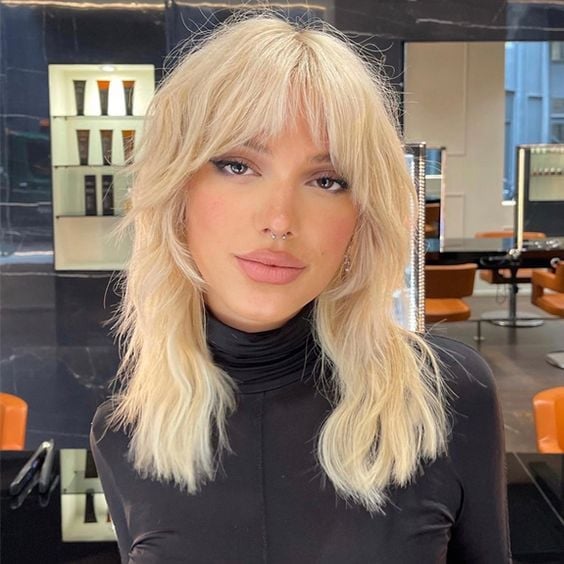
An air-dried wolf cut with a side part is the low-effort version of a style that usually asks for a diffuser or a curling iron. The textured layers and face-framing pieces do the work during the cut, so the hair lands with movement even when it dries untouched. Ask your stylist for: shoulder length wolf cut with textured layers and side part. Thick, wavy hair at shoulder length is the sweet spot: long enough to show the layers, short enough that the side part actually holds volume. A texturizing spray on dry hair refreshes the shape between trims, which should happen every 6 to 8 weeks.
Shoulder Wolf Cut Textured Layers Front View

This cut is a study in controlled chaos, with choppy layers that hit at the shoulder and face-framing pieces that refuse to sit still. The front view is where the design earns its keep, since the side parting lets those textured layers fall forward instead of blending into the rest. Thick, wavy hair is the ideal candidate here, as it gives the layers enough weight to hold their shape without turning into a helmet. Ask your stylist for: shoulder length wolf cut with textured layers. The honest trade-off is that this is not a grow-out friendly style, it needs a trim every six to eight weeks to keep the choppy ends from looking accidental.
Shoulder Ash Blonde Wolf Cut With Curtain Bangs

Why does ash blonde read cooler than a walk in November? Because the ashy base with lighter highlights adds a frosty dimension that plain blonde can’t touch. At shoulder length with curtain bangs and choppy layers, this cut catches the muted light of fall and winter without washing out. Fine, wavy hair benefits from the textured blowout, which builds volume at the roots while keeping the ends feather-light. Ask your colorist for: ash blonde with lighter highlights and curtain bangs. A purple shampoo every other wash keeps the tone from warming up, and a trim every six weeks keeps the layers in line.
Shoulder Wolf Cut With Short Choppy Bangs, Dark Brown

The short, choppy bangs are the first thing you notice, and that is exactly the point. They sit above the brow in uneven pieces, giving the thick, wavy hair a rebellious edge that a uniform fringe would kill. The shoulder length lets the choppy layers move, while the side parting adds a touch of softness to the tousled finish. This is a cut that thrives on texture, so a texturizing paste applied to the bangs is your daily ally. Ask your stylist for: shoulder length wolf cut with short choppy bangs. Expect to visit the salon every six weeks, because those bangs will not wait for you.
Shoulder Wolf Cut Light Brown With Highlights

The light brown base with blonde highlights adds dimension to the choppy layers. At shoulder length with curtain bangs and a side parting, the cut suits medium density wavy hair that has enough body to support the layers but not so much that it becomes a triangle. The blowout styling gives the texture a polished finish, and a volumizing spray at the roots helps the layers lift. Ask your colorist for: light brown with blonde highlights and curtain bangs. The highlights mean a toning visit every eight weeks if you want to keep the blonde bright.
Shoulder Wolf Cut Straight Fine Hair
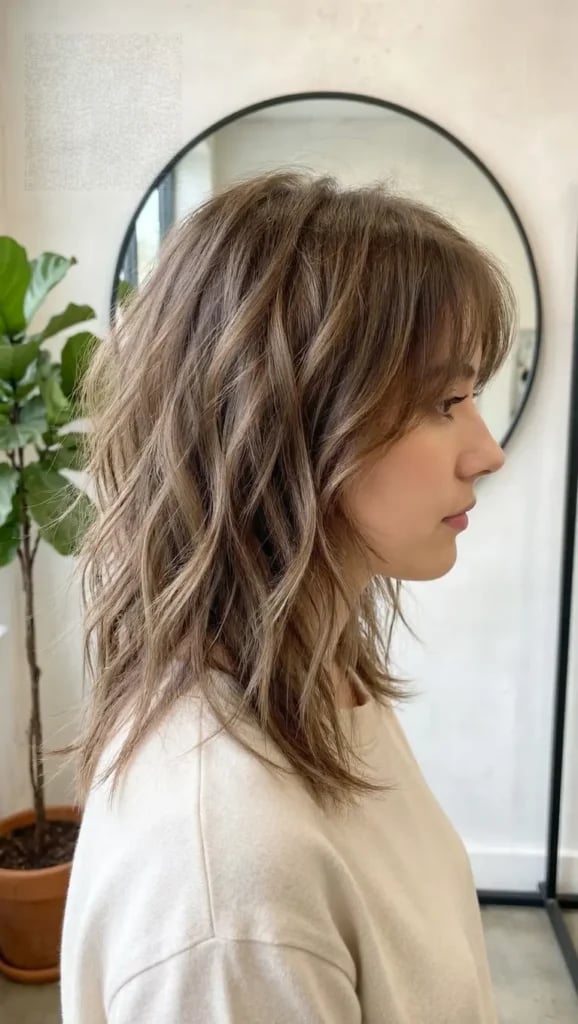
Fine, straight hair usually gets the short end of the texture stick, but this cut flips the script. The wispy bangs and face-framing layers add shape without weighing down the fine strands, and the air-dried finish means you can skip the heat tools most days. At collarbone length with a side parting, the cut reads as relaxed, thanks to the subtle highlights that break up the medium brown. Ask your stylist for: shoulder length wolf cut for fine straight hair with wispy bangs. A texturizing spray at the roots gives volume that lasts, and a trim every six to eight weeks keeps the layers from disappearing.
Collarbone Wolf Cut With Side Parting
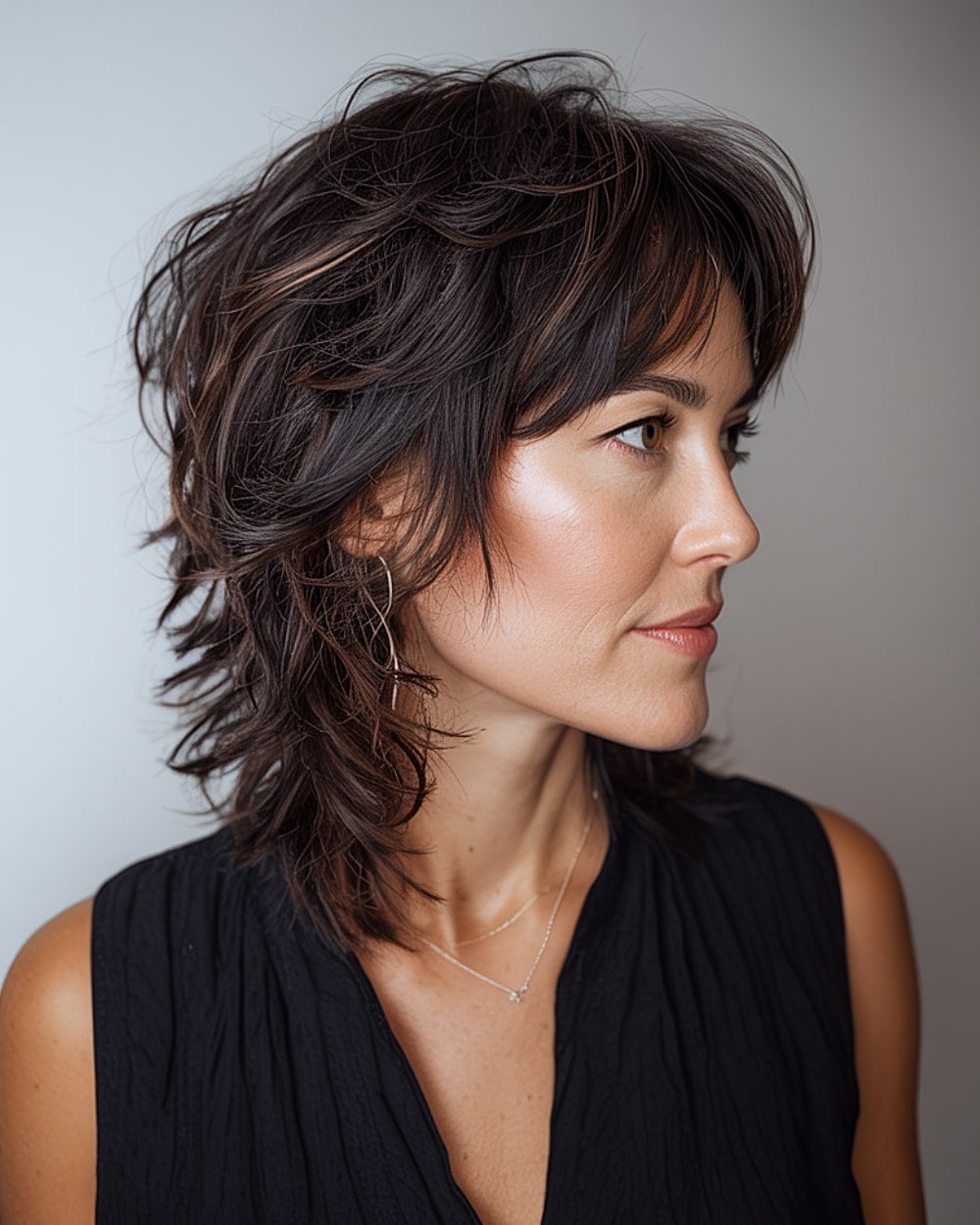
The design hinges on the side part: it pulls the choppy bangs across the forehead, so the texture looks deliberate. The dark brown base with highlights adds depth to the wavy, medium texture, and the collarbone length keeps the silhouette from feeling heavy. This cut suits medium wavy hair where the side part can create natural asymmetry, and it works well for those who want a low-maintenance style with an edge. Ask your stylist for: collarbone wolf cut with choppy bangs and side parting. To keep the bangs looking intentionally disheveled, apply a texturizing spray to damp hair and let it air dry; plan a trim every six weeks to maintain the shape.
Collarbone Wolf Cut With Blue Undertones

The dark brown base here hides a subtle blue undertone that only surfaces in certain lighting, giving the collarbone-length cut a dimension that flat color can’t match. The wavy, thick texture carries the choppy layers and curtain bangs well, and the side part adds movement. This design suits those with thick hair who want a unique twist without going full fashion color. Ask your colorist for: collarbone wolf cut with curtain bangs and subtle blue undertones. The trade-off: blue tones fade fast, and you’ll need a color-depositing conditioner every couple of weeks to keep the tint visible. A trim every six to eight weeks keeps the layers honest.
Collarbone Wolf Cut With Shag Layers

The curtain bangs frame the face from a middle parting, and the collarbone length keeps it wearable. This cut offers the shag’s bounce without the full 70s commitment. Ask your stylist for: collarbone wolf cut with shag layers and curtain bangs. A textured blowout with a round brush will emphasize the layers; schedule a trim every six to eight weeks to preserve the shape.
Collarbone Wolf Cut With Wispy Bangs
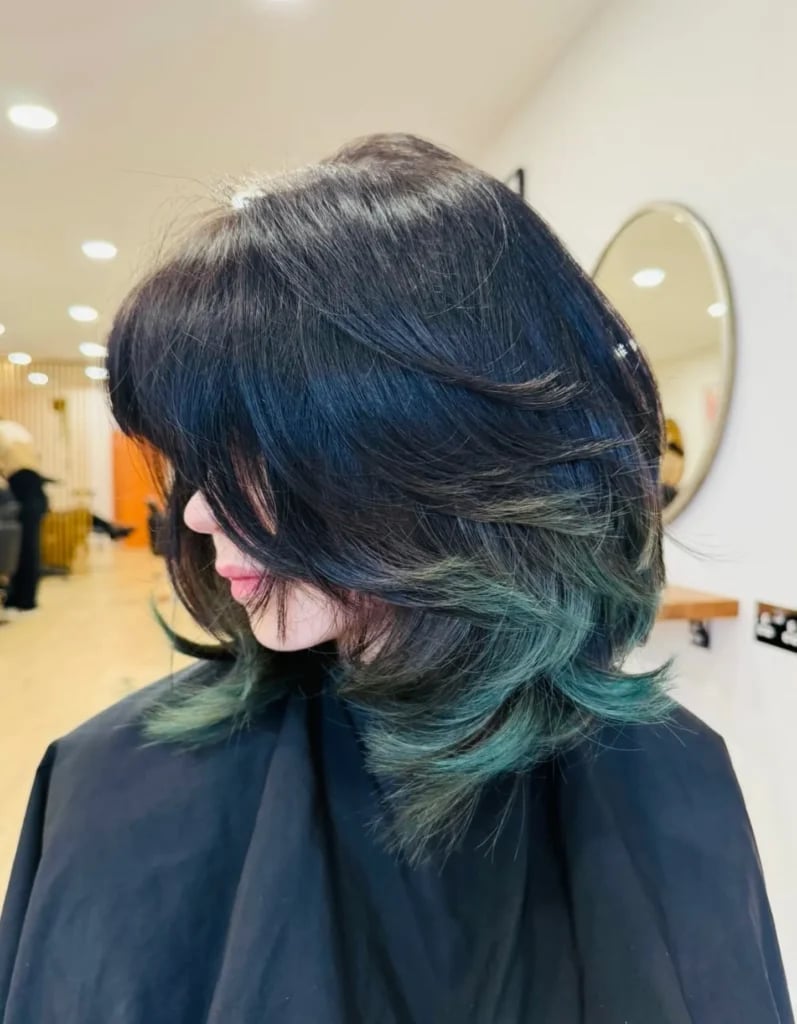
Wondering if wispy bangs will just turn into a frizzy mess on your hair type? They hold up best on medium-density wavy hair, where the fine points of the bangs blend into the choppy layers instead of sticking out. The dark brown base with subtle highlights gives the collarbone length some depth. This cut suits anyone who wants softness around the forehead without a heavy fringe. Ask your stylist for: collarbone wolf cut with wispy bangs. To keep the wispy effect, apply a texturizing spray to the ends and scrunch lightly. A trim every six to eight weeks prevents them from growing into full bangs.
Collarbone Wolf Cut Textured Layers Front View, Dark Brown
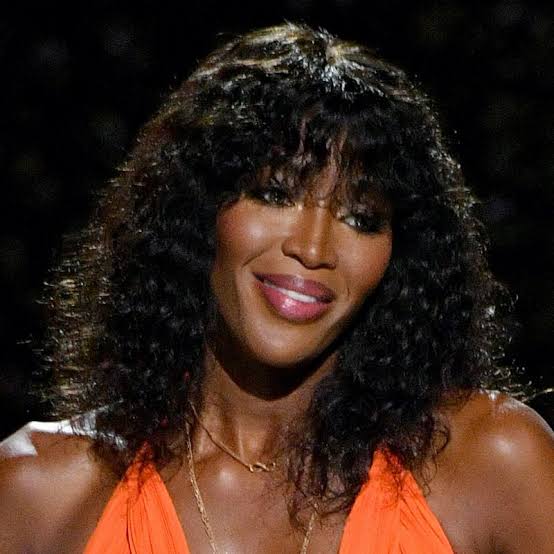
The front view of this cut shows exactly how the choppy layers fall: they frame the face without hiding it, and the curtain bangs part down the middle to meet the thick, wavy texture. Air drying is the intended styling route, and the collarbone length means it moves with you rather than sitting flat. This finish suits those who want to wash and go, since the layers are cut to hold their own shape. Ask your stylist for: collarbone wolf cut with choppy textured layers and curtain bangs. A curl-defining cream on damp hair will enhance the natural wave; plan a trim every six to eight weeks to keep the texture from blending into one length.
Collarbone Wolf Cut Side Part Textured

A dark brown wolf cut at the collarbone relies on choppy layers and a side part for its shape. This works best on medium density wavy hair, where the natural wave adds volume without effort. Ask your stylist for: a collarbone wolf cut with curtain bangs and a side part. The air-dried, textured finish means you skip the blow-dryer. A texturizing spray on dry hair creates the grit this cut needs. Plan a trim every six weeks to keep the layers defined.
Collarbone Blonde Wolf Cut Curtain Bangs, Wavy

A blonde wolf cut to the collarbone pairs choppy layers with curtain bangs parted in the middle. The light color makes this a natural fit for summer, when brighter tones feel right. Fine, wavy hair at this length holds the cut’s shape without weighing down. Ask your stylist for: a collarbone length blonde wolf cut with curtain bangs. A volumizing mousse at the roots adds lift that lasts through humid afternoons. Trim every six to eight weeks to maintain the curtain bangs and choppy ends.
Collarbone Wolf Cut Blonde Highlights Brown Base

How do you describe this look to a stylist? Start with the cut: a collarbone wolf cut with curtain bangs and a side part. Then the color: blonde highlights on a brown base, placed through the layers for dimension. Medium density wavy hair shows off both the choppy texture and the color contrast. Ask your stylist for: a collarbone wolf cut with curtain bangs and blonde highlights. Use a color-safe shampoo and conditioner to keep the highlights from fading. A trim every six to eight weeks preserves the cut’s shape.
Collarbone Wolf Cut Soft Waves Wispy Bangs
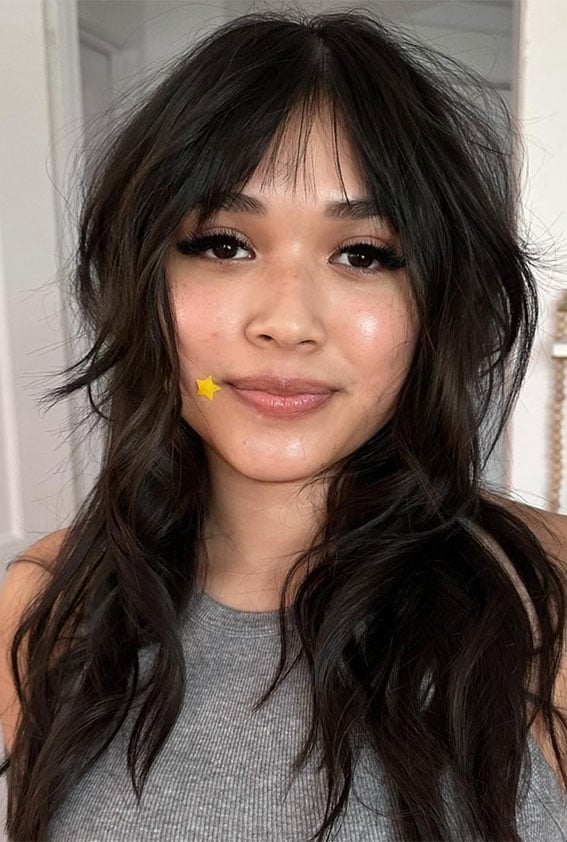
A dark brown wolf cut ending at the collarbone relies on wispy curtain bangs and choppy layers for its shape. Medium density wavy hair is the ideal candidate here, since the soft waves enhance the movement without extra work. Ask your stylist for: a collarbone wolf cut with soft waves and wispy curtain bangs. A texturizing spray on dry hair helps define the layers and keeps the bangs from falling flat. Trim every six to eight weeks to maintain the wispy fringe.
Collarbone Wolf Cut No Bangs Textured Layers

A collarbone wolf cut with no bangs puts all the focus on the textured layers. The middle parting and wavy, blonde-with-highlights finish give it a casual, lived-in feel. The lack of fringe means less daily styling, but the layers still need attention. Ask your stylist for: a collarbone wolf cut with textured layers and no bangs. Apply a texturizing paste or spray to the ends to keep the layers visible. A trim every six to eight weeks prevents the shape from growing out into a formless length.
Collarbone Curly Wolf Cut Honey Blonde Highlights
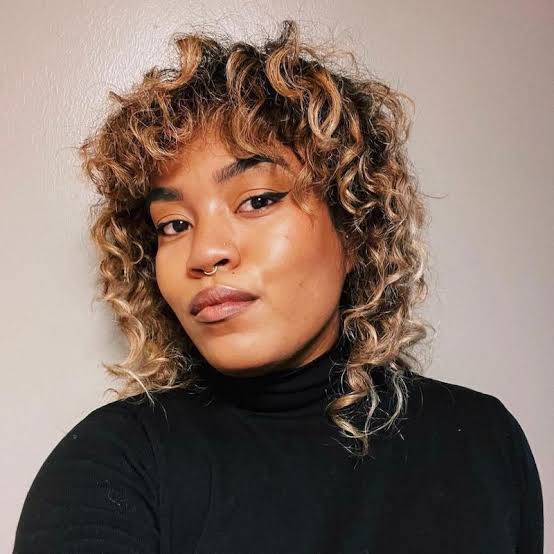
A collarbone-length wolf cut on thick, curly hair uses honey blonde highlights over a dark base to add dimension without the commitment of all-over color. The short, curly bangs and choppy layers define each curl instead of letting the weight pull everything down. On very dense hair, the layers need to be cut precisely to avoid a triangle shape when dry. Ask your stylist for: collarbone curly wolf cut with short curly bangs. A curl-defining cream and diffusing will keep the shape; trim every eight to ten weeks.
Collarbone Curly Wolf Cut Honey Blonde Highlights, Close-Up Take
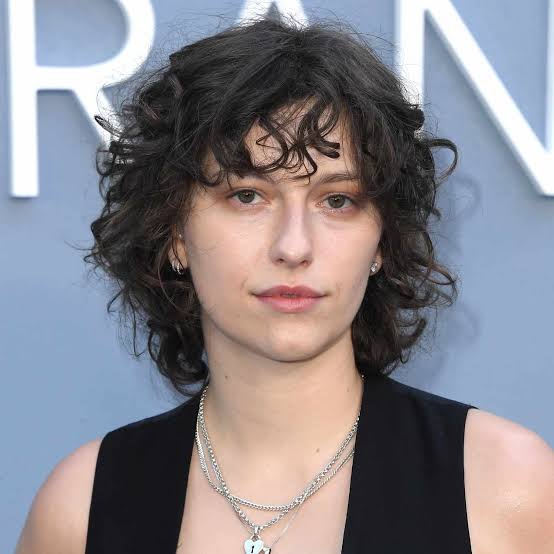
The technique here relies on cutting layers into the curl pattern itself, not straight across. Each section is released from tension so the choppy layers fall exactly where the natural wave bends, which is how you get definition without bulk. Honey blonde highlights on a dark base catch the light at different points along the curl, reinforcing the texture. Ask your stylist for: collarbone curly wolf cut with short curly bangs and honey blonde highlights. A middle parting keeps the bangs symmetrical and the volume balanced.
Collarbone Thick Curly Wolf Cut
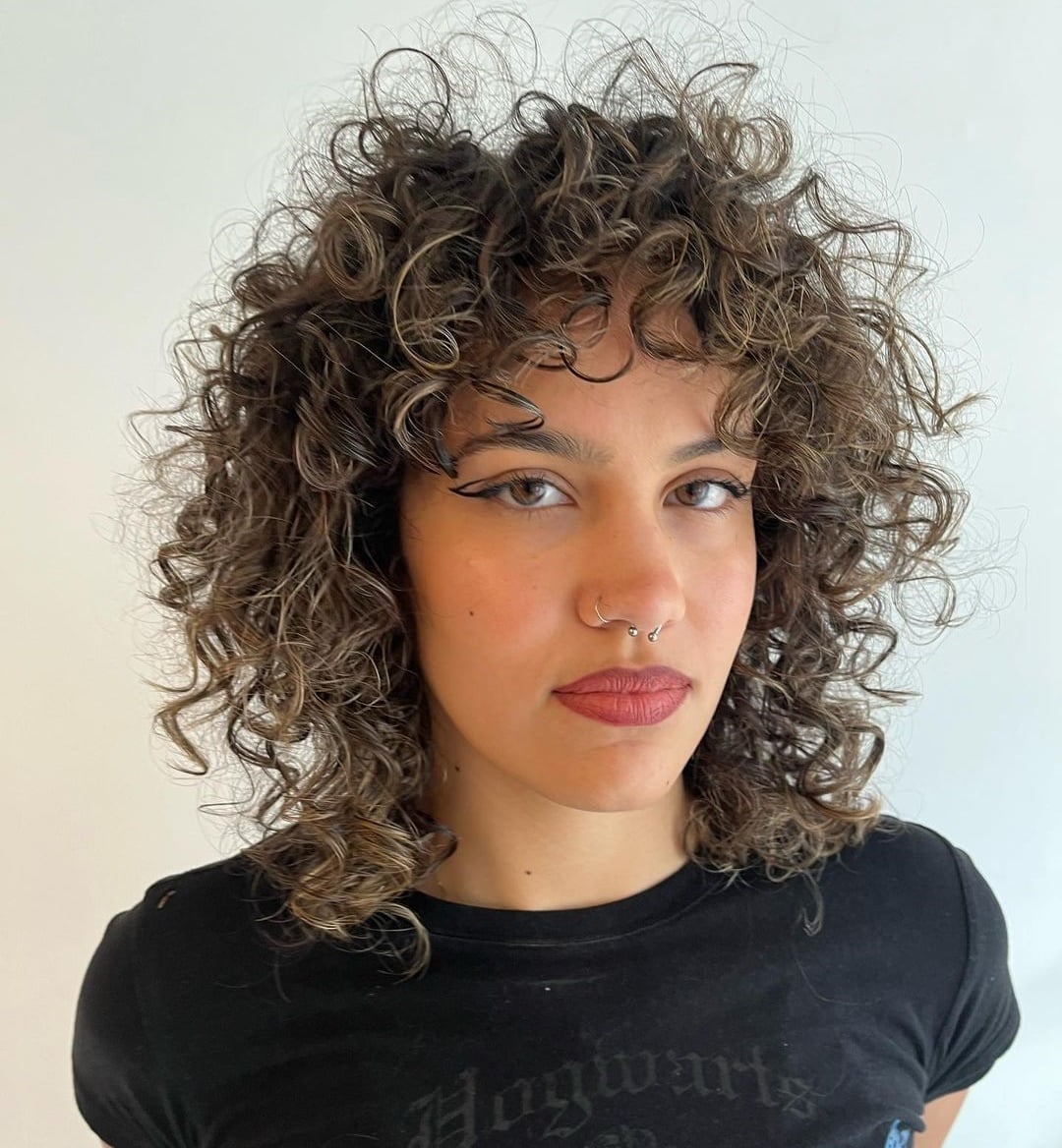
Compared to a wolf cut on fine hair, this thick curly version at collarbone length shows much more pronounced curl definition. The choppy bangs and subtle blonde highlights prevent the density from looking heavy, and the front view makes the layered shape clear. Where a looser wave might soften the cut, thick curls hold the choppy lines firmly. Ask your stylist for: collarbone length thick curly wolf cut with choppy bangs. A curl-enhancing mousse applied to soaking wet hair keeps the texture springy rather than frizzy.
Short Ear Length Wavy Wolf Cut
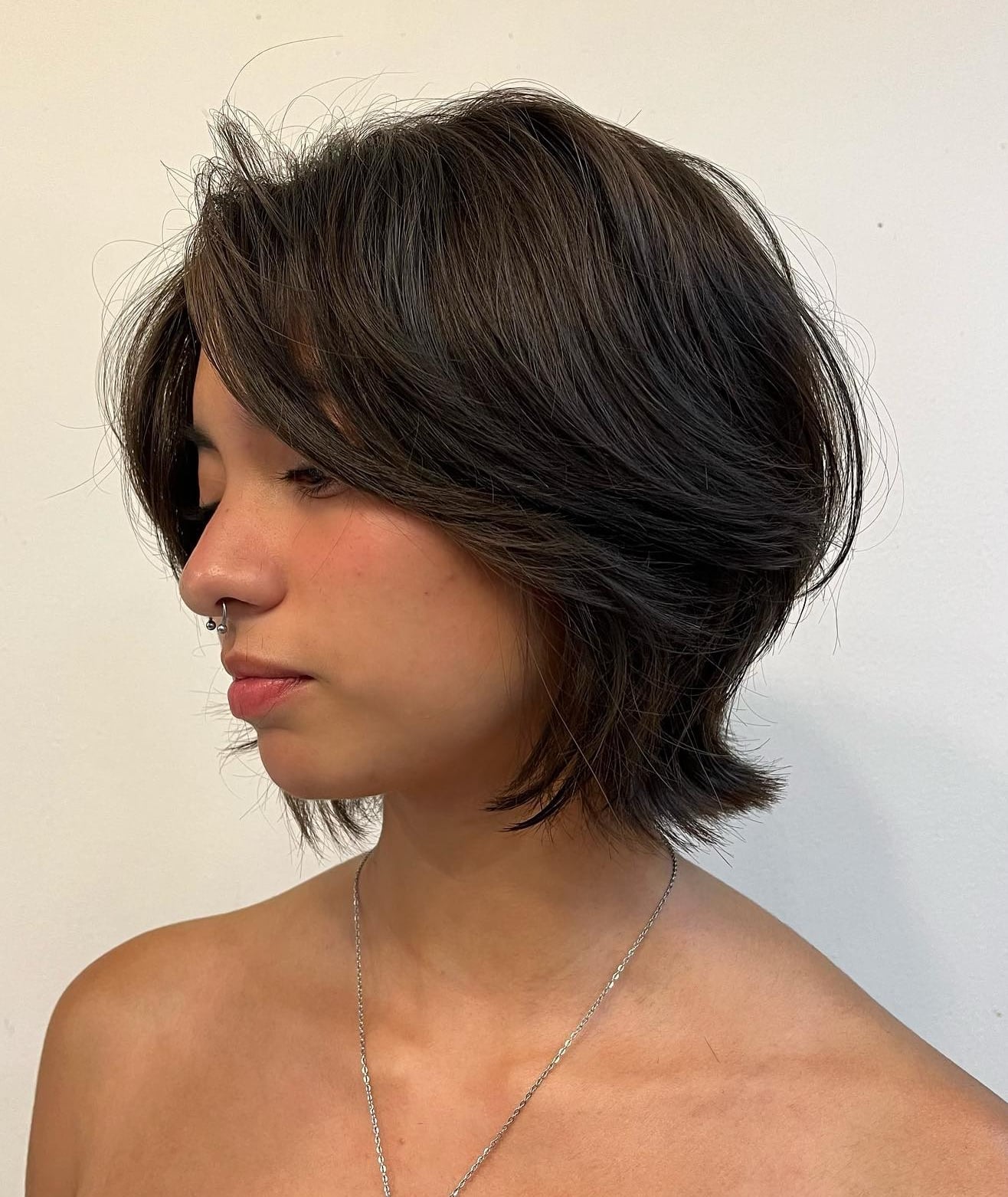
Can thick wavy hair handle a short wolf cut without looking round? Yes, when the choppy layers start at the ear and the face-framing bangs are cut with a side part. The ear length keeps the silhouette tight, while the textured finish gives the waves room to move without adding width. Ask your stylist for: short ear length wolf cut with face-framing bangs. A texturizing paste or spray on dry hair defines the layers; plan for a trim every six weeks to keep the shape from losing its edge.
Mid-Back Wolf Cut With Curtain Bangs

A mid-back wolf cut with curtain bangs is the low-maintenance version that keeps the texture without the short length. The choppy layers and textured ends stop the hair from hanging flat, and the loose waves keep it wearable for work or weekends. A middle parting lets the curtain bangs sweep to each side, softening the face without needing a fringe. Ask your stylist for: mid-back wolf cut with curtain bangs and choppy layers. Damp hair and air drying is usually enough; trim every eight to ten weeks to maintain the layers.
Mid-Back Wolf Cut Balayage Highlights
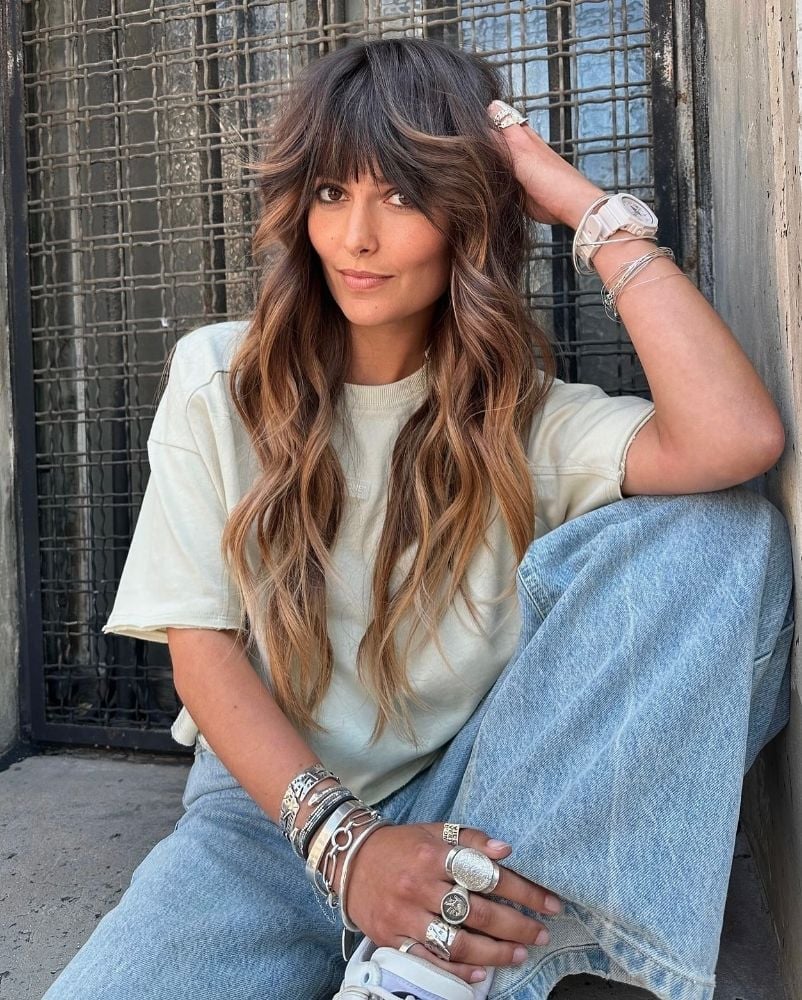
The balayage here adds dimension without demanding much attention. On a mid-back wolf cut with choppy layers and curtain bangs, the dark brown base contrasts with the lighter pieces, which works well for summer or any season with outdoor plans. Thick, wavy hair at this length gives the layers room to move, and the side parting keeps the volume from sitting flat.
Ask your stylist for: mid-back wolf cut with curtain bangs and balayage. The color technique needs a sulfate-free shampoo to keep the highlights from dulling, and a trim every eight to ten weeks keeps the choppy ends honest. This is a salon-only situation, but the result is a style that looks casual and unforced.
Mid-Back Ash Blonde Wolf Cut

The ash blonde here sits on a mid-back wolf cut with choppy layers, and the subtle darker roots mean you are not chained to a colorist every month. Curtain bangs frame the face softly, which is the detail to specify when you ask for this shape. Fine to medium wavy hair takes the layers well, and the middle parting keeps the whole thing balanced.
Ask your stylist for: mid-back ash blonde wolf cut with curtain bangs. A purple shampoo once a week maintains the ash tone, and trimming every eight to ten weeks preserves the layered shape. The darker roots buy you a few extra weeks between touch-ups, which is the quiet win of this color.
Mid-Back Wolf Cut Face Framing Blowout
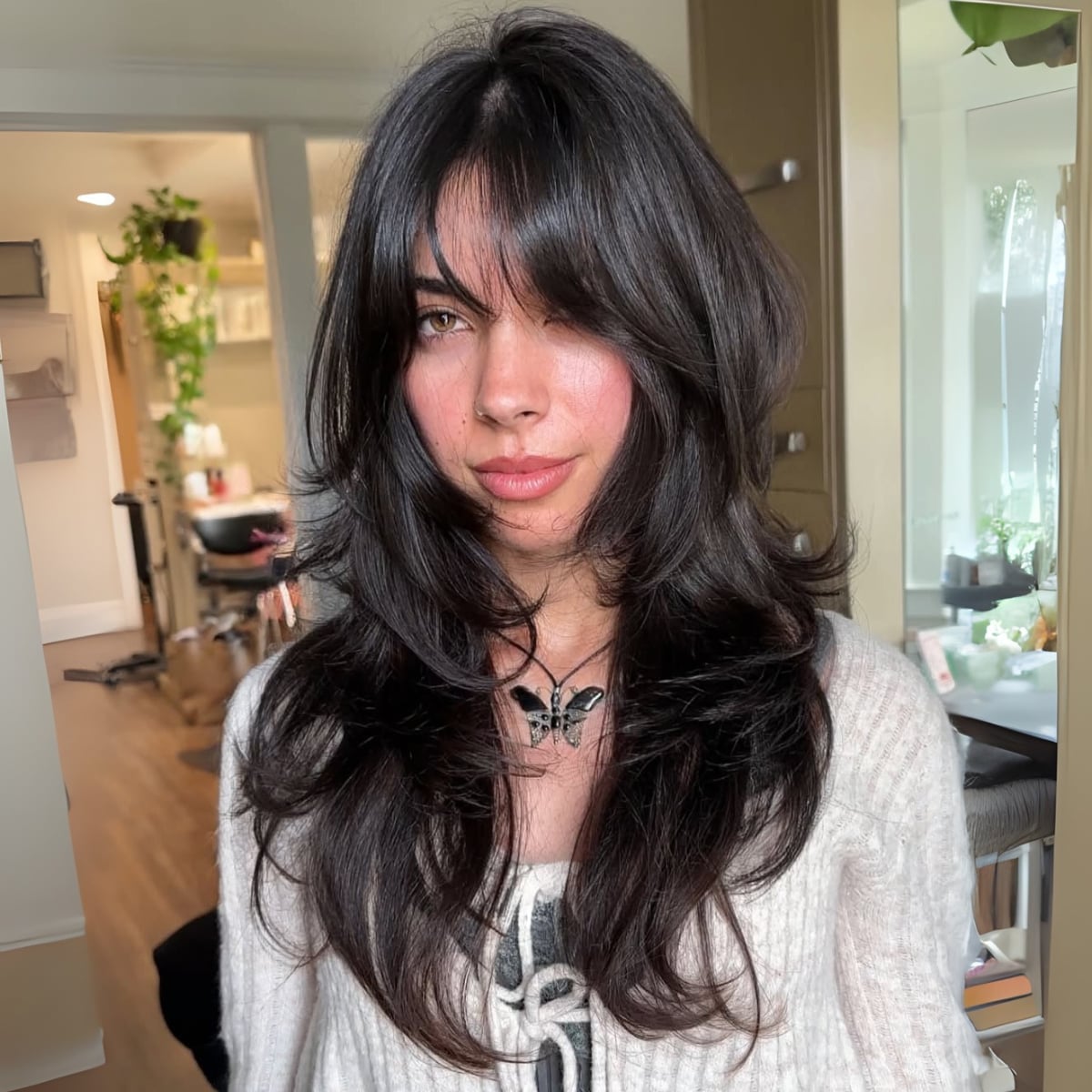
The face-framing layers here are the architecture: they start at the cheekbones and reach the longer mid-back length, so the cut moves as one piece. Curtain bangs soften the front, and the side parting gives the blowout somewhere to sweep. Thick, wavy hair holds the shape without needing constant re-rolling.
Ask your stylist for: mid-back wolf cut with curtain bangs and face-framing layers. A round brush and a blow-dryer are the tools of choice, and a trim every eight to ten weeks keeps those framing pieces from growing into a shaggy mess. This one works for the office or a night out, because the polish comes from technique, not product.
Mid-Back Honey Blonde Wolf Cut Balayage
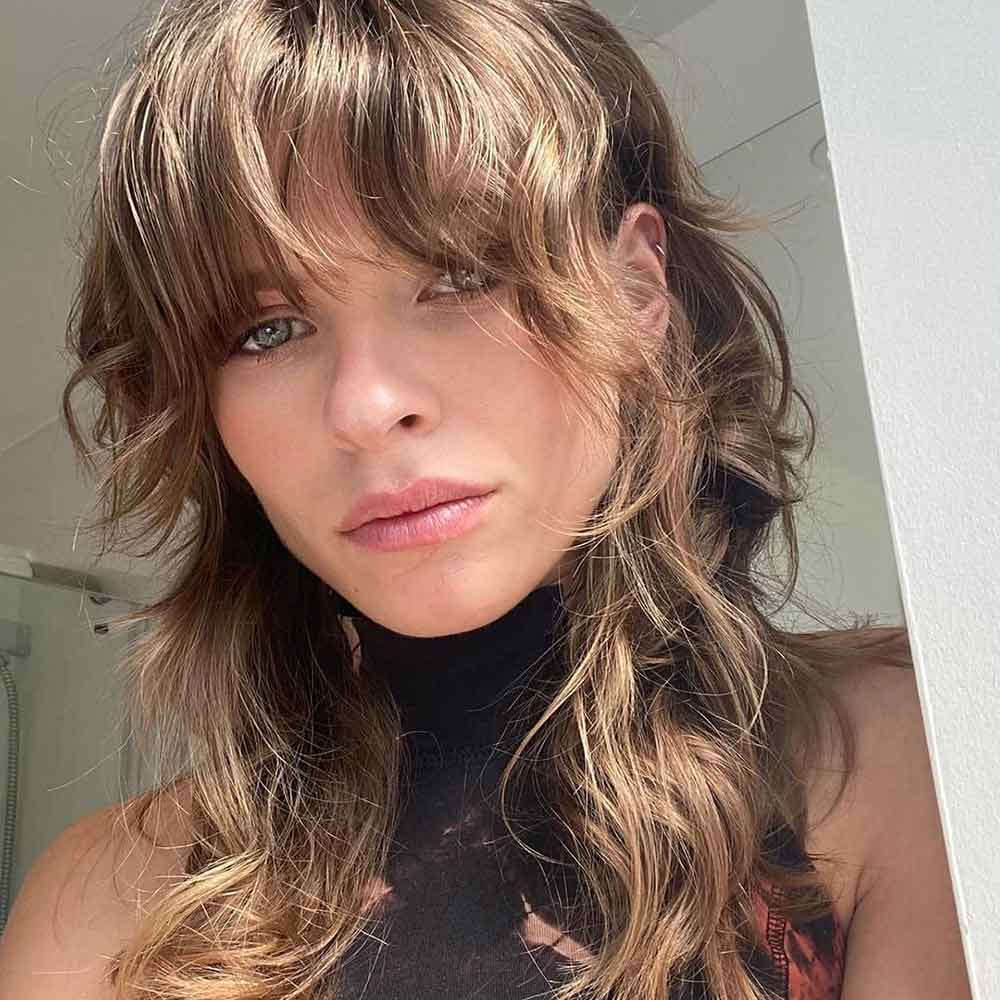
The honey blonde balayage on this mid-back wolf cut gives the long face-framing layers a soft, dimensional look that air-drying actually enhances. Thick, wavy hair is the ideal partner here: the texture holds the curtain bangs in place and lets the subtle color shifts show without styling effort. The middle parting keeps the volume distributed evenly.
Ask your stylist for: mid-back honey blonde wolf cut with curtain bangs and balayage. Upkeep includes regular salon visits, since air-dried texture tends to grow out faster than a blowout. A leave-in conditioner helps the waves stay soft between washes, but plan on a trim every eight to ten weeks to keep the shape defined.
Collarbone Light Brown Wolf Cut Blowout
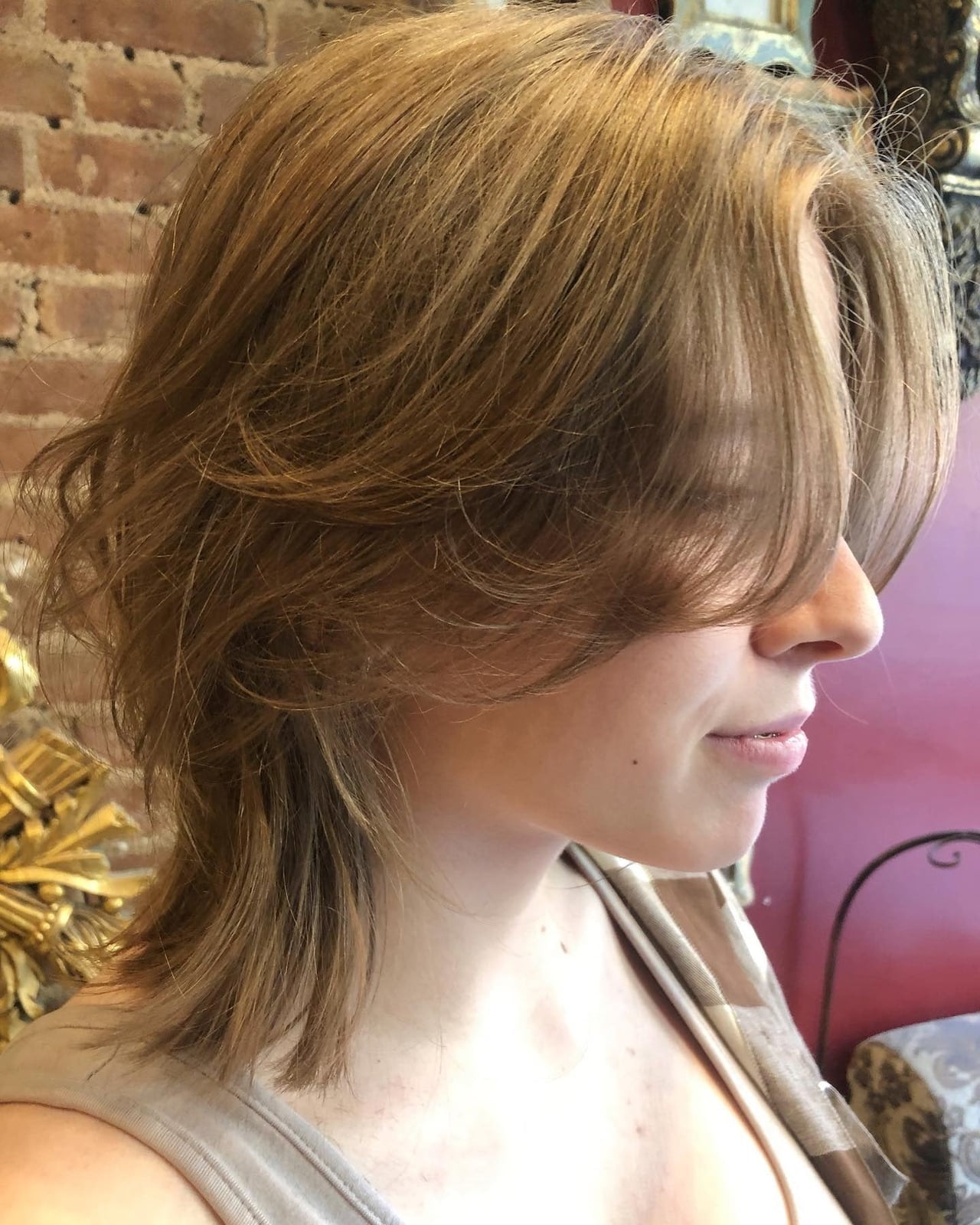
Compared to the air-dried versions that dominate the wolf cut conversation, this collarbone take leans polished: the light brown base and face-framing layers get swept into a blowout that lands somewhere between office-ready and weekend-brunch. The side parting adds lift at the roots, which suits medium density wavy hair that might otherwise fall flat. It is a wolf cut for people who want the texture without the bedhead energy.
Ask your stylist for: collarbone light brown wolf cut with face-framing layers and blowout. A heat protectant spray before blow-drying keeps the ends from frying, and a trim every six to eight weeks maintains the collarbone line. This one reads as more deliberate than the typical shag, which is either the point or the warning, depending on your patience.
Final Thoughts
Choose by your hair’s behavior, not just the photo. Fine hair: keep the layers chunky and avoid heavy thinning near the ends. Thick hair: ask for well-distributed layers that remove weight without leaving a shelf. Curly hair: keep the interior layers longer so the shape does not turn into a triangle.
- Trim every 6-8 weeks to maintain layer definition.
- Use texturizing sprays or sea salt sprays for enhanced movement.
- Air-dry when possible to preserve natural texture.
- Deep condition weekly for moisture, especially on layered ends.
Embrace the texture and layers that define the wolf cut.