

I spent the first week of January watching everyone in my salon wait for a bob. Not the lob, not the long shag, the blunt bob. By the third chair I started counting. By the sixth I stopped being surprised. Straight hair in winter wants a clean line, and it turns out I am not alone in that.
This is 30 Winter Haircuts for Straight Hair, from the pixie that takes ten minutes to a collarbone shag that air-dries without complaint. Some need a round brush. Some need nothing. I wrote every one for the fine, flat-by-4-pm hair I know, and for the person who has sat through a six-hour balayage and still wants something that works on a Tuesday.
Textured Dark Brown Pixie Cut

A textured pixie cut on straight hair is a gamble that pays off when the stylist knows where to point the shears. The key is the layering: short pieces at the crown, longer ones at the nape, all cut to catch light and break up the flatness straight hair loves to settle into. Mine had side-swept bangs that landed just above the brow, which meant I could push them left on a lazy morning and they still looked deliberate. The texture comes from the cut itself, not a product. A good pixie is engineered to stand up on its own.
Ash Blonde Layered Bob with Micro Bangs
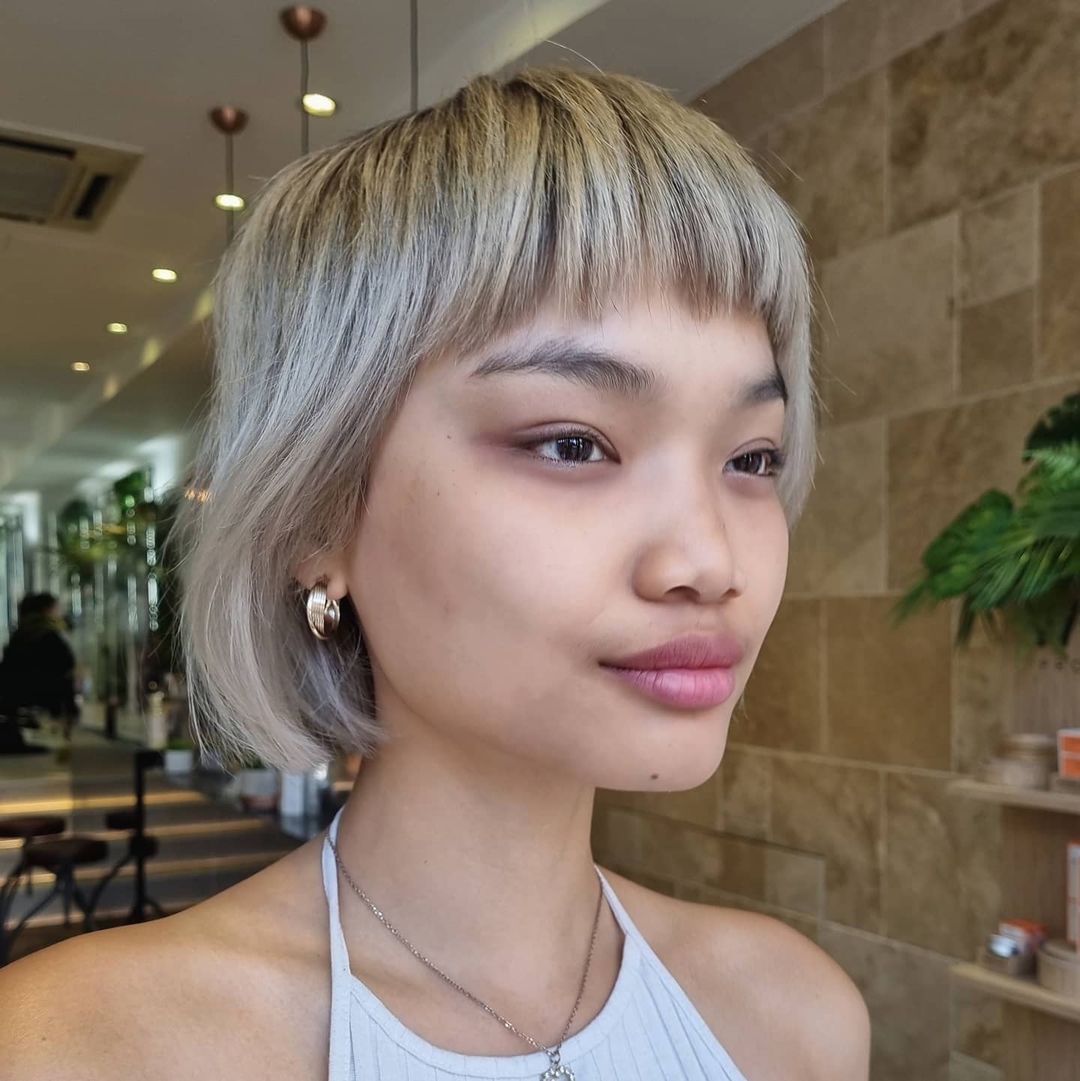
Have you ever wondered what happens when a bob meets a pair of micro bangs? A short layered bob with a fringe that barely clears the hairline, that is what. The ash blonde shade keeps it from feeling severe, and the layers stop the cut from turning into a helmet. I watched a friend get this and her whole face changed. The micro bangs bob works best on straight hair because the blunt edge of the fringe needs zero curl to sit right. A middle part keeps the bangs from separating, and the layers add movement without losing the bob’s clean line.
Smooth Dark Brown Pixie with Straight Bangs
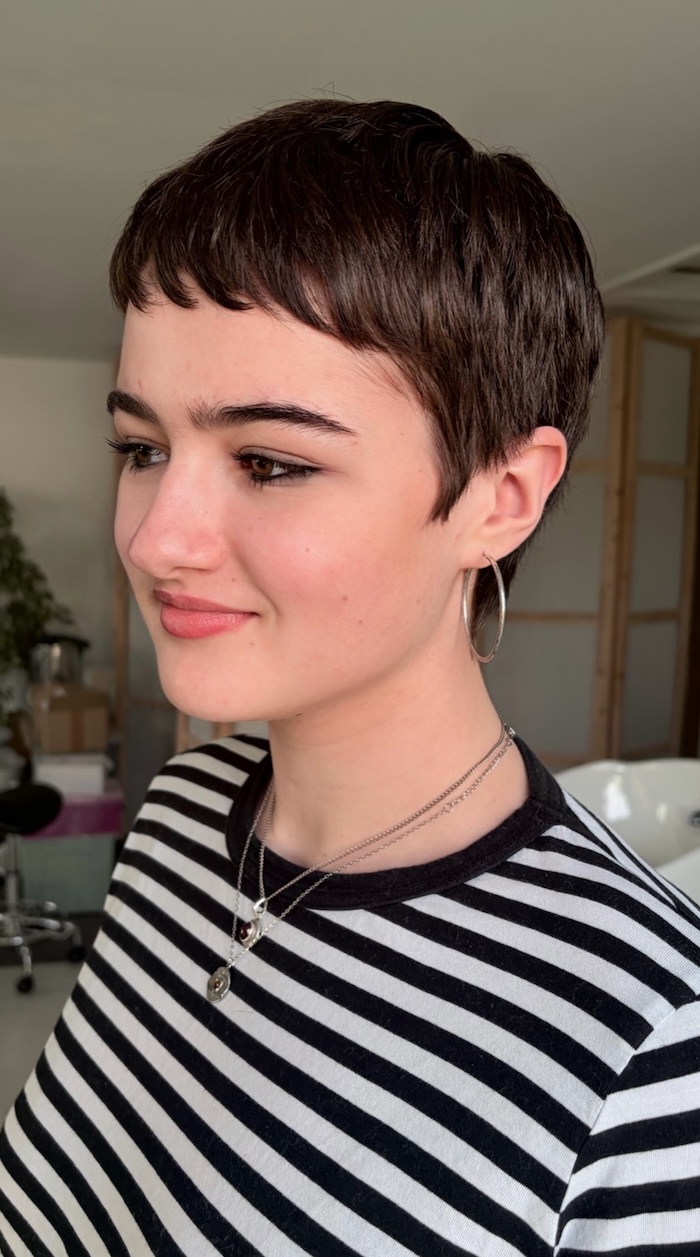
I will admit I was skeptical about short straight bangs on a pixie cut. The precision required is intimidating. But on straight hair, a smooth dark brown pixie with a fringe that hits exactly at the brow looks sharp in a way a textured fringe cannot match. The upkeep is real: those bangs need a trim every three weeks, and any humidity will make them separate. I learned to carry a small comb and a dry shampoo. The straight-across line demands a clean part and a steady hand with the flat iron. Worth it when it works, annoying when it does not.
Sleek Ash Brown Blunt Bob

A sleek blunt bob is the haircut that looks simple and is not. The chin-length line reads as effortless, but fine straight hair needs daily heat styling to hold that inward curl at the ends. I have seen this cut go flat by noon on anyone who skipped the blow-dry. The ash brown colour helps because it reflects light and hides the oil that fine hair produces by evening.
The honest downside is the time commitment. Ten minutes with a round brush, another five with a flat iron, and a heat protectant every single day. Without it, the bob looks like a sad mushroom. The sharp line demands a trim every six weeks, no exceptions. If you want a wash-and-wear cut, this is not it.
Polished Dark Brown Blunt Bob
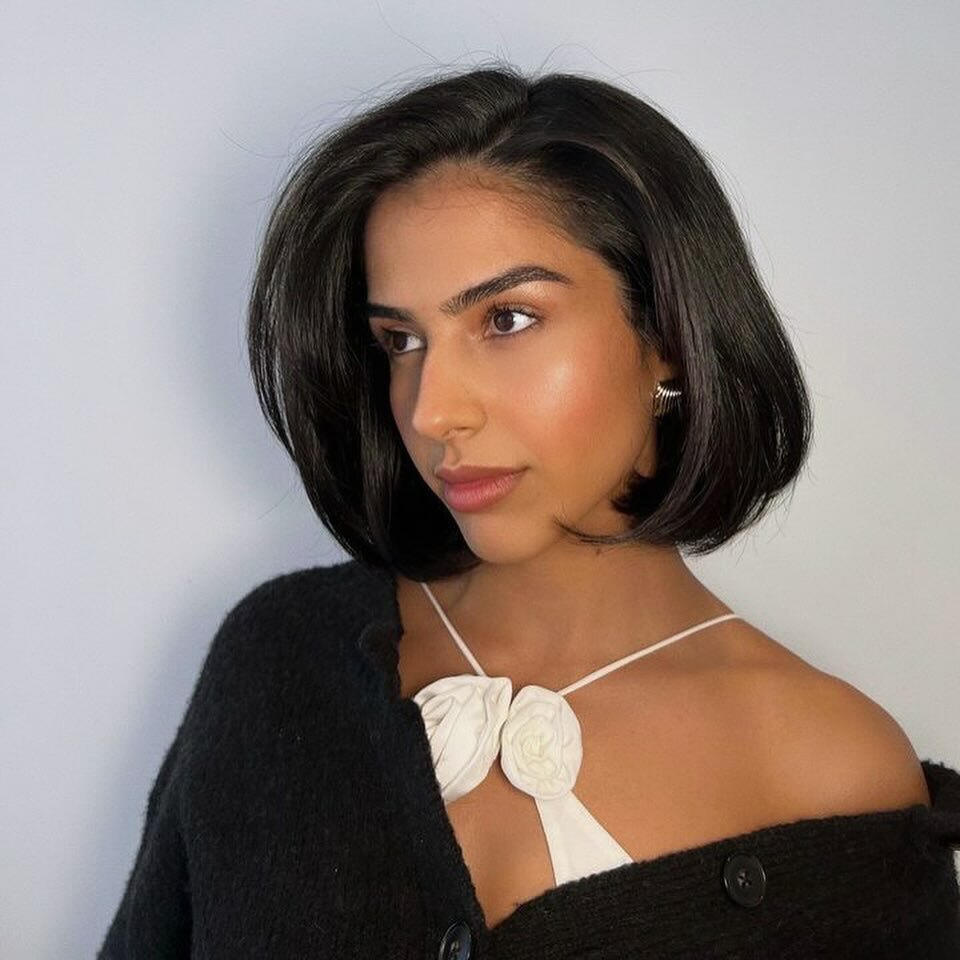
A polished blunt bob on thick straight hair is a different animal than the same cut on fine hair. The weight of thick hair makes the sharp line hold its shape without product. The dark brown colour adds depth, and the middle part keeps the bob symmetrical. I have seen this cut on a friend with coarse straight hair and she barely touched a brush. The bob sat exactly where the stylist cut it. For fine hair, skip this. The weight is not there to keep the line crisp, and the bob will look limp by lunch. Thick hair gets the real benefit: a shape that stays put.
Air-Dried Dark Brown Blunt Bob

There is a special kind of winter magic in a wash-and-go that still looks deliberate. This air dried blunt bob skips the heat tools entirely, which matters when the radiator is doing its best to turn my bathroom into a sauna. The blunt cut line does the heavy lifting here, giving fine, straight hair a denser edge that doesn’t collapse by four. A little smoothing cream worked through damp strands keeps the dark brown surface calm. The middle part falls where it wants, and honestly, that is the point. I trim every six to eight weeks to keep the line sharp, because a soft blunt line is just a sad triangle.
Ash Blonde Blowout Bob
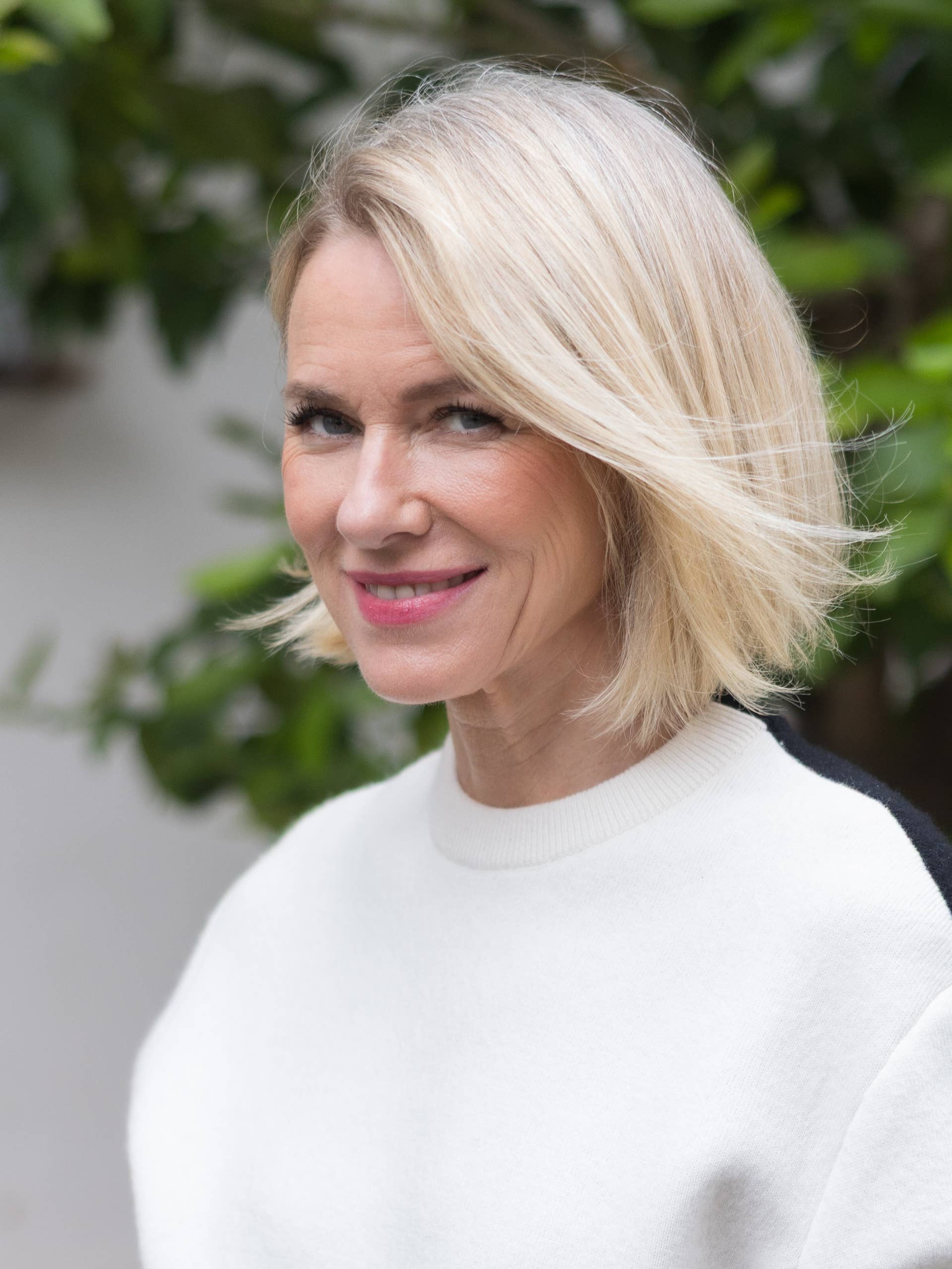
Why does ash blonde look so right when the sky turns grey? This ash blonde bob answers that question with a cool, almost silvery tone that picks up the winter light without fighting it. The chin-length blunt cut sits clean and polished, and the side part gives it a bit of sophistication. A proper blowout takes about fifteen minutes with a heat protectant spray, which is a fair trade for that smooth, glassy finish. The straight texture holds the shape beautifully. I book a trim every six to eight weeks to keep the blunt line honest, because ash blonde shows every split end like a neon sign.
Angled Bob with Side-Swept Bangs
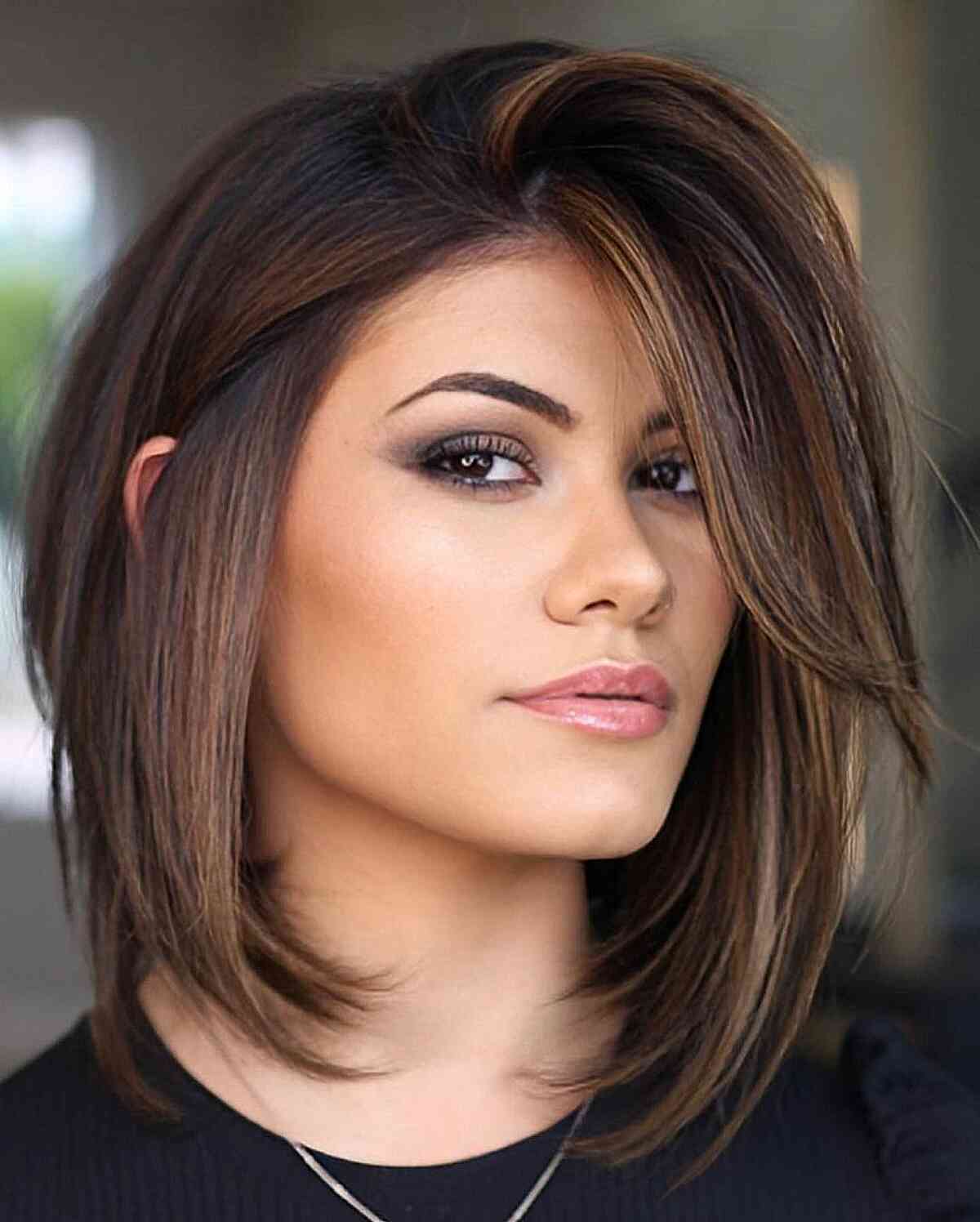
This angled bob with bangs is a geometry lesson that actually flatters. The cut drops longer toward the collarbone length in front, which draws the eye down and away from a round jaw. The layers are cut internally, so they create movement without sacrificing the weight of the line. The side-swept bangs sweep across the forehead and blend into the longer front pieces, which is the trick that keeps it from looking like a helmet.
When you sit in the chair, ask for this:
- Keep the front longer, grazing the collarbone length.
- Cut internal layers for movement, not texture.
- Blend the side-swept bangs into the front.
- Keep the back stacked, not blunt.
That combination gives straight hair a dynamic swing that a one-length cut simply cannot. The blowout takes about twenty minutes with a round brush, and the bangs need a trim every four weeks or they start poking you in the eye.
Voluminous Chin-Length Bob with Fringe
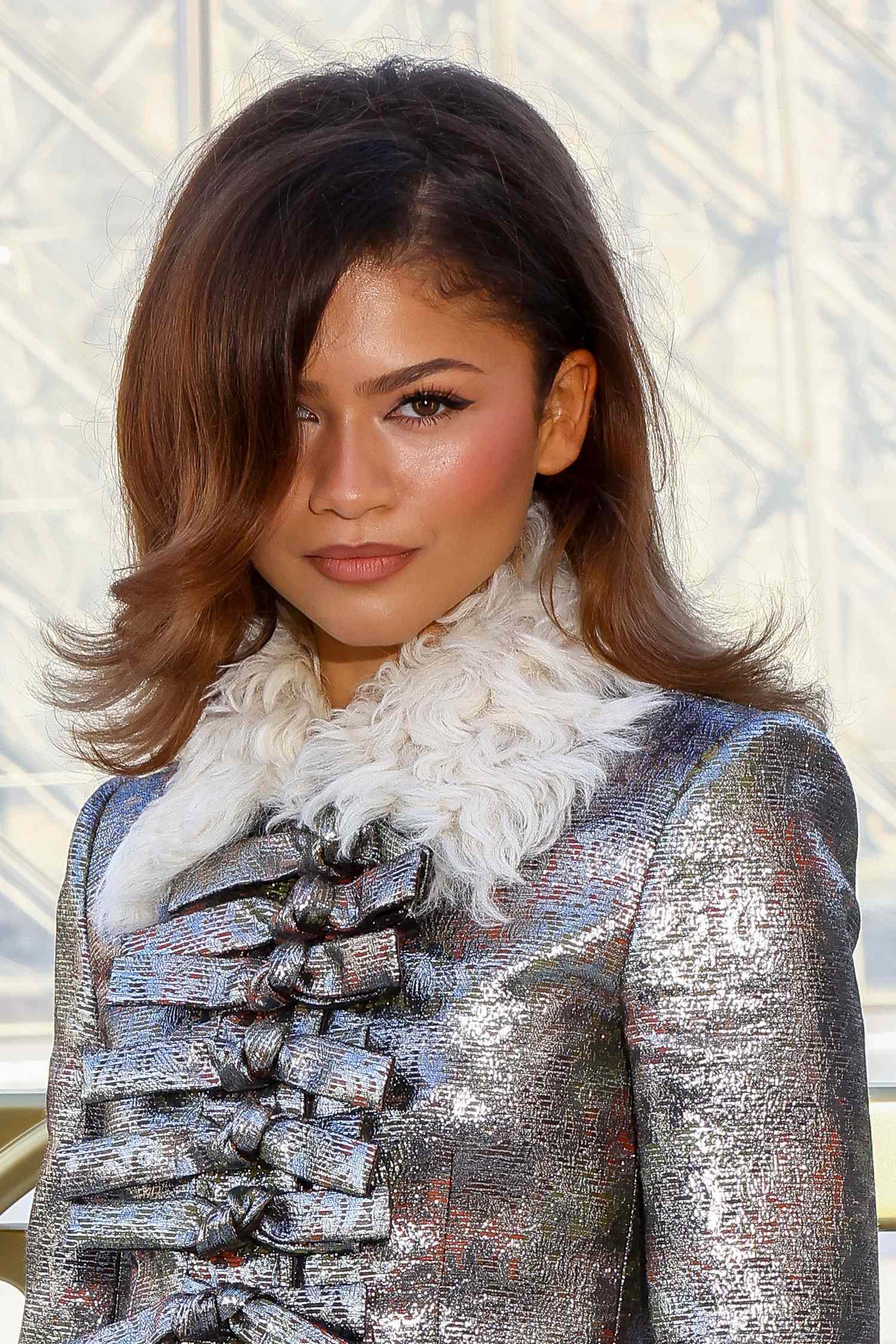
Do you have fine hair that goes flat by lunch? This chin length bob fringe is the answer, but only if you are willing to work for it. The voluminous blowout is the whole game here, and it requires a round brush and about twenty minutes of your morning. The payoff is real: the volume lifts the crown and the side-swept fringe softens a square jaw. The medium brown base with subtle highlights adds dimension so the movement reads clearly. If you have thick, coarse hair, skip this one, you will end up with a pyramid. If your hair is fine and you have the patience, this cut gives you the volume that gravity keeps stealing.
Layered Dark Brown Bob with Inward Curl
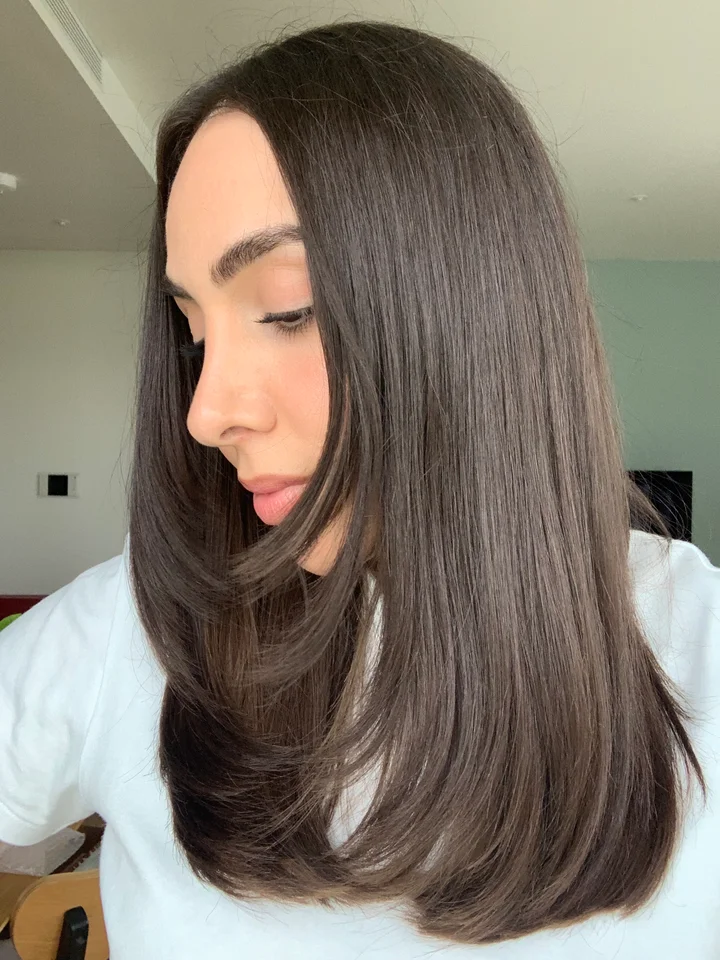
The inward curl is a classic for a reason, but it is not a bathroom-mirror job. This layered bob inward curl starts with a precise cut at chin length, where the layers are stacked to encourage the ends to tuck under. The stylist builds the shape so the hair naturally wants to curl inward, then you just encourage it. At home, I use a flat iron and turn the ends under in one smooth motion, about ten minutes total. The dark brown color keeps the line sleek and the side part adds a little lift at the root. If you try to fake this with a round brush on wet hair, you will get a flip, not a curl. Book the cut, learn the technique, then practice at home.
Chin-Length Bob with Curtain Bangs
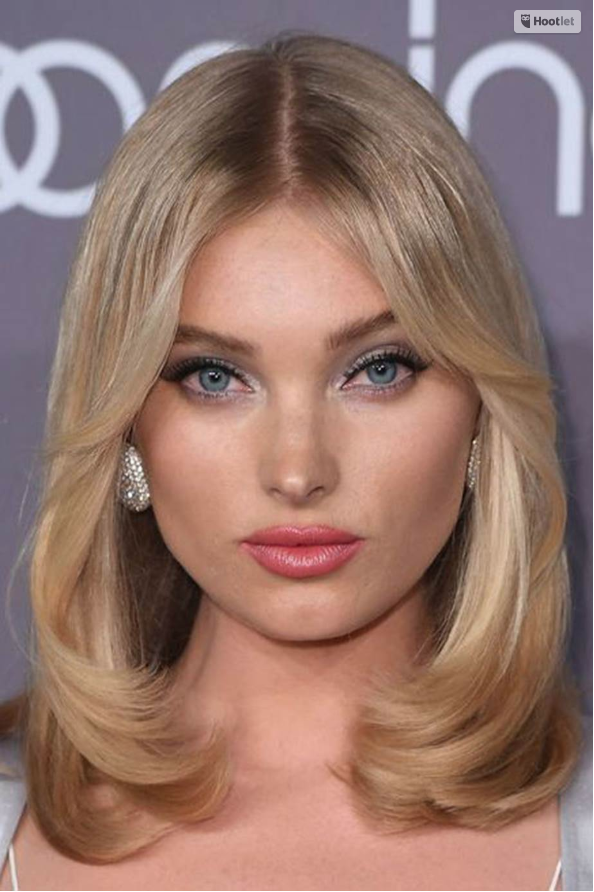
You walk in wanting a chin-length bob with curtain bangs, not a full fringe, not a blunt line across your forehead. The curtain bangs sweep to the sides, so you keep length and still get movement where your face needs it. The bob itself lands at chin, no layers beyond the face-framing ones that start at cheekbone and feather toward the jaw.
Compare this to a wispy fringe, which demands daily round-brush work and shows grease by noon. Curtain bangs forgive a lazy blow-dry. They separate, they swoop, they still look intentional when you wake up and do nothing. The texture stays straight, the ash blonde reads cool, and the middle part widens a round face. You book the bob every eight weeks, the bangs every four. That is the trade.
Textured Dark Brown Shag with Blunt Bangs
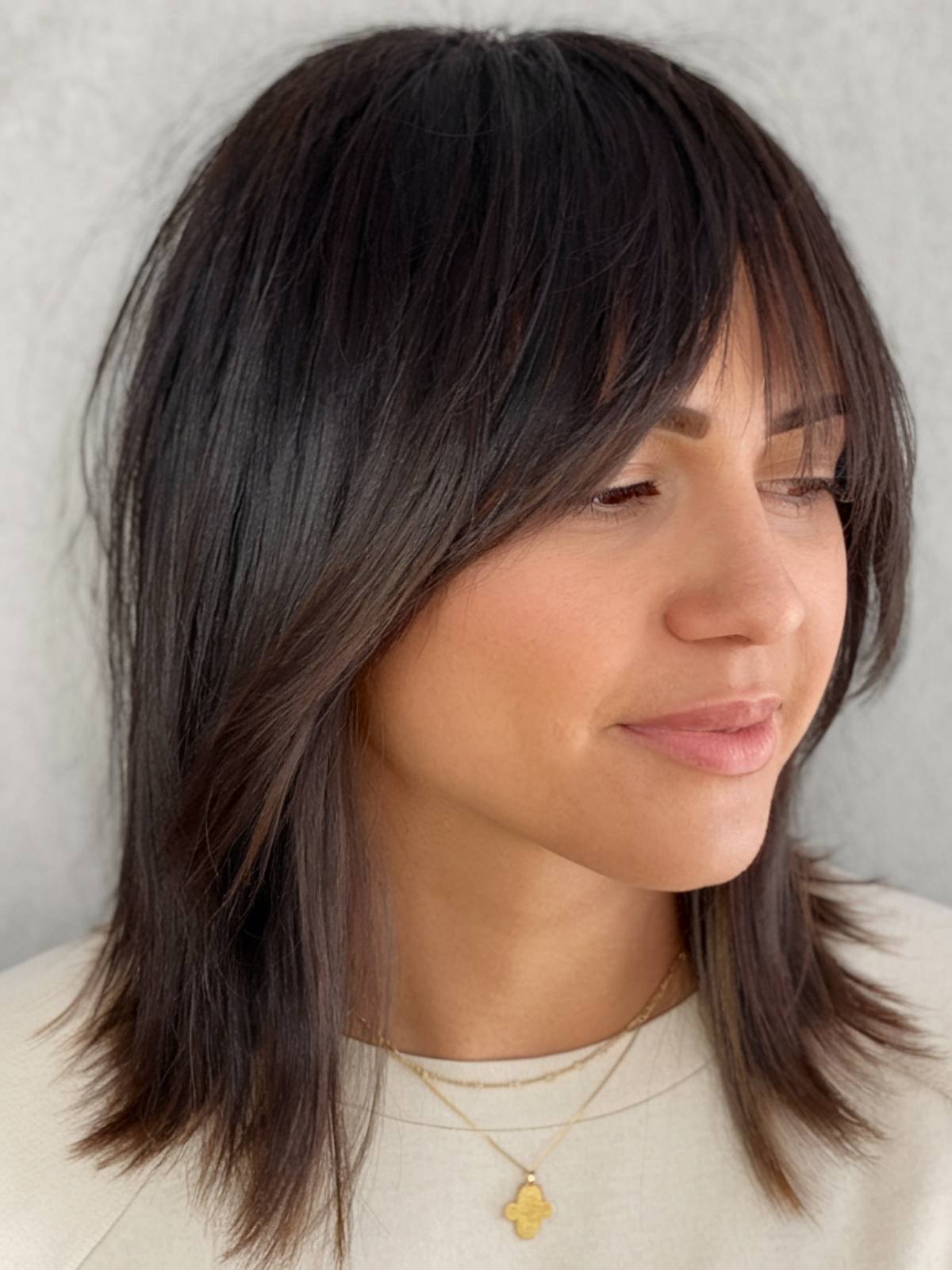
I will confess: I expected a shag with blunt bangs to look like a helmet by Wednesday. It does not. The choppy layers cut into the dark brown keep the weight off, so the shape stays loose even when I skip washing. Blunt bangs sit straight across, no sweep, no curtain, just a solid line that makes the rest of the cut feel deliberate. Ten minutes with a texture spray, a rough finger-comb, and it looks like I tried. The trim rhythm is the same: bob every six to eight, bangs every four. Straight hair holds the blunt edge well, which is the whole point.
Shoulder-Length Dark Brown Shag with Choppy Bangs
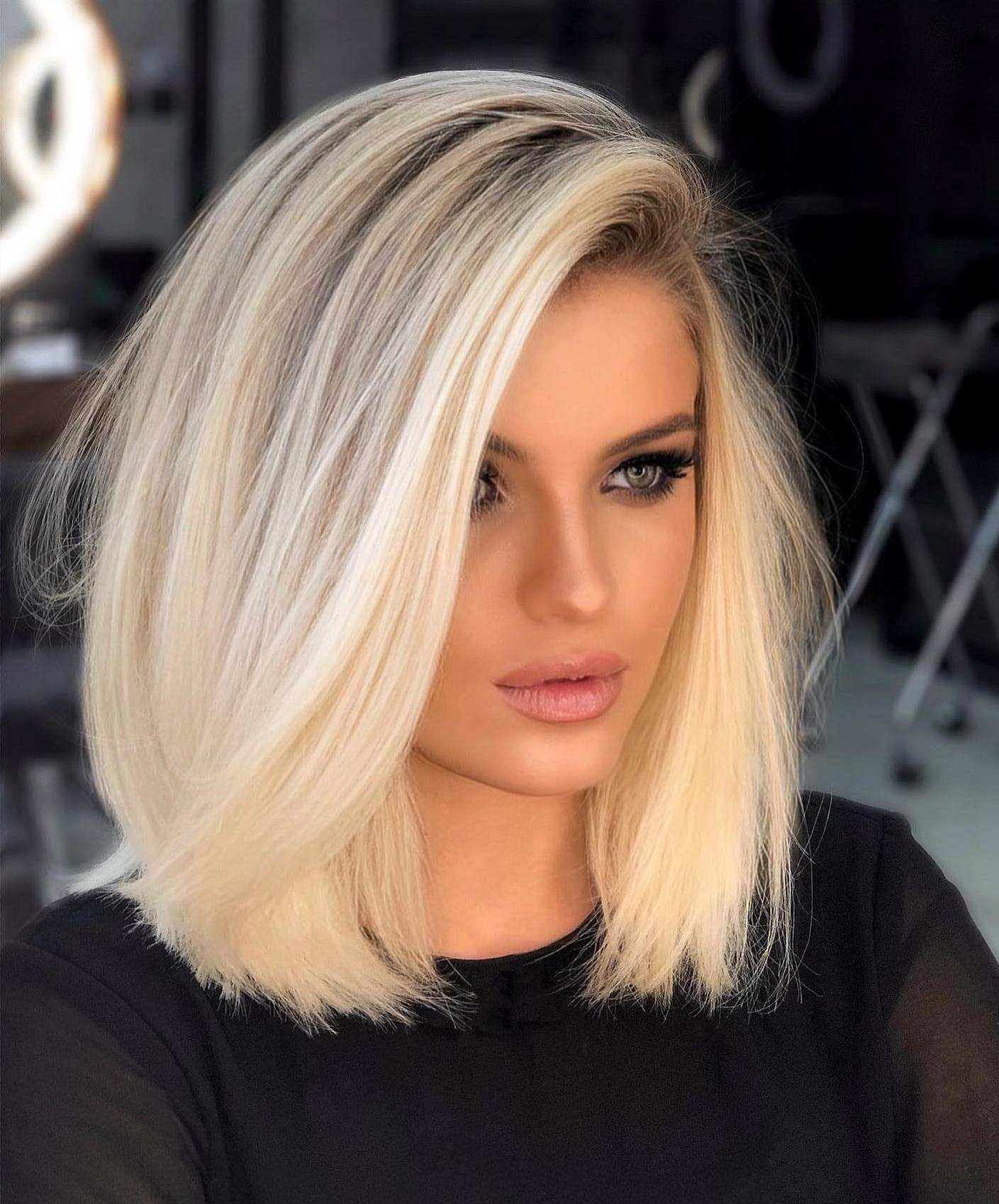
This is the cut that made me stop fighting my straight texture. The shag haircut shoulder length lands right at the collarbone, and the choppy bangs break across the forehead in uneven pieces. No precision, no swoop. They just sit there, jagged and dry.
The honest downside: choppy bangs grow out fast and look awkward at week three. The shortest piece hits your brow, the longest grazes your cheekbone, and suddenly you have a triangle situation. You trim every four weeks or you commit to bobby pins. The dark brown reads rich against the layers, and the middle part keeps the weight balanced. Air-dry with a texture spray, shake it out, go. That is the appeal. That is also the catch.
Collarbone Long Shag with Blunt Bangs

Blunt bangs on a long shag blunt bangs cut require a specific face: high cheekbones or a strong brow, because the straight line across the forehead shortens the face visually. If you have a round or short face, the bangs will make it look wider. The collarbone length keeps the shag from feeling heavy, and the medium brown with subtle highlights adds dimension without a full colour commitment.
The textured finish is the key. The layers start below the chin and taper toward the ends, so the blunt bangs do not compete with the body of the cut. Straight hair holds the shape well, and the middle part keeps the bangs centered. If you have fine hair, skip this: the blunt bangs will separate and show scalp. Thick, straight hair is the ideal match. The bangs need a trim every four weeks, the rest every eight.
Ash Blonde Collarbone Shag with Waves
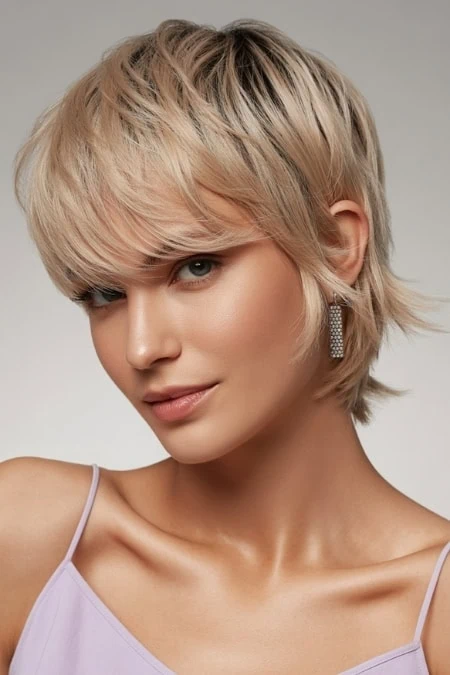
Why does a shag with curtain bangs in ash blonde feel like a winter uniform? The collarbone length hits the top of a coat collar without bunching, and the soft waves break the flatness that straight hair gets in dry air. The curtain bangs sweep to the sides, so they do not touch your forehead when you pull on a beanie. Ash blonde reads cool against pale winter skin, and the middle part keeps the face open. Air-dry with a wave spray, twist sections while damp, and you are out the door in fifteen. No round brush, no blow-dryer. That is the whole point of this season.
Voluminous Layered Shag with Honey Blonde
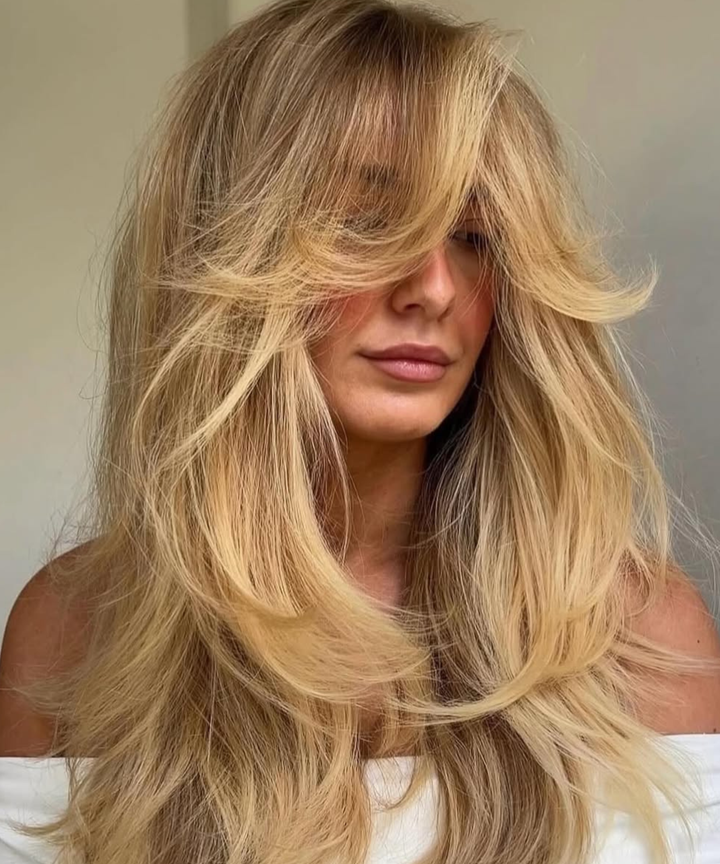
Best volume I have seen on straight hair without a can of dry shampoo. The layered shag curtain bangs do the heavy lifting here: the stylist cuts internal layers that lift the crown and shorter face-framing pieces that sweep outward, not forward. Honey blonde with subtle highlights adds dimension so the layers read as movement, not just cut lines. Middle part, collarbone length, thick texture that holds a voluminous blowout for a full day. The technique is point-cutting through the ends so they stack rather than hang flat.
To get this at home you need a round brush and twenty minutes. Blow-dry the crown forward and up, then wrap each section around the brush and pull taut as you dry. The curtain bangs need a quick roll away from the face with a small round brush. A flat brush will not create the lift. Trim every six to eight weeks or the internal layers collapse and the whole thing goes limp.
Collarbone Bob with Face-Framing Layers
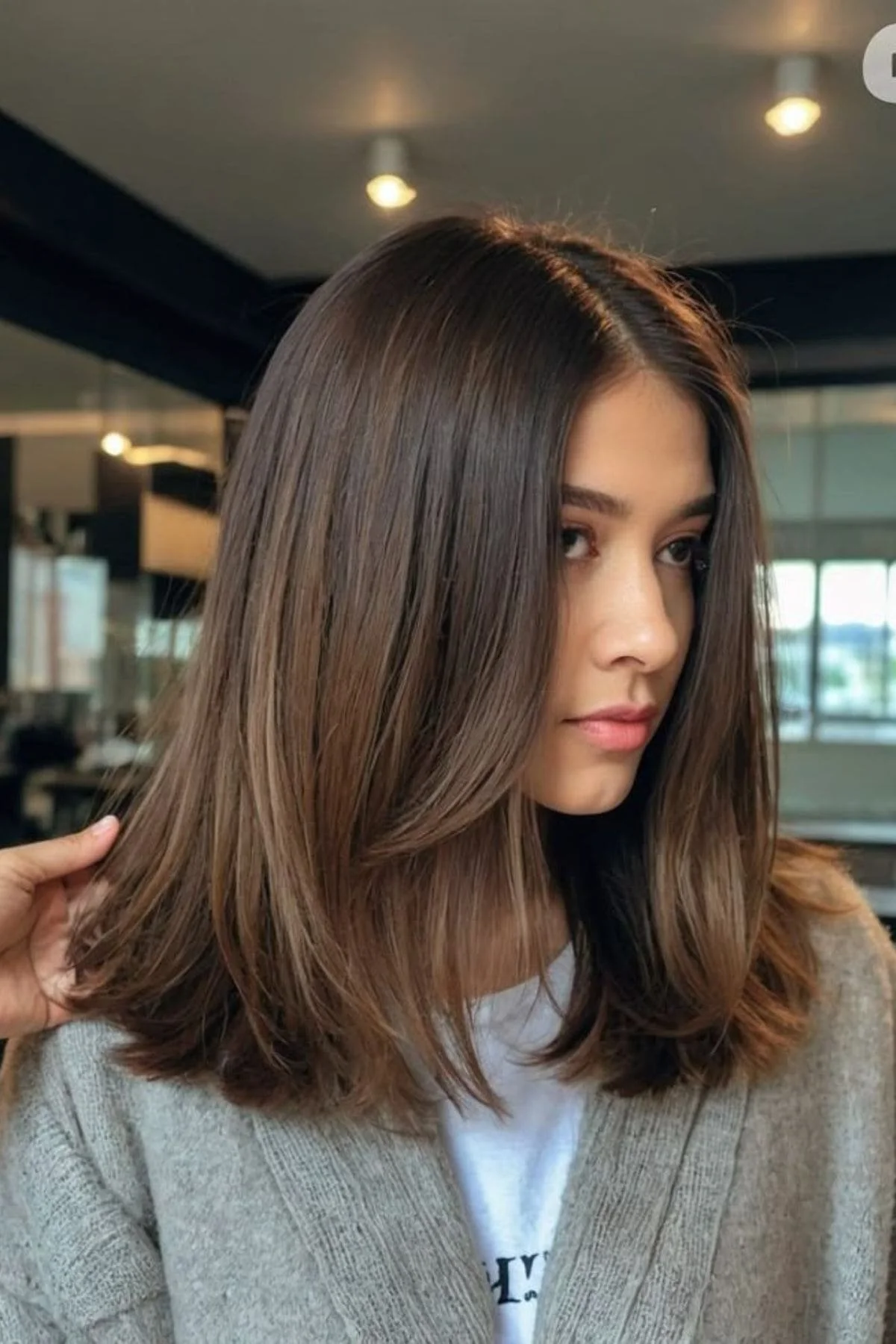
Monday morning, no blow-dryer in sight. The long bob face framing is what you grab when you want to look put together without the round brush. Dark brown with subtle caramel highlights, middle part, collarbone length, no bangs. The soft layers are cut so the shortest piece hits the jaw and the longest stays at the collarbone. Straight texture, air-dried with a little smoothing cream. The layers dry into a gentle inward curve that softens the jawline without looking styled. They grow out gracefully for about eight weeks before the shape blurs, but you can stretch to ten if you tuck the front pieces behind your ears. The highlights help because they disguise where one layer ends and the next begins.
Collarbone Layers with Glossy Finish

When did a salon finish start looking this achievable at home? The collarbone layers are cut with a blunt baseline and soft internal layering so the hair falls in one solid sheet with movement at the ends. Dark brown with subtle highlights, side part, no bangs. The glossy finish comes from a blowout with a smoothing serum and a cool shot at the end to seal the cuticle. Fine to medium density, straight texture. This is a salon-leaning cut because the layers need precise placement: too high and the hair separates, too low and you just have long hair with split ends. Tell the stylist you want a single-length silhouette with soft weight removed from the interior. A gloss treatment at the salon adds about thirty minutes and keeps the shine for three weeks.
Mid-Back Ash Blonde with Root Shadow
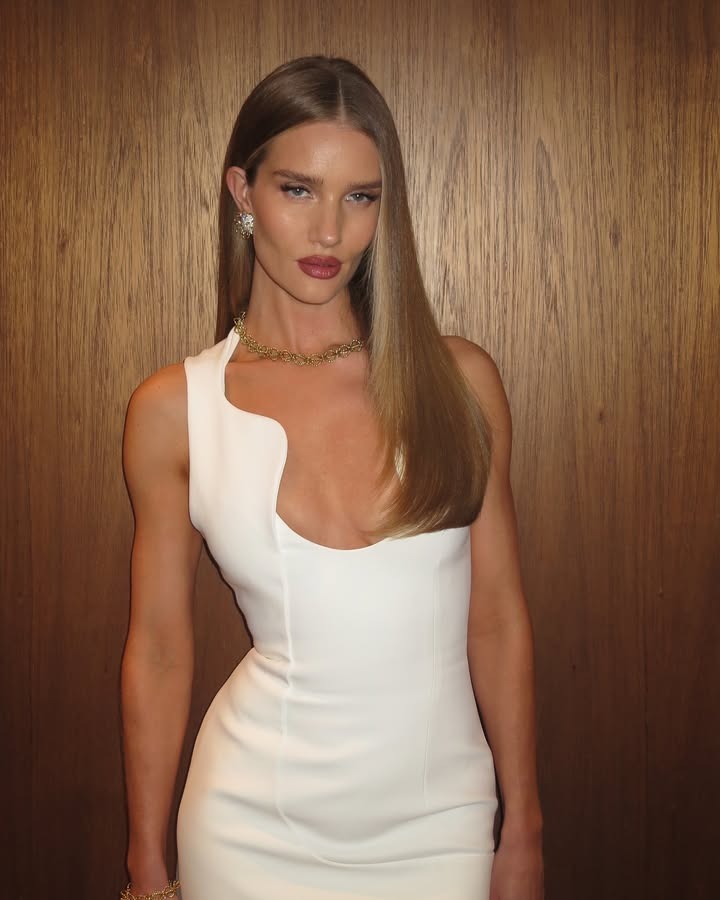
Sleek straight hair wins this round, and it is not close. The ash blonde root shadow starts dark at the part and melts into a cool blonde that reads silver in low light and beige in direct sun. Mid-back length, long layers cut so the ends stack rather than flip outward, middle part, no bangs. Straight texture that stays flat if you let it air dry, so this cut demands a flat iron for fifteen minutes every morning. The alternative is a textured mid-back shag that needs a curling iron and product. The sleek version wins because the root shadow does the work of dimension and the straight finish shows off the colour transition. No waves hiding the grow-out line. Trim every eight to ten weeks or the ends fray and the sleek illusion breaks.
Mid-Back Warm Blonde with Balayage
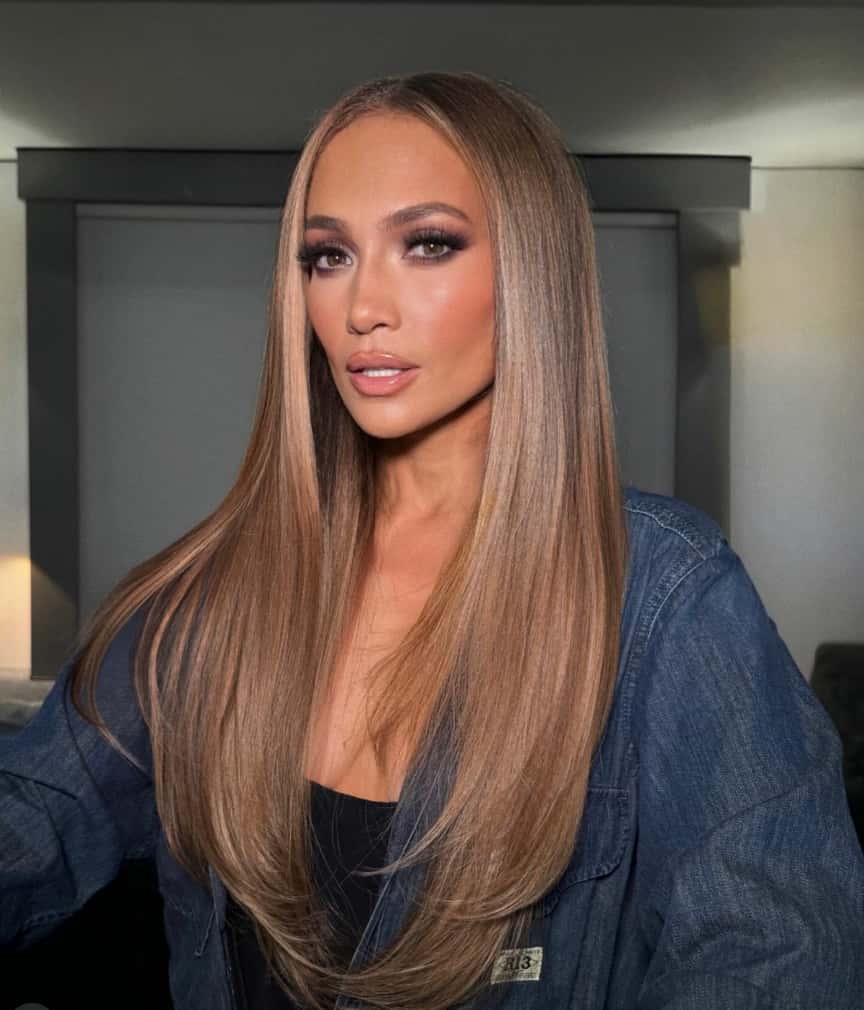
Warm blonde balayage reads expensive on straight hair because the light catches the painted sections differently than the base. Mid-back length, subtle long layers cut to keep weight at the ends, middle part, no bangs. The colour starts a shade darker at the root and warms to a honey tone through the mid-lengths and ends. Straight texture, sleek finish achieved with a flat iron and a heat protectant spray. This suits medium to warm skin undertones because the gold in the blonde picks up the warmth in the complexion. Cool skin tones should ask for a beige or neutral blonde instead or the contrast looks jarring. Trim every eight to ten weeks to keep the ends healthy enough to reflect light. The balayage grows out softly for about four months before the root line becomes visible.
Mid-Back Layers with Blonde Highlights
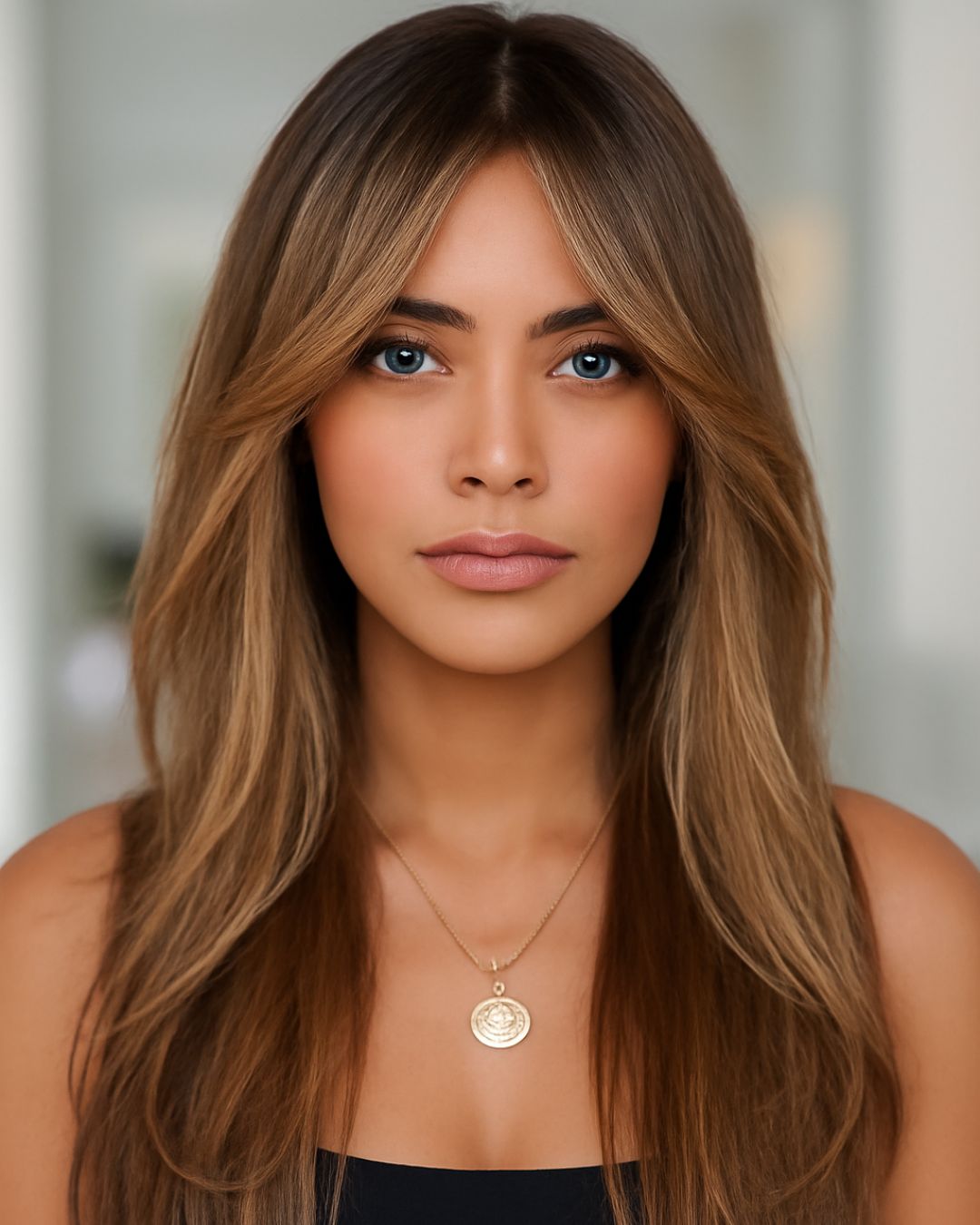
I’ll admit I booked this cut mainly for the curtain bangs, and the layers blonde highlights were a bonus I didn’t expect to love. The mid-back length keeps the straight texture from looking heavy, while the face-framing pieces catch the light around the cheekbones. The honest part is the grow-out: those curtain bangs need a trim every four weeks, or they start landing in your eyes by week three. The rest of the cut can stretch to eight or ten weeks, but the fringe is a commitment that shows up in your calendar.
Dark Brown With Caramel Highlights Mid-Back Layers with Caramel Highlights
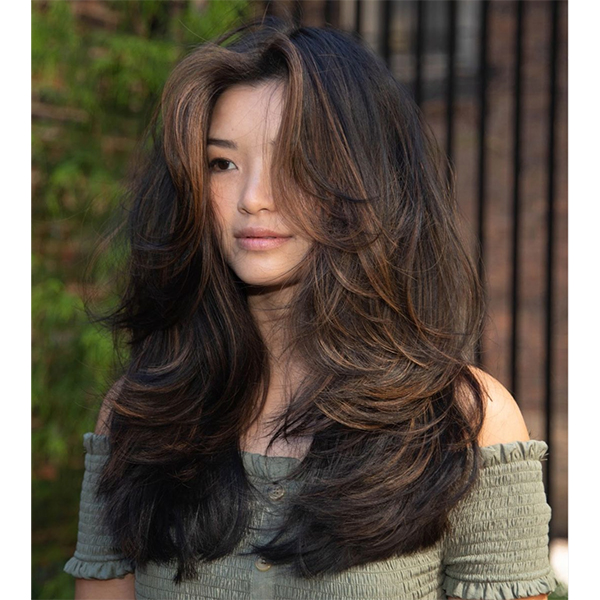
Here’s my verdict: the layers caramel highlights look warm and expensive, but they are not a set-it-and-forget-it situation. The mid-back length with long layers gives real volume at the crown, which straight hair rarely gets without help. Loose waves hold the shape for a few hours, then the texture starts to relax, and that is fine if you like the lived-in version.
What nobody tells you is that layers can lead to split ends faster than a blunt cut, because the ends are thinner and more exposed. I noticed the first frays around week seven, right before the eight-to-ten-week trim window. The caramel tones fade into a warmer brass by week five, so a toning session around then keeps the dimension honest. It is a lovely cut, just not a lazy one.
Mid-Back Long Layers with Feathered Ends
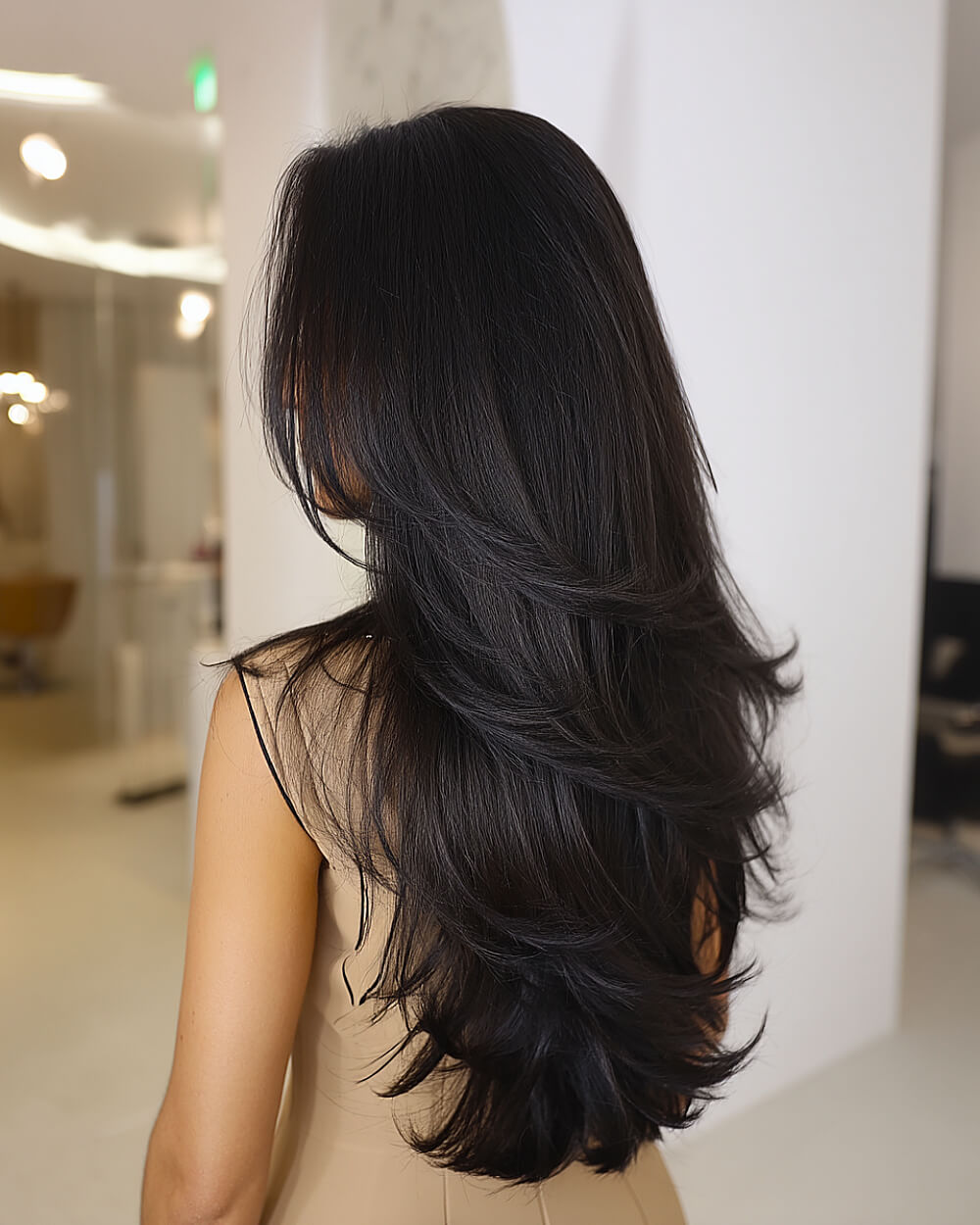
The stylist starts with a middle part, sections the back, and cuts each layer at an angle so the ends taper into points rather than a straight line. That is the whole trick behind long layers feathered ends: the movement comes from the graduation, not from any styling product. With a round brush and a blow dryer, the feathered tips flip outward just slightly, which reads as intentional without looking curled.
The upkeep is simpler than the technique suggests. A trim every eight to ten weeks keeps the feathering sharp, because once the ends grow past the cut line, they just look like split ends. The dark brown shade needs no maintenance between visits, and the straight texture holds the shape all day. If you want movement without committing to a shorter length, this is the cut that delivers it.
- Mid-back length, keeps the weight
- Angled layers, feathered to points
- Straight texture, blow-dried smooth
- Trim every 8 to 10 weeks
- Ask for graduated ends, not blunt
The result is a cut that moves when you walk, which is more than I can say for most long hair.
Mid-Back Blunt Cut with Ombre
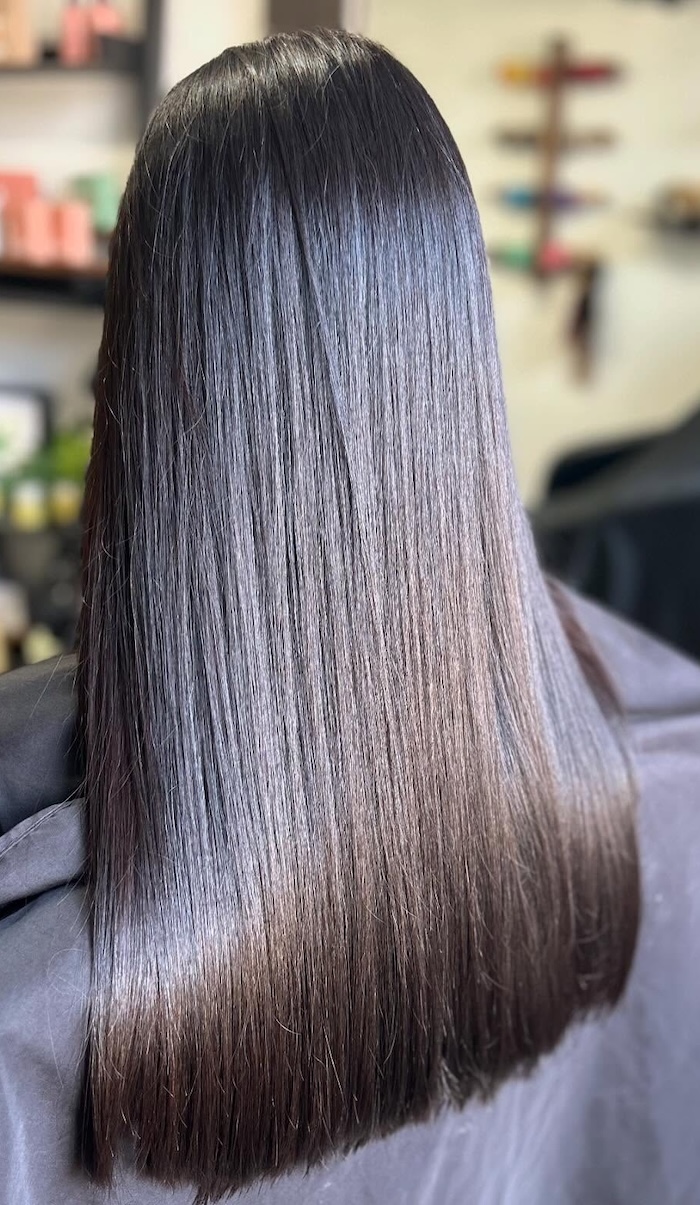
Have you ever wanted a haircut that looks like it belongs at a winter gala without requiring a stylist on standby? That is the blunt cut ombre. The mid-back length with a straight, blunt baseline reads sleek and polished, while the dark brown fading into a subtle ombre at the ends adds dimension without looking streaky. It is the kind of cut that works for holiday parties and office days alike, because the sharp line does the heavy lifting. Daily straightening takes about fifteen minutes, and a trim every eight to ten weeks keeps the edge from turning ragged.
Mid-Back Ice Blonde with Long Layers
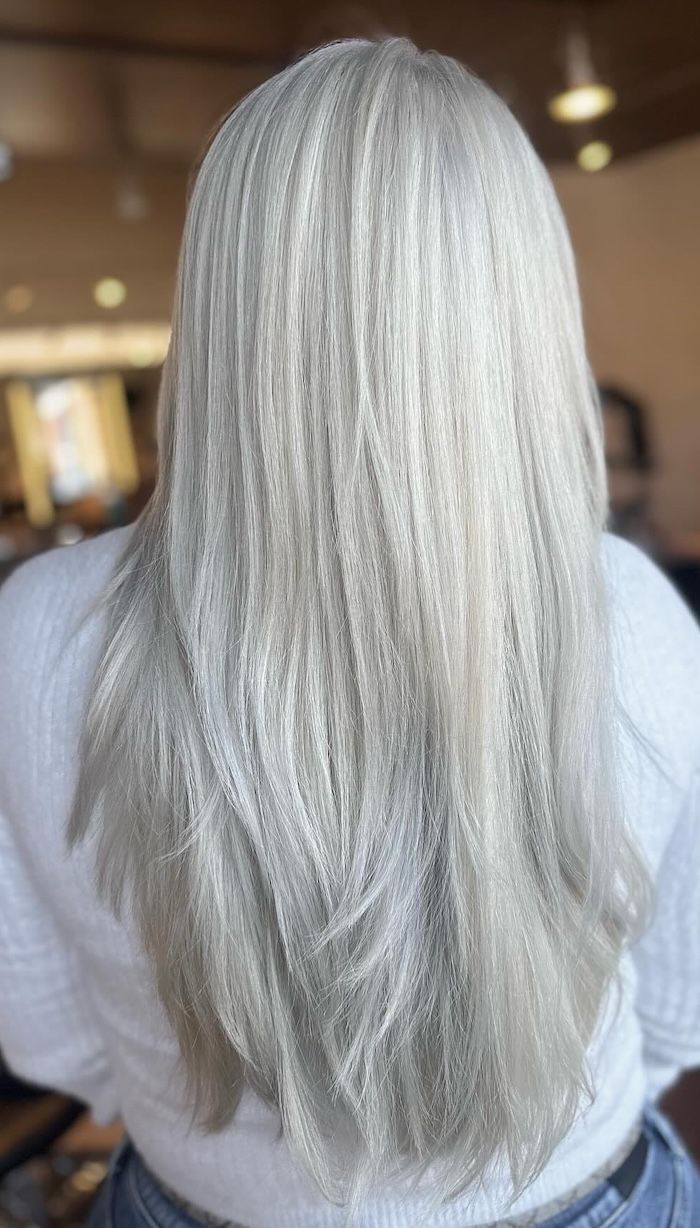
Ice blonde is a winter color for a reason: it reads cool against the gray light outside, and it makes fair skin look brighter rather than washed out. The long layers keep the mid-back length from feeling heavy, and the straight texture lets the icy tone show off its clarity. If your skin has warm undertones, this shade will fight you, so consider that before you book.
The maintenance is the real conversation. Ice blonde long layers need a purple shampoo weekly to keep the tone from drifting yellow, and a heat protectant is non-negotiable if you are straightening daily. The striking color also shows every bit of root growth by week three, so expect a touch-up every six weeks unless you are comfortable with a shadow root. It is a high-commitment look, but for the right skin tone, there is nothing else like it in winter.
Mid-Back Layers with Wispy Bangs
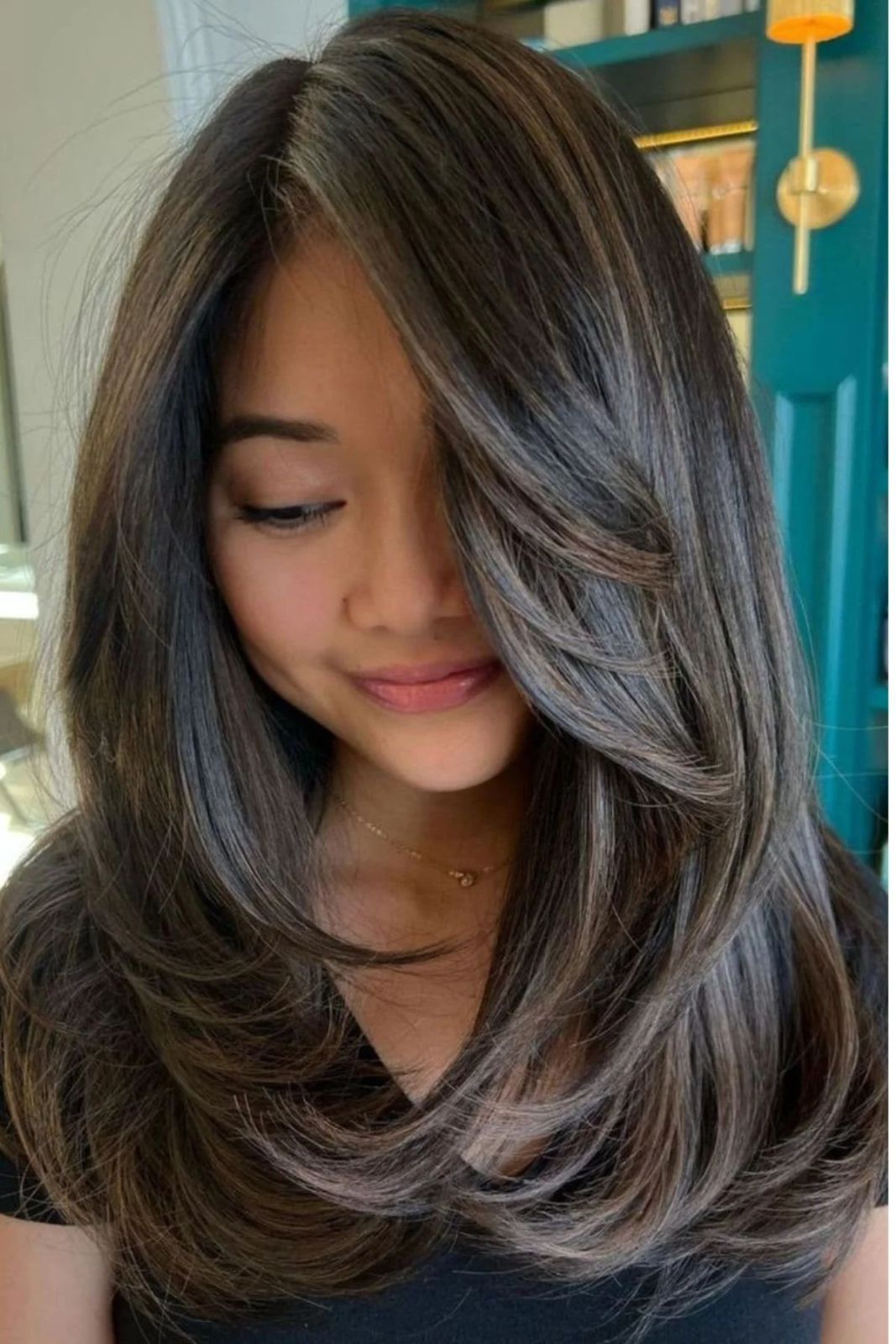
I keep waiting for thick hair to rebel against long layers, and then a cut like this reminds me it doesn’t have to. The long layers wispy bangs combo is the quiet workhorse of winter haircuts for straight hair: the layers lift the crown without hollowing out the ends, and the wispy bangs break up what would otherwise be a solid sheet of dark brown. The subtle grey highlights add dimension where straight, thick texture tends to go flat — they catch the light even when the rest of the hair is just hanging there. I have worn this through a full week of air-drying and it still had shape on Friday. The layers do not disappear into the length, which is the thing I worried about.
Mid-Back Dark Brown with Blunt Bangs
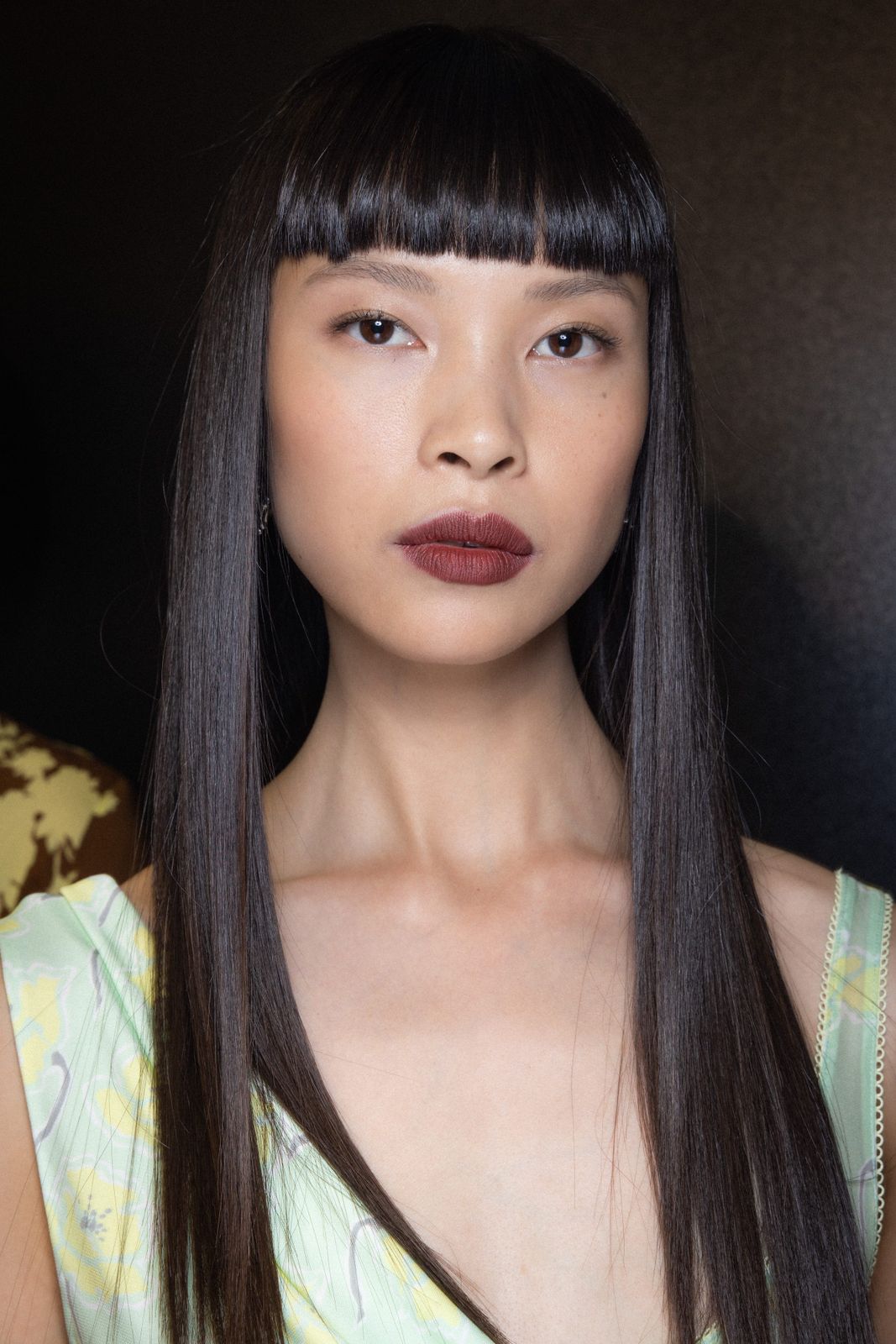
You sit down, you say “dark brown blunt bangs,” and the stylist reaches for the shears with a look that says this is not a negotiation. The dark brown blunt bangs are the whole point of this cut, and they require precision — a millimeter off and you are living with a crooked line for four weeks. The long layers through the mid-back length keep the rest of the hair from feeling heavy, but the bangs are the boss. This is a salon job, full stop. I have seen friends try to trim their own blunt bangs with kitchen shears and the result is not a haircut, it is a confession. Book the appointment, bring a reference photo, and let someone who owns a level do the straight line.
Collarbone Long Shag with Textured Finish

The collarbone length shag wins over the chin-length bob every time for straight hair that wants movement without losing weight. The textured finish keeps the ends from looking blunt and heavy, which is what happens when you cut a bob too clean on straight texture. This length hits at the collarbone, not the jaw, so it has more room to swing. No bangs here — the shape does the work. I have seen this cut on medium-density straight hair and it holds its shape with just a texturizing spray and a quick tousle.
Platinum Blonde Bob with Choppy Ends
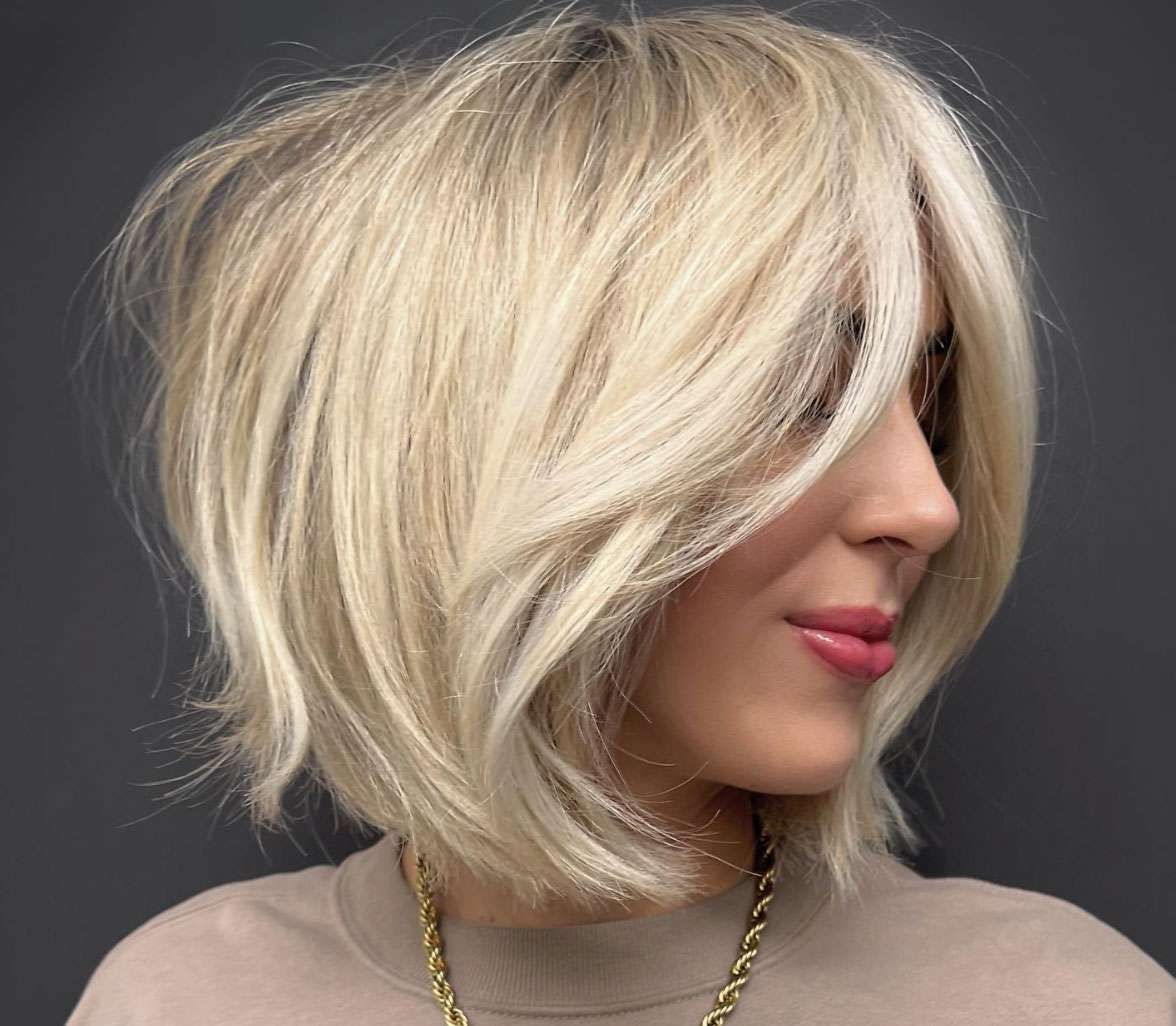
Who decided that a platinum blonde bob needs perfect ends? The choppy ends are the point — they keep the chin-length bob from looking like a helmet. On straight texture, choppy ends catch light and create the illusion of movement where a blunt line would just sit there. The wispy bangs soften the forehead and keep the whole thing from reading severe. The honest downside: choppy ends show split ends faster than a blunt cut, so you are looking at trims every four to six weeks. The platinum demands toning every other wash. This is a high-maintenance look that rewards the effort with a shape that actually moves.
Shoulder-Length Copper Red Shag
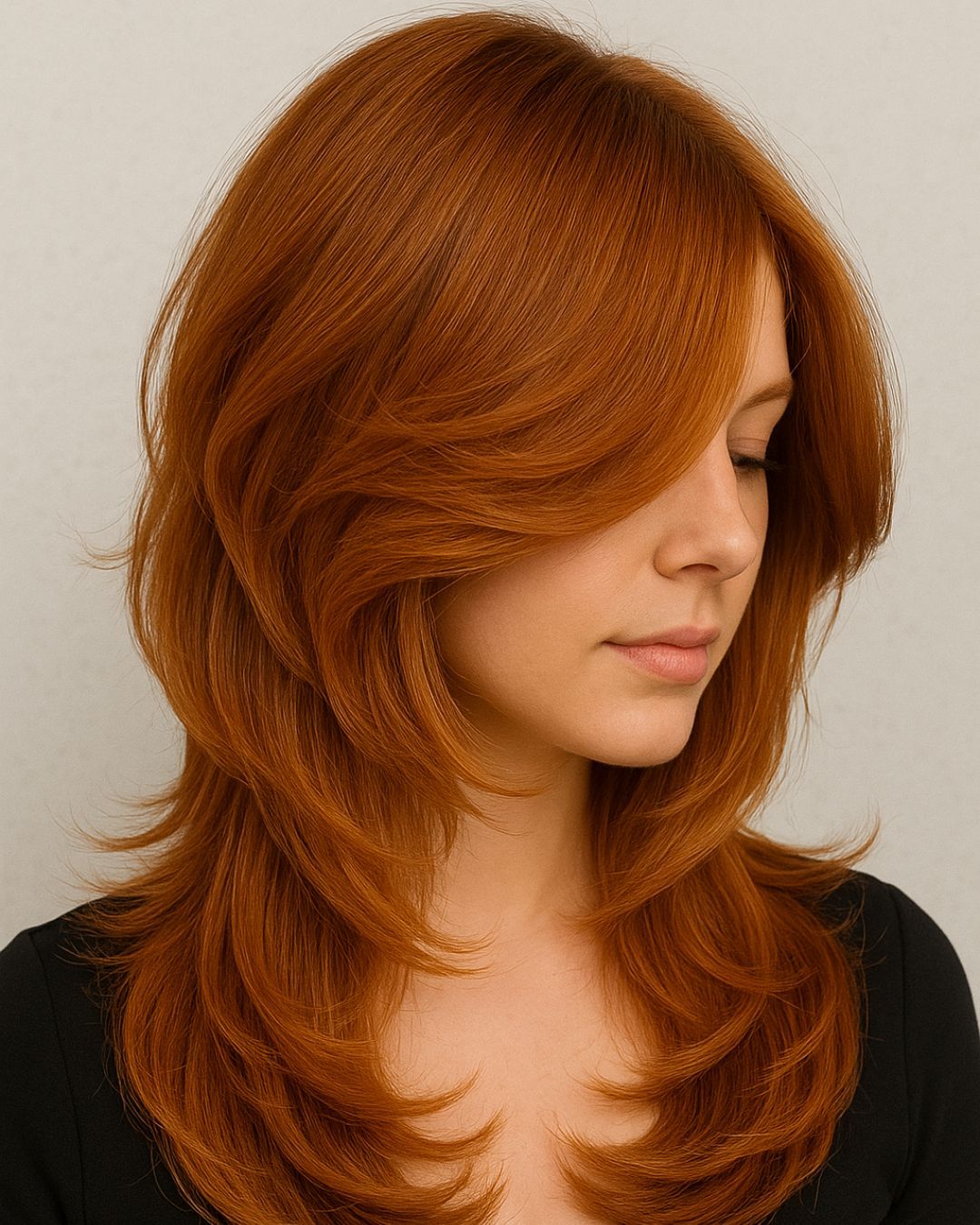
The copper red shag works because the textured layers and the vibrant color support each other — the layers create the movement, and the color makes sure you see it. The full bangs anchor the front while the shoulder-length body layers stack behind them. Straight texture is the right canvas here because the cut is doing the work, not curl or wave. The styling is simple: a texturizing spray, a rough dry, and the layers fall where they were cut to fall. The color is the star, but the cut is the structure that lets the copper red shag hold its shape through a winter day.
Final Thoughts
I wrote 30 of these and I am still surprised by the one I keep coming back to. It is not the bob. It is the collarbone shag with the blunt bangs, the one that looked like too much work until I timed it. Seventeen minutes, air-dried, no round brush. That is the one I am booking next.