

A classy haircut starts with a clean shape and texture that works with your natural growth. The biggest shift right now is toward soft face-framing layers and curtain bangs, both of which add movement without demanding a full restyle every morning.
This collection of 34 ideas covers everything from short blunt bobs to long mid-back layers, with a range of upkeep levels suited to fine, thick, wavy, or straight hair. Whether you struggle with fine hair that falls flat or a fringe that refuses to sit, a solid Classy Hair Care Routine starts with the right cut. Each look prioritizes healthy ends and a shape that holds its line between trims.
Vibrant Copper Chin-Length Bob With Wispy Bangs
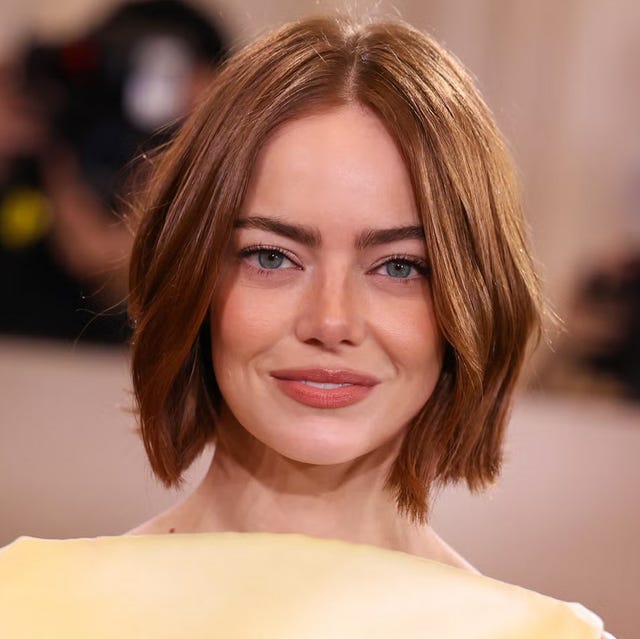
That copper red is the kind of color that makes you reconsider every neutral brown you have ever chosen. The chin-length bob lands just at the jaw, and the wispy bangs are cut short enough to feel intentional rather than like an afterthought. This works best for medium-density wavy hair that can actually hold a soft bend without a curling iron holding it hostage. Ask your stylist for: chin-length bob, wispy bangs, soft waves, vibrant copper red. A round brush during the blowout builds the volume, and a shine serum keeps the copper from looking flat. Fine hair may find the wispy bangs too sparse, and anyone with coarser texture will need to smooth the waves rather than encourage them.
Dark Brown Bob With Soft Curtain Bangs
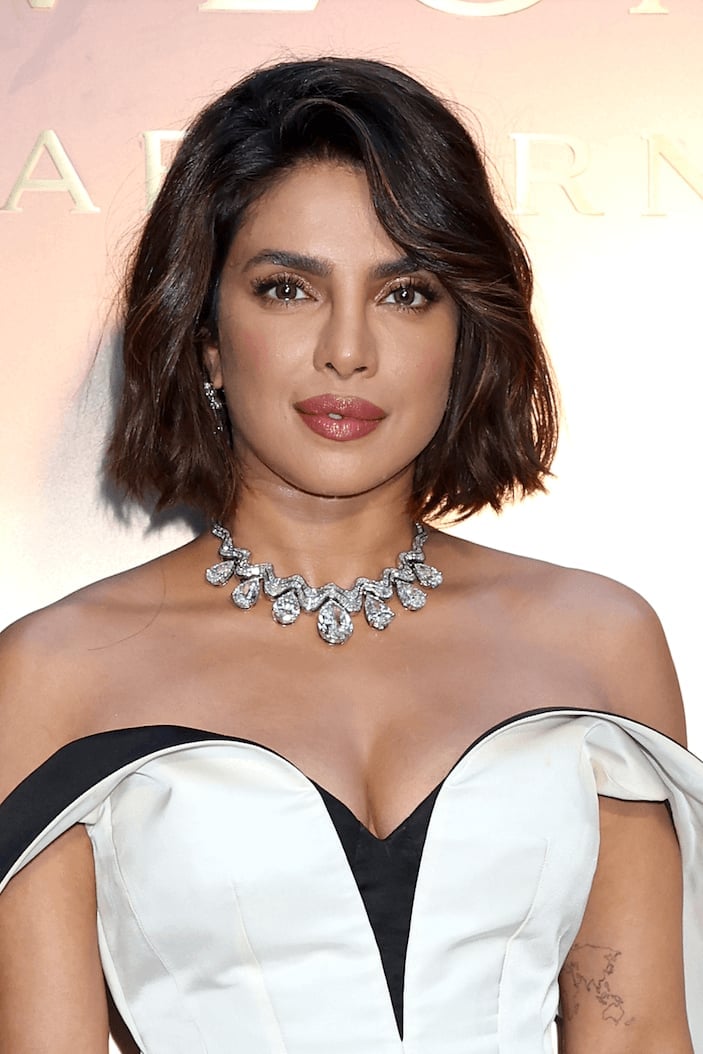
How do you get a bob that looks polished without reading as severe? The answer is the curtain bangs. This blunt bob ends at the chin and the side-swept curtain bangs soften the line, keeping the dark brown from feeling too heavy. The fine straight texture is the reason the blowout holds its shape all day rather than collapsing at the jaw. Ask your stylist for: blunt bob, soft curtain bangs, side part. The curtain bangs need to be cut long enough to blend into the length, so specify that you want them grazing the cheekbone rather than hovering above it. Round and oval faces get the most out of this particular wing shape.
Sleek Dark Brown Blunt Bob
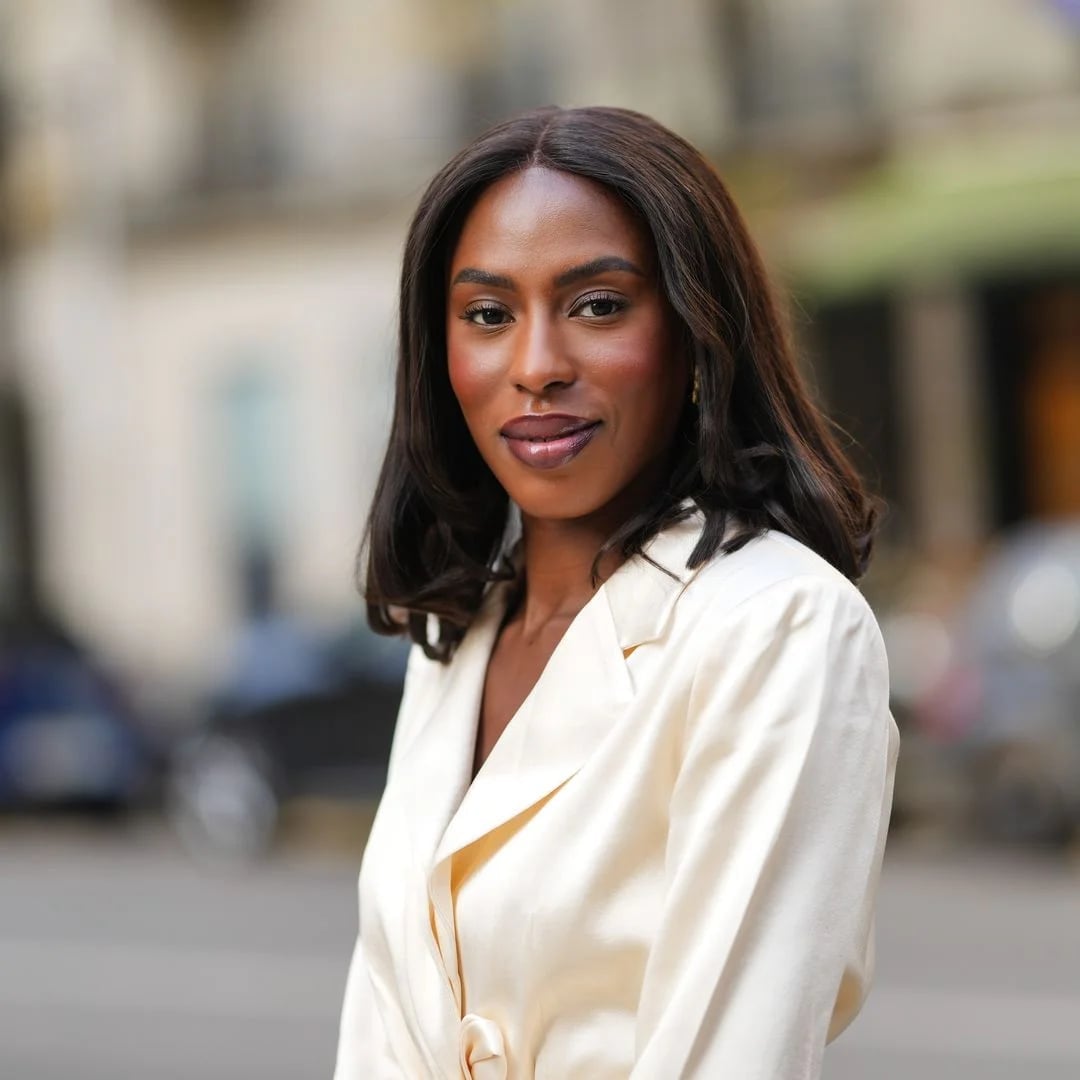
A blunt bob that is truly sleek requires a flat iron, not just a blowout. The middle parting splits the fine straight hair evenly, and the lack of layers means every strand has to lie perfectly flat or the whole thing looks rumpled. Ask your stylist for: sleek chin-length blunt bob, middle part. This cut needs a trim every six weeks to keep the line sharp, because even half an inch of growth turns the clean edge into a soft wedge. A smoothing serum applied before the flat iron reduces flyaways and adds the gloss that makes the dark brown read as expensive rather than flat.
Sharp Chin-Length Bob With Face-Framing Layers
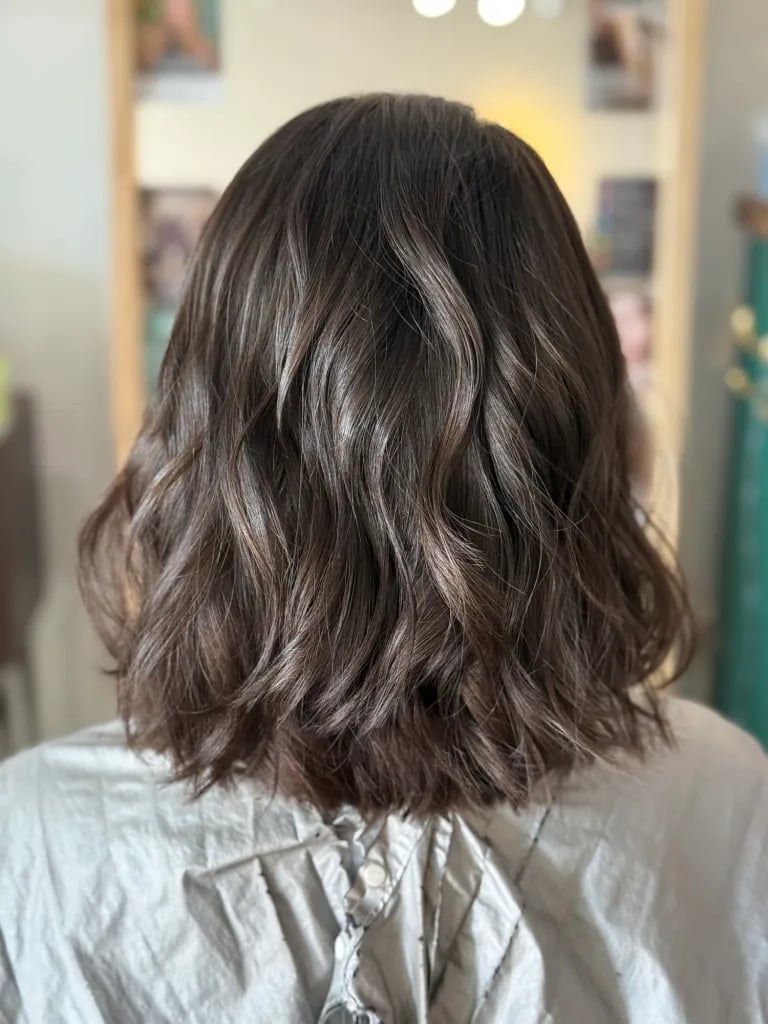
This version keeps the strong baseline but adds subtle face-framing layers near the front, so the line is clean without being severe. The fine straight texture benefits from the layers because they prevent the bob from looking like a solid helmet of hair. Ask your stylist for: sharp chin-length bob, subtle face-framing layers. The middle part works best here, directing the layers forward to soften square or angular jawlines. A fine-tooth comb is the only tool you need to maintain the part, but skip the heavy products that weigh down fine hair.
Ear-Length Blunt Bob With Short Blunt Bangs
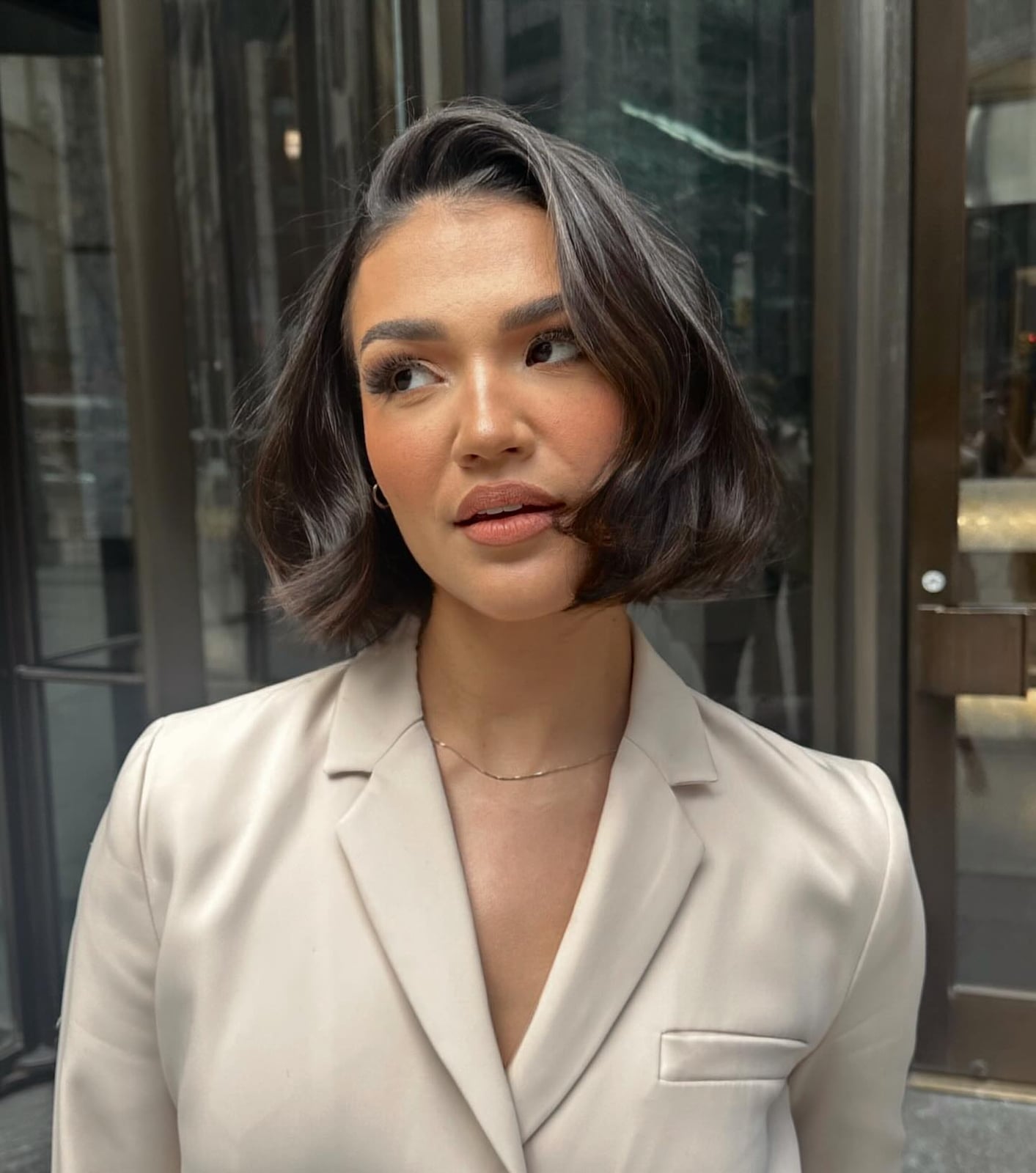
An ear-length bob with short blunt bangs is a commitment, and the person who cuts it should know you are serious about precision. The blunt line at the ear and the blunt bangs above the brow create a strong horizontal shape that works best on oval and long faces. The fine straight texture is practically required here because any wave or bend ruins the geometry. Ask your stylist for: ear-length blunt bob, short blunt bangs, middle part. This is a salon cut through and through, because the bangs need trimming every three weeks to stay above the brow and the bob line demands a professional hand. A small flat iron is enough to keep the bangs straight between appointments, but do not try to trim them yourself unless you are prepared for a very short learning curve.
Medium Brown Bob With Blunt Bangs
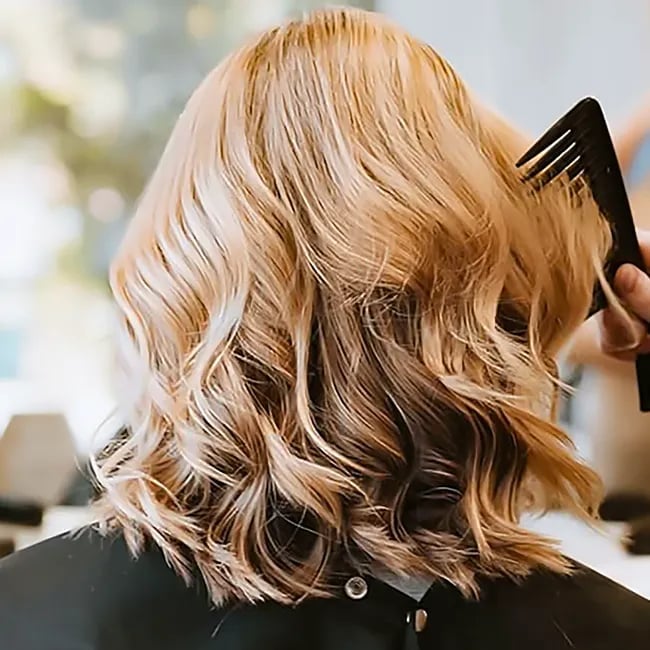
Is a blunt bob with bangs a good idea if your hair isn’t already poker-straight? The answer is no, because this look relies on precision. A chin-length bob with blunt bangs just above the eyebrows and a middle parting in a rich medium brown demands a smooth, straight texture to keep those lines sharp. Ask your stylist for: chin-length bob, blunt bangs above eyebrows, middle part. The blunt bangs cut straight across shorten the visual length of the face, which works well for oval and heart shapes. A daily pass with a flat iron or blow-dryer is the price of admission for keeping the bangs sleek. The polished blowout on the rest of the bob is the payoff.
Chin-Length Bob With Blonde Highlights
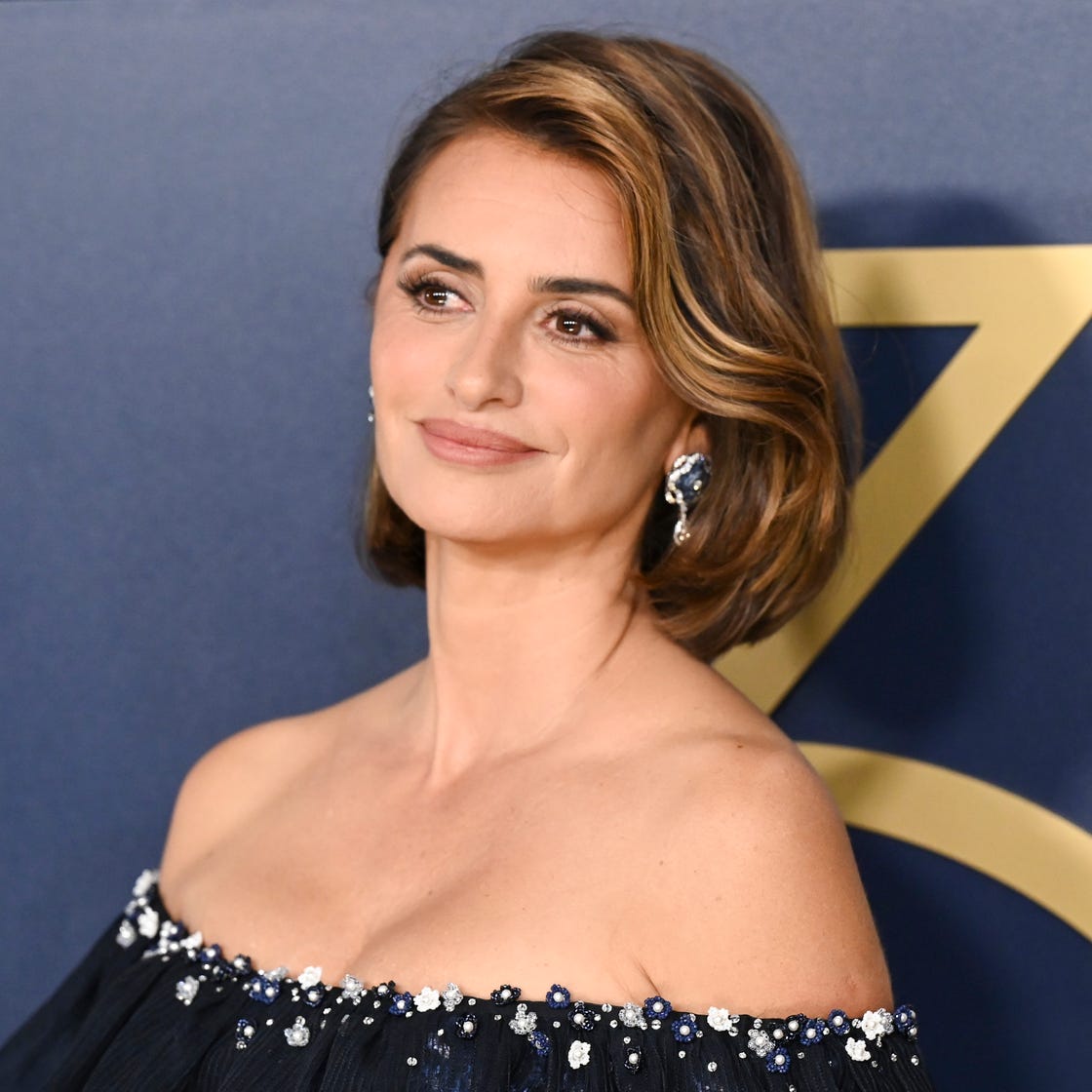
A chin-length bob with blunt layers and soft waves uses blonde highlights to add dimension to a dark brown base. The side parting and wavy, fine texture create a soft shape around the jawline that suits square faces. Ask your colorist for: chin-length bob, blunt layers, soft waves, side part.
The ends have a texturizing spray to enhance the soft waves without weighing them down. The blunt layers need a trim every eight weeks to keep the shape clean, and the highlights need a toning appointment every six to eight weeks to stay bright.
Layered Chin-Length Bob With Curtain Bangs

How do you ask for a chin-length bob that doesn’t lie flat? The key is the words you use. This cut has voluminous layers and curtain bangs, with a middle parting that pushes the volume upward. Ask your stylist for: chin-length bob, voluminous layers, curtain bangs, middle part. The voluminous layers are cut so they stack at the crown, giving fine hair the body it lacks naturally. The curtain bangs are longer at the sides and shorter in the middle, so they sweep away from the face. The subtle highlights in the dark brown add depth without obvious streaks.
To get the shape right, tell your stylist the curtain bangs should graze your cheekbones when dry. The layers should be soft, not choppy, so the bob holds its line. A round brush and a blow-dryer are all you need at home to recreate the shape.
Blonde Layered Bob With Side-Swept Bangs
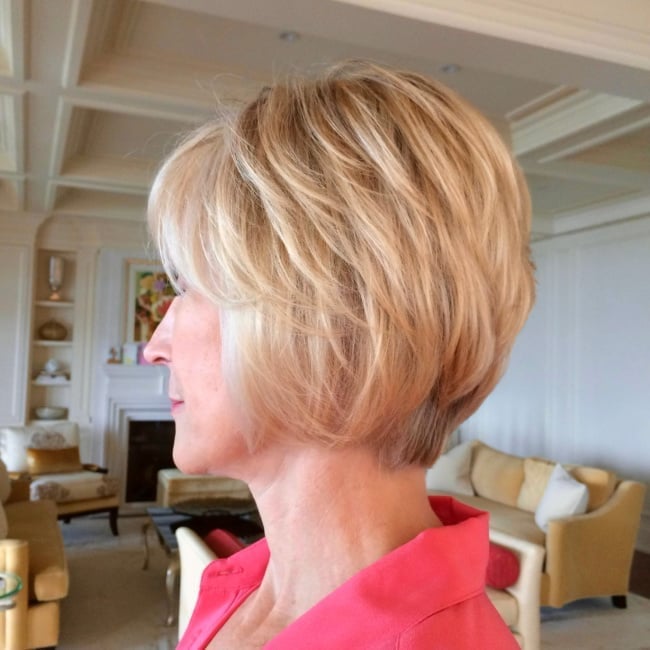
A chin-length layered bob in blonde with side-swept bangs and a side parting is a classic shape, but the soft layers here are the standout detail. The layers are cut to blend into the bangs, so the whole cut moves as one piece. Side-swept bangs soften round and square faces by breaking up the horizontal line. Ask your stylist for: chin-length layered bob, side-swept bangs, side part.
The drawback: fine straight hair needs regular trims to keep those soft layers from looking stringy. Split ends show faster on blonde, so plan for a trim every eight weeks. A volumizing spray at the roots before blow-drying adds the lift the layers need.
Layered Bob With Natural Gray Streaks
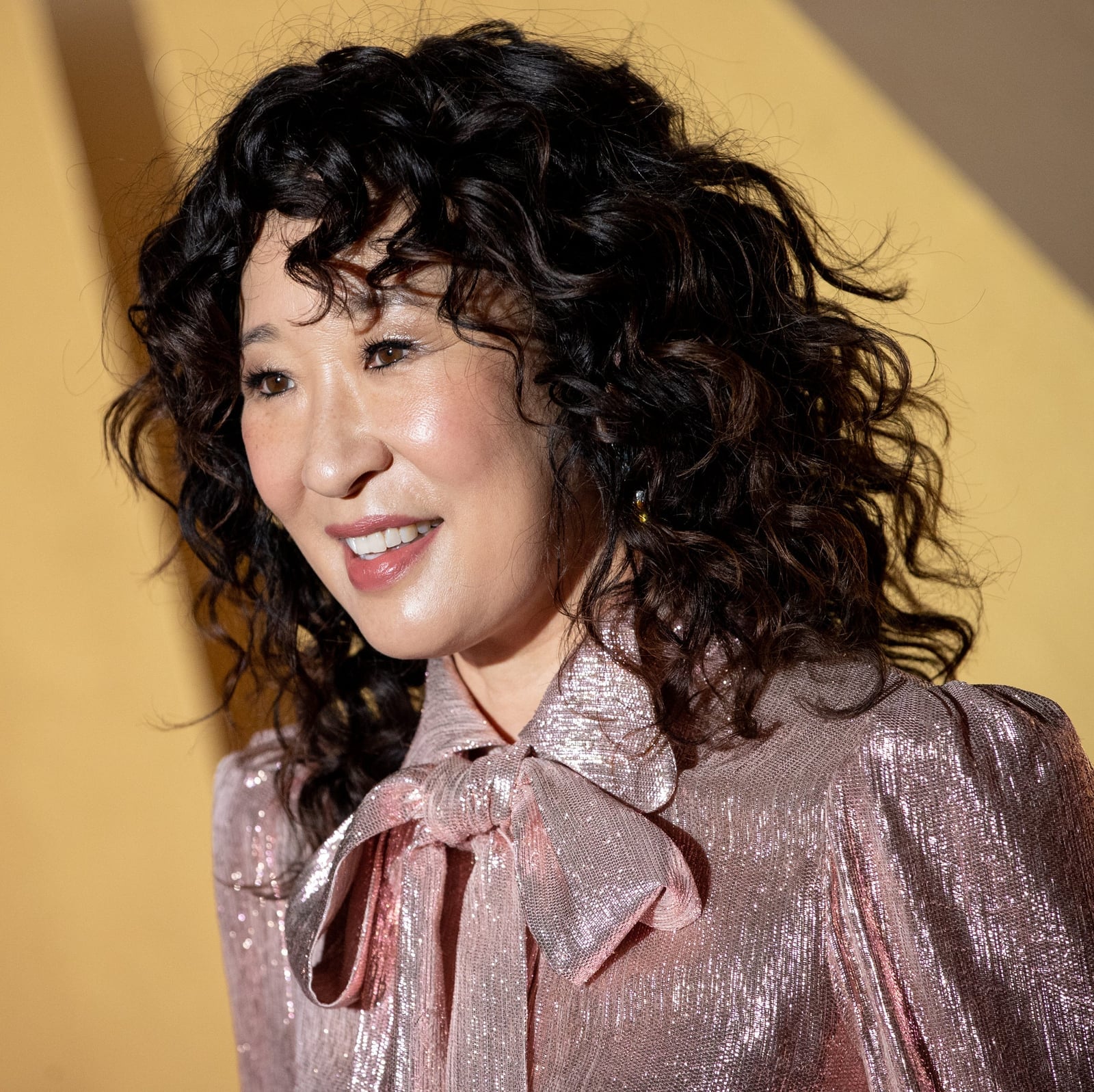
Ask your stylist for: chin-length layered bob, natural gray streaks, air-dried. The layers are cut to follow the curl pattern, so the shape stays intact without styling. A curl-defining cream applied to wet hair and diffused or air-dried keeps the curls clumped and frizz-free. A trim every eight weeks prevents the ends from losing their curl and the layers from growing into a triangle.
Short Curly Pixie Bob With Defined Curls
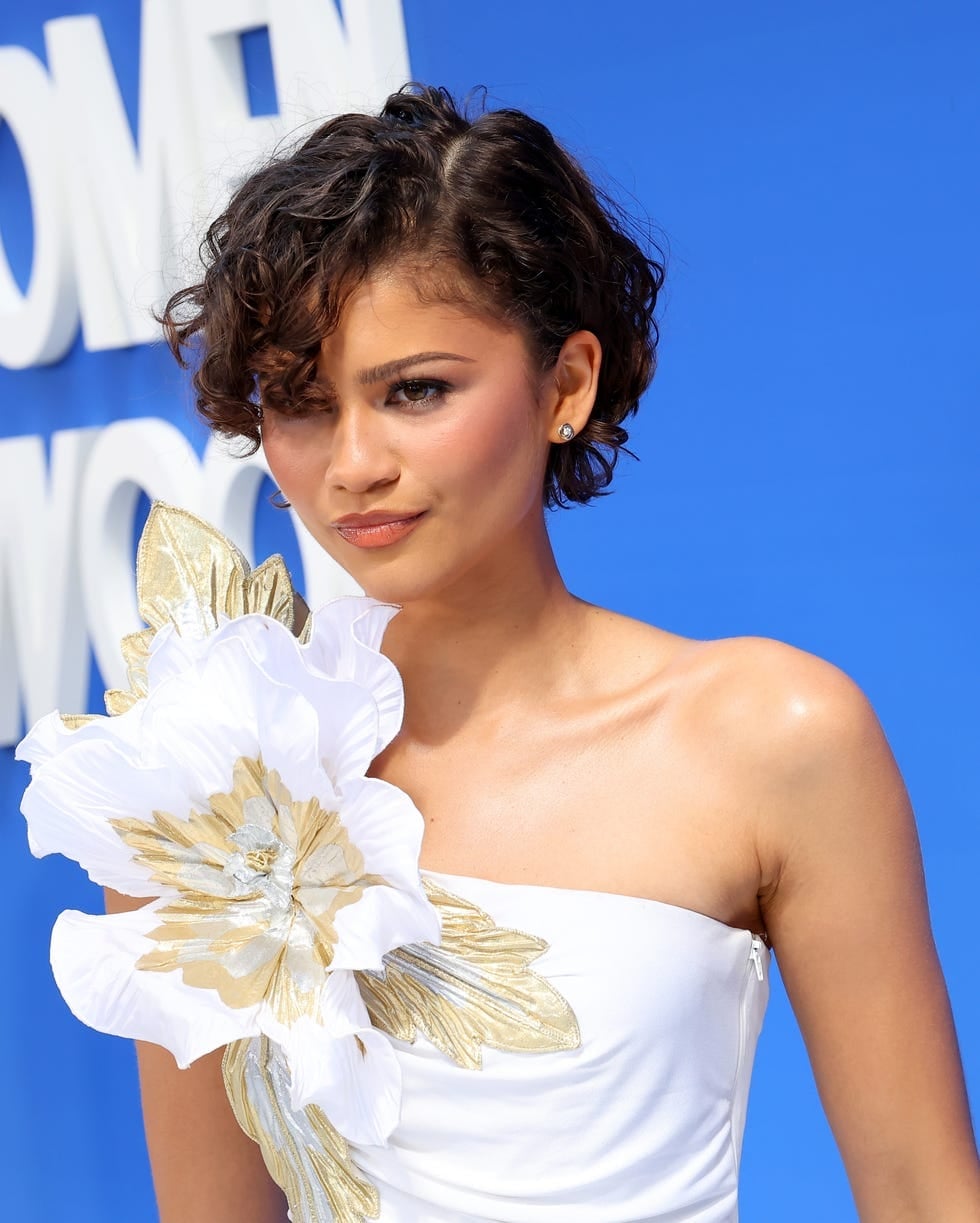
If a longer bob feels like too much hair for too little return, this pixie bob is the edit you need. The defined curls and short textured fringe give a curly fine texture more shape than a standard chin-length cut ever could. Ask your stylist for a short curly pixie bob with defined curls and a short textured fringe. A curl-enhancing product applied to damp hair and air drying or diffusing will keep the bouncy curls intact. Trim every four to six weeks.
Platinum Blonde Lob With Root Shadow

The platinum blonde lob is a two-tone trick: the bright, wavy blowout on top and a darker root shadow underneath. That shadow means the grow-out line is softer and less demanding than a full head of platinum would be. Ask your colorist for a collarbone lob, wavy blowout, and platinum blonde with a root shadow. The medium density and wavy texture hold the shape without much work.
A purple shampoo will keep the blonde from turning brassy between appointments. Because the root shadow reduces upkeep, toning appointments can stretch to every eight weeks instead of four. The collarbone length keeps it polished enough for the office but relaxed enough for a weekend brunch.
Ash Blonde Collarbone Bob With Curtain Bangs
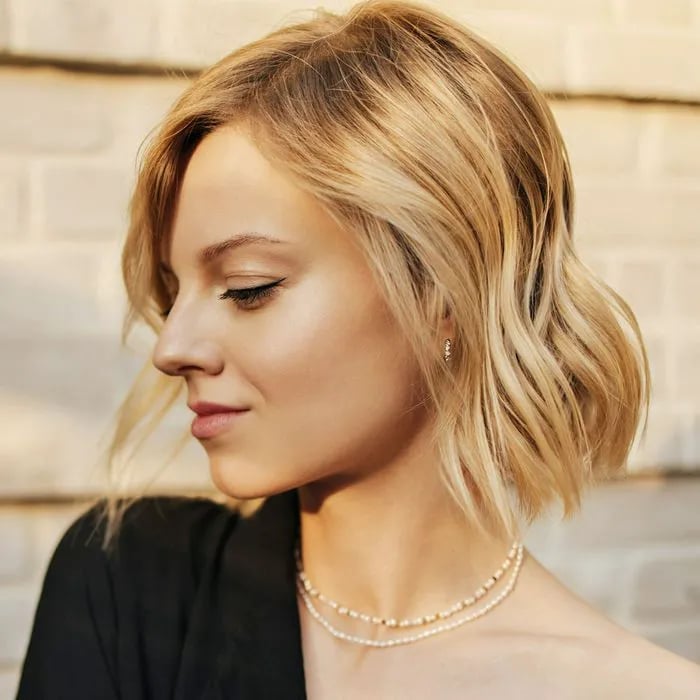
A soft, wavy blowout starts with the right cut. A collarbone bob with curtain bangs gives fine wavy hair movement without losing density. Ask your stylist for a collarbone bob, curtain bangs, and ash blonde with subtle highlights. The side parting and loose waves frame the face without needing a curling iron every morning.
What to tell your colorist: ash blonde with subtle highlights, placed to create dimension without stripes. The fine texture takes well to a sea salt spray for added grit, and the baseline needs a trim every eight weeks to keep the bob shape crisp. Curtain bangs soften round and heart faces while keeping the length wearable.
Ash Blonde Collarbone Layers With Face-Framing
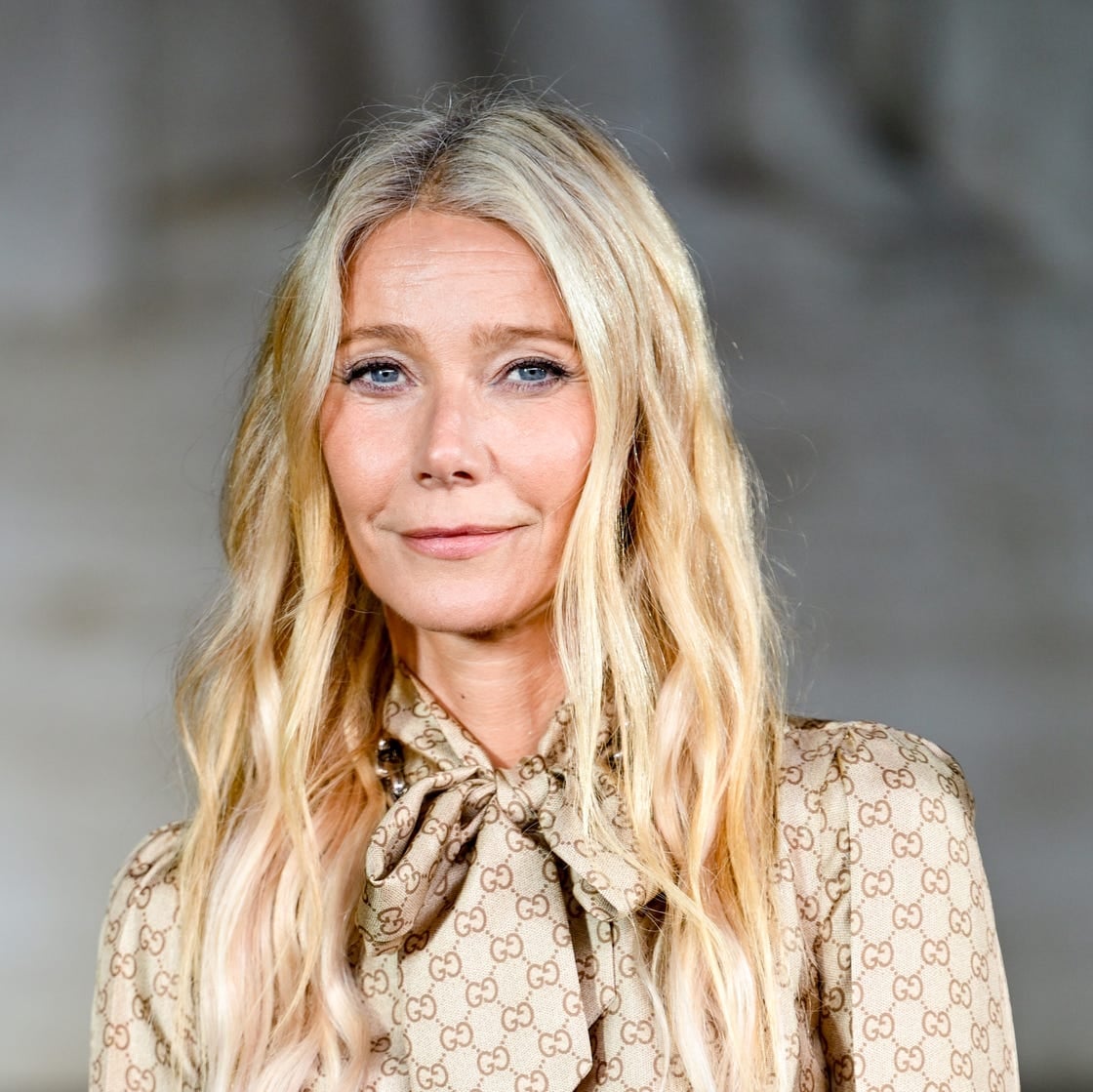
The face-framing layers here are the star, but they earn their keep only with regular shaping. A wavy blowout with lighter highlights gives fine wavy hair a polished finish that lasts through the day. Ask your stylist for collarbone length layers, face-framing layers, and ash blonde. The lighter highlights add dimension without a full color overhaul.
Ash blonde tones fade to a warmer yellow in about six weeks, so a toning appointment every six to eight weeks keeps the color from looking muddy. The face-framing layers soften angular jawlines. A texturizing spray will enhance the waves without weighing them down. Trim the layers every ten to twelve weeks to keep the shape from losing its intention.
Dark Brown Collarbone Layers With Face-Framing
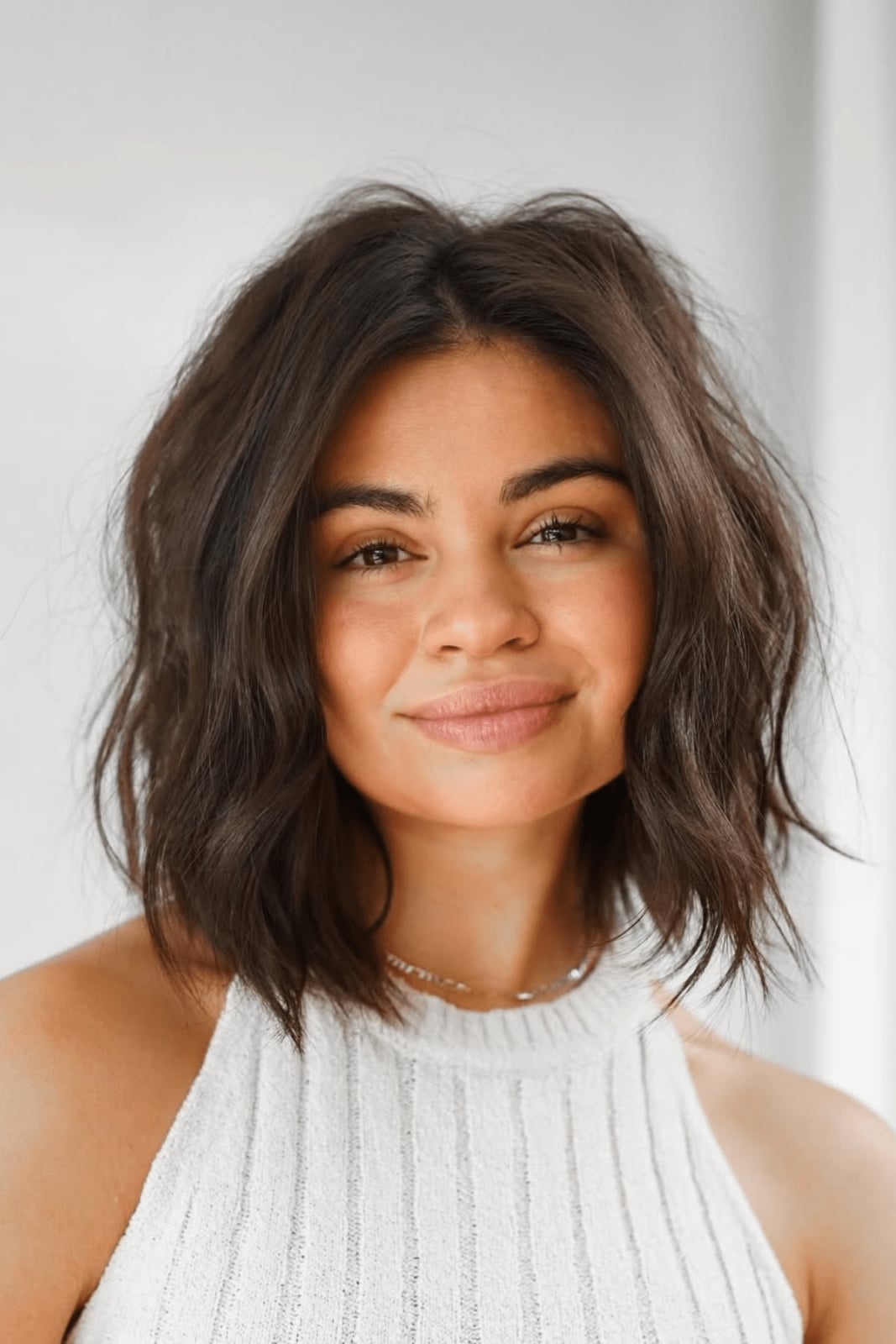
The dark brown base and soft face-framing layers are a low-maintenance combination that creates a polished look. A middle parting and subtle waves give medium density wavy hair a glossy finish without heat styling every day. Ask your stylist for collarbone length layers, face-framing layers, a middle part, and dark brown. The face-framing layers soften square faces while the collarbone length keeps the look versatile. A smoothing cream will enhance the natural shine, and trimming the face-framing layers every six to eight weeks keeps the shape from falling flat.
Dark Brown Layered Bob With Voluminous Curls
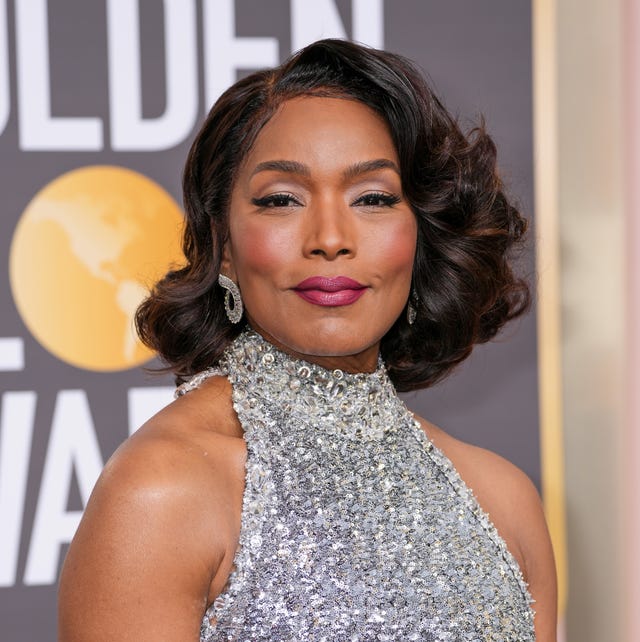
This collarbone-length layered bob with a side parting trades sleek precision for voluminous, polished curls that add noticeable width. It works best for those with thick wavy hair starting at the collarbone, where the layers reduce bulk without losing shape. Ask your stylist for: collarbone length layered bob, voluminous curls, side part. A large-barrel curling iron builds the defined curls, and a flexible hold hairspray keeps them from falling flat.
If you have fine hair and want volume, a blunt bob with a round brush blowout might serve you better. The layered bob with voluminous curls leans into texture rather than fighting it, so the payoff comes from working with what you have.
Dark Brown Lob With Subtle Highlights
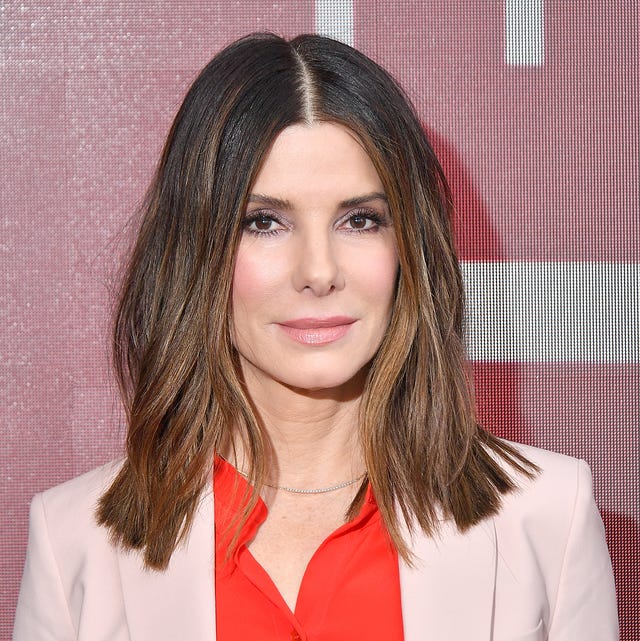
A collarbone-length lob with subtle highlights and loose waves relies on a glossy finish to look polished. Fine wavy hair benefits from the soft movement, which adds body without weighing the ends down. Ask your colorist for: collarbone length lob, subtle highlights, middle part, loose waves. A shine serum on the ends enhances the gloss, and trimming the lob every 8-10 weeks keeps the shape clean.
Gloss treatments between color appointments maintain the healthy reflection that makes this cut look cared for. The highlights are subtle enough to skip a toning session if you prefer a lower-maintenance routine.
Honey Blonde Twisted Low Bun
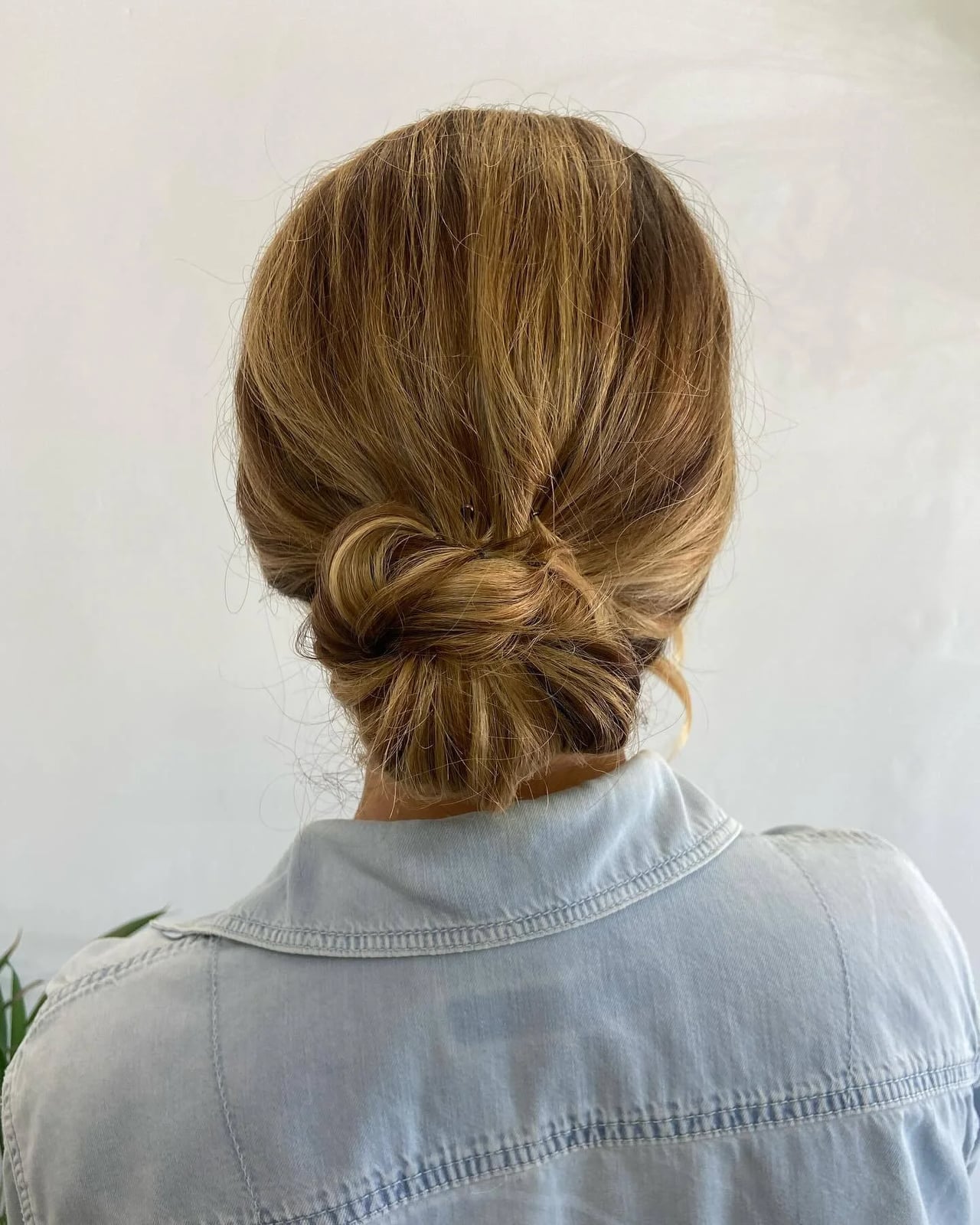
How do you get a polished updo that still looks like your hair, not a helmet? This low twisted bun at the nape of the neck uses collarbone-length layers twisted into a neat shape, with the honey blonde color and darker roots adding depth. Ask your colorist for: low twisted bun, honey blonde with darker roots. Bobby pins secure the twist, and leaving out face-framing pieces softens the front. It works for work, a formal event, or an evening dinner where you want the hair out of the way without looking rushed.
Medium Brown Shoulder-Length Waves
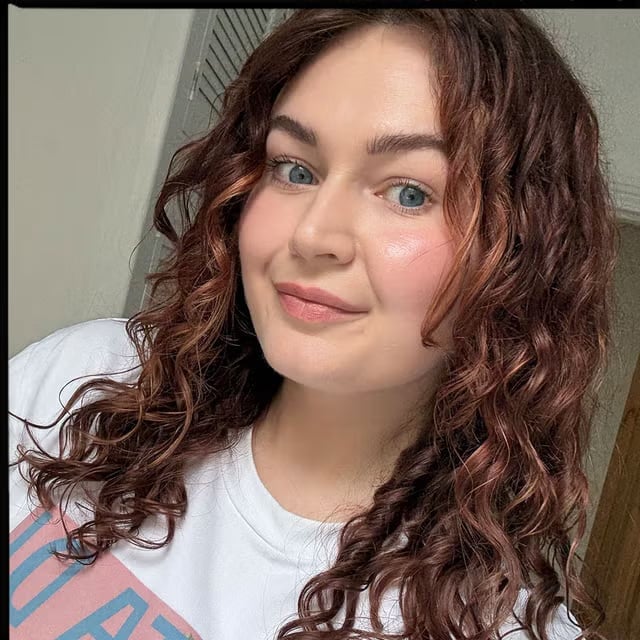
This shoulder-length cut with a side parting and loose, air-dried waves looks natural but requires a product strategy. The medium brown base with auburn highlights adds warmth, and the natural wave pattern creates texture. Ask your colorist for: shoulder-length hair, loose natural waves, side part, medium brown with auburn highlights. A styling product on damp hair enhances the texture, and air drying with a diffuser adds volume without heat damage.
This is a true DIY-friendly style. You can replicate it at home in under fifteen minutes, but the auburn highlights need a gloss or toning appointment every 10-12 weeks to keep the red from turning brassy.
Ash Blonde Collarbone Layers With Lived-In Waves
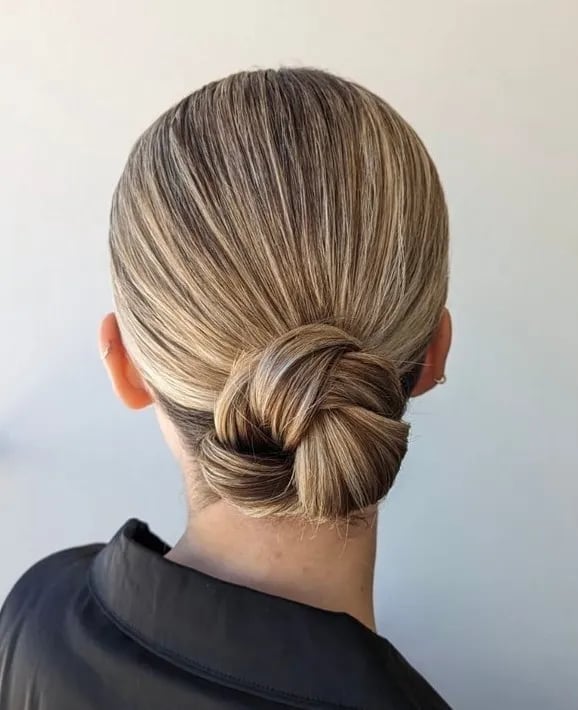
The precise observation here is that curtain bangs and soft layers at collarbone length create a shape that moves with you. This ash blonde color with lived-in waves suits wavy fine hair, where the layers add movement without sacrificing length. Ask your stylist for: collarbone length layers, lived-in waves, curtain bangs, ash blonde. A texturizing spray on dry hair enhances the finish, and trimming the layers every 10-12 weeks keeps the curtain bangs from growing into your line of sight.
If your hair is very thick, the soft layers might not remove enough weight, and you would be better off with a more structured layer pattern. For fine to medium textures, this is a low-maintenance option that does not require a round brush or a curling iron.
Dark Brown Long Layers With Curtain Bangs

Where a structured blowout stays put all day, this wind-swept version with long layers and curtain bangs moves with you. The dark brown base with subtle highlights keeps the depth while the side-part and mid-back length add a relaxed polish. Thick wavy hair starting at mid-back is the ideal starting point, and curtain bangs soften angular faces without demanding constant fuss.
Ask your stylist for: long layered hair, mid-back length, curtain bangs, side part. Blow-dry the curtain bangs with a round brush to shape them, then finish with a texturizing spray for that slightly undone movement. This salon cut gives long layers a lived-in feel that looks natural.
Medium Brown Mid-Back Layers With Waves
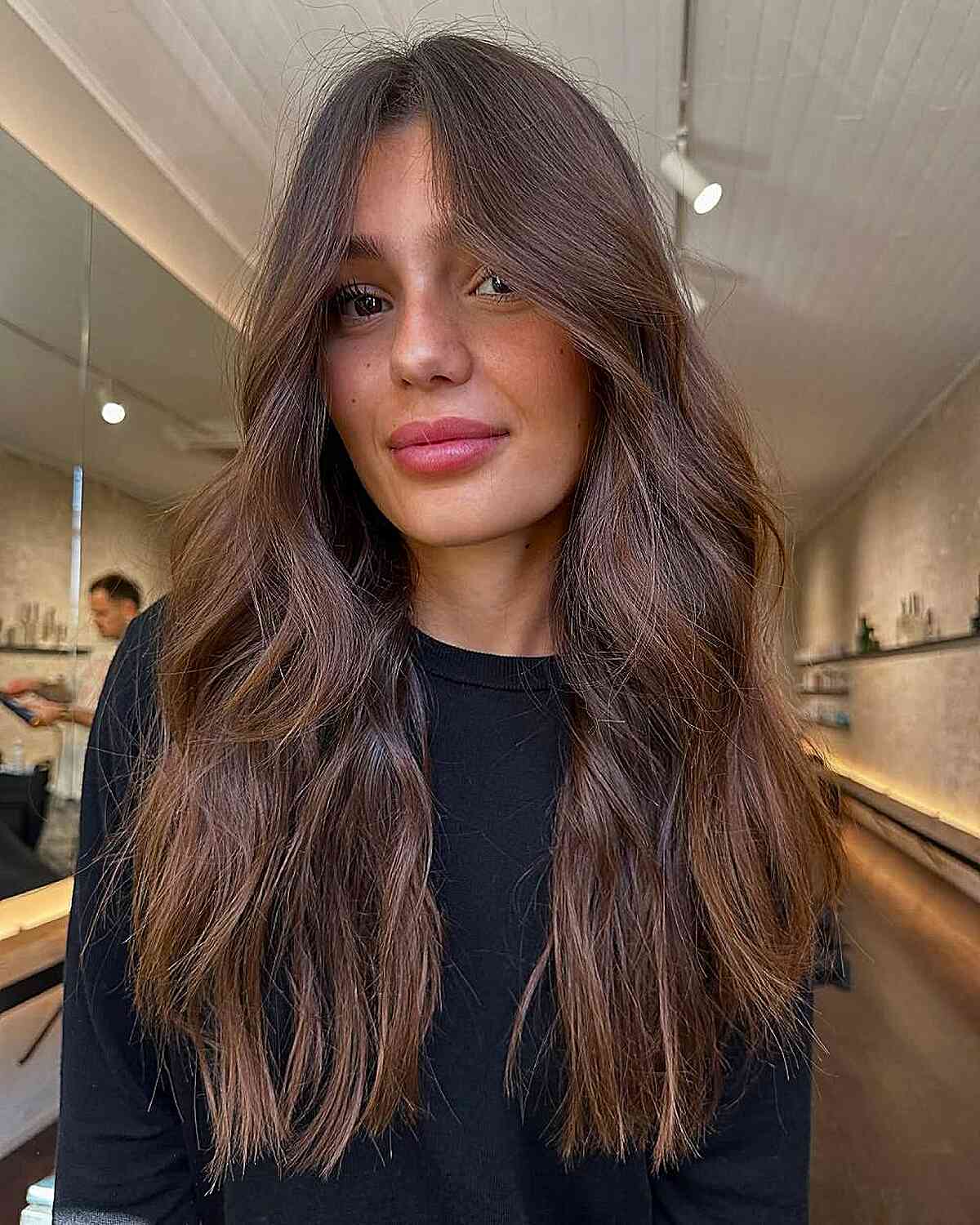
The design here starts with face-framing layers cut to skim the jaw and cheekbones, creating a soft silhouette that opens up the face. The medium brown base with subtle highlights adds dimension without contrast, and the middle part keeps the weight balanced. Thick wavy hair at mid-back length gives the layers enough density to hold their shape.
Ask your stylist for: mid-back length layers, soft waves, face-framing layers, middle part. A texturizing spray on damp hair before blow-drying enhances the wave pattern. Trim the layers every 10-12 weeks to keep the face-framing pieces from growing past their intended point, which is where the whole silhouette gets muddy.
Medium Brown Mid-Back Layers With Blonde Highlights, Wavy Thick

How do you ask for blonde highlights on a medium brown base without ending up with chunky stripes? Specify placement. For mid-back length layers with a thick, wavy texture, the highlights should be woven through the mid-lengths and ends, leaving the root area darker for depth. The middle part keeps the distribution even, and the loose waves help the lighter pieces show a natural contrast.
Ask your colorist for: mid-back length layers, loose waves, middle part, blonde highlights. Tell them you want a lived-in look with fine ribbons of blonde, not thick sections. A volumizing mousse before blow-drying adds body that the highlights can play off of. This is a salon color that grows out softly, so you can stretch toning appointments to every 10-12 weeks.
Thick Dark Brown Mid-Back Layers
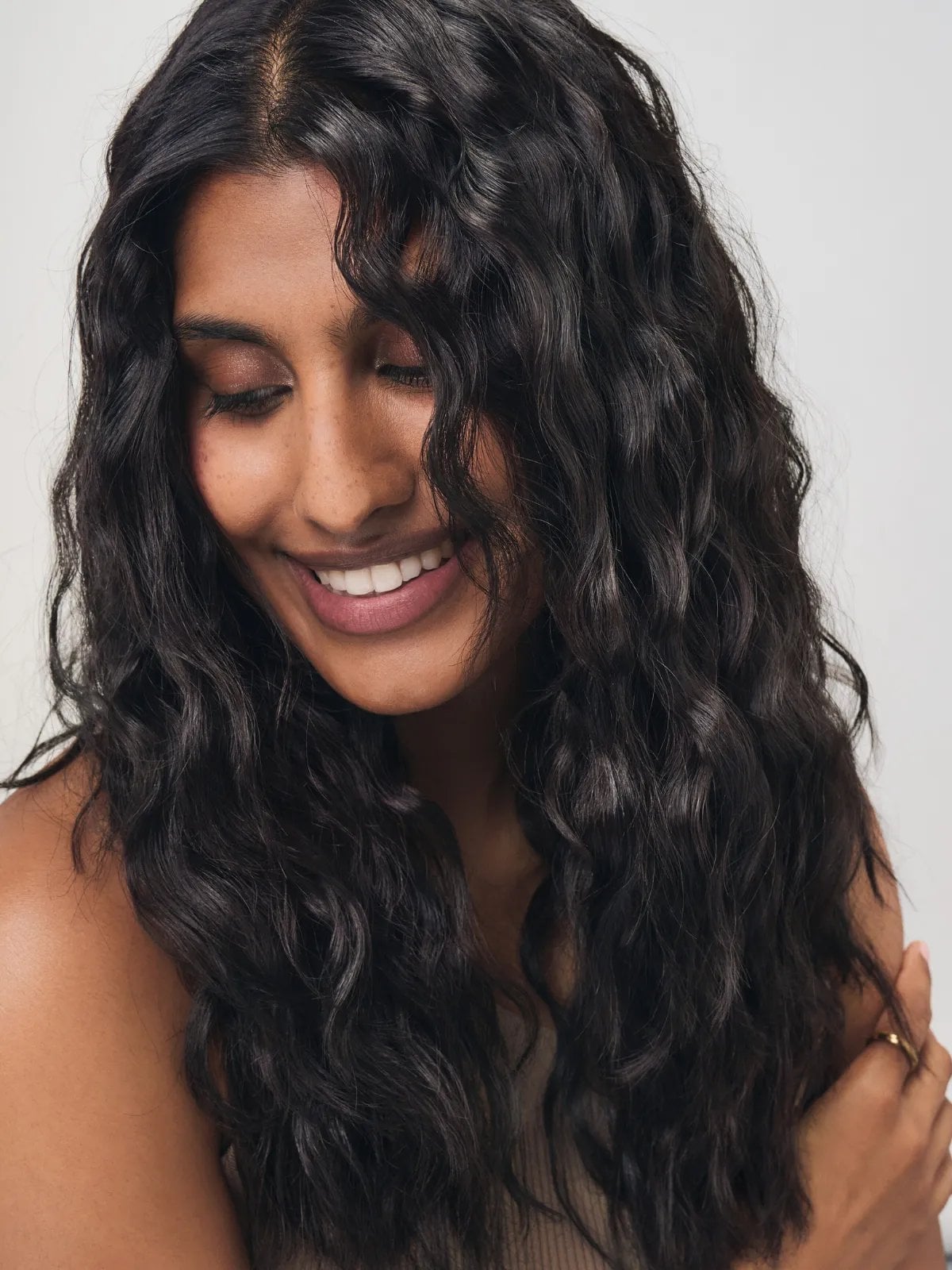
Thick, wavy dark brown hair air-dried with a middle part is a low-maintenance reality check for anyone who thinks every look needs heat. The long layers remove enough weight to prevent the dreaded triangle shape, while the mid-back length keeps the natural volume in check. The healthy shine comes from the hair itself, not from product.
Ask your stylist for: mid-back length hair, middle part, dark brown, air-dried. The key is a wide-tooth comb on wet hair to distribute natural oils and reduce frizz. This cut leans salon for the initial shape, but the daily routine is minimal. Trim every 10-12 weeks to maintain the layer structure, or the weight will creep back and the waves will sit flat.
Black Mid-Back Layers With Glossy Waves
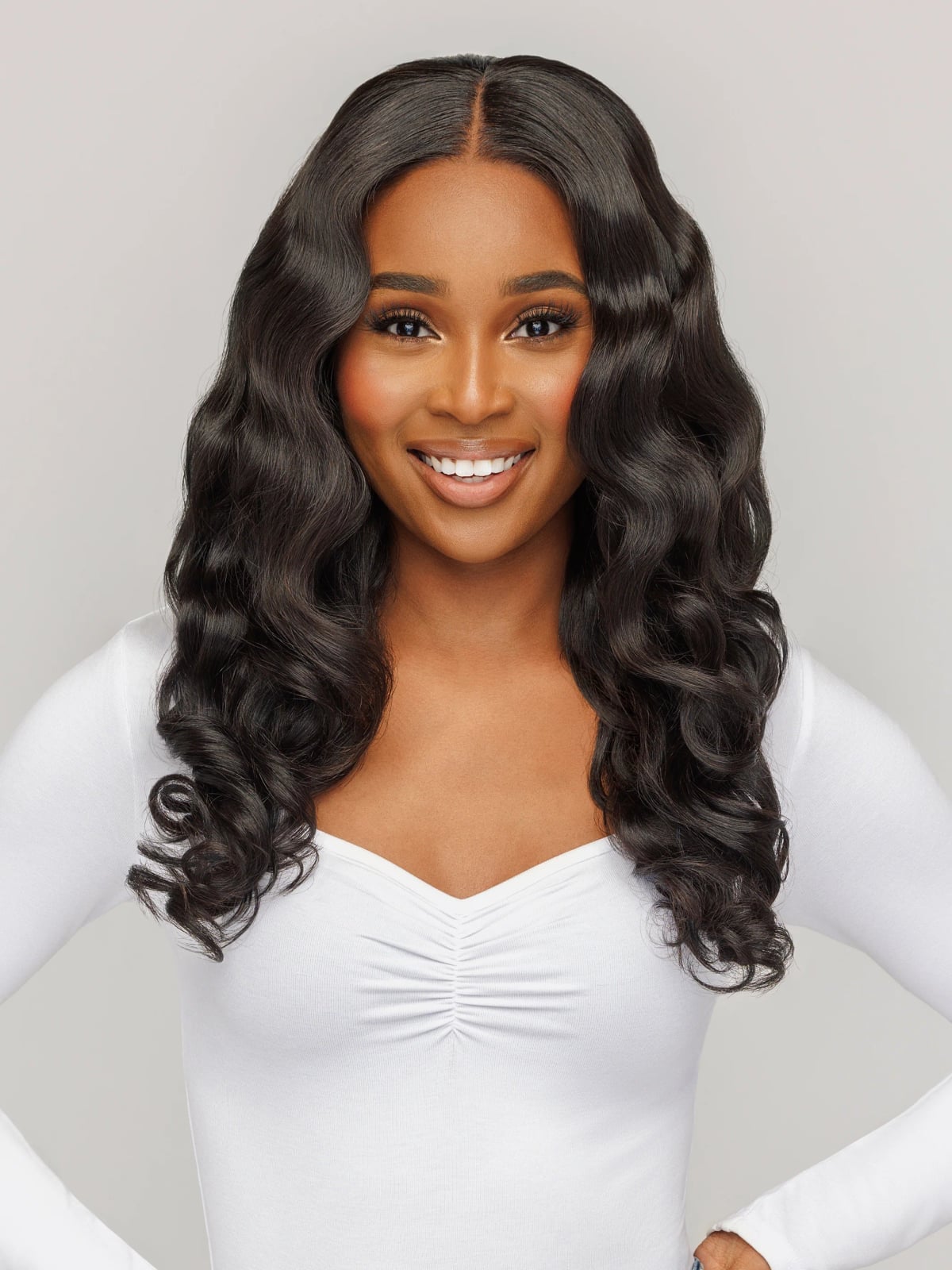
Black hair with glossy waves at mid-back length is a study in contrast: the deep base color makes the shine more visible, and the loose waves prevent the look from feeling severe. Thick wavy hair benefits from the long layers, which add movement without sacrificing density. The middle part suits oval and heart-shaped faces best, as it elongates without adding width.
Ask your stylist for: mid-back length hair, middle part, black color, loose waves. A shine serum on damp ends before styling enhances the glossiness, and a diffuser on low heat encourages the wave pattern without frizz. This is a salon cut and color, but the daily styling is straightforward. Trim the layers every 10-12 weeks to keep the shape from growing heavy.
Reddish-Brown Mid-Back Layers With Loose Waves, Wavy
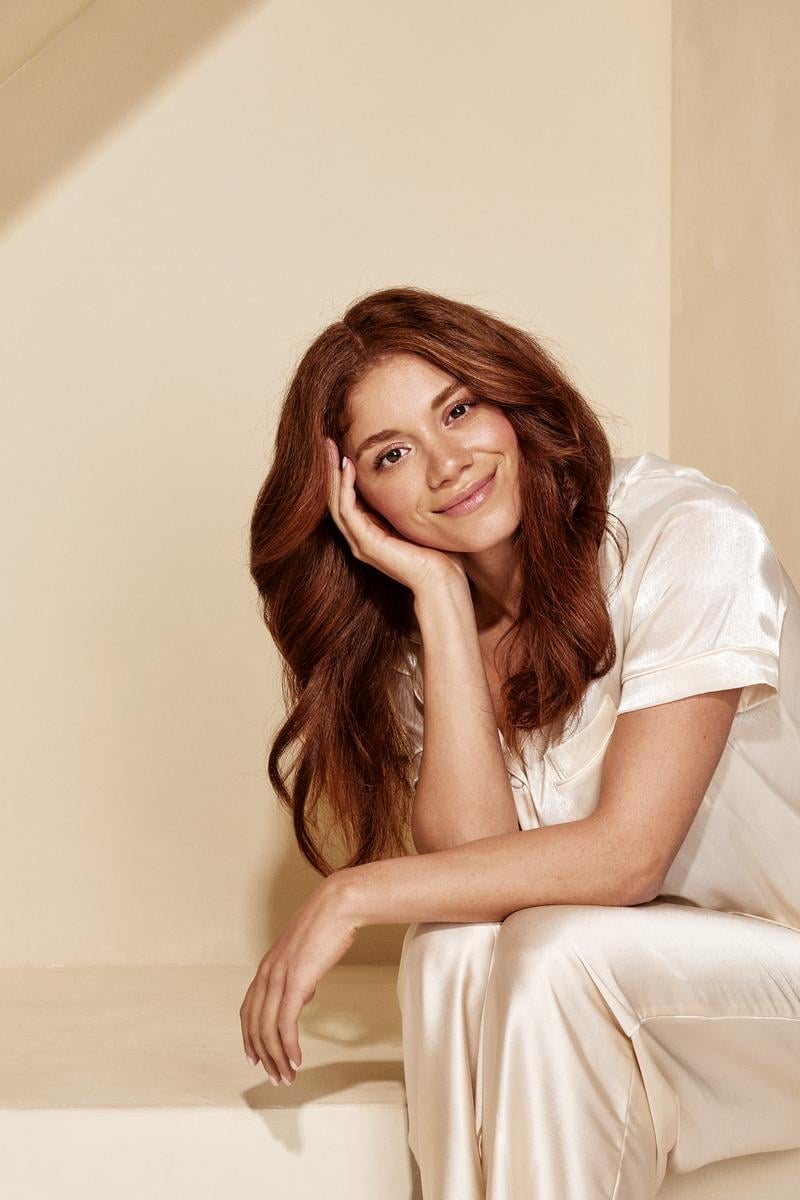
A reddish-brown base with subtle lighter tones reads warmer than an ash blonde or cool brunette ever could, and the loose waves here are doing the heavy lifting. The color catches light differently with each bend, so the mid-back length never looks flat. It is a good choice if your natural texture already has some wave and you want a shade that looks rich rather than brassy. Ask your stylist for: mid-back length layers, loose waves, side part, reddish-brown color. Thick wavy hair starting at mid-back length is the ideal candidate, and the loose waves soften angular faces without requiring much effort.
A texturizing spray is all you need to keep the shape intact. Plan for a trim every 10 to 12 weeks to prevent the layers from losing their definition. The healthy glossy shine is a side effect of the color depth, not a product trick, so do not expect the same effect on a single-process lighter shade.
Dark Brown Mid-Back Waves With Side Part

The glossy texture on dark brown hair with subtle highlights comes from the way light hits the wave pattern, not from a heavy oil slick. A side part adds lift at the crown, which stops mid-back length waves from pulling the face down. Ask your stylist for: mid-back length waves, side part, dark brown with subtle highlights. Thick wavy hair at mid-back length is the starting point here, and the side part works for anyone who wants more crown volume without teasing.
A leave-in conditioner keeps the waves defined without weighing them down. Air drying or diffusing on low heat preserves the natural texture and prevents frizz. A trim every 10 to 12 weeks keeps the long layers from looking straggly. The subtle highlights will fade gradually, so a gloss treatment every six to eight weeks maintains the depth.
Thick Dark Brown Mid-Back Blowout, Elegant Bedroom Setting
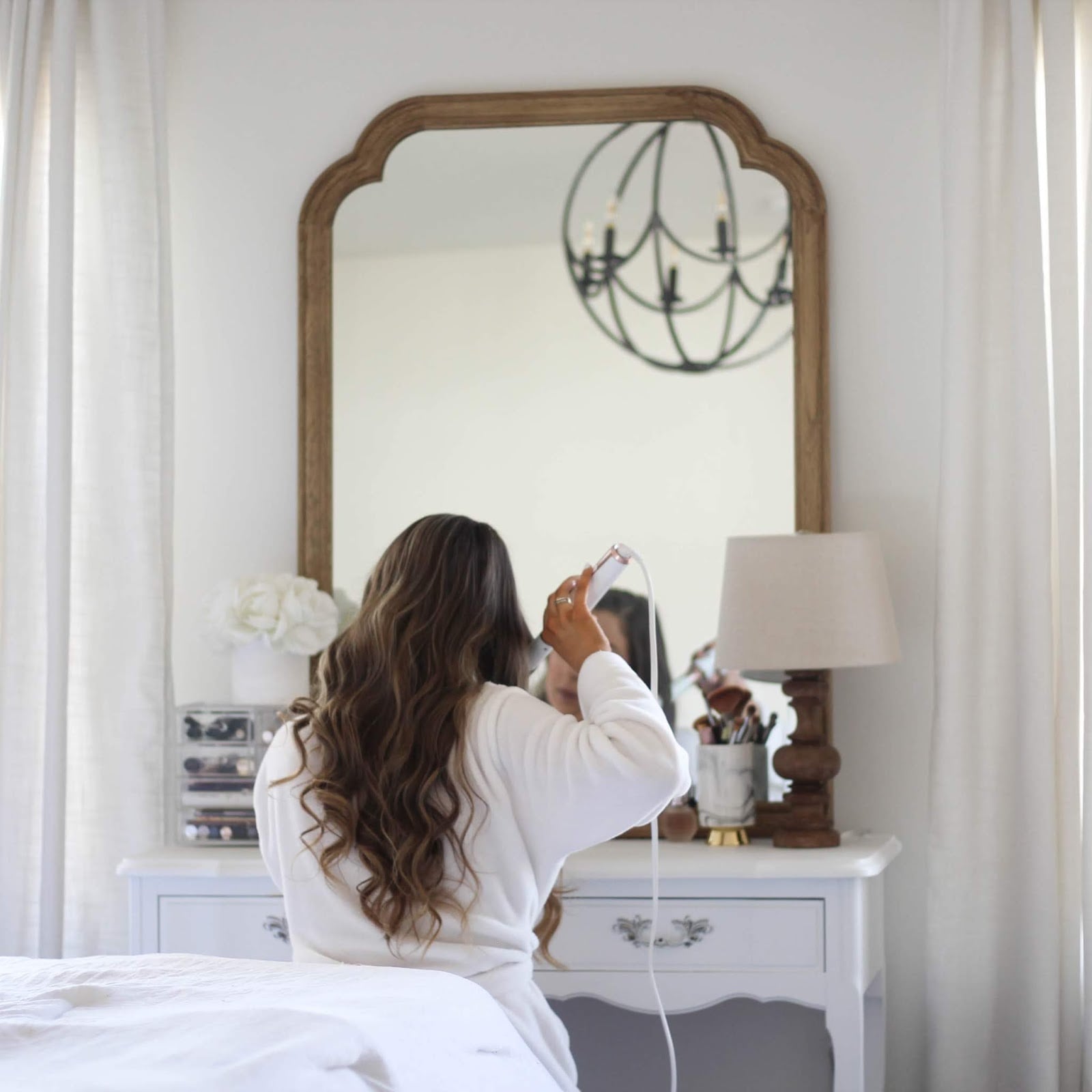
That smooth, bouncy finish starts with a heat protectant applied to damp hair. Ask your stylist for: mid-back length hair, smooth blowout, middle part, dark brown. The glossy volume comes from directing the hair dryer nozzle downward and using a large round brush to lift at the roots. Thick straight hair at mid-back length is the ideal candidate; a blowout adds polish and makes the hair look deliberately styled. The back view shows the result: uniform shine, no flyaways, and enough volume to hold shape until the next wash.
Mid-Back High Ponytail With Side-Swept Bangs
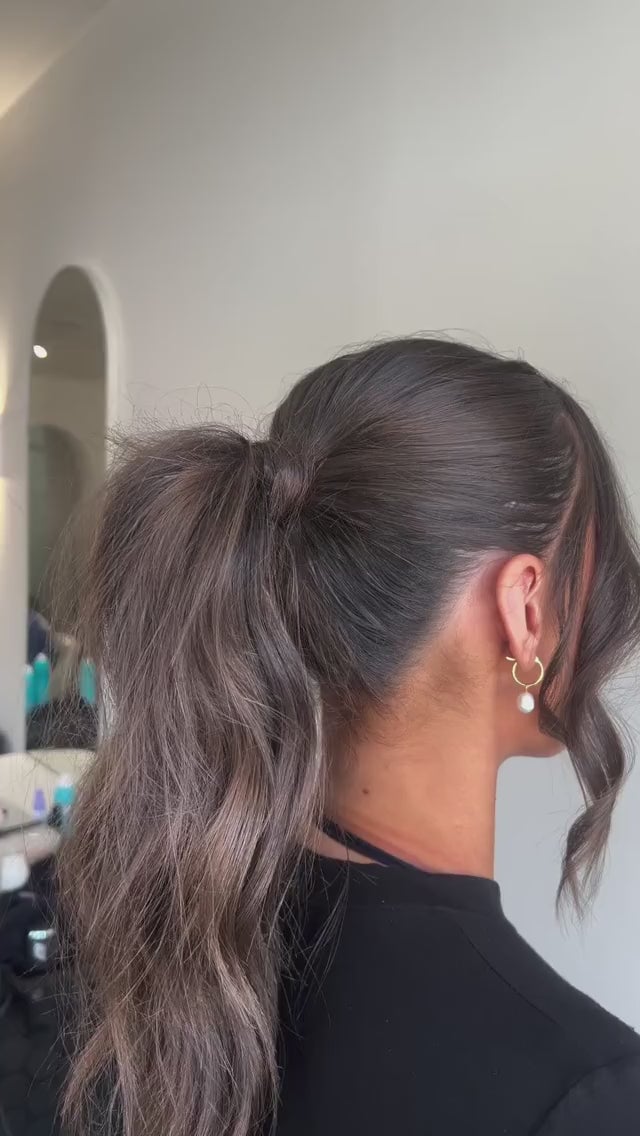
A high ponytail on mid-back length hair creates instant lift, but the weight of thick wavy texture can pull it down within an hour. The solution is a strong hair tie placed at the crown and side-swept bangs that soften the pulled-back look. Ask your stylist for: mid-back length hair, high ponytail, side-swept bangs, side part. Wavy thick hair at mid-back length holds the shape well, and the ponytail suits most face shapes because it elongates the silhouette. The one real drawback is the styling time: smoothing thick waves into a sleek ponytail requires sectioning and a boar bristle brush, plus hairspray to lock down flyaways. A trim every eight weeks keeps the layers from poking out of the elastic.
Thick Dark Brown Low Bun
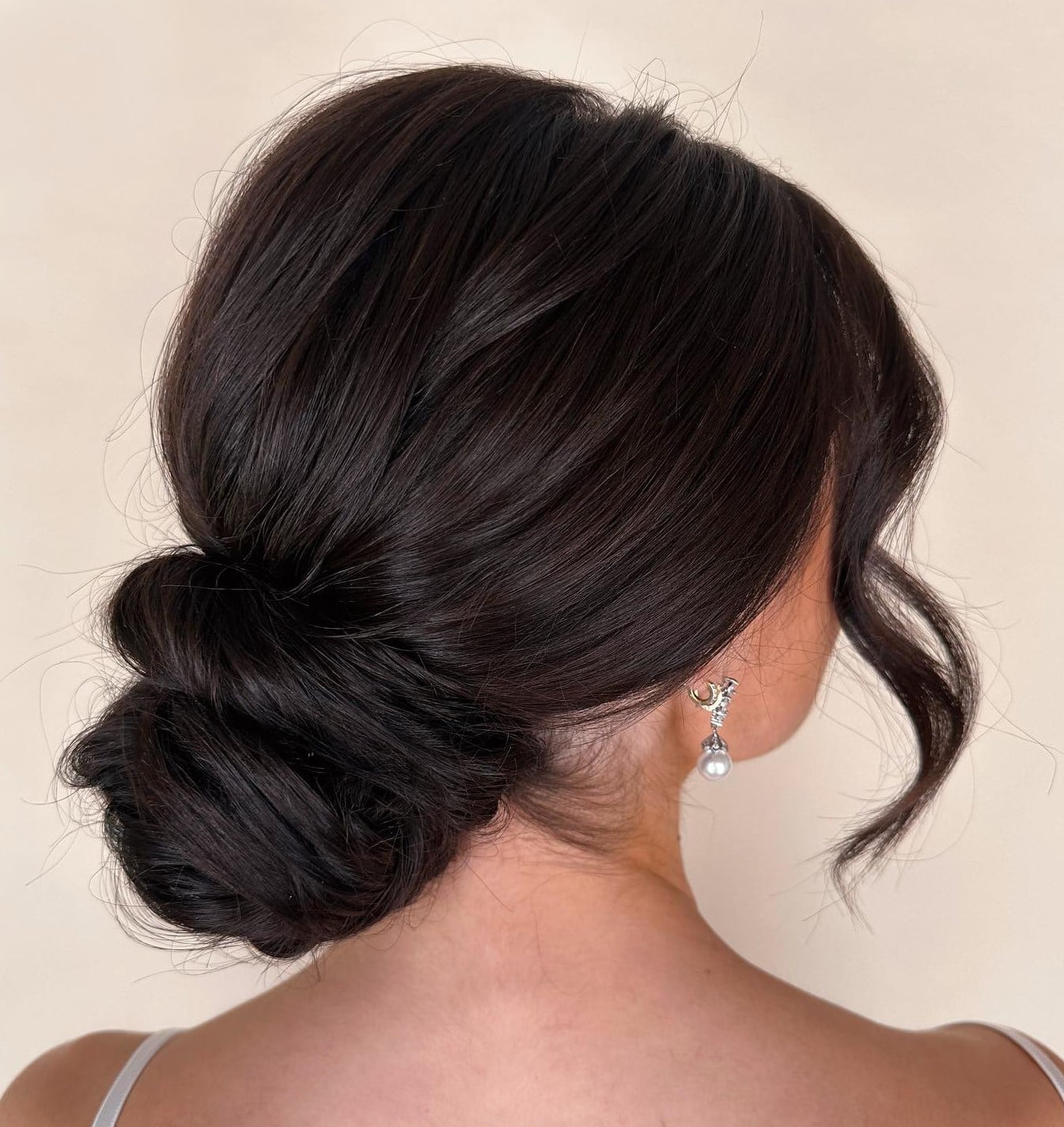
A voluminous low bun on thick dark brown hair looks polished because the weight of the hair creates its own structure. The smooth texture means no wispy pieces escape, and the back view shows a clean silhouette that works for formal settings or a desk job. Ask your stylist for: voluminous low bun, smooth texture, dark brown. Thick straight hair at shoulder length or longer is the best candidate; finer textures will not hold the volume without padding. The low placement suits most face shapes because it does not pull the hair back from the temples too tightly. A small amount of texture spray on each section before pinning keeps the bun from looking flat.
Voluminous Dark Brown Messy Bun With Curtain Bangs
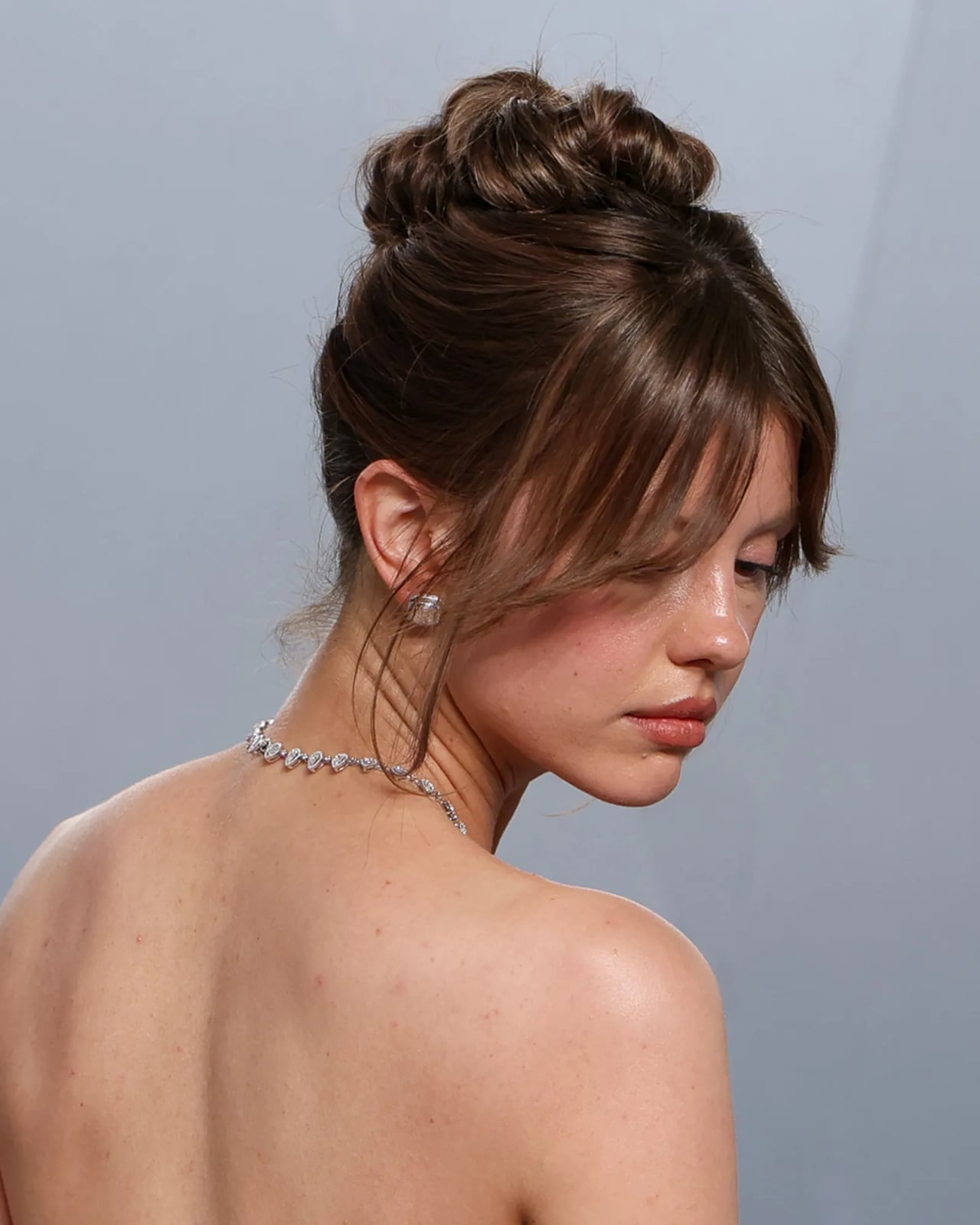
A sleek, polished updo is a safe choice for a formal event, but this voluminous messy bun with curtain bangs offers a more relaxed alternative that still reads as refined. The dark brown, wavy texture is piled high on the head, with soft, wispy bangs framing the face and a middle parting keeping the front grounded. It suits long wavy hair across a range of densities, though the volume shows best on medium to thick strands.
Ask your stylist for: voluminous messy bun, high on head, curtain bangs. After the bun is secured, gently pull out a few face-framing pieces along the hairline. A texturizing spray adds grip and keeps the shape intact longer than a sleek bun would.
Blonde Updo With Intricate Curls
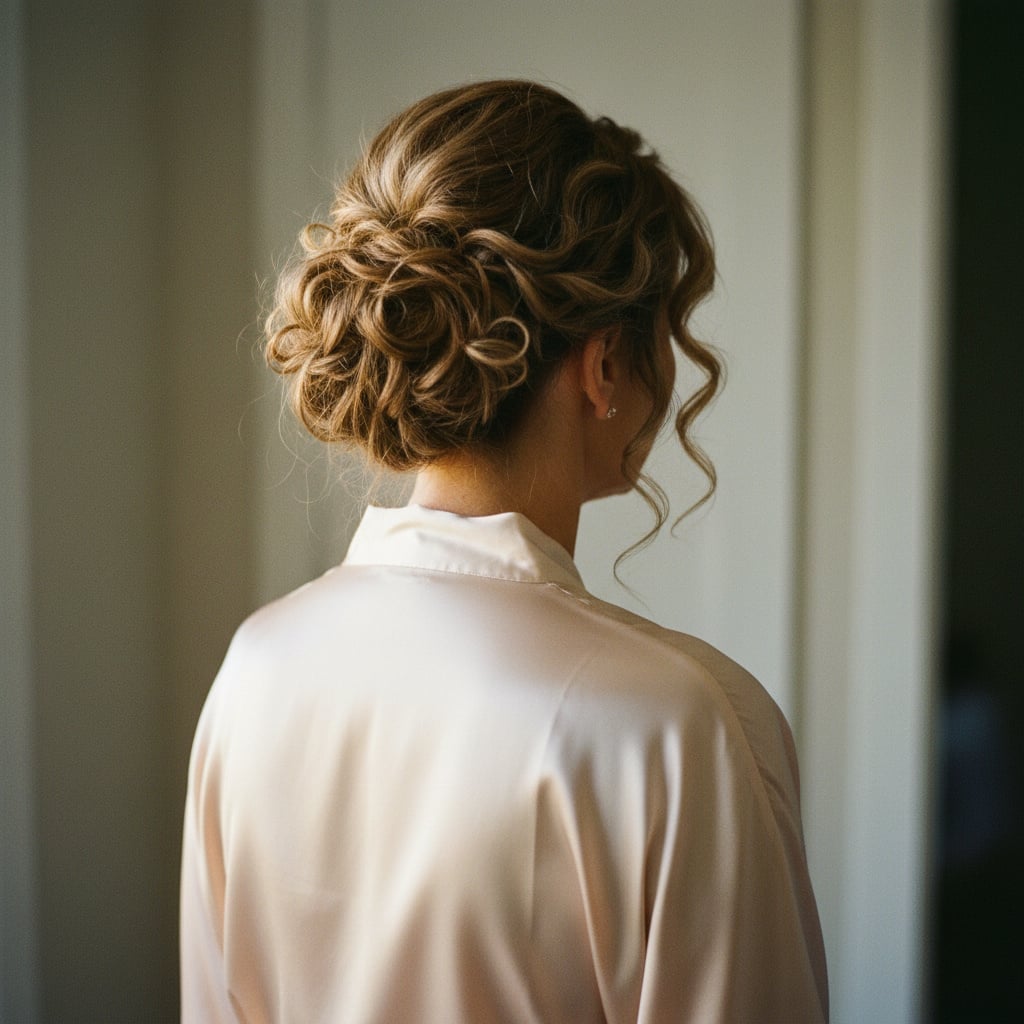
The design here is a back view of an updo built from individual curls and waves, each one pinned into place to create a structured, dimensional shape. The blonde base is accented with subtle highlights that catch the light across each curve. This technique requires a stylist with strong pin-curl skills, so it is strictly a salon job. It works best for long, wavy hair, and the intricate finish makes it a natural choice for weddings or formal galas. Ask your stylist for: sophisticated updo, intricate curls, blonde with highlights. A few loose tendrils left at the nape soften the overall line without breaking the structure.
Blonde Updo With Face-Framing Pieces

How do you get an updo that feels polished without looking stiff? The answer is in the face-framing pieces. This blonde updo pulls the bulk of the hair away from the face, then leaves soft tendrils and wavy sections loose along the hairline and at the temples. The side parting adds a natural asymmetry that keeps the style from reading as too symmetrical or formal. It suits long, fine to medium wavy hair, and the loose tendrils also help balance a longer face shape by adding width at the sides.
Ask your stylist for: soft updo, face-framing pieces, blonde with highlights, side part. After the updo is set, gently tug a few of those tendrils outward for a softer finish. A flexible hold spray will keep them in place without making them stiff.
Auburn Mid-Back Waves With Side Part
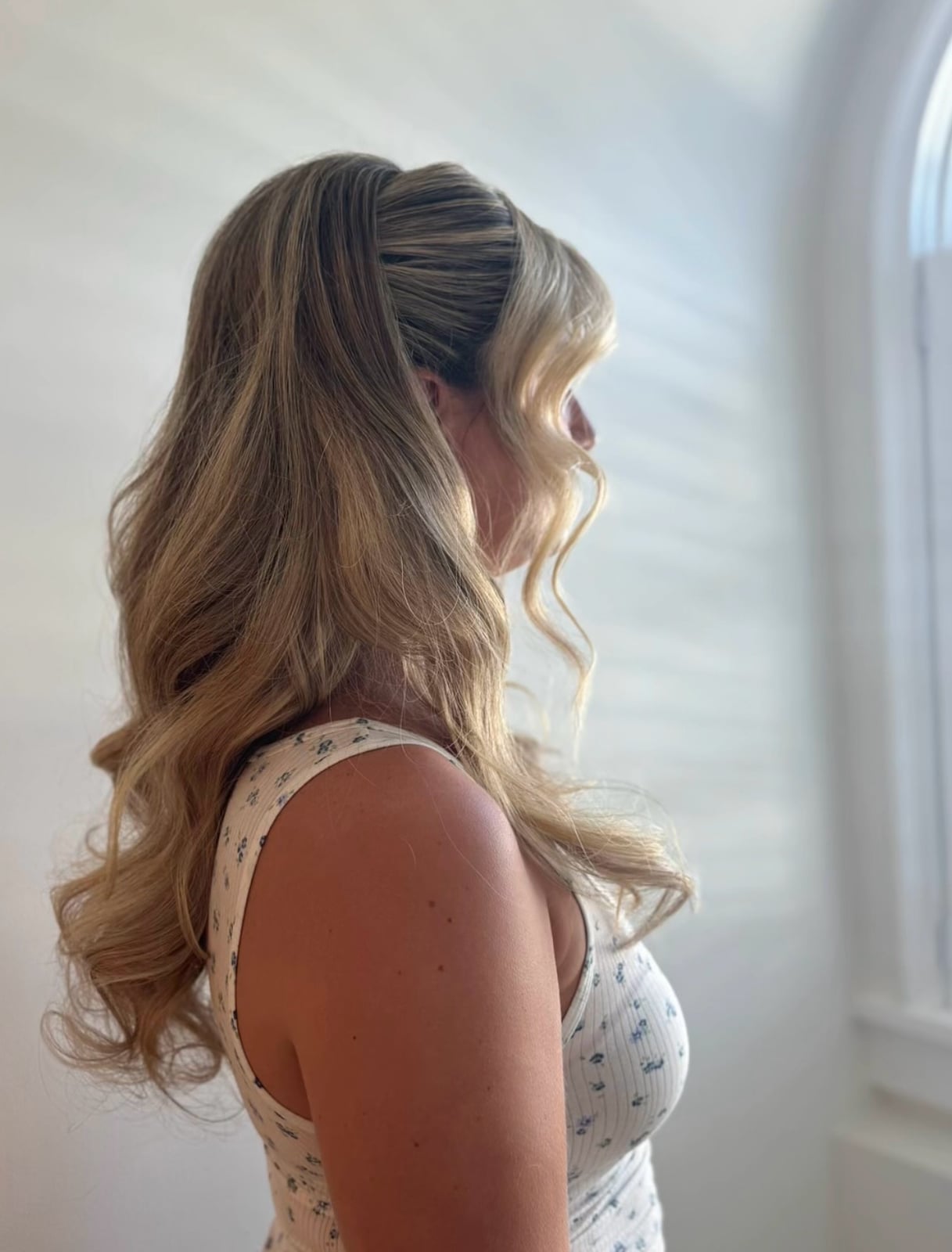
A collarbone-length lob with a middle parting and a sleek, straight finish with subtle waves is a look that depends entirely on the health of the hair. The fine, straight texture here shows every split end and every bit of flyaway, so constant maintenance is required. A trim every six weeks is necessary to keep the ends looking clean, and a heat protectant is required before any styling.
Ask your stylist for: collarbone-length lob, middle parting, sleek finish, subtle waves. This finish tends to fall flat by midday on fine hair, especially without a root-lift product. A lightweight volumizing spray at the roots before blow-drying buys a few more hours of body.
Final Thoughts
The common thread across these 34 cuts is that polish comes from precision, not product. For fine hair, keep one blunt baseline and skip heavy layers that thin the ends. For thick hair, long layers and strategic texturing manage volume without sacrificing shape. A round face benefits from length below the chin; a square face softens with layers around the jaw.
- Schedule trims every 6-10 weeks to maintain clean lines.
- Use a heat protectant spray before any blow-drying or heat styling.
- Incorporate a deep conditioning treatment weekly for shine and health.
- Allow hair to air dry partially before blow-drying for less heat damage.
Invest in your hair’s health for enduring class.