

Softball hair is a strategic decision: every braid, ponytail, and bun has to survive a full game without a touch-up. Lived-in color and soft face-framing layers are the current sweet spot, giving even a high ponytail a polished finish that doesn’t look like you tried too hard.
These 25 classy softball hair ideas range from salon-intricate cornrows to five-minute bubble ponytails, covering fine strands that go flat by the third inning and thick hair that needs serious taming. Every style here stays put, keeps hair out of your eyes, and looks intentional rather than rushed.
Intricate Large Bubble Braid
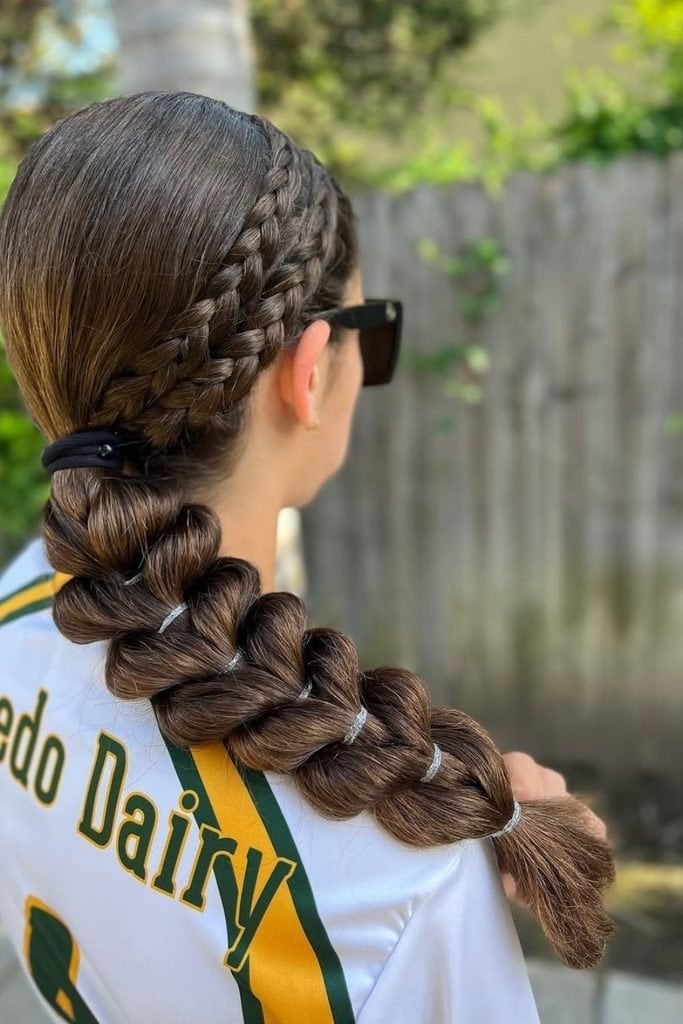
The woven pattern at the crown is what sets this apart, a structured foundation that gives the voluminous bubble braid below it something solid to hang from. On thick, straight hair that reaches mid-back, each bubble holds its shape instead of collapsing into a lumpy mess, which is the usual fate of this style on finer strands. The middle part keeps the front clean, and the silver bands do double duty as both decoration and tension points, so the whole thing stays put through a full game.
This one requires a salon appointment because the tension has to be consistent from root to tip or the bubbles go wonky. Ask your stylist for: large bubble braid with woven top detail. A texturizing spray before braiding adds grip and a bit of volume, which helps the bubbles read as deliberate. Expect to rebook every 10 to 12 weeks for a fresh braid; the style itself can last a week with care, but the ends will tell you when it is time.
Two French Braids With Wispy Bangs
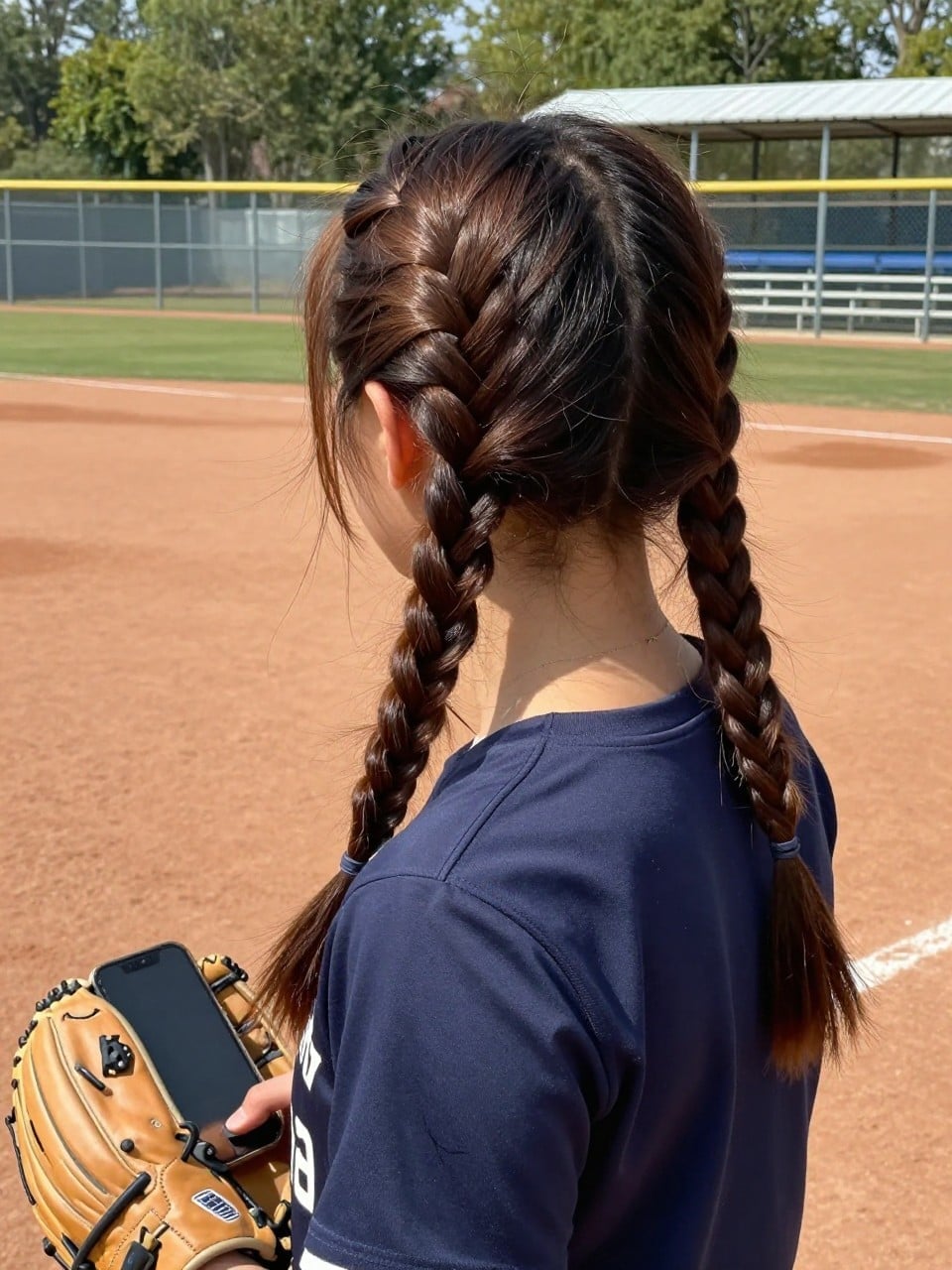
Wondering if you can have braids and still soften your face? That’s what wispy bangs are for. On thick, wavy hair at mid-back length, two French braids pull everything off your neck and out of your eyes, while the wispy bangs break up the severity of a slicked-back hairline. The middle part keeps the style symmetrical, and the wavy texture gives the braids a little natural grip so they don’t slide apart mid-inning.
If your face is square or round, the wispy bangs do the work of softening those angles without needing heavy layers. Ask your stylist for: two french braids, wispy bangs. A smoothing serum along the hairline before braiding tames flyaways, which is the difference between neat and helmet-head. Trim the ends every 8 to 10 weeks to keep the braids looking intentional, and the bangs will need a touch-up more often if you like them wispy rather than grown out.
Double Dutch Braids Into Ponytail
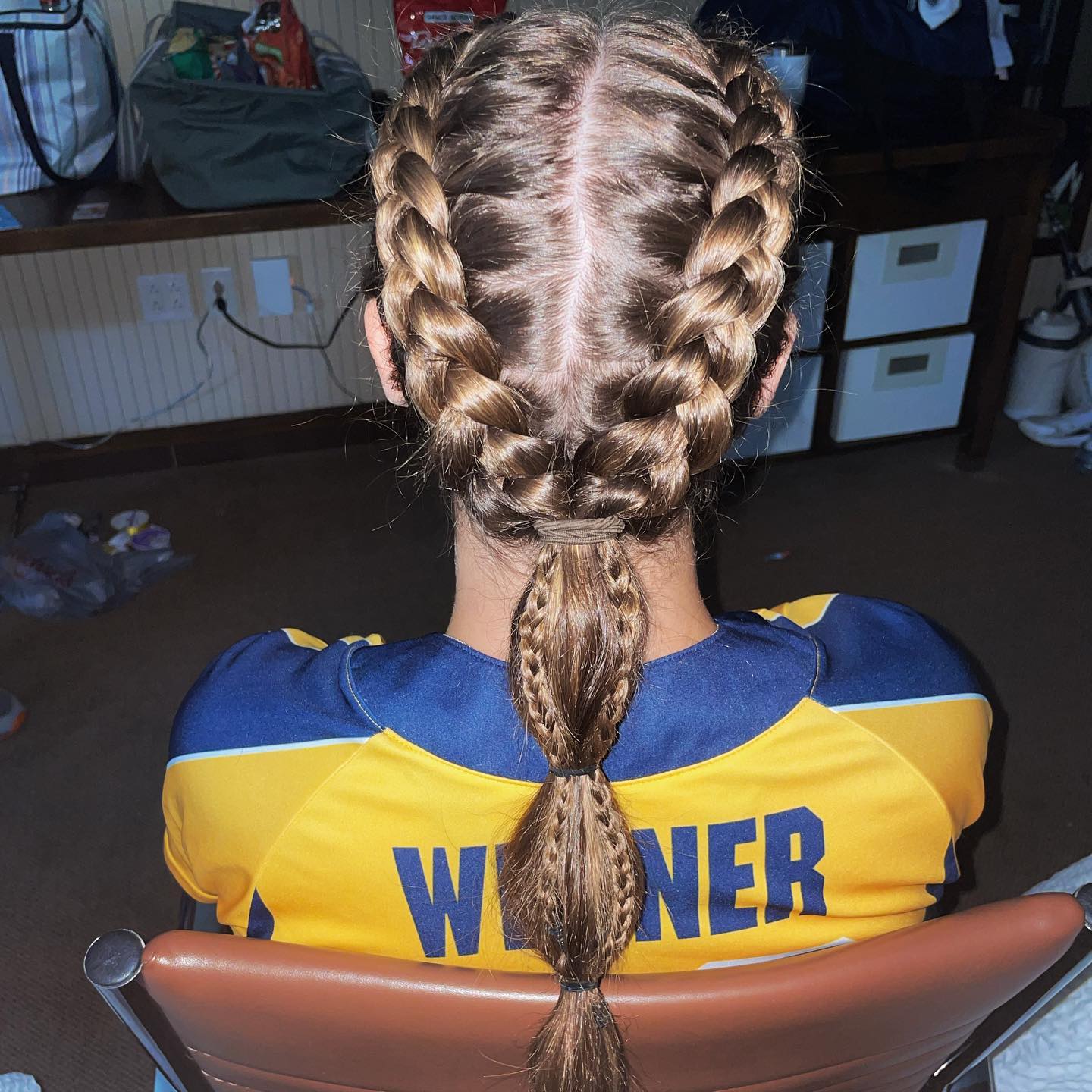
Two Dutch braids that meet at the nape and flow into a single ponytail give you the security of a full braid with the movement of a tail, and the middle part keeps it balanced. Ask your stylist for: double dutch braids into a mid-back ponytail. The key words are “double” and “into,” because a stylist needs to know the braids converge rather than stay separate, and that the ponytail should sit at mid-back, not higher. For thick, straight hair, this is a solid choice; the braids hold tight and the ponytail won’t whip you in the face during a swing. Secure the ponytail with a strong elastic so the whole construction doesn’t unravel, and plan on a trim every 6 to 8 weeks to keep the ends from looking ragged.
High Ponytail With Fishtail Braid
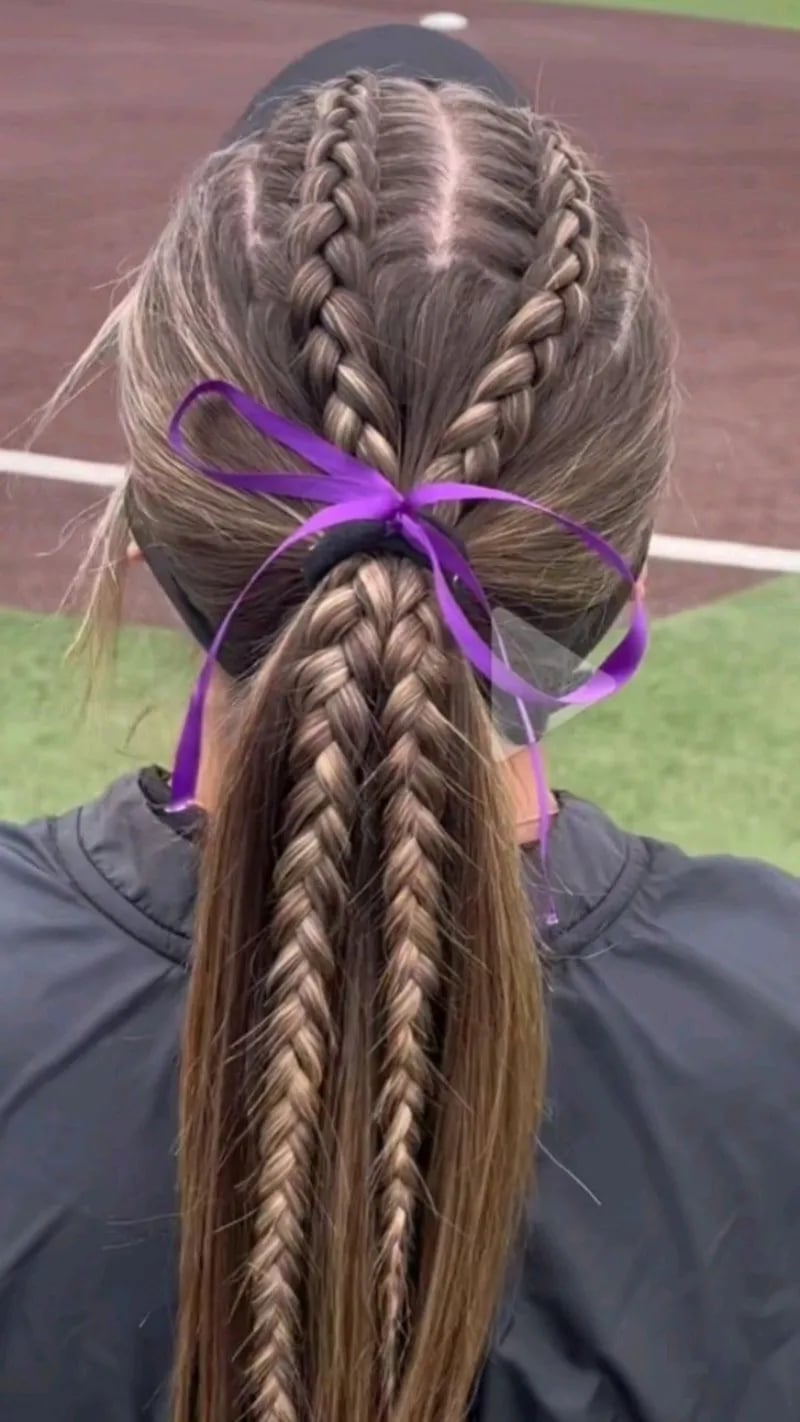
A regular three-strand braid is fine, but the fishtail version shows an interlocking pattern that looks complicated even when it is just two strands working together. On thick, wavy blonde hair pulled into a high ponytail, the fishtail braid shows off the texture instead of flattening it, and the mid-back length gives the braid room to show its structure. The purple ribbon at the end is a small detail that ties the whole thing together, but the real trick is the crown volume.
Compared to a sleek low braid, this high ponytail does more for a round face by adding height and drawing the eye upward. Ask your stylist for: high ponytail with intricate fishtail braid. Tease the crown before gathering the ponytail, because flat roots will drag the whole look down. This style leans salon-leaning, mostly because getting the fishtail even takes practice, but once it is in, it holds for a full game. Trim every 8 to 10 weeks to keep the ends clean and the braid pattern crisp.
Cornrows Transitioning to Braids
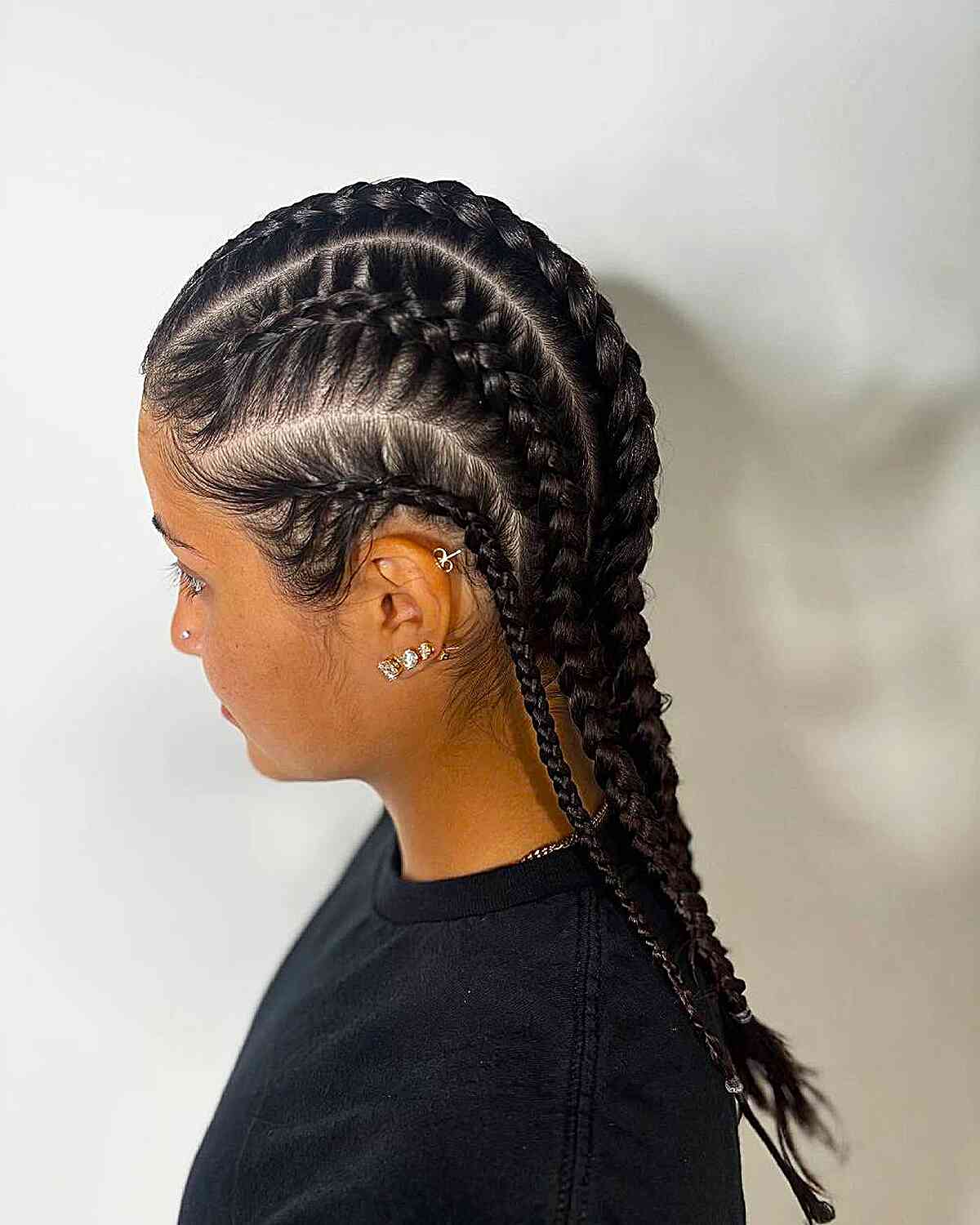
Tight cornrows hug the scalp for the first few inches, then release into loose braids that swing past your shoulders. On thick, coily black hair that reaches mid-back, the cornrow pattern stays flat and secure at the roots, which is exactly what you want when a helmet or a glove is coming off and on all afternoon. The side part adds an asymmetric touch that breaks up the symmetry, and the intricate pattern along the scalp gives the style a finished look from every angle.
This is a protective style that also happens to be game-ready, so it earns its spot in the rotation. Ask your stylist for: cornrows transitioning into mid-back braids. A lightweight oil on the scalp between the cornrows keeps the skin from getting tight and flaky, and it’s worth doing every few days before it starts to itch. The braids themselves will last a few weeks, but plan on a trim every 12 to 16 weeks to keep the ends neat and the transition line looking sharp.
High Ponytail With Braided Accents
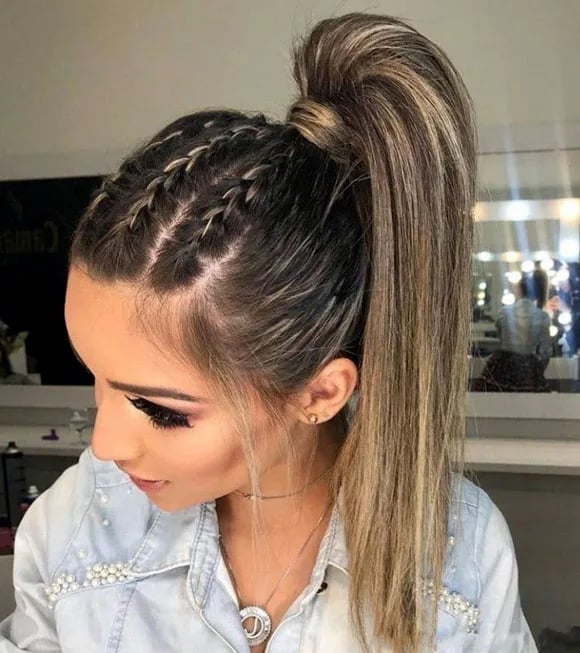
Ever wonder how to keep a high ponytail from looking plain? The braided accents woven into the base solve that neatly, especially on this wavy, medium-density dark brown hair with blonde highlights. Ask your stylist for: high ponytail with braided base detail. A middle part and mid-back length give the braids room to show off. Wrap a small section of hair around the elastic and pin underneath for a polished finish. A trim every six to eight weeks keeps the ends clean. It works for game days and the team dinner after.
Dutch Braids With Color Highlights
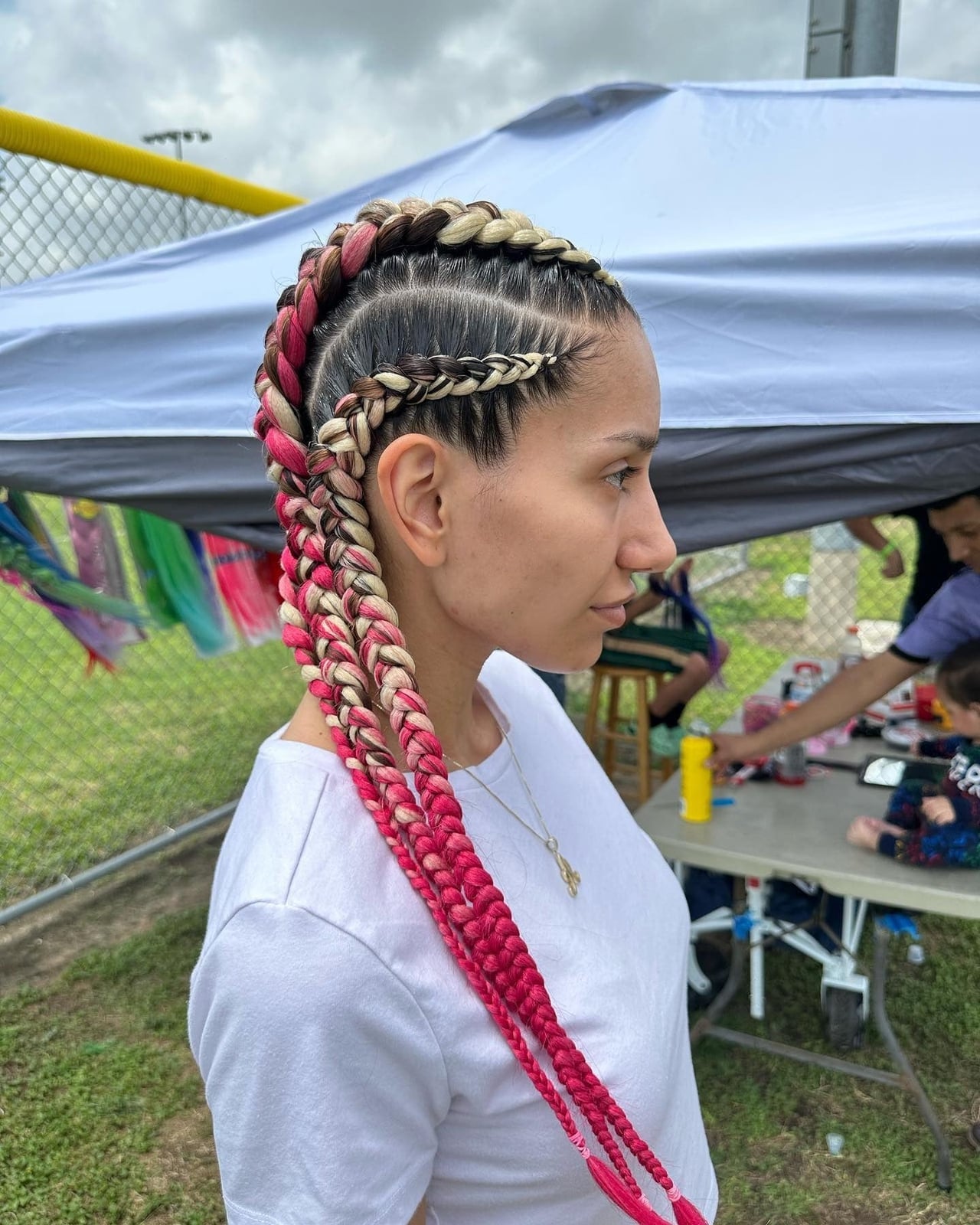
Two large Dutch braids with cornrow details carry blonde and vibrant pink highlights through wavy, thick dark brown hair that reaches mid-back. The middle part keeps it symmetrical, and the color accents make this more than just a practical braid. Ask your stylist for: two large Dutch braids with vibrant color accents.
This is the kind of style that lands best in warmer months or at tournament weekends where you want the hair secure and the look memorable. The thick texture holds the Dutch braids without slipping, and the pink sections add a deliberate pop that a single shade cannot match. A color-safe shampoo and conditioner maintain the vibrancy. A trim every eight to ten weeks keeps the ends healthy.
Neat Double Dutch Braids
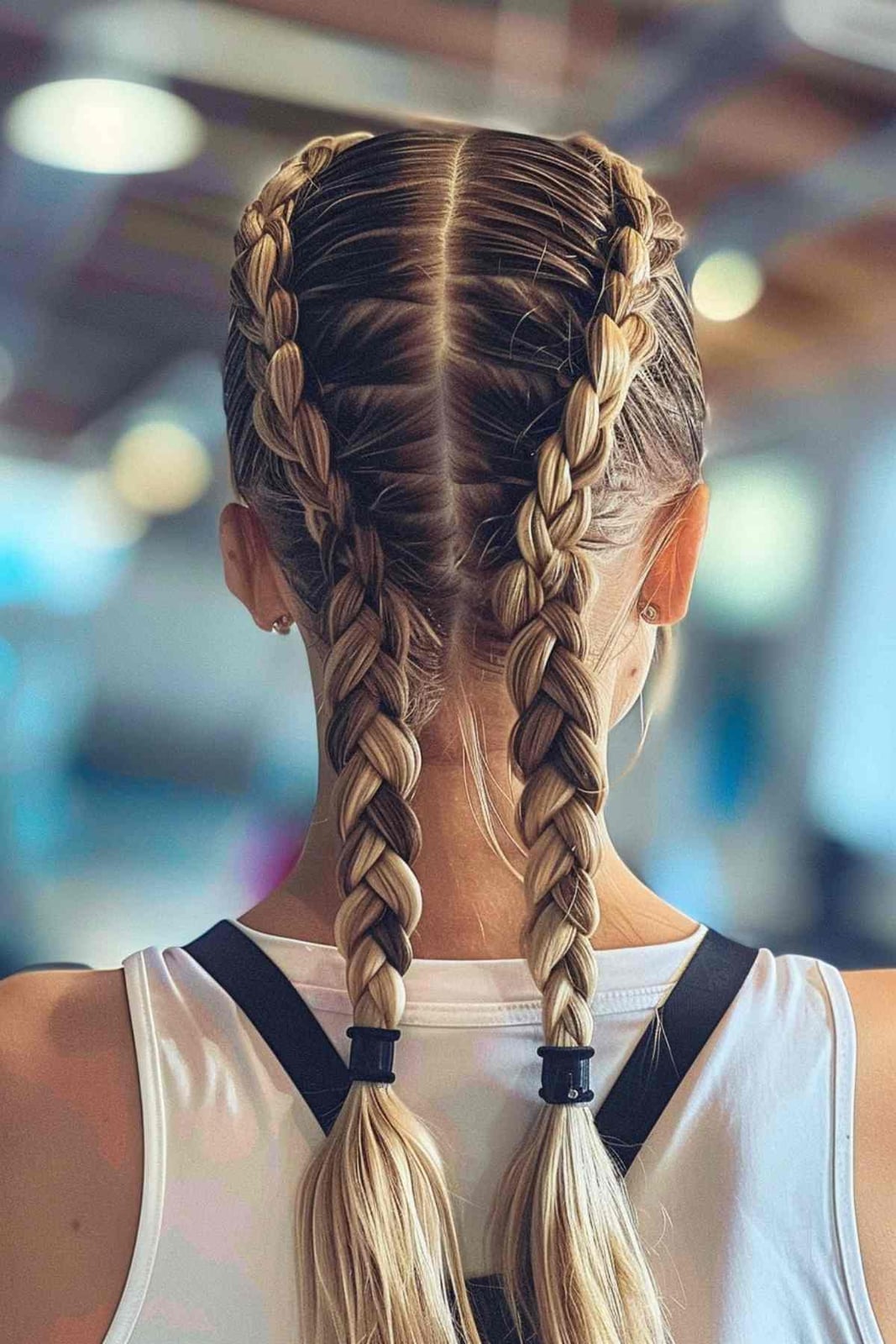
French braids are fine, but Dutch braids sit raised and visible so the pattern reads clearly. These two neat Dutch braids travel down wavy, thick dark blonde hair with lighter blonde highlights to mid-back. Ask your stylist for: neat double Dutch braids. The thick texture keeps the braids full and the part sharp. A middle part suits most faces. A finishing spray holds the smoothness through a full game. A trim every six to eight weeks prevents the ends from fraying.
Segmented Bubble Ponytail
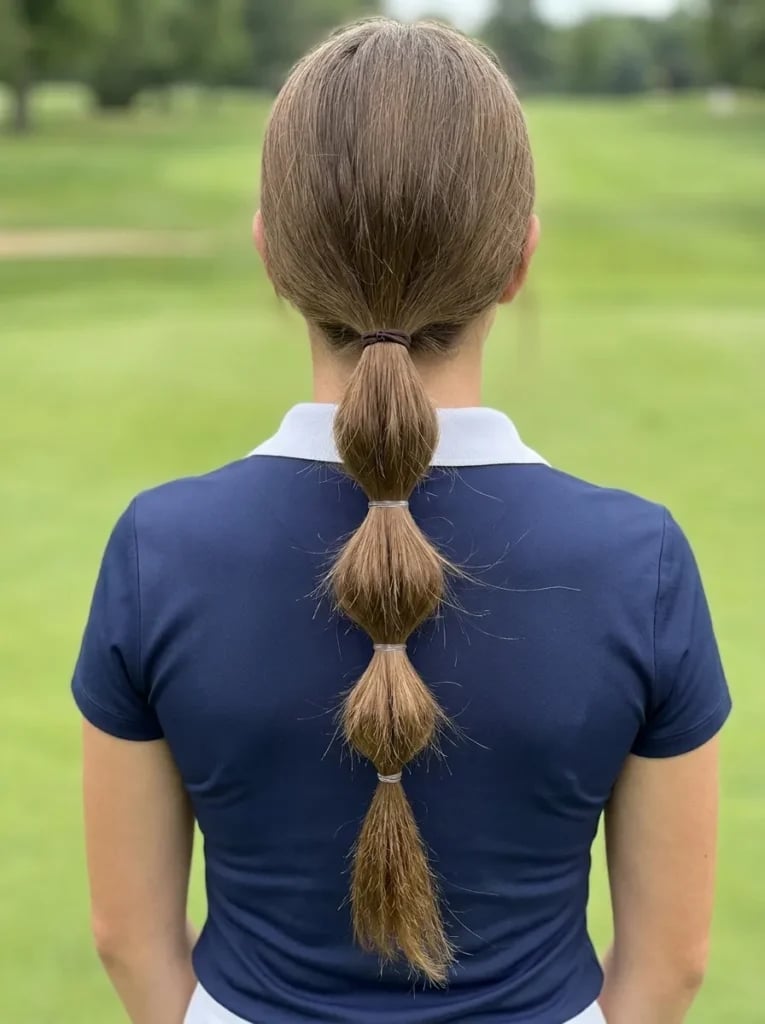
Can you pull off a segmented bubble ponytail at home, or is this one for the salon? It leans DIY if you have thick, straight hair that reaches mid-back and a steady hand with small elastics. Ask your stylist for: segmented bubble ponytail. A middle part and medium brown color keep the focus on the structure. Space the elastics evenly down the length, then gently pull each section apart for a fuller bubble effect. A trim every six to eight weeks keeps the ponytail uniform. No salon appointment required, just patience and a mirror.
Braided Ponytail With Side Detail
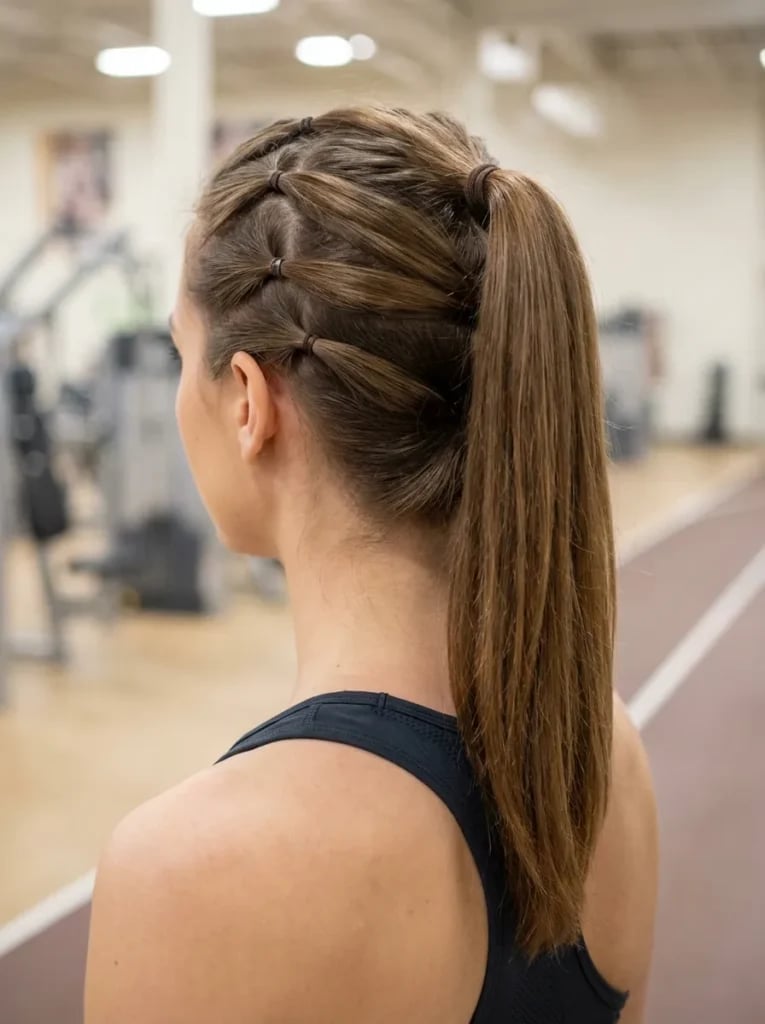
A high ponytail on shoulder-length hair usually means the tail ends just past the jaw, but adding intricate braids along the side changes the proportions entirely. This medium brown, straight and thick hair uses a side part and braids that weave into the ponytail base. Ask your stylist for: shoulder length ponytail with intricate side braids. The side part can balance a long face. A fine-tooth comb creates the sharp part before you start. A trim every six to eight weeks keeps the shoulder-length shape precise.
High Ponytail With Braided Accent, Mid-Back
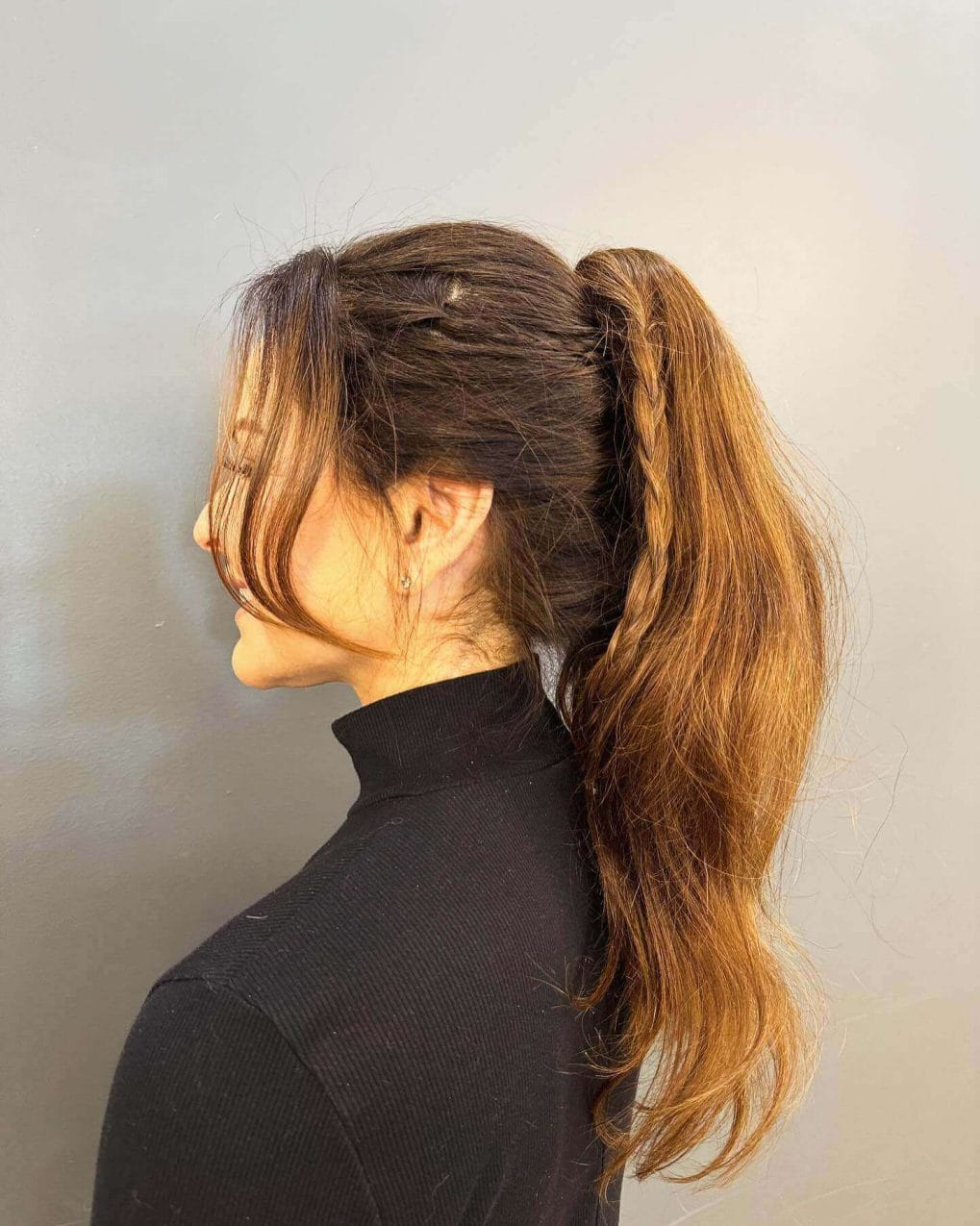
This isn’t a ponytail that leaves the top half of your head feeling like a separate planet. The high ponytail with a thin braided accent and face-framing pieces works because the braid ties the whole thing together, while those shorter strands keep it from reading as overly severe. Thick, wavy hair at mid-back length is the sweet spot here; the texture gives the braid grip without needing a gallon of product, and the face-framing pieces can soften a square jawline.
Ask your stylist for: a high ponytail with face-framing pieces and braided accent. Curl those face-framing pieces away from your face with a 1-inch iron for a soft finish that looks polished. Plan on a trim every six to eight weeks to keep the ends healthy, especially if you’re catching flyaways under a helmet. A side part gives it a bit more movement than a dead-center line.
Ash Blonde High Bubble Ponytail
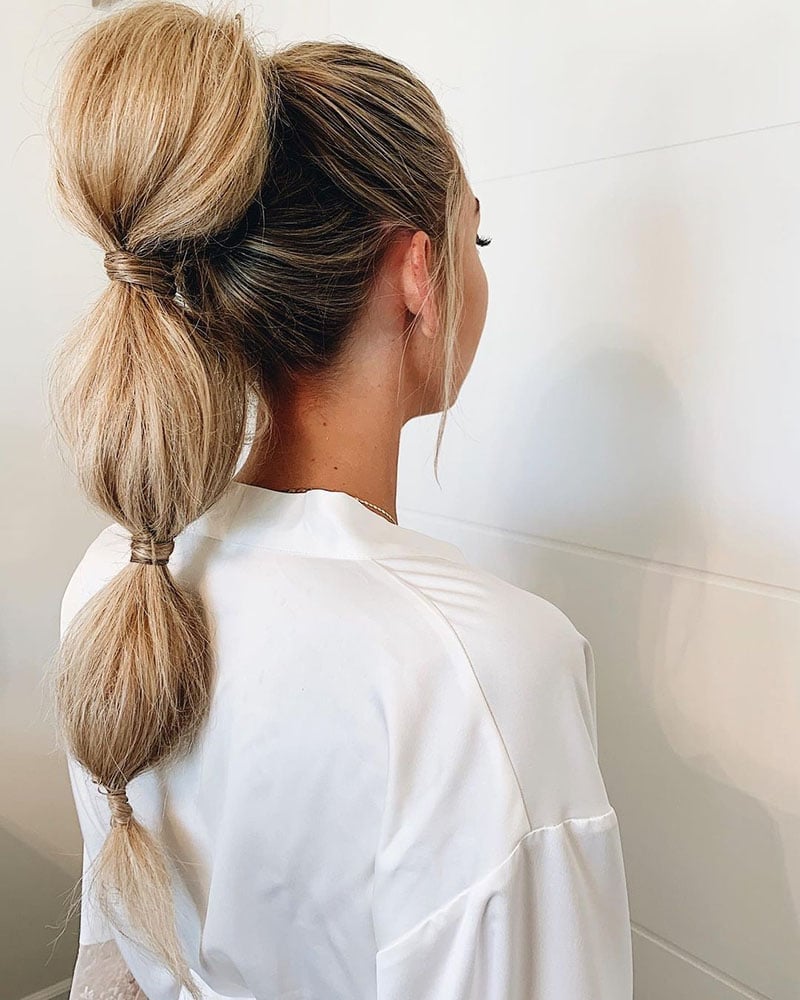
A high ponytail carved into large, distinct segments creates a bubble effect from crown to mid-back. On thick, straight ash blonde hair with a glossy finish, those bubbles look like a planned geometry, not an elastic mishap. A middle part keeps the top section clean, which matters when the style depends on structure.
This works well in spring and summer, when the cooler ash tone cuts through humidity and the open back of the neck stays breezy. Ask your stylist for: a high bubble ponytail. The straight texture is key. Any wave under those elastics will look rumpled. A trim every eight to ten weeks keeps the ends blunt enough to hold the bubble shape without fraying. It is a salon-level look, not athletic.
Dutch Braids Into Low Ponytail, Shoulder
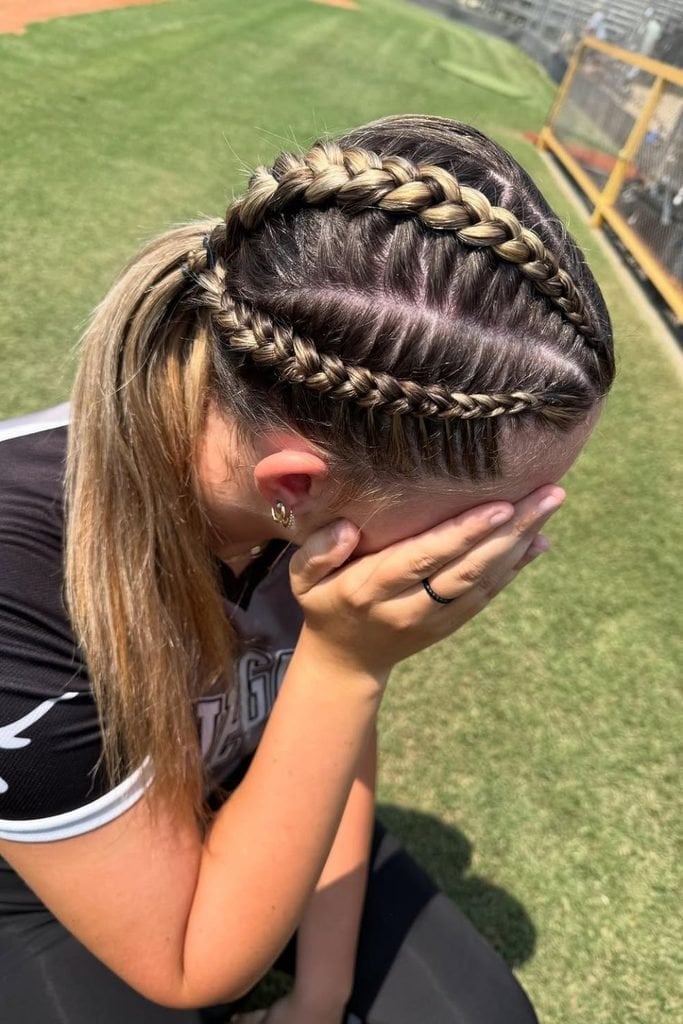
The trick is in the transition: braid tight from the hairline, then gather both braids into a low ponytail at the nape, letting the blonde highlights show along the way. A side part adds asymmetry that balances a longer face. Ask your stylist for: two dutch braids into a low ponytail. The slightly wavy texture in the ponytail gives it volume without extra styling, and the shoulder length keeps the style light. This one requires a steady hand or a friend with patience, but the payoff is zero hair in your face for hours.
Braided Updo With Low Bun
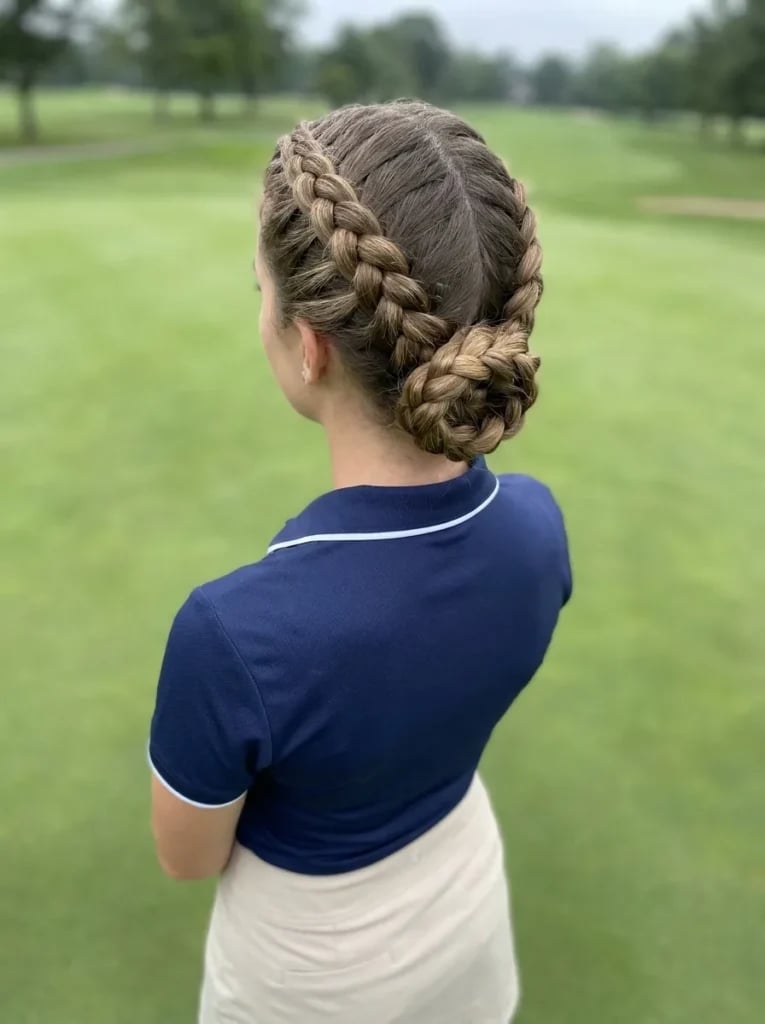
Two thick Dutch braids that start at the hairline and meet at the nape to form a low bun: it sounds straightforward until you consider the volume. The wavy texture and medium density of this medium brown hair with subtle highlights is what gives those braids enough body to look substantial. A middle parting keeps the symmetry clean, and the low bun sits securely enough for a full game without wobbling.
This style works well for medium-density hair because there is enough heft to hold the braid shape without the bun turning into a pea-sized knot. If your hair is very fine or very short, the braids may look sparse and the bun will struggle to look deliberate. Ask your stylist for: two Dutch braids into a low bun. Secure any wispy ends with bobby pins at the nape. A trim every eight to ten weeks keeps the braid sections even and the ends from splitting.
Chevron Braids Into High Bun
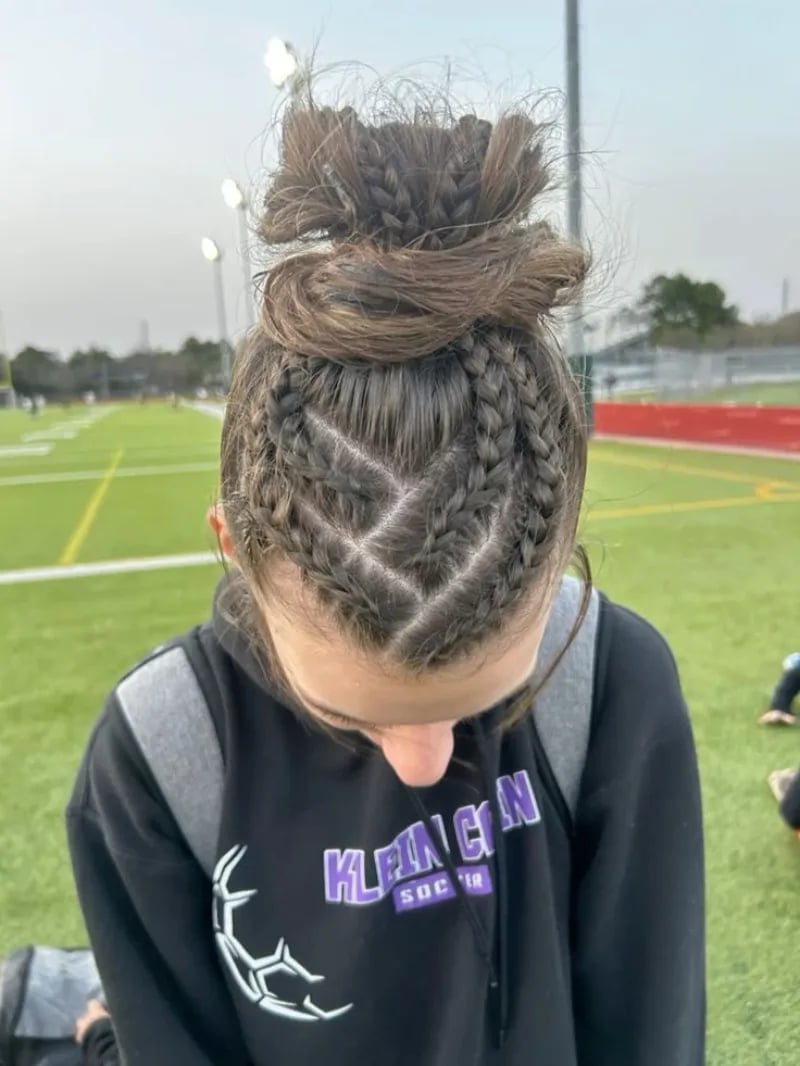
Where a simple braided updo relies on two parallel lines, this version uses multiple intricate braids that form a chevron pattern from a middle parting before gathering into a high bun. The straight, thick dark brown hair at mid-back length is the ideal canvas. The pattern reads clearly because there’s no wave to blur the lines. A high bun keeps the weight off the neck, which matters for long games or long days.
Ask your stylist for: chevron braids into a high bun. The contrast with a standard double-braid bun is that this one demands precision; every section needs to be even for the chevron to look deliberate. Thick, straight hair holds the pattern best. A trim every ten to twelve weeks keeps the ends blunt enough for the braids to stay crisp. This is the style you choose when you want people to notice the construction before they notice the game.
Vibrant Auburn Dutch Braids
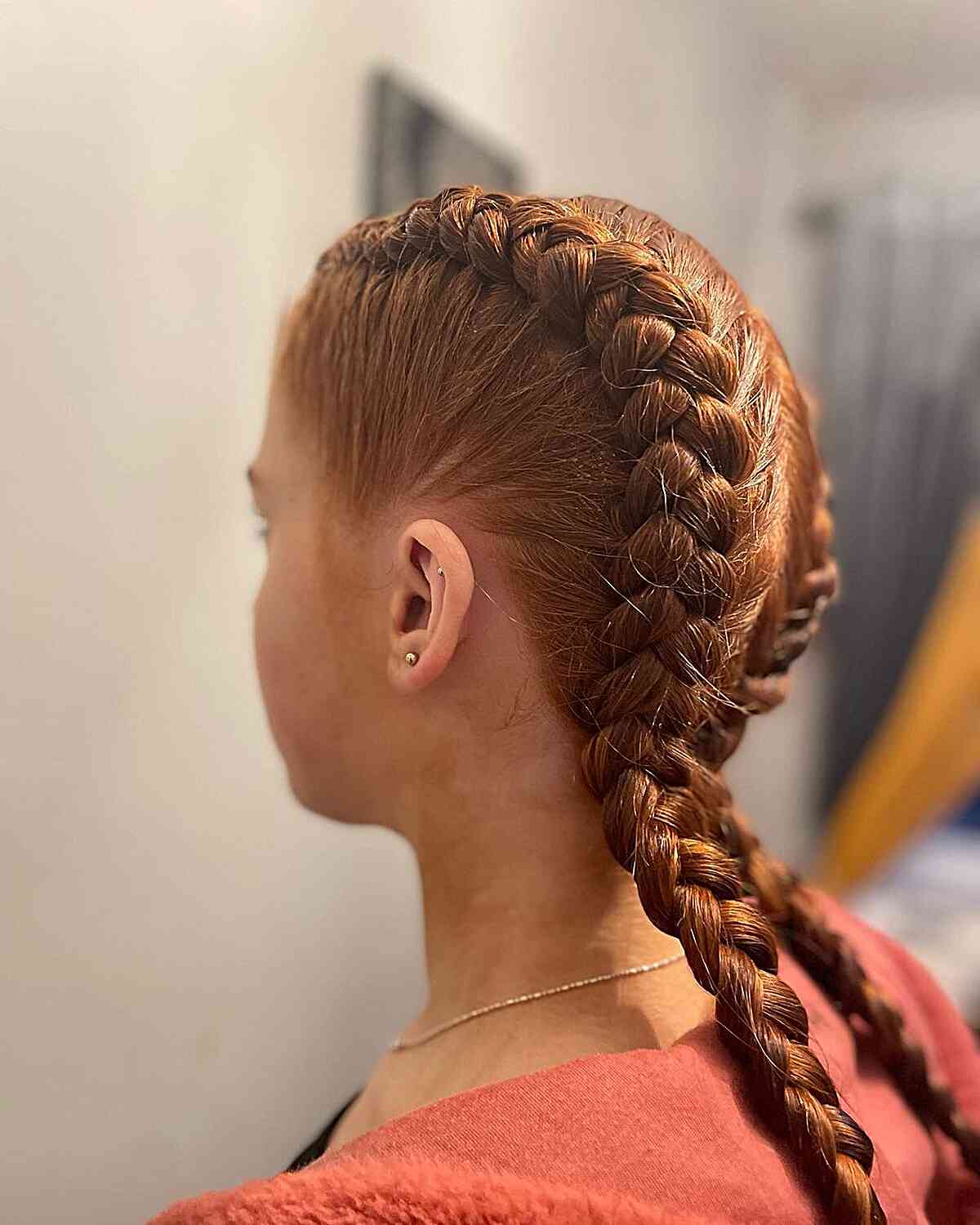
The color is the first thing you notice, a deep auburn base shot through with lighter, almost blonde strands that catch the light with every movement. Two thick Dutch braids run from a clean middle part down to mid-back, the wavy texture adding volume that keeps the braids from looking skinny. Ask your stylist for: two thick dutch braids in vibrant auburn. To keep that richness from fading, a color-depositing conditioner every few washes is your friend. A trim every eight to ten weeks prevents the ends from getting scraggly, which matters when the braids are this neat.
Intricate Braids Into High Bun, Mid-Back
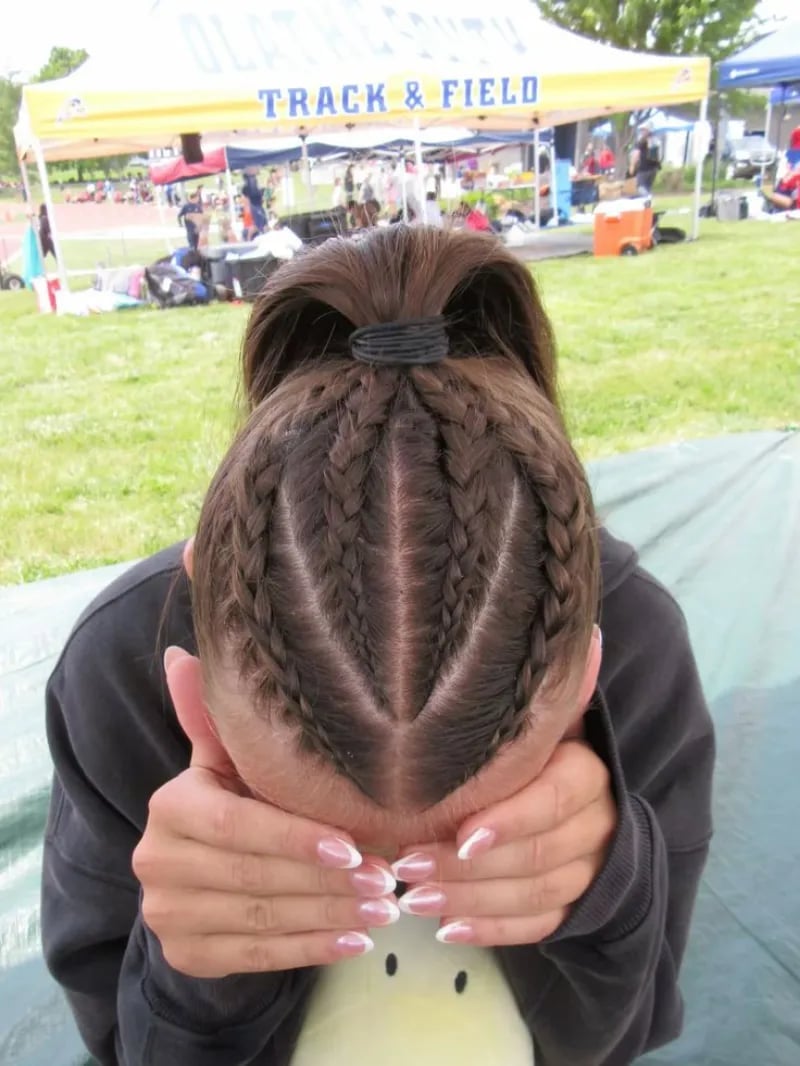
From above, the scalp is the canvas. Multiple braids radiate from a middle parting in a chevron pattern, each one feeding into a high bun at the crown. The straight, thick dark brown texture makes every line crisp, no frizz to blur the geometry. Ask your stylist for: intricate braids into a high bun. This is a salon-level build, not something you whip up before practice. The bun sits high enough to stay clear of a helmet or cap, and the tight braiding means nothing shifts during a game.
Because the design relies on tension and symmetry, it holds for a full day of play without sagging. Strong pins and a light hairspray are all you need to set it. A trim every ten to twelve weeks keeps the ends healthy enough to braid cleanly.
Blonde Double Braids Into Pigtails
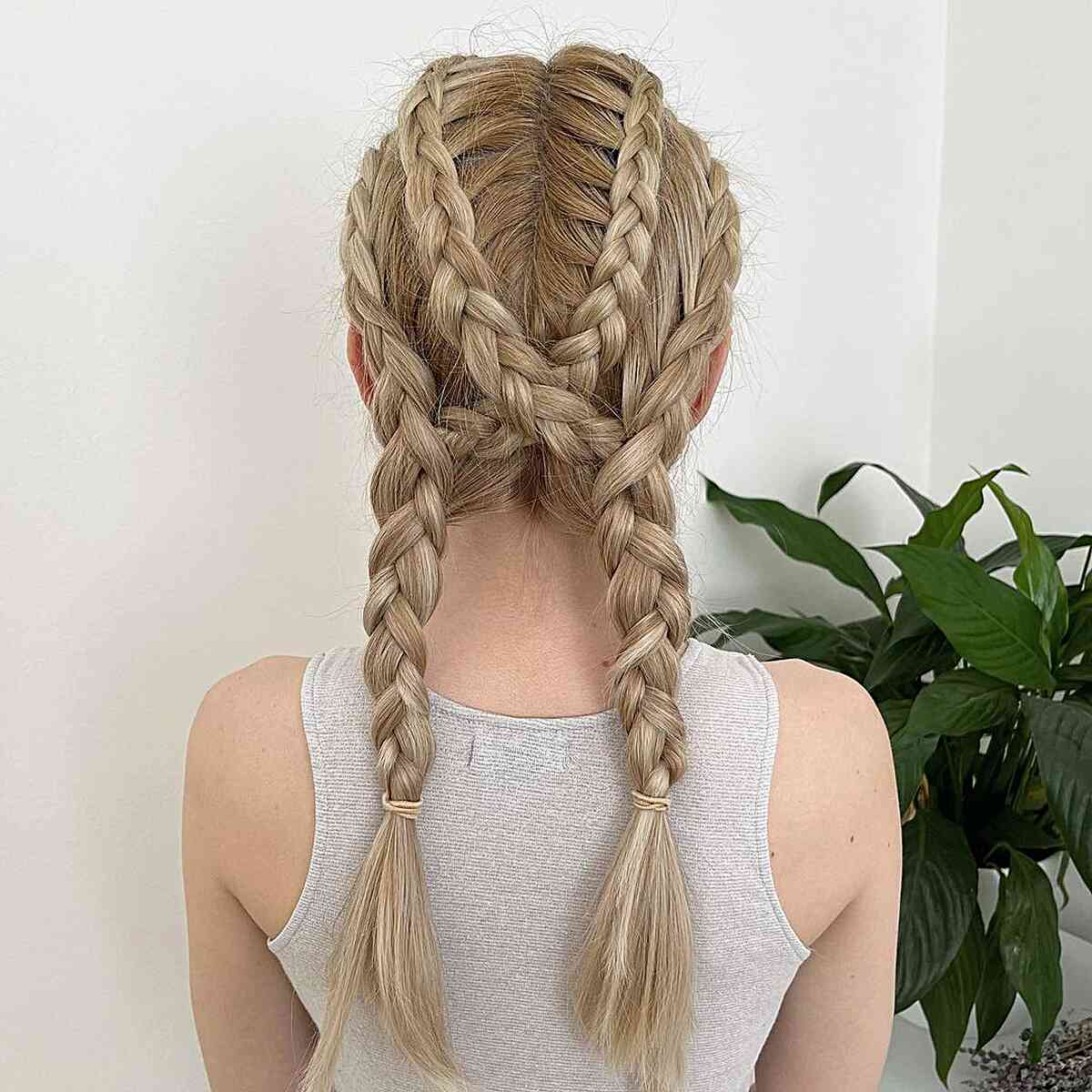
Can you pull off pigtails without looking like you raided a costume trunk? Yes, if they are built like this. Two thick Dutch braids start at the crown and split into separate pigtails, the blonde wavy texture giving them body instead of a limp string effect. Ask your stylist for: two thick dutch braids into pigtails. The middle part keeps it symmetrical, and the pigtails sit low enough to feel sporty, not juvenile.
This style works well for thick, wavy hair that reaches at least mid-back. Anything shorter and the pigtails turn into nubs. The gold elastics at the ends are a subtle polish, clear bands work too if you prefer invisible. A trim every eight to ten weeks prevents the braid ends from fraying.
Cornrows Into Side Braid With Bangs
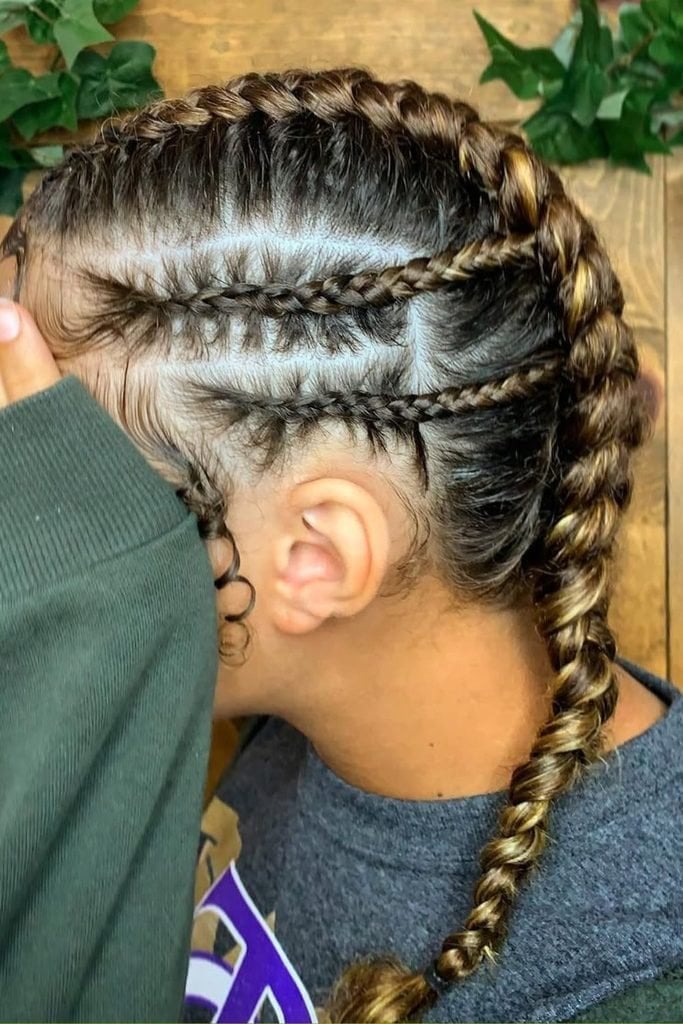
The cornrows hug the side of the head before feeding into a single braid that falls over the shoulder, while wispy bangs soften the forehead. Brown hair with blonde highlights adds dimension to the pattern. Ask your stylist for: cornrows into a side braid, wispy bangs. The side part is key here. It lets the cornrows start cleanly and the braid land naturally.
Platinum Blonde Braids With Pink Tips
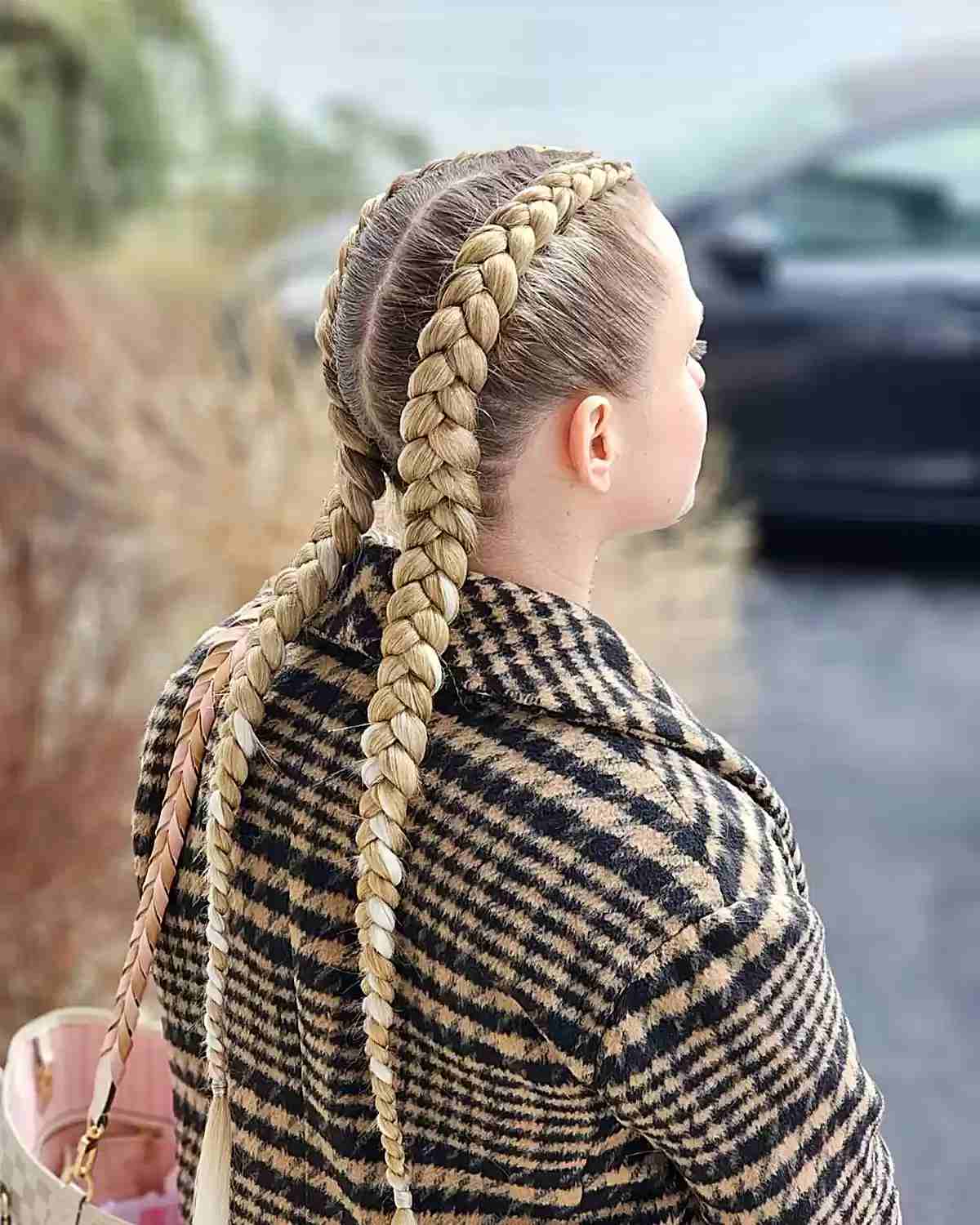
If you want color that actually shows, this is the opposite of a subtle highlight. Two large Dutch braids in platinum blonde drop to mid-back, with the tips dipped in a vibrant pink that contrasts sharply against the pale base. Ask your stylist for: platinum blonde dutch braids with pink tips. The middle part keeps the braids even, and the straight, thick texture holds the shape without frizz.
Compare this to a more lived-in color like a rooty balayage, and the difference is night and day. The pink tips are a commitment. They need cool water washes and color-safe products to stay bright rather than turning muddy. A trim every eight to ten weeks keeps the ends fresh enough for the color to pop.
Multi-Colored Braids With Glitter
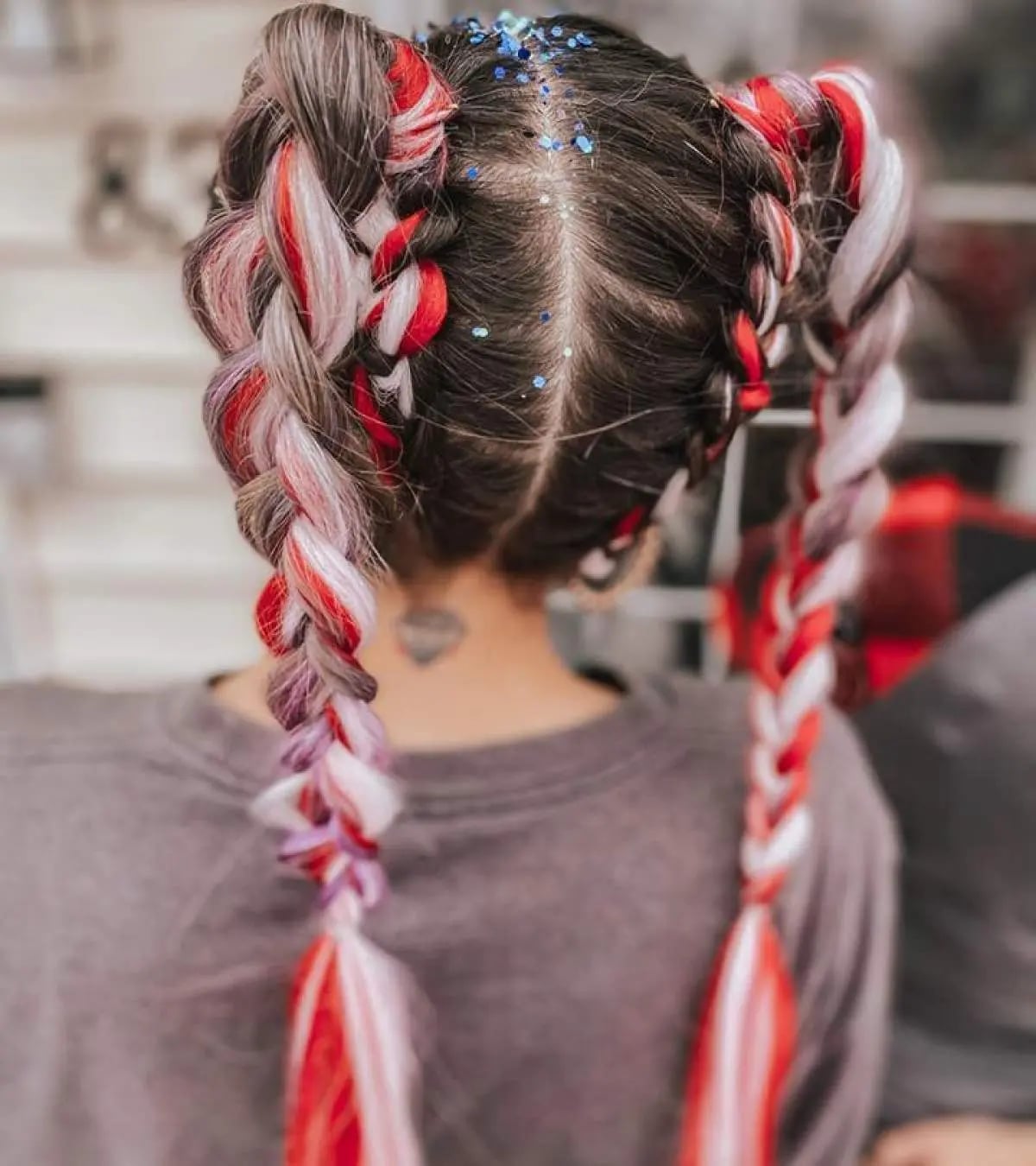
The middle part and mid-back length mean you need thick, straight hair that can hold a clean braid without slipping. Ask your stylist for: red, white, and blue Dutch braids with glitter. This is a festive, patriotic style built for summer holidays, team events, or any occasion that calls for a little sparkle. Apply the glitter sparingly so it reads as a detail, not a distraction. A gentle shampoo will lift the glitter without stripping the color. Plan a trim every 10 to 12 weeks to keep the braid ends neat and the color fresh.
Slicked Back High Blonde Bun

Can a bun hold through a full game without slipping? This one does, thanks to thick, straight blonde hair pulled taut into a high, tight shape with no visible parting or bangs. Ask your stylist for: slicked back high bun. The clean finish works best on shoulder-length or longer hair, and a strong hold gel or pomade keeps every strand in place from warm-ups to the final pitch. A trim every 8 to 10 weeks prevents the ends from fraying and keeps the bun compact.
Braided Ponytail With Bubble Detail, Mid-Back
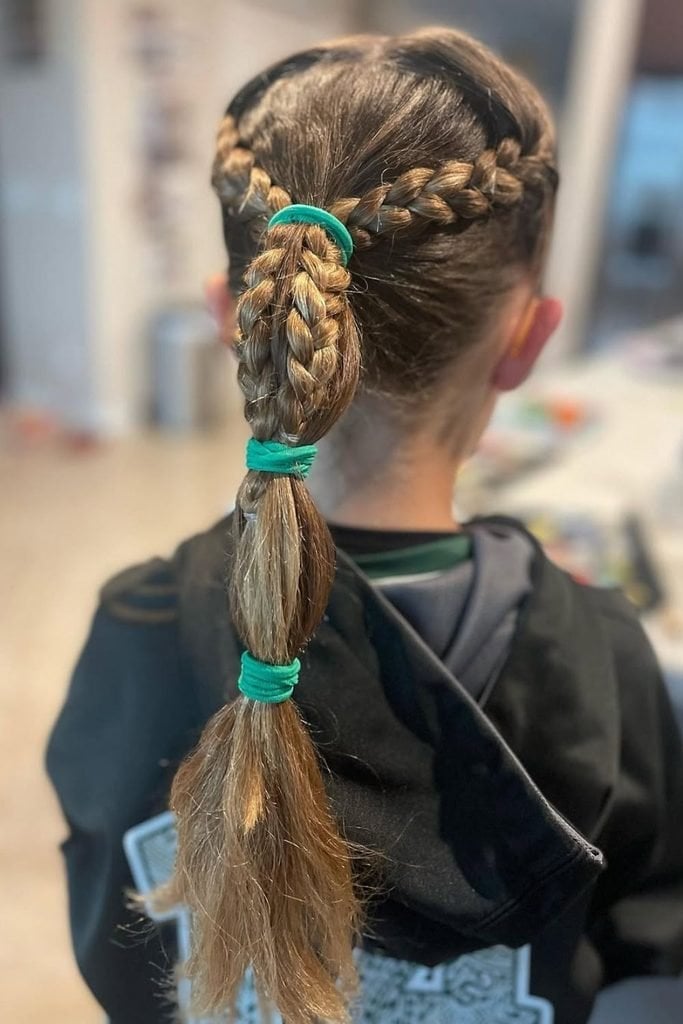
What makes this ponytail work is the interplay between a braided base and bubble sections that create rounded volume along the length. Thick, wavy blonde-highlighted hair extends to mid-back with a middle part, and the bubbles break up the ponytail so it never looks like one heavy slab of hair. Ask your stylist for: braided ponytail with bubble sections. This is a salon-level look: the braid requires even tension, and the bubbles need precise elastic placement to hold their shape. At home, you can approximate it with small clear elastics and gentle tugging at each section. A trim every 8 to 10 weeks keeps the ends healthy enough for the detail to remain clean.
Fine Hair High Ponytail With Face-Framing

The trick is that fine hair often shows its density at the elastic, so those face-framing layers help disguise a thin ponytail base while adding movement. Ask your stylist for: high ponytail with face-framing pieces for fine hair. The honest drawback: fine hair can look flat quickly after a few innings, and the ponytail may need a quick readjustment. A volumizing spray at the roots before drying helps, but this style works best for shorter games or off-field events. Trim every 6 to 8 weeks to keep the face-framing pieces from looking ragged.
Textured Ash Blonde Ponytail
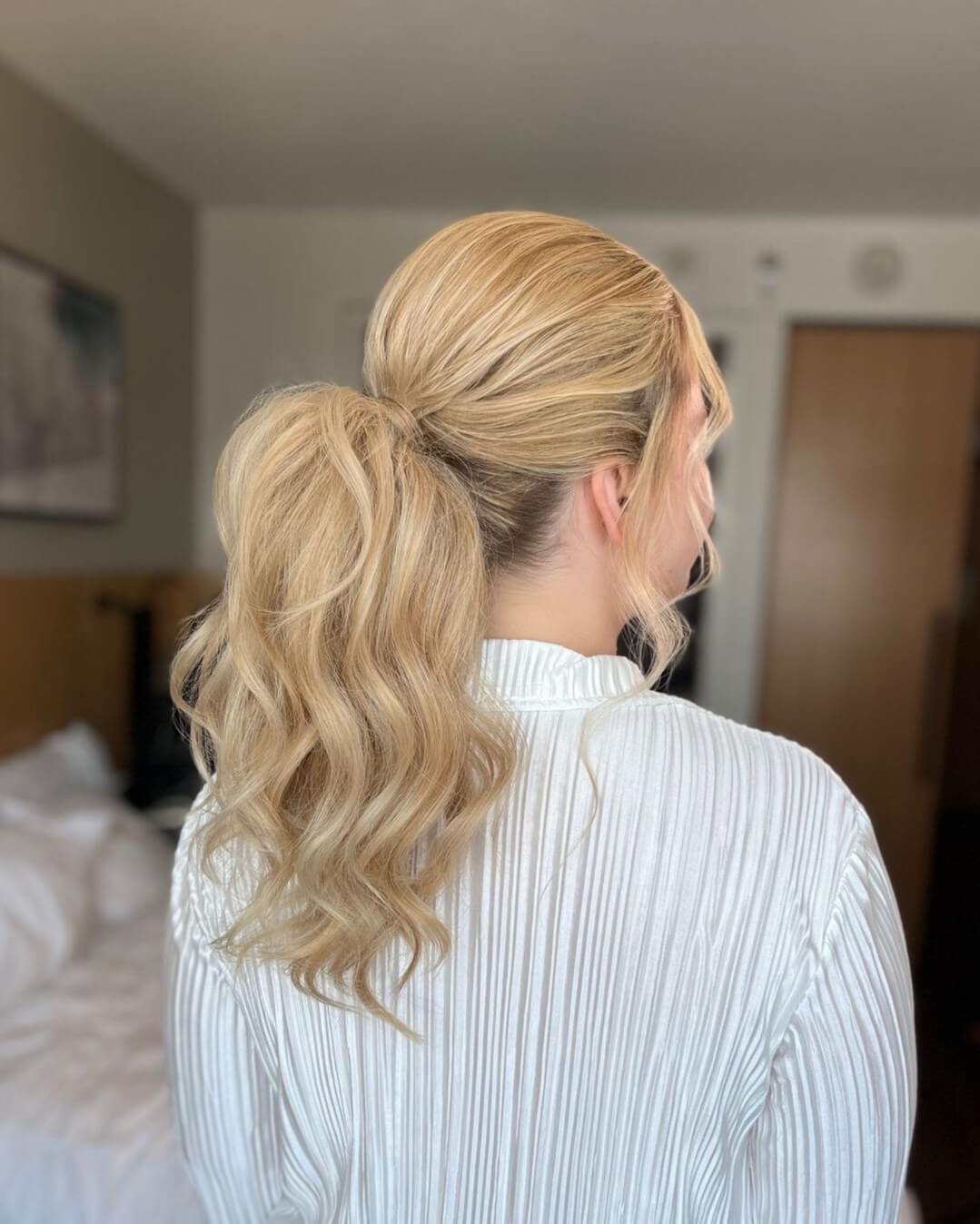
How do you ask for a ponytail that has volume without looking stiff? High placement, loose waves, and wispy side-swept bangs that blend into the length. This ash blonde style with subtle highlights sits at mid-back on fine to medium density hair, and the texture comes from a texturizing spray and light scrunching rather than heat alone. Ask your stylist for: high ponytail with loose waves and wispy side bangs. The side part and bangs soften round or long faces, and the waves keep the ponytail from reading as too polished for the field. A trim every 6 to 8 weeks maintains the shape of the bangs and prevents the ends from splitting.
Final Thoughts
For fine or thin hair, reach for styles that add visual bulk, like bubble ponytails or braids you gently pull apart for width. Thick hair benefits from secure multi-braid styles or a tight bun to manage volume without weight pulling at your scalp.
- Trim split ends every 6-8 weeks to maintain braid health.
- Use a silk scarf or bonnet at night to preserve braid texture and prevent frizz.
- Deep condition hair weekly to keep thick, textured hair manageable and prevent breakage.
- Avoid excessive heat styling on braided sections to prevent damage.
Look good, play well, and feel confident on the field.