

The pixie cut has shed its old reputation as a one-and-done chop. These days, it is a category of its own, with variations that hinge on texture, fringe weight, and how the top sits. Lived-in color and soft face-framing layers have replaced rigid, flat-ironed shapes.
This collection of 22 Pixie Hairstyles covers the range from five-minute air-dried finishes to salon-only slicked undercuts. It solves the common struggles of fine hair that needs volume, a grow-out line that shows too fast, and a fringe that refuses to cooperate. Each idea is built around a real starting point, whether your hair is curly, wavy, straight, or coily.
Textured Black Pixie With Choppy Layers
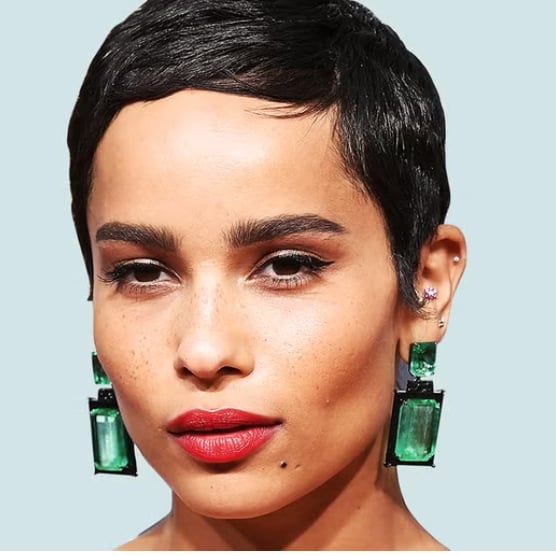
A textured black pixie is not a single shape but a system of short, choppy layers built to create deliberate chaos on top. The thick, straight hair ends just above the ear, with a side parting that breaks up the line. This design works best for oval or square face shapes and hair that holds its own weight. Ask your stylist for: short choppy pixie with textured top. Apply a texturizing paste to damp hair and tousle for a piecey finish; trim every six weeks.
Textured Dark Brown Pixie With Short Bangs
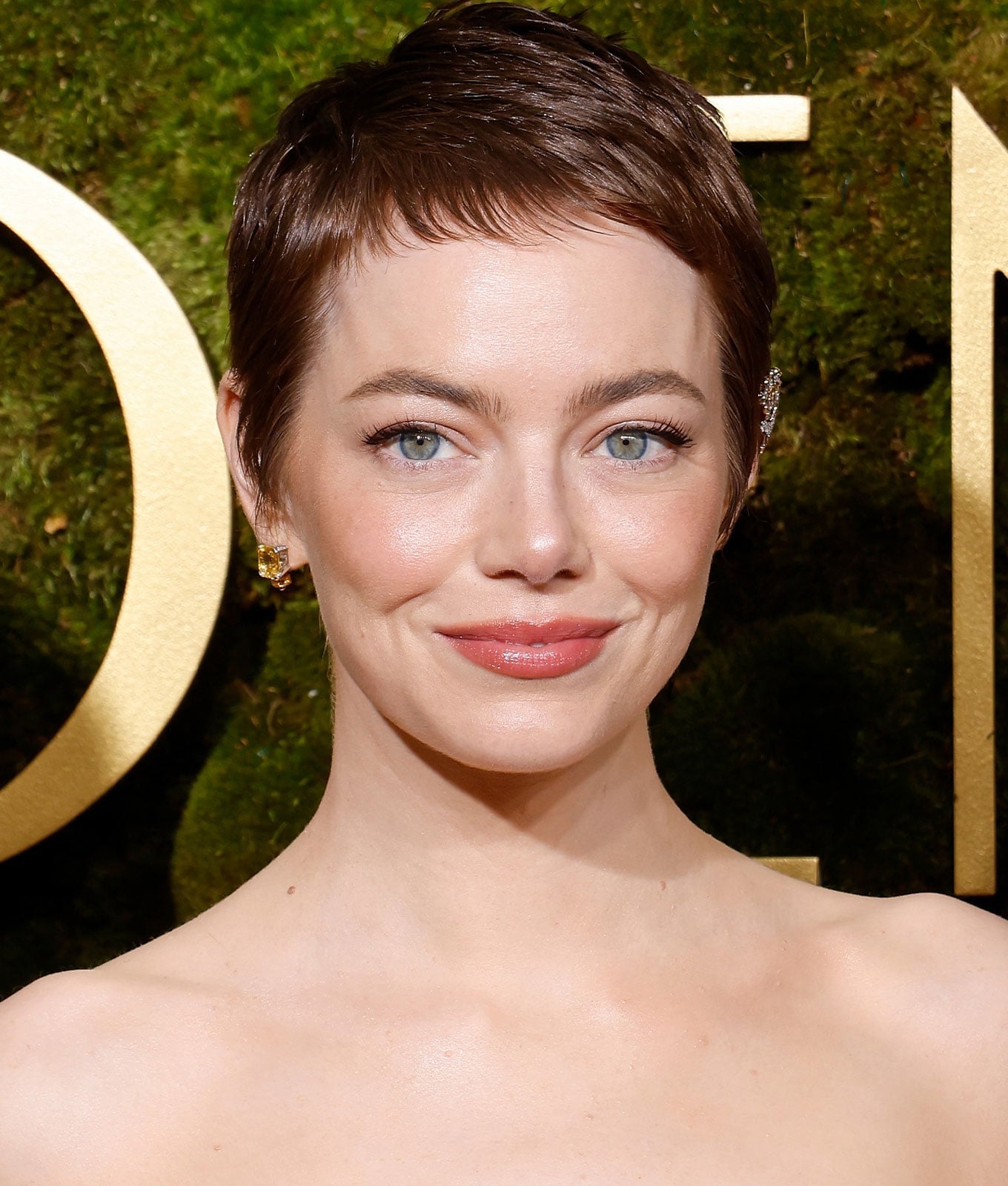
Start with a dark brown pixie cut to ear length, then add short bangs that blend into the sides. A middle part keeps the shape balanced. Medium-density, straight hair holds the definition best, and a round face benefits from the vertical lines. Ask your stylist for: textured dark brown pixie with short bangs and middle part. Use a matte wax to define individual strands; trim every five to seven weeks.
Classic Light Brown Pixie With Smooth Fringe
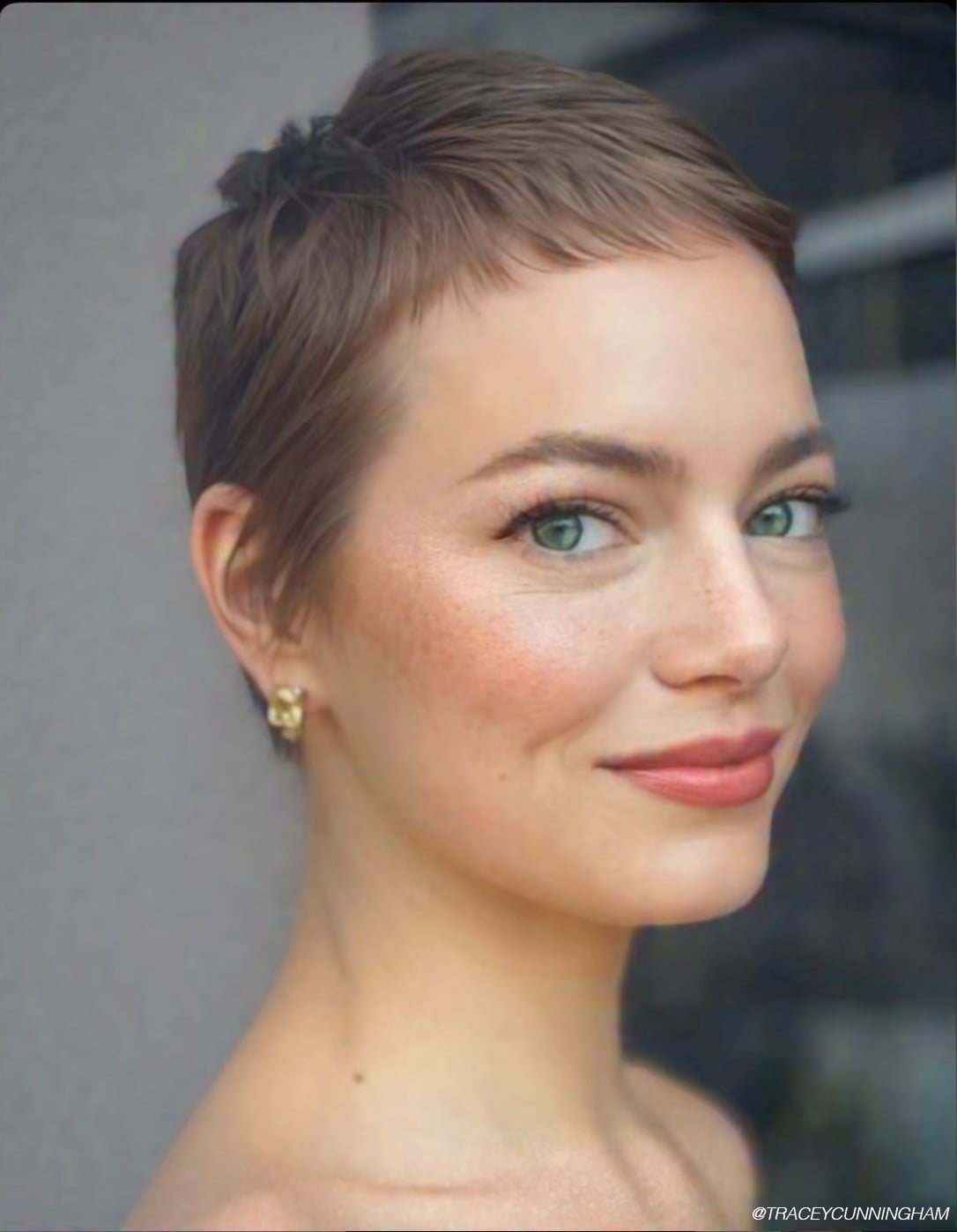
Fine, straight hair tends to lie flat, so a classic pixie with a smooth short fringe plays to its strengths instead of fighting them. The clean lines and middle parting give a polished finish that holds without product fuss. Oval and heart-shaped faces get the most out of the balanced proportions. Ask your stylist for: classic light brown pixie with smooth short fringe. Apply a smoothing serum for a glossy finish and use a fine-tooth comb to keep the fringe in place; trim every six weeks.
Light Blonde Pixie With Textured Top
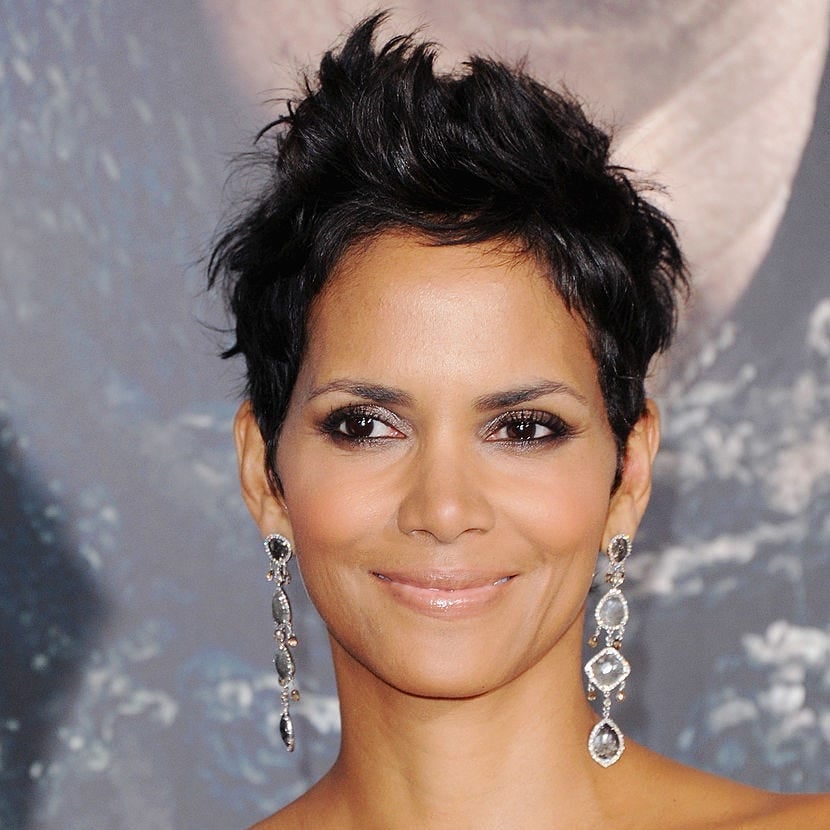
Unlike a pixie with bangs, this version leaves the forehead bare and puts all the attention on the textured top. Fine, wavy hair at ear length gets a volume boost from the layered crown and a middle parting that adds height. It softens a round face without hiding it behind fringe. Ask your stylist for: light blonde pixie with volume on top, no bangs. Apply product to the roots and tousle with fingers for definition; trim every five to seven weeks.
Textured Dark Brown Curly Pixie
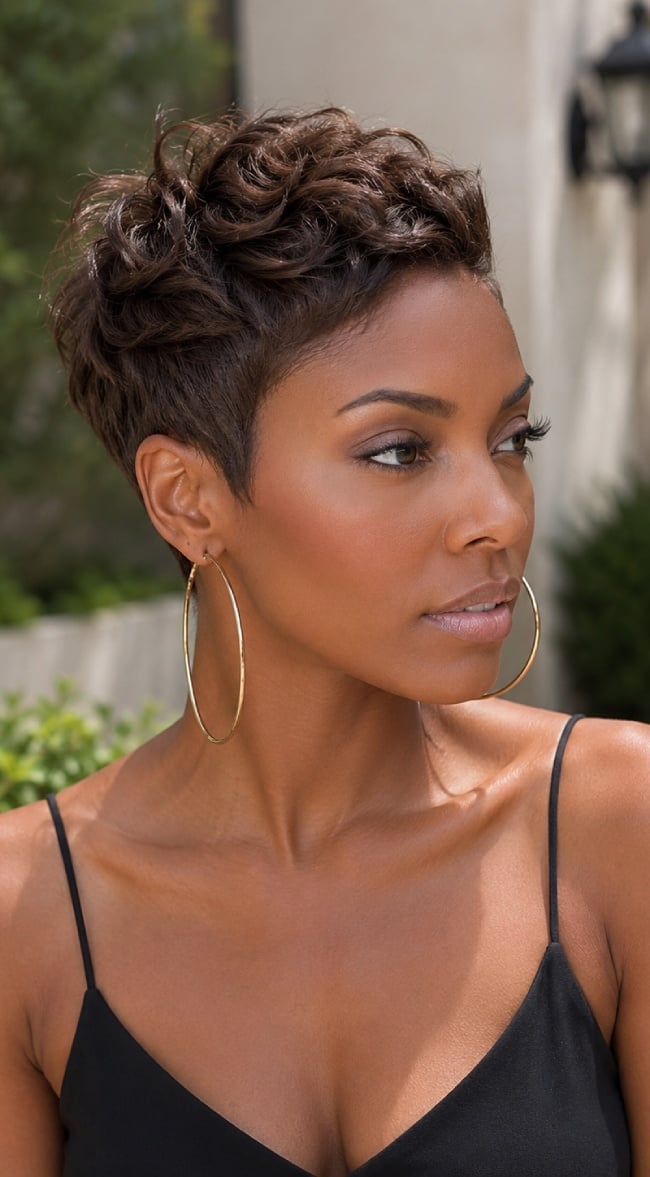
A curly pixie relies on strategic layering to manage thick texture. The dark brown hair has subtle highlights, and a side parting lets the natural curl pattern dictate the shape. This cut adds defined volume to round or oval faces without looking bulky. Ask your stylist for: textured dark brown curly pixie with subtle highlights. Apply a curl-defining cream to damp hair and air dry or diffuse; trim every six to eight weeks.
Classic Blonde Pixie With Swept Bangs
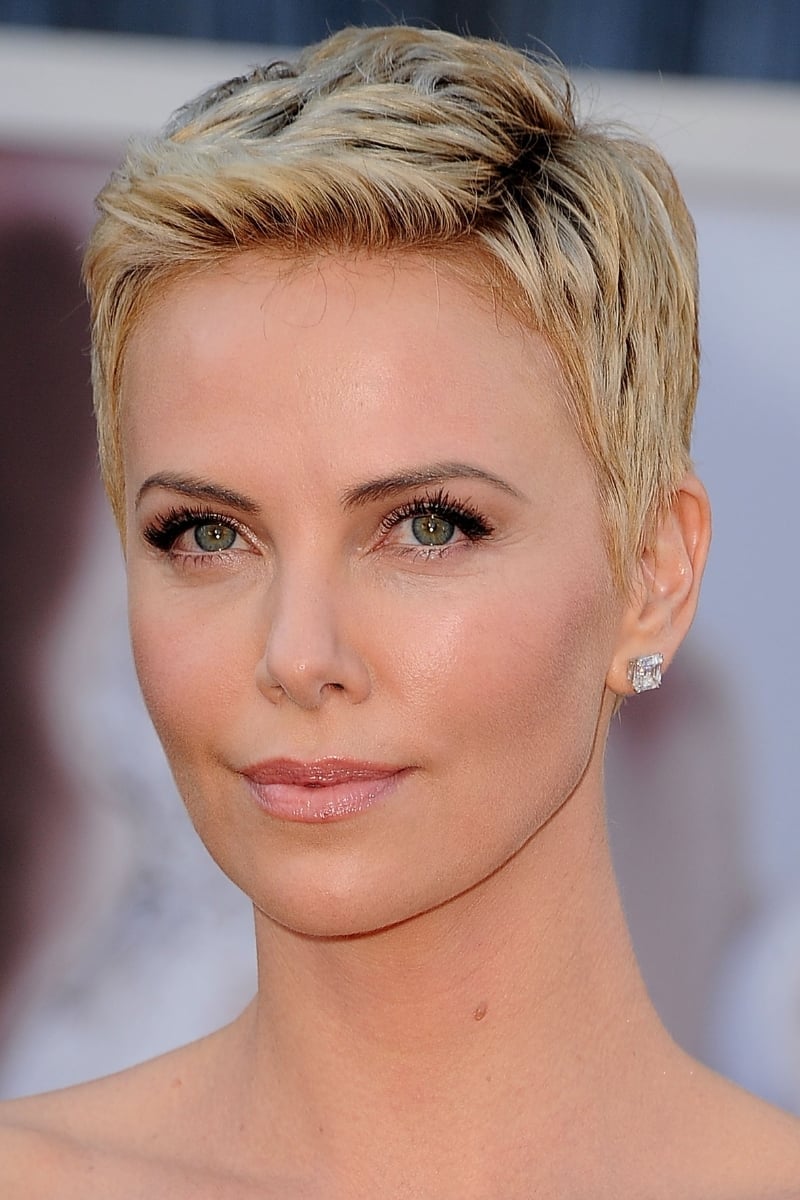
A classic blonde pixie cut relies on lifted pieces on top and short bangs swept forward to create volume without length. Fine, straight hair in a very short cut holds this shape best, since the texture won’t weigh down the crown. Ask your stylist for a classic blonde pixie with swept-forward bangs and volume. The DIY-friendly part is the fringe: a good pair of shears and a steady hand let you trim it between appointments, though the overall cut needs a salon refresh every four to six weeks.
Platinum Blonde Pixie With Choppy Fringe
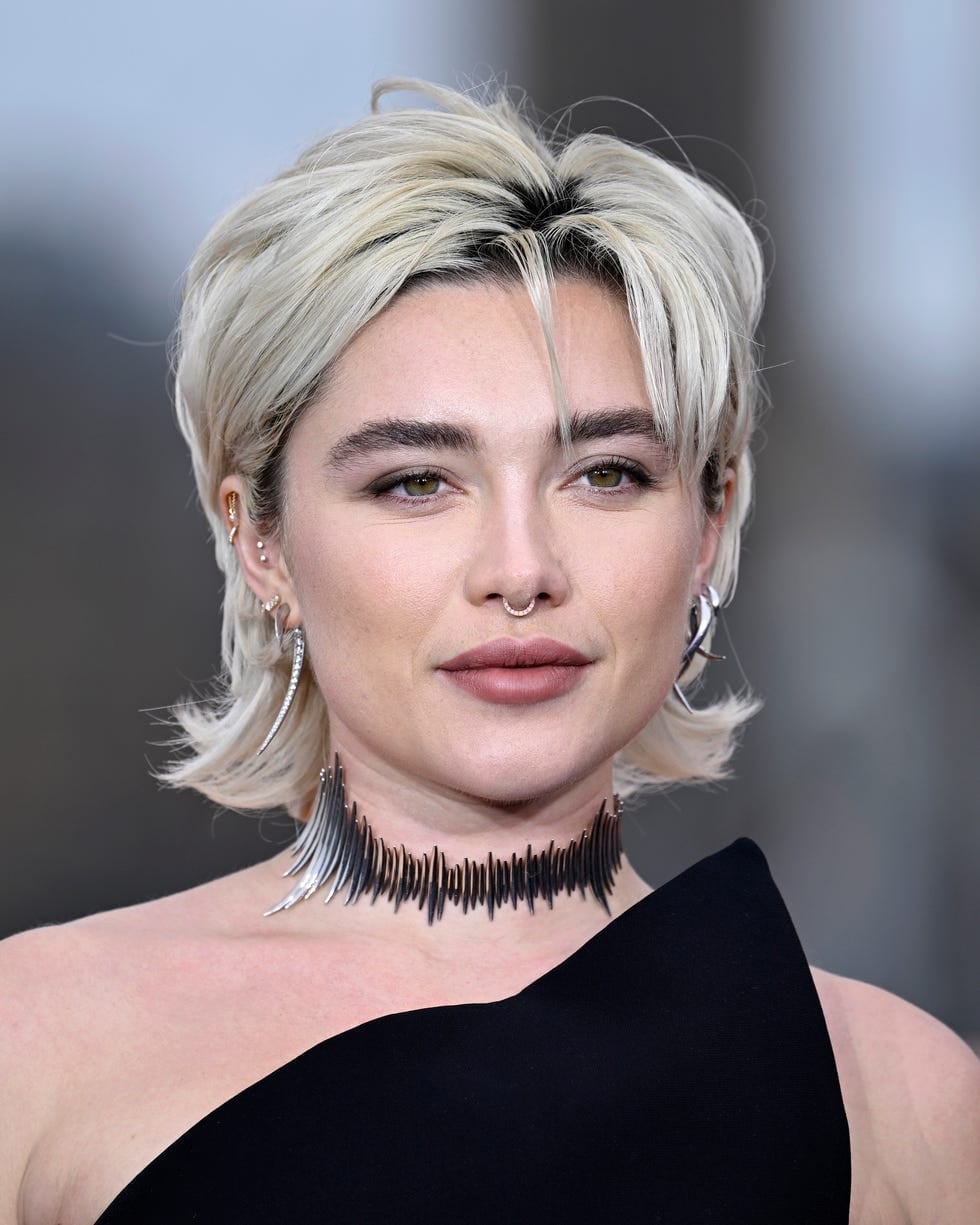
How short is too short for a choppy fringe? The mistake is cutting the front pieces so they sit above the brow bone, turning an intentional edge into a harsh line. A platinum blonde pixie with short, piecey bangs should land just below the eyebrows, with the cut cropped close to the ears and nape. Ask your stylist for a platinum blonde pixie with choppy fringe. Once those bangs pass the nose, they lose their definition and need a trim every four weeks.
Platinum Blonde Pixie With Dark Roots
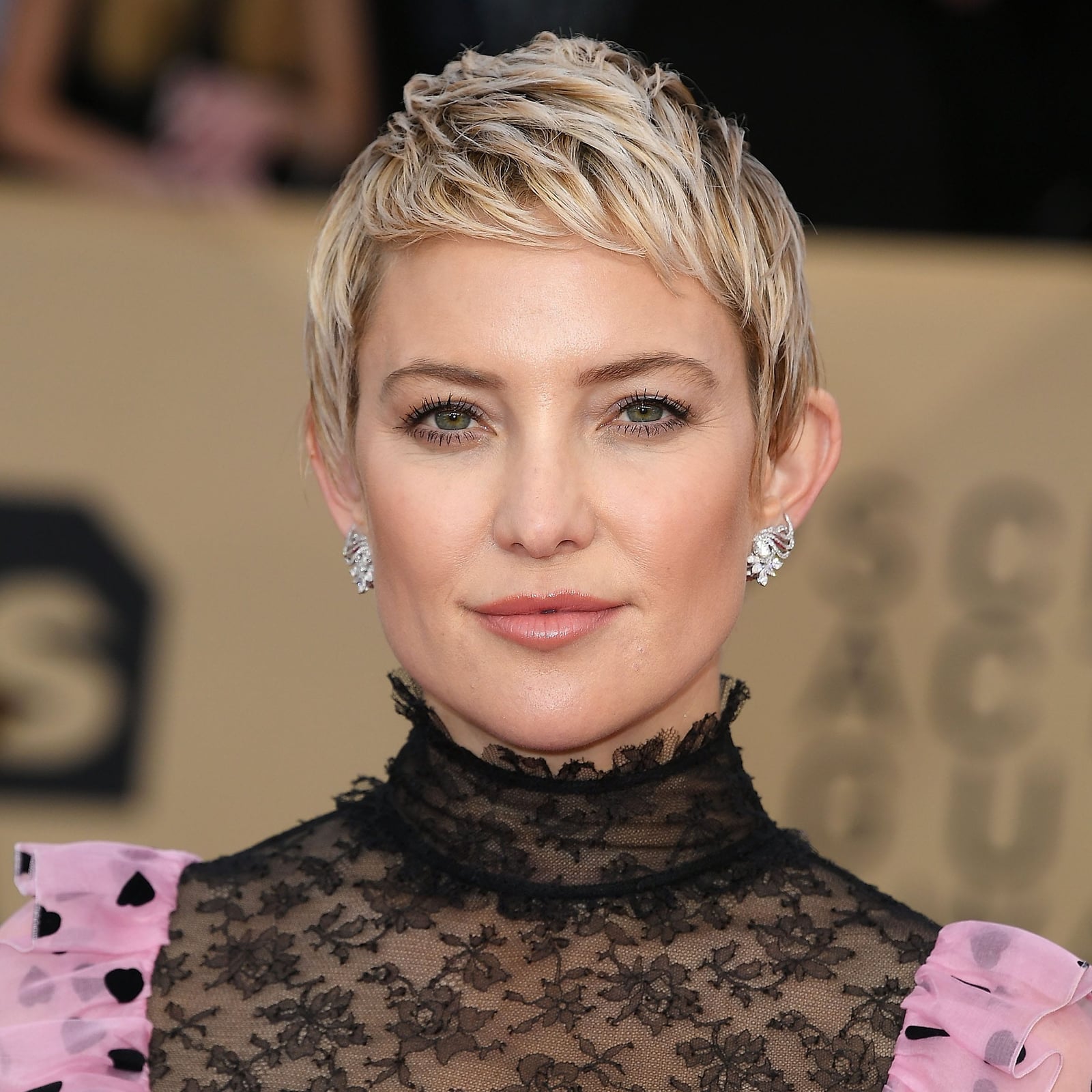
The contrast between platinum blonde ends and dark roots creates a grown-out effect, but only if the line between them stays crisp. Fine, wavy hair at ear length takes well to this color placement, since the texture adds movement around the side-swept bangs. Ask your colorist for a platinum blonde pixie with dark roots and side-swept bangs. A texture spray at the roots lifts the crown, and a toning appointment keeps the blonde from turning brassy.
Polished Dark Brown Pixie With Short Bangs, ухо
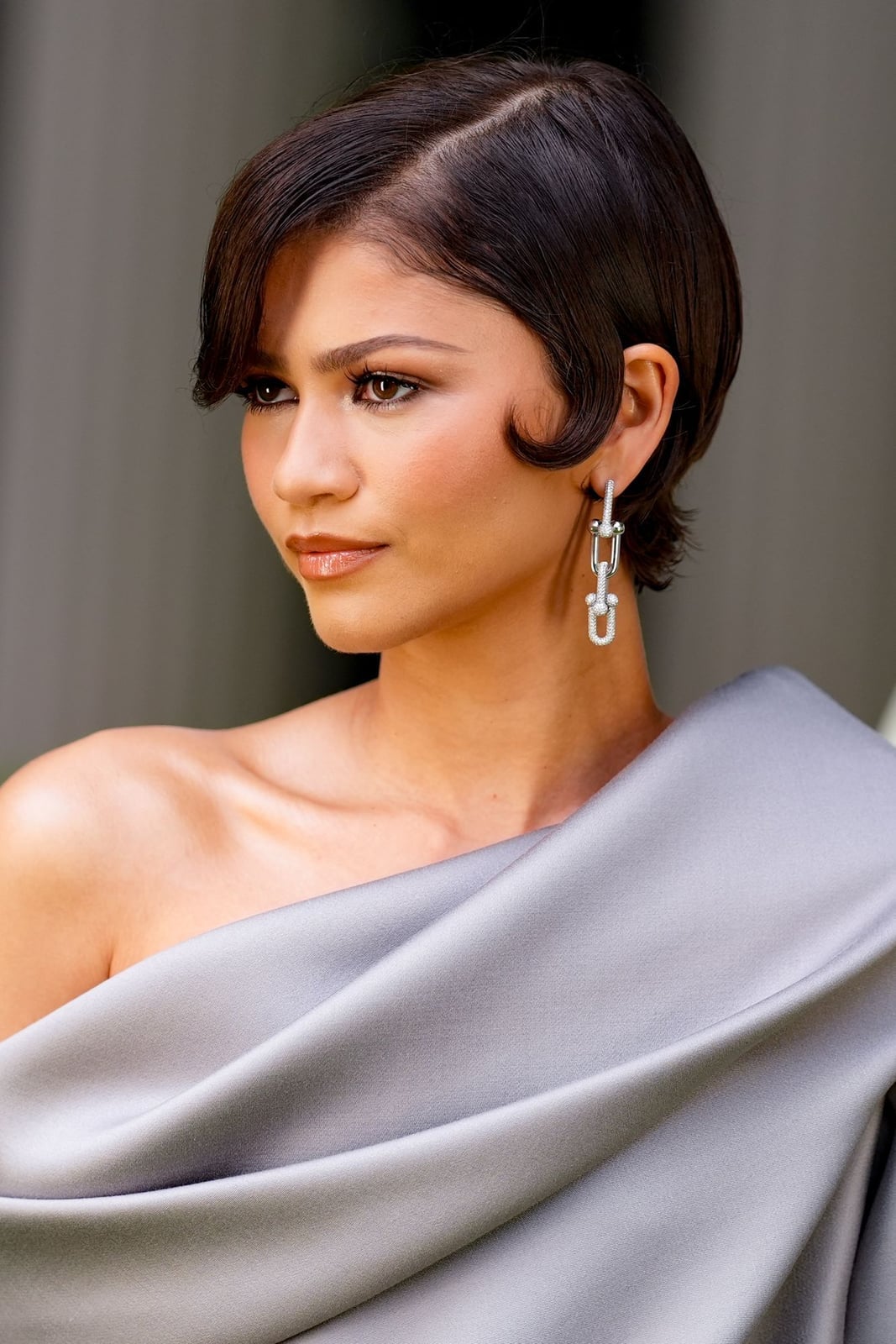
A smooth, dark brown pixie with a middle part and short bangs demands a precise cut and a glossy finish. Fine, straight hair of ear length delivers this look best, since coarser textures tend to resist the sleek line. Ask your stylist for a smooth dark brown pixie with short bangs. The polished effect comes from the middle part and the even length around the ears, which requires a trim every six weeks to keep the shape intact.
Textured Dark Brown Wavy Pixie, ухо
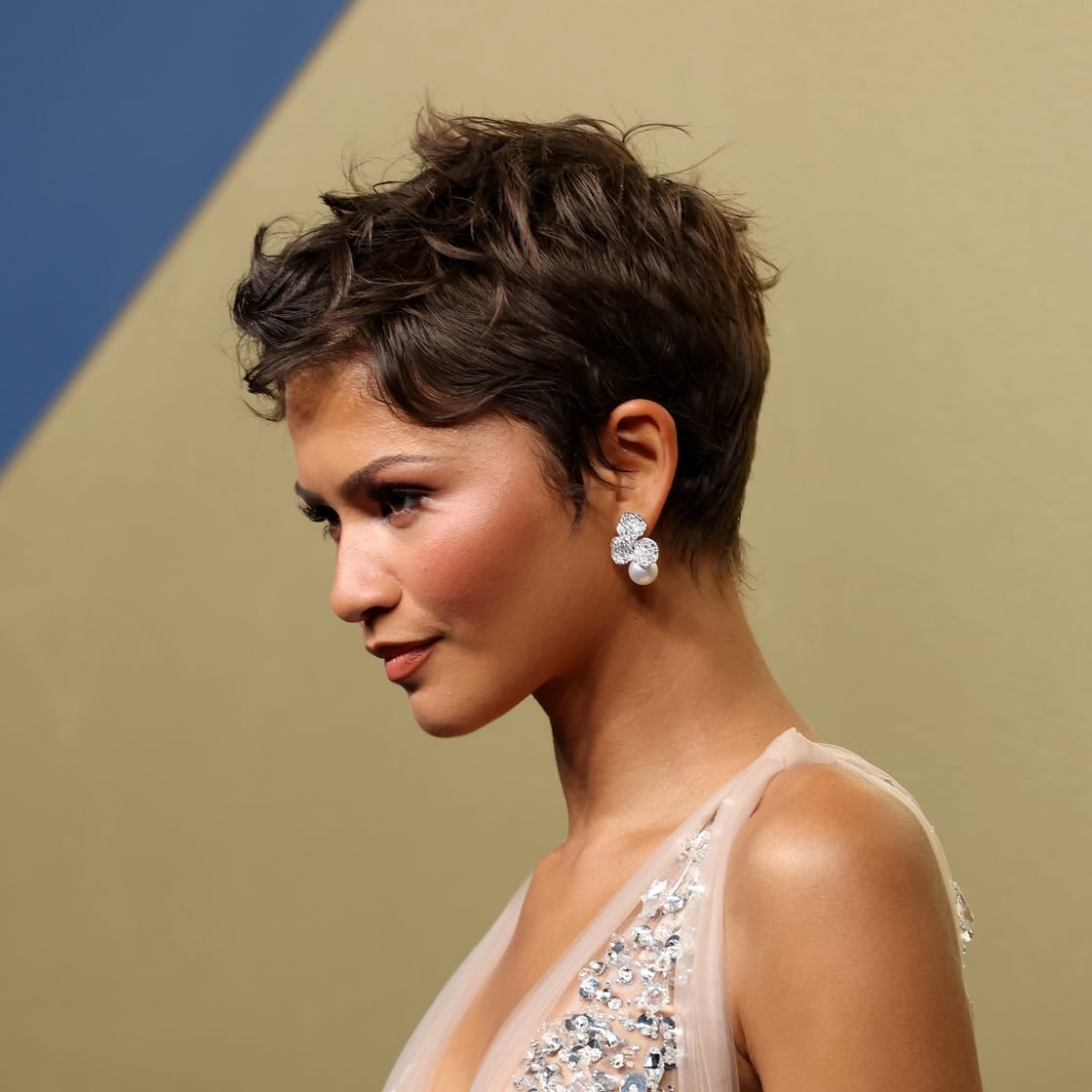
What should you say to get a deliberately messy pixie that still reads as planned? Ask for a textured dark brown wavy pixie with piecey bangs, and specify that you want the crown cut with shears for a softer finish. The natural wave in fine, ear-length hair does most of the work here, so the stylist should avoid over-texturizing the ends. A sea salt spray scrunched in while the hair is damp enhances the tousled look without heat, and a trim every five to seven weeks stops the shape from losing its definition.
Wispy Dark Brown Pixie With Air-Dried Finish
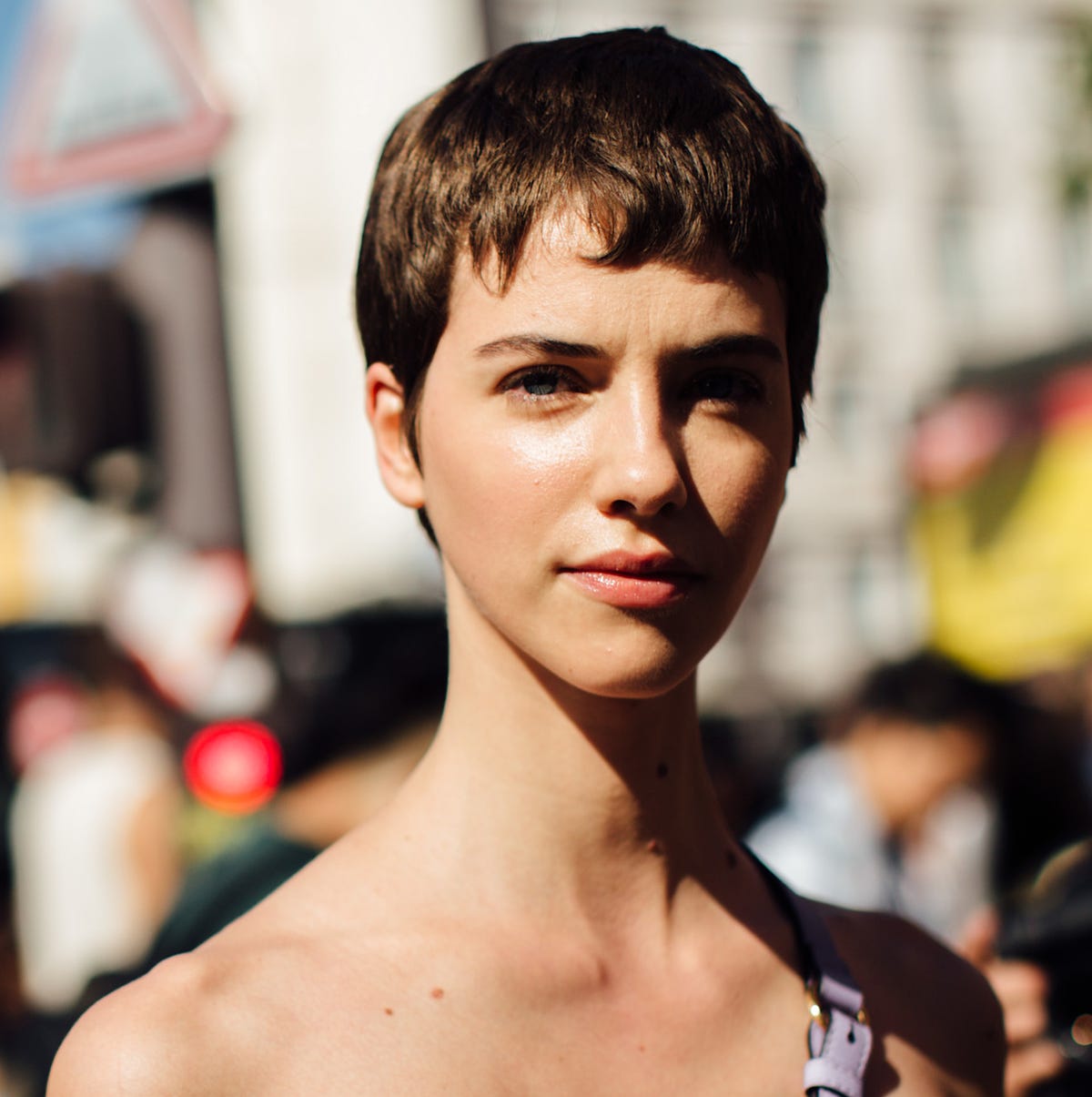
The design hinges on what you don’t do: no dryer, no brush, just damp hair and gravity. The wispy bangs graze the forehead while the fine, straight texture dries into a soft, slightly longer top that stays put without product. Fine, straight hair at ear length works best here; thicker textures tend to fall flat without heat. Ask your stylist for a dark brown pixie with wispy bangs and an air-dried finish. A lightweight mousse on damp hair and a quick tousle with fingers is all it takes, and a trim every six weeks keeps the shape from disappearing.
Tousled Brown Pixie With Highlighted Fringe
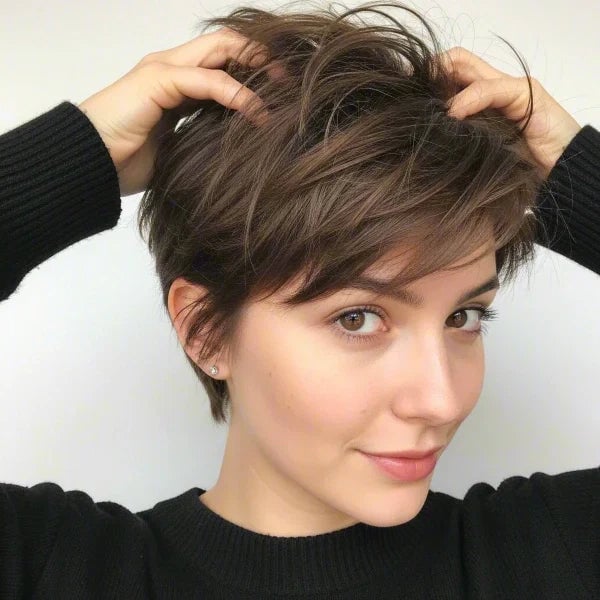
A middle parting on a pixie is rare, and it works here because the short fringe and ear-length cut have enough density to hold the division. The subtle highlights lift the brown base without a full color commitment, adding dimension that catches the eye. Wavy, thick hair at ear length responds best to this cut; the texture gives the tousled styling something to grip. Ask your colorist for a tousled brown pixie with subtle highlights and a short fringe. A texturizing spray and a scrunch revive the shape between washes, and a trim every five to seven weeks keeps the fringe from overtaking the part.
Layered Light Blonde Pixie With Volume
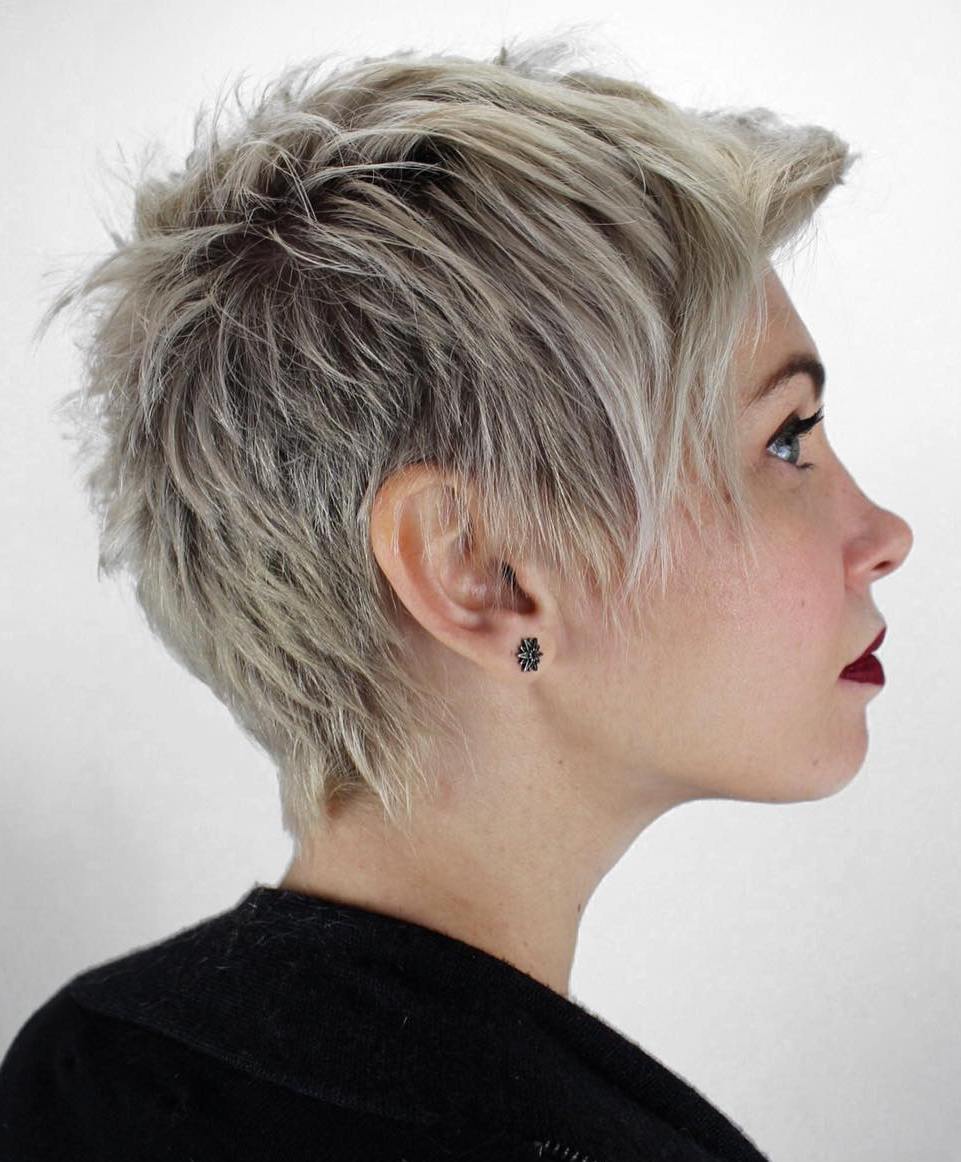
The side view reveals the architecture: internal layers cut into the wavy, thick texture create lift at the crown without making the ear-length silhouette look top-heavy. No bangs and a middle part keep the focus on the movement, which is where the light blonde color earns its keep. Wavy hair at ear length with natural density is the ideal starting point; fine hair lacks the body to hold the internal structure. Ask your stylist for a layered light blonde pixie with a tousled finish. A volumizing mousse applied to damp roots and blown upward builds the height, and a trim every six to eight weeks maintains the layer distribution.
Textured Dark Wavy Pixie
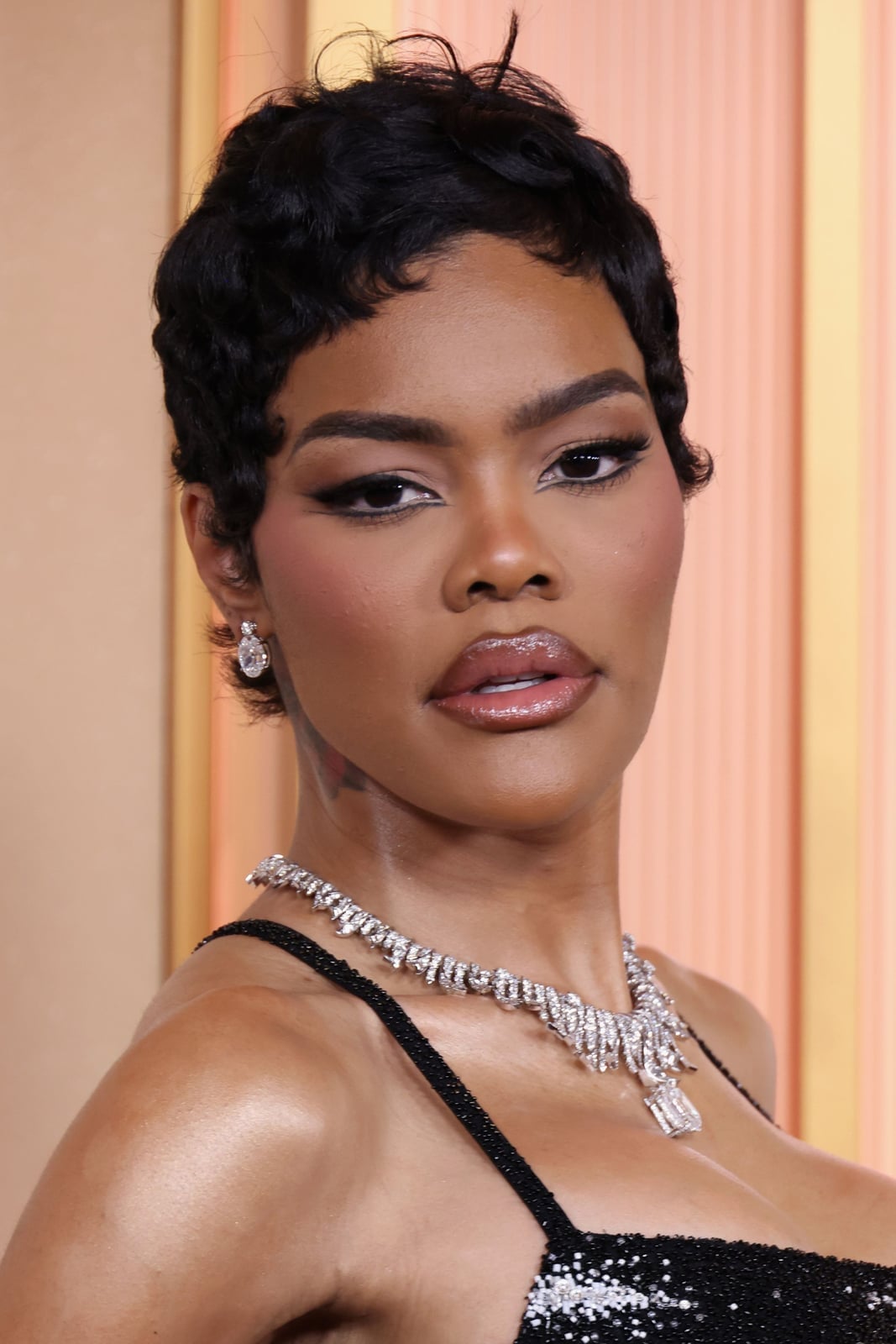
Does your natural curl pattern need a cut that works with it, not against it? This dense, curly texture is shaped into a short pixie with a middle part and short bangs that end at the ear, letting each wave stack on the next without fighting for space. The dark color reads as one solid block, which emphasizes the texture rather than the shade. Dense, curly hair at ear length is the match; loose waves lack the structure to hold the bangs. Ask your stylist for a textured dark wavy pixie with short bangs. A curl-defining cream and a diffuser on low heat enhance the natural pattern, and a trim every six to eight weeks prevents the shape from widening.
Tousled Dark Brown Pixie With Face-Framing Fringe
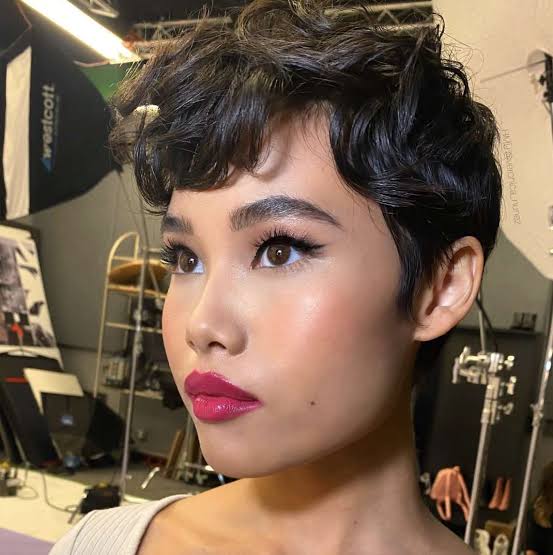
It looks like the cousin of the wispy pixie, but the side part and thicker texture give it a different personality. The face-framing fringe softens the ear-length cut, and the visible waves keep the dark brown from reading as flat. The trade-off: that tousled finish can tip into messy if the layers are too long or the texture spray is applied on dry hair. Thick, wavy hair at ear length works best; fine hair tends to look stringy. Ask your stylist for a textured dark brown pixie with a face-framing fringe. A texturizing spray on damp hair, tousled with fingers and left to air dry, gives the lived-in finish that stays all day.
Wispy Light Pink Pixie With Messy Texture
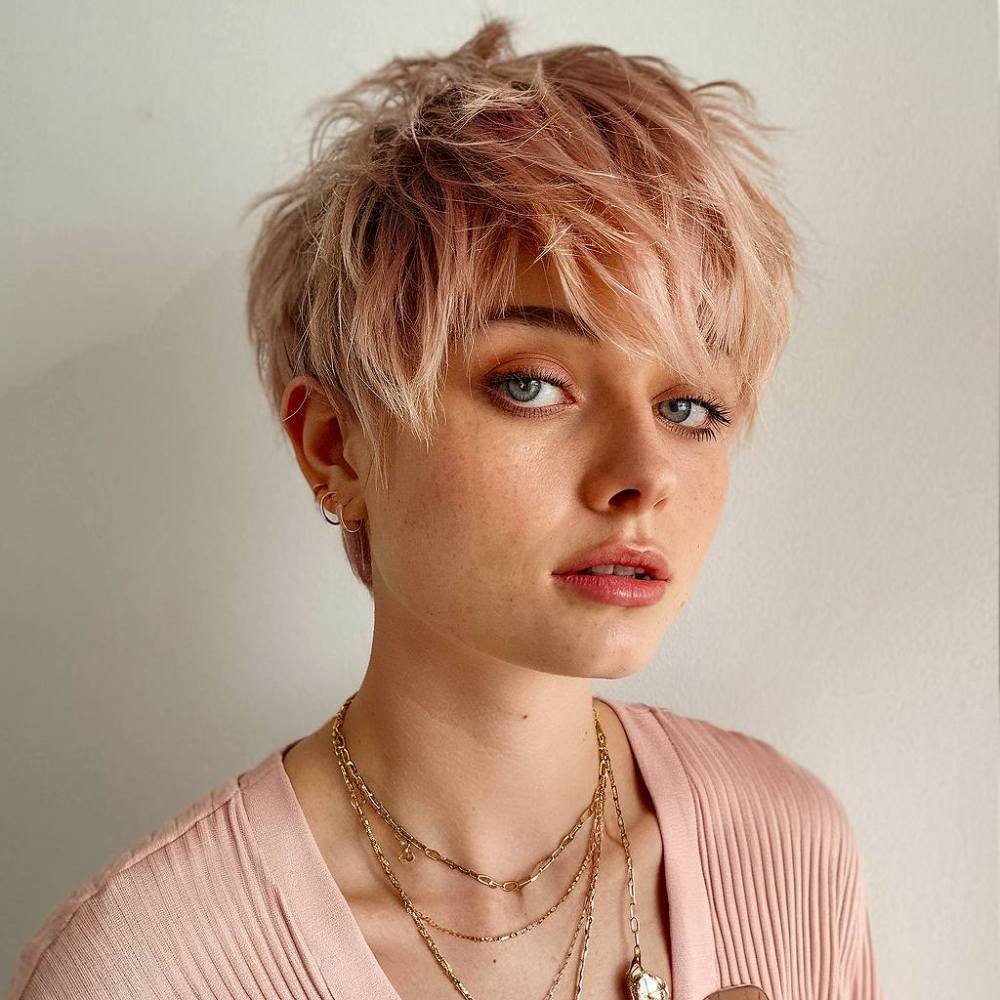
A light pink base with subtle lighter highlights turns a wispy, full-fringed pixie into something that looks like it belongs at a festival, not a desk. Fine, wavy hair at ear length holds the tousled texture best, since the strands are light enough to stay lifted without product weighing them down. Ask your colorist for: wispy light pink pixie with full fringe. A dry shampoo refreshes the volume between washes, and the pink needs a toning treatment every four to six weeks to keep the shade from drifting toward peach.
Smooth Platinum Blonde Pixie
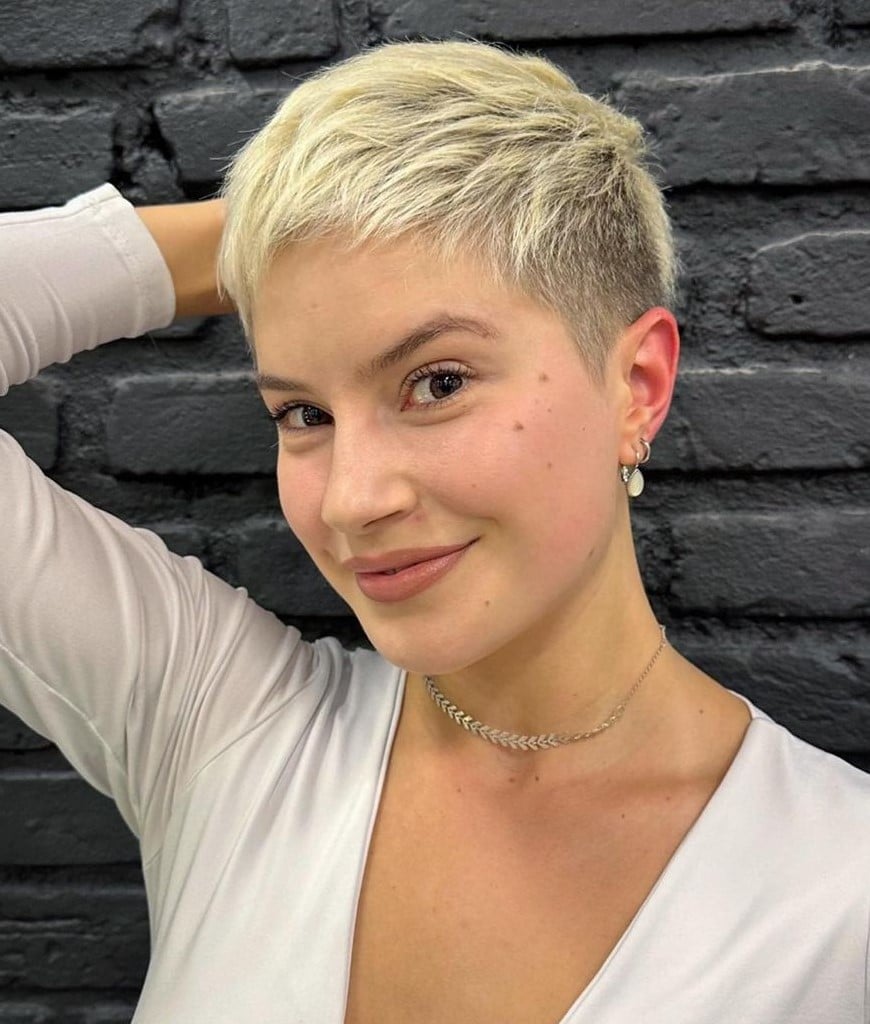
A longer top and short sides make this platinum blonde pixie read as polished. The lack of bangs keeps the shape clean, which works best on fine, straight hair that can lie flat without resistance. Ask your stylist for: smooth platinum blonde pixie with longer top. A flat iron and a smoothing cream are the only tools required, and the cut needs a trim every four to six weeks to keep the silhouette sharp.
Sharp Black Pixie With Blunt Fringe
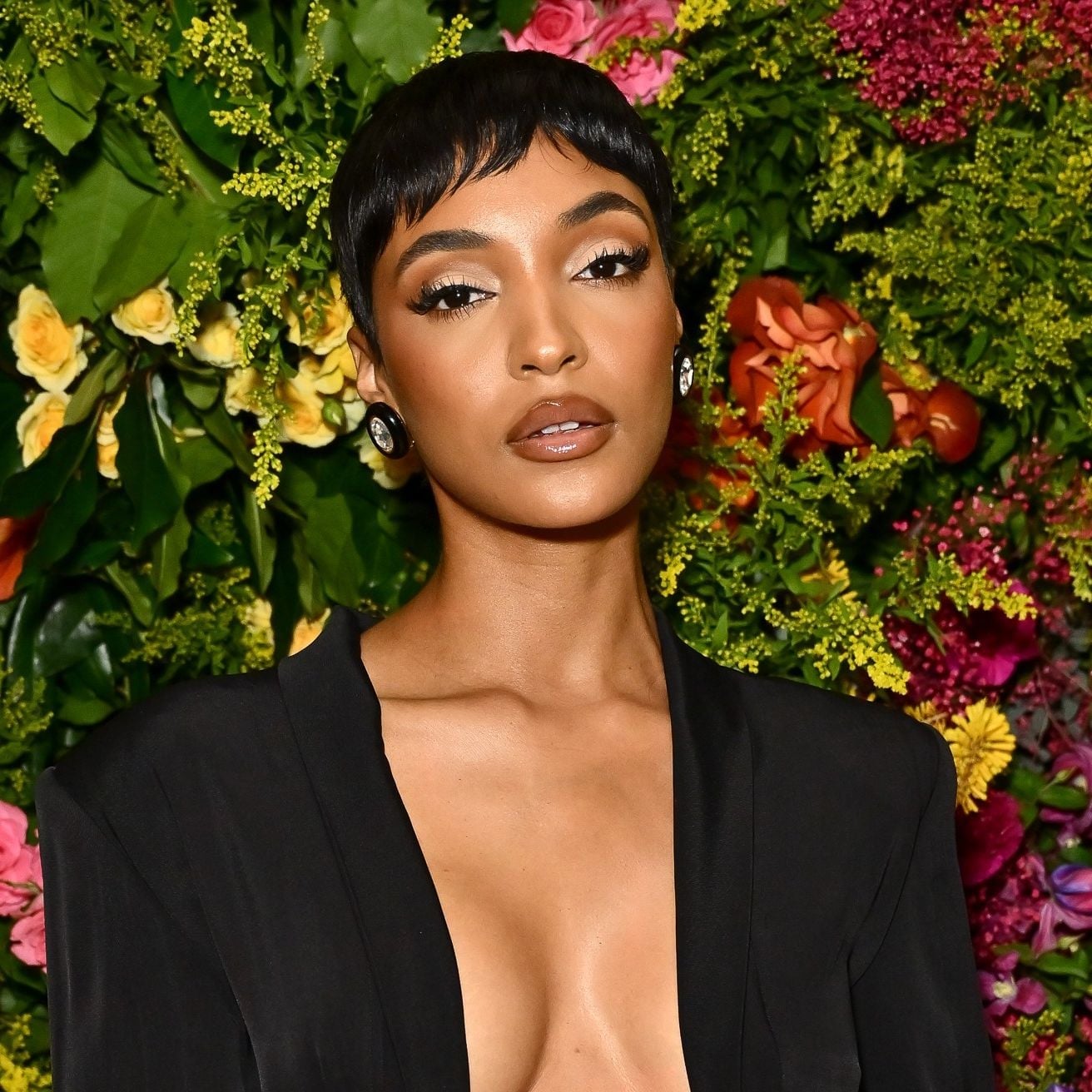
Can a haircut look like it means business? This black pixie with a blunt fringe that sits just above the brows does exactly that. Thick, straight hair at ear length gives the fringe its weight and the sides their precision. Ask your stylist for: sharp black pixie with blunt fringe. A straightening iron and a strong-hold hairspray lock in the graphic lines, and you will want a trim every four to six weeks to keep the fringe from grazing your lashes.
Black Pixie With Vintage Finger Waves
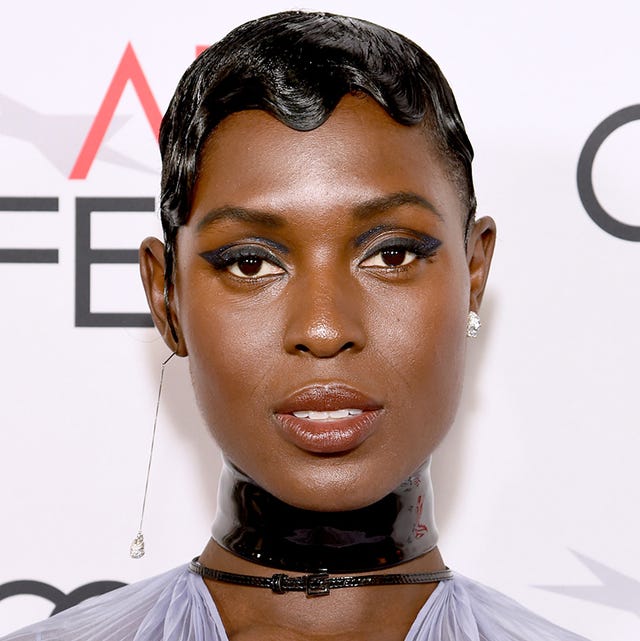
Finger waves on a black pixie are a different animal from the messy, textured styles that dominate the category. The waves require fine, straight hair that will hold a set, and the ear-length cut keeps the pattern close to the head. Ask your stylist for: black pixie with finger waves. A strong-hold gel and a fine-tooth comb are essential for shaping each wave, and the cut holds its form for six to eight weeks between trims because the pattern hides growth.
Sleek Dark Brown Pixie With Deep Side Part
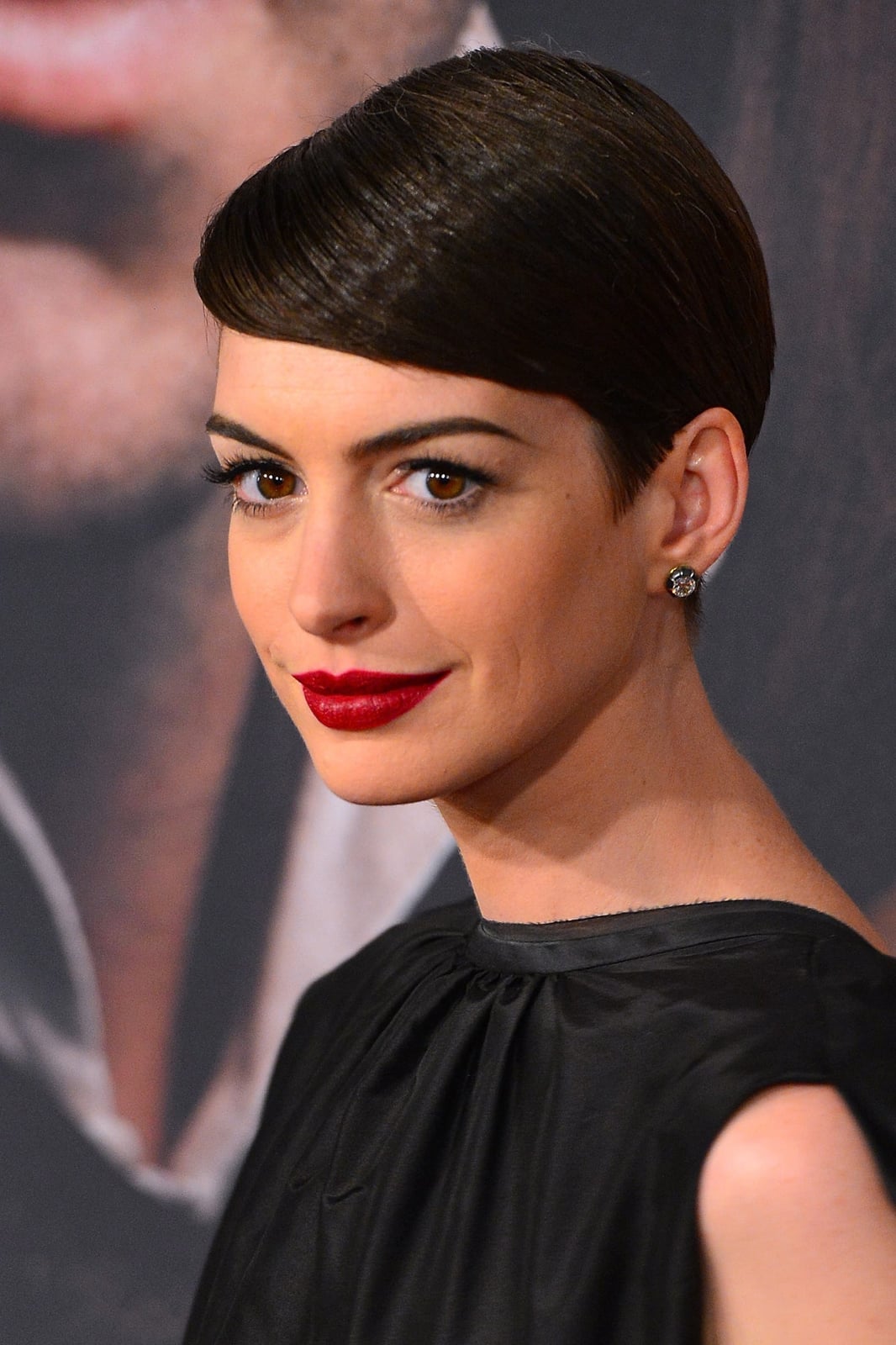
A deep side part and slicked-back styling turn a dark brown pixie into something appropriate for a boardroom or a dinner reservation. Fine, straight hair at ear length takes the slick finish best, since coarser textures tend to push the part out of alignment. Ask your stylist for: sleek dark brown pixie with deep side part. A smoothing serum keeps flyaways in check, and the cut requires a trim every six weeks to maintain the clean lines.
Platinum Blonde Pixie Undercut With Slicked Top
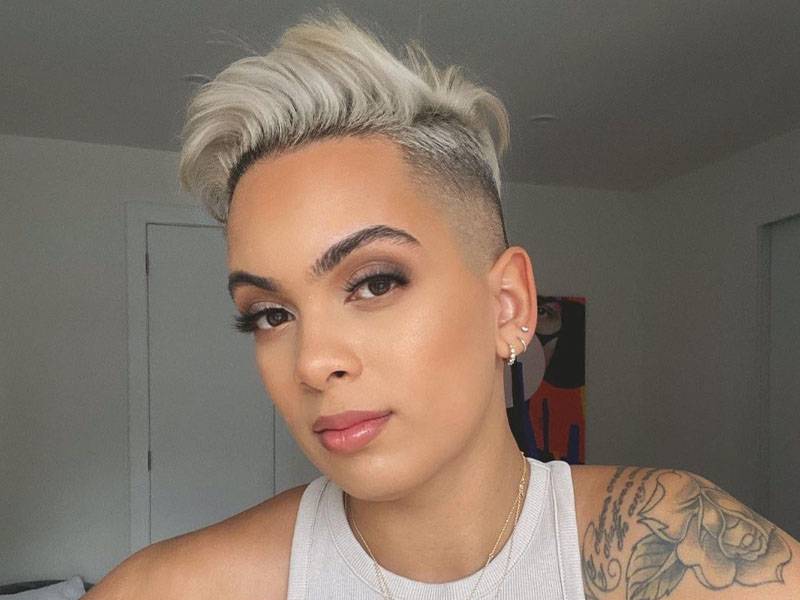
An undercut pixie is a study in contrast: shaved sides and back against a longer, platinum blonde top, slicked straight back with visible dark roots. The design works best on fine, straight hair starting at ear length, where the smooth top avoids looking unwashed. The whole thing hinges on that root shadow, which buys you about two weeks before the grow-out line becomes obvious. Ask your stylist for: pixie undercut with slicked back top. The undercut needs a trim every four to six weeks. One real drawback: the grow-out phase is awkward, with no halfway point that looks planned.
Elegant Gray Pixie With Soft Volume
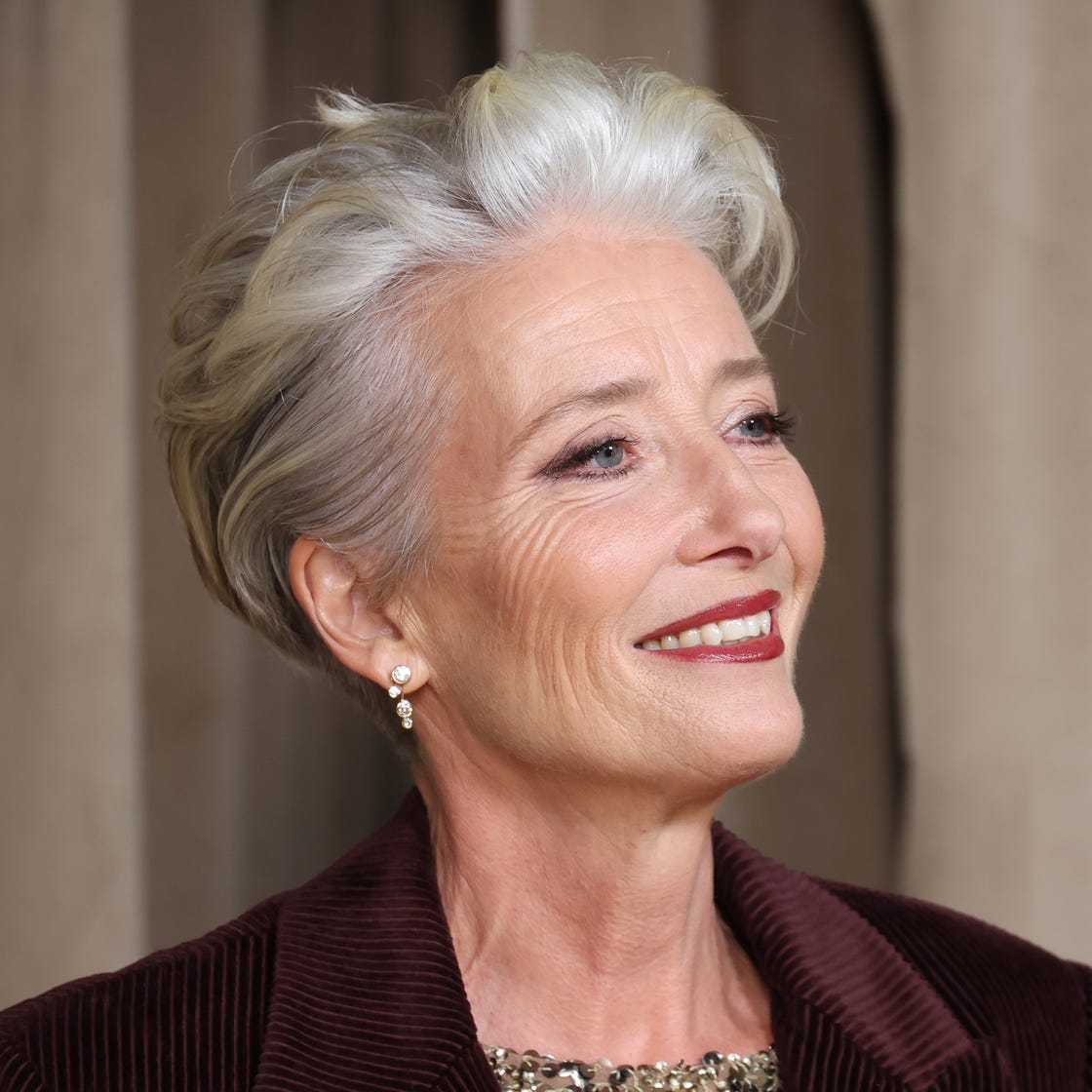
A gray pixie with soft volume and swept-back layers keeps the silhouette feminine without fussing. The side part and ear-length finish create a clean line that suits medium-density straight hair. Gray looks sophisticated when the cut is precise and the roots are maintained. Ask your colorist for: gray pixie with soft volume and swept-back layers. This style hides nothing: the shape must be cut every six weeks, and a purple shampoo used weekly to keep the tone from yellowing. This look requires almost no daily styling, just a lift at the roots with a blow-dryer.
Final Thoughts
For fine hair, keep a blunt baseline and skip heavy layers, then add texture and volume on top. For thick hair, an undercut or layered cut removes bulk and keeps the silhouette tidy. Your maintenance rhythm is the real decision: four to six weeks between trims keeps any pixie honest.
- Trim every four to six weeks to hold the shape.
- Use texturizing paste on dry hair for tousled styles.
- For smooth styles, use light-hold hairspray and a fine-tooth comb.
- Spray fine hair with heat protectant before blow-drying.
The pixie cut offers endless possibilities for personal expression.