

Cornrows are a protective style that relies on clean, raised rows of braiding, and in 2027 the trend favors soft, lived-in texture over rigid uniformity. The shift is toward styles that move with you rather than staying frozen in place, which makes them practical for real life.
This collection of 29 Simple Cornrows Hairstyles covers the range from quick, scalp-hugging patterns to longer braided lengths that take more time to install. It is for anyone with natural, relaxed, or transitioning hair who wants a neat look that holds for weeks without daily fuss. The ideas here solve the struggle of fine hair that loses volume or a style that feels too severe for everyday wear.
Cornrows Transitioning to Mid-Back Braids
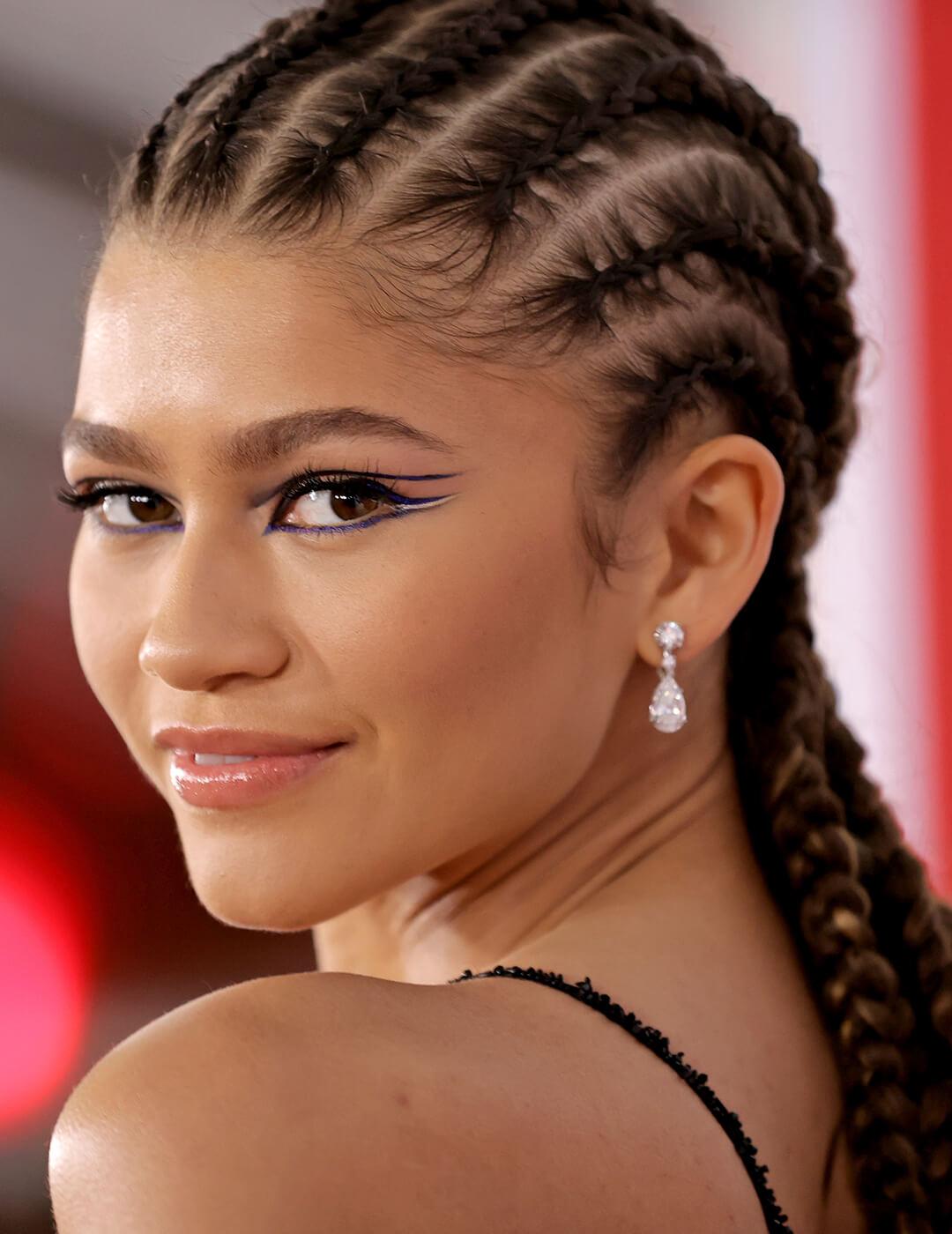
A precise middle part and tightly packed cornrows along the scalp create a clean foundation before the hair transitions into long, flowing braids that reach mid-back. The defined braid texture is the main event here, and it works best on hair that can hold a firm braid without slipping. Ask your stylist for: cornrows transitioning into mid-back braids. The neatness of the scalp pattern is what makes this style hold for weeks, though the loose ends will need a trim every six to eight weeks to keep them from fraying. A light moisturizing spray keeps the length from drying out.
Cornrows with Styled Baby Hairs
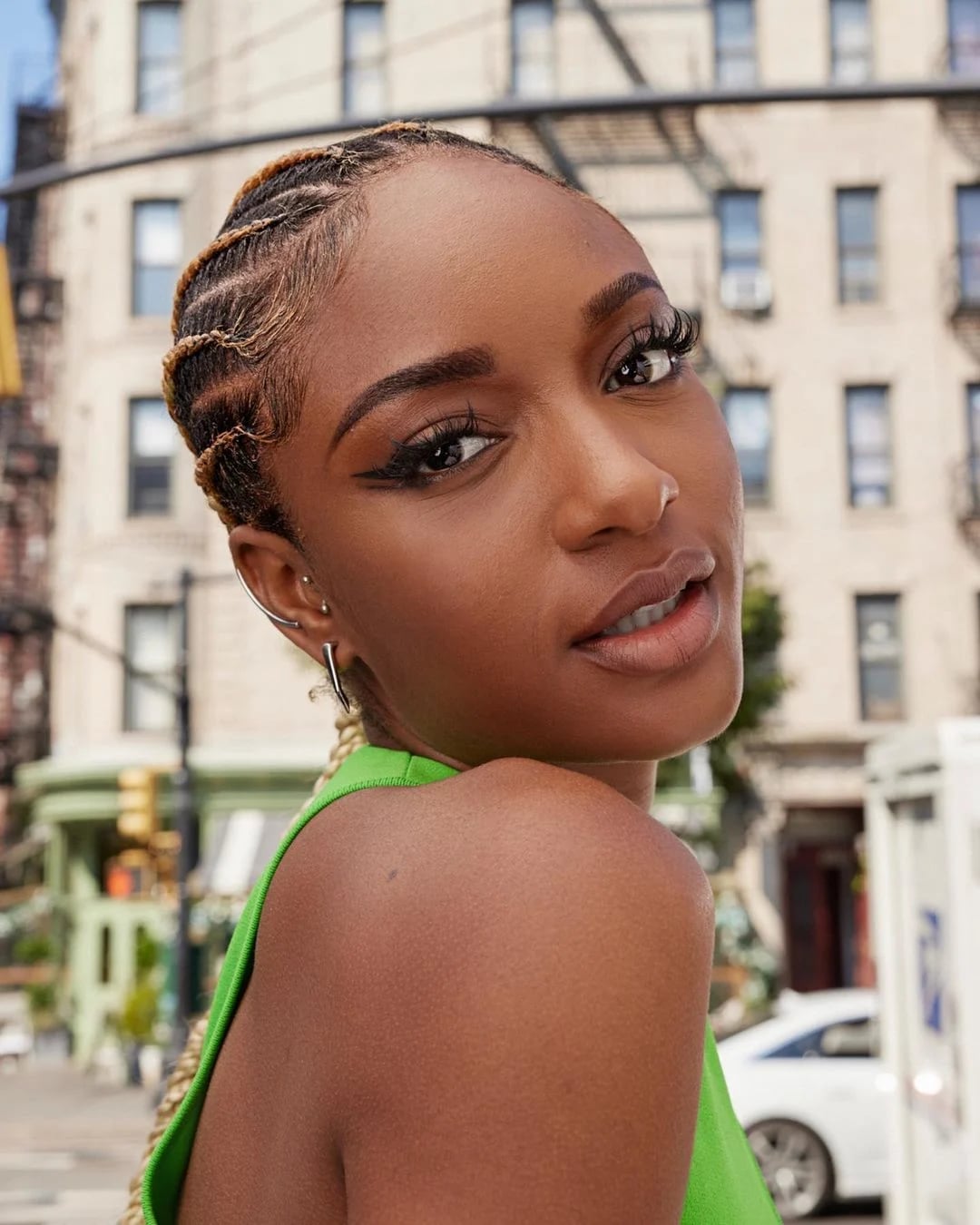
Wondering how to get those perfectly swirled baby hairs? This style pairs tightly braided cornrows with a side part and meticulously shaped baby hairs along the forehead. The black hair is threaded with subtle blonde highlights. Ask your stylist for: cornrows with a side part and styled baby hairs. The technique requires a steady hand and a light-hold gel to keep the swirls in place. Refresh the baby hairs daily with a soft brush and a dab of product.
Cornrows into a High Sleek Ponytail
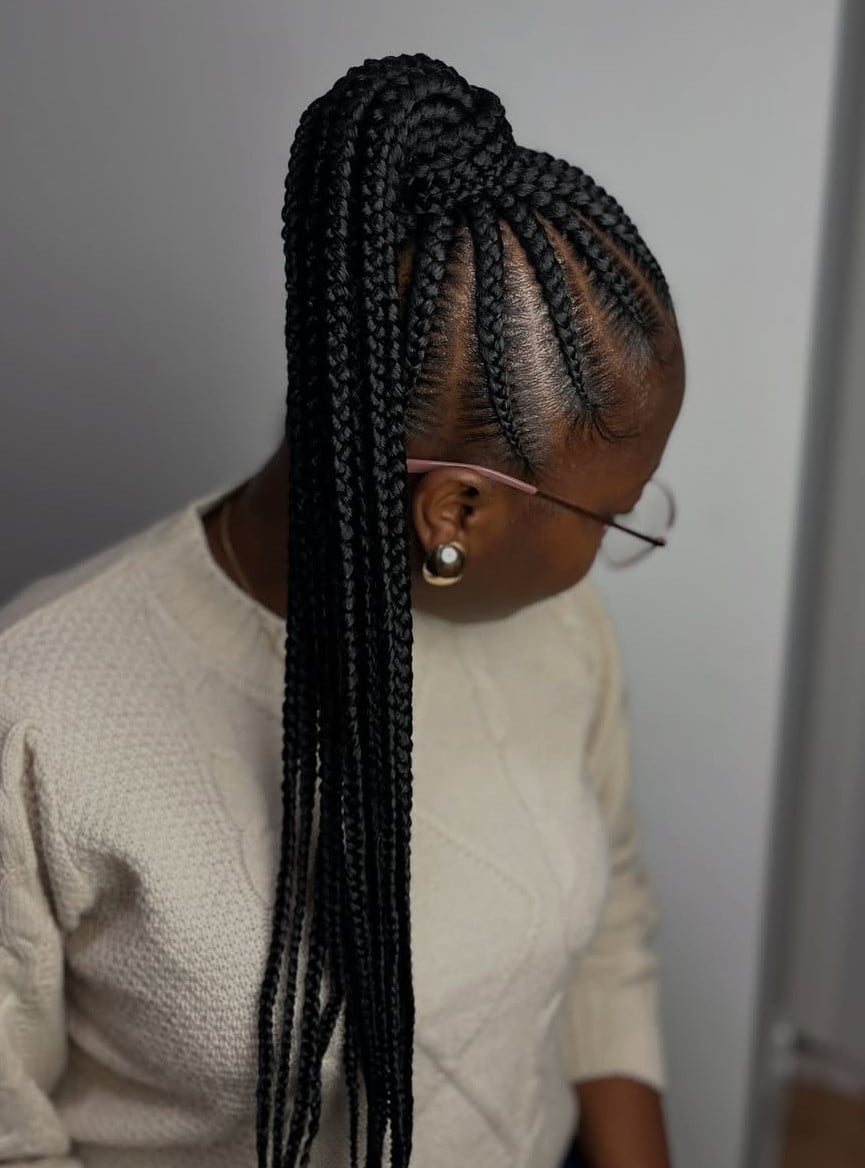
A sleek high ponytail is a classic, but the cornrow base is what separates this from a simple pull-back. Neat cornrows are braided against the scalp from a middle part, then gathered into a high ponytail made of long, straight braids that fall to mid-back. Ask your stylist for: cornrows leading into a high, sleek ponytail. The contrast between the flat scalp work and the voluminous fall is what gives the style its lift. To keep the ponytail from sagging, secure the base with extra pins or a hair wrap. Trim the braid ends every six weeks for a uniform finish.
Two Large Braids for Thick Hair
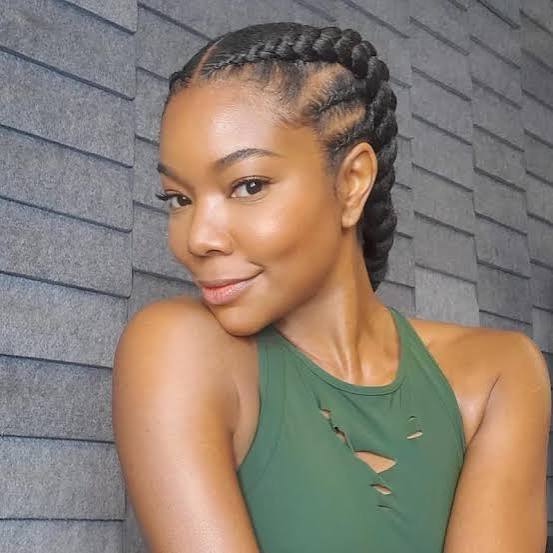
Thick, wavy hair is the natural candidate for two substantial braids that fall to mid-back. A middle part keeps the sections even, and the weight of the braids helps them hang smoothly rather than puffing up. Ask your stylist for: two large, thick braids to mid-back. This style works well for those with density and texture, but finer hair can still pull it off with the help of extensions. Let the braids air dry completely after washing to avoid frizz at the roots. Apply a conditioning product to the ends to prevent dryness between washes.
Sleek Cornrows to Mid-Back
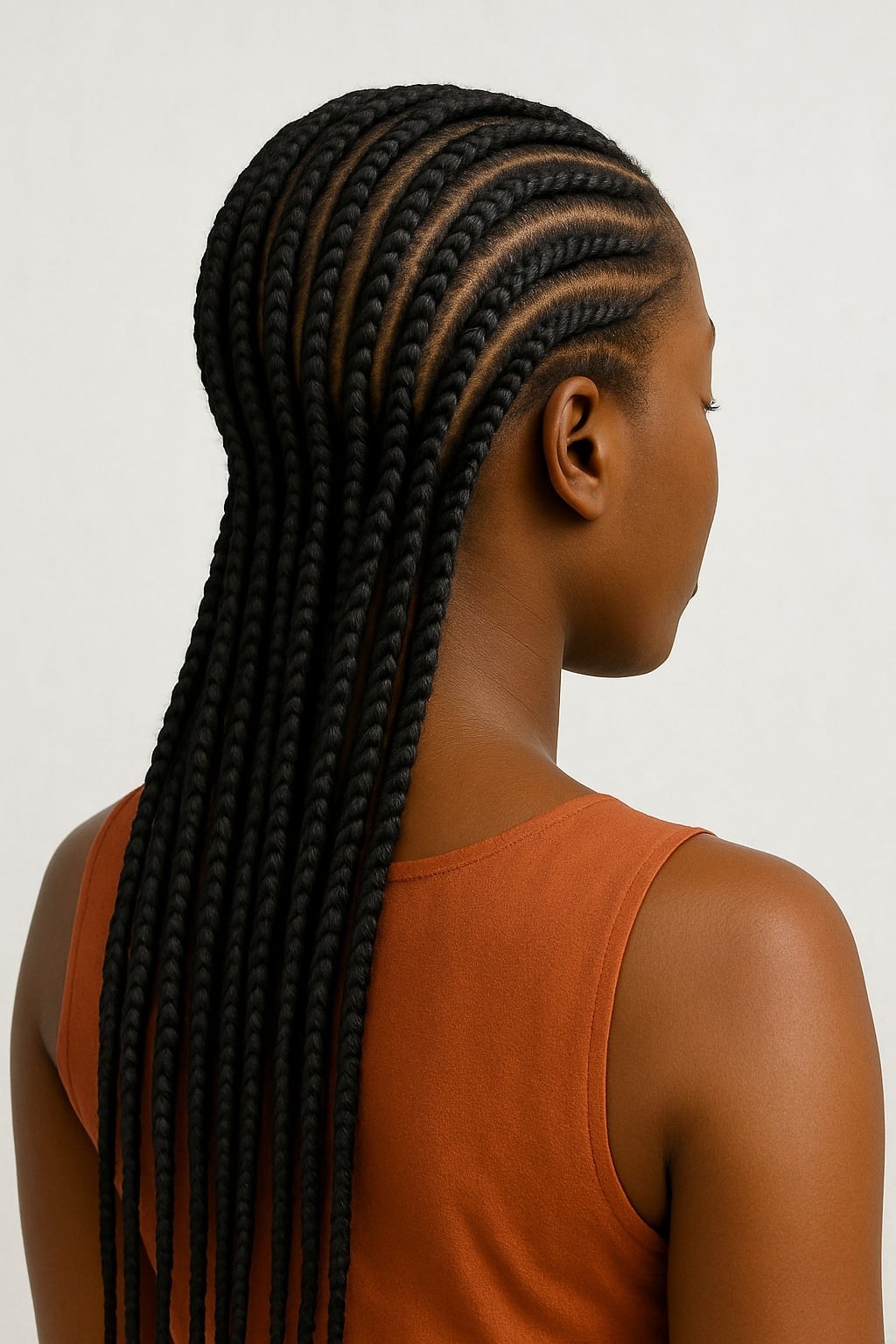
Uniformly thick cornrows that run straight from the front hairline to the nape, with a sharp central parting, deliver a look that is as neat as it gets. The black hair is braided tightly enough to hold its shape for weeks, but the real work is in the parts. Ask your stylist for: sleek cornrows to mid-back with a sharp middle part. A light-hold styling cream applied to the scalp parts keeps them from getting fuzzy between washes. Trim the braid ends every six to eight weeks to maintain the uniform length and prevent the ends from thinning.
Cornrows with Blonde Tips and Beads
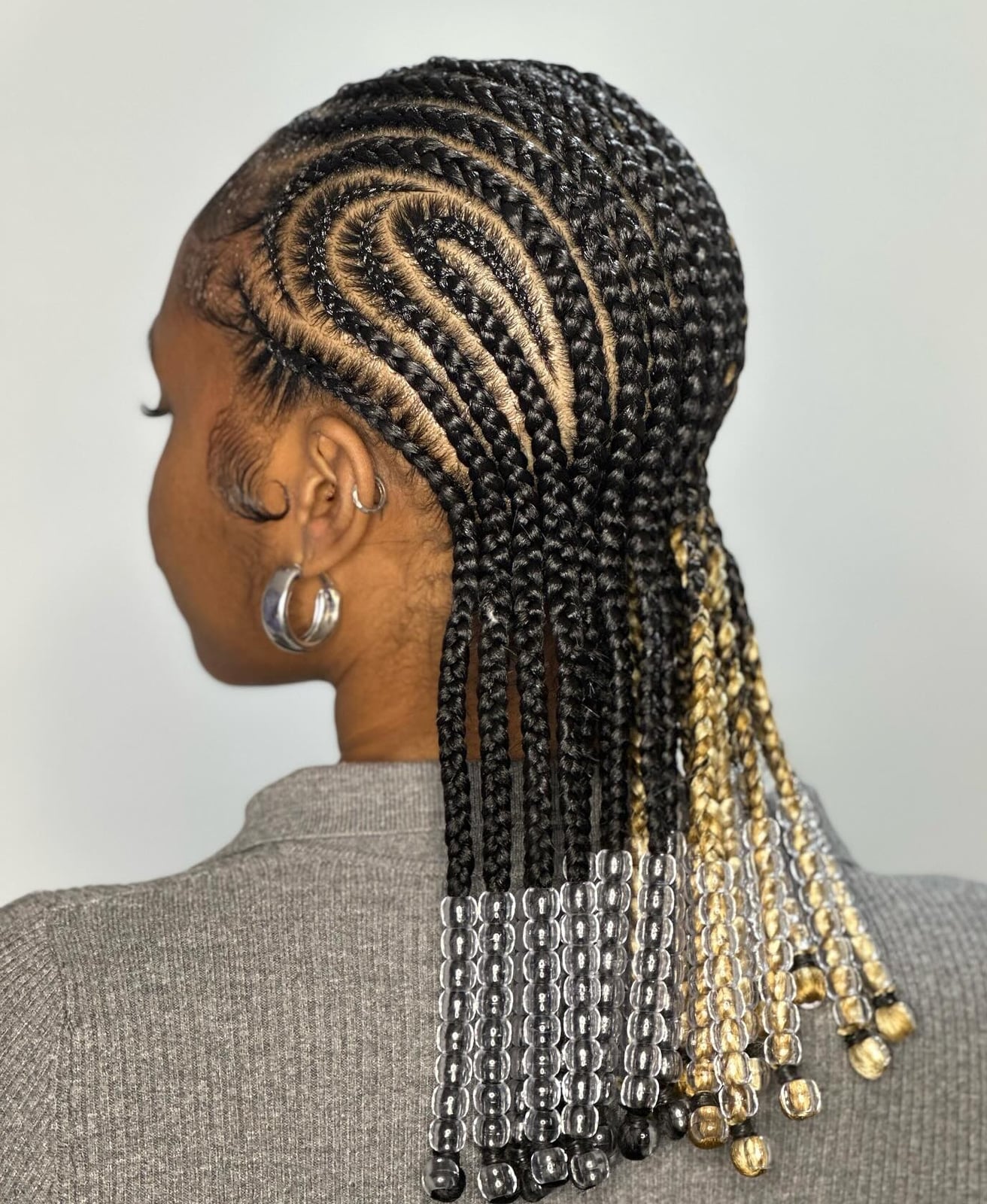
When is a braid not just a braid? When it has blonde tips and a handful of clear and metallic beads along the length. These neat cornrows start from a middle parting and transition into loose braids that land at mid-back, with the two-tone effect adding dimension to the straight, thick texture. The beads add subtle movement as you move, which makes this style a natural for festivals or a vacation dinner where you want the hair to do the talking. Ask your stylist for: cornrows with blonde tips and decorative beads. The hold is solid for up to two weeks with the beads securely attached, though you will want to avoid snagging them on scarves or seat belts.
Cornrows into Two-Toned Twisted Braids
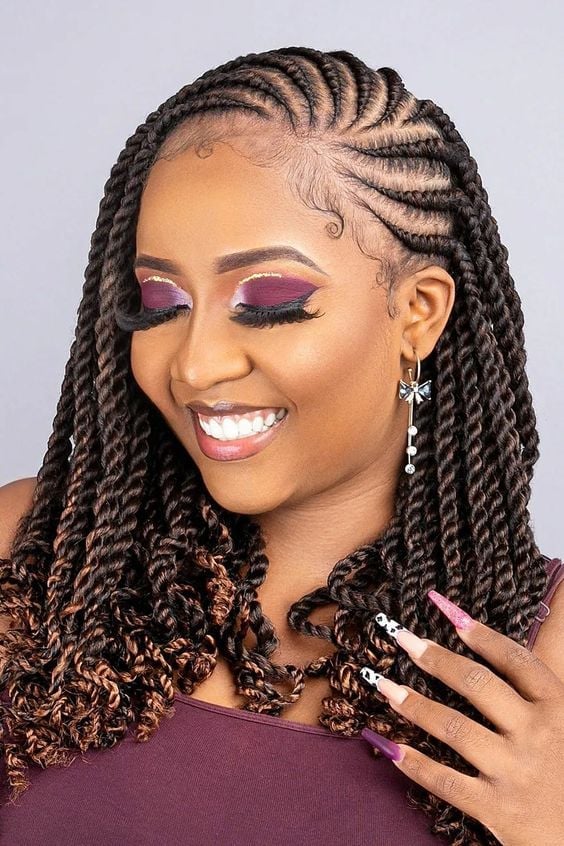
A twisted braid differs from a regular three-strand braid in one key way: it uses two sections twisted around each other, which creates a rounder, rope-like finish that holds its shape longer. Here, cornrows at the front and sides feed into thick, two-toned twisted braids with dark brown and lighter brown hues that reach mid-back. The wavy, thick texture of the twists gives the style more volume than a standard braid, and the color contrast keeps it from reading as one flat block.
The front view shows the cornrow pattern clearly, and the middle parting keeps everything symmetrical. Ask your stylist for: cornrows transitioning into two-toned twisted braids. A light serum on the twisted sections controls flyaways and adds a subtle shine that lasts between washes.
Intricate Cornrow Pattern Braids
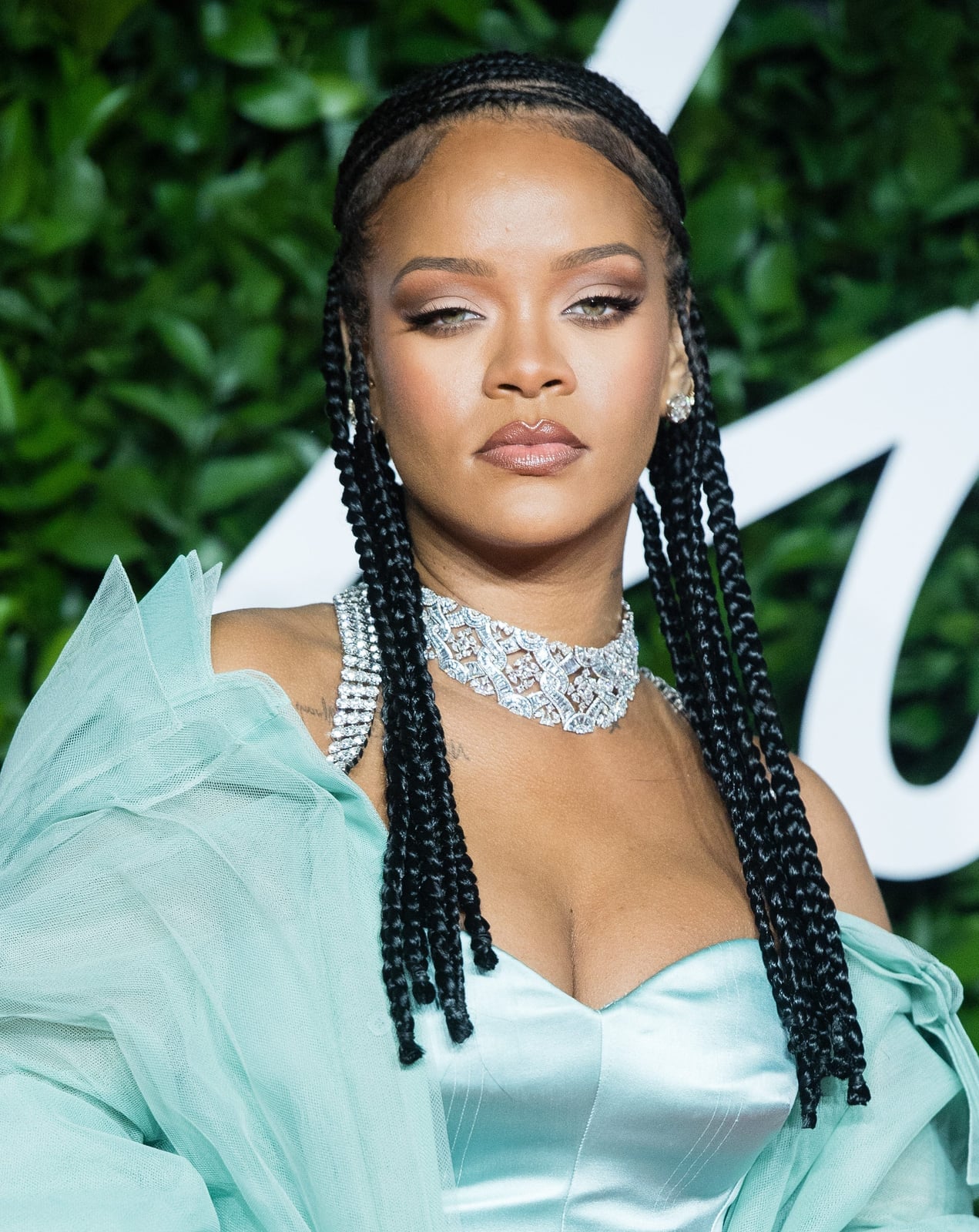
Can you describe a scalp pattern you saw online without sounding like you are drawing a map? Take a photo. That is the fastest way to communicate an intricate cornrow pattern to a stylist, because the details, the direction of the parts, the thickness of each row, the way the braids curve, are hard to put into words. This version uses neat, straight cornrows with a clearly visible middle parting, extending into long, thick braids of deep black that reach mid-back. The straight texture keeps the scalp work crisp. Ask your stylist for: long, thick braids with an intricate cornrow pattern. A scalp treatment spray between the parts keeps the skin clean and comfortable for the two to three weeks this style typically holds.
Cornrows with Wavy Blonde Extensions
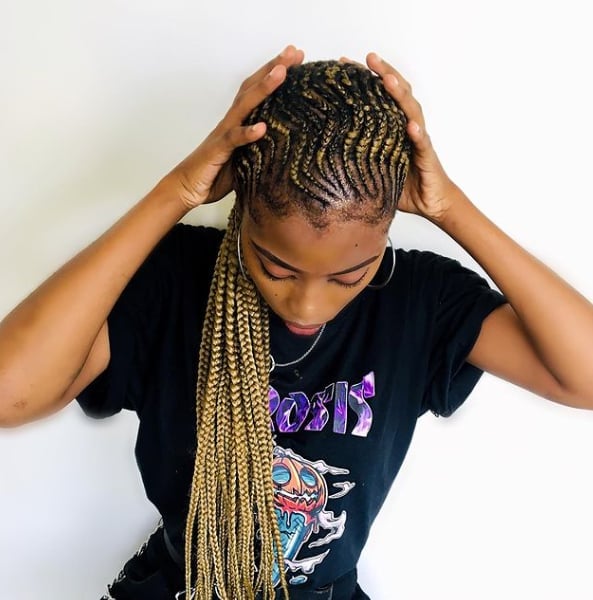
The striking contrast here comes from dark roots against wavy blonde extensions that fall to mid-back, with intricate cornrows leading into the length. The dark root shadow means you skip the harsh grow-out line that a full blonde install would demand, but the blonde sections still need attention. Blonde extensions, even synthetic ones, can develop a brassy or yellow cast over time, especially if you use regular shampoo or spend a lot of time in the sun.
A purple-toned shampoo used once a week keeps the blonde cool rather than warm. The wavy texture of the extensions gives the style movement that straight braids lack, though it also means the waves can frizz at the ends after a few weeks. Ask your stylist for: cornrows into long, wavy blonde extensions with dark roots. The hold is reliable for about four weeks, but plan for a touch-up on the blonde tone around week three.
Geometric Cornrows to Loose Braids
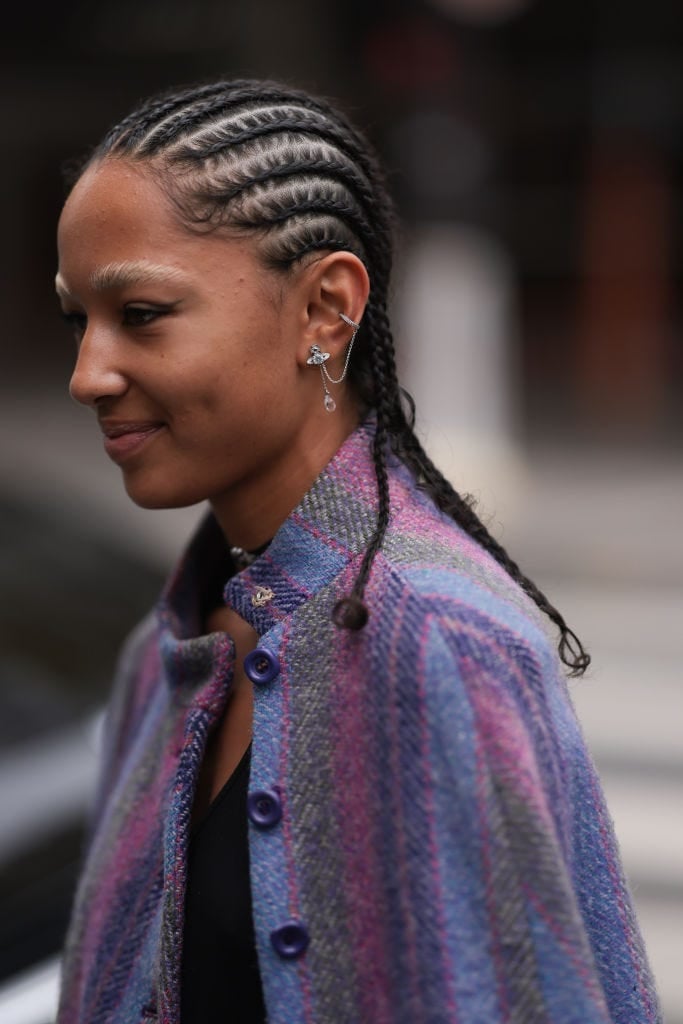
Where a standard cornrow runs in straight lines from front to back, a geometric pattern uses angles and turns that create sharp shapes on the scalp. This style pairs that precise scalp work with long, loose braids that are pulled back from the face, giving you the structure of a defined part pattern and the softness of unbraided ends. The black, straight texture of the braids keeps the focus on the geometry at the root. Ask your stylist for: cornrows with a geometric pattern into long loose braids. It is a look that holds its shape for about two weeks, after which the loose ends may start to separate and need a re-braid at the transition point.
Cornrows in a Heart Pattern
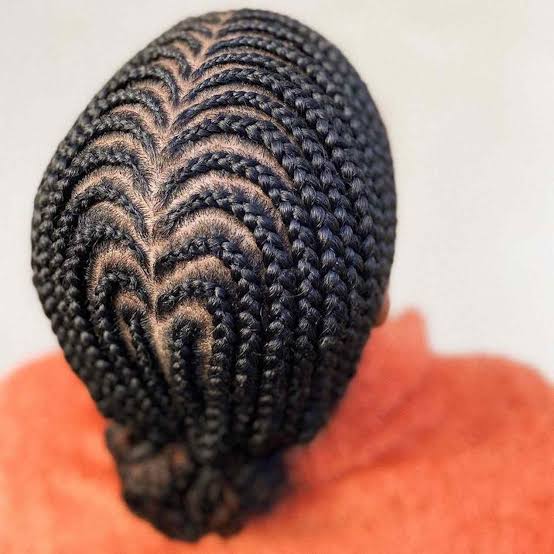
A heart pattern carved into the scalp via cornrows is a bold choice that most people don’t make. The design starts at a middle part and feeds into thick, straight black braids that hit mid-back. If you want a style that announces itself without saying a word, this is the one. The pattern works best on hair that can hold a clean part, and the length keeps the look from reading as purely playful.
Ask your stylist for: cornrows in a heart pattern to mid-back. The shape holds as long as the braids do, which is about four to six weeks with proper care. A light moisturizer on the scalp keeps the parts crisp and comfortable.
Long Box Braids with Gold Threads
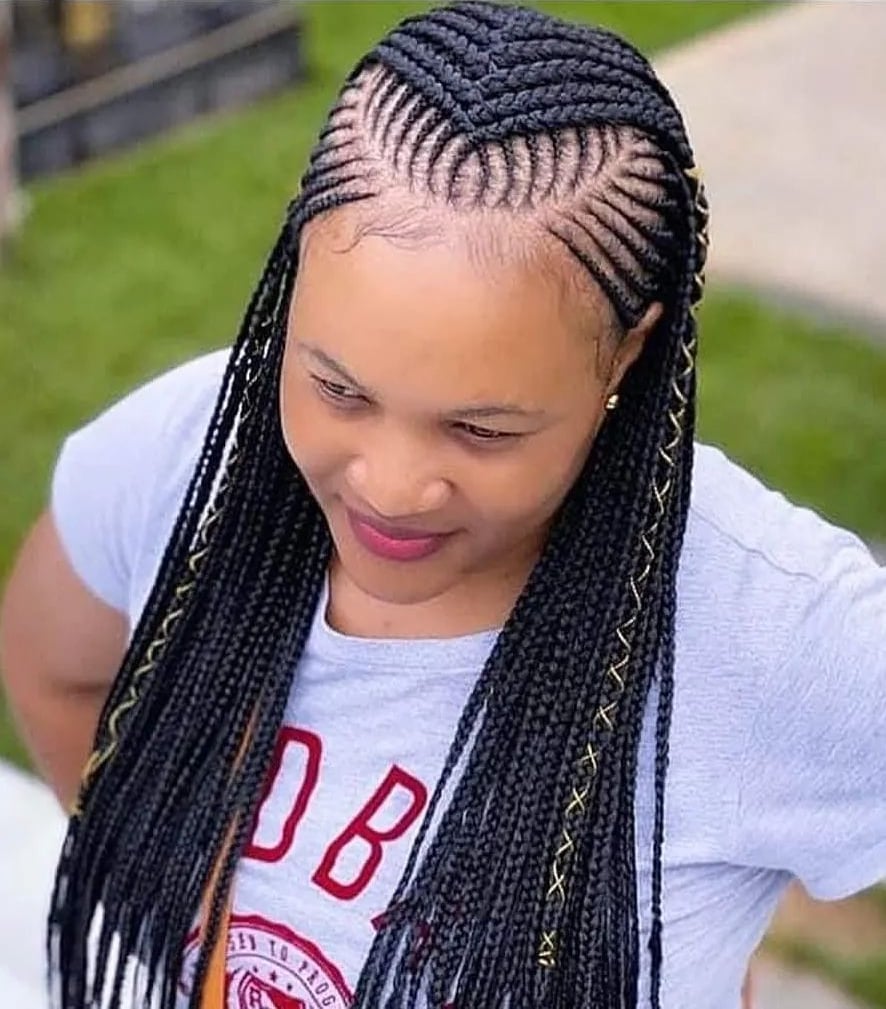
Gold threads woven into a few box braids add a detail that catches the eye without screaming for attention. The braids are long, straight, and thick, parted neatly down the middle, falling to mid-back in black. The threads stay put if they are secured well at the root and tip, but they can snag on loose knitwear or a brush if you are not careful.
Ask your stylist for: long box braids with gold thread accents. This is a salon-only project that takes a few hours, and the threads last the life of the braids. A silk scarf at night keeps both the braids and the metallic bits from fraying.
Mid-Back Cornrows in Rich Brown
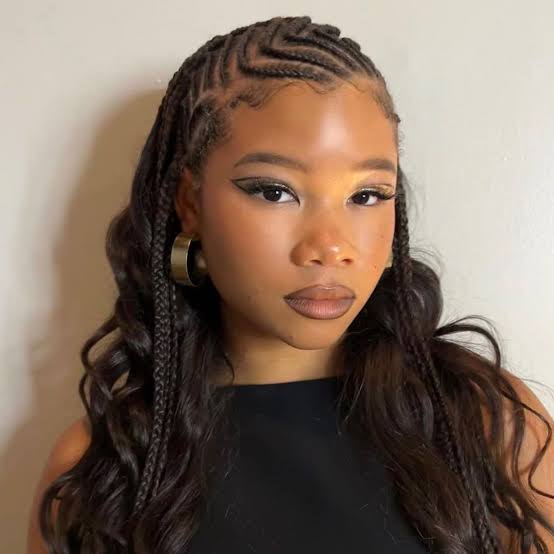
Why go with black when brown adds the same neatness with a little more warmth? These cornrows start at a middle part and transition into straight, uniform braids that reach mid-back. The rich brown color reads as natural but slightly softer than a true black, which makes it a solid choice for fall or winter when deeper tones tend to dominate. Ask your stylist for: mid-back cornrows in a rich brown color. The style is low-maintenance once installed: a color-safe shampoo every two weeks keeps the brown from looking dusty.
Cornrows Pulled Back Neatly
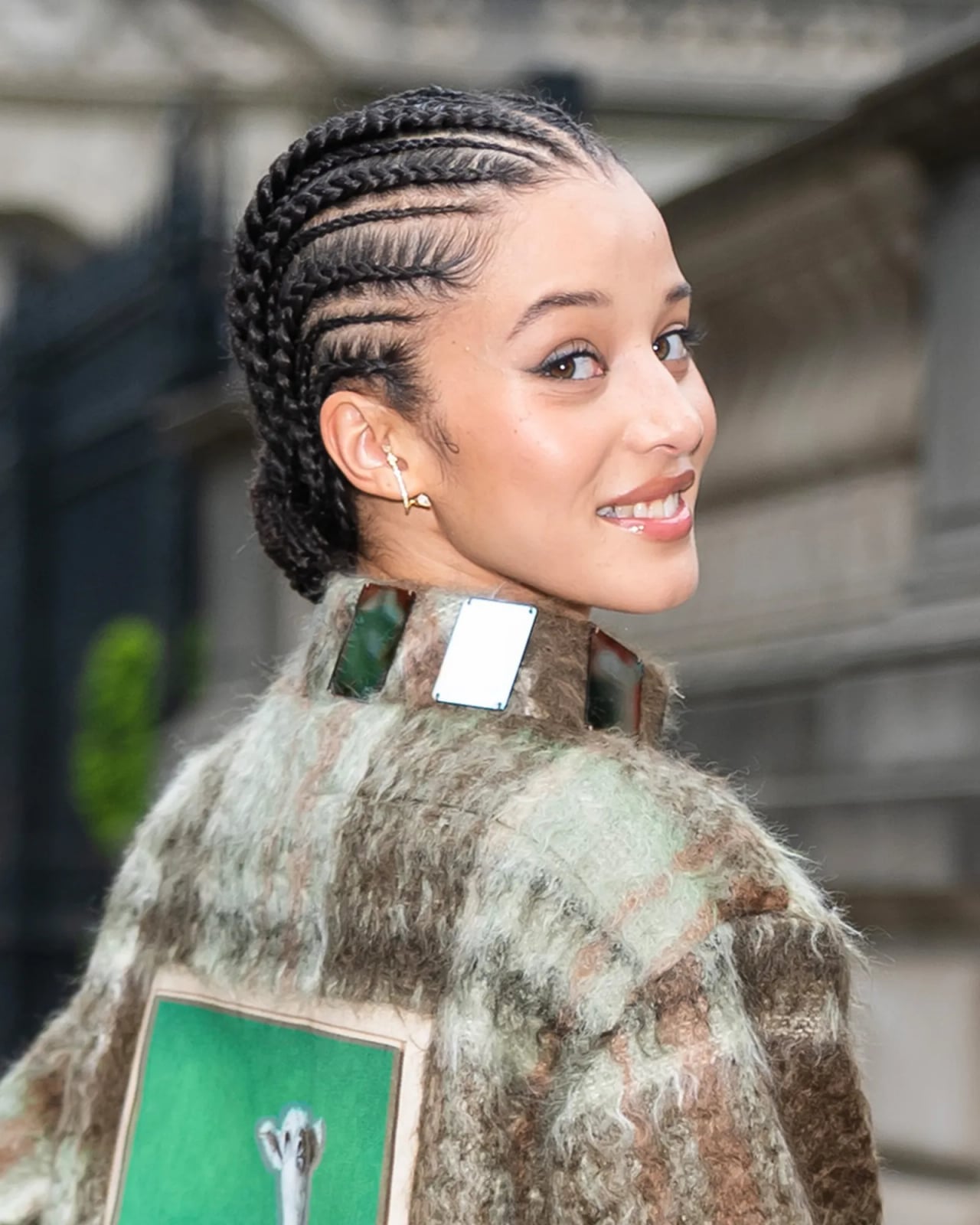
Cornrows that start at the front hairline and sweep straight back into a bun or ponytail are about as efficient as protective styling gets. The braids follow the curve of the scalp, and the pulled-back finish keeps every strand off the face. The shoulder-length tail is easy to secure with a hair tie or a few pins. Ask your stylist for: neat cornrows pulled back into a bun or ponytail. The tension at the hairline should be firm but not tight, and the style holds for about three weeks before the roots need attention.
Two Large Braided Pigtails
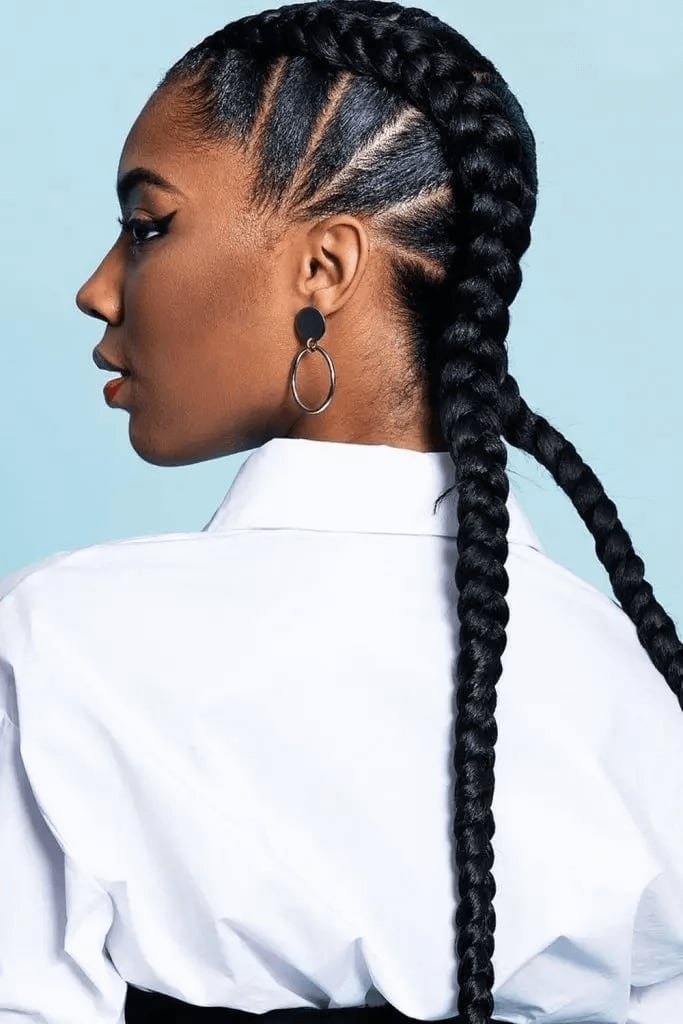
How do you get two braids that are actually thick enough to feel substantial? Start with a clean center part and ask for each pigtail to be braided from the scalp down to mid-back. The wavy texture comes from the hair’s natural wave pattern, not from any added curl. Thick hair takes this style especially well, but extensions can bulk up finer textures if needed. Ask your stylist for: two large, thick braided pigtails to mid-back. The base of each pigtail should be secured firmly so the braids do not loosen after a day or two.
Cornrows to Ponytail at Nape
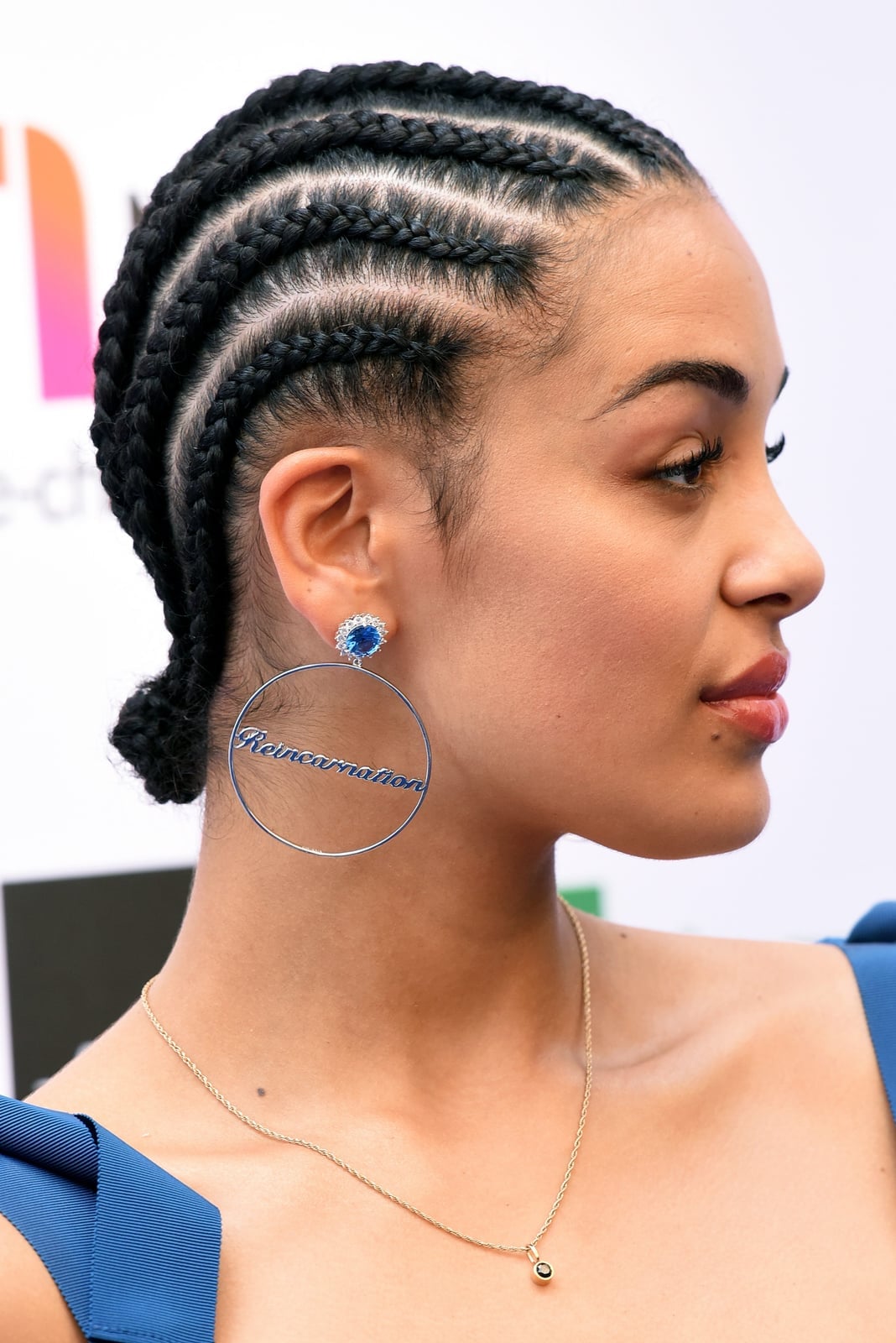
The design is precise: cornrows feed straight back from the hairline and gather into a single braided ponytail sitting right at the nape. This works on any hair type that holds a braid, and the middle part keeps the pattern symmetrical from every angle. Ask your stylist for: cornrows extending into a braided ponytail at the nape.
The ponytail needs a tight elastic to stay put through the day, and the scalp benefits from a lightweight oil every few days. The real drawback is tension at the nape, if the braid is too tight, that section can experience breakage over time. Loosening the elastic at night helps.
Numerous Thin Braids with Beads
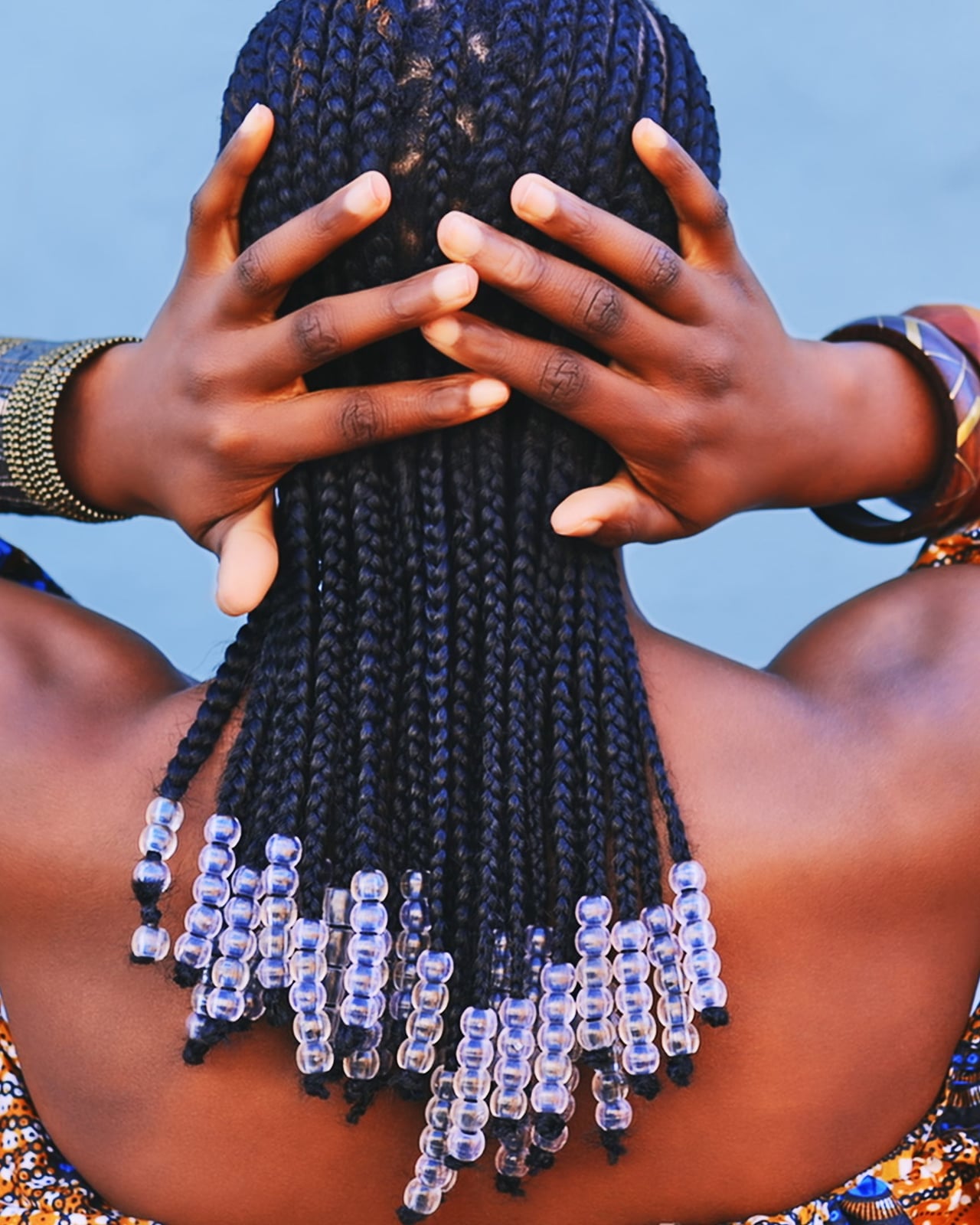
Hundreds of thin braids start from neat cornrows at the scalp and fall to mid-back, each one capped with a clear bead. The beads add a subtle rattle with movement, which is either a pleasant detail or a reason to skip this style if you value silence. Ask your stylist for: numerous thin braids from cornrows, with beads.
This style suits anyone who wants a decorative finish without adding color. The beads can dent a car headrest or scratch a wooden chair back, so sit carefully. A braid balm keeps the length defined, and the beads stay put if clamped properly at the install.
Dark Brown Cornrows Geometric Pattern
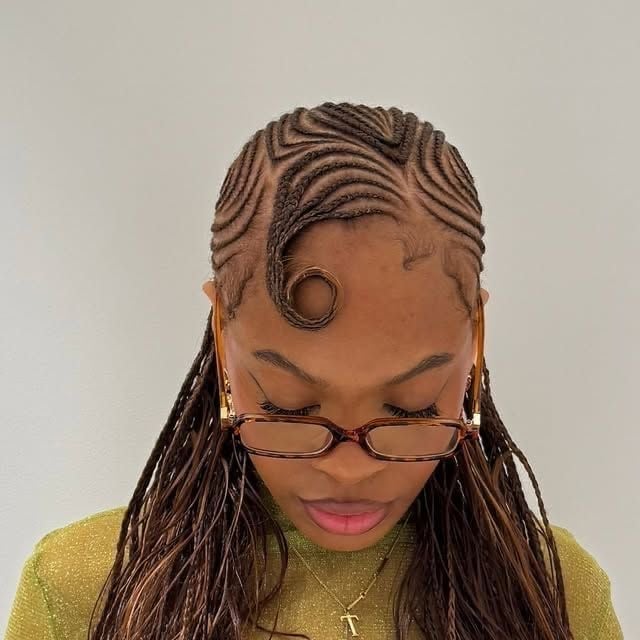
Dark brown cornrows create a geometric pattern on the scalp before dropping into mid-back braids, with a middle part that anchors the symmetry. Every part must line up, which is a salon-only proposition. Ask your stylist for: dark brown cornrows with a geometric pattern. This works on any hair type that can be braided, and the single dark brown shade keeps the pattern readable without competing with color. A light gel along the parts preserves the clean lines between washes.
Cornrows with Radiating Blonde Highlights
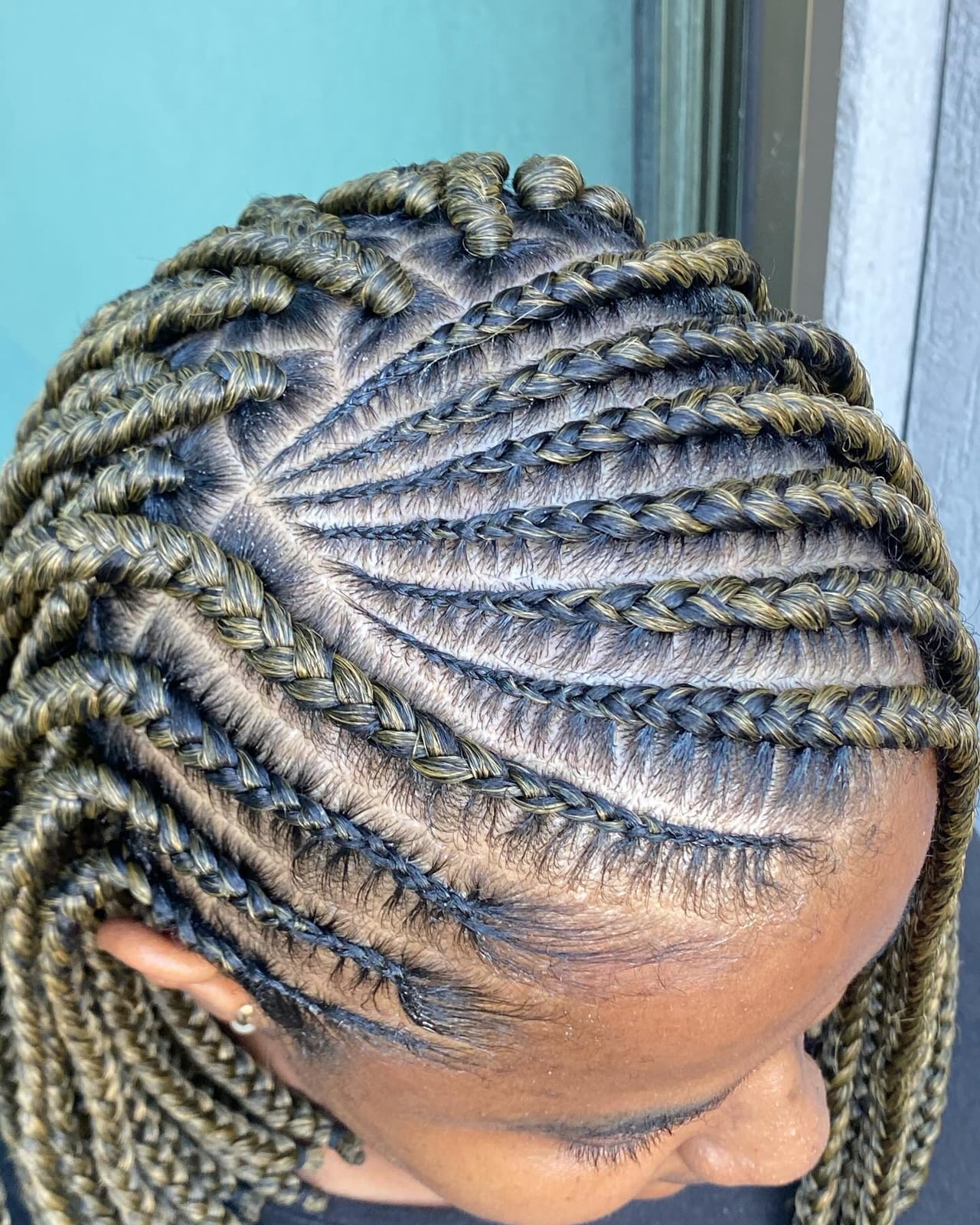
Black cornrows radiate from the crown, with blonde highlights woven into the pattern for a sunburst effect. The alternative is a solid dark cornrow style, which reads as more understated. The blonde pieces here add dimension that catches the eye from across the room. Ask your stylist for: cornrows with radiating blonde highlights.
If you prefer a low-maintenance color transition, a root shadow blends the grow-out for about six weeks. This suits anyone who wants a statement, though the blonde sections will need a purple shampoo to stay cool-toned. The radiating pattern works best on medium to thick hair density.
Side Profile Cornrows to Long Braids
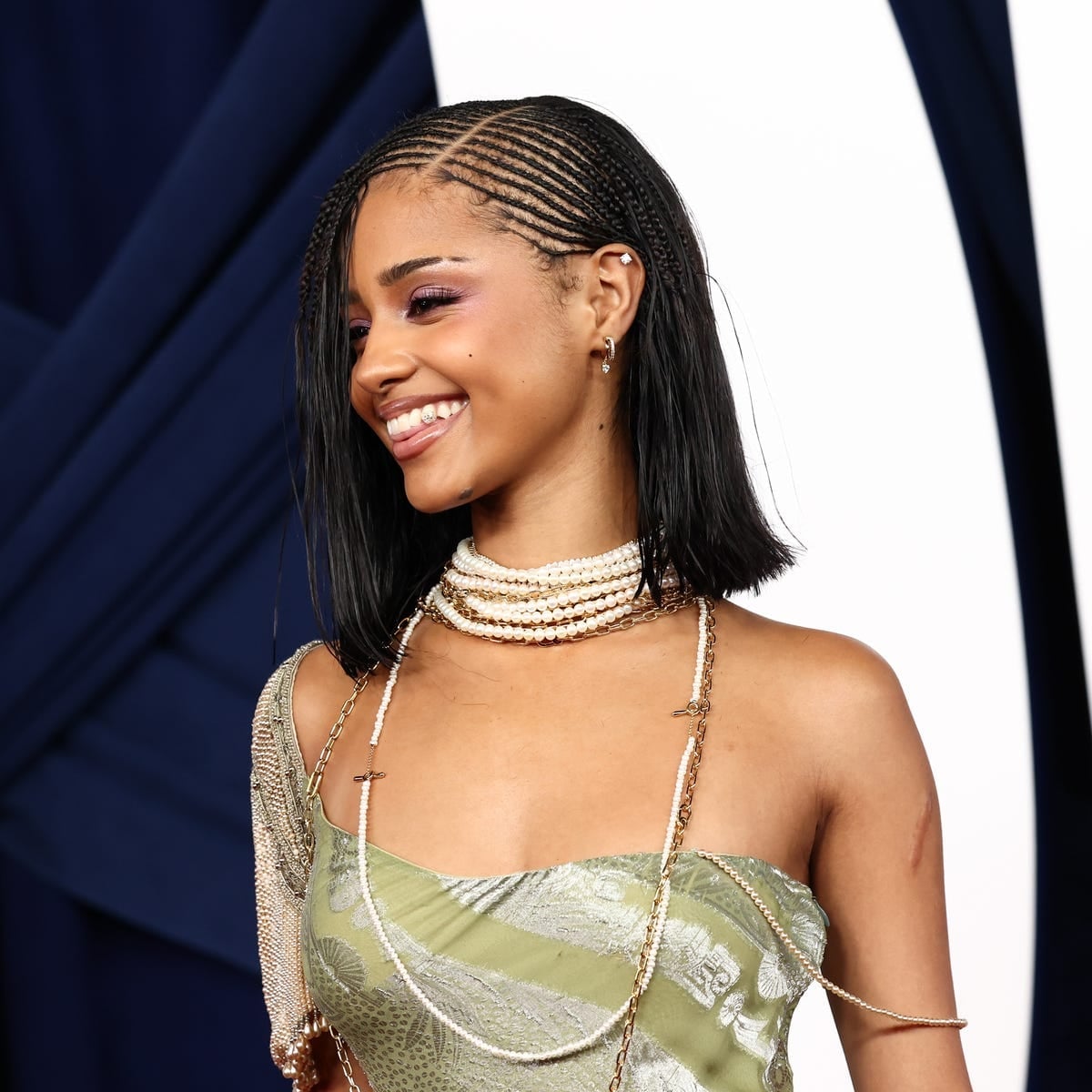
Cornrows start at the hairline and transition into long braids that fall past the chin, with a middle part visible from the side. The chin-length starting point suits those with a longer face shape, as the horizontal line of the braids adds width. Ask your stylist for: cornrows transitioning into long braids, side profile view. The clean hairline detail is the standout. A light edge control keeps it sharp between appointments. Straight texture shows the pattern most clearly, though coarser textures hold the braid structure just as well.
Two Large Cornrow Braids, Mid-Back
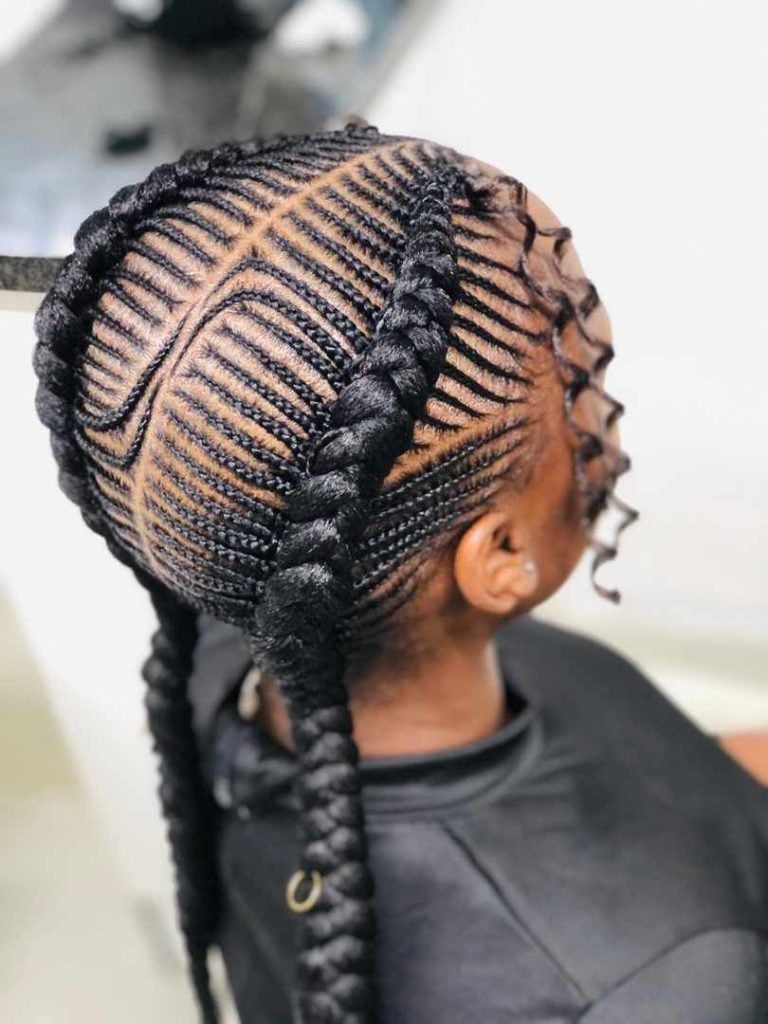
Two large braids built from intricate cornrows create a geometric pattern that reads clearly from the side and back. The middle part splits the design evenly, and the wavy, thick texture gives each braid real heft. Ask your stylist for: two large braids made from geometric cornrows. With that much weight, the braids will pull at the roots for the first day or so, that is normal. A sheen spray helps define the waves and keeps the pattern readable. The tension should feel even on both sides; if one side tugs more, the stylist can adjust before you leave.
Upkeep is minimal once the braids are in. A silk scarf at night prevents frizz and protects the geometric pattern from rubbing against a pillowcase. The style holds its shape for up to two weeks before the roots need attention, though the braids themselves can stay longer if you refresh the edges with a light gel.
Geometric Pattern Cornrows
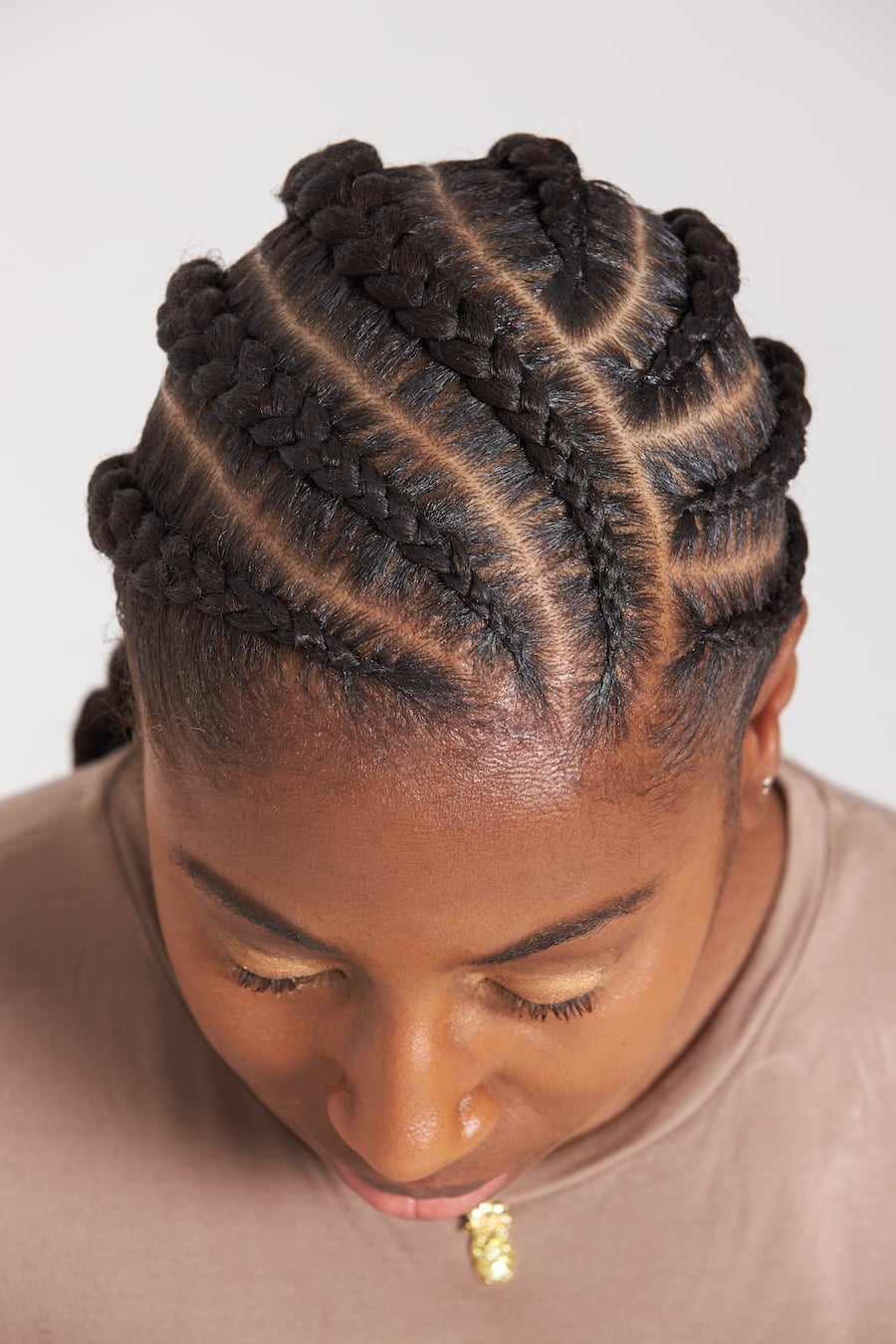
Can a cornrow pattern do double duty as a statement and a low-maintenance option? Yes, when the geometry is the point. Clean parts and a smooth finish mean the design speaks for itself. Ask your stylist for: cornrows in a geometric pattern. This style lands well in warmer months, when pulling hair off the neck and scalp is a practical advantage. It also works for events where you want the hair to look deliberate without requiring constant adjustment. The pattern holds its shape for the life of the braids, so the only real maintenance is keeping the parts clean.
Cornrows with Sharp Hairline Detail
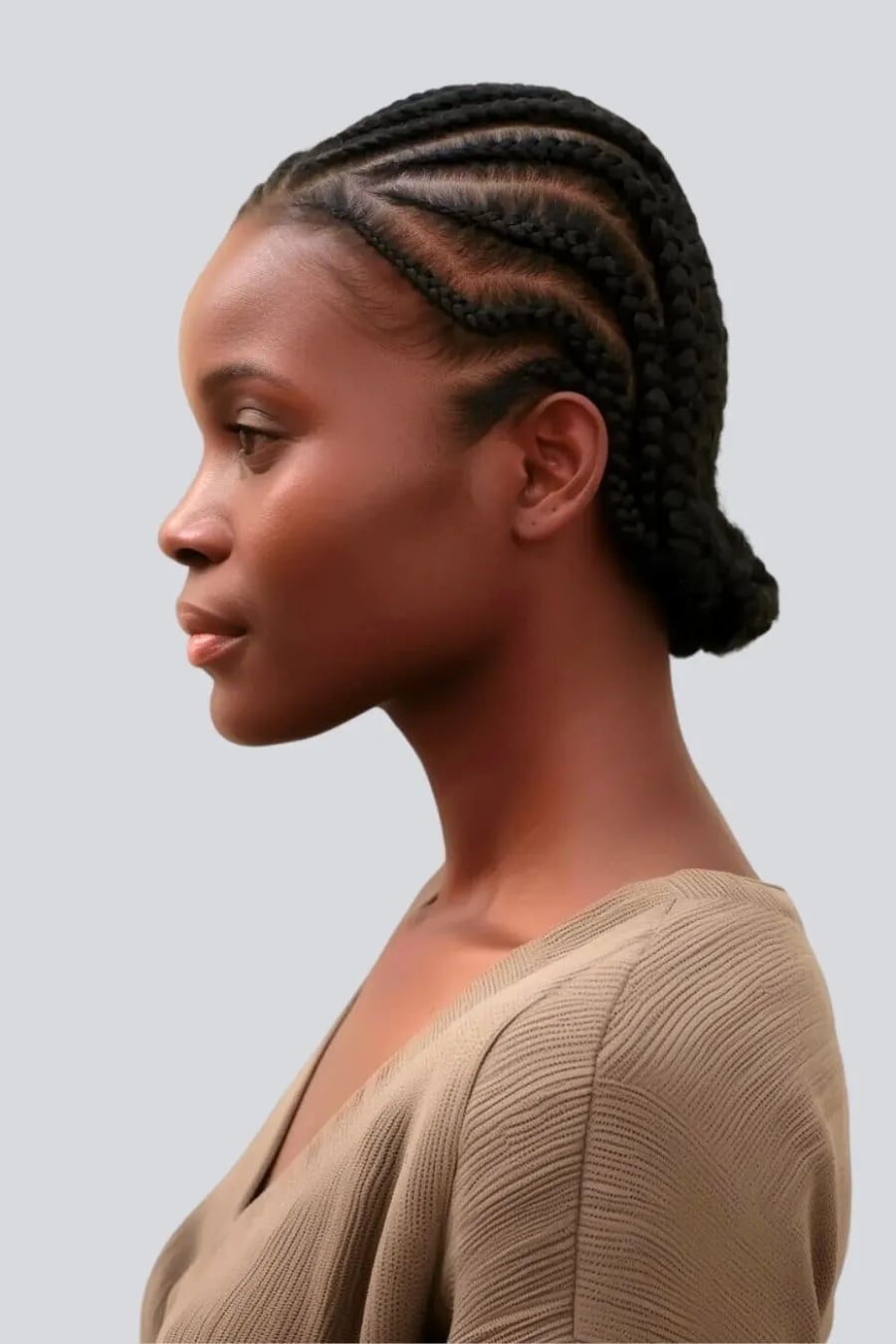
A sharp hairline is the result of precise parting and even tension from the first braid. The cornrows follow a distinct path from the ear-length hair forward, with each row tucked neatly at the nape. Ask your stylist for: cornrows with sharp hairline definition. The key tool here is a fine-tooth comb to map the sections before any braiding starts. A small amount of edge control gel seals the hairline without flaking. The straight texture of the hair makes the parts appear as clean lines, which is exactly the point.
Cornrows into a Large Top Knot
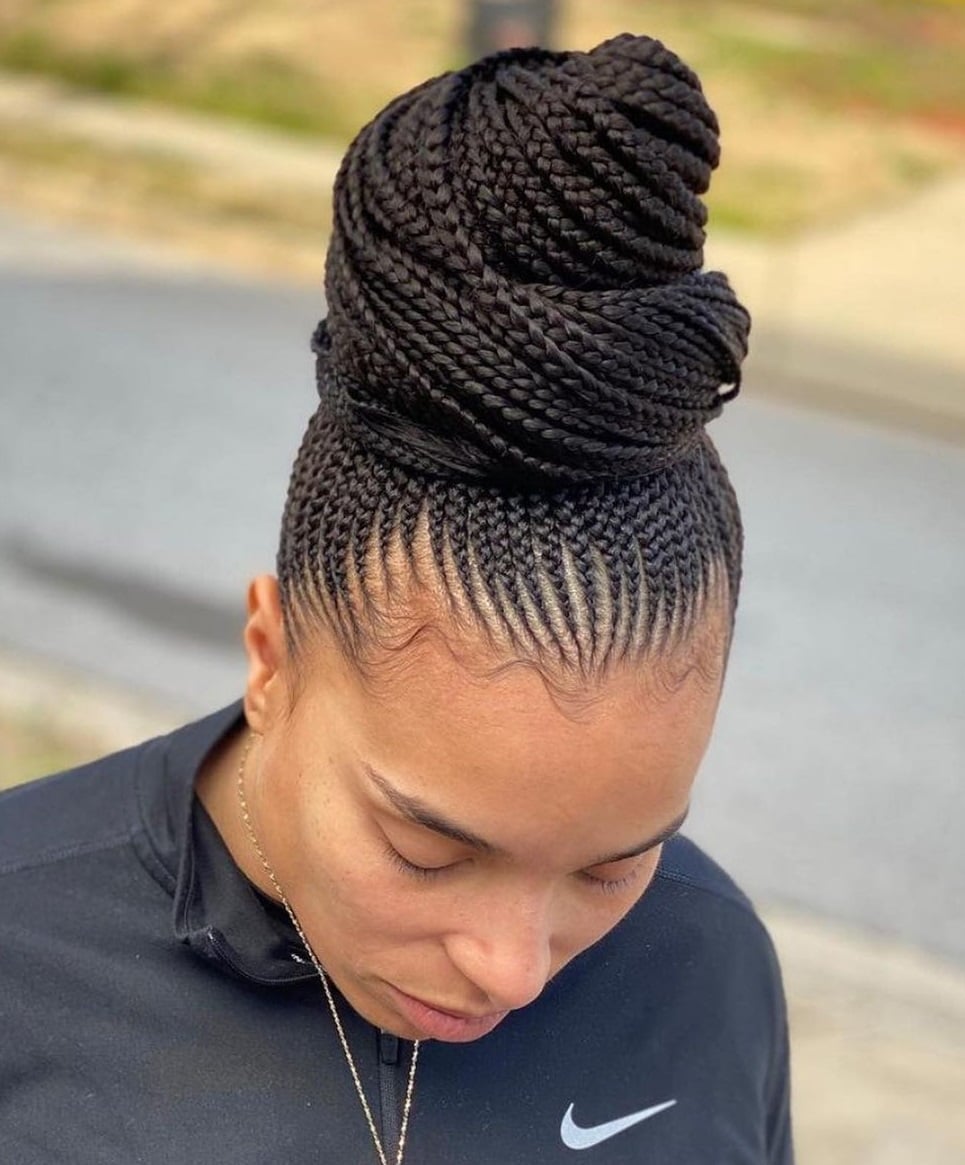
How do you ask for cornrows that end in a top knot without the bun looking like an afterthought? Specify that the braids should feed upward into a single, large, voluminous knot. Ask your stylist for: cornrows leading into a large, voluminous top knot. The middle parting keeps the scalp pattern symmetrical, and the wavy, thick texture gives the top knot enough body to hold its shape. To recreate the look at home: secure the base of the knot with a firm elastic, then wrap the ends around and pin. A light mist of hairspray keeps flyaways in check. This style requires a salon visit; the braiding alone takes a few hours, and the top knot depends on the braids being directed precisely.
Geometric Cornrow Design
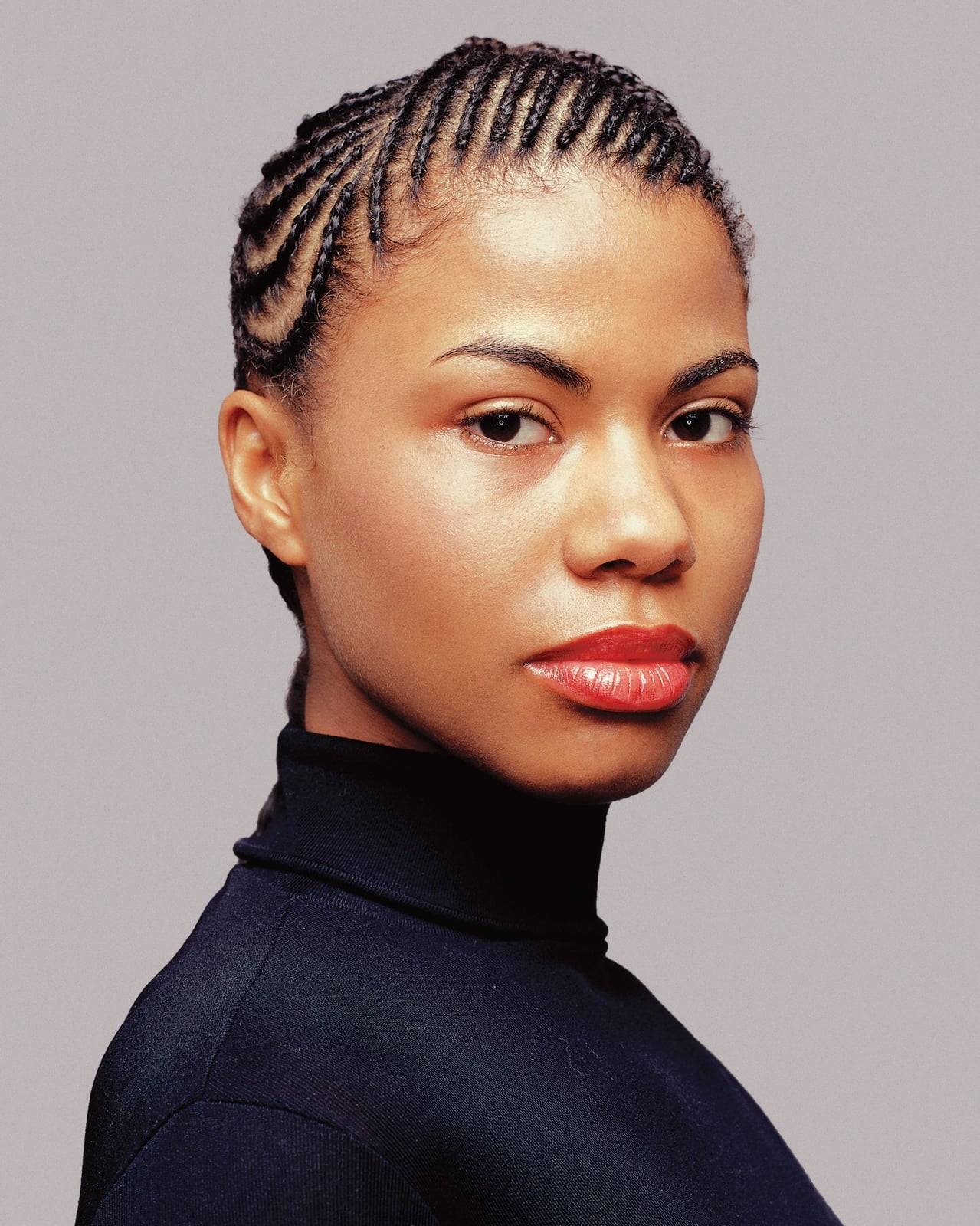
A geometric pattern laid close to the scalp offers maximum visual impact with minimum daily effort. The neat arrangement of cornrows at ear length keeps the hair off the face and neck. Ask your stylist for: cornrows in a geometric pattern close to the head. As the hair grows, the pattern shifts and the lines soften. After about three weeks, the design loses its crispness, and you will either live with the blur or take the braids out. Sleeping on a satin pillowcase helps preserve the parts for a few extra days, but the geometry is finite by design.
Thick Cornrows in Geometric Pattern
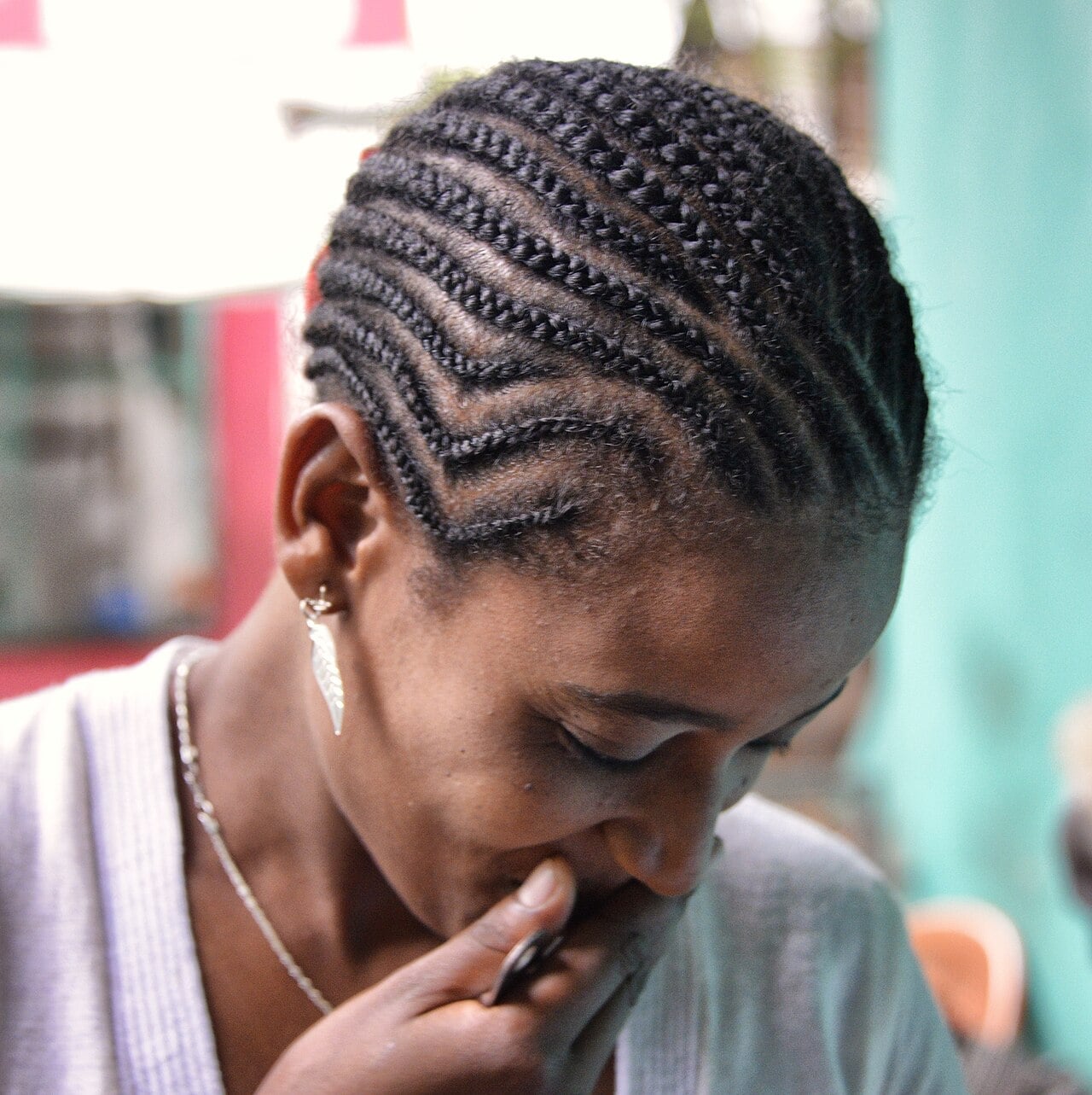
A geometric pattern relies on consistent tension and clean partings, which thick, straight hair delivers without complaint. The braids lie flat against the scalp from ear to ear, the middle part acting as the design’s center line. Ask your stylist for: thick cornrows in a geometric pattern. The hold is secure for weeks, though the tightness means you want to keep the scalp moisturized from day one. Straight texture makes the angles read sharper.
Cornrows with Loose Ends
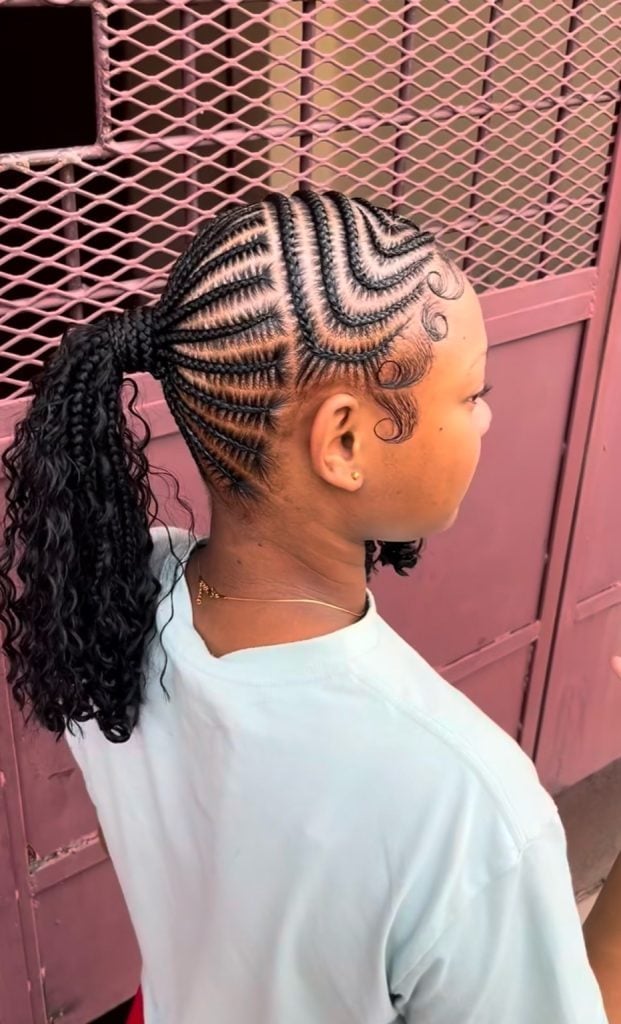
The technique here is straightforward: braid the cornrow tight to the scalp, then stop a few inches short and let the remaining length fall free. The middle part keeps everything symmetrical, while the loose ends add movement to an otherwise anchored style. Ask your stylist for: cornrows with a middle part and loose braid ends. Thick, straight hair holds the unbraided section neatly without much fraying. A light serum on the ends keeps them from looking dry by day three.
Precise Cornrows Geometric Design
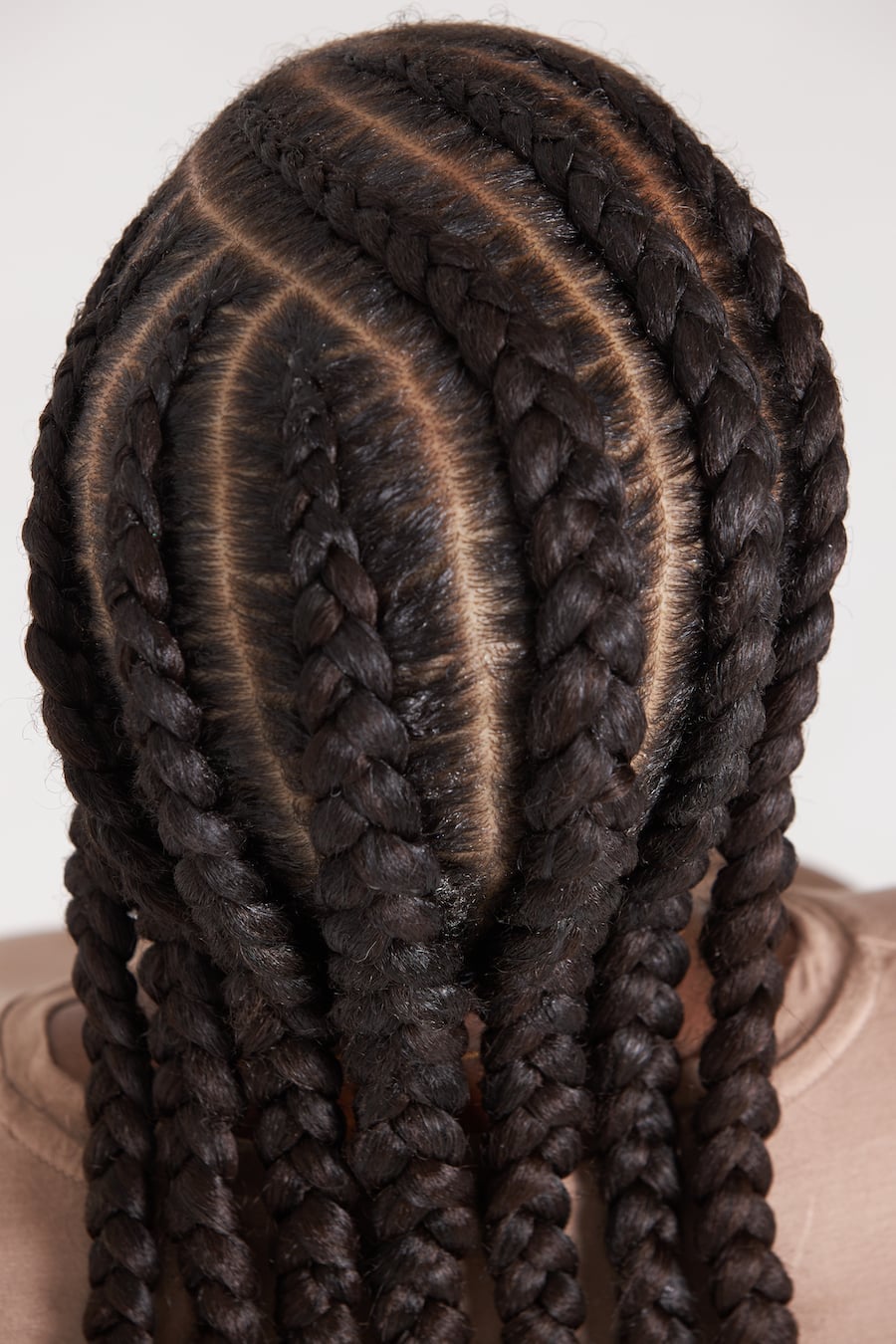
Where a looser braid pattern reads as organic, this one is all about deliberate angles and consistent tension. The cornrows form a geometric map on the scalp, every line as clean as the last. Ask your stylist for: cornrows with a precise geometric design.
Thick, straight hair is the ideal canvas for this level of detail, because the braids sit flat and the pattern stays visible for weeks. The middle part anchors the symmetry, and the mid-back length gives the design room to breathe. It’s not a five-minute style, but the hold is worth the chair time.
Chin Length Cornrows Tucked Away
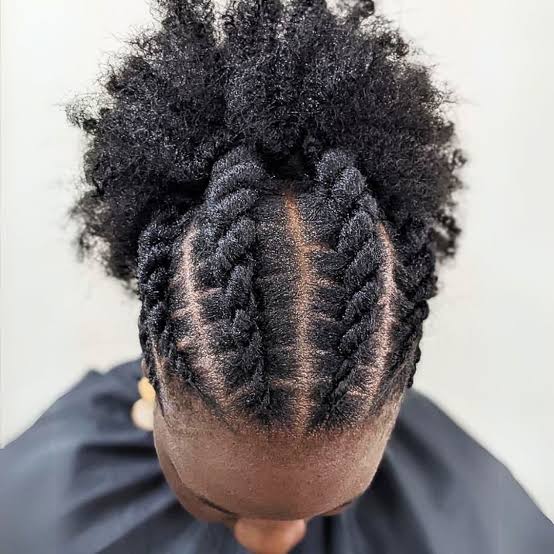
Chin-length cornrows that tuck into a soft afro puff at the crown are a smart way to wear a short length without losing the protective benefits. The middle part and intricate cornrow pattern keep the scalp neat, while the puff adds volume where the braids end. Ask your stylist for: chin-length cornrows, tucked away. Coily, thick hair is the natural fit here, as the texture gives the puff body and the cornrows hold their shape. The style stays put with a light hold spray and a trim every six to eight weeks.
Final Thoughts
For maximum longevity and neatness, ensure cornrows are installed with consistent tension and avoid excessive manipulation at the edges. A little planning at the start saves you from a frizzy mess by week three.
- Maintain scalp moisture with a light oil or spray daily.
- Protect cornrows at night with a silk or satin bonnet.
- Avoid washing more than once every 1-2 weeks to preserve the style.
- Gently cleanse the scalp between braids with a diluted shampoo or scalp spray.
- Re-twist or re-braid ends as needed to maintain neatness.
Simple cornrows offer enduring style and protection.