

Feed-in braids start with your natural hair at the root, then add extension hair piece by piece as the braid lengthens, so the line from scalp to tip stays flat and smooth. The current run on social feeds favors mid-back lengths and lived-in color, making this a season for braids that look polished without trying hard.
Simple Feed in Braids works for anyone, whether your hair is fine, thick, coily, or straight, and for any face shape, depending on where you let the braids fall. This collection of 35 styles stretches from low-maintenance solid black braids to high-impact wavy, multi-tonal versions, and it solves the struggle of braids that look flat or a root line that shows too soon.
Neat Feed In Braids Mid Back Length
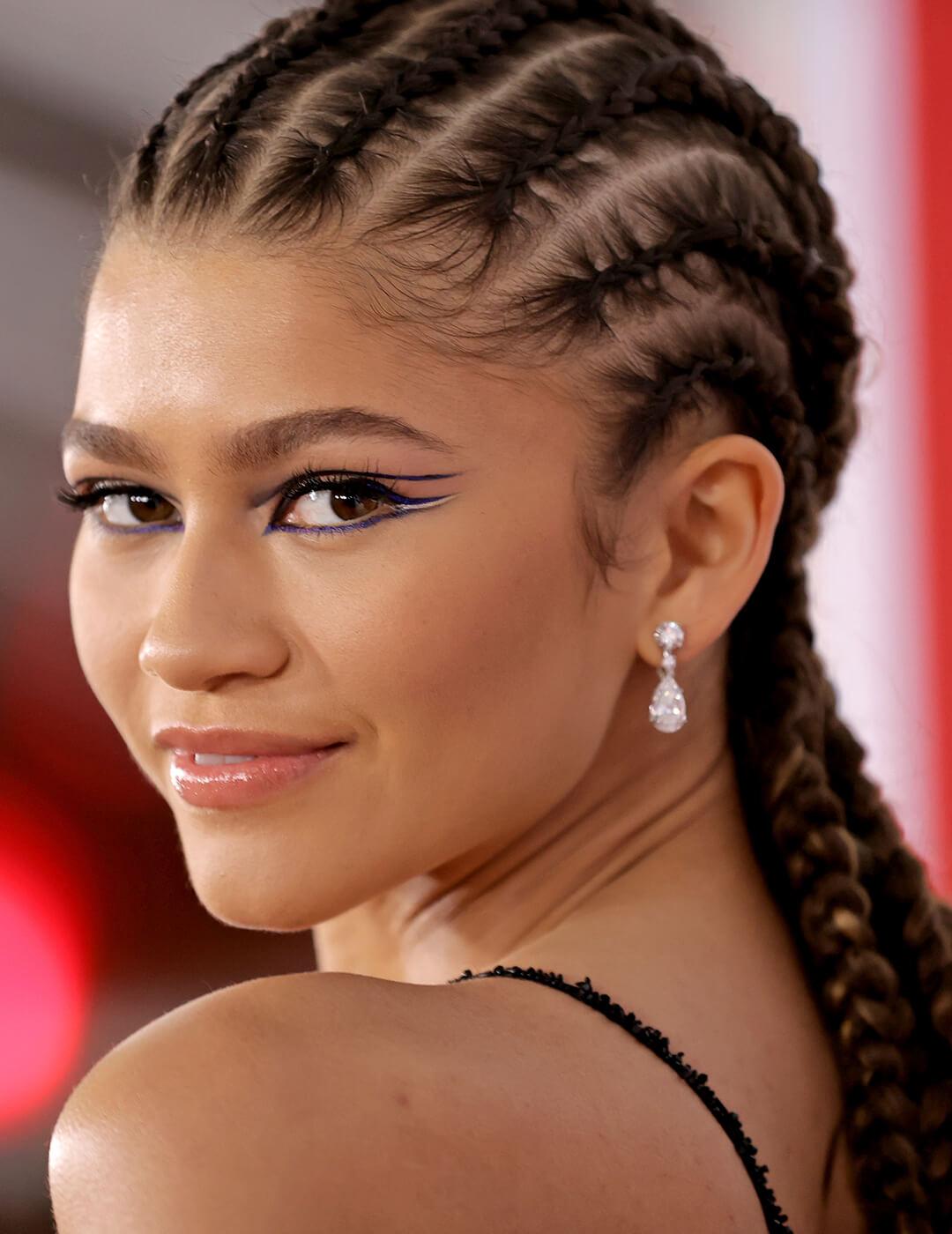
Want a protective style that actually looks polished from day one? These neat feed-in braids start with clean, visible scalp sections and transition into thicker braids that fall to mid-back. Ask your stylist for: feed-in braids, mid-back, neat scalp. The dark brown color keeps it understated, while the middle part and straight, thick texture give the whole look a grounded symmetry. This one works best if your hair is already thick and straight, since the braids rely on that density for a seamless blend from root to extension.
Thick Box Braids Flowing to Mid-Back
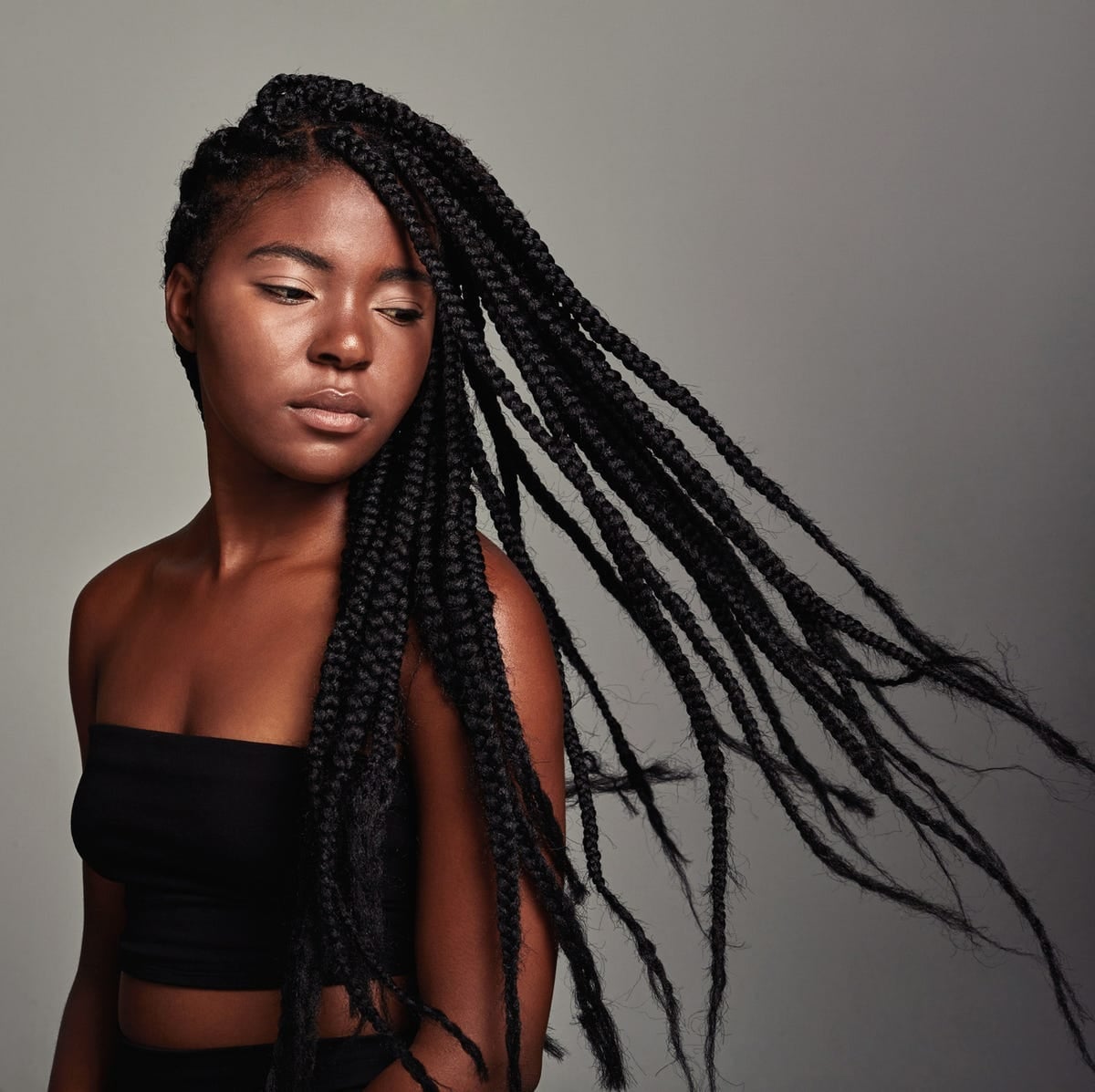
The design is straightforward: thick black box braids falling to mid-back and swept dramatically to one side. What you get is noticeable weight and movement, not a stiff, static row. Ask your stylist for: thick box braids, mid-back, side-swept. The glossy finish comes from a light serum applied after braiding, which also keeps flyaways in check between washes. These hold their shape well for several weeks, though the thickness means they take longer to dry after a wash day.
Neatly Braided Cornrows Side View
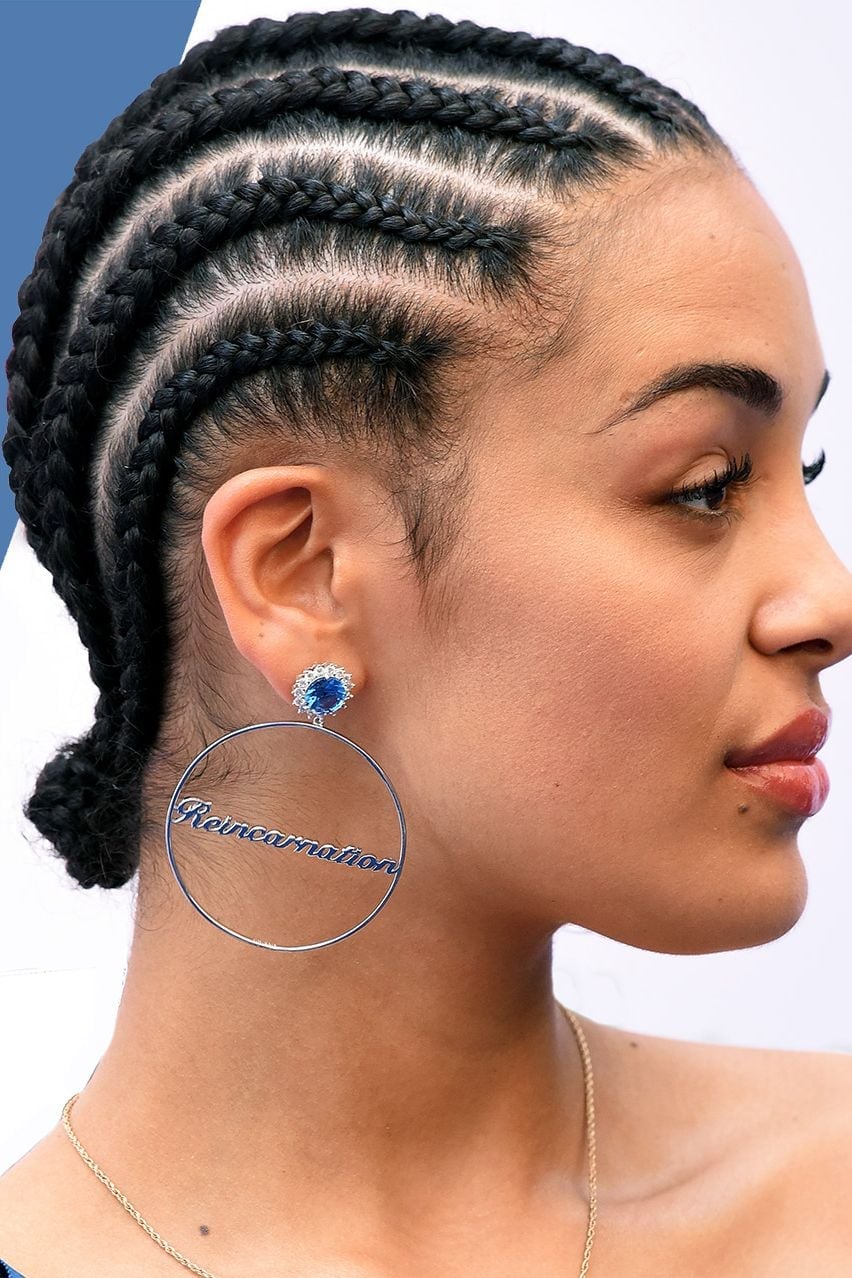
Ask your stylist for: neat cornrows, mid-back, middle part. The side view reveals how the rows follow the natural curve of the head without gaps or uneven tension. Thick, straight black hair is the ideal canvas here, since it holds the braid without slipping. This is a salon-only technique that rewards an experienced hand.
Geometric Feed In Cornrows With Face Framing Braids
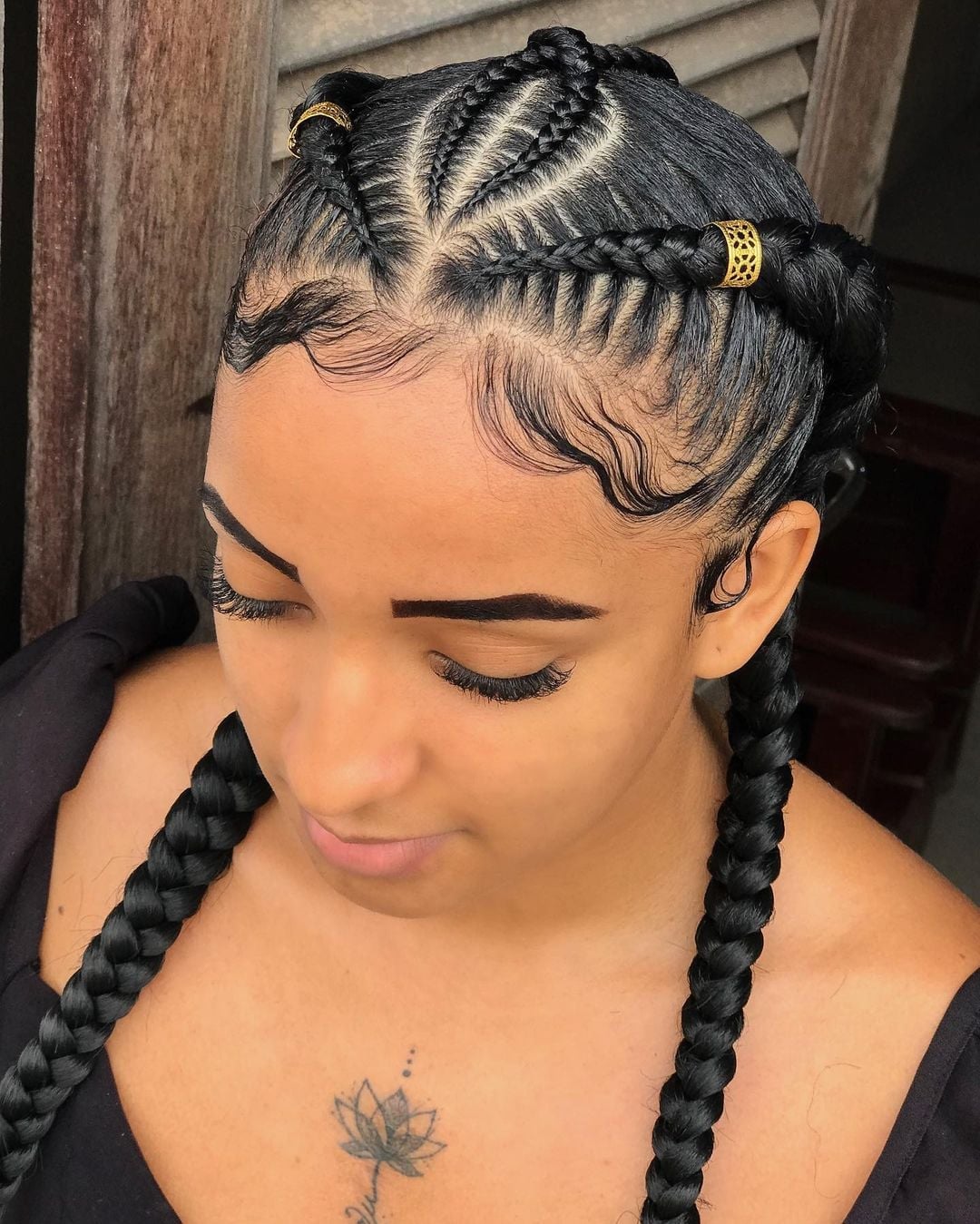
If standard cornrows feel predictable, this version swaps straight rows for a geometric pattern that draws the eye. Two larger braids frame the face and stop at shoulder length, while the rest stays closer to the scalp. Ask your stylist for: geometric feed-in cornrows, face-framing braids. The contrast is deliberate: the intricate top pattern versus the clean, simple lines of the face-framing pieces. Thick, straight black hair keeps the angles sharp and the parts crisp. Gold cuffs add a personal touch but aren’t required for the structure to work.
Feed In Braids Straight Back Shoulder Length
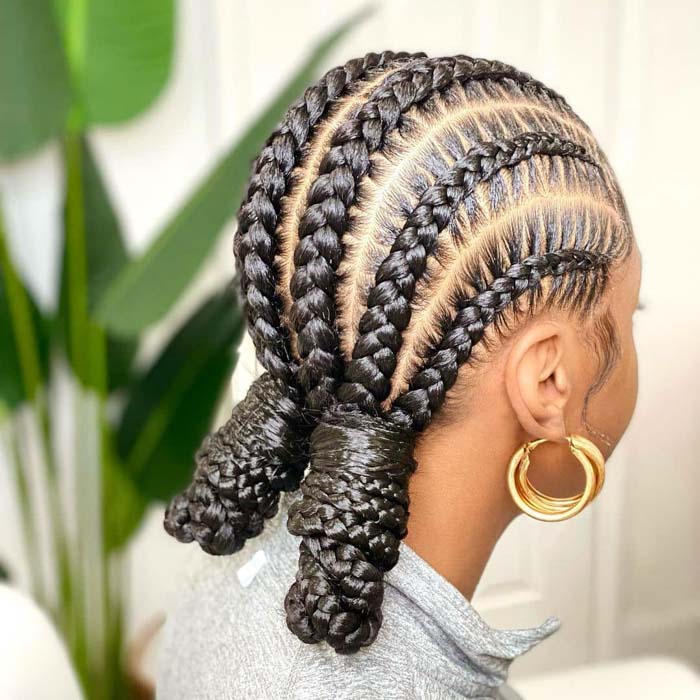
Wondering if shoulder-length braids suit your face shape? This straight-back feed-in style with defined parting lines works well for most, since the length hits below the jaw but above the collarbone, which balances rounder and longer faces alike. Ask your stylist for: feed-in braids, straight back, shoulder length. The clean scalp parting is the anchor of the look, so ask for parts that stay visible rather than blending into the braid. Black, thick, straight hair gives the cleanest result, and the shoulder length keeps the overall weight manageable for daily wear.
Feed In Braids With Geometric Parting
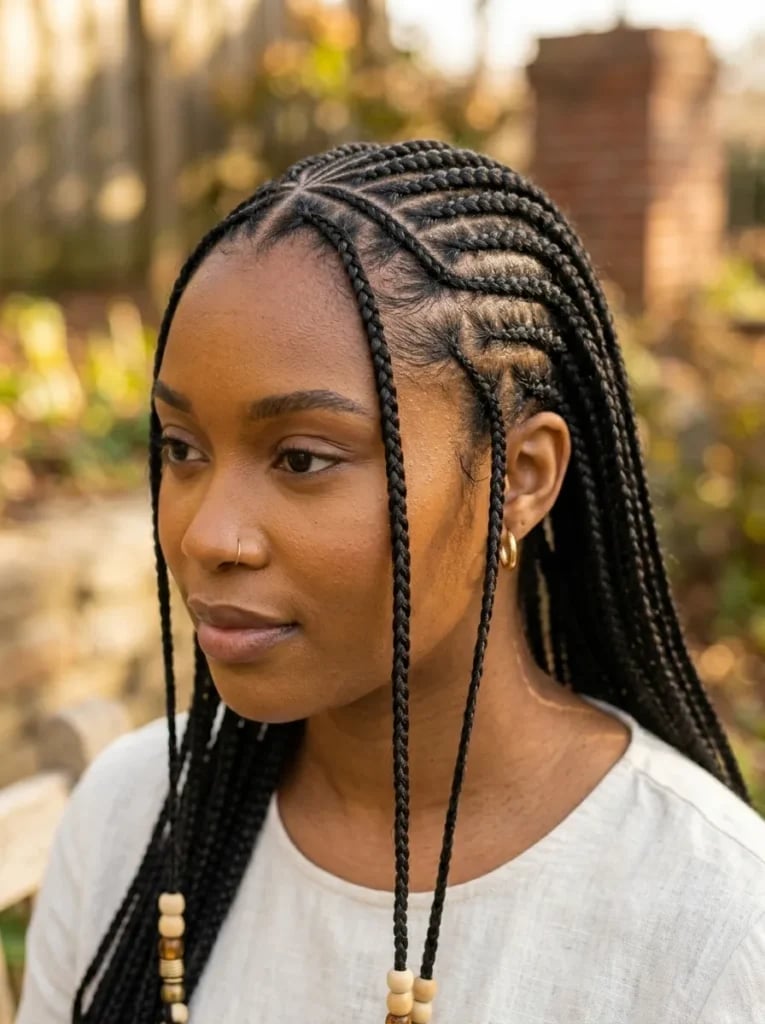
Geometric partings demand precision: every angle at the scalp is a line that stays visible for weeks. These neat feed-in braids use a middle part with clean, angular sections, then drop straight to mid-back in thick black strands. A few loose pieces around the face soften the math. Ask your stylist for: feed-in braids, geometric middle part. Expect the session to run long, mapping those shapes takes time, but the hold is solid because each braid is anchored from the root. A light pomade on the edges keeps the wisps where you want them without disturbing the parting.
Clean Feed In Braid Lines Shoulder Length
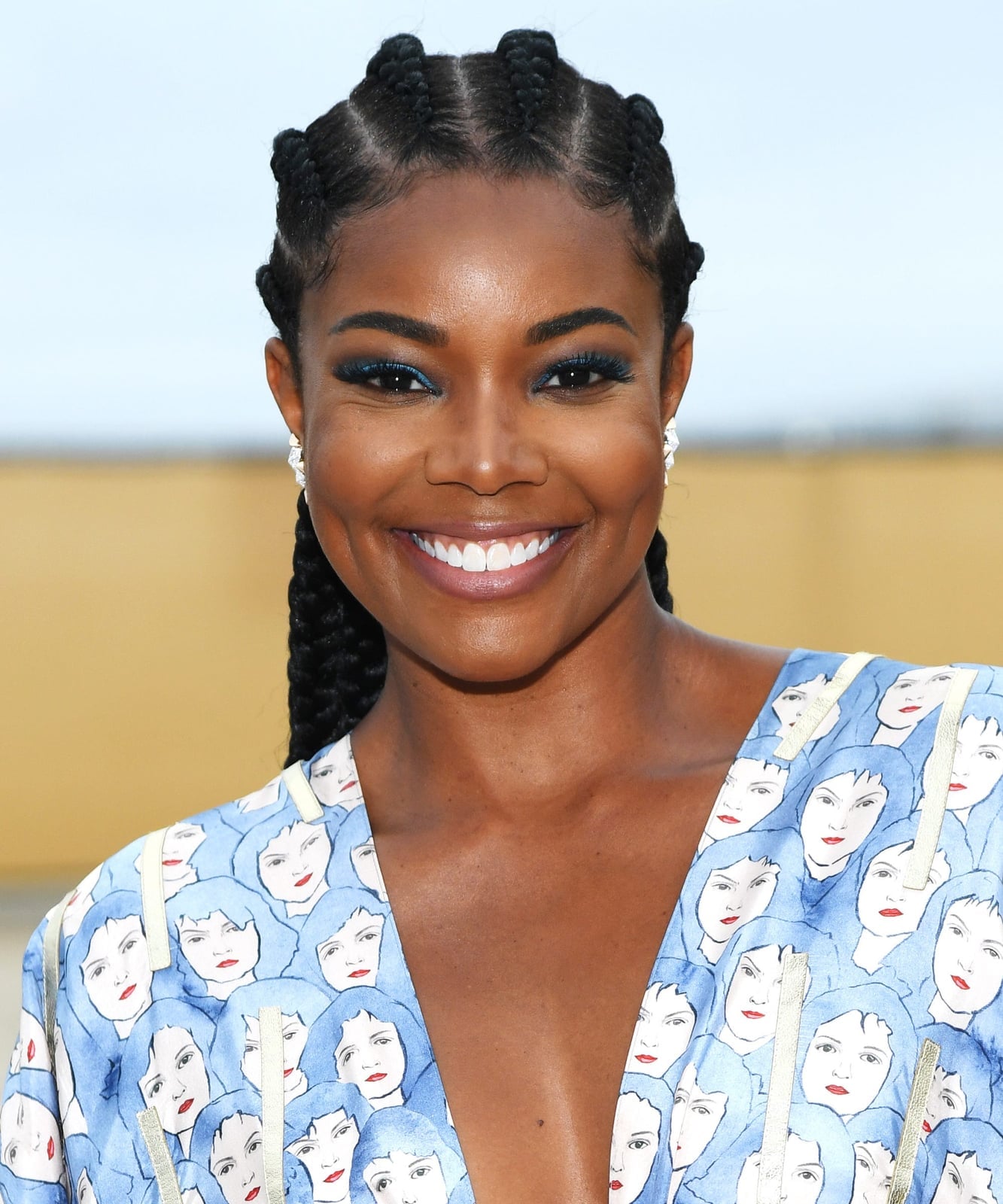
These shoulder-length feed-in braids sit on a middle part, each row defined and flat against the head. The black extensions blend seamlessly with natural hair, so the transition is invisible. Ask your stylist for: feed-in braids, clean lines, shoulder length. This is a salon-only style. No shortcut exists for the hand technique that creates that polished finish.
Thin Feed In Braids Mid Back Length, Black
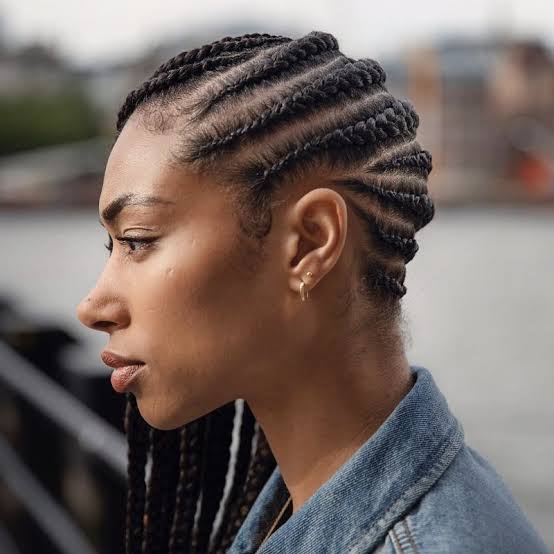
Thin feed-in braids on thick hair look deceptively dense. Each strand is fine, but when they run from a middle part to mid-back, the overall weight is substantial. The side view here shows how the parting lines stay neat even with dozens of tiny sections. The drawback: more braids mean more time in the chair and more tension at the root, so those with a sensitive scalp should size up. Ask your stylist for: thin feed-in braids, mid-back length. The hold is excellent, smaller braids tangle less than chunky ones, but the installation is a commitment.
Short Cornrows Geometric Pattern Top View
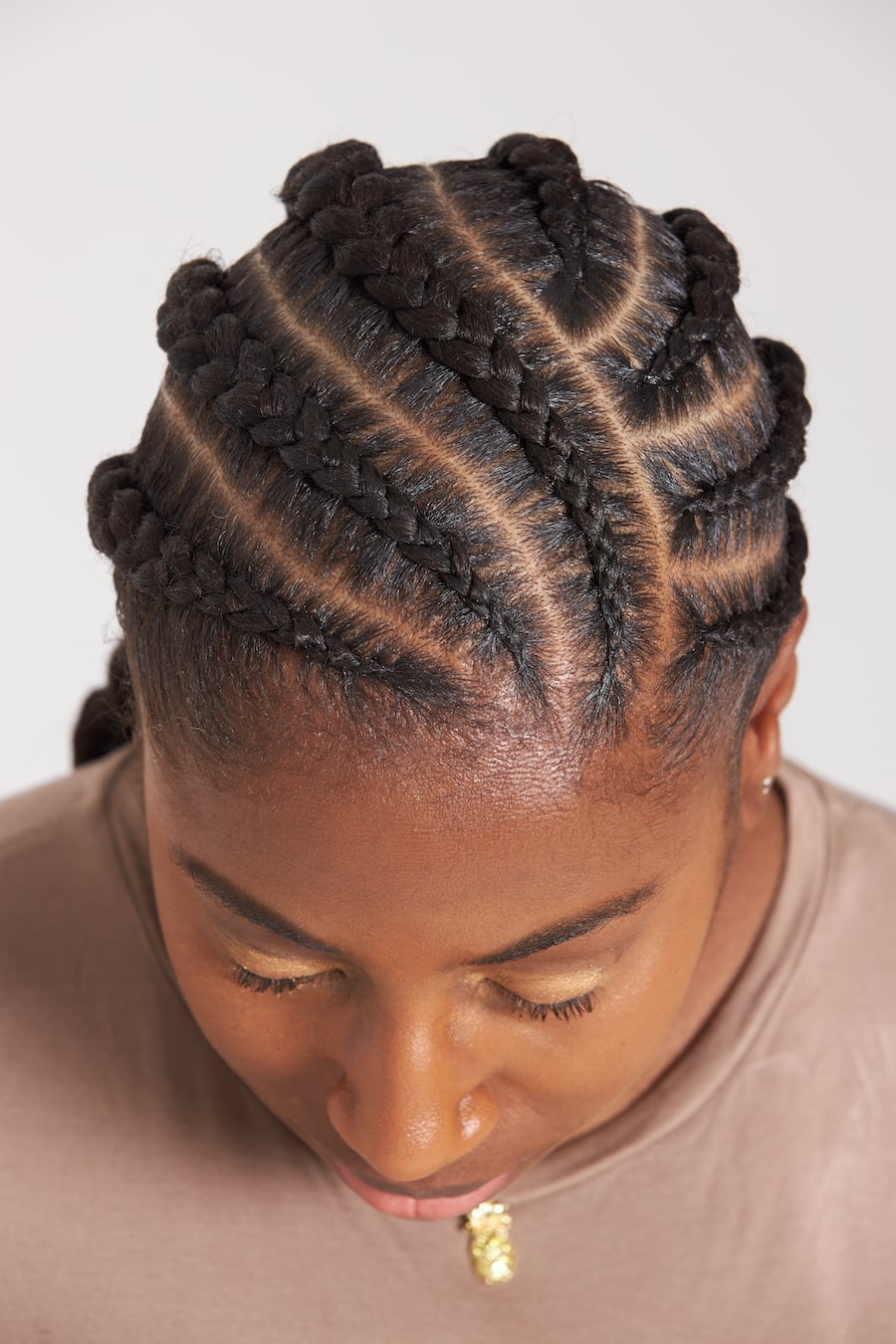
Short cornrows with a geometric pattern read like sculpture from above. The clean parts create a grid of angles that longer braids can’t show off. Every line is visible, every curve intentional. This top view makes it clear how the design works as a whole, not just row by row. Ask your stylist for: short cornrows, geometric pattern. It suits anyone who wants a short style that holds its shape for weeks with minimal daily fuss. The trade-off against longer feed-in braids is that the pattern is the whole look, not just a detail.
Multi-Toned Feed In Braids Mid Back
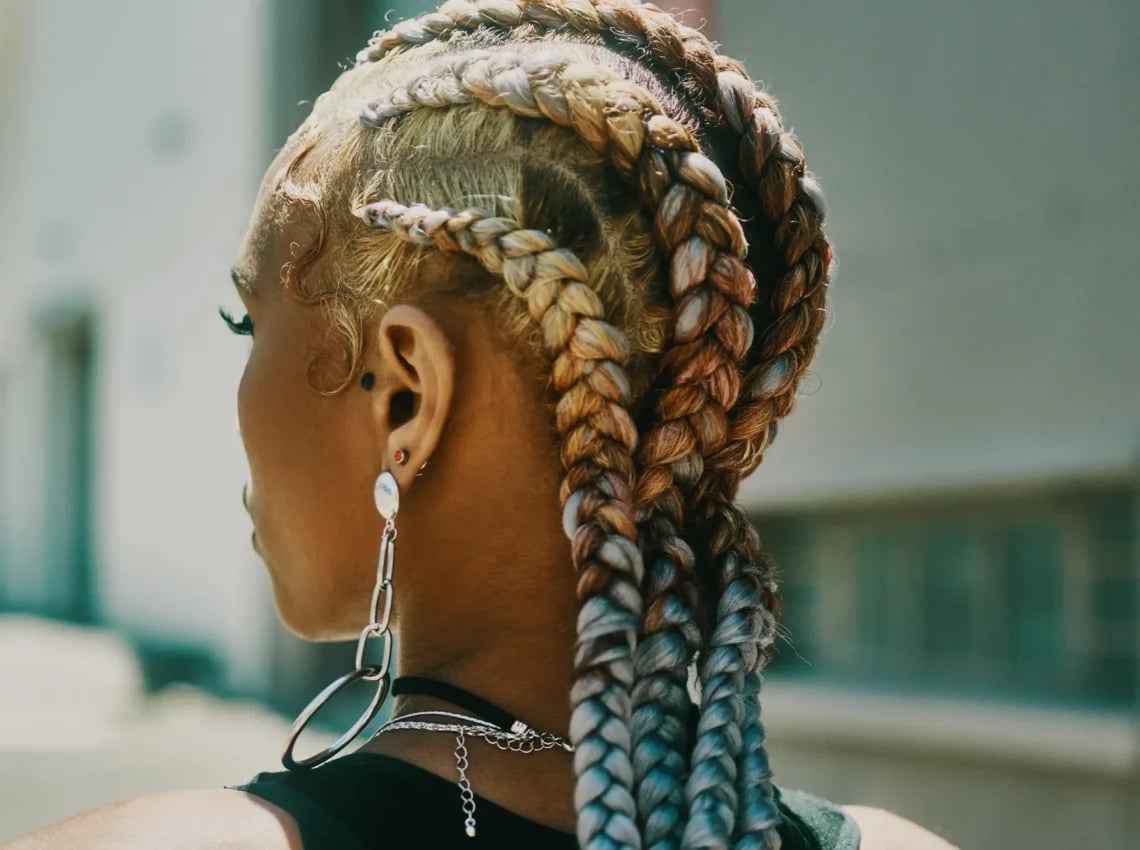
These mid-back braids use a middle part and a glossy finish that reflects light differently on each tone. Ask your stylist for: feed-in braids, blonde ash brown tones, mid-back. The technique relies on alternating shades in the feed section rather than dyeing the natural hair, so the color stays consistent as the braids wear. No toning appointments needed.
Feed In Braids With Decorative Beads
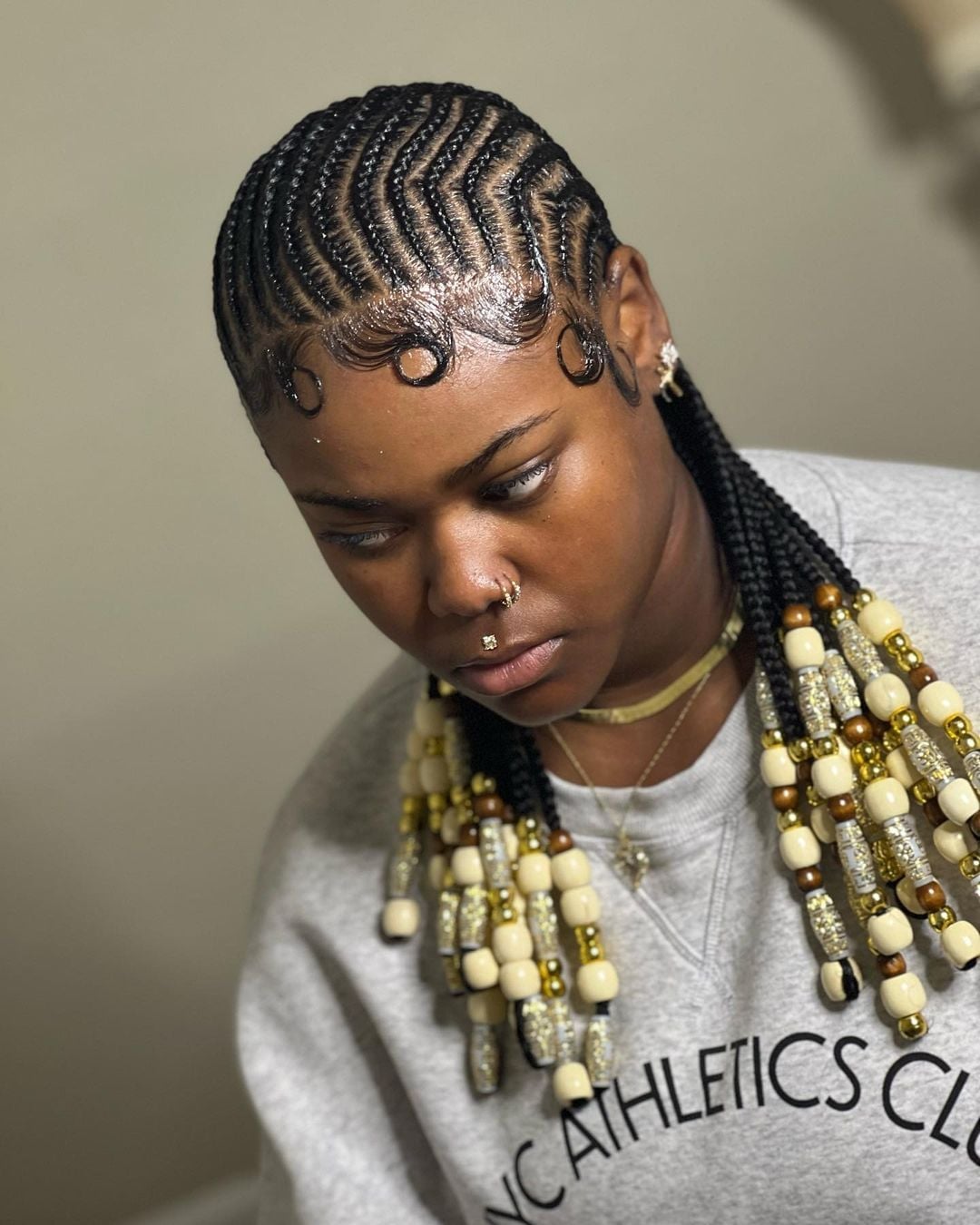
Wondering how to add some personality to your feed-in braids without going full carnival? The trick is strategic bead placement. These mid-back length feed-in braids start black at the roots and fade to blonde tips, with wooden and metallic beads threaded onto select strands. A middle parting keeps the overall look balanced rather than chaotic. Ask your stylist for: feed-in braids with beads, blonde tips. The beads work best on uniform, medium-thickness braids that can support the weight without sagging. Stick to beads that match your personal style, metallic for evening, wood for daytime, and avoid overloading any single braid.
Feed In Braids Styled Into Low Bun
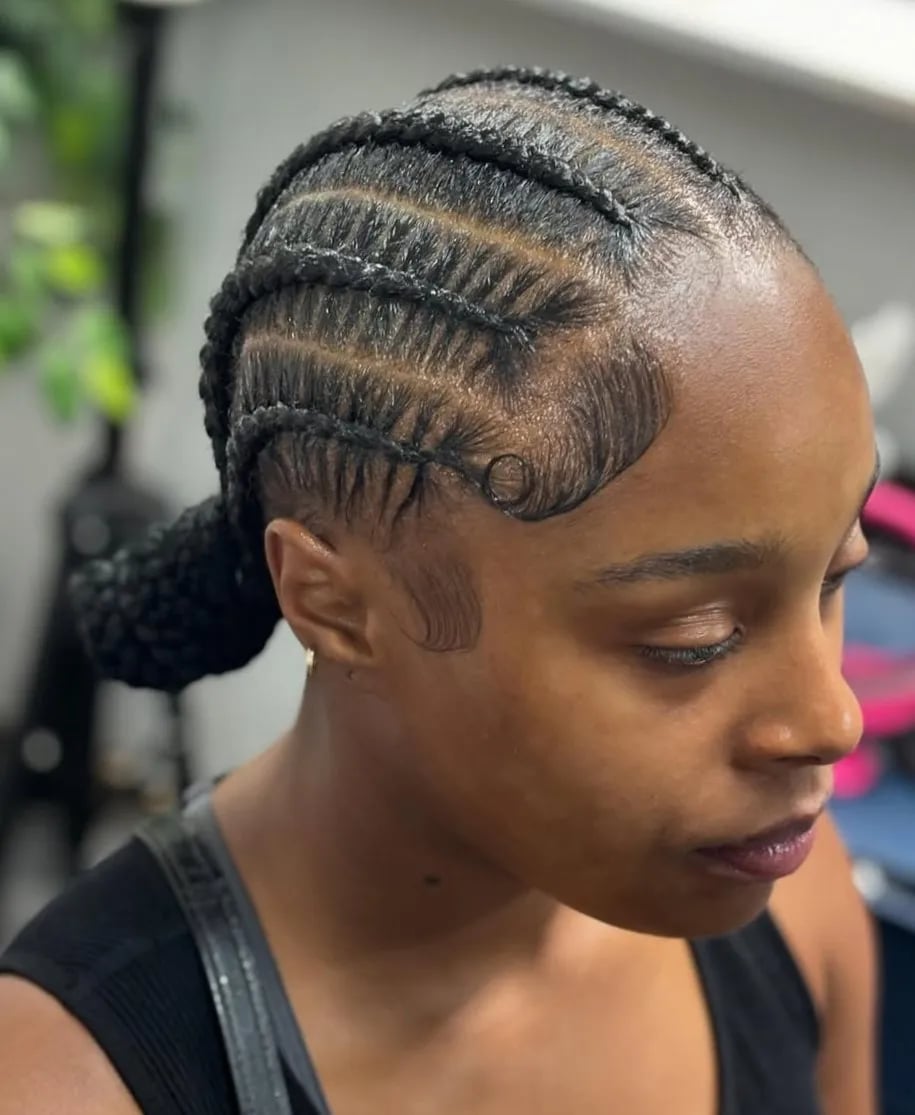
The real trick here is how clean the edges stay. These side-parted feed-in braids sweep back into a smooth low bun at the nape, with a few deliberate wisps around the hairline softening the silhouette. Black, thick braids hold the shape of a bun without constant adjustment. A low bun is the rare work-to-dinner move that actually works: polished enough for the office, relaxed enough for drinks afterward. Ask your stylist for: feed-in braids, side part, low bun. A flexible hold hairspray on the wisps keeps them where you put them without stiffening the rest.
Two Thick Feed In Braids Back View
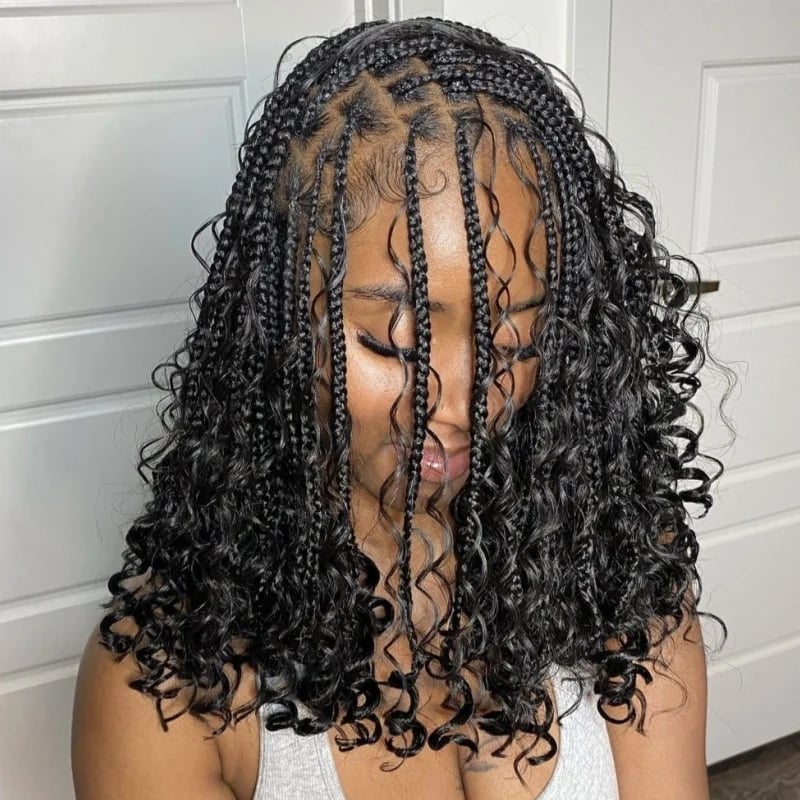
Two thick feed-in braids are the low-fuss option that still looks intentional. Starting from a clean middle parting at the crown, they fall straight to mid-back with a glossy finish and neatly tied ends that won’t fray. The thickness of each braid means fewer sections to manage, which cuts styling time in half compared to smaller braids. Ask your stylist for: two thick feed-in braids, mid-back. To keep those ends secure, check them every week for loose threads and seal with a clear elastic or hot water dip. Plan for a refresh every three to four weeks as new growth softens the part.
Collarbone Length Box Braids Side Part
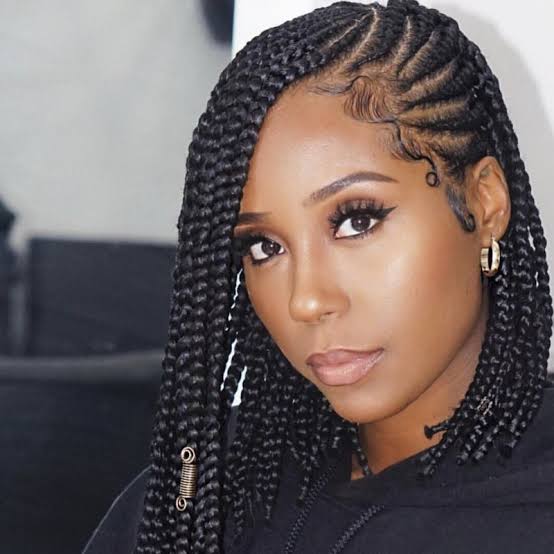
Is a side part the answer to box braids feeling a bit too uniform? For collarbone length, yes. A deep side part breaks the symmetry and gives the braids movement around the jaw, good for round and square face shapes that want a little elongation. These black box braids are cut straight to collarbone length, hitting just below the chin, which makes them easy to tuck behind an ear or push to one side. Ask your stylist for: collarbone length box braids, deep side part. The shorter length means less weight on the roots, so the part stays crisp longer without frequent tightening.
Box Braids With Loose Wavy Ends
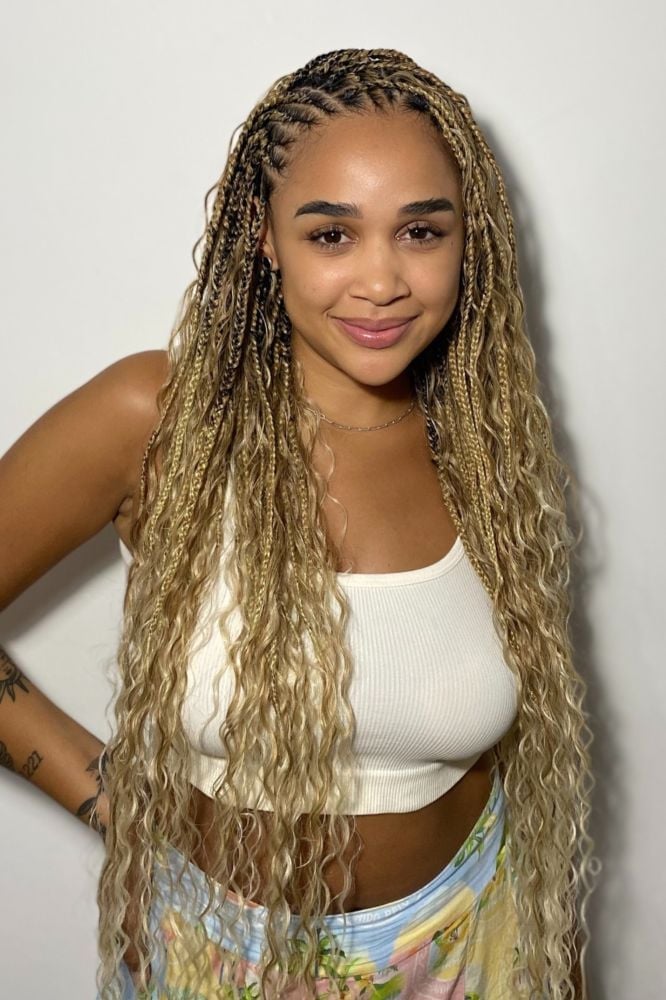
The last few inches of these mid-back box braids are left loose and styled into soft waves, which changes the whole silhouette. Instead of a solid block of braid, the ends feather out and catch light differently. A middle parting and a mix of blonde and brown highlights give the braids depth, the lighter pieces read as dimension, not just color blocking. Ask your stylist for: box braids, blonde and brown highlights, wavy ends. To refresh the wave, dampen the ends and twist them around your finger, then let them air dry. The loose texture moves differently than straight braids, so expect more bounce in the lower half.
Feed In Braids With Gray Tips
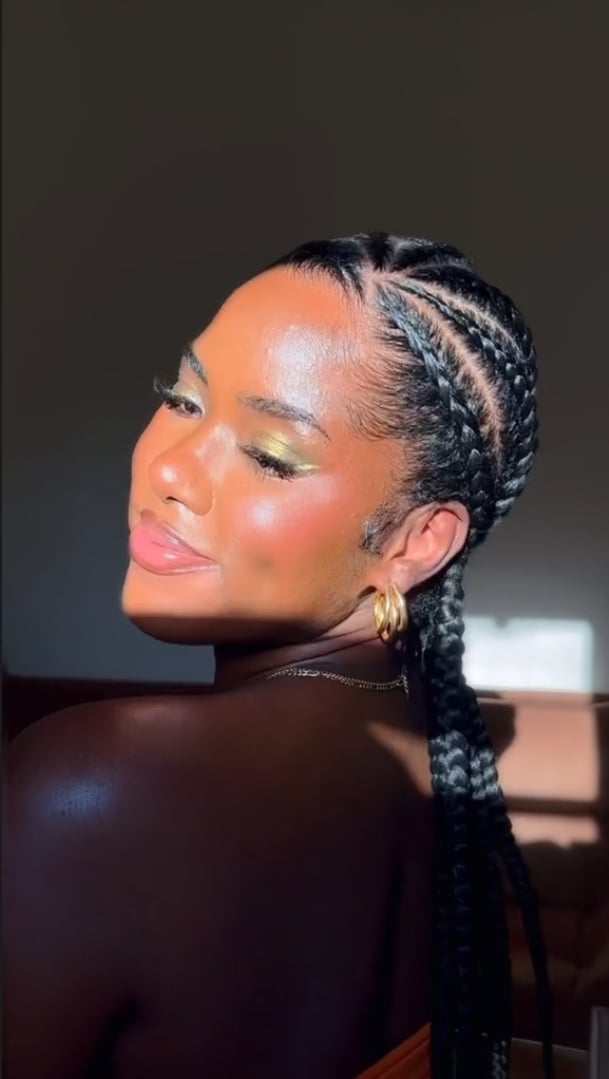
If you want gray tips to stay crisp, be prepared for regular toning to prevent them from turning brassy. These mid-back feed-in braids start black and graduate to a striking silver at the ends, a bold color accent on a classic style. The middle parting keeps the lines clean, and the gray tips add a contemporary edge without committing to an all-over color. The look suits thick, straight hair that can handle the weight of extensions. Ask your stylist for: feed-in braids, mid-back length, gray tips. This is a salon-only process, and the honest reality is that gray extensions require more maintenance than a single-tone set. If you have fine hair, the extension weight could cause tension, so consider a shorter length or fewer braids. Skip this if you prefer low-maintenance color.
Feed In Braids Intricate Parting Pattern
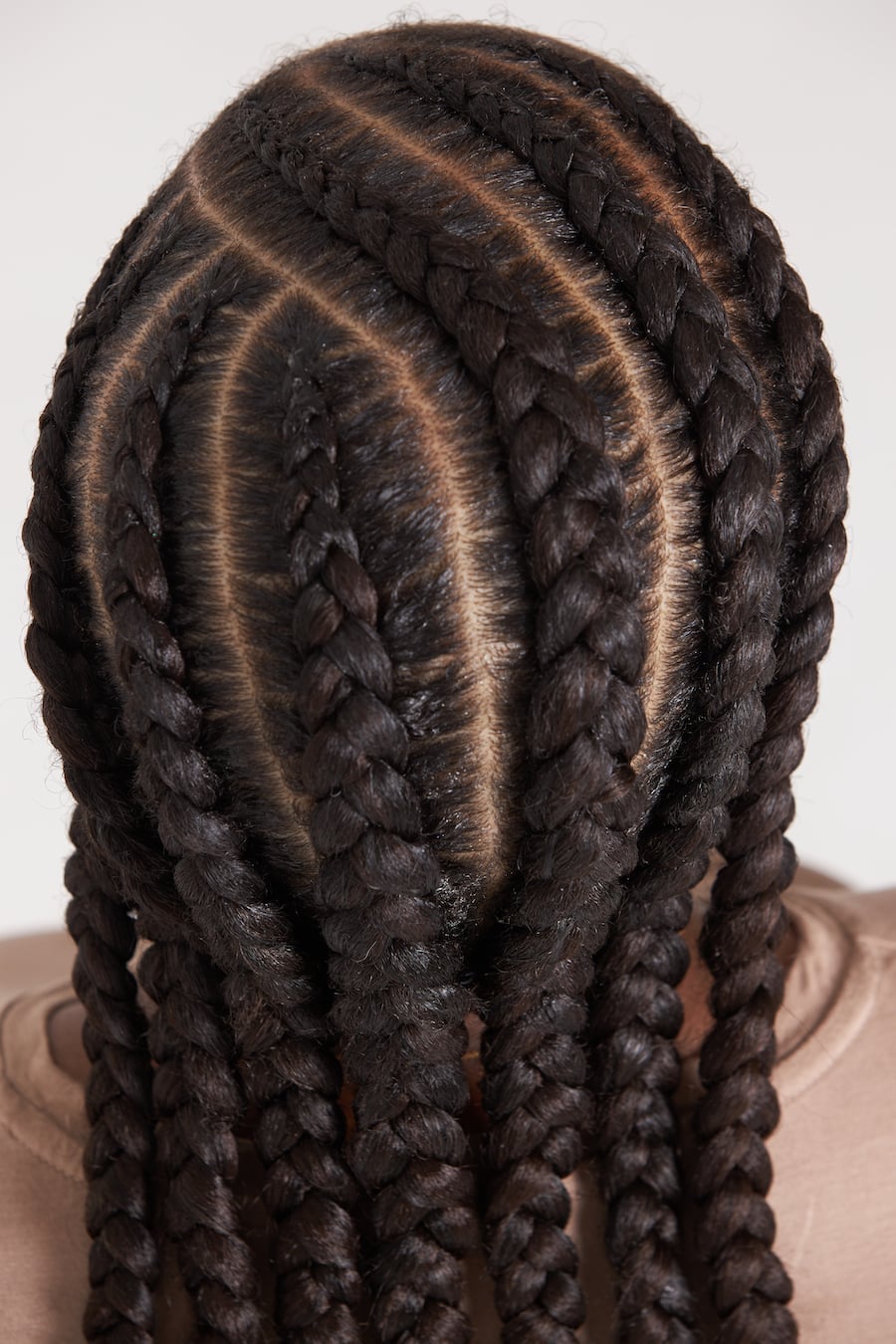
Ever wonder how to get those curved, precise partings in your feed-in braids? This back view shows meticulously crafted feed-in braids with a distinct parting pattern that creates curved sections on the scalp. The black, thick hair allows the pattern to stand out clearly. The middle parting anchors the design, and the braids flow evenly from the curved sections. This look suits those who appreciate detailed scalp work and have straight, thick hair that holds a clean part. Ask your stylist for: feed-in braids, intricate parting pattern. The key is to bring a reference photo and specify the exact curve design you want, whether it’s swoops or geometric arcs. The precision of the parting determines how long the style stays looking its best. This is not a quick style; it requires patience and a skilled hand.
Chin Length Dark Brown Box Braids
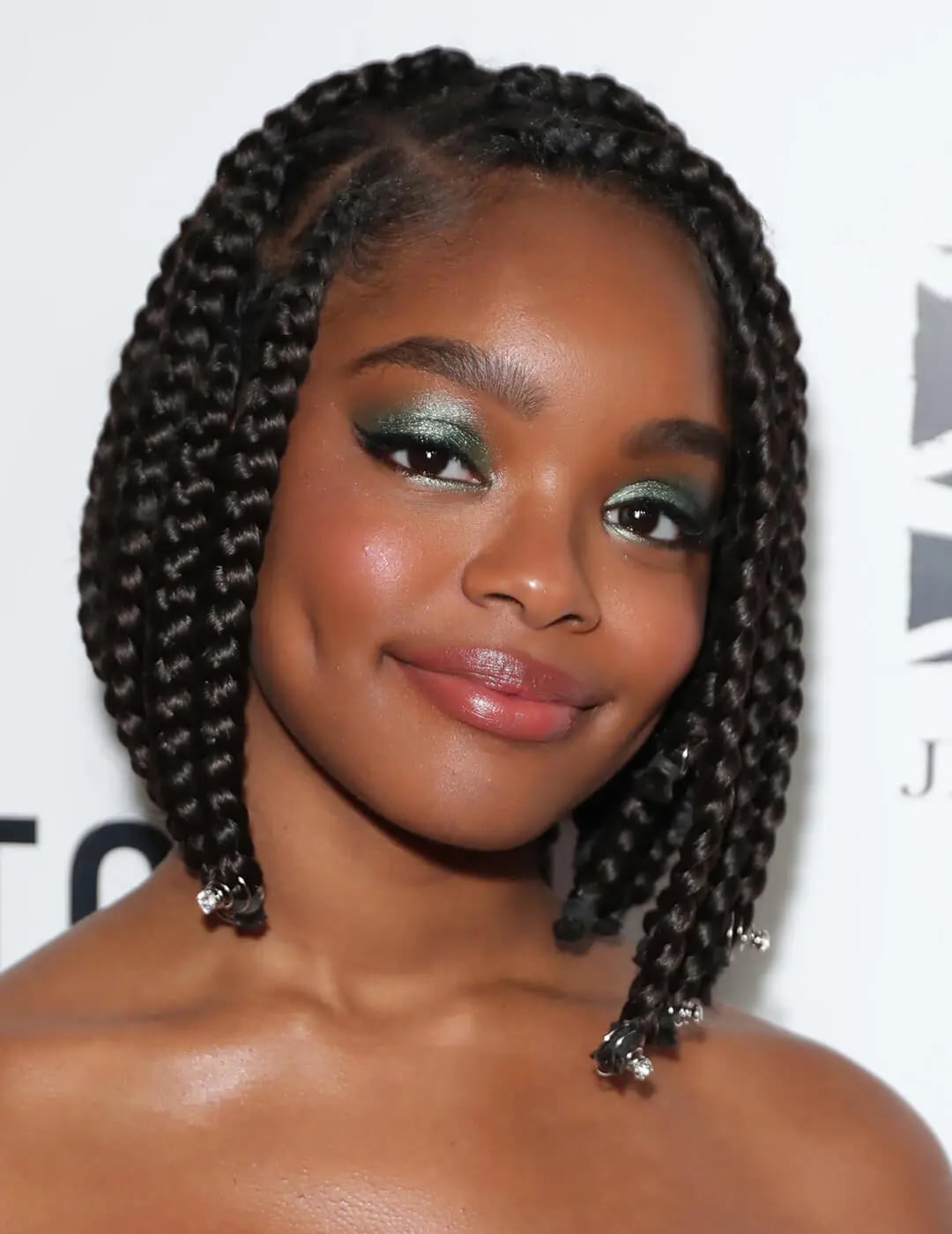
These dark brown box braids are cut straight at chin length, with small silver beads at the ends adding a subtle accent. The look suits those with straight hair seeking a short, structured braided style that frames the jawline. Ask your stylist for: chin length box braids, beaded ends. If you prefer movement and the ability to pull your braids back, longer lengths are a better fit. This cropped version is ideal for a clean, modern look.
Feed In Braids With Geometric Pattern Ponytail
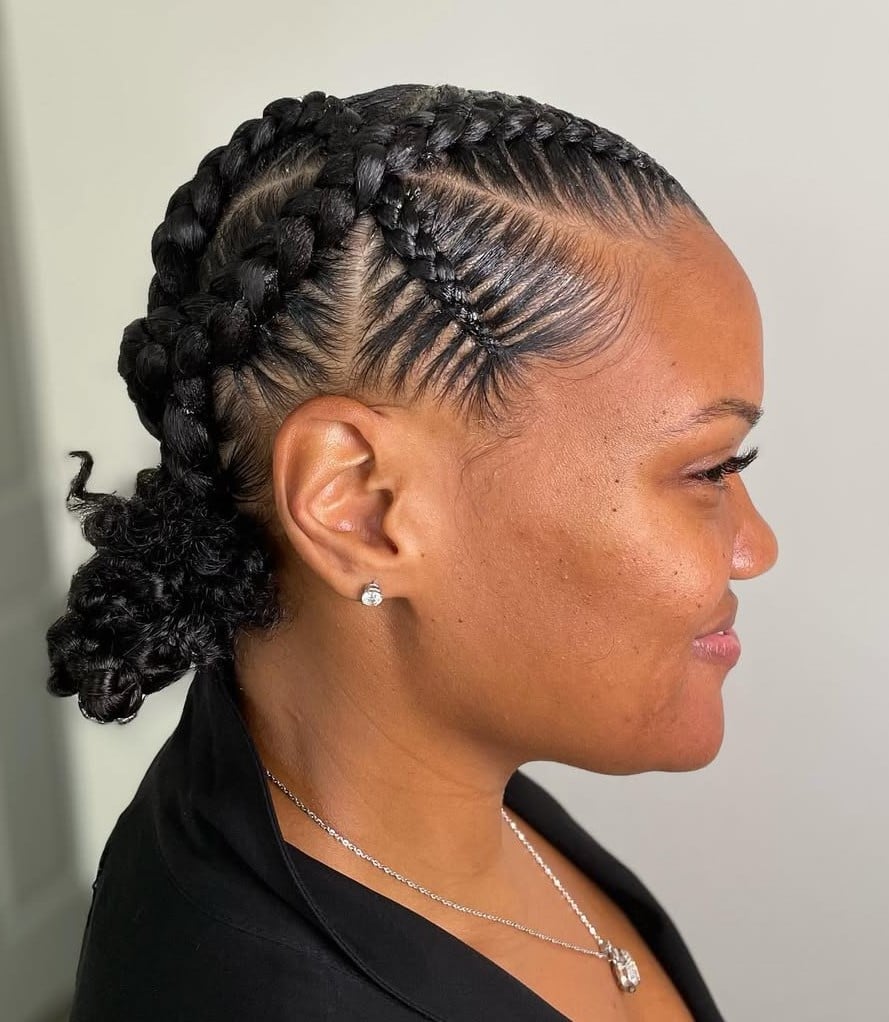
The geometric pattern at the scalp remains visible even when the braids are swept back into a low ponytail, making this a style that works for summer festivals or evening events. These shoulder-length feed-in braids feature a distinct geometric parting pattern, gathered at the nape with loose curly tendrils framing the face. The black, thick hair holds the pattern well. Thick, straight hair holds the pattern well and creates a styled braided look with face-framing softness. Ask your stylist for: feed-in braids, geometric pattern, low ponytail, face-framing tendrils. The side parting helps the geometric lines stay defined.
Feed In Braids With Colorful Beads
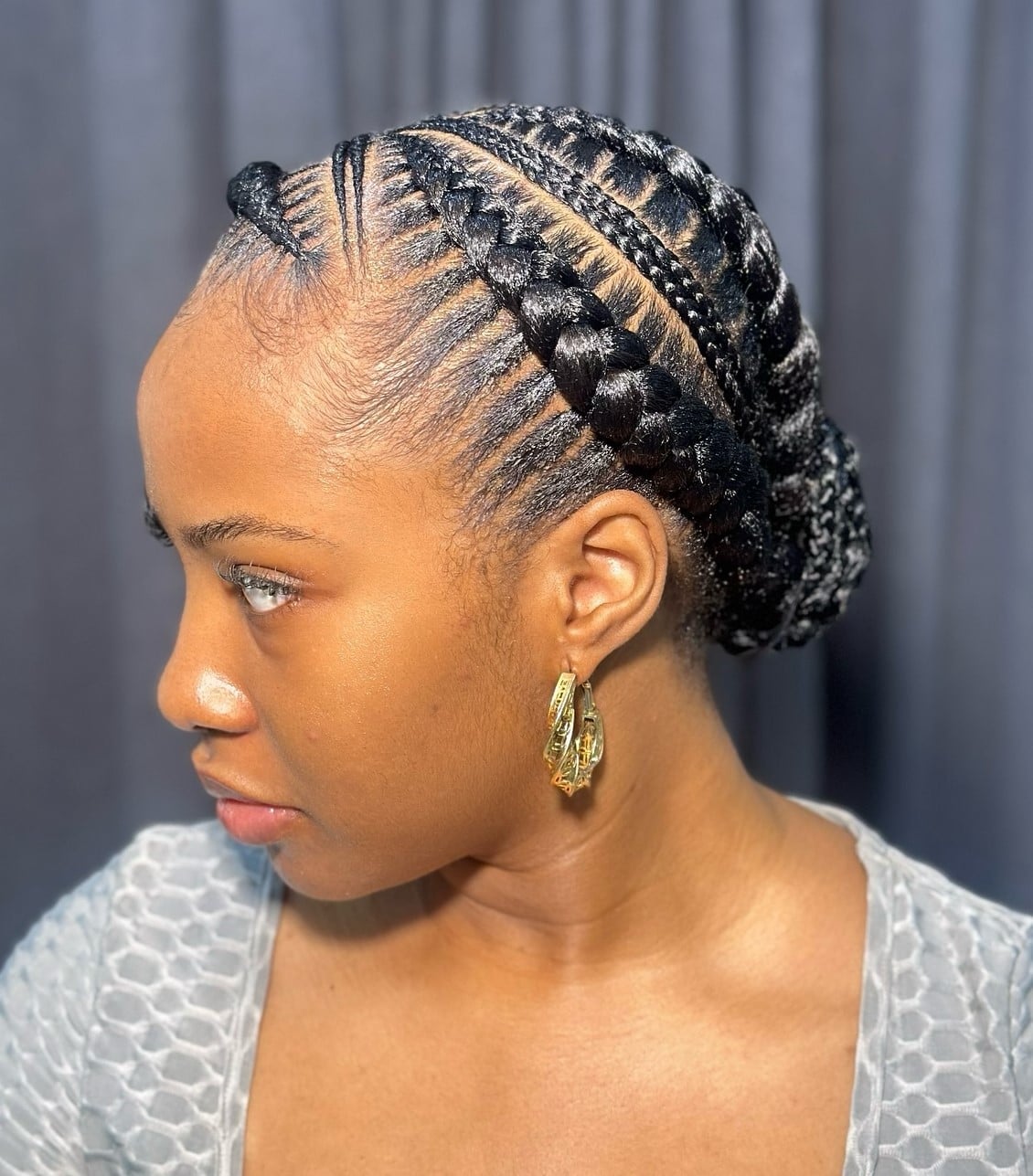
Beads add a playful element, but they come with a maintenance reality: they can snag on clothing or fall off if not secured properly. These mid-back feed-in braids are decorated with numerous beads in various sizes and colors, creating a festive look. The black, straight hair provides a clean backdrop for the beads. This style works best for thick, straight hair when you want a playful and embellished braided look. Ask your stylist for: feed-in braids, mid-back length, colorful beads. To keep the beads in place, check them weekly and reinforce any that feel loose. Be careful when removing hats or scarves to avoid pulling the beads. The beads also add weight to the braids, which can cause tension on the scalp over time, so consider the length and thickness of your natural hair before committing.
Deep Black Feed In Braids With Red Tones
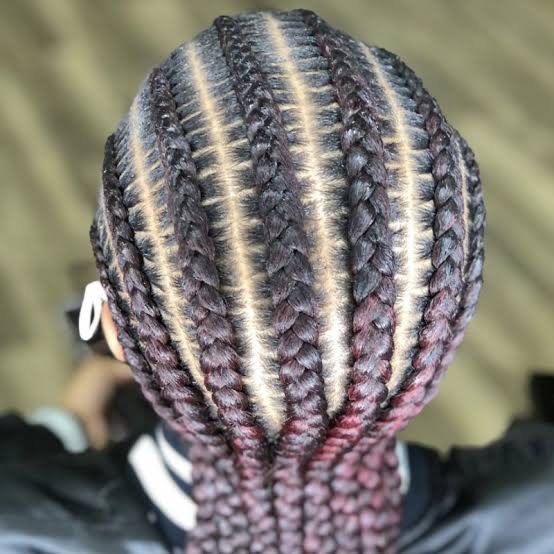
The top down view reveals precisely defined scalp lines, but the detail worth noting is the subtle red undertone woven through deep black extensions. This is achieved by mixing a dark auburn strand into each braid at the root, creating a warm glow without an obvious stripe. The mid back length and thick texture keep the look dense. Ask your stylist for: feed in braids, deep black with red undertones, mid back. A color protecting shampoo once a week will keep those red notes from fading into rust.
Perfectly Uniform Feed In Braids
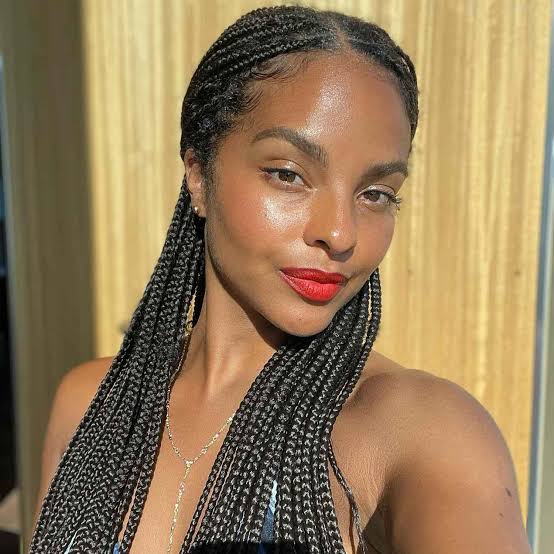
Has a stylist ever sent you home with braids that look slightly different on each side? This is the opposite of that. The middle parting is dead center, the feed-in technique is identical on both sides, and every braid is the same thickness from root to tip. The glossy black finish and mid-back length create a clean silhouette that works for professionals and anyone who hates asymmetry. Ask your stylist for: perfectly uniform feed-in braids, mid-back. Thick, straight hair holds this precision best; finer textures may need smaller sections to keep the lines crisp.
Neatly Parted Shoulder Length Braids
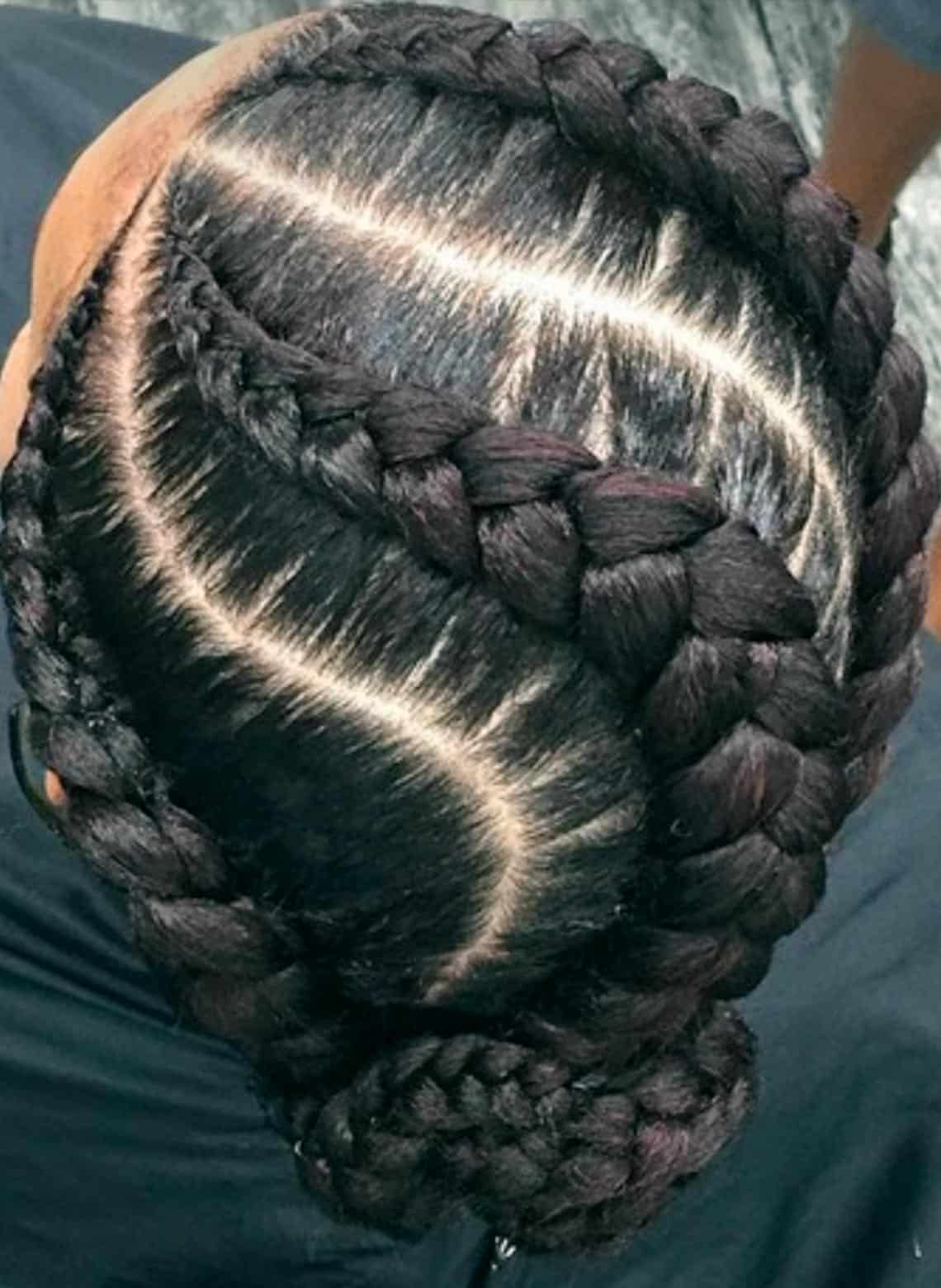
This is not a quick weekend project. The difference between shoulder-length braids that look tidy and ones that look rushed comes down to the parting: clean, straight lines from the hairline to the nape, with no zigzagging. The black, thick braids fall to the shoulders with a polished finish that holds its shape for weeks. Ask your stylist for: neatly parted shoulder length braids. This is strictly a salon service; attempting the scalp parting at home usually ends with crooked sections and uneven tension.
Layered Bob With Integrated Braids
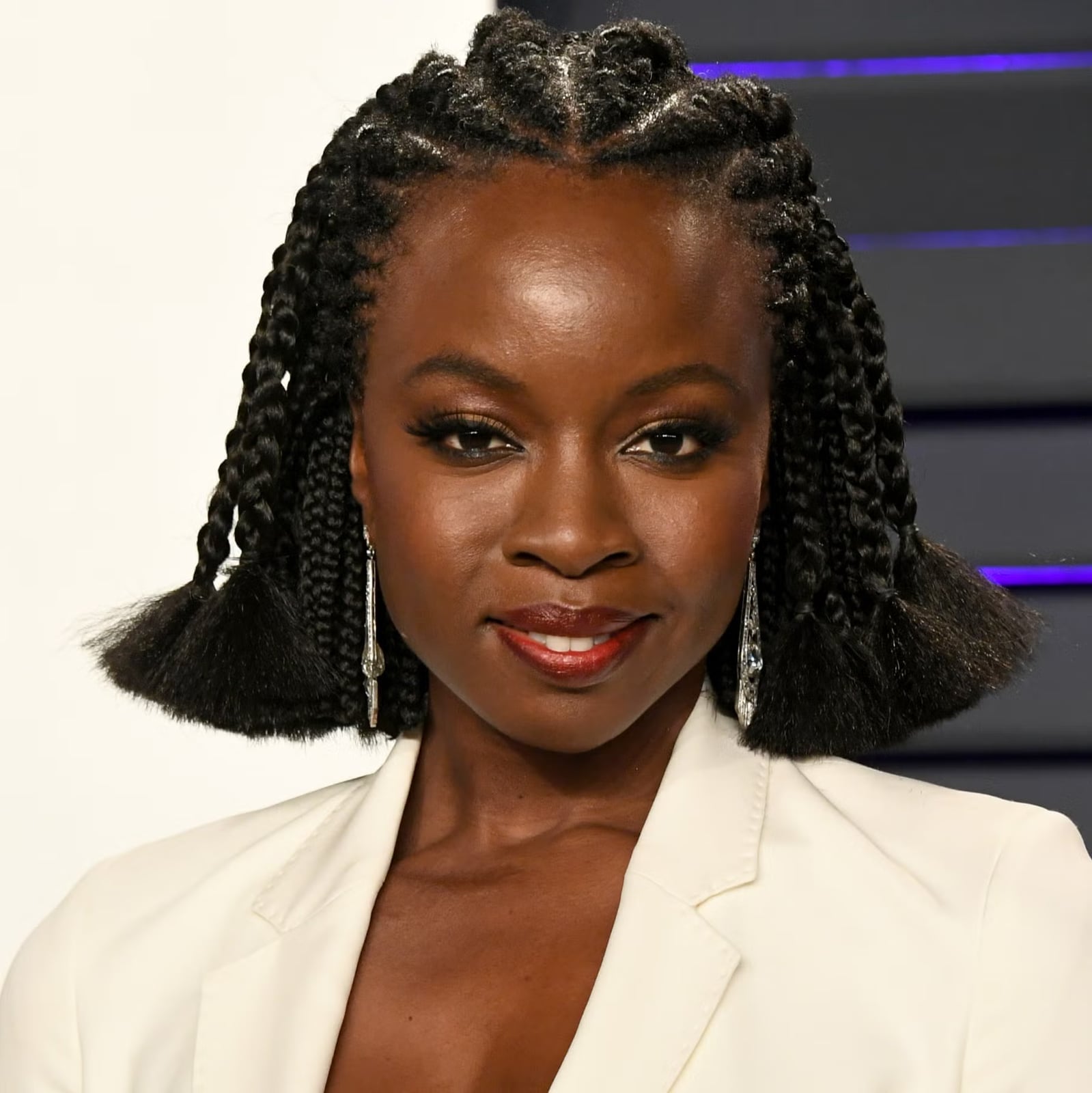
This style weaves feed-in braids into a chin-length layered bob, leaving the back and sides of the cut exposed. The black, straight texture of the bob contrasts with the raised braided sections, adding dimension without the weight of full-length extensions. Ask your stylist for: layered bob with integrated braids, chin length. A traditional full braid set gives uniform length; this keeps the short cut visible while adding interest at the front.
Long Uniform Box Braids Side Part
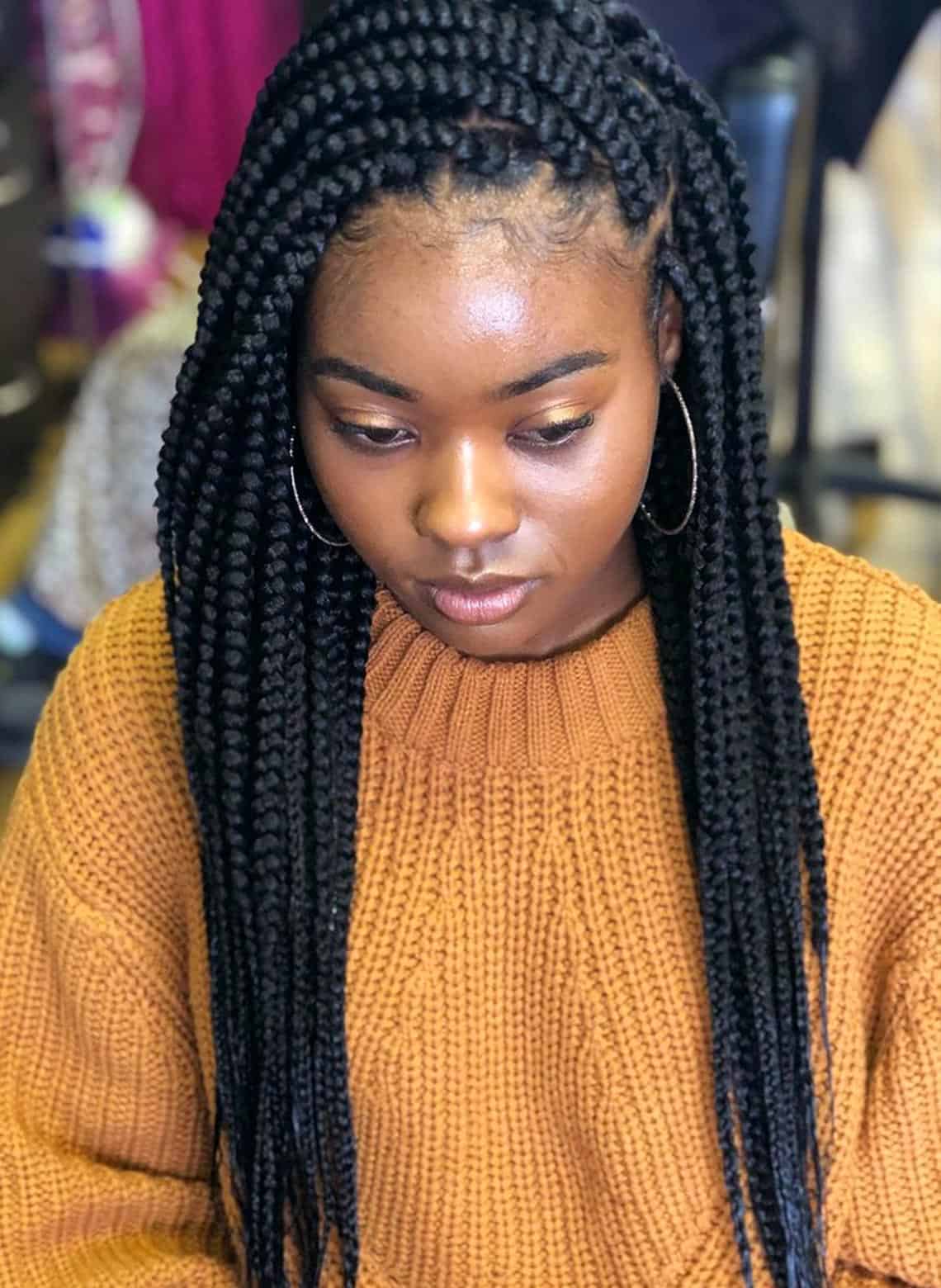
Long box braids demand a few honest conversations about daily management. The side part here is deep and deliberate, helping the thick, mid-back length braids fall forward. The uniform thickness and black color make the style look like one solid piece. Ask your stylist for: long box braids, mid-back length, side parting. Sleep on a silk pillowcase to keep the side part from shifting overnight, and plan for a trim every eight to ten weeks as new growth appears.
Cornrows Transitioning Into Braided Bun
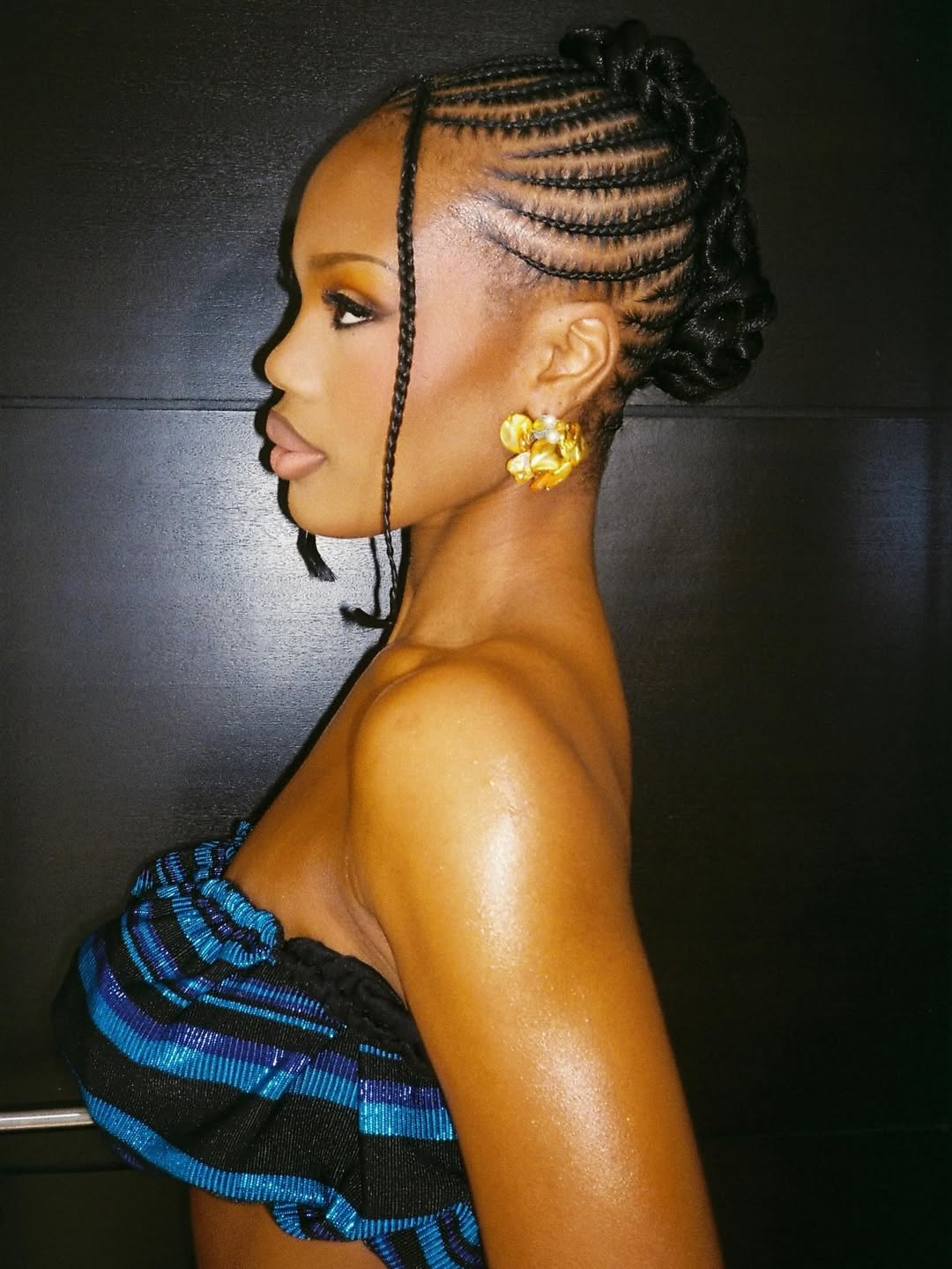
The neat cornrows sweep straight back from a middle parting, then gather into a braided bun at the crown. This design suits those with thick, straight hair who want an elegant style that keeps hair off the neck. Ask your stylist for: cornrows into a braided bun, middle part. The bun holds its shape well for a full workday, and the transition from flat cornrows to the raised bun adds a polished finish. It’s an ideal choice for a professional setting or a formal event where you want your hair to stay put from morning to evening.
Two-Tone Feed In Braids With Curls
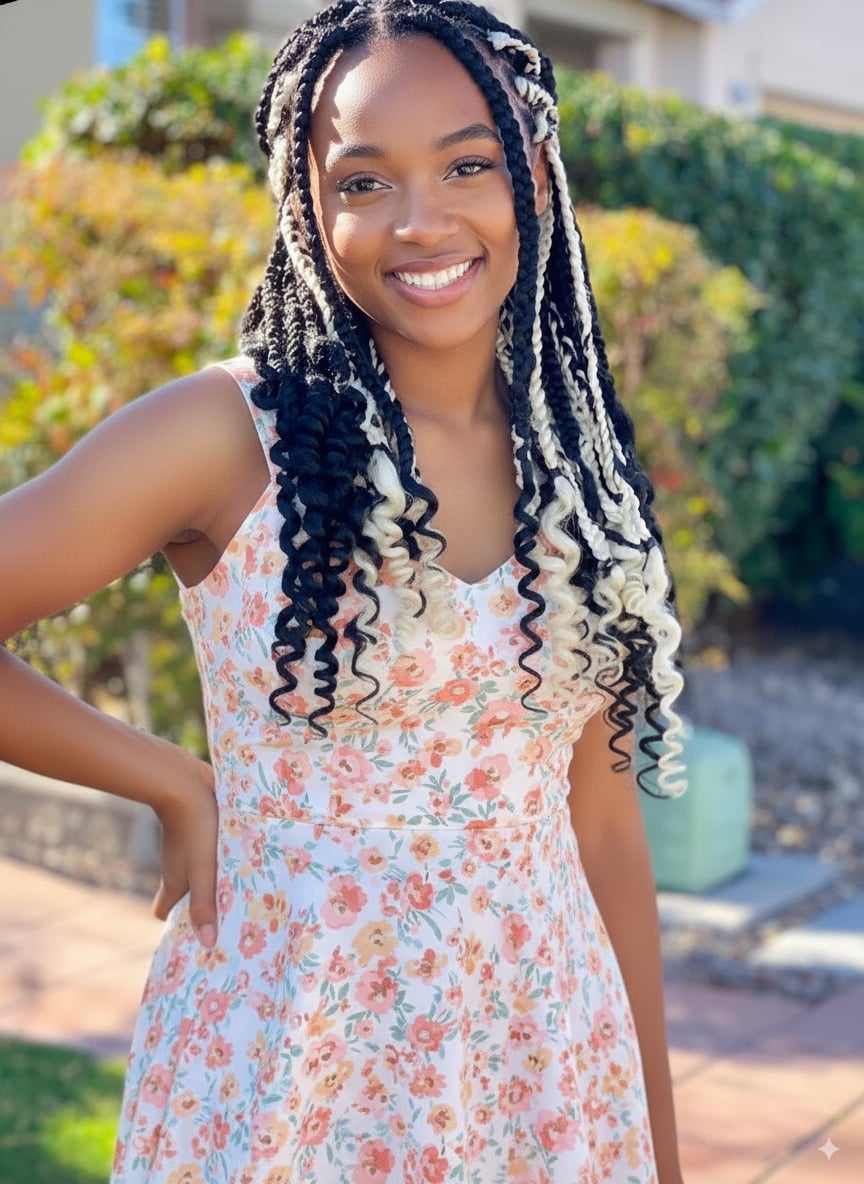
The two-tone effect comes from braiding black hair at the roots and switching to blonde extensions partway down, then finishing each braid with loose curls. This technique works best on thick, straight hair that can support the weight of the extensions. Ask your stylist for: feed-in braids, black and blonde, curly ends. The contrast between the dark roots and bright tips is striking, and the curly ends give the style a playful, summery feel. The middle parting keeps the look balanced, while the curls add movement that flat braids lack.
Feed In Braids With Wavy Extensions
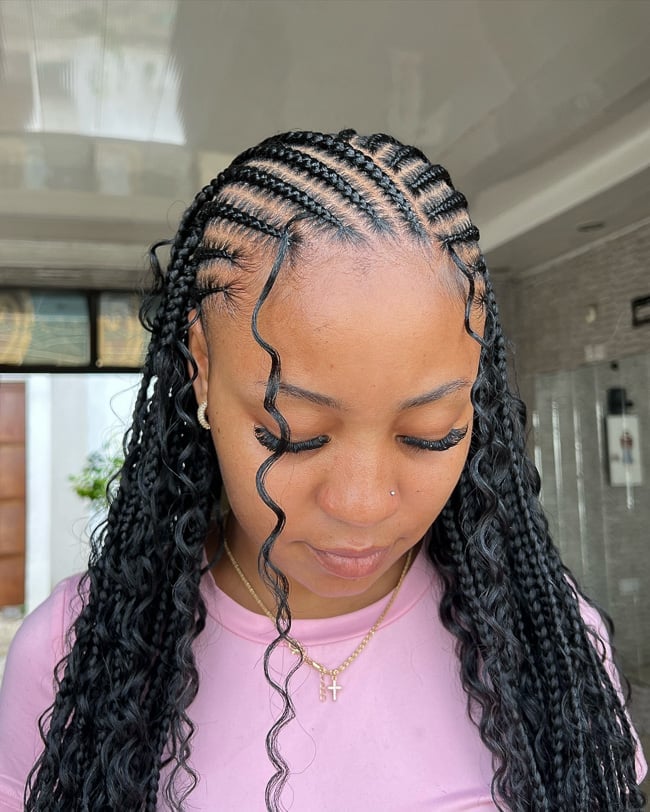
If you want wavy extensions but still like a neat scalp, this style gives you both. The feed-in braids start with a geometric parting pattern that takes real precision to create, then transition into long, loose waves that reach mid-back. Ask your stylist for: feed-in braids, geometric parting, wavy extensions. This is a salon-only job, and the parting pattern alone can add an hour to your appointment. The honest trade-off is upkeep: the waves need regular detangling with a wide-tooth comb to keep them from matting, and the geometric lines lose their sharpness as new growth appears.
Blonde Feed In Braids Back View
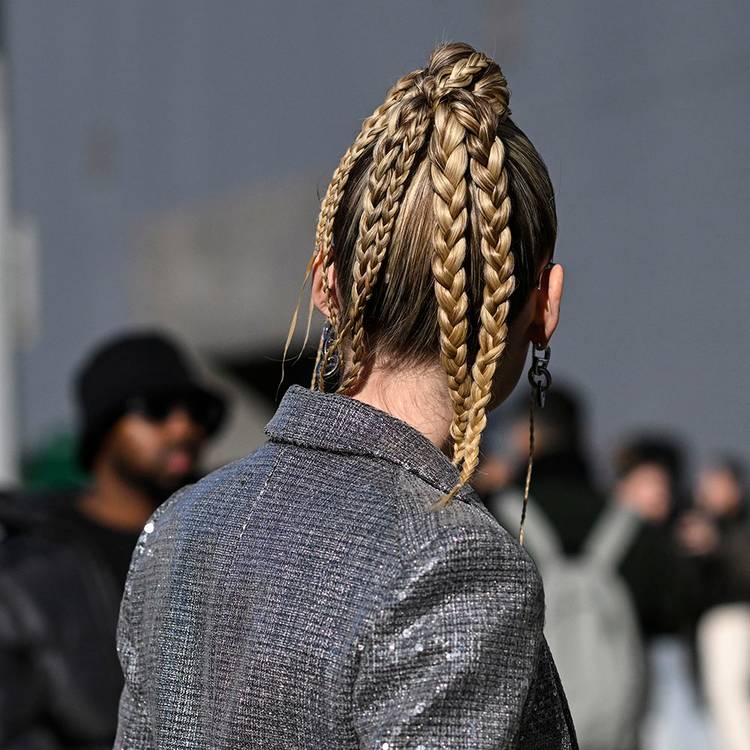
How do you get a full head of blonde feed-in braids without the brassiness? You ask for the exact shade and thickness up front. These braids are a bright, uniform blonde, parted down the middle and falling straight to mid-back. A few braids hang slightly longer than the rest for a natural, layered effect. Ask your stylist for: blonde feed-in braids, mid-back length. The style suits thick, straight hair that can carry the weight of the extensions. To keep the blonde from turning yellow, use a purple shampoo once a week or so.
Feed In Braids Into Ponytail Wavy Ends
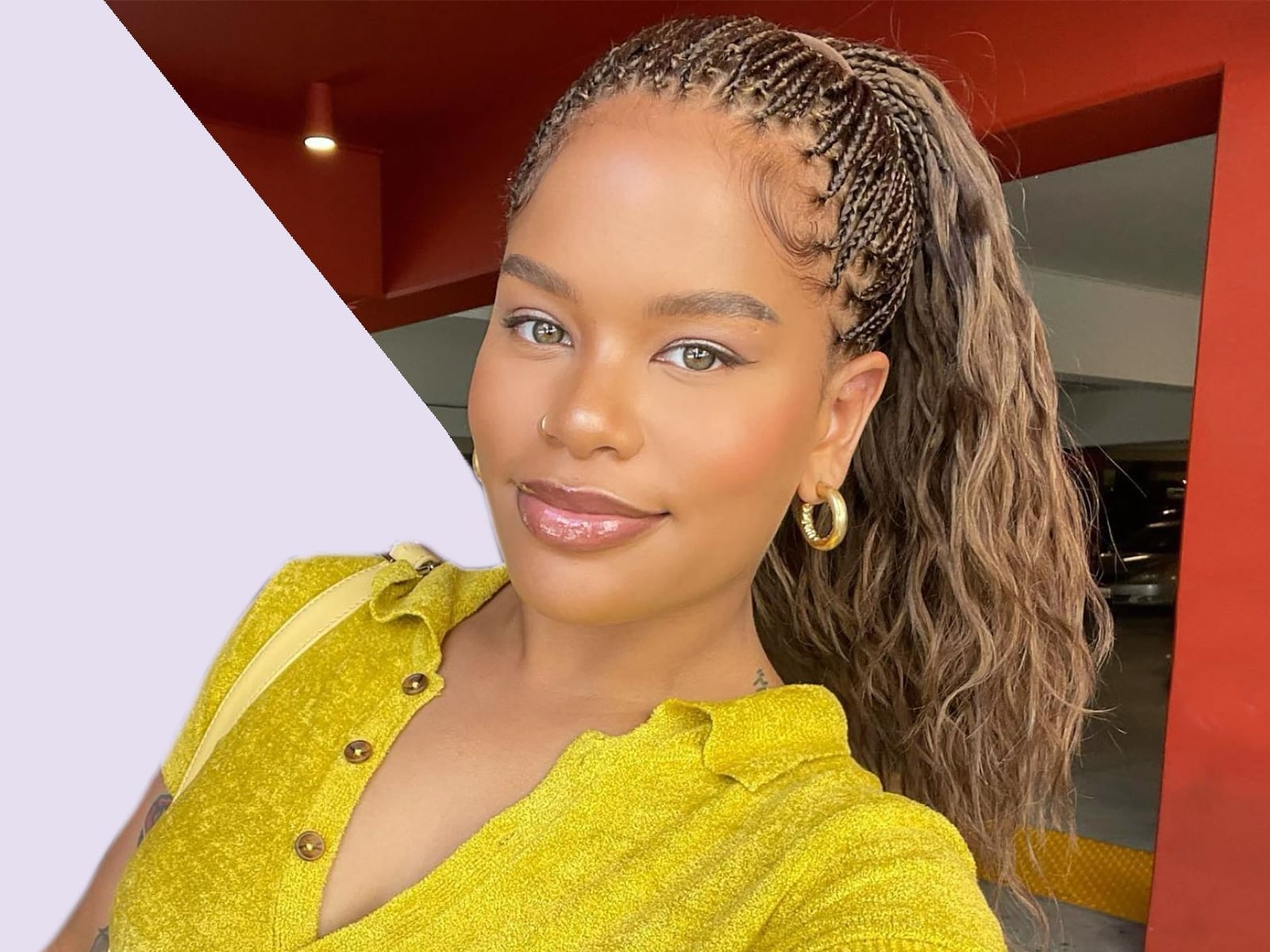
The black base shifts to blonde in the last few inches, a detail that shows off the wave pattern. Ask your stylist for: feed-in braids into high ponytail, blonde wavy ends. The ponytail holds its shape well since the braided section stays secure, but the wavy ends need a texturizing spray to keep their volume and definition. A middle parting keeps the front clean, while the waves add movement at the back.
Fine Micro Braids Mid Back Length

Thick braids make a statement, but fine micro braids do something else entirely: they create a textured surface from the density of dozens of slim, black braids. A middle parting keeps the pattern symmetrical. This approach works best for those with fine to medium straight hair who want detail without weight. Ask your stylist for: fine micro braids, mid-back length. Keeping the braids smooth takes a light leave-in conditioner applied sparingly to the lengths, no more than twice a week.
Uniform Thick Black Box Braids
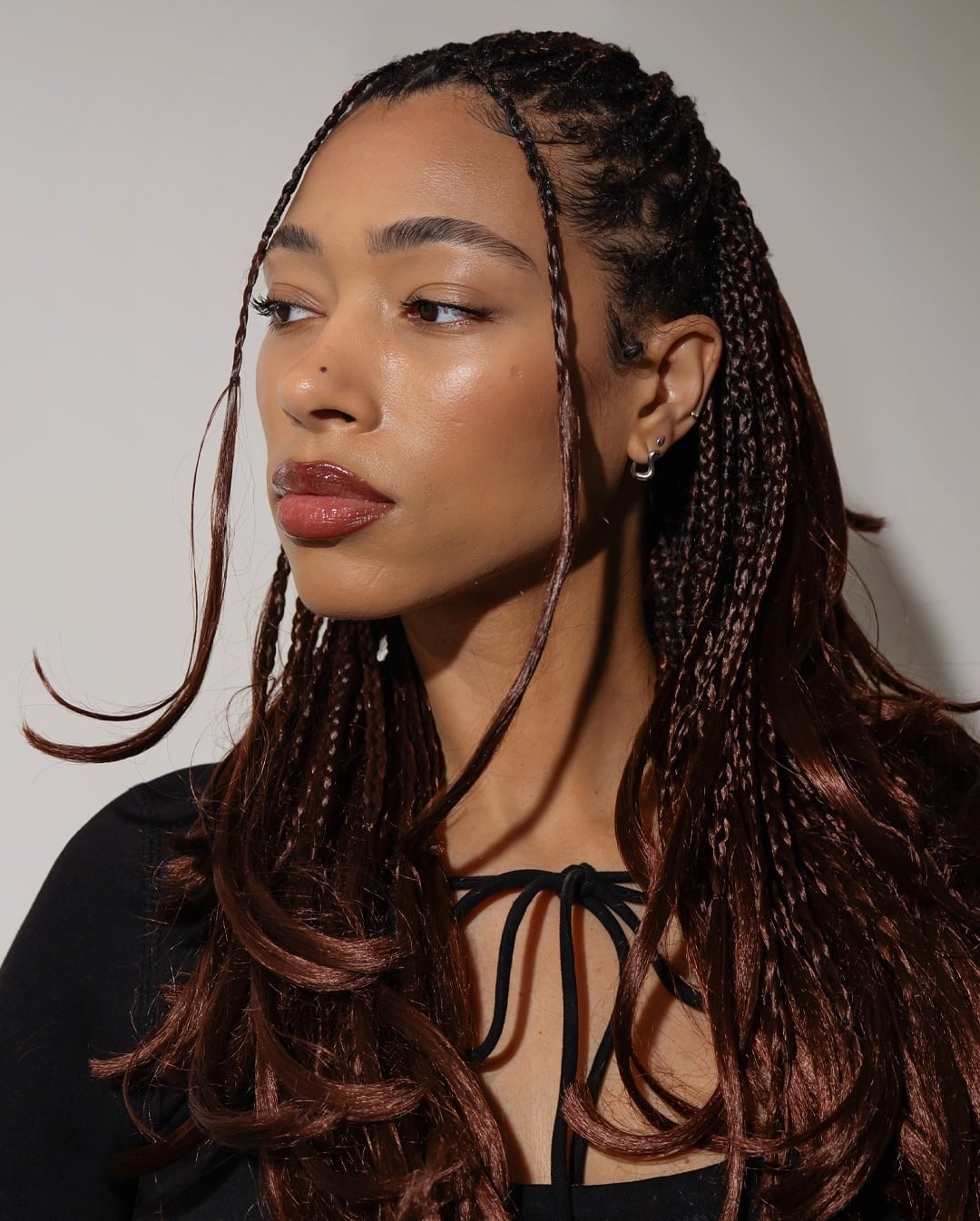
Wondering if a classic box braid set still holds up? It does, provided the uniformity is there. These thick black braids fall to mid-back and have a straight, neat finish that leaves no room for stray strands. The consistent size and tension suit those with thick, straight hair who want a style that looks polished. Ask your stylist for: uniform thick box braids, mid-back. A satin bonnet at night keeps the partings crisp and the braids from fraying at the edges.
Multiple Small Braids Wavy Texture
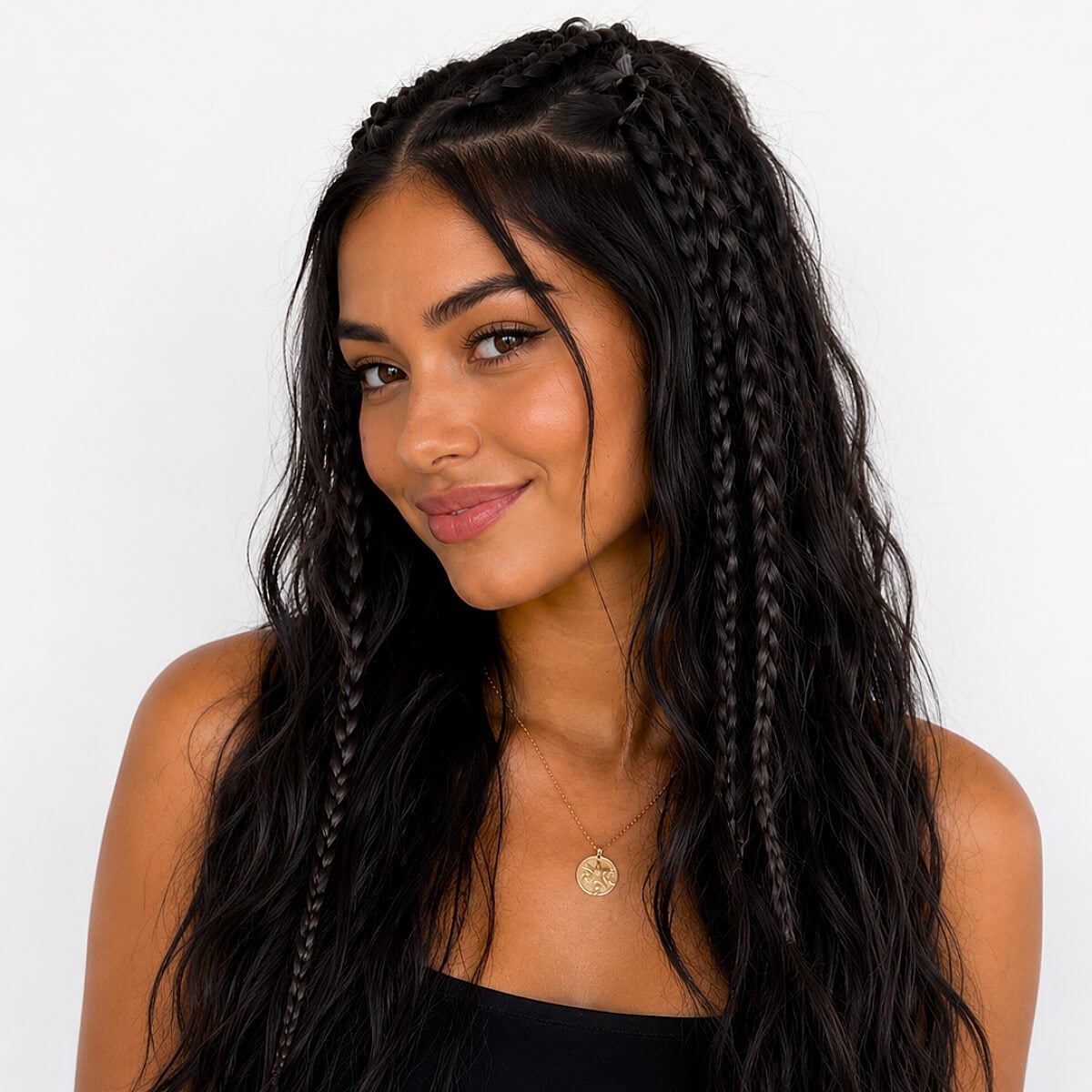
Not every braid in the set has to start at the scalp. This style mixes feed-in braids with loose, wavy sections, creating a relaxed rhythm that feels less structured than a full head of cornrows. The dark brown base shifts to lighter ends, adding depth without a hard line. Ask your stylist for: multiple small braids, wavy texture, mid-back. Scrunching a curl-enhancing cream through the loose waves defines the pattern without pulling at the braided roots.
Feed In Braids With Wavy Blonde Brown Extensions
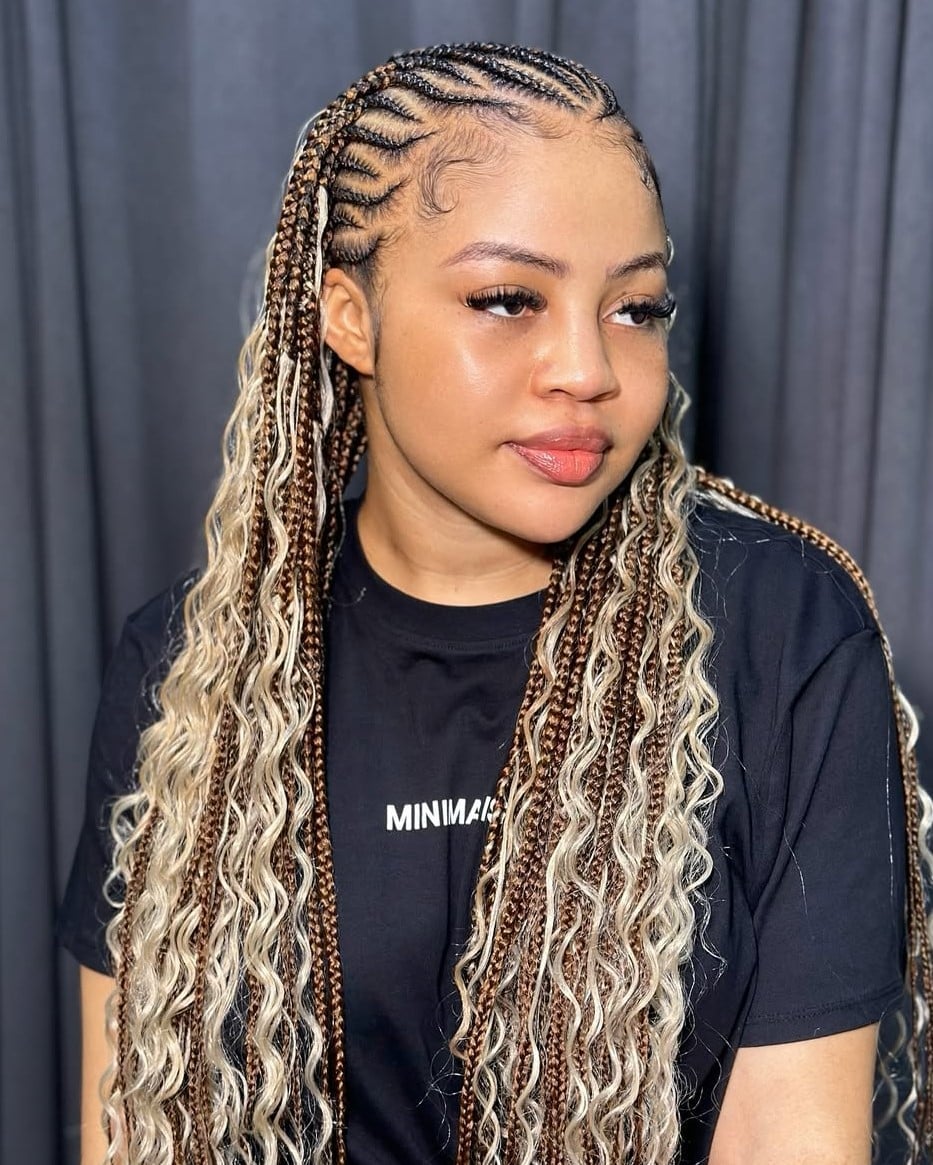
Wavy extensions add movement but also require more maintenance. These feed-in braids blend blonde and brown tones for a dimensional look that falls to mid-back. The loose waves at the ends soften the overall shape. This is a good option for anyone with straight hair who wants a textured finish. Ask your stylist for: feed-in braids, blonde and brown tones, wavy extensions. Separate the wavy strands gently with your fingers to preserve the braid pattern. This is a salon-only style, and the wavy sections need more careful handling than straight braids.
Short Pink Toned Braids Side Style
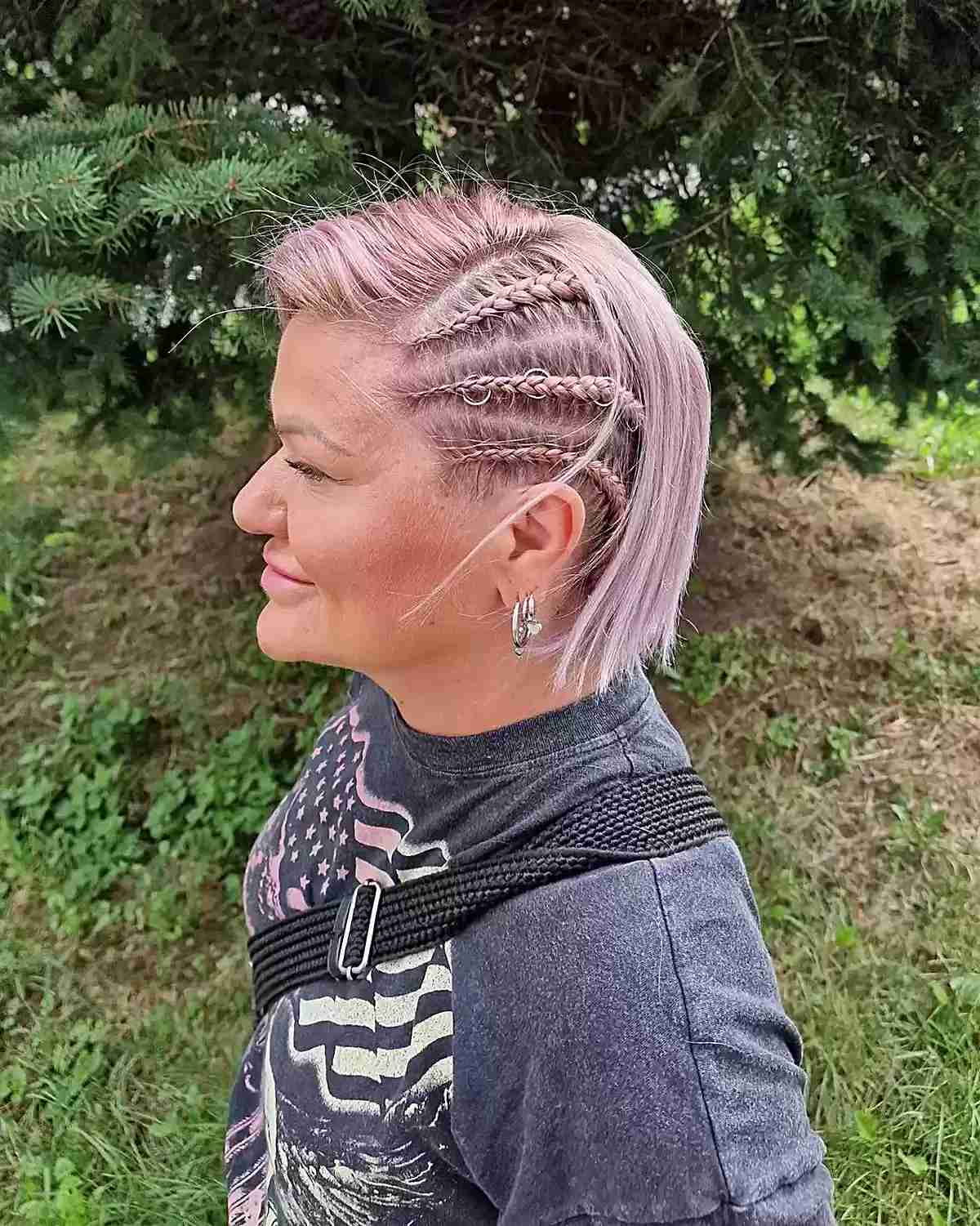
Can you wear braids on short hair without committing to a full install? Yes, by braiding only a few sections along the side. This short pink-toned cut has side-swept bangs, with several small, fine braids tucked into the shape as an accent. The pink shade is visible but not overwhelming, and the braids add texture to an otherwise smooth silhouette. Ask your stylist for: short hair with side braids, pink tone. A silk wrap at night protects both the braids and the bangs from losing their shape.
Final Thoughts
For a low-maintenance look, stick with solid black or dark brown feed-in braids, one length, no extras. For more drama, pick a multi-tonal color or add wavy ends, then plan on a bit more upkeep to keep the texture fresh.
- Keep scalp moisturized with a light oil or spray every 2-3 days.
- Sleep on a silk or satin bonnet to reduce friction.
- Avoid tight styles at the hairline to prevent tension.
- Cleanse the scalp every 1-2 weeks with a diluted shampoo.
- Refresh wavy ends with a light leave-in spray.
Feed-in braids offer endless styling possibilities.