

Fulani twists combine a central cornrow braid with two side braids and loose twisted lengths, creating a structured yet adaptable style. This season, the focus shifts to defined patterns and varied lengths, with lived-in color and glossy natural texture taking center stage.
With 21 variations, this collection covers everything from shoulder-length twists with minimal scalp braiding to long styles with intricate cornrow patterns. Whether your hair is fine or thick, straight or coily, there is a look here that holds well and requires less daily styling. For those with fine hair that struggles to hold a twist, the shorter options with defined scalp braids offer a solution.
Shoulder Length Defined Twists With Middle Part
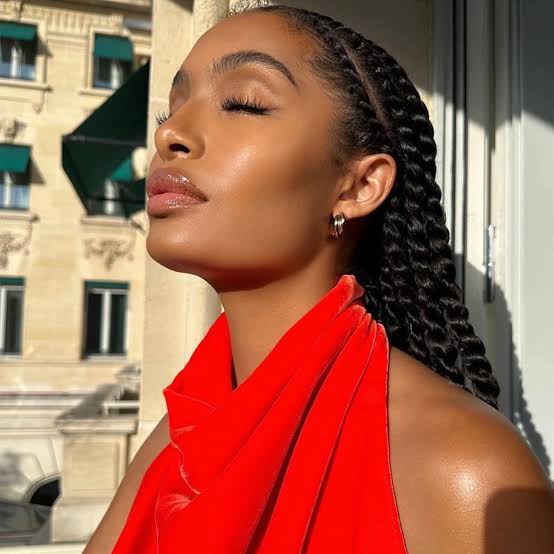
A collarbone-skimming twist set with a clean middle part and a natural wavy texture looks deliberate, not accidental. The wavy finish gives the style movement without requiring a single styling tool after installation, which is the whole point. Ask your stylist for: collarbone length twists with a middle part, natural wavy texture. This length and part work best on fine to medium hair starting at collarbone length, and a middle part does the usual favor of elongating round faces. A light hold mousse applied to damp twists keeps definition in place, with a trim every six to eight weeks to maintain the shape.
Collarbone Fulani Twists With Scalp Braids
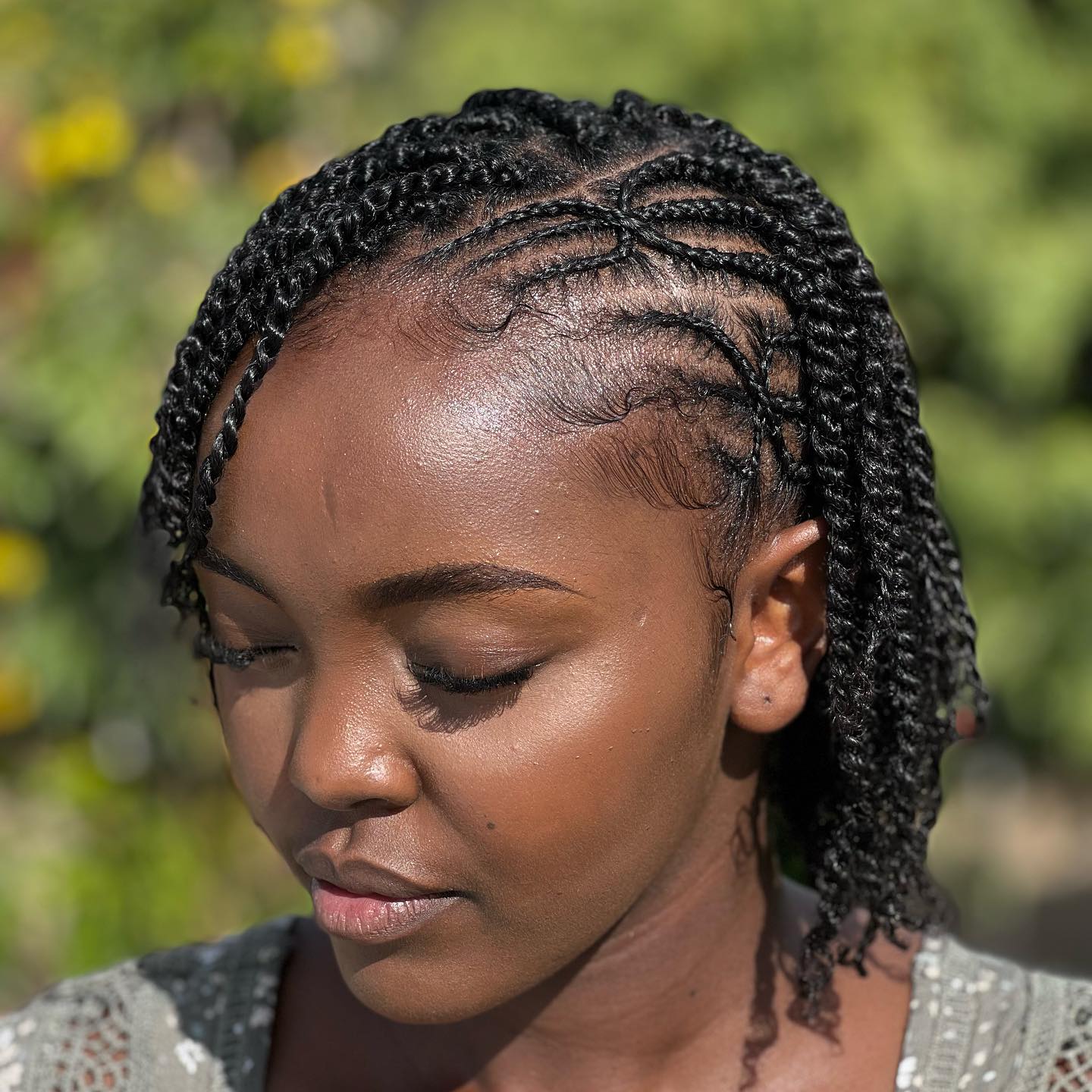
The precision here is in the scalp braids: neat, defined cornrows that anchor the twists and create the structure Fulani twists are known for. A middle part and styled baby hairs finish the look, with the twists falling to collarbone length in a natural wavy texture. Ask your stylist for: collarbone fulani twists with defined scalp braids and baby hairs. Medium to thick hair starting at collarbone length handles the braids best, and the baby hairs soften a square jawline. A small brush and edge control daily keeps the hairline polished, with a refresh every six to eight weeks.
Shoulder Length Fulani Twists With Curly Texture
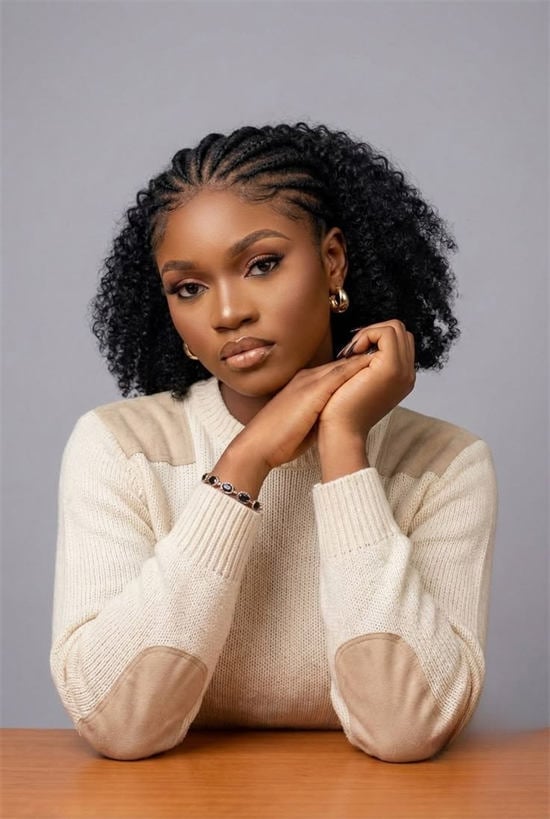
Where wavy twists offer movement, curly Fulani twists bring density. The scalp braids remain defined, but the ends curl tighter, giving the style more visual weight at shoulder length. Ask your stylist for: shoulder length fulani twists with curly texture and scalp braids. A middle part and laid baby hairs keep it polished. Medium to thick hair starting at shoulder length holds the curl best, and a middle part elongates round faces. A curl-defining cream on the ends preserves the texture, with a trim every eight to ten weeks.
Shoulder Length Fulani Box Braids Grid Pattern
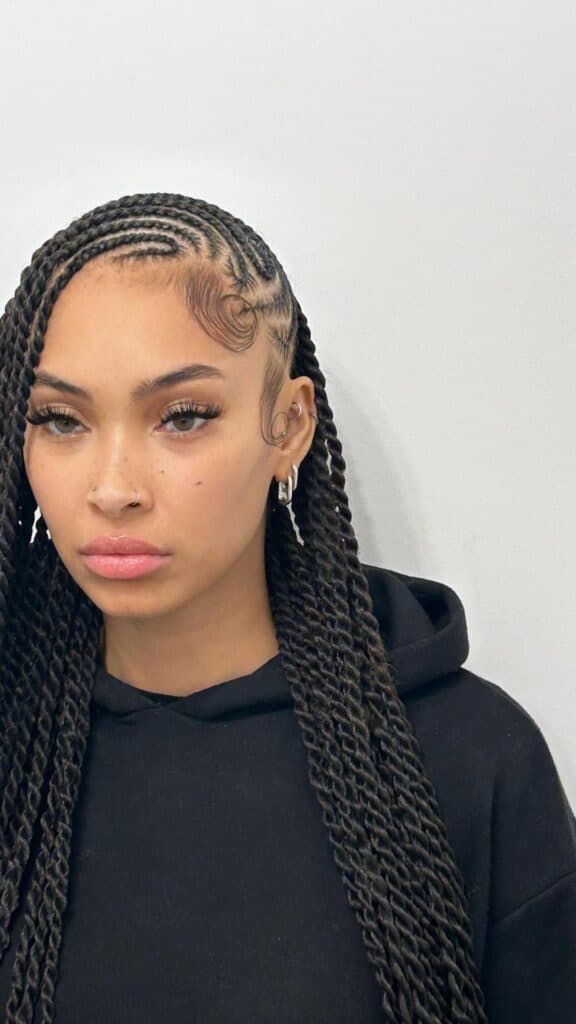
The grid pattern in the parting is what separates this from a standard box braid set. Every section is the same size, every line straight, which means the braids hang with uniform thickness from root to tip. Ask your stylist for: shoulder length fulani box braids with a precise grid pattern. Medium to thick hair starting at shoulder length handles the tension best, and a middle part elongates round faces. The straight texture keeps the braids sleek, but the grid requires regular touch-ups to maintain the clean lines. Avoid excessive manipulation of the braids between appointments, and plan for a salon visit every six to eight weeks to keep the parting crisp.
Shoulder Length Dark Brown Coily Twists
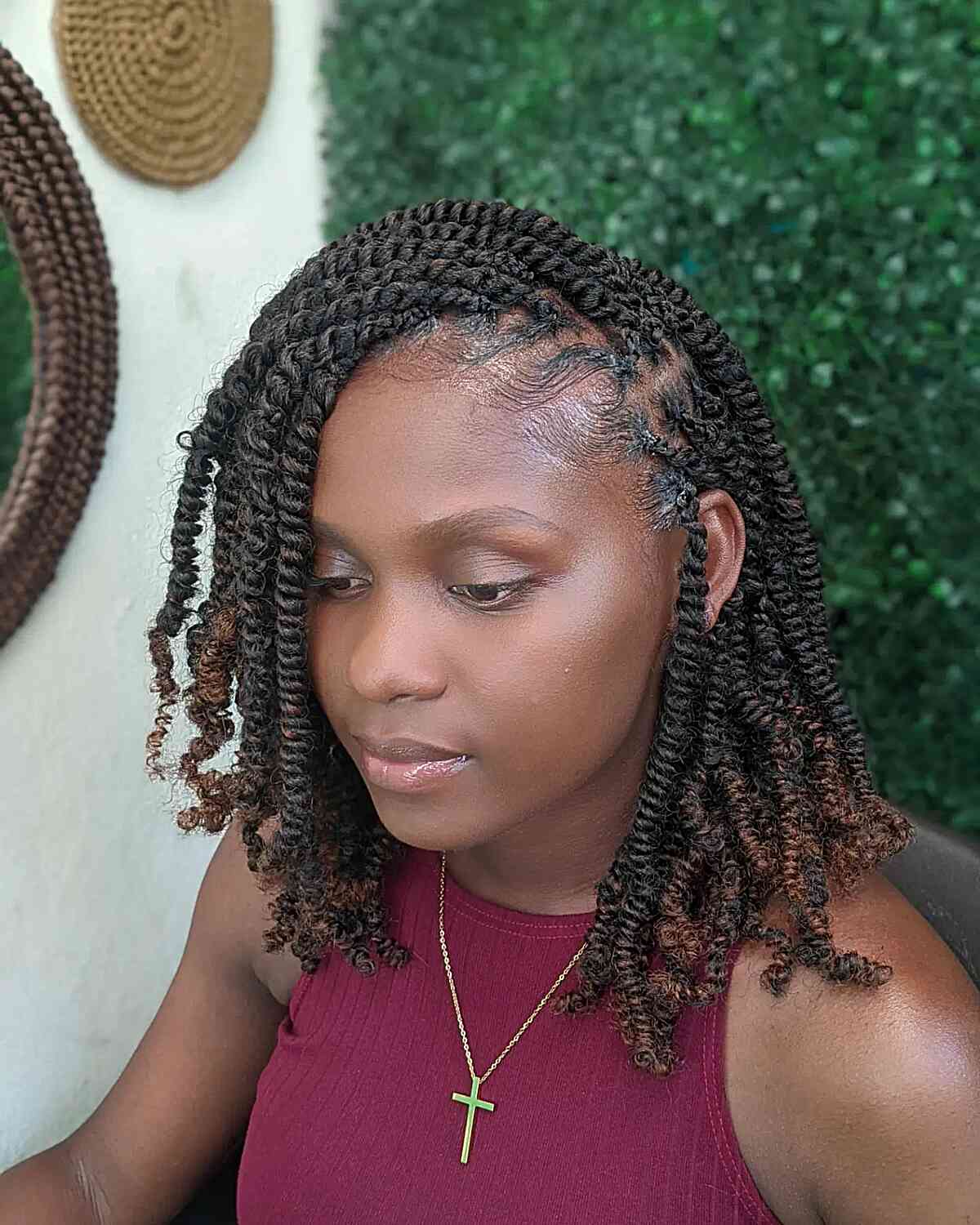
Can a twist style hold definition without fighting your natural texture? Yes, if the hair is coily and thick. The dark brown twists end in defined loose curls, which gives the shoulder-length style volume without bulk. Ask your stylist for: shoulder length dark brown coily twists with defined curly ends. Thick, coily hair starting at shoulder length benefits from the structure, and a middle part suits most face shapes. A satin scarf at night preserves the curl pattern, and a light spray every few days refreshes the ends without redoing the whole set.
Mid-Back Fulani Twists With Scalp Cornrows
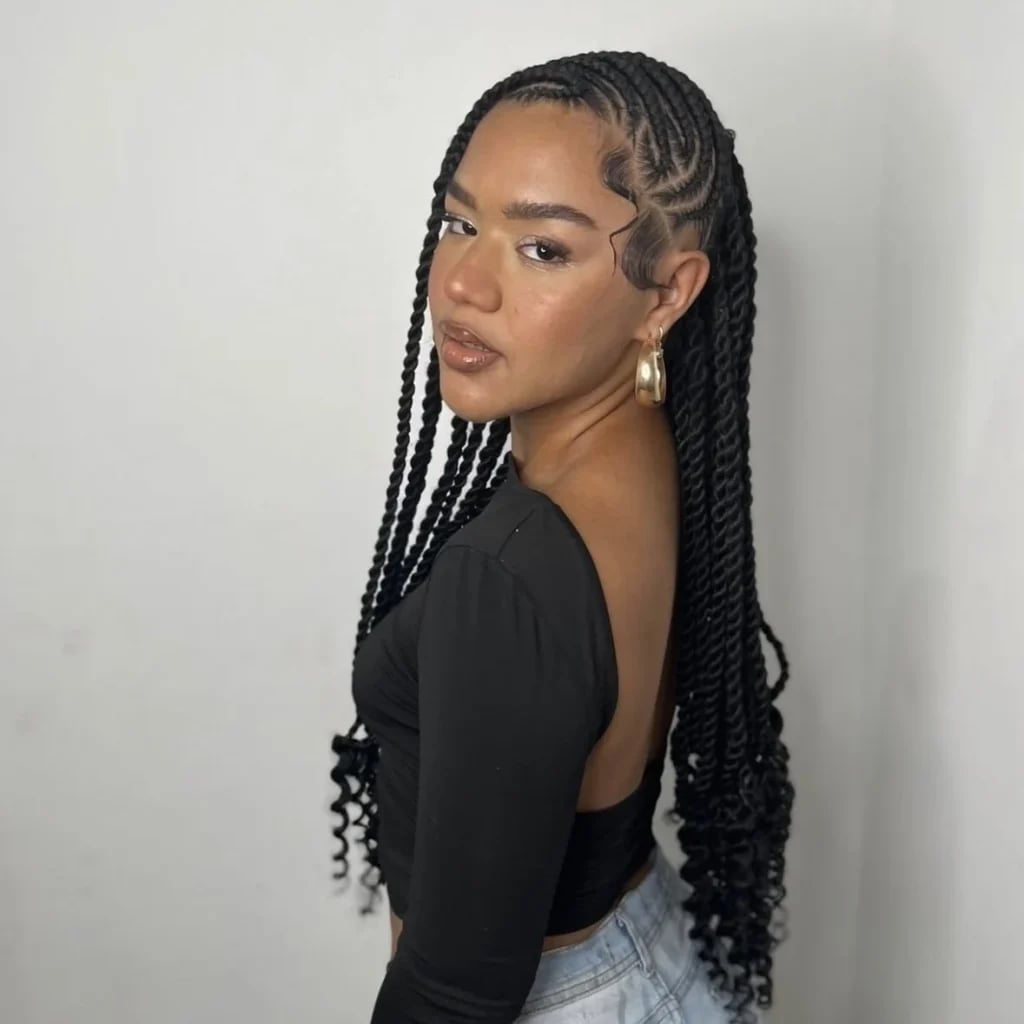
The face-framing braids in this variation aren’t an afterthought; they’re braided from the hairline in a deliberate curve that draws the eye toward the center part. The cornrows along the scalp follow the same logic, creating a clean frame that holds the twists in place. This is a style that rewards a steady hand and a clear plan before the first section is parted.
Ask your stylist for: mid-back fulani twists with intricate scalp cornrows and baby hairs. It suits medium to thick hair that already reaches mid-back, and the polished baby hairs soften square and round faces. A lightweight serum on the scalp keeps the parts looking sharp without weighing down the twists. Plan for touch-ups on the edges every three weeks and a trim of the ends every ten to twelve weeks.
Mid-Back Fulani Braids With Wavy Extensions
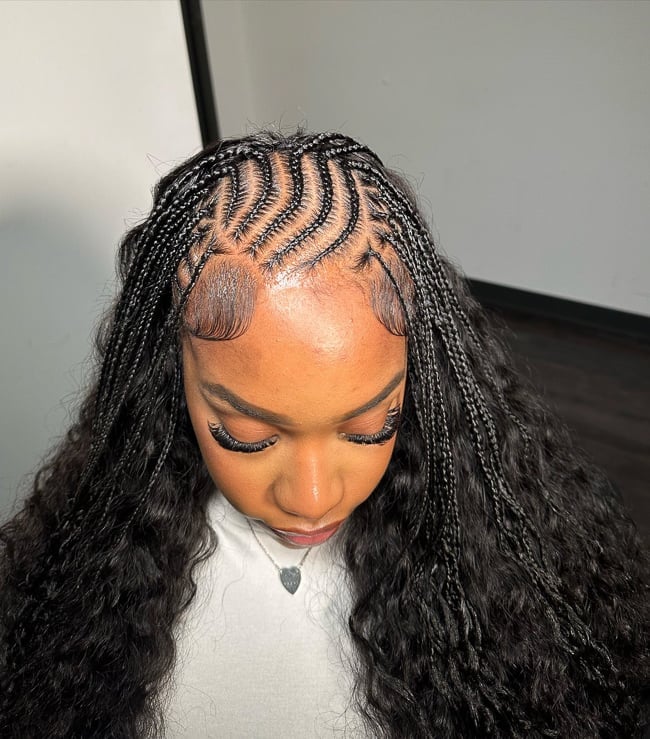
To get loose, flowing ends without losing the structure of the braid, specify wavy extensions that are attached at the mid-length so the top stays neat while the bottom moves. The geometric parting at the crown is what separates this from a standard braid-down; it adds a deliberate graphic element that holds the whole look together.
Ask your stylist for: mid-back fulani braids with geometric crown parting and wavy ends. This suits medium to thick hair starting at mid-back, and the geometric parts work well on oval and heart faces. When you sit down, be specific about the length of the extension, because both determine how the style falls. The braid looks finished from the front and relaxed from the back.
Mid-Back Fulani Braids With Blonde Highlights
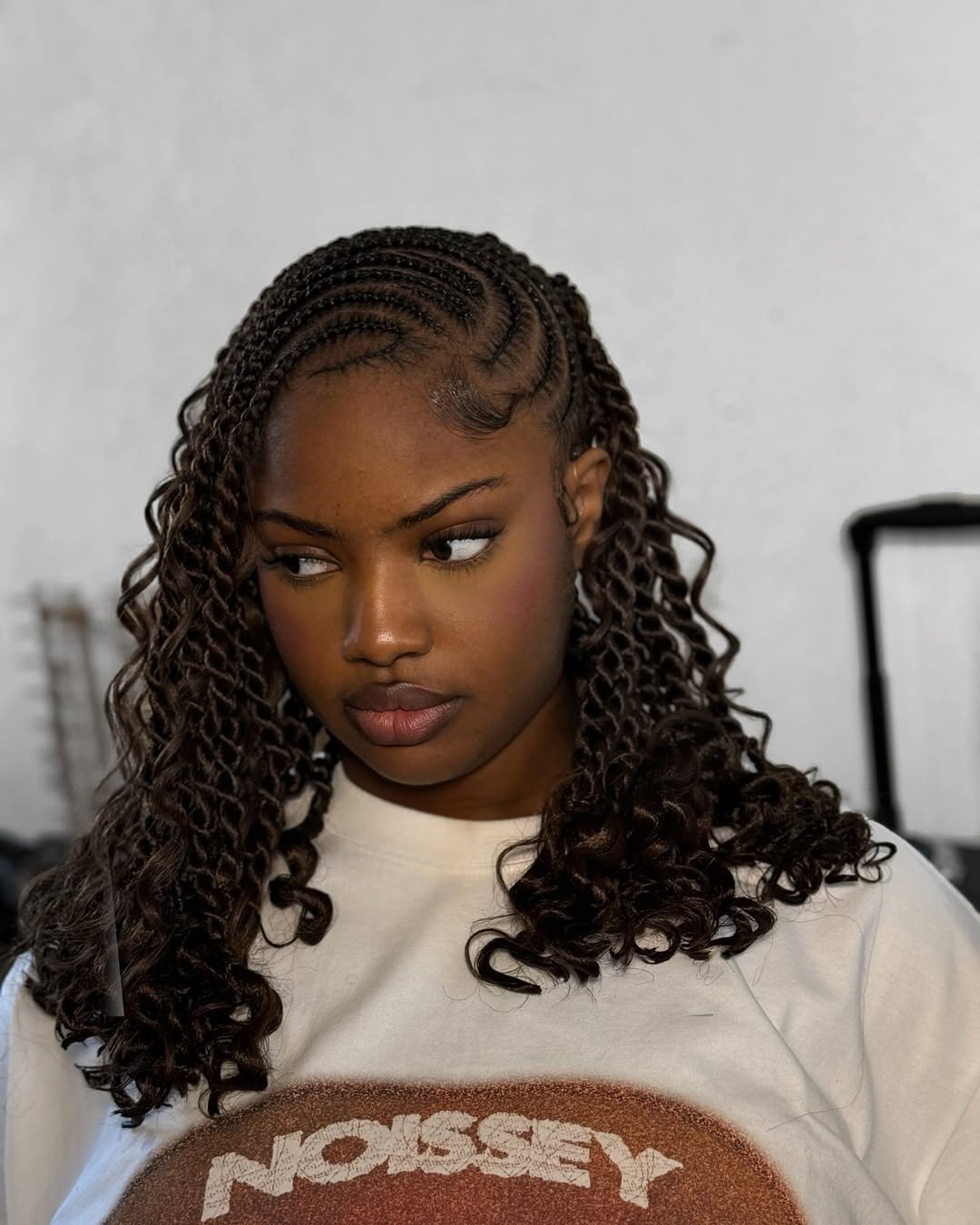
The side part here does more than divide the hair; it gives the blonde highlights a clear runway. Black braids with subtle blonde strands woven through create a sun-faded effect that lands naturally in the warmer months, when lighter tones tend to feel less heavy. The wavy ends keep the length moving, so the color never sits still.
Ask your colorist for: mid-back fulani braids with side part and blonde highlights, wavy ends. This style works best on medium to thick hair, and the side part adds volume for fine textures. It is a casual, everyday style that holds its shape for weeks. Refresh the highlights with a color-depositing conditioner every four to six weeks to prevent brassiness.
Mid-Back Fulani Braids With Geometric Pattern
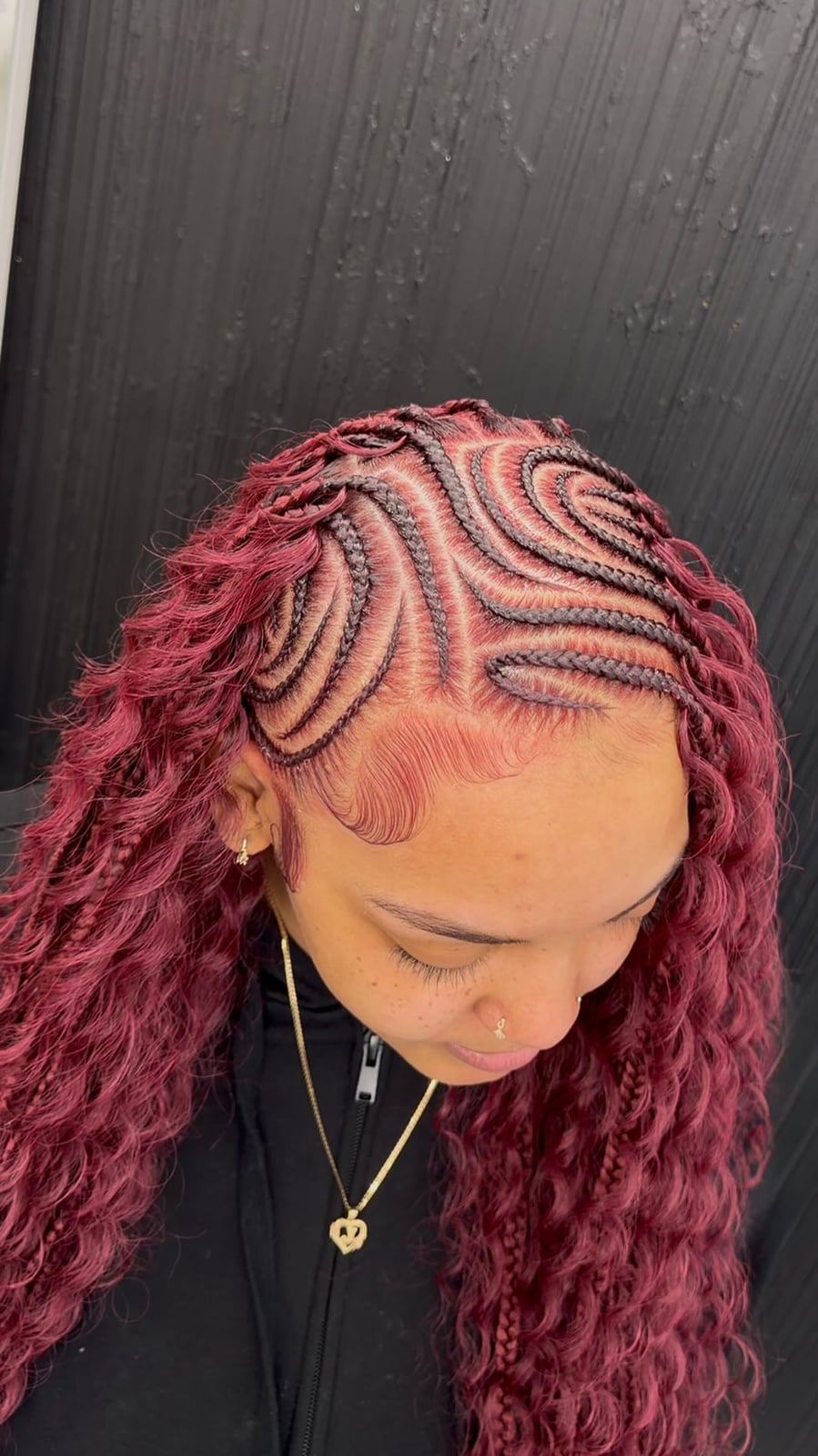
The geometric scalp pattern is the kind of detail that makes you look twice: precise, angular parts that form a design across the crown, with a middle parting keeping the symmetry intact. It requires a stylist who can map out the pattern before starting, because once the first braid is set, there’s no going back. The black braids with blonde highlights give the pattern depth, so it doesn’t read as flat.
Ask your stylist for: mid-back fulani braids with a geometric scalp pattern and blonde highlights. This suits medium to thick hair starting at mid-back, and the pattern works best on oval and heart faces. A lightweight hairspray keeps the edges of the pattern crisp between appointments. Trim the ends every ten to twelve weeks to maintain the shape.
Mid-Back Fulani Braids With Contrasting Curls
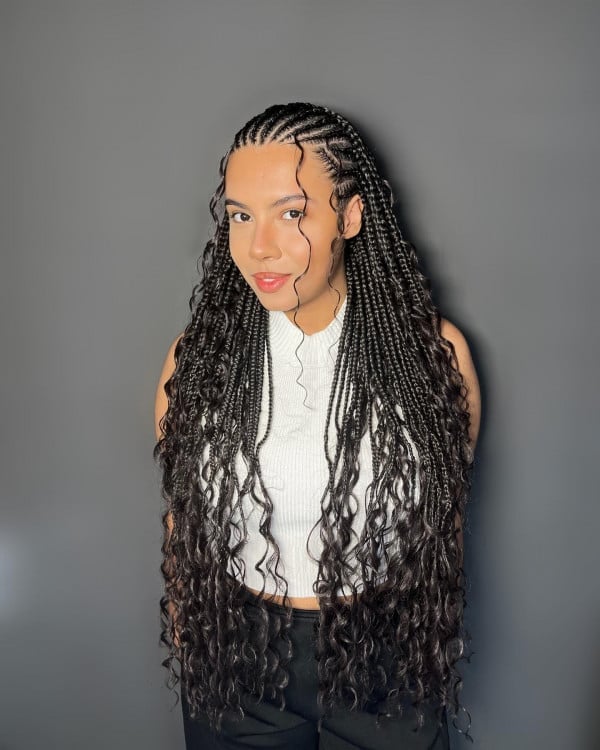
The contrasting curls at the ends are the whole point: tight, defined braids that give way to loose, cascading curls with blonde tips. The texture shift demands a second look. The middle part and face-framing curls soften the overall shape, making it work for square and round faces. This style requires a salon visit, not a home attempt, because the curl attachment and color placement need precision.
Ask your stylist for: mid-back fulani braids with loose curls and blonde tips. The style suits thick hair that reaches mid-back, and the face-framing effect is what makes it stand out. A conditioner on the curls keeps them from frizzing, and the ends need a trim every ten to twelve weeks. The trade-off is the upkeep: those curls will need attention to stay defined.
Mid-Back Fulani Twists With Braided Crown
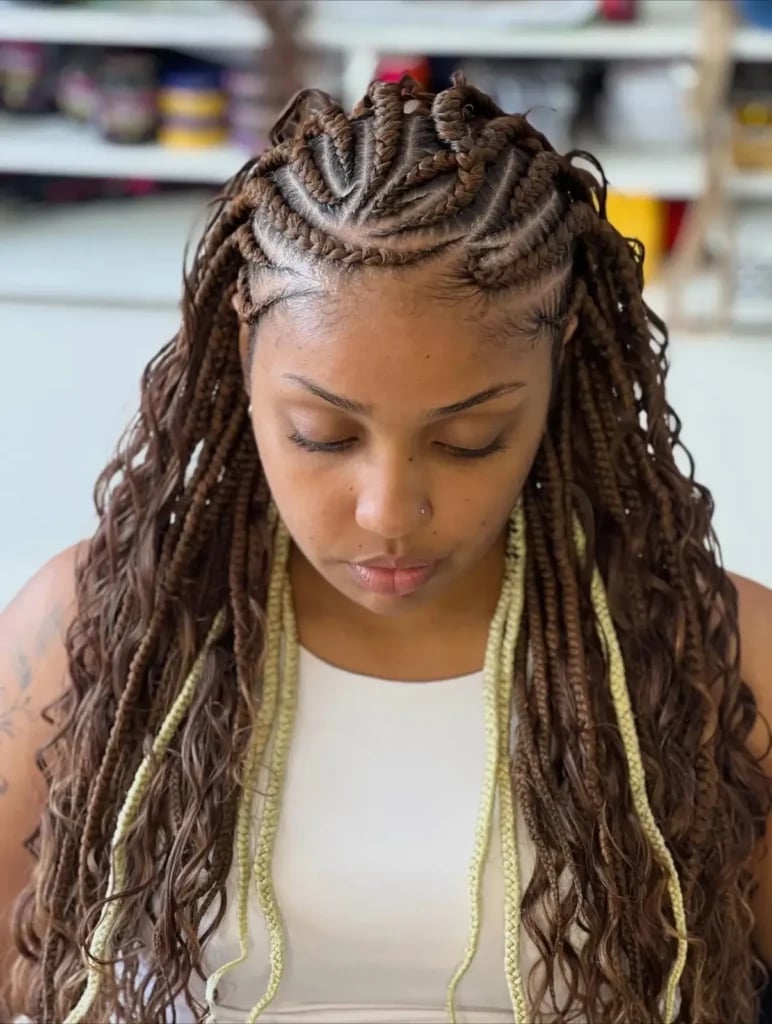
Ever wonder how a braided crown changes the way twists wear day to day? This version starts with an intricate braided pattern on the scalp, then lets long, loose twists with wavy and curly ends cascade to mid-back in a mix of brown and blonde streaks. The crown keeps the style secure at the roots, so the twists hold their shape without constant re-tightening at the front.
The crown framing works well on oval and heart faces. Ask your stylist for mid-back fulani twists with a braided crown and brown/blonde streaks. A braid-sheen spray keeps the crown pattern smooth, and refreshing the ends every two to three weeks maintains the curl definition. Expect a salon-only commitment. This style stays put through events and long days.
Mid-Back Fulani Twists With Beads and Color
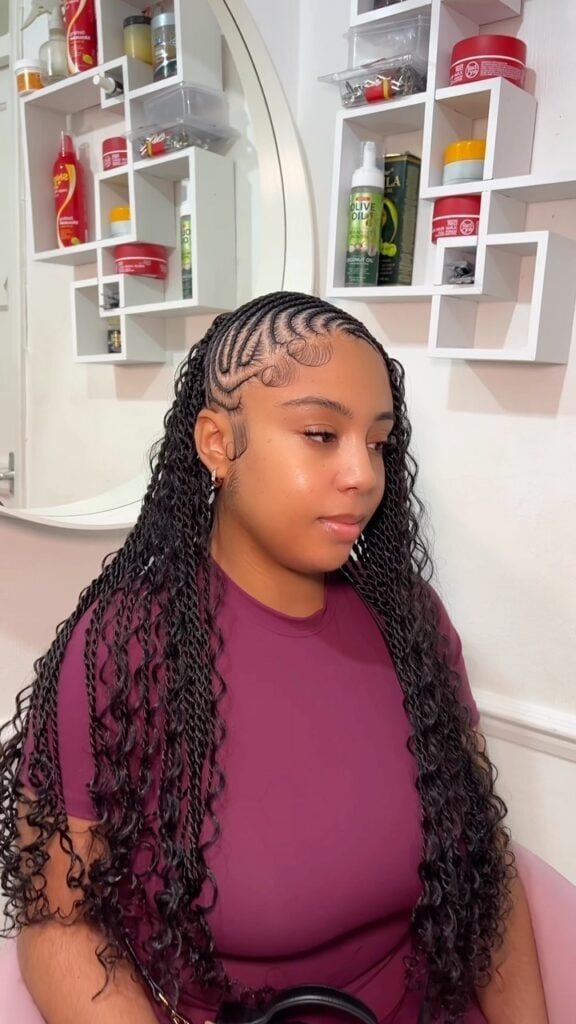
The design here is precise: a middle part, styled baby hairs, and a black and blonde mix that runs through every twist. Colorful beads punctuate the length, and the wavy ends carry the movement to mid-back. This is a beaded fulani twists look that asks for a stylist’s hand, not a kitchen-table session. Ask your stylist for mid-back fulani twists with black/blonde mix, beads, and wavy ends. Make sure beads are securely attached so they don’t pull at the roots, and plan to trim the ends every ten to twelve weeks to keep the waves from fraying.
Long Fulani Twists With Curly Ends
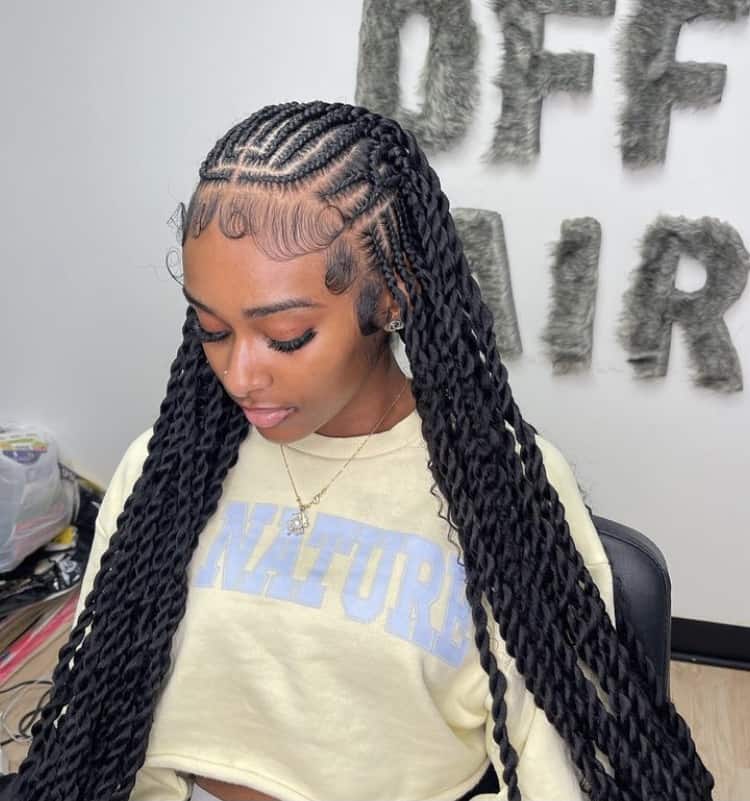
A precise middle parting runs from the hairline down, and the long twists are thick enough to look substantial. Soft, curly tendrils frame the face, which is the detail that makes this style work on oval and heart faces by softening the jaw. The texture is natural and curly, and the color is a true black that lets the parting lines show.
This suits thick, curly hair that already reaches a long length, because the twists need weight to hang properly. Ask your stylist for long fulani twists with geometric side parting and curly ends. A leave-in conditioner on the curly ends keeps them defined, and a trim every ten to twelve weeks preserves the curl shape. It’s a salon style through and through, but the defined parting gives it a polished look.
Long Fulani Twists With Face-Framing Curls
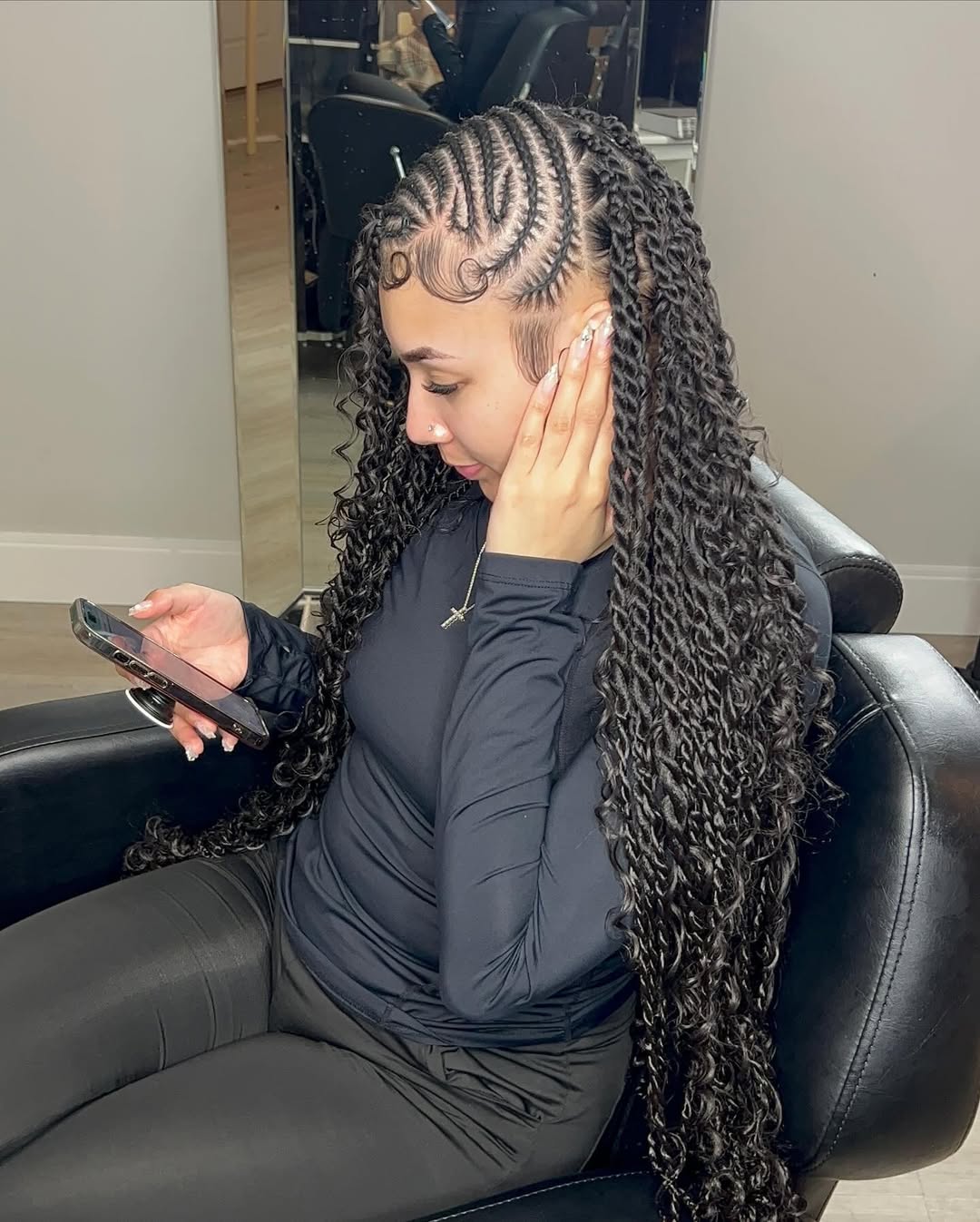
Can you get this at home? The long, thick twists with a precise middle parting and soft, curly tendrils along the hairline are doable, but they test your patience. The parting has to be exact, and the face-framing curls need a steady hand to place them so they actually frame rather than stray. This is a salon-leaning job for medium to thick hair at a long length, and the face-framing curls soften square and round faces. Ask your stylist for long fulani twists with defined parting and face-framing curls. At home, a light mousse on the tendrils holds the curl, and a trim every ten to twelve weeks keeps the ends clean.
Long Fulani Twists With Wavy Ends
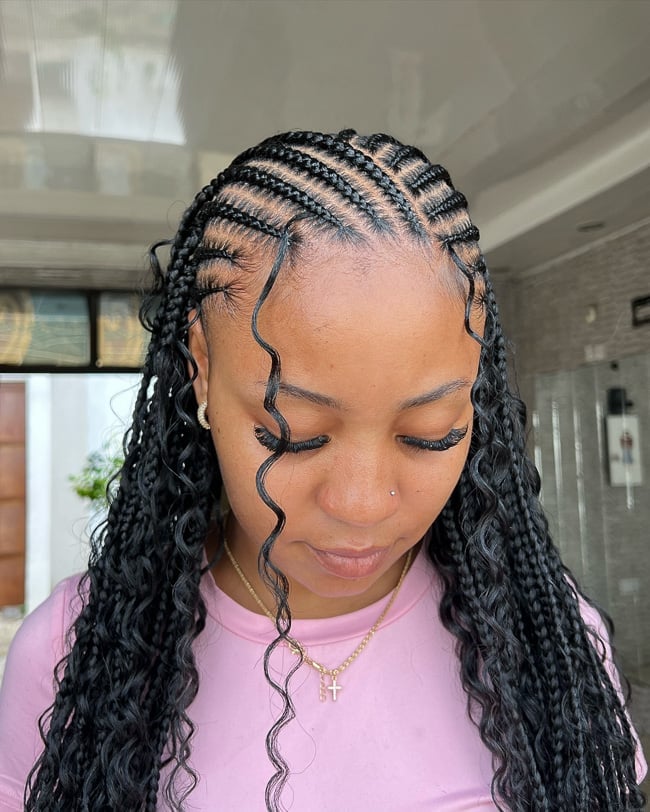
The front is a distinct cornrow pattern that anchors the style, with baby hairs laid along the hairline. From there, the twists go long and end in loose, wavy ends that hit well past the shoulders. The color is black, and the contrast between the structured cornrows and the soft waves is what carries the look.
This suits medium to thick hair starting at a long length, and the baby hairs frame most face shapes without much fuss. Ask your stylist for long fulani twists with cornrows, baby hairs, and wavy ends. The drawback: the wavy ends need daily attention. A texturizing spray refreshes the waves, but if you skip it, they flatten and look stringy by day three. Trim every ten to twelve weeks to keep the ends from splitting.
Long Fulani Twists With Baby Hairs
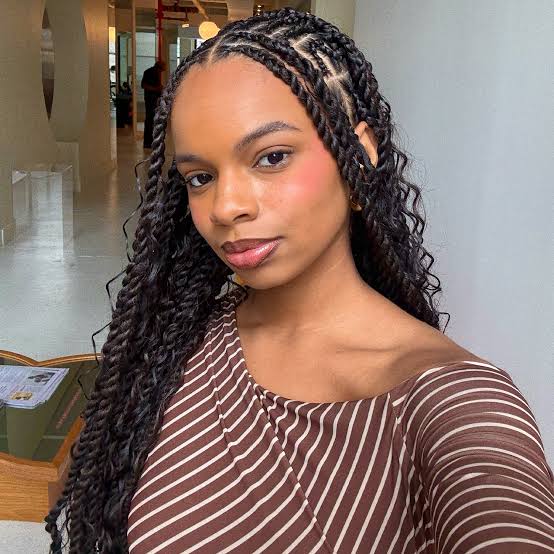
The front cornrow pattern is the anchor here, with baby hairs laid down smooth to frame the face. The rest of the twists fall into loose, wavy ends that reach long. A middle part keeps the symmetry clean, and the black color lets the texture read clearly. This style works best for thick hair that already starts at long length, since the twists need some heft to hang properly. Baby hairs frame most face shapes, especially round and oval.
Ask your stylist for: long fulani twists with cornrows, baby hairs and loose wavy ends. To get the baby hairs to stay put, apply a light gel and smooth them with a soft brush, then let them dry before touching them. The ends will hold their wave for the life of the style, but the cornrows at the front will start to frizz around the edges after a few weeks. Plan for a trim every 10 to 12 weeks to keep the ends from splitting, and refresh the gel on the baby hairs as needed.
Long Fulani Twists With Defined Cornrows
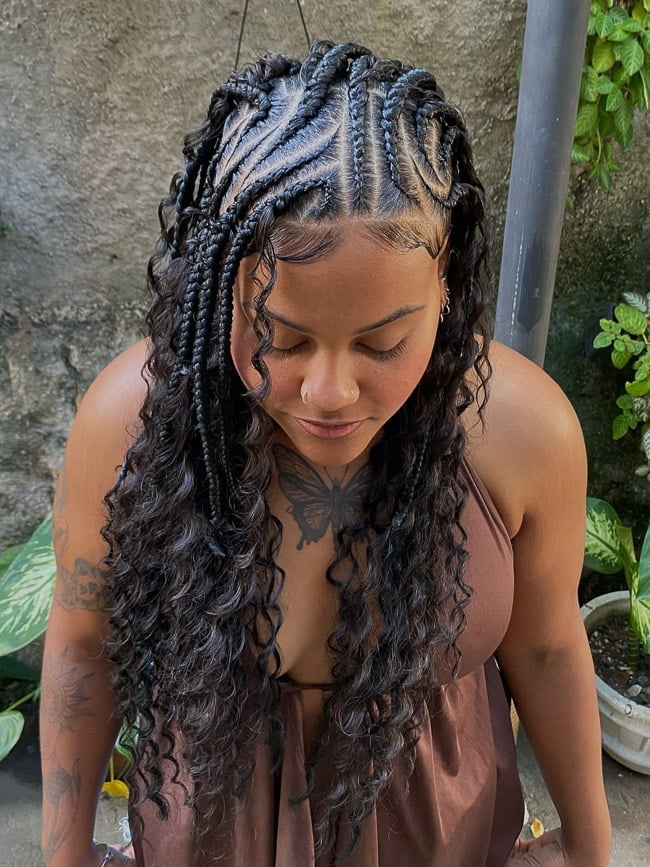
Where the previous style lets the cornrows fade into the twists, this version keeps the front pattern sharp and defined, which gives the whole look a more structured feel. The baby hairs are still laid down, but the emphasis is on the clean lines of the cornrows against the loose, wavy ends that fall to long. The black color makes the contrast between the tight scalp braids and the wavy lengths more obvious. The pattern is the first thing someone notices with this style.
This style works on medium to thick hair starting at long length, and the defined cornrows work well on oval and heart faces, since the vertical lines draw the eye down. Ask your stylist for: long fulani twists with a defined cornrow pattern, baby hairs and wavy ends. To keep the cornrows crisp, use a light hairspray on the scalp area after styling, but avoid heavy products that could build up and flatten the pattern. The wavy ends hold their shape without much fuss, and a trim every 10 to 12 weeks keeps the split ends at bay.
Mid-Back Twists and Braids High Ponytail
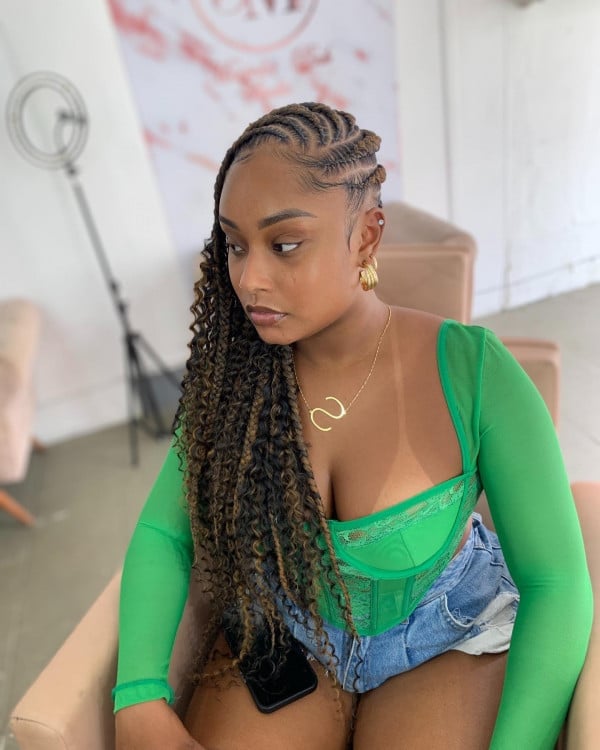
The high ponytail is a clever way to keep Fulani twists out of the way, with neat braids running from the middle part to the crown and the ponytail itself a mass of loose, curly brown ends that reach mid-back. The black braids against the brown curls give the style a built-in contrast. This is a great look for warm weather or any active day, because the hair stays off the neck and the ponytail swings freely without catching on things. It suits anyone with enough length to pull the whole thing up, and the middle part elongates round faces. Ask your stylist for: high ponytail with front braids and loose brown curly ends. Secure the base with strong hair ties, then apply a lightweight gel to the braided front to keep flyaways down.
Mid-Back Fulani Twists With Intricate Cornrows, Close-Up Take
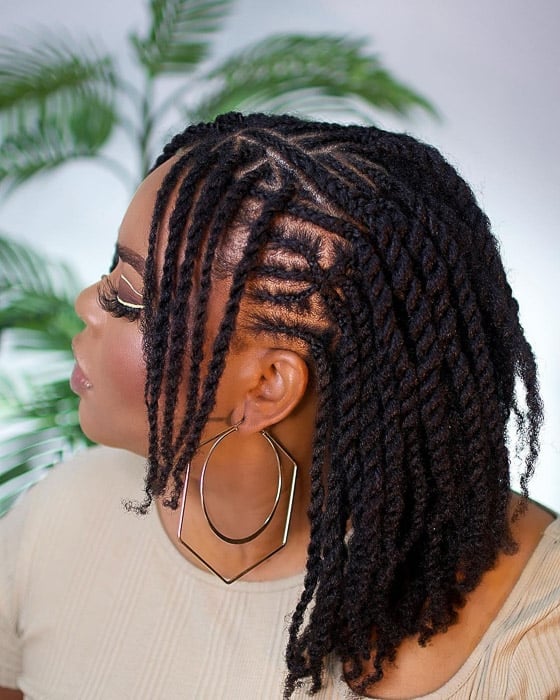
This is a close-up take on Fulani twists where the craftsmanship is the focus, with intricate cornrows braided along the scalp in a pattern that stands out even from a distance. The twists themselves are defined and fall to shoulder length, and the dark brown color keeps the attention on the braided design without any color variation. The coily, thick texture of the hair helps the cornrows hold their shape tightly against the scalp. This pattern suits oval and heart faces best, since the intricate lines add width at the temples and balance a longer face.
Ask your stylist for: mid-back fulani twists with intricate scalp cornrows. The complexity of the braiding means this is not a quick style, so expect to spend several hours in the chair. To keep the scalp looking fresh between washes, use a dry shampoo on the roots and avoid heavy oils that could loosen the braids. The twists themselves are low maintenance once done, but a trim every 10 to 12 weeks will keep the ends from fraying.
Lemonade Fulani Twist Hairstyles
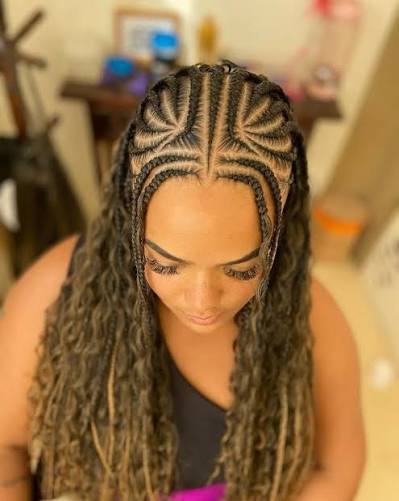
Wondering if the lemonade Fulani twist trend is worth the hype? The style takes the classic Fulani twist and adds a sharp contrast, typically with dark roots and lighter ends, though the exact placement of the color can vary. The intricate cornrow patterns at the front are a hallmark, and the coily, thick texture of the hair helps the twists hold their definition. This is a salon-leaning style that requires complex braiding, so it is not a quick DIY. It suits those who want a bold color statement without the upkeep of all-over dye, since the darker roots mean less frequent touch-ups. Ask your stylist for: lemonade fulani twists. If you prefer a subtler look, this might not be for you, but if you want your hair to make an entrance, it delivers.
Flip Over Fulani Braids
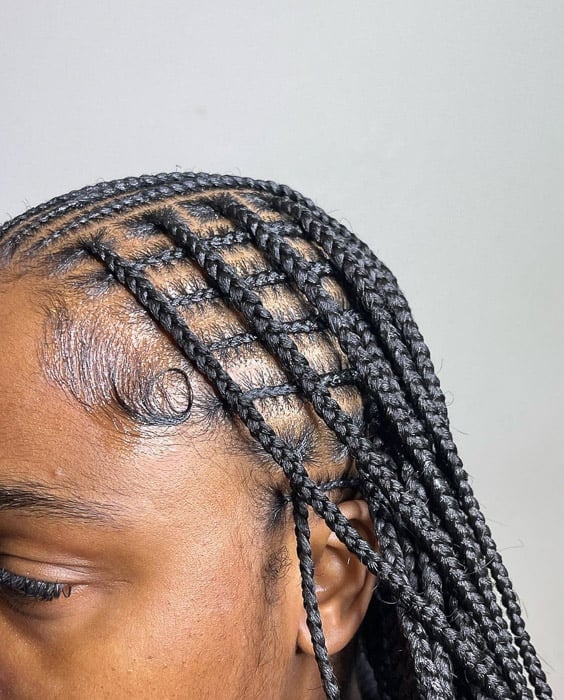
The design here is all about precision: a middle part splits the scalp into a grid of clean, defined box braids, each section the same width as its neighbor. The braids fall straight to shoulder length in a solid black shade, with no bangs interrupting the symmetry. Ask your stylist for: flip over fulani braids. This structured layout means the style holds its shape for weeks without much fuss, though the parting stays sharpest if you sleep with a satin scarf. The straight texture keeps the pattern visible, so a light mousse or edge control at the hairline is all you need to maintain the crisp lines between refreshes.
Final Thoughts
For a lower-maintenance look, opt for longer twists with minimal scalp braiding and focus on defined twist texture rather than intricate patterns. This keeps the style fresh longer and reduces tension on the edges.
- Maintain scalp moisture with a light oil or serum daily.
- Sleep with a silk or satin bonnet to preserve twist definition.
- Gently cleanse the scalp and braids weekly; avoid harsh sulfates.
- Toning or refreshing curly/wavy ends can be done every 2-3 weeks.
Fulani twists offer adaptable beauty for any occasion.