

Braids have a way of feeling both intentional and low-key, a style that holds its shape through a workweek or a weekend. The current shift leans toward relaxed finishes, soft waves, curly ends, and lived-in color that keep the look from feeling too precious.
This collection of 29 simple length braids covers the range from chin-grazing bobs to mid-back lengths, built for fine hair that needs density, thick hair that wants weight, and everyone in between. Each style answers one real question: how to get a braid that stays put without looking stiff or high-maintenance.
Chin Length Black Box Braids Bob, With The Hair Framing The Face
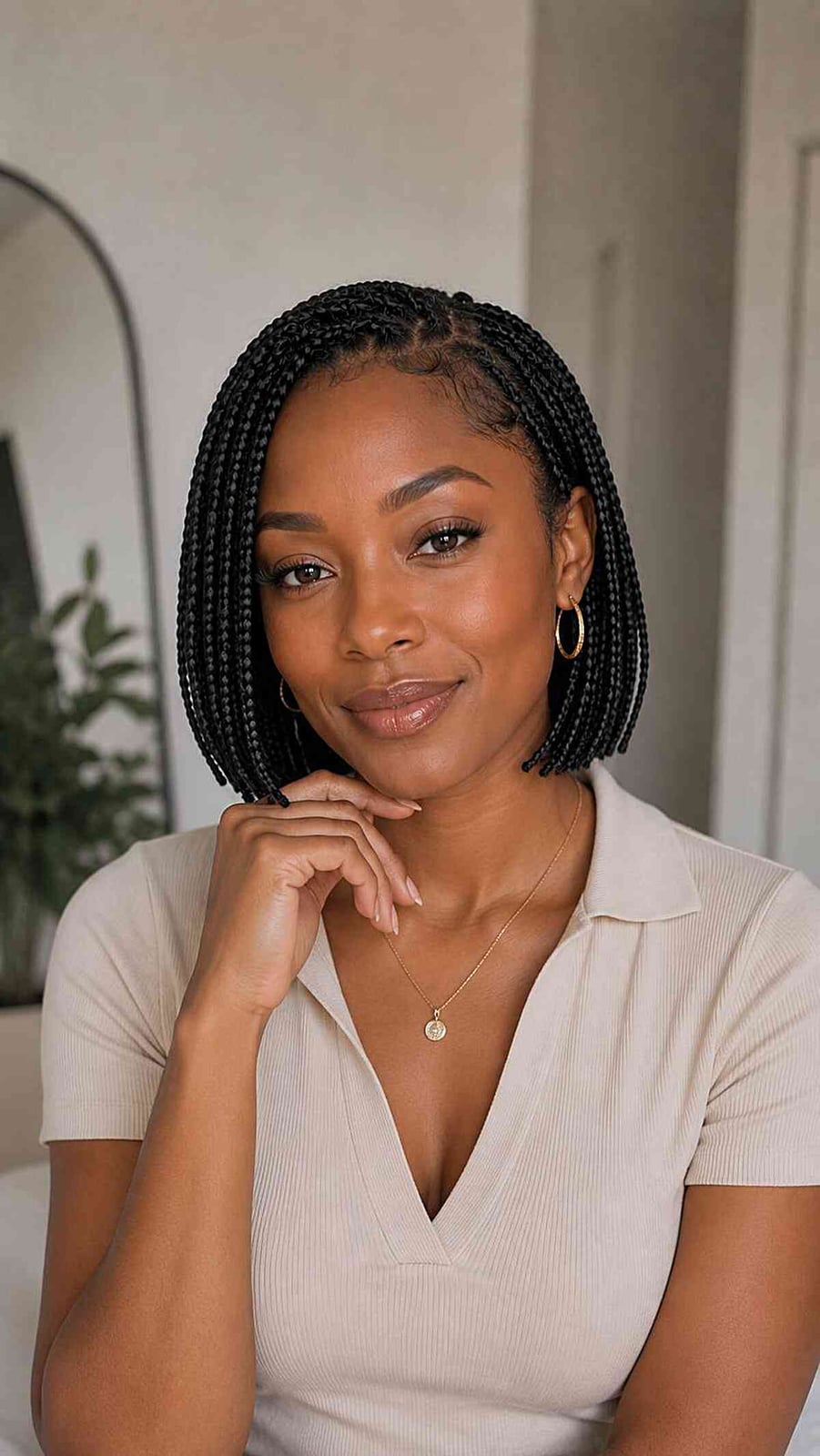
Here’s a case where shorter braids actually read as more polished, not less. The chin-length bob braid style keeps all the structure of a classic bob but swaps the maintenance of loose hair for the neat, uniform texture of fine-density black box braids. A side parting adds a touch of asymmetry that keeps the shape from feeling too severe. This suits fine hair types that tend to get weighed down by longer braids, since the shorter length lets the braids hold their shape without extra tension on the roots. Ask your stylist for: chin-length box braid bob, side part. Keep the parting sharp with a fine-tooth comb, and plan a trim of the baseline every six to eight weeks to maintain that crisp line.
Sharp Chin Length Black Box Braids, Straight
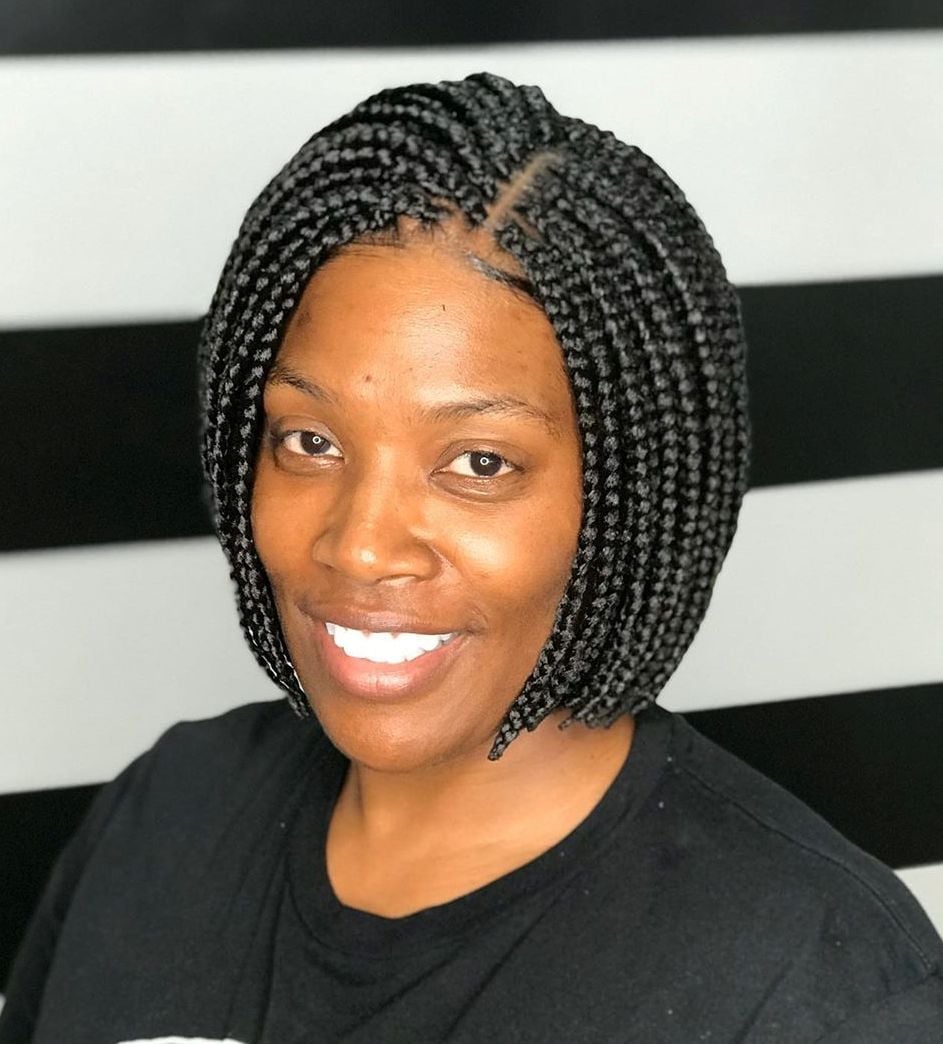
Where the fine version softens, this one cuts a clean line. Thick black box braids at chin length with a middle parting create a sharp, defined bob that reads as precise rather than playful. Ask your stylist for: sharp chin-length box braid bob, middle part. A silk scarf at night protects the sleekness, and a trim every six to eight weeks preserves the geometric edge. It is the same length, a completely different attitude.
Shoulder Length Box Braids Pigtails
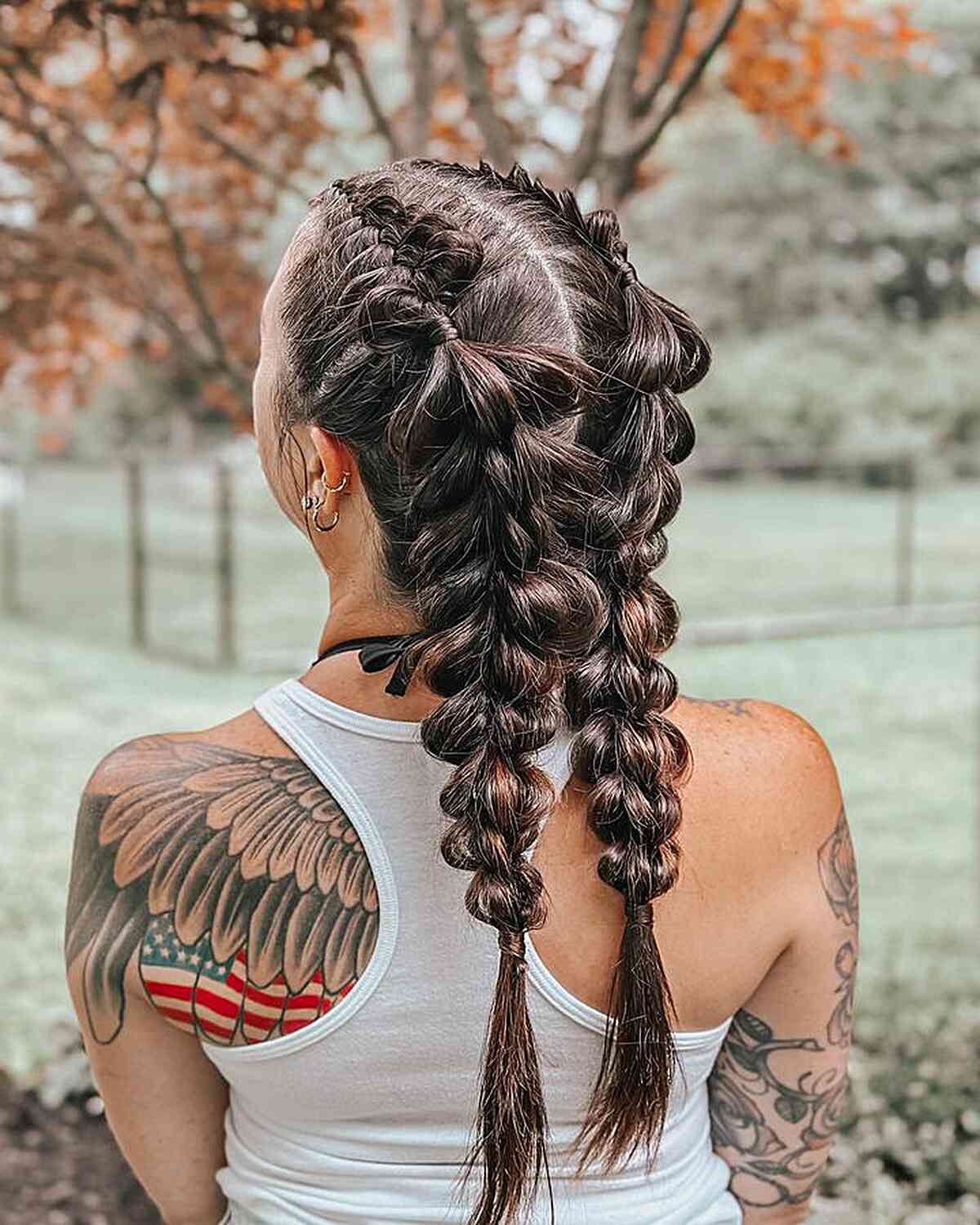
How do you ask for box braids that land at the shoulder and sit in two neat sections? Start with the parting. This style uses a side part, then divides the thick black braids into two glossy pigtails that fall just past the collarbone. Ask your stylist for: shoulder-length box braids in pigtails, side part. The small silver charms at the ends are optional, but they add a deliberate finish. Fabric-covered bands secure the base without snagging the braids.
Shoulder Length Coily Box Braids
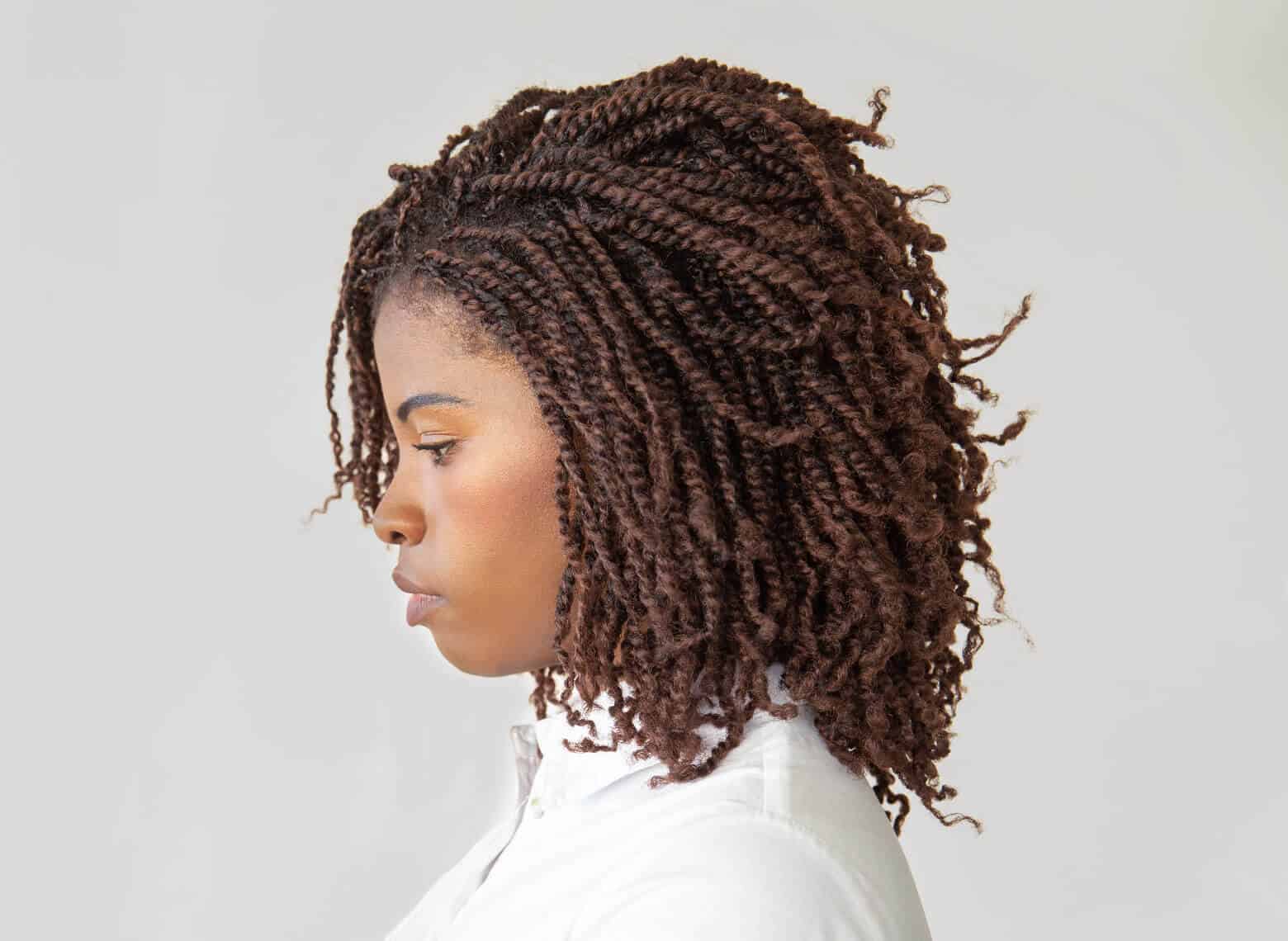
The shoulder length keeps them manageable, and the neat parting adds structure to the natural bounce. Ask your stylist for: shoulder-length box braids, coily texture. A light serum on the ends prevents frizz, and a trim every eight weeks maintains the line. The coily finish gives movement without losing the braid definition.
Thick Shoulder Length Jumbo Braids
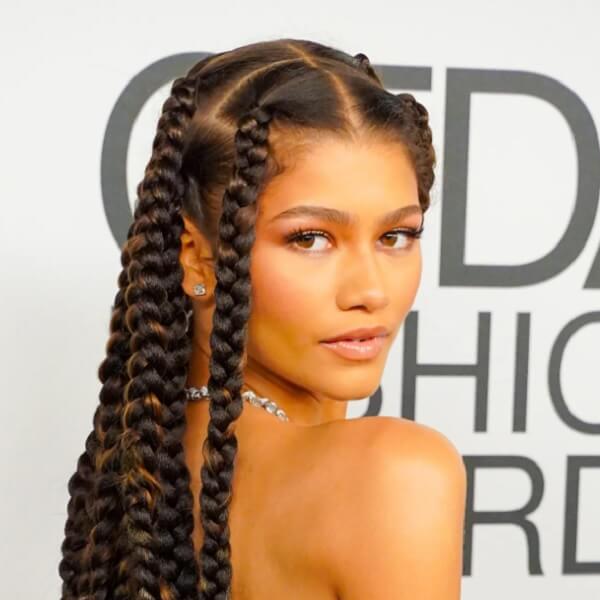
Jumbo braids are built for speed and impact. Here, thick sections of dark brown hair are braided with subtle blonde streaks woven through, creating dimension without the commitment of full highlights. The middle parting and shoulder length keep the look grounded. Ask your stylist for: thick jumbo braids, shoulder length.
The installation is faster than smaller braids because each section is wider, and the hold is solid. A hydrating spray keeps the scalp comfortable between washes, and the color placement means regrowth is less obvious than with a solid blonde.
Shoulder Length Wavy Thick Braids
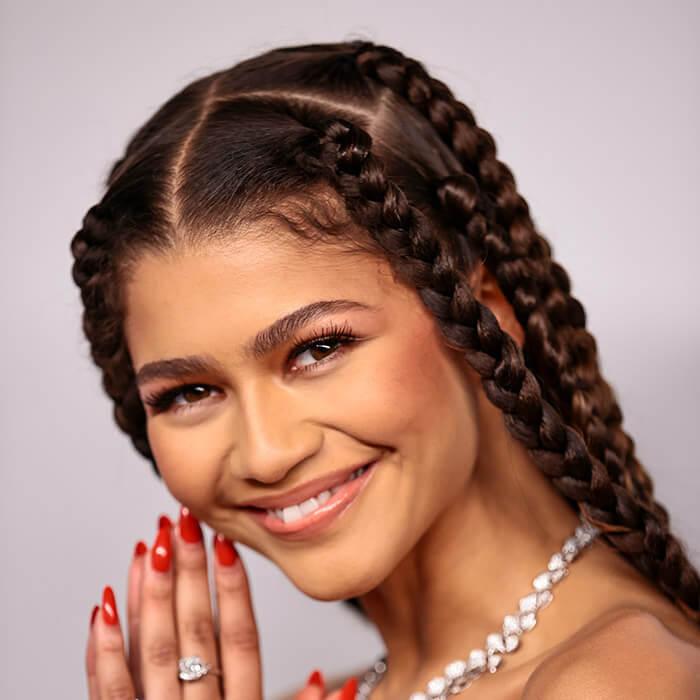
Thick hair benefits from definition, and these shoulder-length braids deliver it through a wavy texture and a clean middle part. The density means the style holds its shape for days without constant re-twisting. This is a salon-only project: the thickness and uniformity of the braids require a skilled hand to avoid bulk at the roots. Ask your stylist for: shoulder-length thick wavy braids. That middle part keeps the look structured, so the waves stay neat rather than messy. A light oil applied every few days prevents frizz and keeps the texture defined. A trim every six to eight weeks maintains the sharp shoulder-length line.
Collarbone Length Black Box Braids with Curly Ends
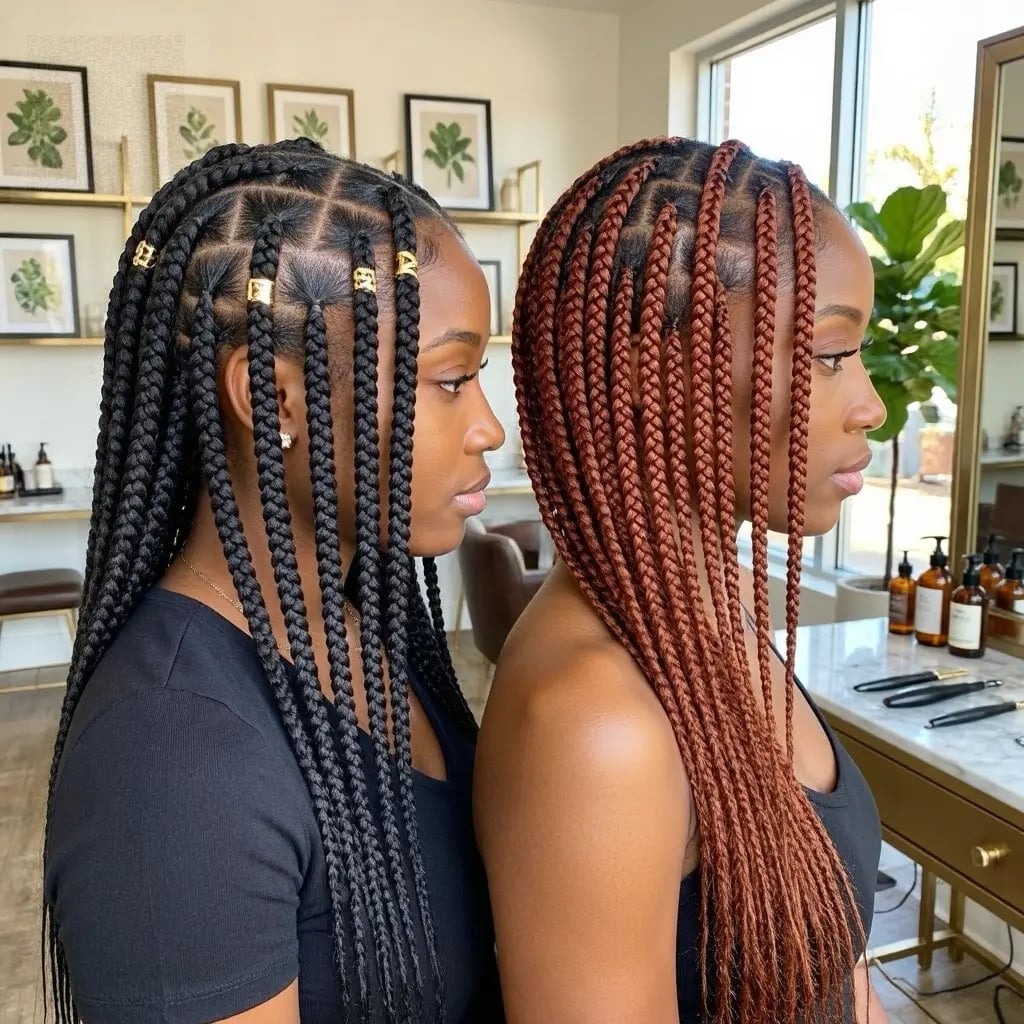
Wondering if curly ends work on shorter braids? These collarbone-length black box braids make the case. The curl at the tip adds visual weight, so the braids don’t look too skinny or wispy at the finish line. A middle parting keeps the overall shape symmetrical and neat. Ask your stylist for: collarbone length box braids with curly ends. This length suits anyone who wants braids that sit above the chest but still swing a little. The curly ends also soften the transition from braided shaft to natural hair, making the style read as one cohesive texture. Straight hair textures may need the ends set with a perm rod to get that curl pattern to stick.
Shoulder Length Brown Box Braids with Blonde Highlights
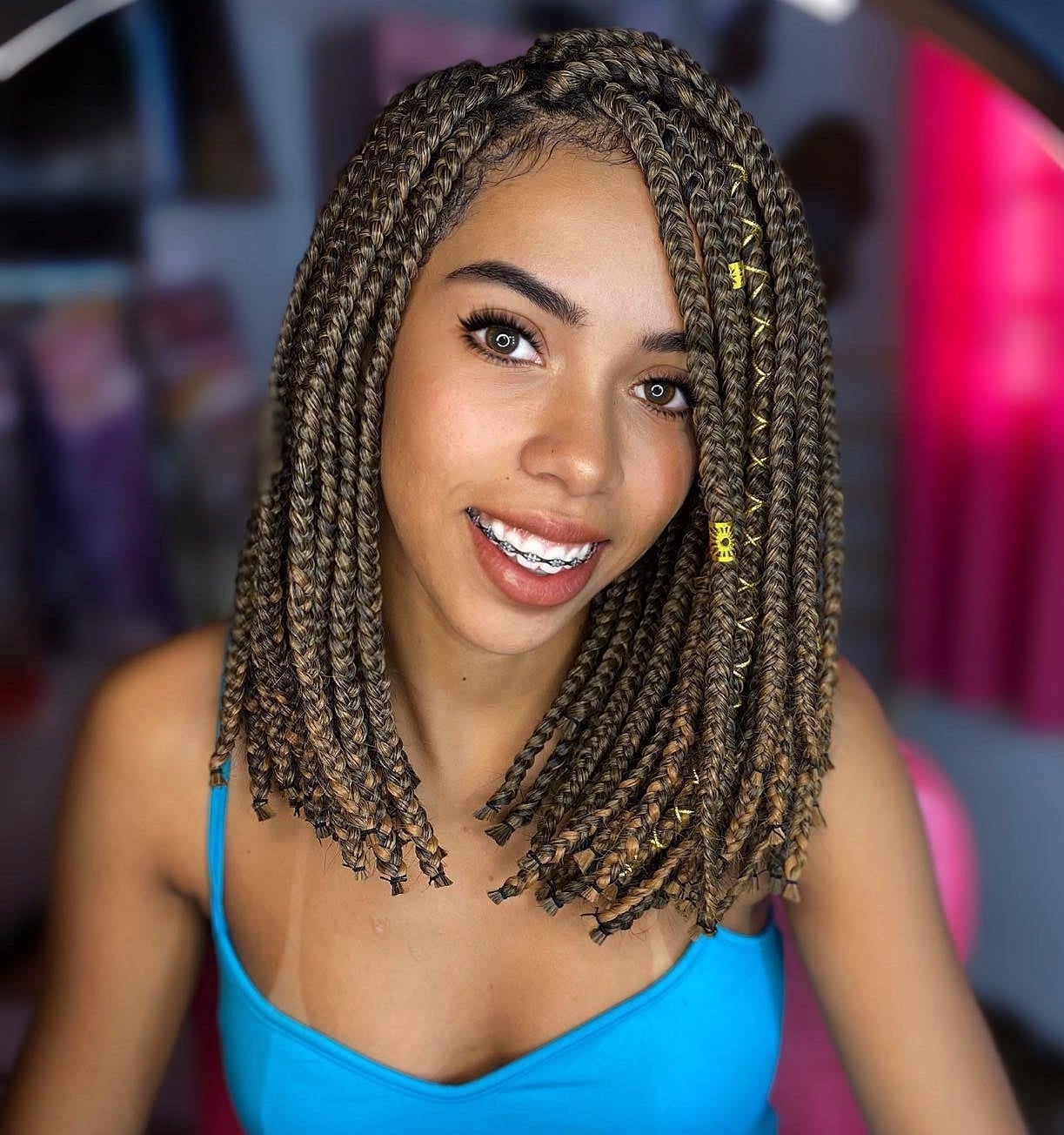
Solid dark brown braids read as classic; add blonde highlights and the whole tone shifts toward sunlit dimension. These shoulder-length box braids use a warm brown base with subtle blonde pieces woven through, so the color looks lived-in rather than dipped. The side parting is the detail that makes it work: it lets the highlights fall forward naturally, catching light around the face.
Ask your stylist for: shoulder-length brown box braids with blonde highlights, side part. A solid dark brown version would give you more contrast against a light background, while this two-tone approach softens the overall effect. It is a good compromise for anyone who wants dimension without a full bleach commitment on the whole head. The highlights stay visible even as the braids settle.
Collarbone Length Dark Brown Box Braids with Blonde Highlights
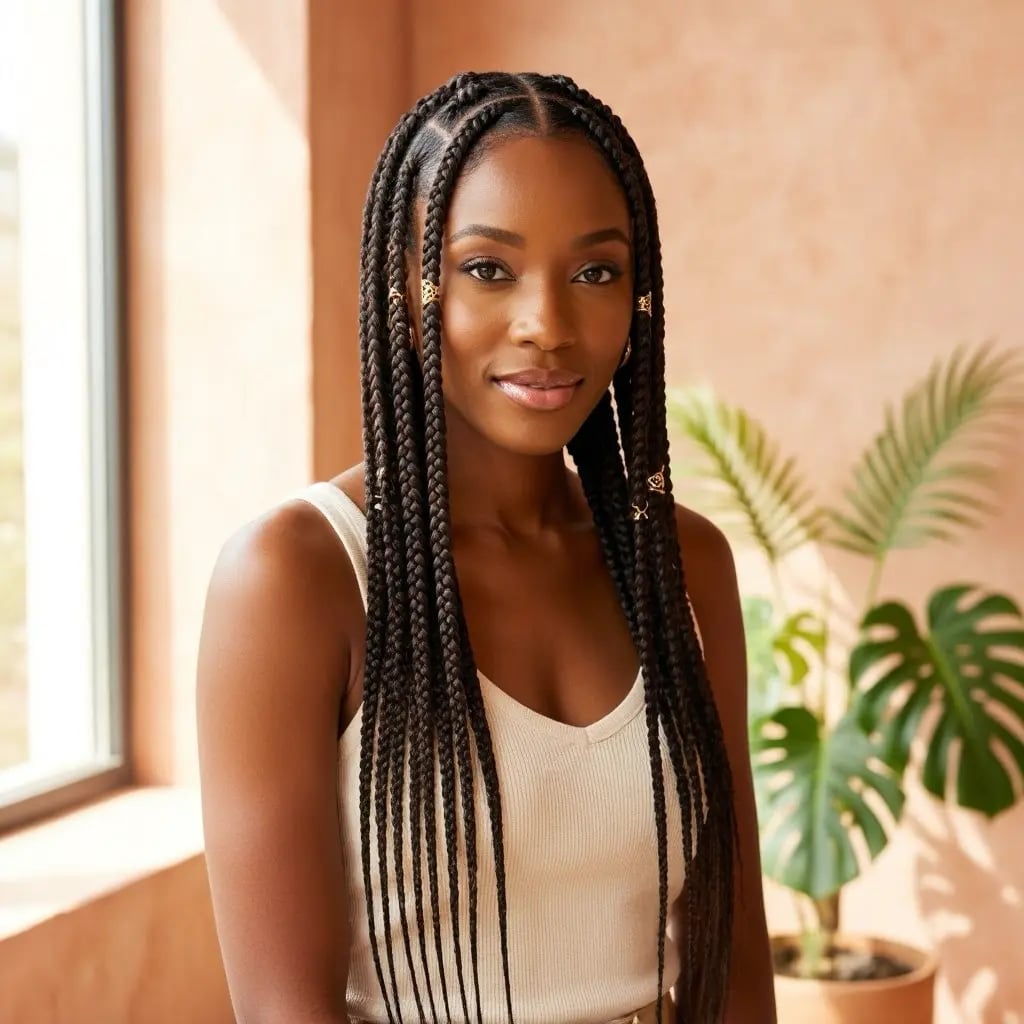
Gold beads threaded at the ends of these collarbone-length box braids add a deliberate finish, but the real design work is in the color. A dark brown base with subtle blonde highlights creates depth without looking stripy, and the middle parting lets that dimension read evenly on both sides. Ask your stylist for: collarbone length dark brown box braids with blonde highlights and beads. The beads need to be clamped tight at the braid tip to stay put through washing and sleeping. A color-safe shampoo keeps the blonde pieces from dulling too fast. Expect to re-twist any loose braids around the hairline every two to three weeks to maintain that clean part.
Collarbone Black Box Braids with Beads
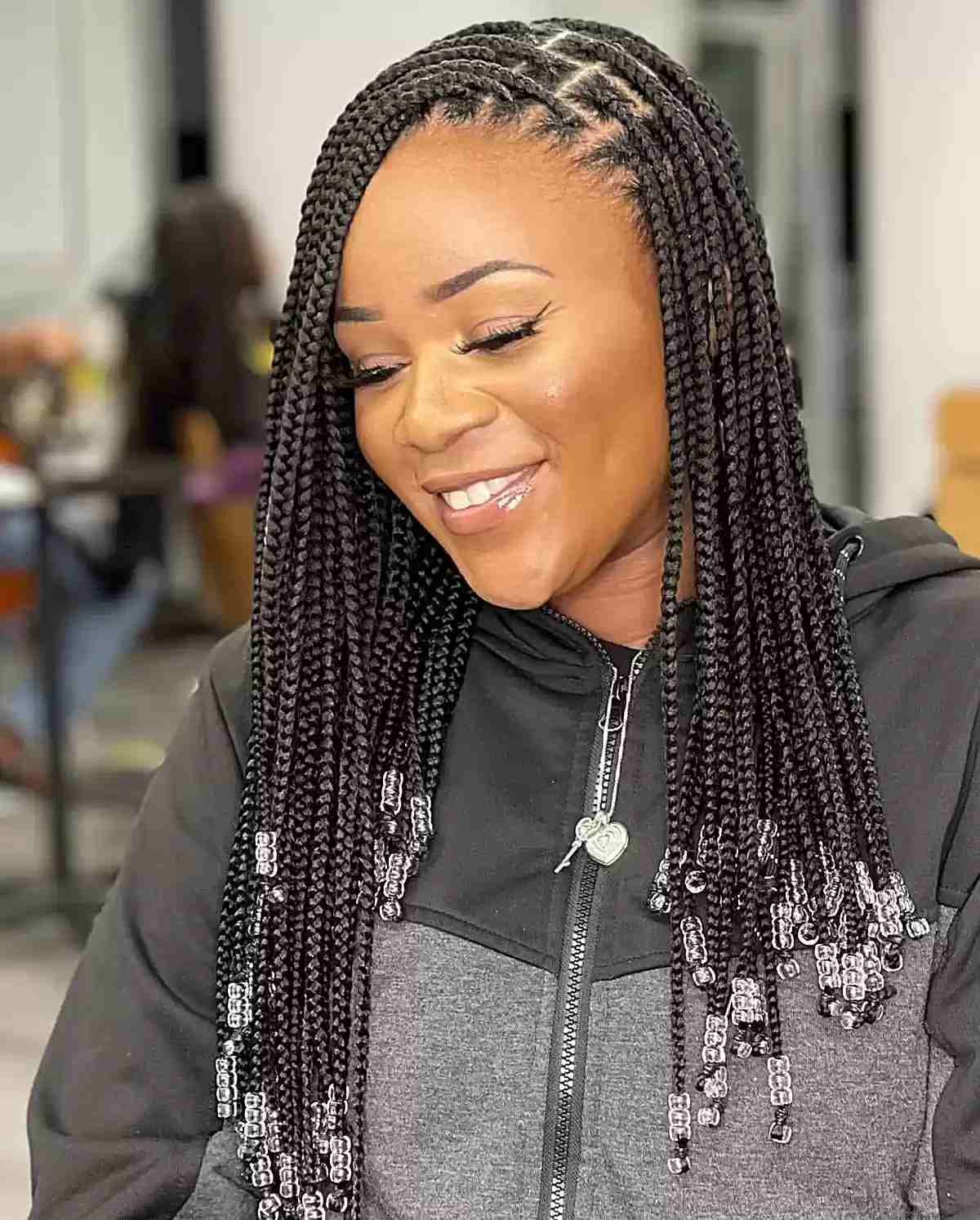
To keep beads on fine-density braids without sliding off the ends, ask for a small knot or a dab of glue at the tip before threading the bead. These collarbone-length black box braids use a fine density and a middle parting, which keeps the overall silhouette light even with the added embellishment. Ask your stylist for: collarbone length black box braids with beads. Specify small beads in a single color or a mix of silver and black for a tonal look. The beads add weight at the ends, which helps the braids hang straight and prevents flipping out. No special styling needed beyond the initial install. A trim every six to eight weeks keeps the ends from fraying.
Collarbone Micro Braids with Curly Ends
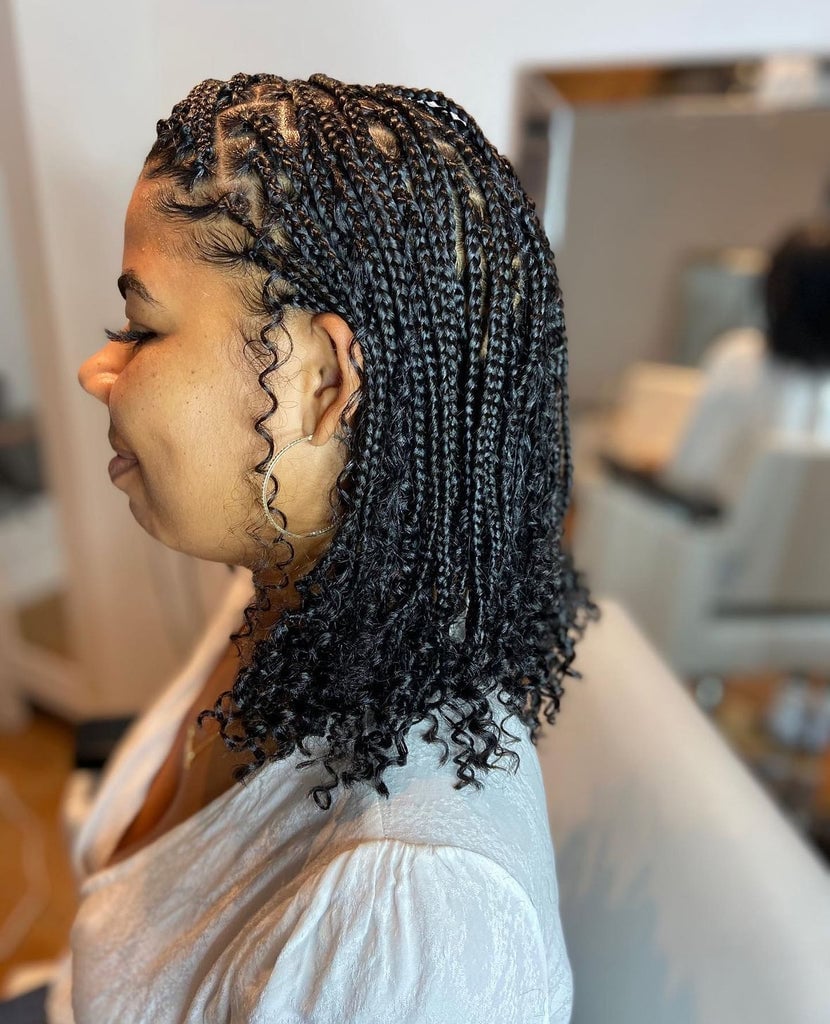
There is a certain satisfaction in a braid pattern so fine it looks like texture rather than individual strands. These collarbone-length micro braids keep the scalp visible and the density uniform. The laid edges along the hairline give it a finished, polished frame, while the curly ends add movement and a soft contrast to the otherwise sleek shaft. This style holds its shape well, though the curls at the tips need a gentle refresh with water or a curl-defining cream to keep their bounce.
Ask your stylist for: collarbone length micro braids with laid edges and curly ends. This suits anyone who wants an intricate, detailed style without the weight of longer lengths. The micro size means more braids, which translates to a longer install time, so budget a full day in the chair. The payoff is a style that moves naturally and feels lighter than it looks, with the laid edges staying smooth for about a week before they need a soft brush and a bit of gel to reset.
Collarbone Length Wavy Box Braids
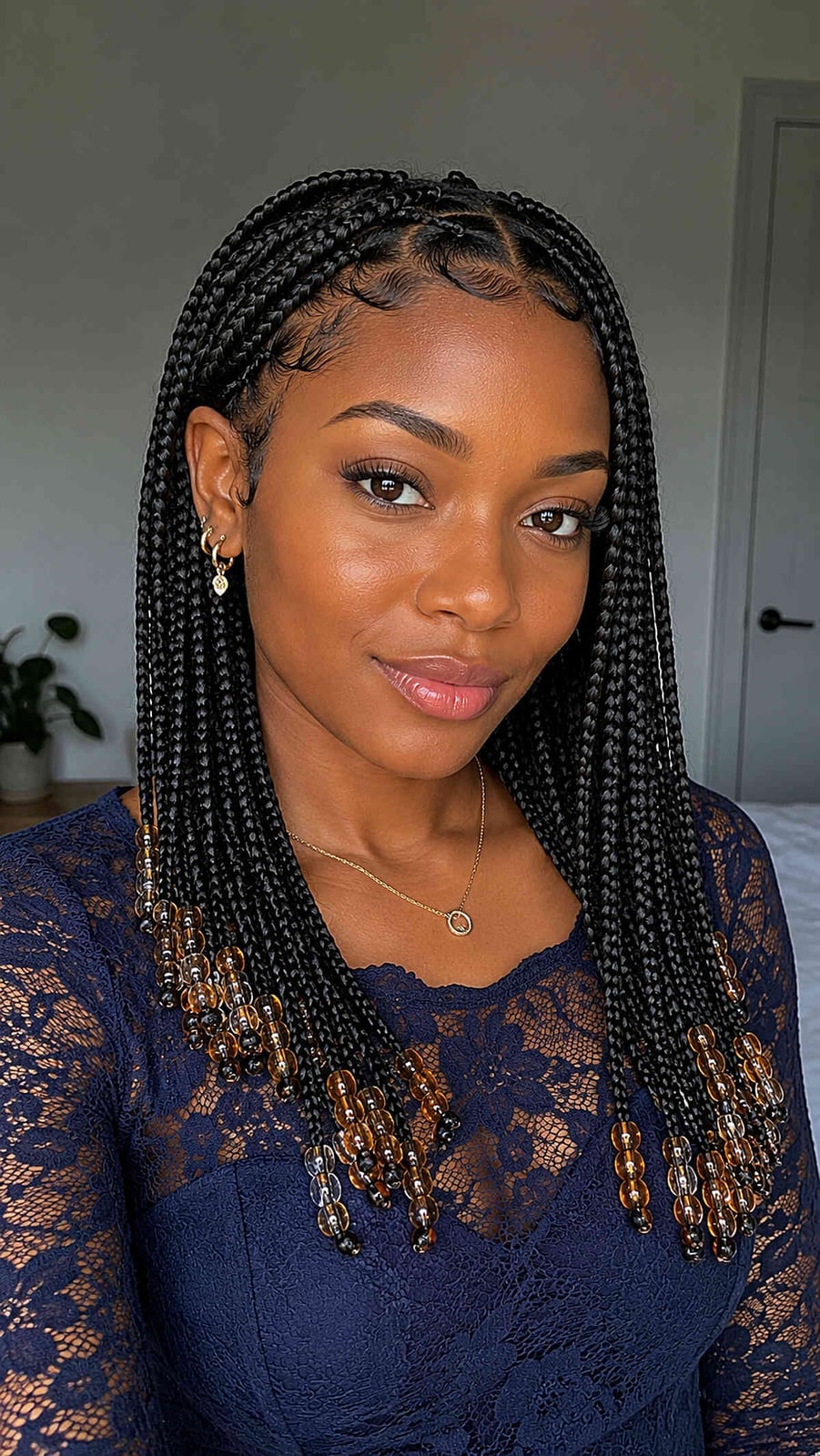
Here is a practical rule about beads on braids: they look great, but they add weight and a bit of noise to every turn of your head. These mid-back box braids have a straight, thick texture and are punctuated with small beads. The color is a solid black, which keeps the shape and the embellishment as the main focus.
Ask your stylist for: collarbone length wavy box braids with beads, side part. This is a salon-only commitment, and the beads mean you should be ready for them to snag on collars or pull slightly when you sleep, so a silk scarf or bonnet becomes essential. You get a style with personality, but if you are sensitive to weight on your scalp, you might want to skip the beads and let the wavy texture do the talking. The braids themselves hold their wave well, and the side part keeps the look casual.
Blonde Bob with Side Braided Detail
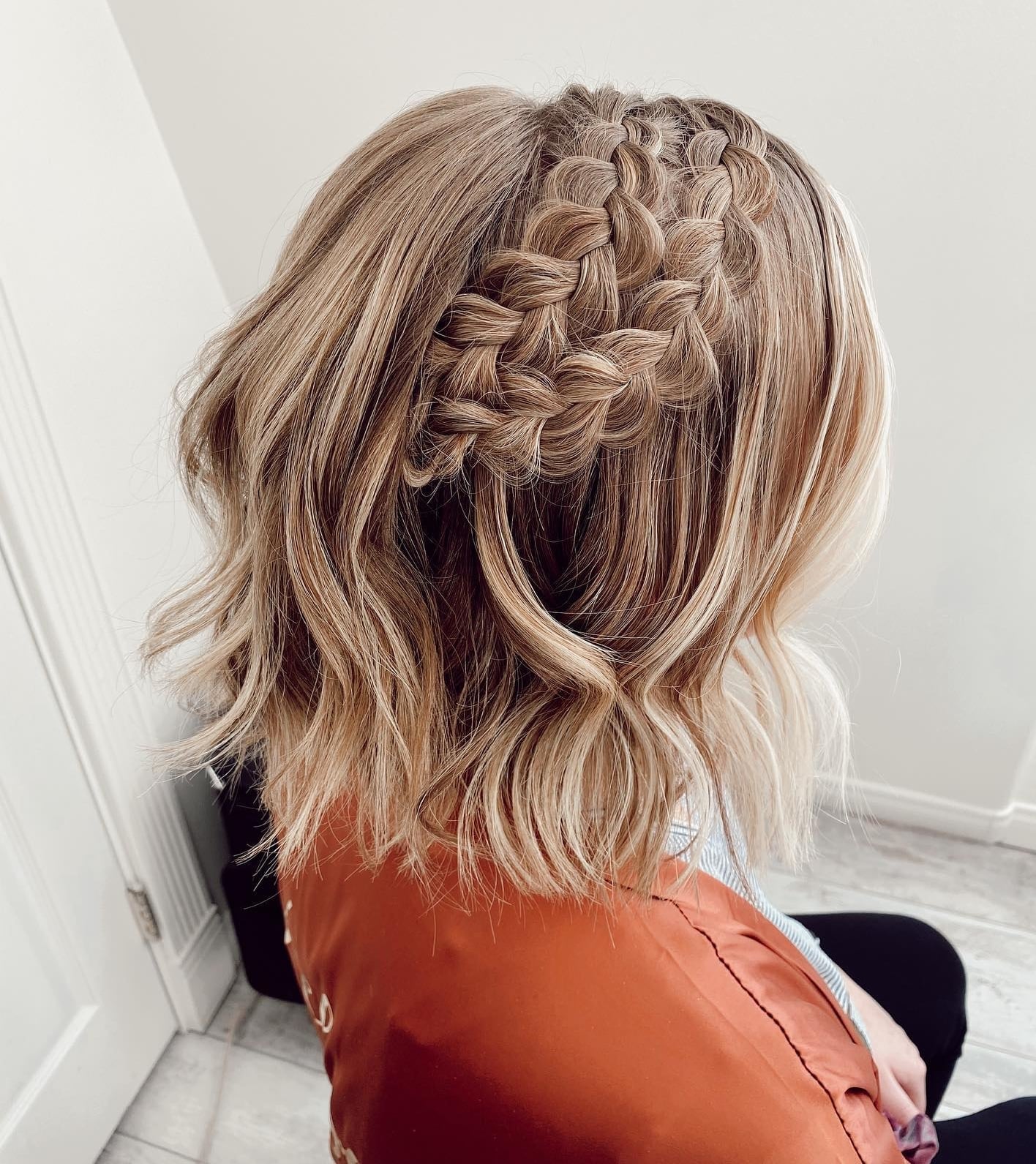
Wondering if a single braided detail can add interest to a simple bob without looking like a costume? Yes, if the bob is collarbone-length, blonde balayage, and the braid is woven into one side. The loose waves give the rest of the hair a relaxed, fine texture, and the braid adds a decorative line that draws the eye along the cheekbone.
Ask your stylist for: collarbone bob with a side braid detail, blonde balayage. This suits fine, wavy hair types who want a bit of visual interest without committing to a full braided style. The braid holds well for the day, but you will want a light hairspray to keep it tidy, and re-braiding every morning is a two-minute job if you are careful. The balayage keeps the color low-maintenance, with a toning appointment every eight to ten weeks to keep the blonde bright.
Mid-Back Dark Brown Box Braids with Curly Ends
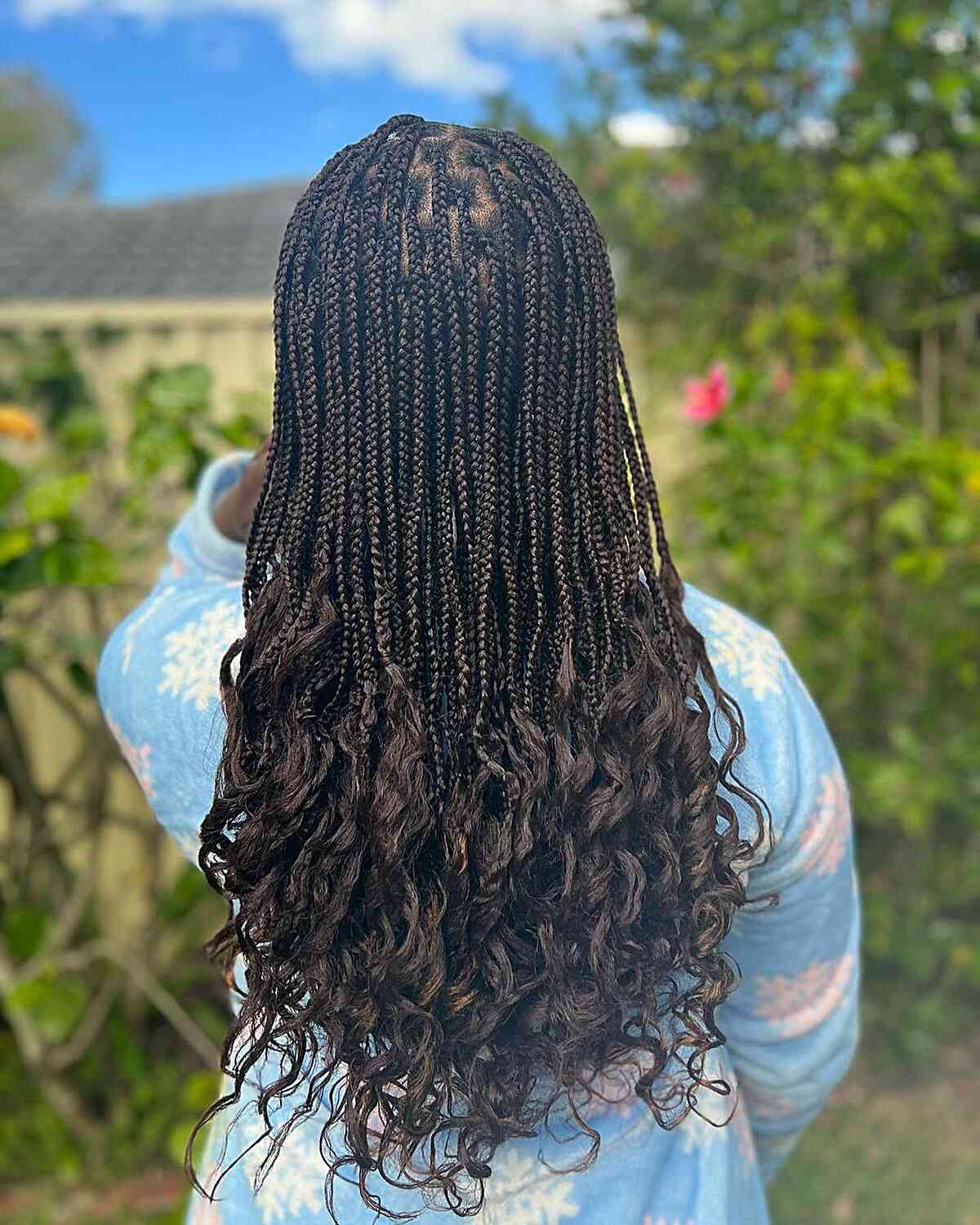
A mid-back length of dark brown box braids with curly ends is a study in contrast: the shaft is sleek and fine, and then the last few inches curl into a soft, springy finish. The middle parting keeps the line clean, and the curly ends add volume and a playful break from the uniform braid pattern. This is a style that wears well over weeks, but the ends are the part that needs attention.
Ask your stylist for: mid-back box braids with curly ends, fine density. The upkeep is straightforward: a curl-defining cream on the ends every few days keeps the shape from frizzing, and the braids themselves hold their length for a good stretch before you need a trim at the ends, around every eight to ten weeks. It’s a look that works for everyday wear, and the fine density means it doesn’t feel heavy, even at mid-back. The trade-off is that the curly ends can tangle with each other, so a gentle finger-comb or wide-tooth comb every couple of days is a good habit.
Mid-Back Dark Brown Box Braids with Blonde Highlights, Wavy
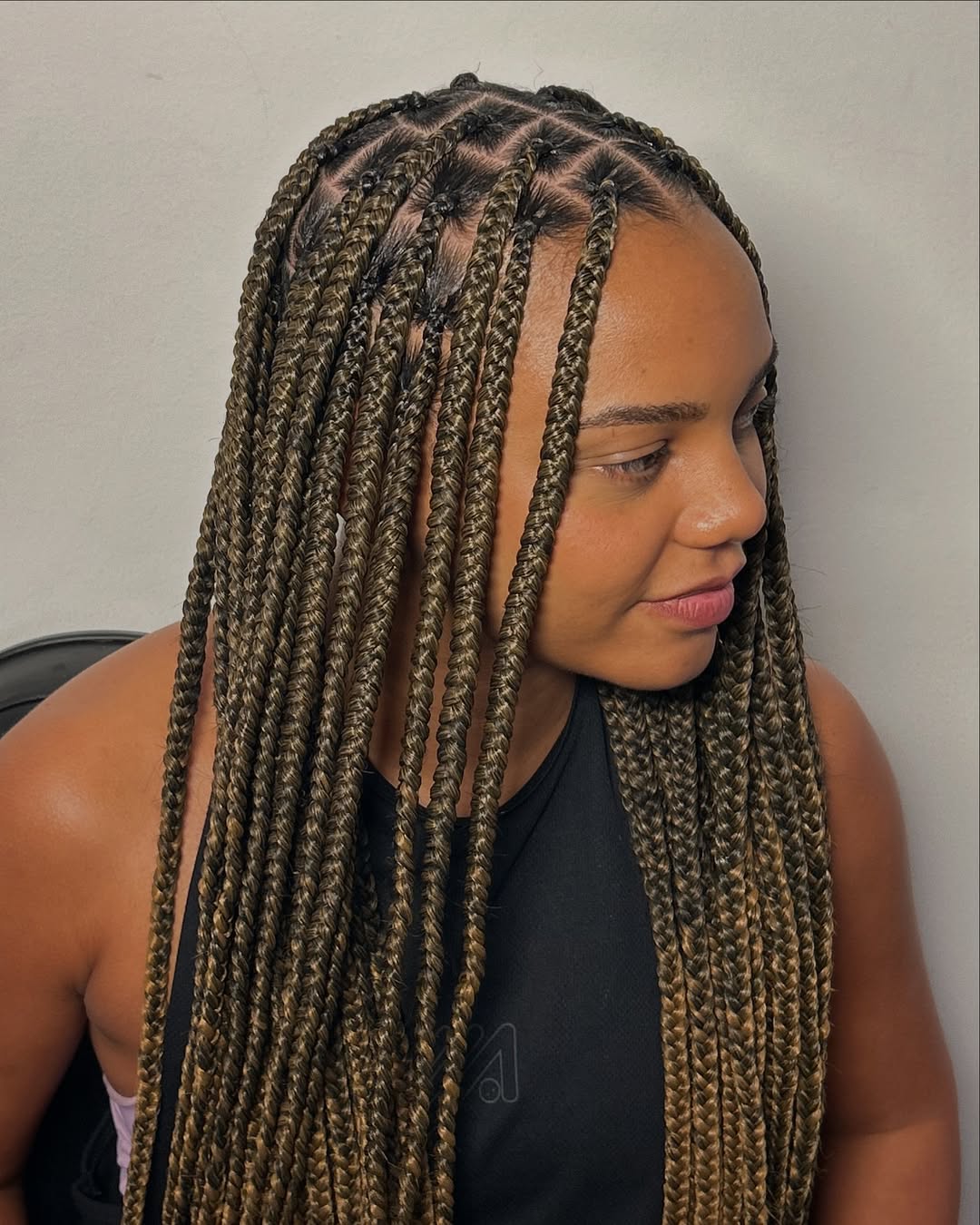
Set these against a solid dark brown braid and the difference is immediate: the blonde highlights add dimension and a subtle wavy texture that catches the eye, while the dark brown base keeps it grounded. The mid-back length gives it a full, substantial feel, and the waves prevent it from looking too flat or severe.
Ask your stylist for: mid-back dark brown box braids with blonde highlights. If you are torn between a solid color and something with more depth, this is the middle ground that is dimensional without being loud. The wavy texture holds its shape well, and the highlights mean you will want to keep the ends moisturized to avoid brassiness, a purple shampoo once a week helps. It is a salon-only install, but the style itself is low-effort once it is in, and the waves mean you can skip any additional styling most days.
Mid-Back Fine Black Micro Braids
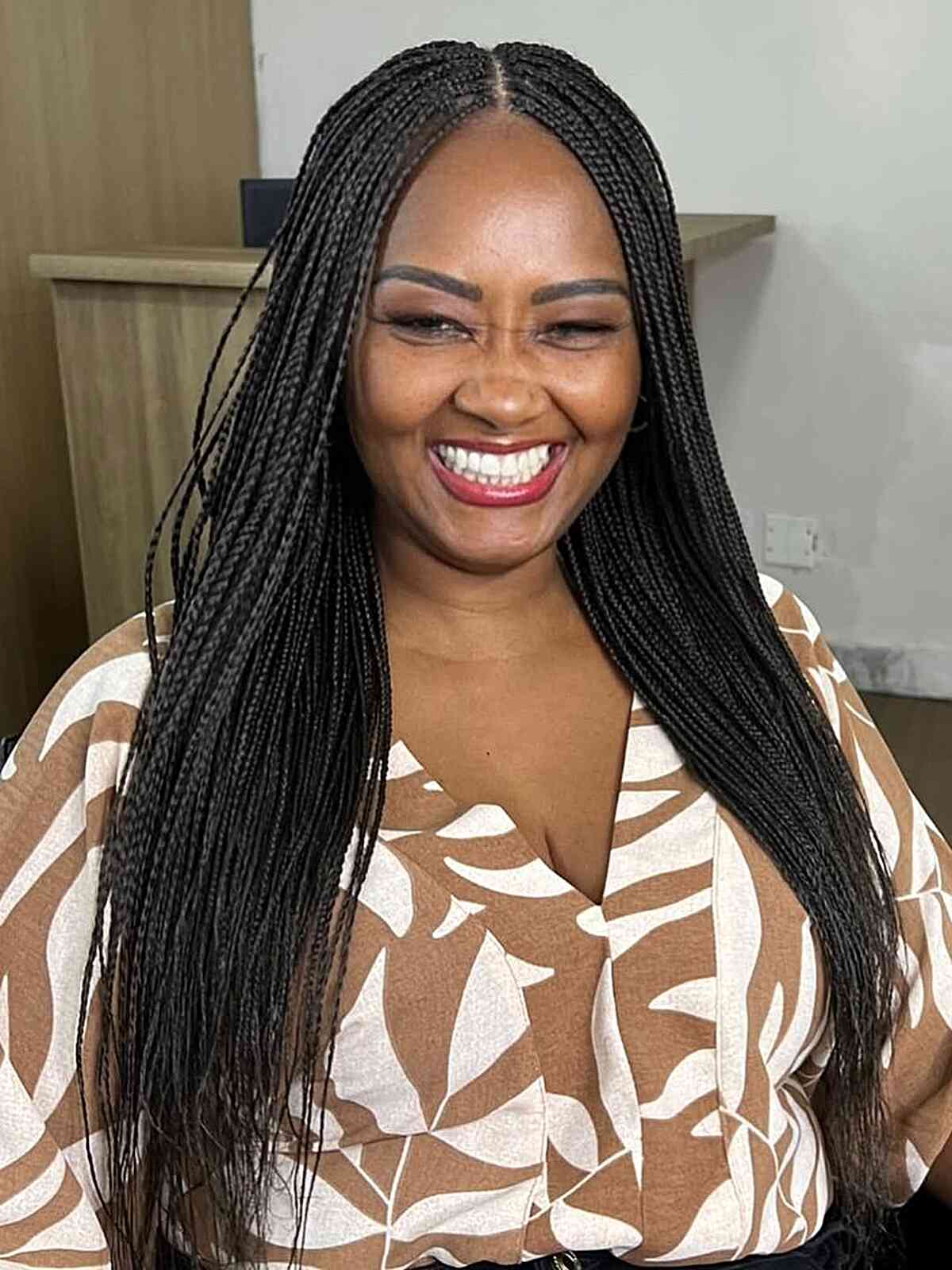
Wondering how to make fine hair look dense and full in a braided style? These micro braids achieve that by keeping the sections small and the parting clean. The mid-back length adds weight, which helps the fine texture hang straight without puffing. Ask your stylist for: mid-back fine micro braids with face-framing tendrils. A light mousse on the tendrils keeps them defined, and trimming the ends every eight weeks maintains the shape. The uniform black color keeps the focus on the intricate technique rather than contrast.
Mid-Back Sleek Fine Micro Braids, Straight
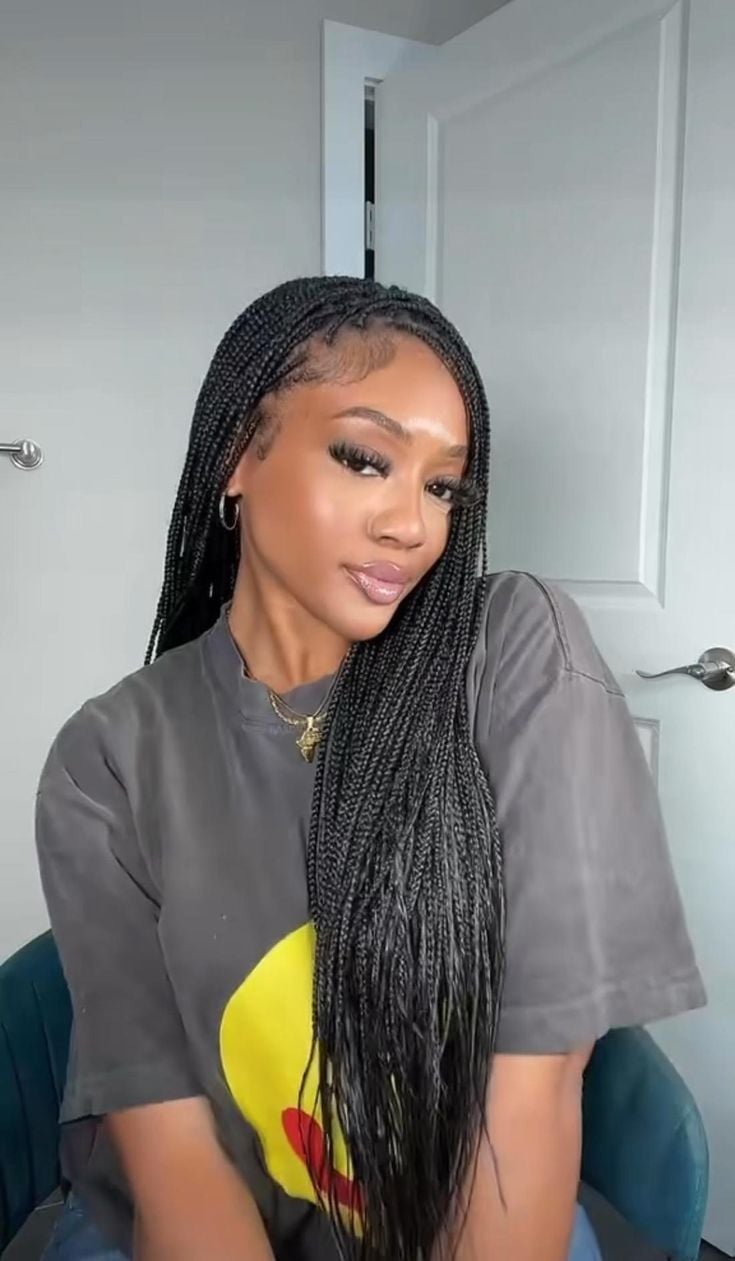
The trick with sleek micro braids is in the tension: each braid must be pulled taut enough to lie flat but not so tight that it tugs. These reach mid-back with a middle parting that stays crisp because the sections are uniform. The straight texture means there is no curl at the ends to disguise uneven lengths, so precision matters.
Ask your stylist for: mid-back sleek fine micro braids. The side view reveals how the braids fall in a clean line, with a few wisps breaking the edge. A silk scarf at night preserves the polish, and a light shine spray adds the finish without making the hair feel sticky. Every braid sits where it was placed.
Mid-Back Coily Box Braids
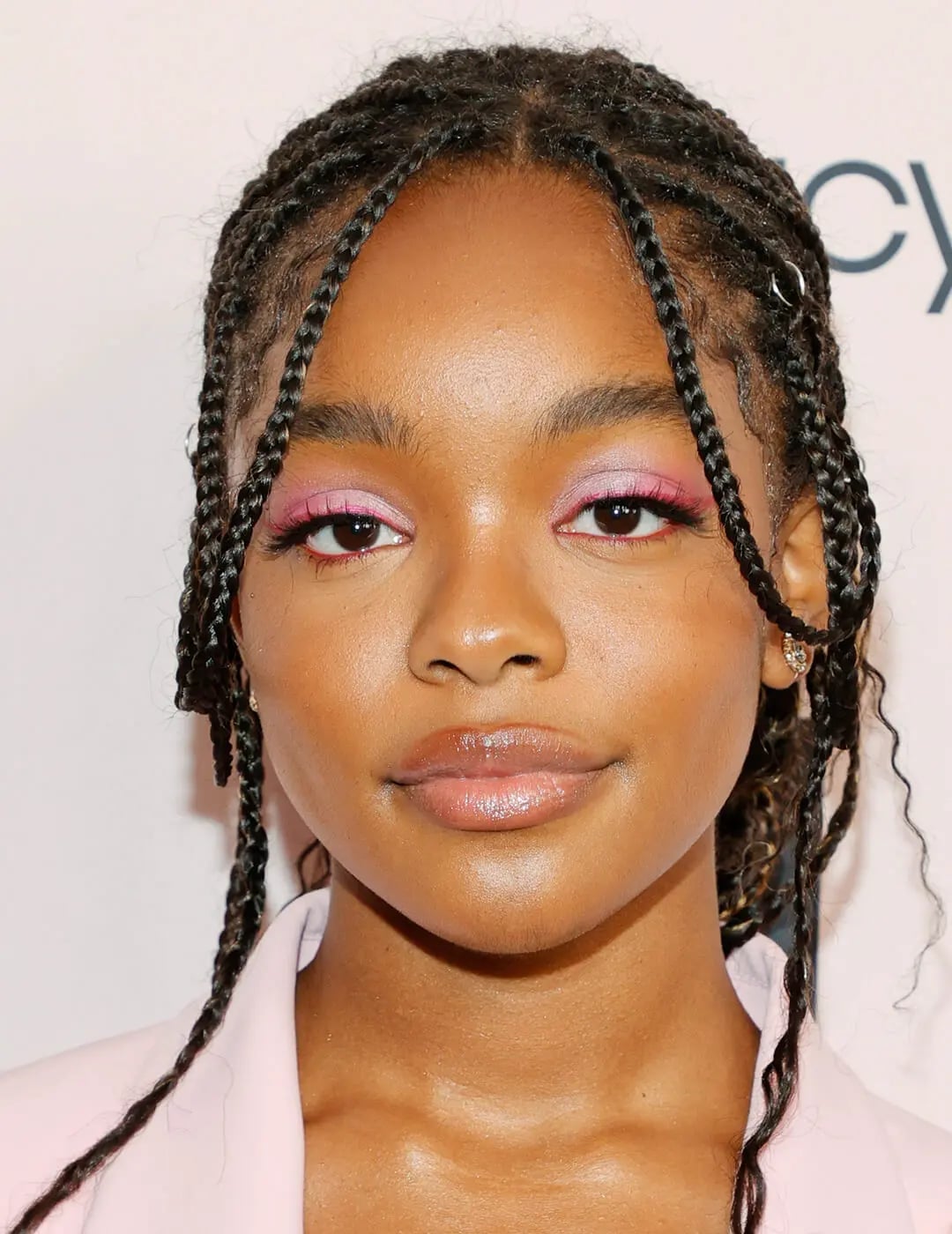
Ask your stylist for: mid-back small box braids, coily texture. This is a salon-only project that can take several hours. The honest trade-off is scalp sensitivity in the first few days, especially if you have a sensitive scalp. A leave-in conditioner helps maintain moisture, and a trim every eight to ten weeks keeps the ends from unraveling. The black color hides the inevitable frizz that coily textures develop over time.
Mid-Back Curly Box Braids, Black
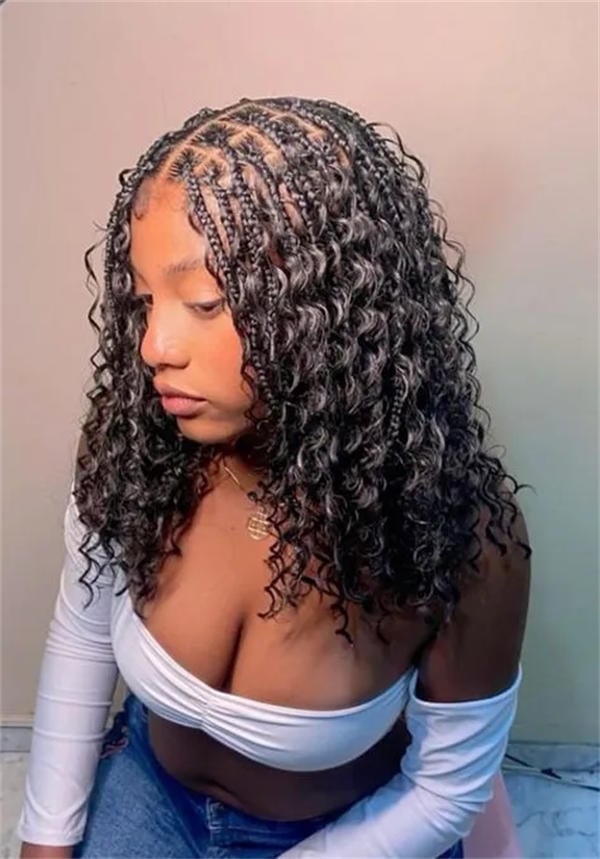
Who actually benefits from curly box braids at mid-back length? Anyone with a naturally curly texture who wants volume without adding thickness to each braid. The curly ends create a soft, rounded finish that contrasts with the straight mid-section, giving the style movement. A middle parting keeps the look balanced, and the dense placement prevents the scalp from showing through.
Ask your stylist for: mid-back box braids with curly texture. The black color unifies the mixed textures so the style reads as one piece rather than a collection of separate techniques. A curl-defining cream enhances the ends, but avoid over-brushing, which turns the curls into frizz. This is not a style for anyone who wants a sleek, uniform finish, but it is excellent for those who want their braids to move like natural hair.
Mid-Back Mixed Braids Dark Brown
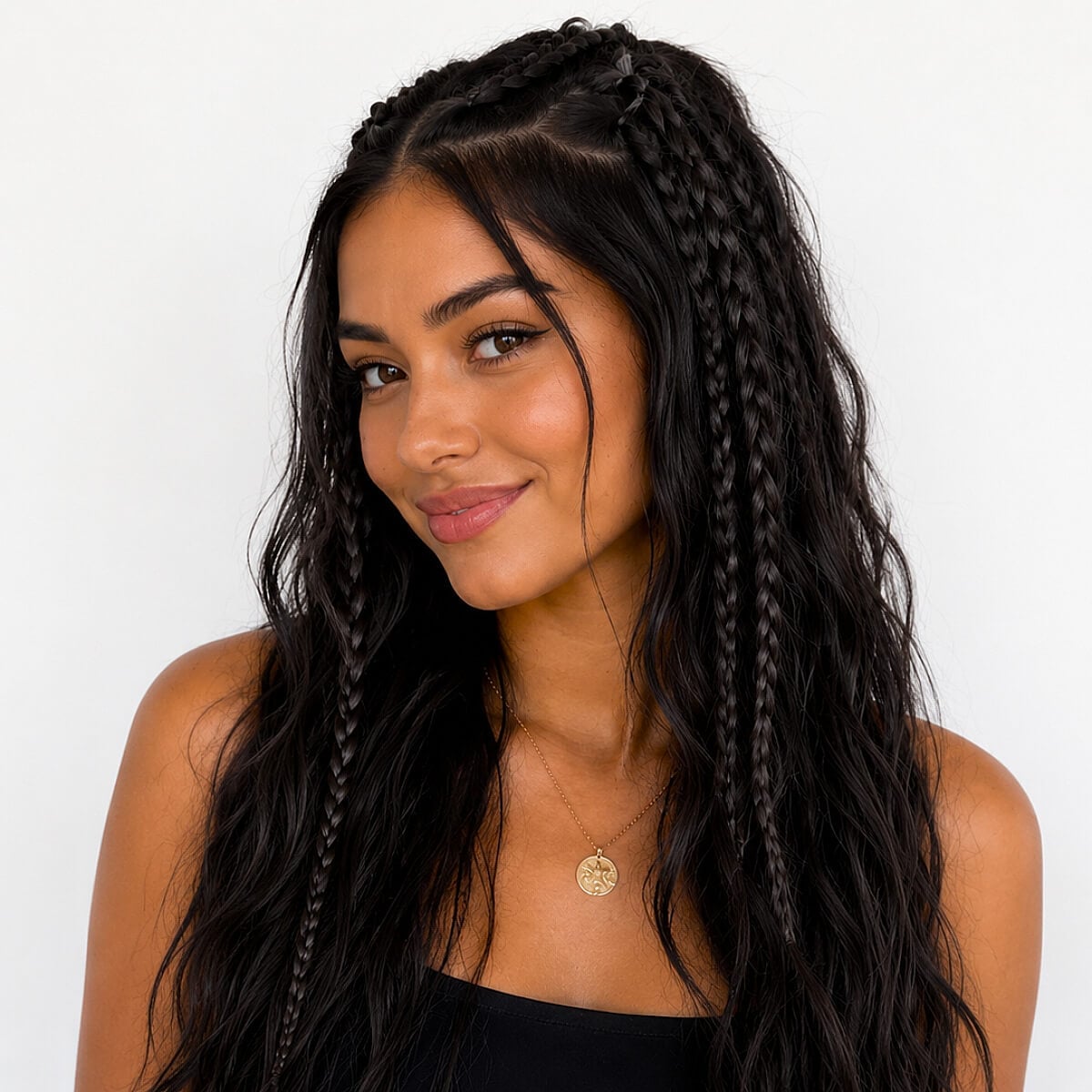
A concrete fact about mixed braids: the smaller braids along the hairline hold up better than the larger ones through the length. This style uses intricate braiding at the front and looser, thicker braids behind, all in dark brown. The wavy texture in the larger sections adds softness, while the small braids keep the edges neat.
Ask your stylist for: mid-back mixed braids, dark brown. The upkeep involves a light styling cream on the looser braids to maintain the wave pattern and a trim every eight to ten weeks to even out the ends. The larger braids may show frizz sooner than the smaller ones, so expect to refresh the front more often. The dark brown color minimizes contrast between the two braid sizes, making the mix feel deliberate.
Mid-Back Dark Brown Knotless Braids, Middle
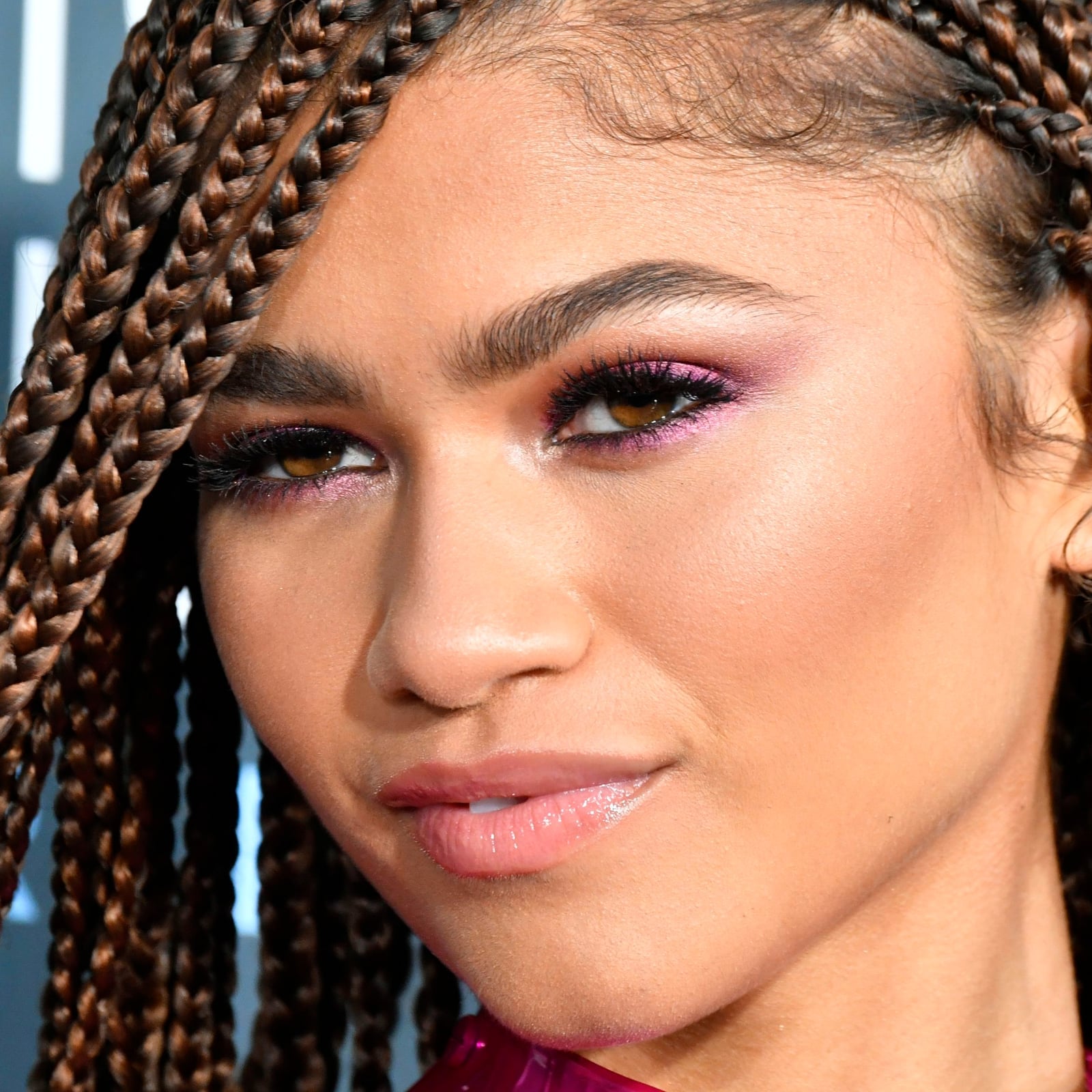
Knotless braids skip the bulb at the root, so they lie flat against the scalp instead of sitting in raised rows the way traditional box braids do. That makes them the pick for anyone who finds the bulk of regular braids heavy on the scalp. The dark brown shade keeps the look subtle, while the wavy ends at mid-back add movement without extra weight. A middle parting and fine density keep the whole style neat and even.
The fine density means each braid is slim, which shortens install time but also means more individual braids to maintain. Ask your stylist for mid-back dark brown knotless braids with wavy ends. A light leave-in conditioner keeps the braids moisturized, and a trim every eight to ten weeks keeps the ends from fraying. This is a salon-only style, so plan for several hours in the chair.
Mid-Back Black and Blonde Box Braids with Curls
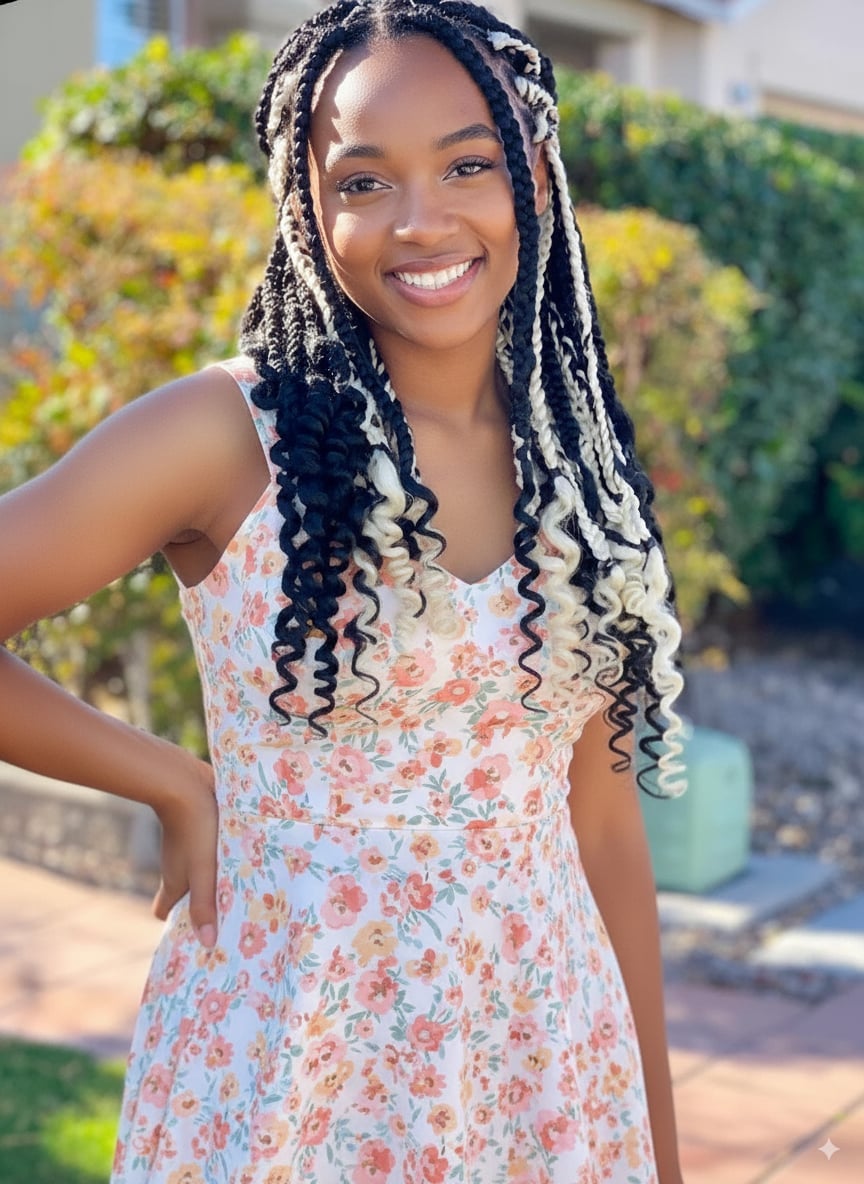
To get a sharp black-and-blonde split that looks polished, ask for a middle parting, black sections alternating with blonde, and loose curls at the ends. The contrast lands somewhere between bold and playful, and the curly ends soften the two-tone effect so the color placement looks deliberate. Ask your stylist for mid-back black and blonde box braids with curly ends. The curls at the tips are what sell the look, so specify a loose wave pattern, not tight coils. A curl-defining serum on the ends keeps them from frizzing, and re-twisting any braid that loosens keeps the part lines crisp.
Mid-Back Brown to Blonde Knotless Braids
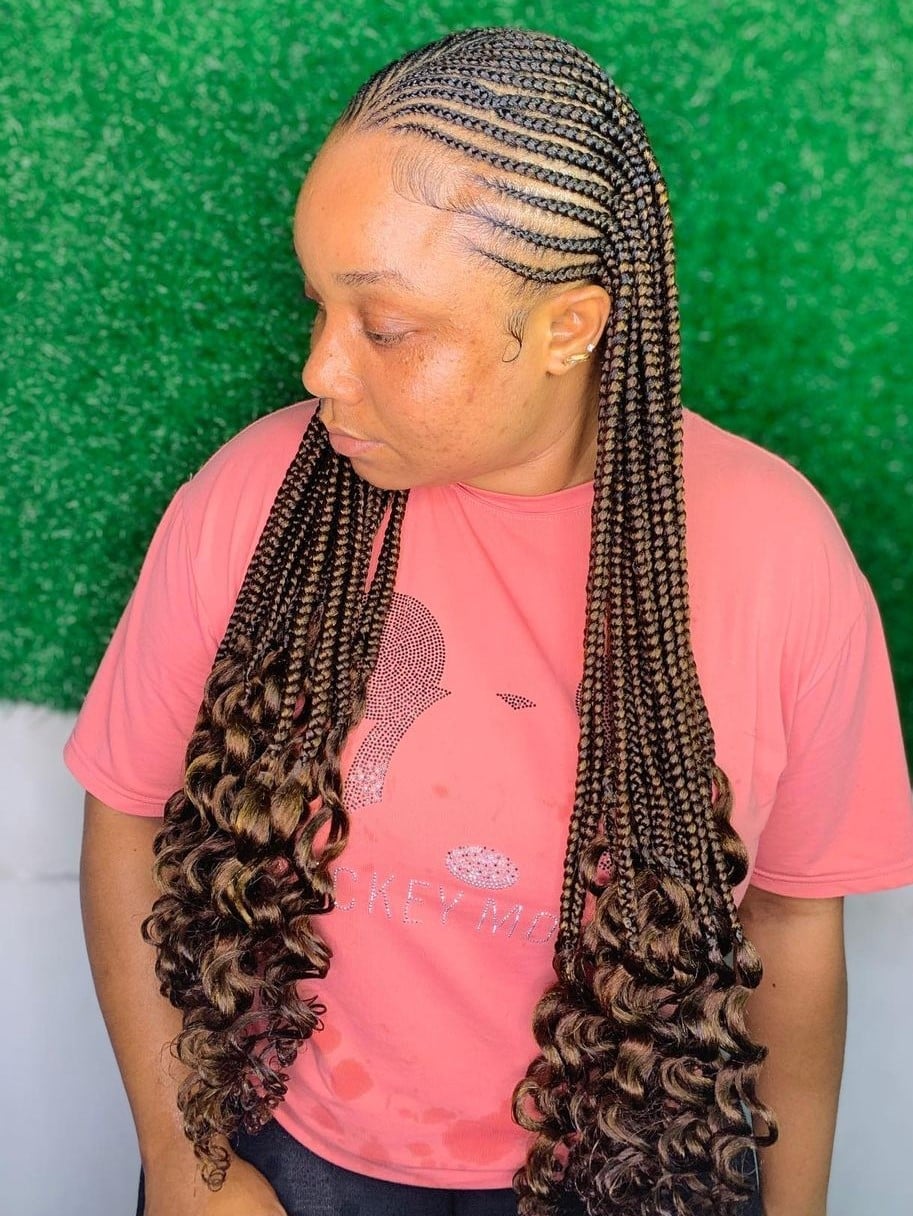
The transition from rich brown at the roots to blonde at the tips is the kind of gradient that looks simple but requires a steady hand. Each braid is built with color placement that starts dark and shifts lighter as it travels down, so the blonde lands only on the curly ends. Because the braids are thick and coily, the color change reads clearly without getting lost in the texture.
The mid-back length gives the gradient room to breathe; on a shorter braid, the transition would feel cramped. Ask your stylist for mid-back brown to blonde knotless braids with curly ends. The curly ends are dipped in the blonde, so a light oil or balm keeps them defined and stops them from tangling with the brown sections above. A trim every eight to ten weeks keeps the ends healthy, and a middle parting shows off the symmetry of the color work.
Long Black Box Braids with Amber and Clear Beads
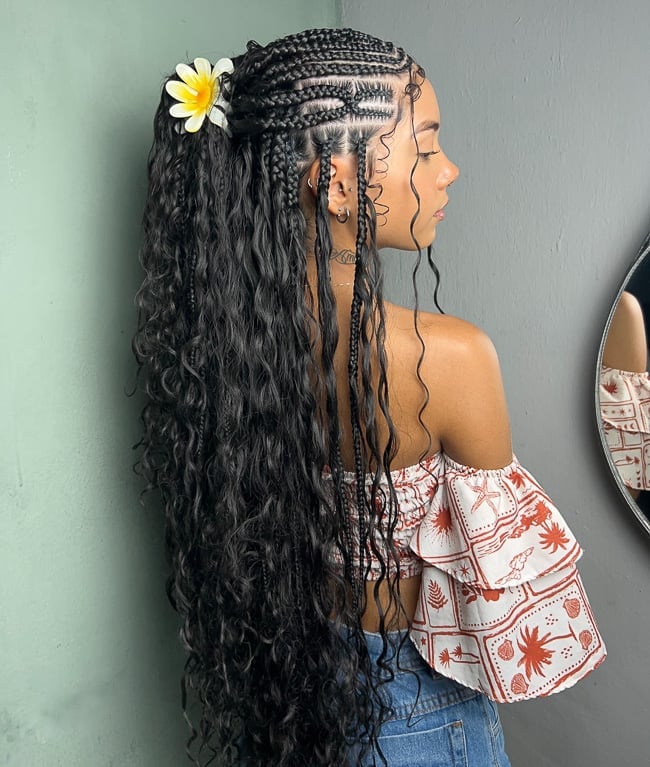
If you are going to commit to long braids, the rule is to make them worth the maintenance. The amber and clear beads on these black braids turn a straightforward style into something that catches attention with every turn of the head. The beads are threaded onto the braids near the ends, and the black base lets the amber tones pop without competing for space.
The trade-off is real: beads snag on collars and seat belts, and a loose one can slide off and vanish mid-day. Securing them properly takes extra time in the salon, so this is not a quick add-on. Ask your stylist for long mid-back box braids with amber and clear beads. The flower accessory behind the ear is a separate detail you can add or skip, but it shows how the beads carry the decoration on their own. Salon time runs longer than plain braids because each bead is placed and crimped by hand.
Mid-Back Cornrows to Loose Wavy Braids
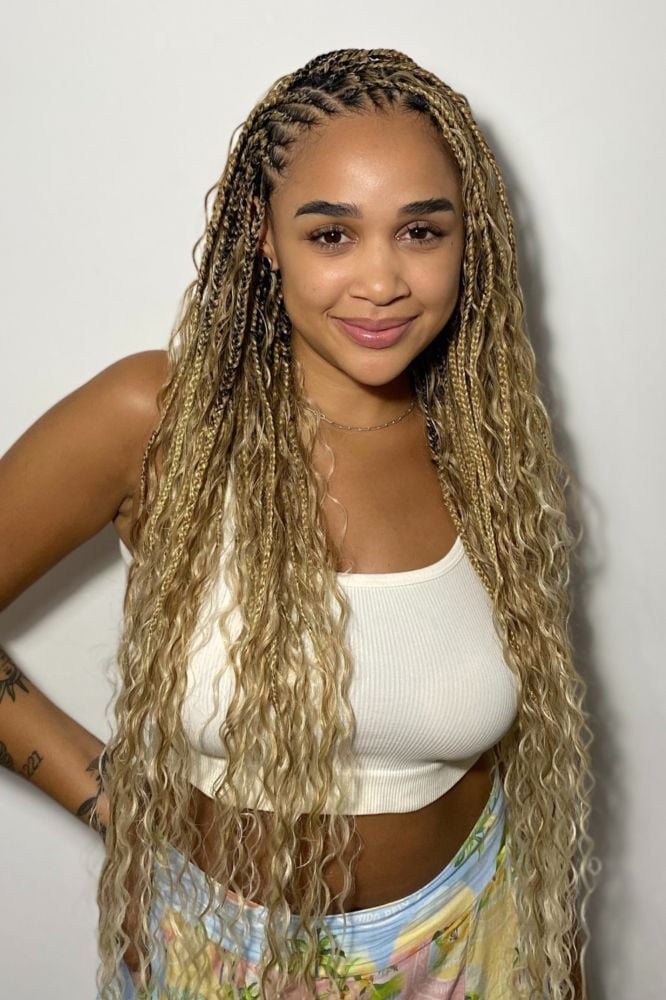
Who is this for? Anyone with thick, wavy, or curly hair who wants the scalp-hugging neatness of cornrows without giving up the freedom of long, flowing ends. The cornrows at the roots keep the style tidy and low-maintenance, while the loose wavy braids past mid-back add volume and sway. The blend of blonde and brown tones weaves dimension through the braids, so the texture change from tight to loose appears intentional.
Ask your stylist for cornrows to loose wavy braids with blonde highlights. The cornrowed sections keep the front of the hair out of your face, which makes this a practical pick for workouts or long workdays. The wavy ends can be smoothed with serum to prevent frizz, and a soft-bristle brush on the cornrows keeps the scalp clean without disturbing the pattern.
Mid-Back Blonde and Brown Box Braids with Mixed Textures
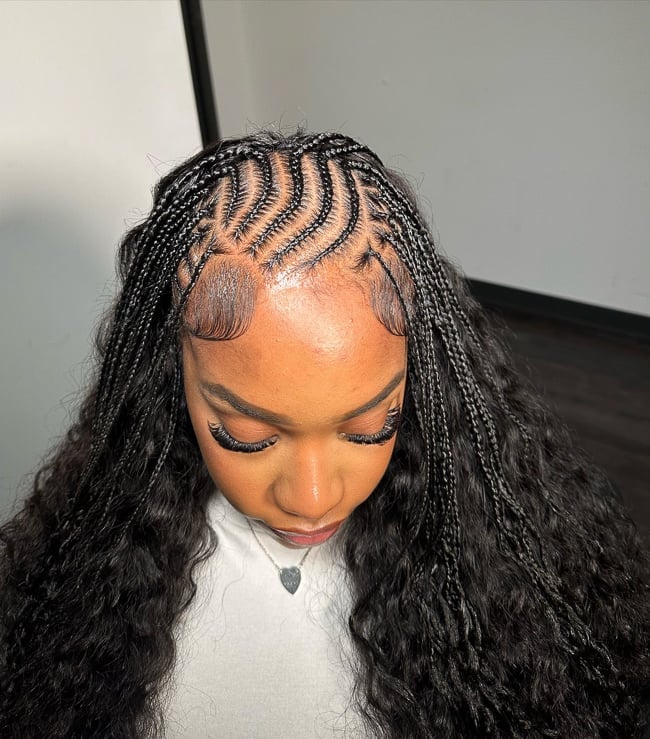
Neat cornrows at the scalp give way to long, loose braids with wavy ends, a mid-back length that carries both blonde and brown tones. The blend of colors keeps the style from flattening into a single block, and the mixed textures add volume without extra bulk. Ask your stylist for mid-back blonde and brown box braids with mixed textures.
The hair accessory is the detail that makes this style feel dressed, but it also changes how the braids wear. Metal or beaded pieces can catch on collars and pillowcases, so a silk scarf at night keeps them from snagging. The wavy ends need a curl-defining cream worked through every few days, and any braid that loosens at the root should be re-twisted quickly. A trim of the ends every eight weeks keeps the waves looking deliberate rather than frayed.
Mid-Back Cornrows to Loose Wavy Braids with Baby Hairs, Black
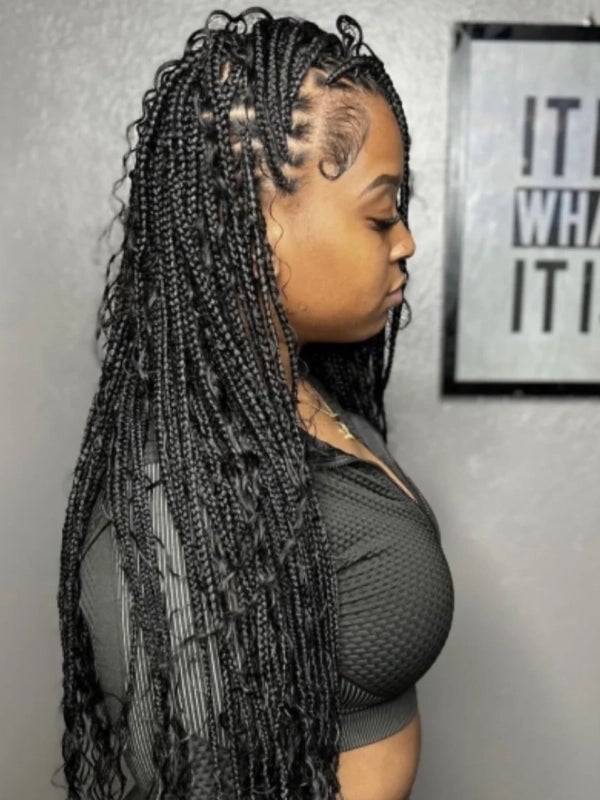
Compared to all-over box braids, this style starts with cornrows at the scalp, which means the roots stay flat and the length moves freely. The black braids transition into loose, wavy ends at mid-back, and the styled baby hairs along the hairline soften the whole effect. Ask your stylist for cornrows to loose wavy braids with baby hairs.
Thick hair handles the cornrow-to-braid transition best, since the scalp pattern needs density to read clearly. Baby hairs make the difference between a finished look and a hurried one. A soft brush and edge control keep them in place, while a light serum on the wavy ends stops them from drying out. This finish holds its shape for weeks, though the baby hairs will need a touch-up every morning to keep the hairline sharp.
Mid-Back Thin Box Braids with Loose Wavy Ends and Baby Hairs
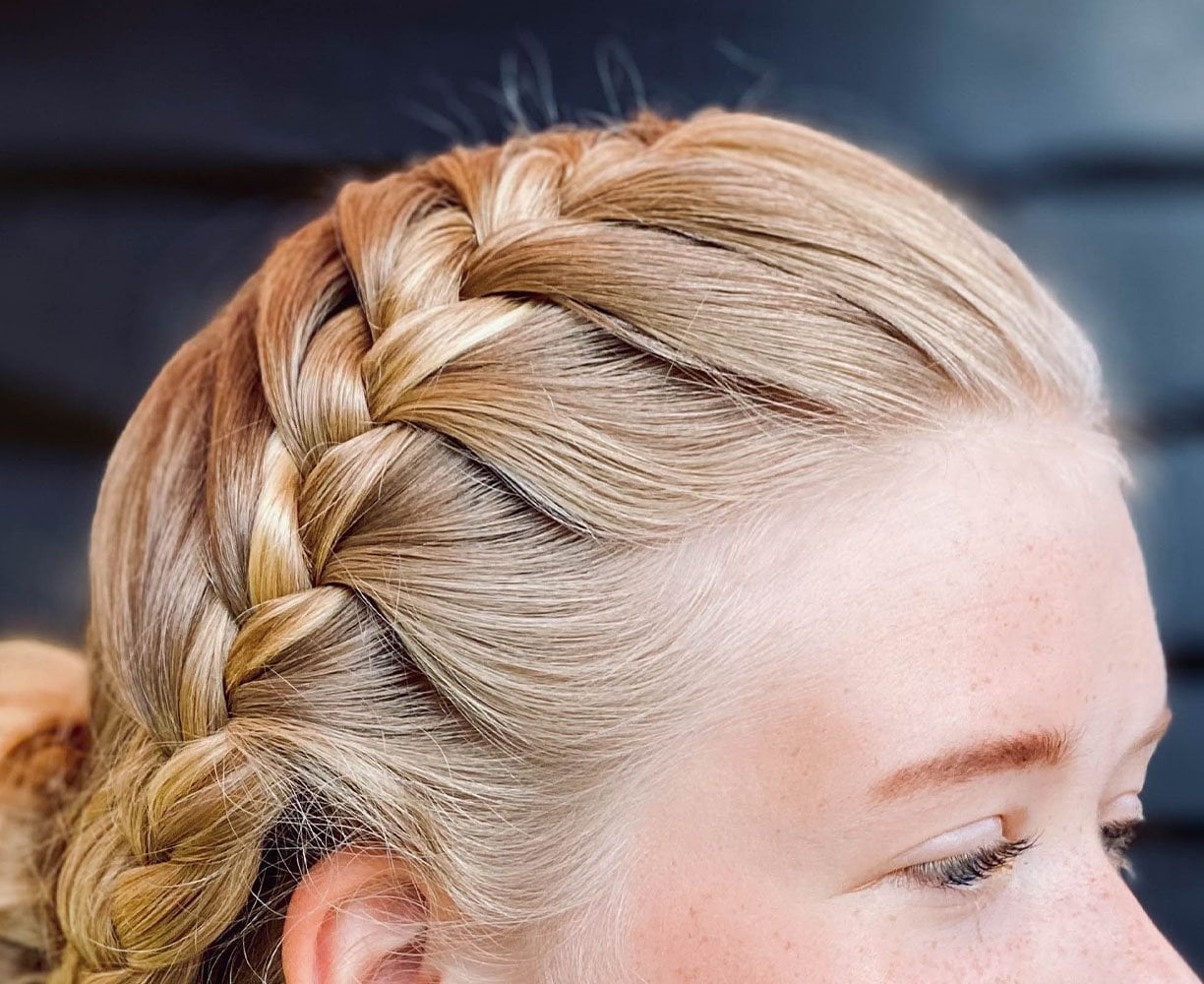
How do you ask for a braid that looks detailed without being heavy? Start with mid-back thin box braids, then specify loose wavy ends and baby hairs along the hairline. The thin braids keep the style light, while the wavy strands add movement and the baby hairs give the face a soft frame. Ask your stylist for mid-back thin box braids with loose wavy ends and baby hairs.
Shoulder Length Fine Blonde French Braid
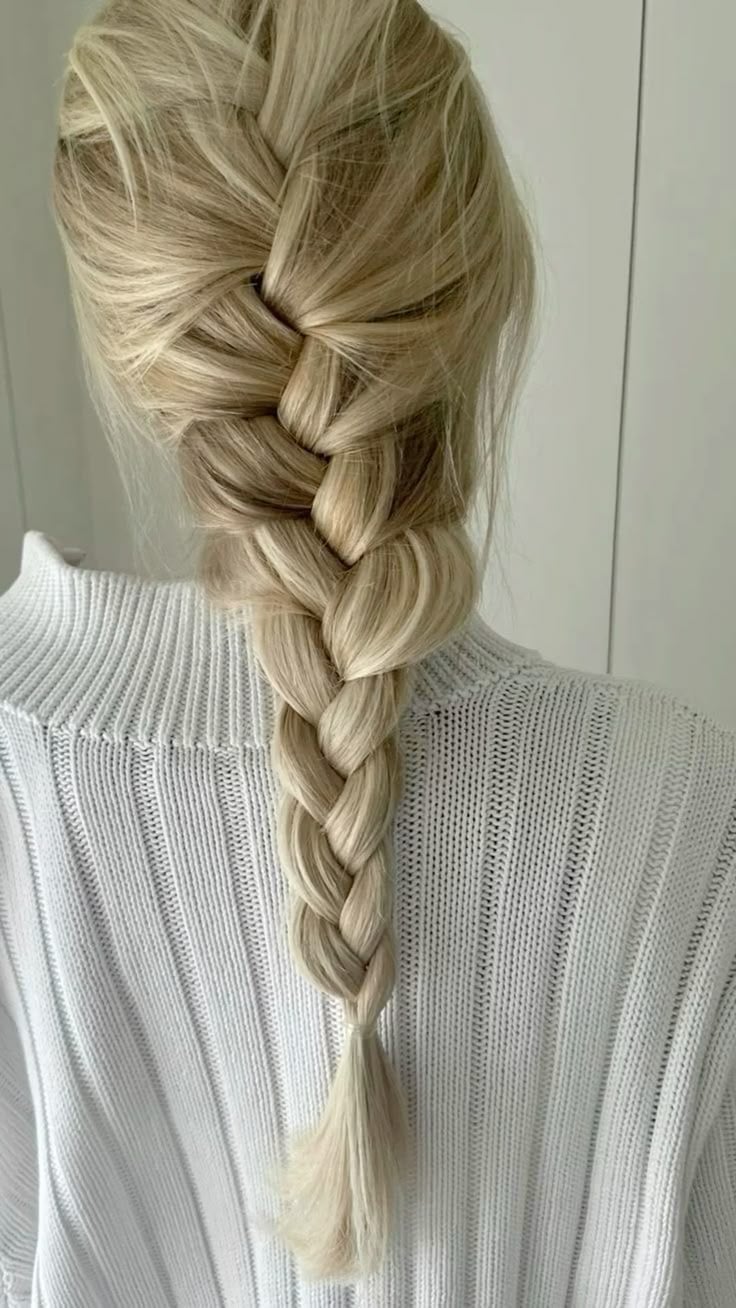
A clean French braid starts with a middle parting that splits fine blonde hair evenly down the back. The braid is woven tightly from the crown to the nape, then continues past the shoulder to mid-back with subtle highlights visible through the weave. Ask your stylist for: shoulder length french braid.
Fine, straight hair is ideal here because it lies flat and lets the braid’s structure show. The technique relies on even sections: each strand is pulled smooth before it crosses under, which keeps the braid from bulging. A fine-tooth comb sets the parting, and a clear elastic secures the end without a visible band. The hold is solid for a full day, though loose strands at the hairline may need a pin by late afternoon.
Final Thoughts
For fine-textured hair, micro or knotless braids maximize density and minimize tension. For thicker, coily hair, jumbo or box braids offer a bolder statement and can be styled with more texture.
- Trim stray hairs and re-twist any loose ends every 2-4 weeks.
- Soothe the scalp with a light oil or spray as needed, typically every few days.
- Protect braids from friction by wearing a silk or satin bonnet or scarf at night.
- Deep condition the scalp and roots monthly for optimal hair health.
- Avoid excessive manipulation to prevent breakage and prolong the style’s life.
Simple braids are a canvas for expression and protection.