

Natural twists are a protective style that works with your hair’s texture, not against it. The current shift favors glossy definition and lived-in color over rigid, uniform patterns, making twists feel modern and intentional.
This collection of 23 ideas spans low-maintenance two-strand styles to intricate flat twists and updos, suited for fine to coily textures and every length from chin to mid-back. Simple Natural Twists solve the struggle of keeping hair protected without sacrificing style or spending hours on upkeep. Whether you need a quick weekend reset or a salon-worthy look, there’s an option here that holds its shape.
Mid-Back Wavy Twists With Blonde Highlights
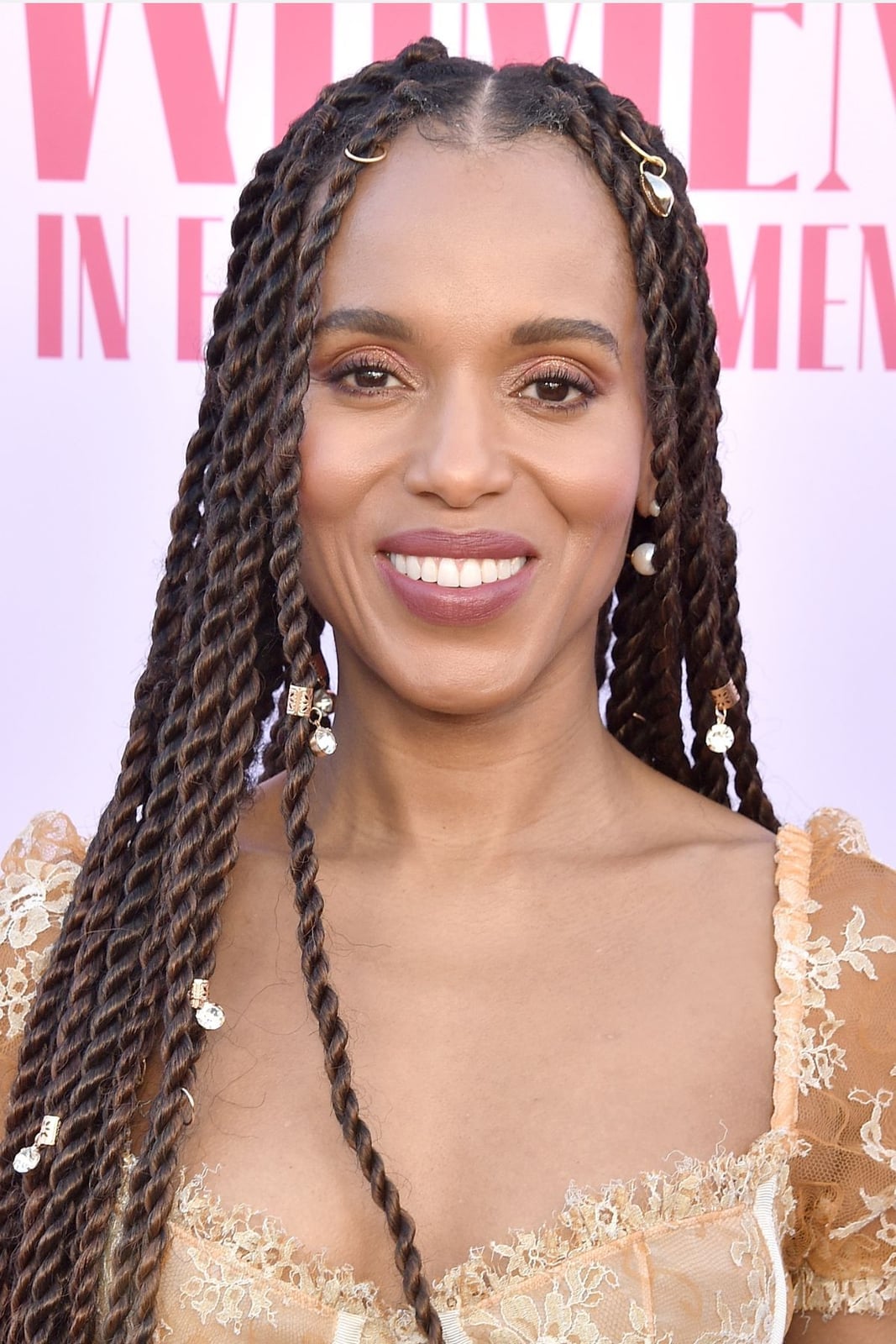
These twists have a wavy, thick texture that catches the eye before the blonde highlights even get a chance. The brown base with lighter pieces running through adds dimension, while the middle part keeps the length from feeling heavy. Decorative clips and charms break up the uniformity, so the style reads as dressed up rather than just protective.
Ask your stylist for: mid-back wavy twists with blonde highlights and decorative accessories. This suits thick, wavy hair that already reaches mid-back; anything shorter and the waves won’t have room to move. The accessories need re-securing every few days, and the twists themselves hold their shape for about three to four weeks before they start to frizz at the roots. Plan on a salon visit to get the part straight and the highlights placed evenly, because doing it at home rarely looks this polished.
Collarbone Two-Strand Twists
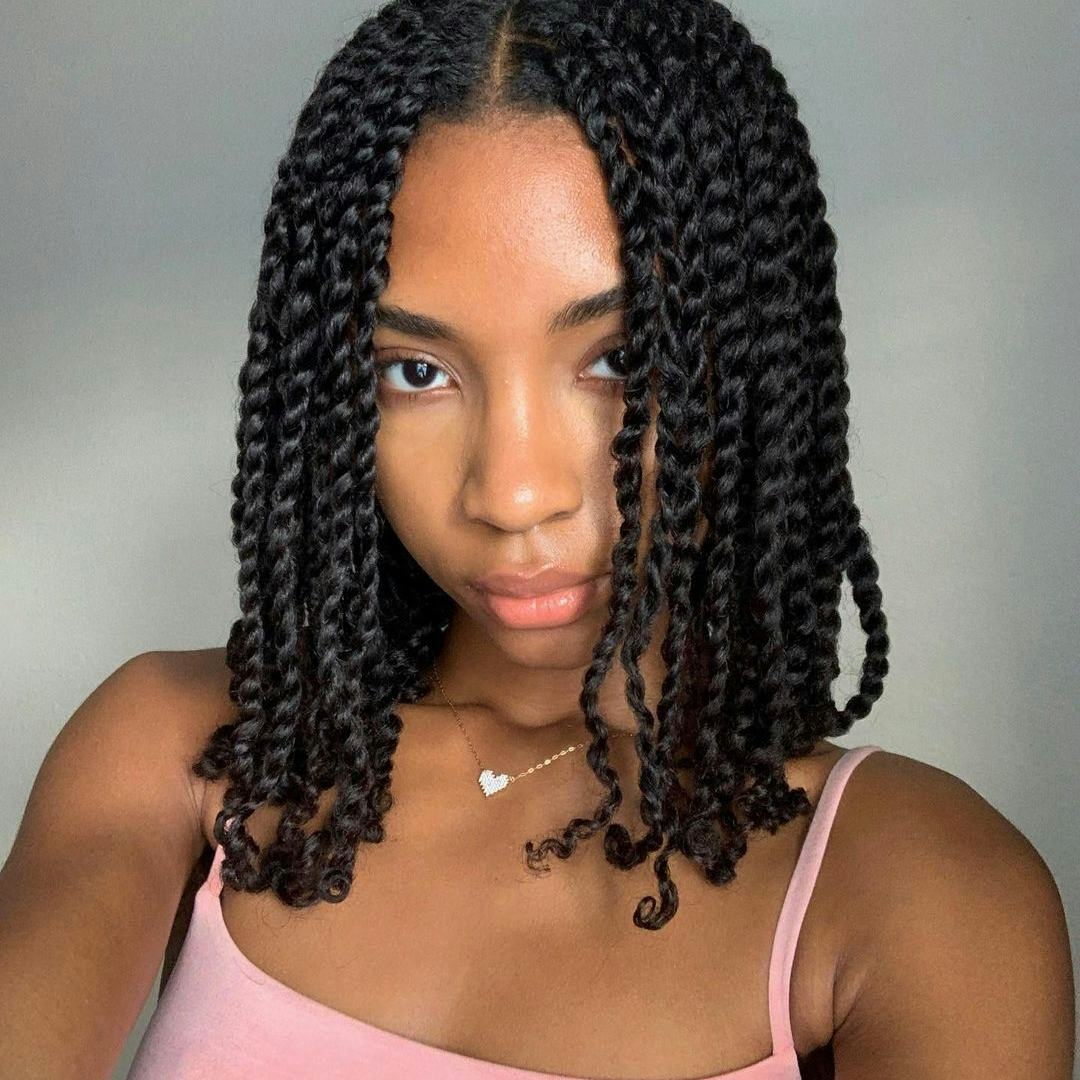
Two-strand twists start by splitting each section of coily, thick hair in two and winding the pieces around each other from root to tip. The loose curls at the ends are what keep this collarbone length from looking too rigid, giving it a natural finish that moves. A middle part frames the face symmetrically, and the black base keeps the style low-maintenance on the color front.
Ask your stylist for: collarbone length two-strand twists with loose ends. This works best on hair that is at least collarbone length with enough thickness to hold the twist pattern. The twists stay defined for a couple of weeks if you keep them moisturized, but the ends will frizz faster than the roots, so expect to re-twist or trim every four to six weeks.
Glossy Mid-Back Wavy Twists
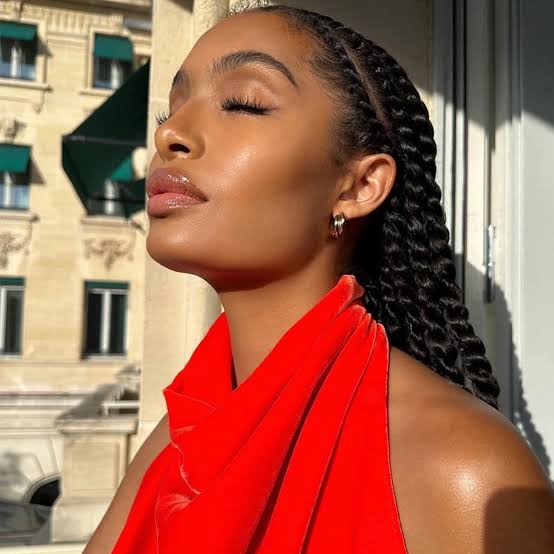
These twists are the glossy cousin of the matte-finish version: the same black, wavy, thick texture, but with a shine that makes the mid-back length look almost liquid. The middle part and natural fall mean the style wears like an everyday option, not a special-occasion statement. That gloss comes from a serum or light oil smoothed over the twists, which also helps control flyaways.
Ask your stylist for: mid-back wavy twists with a glossy finish. This needs thick, wavy hair at mid-back length to carry the weight without looking straggly. The shine fades as the day goes on, so a quick swipe of product in the morning brings it back. Expect to refresh the twists every three to four weeks, and use a satin scarf at night to keep the gloss from rubbing off onto your pillowcase.
Chin Length Mini Twists With Metallic Accessories
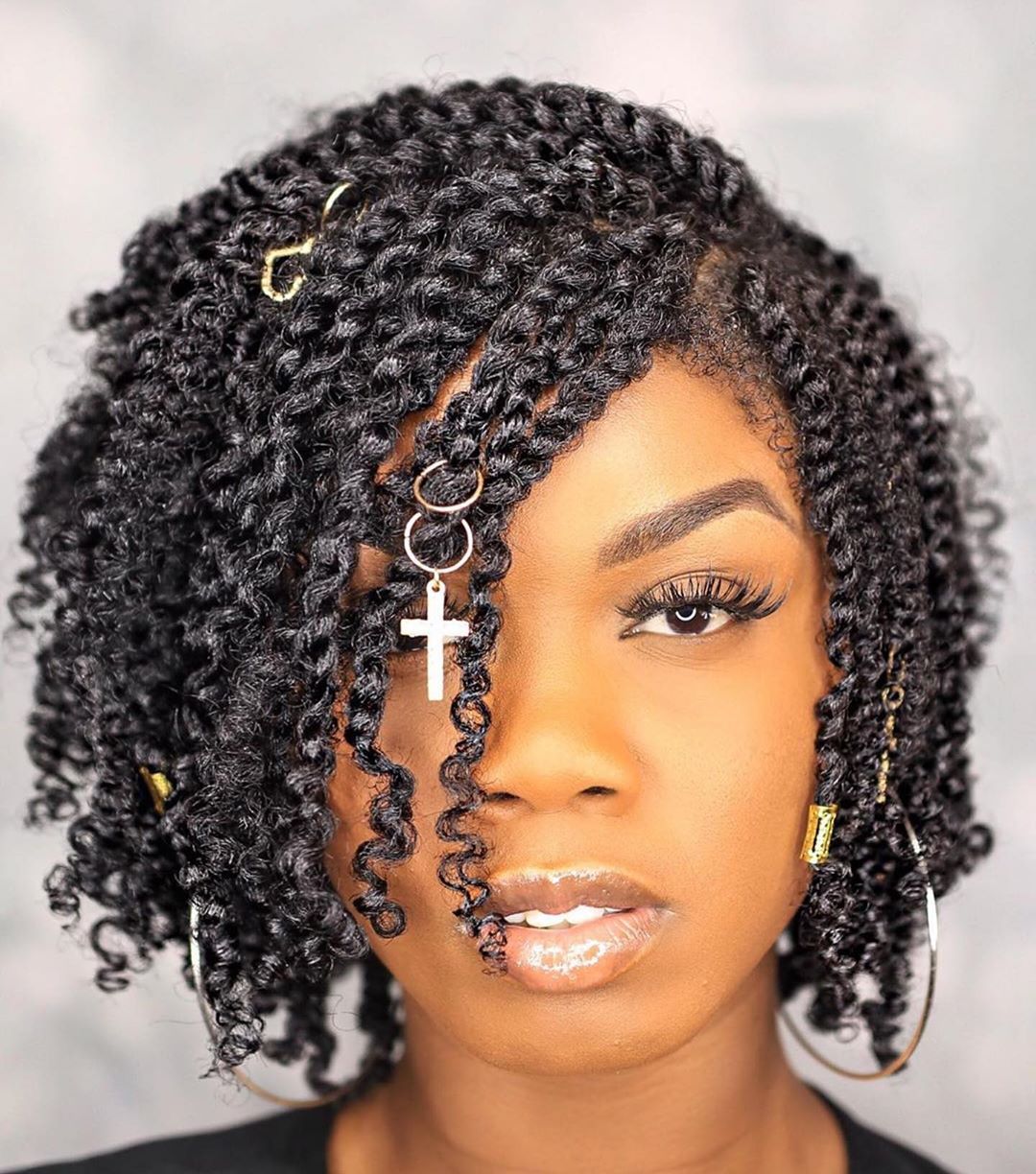
Mini twists on chin-length, curly, fine hair already look delicate, but the metallic rings and charms take them somewhere else entirely. The side part adds asymmetry, and the accessories glint with every head turn. This is a DIY-friendly style: section the hair into small twists, then slide the rings on individually.
Ask your stylist for: chin-length mini twists with side-swept bangs and metallic rings. If you want the accessories placed evenly, a salon does it faster, but the technique is simple enough to master at home. The rings stay put for a few days, but re-secure them when you re-twist, which is every two to three weeks to keep the parts clean.
Short Flat Twists Heart Shape Updo
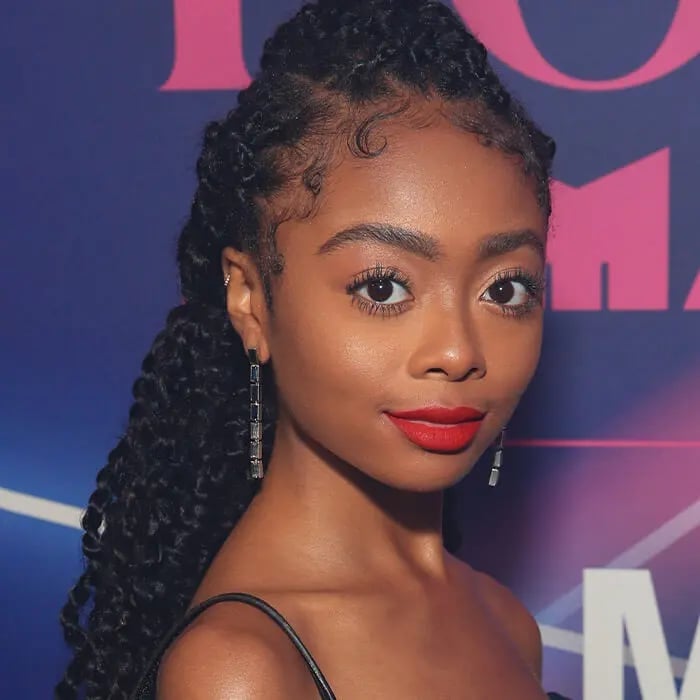
Flat twists on short, coily, thick hair become a canvas when the parting is styled into a heart shape on the crown. The middle part anchors the design, and the neat, close-to-the-scalp twists keep the whole thing tidy. The effect is striking from the top, but it relies on precise parting that is hard to replicate at home.
Ask your stylist for: short flat twists styled into a heart shape on the crown. This suits short, coily, thick hair that can hold the twist pattern without slipping. The downside is that the heart shape only lasts as long as the twists stay tight, so a light holding spray helps, but re-twisting every few weeks is the real maintenance. Plan on a salon visit for the initial styling, because the geometry is not forgiving.
Neatly Defined Collarbone Twists
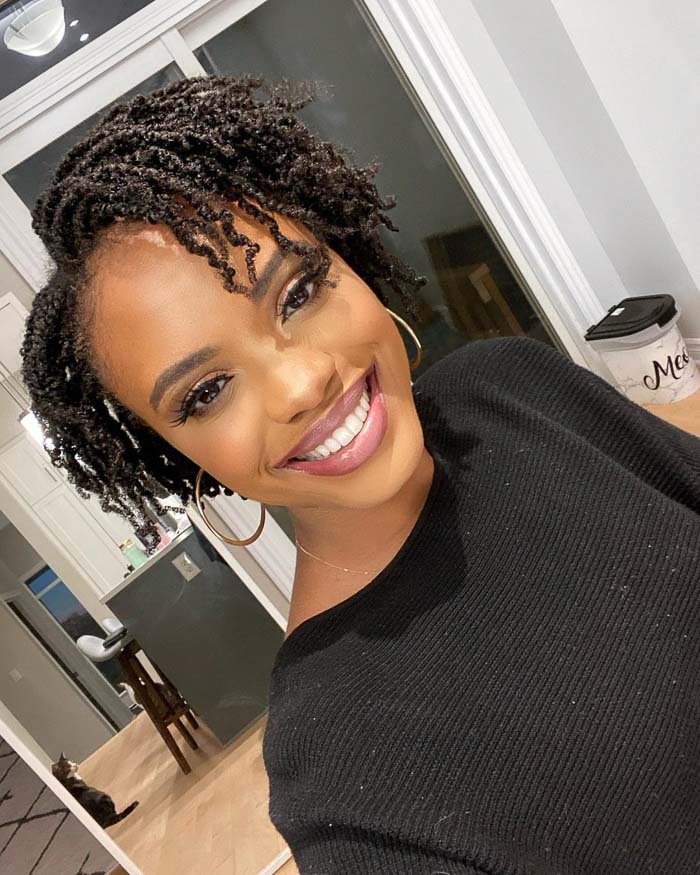
Not every twist style rewards a close look, but this one does. The middle part and consistent tension give each two-strand twist a clean, almost geometric line that holds its shape through a workday. Thick, wavy hair at least collarbone length has the weight and grip to keep the definition from loosening by midday. Ask your stylist for: collarbone length two-strand twists, neatly defined. A silk scarf or bonnet at night preserves the crispness longer than a cotton pillowcase ever will.
Shoulder Length Mini Twists Black and Gray
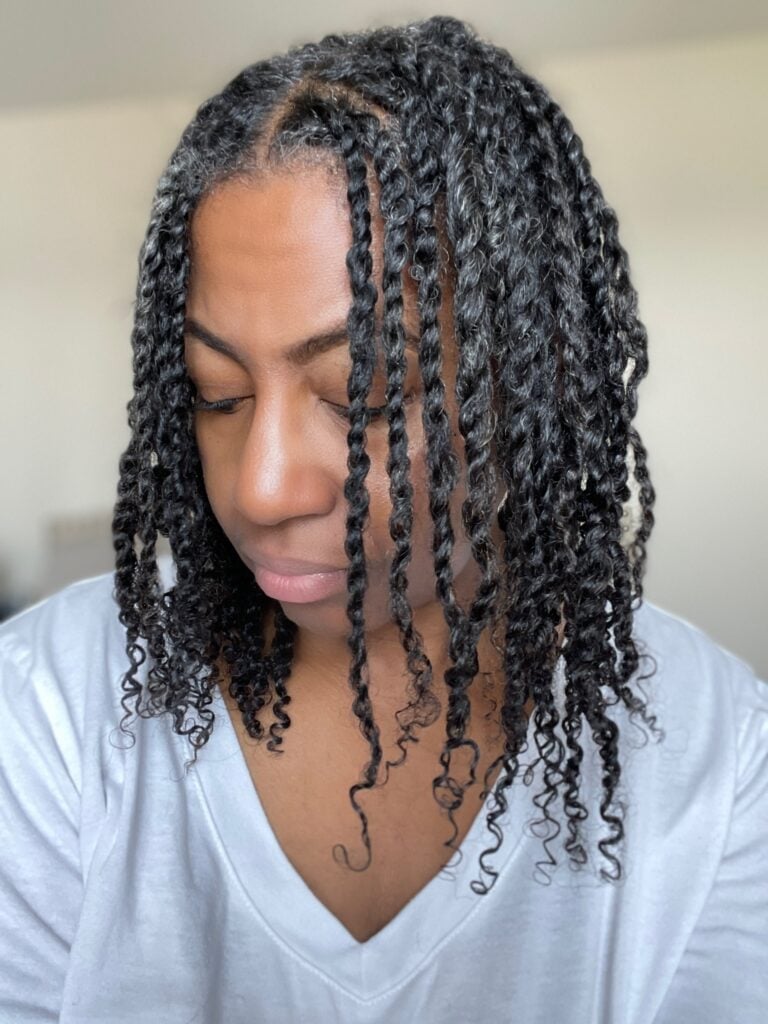
A mini twist is a small commitment with a large payoff, especially when the color mix does the talking. The black and gray tones here create a natural depth that looks like it grew in, not like it was applied. Fine, wavy hair at shoulder length works well because the smaller sections distribute the texture evenly rather than clumping.
Ask your stylist for: shoulder length mini twists with black and gray tones. The DIY process involves sectioning the hair, applying a light hold product, and twisting each piece from root to tip. A lightweight hair mist keeps them moisturized without weighing the fine texture down. Expect to refresh the part and re-twist the edges every two weeks.
Mid-Back Intricate Flat Twists and Braids
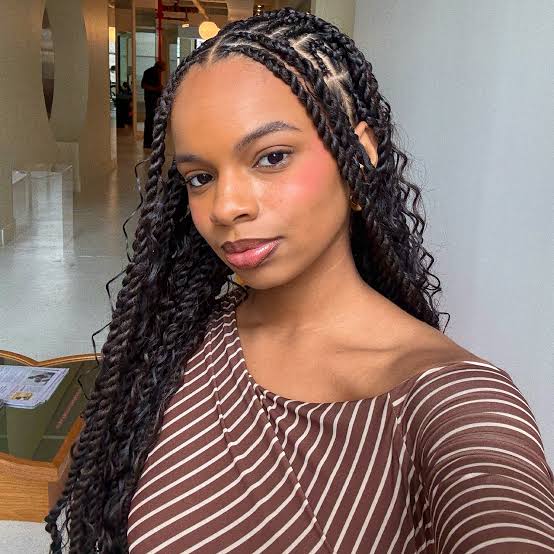
The pattern here is the point. Flat twists run along the scalp in parallel lines, then transition into braided sections that continue the movement down the length. The middle part anchors the symmetry, while the dark brown base lets the raised twist lines read clearly against the scalp. Thick, wavy hair of mid-back length has the density to hold the intricate pattern without the twists pulling loose at the root.
Ask your stylist for: mid-back intricate flat twists and braids. This is a salon-only design: the precision of the partings and the tension of the flat twists require a practiced hand. The hold is firm enough for a week of wear, but the real test is how well the scalp lines stay crisp. A light oil on the edges prevents dryness without softening the pattern.
Mid-Back Twisted Ponytail With Blonde Highlights
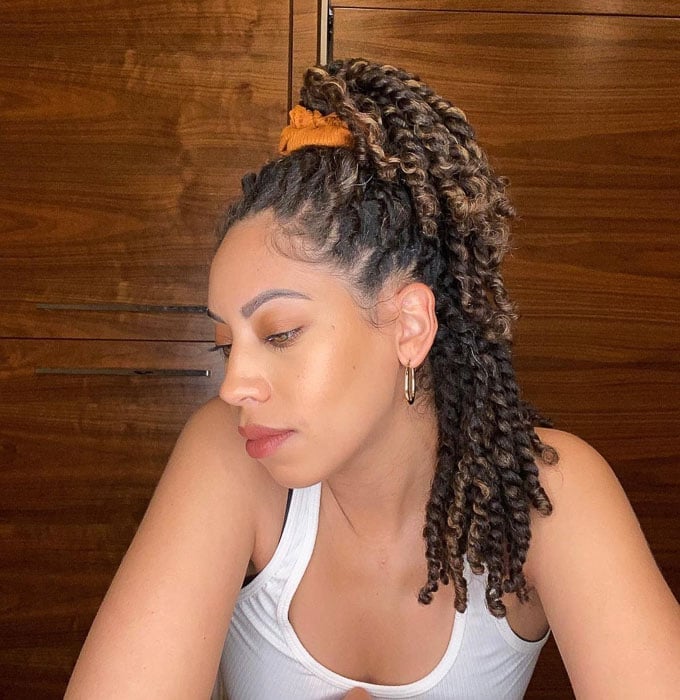
Can a ponytail still feel like a whole style? When it is built from two-strand twists with blonde highlights, yes. The high placement keeps the weight off the neck, and the curly, thick texture fills the ponytail so it does not look sparse at the tie point. Dark brown with blonde highlights adds dimension that looks deliberate.
Ask your colorist for: mid-back two-strand twists in a high ponytail with blonde highlights. Thick, curly hair of mid-back length has the volume to support the gathered shape without the ponytail looking flat. The hold relies on the twists themselves and a fabric scrunchie that does not snag. Re-twisting every three to four weeks keeps the roots tidy and the highlights visible.
Shoulder Length Asymmetrical Flat Twists
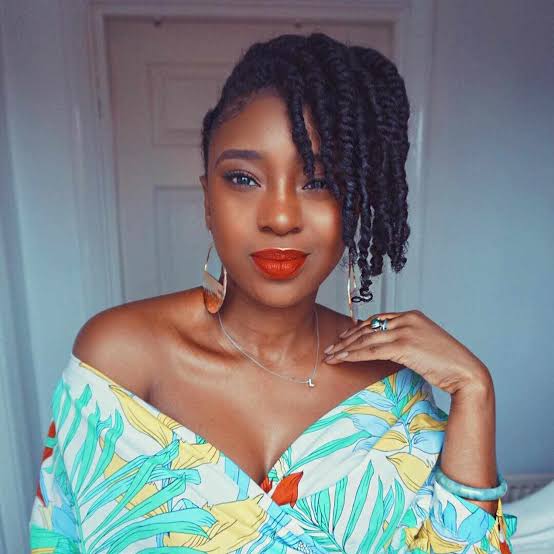
Symmetry is reliable, but asymmetry has more personality. The side part and side-swept bangs shift the visual weight to one side, making the flat twists feel more like a deliberate design than a uniform pattern. Thick hair at shoulder length holds the twist lines without the shorter side losing tension. Ask your stylist for: shoulder length flat twists with side-swept bangs and side part. A salon handles the angle and the parting precision, but a DIY refresh every two to three weeks with a fine-tooth comb keeps the side part from drifting back to center.
Voluminous Mid-Back Passion Twists
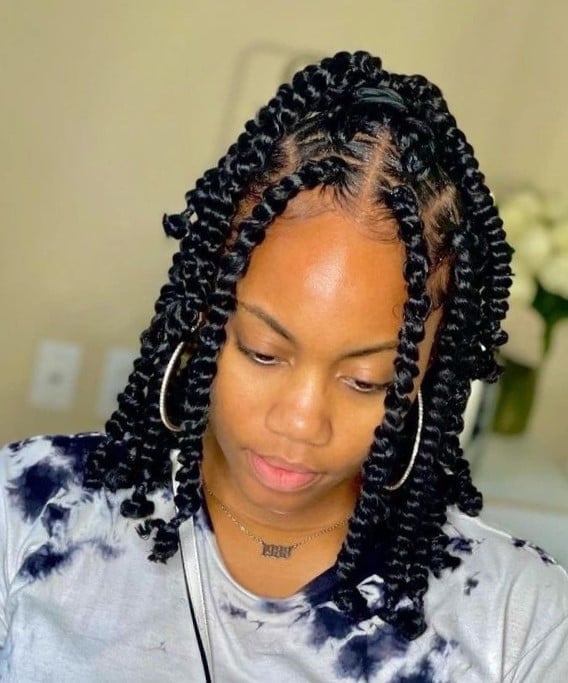
Passion twists are the design that gives you volume without adding bulk at the root. Each twist is wrapped with pre-stretched hair over your natural hair, creating that thick, wavy finish that looks full of body. The middle part keeps the shape symmetrical, and the length falls to mid-back. Ask your stylist for: mid-back voluminous passion twists.
Thick, wavy hair at mid-back length carries this style best, since the technique relies on enough weight to hold the twist pattern. The salon session runs long, often three to four hours depending on density. Volume is the selling point, but passion twists snag on collars and seat belts more than a flat twist would, so keep a small hook or a pair of fingers handy for quick re-wraps. Fluff the twists gently with your fingers to enhance volume; re-twist every three to four weeks.
Long Defined Mid-Back Twists
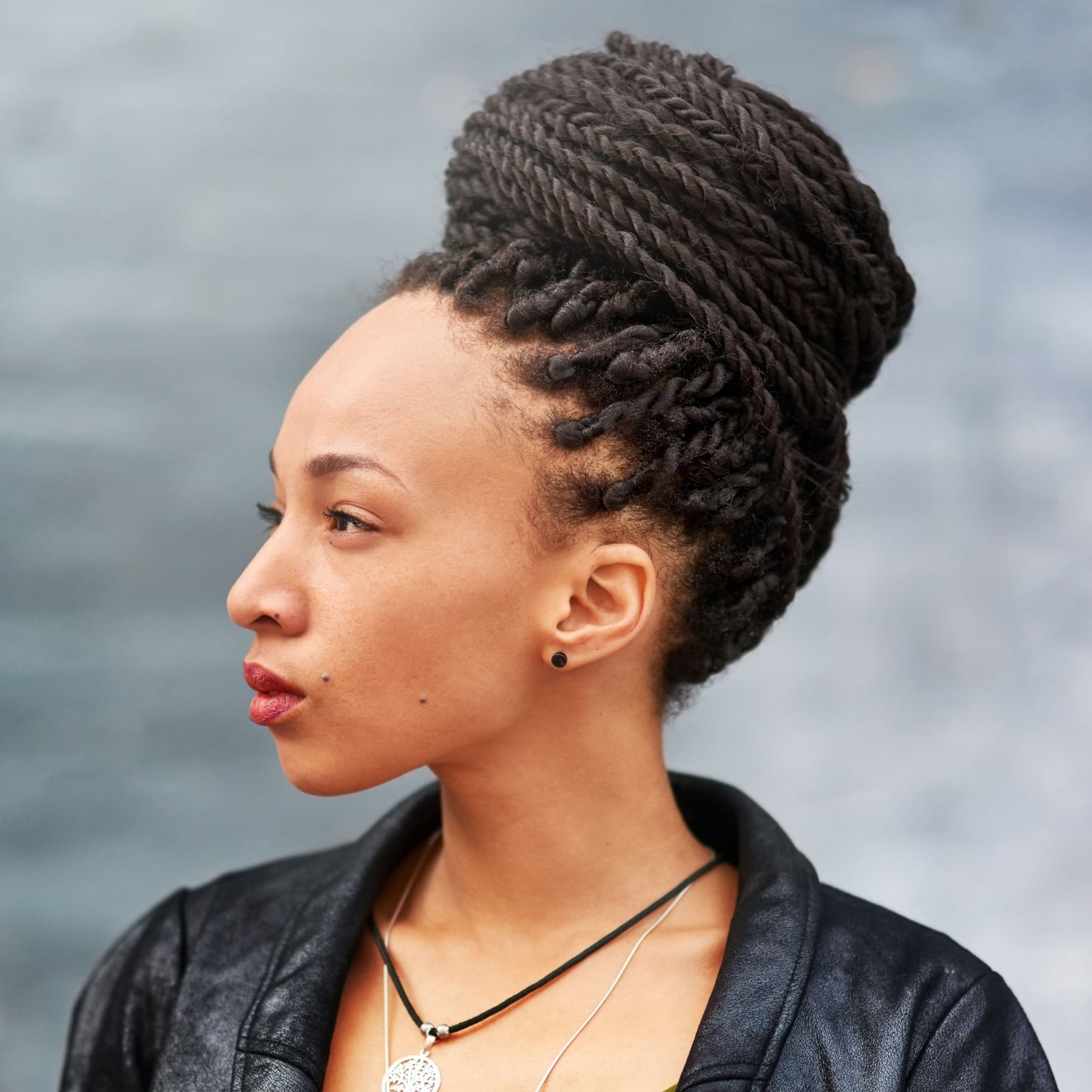
Long, defined two-strand twists hold best when the hair has some natural coarseness to grip the rotation. The dark brown base color and middle part let the twist pattern read clearly from root to tip. Ask your stylist for: long defined two-strand twists, mid-back length. Thick, coily hair that reaches mid-back gives this style the weight it needs to stay locked instead of unraveling at the ends.
Daily hydration is not optional. Apply a moisturizing spray each morning to keep coily twists from drying out and losing their definition. A satin scarf or bonnet protects the shape longer than a cotton pillowcase can. The style is protective, meaning it reduces manipulation and breakage, but only if you keep the moisture routine consistent. Re-twist every four to six weeks to reset the root pattern and catch any fuzzy ends.
Mid-Back Braided Twists With Intricate Scalp
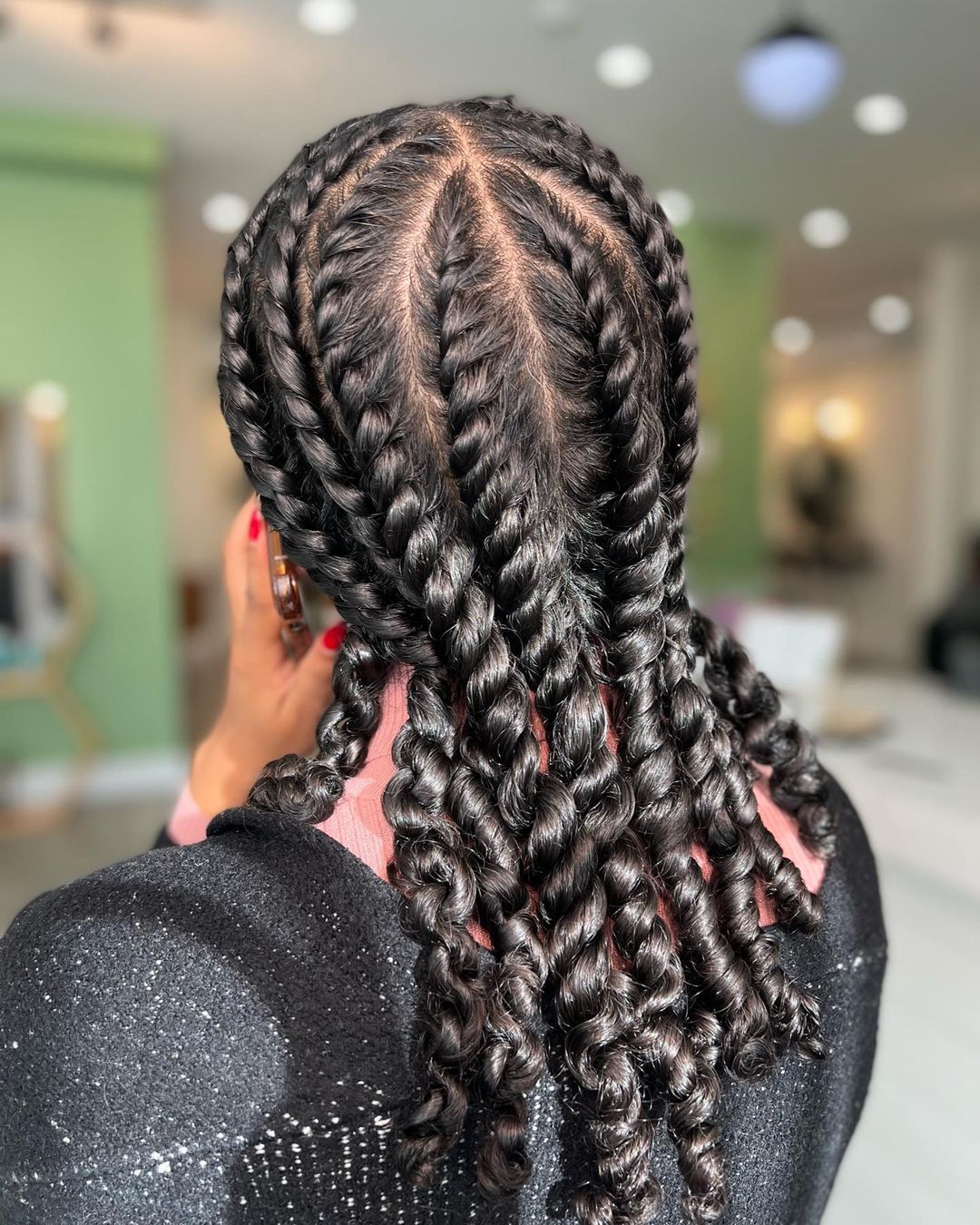
The scalp detail here is the entire point: a braided pattern that starts at the hairline and feeds directly into the two-strand twists. It turns a simple protective style into something with visible structure from every angle. Ask your stylist for: mid-back two-strand twists with a braided scalp detail. Thick, coily hair of mid-back length is the only real candidate, since the braids need density to stay neat. The uniform black color keeps the focus on the line work. This is the style you choose for a wedding, a formal dinner or any occasion where someone will be looking at the back of your head. The one real drawback is that the tight scalp braids can cause tension around the edges if they are pulled too firm, so speak up during the install if you feel any pulling.
Flowing Mid-Back Passion Twists, Black
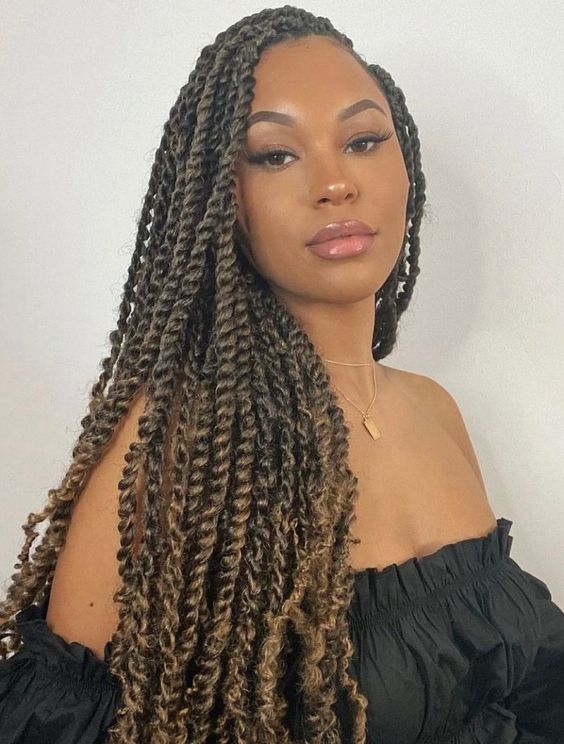
Flowing passion twists achieve their movement through the wrapping technique. Each section is twisted with a pre-stretched strand that has a slight wave, which is what makes the finished twists bend and sway instead of hanging stiff. Ask your stylist for: mid-back flowing passion twists. Thick, wavy hair of mid-back length works well, though the technique can also add volume to thinner natural hair since the wrap itself provides the bulk. The black base color keeps the texture visible without the distraction of highlights.
The middle part keeps the fall even on both sides. Styling is minimal once they are in, but the first wash can loosen the hold if you do not dry them in a stretched position. A light finishing spray applied before you step out helps the twists hold their shape through humidity. Re-twist every three to four weeks to maintain the root definition and keep the flow intact.
Collarbone Twists With Cornrow Detail
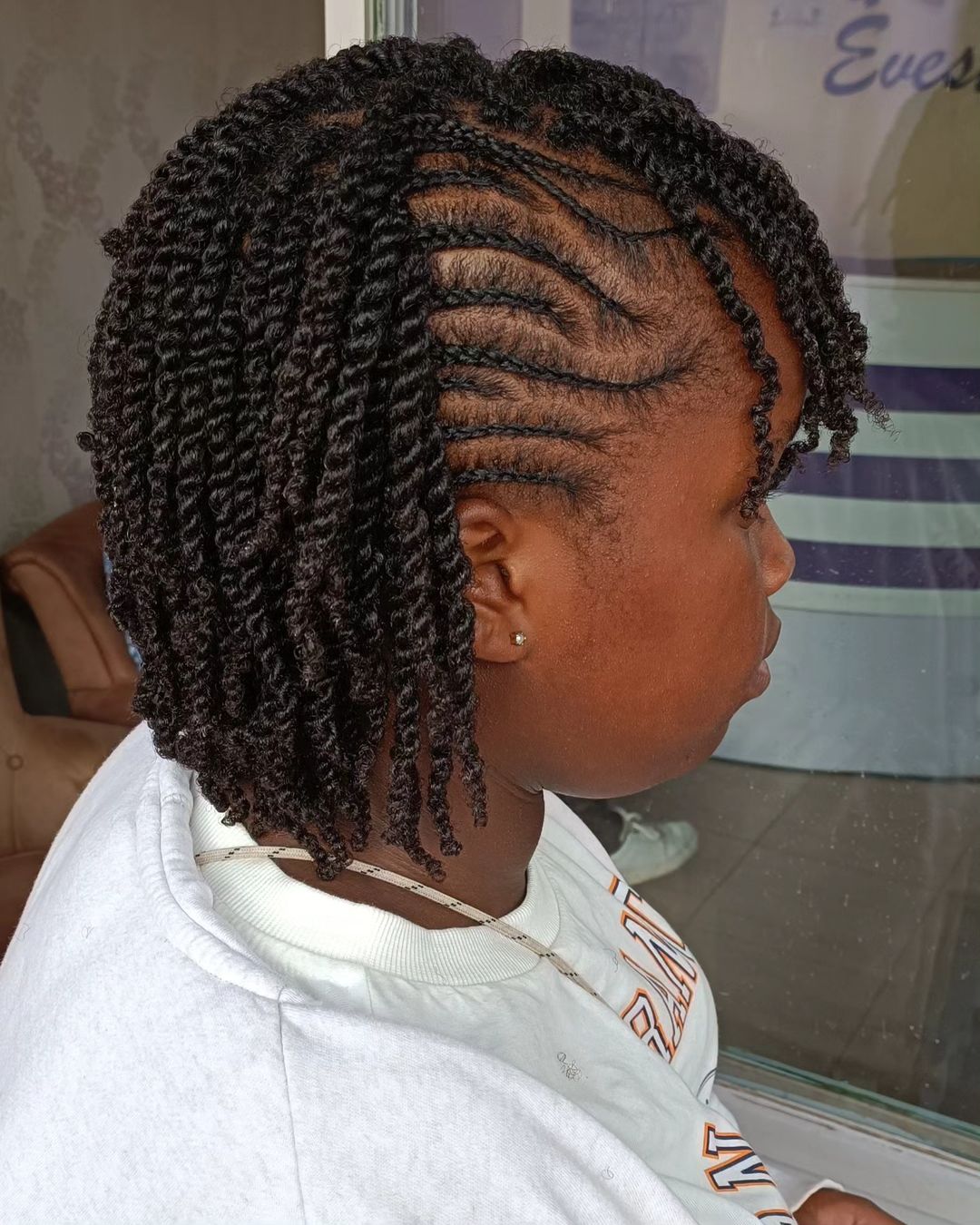
Cornrow detail at the scalp sets this collarbone-length style apart from standard two-strand twists, which usually start at the root without the braided base. The cornrows create a defined middle part and a clean line that holds the twists in place. Ask your stylist for: collarbone length two-strand twists with cornrow detail. Thick, coily hair at collarbone length is the natural fit, since the braids need enough texture to grip. The black base color keeps the scalp pattern readable. The one real drawback is that the cornrows can take longer to dry than plain twists, so plan for a few extra hours after washing. The collarbone length is also a practical choice: shorter than mid-back, so less weight on the roots, but long enough to pull back if you need it off your face.
Chin Length Flat Twists Updo
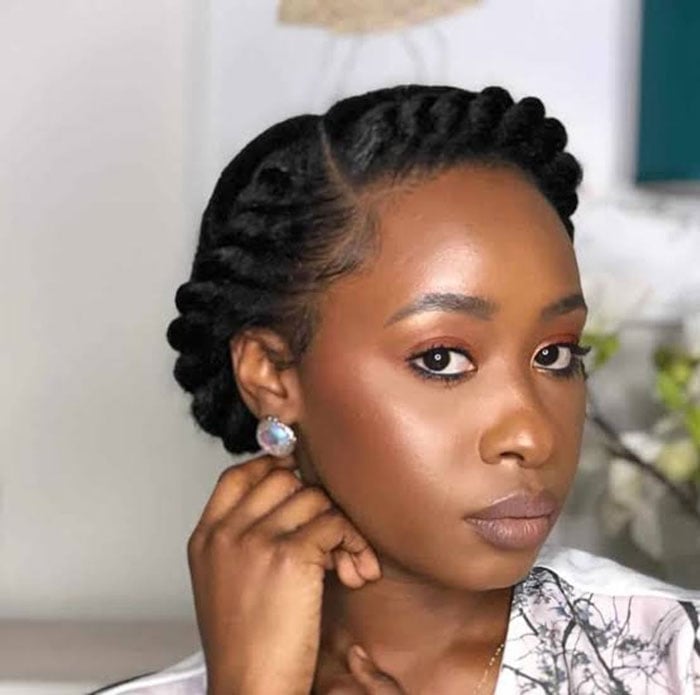
Can an updo still feel like a protective style when it barely clears your chin? This one does. The neat, black flat twists are coiled into a smooth shape that ends right at the chin, with a clean middle part holding the symmetry. It is a fit for coily, thick hair that does not want length pulling at the roots. Ask your stylist for: chin length flat twists updo with middle part. A satin scarf at night keeps the shape intact and the edges undisturbed.
Collarbone Flat Twists Side View
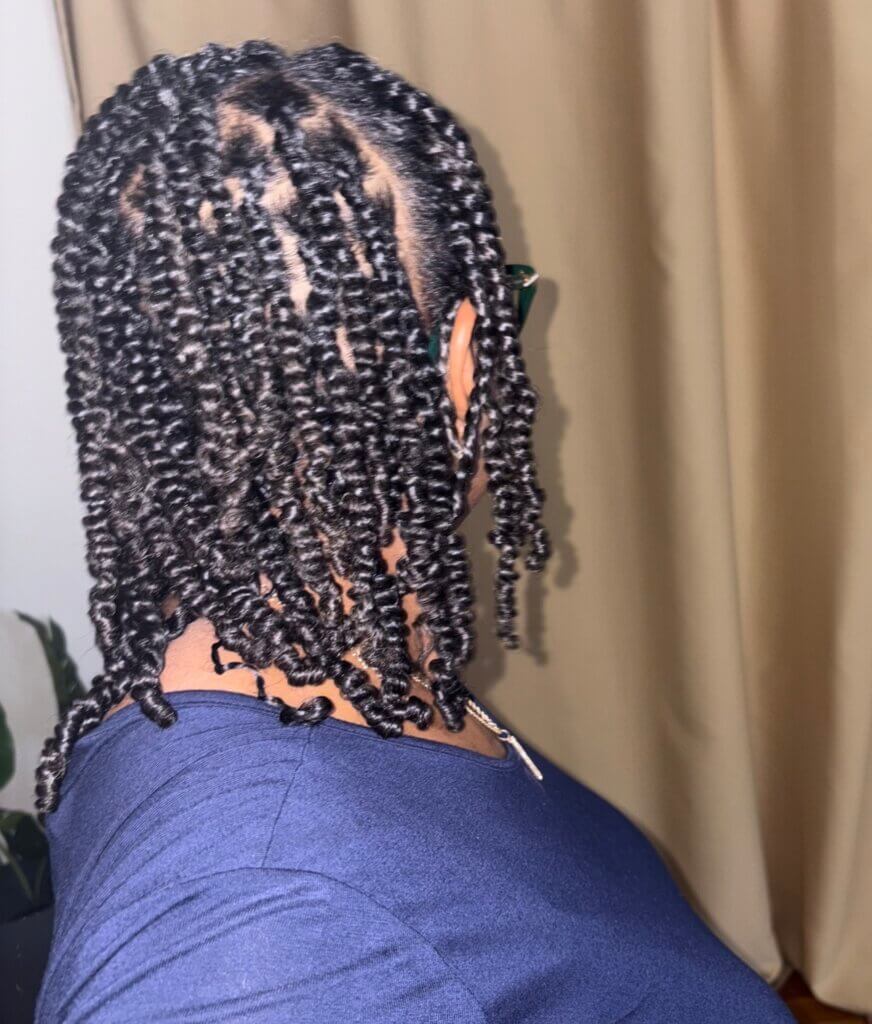
The side view of a flat twist style is where the geometry becomes visible. Here the twists are laid flat in parallel lines from the middle part back, with a coily, thick texture that keeps each row distinct. At collarbone length, the hair helps the twists lie flat against the scalp without puffing up. Ask your stylist for: collarbone length flat twists with a middle part.
Maintaining the neatness takes a light touch. A few drops of oil on the scalp and along the twists every few days prevents the hair from drying out and keeps the partings sharp. The hold is strong enough for a full week of wear without redoing the front edges.
Collarbone Twists With Gold Beads
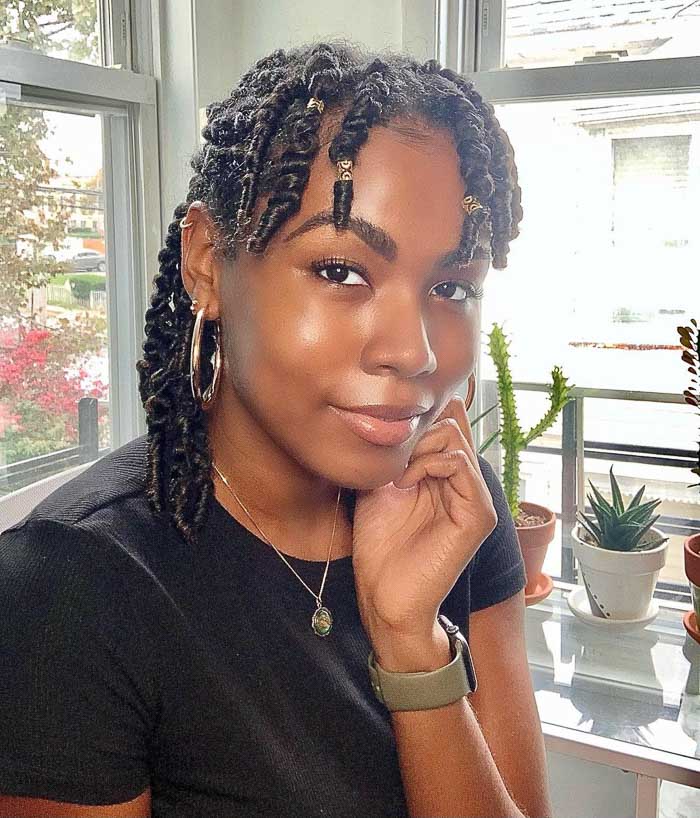
Gold beads on two-strand twists are a small detail that changes the whole feel of the style. Here the beads sit at the ends of collarbone-length twists, catching light with every head turn. The middle part keeps the look symmetrical, while the coily, thick texture gives each twist enough body to hold the beads in place without sliding. Ask your stylist for: collarbone length two-strand twists with gold beads. The beads work best for occasions where you want a little movement and sound. Check that each bead is crimped tight so you are not hunting for lost ones by the end of the evening.
Mid-Back Braided Ponytail With Gray Streaks
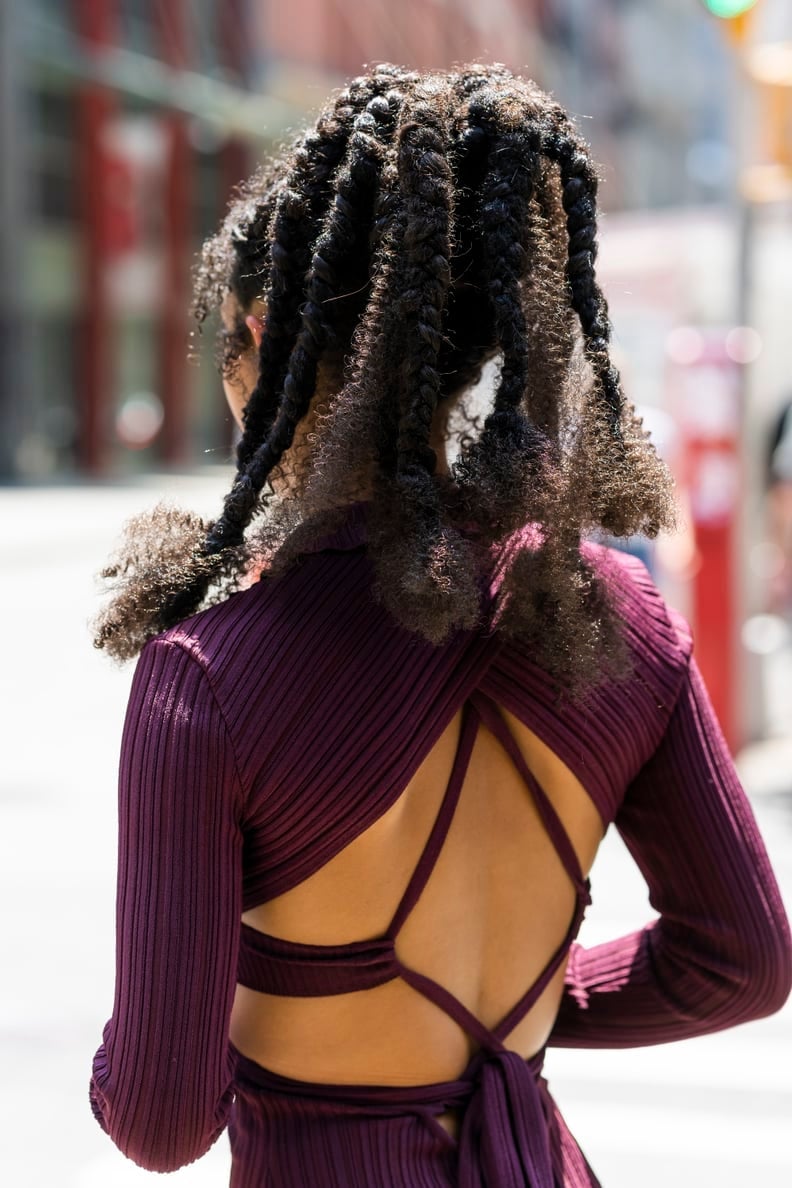
A high braided ponytail that reaches mid-back length needs a solid foundation. Start with a middle part, then braid the front sections back into the ponytail base so the scalp is covered. The rest of the hair is twisted and gathered into the ponytail, with the gray streaks running through the black base for contrast. Ask your stylist for: mid-back braided ponytail with twists and gray streaks.
This is a salon look because the tension and parting need precision to keep the ponytail centered. The honest drawback: the braided base can feel tight on the scalp for the first day or two. If your hair is on the finer side of thick, the gray streaks may not show as clearly against the black, so ask for a few extra strands in the front to frame the face.
Collarbone Loose Twists
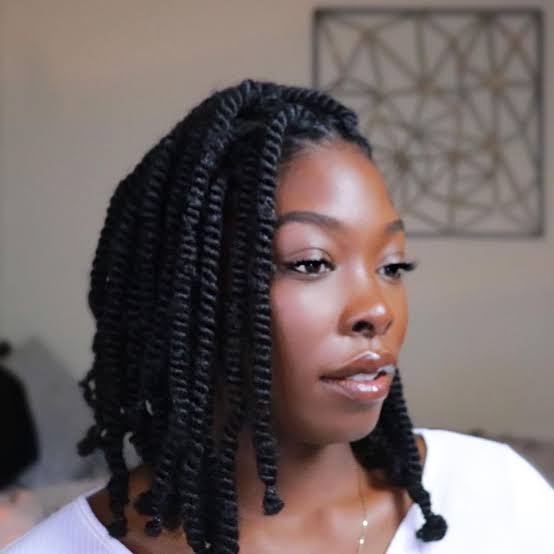
Wondering if you can get away with loose twists at home? Yes, if you accept that the definition will be softer than a salon set. The black, coily, thick hair is parted in the middle and twisted without much tension, so the ends stay slightly undone and the twists fall naturally around the collarbone. Ask your stylist for: collarbone length loose twists. Doing it yourself takes about an hour and a half, depending on your speed. Loose twists look more lived-in from day one, which is the point if you want a style that avoids a freshly styled look.
Shoulder Length Twisted Space Buns
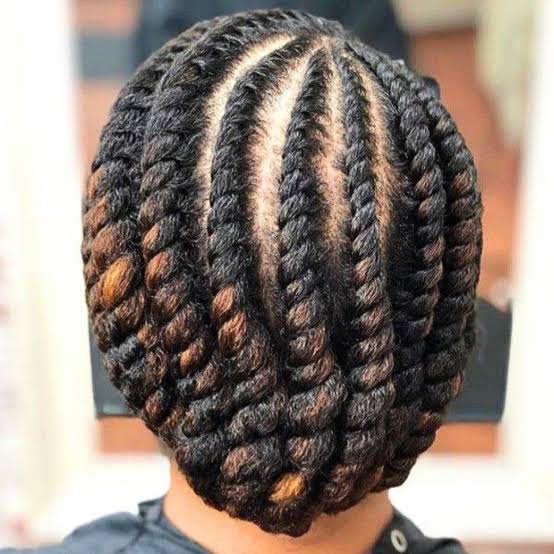
The trick to twisted space buns is that they are not a separate hairstyle. They are the same shoulder length twists, just pulled up. Black hair with subtle brown highlights, a middle part, and a coily thick texture gets sectioned into two high buns. Each bun is a gathered twist pinned into a coil. Ask your stylist for: shoulder length twisted space buns with subtle brown highlights. The style suits coily, thick hair at shoulder length. Secure each bun firmly with bobby pins, then re-twist individual sections as needed to keep the definition clean.
Collarbone Defined Two-Strand Twists, Black
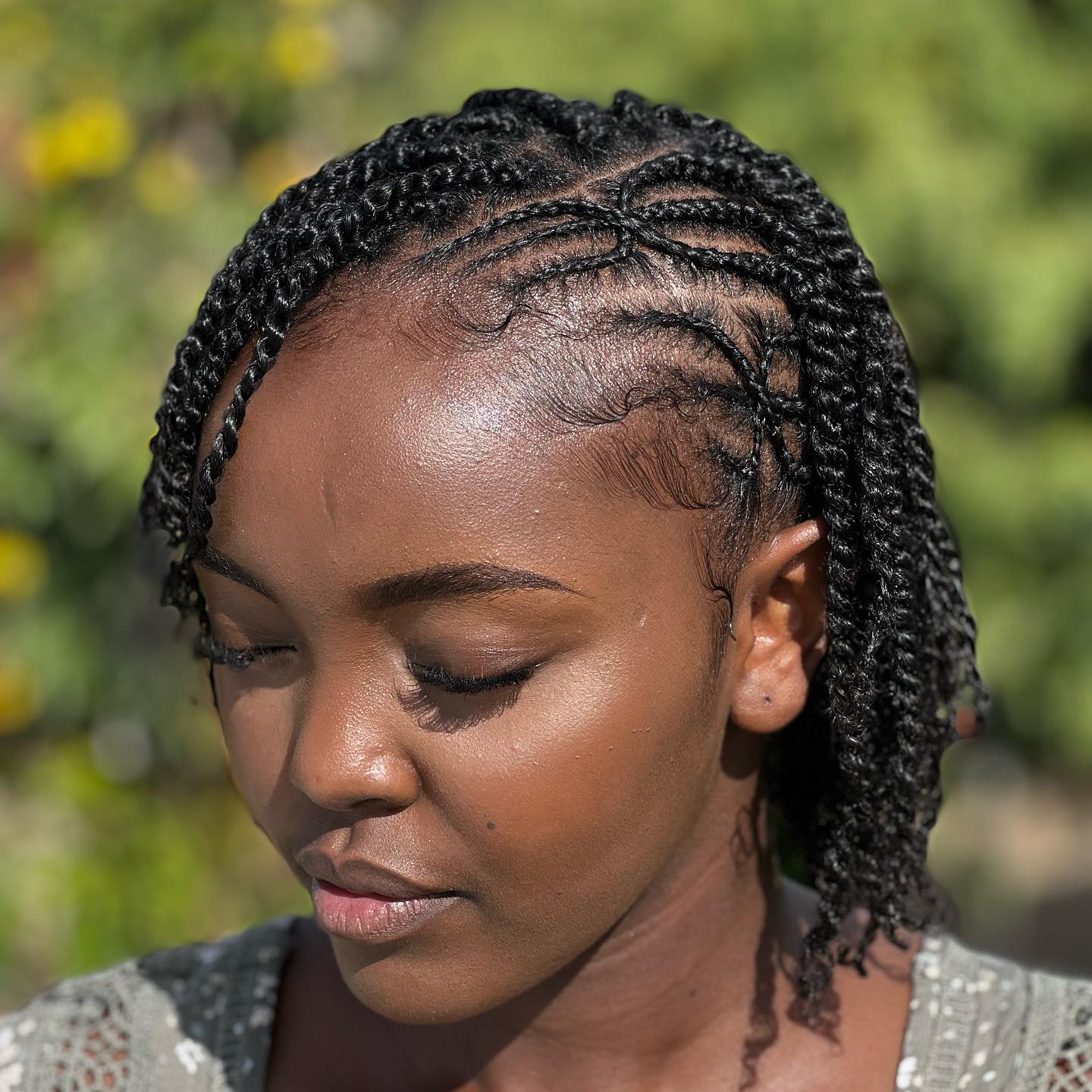
Defined two-strand twists on thick, coily hair hold their shape for weeks when installed correctly. This collarbone length version uses a clean middle parting and a black base, with each twist wrapped from root to tip. Ask your stylist for: collarbone length defined two-strand twists.
Coily, thick texture at collarbone length is the ideal starting point. A small amount of gel at the roots gives a crisp finish. Re-twist every 2 to 3 weeks to keep the definition sharp and prevent frizz at the base.
Short Sculpted Flat Twists
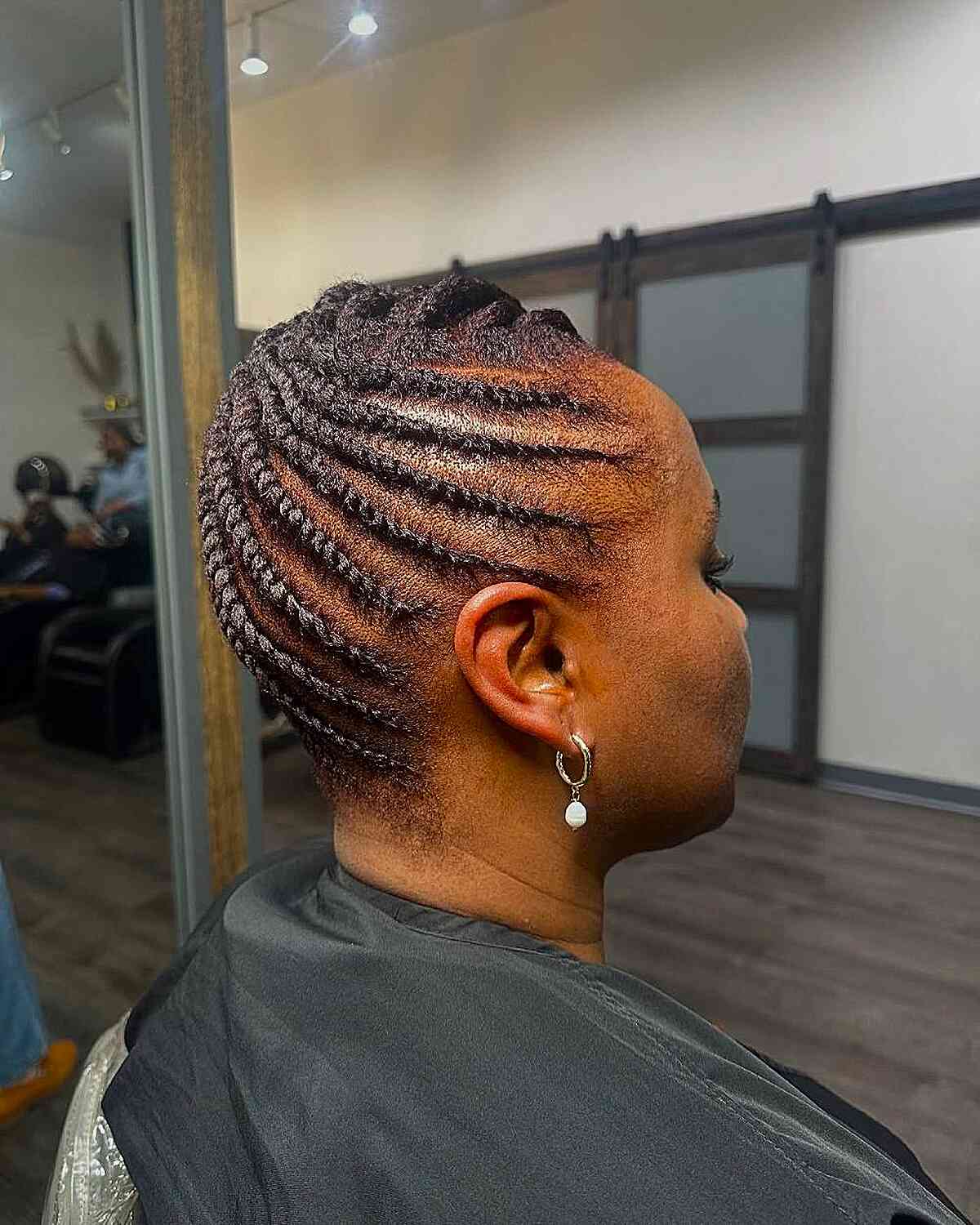
Flat twists on short hair look neat, but the mistake is treating them like a quick style. This is not a twist-out you sleep on and fluff. Black hair with subtle red undertones is sculpted into precise rows directed upward and backward, creating a smooth, close-to-the-scalp shape. Ask your stylist for: short sculpted flat twists with subtle red undertones. The downside: clean lines require a salon visit and regular touch-ups. A silk wrap at night preserves the shape longer.
Final Thoughts
For low maintenance, stick with longer two-strand twists in a single shade. They grow out gracefully and need only a quick root re-twist every four to six weeks. If you want more visual impact, a flat twist pattern or a braided scalp detail is worth the salon time, but plan on a touch-up sooner. Natural twists are a celebration of texture and style.
- Re-twist roots every 4-6 weeks as needed.
- Apply a light oil or serum to the ends to prevent dryness.
- Sleep with a satin bonnet or scarf to preserve the twists.
- Gently detangle with a wide-tooth comb when taking twists down.