

Braids are a classic protective style, but the parting is what turns them from everyday into intentional. A clean, simple part gives any braid a polished foundation, and the trend right now leans into soft, face-framing pieces and lived-in color that keep the style from feeling too rigid.
This collection of 28 Simple Parting Braids spans from quick, DIY-friendly styles to salon-level looks, covering every length from chin-grazing bobs to mid-back lengths. Whether your hair is fine and falls flat or you’re dealing with a grow-out line that won’t behave, these partings offer structure and a fresh canvas for your personal style.
Chin Length Bob Box Braids
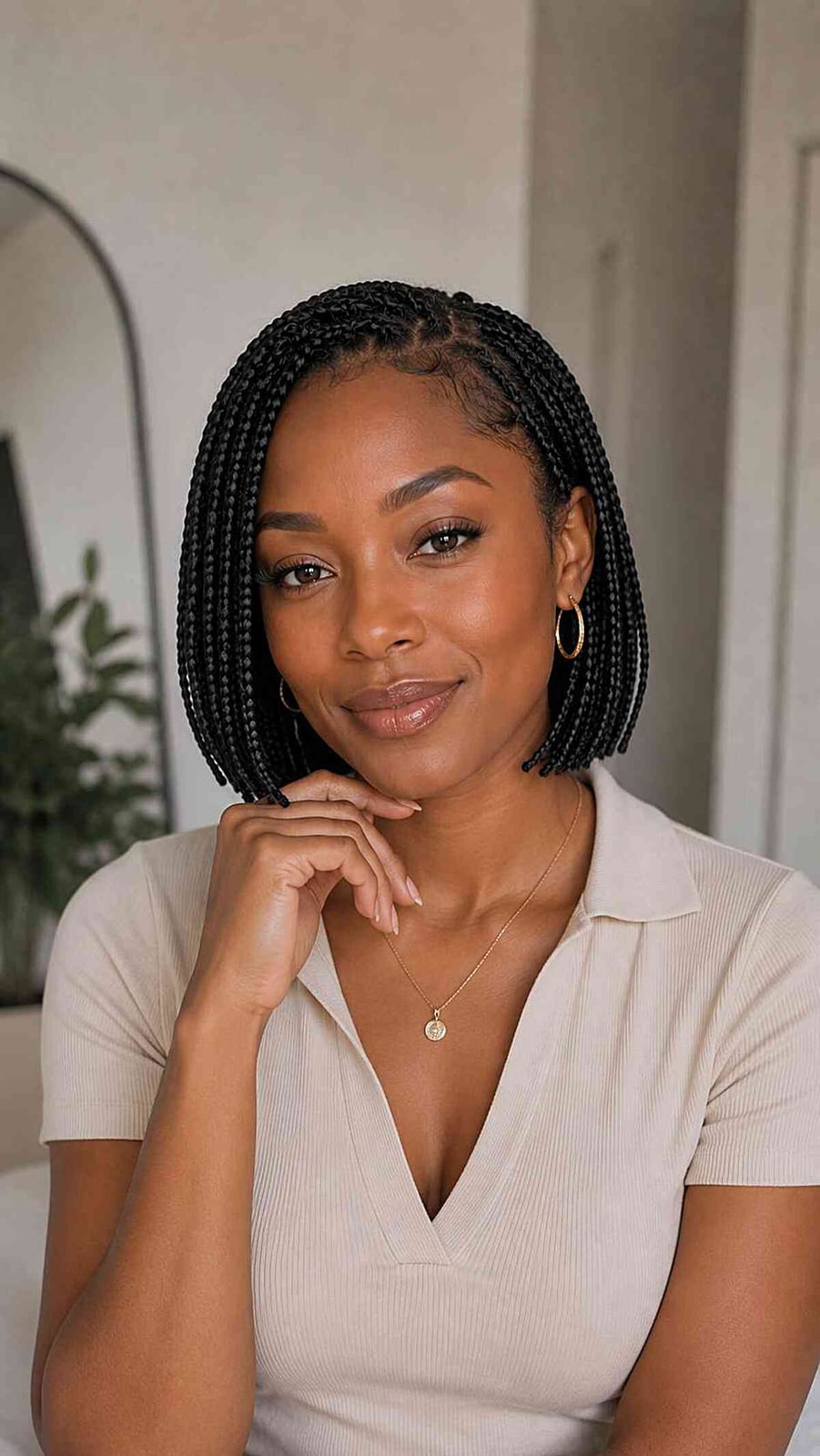
A chin-length bob cut in box braids is a geometry lesson you actually want to sit through. The sharp middle parting and blunt outline work best on oval and heart-shaped faces, where the horizontal line at the jaw adds structure without shortening the face. Medium density hair gives these braids enough body to hold the bob shape without looking sparse. Ask your stylist for: chin-length bob box braids with a middle part. A light serum on the ends keeps them from frizzing, and the baseline needs a trim every six to eight weeks to maintain the clean line.
Dark Brown Box Braids With Silver Beads
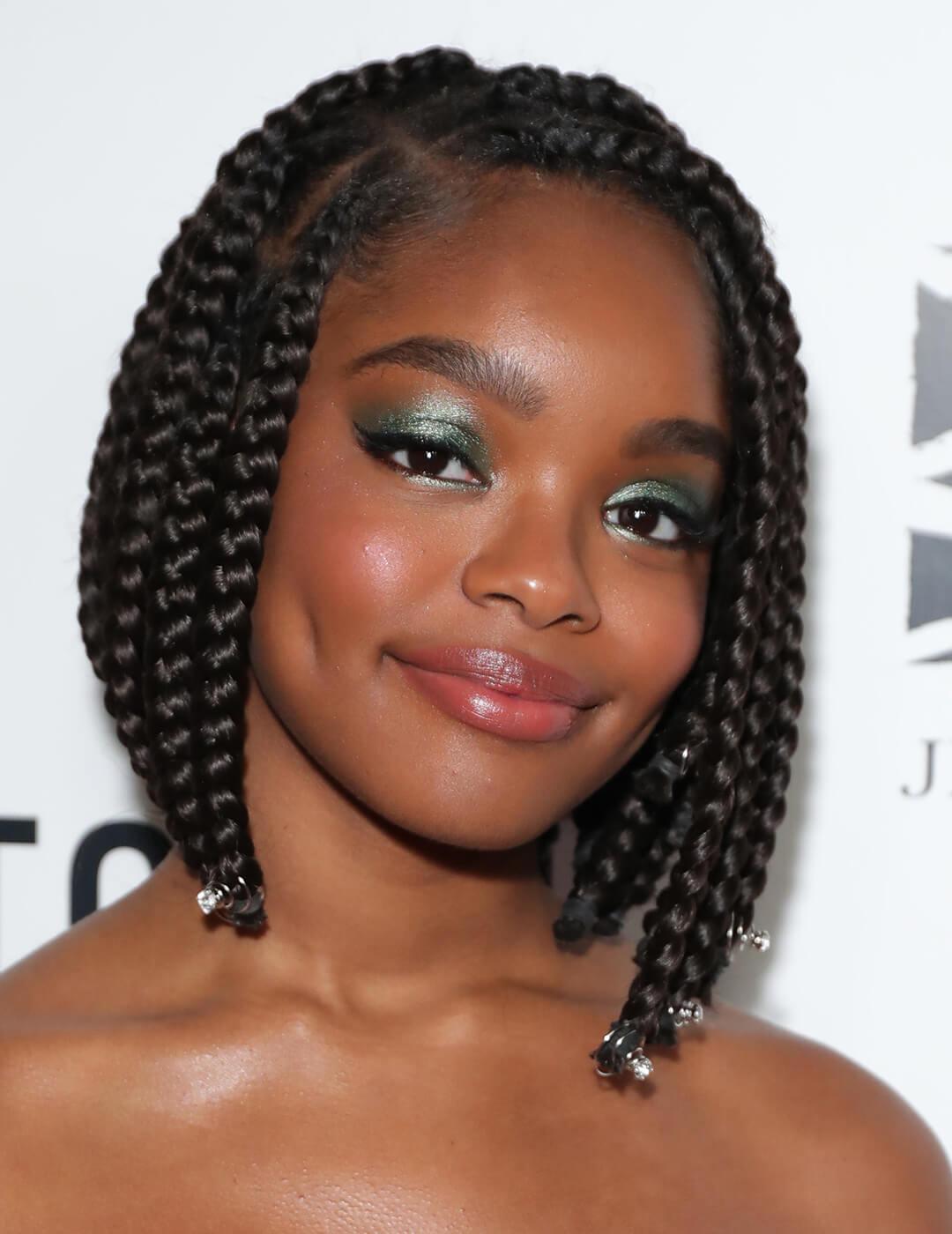
Thick, uniform dark brown box braids stop at the chin with small silver beads clipped onto the ends. The middle parting keeps the layout symmetrical, so the beads read as a deliberate accent. Medium to thick density hair at chin length or longer holds the braids without the weight pulling them loose. Ask your stylist for: chin-length dark brown box braids with silver beads. Secure each bead tightly to avoid losing them during the day, the style itself asks for almost nothing else.
Chin Length Dark Brown Braids With Silver Beads
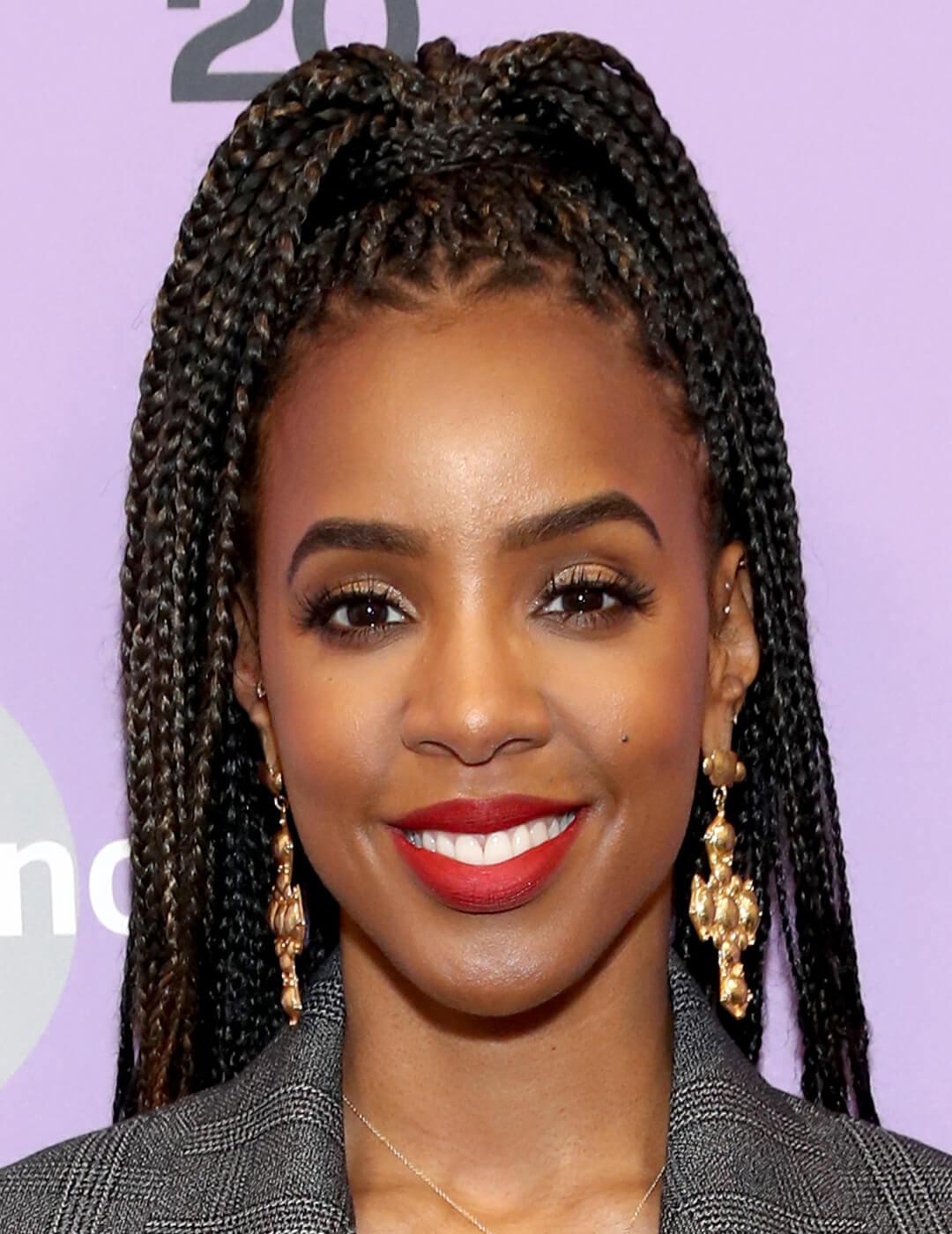
Where smaller braids can feel delicate, this version uses thick, straight dark brown box braids with silver beads at the ends for a heavier, more substantial look. The middle parting and chin length are the same, but the thickness changes the proportion entirely. It sits closer to a blunt bob than a traditional braid style. Medium to thick density hair starting at chin length gets the best structure here. Ask your stylist for: chin-length dark brown box braids with silver beads. The beads add a little weight, so keep them small and evenly spaced to avoid pulling.
Blonde French Braid Chin Length
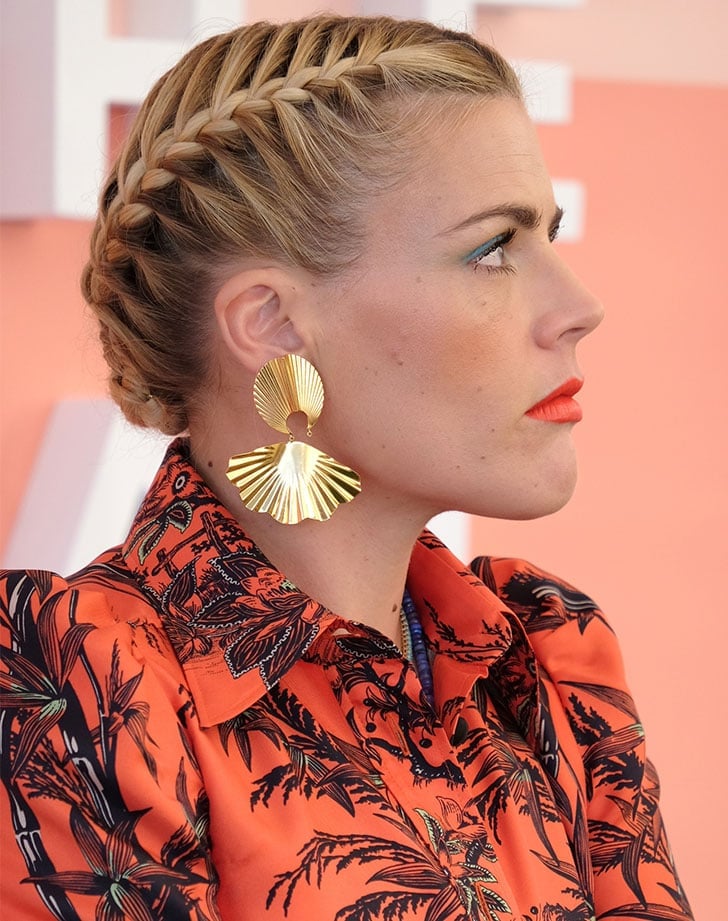
How do you ask for a French braid that wraps around your head like a crown without looking like you tried too hard? The braid starts at the front hairline, follows the curve of the head and ends at the nape, with blonde, wavy, thick hair framing the chin. The middle parting is visible beneath the braid, so the scalp pattern stays clean. Thick, wavy hair of chin length or longer gives the braid enough grip to hold its shape. Ask your stylist for: French braid wrapping around the head, chin length. A texturizing spray before braiding helps the strands stay put, and a trim every six to eight weeks keeps the ends neat.
Blonde Double Dutch Braids Collarbone
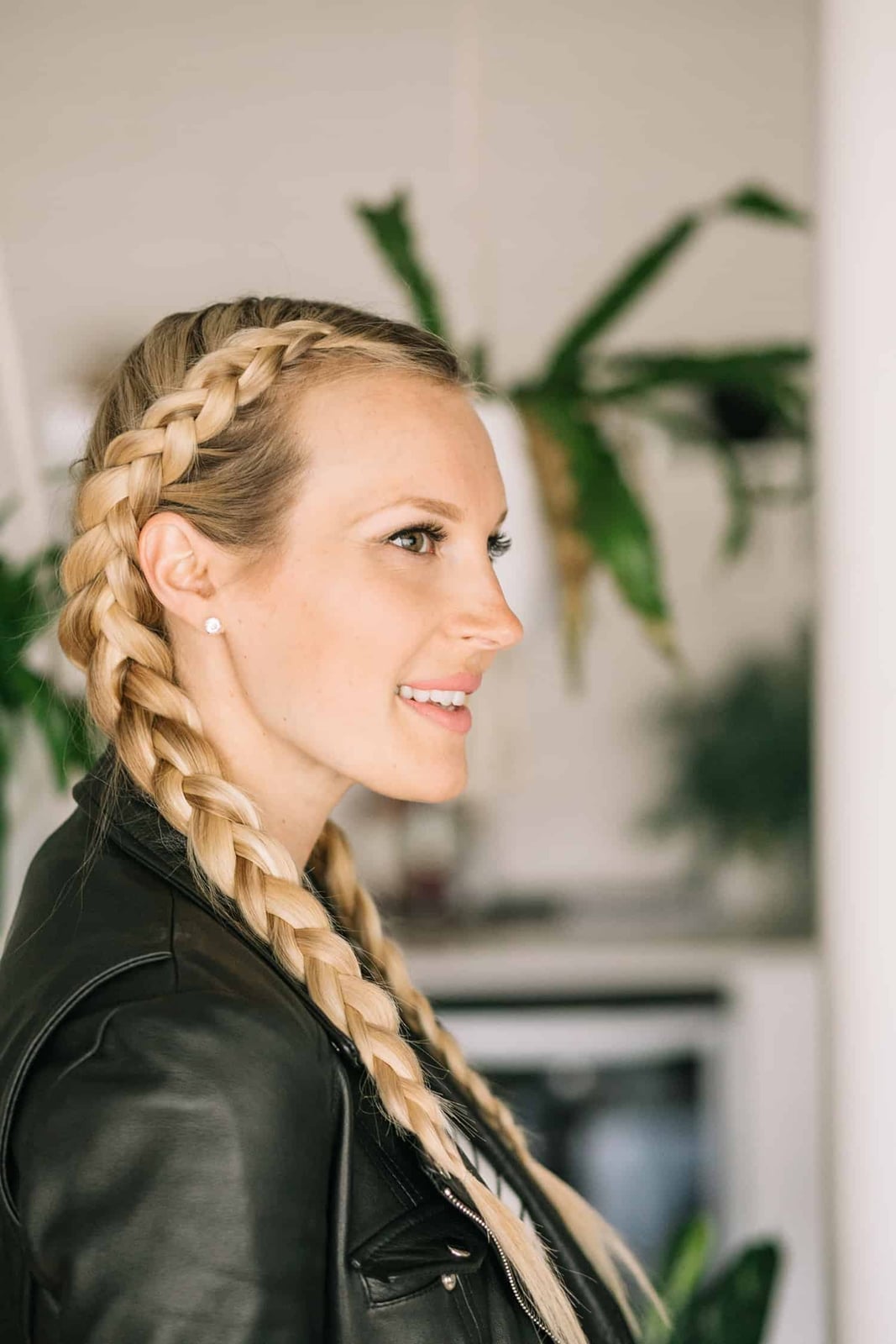
Medium density, wavy hair at least collarbone length creates enough tension for the Dutch braid technique to work cleanly. Ask your stylist for: double Dutch braids to collarbone length. Loosen the strands slightly after braiding for a fuller look, and plan a trim every six to eight weeks to keep the ends from fraying.
Blonde Half Crown Braid Collarbone
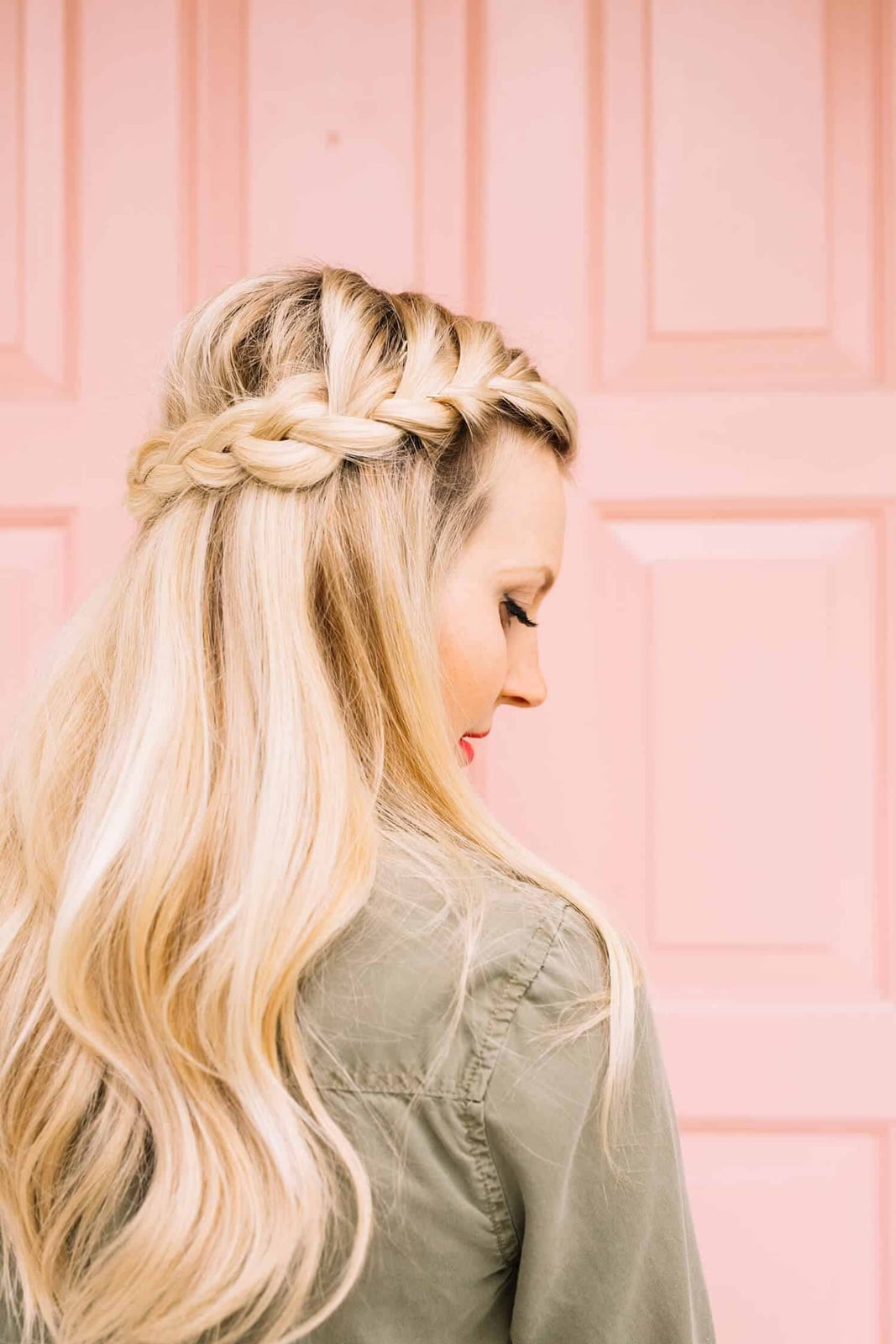
A half-crown braid takes about ten minutes once you’ve done it a couple of times, which makes it the rare braided style that doesn’t demand a salon chair. The braid starts at one temple and follows the hairline to the other, with the rest of your blonde, wavy, thick hair falling loose to the collarbone from a middle part. Ask your stylist for: half-crown braid with loose collarbone length hair. Use a tail comb to sharpen the part before you begin, and secure the end with a clear elastic tucked underneath. It holds well for a full day, though very thick hair might need a second pin at the nape.
Light Blonde Braided Headband Collarbone
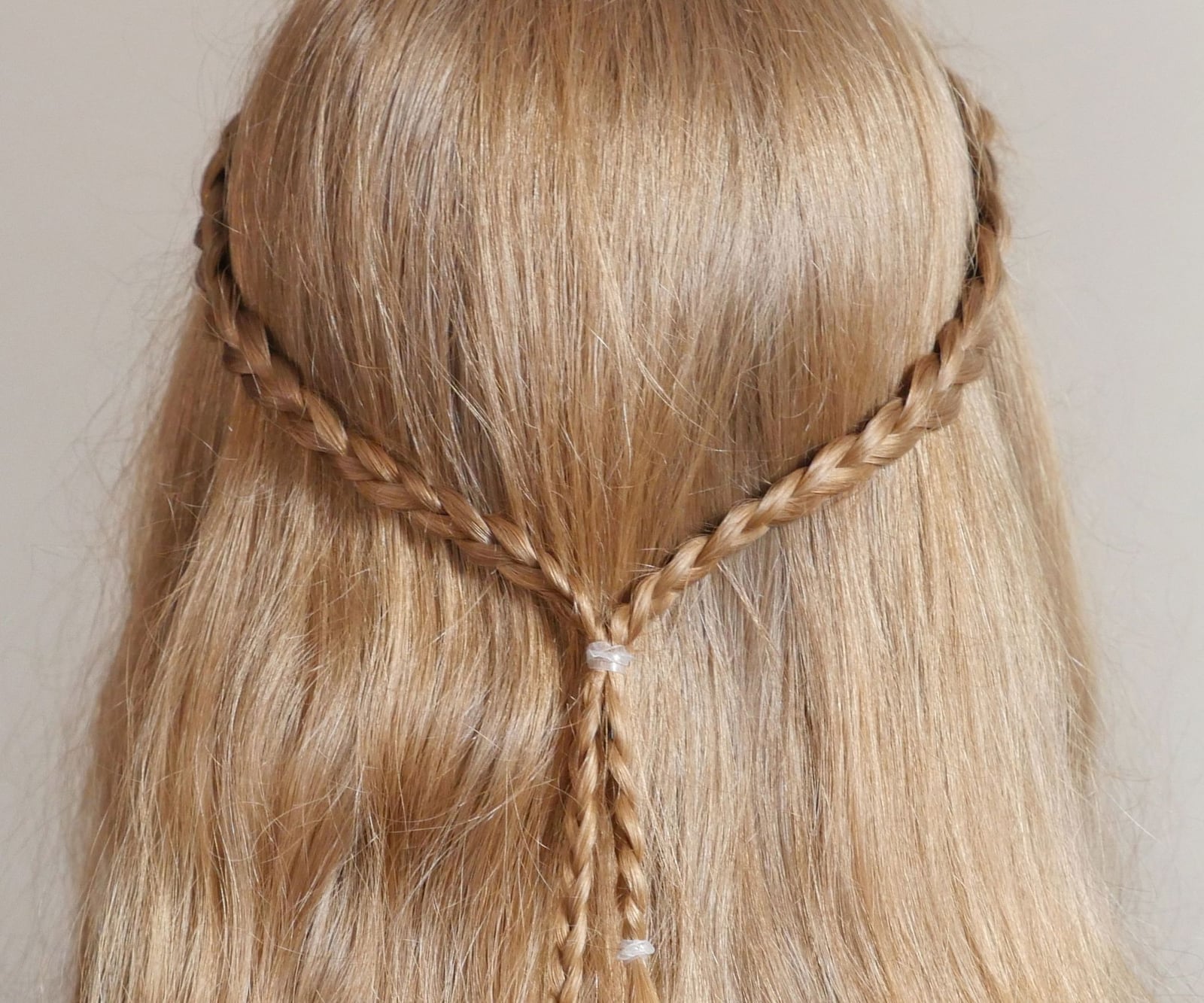
Two small braids that meet at the back give the effect of a headband without the accessory, which is charming until you factor in fine, wavy hair. The light blonde strands at collarbone length tend to slip, so the braids can loosen their grip by mid-afternoon unless you pin them snugly. Ask your stylist for: braided headband style with collarbone length hair. Bobby pins in a matching tone help the braids stay put, and a trim every six to eight weeks keeps the ends from looking ragged. If your hair is very fine, this one might frustrate you more than it flatters, but for most textures it’s a quick, low-stakes option.
Micro Braids With Curly Ends Shoulder Length
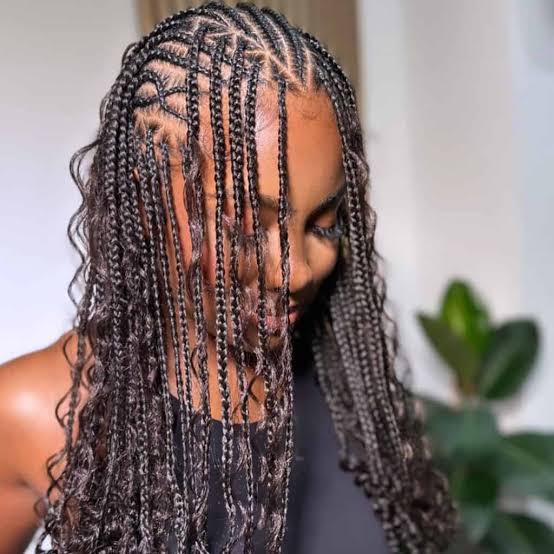
Wondering when micro braids with curly ends earn their keep? Summer, mostly, when the shoulder length clears your neck and the curly ends dry fast after a swim. The black hair with highlights looks dimensional even in flat light, and the fine, curly texture keeps the braids from looking heavy. Ask your stylist for: micro braids with curly ends, shoulder length. A curl-defining cream on the ends keeps them from frizzing into a single puff, and the style holds its shape for weeks with minimal fuss. It’s a salon commitment, but the result works from the beach to a backyard barbecue.
Micro Braids With Curtain Bangs Shoulder Length
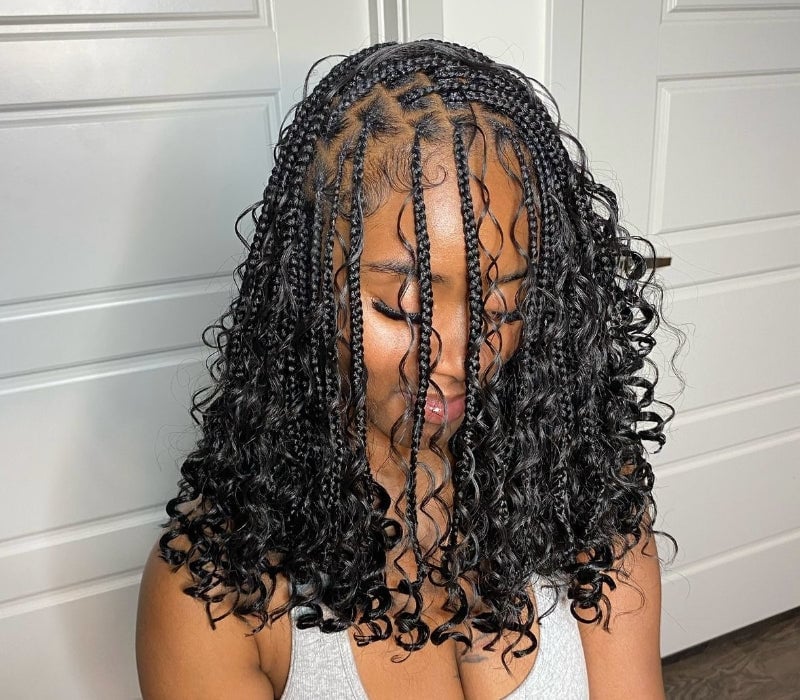
Micro braids with curtain bangs solve the problem of a braided style that still frames the face, which is why they suit anyone who wants softness around the jaw without losing the clean part. The shoulder length keeps the weight down, and the fine, curly texture of the black hair with subtle highlights gives the bangs a natural bend rather than a stiff line. Ask your stylist for: micro braids with curtain bangs, shoulder length. A silk scarf at night protects the bangs from frizz, and trimming the braid ends every eight weeks maintains the shape. If you have a round face, the curtain effect lengthens the look; if your hair is very coarse, the bangs may need extra setting.
Black Loose Waves With Small Braids Shoulder
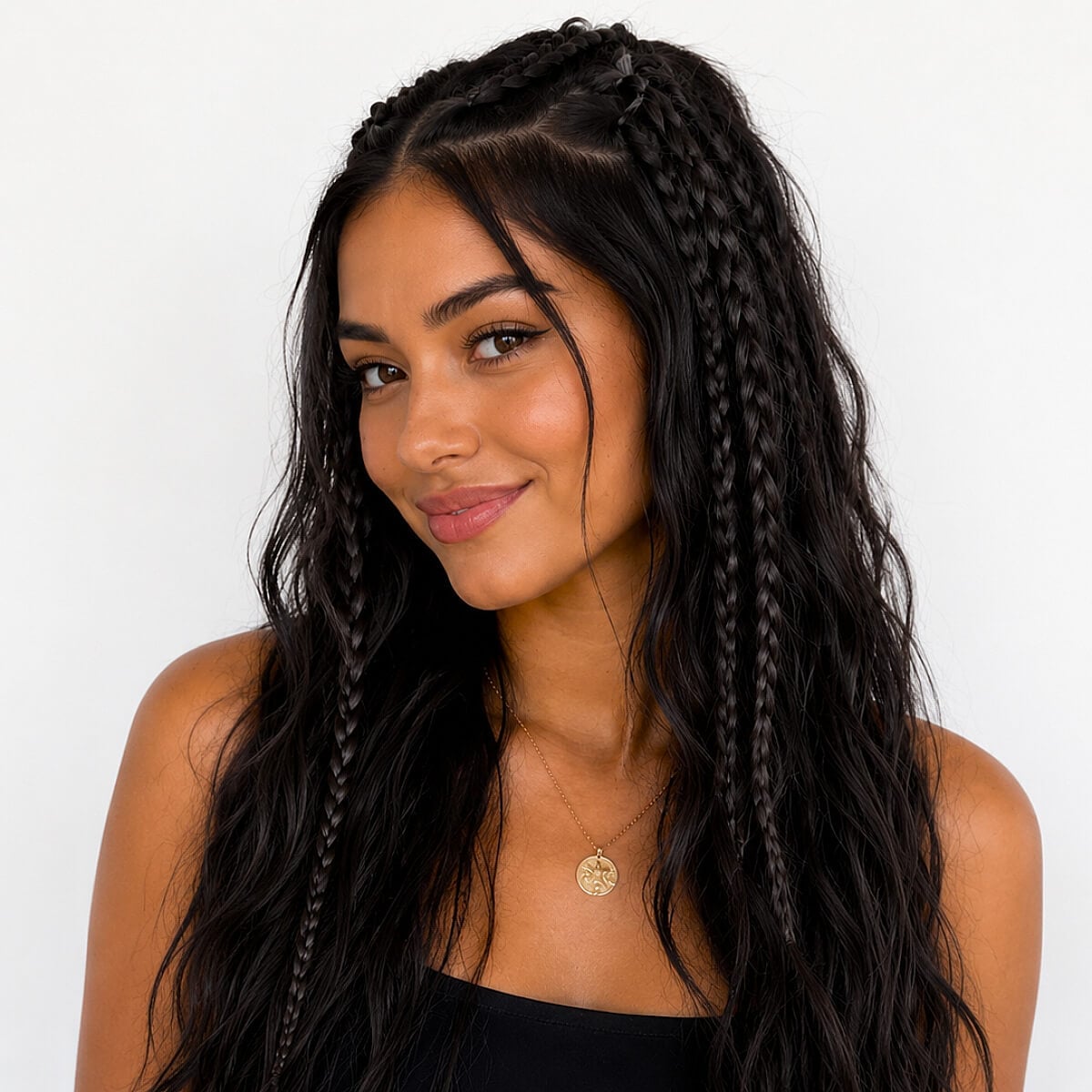
The trick to black loose waves with small braids is building the braids first, then waving the rest, so the two textures don’t fight each other. Start with a middle part and curtain bangs, section off a few thin pieces at the front and sides, and braid those while the remaining shoulder length hair stays loose. Ask your stylist for: shoulder length waves with small accent braids and curtain bangs. A sea salt spray on the loose sections enhances the natural wave, and the small braids hold their shape for a couple of days before they need redoing. Keep the braids tight at the root or they’ll slide out of the wave pattern by evening.
Micro Braids With Curly Ends Shoulder Length, Black With Amber Beads
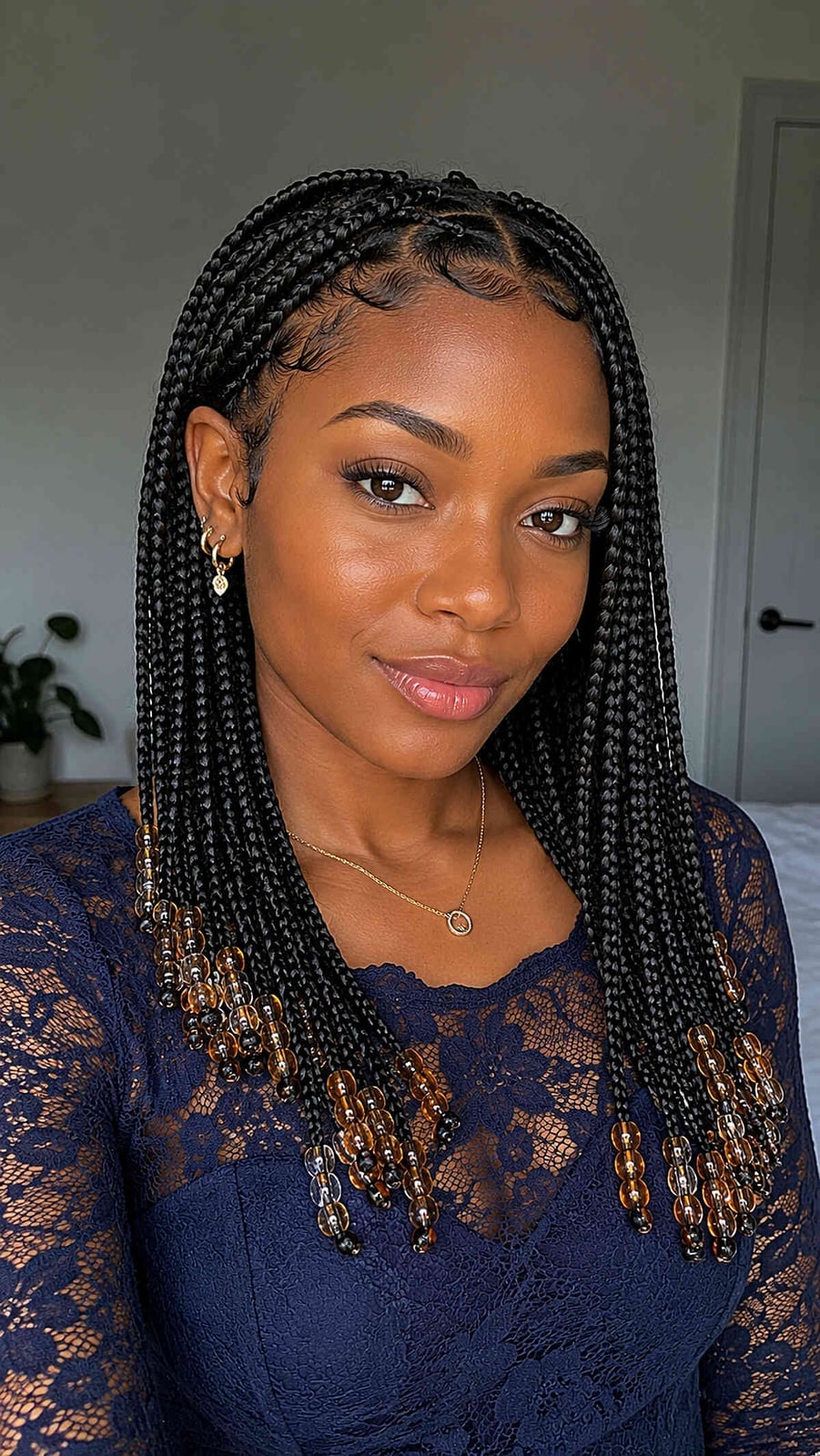
A middle parting keeps these micro braids orderly, but the amber beads at the ends are the real conversation starter. The fine, curly texture gives each braid a soft, bouncy finish that moves with you, and the black base with subtle highlights adds depth. This style holds its shape all day, though the beads do add a little weight, so expect some gentle swing instead of a stiff, sculpted look.
Ask your stylist for: micro braids with curly ends, shoulder length. This works best on fine, curly hair that already reaches your shoulders, since the braiding process needs enough length to secure the ends properly. A curl-defining cream on the ends keeps the texture from frizzing, and you will want salon maintenance every six to eight weeks to keep the parting crisp and the beads snug.
Shoulder Length Box Braids With Amber Beads
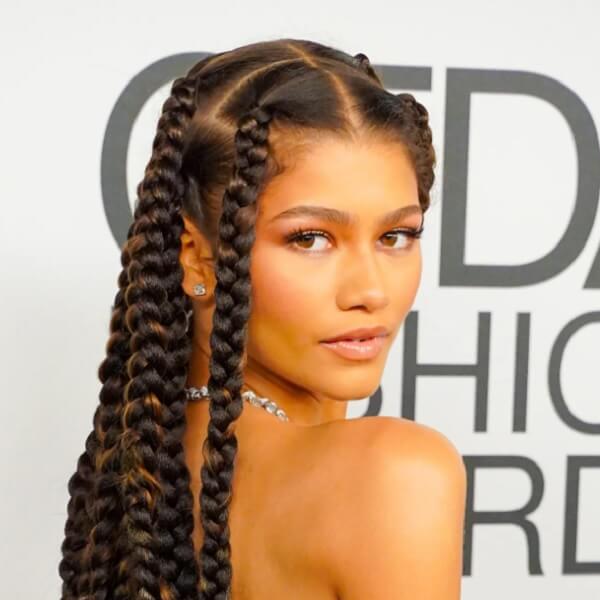
Wondering how to get those thick, uniform box braids with the amber beads at the ends? The secret is in the sizing and the placement. Ask your stylist for: shoulder length box braids with amber beads. You want the braids thick and even, with the beads threaded on at the very end so they sit neatly against the shoulder. A middle parting keeps the look symmetrical, and the dark brown base with blonde highlights gives the braids a subtle, sun-kissed dimension that shows up when you move.
This style suits thick hair that is at least shoulder length, since the weight of the braids needs some density to hang properly. The beads are decorative, so make sure they are securely fastened to avoid any slipping. A trim every six to eight weeks keeps the ends looking tidy, and you will want to avoid harsh brushing near the beaded sections to keep everything in place.
Blonde Double Dutch Braids Collarbone, Mid-Back
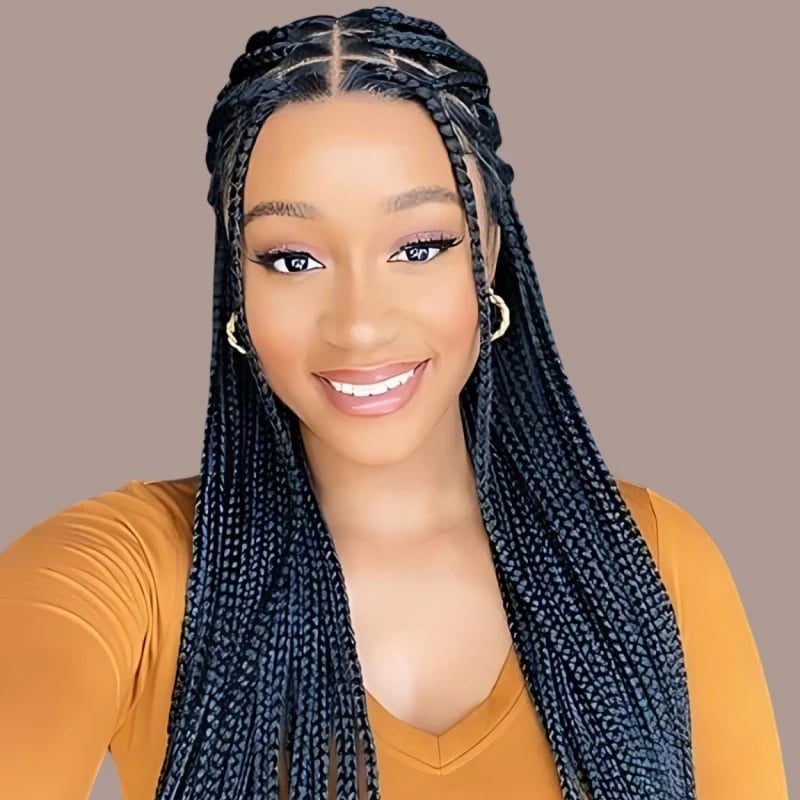
Compared to looser, chunkier braids, these neat, small box braids read as more polished and intentional. The middle parting creates a clean, symmetrical line from the crown down, and the subtle highlights woven through the black base add just enough dimension to keep the style from looking flat. Ask your stylist for: double Dutch braids to collarbone length. This works best on medium-density, wavy hair that reaches at least your collarbone, since the braids need enough length to hang properly. The small size of the braids means they hold their shape well, and they sit comfortably for long wear. A trim every six to eight weeks keeps the ends from fraying, and you can gently loosen the braid strands after styling for a softer, fuller look.
Blonde Dutch Braid With Loose Mid Back

A single Dutch braid on one side is a clever way to keep hair out of your face while letting the rest flow loose. The mistake most people make is braiding too tightly, which pulls the parting off-center and leaves the loose side looking flat. Instead, start the braid right at the middle parting and keep it relaxed as you work down. Ask your stylist for: single Dutch braid with loose mid-back hair. This is a DIY-friendly style for thick, wavy hair that reaches mid-back, since the braid needs enough length to hold. A smoothing serum on the loose hair keeps flyaways down and adds polish. You can do this at home in about fifteen minutes, though a trim every six to eight weeks keeps the ends looking fresh.
Dark Brown Double Dutch Braids Shoulder
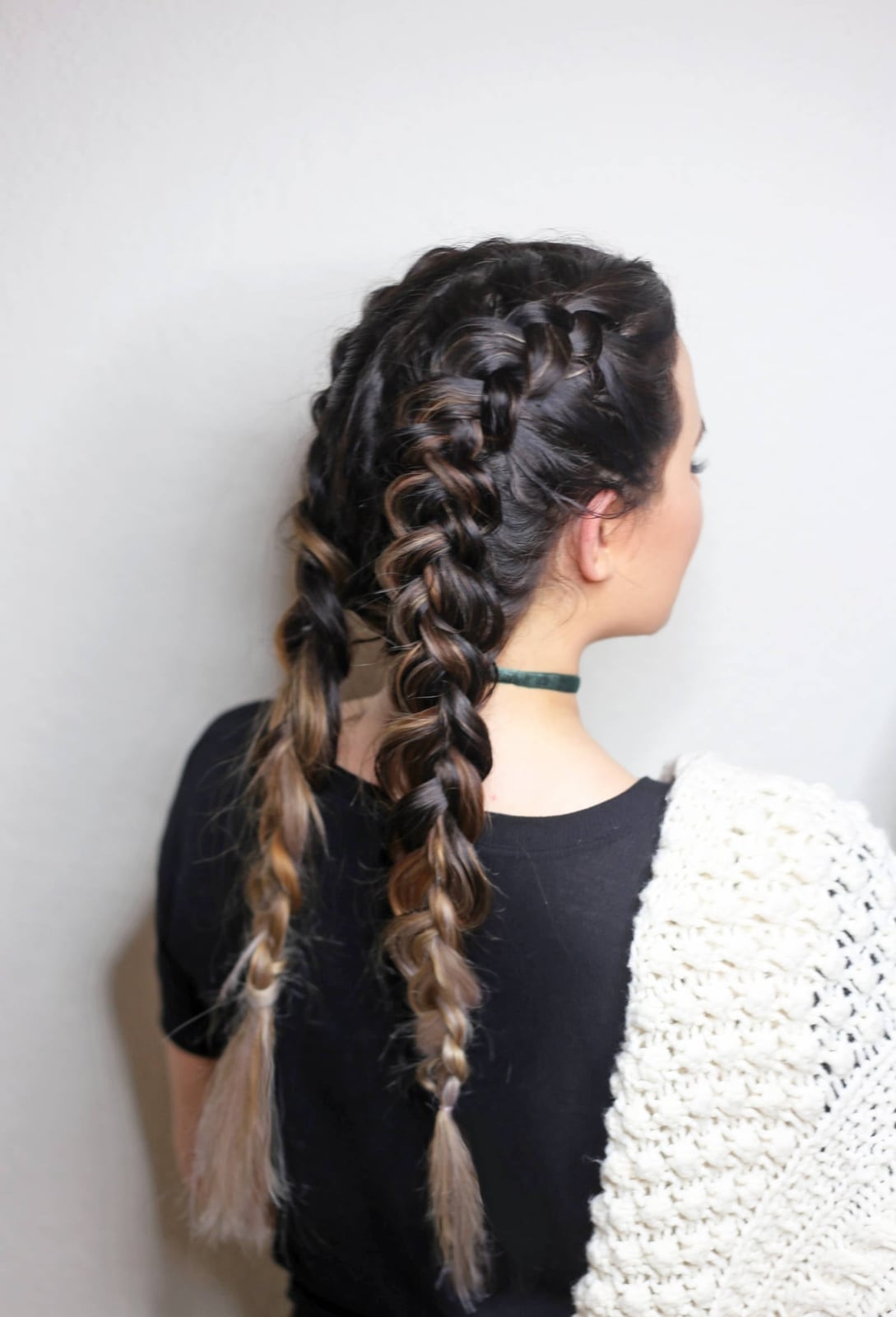
Two thick Dutch braids over the shoulders give off a practical, sporty energy, but they can feel heavy on thick, wavy hair. The dark brown base with highlighted strands adds dimension, so the braids show contrast as they swing. Ask your stylist for: double Dutch braids over the shoulders. This style suits thick, wavy hair at least shoulder length, and it holds well for a full day of activity. The drawback is that the braids can pull at the roots, so if your hair is very dense, you might want to skip this one. A trim every six to eight weeks keeps the ends from splitting, and you can gently pull on the braid edges for a fuller, more relaxed finish.
Black Box Braids With Wavy Ends Mid Back
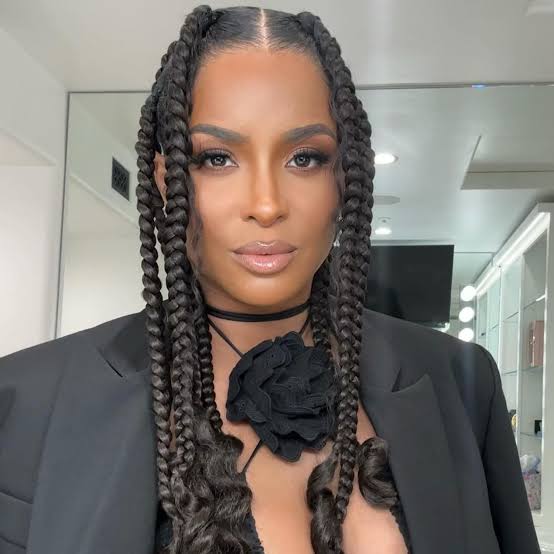
Wondering if box braids can survive a humid summer? These thick, black box braids with wavy ends hold their shape through heat and humidity, thanks to the larger braid size that keeps strands contained. The middle parting keeps the style symmetrical, while the waves at the end add movement that straight braids lack. This length lands at mid-back, which creates a noticeable statement. Ask your stylist for two large box braids with wavy ends to mid-back.
The texture is thick, so the braids feel substantial and last longer between sessions. A moisturizing balm on the wavy ends keeps them soft and defined, and a trim every 6 to 8 weeks prevents the ends from splitting. This is a salon style, so expect a few hours in the chair. The look works for both weekday errands and weekend events. The black color stays rich without toning, and the braids stay secure enough for active days.
Dark Brown Box Braids With Charms Mid Back
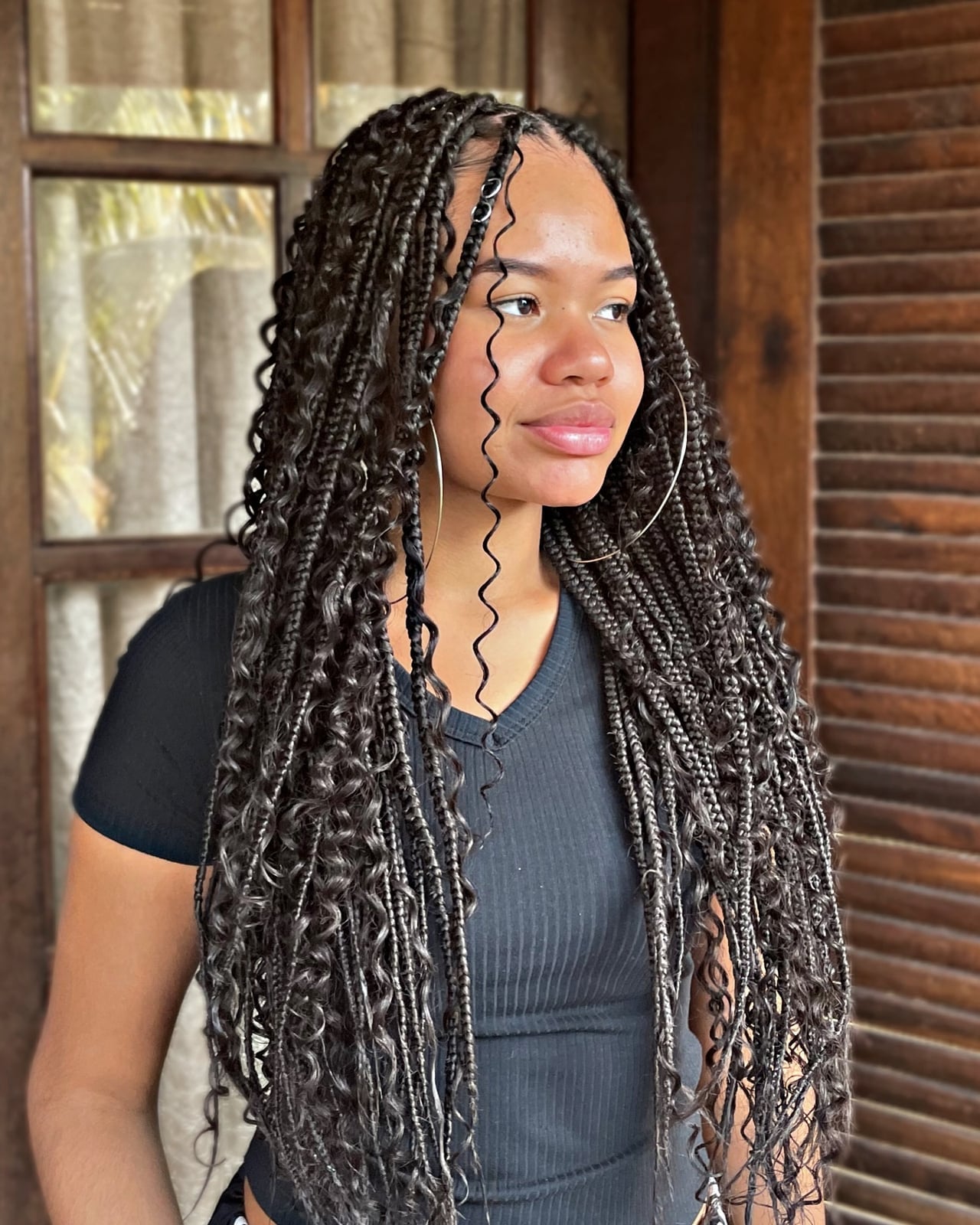
Metallic charms threaded through braids turn a standard protective style into an eye-catching look. These dark brown box braids with subtle lighter brown highlights reach mid-back, and the small charms add a personal touch that you can change out as the mood strikes. The middle parting keeps the design clean, while the wavy ends soften the overall silhouette. This suits thick hair at least mid-back length, because the braids need density to hang properly. Ask your stylist for dark brown box braids with metallic charms to mid-back.
The highlights give depth against the dark brown base, so the braids don’t look flat. Those with finer hair may find the charm weight pulls at the roots, so it’s worth discussing placement with your stylist. The charms are a festive detail, but they work for everyday wear if you keep them small and subtle. The wavy ends need regular moisturizing to stay defined, and a trim every 6 to 8 weeks keeps the ends healthy. This is a salon style with no quick home version, so budget for a solid chunk of time in the chair.
Dark Brown Box Braids With Rings Mid Back, Wavy Ends
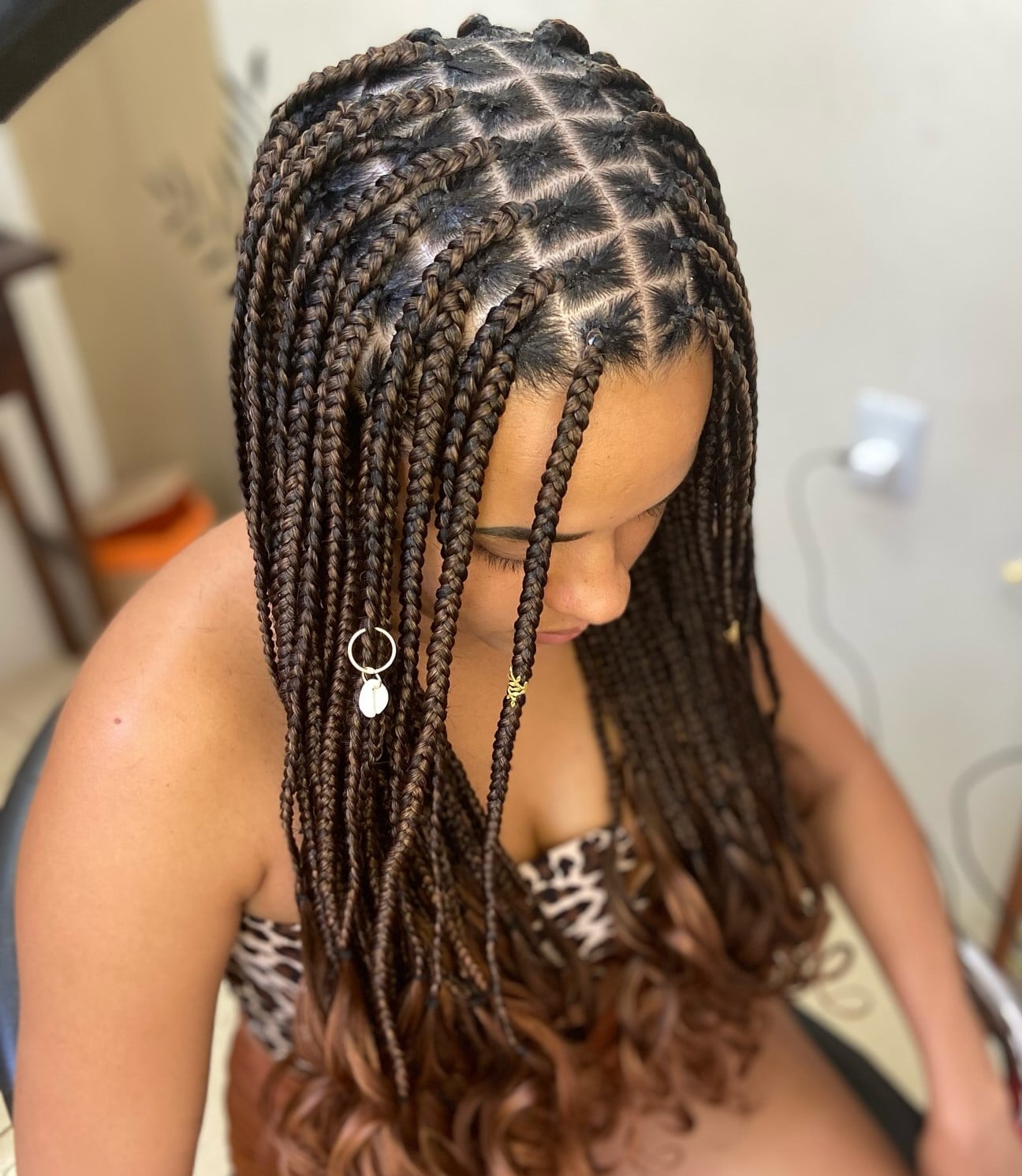
The rings here are the quiet achiever: small metallic circles that slide onto individual braids, adding a subtle glint against the dark brown base with lighter brown highlights. Each ring is placed at varying heights along the mid-back length, which creates a rhythm without looking uniform. The wavy ends are formed by dipping the braid ends in hot water or using a braid curler, then setting them with a cool shot of air. Ask your stylist for dark brown box braids with metallic rings to mid-back. This technique requires thick hair for the braids to hold the wave pattern, and the rings need to be crimped shut to avoid sliding off. Check the rings periodically to ensure they are not loose, and apply a light oil to the braid ends for shine.
Black Box Braids With Geometric Parting Mid Back
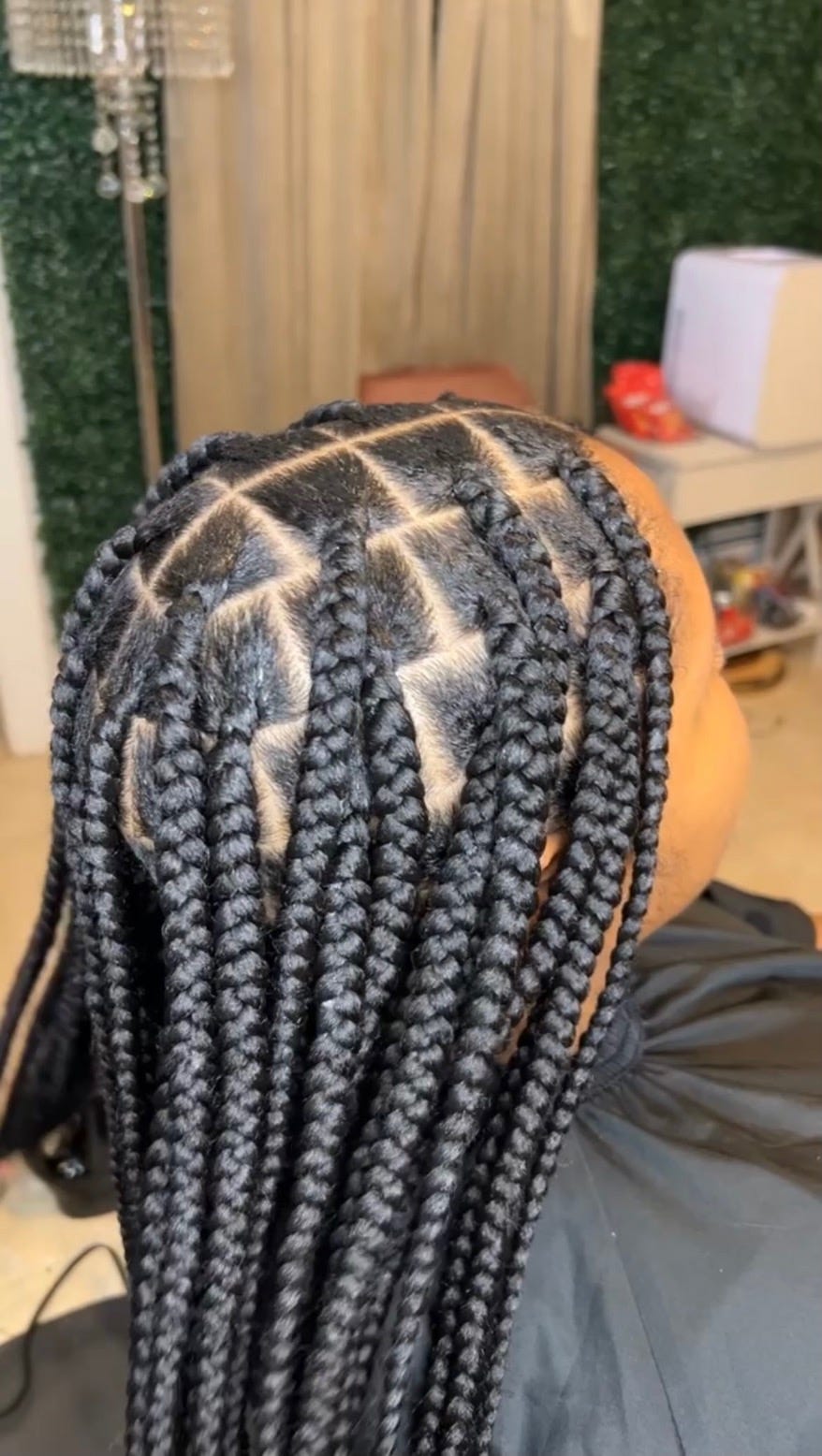
A geometric parting is the kind of detail that makes people look twice. The scalp is divided into neat squares, each braid rising from its own precise plot of skin, and the effect is architectural from a top-down view. These black box braids are straight and thick, extending to mid-back, with a middle parting that anchors the pattern. The geometric layout requires precision, so leave it to a salon. Ask your stylist for box braids with geometric scalp parting to mid-back.
That sharp parting is the star, so the upkeep is about protecting it. Sleep on a satin scarf or pillowcase to keep the squares crisp, and avoid heavy oils at the roots that can smudge the lines. The straight texture means the braids swing and move, which is a nice contrast to the rigid scalp pattern. Plan to refresh the parting every 6 to 8 weeks as new growth softens the edges. This is a statement style for those who like their hair to do the talking.
Clean Parting Black Box Braids Mid Back, Straight
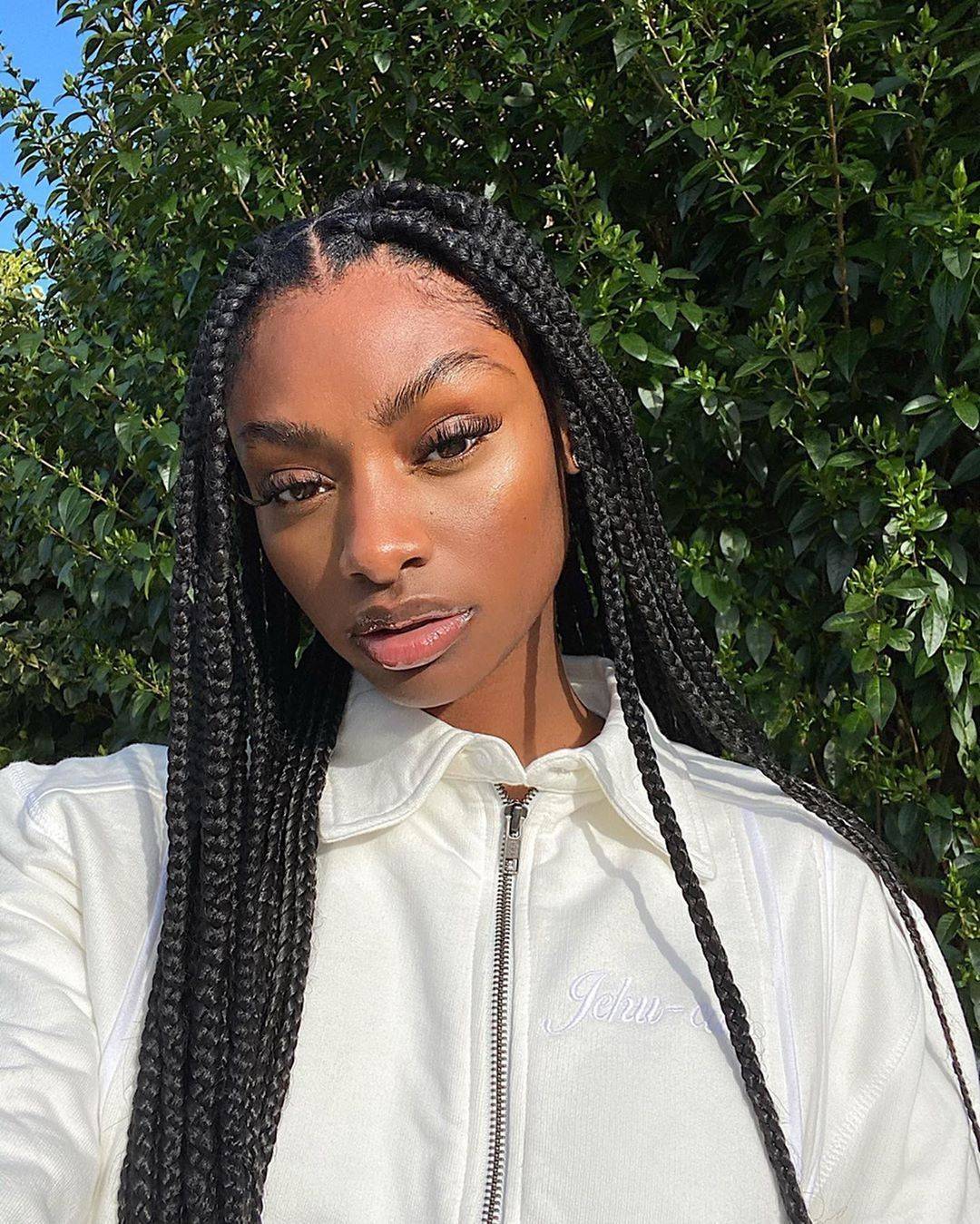
Can a middle parting really be the difference between neat and messy? With box braids, yes. These black box braids are straight and thick, falling to mid-back with a clean middle part that divides the scalp into two even halves. The uniformity of the braids and the sharpness of the part make the style look deliberate, not accidental. This is the kind of clean parting that works for anyone with thick hair who wants a classic, low-fuss braided look. Ask your stylist for box braids with a clean middle part to mid-back.
The straight texture and dense braid size mean the style holds its shape through workouts and windy days. A braiding balm applied to the roots smooths flyaways and keeps the part looking fresh. The lack of extra details, no beads, no waves, no color, is what makes this version so versatile. It goes from the office to a dinner without needing a second thought. Trim the ends every 6 to 8 weeks to keep them blunt and healthy, and the part will stay sharp as long as you maintain it.
Neatly Done Box Braids Mid Back
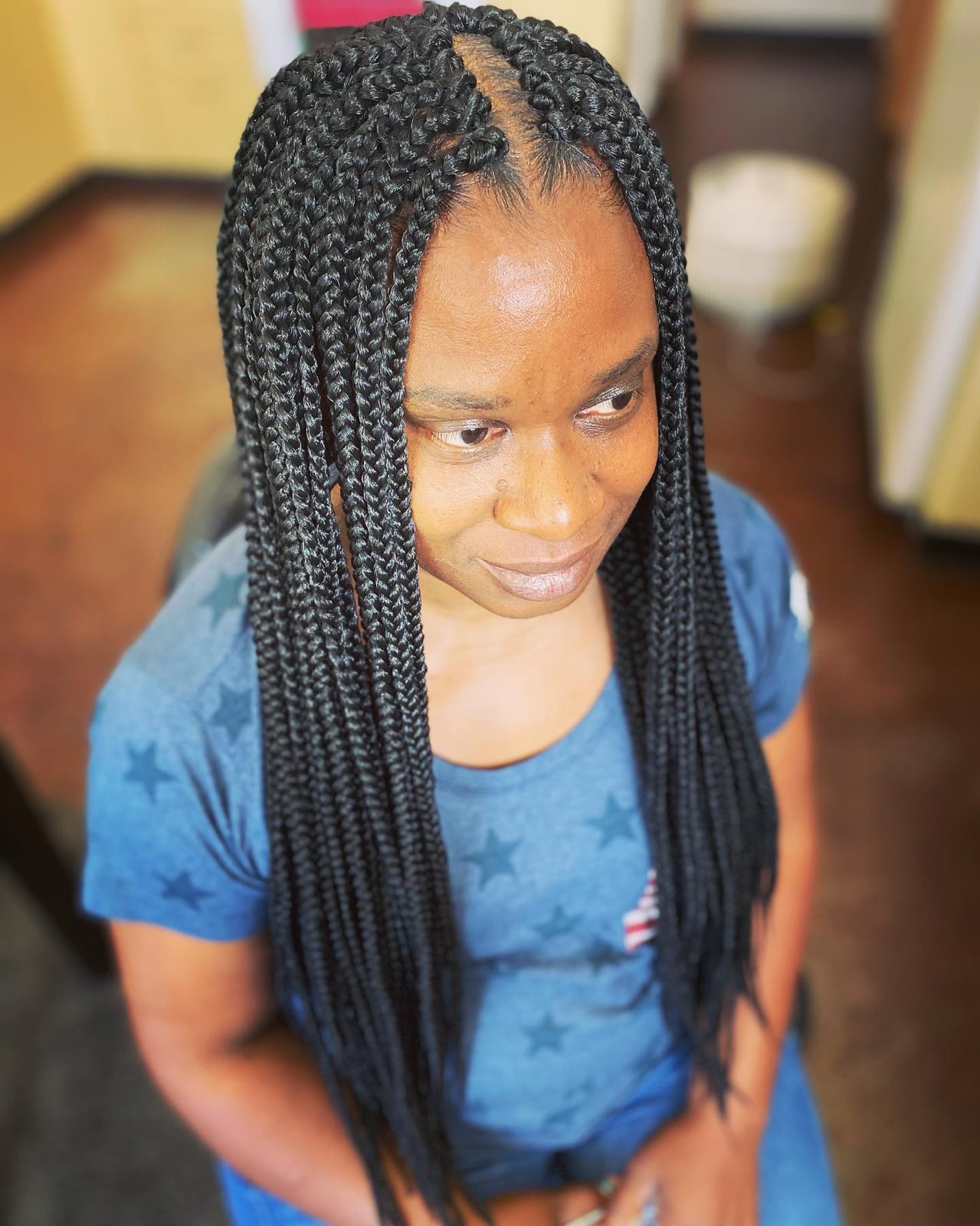
These box braids skip the rumpled, day-three look in favor of something more deliberate. The thick, black hair is sectioned into uniform braids that hang straight to mid-back, anchored by a clean middle parting. Ask your stylist for neatly done box braids with a middle part to mid-back. Thick, straight hair at least mid-back length holds the shape best, and the polished finish means you can go a full week without a touch-up. A small brush along the part keeps flyaways in check, and a trim every six to eight weeks maintains the ends.
Black Stitch Braids Mid Back
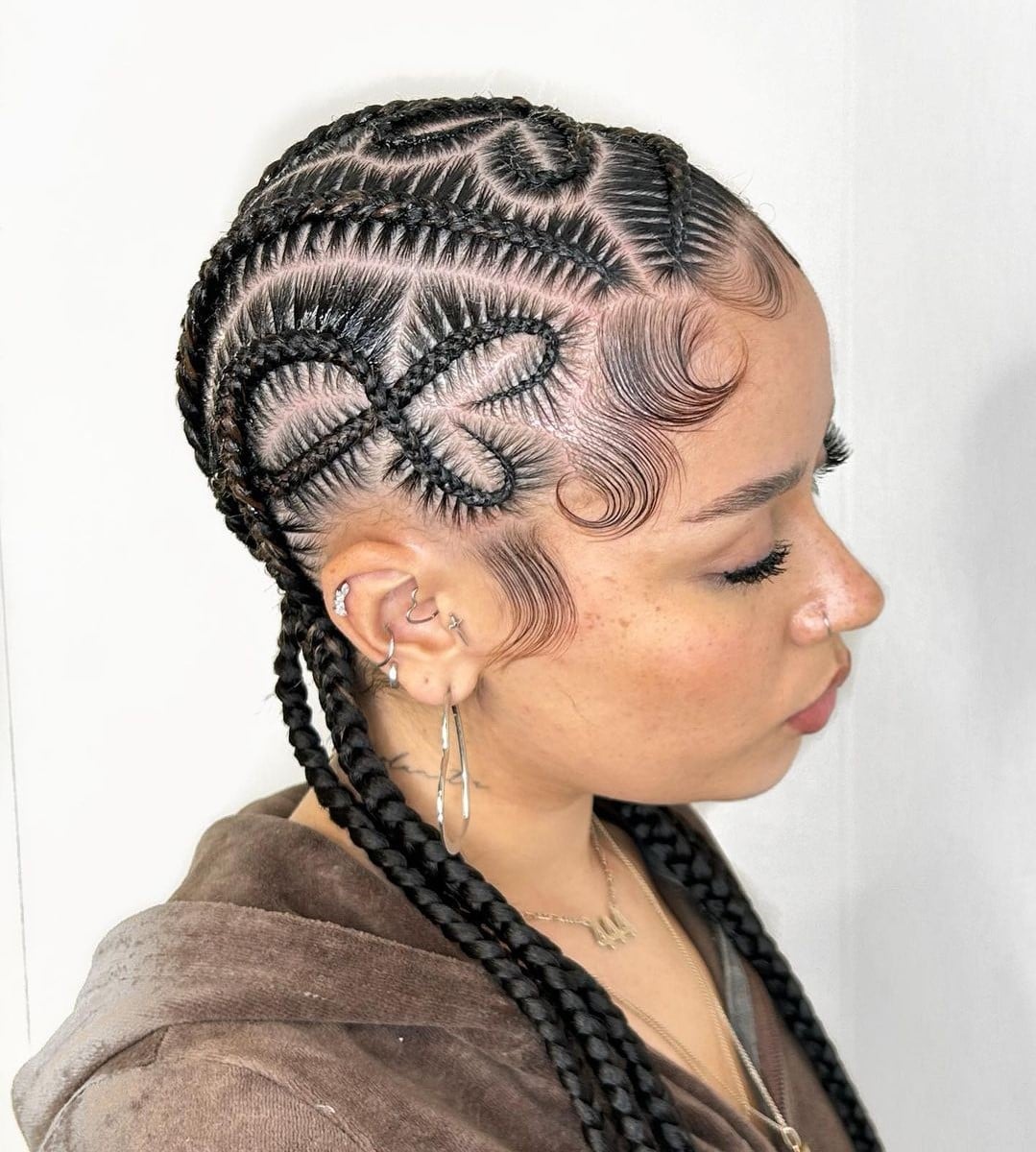
The geometric parting patterns along the hairline are the first thing you notice, and they are also the reason this is a salon-only project. Stitch braids require a clear plan, and the intricate lines at the scalp demand precision that a mirror at home cannot replicate. Ask your stylist for: stitch braids with geometric parting patterns. The black hair is straight and reaches mid-back length, with the braids sitting close to the scalp for a clean, sculpted finish. Hair of at least mid-back length works best, and the style is a solid choice for anyone who wants the braids to double as visual art. Expect a longer appointment than standard box braids.
For the brave, a DIY attempt is possible but risky. The scalp work is the hardest part, and a crooked line will be visible until the braids come out. A lightweight oil applied to the parting every few days keeps the scalp comfortable. Trim the ends every six to eight weeks.
Black Cornrows Pulled Back Side View
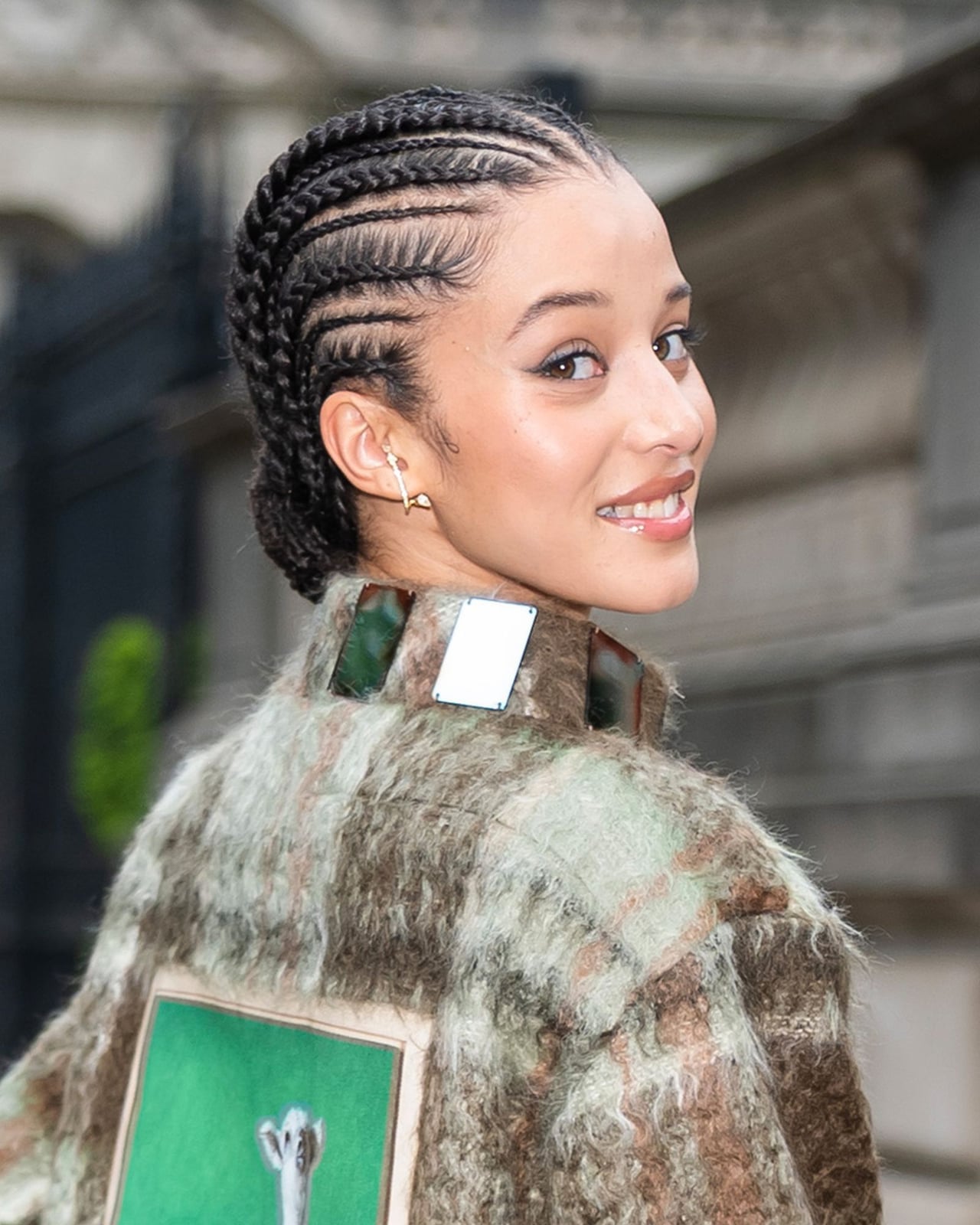
The middle parting leads into a pattern of cornrows that sweep the thick, straight hair back from the face. It is a clean, practical style, but the intricacy of the pattern means maintenance is not as simple as it looks. Ask your stylist for intricate cornrows pulled back neatly. Thick, straight hair of at least shoulder length holds the rows tight without slipping. The honest drawback is that the pattern can lift at the nape after a week, and a touch-up with a small hook is sometimes needed to keep the lines sharp. A finishing spray along the part helps, and a trim every six to eight weeks keeps the ends from fraying.
Cornrow Parting Into Wavy Mid Back Braids
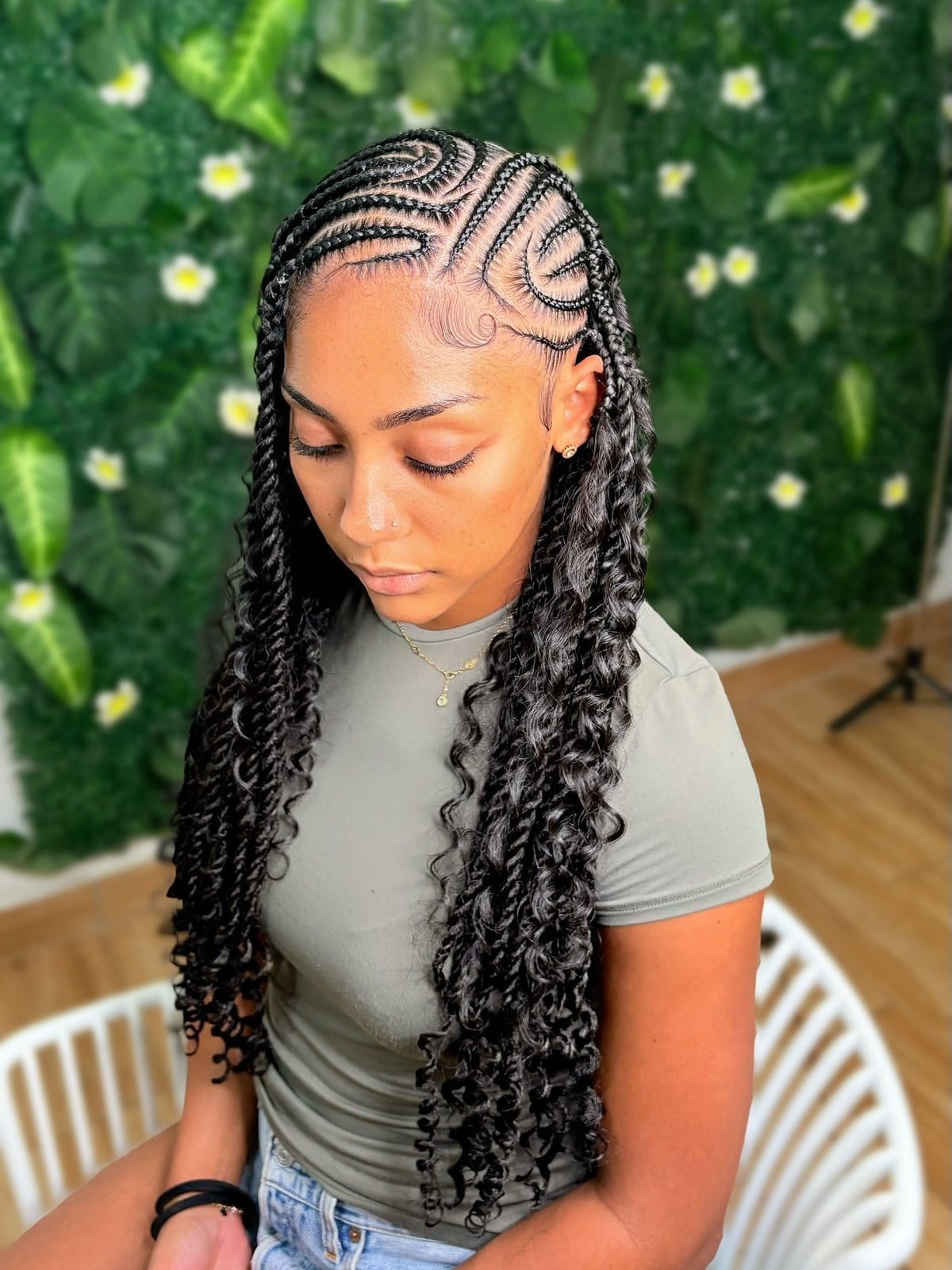
What happens when the cornrows at the crown give way to loose, wavy braids? You get a style that works for both a casual weekend and a dinner out. The cornrow parting is tight and precise, while the mid-back length adds movement. Ask your stylist for cornrow parting into wavy braids to mid-back. Thick, wavy hair at least mid-back length lets the transition show a deliberate contrast. A moisturizing serum on the wavy ends keeps them from drying out, and a trim every six to eight weeks maintains the shape. This is a strong choice for fall and winter, when the braids pair well with a turtleneck and the part stays clean without humidity working against it.
Small Box Braids With Subtle Highlights Mid Back

The fine texture of these small box braids gives them a dense, full appearance, and the subtle highlights add depth without screaming for attention. The middle parting is precise, and the braids fall straight to mid-back length. Ask your stylist for neat small box braids with subtle highlights to mid-back. Thick hair at least mid-back length carries the weight best, and the highlights work well for anyone who wants dimension without the commitment of a full color change. The straight texture keeps the braids smooth, and a braiding balm on the scalp every few days prevents dryness. Trim the ends every six to eight weeks to keep the style looking fresh.
Large Dark Brown Box Braids With Blonde Highlights Mid Back
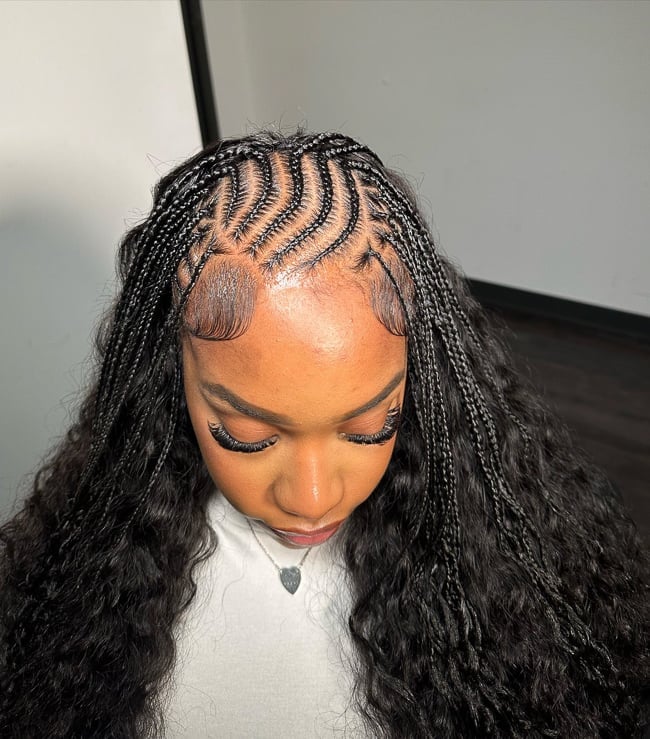
A zig-zag parting turns micro braids into a deliberate design element, with the scalp art drawing the eye before the hair moves. Each braid is small and uniform, anchored by the clean geometric parting. The loose curly ends provide a soft contrast to the precise pattern, and the baby hairs are swept forward to soften the hairline. The zig-zag sectioning requires a skilled hand, so this is strictly a salon appointment.
This technique works best on hair that reaches mid-back, giving the braids enough weight to hang evenly. It suits anyone who wants an artistic look without sacrificing practicality. Ask your stylist for: black micro braids with zig-zag parting and curly ends to mid-back. The micro braids hold their shape for weeks, but the loose ends need a curl cream refresh every few days to maintain definition. Plan on a trim every six to eight weeks to keep the ends from fraying. The baby hairs will need a touch-up with a soft brush each morning.
Large Black Box Braids Mid Back, Middle
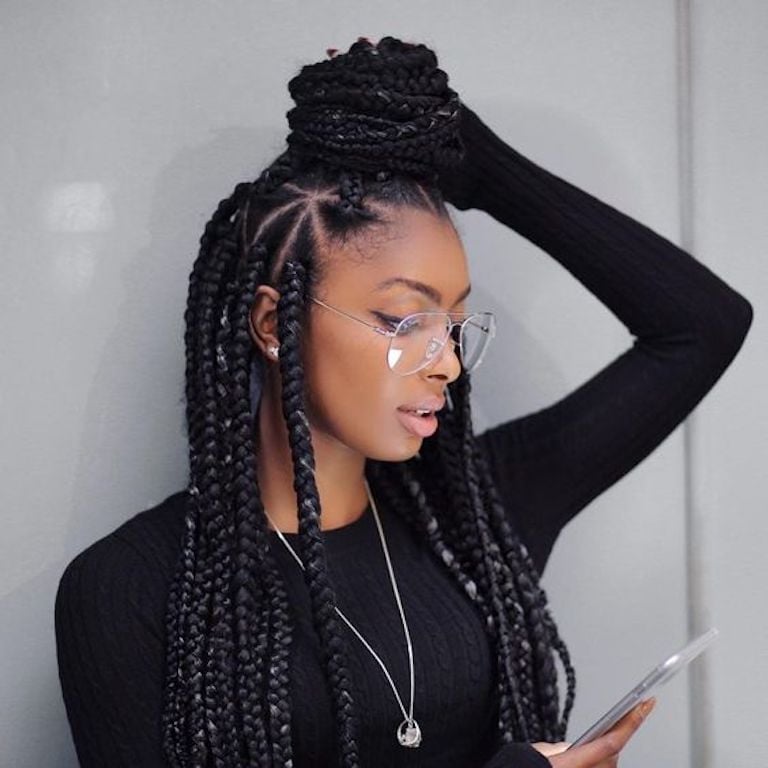
Large box braids save you time at the salon because fewer braids means faster installation. This style uses black, wavy braids with a clean middle parting, reaching mid-back. It suits thick hair that can handle the weight. Ask your stylist for: large black box braids with wavy texture to mid-back. Detangle with a wide-tooth comb and apply moisturizing oil to the ends. The braids hold for six to eight weeks between trims.
Micro Braids With Zig Zag Parting And Curly Ends Mid Back
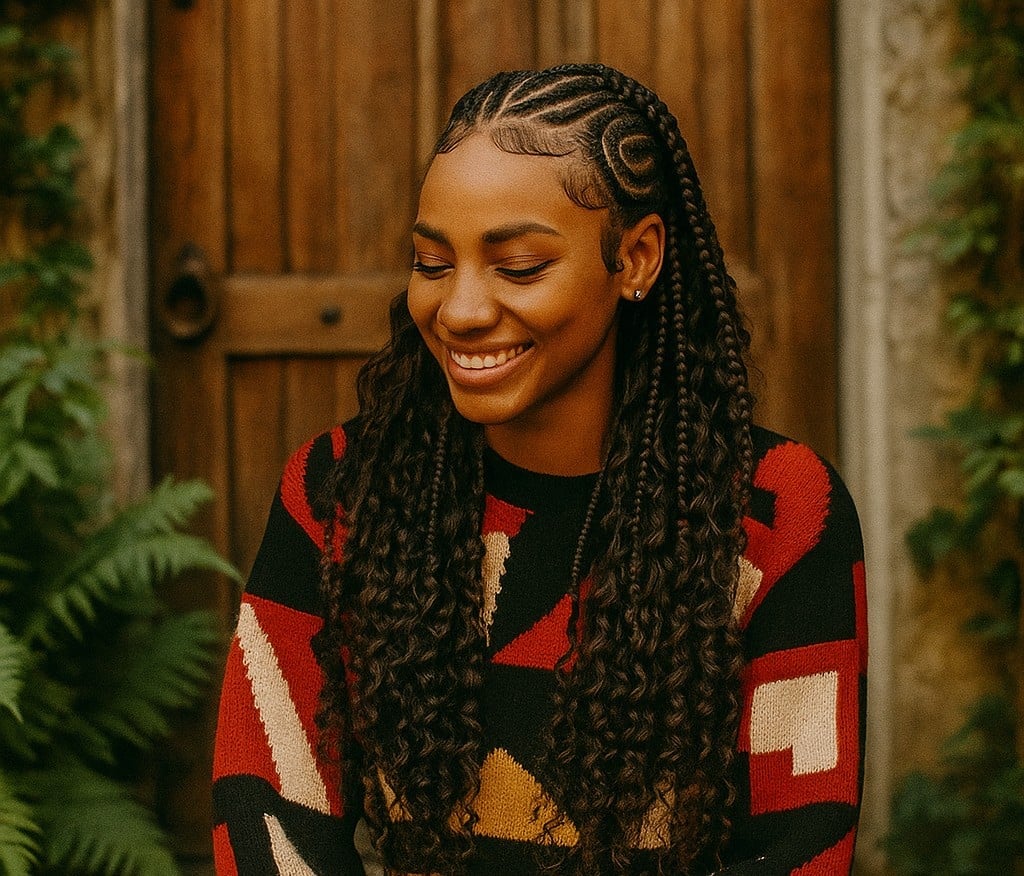
How do you describe that intricate scalp design to your stylist? This style uses dark brown braids with loose curly ends that reach mid-back, with a decorative side parting and side-swept bangs. The parting is not just a straight line; it has a deliberate shape that adds visual interest to the scalp. The braids are sectioned to allow the ends to curl naturally, blending structure with softness. This technique works best on hair at least mid-back length, ideal for anyone wanting a braided look with a unique parting detail that stands out.
Ask your stylist for: dark brown braids with decorative side parting and loose curly ends to mid-back. Then, follow these styling steps:
- Style the side-swept bangs with a soft brush.
- Apply a curl cream to the loose ends for definition.
- Finish with a light-hold spray to keep the parting crisp.
Final Thoughts
When choosing your style, let your maintenance budget steer. Larger box braids with minimal adornment keep things low-key and quick to install; intricate beaded or cornrowed versions ask for more time in the chair and a stricter touch-up schedule. Match the parting to your face shape: a center part elongates a round face, while a deep side part softens a square jaw.
- Sleep with a silk or satin bonnet to keep braids neat.
- Secure beads and charms to avoid snagging.
- Moisturize your scalp with a lightweight oil weekly.
- Trim loose ends only if they fray.
- Detangle gently when taking braids down.
Simple parting braids let you change your look without changing your routine.