

A simple retwist is the quiet workhorse of loc maintenance: clean parts, neat roots, and a style that holds its shape for weeks without constant fuss. For 2027, the trend is leaning into lived-in color and glossy natural texture, with loose waves and face-framing pieces replacing anything too stiff or severe.
These 22 Simple Retwist Locs styles run the gamut from quick DIY refreshes to salon-level updos, for every length from short crops to mid-back, and for all textures from fine to coily. Whether your struggle is fine locs that flatten by midday or a grow-out line that shows too soon, there’s a retwist here that keeps your hair looking done without looking overdone.
Mid-Back Wavy Locs With Dark Brown Base
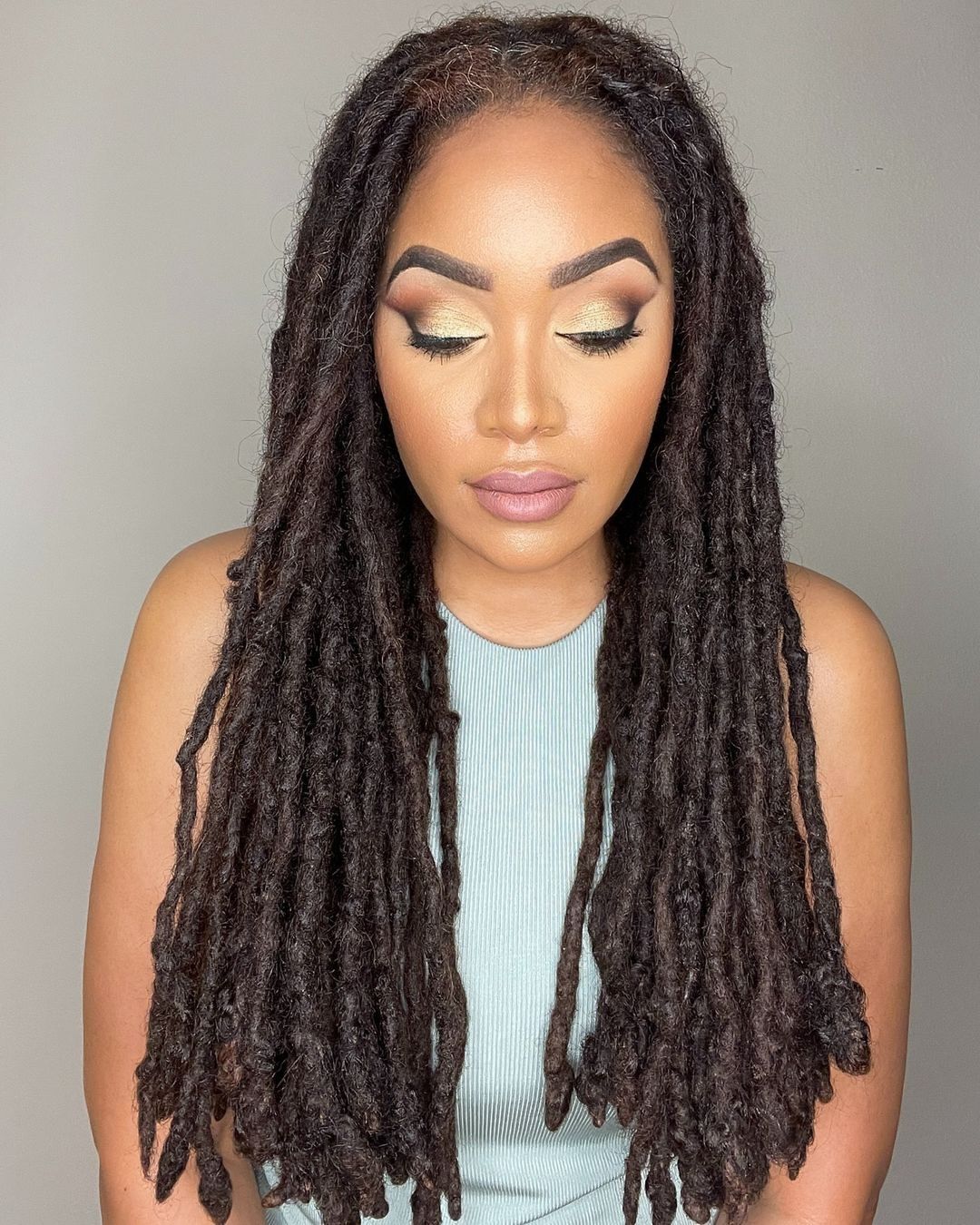
The wavy texture and thickness of these mid-back locs give them a substantial volume that a straight retwist simply cannot match. The dark brown base stays rich under natural light, and the slightly lighter roots add depth without looking grown out. A neat middle part keeps the density from reading as heavy, which matters when the hair is this full. Ask your stylist for mid-back length, wavy locs, dark brown color, neat middle part. A light shine serum on the ends adds gloss without weighing down the wave. Loose wisps appear near the scalp as new growth comes in, so plan a trim every eight to ten weeks to keep the silhouette clean. This is a simple retwist that does the work for you.
Glossy Shoulder Length Black Locs
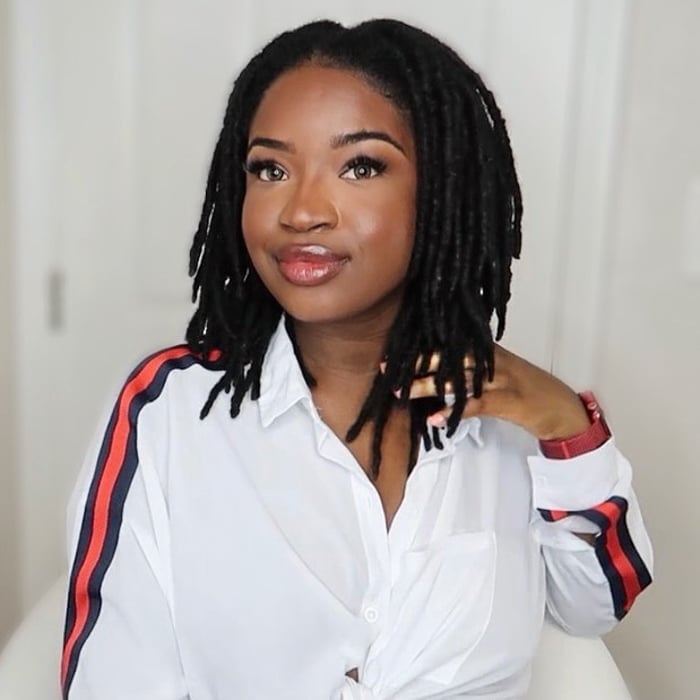
The glossy finish here comes from the retwist itself, not from any product overload. After each loc is palm-rolled and dried, a light oil or shine serum seals the cuticle and gives black locs that mirror-like reflection. A side part adds a touch of asymmetry to the neat, uniform rows. Ask your stylist for shoulder length locs, glossy finish, side part. This is very doable at home with a steamer or a hooded dryer, though it takes about two hours depending on density. The hold lasts roughly four to six weeks before new growth softens the parts. Medium density locs carry the shine well without looking flat, and the shoulder length keeps the style practical for daily wear.
Thick Black Locs With Side Part

Start with a side part that breaks up the mass of thick locs. The part should be clean and defined, not zigzagged, so the eye follows the line from root to tip. Ask your stylist for thick locs, loose style, side part. If your locs are on the finer side, the side part can add visual volume at the roots. Keep the styling simple: let the locs fall naturally, and use a light oil on the scalp to keep the parts crisp. A retwist every four to six weeks maintains the definition, but you can stretch it to eight if you do not mind a softer look. This style suits anyone with thick locs who wants a low-maintenance, natural finish.
Natural Texture Mid-Back Dark Brown Locs

Unlike a sleek retwist that lays every loc flat, this style lets the natural wavy texture show. The middle part keeps the face clear, while the mid-back length allows the hair to move and fall forward as it pleases. Dark brown is a forgiving base for a lived-in look, since new growth blends in without a harsh line. Ask your stylist for: mid-back locs, natural wavy texture, middle part. To maintain the texture, apply a leave-in conditioner after washing and skip heat styling entirely. A retwist every six to eight weeks keeps the roots neat without flattening the wave pattern. This style suits those who want a polished but unstyled appearance.
Medium Density Copper Locs Mid-Back
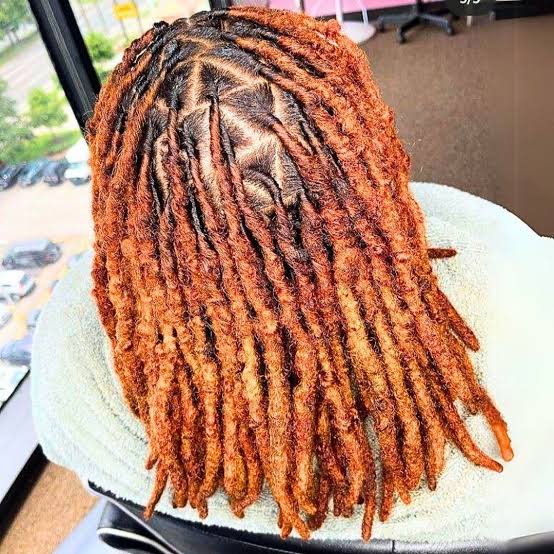
Copper is the color that makes a simple retwist feel like an event. The vibrant shade shifts in appearance from every angle, and the medium density allows the color to show through without overwhelming. A middle parting from the back view emphasizes the symmetry of the locs as they fall to mid-back. Ask your colorist for mid-back copper locs, middle part. This color lands well in autumn and early winter, when the warm tones echo the changing leaves. To keep the copper from fading, use a color-safe shampoo and conditioner, and wash less frequently if you can. Retwist every six to eight weeks to maintain the crisp roots that make the color pop. This is a salon-level commitment, but the payoff is a bold, wearable statement.
Shoulder Length Locs With Blonde Highlights
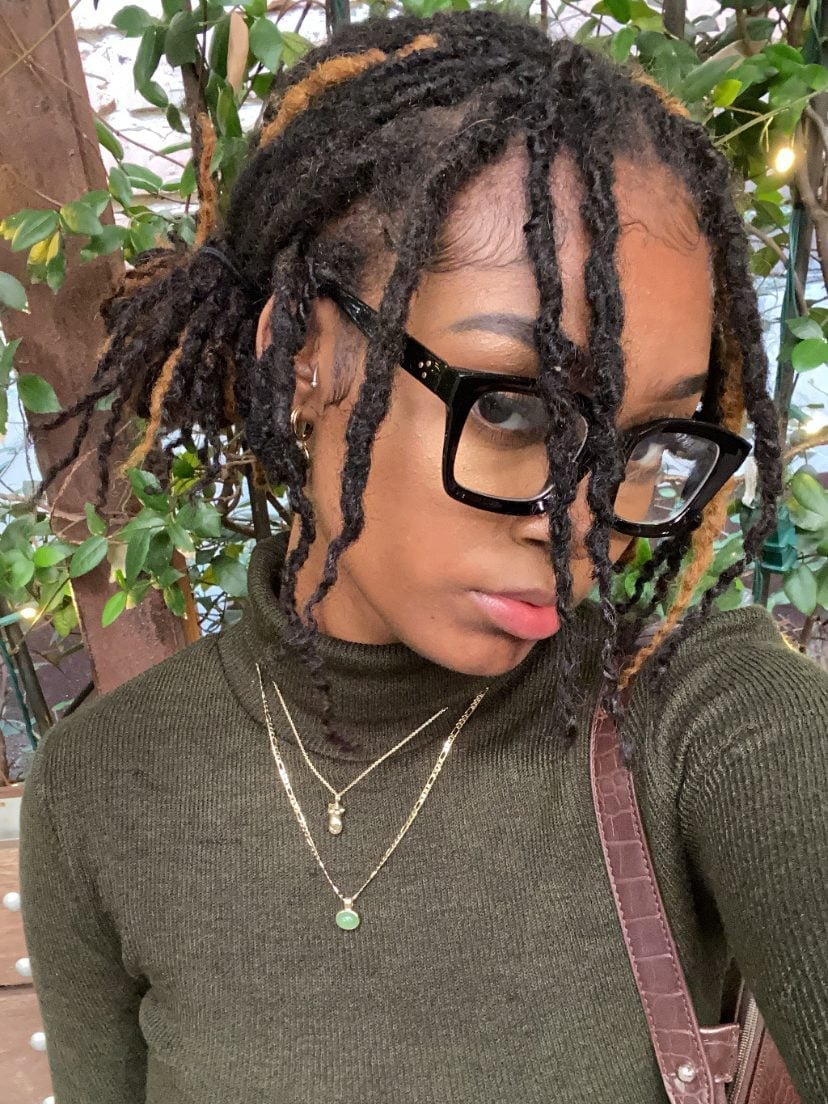
Blonde highlights on dark brown locs sound like a dream until you realize they demand a bit more attention than a solid color. For thick, wavy shoulder-length locs, the contrast adds dimension and a sunlit effect that a single shade can’t match. Ask your colorist for: shoulder length locs with blonde highlights and a middle part. A toning shampoo every few washes keeps the blonde from turning brassy, which is the real drawback here: the upkeep is higher, but the visual payoff is worth it for those who don’t mind the extra step.
Beaded Mid-Back Brown Locs With Blonde Streaks
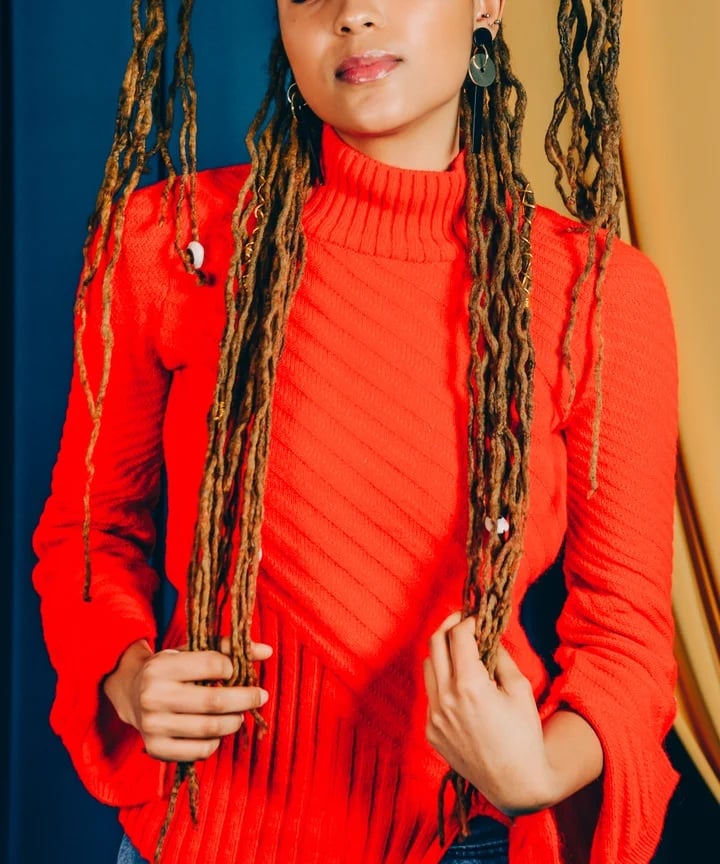
The beads are the first thing you notice, but the real work is in the retwist beneath them. Thick, wavy mid-back locs in a medium brown shade with subtle blonde streaks are left loose, with small beads threaded onto select locs for a playful finish. Ask your colorist for: mid-back brown locs with blonde streaks and beads. The styling process goes like this:
- Retwist the scalp for a clean foundation.
- Section the locs and slide beads onto chosen strands, securing them with a small rubber band at the base.
- Allow the rest to fall naturally, keeping the texture wavy and relaxed.
Neat Dark Brown Locs Ponytail Side View
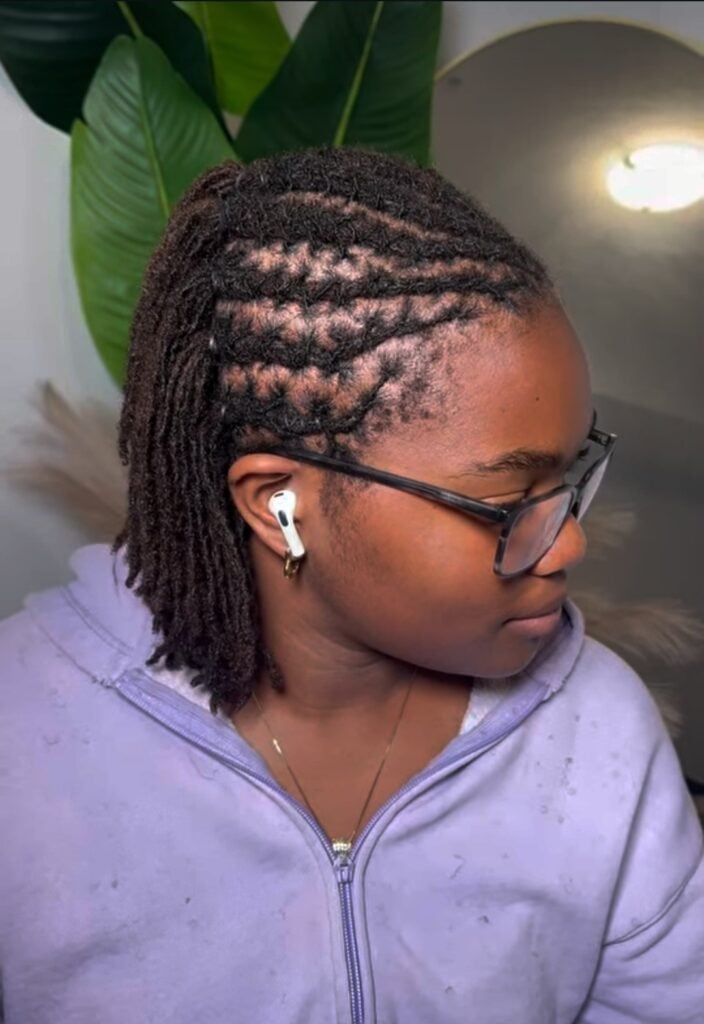
The side view reveals a defined middle part and smooth pull back on thick wavy shoulder length locs in a rich dark brown. Ask your stylist for: shoulder length locs, neat ponytail at the nape. This style suits medium to thick density for a polished finish. Thinner locs may look sparse in the ponytail, so a root volumizing product helps add fullness.
Dark Brown Locs Ponytail Shoulder Length
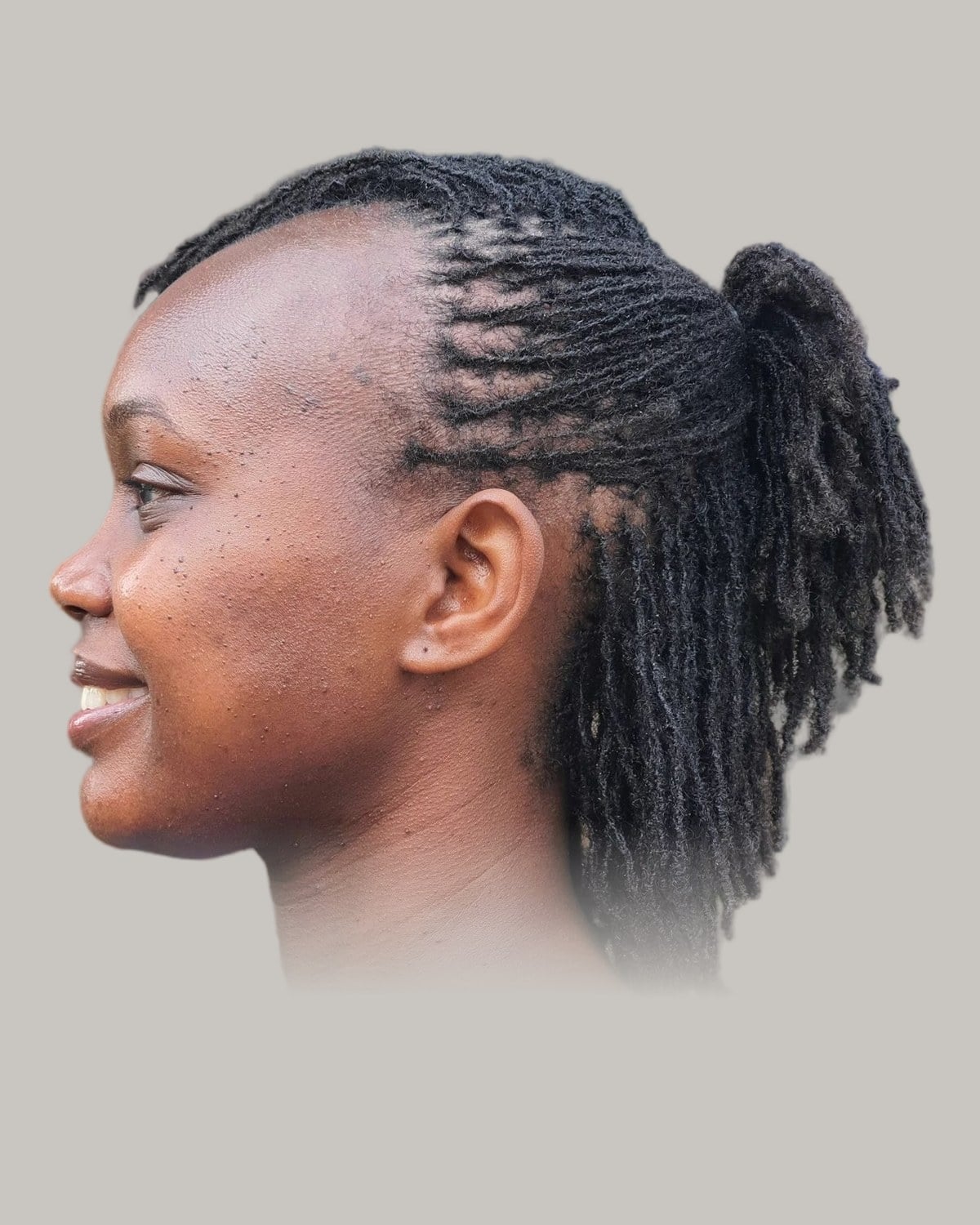
Does a ponytail on shoulder-length locs actually stay put past lunch? Yes, as long as the retwist is fresh and the hair is secured correctly. Thick, wavy dark brown locs are pulled back smoothly from a middle part into a ponytail at the nape, creating a clean silhouette. Ask your stylist for: shoulder length locs, smooth ponytail at nape. Use a seamless hair tie to avoid snagging, and a light hold gel on the edges for a sleek finish. A trim every six weeks keeps the ends looking sharp and prevents fraying.
Short Wavy Locs In Red And Brown Mix
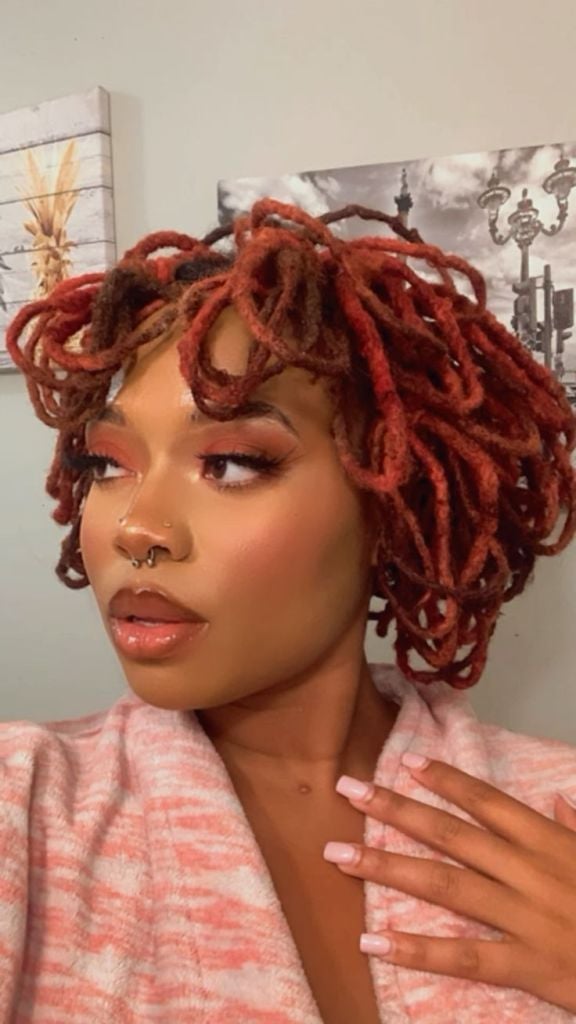
The red and brown mix lands somewhere between autumn leaves and a well-lit fireplace, which makes it a natural choice for the cooler months. Short, thick, wavy locs are styled with a side part, and the vibrant color shows depth that a single shade cannot. Ask your colorist for: short locs, red and brown mix, wavy texture, side part. The color holds best on freshly retwisted locs, and a color-depositing conditioner helps maintain the warmth between salon visits. It is a statement without being overwhelming.
Shoulder Length Black Locs With Scalp Braids
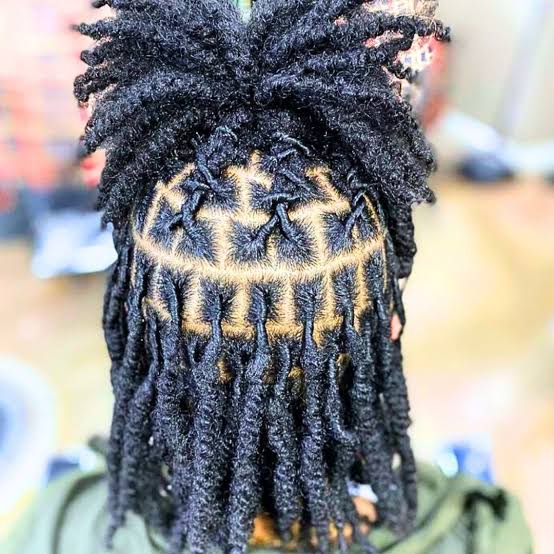
Ever wondered how to keep scalp braids crisp and the locs themselves still defined? This style answers that: thick, coily shoulder-length black locs with an intricate geometric braid pattern at the crown. The middle part keeps the look symmetrical, while the braids add a detailed texture that stands out even from a distance. Ask your stylist for: shoulder length locs with intricate geometric scalp braids. The one real drawback is that the braids can loosen faster than the locs themselves, so plan for a touch-up every four to six weeks if you want the pattern to stay sharp. A light oil on the scalp section keeps the braids from drying out, but the locs below need their own retwisting schedule.
Medium Density Black Locs Half-Up Half-Down
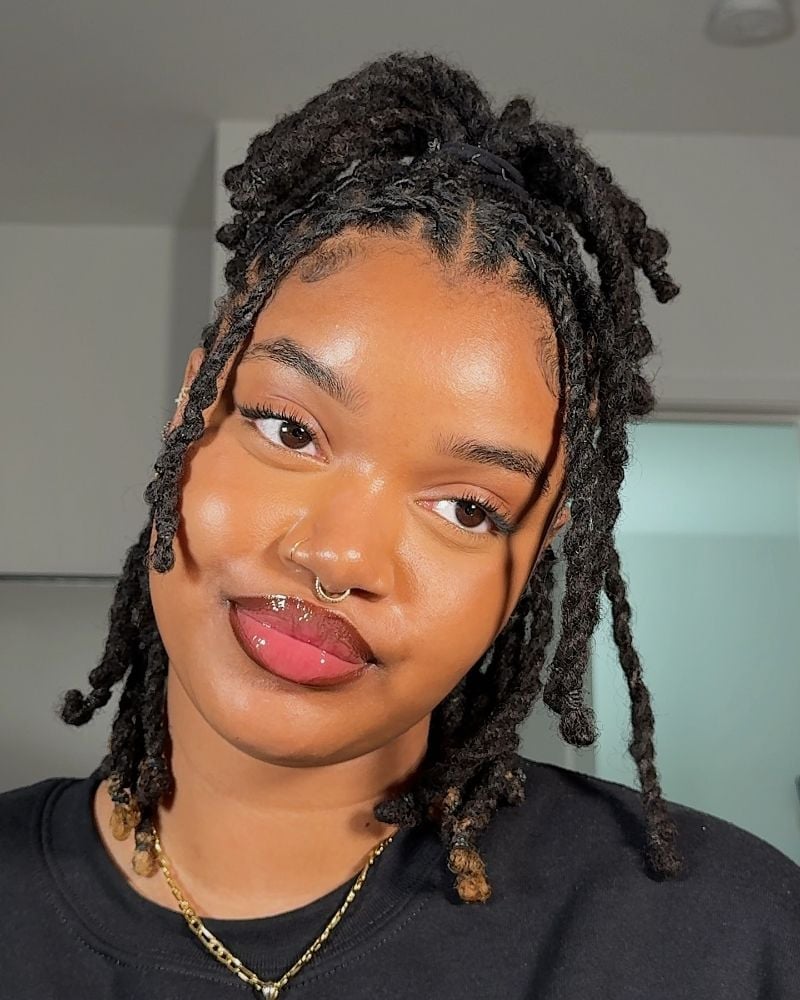
A full down style is quicker in the morning but can feel heavy, while this half-up, half-down version gets the hair off your face without losing length. Medium density shoulder-length black locs are gathered at the crown with braided accents and a side part, giving the look structure without a full updo. Ask your stylist for: medium density black locs, half-up half-down with braided accents. This lean is firmly in salon territory for the initial styling, but once the braids are in, you can wear it for two to three days before it needs redoing.
Collarbone Length Coily Locs With Geometric Parting
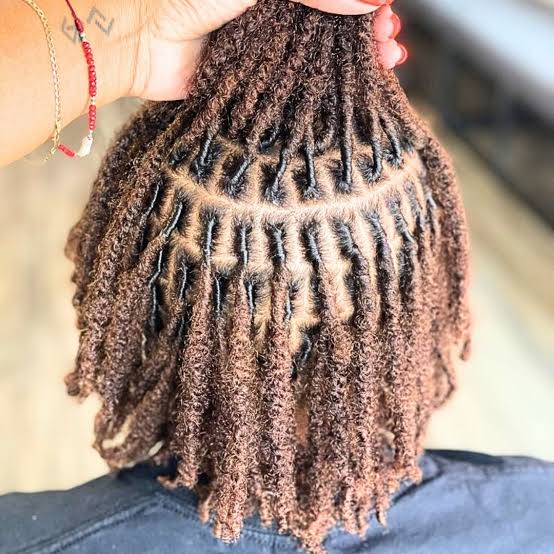
The geometric parting here is not a random zigzag. It follows a precise angular path that requires a steady hand and a clear plan. Brown, coily, thick locs at collarbone length are arranged in a symmetrical pattern that starts at the scalp and travels down the back. Ask your stylist for: collarbone length locs, brown, with geometric scalp parting. The hold of the geometric parting depends entirely on how tightly the locs are twisted at the roots; a good retwisting session will keep those lines visible for about two weeks. After that, new growth softens the edges, so a quick root touch-up is the only way to get the crispness back.
Mid-Back Black Locs In Two Low Buns
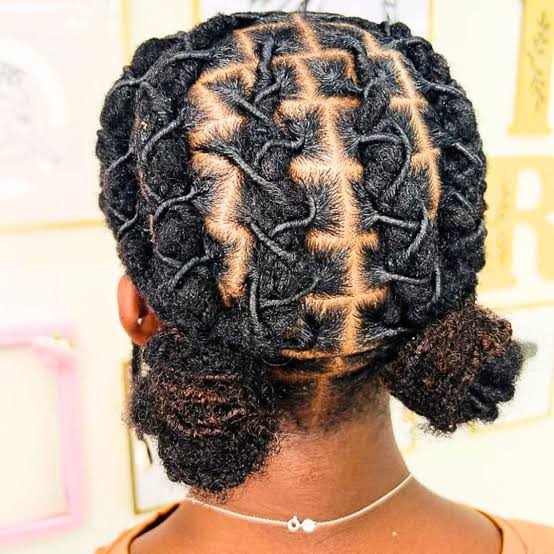
Two low buns at the nape sound straightforward, but the geometric parting at the scalp is what makes this version feel intentional rather than thrown together. Thick, coily mid-back black locs are sectioned into a precise pattern before being pulled into two buns that sit just above the shoulders. Ask your stylist for: mid-back black locs, geometric parting, two low buns. This style genuinely flatters thick, coily textures because the density helps the buns hold their shape without slipping. If your locs are on the thinner side, the buns may land smaller than you want, and the parting lines will show more scalp between them. The hold is solid for a week if you sleep in a silk scarf, and the geometric pattern stays visible for about ten days before the roots start to blur it.
High Bun With Face-Framing Tendrils
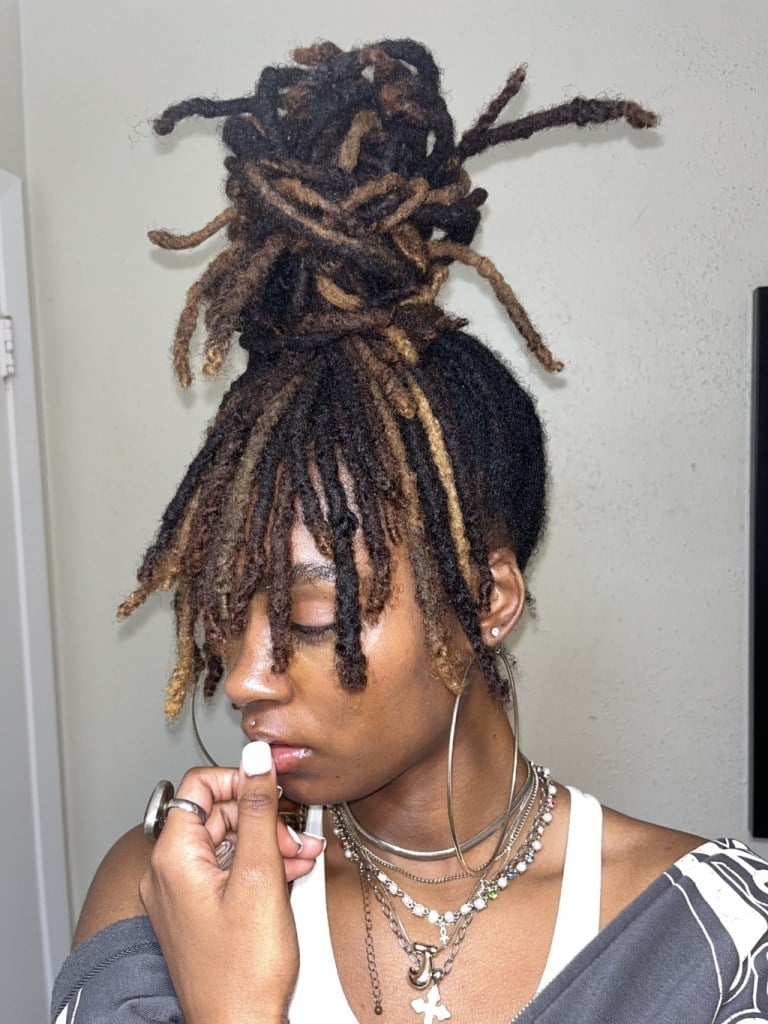
A high bun tends to pull everything back, leaving the face exposed, unless you leave out a few locs to soften the edges. Here, thick mid-back locs with dark brown and blonde tones are swept up into a high bun, with several locs left out to fall forward as face-framing tendrils. Ask your stylist for: mid-back locs, dark brown with blonde tones, high bun, face-framing tendrils. The technique is straightforward for a pro, but the drawback is that the tendrils can get in the way during workouts or windy days. They also show new growth faster than the bun itself, especially with the blonde highlights, so a color touch-up every six to eight weeks keeps the blonde from looking disconnected from the rest.
Top Knot With Loose Coily Locs
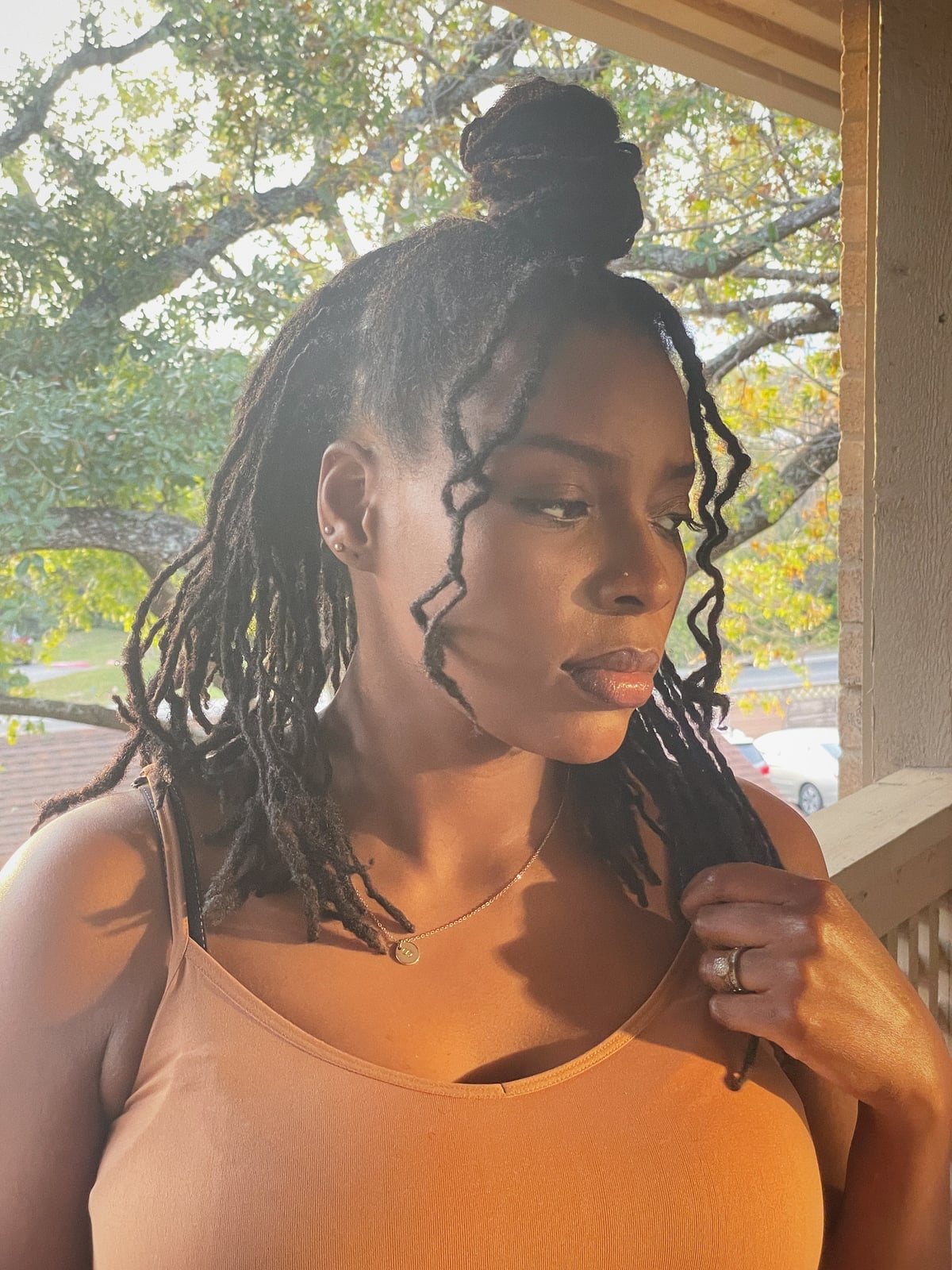
A top knot with loose face-framing locs creates a relaxed look. This version starts with a middle part and gathers the mid-back, black, coily locs into a high bun on top. Ask your stylist for: mid-back black locs, top knot with loose face-framing locs. After the bun is secured, gently pull out a few framing locs around the hairline. A light hold spray keeps them defined without stiffening the coil pattern.
Voluminous Updo With Green And Blonde Ombré
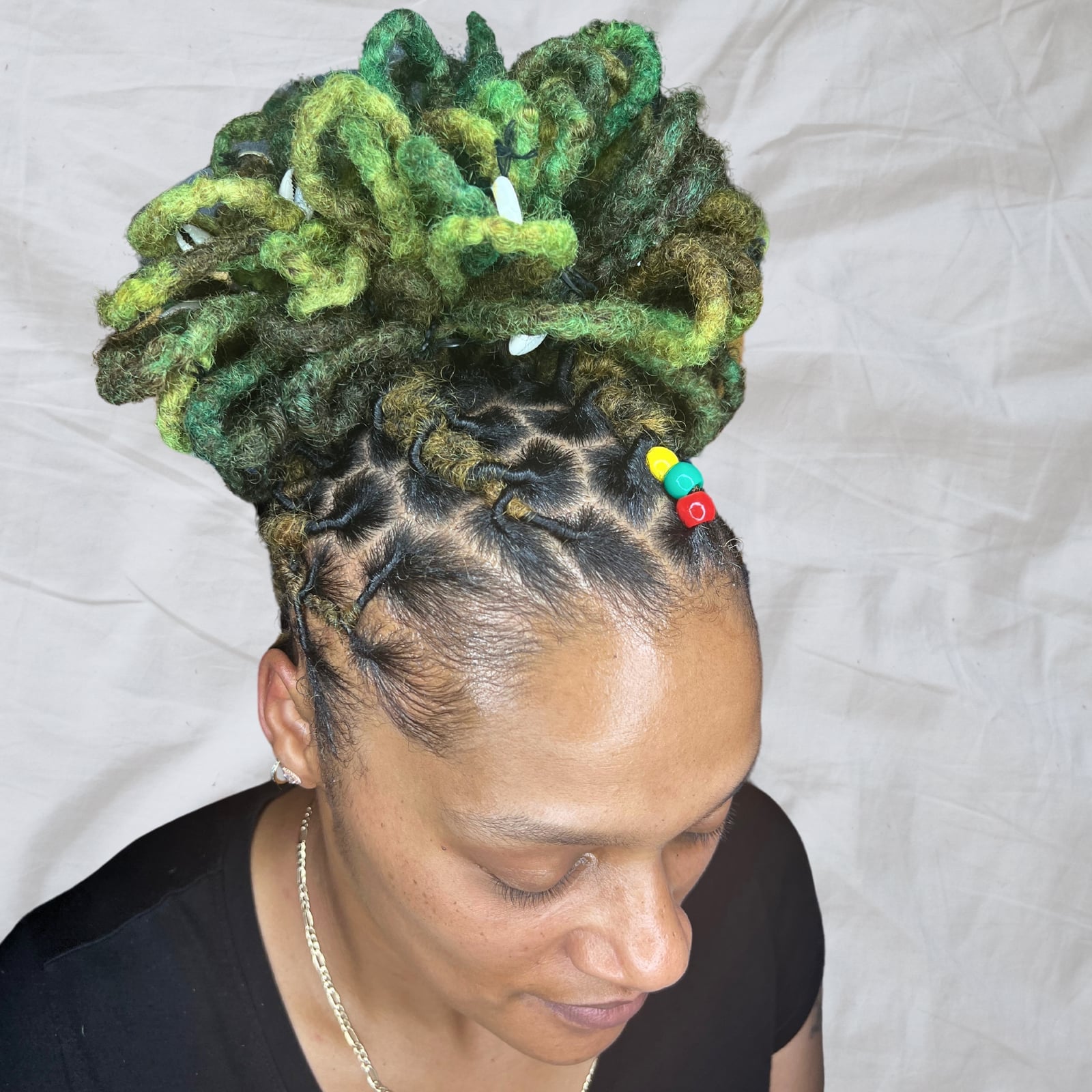
The ombré here is the whole point. Shoulder length, thick, wavy locs move from black roots into a vivid green and blonde transition, then get stacked into a voluminous updo. Small beads add detail along the way. Ask your colorist for: shoulder length locs, green and blonde ombré, voluminous updo with beads. This is festival hair, plain and simple. A color-depositing conditioner every two weeks keeps the green from fading into something muddy, and a quick bead check before the event saves you from losing one mid-dance.
Mid-Back Black Locs With Braided Sections
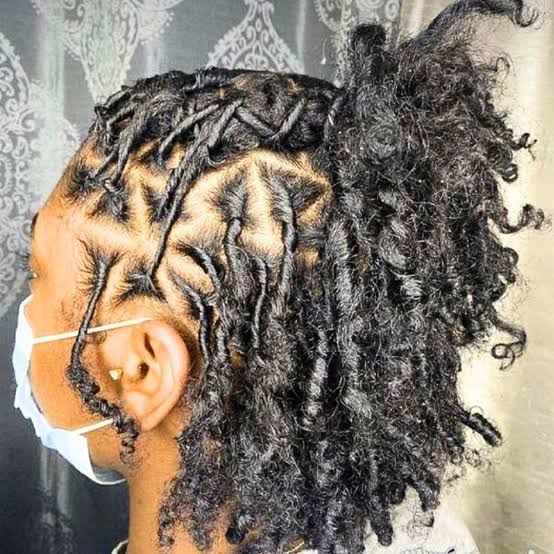
Mid-back, black, coily locs get a second layer of architecture here. Sections of the hair are braided into the locs themselves, creating a pattern that breaks up the uniformity of a standard retwist. Ask your stylist for: mid-back black locs with retwisted and braided sections. The upkeep is straightforward: keep the braided segments moisturized with a water-based spray and touch up the retwist every four to six weeks. Unbraiding them takes time, so plan for that when you are ready for a change.
Short Locs Updo With Geometric Retwist
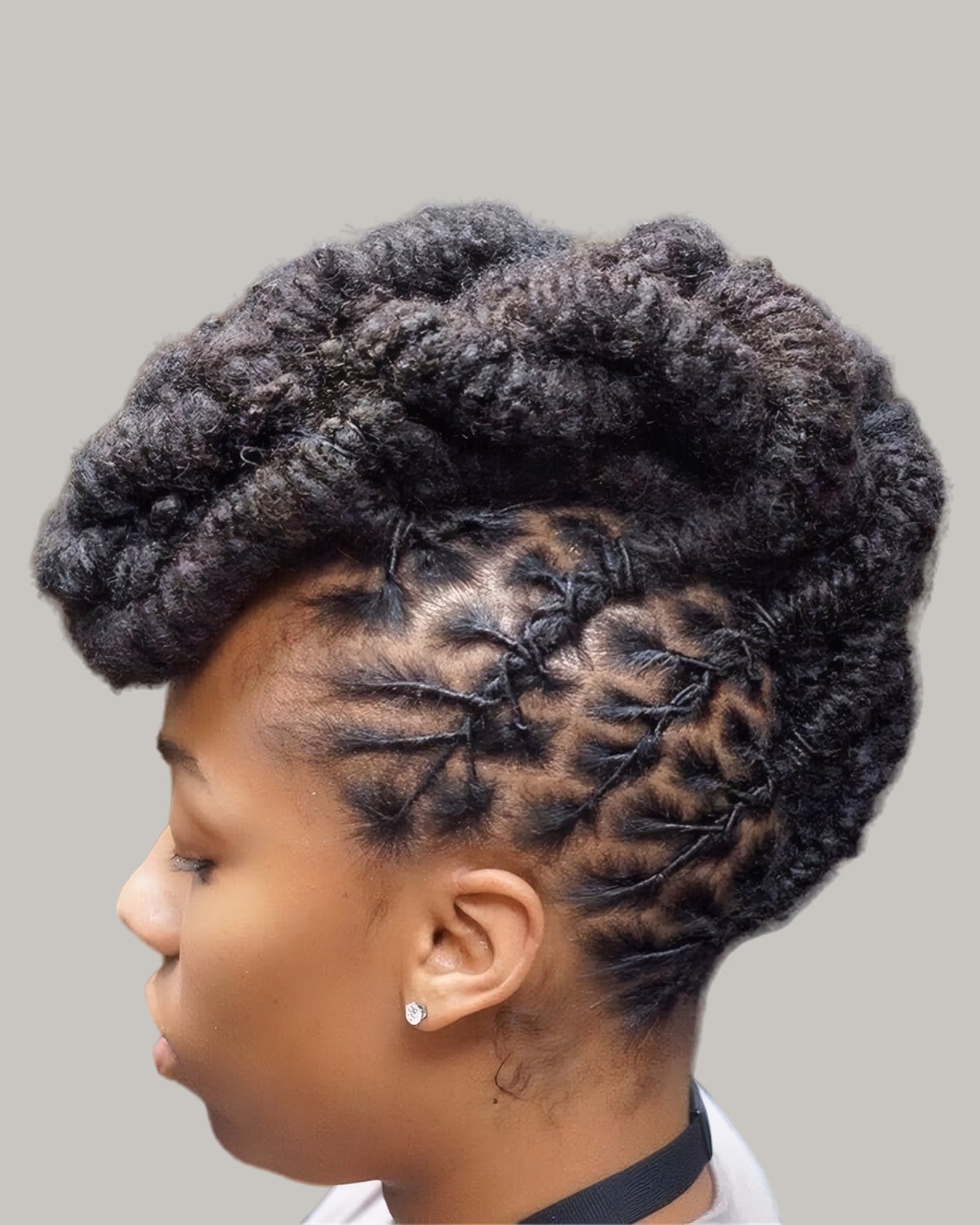
A geometric retwist on short locs is less forgiving than a rounded shape, but that is exactly what makes it interesting. The parts are sharp, the lines are precise, and the whole thing gets pinned into an updo that stays put. Ask your stylist for: short locs, updo with geometric retwist pattern. Doing this at home requires a steady hand and a rat-tail comb. A strong hold gel along the partings keeps the lines clean for a solid week, but it is worth getting the first retwist done professionally to lock in the angles.
Black Locs Ponytail With Undercut Tail
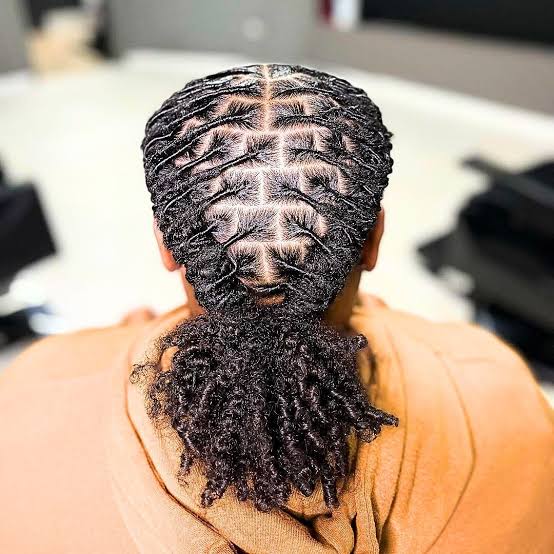
A standard ponytail is straightforward; one with a geometric parting and an undercut tail requires a bit more planning. The short, black locs are shaved at the sides, leaving a tail at the nape that falls from a structured ponytail above. Ask your stylist for: black locs with undercut, geometric parting, ponytail with tail. The drawback is the undercut maintenance. It needs a trim every three weeks to keep the lines crisp. The trade-off is a modern silhouette.
Short Black Locs With Geometric Parting
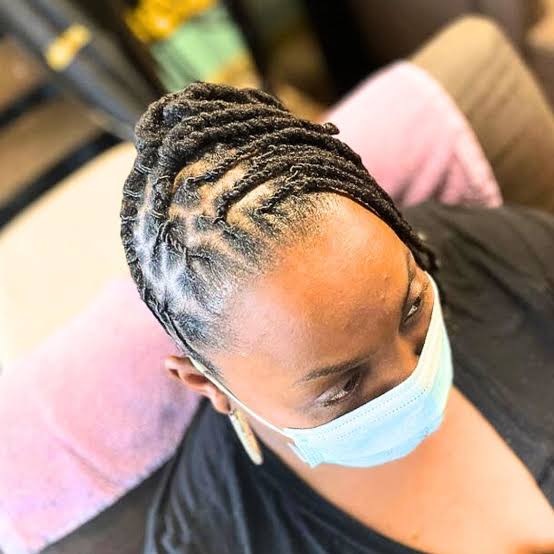
A geometric parting turns a retwist into a pattern, with the scalp acting as negative space between each neat section. Short locs of medium density suit this treatment best. The parting reads clearly without getting swallowed by length or bulk. Ask your stylist for: short black locs, geometric parting. A light oil on the scalp keeps the exposed parts from looking dry between washes. The retwist holds the pattern for about three weeks before new growth softens the lines.
Shoulder Length Black Locs Retwist In Progress, Coily
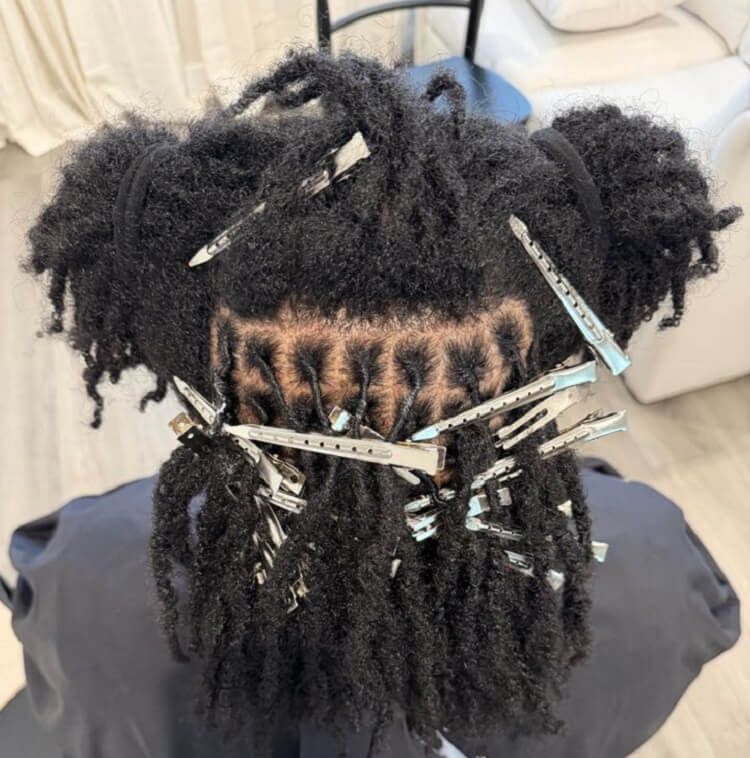
A retwist is not a set-it-and-forget-it process, and this shot shows exactly why you block out a couple of hours. The clips hold each freshly twisted section in place while the loc dries, and the middle part keeps the work even from ear to ear. Ask your stylist for: shoulder length black locs, retwist. Thick coily texture takes longer to dry, so plan to sit under a hooded dryer or let them air-dry fully before removing the clips. A fresh retwist stays crisp for about two weeks; after that, the frizz at the root is more texture than mistake.
Final Thoughts
For a low-maintenance retwist, let your natural texture lead: loose locs or a simple ponytail keeps the style fresh longer, and you can stretch retwists to every four to six weeks without losing the clean root. If you have finer locs, skip heavy products and keep the style simple; if your hair is coily, embrace the volume with a half-up or a high bun.
- Retwist every 4-6 weeks to keep parts neat and roots tidy.
- Use a lightweight locking spray or oil to moisturize and add shine.
- Sleep on a silk or satin bonnet or scarf to reduce friction.
- Minimize manipulation between retwists to preserve the style.
Master the simple retwist, master your style.