

Stitch braids are cornrows worked in clean, precise sections that sit flat against the scalp, creating a sculpted, graphic line that holds its shape for weeks. The technique has moved beyond basic rows: geometric parts, curved patterns, and mixed textures like curly or wavy ends are now the default for a fresh take on protective styling.
Simple Stitch Braids Hairstyles in 31 variations covers everything from a quick high ponytail to intricate heart-shaped parts, so you can match the look to your length, texture, and how much time you want in the chair. If your fine hair tends to flatten or your parts never stay crisp, these styles offer a fixed, defined structure that does the work for you.
Stitch Braids In A High Ponytail
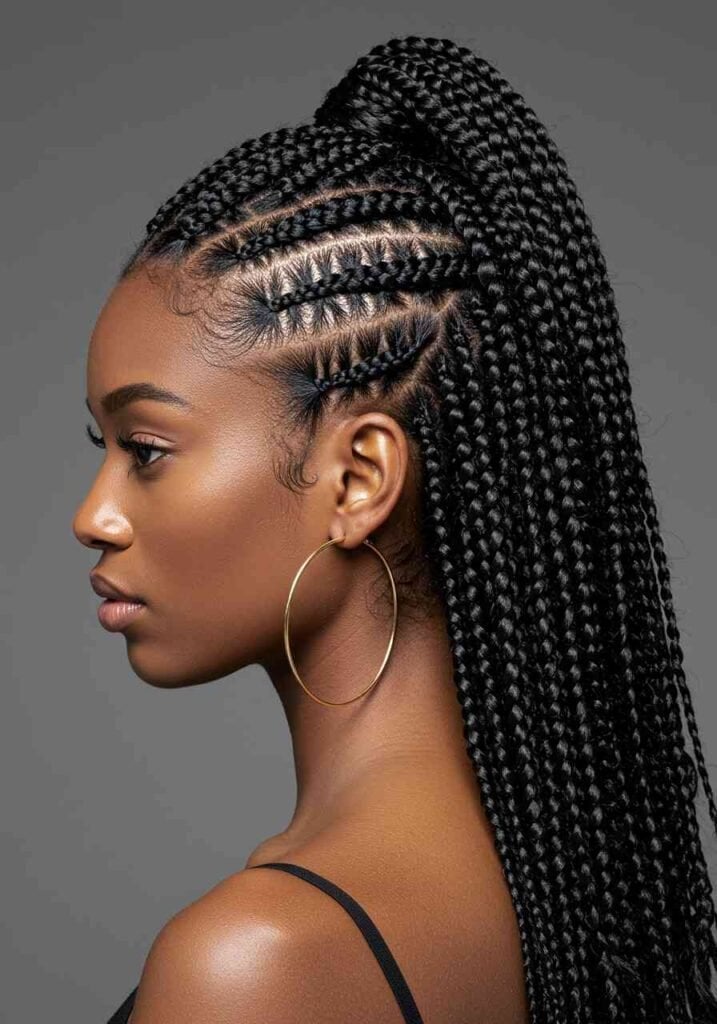
Clean stitch lines on the scalp are the foundation here, creating a precise grid that leads into a full, high ponytail. The braids are thick and straight, extending to mid-back, and the middle part keeps everything symmetrical. Ask your stylist for: stitch braids into a high ponytail. Thick, straight black hair of at least mid-back length supports the structure best, and the style suits most face shapes. A strong elastic secures the ponytail, and a touch of gel along the hairline smooths any flyaways for a polished finish.
Thick Stitch Braids Past Shoulders
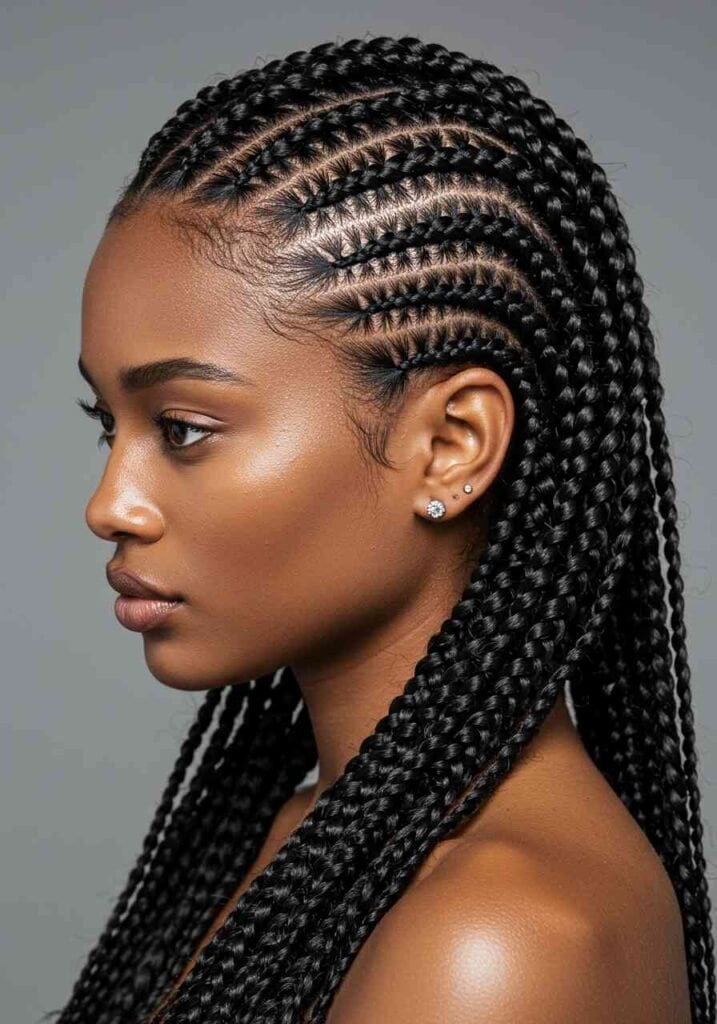
Does your hair feel heavy enough to hold a style like this? Thick, long stitch braids past the shoulders rely on that density to keep the parallel lines sharp and the parting consistent. The hair is black and reaches mid-back, with a clean middle part that emphasizes the neatness. Ask your stylist for: thick, long stitch braids with clean scalp lines. A light oil on the scalp maintains moisture and shine without weighing the braids down, which is the main thing to watch for with this much hair.
Stitch Braids Into A Low Bun
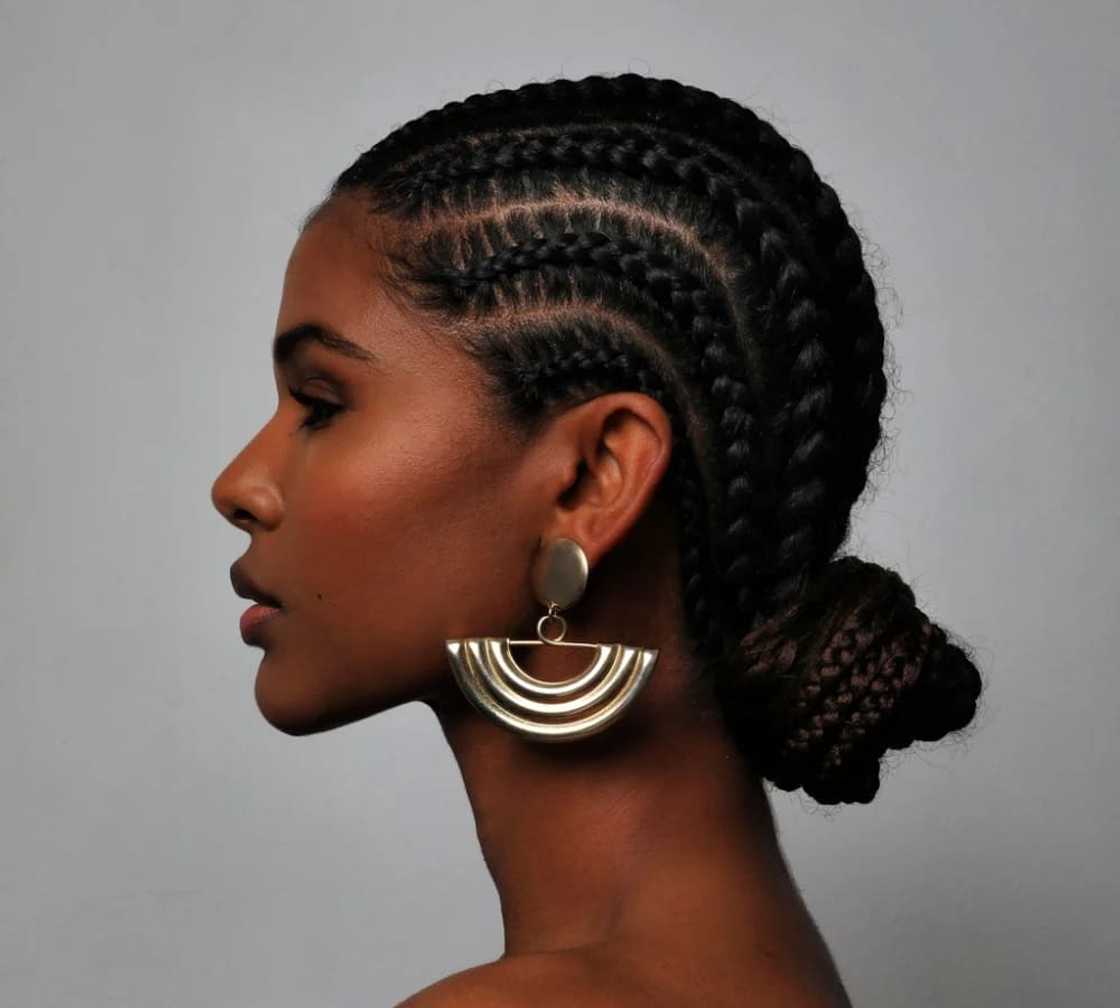
The low bun here is built from neat stitch braids that travel from the hairline to the nape, where they gather into a textured knot. The hair is black, straight, and mid-back length, with a center part and clean edges along the scalp. Ask your stylist for: stitch braids styled into a low bun. A soft brush smooths any flyaways around the hairline before forming the bun, giving the style a polished finish that holds well for work or formal occasions.
Geometric Stitch Braids
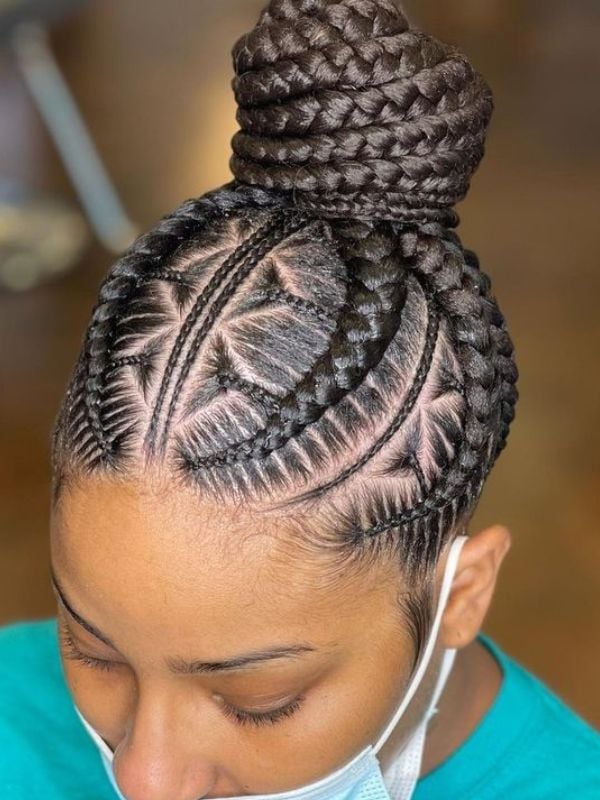
If standard straight-back braids feel too predictable, geometric stitch braids offer a deliberate alternative with intricate patterns on the scalp. The braids here are thick and black, extending to mid-back, with a clearly defined middle part that anchors the design. Ask your stylist for: stitch braids with geometric scalp patterns. This works best on thick hair of mid-back length or longer, where the density keeps the shapes crisp. Keeping the scalp clean and moisturized is key to letting the pattern stand out.
Polished Stitch Braids
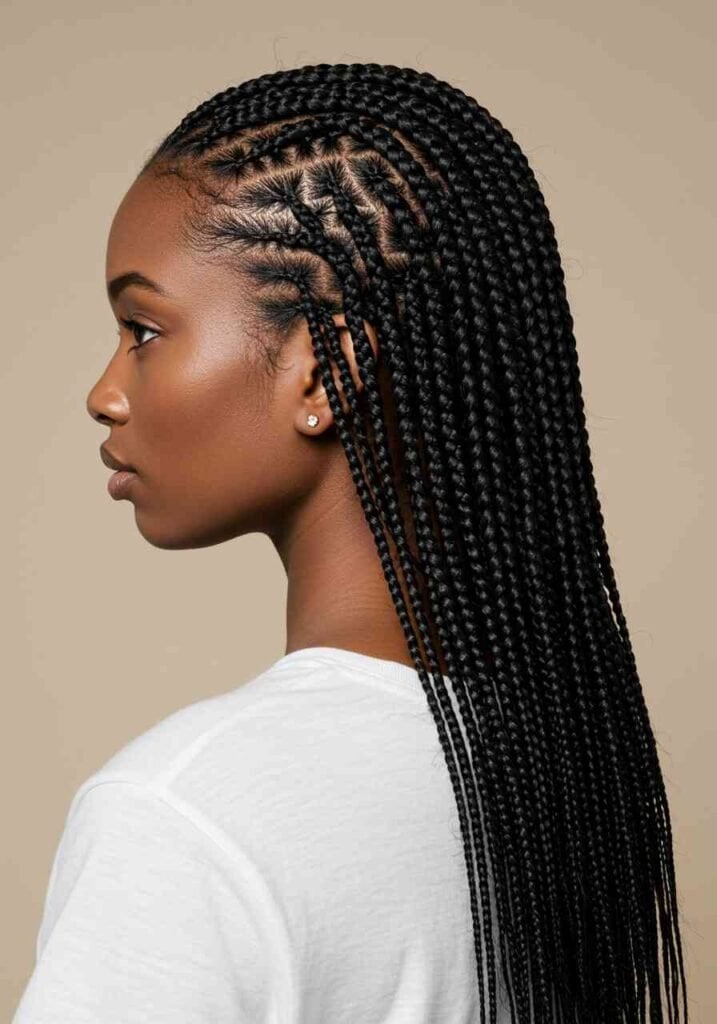
Precision is the whole point here: each stitch braid is uniform, with a visible pattern that runs cleanly from the middle part down to mid-back. The hair is black, straight, and thick, giving the style its weight and sleek finish. Ask your stylist for: neat stitch braids with a clean middle part. A light finishing spray helps maintain the polished look by keeping flyaways in check, especially around the hairline where they tend to sneak out.
Stitch Braids With Curly Ends
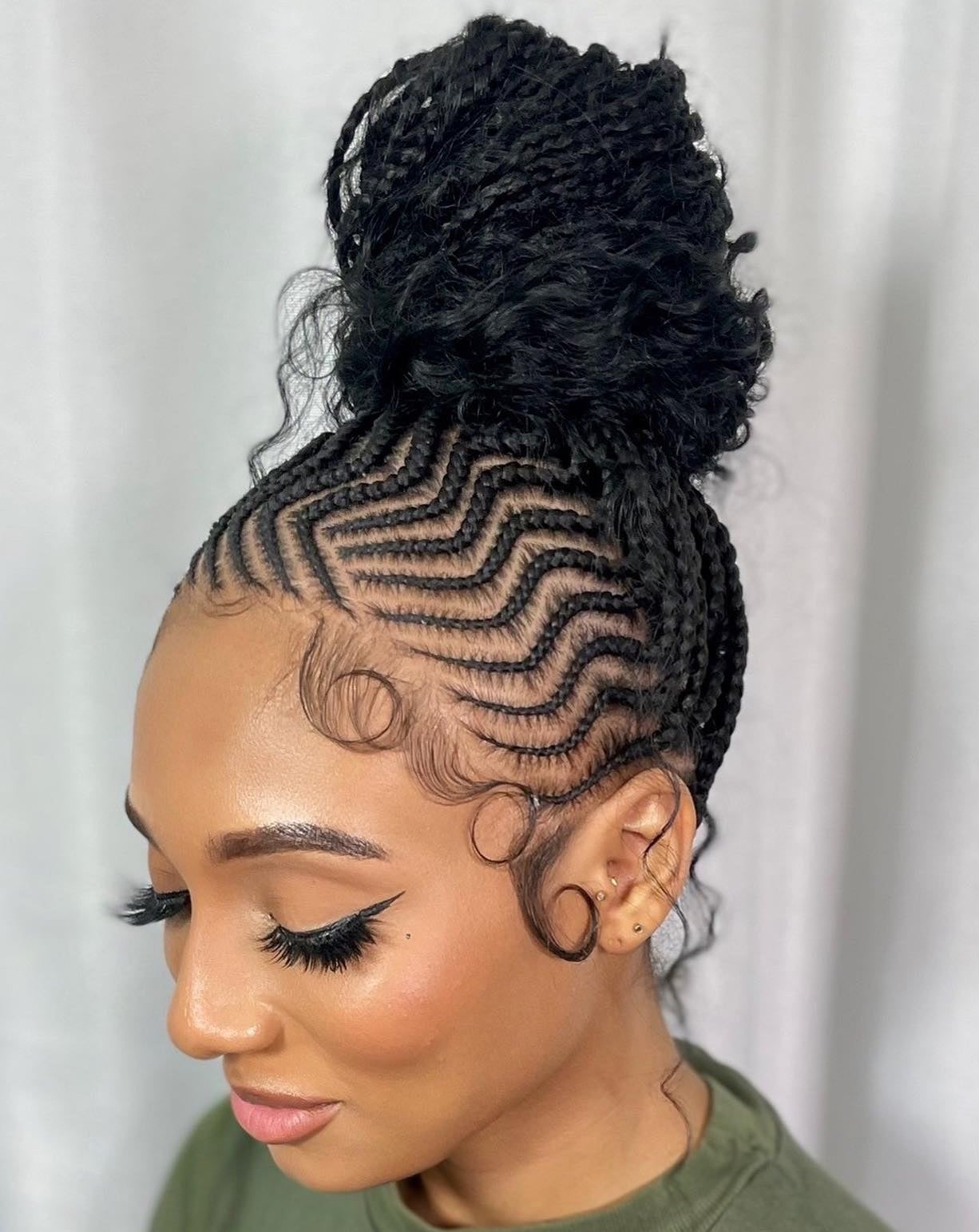
Ever wonder if you can keep the precision of stitch braids without committing to poker-straight ends? This style answers yes: a heart-shaped pattern sits at the scalp, then the braids fall to mid-back and finish in loose curls. The black hair holds the geometric design up top while the curly ends soften the whole effect. Ask your stylist for: stitch braids in a heart shape with curly ends. The trade-off is real, though. Curly ends can frizz or dry out faster than straight ones, so you will want a curl-defining cream in your rotation. If you cannot stand uneven texture, this one may test your patience.
Geometric Stitch Braids With Wavy Ends
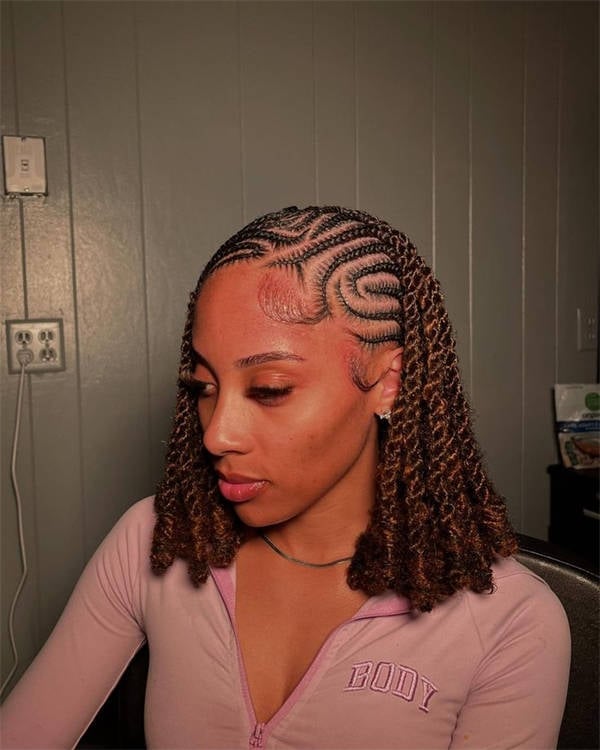
The geometric scalp pattern gives this style its structure, but the brown and blonde waves are what make it sing. Shoulder-length braids start with a side part and side-swept bangs, then loosen into wavy, curly ends. Medium density hair carries the look well, and the mixed tones add depth. Ask your stylist for: geometric stitch braids with wavy, curly ends and side-swept bangs. This style works well in warmer months, when the lighter pieces brighten up a casual festival look or a beach day. A texturizing spray on the ends gives them volume without weighing the braids down.
Shoulder Length Geometric Stitch Braids
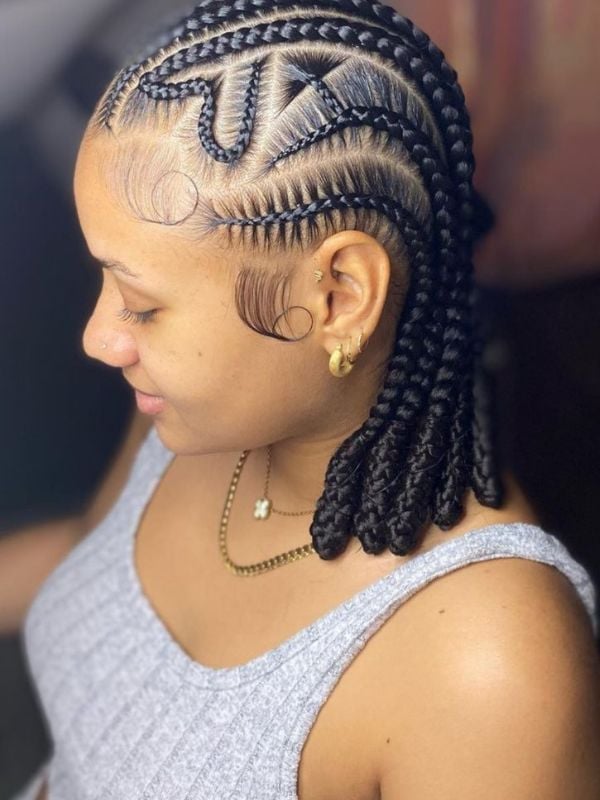
The geometric pattern here is the first thing you notice: clean lines that trace across the scalp before the braids drop to shoulder length. Black, straight hair keeps the focus on the technique, with a middle parting that lets the design sit symmetrically. Ask your stylist for: shoulder length stitch braids with geometric scalp design. What you should know is how this length wears. Shoulder-length braids hit that sweet spot between easy and polished, but they do grow out. Expect to visit the salon for a touch-up every six to eight weeks to keep the pattern crisp. Between appointments, keep the scalp clean and dry, and a light serum on the braids adds shine without disturbing the structure. The straight texture means less fuss, but the geometric part needs regular maintenance to keep its edge.
Stitch Braids With Face Framing Tendrils
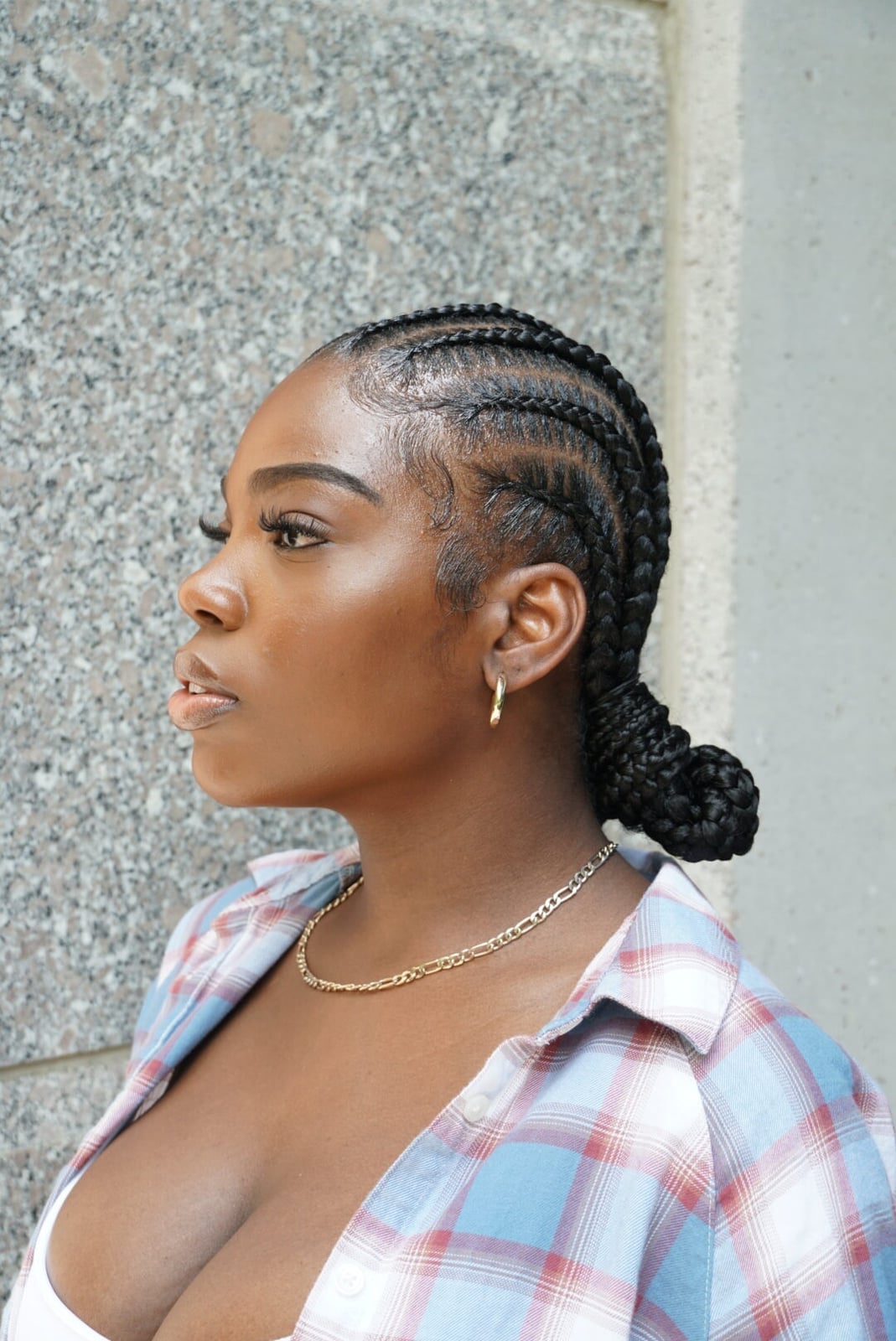
Wondering how to make stitch braids feel less severe and more soft? The answer is in the tendrils. This style pulls the black, mid-back braids into a low bun at the nape, with a few loose strands left out to frame the face. The middle parting keeps it neat, and the thick, straight texture gives the bun weight. Ask your stylist for: stitch braids into a low bun with face-framing tendrils. The layers cut into the tendrils are what make the difference: they soften the line around your jaw and keep the style from reading as too strict. After the bun is set, gently pull a few strands free for a relaxed finish. This one suits a round face, since the length below the chin and the soft pieces elongate the look.
Detailed Stitch Braids Shoulder Length
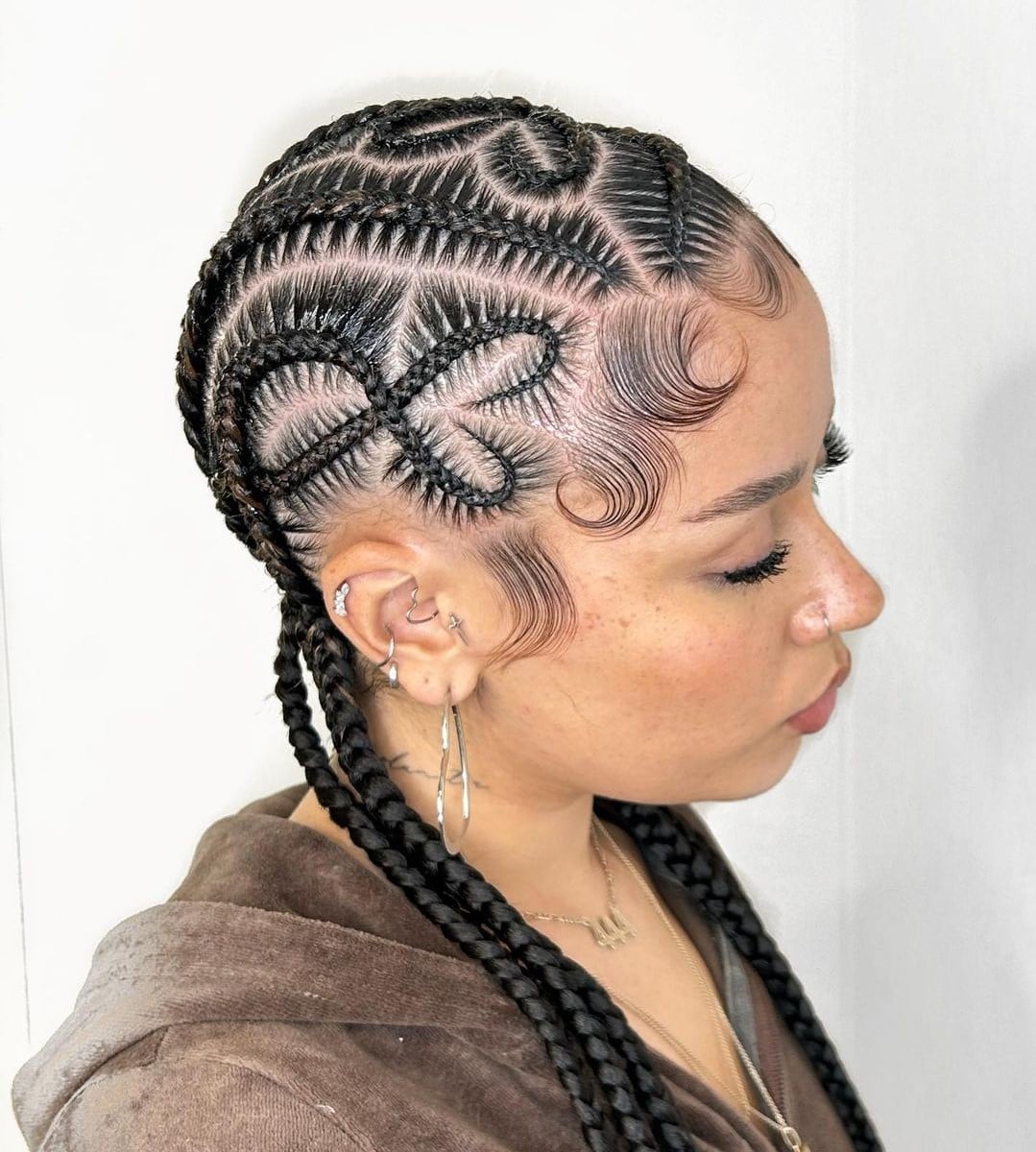
The precision here is the whole story: a geometric pattern laid into the scalp, then neat, straight braids that end at the shoulders. Black hair and a middle parting let the design speak, and the defined edges keep everything sharp. Ask your stylist for: detailed stitch braids with scalp geometric design, shoulder length. This is a salon-only job, and the technique demands a steady hand. Each braid has to follow the pattern exactly, so do not expect a quick appointment. The payoff is a style that holds its shape for weeks, as long as you keep the edges laid. A small amount of edge control along the hairline keeps the braids looking fresh between visits. Plan for a touch-up around the six-week mark to keep the geometric detail crisp.
Stitch Braids With Added Hair And Curly Ends
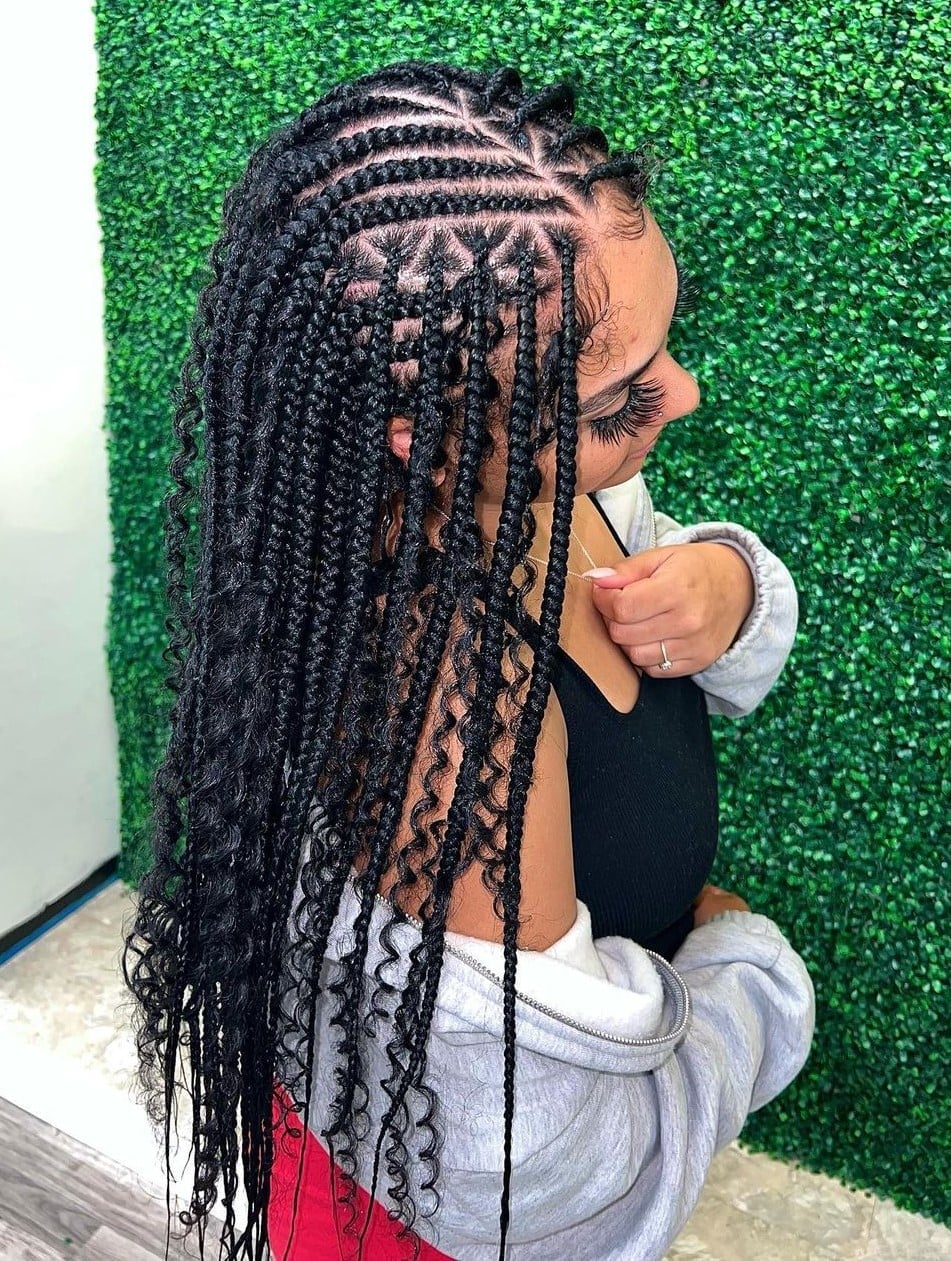
There is a difference between stitch braids that look like they grew from your scalp and ones that announce they had help. The added hair here makes the geometric pattern on the scalp bolder and the length more deliberate, landing at the mid-back. Natural hair alone would not give you that density or that clean, raised stitch line. Ask your stylist for: stitch braids with added hair, geometric pattern, and curly ends. The curly ends are the payoff, loose enough to move but defined enough to look intentional. Gently separate them with your fingers to keep the definition without frizz. Black hair, a middle part, and a side view that shows the precision.
Heart Shape Stitch Braids
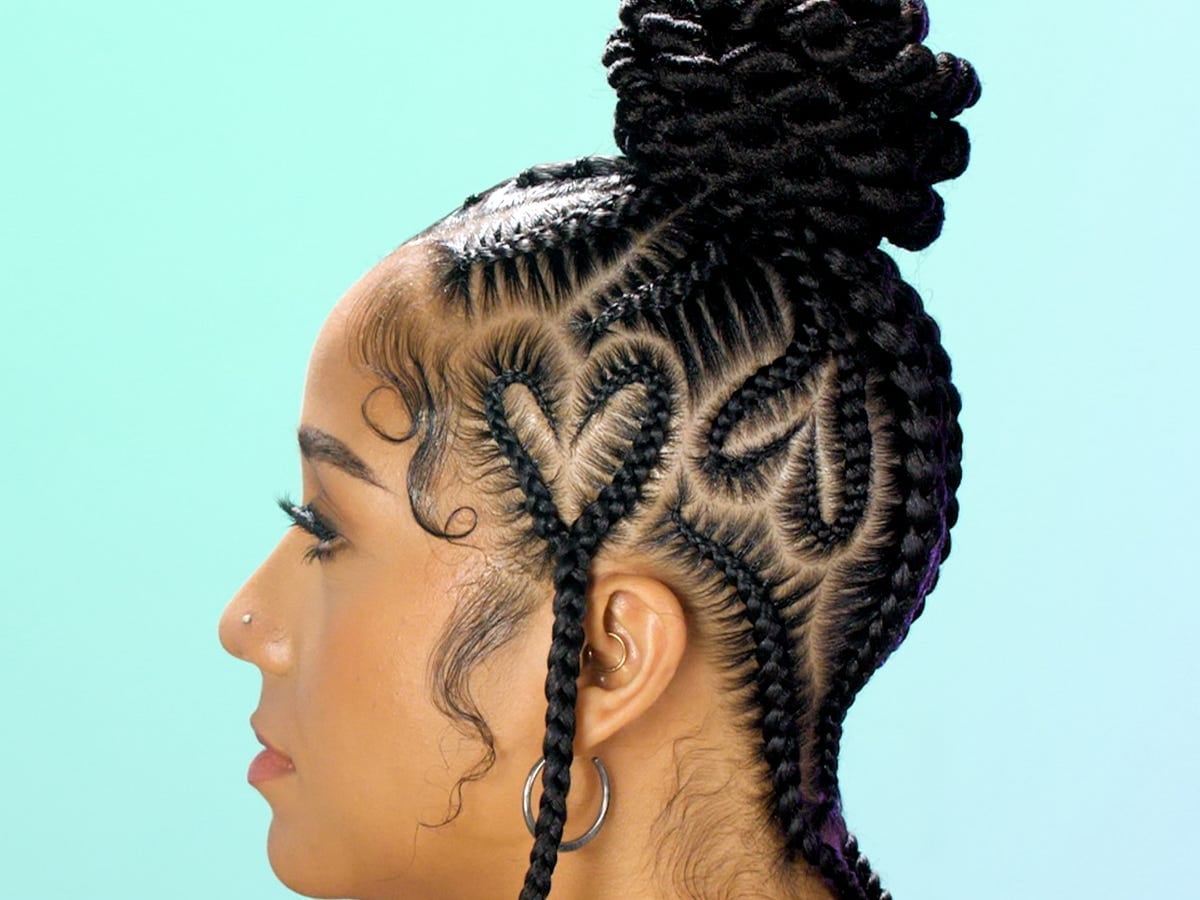
Can you recreate a heart shape with stitch braids at home? Technically yes, but the result will not look like this. The heart here is a clean, symmetrical curve on the scalp, not a vague approximation, and the braids fall straight to shoulder length in black. That precision requires a salon chair and a stylist who can map the pattern before the first braid. Ask your stylist for: stitch braids in a heart shape, shoulder length. The defined edges and baby hairs are the frame, laid with a fine-tooth comb and a light hold gel. This is not a weekend project.
Stitch Braids With Wavy Extensions
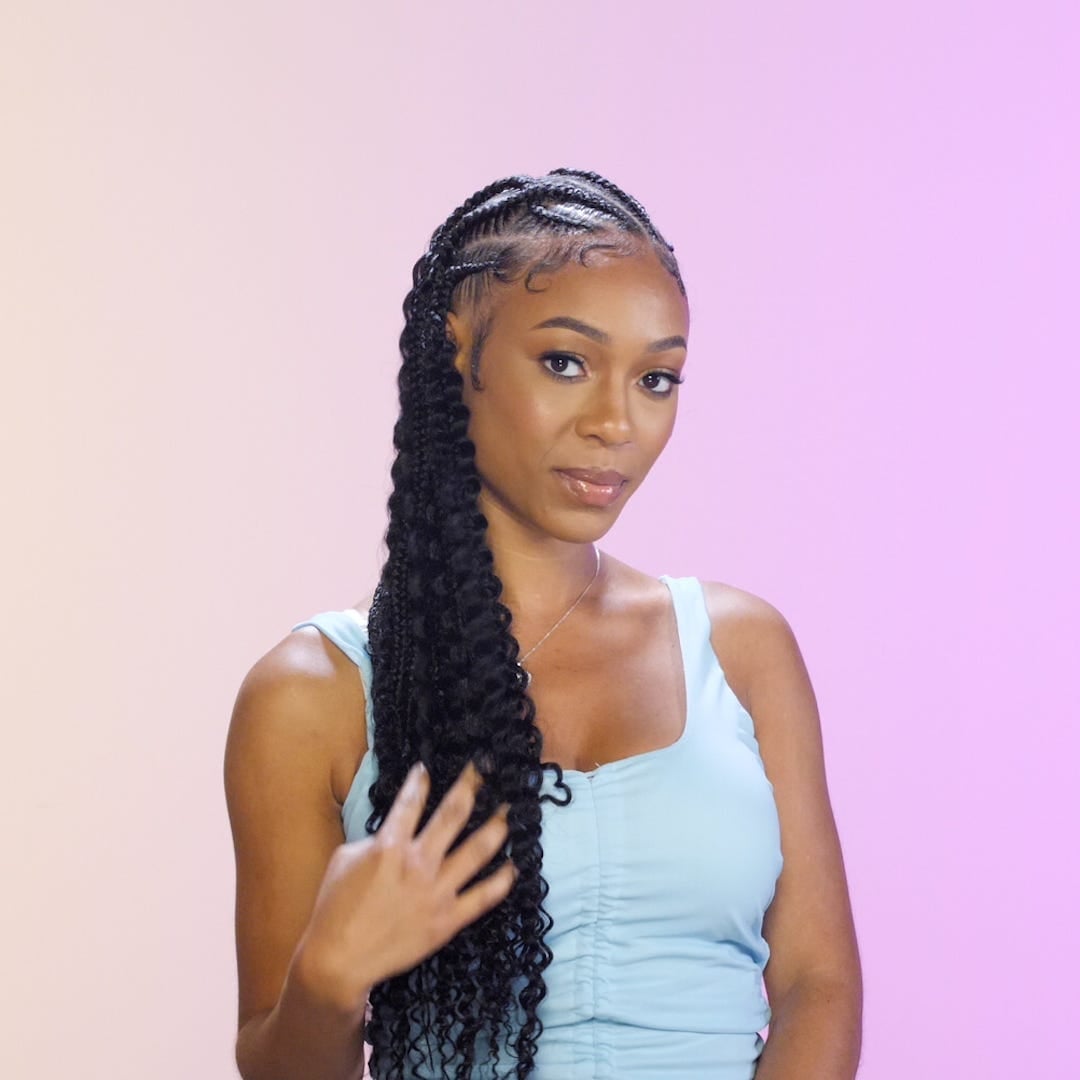
The contrast is the point: flat, neat stitch braids on the scalp and long, wavy extensions that start at the root and fall to the mid-back. The braids hold the scalp tight, so the extensions do the moving. Black hair with a middle part keeps it clean, while the defined baby hairs soften the edges. Ask your stylist for: stitch braids with wavy extensions and defined baby hairs. The wavy ends hold their shape for weeks if you keep them hydrated and avoid heavy manipulation. No heat needed for extensions that already have texture.
Detailed Stitch Braids Flowing Back
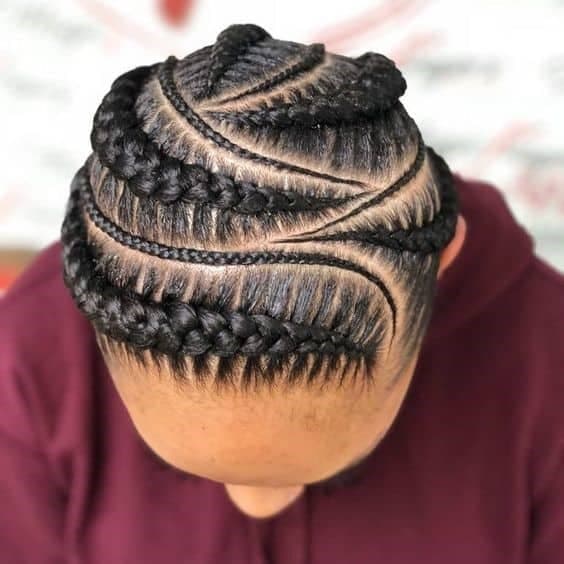
Every braid here runs parallel, feeding into the same backward flow from a central part. The stitch pattern is visible along the scalp, not hidden by volume or texture, because the hair is straight and black. That is the technique: flat, even tension from the root to the tip, with no bumps or gaps. Ask your stylist for: detailed stitch braids flowing straight back. The length hits the mid-back, and the uniformity means it wears well for weeks without needing adjustment. A side view is the only way to see the full line. No bangs, no distractions.
Stitch Braids With Subtle Brown Undertones
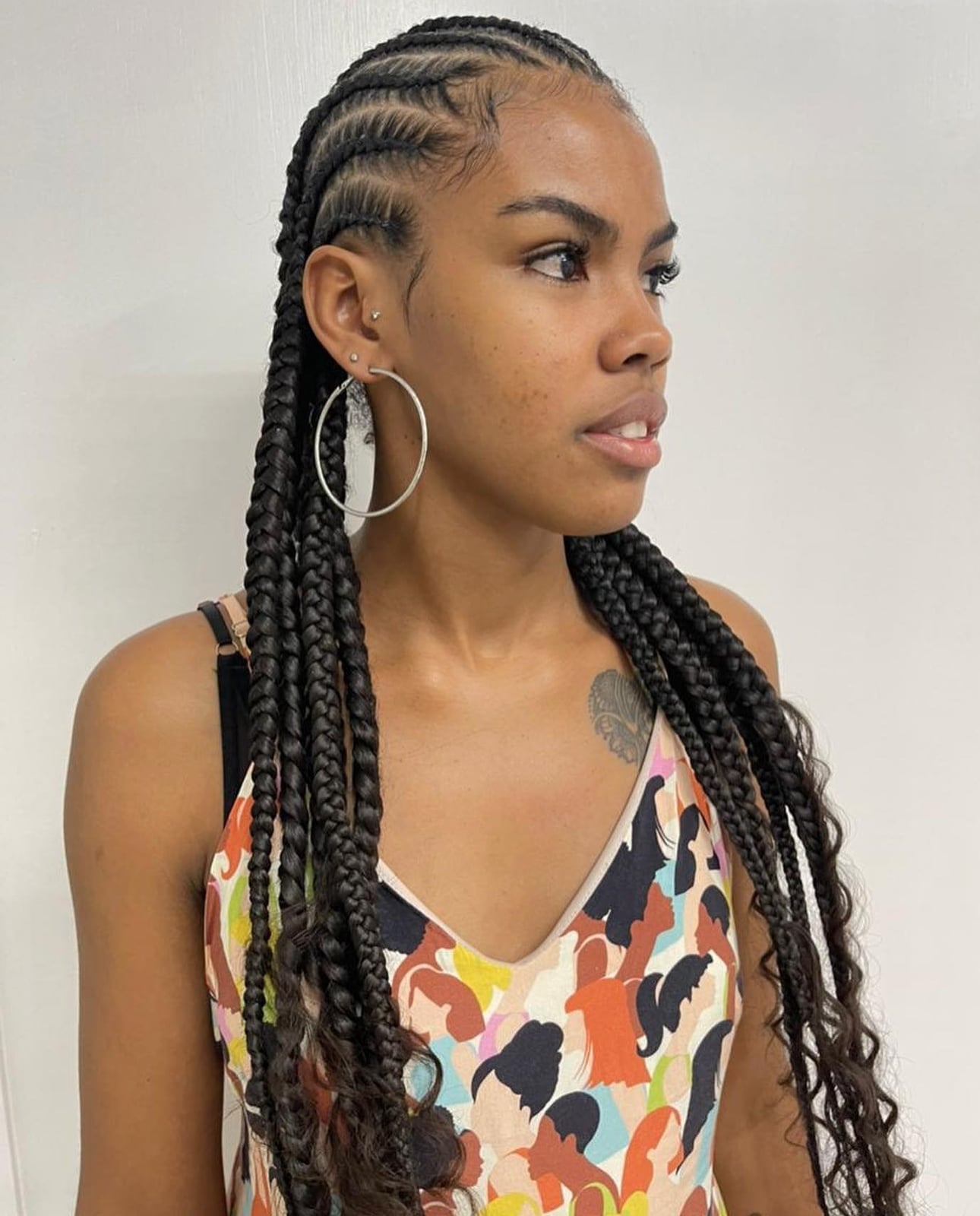
Black is reliable, but black with subtle brown undertones catches light differently. The stitch lines here are clean and precise, and the wavy, curly ends add movement at the mid-back. That undertone works year-round, but it really lands in fall, when brown reads as warm rather than just dark. Ask your stylist for: stitch braids with subtle brown undertones and wavy curly ends. Use a color-safe shampoo and conditioner to keep the brown from fading into a flat black. The side view shows the length and the wave pattern, both of which hold well between washes.
Stitch Braids With Gold Beads
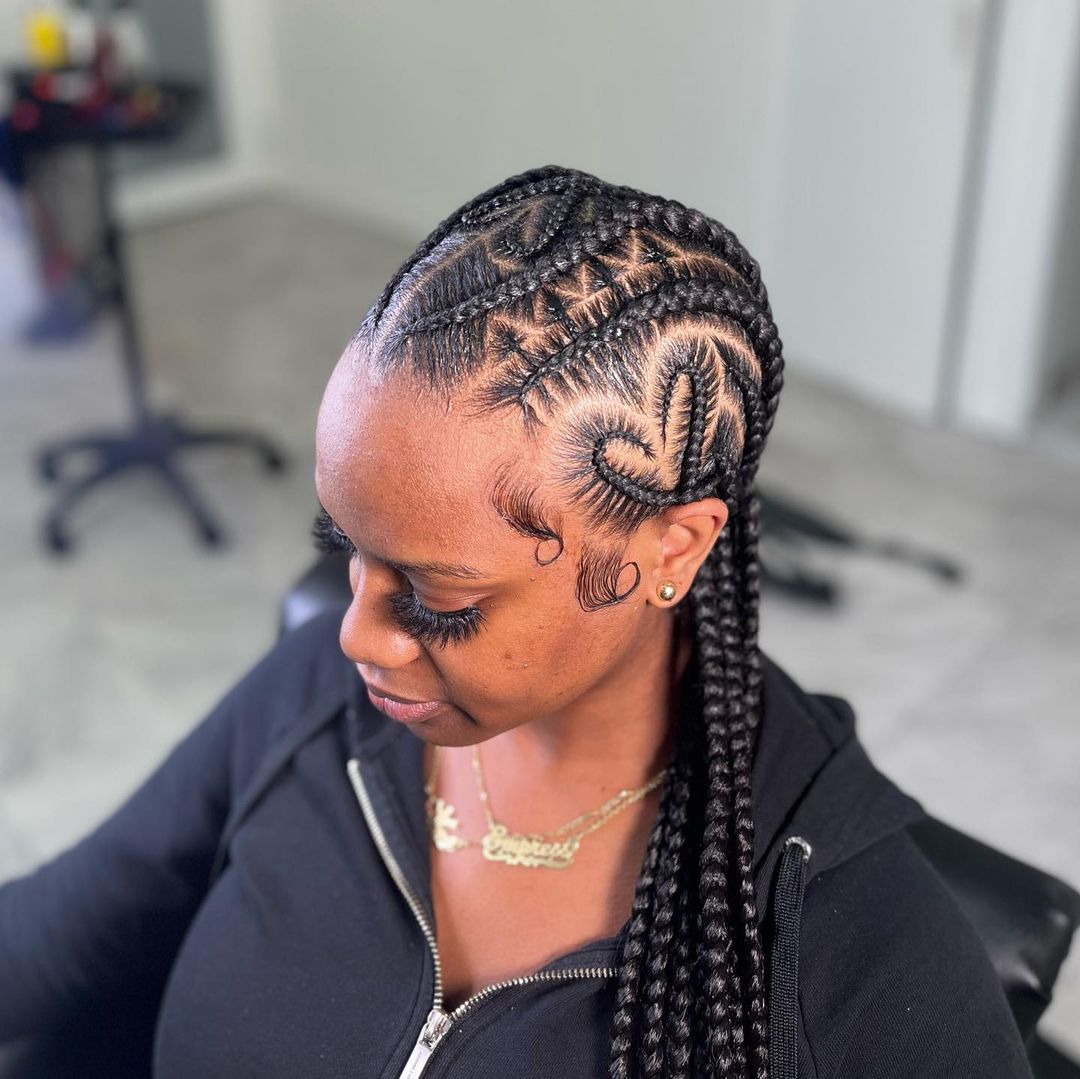
Gold beads land on these stitch braids right where the tight scalp work gives way to loose, wavy lengths, so the metal has room to move without dragging at the roots. That transition point matters: thick, wavy hair supports the weight of beads far better than fine strands, since the volume keeps each piece from pulling. Ask your stylist for: stitch braids with gold beads and loose wavy ends. The beads add a metallic glint with each turn, making the mid-back length feel purposeful rather than purely decorative.
Intricate Stitch Braids With Loose Ends
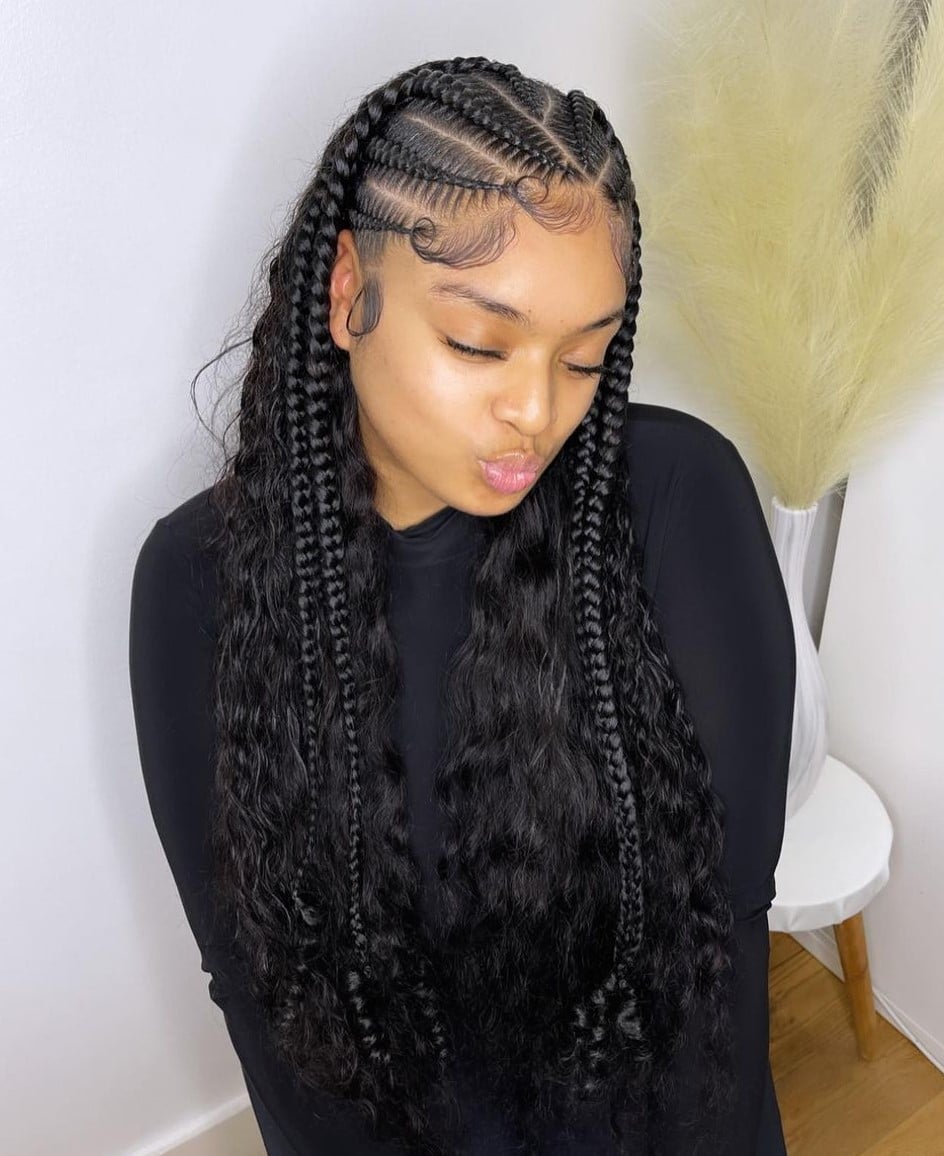
The contrast here is what holds: a tight, intricate stitch pattern at the scalp that relaxes into loose, wavy ends at the mid-back. Those free strands are the part that needs attention, since they tangle faster than the braided sections and will benefit from a light serum worked through the lengths to keep them defined. Ask your stylist for: intricate stitch braids with loose wavy ends. The scalp work stays neat for weeks, while the ends behave like loose hair, which means a quick detangle before bed.
Heart Pattern Braids Over Shoulders
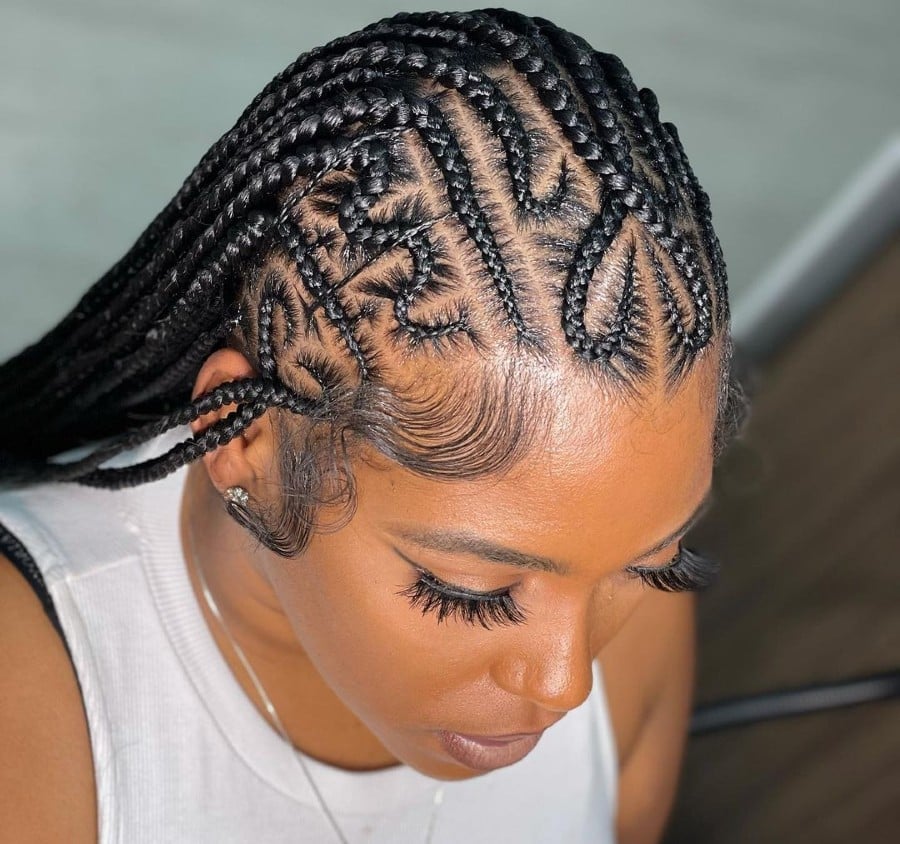
Why choose a heart pattern when a straight-back cornrow does the job? Because this one turns a protective style into a conversation piece. The heart sits at the crown, drawn in clean stitch lines, while the hair gathers into two thick, shoulder-length braids that fall over the chest. Ask your stylist for: stitch braids in a heart pattern, styled into two shoulder-length braids. The playful shape contrasts with the precision of the scalp work, and the symmetry of those two braids anchors the whole look.
Neat Stitch Braids Mid-Back
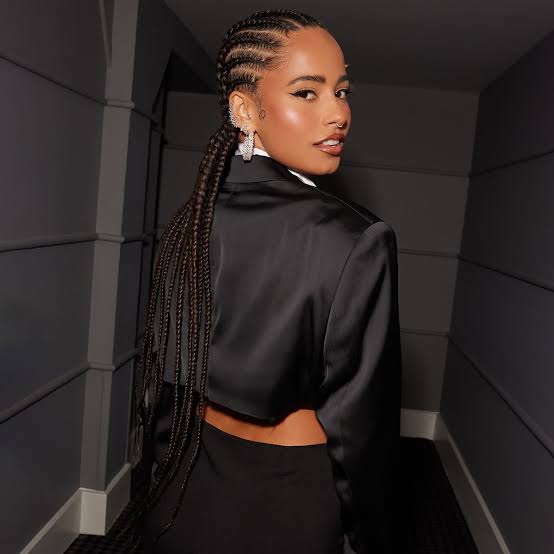
Neat is a word that gets thrown around, but here it means the scalp lines are visible and even from root to mid-back, with no gaps or frizz at the part. The middle parting keeps the pattern symmetrical, and the straight, thick texture of the hair lets each stitch sit flat against the head. Ask your stylist for: neat, tightly stitched mid-back braids. A light-hold hairspray patted over the crown keeps flyaways down without stiffening the braids themselves.
Square Pattern Stitch Braids
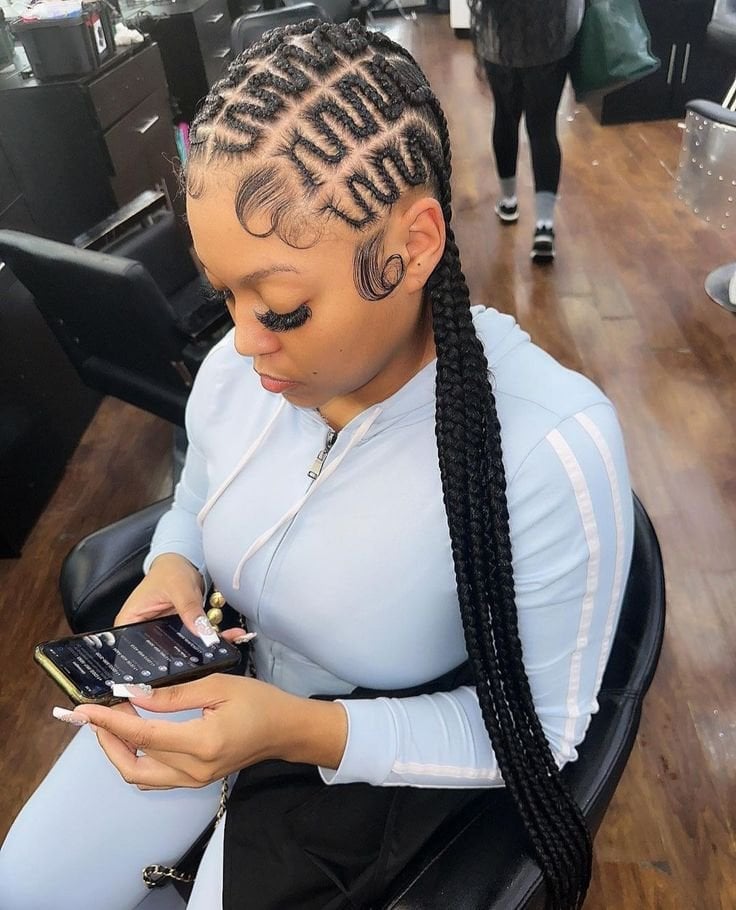
Building a square pattern takes more than a steady hand: each row has to align with the one below it so the boxes stay true from the hairline to the crown. The result is a geometric grid that reads as modern, and the defined edges and baby hairs around the hairline finish the look. Ask your stylist for: stitch braids with a square scalp pattern and defined edges. Once the rows are set, they hold their shape for weeks, with edge control keeping the hairline sharp between visits.
Geometric Stitch Braids Mid-Back
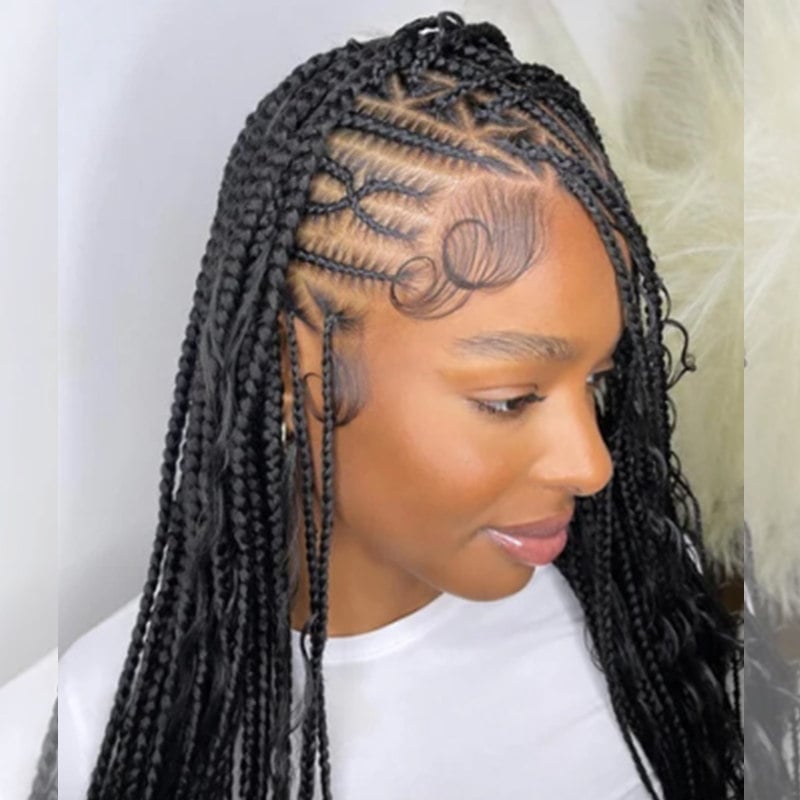
Can your hair actually hold a sharp geometric pattern when it is wavy and thick? Yes, but the braider has to work with the hair’s natural bend rather than against it, which is why these mid-back stitch braids take patience. The wavy texture softens the lines of the scalp pattern, so the geometry reads as an outline instead of a hard edge, and that is the trade-off. Ask your stylist for: geometric stitch braids with wavy, thick texture. A lightweight mousse smoothed over the braids keeps the waves defined and the frizz down, which matters more here than in a straight style.
Stitch Braids Into A Low Ponytail
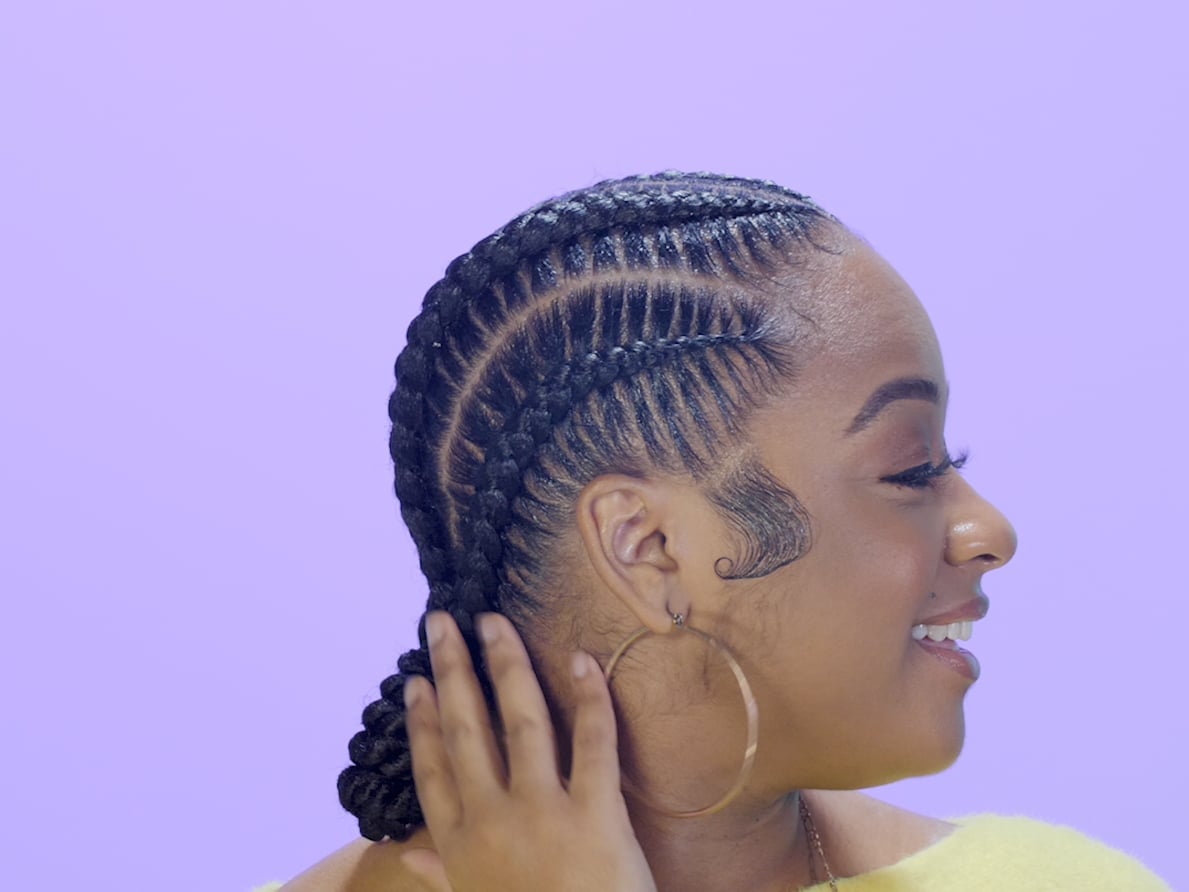
The neat scalp braids create the structure in this style, and the low ponytail gathers the length at the back. Because the braids are stitched flat against the head, the ponytail holds its position all day without the base sagging or loosening, which is the usual complaint with this finish. The straight, thick texture keeps the gathered hair smooth and weighty, so the ponytail hangs without frizzing. Ask your stylist for: stitch braids into a neat low ponytail. Run a boar bristle brush over the ponytail each morning to keep the surface sleek and catch any stray hairs before they escape.
Neatly Parted Side Stitch Braids
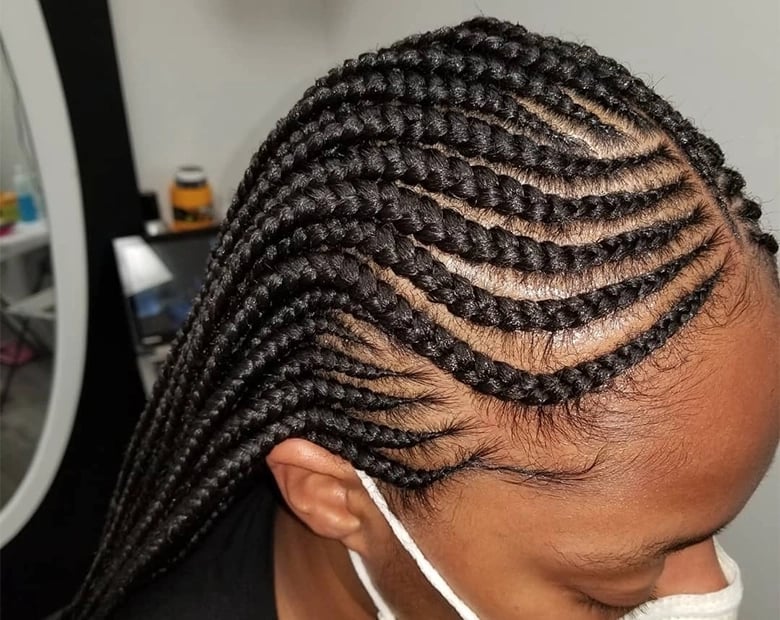
This suits round and heart-shaped faces because the off-center parting draws the eye across rather than down, and the mid-back length keeps the weight from pulling the part out of place. Ask your stylist for: neat stitch braids with a side part. A light-hold hairspray on the part line keeps the braids lying flat and stops flyaways from blurring the edge, which is the difference between neat and just braided.
Straight Back Cornrows
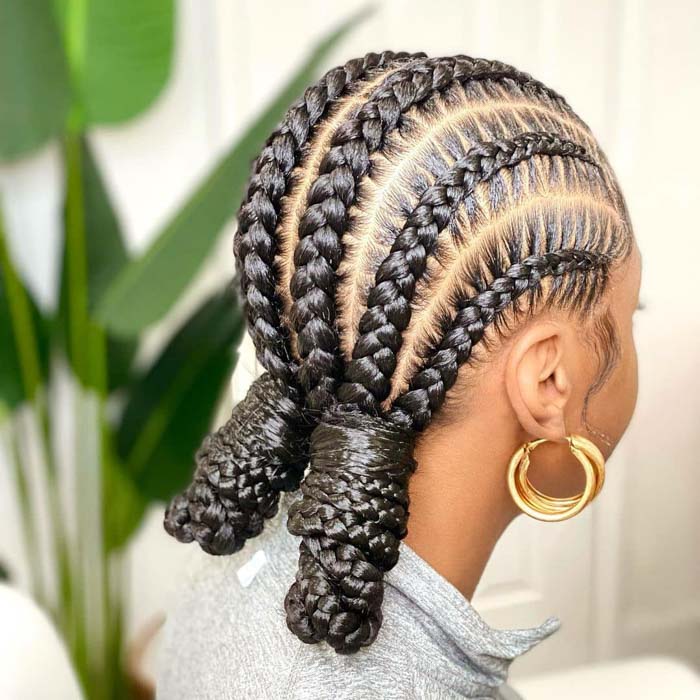
What makes straight back cornrows look neat when they are anything but? The even tension from the front hairline to the nape requires the braider to keep each row the same width and the same depth. The thick, straight texture allows for a cleaner line than wavy hair would, since there is no bend to fight the parting. Ask your stylist for: thick, straight back cornrows. A braiding balm worked into the scalp every few days keeps the cornrows smooth and prevents the dryness that shows up as a white cast on black hair.
Circular Geometric Stitch Braids
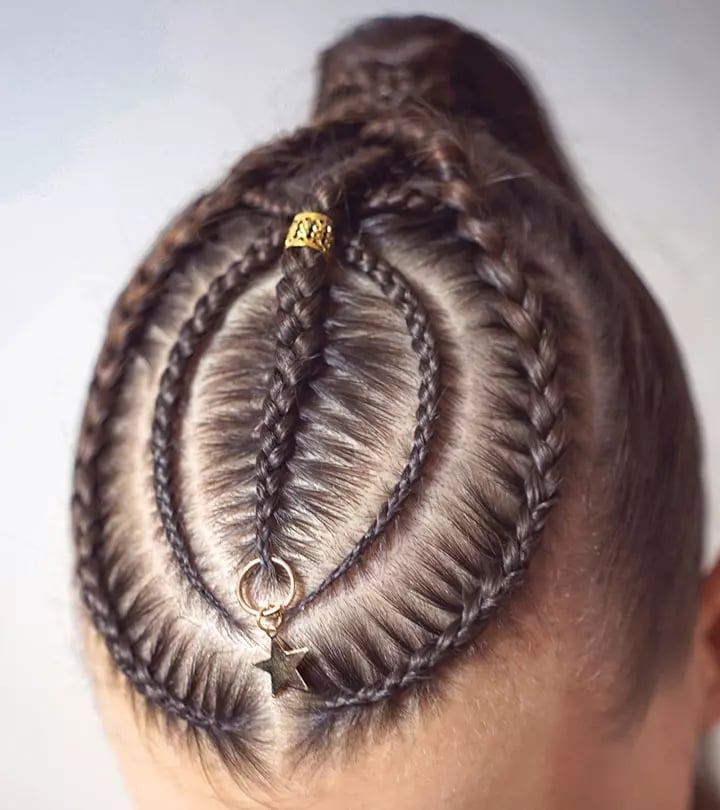
The circular pattern is the rare stitch braid design that works as a top view, which means the back of your head does the talking before you even turn around. Compared to linear geometric stitch braids, the circular layout takes more sections and tighter angles, so it is a longer salon session, but the payoff is a scalp pattern that does not look like every other braid in the room. Ask your stylist for: stitch braids in a circular geometric pattern with charms. The gold bead and star pendant add movement, but treat them gently: snagging one on a scarf or a seatbelt is how charms go missing.
Stitch Braids Into A Neat Low Ponytail, Mid-Back
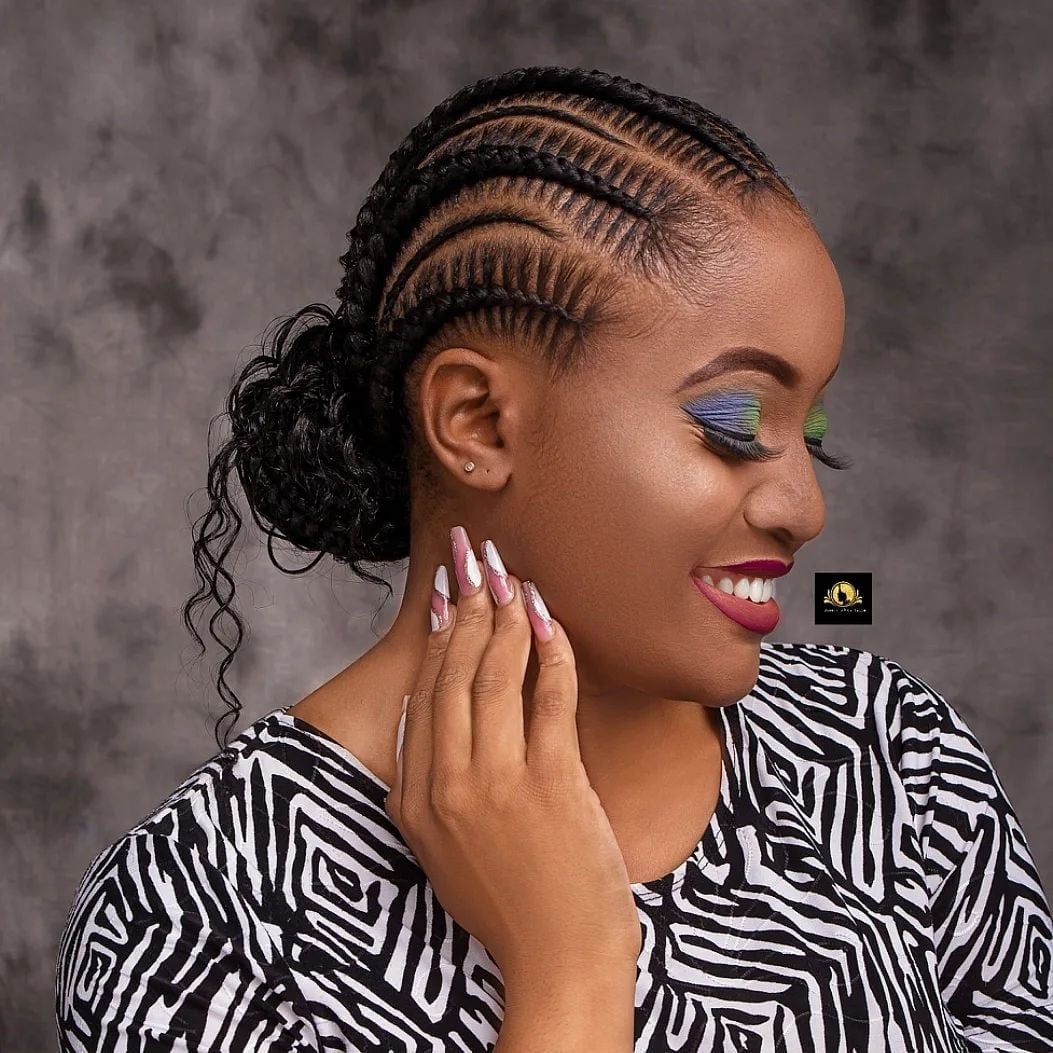
Stitch braids do the work, and the low ponytail lets them show off. Mid-back length straight, thick black hair holds this style cleanly because the braids anchor the sides and the ponytail sits exactly where it lands. Ask your stylist for: stitch braids into a neat low ponytail. A boar bristle brush smoothed over the ponytail before securing it keeps the finish polished, and the hold is solid enough for a full workweek or a formal event. A trim every eight weeks keeps the ends even and the ponytail crisp.
Cornrows With Wavy Brown Highlights
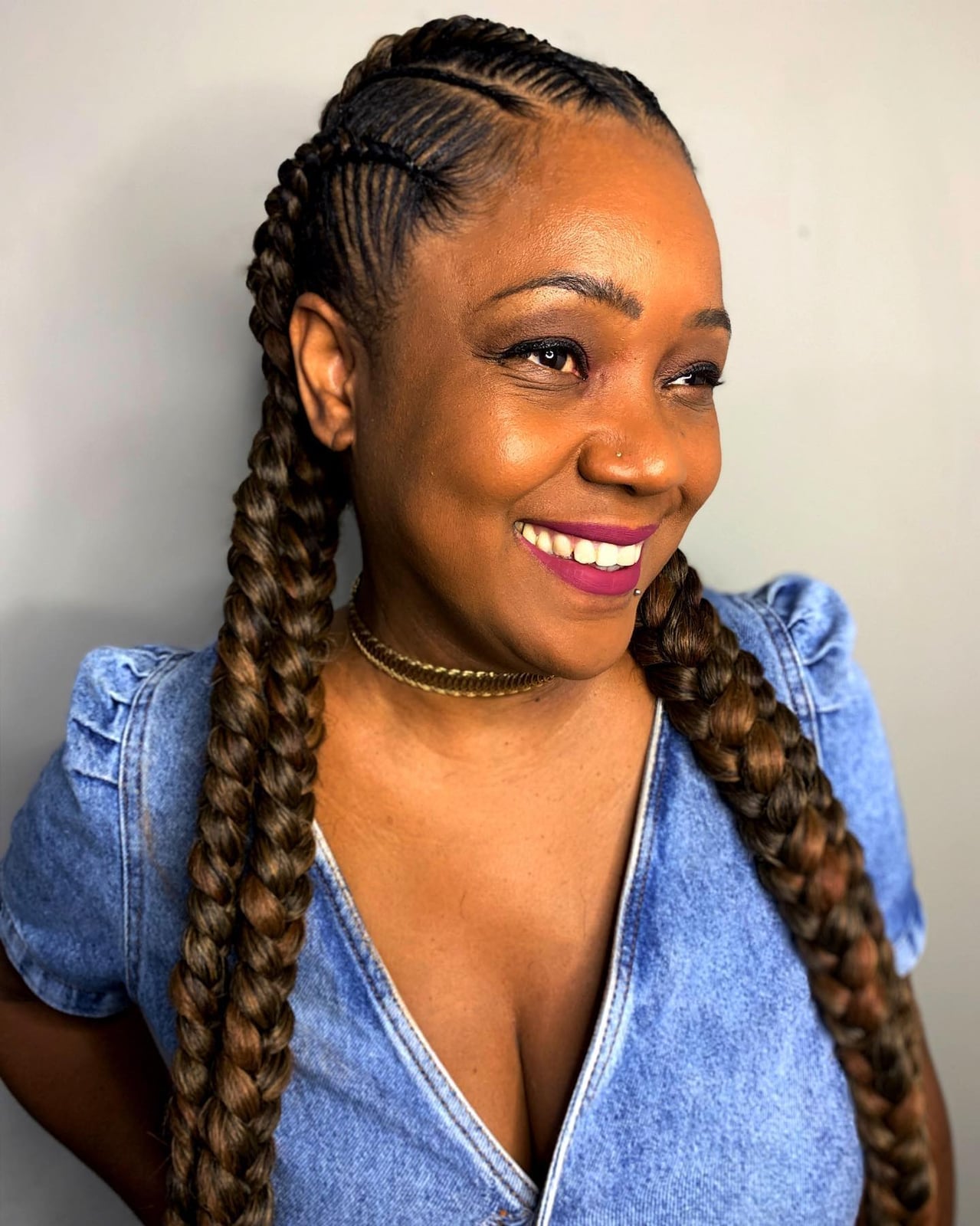
Who actually wants cornrows that look dimensional? Mid-back length hair with a wavy texture gets that from subtle brown highlights woven through the black base. The intricate cornrow pattern on the scalp transitions into thick braids that carry the color down, so the dimension lasts the life of the style. Ask your stylist for: cornrows with wavy braids and brown highlights. Color-safe shampoo and conditioner between installations protect both the braids and the tint.
Stitch Braids With Wavy Collarbone Curls
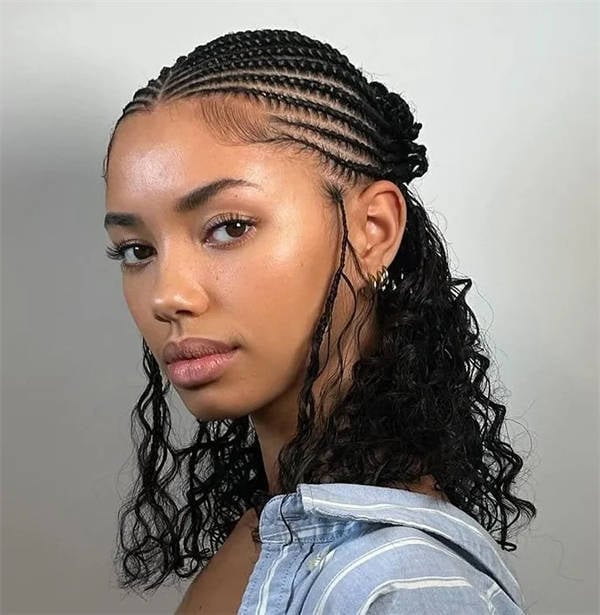
Tight stitch braids at the roots meet loose waves at the ends, and the trade-off is worth naming. The collarbone length means the braided section is short enough to avoid tension at the nape, but the loose curls require a nightly refresh. Ask your stylist for: stitch braids with wavy collarbone curls, side part. Thick, wavy black hair with a side part takes the curl well, though the waves need a curl enhancer and about ten minutes of finger-combing each morning to stay defined. The drawback: the braids stay pristine for two weeks, but the ends need rewetting daily.
Stitch Braids Into Double Buns
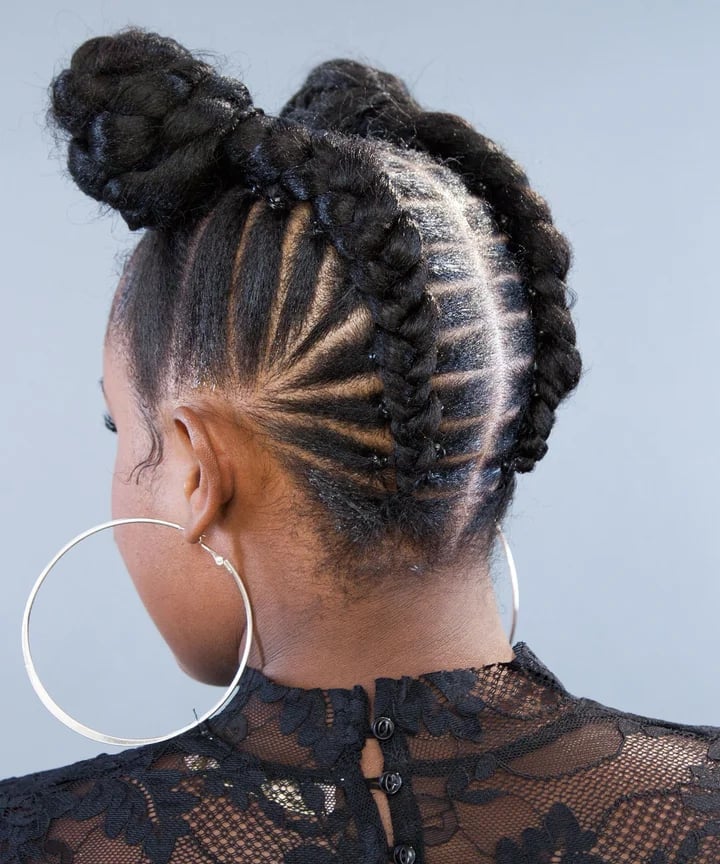
Geometric stitch braids on the scalp feed into two braided buns at the crown, and the pattern demands patience. Coily, thick black hair at mid-back length holds the shape well, but this style requires a salon visit. Ask your stylist for: stitch braids into double braided buns. The session runs about three hours because each bun needs to be braided separately and pinned so the weight distributes evenly. Between visits, satin scrunchies at night preserve the buns without crushing the pattern.
Sleek Stitch Braids Mid-Back
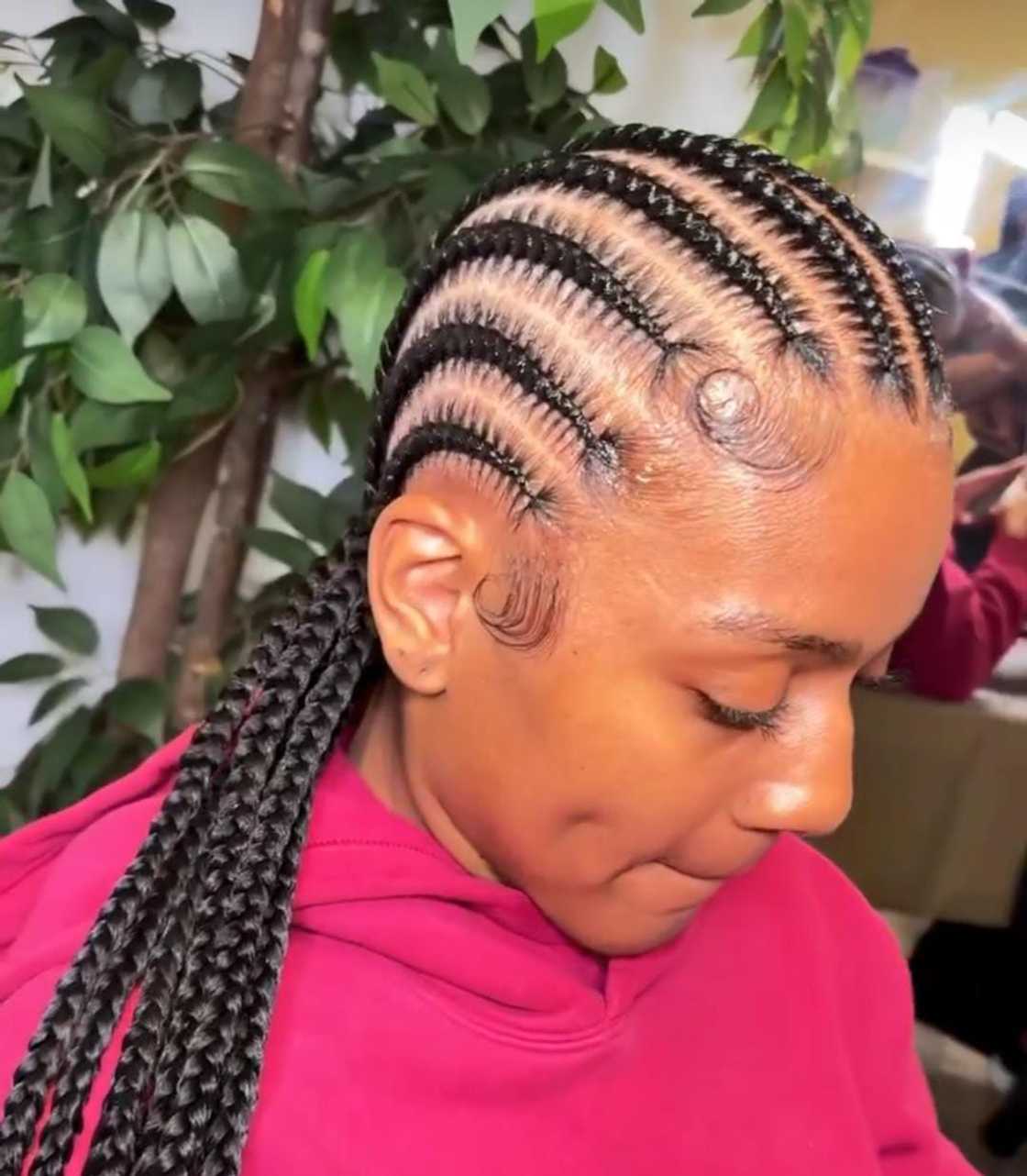
Tight sectioning and a consistent tension hand keep stitch braids clean without part lines lifting by day three, which is why this is strictly a salon technique. Mid-back length straight, thick black hair provides the weight and density needed for the braids to lie flat. Ask your stylist for: sleek, tightly sectioned stitch braids. A light-hold hairspray on a clean toothbrush tames any flyaways along the part, and the hold stays neat through a full week of wear. A trim every six weeks keeps the ends blunt and the braids from fraying.
Stitch Braids With Loose Ends And Beads
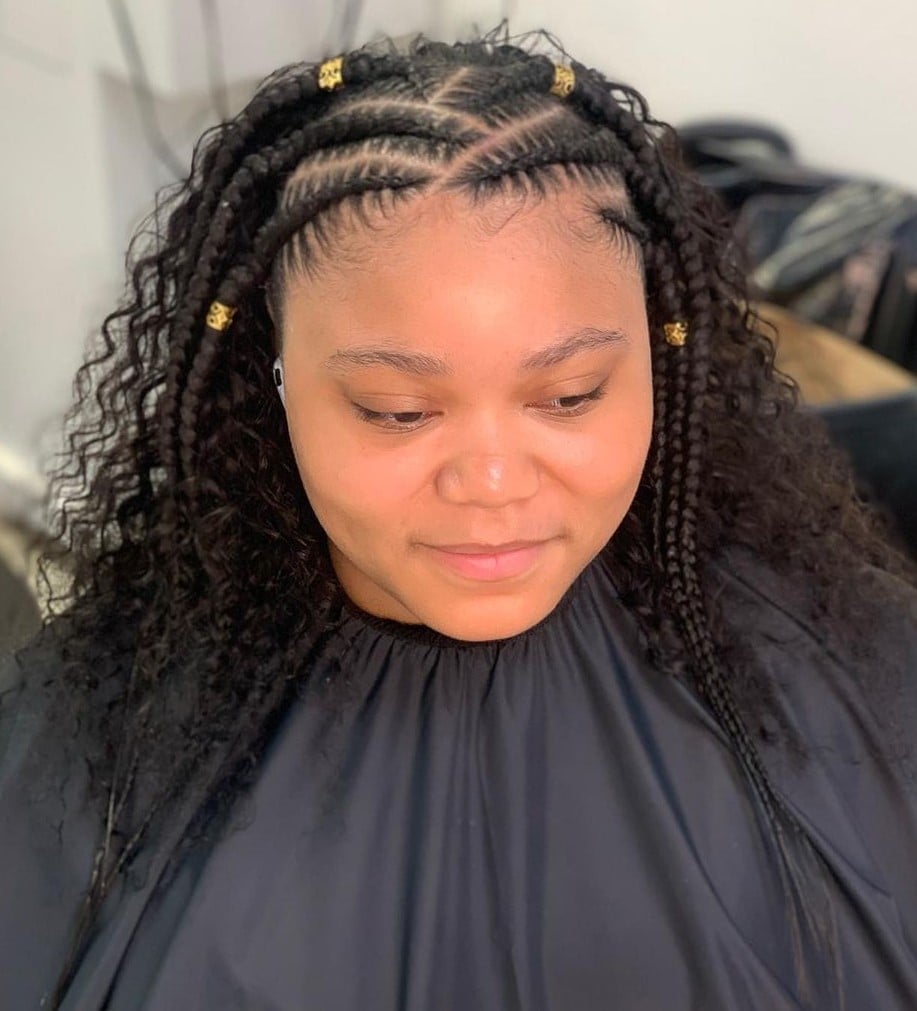
Gold beads catch the light where neat stitch braids release into loose, wavy lengths past the mid-back. The middle parting keeps the scalp pattern clean while the wavy sections add volume. This design suits thick hair that can support the weight of the braids and the beads without pulling at the roots. Ask your stylist for: stitch braids with gold beads and loose wavy ends. The beads are lightweight but should be checked regularly to make sure the closures stay tight. Loose ends need a bit more maintenance than fully braided styles, but the mix of structure and soft movement holds up well for several days with a satin scarf at night.
Final Thoughts
For maximum definition and longevity, have your stylist use a quality braiding gel or pomade to lay edges and keep stitch lines crisp. If you plan to pull your braids into updos like ponytails or buns, ask for mid-back length or longer so there’s enough weight to hold the style.
- Maintain clean stitch lines with a braiding balm or gel, applying sparingly to the scalp as needed.
- Protect braids from moisture and friction with a silk or satin bonnet at night.
- Minimize handling to keep the stitch pattern neat and prevent frizz.
- Schedule touch-ups every 4-8 weeks, depending on growth and how long you want the style to last.
Stitch braids offer a canvas for intricate artistry and sleek styling.