
I keep seeing the same thing in the salon chair next to mine: braids that aren’t hiding under a hat. Winter used to mean protective styles tucked away until spring. Now people are wearing them out, pastels and all, and I’m finally on board.
This roundup of 31 Winter Braids for Black Women covers everything from five-minute twists to four-hour cornrows. Some need a stylist, some you can do on a Sunday afternoon. I wrote it for anyone whose last set of braids left them with a sore scalp and a grow-out line at week five. No fluff, just the ones that actually work.
Half-Up Half-Down Box Braids with Beads
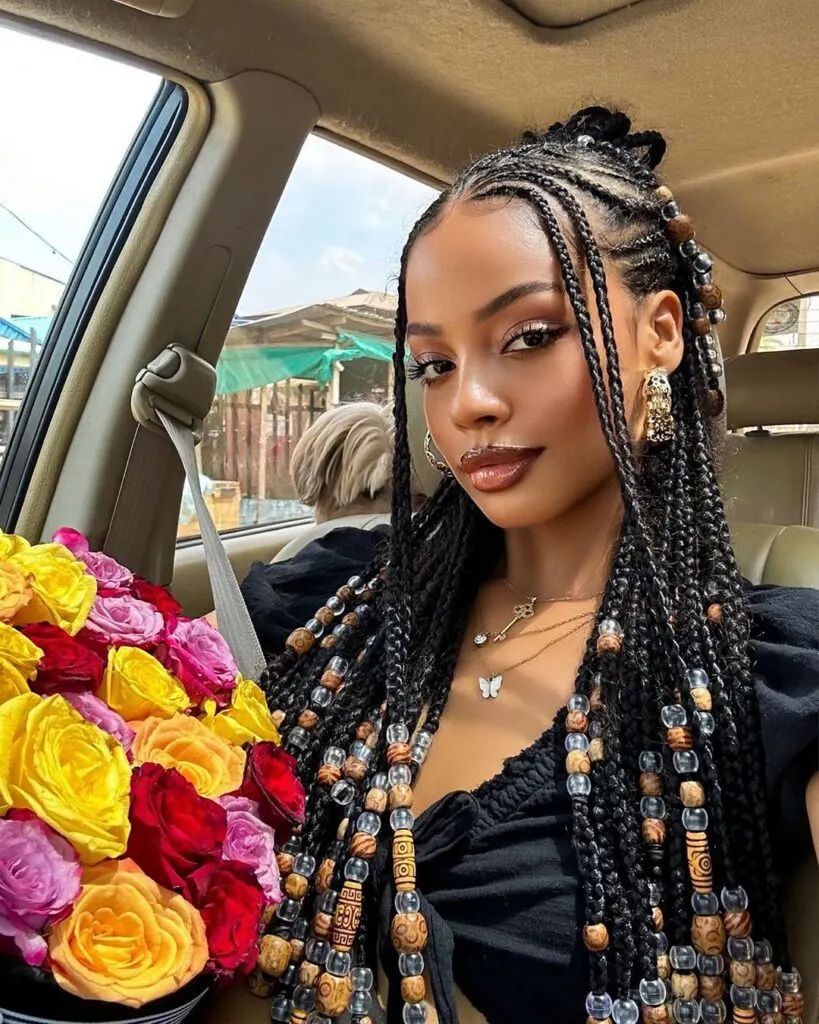
The beads catch the light before the braids do. These half-up half-down box braids land at the shoulder with a middle part that suits round and oval faces equally. The coily texture holds the decorative beads without slipping, and the black base lets the blonde and brown accents read clearly. Styling is done the minute you leave the salon: pull the top section back, thread the beads, and you are finished. The hold is solid for a full workday and a dinner after, no re-pinning required.
Bold Chunky Mid-Back Braids
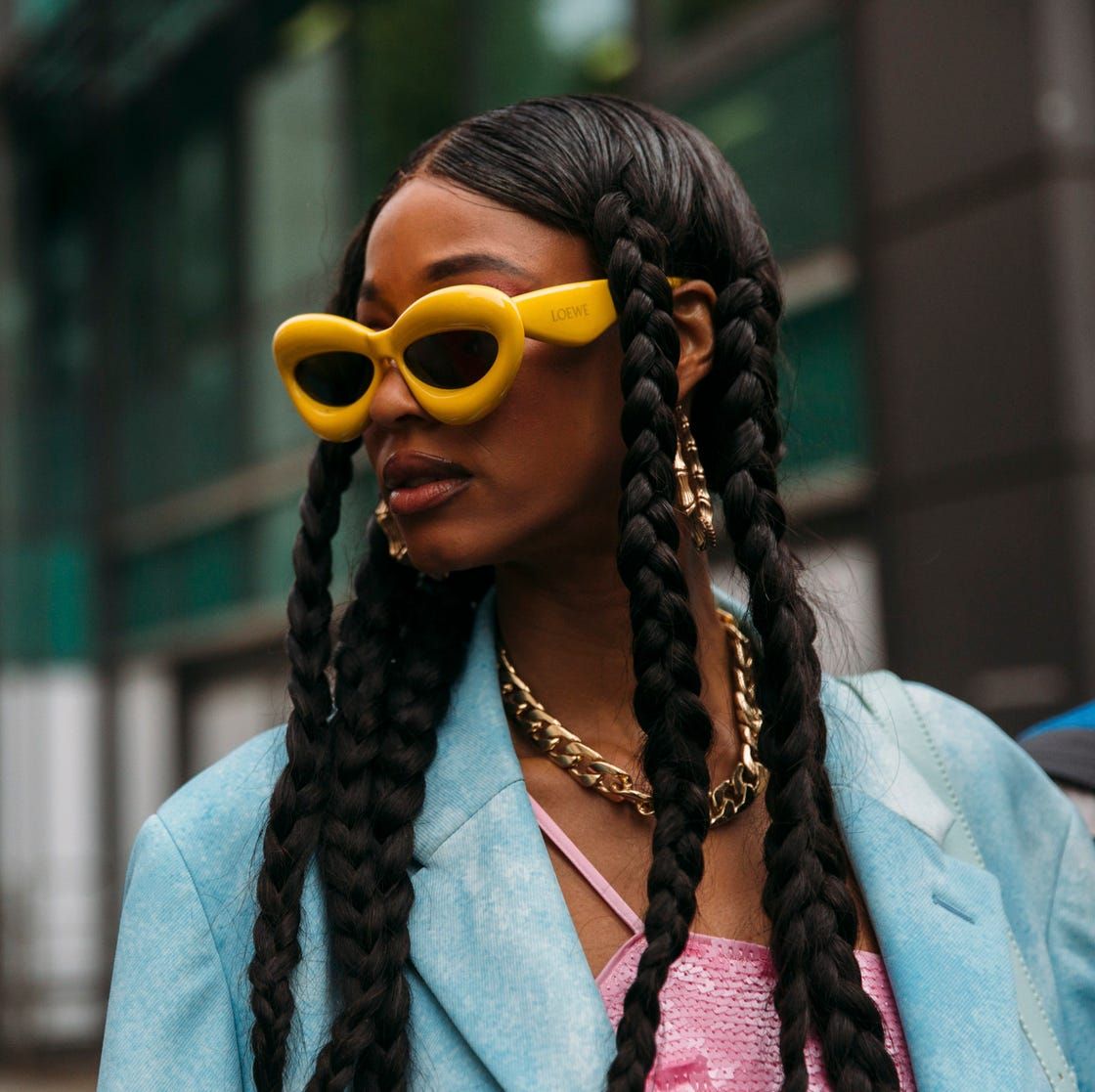
Chunky mid-back braids beat thinner ones every time. Thicker sections mean fewer braids, which means a shorter install and less weight on your scalp. The side part here widens a narrow face, and the uniform braids create a clean line that does not frizz by day three. Black reads deepest on coily texture, no highlights needed. Styling is a zero-minute affair: they fall the same way every morning. Hold is eight weeks before the roots need attention, and the thickness hides any new growth for the first four.
Dark Brown Box Braids with Blonde Highlights
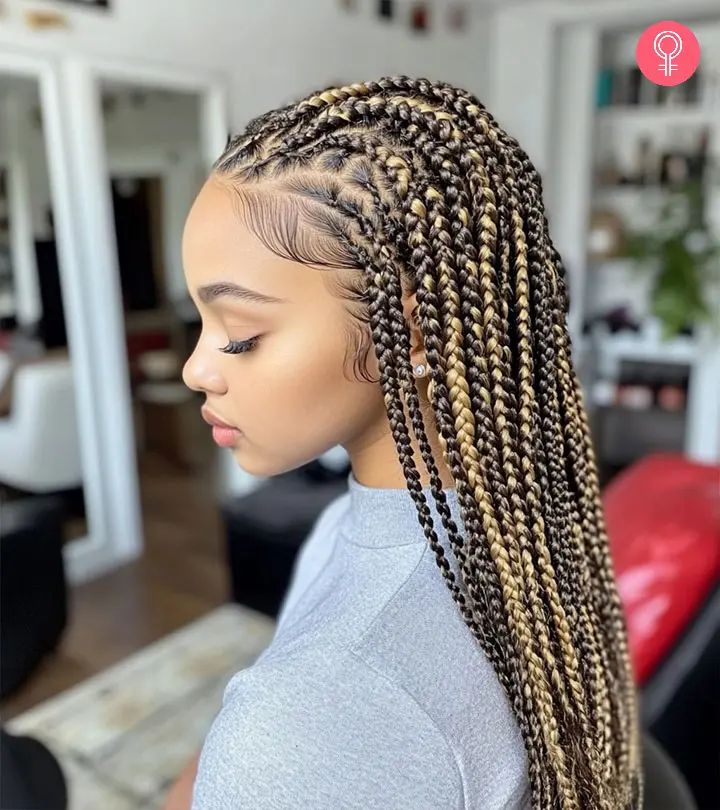
Dark brown with blonde highlights should look busy. These box braids blonde highlights do not. The trick is placement: the blonde runs in thin strands through the top layer only, so the dark brown stays dominant and the dimension reads subtle from a few feet away. The straight texture keeps every braid uniform, and the mid-back length swings without tangling. Ask your stylist for a side part and blonde strands woven into the front section only. Styling is a quick finger-comb in the morning, and the hold lasts a full six weeks before the blonde starts to soften.
Thick Mid-Back Coily Box Braids
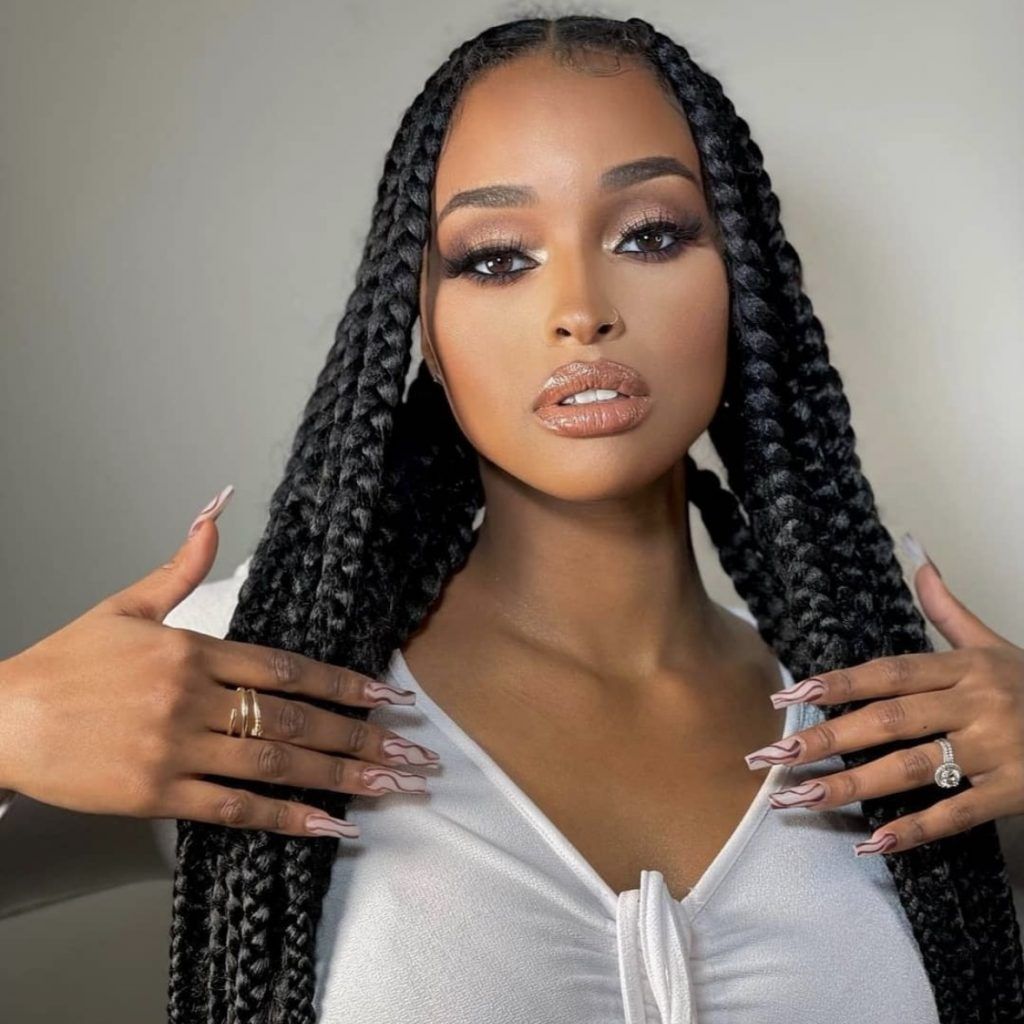
I admit I was skeptical about thick coily box braids at mid-back length. The weight, I thought, would be a problem. It is not. The thickness distributes the pull evenly across the scalp, and the coily texture grips each braid so nothing unravels by week two. The middle part flatters a long face by breaking the vertical line. Styling is loose braids left down or twisted into a low bun for gym days. Hold is the real story: these stay neat for seven weeks with a light mist every other day. The black colour fades zero, no brassiness, no touch-up needed.
Vibrant Burgundy Braided Updo
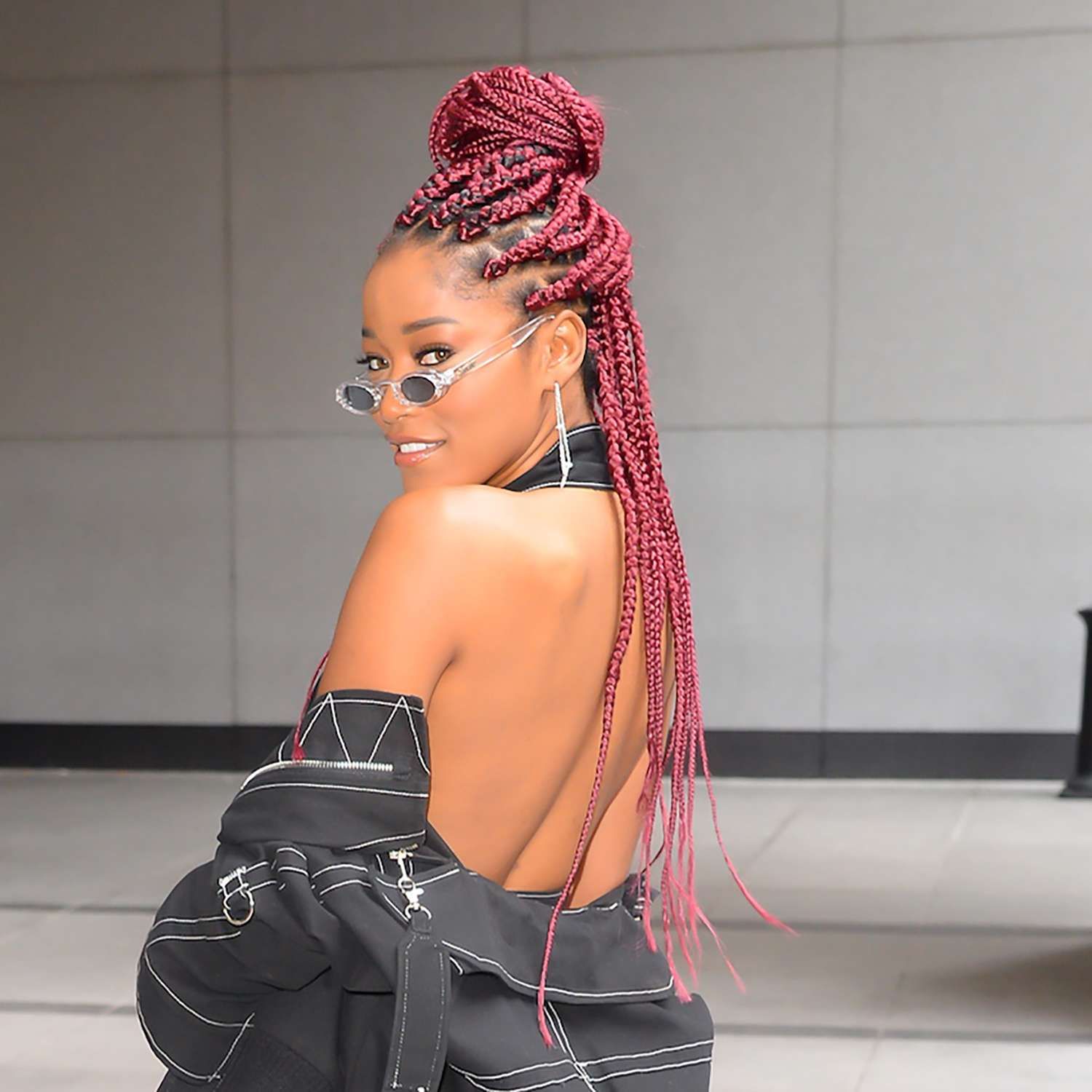
The burgundy braided updo hits different in December. The vibrant color reads warm against winter coats, and the updo keeps the length off your neck when the heat is on indoors. The middle part and coily texture let the braids stack neatly at the crown without gaps. Styling is done at the salon: the loose braids are pinned into a bun that holds through a full evening. The hold is four days before the top braids loosen slightly, but a quick re-pin fixes it. The burgundy stays rich for six weeks before a gloss treatment is worth booking.
Box Braids with Honey Ombre Ends
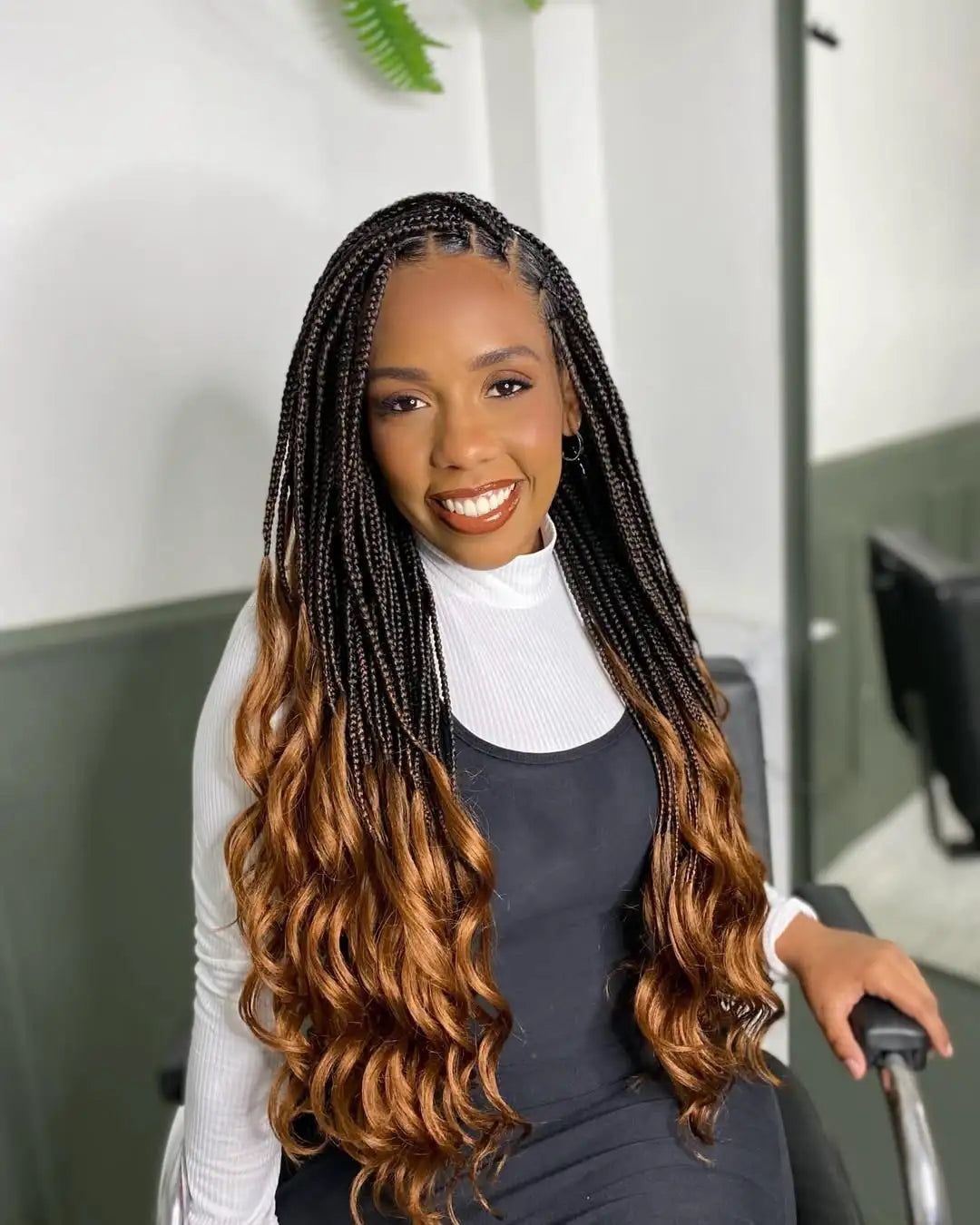
Have you ever watched a honey ombre fade turn brassy by week three? I have. The mistake is thinking any warm brown will do. With honey ombre box braids, the base needs to be a cool black, not a warm brown, or the fade reads orange instead of golden. The wavy curled ends are a separate decision — you curl them with heat, and that means they relax faster than the straight sections. Salon installation runs six to eight hours, and the ombre effect itself requires no daily styling.
What you want is a stylist who uses a cool-toned black at the root and a true honey at the tip, with no warm bridge in between. That gap is what keeps the fade clean. A DIY kit with a single dye bottle cannot do this. Book the chair. The ombre will hold its tone for six to eight weeks before the honey starts to warm up, and at that point you either tone it or live with a softer blend.
Box Braids with Curly Ends
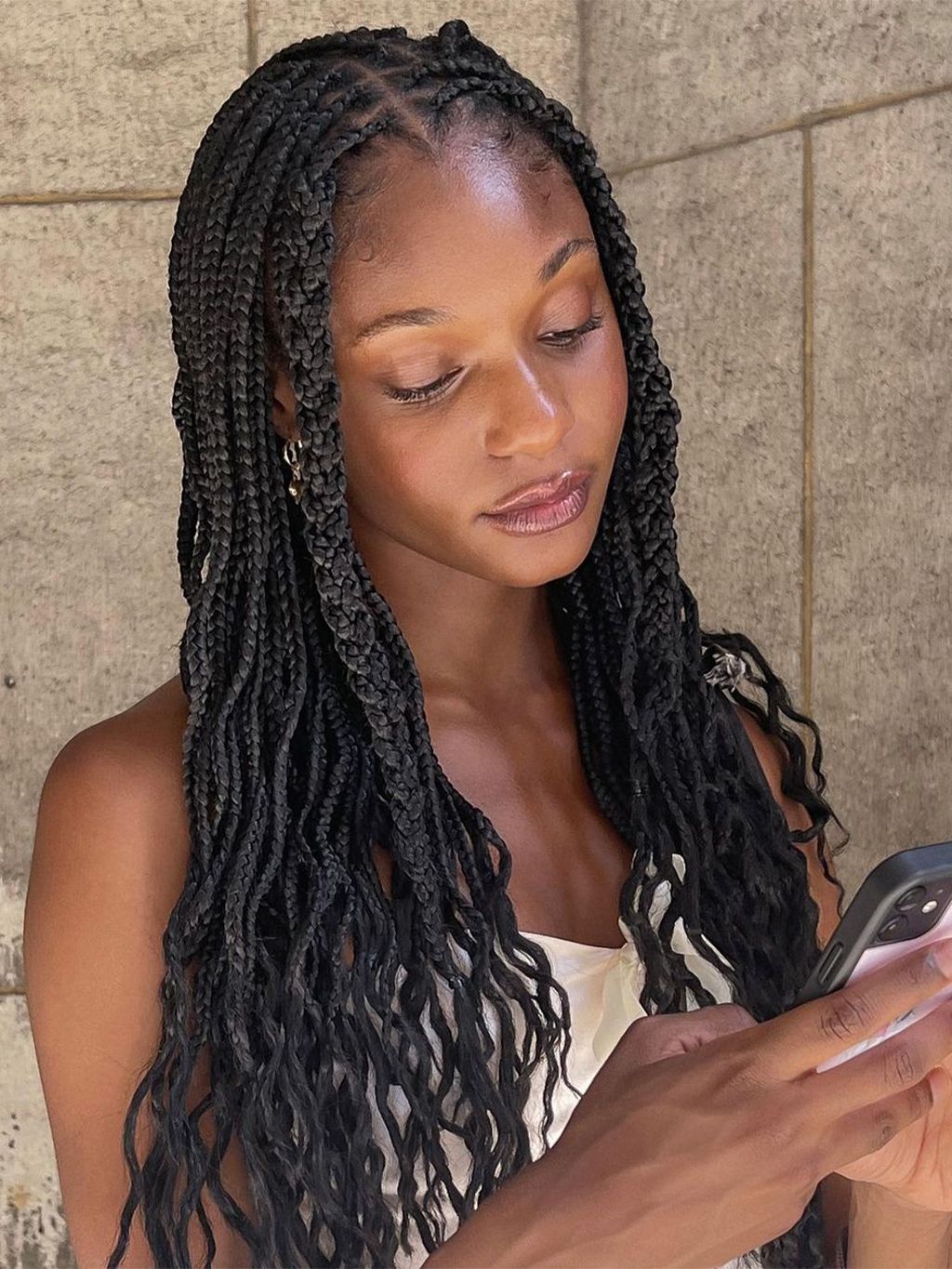
The box braids curly ends look is a specific flattery: it works best on people with naturally coily texture who want the braid body but miss the bounce. The curly ends mimic what your hair does on its own, so the transition from braid to curl reads as intentional, not leftover. The honest downside is the curl definition fades fast. By day four, those ends are frizzy unless you refresh them with a curl refresher spray and a gentle scrunch. Mixed texture hair — part braid, part curl — also means two different drying speeds. The braids dry fast, the curls take their time. If you sleep without a bonnet, the curls flatten on one side and the braids stay perfect, which is a weird asymmetry to wake up to.
Long Loose Braids with Side Bangs
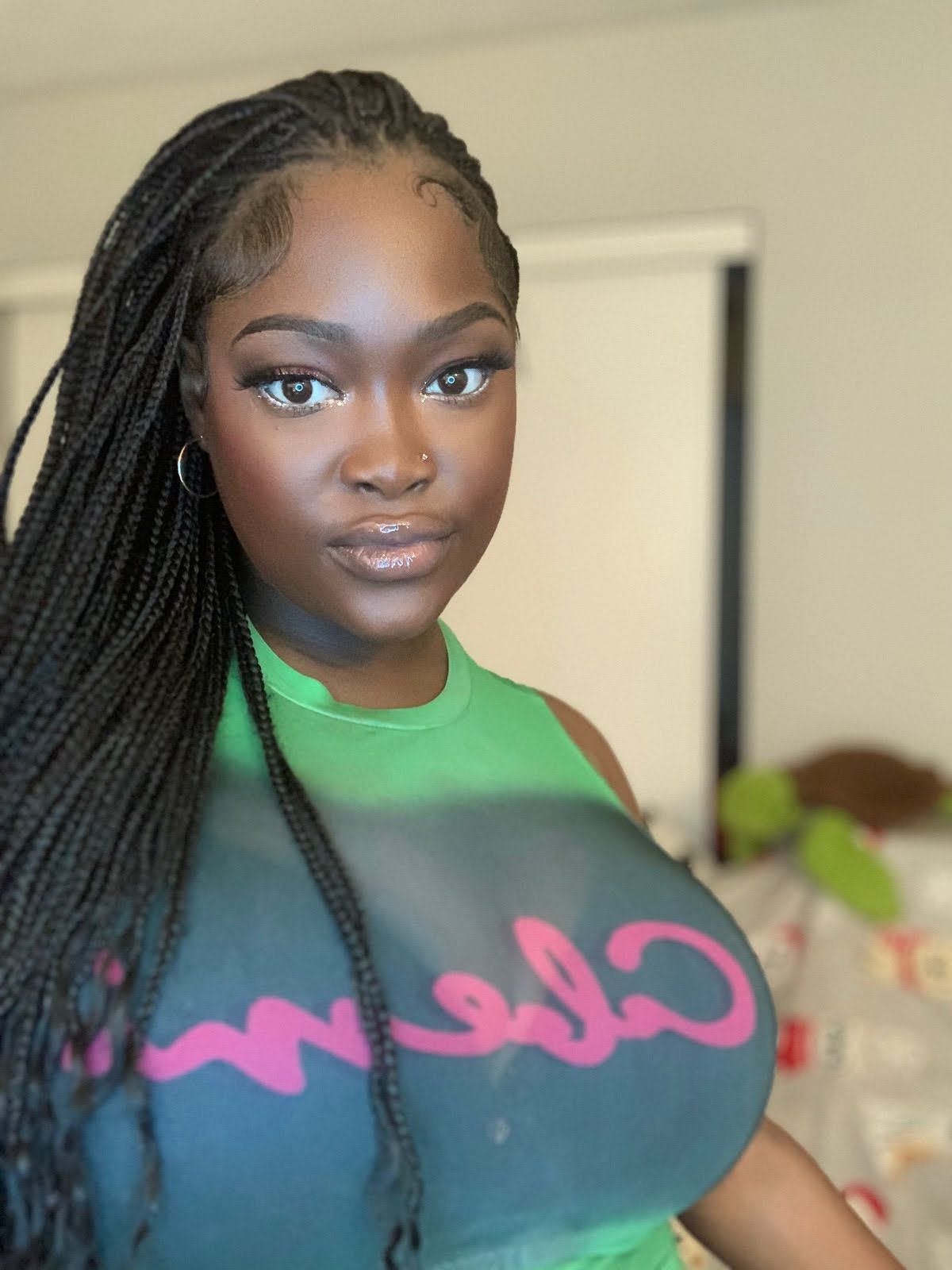
I will confess: I thought side-swept baby hairs with long loose braids would look unfinished, like I ran out of time before the rubber bands. I was wrong. The loose braids sit heavy and long, mid-back length, and the side bangs break that weight into something softer. The styling is minimal — a brush and a bit of gel for the baby hairs, nothing else. The hold is where this gets real.
Long loose braids shift. They slide off your shoulder when you sleep, they catch in seatbelts, and the side bangs separate by noon if you did not set them with enough gel. I learned to wrap the braids in a bonnet every night, and to re-slick the bangs with a wet brush in the morning. The upkeep is six to eight weeks, same as any salon braid, but the daily touch-up on the bangs is non-negotiable. Skip it once and you spend the day pushing hair out of your eyes.
Neat Shoulder-Length Twists
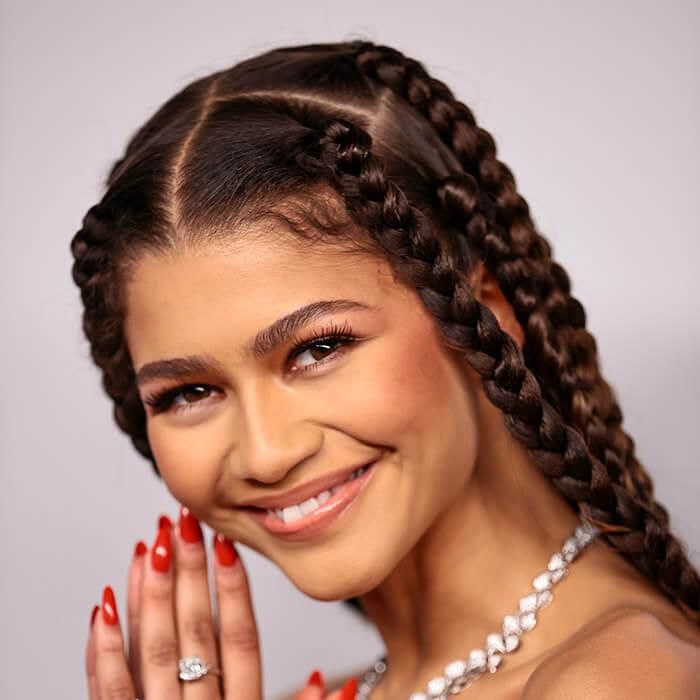
My gut reaction to shoulder length twists was that they would look unfinished, too short to read as a style. But the two-strand twists at this length are precise in a way longer braids are not. Each twist is a clean rope, dark brown, no loose ends. The technique matters: a two-strand twist requires tension at the root and a consistent twist angle, or it unravels by day two. At shoulder length, the weight is low enough that the twists hold their shape without pulling at the scalp. The colour is a single dark brown, no highlights, which keeps the twist definition sharp. No styling beyond installation. Three to five hours in the chair, and they last three to four weeks before the roots show.
Box Braids in High Pigtails
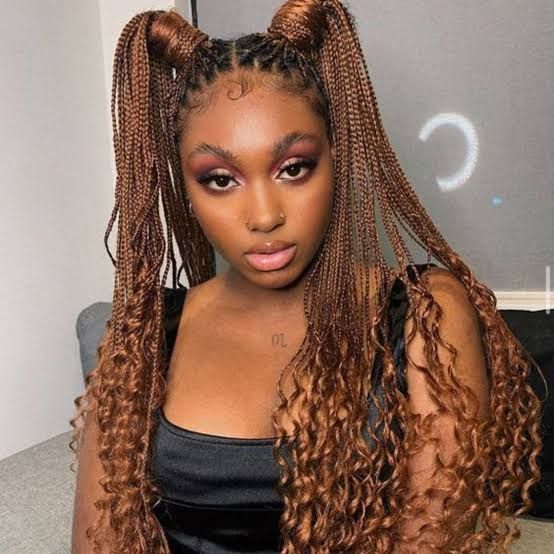
Here is the verdict: box braids high pigtails look playful for exactly one day, then they become a physics problem. The weight of mid-back braids in two sections pulls unevenly, and by day three one pigtail sits higher than the other. The medium brown base with lighter brown highlights helps — the dimension distracts from any asymmetry. The curly ends add bounce, but they also add weight. The honest downside is the tension. Two high sections concentrate the pull on a smaller scalp area, and if your edges are sensitive, you will feel it by evening.
The fix is to ask your stylist to keep the braids slightly looser at the root in the pigtail sections and to use a lighter extension hair. The hold on the pigtail itself is solid — the braids do not slip — but the part lines will show growth faster than a full-head style because the scalp is more exposed. Six to eight weeks between installations, and in between, a silk scarf at night keeps the curly ends from tangling into each other.
Cornrows with Voluminous Curls and Bangs
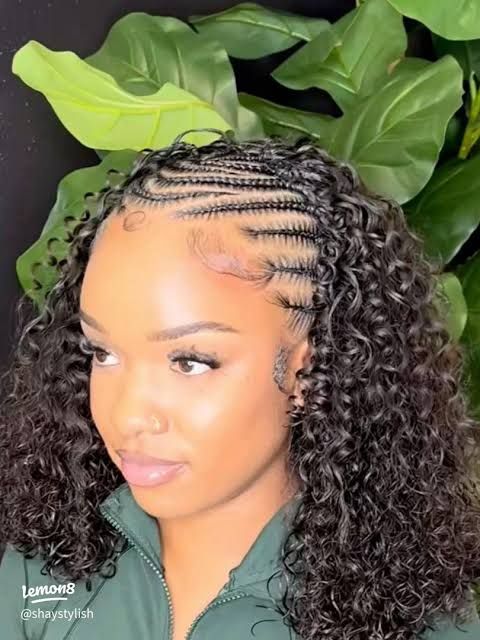
Ever wonder who can actually carry off cornrows with curly hair without looking like the braids are wearing them? The trick is the contrast: sleek cornrows against a cloud of loose, coily curls, finished with short wispy bangs that soften the whole front. This style flatters round and heart-shaped faces because the volume sits high and wide, drawing the eye upward and balancing the jaw. It needs medium to high density hair, since the curly sections rely on bulk to blend with the cornrowed roots. The wispy bangs are the real work: they need daily attention to stay piecey and not plaster to the forehead. For the rest, the hold is solid for two to three weeks before the edges start telling the truth.
Braided Bob with Auburn Tips
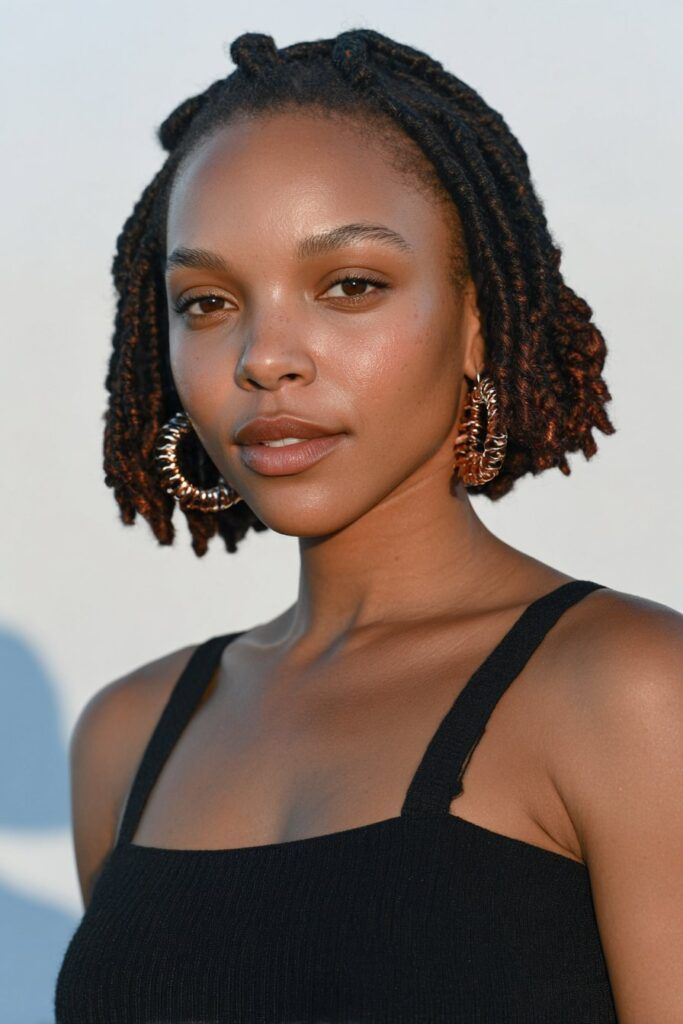
I have a soft spot for a braided bob auburn tips situation, because it gives you the bob shape without the daily commitment of scissors. The cut lands at the chin, which reads sharp and intentional, and the auburn tips catch the light so the bob line stays visible even when the braids are pulled back. This is a middle-part style, so it suits oval and longer face shapes best, widening the cheekbones without adding width. The texture is coily, and the hold is strong for about four weeks, though the tips will start to frizz sooner if you skip the nightly wrap. The auburn is the payoff, but it is also the upkeep: expect to refresh the colour every six to eight weeks to keep the tips from going flat brown.
Dramatic Ombre Box Braids
Braided buns are the winter workhorse I keep coming back to, because they hold a shape all day without me touching them. The style stacks the braids into a low, rounded bun at the nape, which keeps the neck clear under a scarf and the hair out of every coat collar. It works best on medium to long braids, and the texture is coily, so the bun keeps its volume without looking stiff. The hold is excellent for a full workday, and the bun stays put through a commute and a windy walk. The only real decision is where to place the bun: high reads playful, low reads polished, and the middle is where I live. The colour is a deep black, which makes the bun read as one solid shape from across the room.
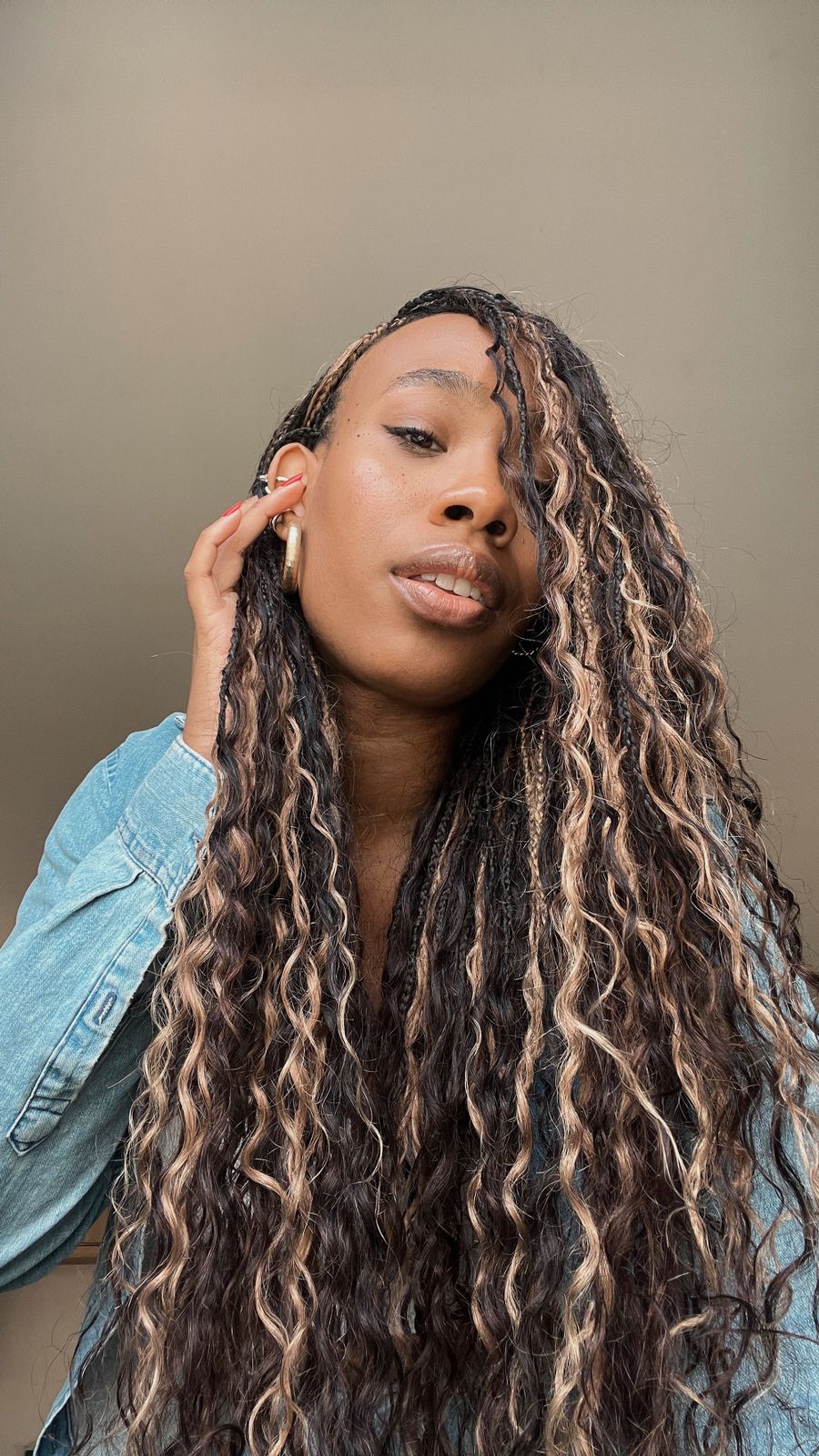
Mid-Back Goddess Braids with Curly Ends
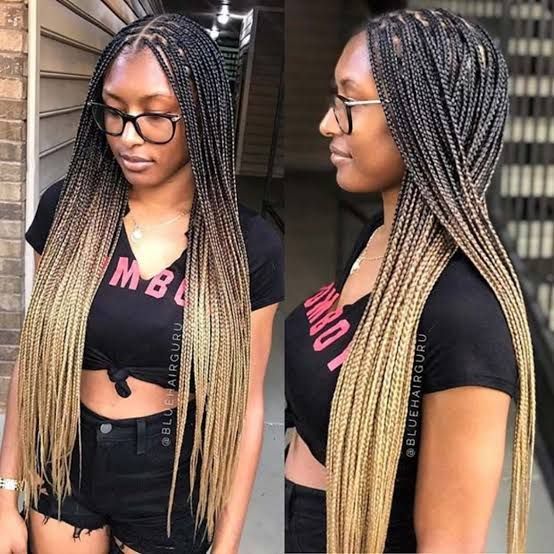
Black to blonde ombre braids are the colour trick that makes winter hair feel less heavy. The roots stay dark, so the grow-out is invisible for months, and the blonde lands on the ends where it catches the light when the braids move. The transition is the whole point: a clean, dramatic shift rather than a subtle melt. It suits medium to long lengths, and the texture is coily, which helps the colour read as dimensional instead of flat. The hold is strong, but the blonde ends need a purple shampoo every couple of washes to keep them from going brassy. The contrast is the payoff, and it is also the commitment: the ombre is built into the braid installation, so you are not changing it next week.
Long, Thick Braids
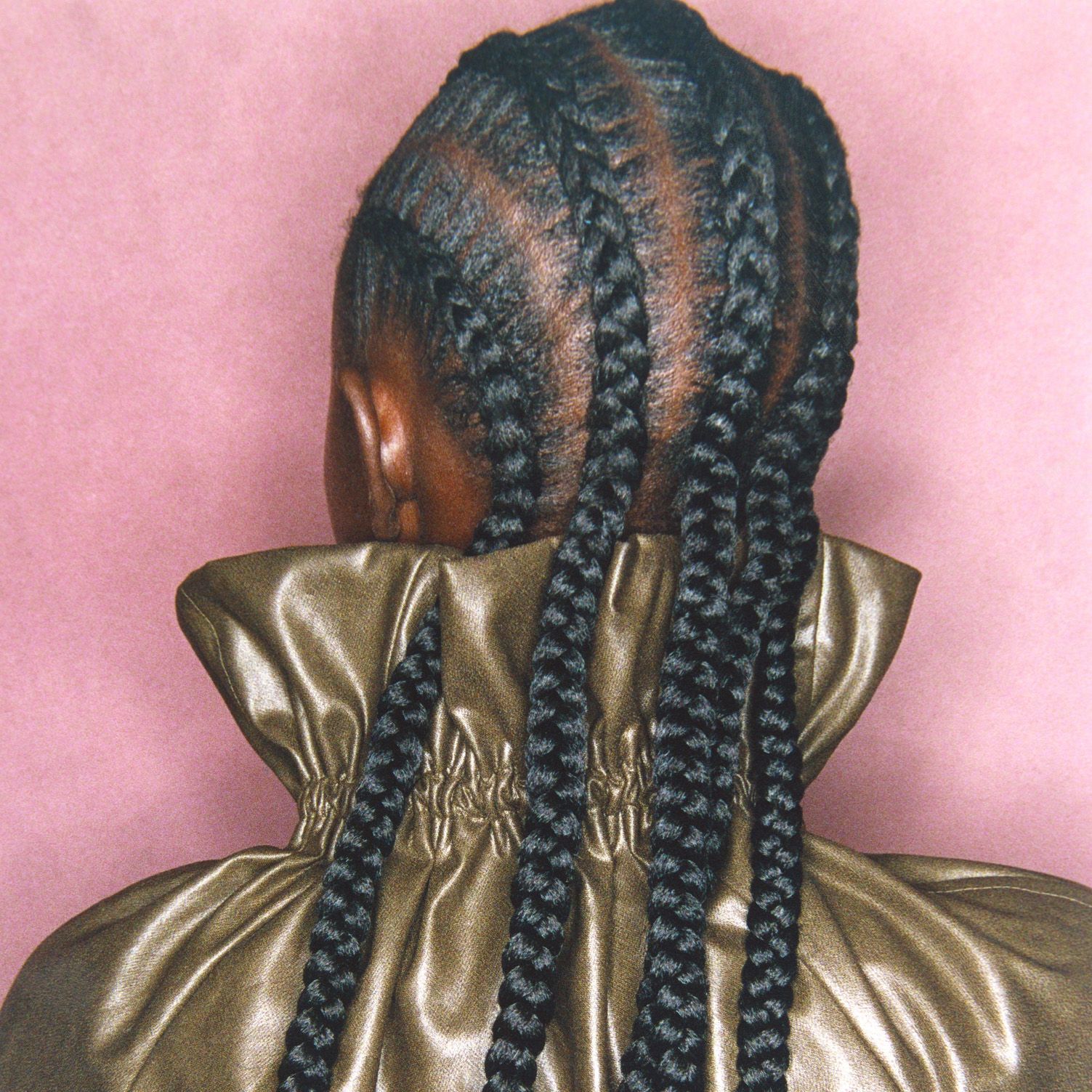
Back view tells you everything. These long thick braids land at mid-back length, black, coily, parted straight down the middle. No bangs, no taper, no fuss. The weight is the point: each braid has heft, so the whole set hangs straight instead of fanning out at the shoulders.
Who should book this? Someone with a long or oval face, because the vertical line from that middle part to the ends keeps the proportions balanced. A round or heart-shaped face might find the same line reads too severe without a few face-framing pieces. The hold is excellent: thick braids stay tight for six weeks, and the black colour hides any new growth for at least two more. You trade that for the weight on your scalp the first three days. Not a dealbreaker, but worth knowing before you sit down.
Short Cornrows with Zig-Zag Parting
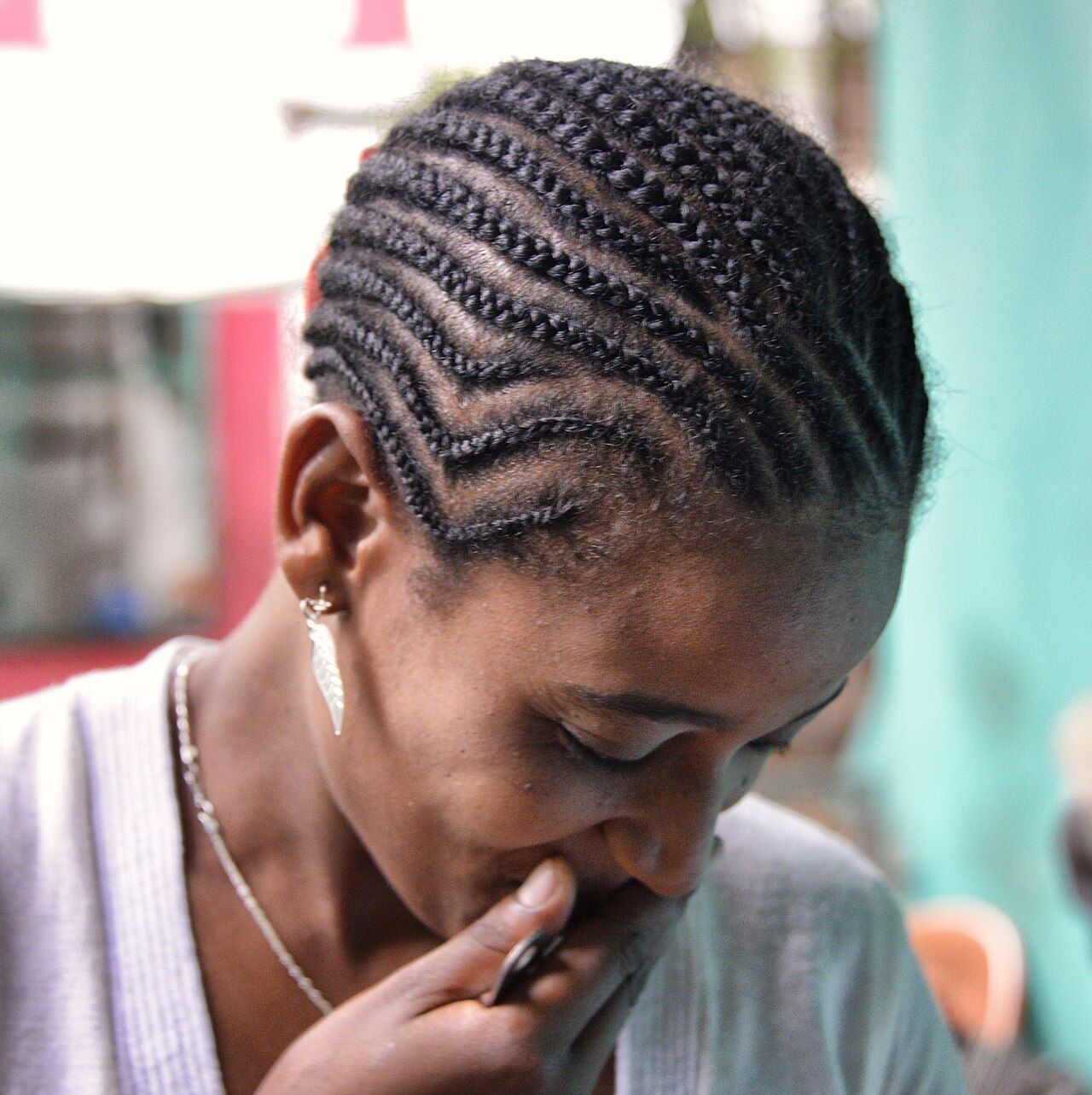
Have you looked at your part lately and thought, this line needs to move? That is the exact energy of short cornrows with zig-zag parting. The geometric pattern breaks up the scalp, so you get a sharp, deliberate look without extra length. Black, ear-length, coily — the hold is tight because the rows are small and close to the head. Styling is a salon job, about two to three hours, and you wake up with it exactly as it was. No bangs to train, no midday collapse.
Long Cornrows with Blonde Highlights
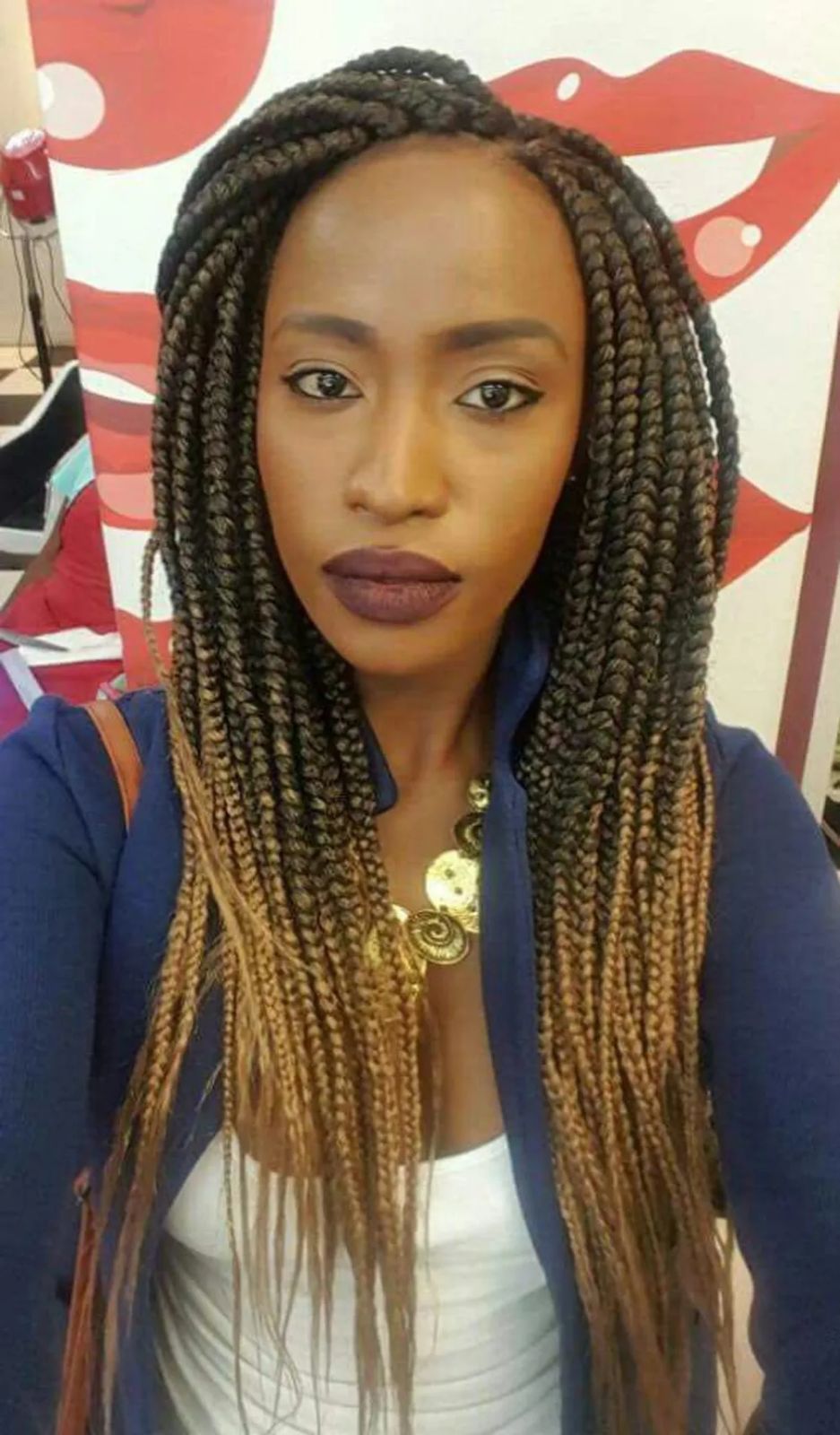
I saw these and thought, that is a lot of chair time. And it is. Long cornrows with blonde highlights take six to eight hours to install, straight-back from the root to mid-back. The texture is coily, the colour is black with blonde highlights woven through, and the hold is serious — these do not loosen for weeks. You maintain them with a satin bonnet at night and scalp moisture every few days. The highlights add dimension without extra styling, which is the whole point. Upkeep runs four to six weeks, then you book again.
What you get for the time: a side and back view that reads clean, intentional, and not at all fussy. Middle part, no bangs, just rows that stay where they were put.
Shoulder-Length Blonde Twist Braids
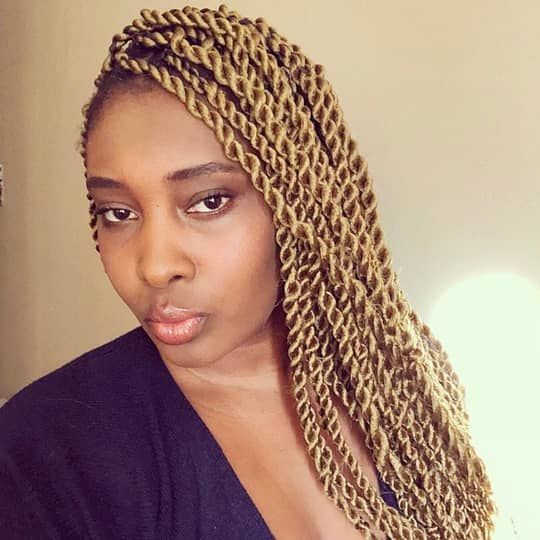
Blonde twist braids at shoulder length are a good idea until they are not, and then you learn. The colour is bright, the texture is coily, and the hold is decent for a twist — about four weeks before the roots start to look fuzzy. Styling is a salon install, three to four hours, and you can DIY them if you have the patience and a friend. The blonde needs occasional toning, because brassiness shows faster on a twist than on a flat braid. Side part, no bangs. Day to day, they are low effort. The effort is in keeping the colour from drifting yellow.
Visual Idea
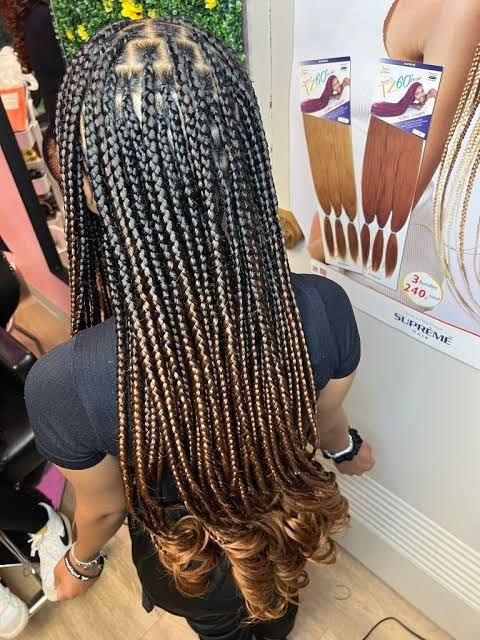
Here is the thing about ombre colour and curly ends: they read expensive from the back, and from the front they read like you planned your whole week. Mid-back box braids with a black-to-brown gradient, finished with loose curls at the tips. The texture is coily, the hold is strong because the braids are thick and the curls are dipped, not tied. Styling is salon only — the ombre needs a hand that knows where to fade. Middle part, no bangs.
Who it suits: anyone who wants length without weight and colour without root commitment. Who should pass: anyone who hates the feeling of curl at the ends brushing their shoulders, or anyone who does not want to explain the ombre line when it starts to grow out. The downside is that the curly ends will frizz before the braid does, and there is no fixing that without a re-dip.
Mid-Back Visual Idea
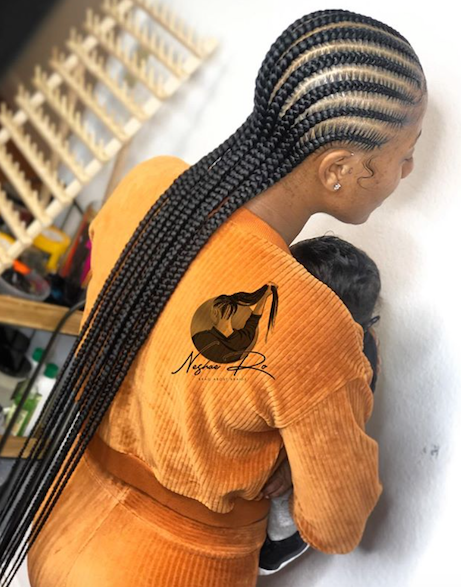
Would you rather have long cornrows with blonde highlights or solid dark ones? That is the question every time you sit in the chair. The blonde highlights add dimension — they catch light, they break up the black, they make the braid read as textured rather than flat. The solid dark version is quieter, more uniform, and it hides new growth better. Both are mid-back, coily, straight-back from a middle part, no bangs. The hold is the same: tight rows that last four to six weeks with a satin bonnet and scalp oil.
Wear and upkeep: the blonde version needs a toner every few washes, the dark version needs nothing. Styling is six to eight hours in the salon either way. You pick based on how much maintenance you want in your mirror.
Shoulder Visual Idea
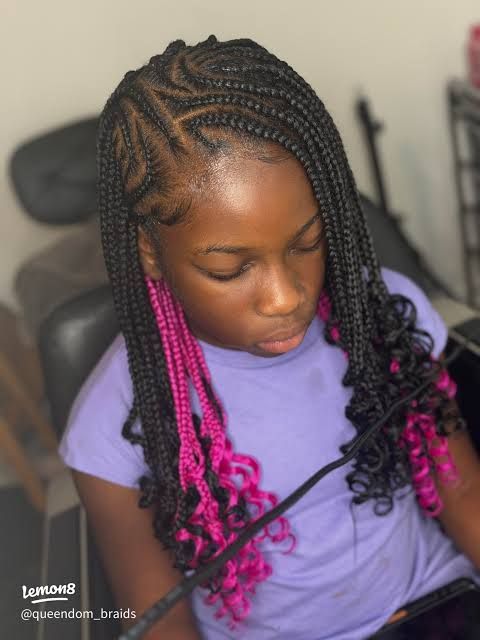
I did not expect to like pink curly ends this much. The technique is straightforward: your stylist braids the twist braids in black down to the last few inches, then dips those ends in a vibrant pink. The coily texture of the curly ends catches the light differently than the straight braided shaft, so the colour reads as dimensional, not flat. At shoulder length, the pink lands right at your collarbone, which means it shows whether your hair is down or half-pulled back. Middle part keeps it symmetrical. No bangs, no distraction, just a clean colour pop that does not require a full head of dye.
Black Visual Idea
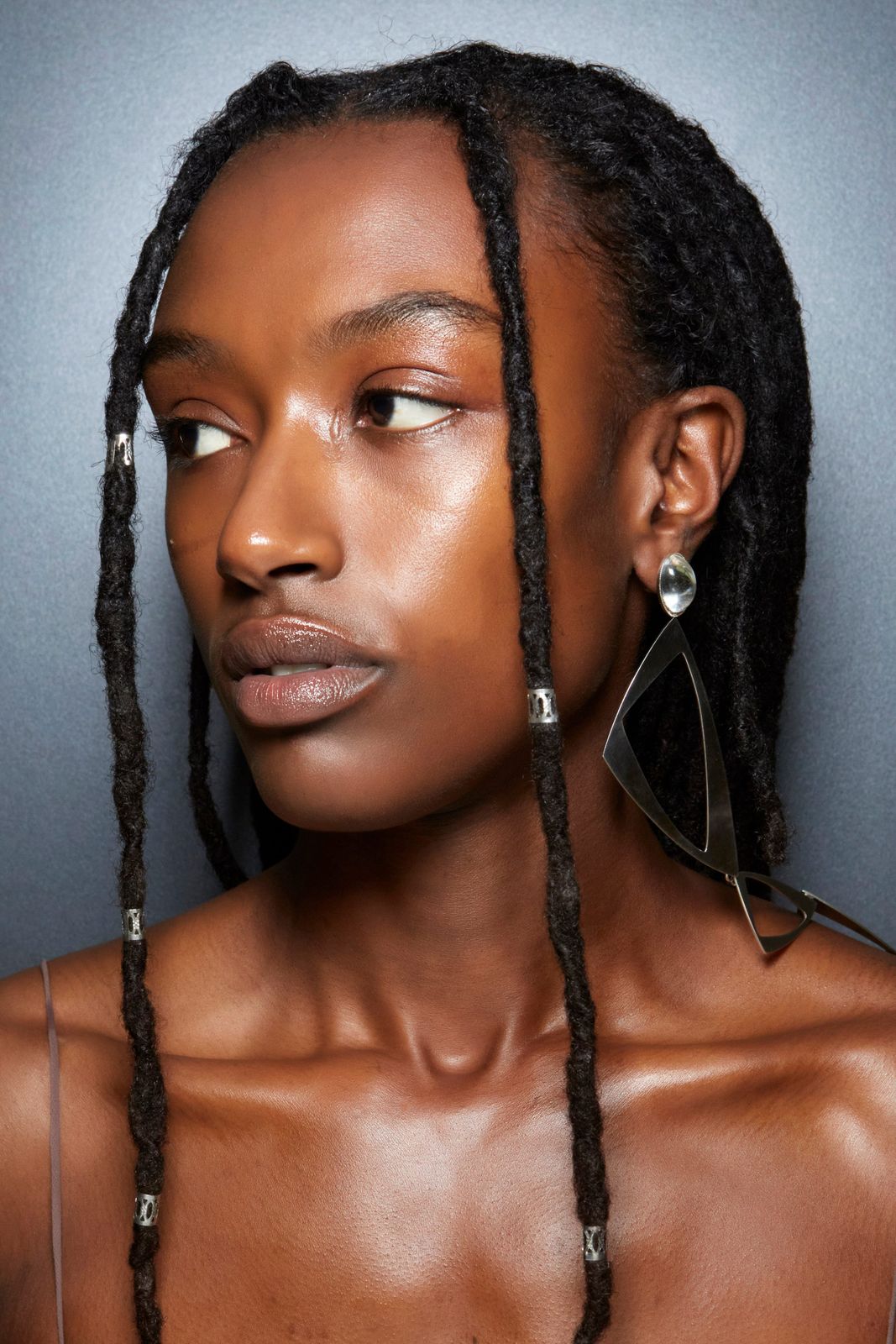
Monday morning, the silver hair cuffs are aligned. By Wednesday, one has slid to the left. This is the reality of braided locs with accessories, and it is fine. The styling steps are simple: part your locs down the middle, slide the cuffs onto individual locs at the root or mid-shaft, and pinch them closed. The coily texture of the locs grips the metal better than straight hair would, so they stay put longer than you expect. Mid-back length means you can cluster cuffs near the ends for a subtle shine or stack them at the crown for more visual weight. Black hair, no bangs, front view. The cuffs catch the light when you turn your head, and that is the whole point.
Black With Blonde Tips Visual Idea
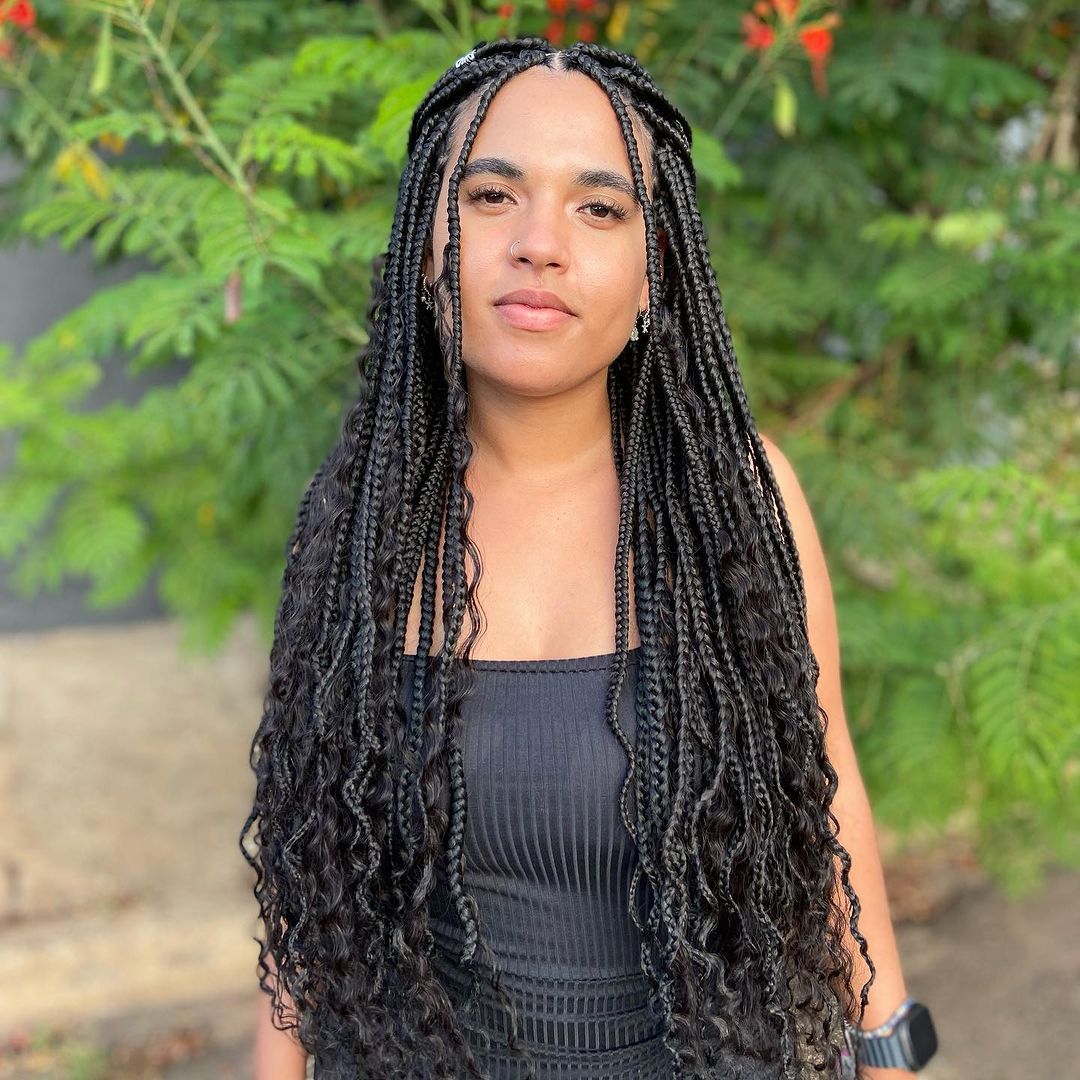
Confession: I used to think blonde tips on black braids were a high-maintenance gamble. Then I watched a friend wear knotless braids with curly ends for six weeks, and the grow-out barely showed. Here is who this flatters: anyone with a medium to deep skin tone who wants contrast without a full colour commitment. The black roots blend with your natural hair, and the blonde tips land at mid-back, so the colour shift happens below your shoulders. The curly ends soften the transition, making it read as intentional rather than faded. This is a salon job, not a bathroom-mirror project. The parting is middle, no bangs, front view. The braided roots stay neat, the curly ends add movement, and the blonde stays out of your face.
Brown With Blonde Highlights Visual Idea
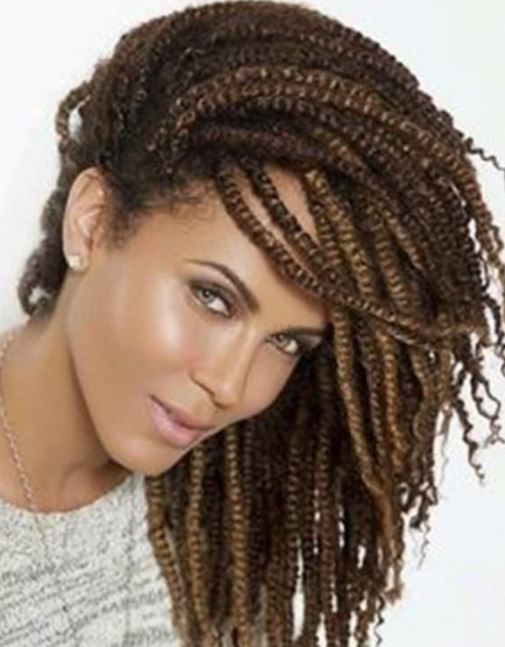
The mistake people make with two-toned twist braids is choosing colours too close together. Brown and blonde should read as distinct, not muddy. The honest downside: if your stylist uses a warm brown and a warm blonde, the two tones can blur into one after a few washes. The fix is a cool brown base and a cool, almost ashy blonde for the highlights. At shoulder length, the side part lets the blonde fall across the darker sections, creating a stripe effect that holds its contrast. No bangs, side view. The coily texture of the braids helps separate the colours, but the real work happens in the chair. Ask for a clear demarcation line between the two tones, and skip the toner that blends them.
Box Braids Visual Idea
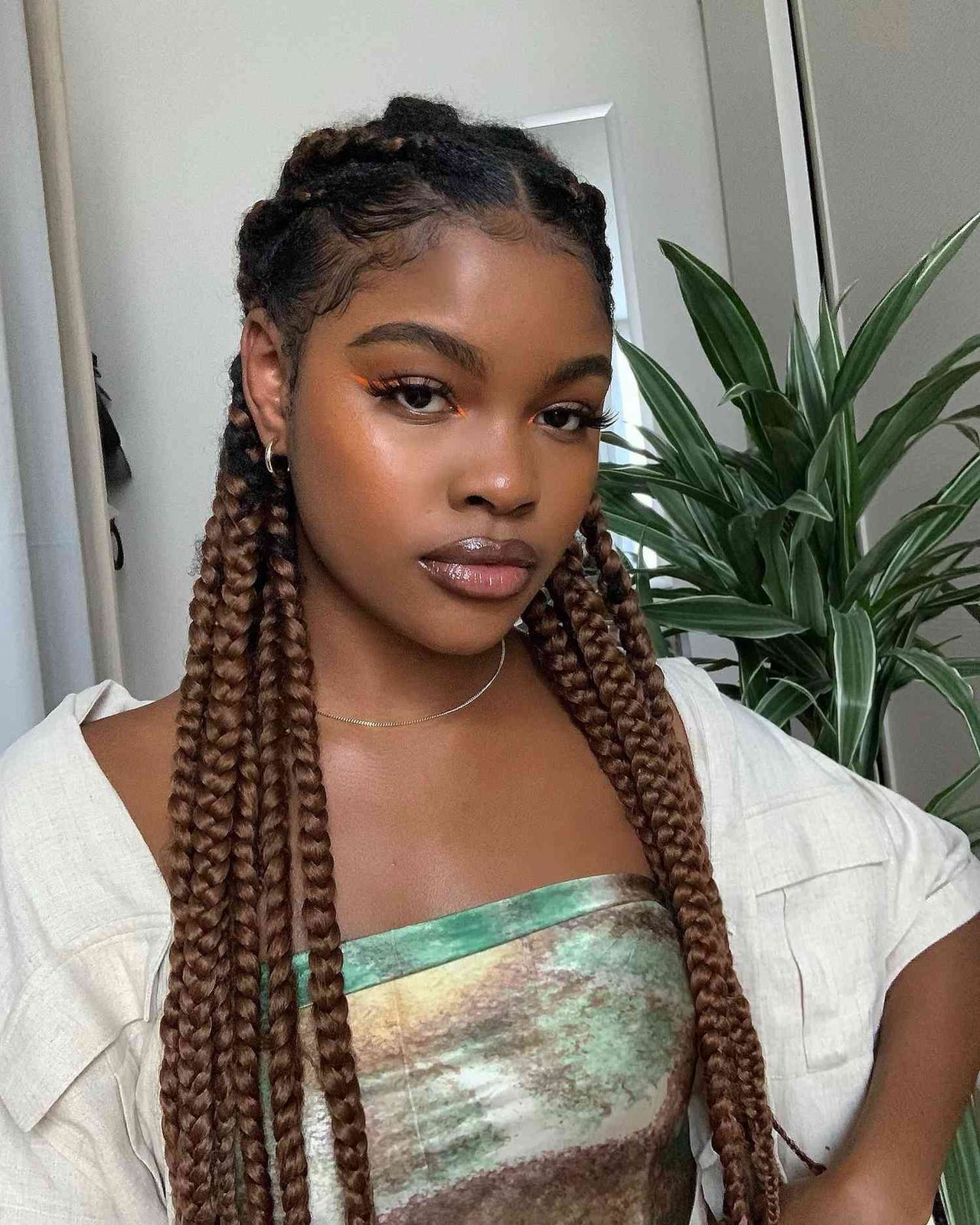
The technique for rich brown box braids with subtle highlights is about placement, not volume. Your stylist sections the hair into small, even parts, then braids each section with a brown base strand and a lighter brown accent strand woven in at the crown and mid-lengths. The result is a tonal lift without streaks. Mid-back length means the highlights catch light at multiple points, not just the ends. Middle part, no bangs, front view. The coily texture of the braids holds the colour evenly because the strands are wrapped, not painted. Wear and upkeep: sleep with a satin scarf to prevent frizz at the roots, and refresh the part line with a light oil every few days. The highlights stay visible for the full six to eight weeks.
Chin Visual Idea
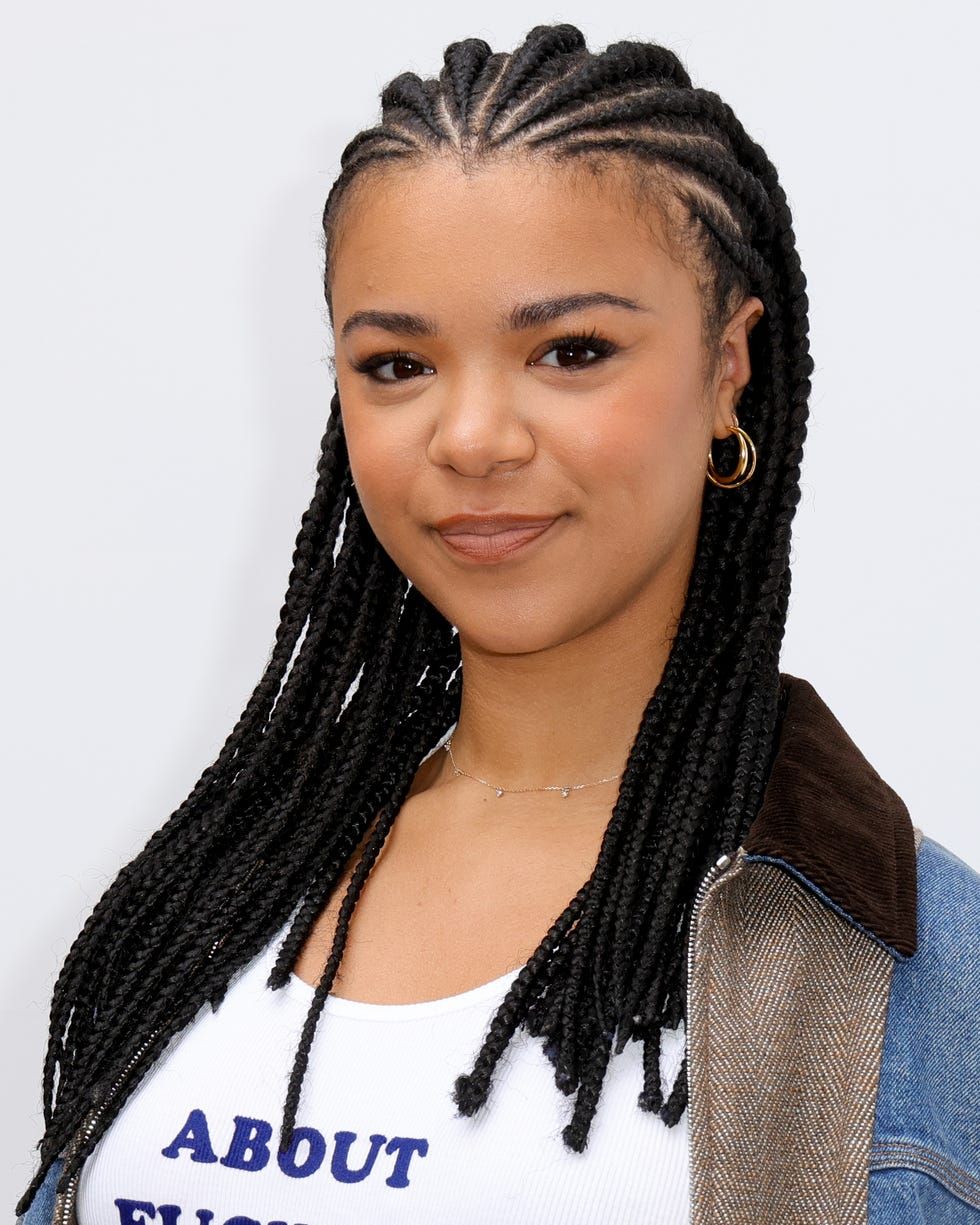
Can a bob this short still feel like a protective style? Yes, if the braids are neat and the colour is a solid black. The middle part keeps the shape symmetrical, no bangs to push around. Styling is the fastest of any Winter Braids for Black Women in this roundup — five minutes with a satin scarf at night, and it holds its line through a work day. The coily texture reads dense even on fine strands, and the chin length means zero weight on your neck. Colour stays true because there is no ombre to fade.
No Bangs Visual Idea
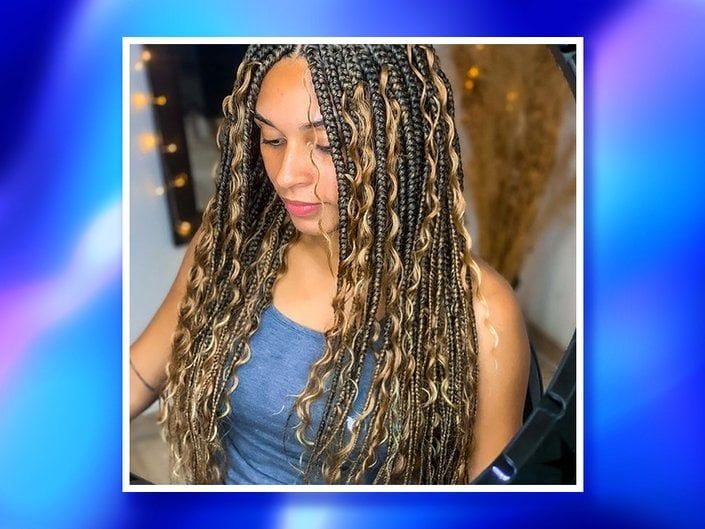
Long box braids with no bangs and a middle part. My gut says: this is for someone who wants symmetry and does not want to negotiate with a fringe every morning. The uniformity of the braids from root to tip means the eye travels straight down, no distraction. It flatters oval and heart-shaped faces best — the clean vertical line lengthens a round face without adding width at the forehead.
This is a salon job, full stop. The parting alone takes forty minutes. The honest downside: without bangs, the hairline gets full exposure, so your edges need weekly attention or they will announce themselves. Skip this if you like a soft, broken-up frame around your face.
Bob Braids Visual Idea
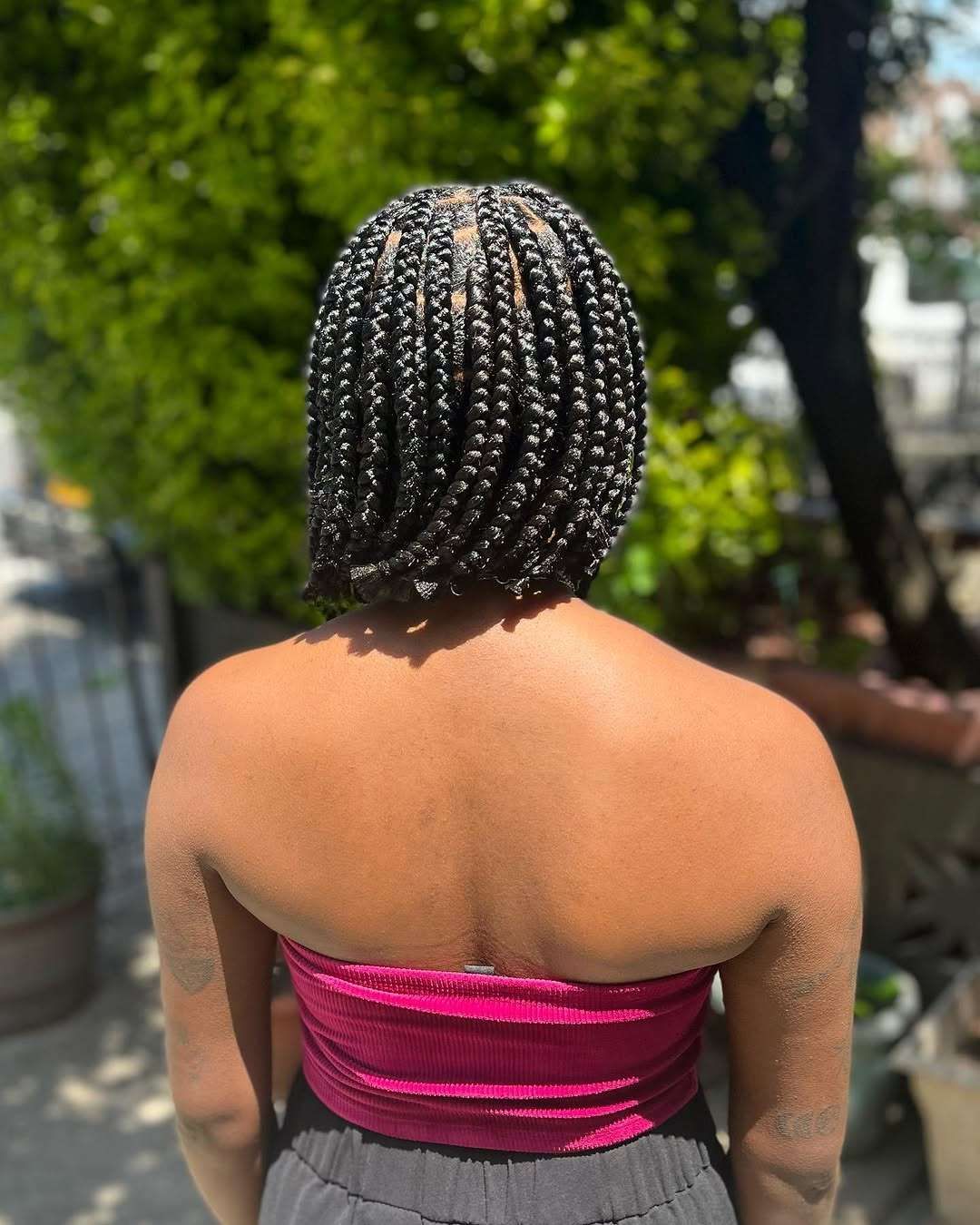
Short box braids in a bob shape beat longer styles for winter events. No contest. The chin length does not get caught in coat zippers or scarf knots, and the neat bob shape stays crisp under a beanie. The middle part and solid black colour mean you can dress it up or down without the braids competing with your outfit. For a holiday party, this holds its shape from the first toast to the last photo.
Front View Visual Idea
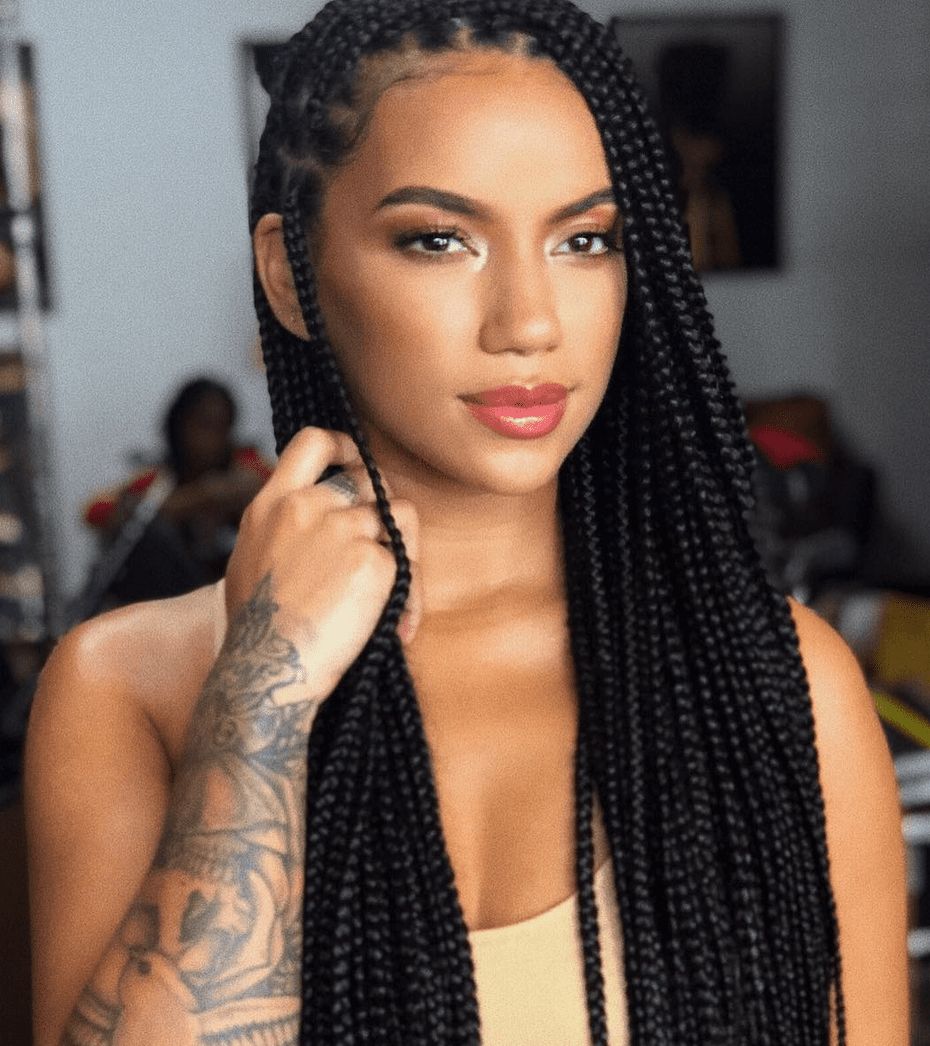
You see the front view first, so the parting better be straight. A middle part on long, neat box braids demands precision — each braid must land at the same angle or the symmetry breaks. The coily texture helps here: it grips the part line and does not slide around like straight hair would.
Wear and upkeep is where this earns its keep. A satin bonnet at night and a quick root refresh with a light oil every three days. The black colour hides dust and lint better than any blonde or honey tone. No bangs means one less thing to style, but your hairline will be on display every single day. The hold is solid for two weeks before the roots need a touch-up.
Braids Visual Idea
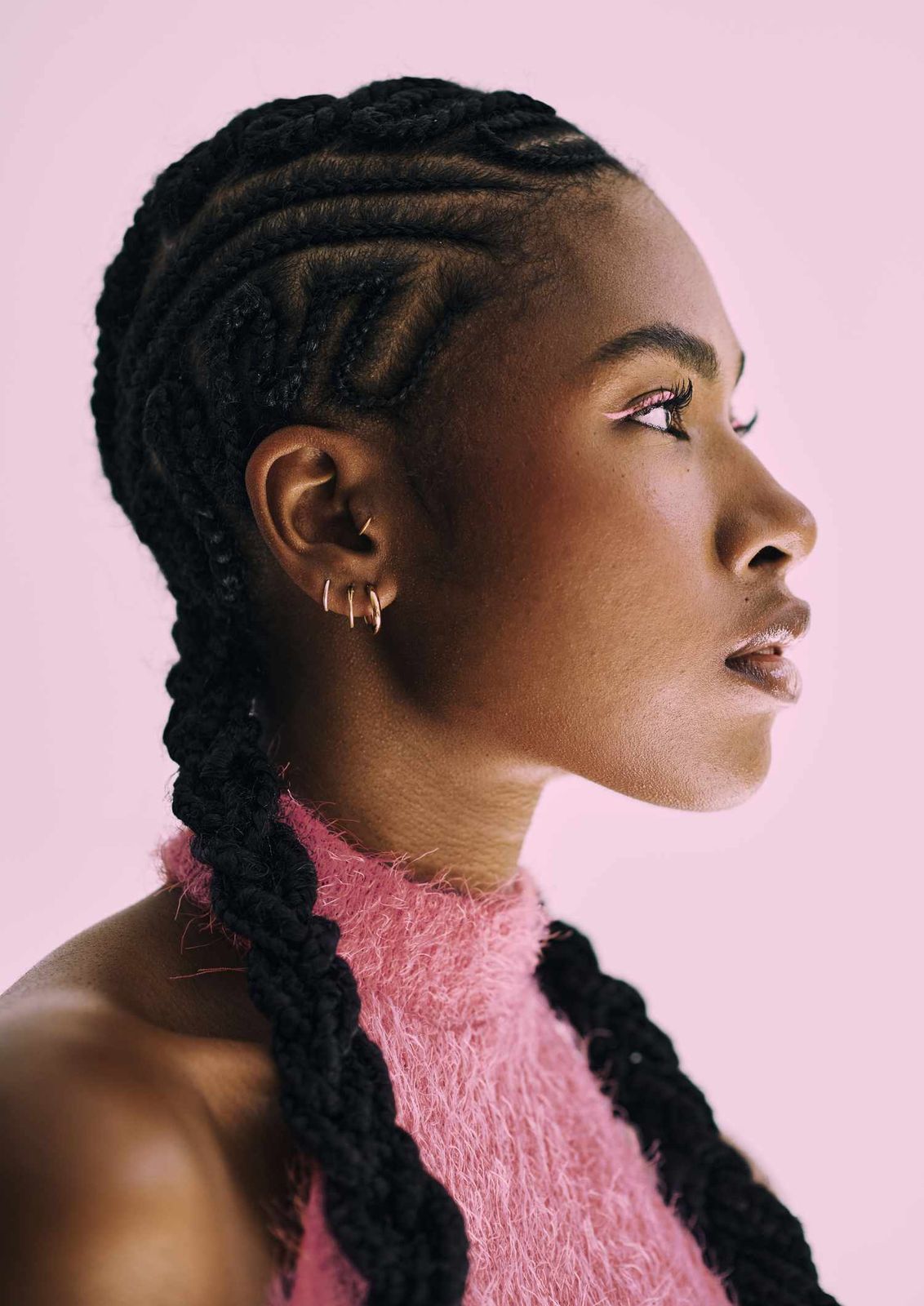
I will confess: I underestimated how much a geometric scalp pattern changes the daily experience of braids. The middle part and two braids create a clean, intentional line from front to back, but the real work is the parting. Every section must be the same width or the pattern looks off, and that is a salon skill, not a bathroom mirror one.
The honest downside: the scalp pattern shows every bit of new growth. By week three, the roots blur the geometry, and by week four you are either booking a touch-up or wearing a headwrap. The coily texture holds the braids tight, so the pattern stays crisp longer than it would on relaxed hair. Solid black colour keeps the focus on the lines. This is not a low-maintenance style, but for the first ten days it looks like a blueprint drawn by someone who cares about precision.
Front View Close Crop Visual Idea
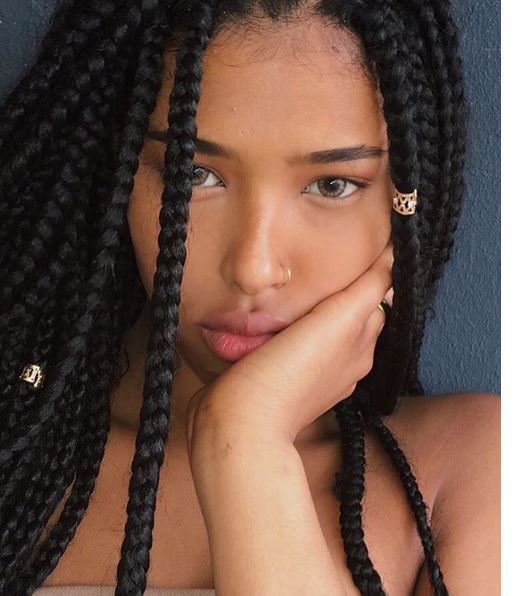
Can you really DIY loose mid-back box braids with gold hair cuffs? Technically yes, but the cuffs need a secure placement that a salon can guarantee. The coily texture helps the braids grip, and the black colour keeps the cuffs the focal point. The hold is solid for weeks, but the loose styling means some frizz by week two. Best for someone who wants a low-effort standout without tight scalp tension.
Final Thoughts
I went into this thinking I’d pick the burgundy updo. Came out wanting the honey ombre ends instead. Funny how that happens when you stop scrolling and actually look at the shape.