
I spent last winter watching my locs go flat under every beanie I owned. This year, the trend is different: structured silhouettes meeting soft pastels and bold accents. It’s not about hiding your hair. It’s about making the winter gear work for you.
These 26 Winter Loc Styles range from five-minute updos to weekend projects, short to mid-back, salon-installed to DIY. They work for fine locs that flatten by 4 p.m. and thick coils that need breathing room. I’ve tried enough grow-out lines and frizzy ends to know which ones actually hold through a commute.
Short Twisted Locs Framing the Face
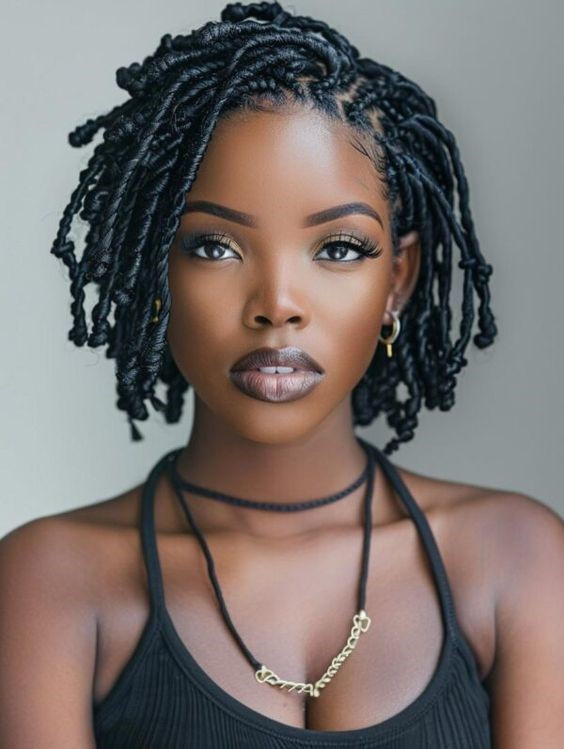
I didn’t expect short twisted locs to read this polished. At chin length with a middle parting, they frame the face without bangs or layers. The wavy texture keeps it from looking severe — it’s soft but defined. The twisted shape gives each loc its own weight, so the silhouette holds its shape. A textured frame that actually frames.
Wavy Collarbone Lob With Subtle Auburn Highlights
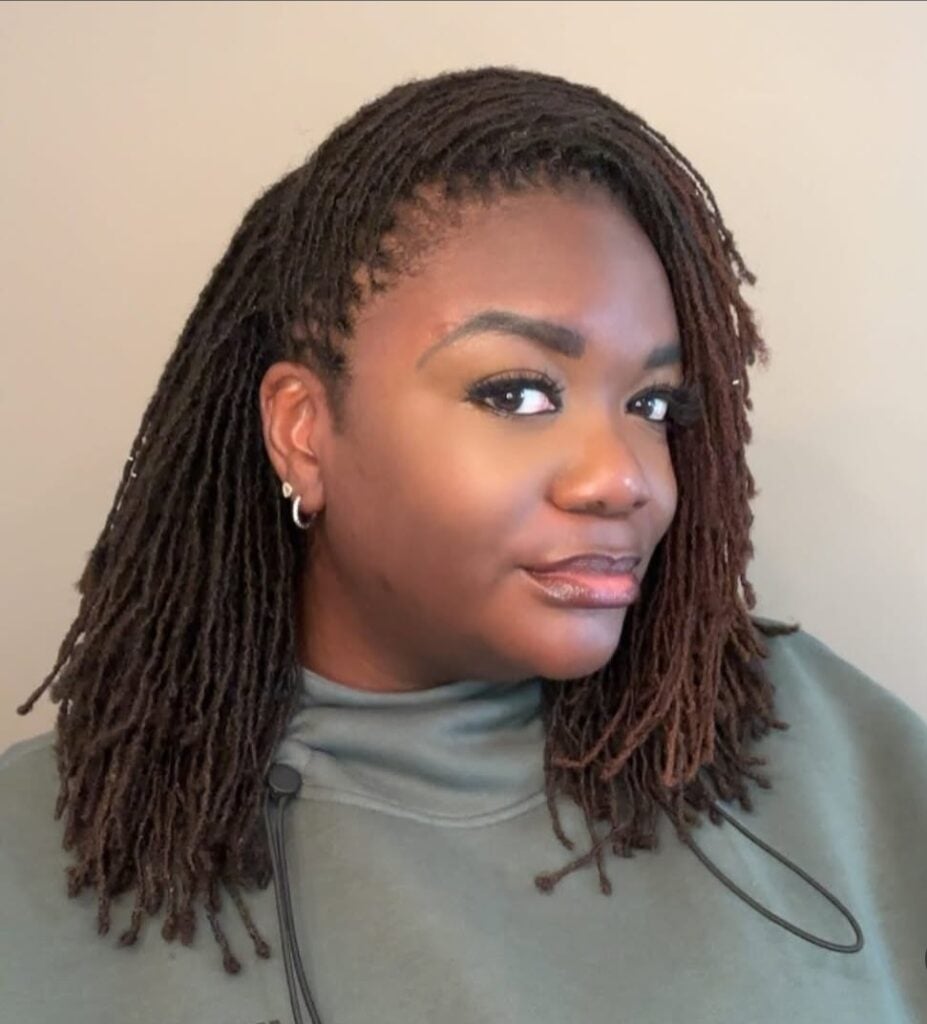
These wavy loc lobs are deceptively neat. At collarbone length with no bangs and no layers, the cut relies on the subtle auburn highlights for depth. The fine-density wavy texture keeps the silhouette light, and the middle parting naturally flatters a delicate jawline.
Air-dried styling takes about 15 minutes — no round brush required. A trim every 8-10 weeks prevents the ends from pulling the shape down. This style works best if your locs are fine to medium; thicker locs may make the lob feel heavier than intended. Stick with this for a polished look that holds up in winter weather.
Thick Coily Collarbone Locs
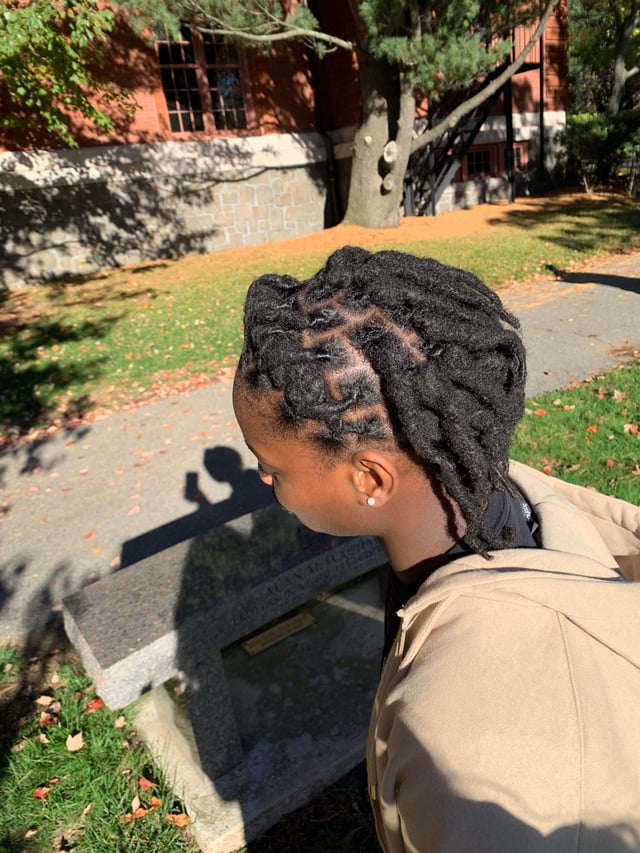
Ever wondered if thick coily locs are worth the weight? At collarbone length with no bangs and no layers, these locs are dense and defined. The coily texture gives them volume that doesn’t flatten by noon. But the honest truth: they’re heavy. Your scalp will feel it by the end of the day, especially in winter when you layer up. The middle parting helps distribute the weight, but it’s not a light style.
Loose Shoulder-Length Locs
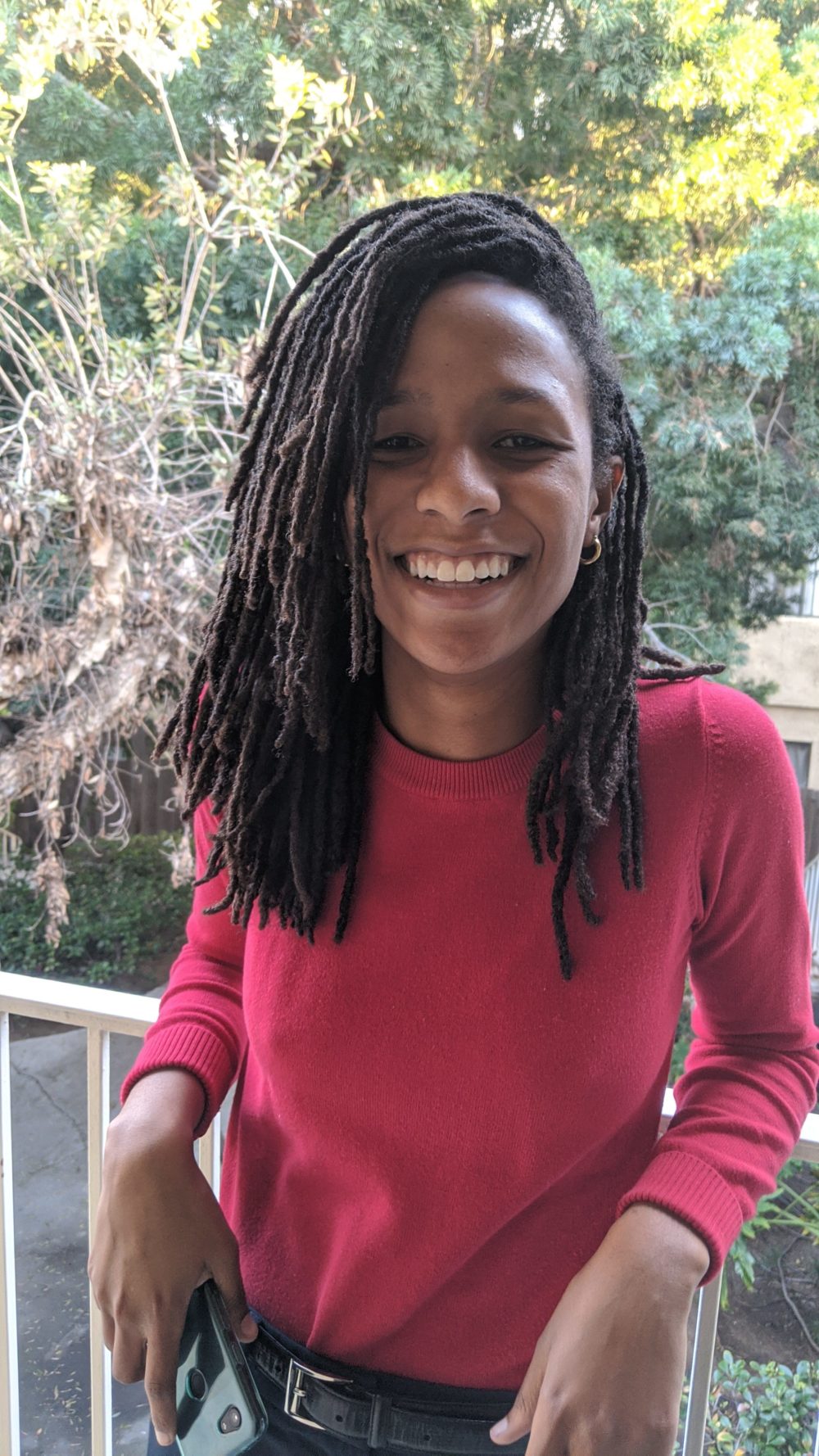
Soft winter light catches the side part of these loose shoulder locs. At shoulder length with no bangs and no layers, the medium-density texture lets each loc move independently. The dark brown color absorbs the light, making the texture pop. Compared to tighter, more uniform locs, this style reads as relaxed and natural — the kind of look that doesn’t try too hard. It’s the winter loc style you can wear without overthinking.
Ask your stylist for a side part that follows your natural growth pattern, shoulder-length locs trimmed evenly, no layers to keep the shape loose, and a medium-density texture that allows movement. Avoid making the locs too uniform; the variation is what gives this style its character. This is the one you reach for when you want something that works with the season, not against it.
Wavy Ombre Locs in Loose Curls
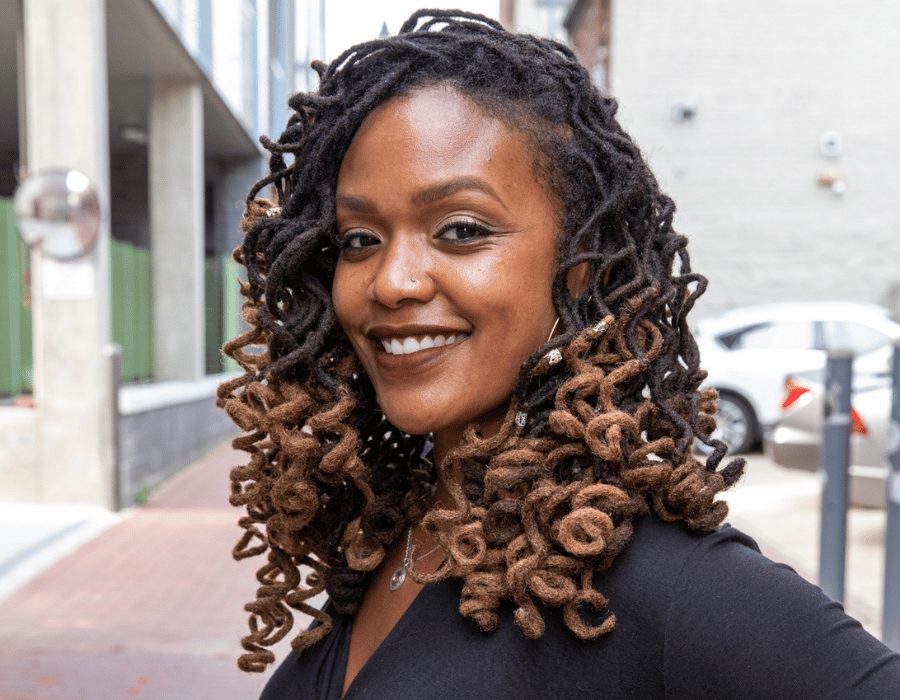
This is a technique that pays off. The wavy ombre locs are built by keeping the roots dark brown and lightening the tips to a warm brown, creating a gradient that moves with the curls. At shoulder length with no bangs and no layers, the loose curls add movement without losing definition. The middle parting keeps the ombre balanced on both sides. It’s a winter loc style that catches the light without trying.
Medium Brown Butterfly Locs
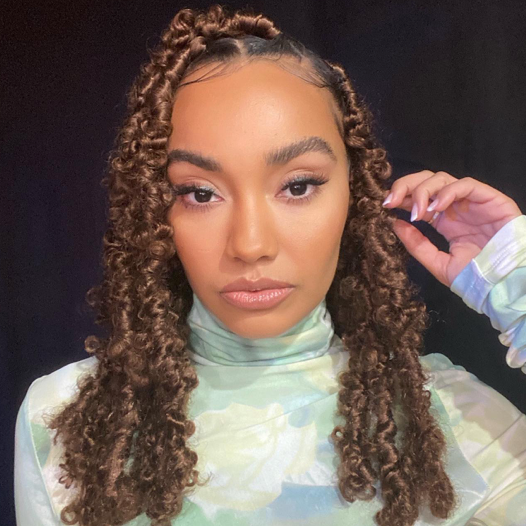
I’ll admit it: I almost let my butterfly locs slip at the roots. The mistake is thinking you can install them yourself without securing the base properly. These shoulder-length locs with a wavy and curly texture need a firm foundation, and that means a salon visit for the initial set. No bangs, minimal layers, just uniform length that frames the face. The roots will hold if you retwist every six weeks, but the slip happens when you skip the base or use too much product.
To dodge the trap, refresh with a light mist of water and oil, and trim every 10-12 weeks to keep the ends neat. DIY is tempting, but the slip at the roots will show by week two. Book the salon, then maintain at home with gentle handling. The result is a style that lasts through winter without sliding off.
Loose Coily Dark Brown Locs
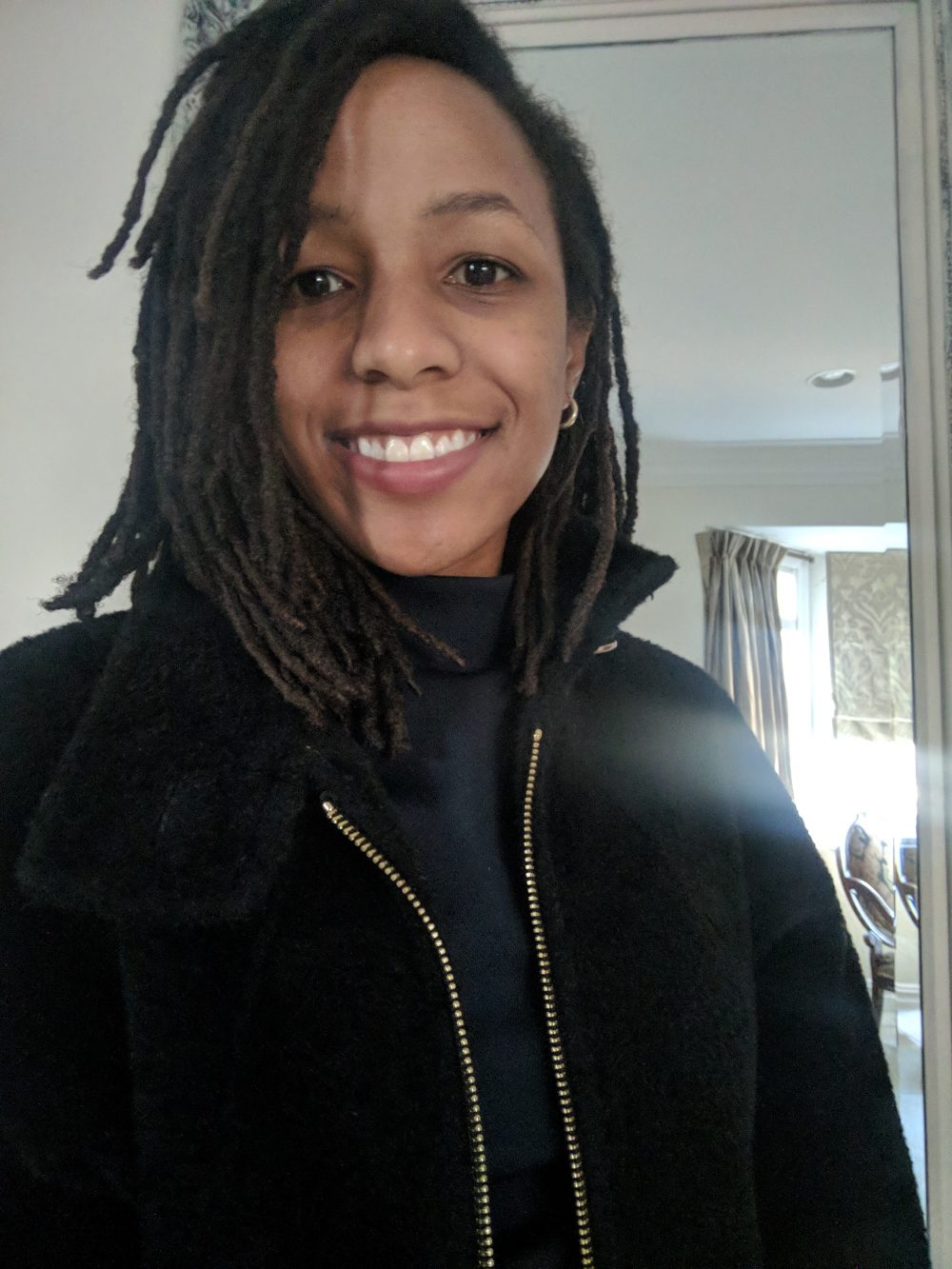
Do side-parted loose coily locs actually hold shape in winter? I’m not convinced. These shoulder-length dreadlocks in dark brown look defined in the salon, but dry air makes the coils frizz and the side part migrates by noon. No bangs, no layers, just thick locs that need constant retwisting. The honest downside: they look best on day one, then it’s a battle against the elements. If you want a set-it-and-forget-it winter style, skip these until spring.
Loose Locs with Winter Hat
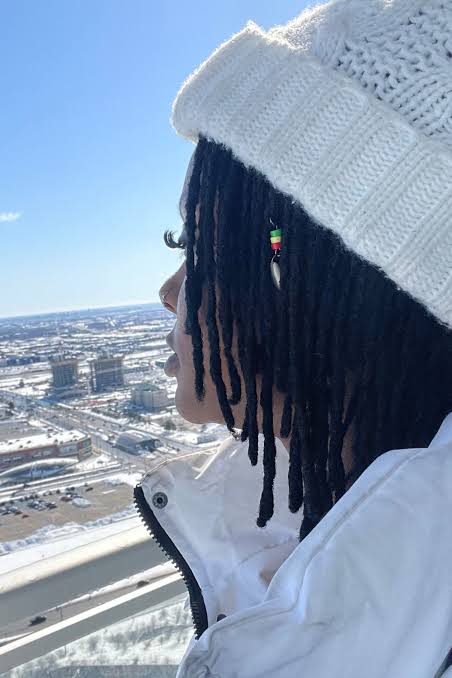
Snow falling, hat pulled down, locs peeking out. This is winter at its best: shoulder-length black locs under a white knitted winter hat, a single beaded charm dangling from one loc. No bangs, no layers, just loose locs that frame the face. The middle part stays hidden under the hat, and the look is pure seasonal ease. It’s not about the locs themselves, it’s how the hat makes them feel cozy. The white hat contrasts with the black locs, drawing attention to the texture. Perfect for a snowy day or a casual outing, this style requires zero effort beyond pulling on the hat. The beaded charm adds a personal touch without fuss.
Locs Updo with Beanie
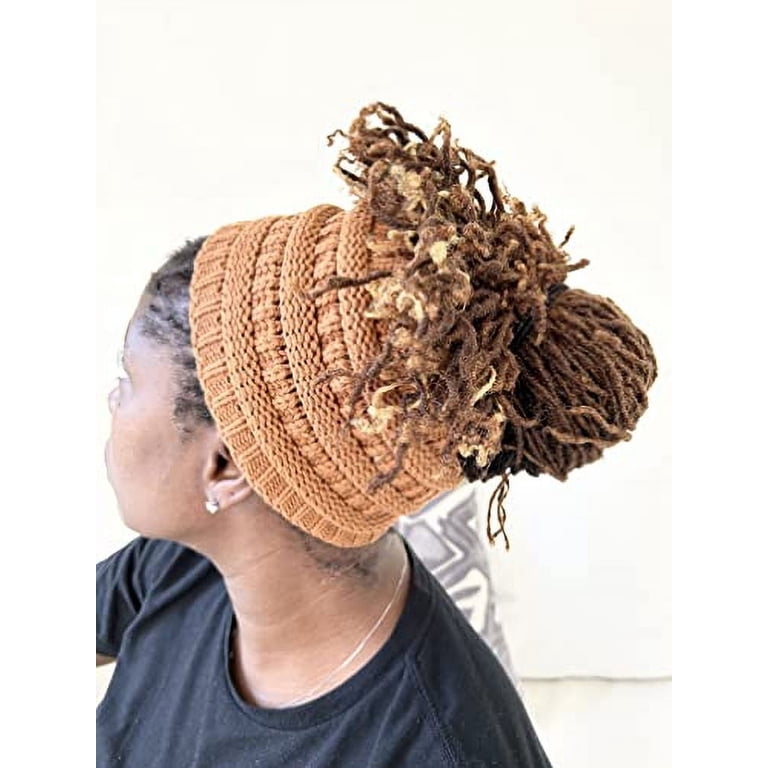
The beanie stays put. The locs underneath? That’s another story. For a locs updo beanie, the trick is gathering medium coily locs into a low bun at the nape, then pulling the beanie over. No bangs, no layers, just a neat updo that hides under the hat. Across a real week, the bun loosens and a few locs escape, but the beanie covers the mess. Upkeep means retwisting the roots every six weeks to keep the coily texture defined.
Mid-Back Box Braids
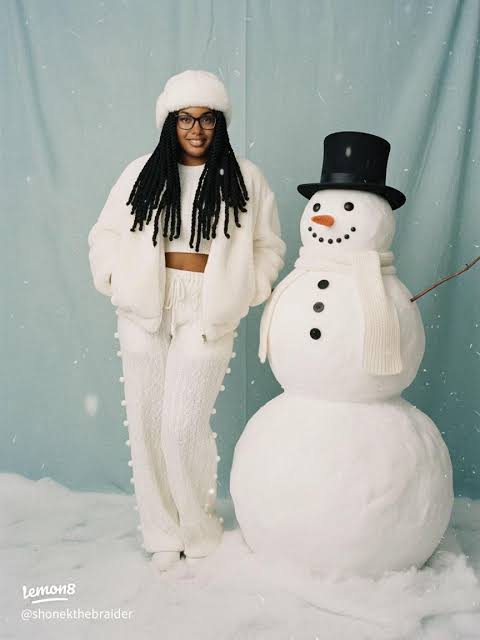
Mid-back box braids are a winter staple, but they’re not for everyone. These thick black braids fall straight to the mid-back, no layers, no bangs, just uniform length. They flatter longer face shapes by adding vertical line, and the sleek texture works perfectly under a winter coat. The snowman in the photo says it all: this is a cold-weather look that stays neat through snow and wind. They last six to eight weeks with minimal fuss, making them ideal for the busy season.
Who should pass? Those with very round faces might find the straight lines unflattering, and anyone craving volume will miss the fullness. The straight texture can also look flat on fine hair. Stick to this style if you want low-maintenance winter elegance; skip it if you need more movement or have a heart-shaped face that benefits from width at the jaw.
Neat Braided Black Locs
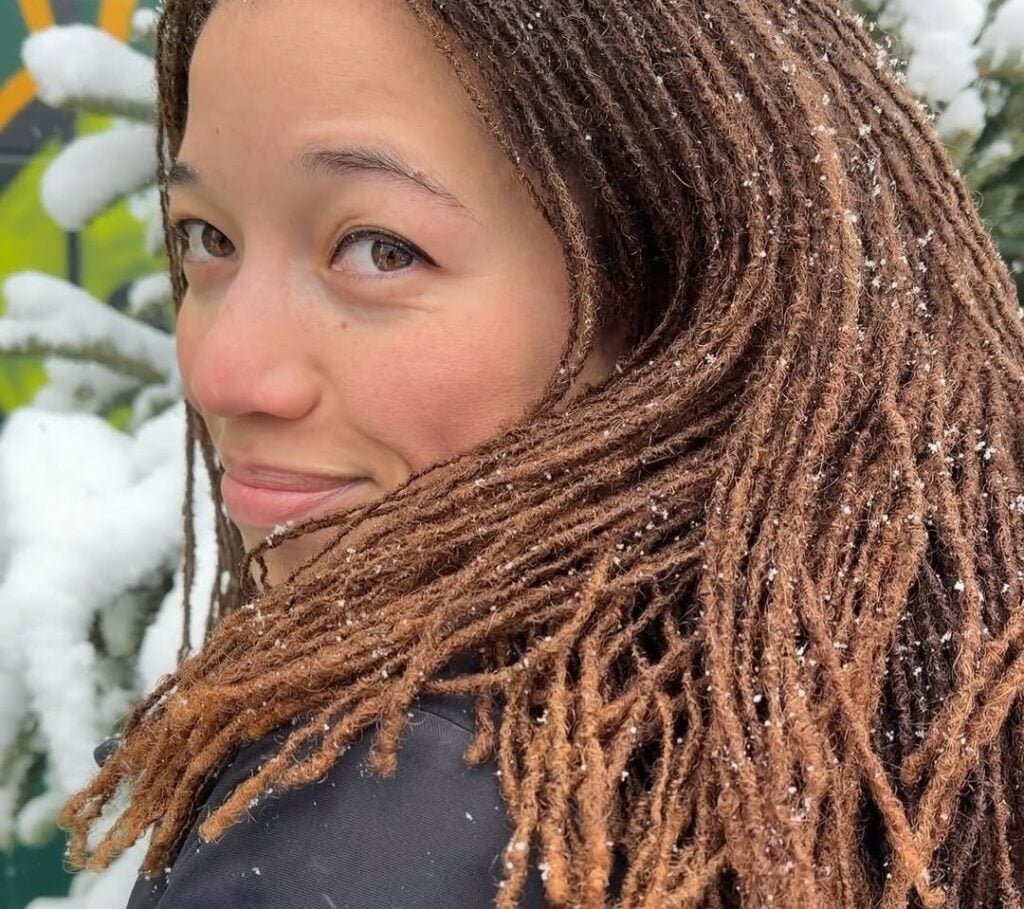
I will never get tired of seeing a full head of neat braided locs. These hit mid-back with a middle part and zero bangs, just clean rows of black braided texture. The pattern is what makes it: each loc is uniform in size, the part lines stay sharp, and the waves settle into a soft rhythm instead of going every direction. This is not a weekend experiment. It is a salon booking, and you sit still for it. But the result is a shape that holds its line through hats, scarves, and the whole season.
Thick Single Braided Locs
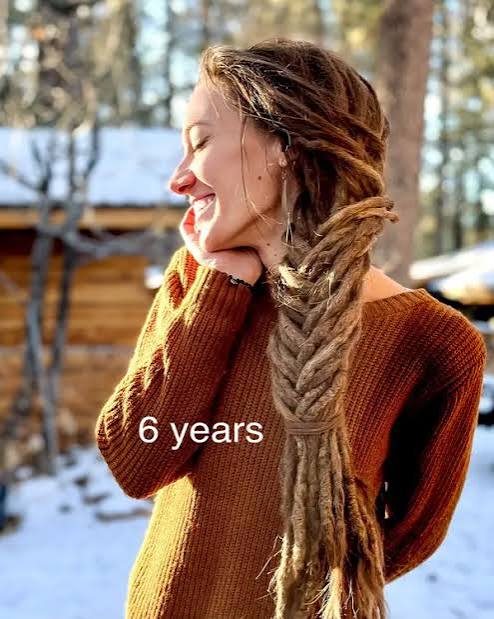
Have you ever worn loose locs for months and wondered why they feel fragile by week three? Thick single braided locs solve that. These are dark brown, mid-back, braided from root to tip in one continuous motion. No loose ends, no unraveling strands. Compared to standard loose textures, the braided surface catches less lint and holds its shape under a winter hat. The density is the point: each loc is substantial enough to feel like a single unit. It is a protective style that actually protects, because nothing is left to snag.
Low Braided Bun Updo
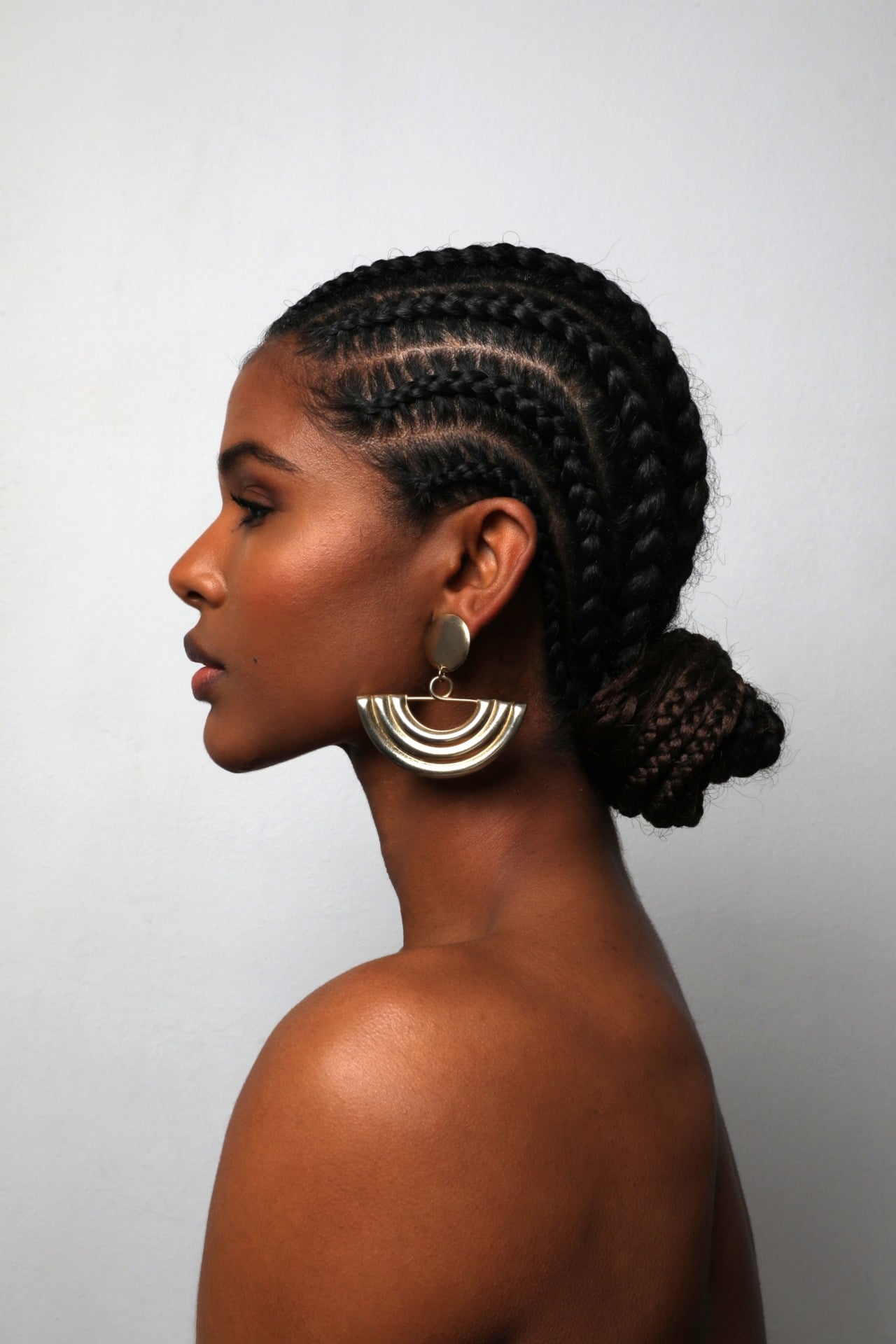
I used to think a low bun was the safest winter style. Then I learned the hard way that pulling straight mid-back cornrows into a tight bun can lead to tension alopecia. The fix: keep the bun loose. This low braided bun starts with salon-installed cornrows, so book that appointment. For upkeep, wear a satin bonnet at night and refresh every 4-6 weeks. The cut has no layers, no bangs, and straight texture.
Intricate Updo with Braided Elements
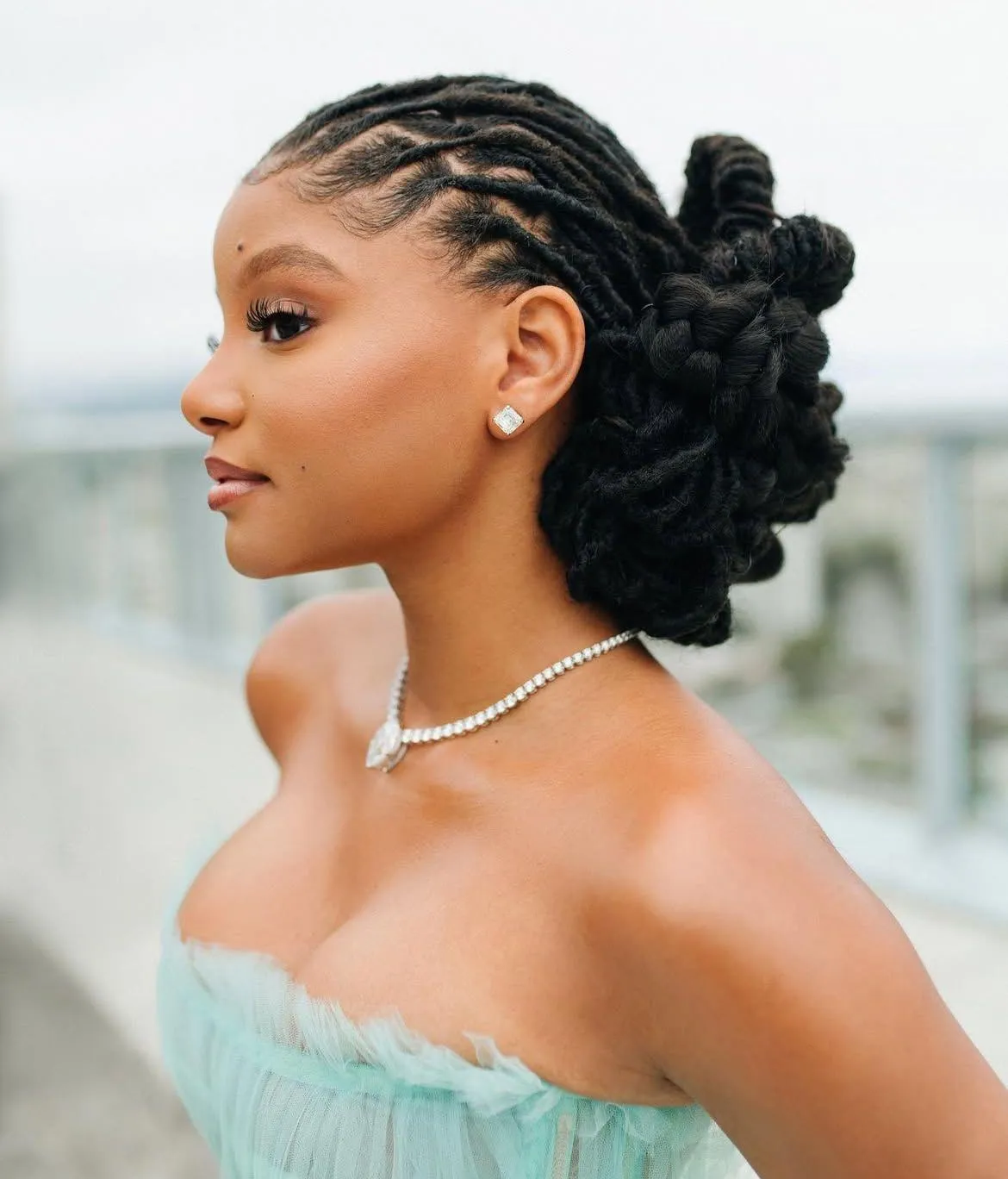
From the side, this braided loc updo is a study in geometry. The thick black locs are swept into an intricate pattern that rises from the nape to the crown, with braided elements crisscrossing like architecture. There are no bangs, so the side part creates a clean diagonal that emphasizes the structure. The side profile reveals how the braided sections wrap around the base, creating a woven, sculptural effect.
What makes this work is the contrast between the tight braided elements and the natural thickness of the locs. The mid-back length provides enough weight to hold the updo without pins slipping. No layers here — the locs are uniform, which lets the braiding stand out. The texture is thick and dense, giving the updo presence without needing extra volume. It’s a salon-only look, but the visual payoff is immediate.
High Ponytail with Braided Accents
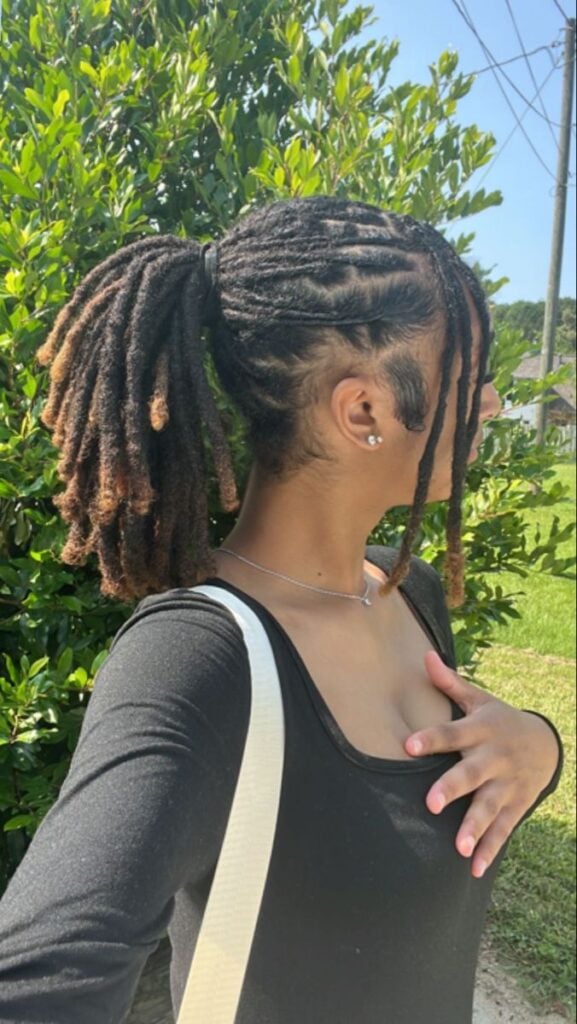
I’m skeptical that this high ponytail locs style holds its shape all day. The braided accents are sleek at first, but mid-back locs have weight, and a high ponytail can pull at the roots. The warm brown ends add dimension, but the real question is how long the braids stay tight. No bangs, no layers — just a high ponytail with braided accents that look polished for a few hours, then start to frizz. It’s a look for a short event, not a full day.
Updo with Loose Locs Framing Face
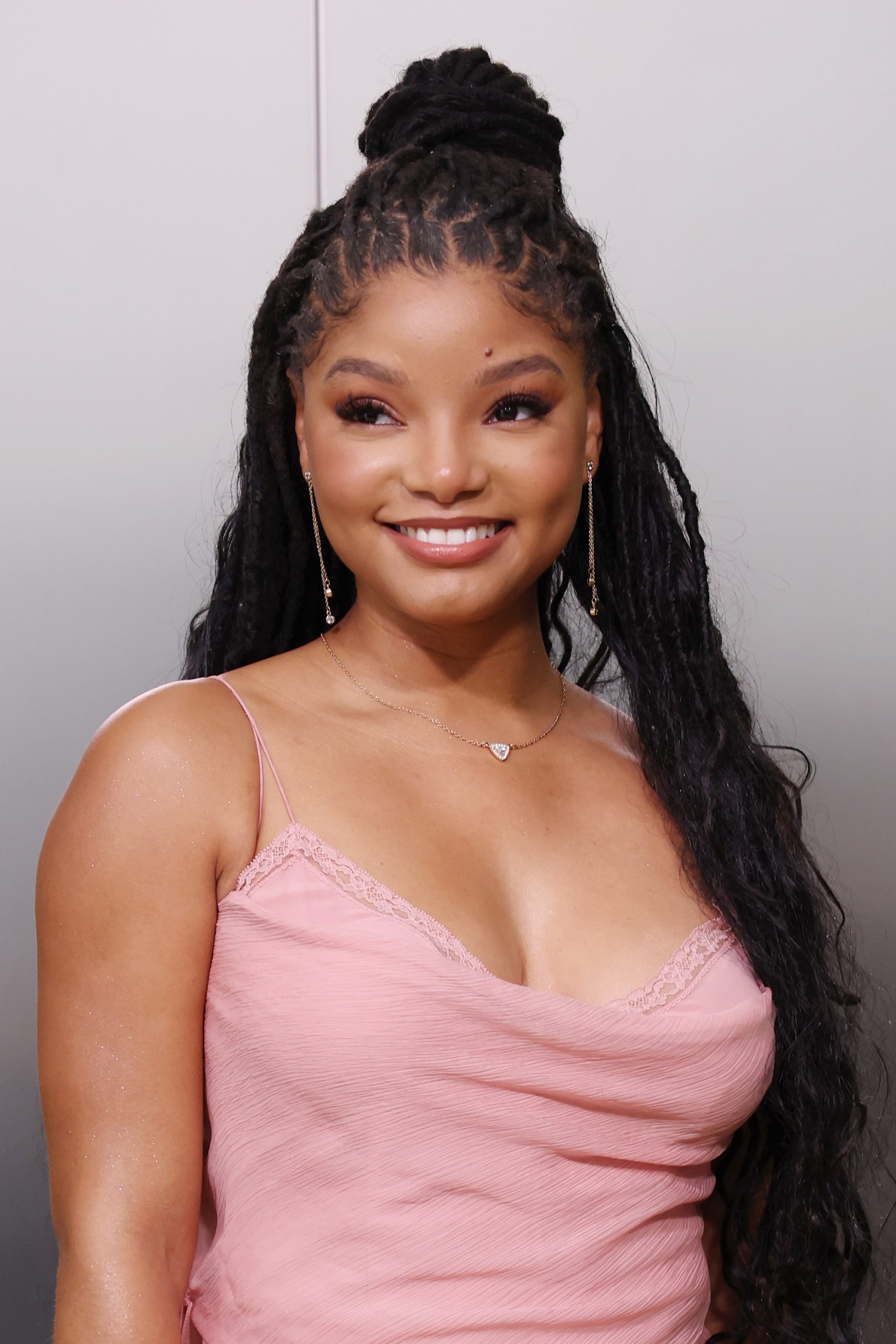
The high bun is neat. The loose strands are not. This loc updo loose strands style takes coily locs at mid-back length and pulls them into a tight high bun, leaving a few pieces out to fall around the face. No bangs, just deliberate escapees. Those loose strands create a layered effect that a slicked-back bun cannot mimic. The reality of wearing this for a week: the bun holds firm, but the framing pieces begin to separate by day three. By day five, they have their own agenda. It is a look that asks for a mid-week refresh, which is fine if you plan for it.
Multiple Top Knot Loc Updo
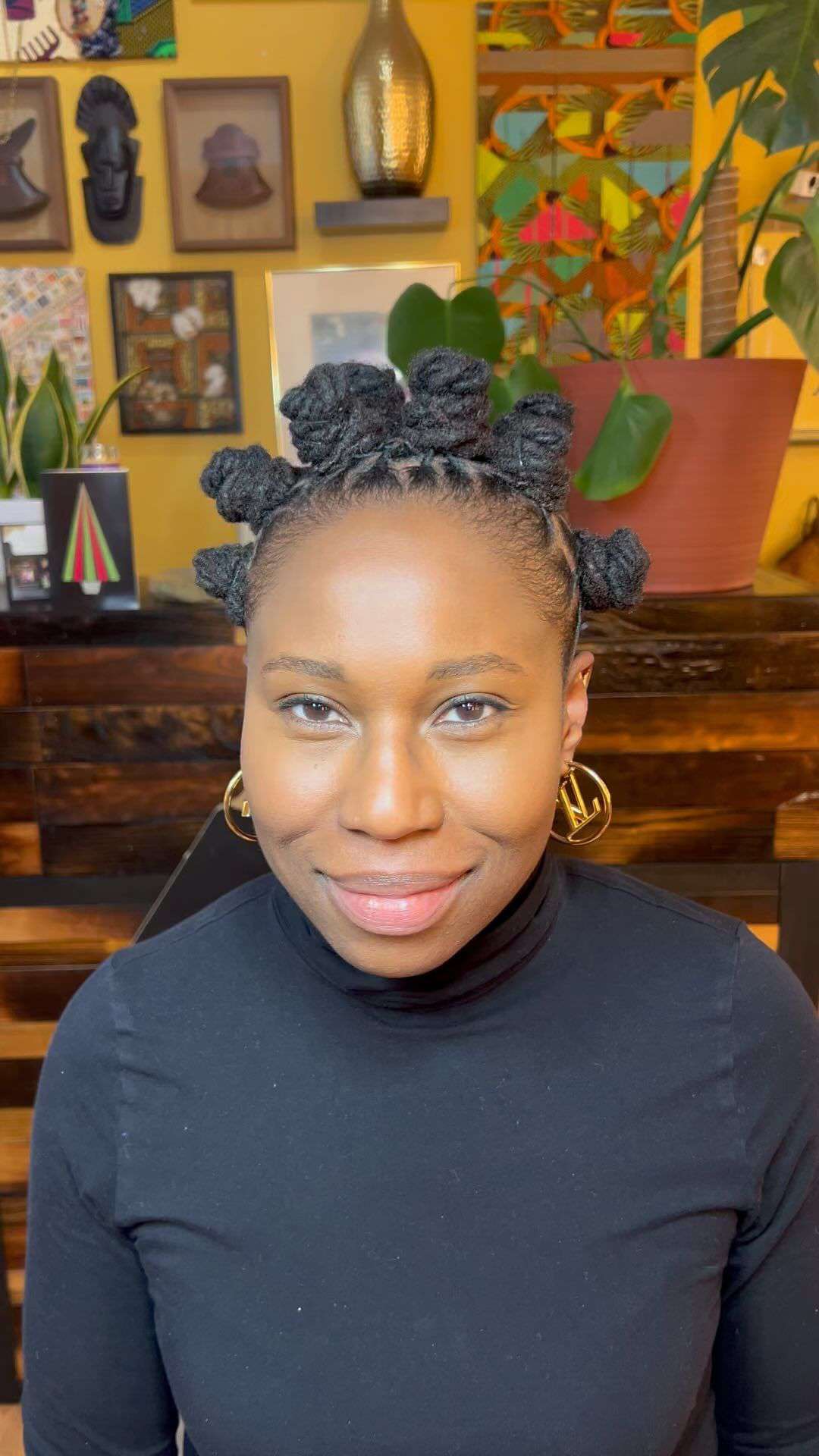
Ever wonder how multiple top knot locs stay put? The technique starts with coily mid-back dreadlocks sectioned into four or five equal parts. Each section is twisted into a tight bun at the crown, secured with a hair tie at the base. The key is to keep the tension even so the knots sit at the same height. No bangs, no layers needed the knots create their own shape. The result is a sculptural updo that relies on precision sectioning, not product.
Double Loc Buns with Honey Blonde
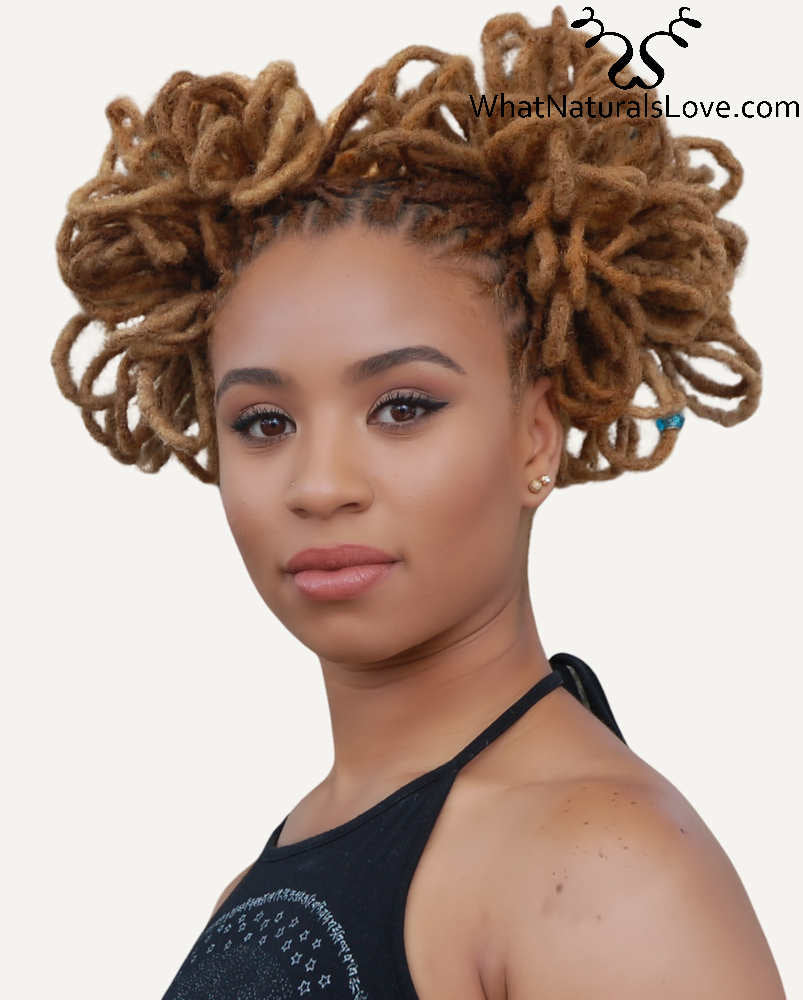
I was skeptical of double loc buns at first. Then I saw this honey blonde version at shoulder length. The locs are divided into two even sections, each twisted into a neat bun at the nape. No bangs, no visible layers the symmetry creates the shape. The warm honey tone catches light differently than black, giving the style depth.
This cut flatters oval and heart-shaped faces because the buns add width at the jawline, balancing a narrow chin. The honey blonde reads warm against medium to warm skin undertones. For winter occasions holiday dinners, casual gatherings it feels festive without being fussy. The locs themselves stay neat for weeks, making it a low-maintenance choice for the season.
Black Collarbone Coily Locs with Bangs
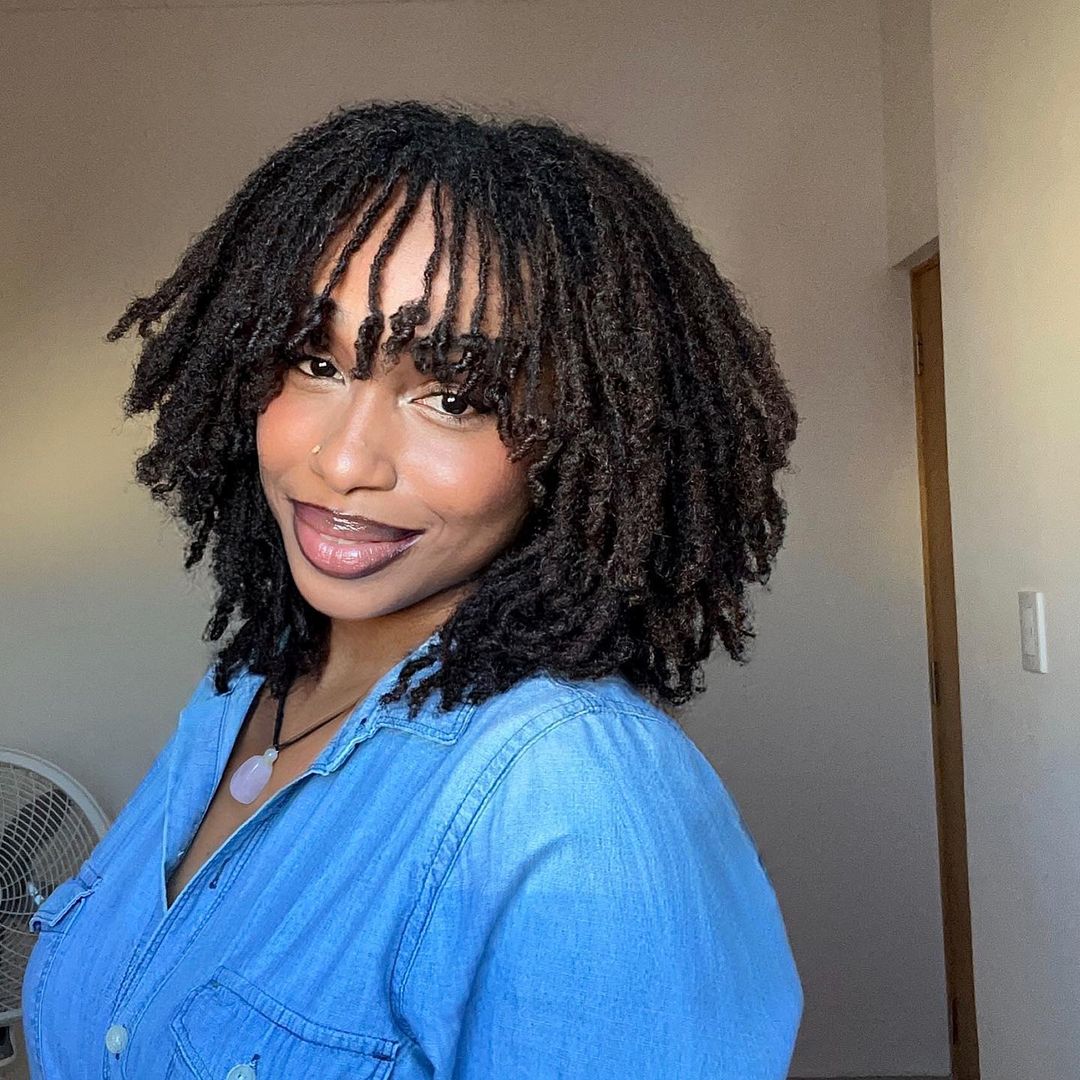
Collarbone length coily locs with bangs — faux bangs, specifically — sit differently than a traditional fringe. The difference is the texture. A real fringe on locs requires cutting into each loc, which changes the shape permanently. Faux bangs, clipped in or styled from the front locs, give you the same face-framing effect without the commitment. These locs are uniform in length, no layers needed. The rest stay air-dried, coily, and untouched. Retwist every six to eight weeks, trim the faux bangs every three to four weeks. That is the whole routine.
Visual Idea
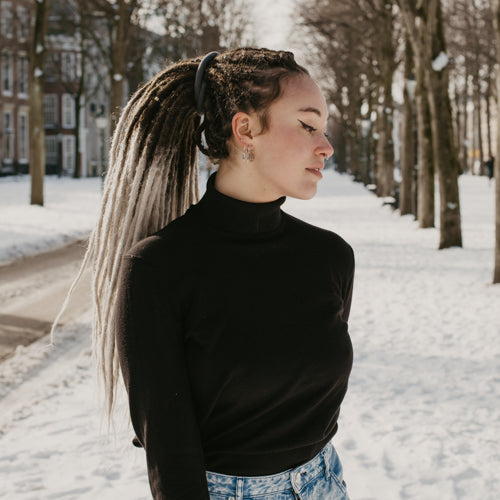
I will confess: I let my grey ombre locs go six weeks without a toner refresh. The mistake is thinking toner maintenance is optional for grey and blonde ombre. It is not. Without a purple shampoo and a salon toner every four to six weeks, the blonde shifts brassy and the grey turns muddy. These long thick wavy locs, with no layers to break up the weight, need that cool tone to stay striking. The upkeep is real: a toner appointment every month, plus deep conditioning to keep the wavy texture from drying out. DIY toning at home is risky. The ombre line gets uneven fast. Book the salon, bring a reference photo of the exact grey you want, and stick to the schedule. That is how you keep the look from fading into something you did not ask for.
Shoulder Length Visual Idea
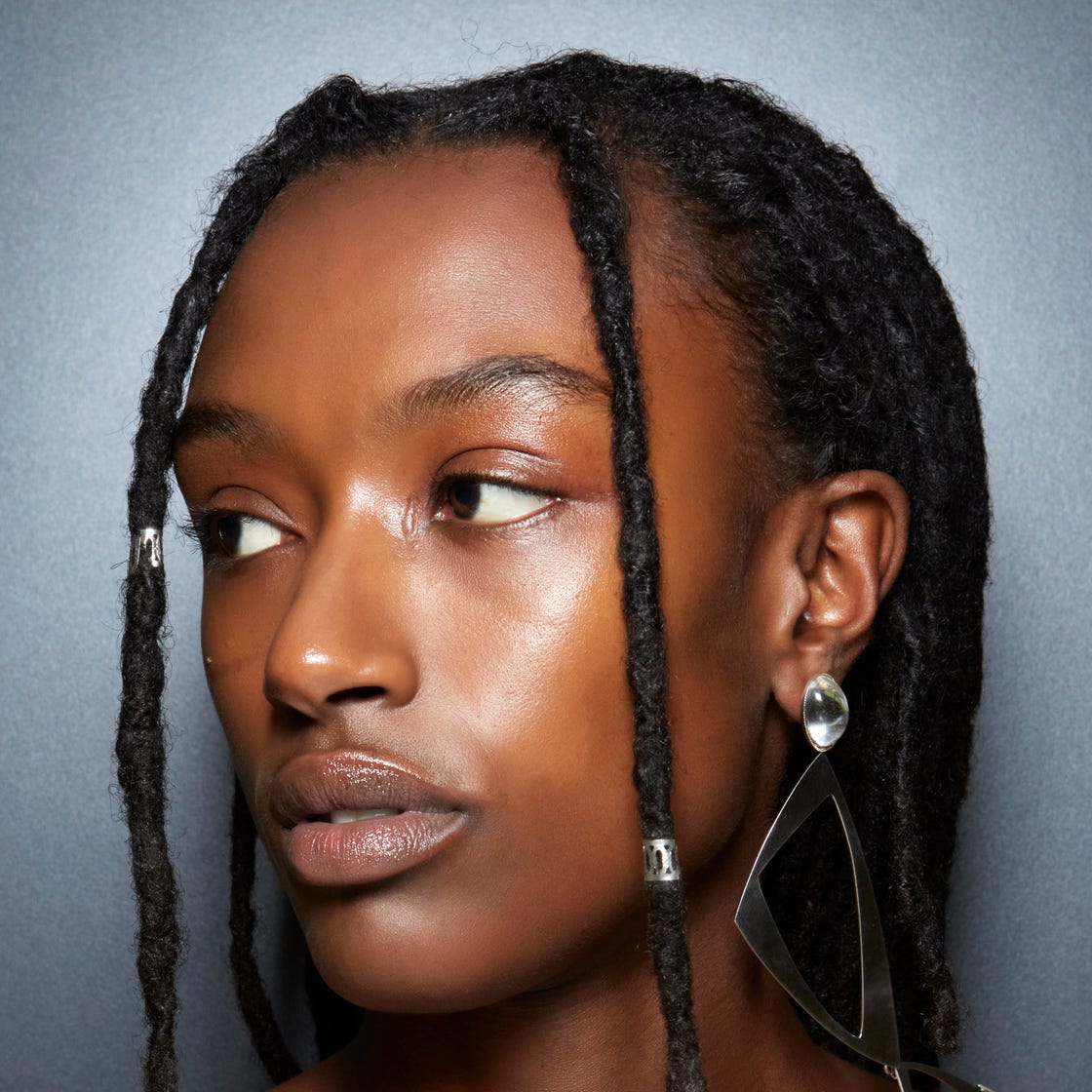
The metal cuff slides on, clicks, and suddenly your locs have jewelry. Start with clean, dry locs. Choose a cuff that fits the thickness of your loc. Slide it on from the root, push it down to where you want it. For braided locs, the cuff stays put better. To keep it from slipping, squeeze the cuff gently with pliers. Upkeep: check monthly for tarnish or loosening. That’s it. Cut: locs. Length: shoulder. Layers: none, uniform. Bangs: no bangs. Texture: thick locs.
Visual Idea — Thick
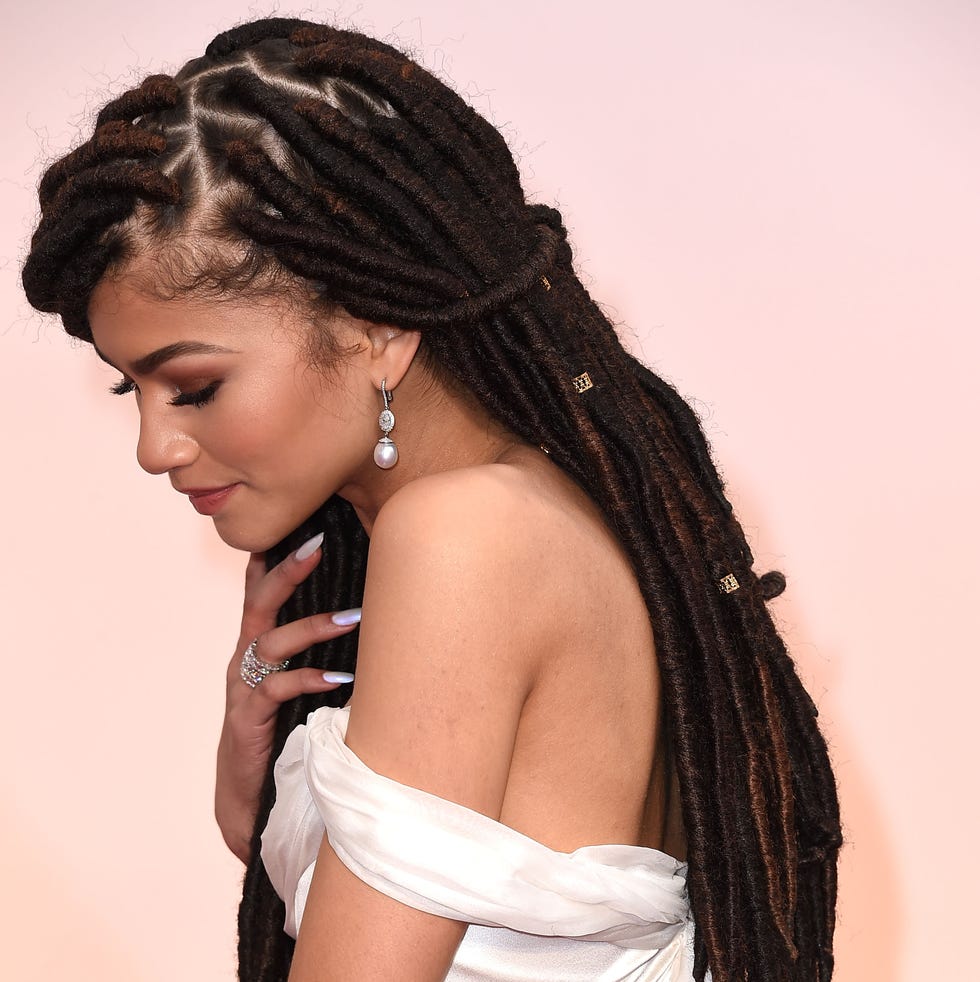
These thick wavy locs with gold beads look great for a day, then you start noticing the snags. Past-shoulder, dark brown with auburn highlights, thick, wavy, some braided sections with small gold beads. Middle part. No distinct layers, but the waves create movement.
Wear reality: the beads catch on sweater sleeves and scarves. You’ll spend time untangling. Upkeep: detangle carefully, maybe remove beads for sleeping. Honest downside: the beads are not for low-maintenance weeks. Cut: locs. Length: past shoulders. Layers: none distinct. Bangs: none. Texture: thick, wavy.
Shoulder Visual Idea
Short Visual Idea
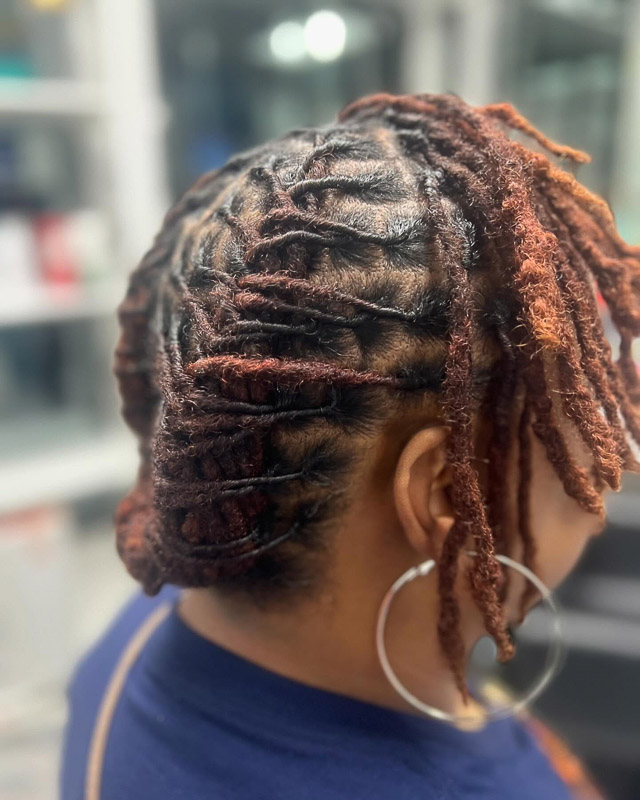
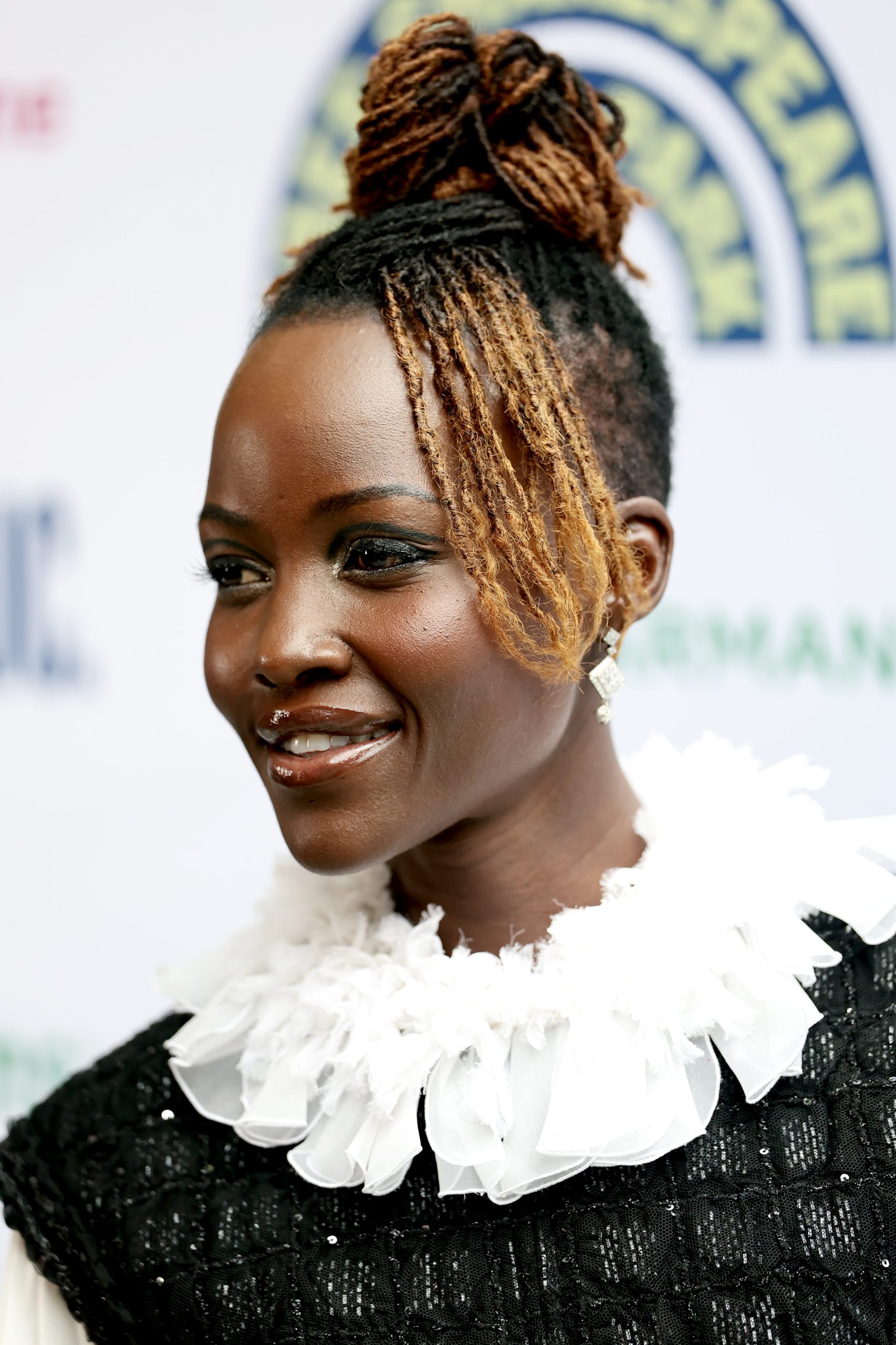
The geometric interlocking pattern isn’t decorative, it’s structural. Each loc is twisted and locked at the root in a grid. The short length keeps the pattern visible. Dark brown with auburn highlights adds depth to the geometry. No bangs, so the pattern runs uninterrupted from scalp to tip. The interlocking method creates a uniform texture, no loose ends. Cut: interlocking locs. Length: short. Layers: no layers, uniform. Bangs: none. Texture: locs, uniform.
Mid-Back Visual Idea
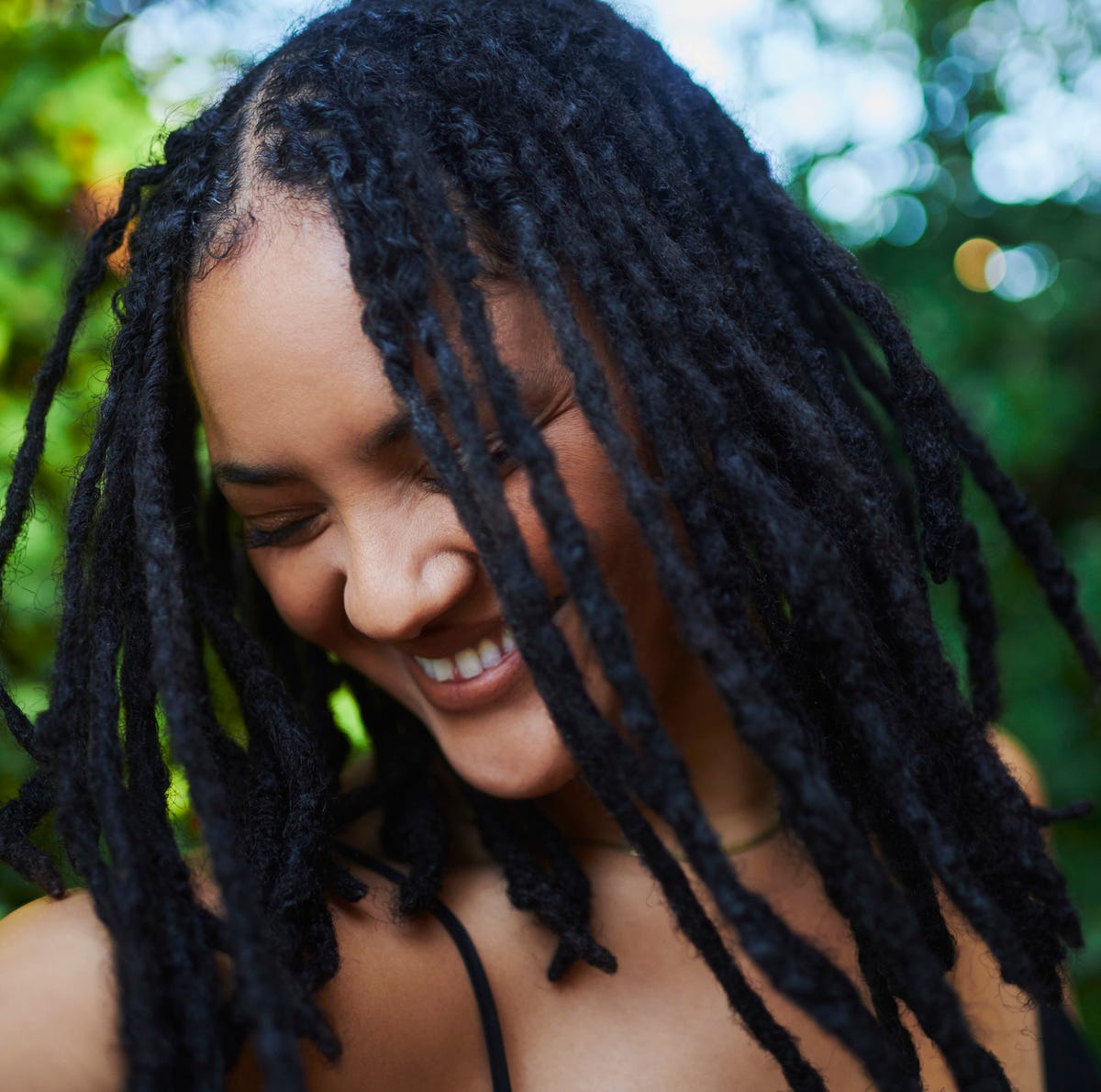
Long, dense black locs to the mid-back is a commitment. They flatter oval and heart-shaped faces because the straight vertical lines elongate. The middle part works for symmetrical features. If you have a round face, the straight fall can widen, so consider a side part or shorter length. The thick straight texture means they hang heavily, which can pull down a narrow face. Cut: long locs. Length: mid-back. Layers: none, uniform. Bangs: none. Texture: straight, thick.
Visual Idea — Dense
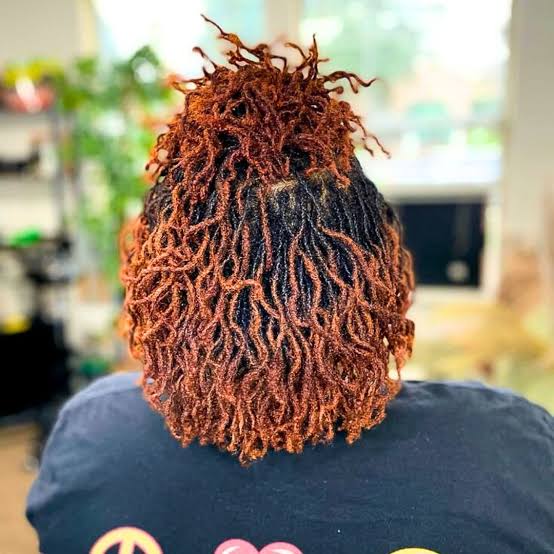
A single dense bun, no stray ends. That is what sets micro locs apart from the chunkier traditional installations. Traditional locs show individual ropes; these read as a solid textured block. The dark brown shade reads as one solid mass. The middle part adds structure, but the real work is in the density. No layers, no bangs — just uniform volume from root to tip.
Wear is straightforward — it is a short cut in loc form. The bun stays put through a workday, no pins needed. Upkeep means retwisting every few weeks to keep the bun neat. DIY is possible if you have the time and a steady hand. A salon install takes hours, but the result holds shape longer and the parting stays crisp.
Final Thoughts
After writing all 26 of these, I noticed something: the best winter locs use braided elements for structure, not just decoration. That low braided bun updo? I’m booking it next week. It holds under a hat and looks intentional when the hat comes off.